Bar Stool Floor Protection Guide
Bar stools get dragged. Floors get scratched. And if you’re managing a restaurant, hotel, or multi-site rollout, “just stick some felt pads on” isn’t a plan—it’s a future maintenance ticket.
The good news: most scratching comes from a small set of predictable causes (grit + hard contact points + worn protectors). When you match the right protector to the right floor—and choose a leg/base design that’s easy to maintain—you can reduce scratching, noise, and replacement headaches.
Editorial note: This guide is intended for bar stools used on finished wood, tile, sealed concrete, and polished concrete floors. Always check the flooring manufacturer’s care instructions before using rubber, adhesive pads, PTFE-style glides, or floor mats, because some finishes can react differently to pressure, moisture, cleaning chemicals, or long-term contact. For commercial rollouts, test the protector on a hidden area or sample floor section before applying it across all stools.


Felt pads vs rubber caps vs nylon glides vs PTFE-style glides vs floor mats
Here’s the decision logic buyers actually need (not a shopping list).
If your highest-risk surface is hardwood, start with the same principle behind “protect wood floor from stools”: keep the contact point clean, soft enough not to mar the finish, and easy to replace before it wears through.
Protector type | Where it shines | Where it struggles | Procurement note |
|---|---|---|---|
Felt pads / felt-based glides | Quiet sliding on many hard finished floors | Can compress, collect debris; some felt can harden if repeatedly soaked | Good option when you can inspect and replace. For commercial use, favor udskiftelig felt systems, not bargain stick-ons. |
Rubber caps / elastomer tips | Adds grip; reduces sliding and noise | Can mark some surfaces; may split if wrong size | Best where you want stability (e.g., stools that should not drift). Test for marking as advised in material guides. |
Nylon/plastic glides | Durable on tougher surfaces; handles grout/texture better | Can trap grit and become abrasive on softer floors | Great when you have an inspection plan; avoid “install and forget.” |
PTFE-style glides | Very low friction; easy movement | Can be too slippery for seating; may be a poor choice for sensitive floors | Treat as conditional. Test PTFE-style glides before rollout, because very low friction can make seating move too easily and may not provide enough cushioning for sensitive floor finishes. |
Floor mats / runners (select use) | Protects a defined zone; reduces grit reaching the stool contact point | Cleaning, moisture, and trip-hazard concerns in busy commercial areas | Useful in specific stations (host stand, service POS), not as the primary strategy for a whole bar area. |
Two important “failure mode” takeaways:
Dirt embedding can make protectors abrasive—see grit warnings in Shiffler’s guide to furniture glide base materials and the discussion of grit management.
Felt needs care: a flooring consultant notes that felt protectors require vacuuming/cleaning, and heavy moisture can make felt hard/coarse if it absorbs water repeatedly—see flooring consultant advice on maintaining felt protectors.

Choose protectors by stool leg and base design
This is where most generic advice fails. The same “bar stool feet pads” don’t work across all structures.
Metal legs (square or round)
Bedste praksis: make sure the leg end is not a sharp, thin edge contacting the floor.
For metal tube legs, prioritize a properly fitted tube insert (internal plug) plus an external cap or glide.
Avoid leaving a tube end open—once the insert is missing or worn, the metal edge can contact the floor.
Round tube legs (common in commercial stools)
Round tube legs are common in hospitality seating because they’re durable and easy to clean—but they need the right interface.
Spec-friendly options:
Snap-in tube inserts + replaceable glide base
Screw-in glides (when the leg design supports inserts/threads)
Advarsel: If you use a hard glide (nylon/plastic) on mixed flooring, make the inspection cadence explicit. Embedded grit is what turns “durable” into “damaging.”
Wood legs
With wood legs, adhesive-only solutions often fail faster in high-frequency use.
More secure options:
Nail-on felt pads (for sliding)
Screw-in glides / threaded levelers (when the leg is designed for it)
If the stools are cleaned frequently (wet mopping), also consider how moisture interacts with the protector and the wood at the leg end.
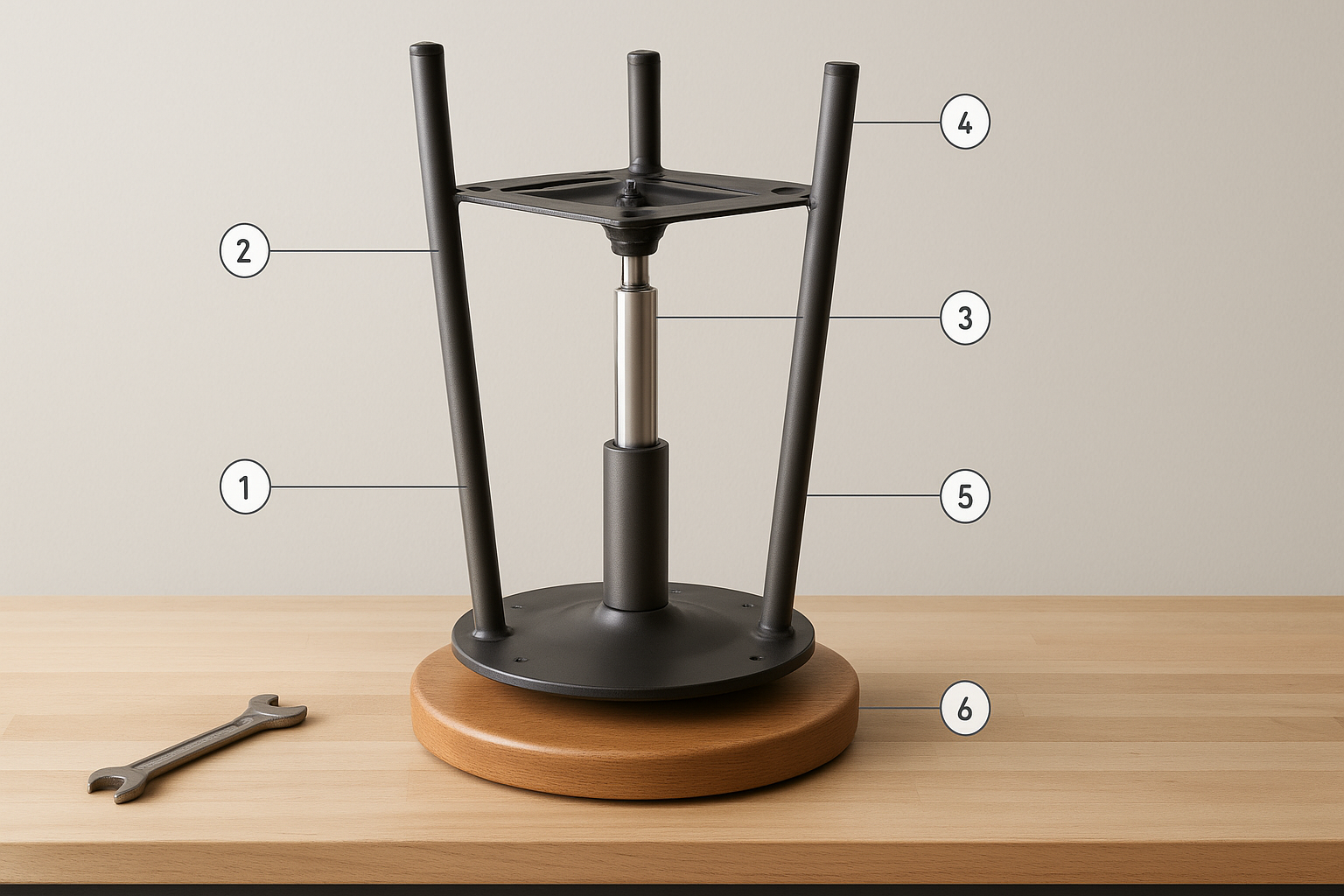
Pedestal base / disc base stools
Pedestal bases scratch floors differently:
Damage often comes from the edge of the base or a worn protection ring.
The contact area is larger, but the edge can behave like a scraper if the protective interface wears unevenly.
Checklist for disc bases:
Confirm a base protection ring (or similar non-marring interface) exists and is intact.
Confirm the base is level; rocking increases edge pressure.
Replace the ring before you see exposed hard material.

Will protectors fall off, trap dirt, or wear into scratchers? Yes—unless you plan for it
These are the failure modes that matter in real operations:
1) Falling off (adhesive failure)
Adhesive pads fail fastest when:
floors are cleaned frequently (moisture + chemicals)
stools are dragged (shear force)
the leg end is dirty, oily, or uneven
For commercial use, treat stick-on felt as a short-term solution unless the design includes a sleeve or mechanical retention.
2) Trapping grit (the hidden scratch accelerator)
Even on “clean” floors, fine grit exists.
Some glide-selection discussions describe how standard glide bases can pick up dirt and grit that then gets ground into softer flooring—see the grit explanation at Carpin’s Floor Saver Glide discussion.
Practical controls:
Sweep/vacuum more often in stool zones.
Add a quick weekly check: wipe or brush felt surfaces; remove hair and grit.
3) Wearing through (and exposing hard contact)
Replace protectors when:
felt is compressed or the backing is close to the floor
caps are split, missing, or loose
inserts wobble or fall out
pedestal rings show uneven wear
As Plasticmetall’s furniture glide selection guidance notes in its selection/maintenance framing, inspection matters—especially with sensitive floors.

Procurement spec: how to prevent scratches across multi-site projects
If you want fewer floor claims and fewer emergency maintenance calls, spec the interface early.
If you’re standardizing across brands and regions, it also helps to align seat height/footrest geometry so stools aren’t being dragged simply because they’re the wrong fit for the counter. Use this quick reference: How to measure bar stool height.
1) Standardize on a “floor compatibility set,” not a single pad
A practical spec pack includes:
One approved glide/cap for “sensitive hard floors” (often felt-based)
One approved glide/cap for “rough hard floors” (often a more durable nylon/plastic or rubber-based solution)
Spare inserts/caps in the same PO for replacements
2) Specify attachment method (this is where durability comes from)
Write requirements like:
“Glides must be mechanically retained (threaded, screw-in, nail-on, or captive insert). Adhesive-only pads not acceptable for high-frequency seating.”
3) Make replacement easy
Choose designs with replaceable wear parts (snap-in caps, replaceable glide bases).
Keep spares on-site. A low-cost replaceable wear part is easier to manage than an unexpected floor repair claim.
4) Build a simple inspection cadence into ops
Weekly: visual check for missing caps/inserts; remove grit from felt.
Monthly: replace any protector that’s worn, cracked, or loose.
5) Don’t forget noise
Noise complaints are often an early warning that protectors are worn or missing. “Sudden scraping” usually means hard contact has returned.
If you’re sourcing commercial bar stools for projects, compare leg shape, base type, glide attachment method, and replacement-part availability before approving the order. YeZhi Furniture’s bar stool factory page can be used as supporting product research, but the final specification should be based on your flooring materials and traffic level.
OFTE STILLEDE SPØRGSMÅL
Are felt pads good for bar stools?
They can be—especially on hard finished floors—if you choose high-density felt and plan for cleaning and replacement. Felt can also trap grit, so maintenance matters.
What’s better for tile: felt, rubber, or nylon?
It depends on grout texture and how often stools move. Felt is quieter and often safer for finished floors; nylon/plastic handles rough grout better but needs inspection to prevent grit embedding. Rubber can reduce sliding when you want stools to stay put.
What are bar stool glides—and when should you use them?
Bar stool glides are purpose-built wear parts fitted to the bottom of stool legs (or inserts/levelers) to create a controlled contact surface with the floor. They’re most useful in commercial spaces because you can spec the right material for each floor zone and replace them on a schedule instead of waiting for damage.
Do PTFE-style glides work for bar stools?
They can make movement very smooth, but they may be too slippery for seating and may not be ideal for sensitive floors. Use PTFE-style glides only after a small-area test, especially on finished wood, polished concrete, or floors where stool movement could create a stability or maintenance problem.