Restaurant chairs don’t “expire” on a birthday. In practice, they reach end-of-life when they are no longer safe, no longer comfortable, no longer cleanable, or no longer worth maintaining.
In busy restaurants, many operators use 3–5 years as a planning window for visible wear or replacement decisions. Lower-grade chairs in hard service can show serious problems sooner, while well-built commercial chairs in moderate-use spaces may last 5–10+ years. These ranges are planning anchors, not lifespan guarantees.
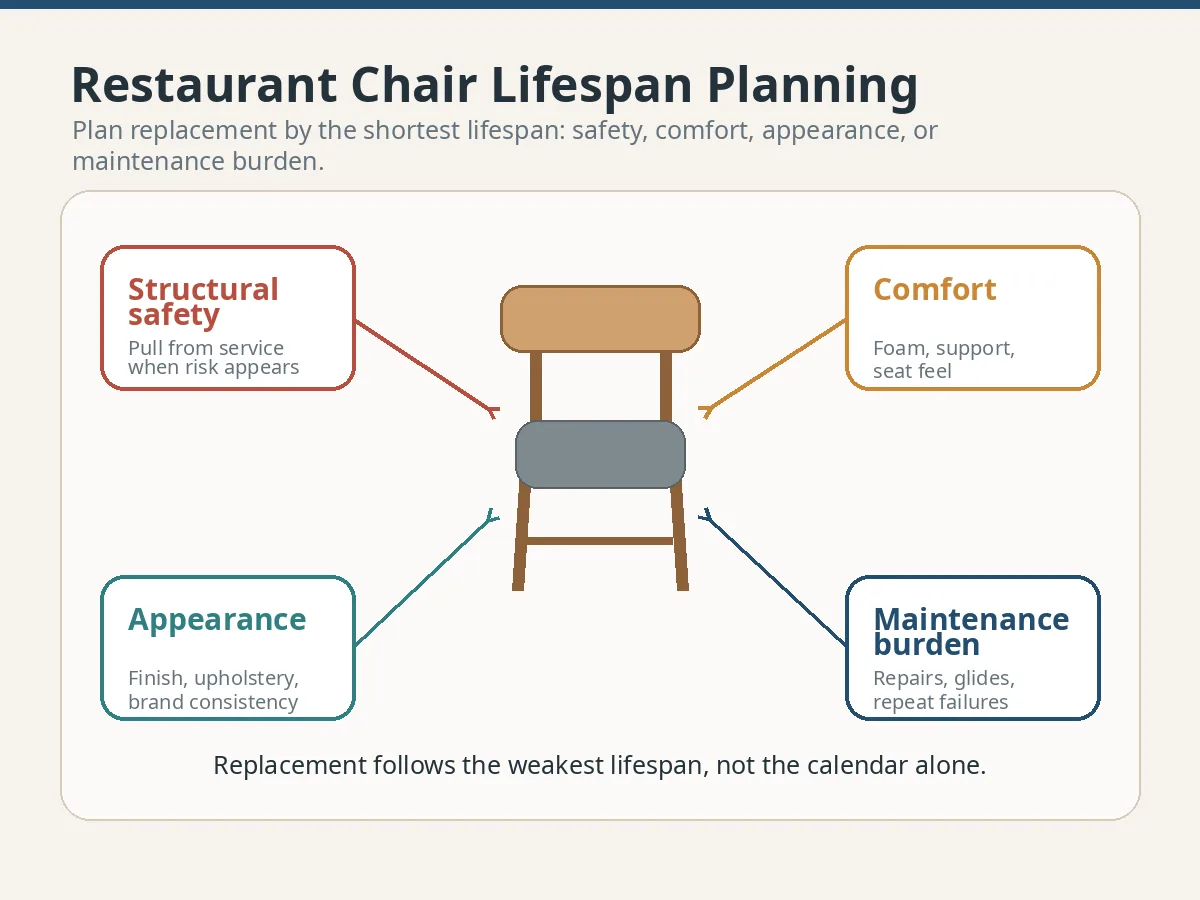
The better question is not “How many years should this chair last?” It is: Which part of the chair will fail first in your venue—structure, comfort, appearance, or maintenance cost?
Key Takeaway: A restaurant chair’s “lifespan” is really four lifespans: structural safety, comfort, appearance, and maintenance burden. Replacement decisions should follow the shortest one.
How long do restaurant chairs last in real service?
If you’re trying to set a replacement plan, a useful way to think about chair lifespan is by service intensity:
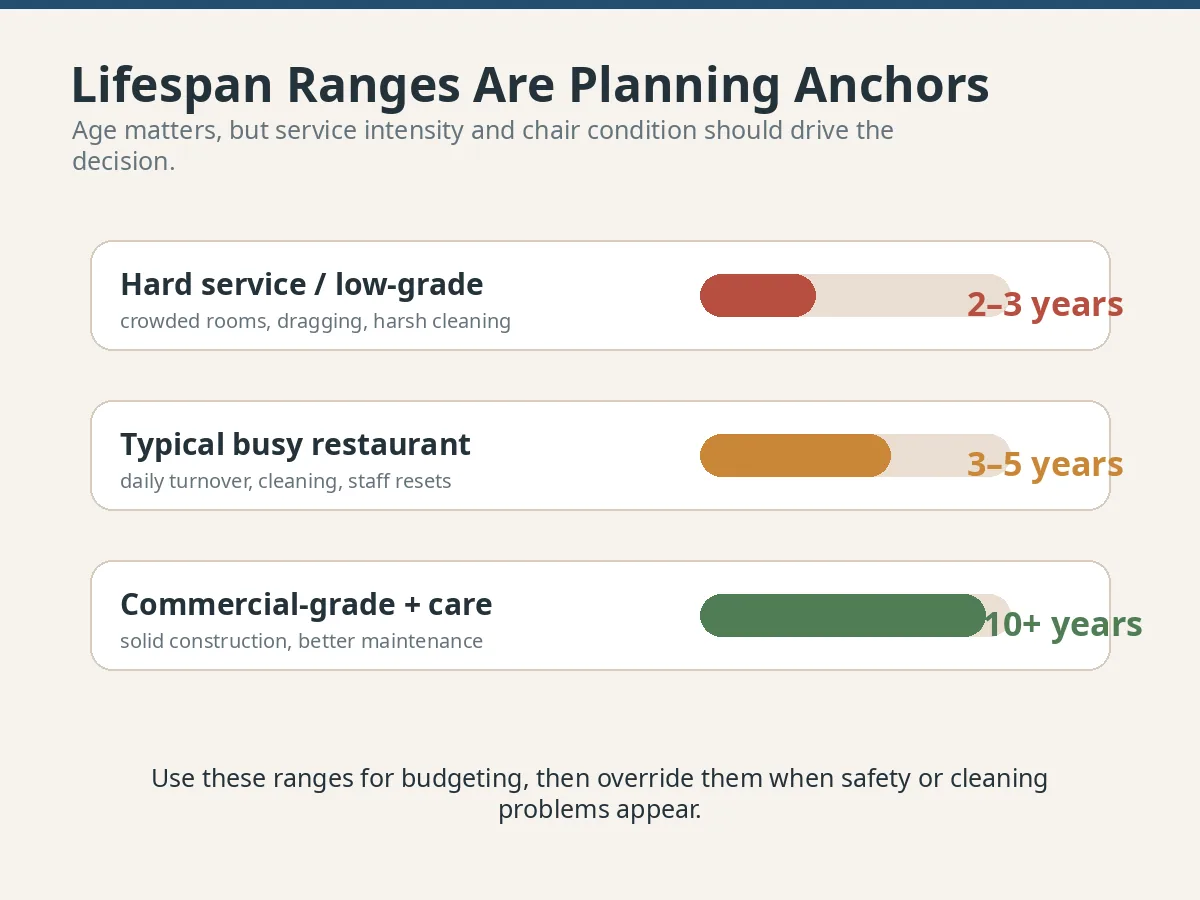
Low-grade chairs in high-intensity service (crowded dining room, frequent dragging, aggressive cleaning): issues can show up in 2–3 years.
Typical busy restaurant reality (high turnover, daily cleaning, staff constantly moving chairs): many operators plan around 3–5 years before a meaningful refresh.
Commercial-grade chairs with solid construction + decent care: often 5–10+ years.
When you see a blog post claiming “restaurant chairs last 10 years,” it’s not automatically wrong. It’s just incomplete.
Industry replacement timelines can be useful, but condition should override age. A five-year-old chair with a stable frame and replaceable glides may stay in service, while a two-year-old chair with recurring wobble, cracked upholstery, or failed welds should be pulled from guest seating.
What actually shortens restaurant chair lifespan
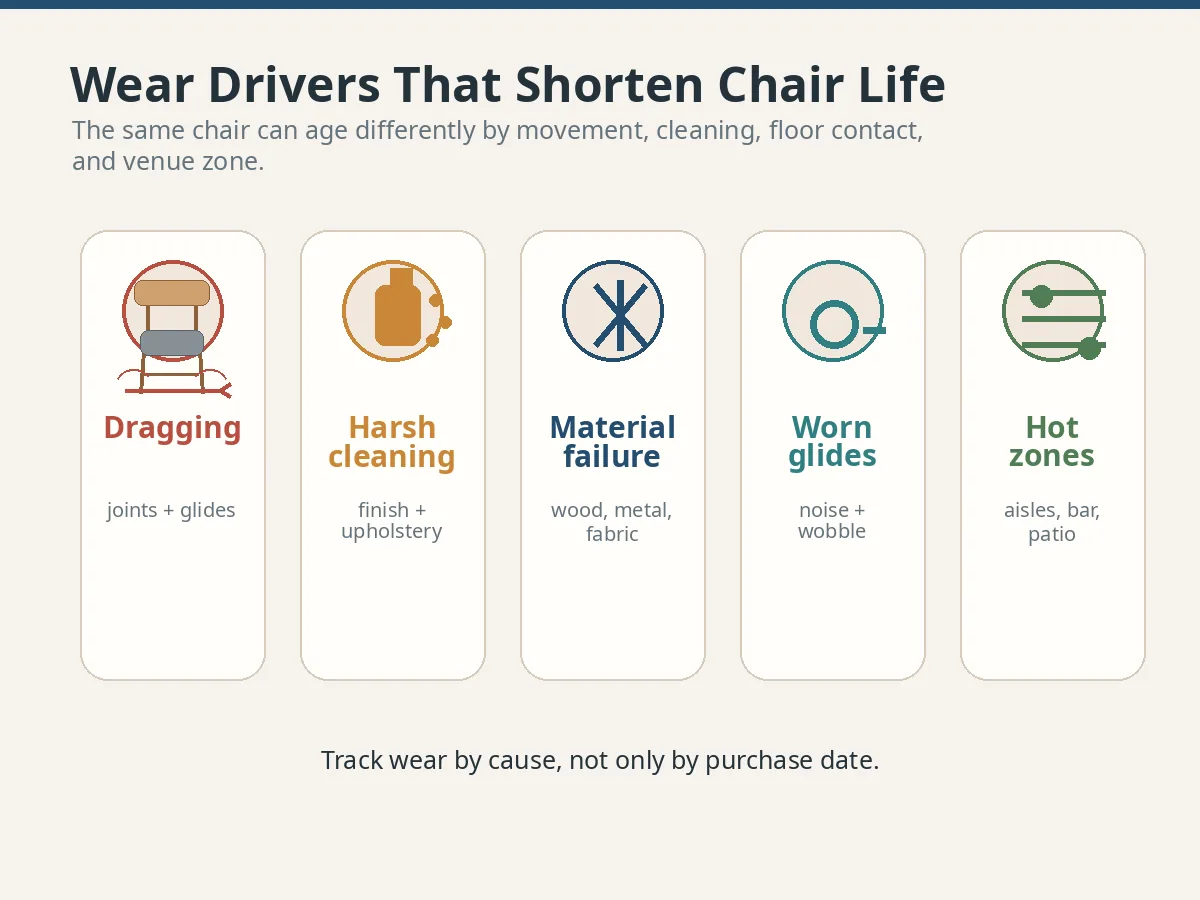
If you want lifespan to be predictable, focus less on the calendar and more on the “wear drivers” that create wobble, loose joints, and ugly finishes.
1) The chair gets dragged more than it gets lifted
Dragging is brutal. It stresses leg joints, loosens fasteners, and eats floor glides.
If your concept requires staff to reset tables fast, you’ll burn through chairs faster than a restaurant where chairs barely move.
2) Cleaning is constant (and sometimes too harsh)
Daily cleaning is normal in hospitality. But overly wet mopping, harsh chemicals, and scrubbing textured finishes will age chairs quickly.
This is one reason upholstered chairs can have “two lifespans”: the frame may be fine, while the seat surface looks done.
If you’re evaluating materials, this guide on best material for restaurant chairs can help you match wood, metal, and upholstered options to your traffic and cleaning reality.
3.The first failure point depends on material, construction and use
Chairs do not fail evenly, and the first visible problem is not always the true structural problem.
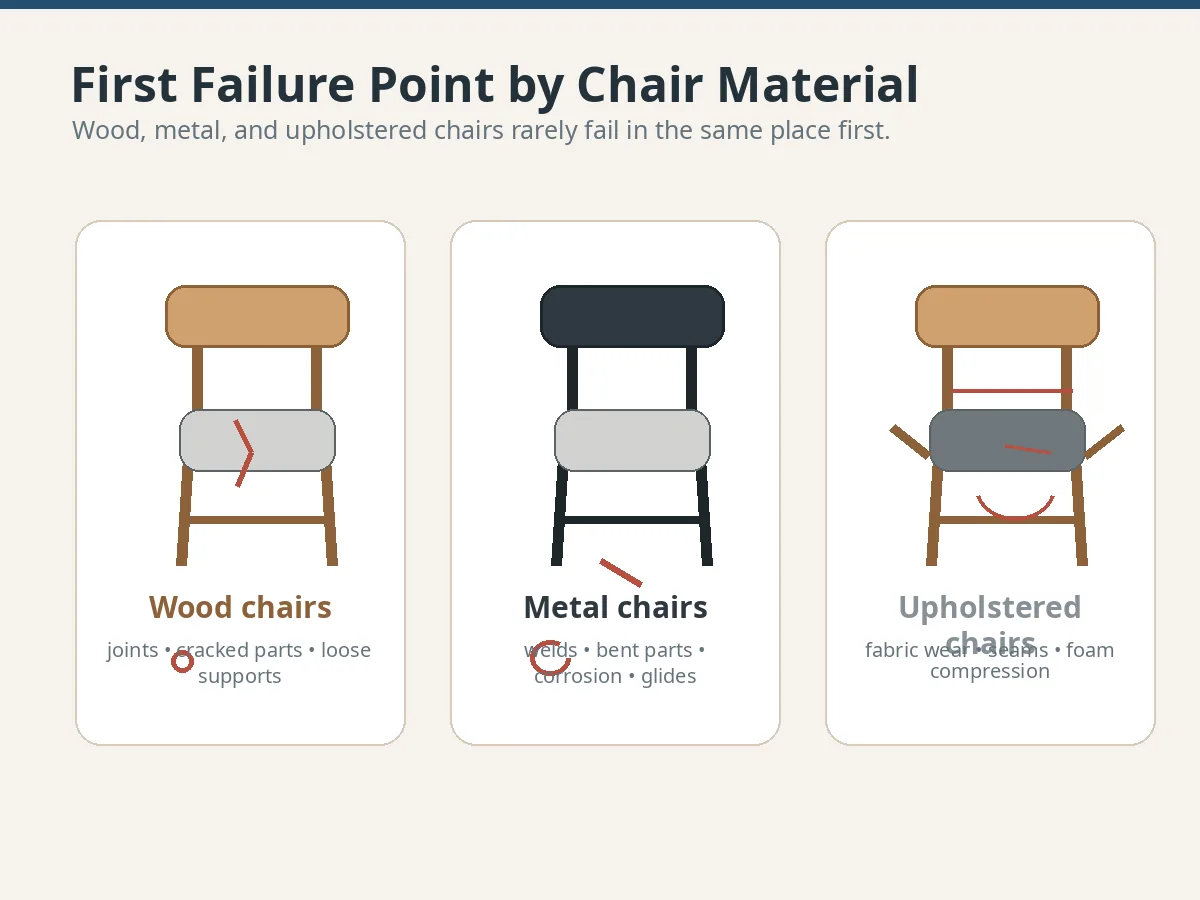
Stole af træ may fail at joints, fasteners, cracked components or loose seat supports.
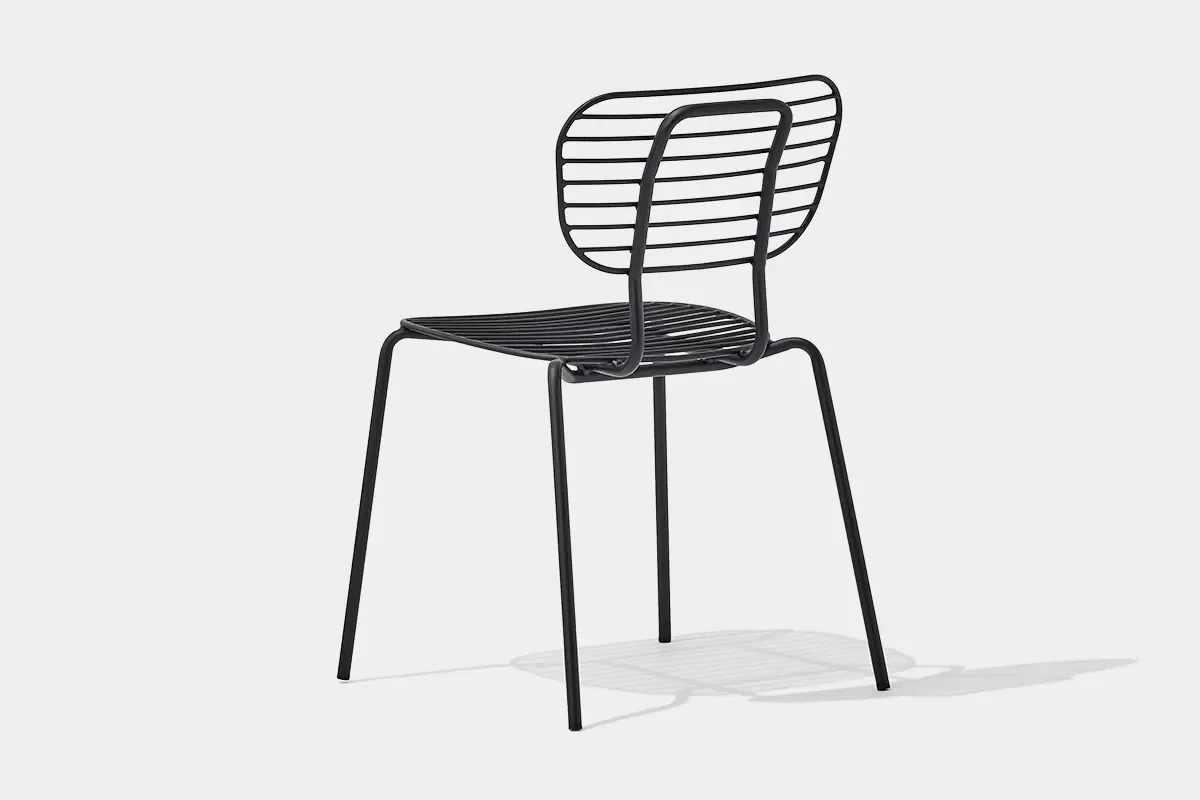
Metal chairs may fail at welds, fasteners, bent components, corrosion points or floor-glide contact areas.
Polstrede stole may reach replacement planning first through fabric wear, seam damage, foam compression or hygiene concerns, even when the frame is still structurally usable.
4) Flooring and glides quietly decide your replacement budget
Worn glides do three things:
Make chairs noisier.
Make guests feel wobble that is actually “uneven feet.”
Increase frame stress because the chair is no longer sitting flat.
If you’re dealing with capacity and flow, it’s worth pairing this post with restaurant seating capacity planning because layout density and traffic patterns determine how often chairs get bumped, dragged, and stacked.
5) The venue has “hot zones” that age faster
Most restaurants have zones that destroy chairs:
high-turn tables near entrances
service stations and main aisles where staff clip chair backs
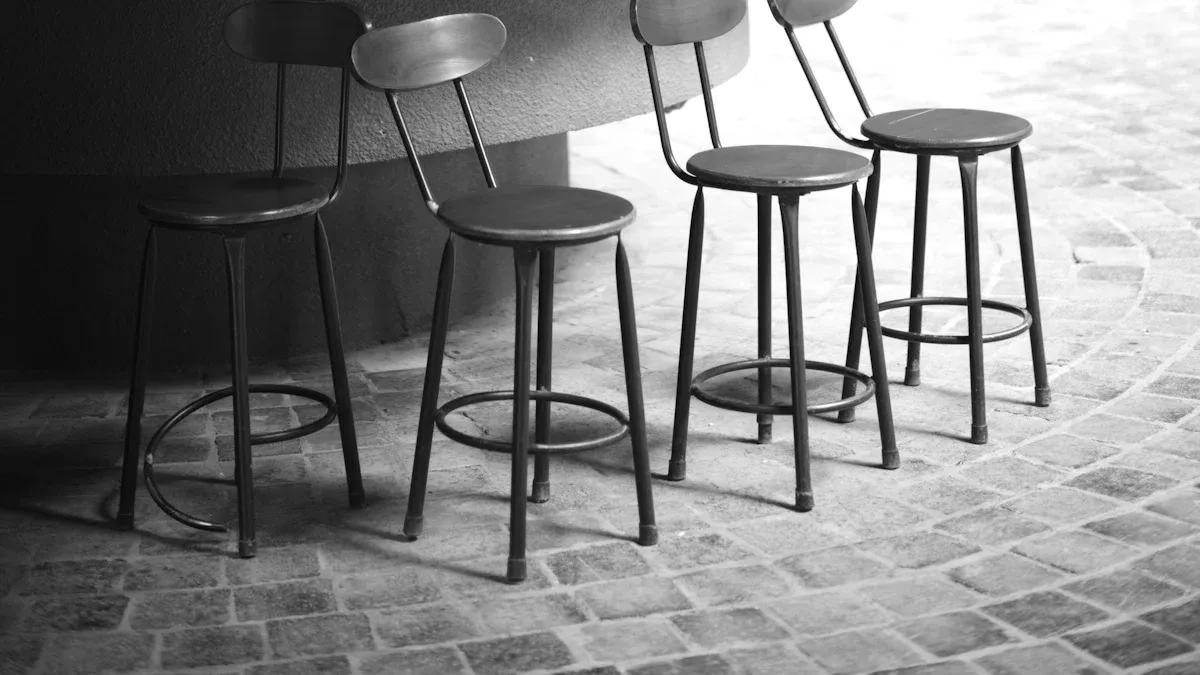
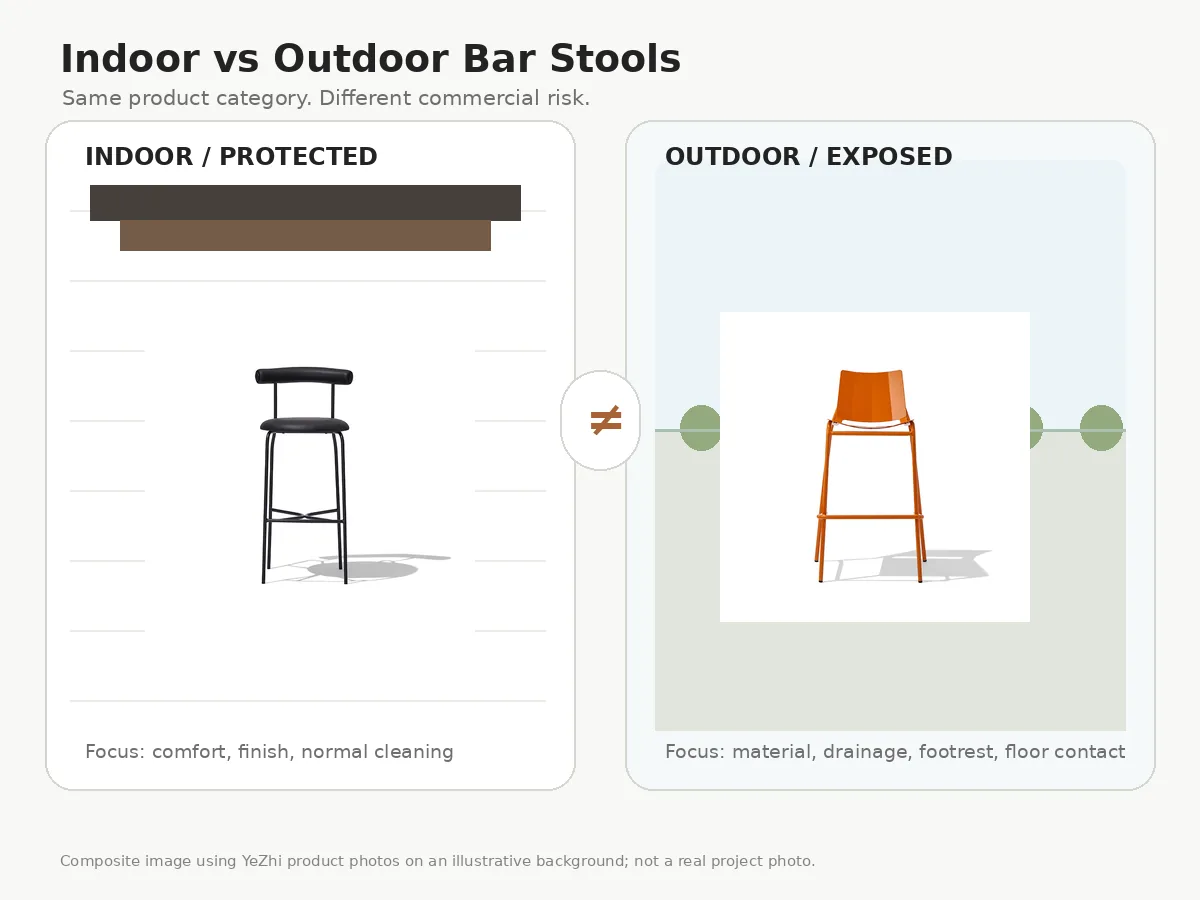
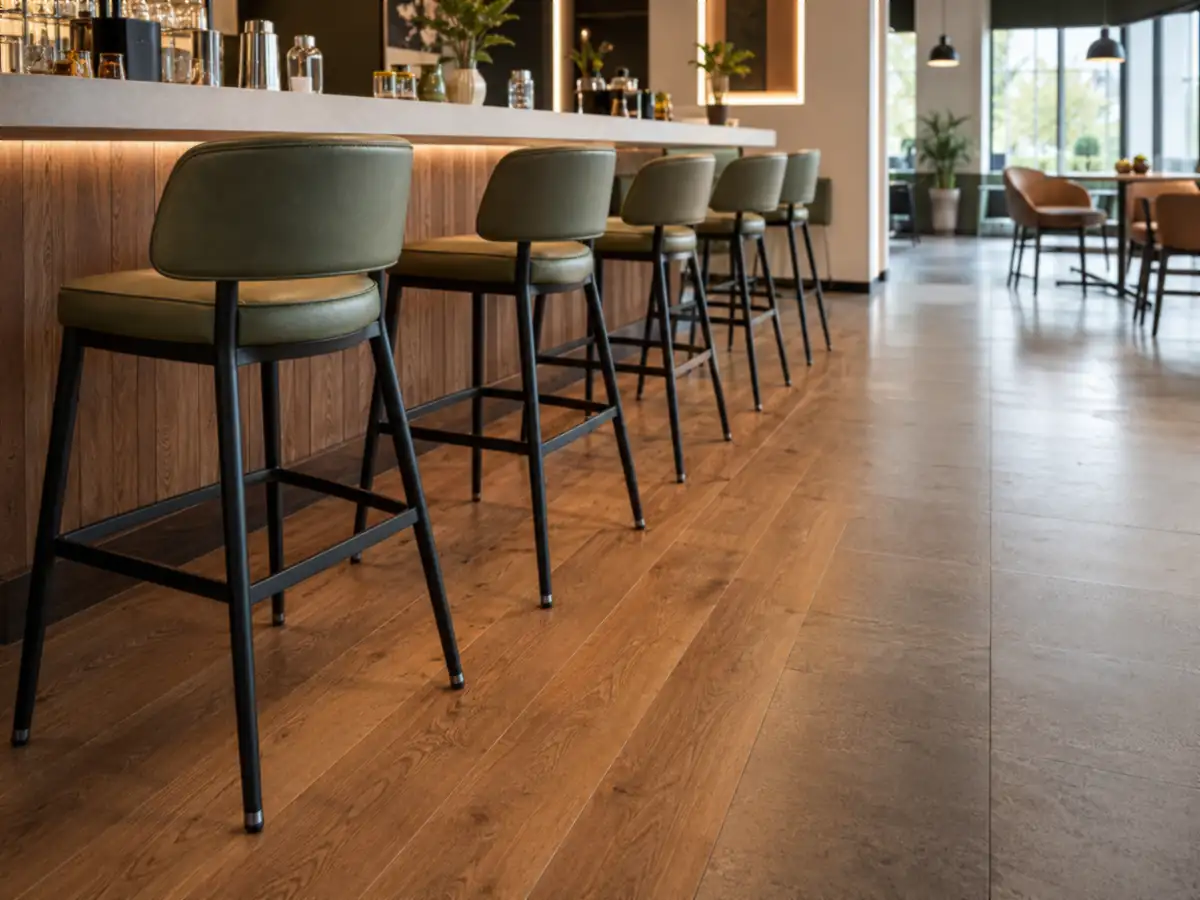
bar seating where footrests take constant abuse
patio edges (UV, moisture, temperature swings)
Your replacement plan should track zones, not just “the dining room.”
Wear signs you shouldn’t ignore (organized by decision severity)
Most articles list the same signs. The more useful question is: What does each sign mean for action?
Below is a practical way to categorize wear signs so you can decide quickly.
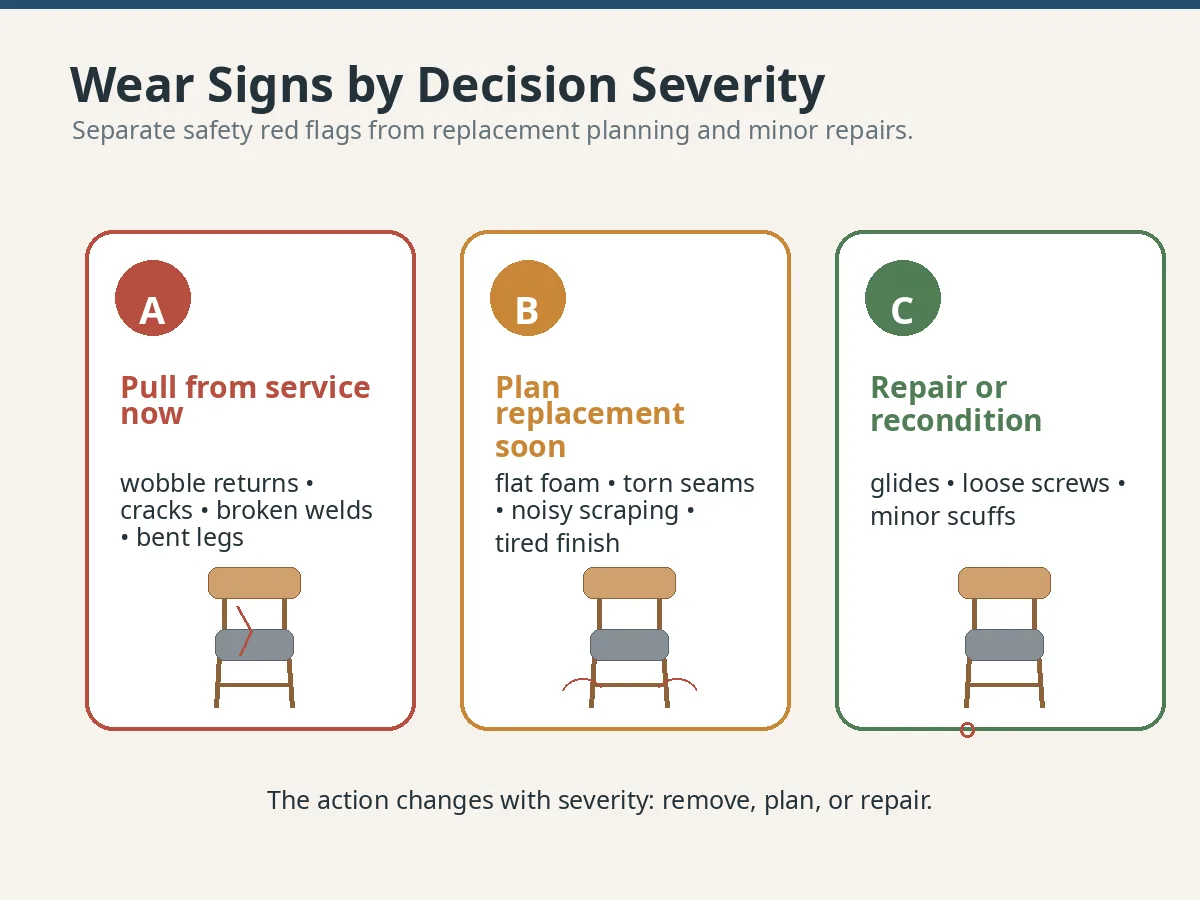
Category A: “Stop using this chair” safety red flags
These are the signs that should trigger an immediate pull from the floor.
The chair wobbles and tightening doesn’t fix it.
Any crack in the frame (wood split, seat support crack).
Any broken weld or visibly separated joint on a metal frame.
A leg is bent, or the chair no longer sits flat.
Sharp edges, splinters, exposed fasteners, or anything that can snag clothing or skin.
For safety-related wear signs, use a simple service rule: remove the chair from guest seating, label it clearly, record the failure, and decide whether it can be repaired or must be replaced. Do not leave structurally questionable chairs on the floor while waiting for the next purchasing cycle.
Advarsel: A chair with recurring wobble, cracks, broken welds, bent legs, sharp edges or exposed fasteners should be treated as “pull from service now,” not “review later.”
Category B: “Plan replacement soon” operational and guest-experience signs
These issues may not be an immediate safety hazard, but they start costing you money through complaints, extra labor, and a tired-looking dining room.
Wobble is minor but frequent (comes and goes after tightening).
Seat feels “flat” (foam doesn’t rebound; guests shift constantly).
Upholstery seams are starting to split, or vinyl is cracking.
Finish is worn in high-touch areas: chair backs, top rails, seat edges.
Chairs squeak loudly or scrape the floor even after glide replacement.
A key point here: comfort and appearance problems spread faster than you think because guests notice inconsistency. One bad chair in the corner becomes five bad chairs by next month.
Category C: “Repair or recondition” cosmetic and minor hardware issues
These are problems you can often address without restarting your entire purchasing cycle.
Missing or worn floor glides (if the frame is solid).
Loose screws that tighten and stay tight.
Minor finish scuffs in low-visibility areas.
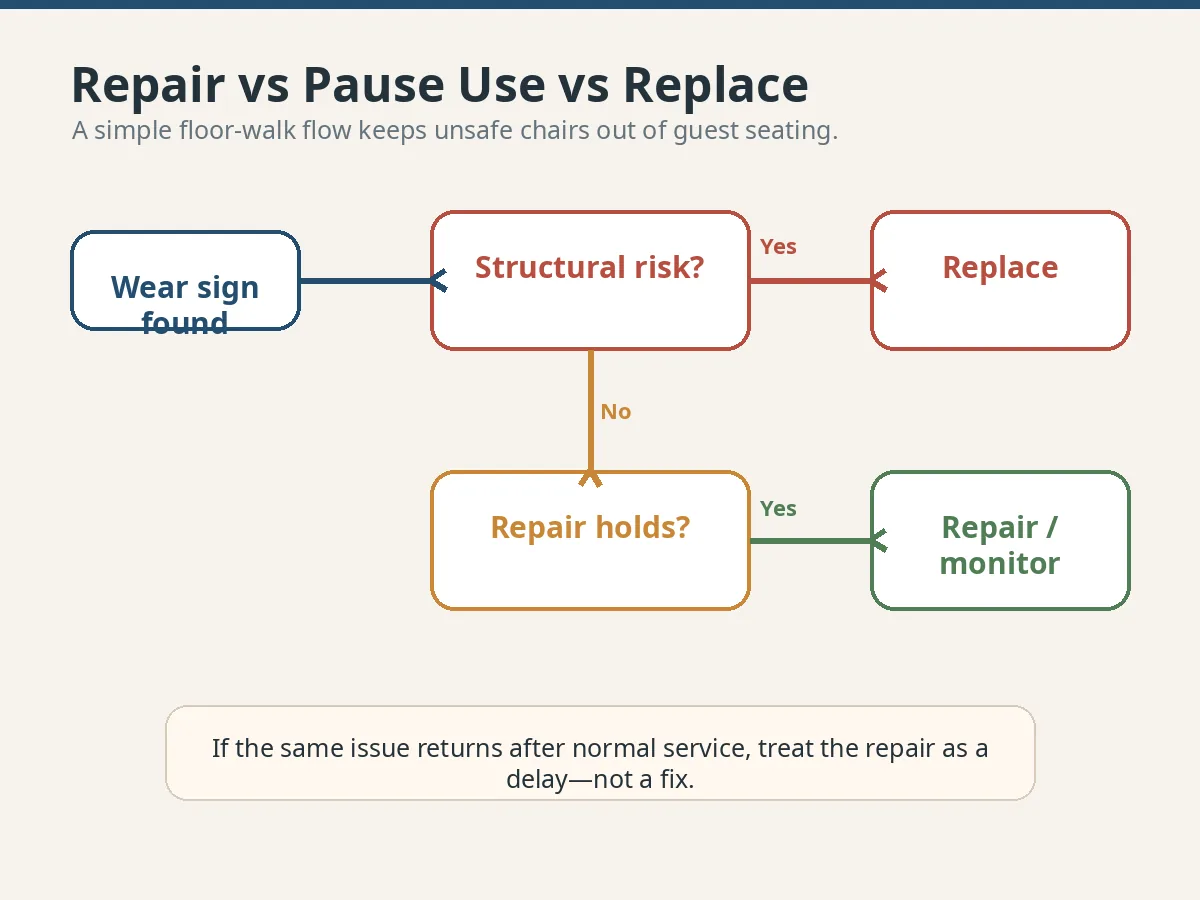
The boundary is simple: if a “repair” doesn’t hold under normal service, it wasn’t a repair. It was a delay.
Repair vs pause use vs replace: a triage table you can use today
Use this table during a quick floor walk.
Condition you see | Most likely cause | What to do now | What to plan next |
|---|---|---|---|
Chair rocks on the floor but frame looks fine | Uneven legs or worn glides | Swap glides; check floor for debris | If rocking returns quickly, plan replacement for that batch |
Chair wobbles side-to-side | Loose joint / hardware fatigue | Tighten once; if it returns, pull from service | Replace; repeated wobble is a failure mode |
Visible crack in wood frame | Structural failure | Pull from service immediately | Replace (don’t gamble) |
Broken weld / bent metal | Structural failure | Pull from service immediately | Replace |
Seat feels “bottomed out” | Foam compression | If frame is solid, reupholster only if it’s cost-effective and consistent | Consider switching to more durable seat spec next buy |
Upholstery torn / vinyl cracked | Surface wear + hygiene | Remove from guest seating if it can’t be cleaned properly | Replace or reupholster as a batch to keep look consistent |
Two practical rules that keep operators out of trouble:
Don’t repair one chair in isolation if it creates a “mismatched dining room.” Guests don’t care that you saved $40 on one seat.
Don’t keep a chair in service that staff already avoid using. Your team is telling you it’s a problem.
Replacement planning: avoid the “all-at-once” pain
Most operators don’t want a giant one-time replacement bill. The trick is to plan replacement like you plan inventory: staged, predictable, and tied to service risk.
Step 1: Decide what you’re optimizing for
Choose your top priority (you can’t optimize all of them at once):
Safety risk reduction (fastest action)
Guest perception (most visible upgrade)
Maintenance time (stop the constant tightening)
Cash flow (phased replacement)
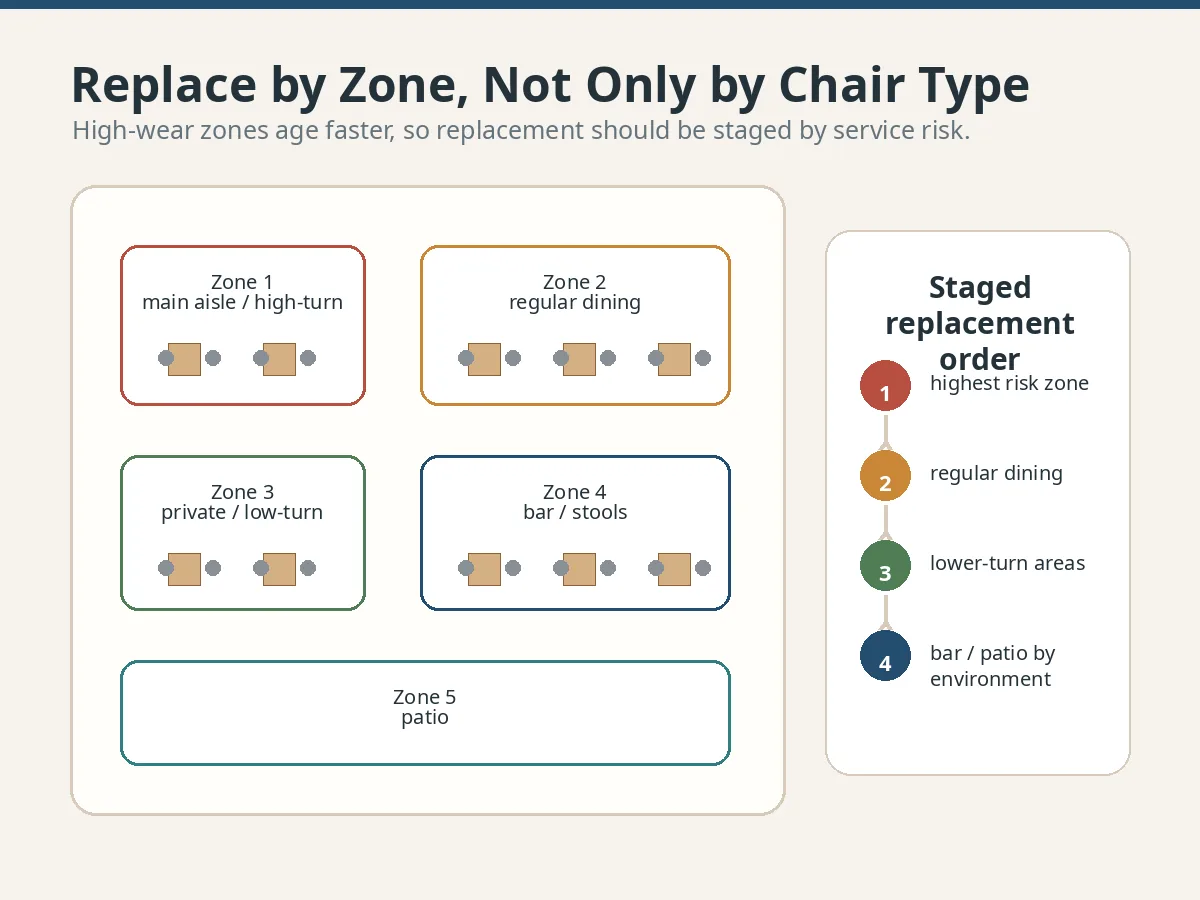
Step 2: Replace by zone, not by “chair type”
Create zones that reflect wear:
Zone 1: main aisle / high-turn section
Zone 2: regular dining
Zone 3: low-turn / private dining
Zone 4: bar / stools (different wear pattern)
Zone 5: patio (different environment)
Then stage replacement: Zone 1 first, then Zone 2, etc.
Step 3: Plan spares from observed failures, not guesswork
A spare pool prevents borderline chairs from returning to the floor. Base the spare quantity on observed weekly pull-from-service counts, supplier lead time and the number of seats in high-wear zones.
A practical approach:
record how many chairs are removed from service each week;
check how long replacement parts or new chairs take to arrive;
standardize spares to a core model, finish and upholstery option so replacements blend in;
review the spare pool quarterly instead of waiting for a full refresh.
Step 4: Track failures for one month before you buy
You do not need a complex system, but you do need consistent records.
Number each chair or chair batch, then log:
chair ID or batch;
zone;
failure type: wobble, crack, broken weld, torn upholstery, glide loss, finish wear;
action taken: repaired, pulled from service, replaced, or monitored;
whether the same issue returns after repair;
one photo of the failure point.
After one month, sort the log by zone and repeated failure type. That tells you whether you need a small repair program, a zone refresh, or a full model replacement.
Step 5: Don’t confuse durability testing with a lifespan promise
If you’re buying commercial dining chairs, you may see references to EN or BIFMA-related testing. That is useful, but it is not the same as “this chair will last 10 years.”
Hvad angår europæiske siddepladser til andet end privat brug, EN 16139:2025 covers safety, strength and durability requirements and test methods within its stated scope. It does ikke cover the durability of upholstery materials, resistance to ageing or degradation, flammability, or every component used in real service.
BIFMA also warns buyers not to rely on simple load-rating claims alone. Seating standards consider use conditions and dynamic forces; a static load number is not a direct lifespan or real-use strength guarantee.
Use standards as evidence signals, not calendar guarantees. Ask for the exact standard edition, tested model, test level, laboratory, report date and whether the quoted chair matches the tested configuration.
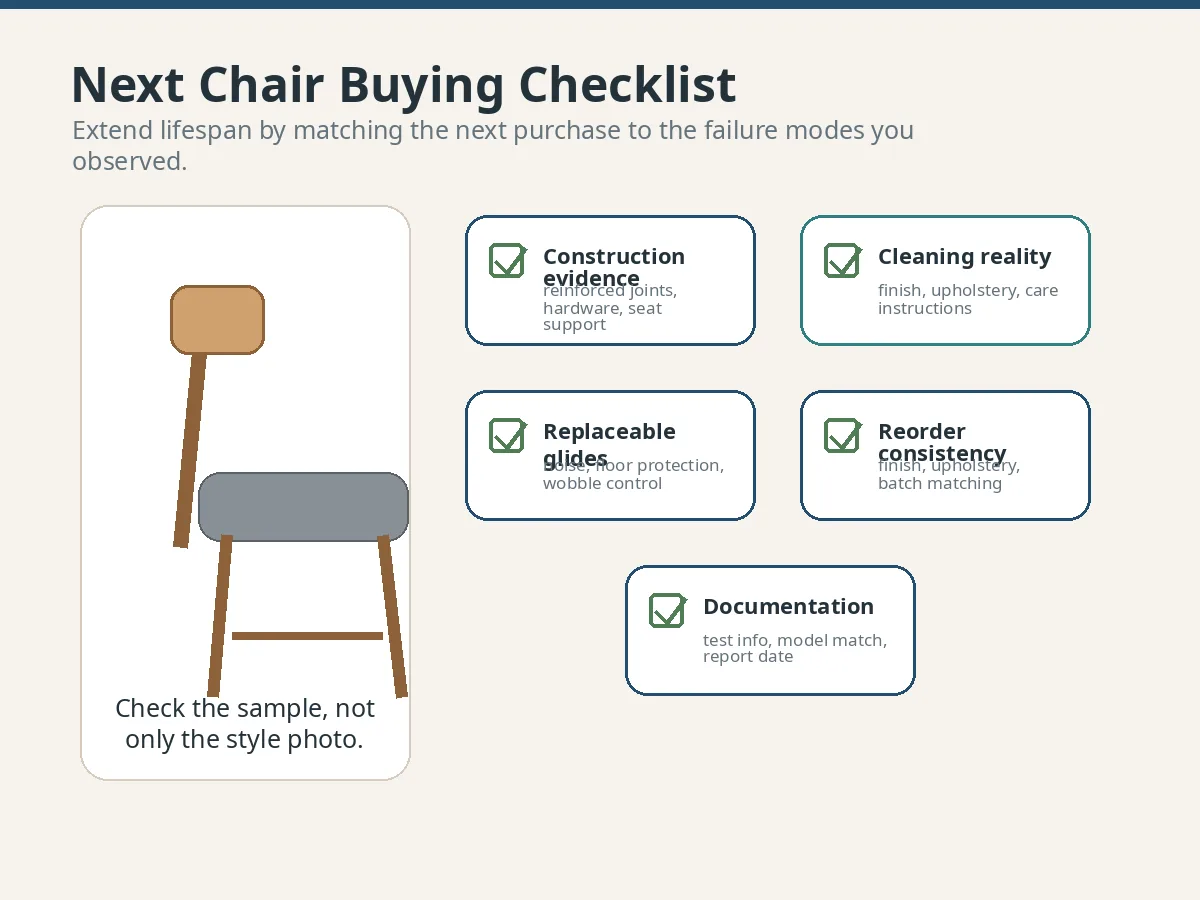
What to look for in your next chair to extend lifespan
This section is the bridge between “when should I replace” and “what should I buy next.” Keep it simple and tied to failure modes.
1) Construction evidence, not marketing labels
If a listing says “commercial grade,” ask what backs that claim:
how joints are reinforced
what hardware is used
how the seat is supported
whether glides are replaceable
This checklist on commercial vs residential dining chairs is a useful way to compare contract-grade construction as something you verify, not just a label you trust.
2) Match materials to your cleaning reality
Need speed-cleaning and stain resistance? Hard seats or wipeable upholstery win.
Need a softer, longer-stay seating experience? Upholstery can make sense, but plan for the surface lifecycle: fabric wear, seam stress, foam compression, cleanability and batch consistency.
For cafés (fast turnover + constant cleaning), this overlaps with the selection framework in how to choose cafe chairs.
3) Prioritize floor glides like they’re a consumable
Operators often overspend on frames and ignore glides.
If your chairs get dragged, replaceable glides are part of lifespan planning. They reduce noise, protect floors, and reduce the wobble that makes guests distrust a chair.
4) Plan for consistency (your dining room is a set)
If you’re mixing chairs, keep that mix contained by zone. That way, replacements don’t create a patchwork look.
If you need a practical approach to keeping finishes coherent, this guide to matching restaurant chairs and tables is a good reference.
OFTE STILLEDE SPØRGSMÅL
How long do restaurant chairs last on average?
Many operators plan for noticeable wear and replacement decisions in the 3–5 year range in busy restaurants, while higher-quality commercial chairs can last longer. The real answer depends on traffic, cleaning, construction quality, and whether you’re measuring safety, comfort, appearance, or maintenance burden.
When to replace restaurant chairs
Replace immediately when there’s a safety issue (persistent wobble, cracks, broken welds, bent legs). Plan replacement when comfort and appearance problems start causing guest complaints, hygiene concerns, or frequent repairs.
What are signs restaurant chairs need replacing?
The most important signs are structural instability (wobble that returns, cracks, broken welds), followed by failed seating surfaces (torn upholstery, flattened foam) and operational symptoms (chairs scraping floors, staff avoiding certain seats).
Should I repair or replace restaurant chairs?
Repair makes sense when the fix is simple and holds (like glides or one-time tightening). If the same batch keeps loosening, or you’re pulling chairs from service weekly, replacement planning usually costs less in downtime and reputation.
Do commercial chair standards guarantee lifespan?
No. Standards can indicate a chair has passed certain safety and durability tests, but they don’t guarantee a specific number of years in real service. Real lifespan still depends on intensity, environment, and care.
Næste skridt
If you’re planning a chair refresh, start with a quick audit: count how many chairs fall into replace now, plan replacement, og repair.
If you are specifying replacement chairs for a busy restaurant, café, hotel dining room or hospitality project, use YeZhi Furniture’s commercial seating options as a shortlist only after confirming construction details, replaceable glides, cleaning instructions, upholstery or finish availability, reorder consistency and any available test documentation.
Planning a restaurant chair refresh?
Prepare your quantity, venue type, chair style, material preference, cleaning requirements, destination country and any custom finish needs before requesting a quote.
Request a commercial seating quote