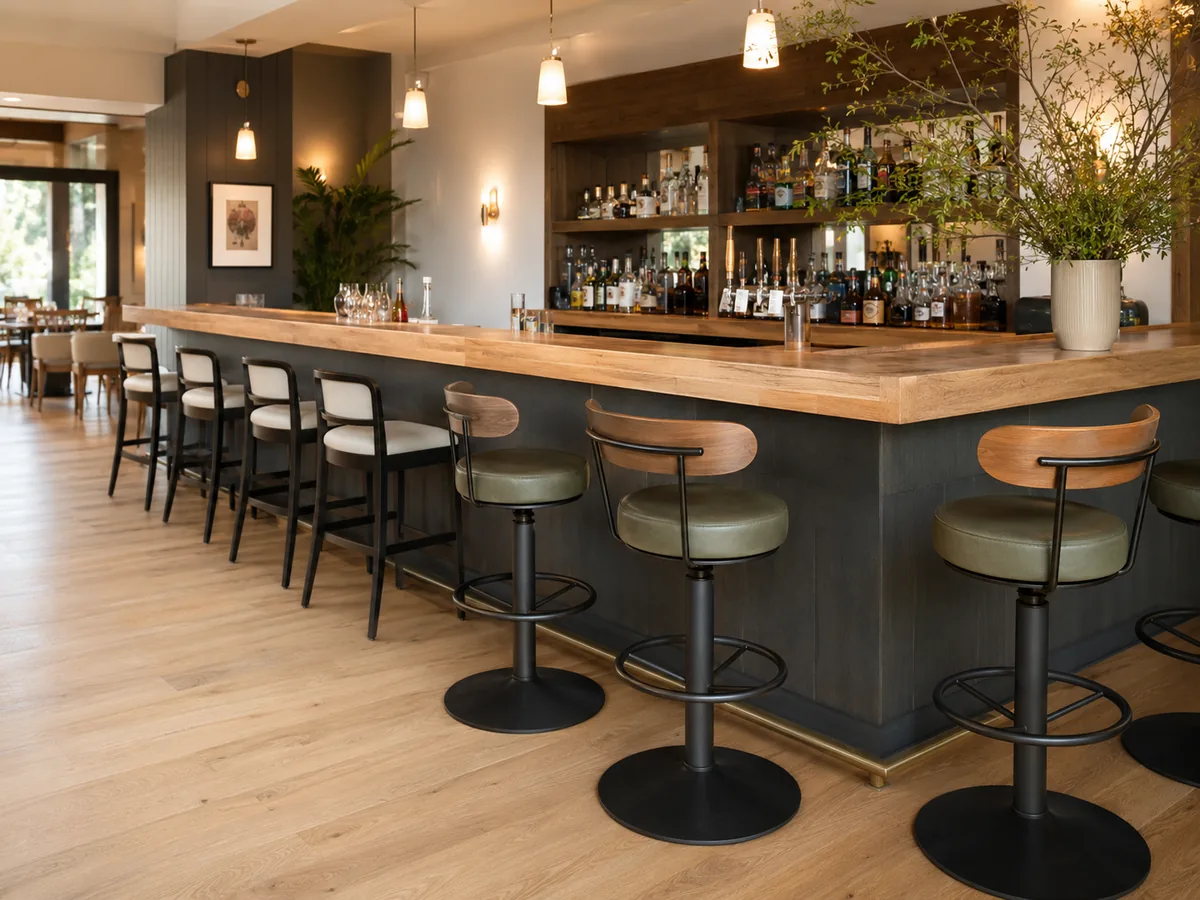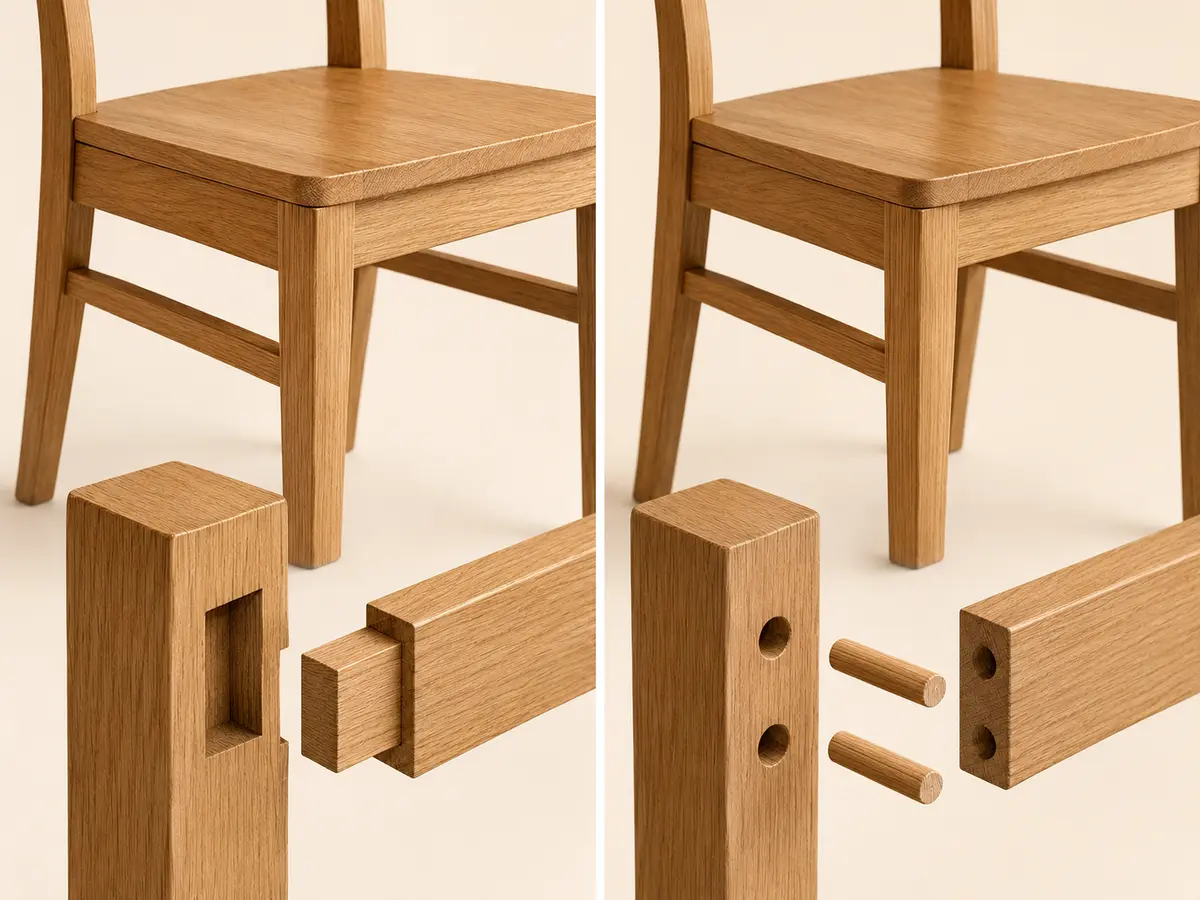
Commercial Bar Stool Buying Guide
For restaurant, café, bar, and hotel buyers sourcing from YeZhi, the choice between upholstered vs non upholstered bar stools is not only a style decision. It affects guest comfort, cleaning speed, staff workload, seating capacity, replacement planning, and how the venue looks after months of daily use.
Choose upholstered bar stools when guests stay longer, comfort matters, and the venue can manage cleaning. Choose non-upholstered bar stools when fast turnover, heavy spills, outdoor exposure, or low maintenance matters more.
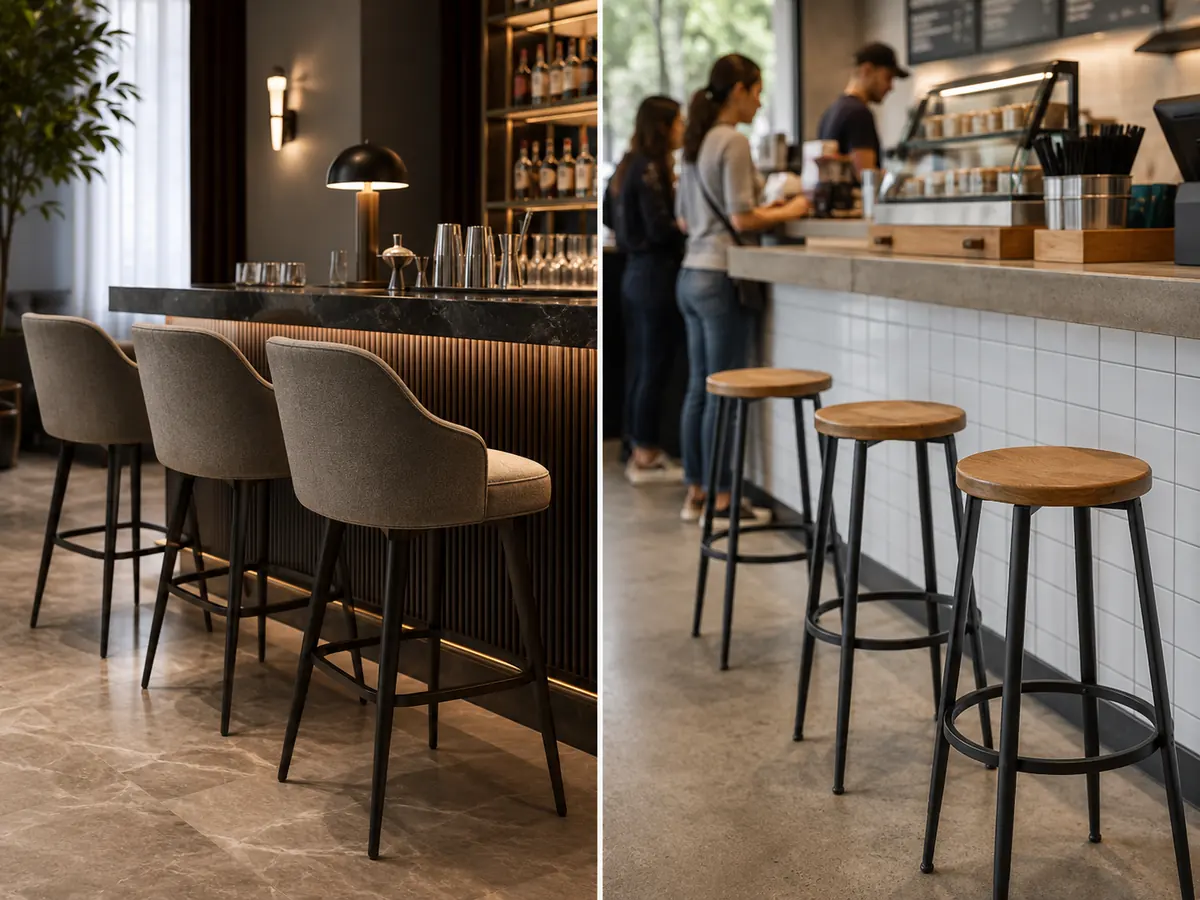
That is the practical rule. A cocktail bar, hotel lounge, or fine dining counter can often justify upholstered seating. A fast-service counter, sports bar, busy café, or high-spill food venue may be better with wood, metal, or another hard-seat option.
At YeZhi Furniture, we supply commercial furniture for restaurant, café, bar, hotel, and project buyers. From our production and export-order experience, the real mistake is not choosing the “wrong look.” The real mistake is choosing a seat surface that does not match the way the venue operates every day.
Quick Answer: Are Upholstered or Non-Upholstered Bar Stools Better?
Upholstered bar stools are better for longer sitting and a more premium atmosphere. Non-upholstered bar stools are better for fast cleaning, high turnover, and lower maintenance.
Comfort-led venue
Hotel bars, cocktail lounges, fine dining counters, and slower hospitality spaces can justify upholstered seating.
Cleaning-led venue
Fast-service counters, sports bars, food courts, and high-spill operations usually need hard seats or confirmed easy-wipe upholstery.
Bulk-order rule
Confirm sample, material, cleaning method, packaging, and PI warranty scope before production.
| Your Priority | Scelta migliore | Perché |
|---|---|---|
| Maximum guest comfort | Imbottito | Softer sitting surface for longer visits |
| Fast cleaning between customers | Non-upholstered | Hard seats are faster to wipe |
| Hotel bar or cocktail lounge | Upholstered, PU, vinyl, faux leather, or leatherette | Comfort and visual value matter |
| Fast food or high-turnover counter | Non-upholstered | Cleaning speed matters more than softness |
| Outdoor or semi-outdoor bar | Non-upholstered or confirmed outdoor-suitable SKU | Standard indoor upholstery is risky outdoors |
| Budget-sensitive large project | Non-upholstered first | Usually simpler to maintain and replace |
| Custom brand color or premium interior | Upholstered with sample approval | Better design control, but higher confirmation risk |
As a planning benchmark, for 15–30 minute sitting, a hard seat can work well if the height, footrest, and seat shape are right. For 45+ minute sitting, upholstery, PU, vinyl, faux leather, leatherette, or a more shaped seat becomes more valuable.
If you want to see YeZhi options for restaurants, cafés, bars, and hotels, please browse our sgabelli da bar commerciali. Send us your venue type, quantity, material preference, and cleaning requirements; we can help narrow the choice before quotation.
Upholstered vs Non-Upholstered Bar Stools: Main Differences
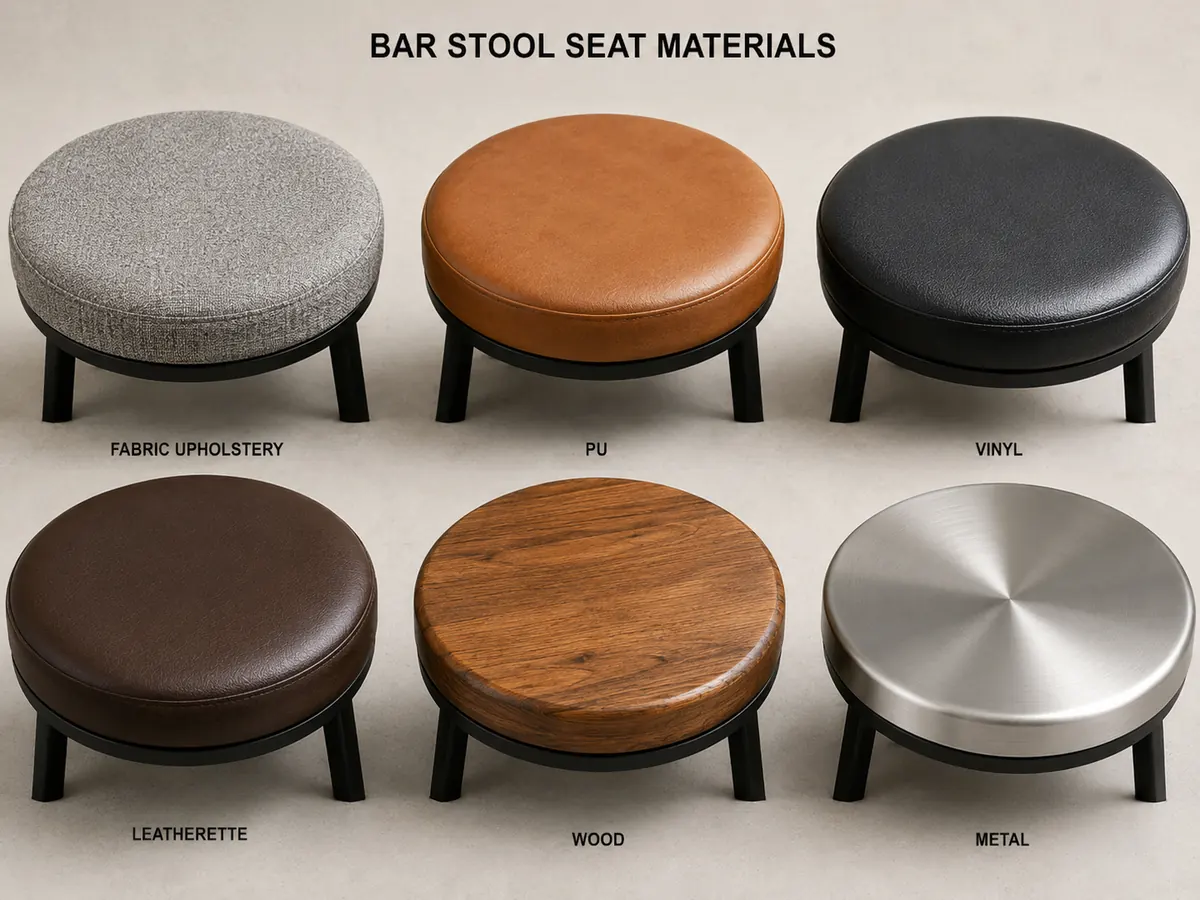
An upholstered bar stool has a padded seat, padded back, or both. The covering may be fabric, PU, vinyl, faux leather, leatherette, or another project-specific upholstery material. Upholstery gives a softer feel and a more finished look, but it also adds seams, foam, fabric or leather-like surfaces, and cleaning requirements.
A non-upholstered bar stool has a hard seat surface. It may use wood, metal, molded plywood, rattan, plastic, or a mixed-material structure. These stools are usually easier to wipe and simpler to maintain, but comfort depends on seat shape, back support, footrest position, and sitting time.
The real comparison is not “soft versus hard.” The real comparison is comfort value versus maintenance responsibility.
| Fattore | Sgabelli da bar imbottiti | Non-Upholstered Bar Stools |
|---|---|---|
| Comfort | Better for longer sitting | Good for short sitting if well shaped |
| Cleaning | More material-specific | Usually faster to wipe |
| Stain risk | Higher, especially with fabric | Lower on most hard surfaces |
| Visual warmth | Stronger premium feel | Cleaner, simpler, more industrial or casual |
| Durability risk | Stains, seam wear, cushion compression | Scratches, chips, dents, finish wear |
| Best use | Hotel bars, lounges, fine dining | Fast food, pubs, outdoor bars, high-turnover counters |
| Bulk-order risk | Higher material and color confirmation risk | Usually simpler to repeat and manage |
What is an upholstered bar stool?
An upholstered bar stool uses padding and a cover material on the seat, backrest, or both. In commercial projects, upholstery can help a space feel warmer, more premium, and more comfortable.
But upholstery is not one single material. Fabric, PU, vinyl, faux leather, leatherette, and genuine leather do not clean, age, or price the same way. For bulk orders, we help you lock the material, color, cleaning method, sample approval, and PI warranty scope before production.
What is a non-upholstered bar stool?
A non-upholstered bar stool uses a hard seat surface such as wood, metal, molded plywood, rattan, or another non-padded material. These stools are common in restaurants, cafés, pubs, food courts, and outdoor-style bar areas because they are easier to clean during service.
A hard seat is not automatically uncomfortable. A shaped wooden or metal seat with the correct height, a solid footrest, and a supportive back can work well for shorter stays.
Is a padded stool always better?
No. A padded stool is better only when the venue benefits from longer sitting comfort and can handle the cleaning work.
If the venue serves oily food, beer, cocktails, sauces, or heavy traffic all day, soft fabric upholstery can become a problem. You should not pay for softness if your staff cannot keep it clean.
Which Is More Comfortable for Restaurant and Bar Guests?
Upholstered stools are usually more comfortable for longer sitting. Non-upholstered stools can work well for short sitting and fast turnover.
Comfort is not judged in a showroom for five minutes. It is judged after the guest has been sitting, eating, drinking, talking, and shifting position.
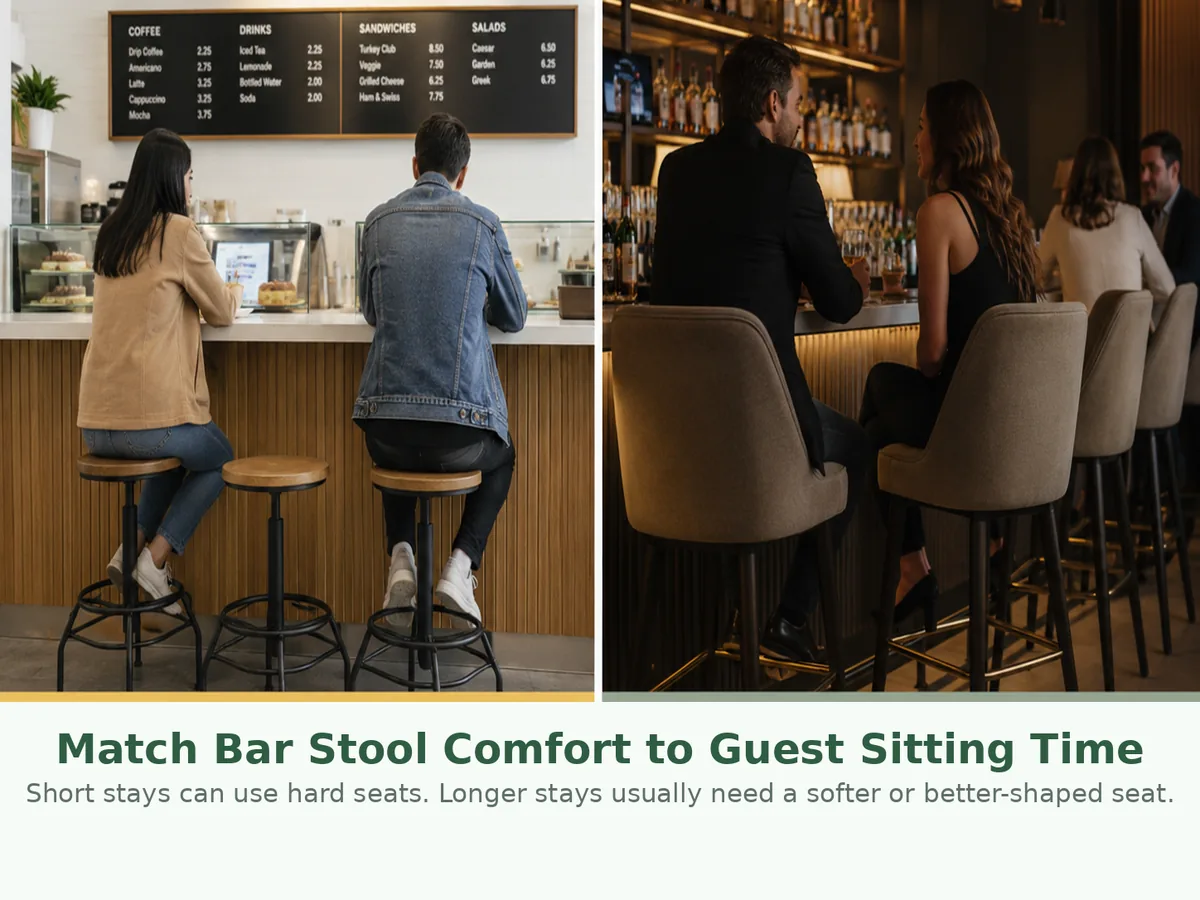
| Average Guest Sitting Time | Scelta migliore | Commercial Judgment |
|---|---|---|
| 15–30 minutes | Non-upholstered usually acceptable | Good for quick-service counters, bakeries, casual cafés, and fast turnover |
| 30–45 minutes | Choose by venue type | Upholstery helps, but hard seats can still work if shaped well |
| 45+ minutes | Upholstered, PU, vinyl, leatherette, or shaped seat preferred | Better for cocktail bars, hotel lounges, and fine dining bar seating |
Short sitting: 15–30 minutes
For short sitting, a hard seat is often enough. The guest is not settling in for a long meal. They may drink coffee, eat quickly, wait for takeaway, or sit at a counter for a short break.
For this use, do not overpay for upholstery unless the brand image requires it. A well-shaped wooden or metal stool can be the smarter commercial choice.
Medium sitting: 30–45 minutes
This is the middle zone. A café, bakery, casual restaurant, or bar may have guests sitting long enough to notice the seat, but not long enough to require full lounge comfort.
For this range, choose by zone:
- Use hard seats where cleaning speed and turnover matter.
- Use upholstered seats in slower corners or premium areas.
- Use PU, vinyl, faux leather, or leatherette when you want a softer seat but do not want fabric-level cleaning risk.
Long sitting: 45+ minutes
When guests stay longer than 45 minutes, comfort becomes a stronger business issue. A hard seat can still work, but the seat shape, footrest, backrest, and width must be right.
For cocktail bars, hotel lounges, private dining bar counters, and higher-ticket venues, upholstered or leather-like bar stools usually create a better guest experience.
Why back support and footrests still matter
Padding should not hide bad stool design. A soft seat with poor height or no useful footrest can still feel wrong.
As planning benchmarks:
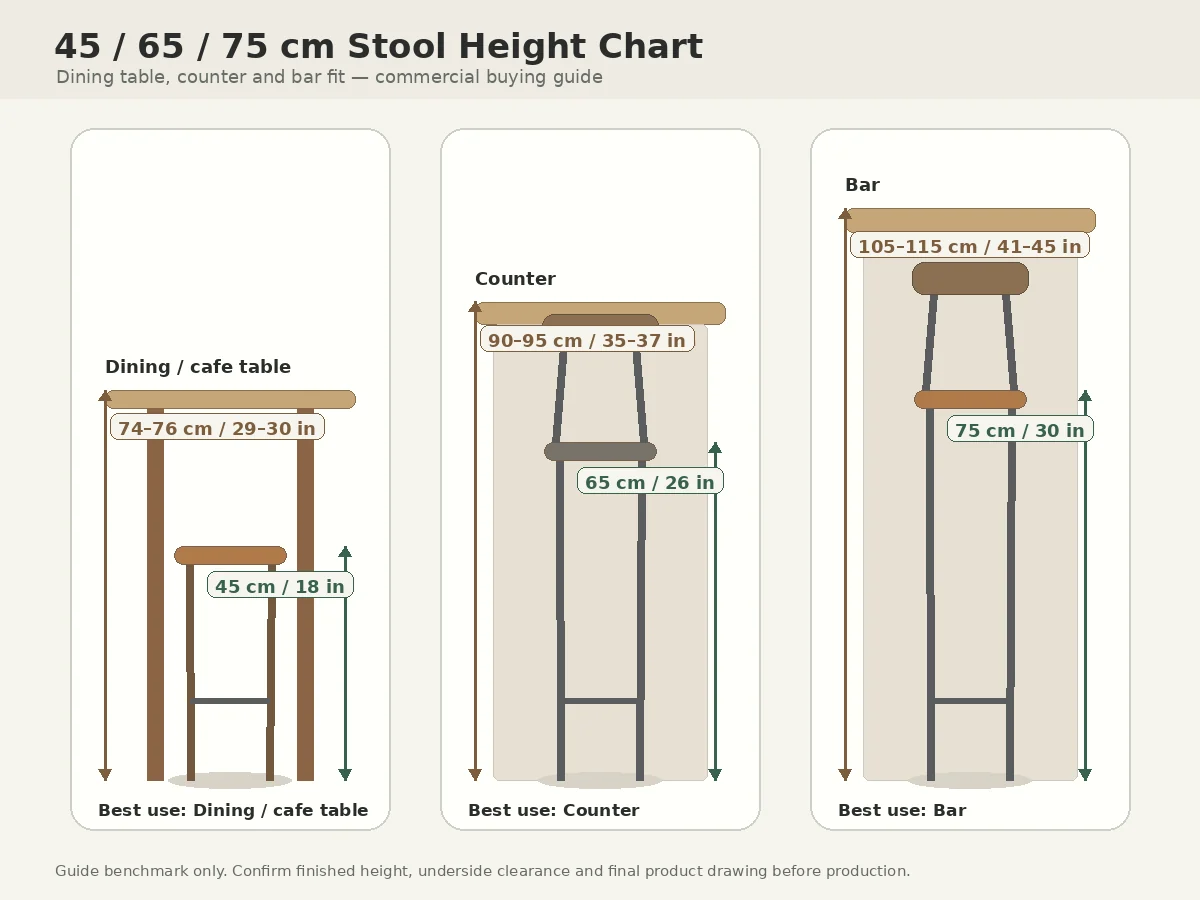
- Counter stool seat height: 24–27 in / 61–69 cm
- Bar stool seat height: 29–32 in / 74–81 cm
- Seat-to-counter clearance: 9–12 in / 23–30 cm
If you are not sure whether your project needs bar height or counter height, please read our bar stool and counter stool guide. You can also use our bar stool height measuring guide before sending us your counter height.
Which Is Easier to Clean During Daily Service?
Non-upholstered bar stools are easier to clean during daily service. Upholstered bar stools need more material-specific cleaning and better staff discipline.
A restaurant does not clean like a showroom. Staff wipe quickly between customers. During rush hour, nobody has time to treat every stain carefully. If a seat needs slow cleaning, it may look dirty even when the frame is still strong.
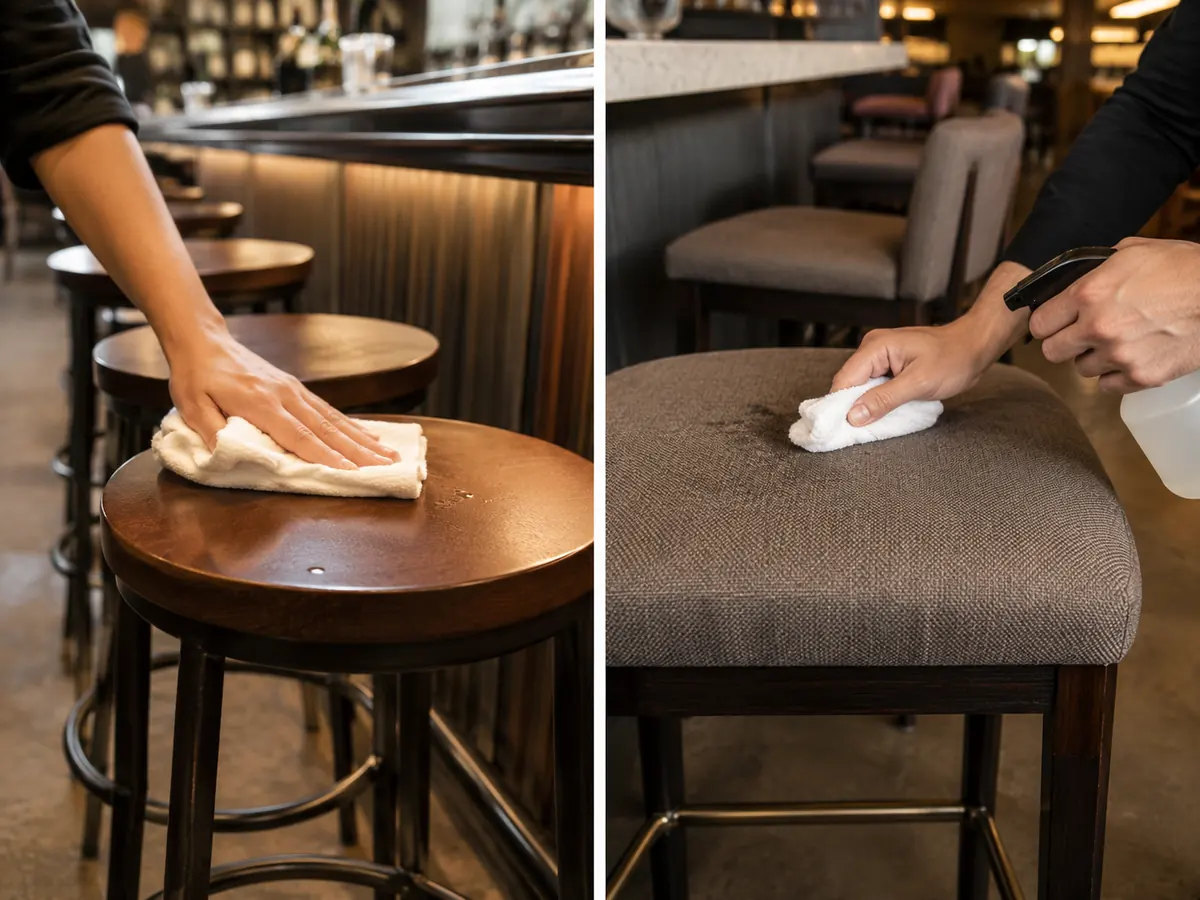
Daily wipe-down reality
| Seat Surface | Cleaning Reality |
|---|---|
| Wood seat | Fast wipe, but finish can scratch or wear |
| Metal seat | Fast wipe, but can dent, scratch, or feel cold |
| PU / vinyl / faux leather / leatherette seat | Often faster to wipe than fabric, but cleaning method must be confirmed |
| Fabric upholstery | Warm and comfortable, but higher stain and odor risk |
| Genuine leather | Premium look, but care requirements must be confirmed before bulk order |
The wrong seat surface creates daily labor. If a venue has 80 stools and each one takes extra time to clean, that is not a small issue. It becomes part of the operating cost.
Fabric upholstery cleaning risk
Fabric can look excellent in photos. It can also trap stains, oil, sweat, crumbs, sauces, and drink marks.
For greasy, high-spill, fast-turnover venues, choose fabric-upholstered bar stools only when the cleaning plan is already clear.
Fabric may work in
- Hotel lounges
- Low-spill waiting areas
- Premium dining spaces
- Private bar rooms
- Controlled hospitality interiors
Fabric is risky in
- Burger bars
- Sports bars
- Beer-heavy pubs
- Outdoor counters
- Fast-service restaurants
- Family restaurants with frequent spills
PU, vinyl, faux leather, and leatherette as middle options
PU, vinyl, faux leather, or leatherette can be practical middle options when you want a softer seat but still need faster wipe-down than fabric. We match the cleaning method to the selected material sample and your project specification.
For bulk orders, we can prepare the material sample, cleaning recommendation, and final specification before production, so your team knows how the seat should be used and maintained.
Hard seats for fast turnover
For high-turnover operations, hard seats are often the safer choice.
If your staff must clean fast between customers, we usually recommend non-upholstered seats or an easy-wipe upholstery option selected for your project.
This is especially true for counter seating in fast food, casual dining, busy cafés, pubs, sports bars, food courts, and semi-outdoor bar areas.
If you prefer hard-seat stools for faster cleaning, please view our sgabelli da bar in legno all'ingrosso e sgabelli da bar in metallo all'ingrosso. We can help match the seat surface to your traffic level and cleaning routine.
Which Lasts Longer in Commercial Use?
Neither type always lasts longer. Non-upholstered stools usually handle cleaning abuse better, while upholstered stools can deliver better comfort but need more careful material selection.
Durability has two parts:
- Frame durability
- Seat surface durability
Many purchasing teams confuse them. A metal or wooden frame may still be strong while the seat surface looks tired. Or the upholstery may still look good while the frame joints need inspection.
A stool can fail commercially before it fails structurally. If the frame is strong but the seat looks dirty, flattened, or scratched, the customer still sees old furniture.
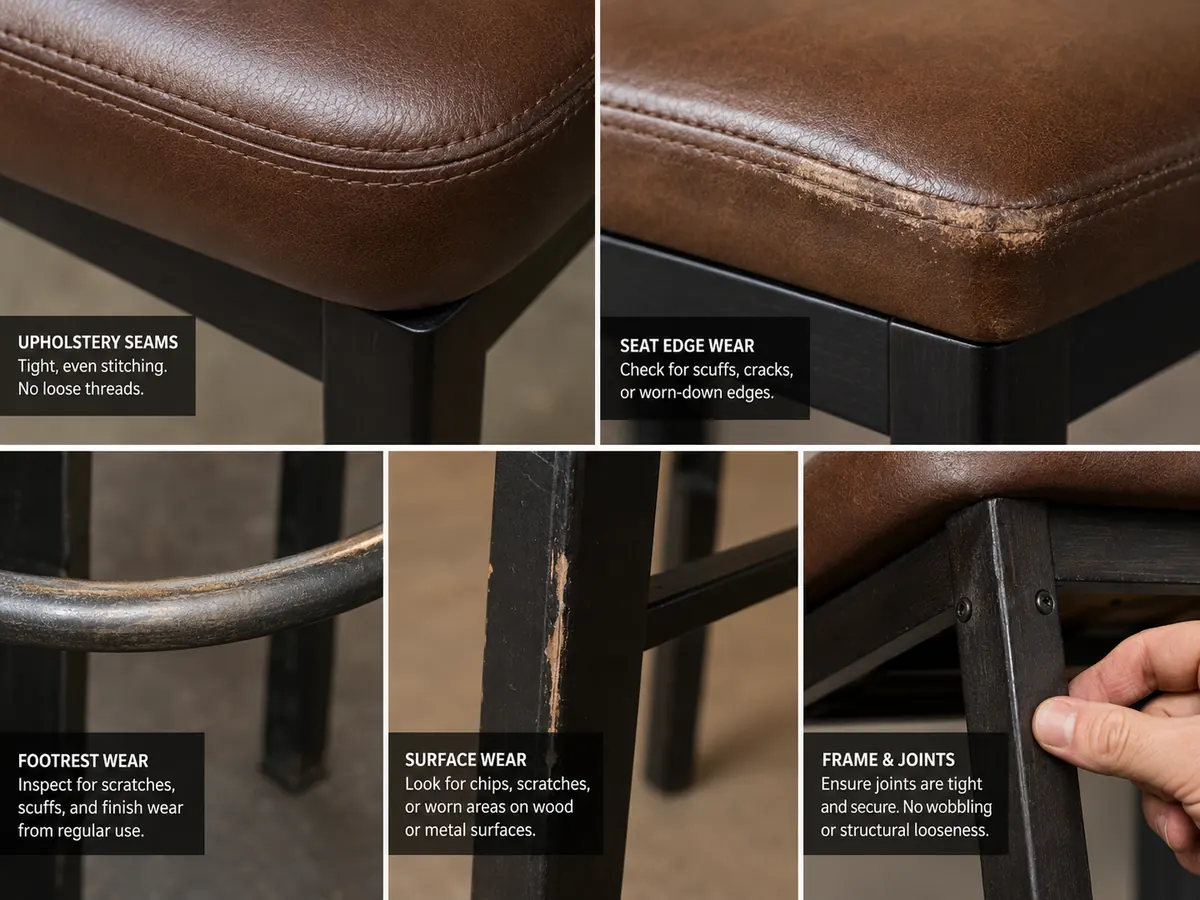
How upholstered seats age
Upholstered seats can show age through stain marks, color change, seam wear, edge rubbing, cushion compression, fabric pilling, surface cracking on unsuitable materials, and odor if cleaning is poor.
A beautiful upholstery photo is only the starting point. For commercial projects, we help you check the actual material sample and match it with your daily cleaning process.
If abrasion resistance matters for your project, tell us the target requirement before quotation. We can help check a suitable upholstery option for the selected material. You can also read YeZhi’s double rub count upholstery guide to understand how upholstery abrasion numbers are normally read.
How wood and metal hard seats age
Wood seats can show scratches, dents, finish wear, and edge damage. Metal seats can scratch, dent, or feel less comfortable for long sitting. A hard seat is easier to clean, but it is not damage-proof.
For high-traffic food and drink venues, easy cleaning is usually more important than softness.
Why frame durability and seat surface durability are different
Before a bulk order, our team reviews frame material, joint construction, footrest position, seat surface, edge finish, upholstery seams, cleaning method, replacement planning, and export packing method with you.
YeZhi has wooden workshops, upholstered workshops, metal welding, sewing, and painting workshops. Because commercial bar stools often combine several materials, we lock the product specification with you before order confirmation.
How YeZhi helps before bulk order
| Articolo | How We Use It in Production |
|---|---|
| Seat material | We match fabric, PU, vinyl, leatherette, wood, or metal to your comfort and cleaning needs. |
| Color sample | We use sample approval to reduce color mistakes before bulk production. |
| Finish sample | We help compare wood and metal finishes under the project style you want. |
| Upholstery seam position | We review seam placement so the seat is practical for daily use and cleaning. |
| Protezione poggiapiedi | We pay attention to footrest position and finish because this area takes heavy use. |
| Packing method | We plan export packing to protect seats, frames, legs, and visible finishes during shipping. |
| Warranty scope | We write the agreed frame, upholstery, and finish coverage on the PI before production. |
YeZhi handles frame, upholstery, and finish warranty scope according to the final order condition. Before production, we write the agreed warranty scope on the PI so both sides are clear.
Best Choice by Venue Type
The best commercial bar stool depends on venue type, not personal taste.
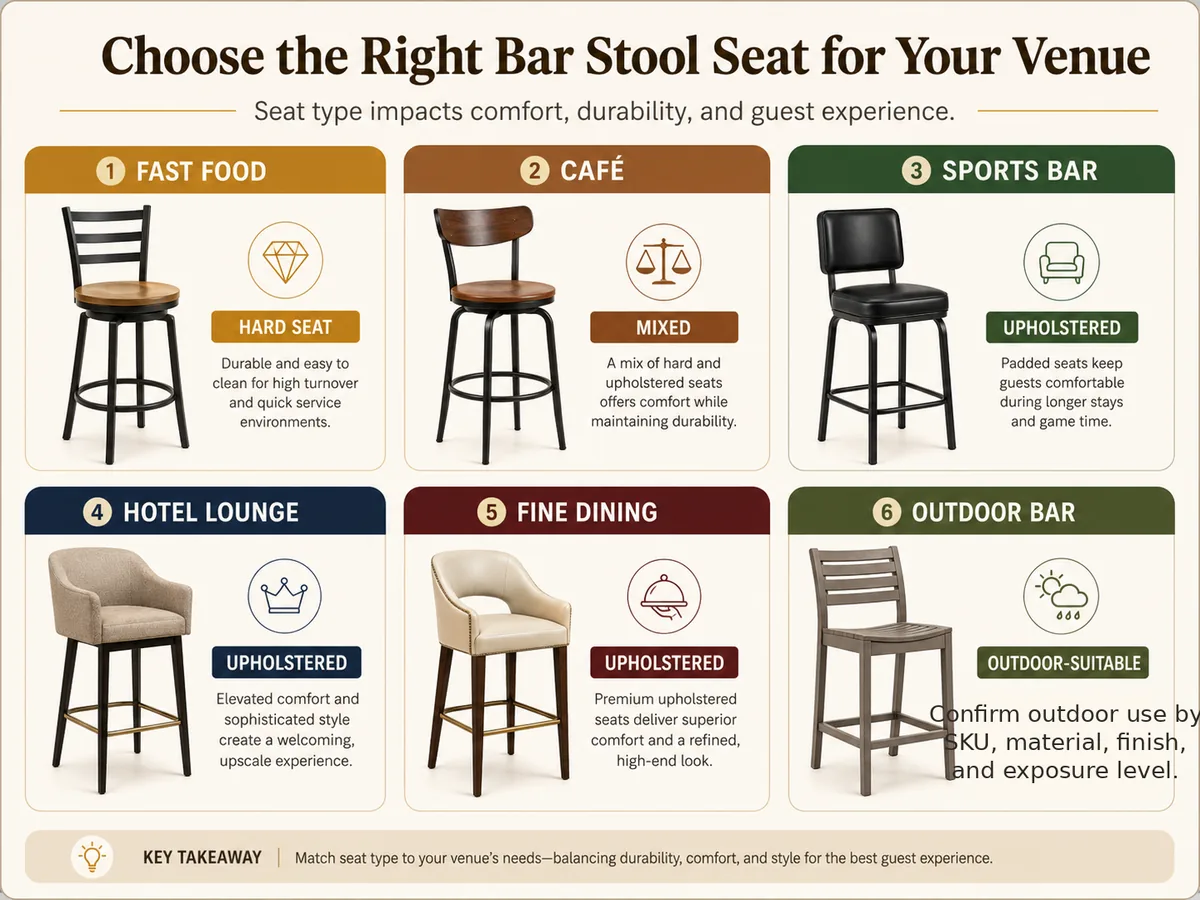
| Tipo di sede | Recommended Seat Type | Perché |
|---|---|---|
| Fast-food counter | Non-upholstered | Short stay, fast cleaning, heavy turnover |
| Bakery or quick café | Non-upholstered or mixed | Hard seats at quick counters, softer seats in slower zones |
| Coffee shop | Mixed choice | Use upholstered seats where guests stay longer |
| Cocktail bar | Upholstered, PU, vinyl, faux leather, or leatherette | Comfort and premium atmosphere matter |
| Hotel lounge | Upholstered, PU, vinyl, faux leather, or leatherette | Longer sitting and brand image matter |
| Sports bar | Mostly non-upholstered | Beer, food, and fast cleaning create risk |
| Pub | Wood, metal, PU, vinyl, or leatherette | Choose by cleaning level and brand style |
| Fine dining bar | Imbottito | Guest comfort supports higher-ticket service |
| Outdoor bar | Non-upholstered or confirmed outdoor-suitable SKU | Standard indoor upholstery is risky |
| Project furniture / chain store | Sample-approved material | Repeat color, packing, and replacement planning matter |
Fast-food and quick-service counters
Use non-upholstered stools first. The guest stay is short, staff clean fast, and price pressure is usually high. A hard seat with a good footrest is often enough. For this use, fabric-upholstered stools only make sense when the brand requires the look and the cleaning plan is clear.
Cafés and bakeries
Cafés need balance. Some customers sit for 15 minutes. Others stay for one hour. A smart layout can mix hard seats at quick counters, upholstered seats in slower corners, and PU, vinyl, faux leather, or leatherette where spills are possible but comfort still matters.
Cocktail bars and hotel lounges
Upholstered stools are usually better here. Guests stay longer, order higher-value drinks, and expect a more comfortable seat. For cocktail bars and hotel lounges, upholstery or leather-like materials usually support the business model better than a bare hard seat.
Sports bars and pubs
Sports bars and pubs need caution. Beer, fried food, sauces, and crowded service make upholstery risky. Wood, metal, PU, vinyl, faux leather, and leatherette are often safer than fabric.
If you are sourcing stools for a pub, beer bar, or sports bar, please see our pub bar stools. Tell us your spill risk, cleaning frequency, and expected order quantity so we can recommend safer seat materials.
Fine dining bar seating
Fine dining bar seating can justify upholstery. Guests sit longer, interiors are more controlled, and comfort supports the guest experience. But you still need to check stool width and layout before confirming the order. A large upholstered bar stool may reduce seating count.
Outdoor and semi-outdoor bars
For outdoor or semi-outdoor projects, tell us the exposure level first. YeZhi has outdoor bar stool options such as aluminum or treated metal models, and we match the suitable SKU, material, and finish to the use scene.
Outdoor bar stools face moisture, sunlight, dust, temperature change, and more cleaning abuse. For outdoor or semi-outdoor bar seating, non-upholstered materials are usually safer unless the product is specified for that use.
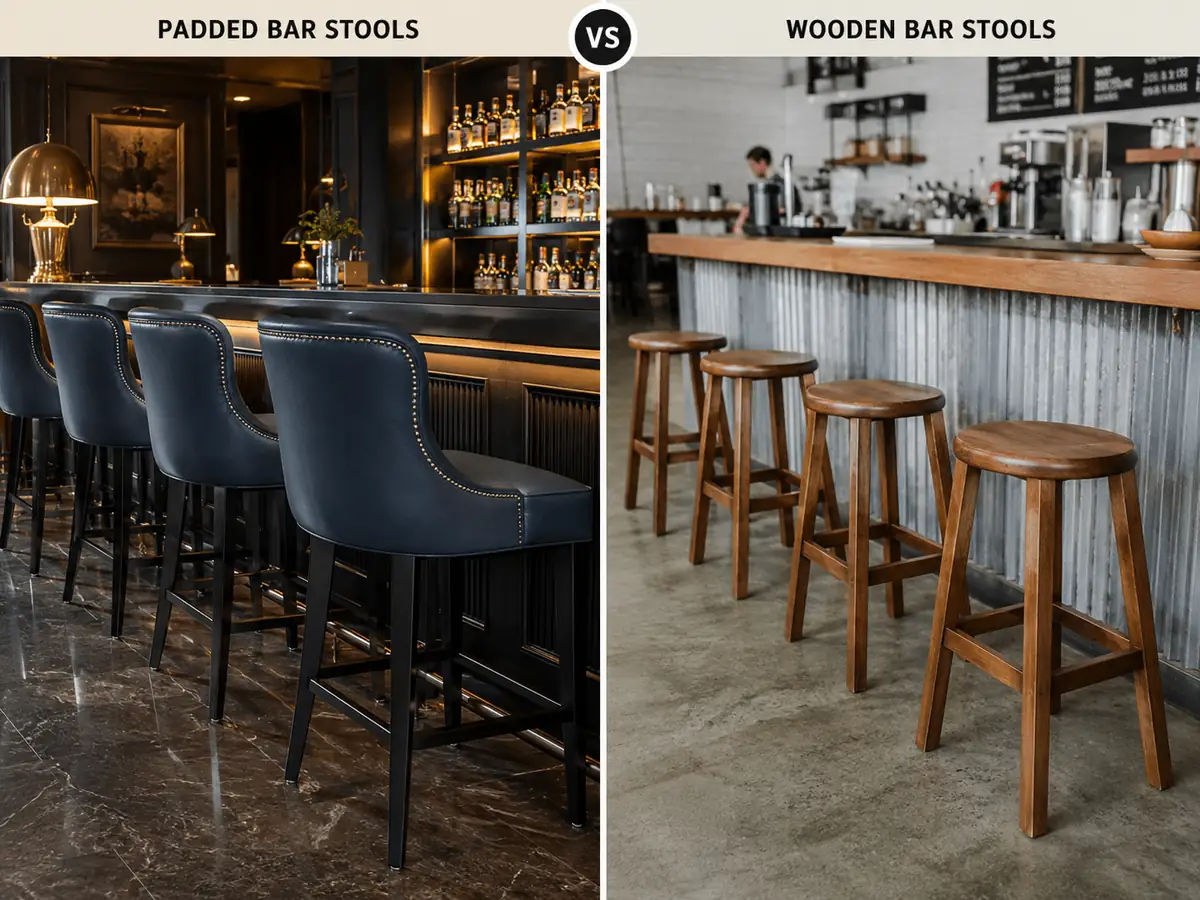
Padded vs Wooden Bar Stools: Which Is Better?
Padded bar stools are better for longer sitting. Wooden bar stools are better for fast cleaning, simpler maintenance, and shorter stays.
| Situation | Scelta migliore |
|---|---|
| Guest sits under 30 minutes | Wooden or hard seat |
| Guest sits 45+ minutes | Padded or upholstered seat |
| Heavy spills | Wood, metal, or another hard surface |
| Premium lounge feel | Padded seat |
| High-volume restaurant | Wood first, unless comfort is a brand priority |
| Hotel bar | Padded, PU, vinyl, faux leather, or leatherette |
A wooden stool can still be comfortable when the seat is shaped properly and the stool height is right. A padded stool can still be a bad purchase if the fabric stains quickly or the stool is too wide for the counter layout.
If you want to compare softer leather-like seats with hard wood seats, please browse our sgabelli da bar in pelle all'ingrosso e sgabelli da bar in legno all'ingrosso. We can also suggest a mixed layout for cafés, bars, and hotel projects.
Size, Spacing, and Layout Problems With Upholstered Bar Stools
A bulky upholstered stool can reduce seating capacity. Check the layout before choosing the softer seat.
Some customers choose a wide upholstered stool because it looks better in a product photo. Then the site team discovers that fewer stools fit along the bar. That mistake affects revenue, not just appearance.
Seat width and bar capacity
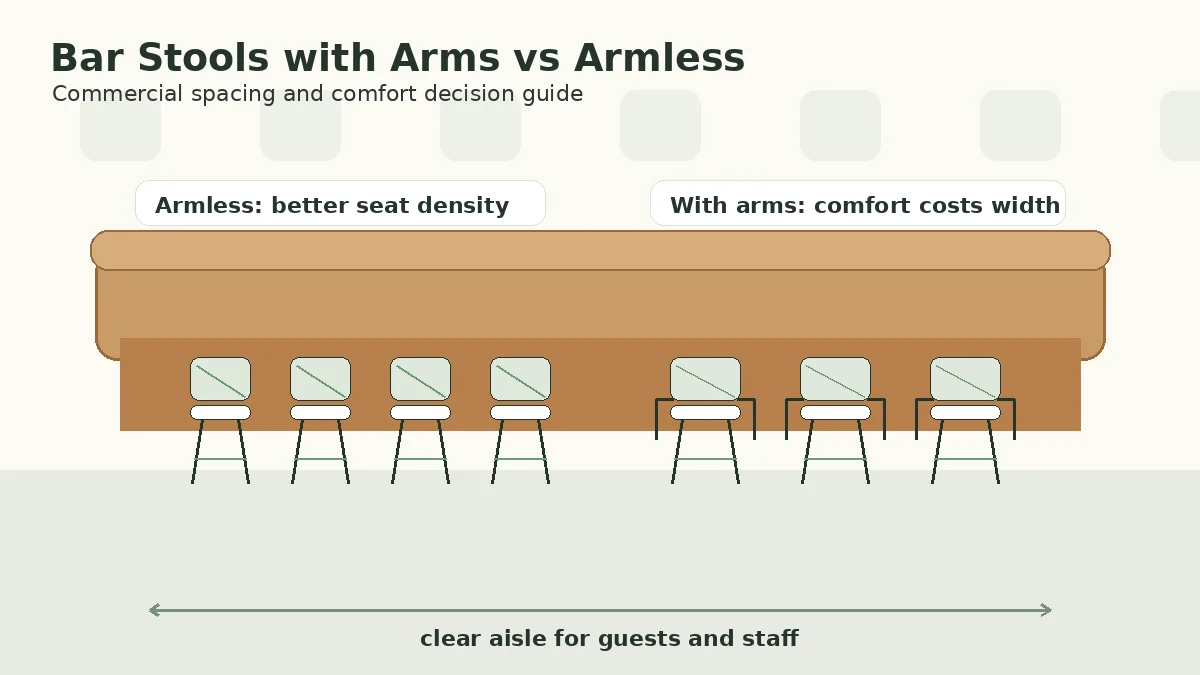
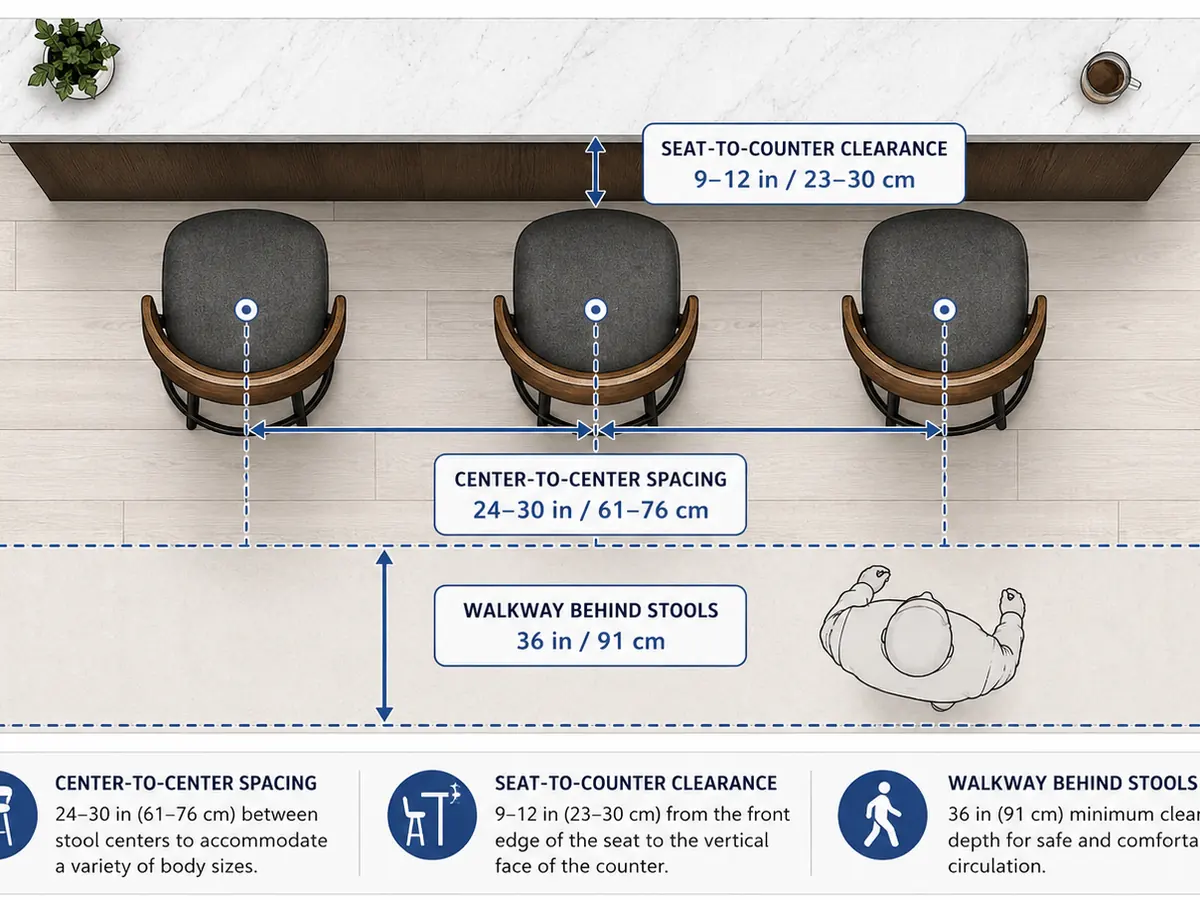
As a planning benchmark, allow 24–30 in / 61–76 cm of space per stool, measured center-to-center. Slim hard-seat stools may fit more easily. Upholstered stools with arms, thick backs, or wider cushions may need more space.
If the counter is 120 in / 305 cm long, five slim stools may fit, but five bulky upholstered stools may feel crowded. Counter length is only the first step; actual stool width still matters. Check the actual stool width.
Clearance under the counter
For comfortable leg space, start with 9–12 in / 23–30 cm between the stool seat and the underside of the counter, then verify against the actual counter and stool model.
Walkway behind occupied stools
For restaurant circulation, start with 36 in / 91 cm behind occupied stools or chairs as a planning baseline. This matters more with upholstered stools because they may have thicker backs or arms.
For a fuller spacing calculation, use YeZhi’s guide on how many bar stools do I need.
Common Buying Mistakes to Avoid
Choosing by style photo only
A product photo is useful, but it should not be the only buying basis. A stool can look excellent online and still be wrong for the venue. Check how long guests sit, what food and drinks are served, how often staff clean seats, whether the area is indoor or outdoor, how many stools must fit, and whether repeat orders will be needed later.
Ordering fabric upholstery for messy, fast-turnover venues
Fabric is not automatically wrong, but it is wrong for many high-spill venues. For greasy, messy, fast-turnover service, fabric upholstery should only be used when the cleaning process is already clear.
Ignoring aisle clearance
A comfortable stool still fails if it blocks staff movement. Wide upholstered stools, stools with arms, and thick backrests need more space. Before ordering, compare stool width with counter length and walkway space.
Confirming custom color from screen photos only
Screen color is not reliable. For custom upholstery, wood finish, or metal finish, ask for a material swatch or sample before bulk production. For high-risk custom projects, order 1–2 samples before large custom orders when timing and budget allow.
Forgetting replacement and batch consistency
For hotels, chains, and multi-location projects, we recommend planning repeat orders from the beginning. Tell us whether you may need the same material, color, replacement parts, or repeat stools later, and we will consider that when discussing material, finish, and packing.
Using indoor upholstery outdoors
For outdoor bars, choose the material by SKU and exposure level, not by indoor photos. Outdoor use changes the risk. Sun, rain, humidity, dust, and cleaning methods can damage materials that work perfectly indoors.
How YeZhi Helps You Confirm the Right Bar Stool Order
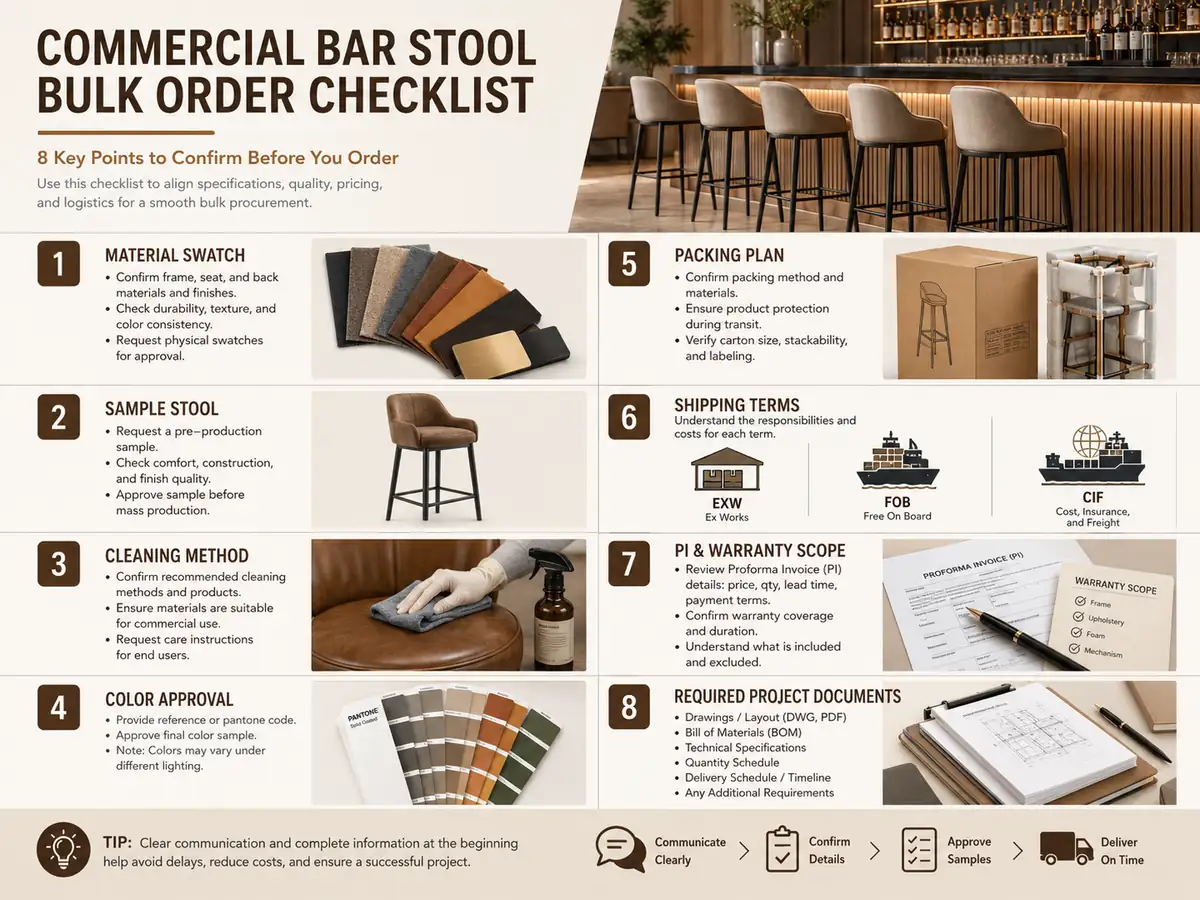
Before we quote or produce upholstered bar stools for a restaurant, café, bar, hotel, or project order, we usually work through these points with you.
| Checkpoint | How YeZhi Helps |
|---|---|
| Material swatch | We can prepare or reference the real upholstery, wood, or metal finish sample. |
| Sample stool | We can arrange a sample stool when the project needs comfort, height, footrest, and cleaning checks. |
| Cleaning trial | We help match the cleaning method to the selected surface material. |
| Color approval | We use physical sample approval for important upholstery, wood, or metal finish colors. |
| Layout check | We can check stool width against your counter length and walkway requirement. |
| MOQ personalizzato | We explain whether the order uses a regular model or full custom production. |
| Test documents | Send us any project-required standards before quotation so we can check suitable options. |
| Imballaggio | We confirm packing method for seats, legs, footrests, and visible surfaces. |
| Shipping term | We support EXW, FOB, and CIF according to your shipping plan. |
| Warranty scope | We write the agreed frame, upholstery, and finish warranty scope on the PI. |
YeZhi’s regular MOQ starts from about 15 pcs per SKU. Mixed models, colors, and materials can be accepted in one order.
For full OEM or custom production, the usual starting quantity is about 100 pcs per design. Production lead time is about 30 days after order confirmation, and ocean freight planning baseline is about 30 giorni.
YeZhi supports EXW, FOB, and CIF, with ocean freight as the main shipping method for wholesale orders, including LCL and full-container options.
What Should You Send for a Bar Stool Quote?
A good quote request is not just “send price.” When you send the use scene first, our team can recommend the right seat type before calculating the final quotation.
Send us the quantity per model, required stool height, counter or bar height, venue type, indoor/outdoor use, average guest sitting time, spill risk, preferred seat type, backrest or armrest requirements, color reference, target budget, destination country or port, trade term, customization need, and expected timeline. If your project has special standards, send them with the RFQ so we can check the suitable model and material before quoting.
The clearer your project information is, the faster we can help you choose the right model, sample the right material, and prepare a practical quotation.
YeZhi Furniture has focused on the furniture industry for more than 19 years and works with commercial furniture buyers for restaurants, cafés, bars, hotels, and project orders. YeZhi can help with material selection, finish matching, upholstery colors, packaging, branding, sample preparation, and project-based customization under the final order conditions.
If you want to see more YeZhi bar stool styles, please browse our bar stool chair category. If your project is mainly for restaurants, cafés, or dining spaces, you can also view our sgabelli da bar per ristoranti all'ingrosso and then send us your quantity and material preference.
Need bar stools for a restaurant, café, bar, hotel, or project order?
Send YeZhi your quantity, venue type, stool height, preferred material, cleaning requirements, destination country, and shipping term. Our team can help with model selection, sample discussion, quotation, production planning, packing, and ocean freight preparation.
Tell YeZhi Your Project Standards Before Quotation
Some projects need extra requirements such as load capacity, fire rating, upholstery abrasion, special foam, outdoor use, or written warranty scope. Send those requirements to us before quotation.
After we know the target requirement, we can check the selected model, material, finish, and order condition, then confirm what can be supplied or written on the PI.
| Articolo | How YeZhi Handles It |
|---|---|
| Load capacity | We check the selected model specification or available test documentation when required. |
| Fire rating | You send the target standard first; we check suitable material or model options. |
| Upholstery abrasion | We help match the upholstery option to the abrasion requirement when the project asks for it. |
| Foam density | We discuss foam requirements when comfort level or project specification needs it. |
| Uso esterno | We select outdoor-suitable options by SKU, material, finish, and exposure level. |
| Garanzia | We write the agreed frame, upholstery, and finish coverage on the PI before production. |
Before production, YeZhi locks the material, cleaning guidance, required project details, packing method, and PI warranty scope in writing. That is how we help prevent a good-looking stool from becoming the wrong commercial order.
FAQs About Upholstered vs Non-Upholstered Bar Stools
Are upholstered bar stools practical for restaurants?
Yes, upholstered bar stools are practical for restaurants when guests sit longer and the venue can manage cleaning. They are better for lounges, hotel bars, fine dining, and slower dining zones. For greasy, high-spill, fast-turnover spaces, we usually recommend hard seats or easy-wipe upholstery unless the material and cleaning process are clear.
Are non-upholstered bar stools uncomfortable?
No, non-upholstered bar stools are not automatically uncomfortable. A shaped seat, correct height, stable footrest, and supportive back can make a hard seat work well for short to medium sitting. For longer sitting, upholstery, PU, vinyl, faux leather, leatherette, or a shaped seat usually becomes safer for comfort.
Are padded bar stools better than wooden bar stools?
Padded bar stools are better for longer sitting, while wooden bar stools are better for fast cleaning and simpler maintenance. For quick-service counters and high-turnover restaurants, wooden or other hard seats are often the better commercial choice.
How do you clean upholstered bar stools?
Clean upholstered bar stools according to the confirmed material specification, not guesswork. Fabric, PU, vinyl, faux leather, leatherette, and genuine leather can require different care. Before bulk order, ask for the material sample and cleaning guidance. Do not assume any upholstery is waterproof or stain-proof unless confirmed.
Which bar stool is better for a busy bar?
For a busy bar, choose non-upholstered stools or a confirmed easy-clean PU, vinyl, faux leather, or leatherette option. Beer, cocktails, food, and crowding create cleaning pressure. Fabric upholstery should be used carefully.
Which bar stool is better for a hotel lounge?
For a hotel lounge, upholstered or leather-like bar stools are usually better. Guests stay longer, comfort matters more, and the stool helps support a premium interior.
Can upholstered bar stools be used outdoors?
Only use upholstered bar stools outdoors if the exact material, finish, and SKU are confirmed for outdoor or semi-outdoor use. Standard indoor upholstery should not be used in outdoor bars without confirmation.
What should I check before ordering custom upholstered bar stools?
Check the material swatch, sample stool, cleaning method, color approval, MOQ, lead time, packaging, shipping term, required test documents, and PI warranty scope before production. For YeZhi, regular MOQ starts from about 15 pcs per SKU, while full OEM/custom production usually starts from about 100 pcs per design.
Final Commercial Recommendation
Choose upholstered bar stools for comfort-led, long-stay, premium venues. Choose non-upholstered bar stools for fast-turnover, high-spill, outdoor, or low-maintenance venues.
Softness is only one part of the decision. Match the stool to the business model.
If you are sourcing bar stools for a restaurant, café, bar, hotel, or project order, send YeZhi your quantity, venue type, stool height, preferred material, cleaning requirements, destination country, and shipping term. We will help you narrow the seat type, discuss samples, prepare the quotation, plan production, and arrange suitable export packing and freight terms.