Commercial furniture buyer guide
If you’re buying chairs for a restaurant, café, hotel dining room, or a hospitality project, the question isn’t “Which chair looks better?” It’s “Which chair will still feel solid after thousands of sit-downs, daily cleaning, and constant dragging?”
“Commercial grade” and “contract grade” are market descriptions, not complete proof of performance by themselves. Their practical meaning depends on the cited standard, tested model, test scope, warranty terms and intended-use statement supplied with the chair. Commercial (contract-grade) dining chairs are designed for repeated public use. Residential (home) dining chairs are usually designed for lower-frequency use and gentler handling. The difference shows up in the places buyers don’t see in product photos: joints, reinforcements, finishes, and the testing paperwork behind the specs.
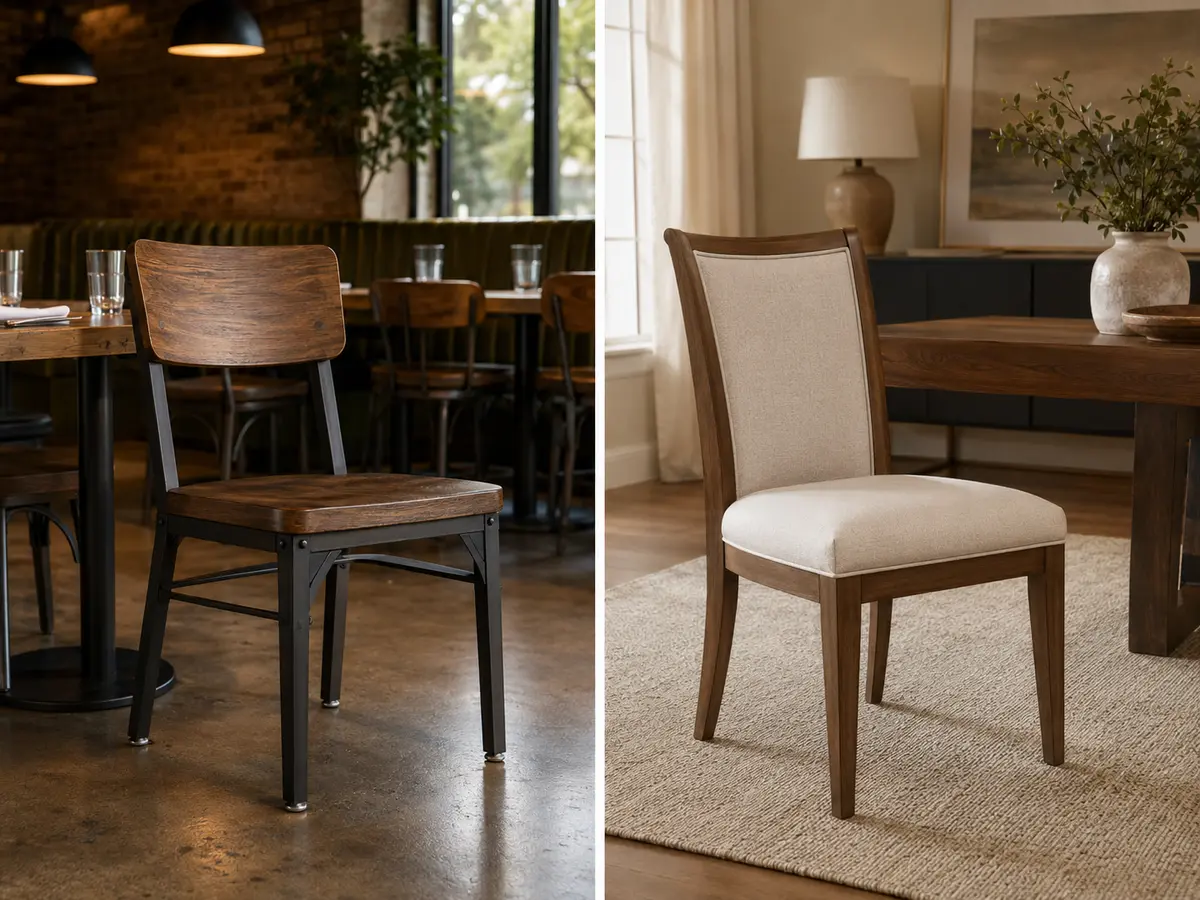
Commercial dining chairs vs residential dining chairs: a quick comparison
| Evaluation criteria | Commercial / contract-grade dining chairs | Residential / home dining chairs |
|---|---|---|
| Typical use scenario | Restaurants, cafés, hotels, public spaces, project installs | Home dining rooms, occasional entertaining |
| What “durability” really means | Survives repeated cycles, lateral loads, dragging, impacts, frequent cleaning | Holds up under normal home use; less emphasis on high-cycle abuse |
| Construction focus | Frame stiffness + joint reinforcement + hardware that stays tight | Comfort/aesthetics often prioritized; reinforcement varies widely |
| Weight capacity | Often listed, but should be backed by test method/report | Often listed, but may be based on lighter-duty assumptions |
| Testing & documentation | More likely to reference commercial benchmarks and provide documentation | Less likely to have third-party testing documentation |
| メンテナンス | Designed for fast wipe-down and frequent cleaning | Some finishes/fabrics are not happy with aggressive cleaning |
| Total cost of ownership | Higher upfront, lower replacement risk in high-traffic spaces | Lower upfront, can cost more if replacements are frequent |
主な収穫: “Commercial grade” should be treated as something you can verify (construction + testing + warranty), not something you trust because it’s printed on a listing.
Commercial vs residential dining chairs: how to verify “commercial grade”
Before you compare styles or finishes, verify that “commercial grade” is supported by construction evidence + testing documentation + warranty clarity. The sections below show what to check.
1) Construction: what commercial chairs do differently (and what to inspect)
Buyers often ask “What makes a chair commercial grade?” The most useful answer is: the structure resists loosening and racking over time.
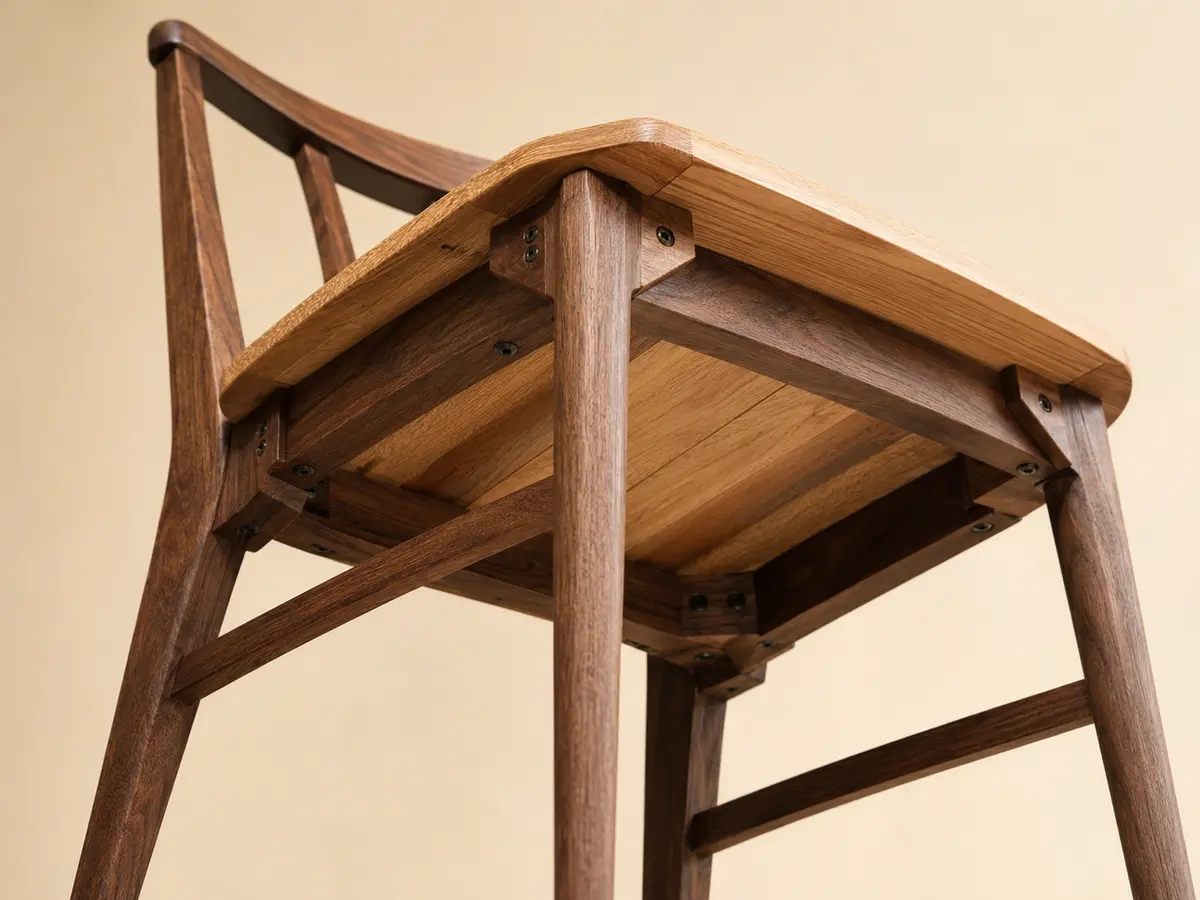
What to check on wood dining chairs
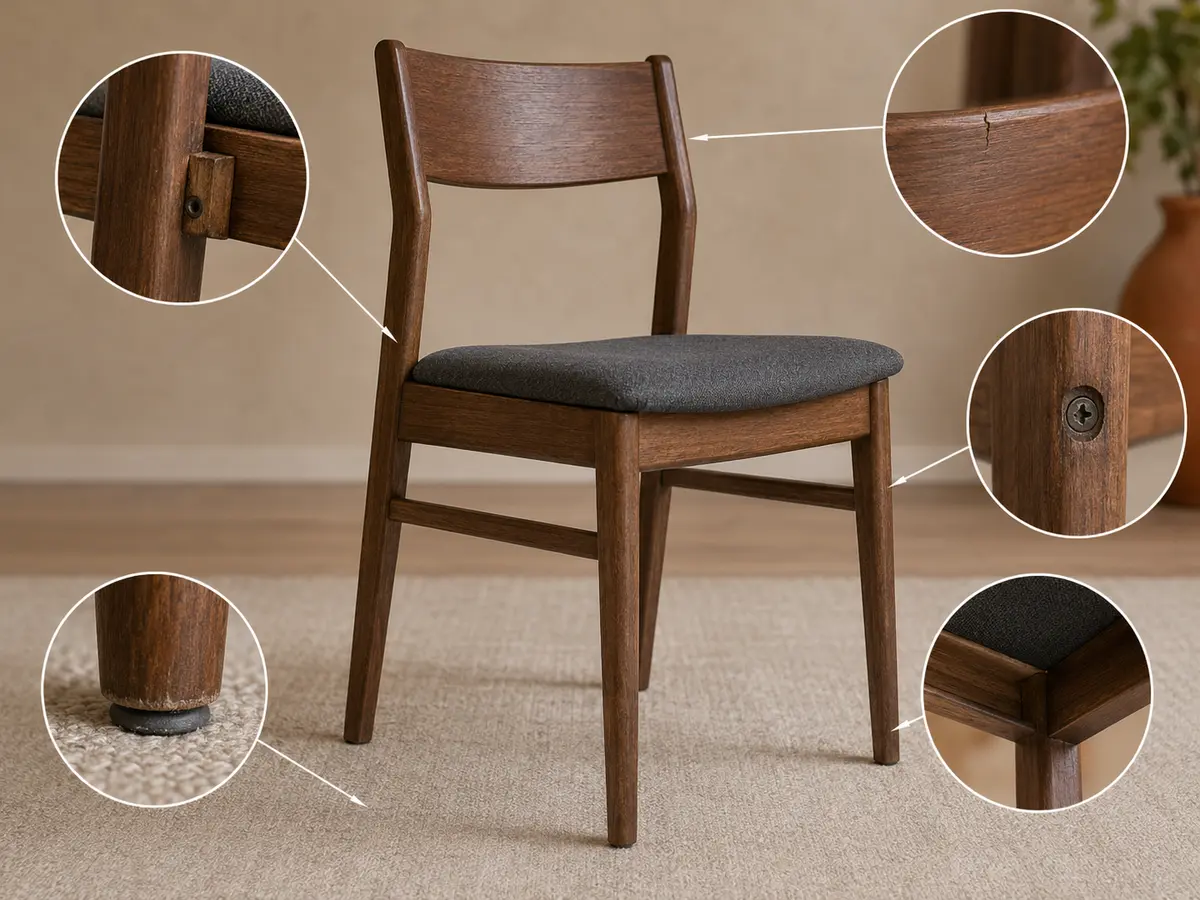
Wood-chair failures cannot be predicted from the material name alone. Joint loosening under repeated lateral loading is one important failure mode, but buyers should also inspect for timber defects, fractures, split components, inadequate fasteners and damage around leg-to-seat connections.
Look for:
- Joinery designed to resist racking (side-to-side stress), not just vertical weight.
- Reinforcement at stress points (especially where legs meet the seat frame).
- Consistent, repeatable construction across batches—critical if you will reorder.
A useful lens: forensic investigators often focus on joint integrity in chair failures. For example, Robson Forensic discusses failure patterns in wood chair collapse investigations.
What to check on metal dining chairs
For metal frames, “commercial grade” usually lives in:
- Weld quality and consistency at high-stress junctions
- Frame geometry that resists twisting
- Hardware that stays tight after repeated movement
When a chair is repeatedly dragged or steered by the backrest, lateral stress at the frame and connection points can contribute to loosening over time.
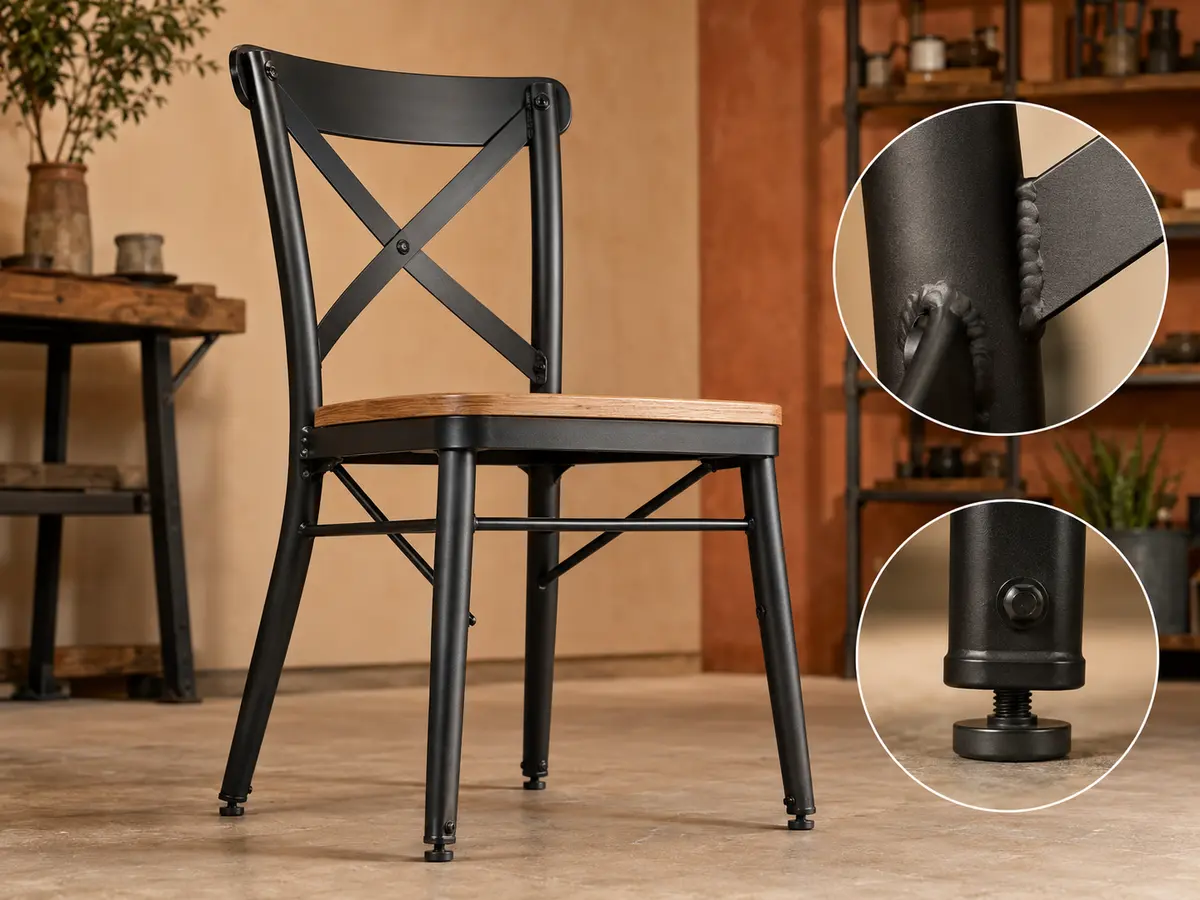
Don’t overlook the small parts
In hospitality, tiny components become big problems:
- Glides / floor caps: if they wear quickly, chairs wobble and floors get damaged.
- Fasteners: if the design relies on frequent re-tightening, labor becomes your hidden cost.
- Seat support: pay attention to how the seat is supported and how that support is attached to the frame.
2) Weight capacity: what the number means—and what it doesn’t
A listed weight limit is easy to compare, so buyers naturally gravitate to it. The problem: weight capacity is not the same thing as durability.
Static vs dynamic loading (why restaurants punish chairs)
A person’s body weight is not applied as a perfectly still load.
- Static load: someone sits calmly.
- Dynamic load: people drop into seats, shift, lean back, push sideways, or tip chairs onto two legs.
Under dynamic conditions, forces can exceed “body weight” in ways that accelerate loosening and fatigue. That’s why a chair can look fine on paper but start creaking and wobbling in service.
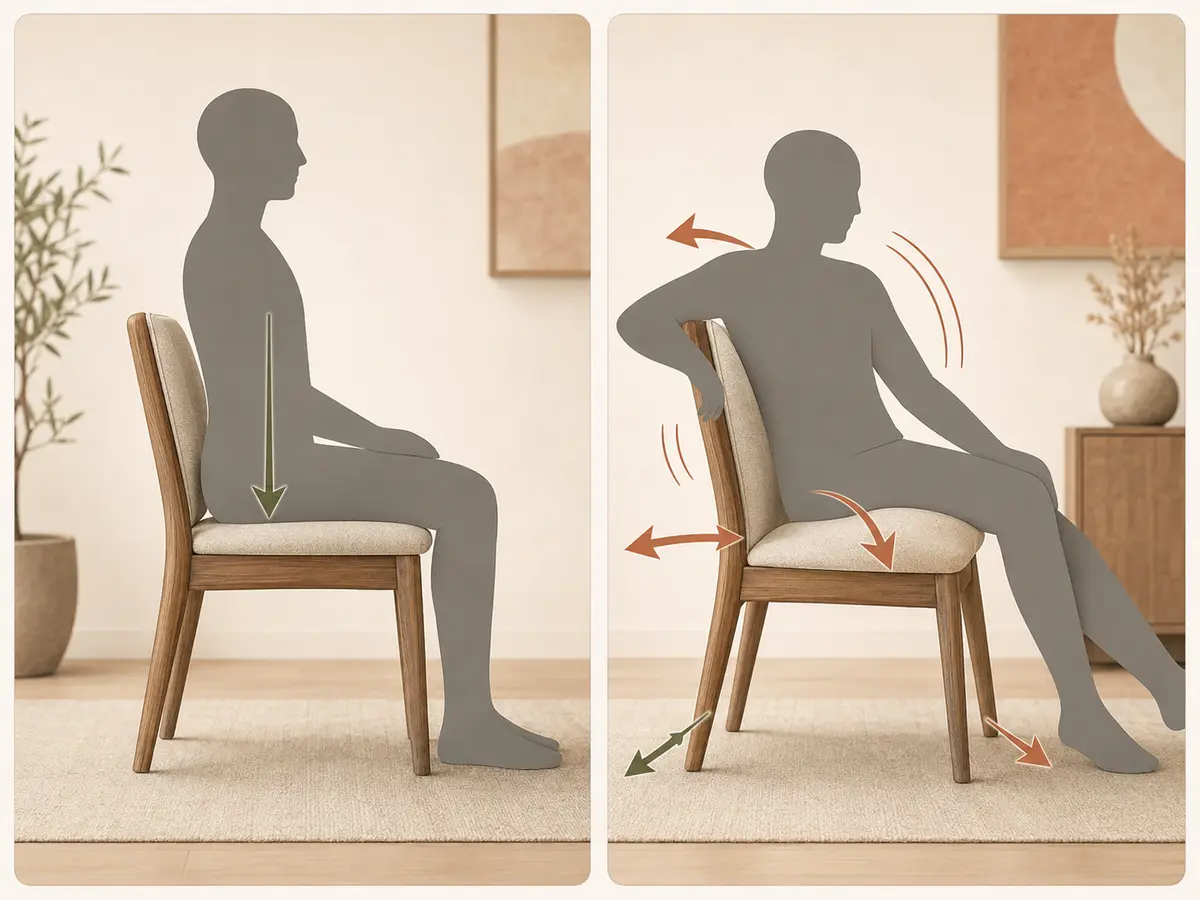
The restaurant factor: it’s not just sitting
In real hospitality spaces, chairs take extra abuse:
- Constant dragging over floors
- Impacts from cleaning equipment and traffic
- Lateral racking as guests push chairs sideways
- Repeated sit/stand cycles all day
So when a supplier gives you a weight capacity, the most important follow-up is:
プロからのアドバイス: Ask how the number was derived: test method, loading type, cycles, and whether a third-party test report exists.
Do not convert a test load directly into a user weight rating. BIFMA states that its seating standards evaluate combinations of user behavior, dynamic forces and use conditions; they do not provide a general BIFMA load-rating method. A large static proof load therefore does not establish the same user capacity or service life under dynamic use.
When comparing ratings, request:
- the exact tested model or SKU;
- the standard and edition;
- whether the result represents a working-load claim, test load or manufacturer recommendation;
- the applicable user-size assumptions;
- the complete pass/fail scope, not a single load figure.
3) Can residential dining chairs be used in restaurants?
Sometimes, yes—but treat it as a controlled exception, not the default.
Before making that exception, confirm that commercial use does not void the product warranty, and check any project requirements for structural testing, fire performance, accessibility and insurance. A chair that physically survives occasional use may still be unsuitable if its documentation excludes public or hospitality environments.
When it can work
Residential chairs may be acceptable for:
- Low-traffic décor zones (photo corners, lounge vignettes)
- Short-term pop-ups where replacement risk is acceptable
- Spaces where chairs are rarely moved and cleaning is gentle
When it’s a bad idea
Using residential chairs is usually a poor fit for:
- Main dining rooms with continuous turnover
- High-traffic cafés
- Hotel breakfast areas (long daily hours + frequent cleaning)
What tends to break first
Residential chairs in restaurants often fail by:
- Joint loosening → wobble
- Finish wear (scuffs, chipping, dulling) from impacts and cleaning
- Upholstery failures (seams, edges, foam compression)
A wobbling chair isn’t just annoying. It affects guest experience, staff workflow, and can create avoidable safety risk.
4) Maintenance and cleaning: a hidden “commercial grade” test
A chair that survives sitting but can’t survive cleaning will look tired fast.
Commercial environments commonly require:
- frequent wipe-downs
- occasional stronger cleaners
- fast turnaround between guests
This is one reason commercial chairs often prioritize finishes and materials that are easier to maintain than delicate residential finishes.
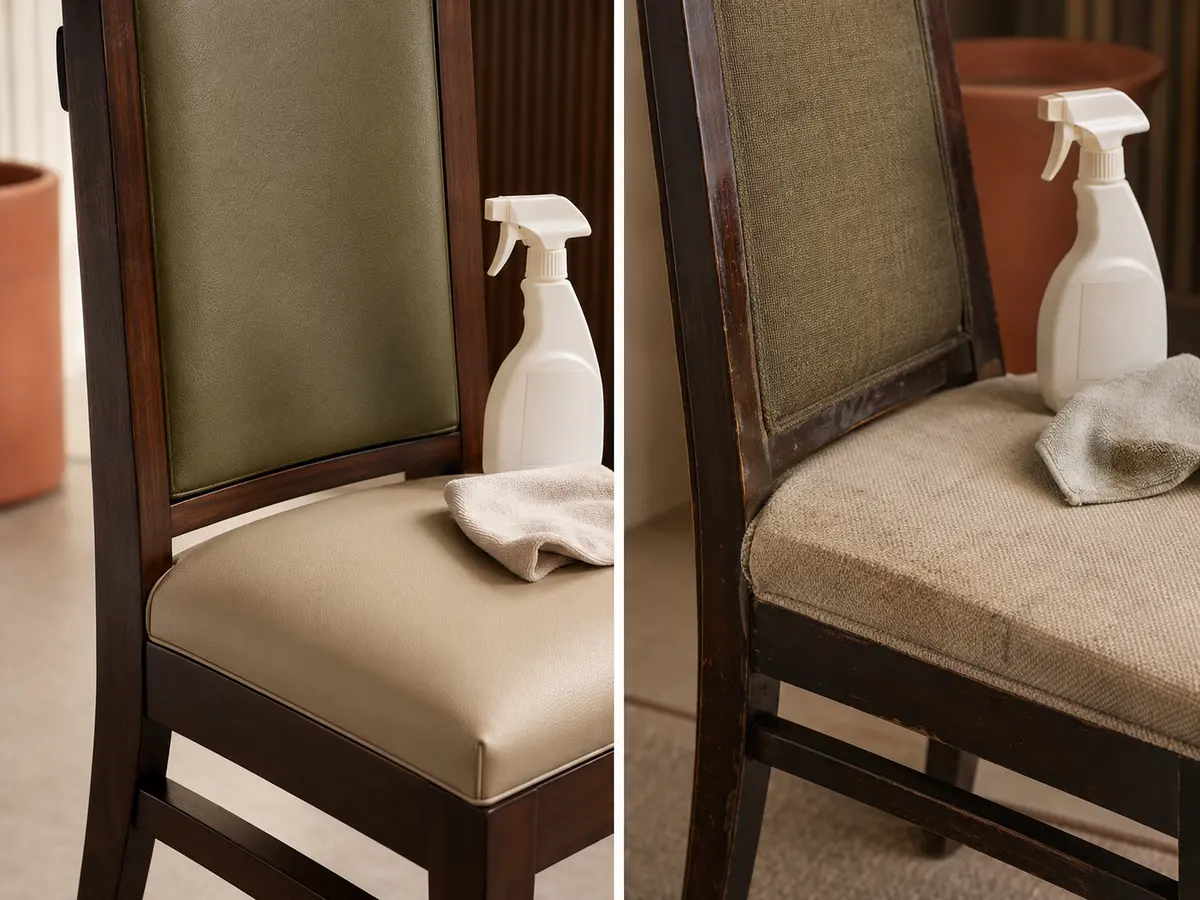
⚠️ 警告: If the supplier can’t tell you what cleaning routine the finish and upholstery are designed to tolerate, assume you’re taking on risk.
5) Testing standards: how to use BIFMA and EN 16139 without being misled
Standards can help you separate real engineering from marketing—but only if you understand scope.
ANSI/BIFMA: what it’s good for
BIFMA describes its standards as providing a common basis for evaluating safety, durability, and structural adequacy (see BIFMA’s ANSI accreditation overview).
ANSI/BIFMA X5.1 covers general-purpose office and institutional seating, including categories such as side/guest chairs, stacking chairs and stools. It is not a restaurant-chair-specific standard, so its relevance depends on the product category and intended use.
How to use this as a buyer:
- Treat compliance with an applicable mechanical standard as a positive signal, not a universal commercial-use guarantee.
- Request the complete standard designation and edition.
- Confirm the report identifies the exact model or SKU being purchased.
- Check which tests were completed and whether the tested configuration matches the quoted chair.
- Do not describe a chair as “BIFMA certified” unless the supplier can substantiate that exact claim.
EN 16139: why EU buyers see it in hospitality seating
EN 16139:2025 covers safety, strength and durability requirements and test methods for non-domestic seating intended for adults within the standard’s stated scope. It replaced the 2013 edition and includes two test-severity levels.
The standard does 違う by itself establish upholstery durability, resistance to ageing or degradation, flammability, or the durability of every mechanism and component. These properties require separate specifications or test evidence.
How to use this as a buyer:
- Ask for the full standard designation, edition and test level.
- Confirm why the selected level matches the intended hospitality use.
- Verify the tested model, configuration, laboratory, report date and pass/fail scope.
- Do not interpret the standard’s user-mass scope or applied laboratory forces as a standalone advertised weight capacity.
- Request separate evidence for upholstery abrasion, finish/cleaner compatibility and fire performance when relevant.
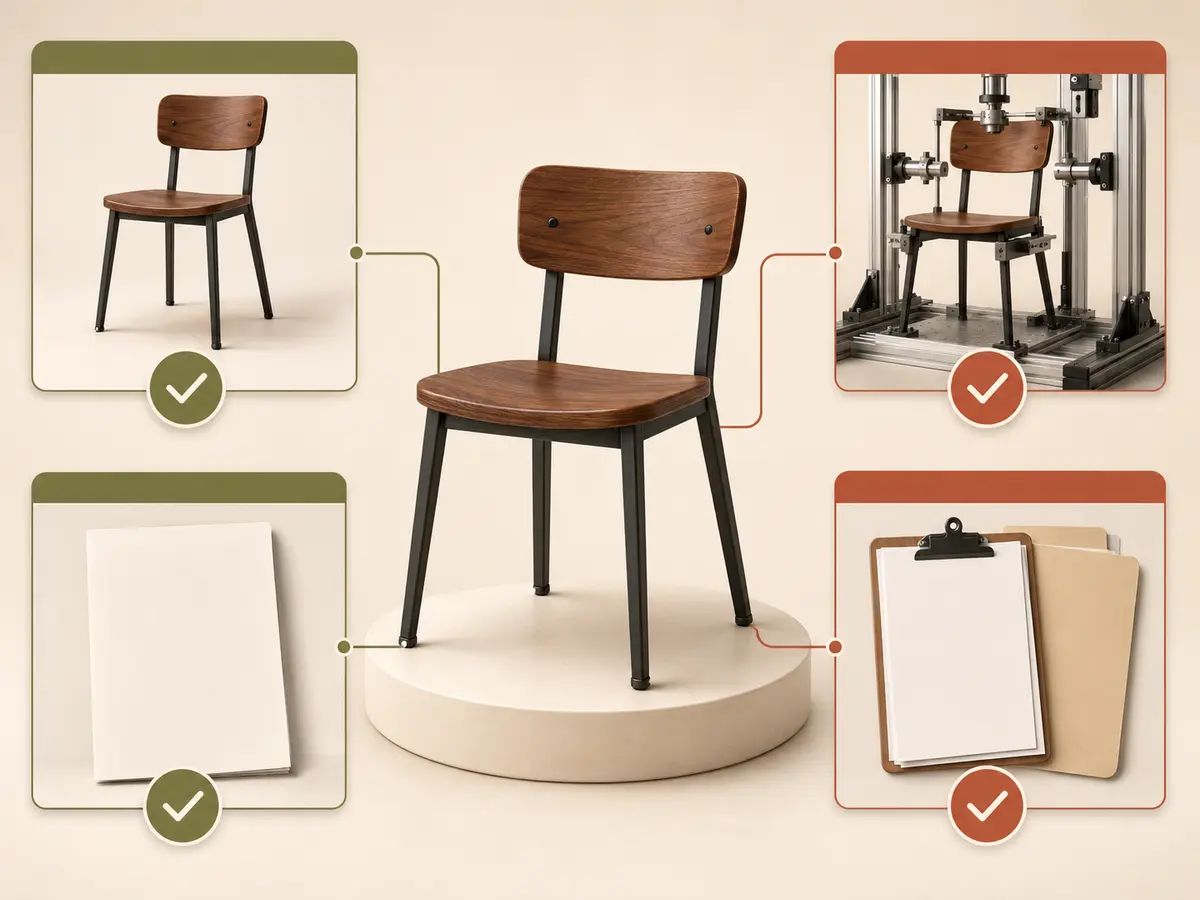
6) Why commercial dining chairs cost more (and when it’s worth it)
Commercial chairs usually cost more because you’re paying for:
- reinforcement and construction choices that resist loosening
- finishes and materials that tolerate frequent cleaning
- testing/documentation (often a real cost for suppliers)
- repeatability for reorders (batch consistency matters in projects)
A simple TCO way to think about it
If a cheaper chair needs replacement sooner, your real cost includes:
- emergency replacements (and mismatched chairs while you wait)
- labor time to reassemble/repair
- guest complaints and brand perception damage
- re-order risk (finish/fabric mismatch)
For hospitality projects, predictability is value.

7) RFQ checklist: how to verify “commercial grade” isn’t just marketing
Use this checklist when comparing suppliers.
A) Usage & scenario
- Where will the chairs be used (restaurant dining room, café, hotel, staff area)?
- Expected daily operating hours and turnover?
- Will chairs be stacked, moved frequently, or cleaned aggressively?
B) Construction evidence
- Frame material and structure (wood/metal/combined)
- Joinery / connection method and reinforcements (especially at leg-to-seat junction)
- Seat support method (and how it’s fixed to the frame)
- Glides and replaceability (can you swap glides without replacing the chair?)
C) Testing & documentation
- What standard or internal protocol was used?
- Is there a third-party test report, and does it list:
- tested model / SKU
- lab name
- date
- load/durability method summary
- Can the supplier explain what the chair was tested にとって (static load, cyclic durability, impact, stability)?
D) Maintenance fit
- Recommended cleaning method
- Upholstery/finish care instructions
- Replacement parts availability (glides, hardware, upholstery options)
E) Reorder and project risk
- Can the supplier support batch consistency for finish and upholstery?
- Lead time expectations for replenishment orders
- Packaging and damage-prevention approach
Applying the checklist to YeZhi chair options
When reviewing YeZhi’s café furniture or wooden restaurant chair categories, use the pages to build an initial shortlist, then request model-specific construction details, intended-use information, warranty terms and available test documentation before treating any option as contract grade.
For adjacent planning details that influence chair selection (and the number you need), these guides can help:
よくあるご質問
What are contract grade dining chairs?
Contract grade dining chairs are chairs intended for commercial/public environments and built for heavier, more frequent use than typical residential chairs. Treat “contract grade” as a claim that should be backed by construction details, testing, and documentation—not just a label.
If you want a vendor-facing definition, MityLite’s overview of what “contract-grade furniture” generally means is a useful starting point.
Are restaurant chairs different from home dining chairs?
Usually, yes. Restaurant chairs are typically chosen for high-cycle durability, easy maintenance, and stable construction under repeated movement and cleaning—while home chairs often prioritize comfort and aesthetics for lower-frequency use.
Restaurant chair weight capacity: what should you look for?
Start with the published rating, but evaluate it in context: test method (static vs dynamic), cycle durability, stability, and whether a third-party report ties the result to the exact model you’re buying.
Is weight capacity enough to judge chair durability?
No. Durability depends heavily on how the chair resists loosening under dynamic loads, lateral racking, repeated cycles, and day-to-day handling (dragging, impacts, leaning).
Can I use residential dining chairs in a restaurant?
You can sometimes use them in low-traffic areas, but it’s usually not recommended for a main dining room. The risk is premature wobble, finish wear, and higher replacement cost.
Commercial dining chairs vs residential: what’s the simplest way to decide?
If chairs will see high turnover, frequent dragging, and daily cleaning, shortlist commercial/contract-grade models and compare them on construction details, test evidence, maintenance fit, and reorder consistency. If use is genuinely low-frequency and low-risk, residential may be acceptable.
次のステップ
If you’re building a shortlist, take the RFQ checklist above and apply it to 2–3 chair options. You’ll usually see quickly whether “commercial grade” is supported by evidence—or just a marketing line.