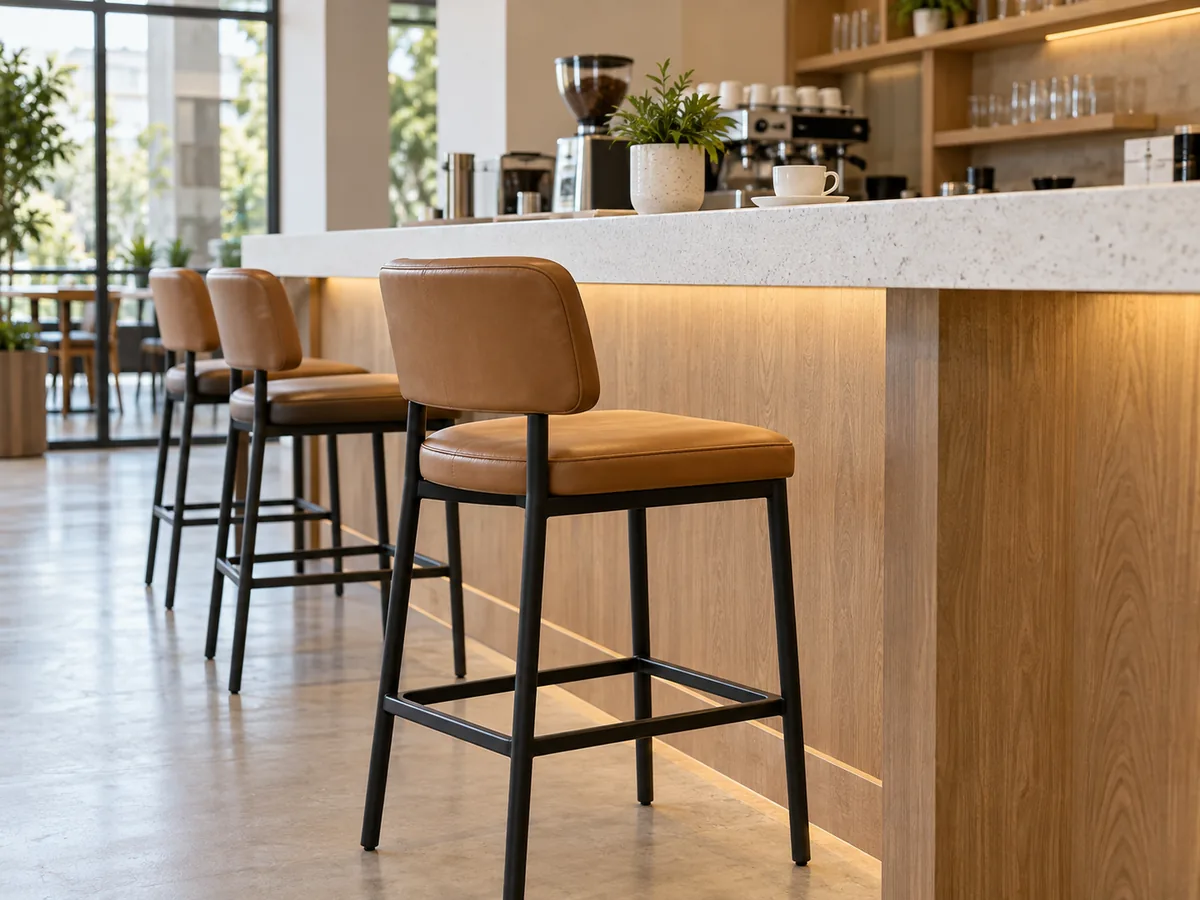
Barstoler vakler vanligvis på grunn av ujevne gulv, slitte glideføtter, løse festemidler, slark i understellet eller søylen, en slitt svingmekanisme eller skader på rammen. Den sikreste feilsøkingen begynner ved gulvet og går deretter oppover.
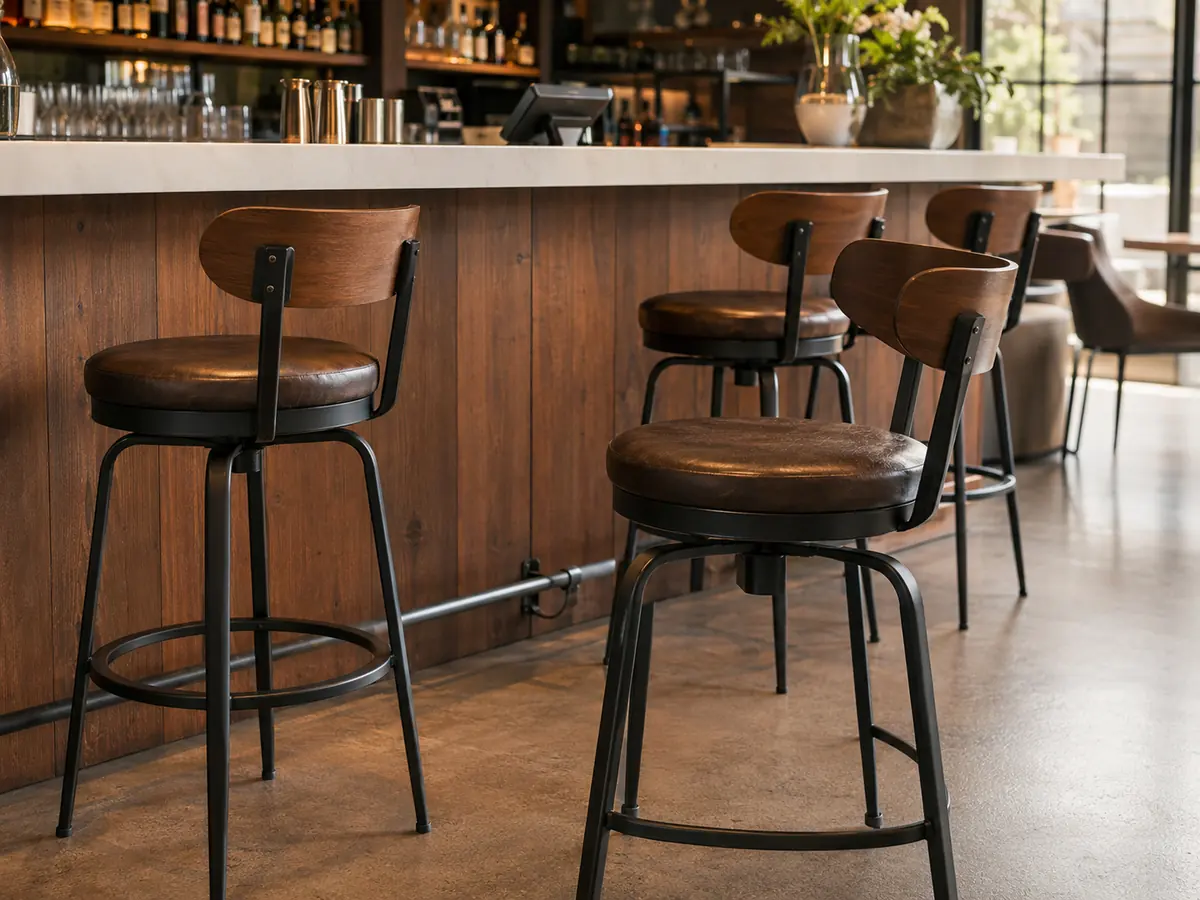
Kort svar: En barkrakk kan vakle selv om selve krakken ikke er defekt. Ujevnt gulv, manglende gulvglidere, løse skruer, en løs skjøt mellom understell og søyle, slark i gassfjærsøylen, slitasje på svingplaten eller skadede rammedeler kan alle føre til bevegelse.
Bruk denne veiledningen som en praktisk sjekkliste for feilsøking, ikke som erstatning for produsentens vedlikeholdsanvisninger eller en kvalifisert reparatør. Når det gjelder sitteplasser til kommersiell bruk, må du ta alle krakker med sprukne sveiser, deformert ramme, defekt høydejustering eller gjentatt vingling ut av bruk inntil de er blitt inspisert.
Sikkerhet først: når vingling ikke lenger bare er irriterende
I en restaurant, bar, på et hotell eller en kafé er vingling ikke bare et spørsmål om komfort. Det kan utgjøre et sikkerhetsproblem for gjestene, medføre vedlikeholdskostnader og være et tegn på at krakken nærmer seg slutten av sin levetid.
Som en praktisk regel gjelder det at hvis en gjest setter seg ned og krakken synlig vipper mer enn det som er en normal, liten bevegelse, eller hvis den avgir knirkende, klikkende eller skrapende lyder når den belastes, bør dette betraktes som en vedlikeholdsprioritet.
Trinn for trinn: Slik finner du ut hvorfor en barkrakk vakler
Før du setter i gang, bør du plassere krakken på et underlag du er sikker på er plant. Bruk enkle verktøy: et sekskantnøkkelsett, en skrutrekker, en skiftenøkkel og nye glideføtter hvis stedet bruker mange krakker.

Trinn 1: Utelukk gulvet
Hva du bør sjekke: Flytt krakken til et annet sted, helst på et jevnere underlag. Hvis den slutter å vakle, kan det hende at krakken er i orden rent konstruksjonsmessig.
Hva det betyr: Ujevnheter i flisene, fuger, skadet betong eller ujevne overganger mellom gulvflater kan få en stabil krakk til å vakle. Atlantic Shopping påpeker også at eldre flisgulv kan føre til vakling, selv om krakken ikke sitter løst.
Fullført når: Krakken står stabilt på minst ett sted som er bekreftet å være plant.
Trinn 2: Kontroller gulvglidere og føtter
Hva du bør sjekke: Er alle glideelementer på plass? Er noen av dem slitt gjennom, løse, ujevne eller forskjøvet? Mangler gummiringen eller -paden på skiveunderlagene?
Hva det betyr: Hvis en glide er manglende, oppfører krakken seg som om den har et kort ben. I kommersiell drift er dette en av de raskeste og billigste kontrollene.
Hva du skal gjøre: Bytt ut manglende eller slitte glideføtter umiddelbart. Hvis du har ansvar for mange krakker, bør du ha et lite reservesett på stedet.
Trinn 3: Finn ut hvor stykket begynner
Hold godt fast i setet og beveg det fra side til side. Se på krakken fra siden og finn ut hvor bevegelsen starter.
Hvis det oppstår bevegelse under setet, skyldes problemet sannsynligvis setets festemateriell eller svingplaten. Hvis det oppstår bevegelse nær sokkelen eller midtsøylen, bør du sjekke sokkelens festemidler, bøsninger eller slarket i gassfjæren.
Kontroller festene, seteplatene og svingmekanismene
Det er vanlig at skruer sitter løst, men strammingen må utføres med omhu. Stram skruene i et kryssmønster når det er flere skruer. Hvis krakken fortsatt vakler, må du løsne skruene, sentrere setet eller rammen på nytt og deretter stramme skruene jevnt igjen.
Ikke skru festene inn med makt når du møter motstand. Hvis produsenten oppgir et tiltrekkingsmoment, må du følge denne spesifikasjonen. Hvis det ikke foreligger noe tiltrekkingsmoment, skal du bare stramme til skjøten sitter godt og er stabil.

Firebeinte krakker: Kontroller stabiliteten til tverrstengene og fotstøtten
Firebeinte krakker føles ofte stabile inntil strekkeren eller fotstøtten løsner. Da kan hele rammen begynne å vippe fra side til side.
Er bårene stramme ved benfestene?
Blir vinglingen sterkere når en gjest hviler føttene?
Er det sprekker, bøyde rør eller defekte sveiser?
Hvis fotstøtten er festet med bolter, må du sette den på plass igjen og stramme til festene. Hvis den er sveiset og sveisen har sprekker, må du behandle dette som et konstruksjonsproblem, ikke som en enkel tilstrammingsjobb. Når det gjelder treforbindelser, kan det å lime på nytt og klemme fast bare hjelpe hvis selve skjøten fortsatt er intakt.

Sokkel- og gassfjærstoler: Kontroller om det er slark i sokkelen og søylen
Hvis du søkte etter “barstol som vakler ved foten”, bør du først sjekke om bevegelsen skjer mellom foten og midtsøylen. Mange barstoler med fot har bolter under foten som fester søylen til foten.
Når det gjelder stoler med hydraulisk eller gassdempet løftemekanisme, kan vingling skyldes løse festemidler, forskyvte bøsninger eller foringer, eller selve sylinderen. Hvis stolen ikke holder høyden, setter seg fast eller har for stort innvendig slark, er det ofte det sikreste valget på lang sikt å skifte ut sylinderen eller stolen.
Vippemekanismen vakler: løs plate eller slitt lager?
Svingbare krakker kan vanligvis deles inn i to kategorier. Den første kan repareres: løse skruer eller bolter ved svingplaten. Den andre krever vanligvis utskifting: slitte lagre, en ødelagt løpebane, knirkende lyder eller lagre som faller ut.
Trendler anbefaler å sjekke om det er løse skruer og stramme dem forsiktig. MyChairParts påpeker at en svivel med ødelagt løpebane eller løse kulelager generelt bør skiftes ut i stedet for å repareres. Ved kommersiell bruk kan fortsatt bruk etter at kulelagrene har sviktet forverre ustabiliteten.
Reparasjon eller utskifting: en praktisk beslutningsmatrise
Bruk denne tabellen for å unngå å kaste bort tid på reparasjoner som ikke vil holde, og for å hindre at usikre krakker blir stående tilgjengelig for gjestene.

| Symptom eller grunnårsak | Kan det vanligvis repareres? | Hva du skal gjøre | Når bør man slutte å bruke produktet eller bytte det ut? |
|---|---|---|---|
| Gulvet er ujevnt, og vinglingen varierer fra sted til sted | Ja | Flytt deg og prøv på nytt; bruk riktige glidbevegelser; ta hensyn til gulvsonen | Hvis vaklingen vedvarer på flere flate overflater |
| Manglende eller slitte glideplater | Ja | Bytt ut glidere eller fothetter | Hvis glidefester eller benender er skadet |
| Løse skruer eller bolter | Ja | Stram til i et kryssmønster; sett dem på plass igjen og stram til jevnt | Hvis gjengene er ødelagt eller hullene er utvidet |
| Løst festet fotstøtte | Ofte | Sett beslagene på plass igjen og sjekk om de er deformert | Hvis den løsner gjentatte ganger ved normal bruk |
| Løs trekonstruksjon | Noen ganger | Lim på nytt og klem fast hvis skjøten er intakt | Hvis treet splintres, knuses eller raskt løsner igjen |
| Boltene mellom sokkel og søyle har løsnet | Ofte | Stram til bunnboltene og test på nytt | Hvis sokkelen er skjev, har sprekker eller hvis gjengene ikke holder |
| Hydraulisk bøssing eller foring har forskjøvet seg | Noen ganger | Sett den forsiktig på plass igjen; bruk kun et minimalt mengde lim hvis det er hensiktsmessig | Hvis det foreligger betydelig innvendig slark eller feil i høydejusteringsmekanismen |
| Festeanordninger for løse svingplater | Ofte | Stram til; skift ut rustne beslag | Hvis svivelen fortsatt sitter løst etter at den er satt på plass igjen |
| Slitasje på svivel, tap av lager, ødelagt løpebane | Nei | Bytt ut svingmekanismen | Ta den umiddelbart ut av bruk |
| Sprukne sveiser, bøyd underlag, deformasjon av rammen | Nei | Bytt ut krakken eller utfør en fagmessig strukturell reparasjon | Slutt å bruke på grunn av fare for strukturell svikt |
Næringslokaler: hvordan man kan redusere gjentatte svingninger
Når det gjelder sitteplasser til kommersiell bruk, bør ustabilitet betraktes både som et vedlikeholdsproblem og et spørsmål om produktvalg. ANSI/BIFMA X5.4-2020(R2025) omfatter sitteplasser for offentlig bruk og i oppholdsrom som brukes i restauranter, spisesaler og kafeteriaer, slik at innkjøpere kan spørre leverandører om relevante sitteplassdesign har blitt vurdert opp mot gjeldende ytelseskrav for sitteplasser i offentlig bruk.
Før du åpner, må du sjekke om det mangler glidere, om det er tydelig slark og om det er usikre bevegelser.
Vend på den og sjekk en liten del; stram til de delene du kommer til der det er nødvendig.
Gjennomfør en fullstendig maskinvarekontroll av hele stativparken.
Ha et lite reservedelsett til hver krakkmodell
- Glidere eller gulvbeskyttelser som passer til krakken og gulvtypen.
- De vanligste festemidlene og et verktøy som passer til dem.
- Én ekstra svingplate, dersom lokalet bruker svingbare barstoler.
Hvis du forvalter ulike stoltyper, bør du gruppere stolene etter konstruksjonstype: firbeinte, på sokkel, svingbare, med fast høyde, av tre, av metall og polstrede. Dette gjør det enklere å holde oversikt over reservedeler og reduserer gjentatte driftsstans.
Sørg for å ha mer detaljerte opplysninger klare før du bytter ut store mengder eller bestiller nye varer
Dersom gjentatte svingninger påvirker et prosjekt for en restaurant, bar, et hotell eller en kafé, bør kjøpsbeslutningen ikke bare baseres på utseendet. Ta hensyn til antall stoler, gulvtype, benkehøyde, ønsket understellstype, svingbar eller fast konstruksjon, materiale, overflatebehandling, leveringsland og bruksmiljøet i næringsvirksomheten.
Dette gjør det lettere for leverandøren å sammenligne vedlikeholdsvennlige konstruksjoner og unngå at det samme stabilitetsproblemet oppstår i neste serie.

Vanlige spørsmål
Hvorfor vakler barstolen min ved foten?
Dette skyldes vanligvis at sokkelen ikke har jevn kontakt med gulvet, at beskyttelsesringen eller -putene ikke sitter riktig på plass, eller at festene mellom sokkelen og søylen har løsnet. Begynn med å utelukke at det skyldes gulvet, sjekk deretter glideføttene eller putene, og sjekk til slutt boltene på sokkelen.
Hvordan fikser man en vaklende barkrakk?
Arbeid nedenfra og opp: Kontroller at problemet ikke skyldes gulvet, skift ut manglende eller slitte glidere, stram til og sett festene på plass igjen, og utfør deretter feilsøking på understellet, søylen, gassfjæren eller svingmekanismen, avhengig av hvilken type krakk det dreier seg om.
Kan en vaklende hydraulisk barstol repareres?
Ofte, ja, hvis vinglingen skyldes løse bolter i sokkelen eller en forskyvet bøssing. Hvis sylinderen ikke holder høyden eller har betydelig innvendig slark, er det vanligvis tryggere å skifte ut sylinderen eller sokkelen.
Bør jeg sveise sammen et sprukket stativ til en barstol?
I kommersielle miljøer bør man unngå improviserte reparasjoner. En sprukket sveise eller en bøyd ramme utgjør et strukturelt problem. Ta krakken ut av bruk og bytt den ut, eller få en kvalifisert reparatør til å utføre reparasjonen.
Trenger du barstoler til et prosjekt?
YeZhi Furniture kan hjelpe deg med å sammenligne barstoler med fast høyde, svingbare modeller, i tre eller metall samt modeller med sokkelunderstell til restauranter, barer, hoteller og kaféer.