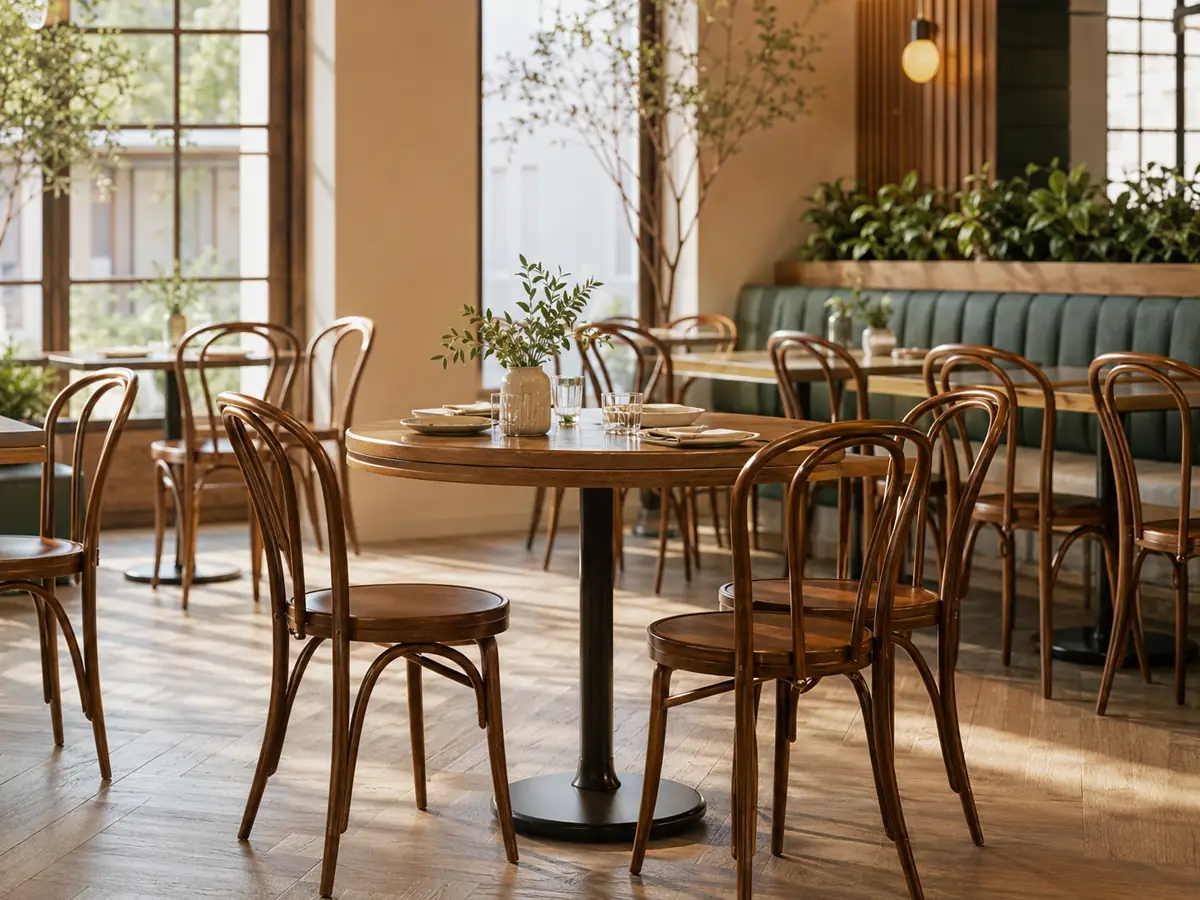
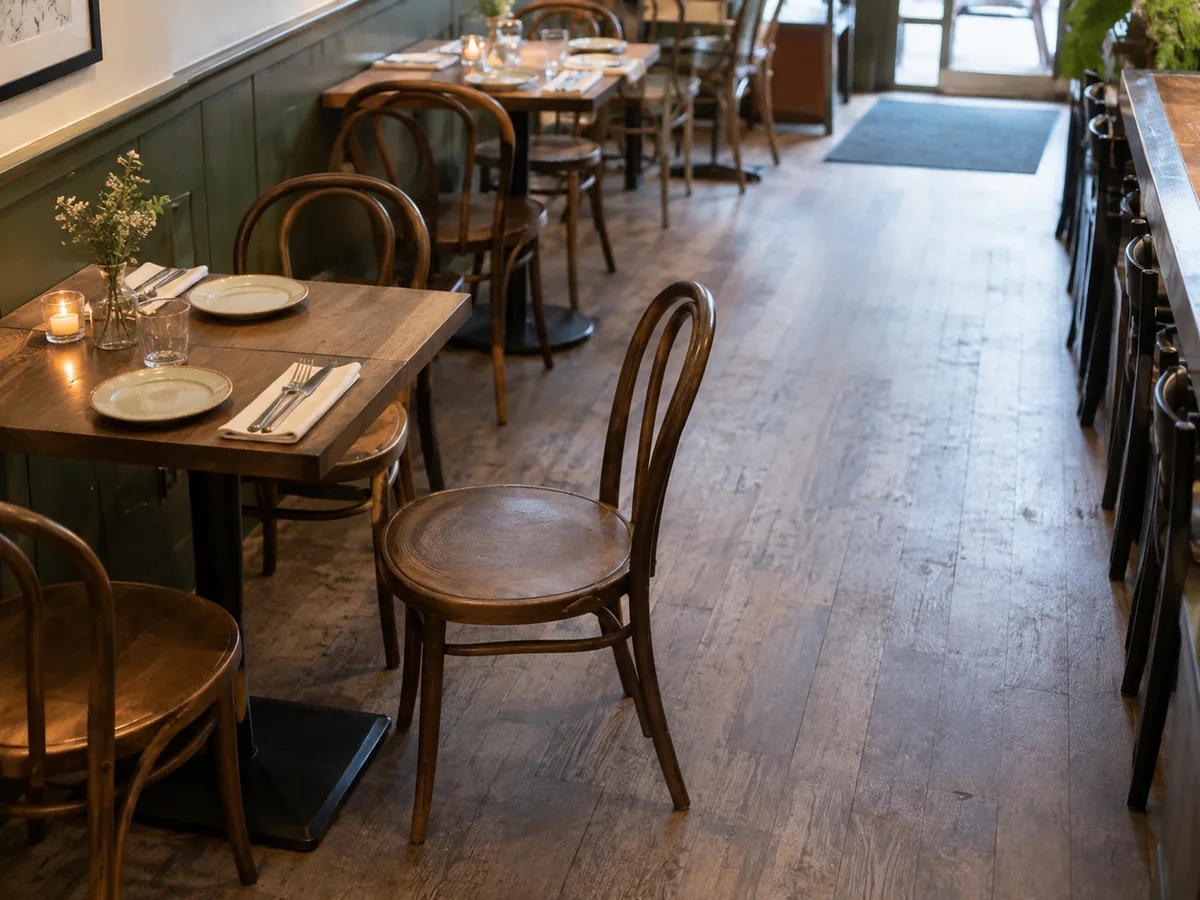
Böjträstolar är stolar tillverkade med böjda trädelar. Traditionellt böjträ framställs genom att massivt trä värms med ånga och sedan böjs runt en mall. Vanliga modeller är caféstolar, matstolar, karmstolar, gungstolar och pallar. Vissa nyare stolar tillverkas i stället av formpressad plywood, medan andra bara har en form som efterliknar böjträ.
Vad är böjträmöbler?
Den avgörande skillnaden ligger i materialet: traditionellt böjträ består av böjda delar i massivt trä, medan formpressad plywood byggs upp av sammanlimmade träskikt som formas under tryck. Stolar som ser likadana ut kan därför ha olika konstruktion.
Under 1800-talet bidrog Michael Thonet till att standardisera tillverkningen av böjträmöbler för produktion i större skala. På Victoria and Albert Museum beskrivs hur ångböjning och stödjande metallband användes för att forma träet. Thonet beskriver också metoden i sin historik över böjträmöbler.
En stol som beskrivs som en “Thonet-böjträstol” kan vara ett autentiskt exemplar eller helt enkelt en stol i liknande stil. Benämningen “Thonet-stil” inte bevisar inte vem som har tillverkat stolen, hur gammal den är, om formgivningen är licensierad eller hur träet har böjts.
Olika typer av böjträstolar: vilken modell passar din miljö?
Välj stol efter hur den ska användas, inte bara efter utseendet. Liknande svängda ryggstöd förekommer på matstolar, karmstolar, pallar och gungstolar, men sitthöjd, yttermått och skötselbehov skiljer sig åt.
Stolens form och sitsens material är två separata val. En bistro- eller matstol kan ha träsits, rottingsits eller stoppad sits. Rotting och stoppning är sitsalternativ, inte olika typer av stativ. Kontrollera även konstruktionen: traditionellt ångböjt massivt trä, böjd plywood och kombinationsstativ är inte samma sak.
| Stolstyp eller sitsalternativ | Typisk användning | Viktigaste egenskapen | Vad man ska kontrollera |
|---|---|---|---|
| Böjträstol för bistro och café | Caféer, enklare restauranger och frukostmatsalar | Klassiskt, öppet caféutseende – jämför stolens faktiska bredd och vikt före beställning | Kontrollera sitsen, eventuella glapp i fogarna och utrymmet bakom stolen när någon sitter på den. |
| Matstol i böjträ | Restauranger och matbord | Sitthöjd för matbord och svängt ryggstöd | Anpassa den faktiska sitthöjden och ryggstödets vinkel efter bordet. |
| Karmstol i böjträ | Hotellrestauranger och restaurangmiljöer med loungekänsla | Extra stöd för överkroppen | Mät om armstöden ryms under bordsskivan och om stolen får plats på den tillgängliga bredden. |
| Böjträstol med rottingflätning (sitsalternativ) | Traditionella bistroer och eleganta interiörer | Luftig flätning i sits eller rygg | Kontrollera om den flätade sitsen är av naturrotting eller syntetmaterial, hur den ska rengöras och om den går att reparera. |
| Stoppad böjträstol (sitsalternativ) | Längre måltider och restaurangmiljöer | Mjuk sittyta | Kontrollera tyg eller annat klädselmaterial, stoppning, rengöringsmetod och om sitsen går att byta ut. |
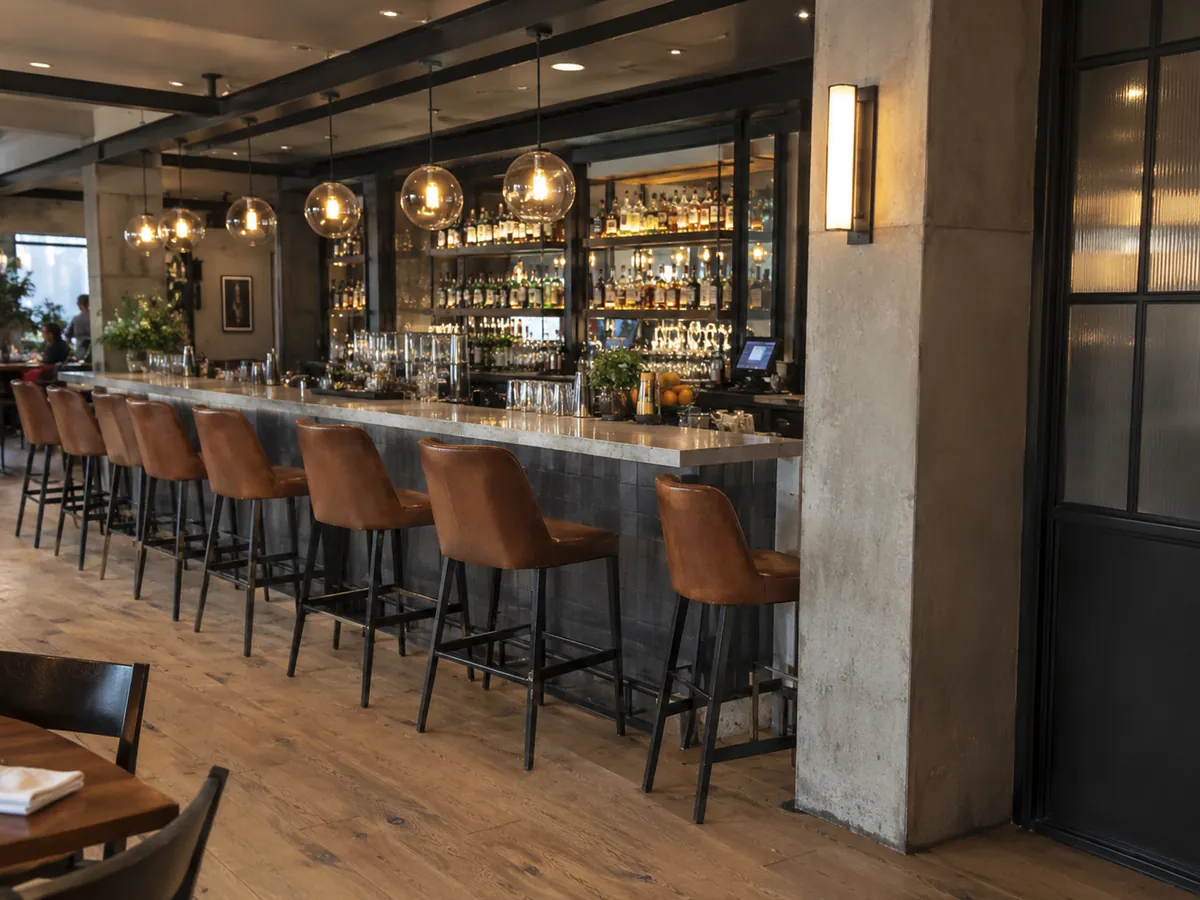
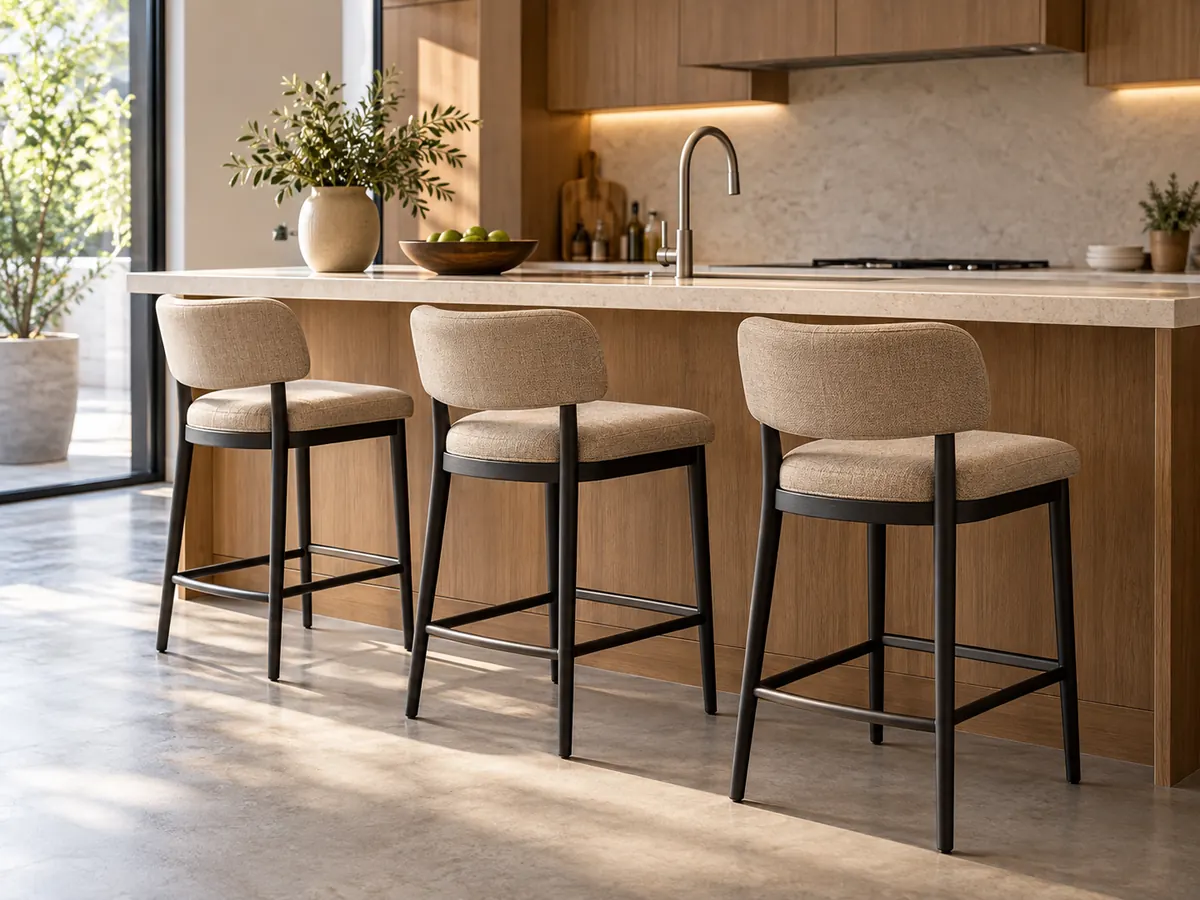
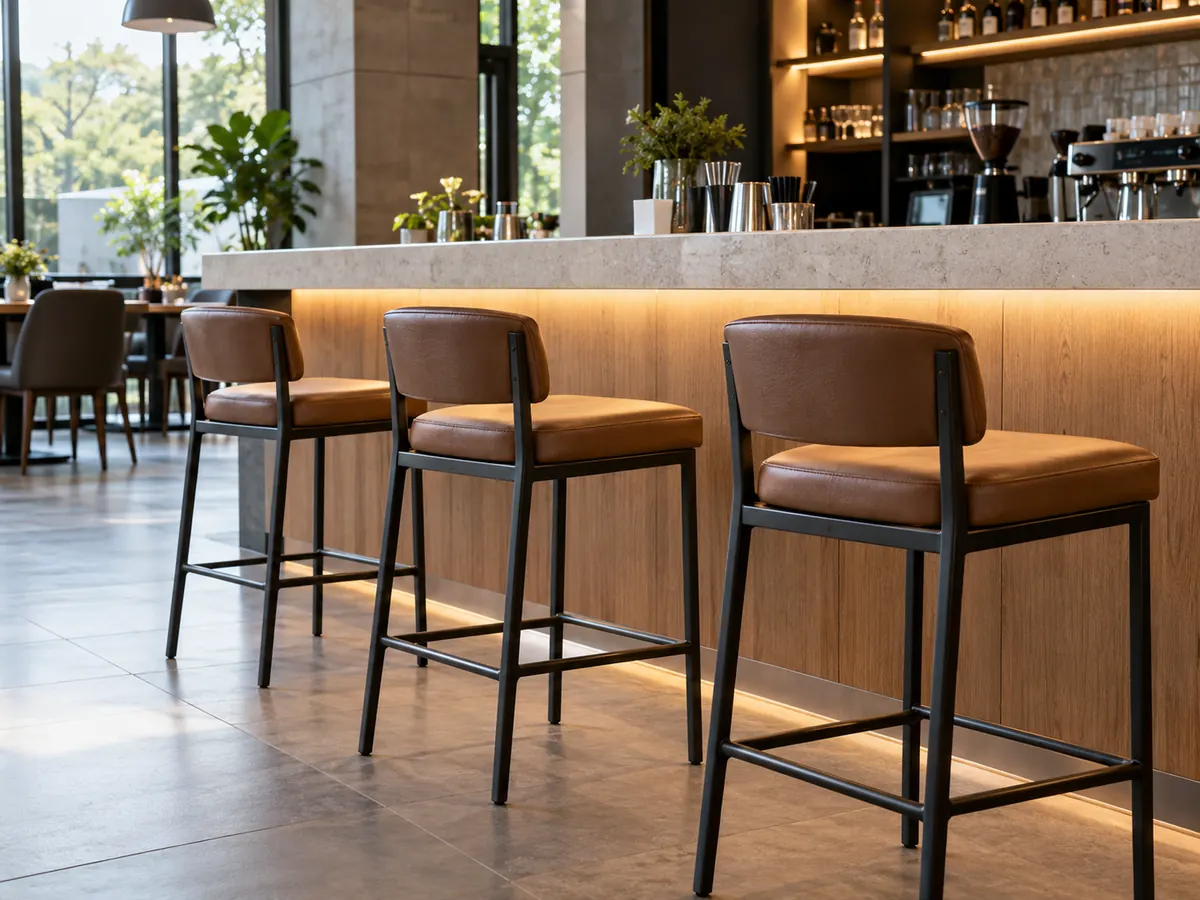
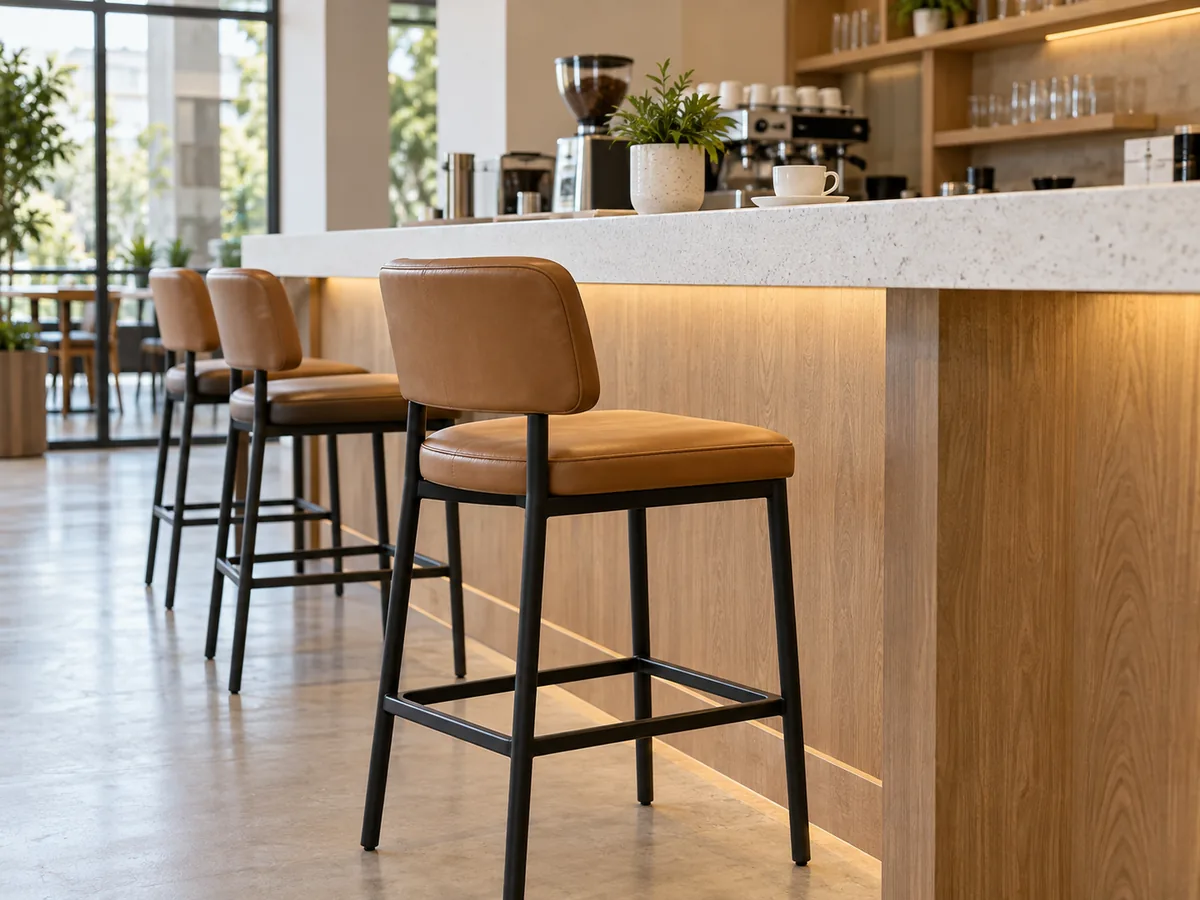
| Böjträbarstol / hög böjträpall för bänkhöjd | Bardiskar och cafébänkar | Utförande med svängd rygg för högre sitthöjder | Kontrollera sitthöjden, fotstödets höjd och placering samt hur mycket knäutrymme som finns under bänken. |
| Gungstol i böjträ | Hemmiljöer, miljöer med klassisk karaktär och utvalda loungemiljöer | Gungfunktion med böjda ramelement | Inte vårt förstahandsval för vanliga restaurangbord. Använd endast stolen i en lämplig lounge eller miljö med klassisk karaktär efter att ha kontrollerat golvytan, gungningsutrymmet, vältrisken och den aktuella stolens avsedda användning. |
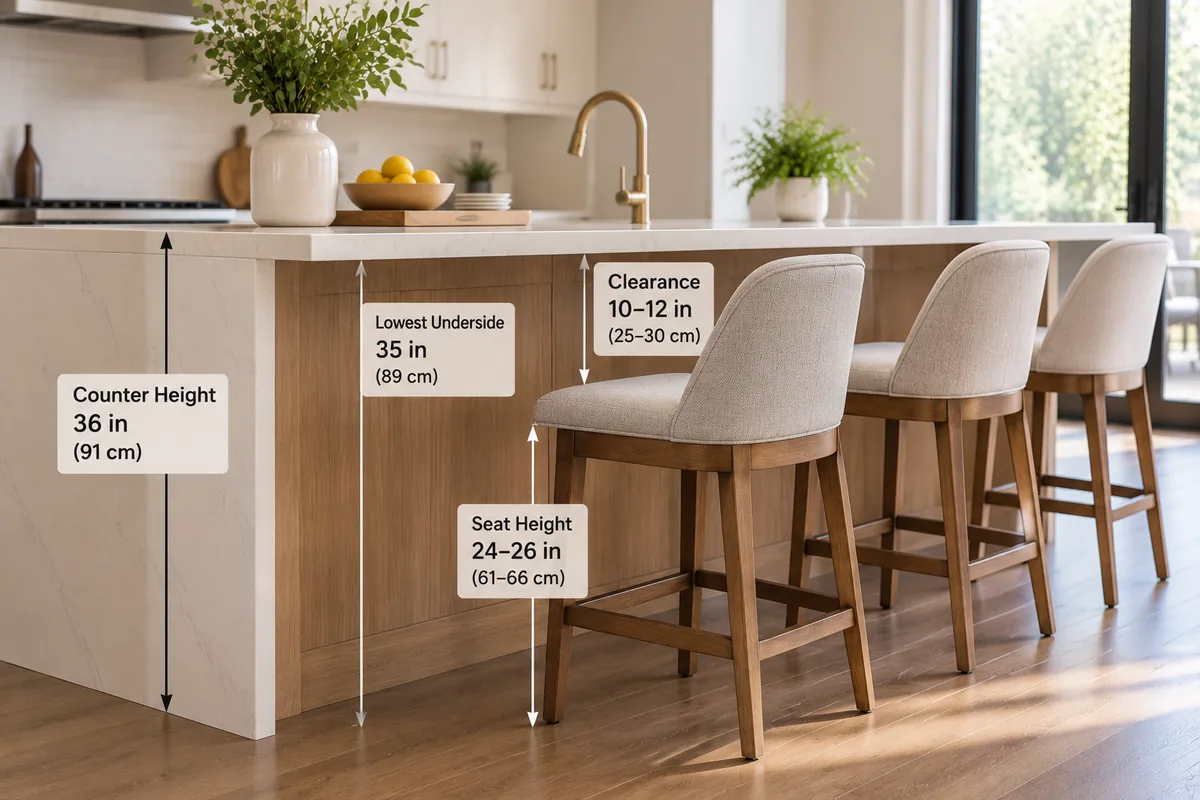
Beställ inte en barstol för barhöjd till en lägre bänk enbart för att ryggen har rätt utseende. Mät bänkens färdiga höjd och det fria utrymmet undertill. Jämför sedan med pallens faktiska sitthöjd och fotstödets placering. Välj bort en modell där användaren inte får stöd för fötterna eller där knäutrymmet är för litet.
En äldre böjträstol kan se ut som en nytillverkad reproduktion, men fogar, tidigare reparationer och skick kan skilja sig avsevärt. Om en restaurang ska inredas med likadana stolar bör du utgå från en modell som kan efterbeställas med jämnt resultat. En blandad grupp äldre stolar kan göra underhåll och ersättning svårare. Om verksamheten behöver kunna komplettera med matchande stolar senare bör du välja en fastställd nytillverkad modell och spara referenserna för godkänt utförande och material tillsammans med beställningen.
Böjträkonstruktion: massivt trä, formpressad plywood och stommar i böjträstil
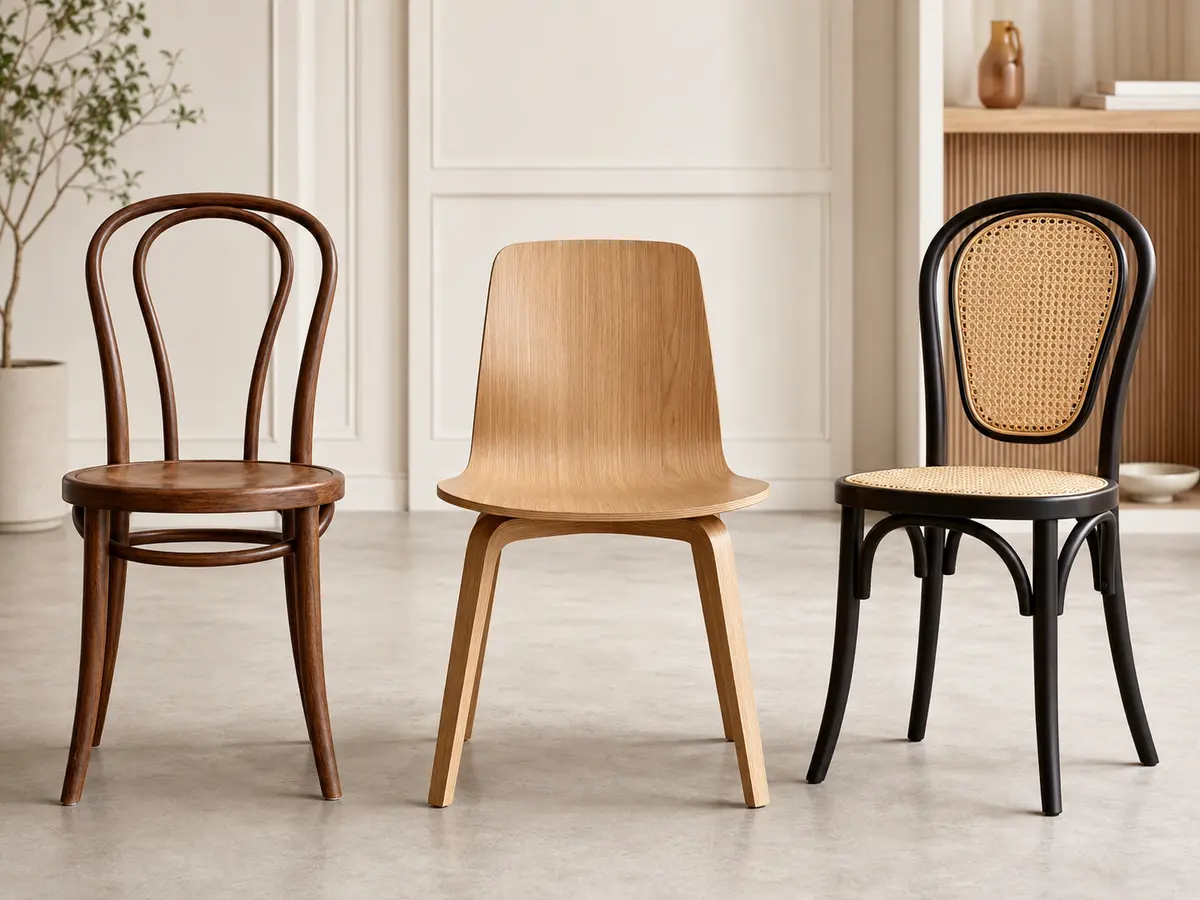
Två stolar kan ha samma svängda silhuett men vara uppbyggda på helt olika sätt. Vissa former skapas genom att ett enda stycke massivt trä böjs. Andra tillverkas av tunna träskikt som pressas till rätt form, böjda delar som sågas ut ur trä eller flera material som sammanfogas. Det här är beskrivningar av olika konstruktionssätt, inte tre ömsesidigt uteslutande stoltyper. En och samma stol kan kombinera flera av dem.
| Konstruktionstyp | Så skapas kurvan | Vanliga möbeldelar | Särskiljande egenskaper |
|---|---|---|---|
| Böjda delar av massivt trä | En del i massivt trä kan ångböjas, sågas till rätt form eller sammanfogas med andra massivträdelar. Tunna remsor av massivt trä kan också lamineras till en böjd form. | Ryggbågar, armstöd, ben, sidoramar och gungstolsmedar | En böjd massivträdel, en limmad böj, en utsågad böj och en sammanfogad böj har olika fiberriktningar och förbindningar. |
| Formpressad plywood | Tunna träfaner limmas samman och pressas mot en form, ofta med hjälp av värme och tryck. | Formade sitsar, ryggstöd, skal i ett stycke och omslutande ryggar | Den böjda delen byggs upp av limmade skikt i stället för ett enda stycke massivt trä. |
| Ramar i böjträstil eller blandkonstruktioner | Böjd plywood, utsågat trä, metalldelar och klädsel kan kombineras för att skapa en böjträinspirerad silhuett. | Moderna caféstolar, stoppade matstolar och sittmöbler i blandmaterial | “Böjträstil” beskriver utseendet, inte en specifik formningsmetod. |
Böjda delar i massivt trä: ångböjda, laminerade, utsågade och sammanfogade
Massivt trä kan formas till en böj på fyra huvudsakliga sätt. Skillnaden handlar inte bara om vilket träslag som används, utan om själva träet har böjts, byggts upp av remsor, sågats till rätt form eller sammanfogats med fogar.
- Ångböjt massivt trä: Värme och fukt gör en massivträdel mer flexibel, så att den kan böjas runt en form och hållas på plats tills den behåller formen. Vid snäva böjar kan ett stödjande metallband begränsa sträckningen längs träets utsida. Bandet är ett hjälpmedel vid böjningen, inte ett separat trämaterial. Träfibrerna fortsätter längs den böjda delen i stället för att sågas av för att skapa en båge.
- Bent-laminated solid wood: Several thinner solid-wood strips are bent against a form and glued together. The result can resemble one thick curved piece, but it contains glue lines between the strips. This method can form curved arms, rails and frame members without bending a single thick timber.
- CNC-cut curved solid wood: A machine cuts the curve out of solid timber. This gives the part a curved outline without physically bending the wood. At a narrow curve, the grain may run across the shape rather than follow it; that creates a different structural condition from a steam-bent member.
- Jointed curved solid wood: Several shorter pieces are shaped and connected to create a larger arc. A smooth finish can make the curve look continuous even though the frame contains joints or fasteners.
These methods appear in curved backrests, armrests, chair legs, side frames, continuous-looking chair hoops and rocking-chair runners (the rails that contact the floor). A curved rocker rail helps define the rocking path; a curved back or arm changes the chair’s shape and contact points. None of these features, by itself, establishes comfort or strength.
Why beech appears so often: Beech is strongly associated with historic Thonet café chairs and their steam-bent frames. Ash, oak, elm, walnut and other woods also appear in curved furniture, but species names alone do not tell you whether a particular piece was steam-bent, cut or joined. Grain, defects, moisture, thickness and the forming process all influence what shapes are possible. Thonet’s account of solid-wood bending explains the role of steam, the metal strap and shaped beech members.
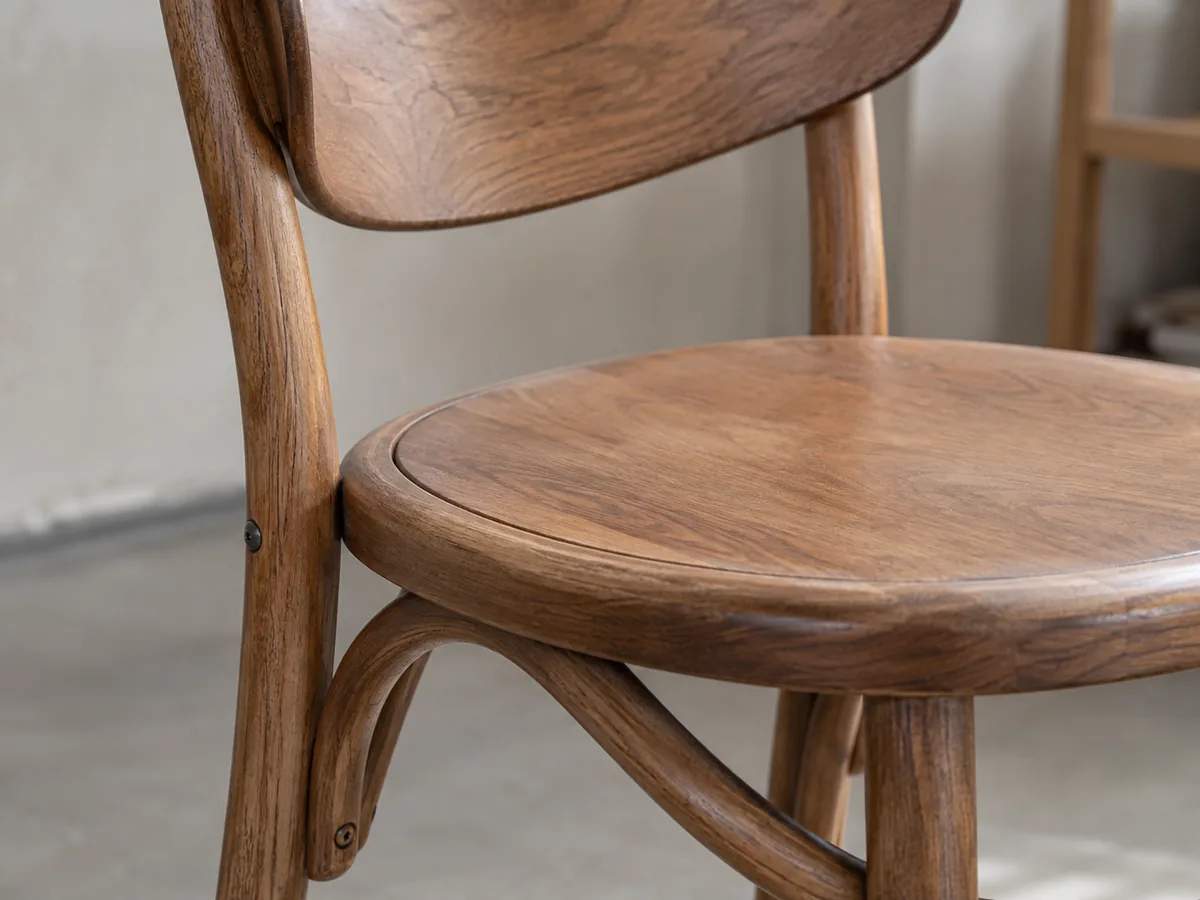
Molded Plywood: Curved Seats, Backs and Shells
Where solid-wood bending shapes a member, molded plywood builds a curved part from thin sheets of wood called veneers. The veneers are arranged with adhesive and pressed in a shaped mold. Heat and pressure may be used to help the layers bond and hold the form. The completed panel can have a shallow bend or a deeper three-dimensional shape.
Different types of plywood curves: A single-curved panel bends mainly in one direction, like a gently curved backrest. A compound-curved shell bends in more than one direction, allowing a seat or back to turn upward and sideways. A thicker laminated plywood member may instead form part of a curved supporting frame. A more complex curve is not automatically more comfortable or more durable; the final geometry and the rest of the chair still matter.
Different plywood furniture parts: Separate molded seats and backrests use two shaped pieces. A one-piece plywood shell connects the seat and back in one formed part. A wraparound shell curves around the sides of a backrest, while an upholstered plywood shell is covered by padding and fabric or another covering. In upholstered chairs, the wood layers may be completely hidden.
Plywood is also described by its veneers and surface finish. Birch, beech, poplar, eucalyptus or mixed veneers may be used in different constructions. An oak- or walnut-faced panel can show that wood on its surface without having a matching solid-wood core. A decorative face veneer and the layers below it describe different aspects of the same panel.
Den Eames Institute’s molded plywood seat provides a historical example of shaped veneer furniture. The USDA Forest Service Wood Handbook chapter on wood-based composites explains plywood and other layered wood materials in more technical detail.
Bentwood-Style Frames: Mixed Materials and Curved Designs
I bentwood-stil describes a chair’s visual language, not one fixed manufacturing process. A rounded café-chair silhouette can be made using cut wooden parts, a molded plywood back, metal legs, an upholstered shell or a mixture of these components. That does not make the chair inferior or a counterfeit; it means the appearance alone cannot identify the construction.
- Wood and metal: A curved wooden seat or back can sit on steel legs or a metal side frame. The support structure and the visible curve are separate parts of the design.
- Plywood and upholstery: A molded plywood shell may be covered with padding and fabric, giving a soft, continuous outline while hiding the shaped layers beneath.
- Decorative curves and a separate frame: A shaped arm, back or trim piece can create a bentwood-inspired look while other members provide the chair’s structural support.
Cane, fabric and leatherette describe a woven surface or upholstery covering; they do not, on their own, identify how the wooden frame was shaped. Likewise, a chair with a curved back can contain solid wood, plywood and metal at the same time.
How can you tell the constructions apart? Visible plywood edges may show bonded layers, solid-wood grain can help explain a curved member, and joint lines may reveal a frame made from several pieces. Paint, veneer and upholstery can hide all three. The clearest distinction is the construction of each component—not the overall outline of the finished chair.
How to Make a Bentwood Chair: The Traditional Process
A traditional bentwood chair is made by softening solid wood, bending it into shape, drying it and assembling the parts. Dry wood cannot simply be forced into a tight curve without a greater risk of damage. The steps below explain the traditional method; they do not mean every YeZhi Furniture chair uses this process.
- Choose the wood. Select a suitable species with the required size and grain direction. Do not use pieces with cracks, knots or other defects that would weaken the bend.
- Prepare the parts. Cut or turn the wooden pieces to the sizes and shapes needed before bending. Leave enough material for the final shape and joints.
- Soften the wood with steam or hot moisture. Heat and moisture make the wood easier to bend. The time needed changes with the wood species and thickness, so there is no single steaming time for every chair.
- Bend the wood with support. When the method calls for it, a steel backing band helps limit stretching on the outside of the bend. Shape the piece around its form, then look for visible fibre damage before moving it to the next stage.
- Hold the curve while the wood dries. Keep the part in its form until it is ready for the next operation. After release, check for cracks and springback—the curve partly straightening—and compare the shape with the approved reference before assembly.
- Trim and assemble. Drill, form or finish joints and connect the back, seat, legs and reinforcing parts according to the chair design.
- Finish and check the chair. Apply the agreed finish and fit the seat and floor glides. Compare size, joint fit, stability on a flat floor and surface quality with the approved sample. Hold any chair that fails the written acceptance requirements for review.
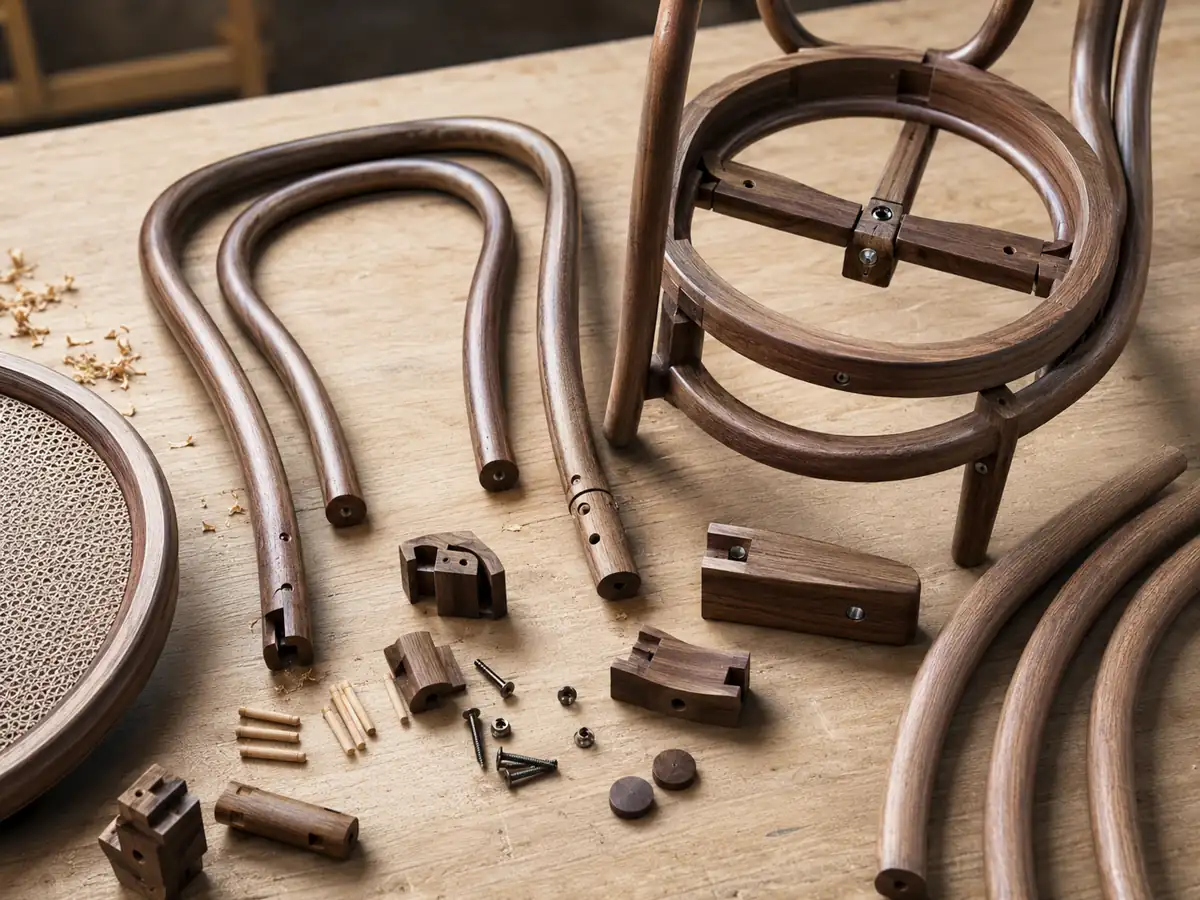
For a commercial order, approve the curved parts and joints on a finished sample. If an original Thonet design is required, confirm maker and design rights separately.
Are Bentwood Chairs Comfortable?
Ja. A well-sized bentwood chair can be comfortable for a café visit or a restaurant meal. The curved back alone is not enough. Check whether the back supports the sitter, whether the seat is wide and deep enough, whether the front edge presses into the legs, how high the table is and how long guests will sit.
| Seating situation | Preferred starting option | What comfort or cleaning issue to check |
|---|---|---|
| Quick coffee or short casual meal | Contoured wood seat or firm cane seat | Easy to move between guests; check whether the front seat edge feels comfortable and the back supports the sitter. |
| Extended restaurant dining | Contoured seat with suitable padding | Improved soft contact; upholstery cleaning and replacement become important. |
| Hotel breakfast / mixed guest groups | Chair with a supportive back and seat dimensions checked against the approved sample | Try the chair with people of different sizes. A photo cannot show how the seat and back will feel. |
| Bar or counter seating | Correct-height stool with a usable footrest | A soft seat will not compensate for an incorrect footrest or seat height. |
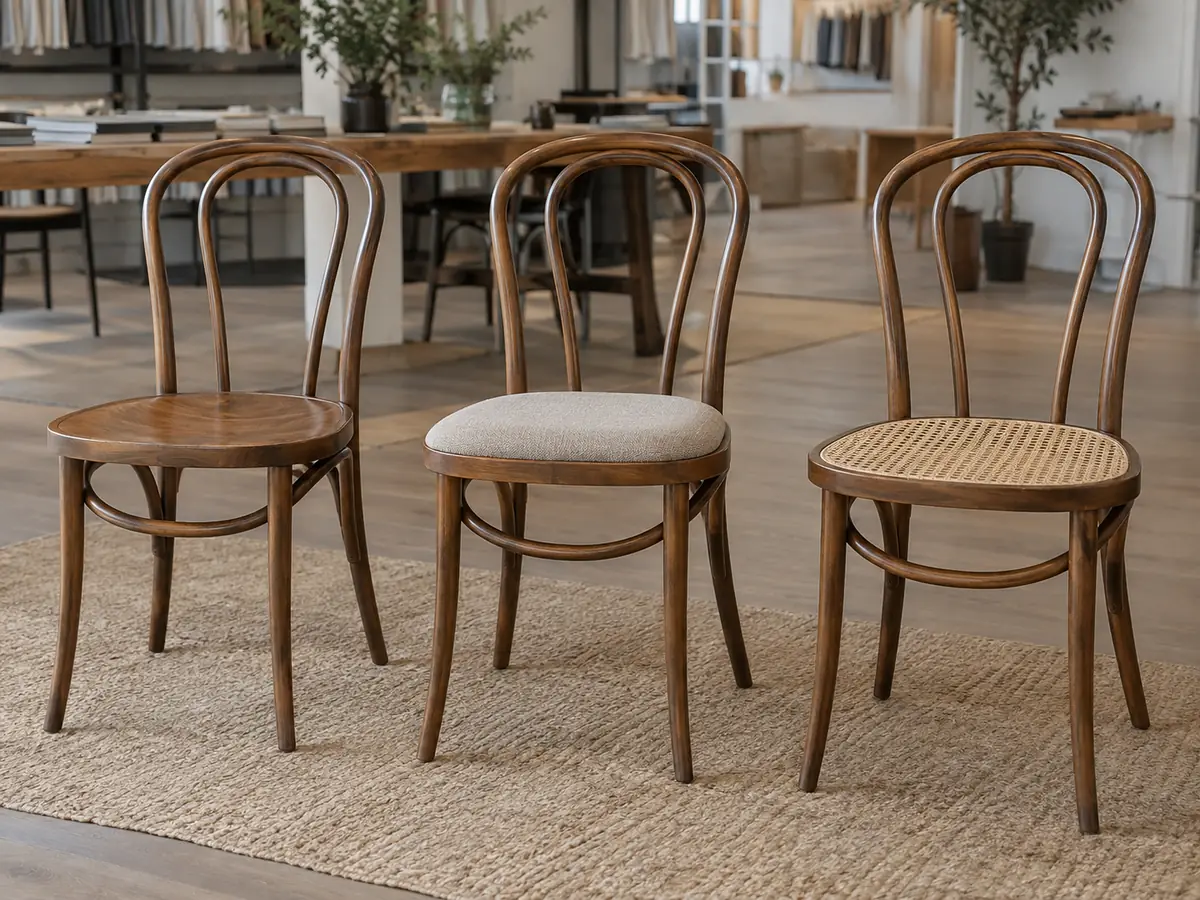
Wood, cane or upholstered seat?
Wood seats can be practical when chairs need to be cleaned and moved often, but their shape and finish still matter. Cane seats look lighter and can have some give, but natural cane needs suitable cleaning and care. Upholstered seats have a layer of padding and a covering, so they are usually the first option to compare for longer meals. Check how the covering is cleaned or replaced.
A bentwood chair pad or removable cushion may make a firm seat more comfortable. Before ordering many pads, sit on one and check that it stays in place, does not change the usable seat size and can be removed for cleaning. A cushion should not be used to hide a damaged or loose seat.
If guests stay for long meals and staff clean seats frequently, check comfort and cleaning on the same sample. Start with a supportive seat covered in a material approved for the venue’s cleaning method. If the covering cannot handle the required routine, reject that upholstery option even if it feels comfortable during a short trial. Do not assume natural cane can tolerate repeated soaking.
Före produktion, test each sample at the real table or a matching mock-up. Have people of different sizes sit down, stand up and move the chair. Record seat-edge pressure, back support, arm-to-table contact and space behind an occupied chair. Reject a frame that fails table fit or comfortable entry and exit before selecting upholstery. Thicker padding cannot correct the wrong seat height or knee clearance.
Bentwood Chair Dimensions and Table Fit
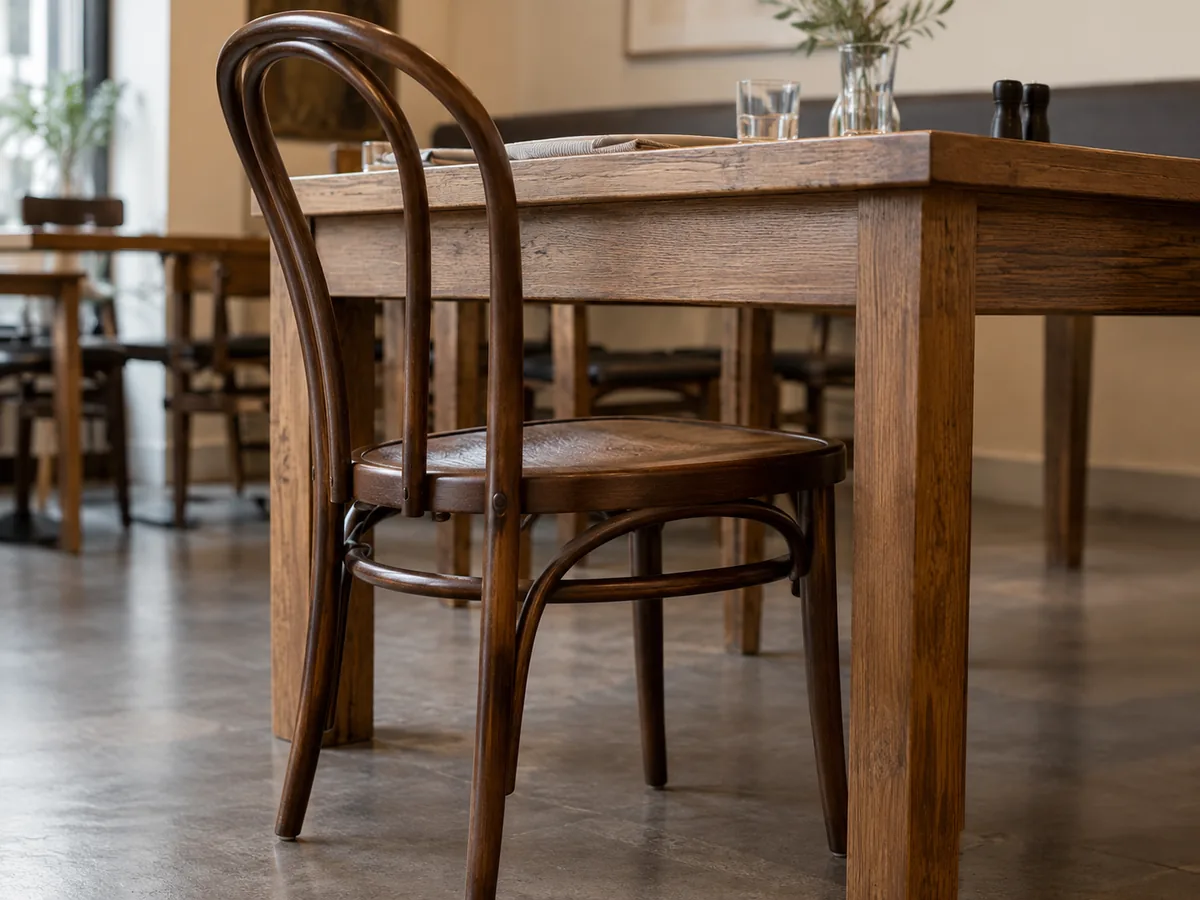
For an initial dining-room layout, you can start with a chair seat height of about 17–19 tum / 43–48 cm and a dining table height of about 28–30 tum / 71–76 cm. These numbers are for planning only. They are not the measurements of a specific YeZhi chair, and they do not prove that an aisle meets accessibility rules. Measure the real chair with a person seated, allow for chair pull-out and staff movement, and check required clear paths against the local project drawings and applicable rules. Do not use the planning range as a finished seating layout.
For a model-level comparison, DC218 has a published seat height of 17,7 tum / 45 cm, while CR215 has a published seat height of 17.8 in / 45.2 cm. These are model specifications, not general bentwood standards. CB190 does not publish a seat height; check its table fit against the approved drawing or sample.
| Mätning | Varför det är viktigt | Vad kan gå fel? |
|---|---|---|
| Seat height to tabletop | Controls dining posture and reach | Guests sit too low or high. |
| Overall chair width and leg spread | Controls seats per table and neighbouring clearance | Planned seating quantity cannot fit. |
| Space behind a chair when someone is seated | Controls circulation when people are seated | Service or required access route becomes obstructed. |
| Arm height and table apron | Determines whether an armchair can tuck under the table | Arms collide with the table structure. |
| Counter height and footrest position | Controls comfort for counter stools and bar stools | Legs lack support despite a correctly shaped back. |
An armchair can meet the seat-height target and still hit the table apron (the support panel below the tabletop). At the intended floor and table position, check seat-to-table height, arm or frame clearance below the apron, and the passage behind an occupied chair. For CB190, obtain seat height, usable seat width and depth, and needed frame-clearance dimensions from an approved drawing or sample; overall chair height cannot replace them. If the chair obstructs the table or required passage, change the chair, table or layout before locking the seating count.
How Much Do Bentwood Chairs Cost?
The table compares selected U.S. public listing examples checked in October 2026, in US dollars per chair unless stated otherwise. These figures show the prices advertised for particular models or options, not typical market ranges, verified transaction prices, delivered prices or YeZhi Furniture factory quotations. The ends of each range come from a small set of listings, not a market-wide price study. Cane and upholstered seating are options that can overlap with dining chairs, bistro chairs and armchairs.
| Bentwood chair type | Observed U.S. listed price examples | Main factors that change the price | Example listings |
|---|---|---|---|
| Böjträstol för bistro och café | US$173–$212 each | Solid-wood species, back design, basic seat or padded seat, finish, and order quantity. | Restaurangmöbler; Cafe Tables |
| Matstol i böjträ | US$183–$203 each | Frame design, wood and bend construction, seat finish, upholstery options, and order size. | Restaurangmöbler |
| Karmstol i böjträ | US$306–$358 each | Additional arm parts, frame dimensions, construction, seat material, cane or padded options, and finish. | Restaurangmöbler; American Hospitality |
| Bentwood chair with a cane seat or back | US$345–$595 each | Caned back only versus cane on both seat and back, handwork, frame wood, maker and finish. | American Hospitality; Williams Sonoma / TON |
| Upholstered bentwood dining chair | US$367–$399 per chair in one listed configuration | Foam, fabric or vinyl grade, seat versus seat-and-back upholstery, and approved cleaning or fire requirements. | American Hospitality (base retail US$345 + listed upholstery options US$22–$54) |
| Bentwood bar stool | US$205.50–$271 each | Seat height, back and footrest design, solid wood versus plywood, upholstery, and quantity discounts. Counter-height versions must be quoted at the correct height. | Moda Seating; Cafe Tables |
| New bentwood rocking chair | US$389 in one new-chair listing | Rocker-rail geometry, frame wood, seat material, finish, and overall size. Rockers are not interchangeable with standard dining chairs. | Amish Traditions |
| Vintage bentwood chair or rocker | US$150–$1,695 in selected asking-price examples | Verified maker and age, originality, condition, repairs, provenance, design rarity and shipping. Actual sold prices can be much lower or higher. | Chairish café chair; Chairish rockers |
How to read these prices: Each row describes a particular chair type or seat option, not a guaranteed price bracket. A new steam-bent solid-wood chair, moulded-plywood chair and mixed-frame lookalike may all have a similar outline but different production costs. Compare the same construction, seat material, finish and quantity. Check any retailer’s latest listing before using a number in a budget; additional examples are shown in the Moda Seating bentwood collection. For vintage chairs, compare completed sales of similar items before estimating value; an asking price does not prove a chair’s market value.
Here is a shipping-cost example, not a live quote. Chair A costs US$65, plus US$28 per chair for packing and freight, making US$93. Chair B costs US$73, plus US$16 for packing and freight, making US$89. Chair B has the lower subtotal even though its chair price is higher. These are limited subtotals, not final landed costs. Compare the same chair configuration, quantity, trade term (EXW, FOB or CIF) and destination. Include duties, taxes, port charges, inland transport and any agreed damage allowance. Mark unquoted costs as not included, not zero.
Är bentwoodstolar tillräckligt hållbara för restauranger?
Yes, some bentwood and bentwood-style chairs are suitable for indoor restaurants. But the name “bentwood” does not tell you how strong a chair is or whether it has passed a test. Check the size of the frame parts, curved sections, joints, screws, seat support, finish, floor glides and the environment where the chair will be used. For required tests, check the evidence for the exact model.
ISO 7173:2023 describes ways to test the strength and durability of chairs and stools. It does inte mean that every YeZhi chair has passed the test. If your project requires test results, check that the report names the actual chair model and configuration and meets the project requirements. If a required report is unavailable or does not cover the selected model and configuration, do not treat the requirement as passed. Resolve the evidence requirement in the project specification before approving that model, or choose a configuration with acceptable documentation.
If a chair develops a structural crack, separated load-bearing wood layers or an unsafe moving joint, stop using it until its condition has been assessed. A damaged foot glide can be checked separately, but replacing a glide or tightening one screw does not prove that a damaged frame is safe.
If stacking is essential, use only a model with confirmed stacking instructions and an approved limit. For frequent wet cleaning or outdoor use, approve the exact seat, finish and environment specification; appearance alone does not establish suitability.
For routine care, see our restaurant chair cleaning guidance and our guide to chair lifespan and wear. If a chair wobbles or its joints loosen, inspect the cause before adding a cushion or replacing the foot glide.
Compare Three YeZhi Furniture Dining Chairs
The three YeZhi Furniture models below help you compare curved plywood, cane with a wooden surround, and upholstered plywood with a metal frame. They are not verified traditional steam-bent solid-wood chairs. Choose them for their confirmed materials, dimensions and fit, not simply because they resemble classic Bentwood. If your project requires traditional steam-bent solid wood, send us that requirement before quotation so construction and model availability can be checked.
DC218 Matsalsstol i svart plywood

DC218 uses contoured plywood-based seat and back components with shaped wood parts and visible metal supports. Depending on the approved configuration, the seat and back surfaces may be exposed plywood or upholstered. Specify both surfaces and finishes before comparing quotes; the product photograph does not lock the final materials. It is a chair option to compare for indoor cafés and restaurants. Published size: W17.7 × D19.7 × H32.9 in / W45 × D50 × H83.5 cm; seat height 17.7 in / 45 cm. Minimum order quantity (MOQ) for the standard model is 20 pcs.
CR215 Matsalsstol i valnöt med rottingrygg

CR215 has a cane seat and back with a walnut-tone wooden surround and steel legs. Compare CR215 for indoor dining when the venue can follow the care requirements for natural cane. If staff routinely soak seats, use steam cleaning or leave seating damp for long periods, do not select this cane configuration as the default. Start with a wipe-clean alternative and confirm its exact finish and cleaning instructions before ordering. Published size: W17.2 × D21.3 × H32.2 in / W43.6 × D54.1 × H81.8 cm; seat height 17.8 in / 45.2 cm. The standard model MOQ is 20 pcs. Walnut-tone describes the colour; it does not prove the chair is made from solid walnut or that its frame is steam-bent.
CB190 Matsalsstol med svängd rygg

CB190 has an upholstered seat, a curved plywood back with upholstery, and a steel sled-style frame. It is worth comparing when you want padded seating. Published overall size: W18.7 × D22.2 × H30.9 in / W47.6 × D56.5 × H78.5 cm. The published product page does not specify seat height, seat width or seat depth. Do not approve CB190 for a particular table based on overall height. Lock those three seat measurements against the table drawing and approved product specification before ordering. The published standard MOQ for CB190 is 20 pcs; deep customization normally starts around 100 pcs per configuration. Confirm the selected upholstery and frame finish in the quotation.
| Om du behöver | Start by comparing | Check before ordering |
|---|---|---|
| A shaped plywood seat and back for indoor dining | DC218 | Confirm the approved plywood or upholstered surface, finish and table fit. |
| A natural cane look for dry indoor dining | CR215 | Confirm cane cleaning rules; compare another seat if routine wet cleaning is required. |
| An upholstered curved-back dining chair | CB190 | Confirm seat height, width and depth from the approved drawing; published overall height is not seat height. |
You can also explore our kollektion av restaurangstolar i trä, kollektion av restaurangstolar och wood bar stool options for other shapes and materials.
What to Check Before Ordering Bentwood Chairs Wholesale
For bulk orders, confirm the model, materials, dimensions and approved sample before final quotation.
- Confirm the frame material. Tell us whether you need traditional steam-bent solid wood, plywood, shaped solid wood or a mixed frame, and which wood species is required.
- Confirm the dimensions. Give us the seat height, overall chair width and depth, back and arm dimensions, and the table or counter drawing.
- Choose the seat. Tell us whether it should be wood, cane or upholstered, whether you need a pad, and which colour, cleaning and maintenance requirements apply.
- Check the sample. Inspect the joints, finish, floor contact, bends and seat attachments. Sit on the chair and note any movement or discomfort.
- Tell us which tests your project requires. If a report is required, it must cover the chair model and configuration you are ordering. A report for a different chair is not a substitute.
- Confirm the sample, packing and reorder details. Record the approved sample, quantity by model and finish, protective packaging and carton size. Ask whether replacement floor glides or seat components are available for the specific model, and document any agreed finish reference and repeat-order matching requirements. Do not assume identical materials will remain available indefinitely.
| Order item | Our standard starting terms |
|---|---|
| Regular wholesale MOQ | Starts from about 15 pcs per model/SKU; specific models can have higher minimums. |
| Full OEM / custom order (a new design or configuration) | Usually from about 100 pcs per design or configuration. |
| Standardproduktion | About 30 days as a production planning reference after order confirmation. For the selected model, confirm when the schedule starts; published DC218 and CR215 terms require the deposit and final order approvals before production timing is locked. Shipping transit is separate from production time. |
| Complex / custom work | Usually about 35–45 days or according to the agreed project. |
| Betalning | Payment by bank transfer (T/T): 30% deposit and 70% balance before shipment. |
| Trade and freight | EXW, FOB or CIF shipping terms. Sea freight can be arranged as part of a shared container (LCL) or a full container (FCL), as appropriate. |
| Standardgaranti | 1 year, with the final warranty coverage and exclusions shown on the proforma invoice (the order document issued before payment). |
A model-specific MOQ takes priority over the general 15-piece starting point. Sample lead time is confirmed separately for the selected model.
Production and packing checks
Before bulk production, approve the model and configuration, drawing with agreed tolerances, material and finish references, sample, seat or cane details, and packing specification. Inspect chairs against these references: dimensions, surfaces, joints, screws, glides, stability on a flat floor, and carton protection and labels.
For each model, finish and seat configuration, record the approved drawing and sample revision, inspected batch, number of chairs checked under the agreed inspection plan, and differences found. Release, correct or hold affected items against the written acceptance criteria. A single approved sample does not prove batch-wide consistency. If a strength, durability or fire test is required, confirm the report covers that model and configuration. A visual check is not a test result.
Confirm whether chairs arrive assembled or in separate parts (knock-down), units per carton, final outside carton dimensions, and protection for curved backs, cane, upholstery and seat edges. Separate shipment in parts does not mean a chair is stackable after assembly; require model-specific stacking instructions.
Compare carton dimensions with doors, lift openings and tight turns on the delivery route. Agree on a safe temporary storage area and who will assemble the chairs, where, and how assembly defects will be recorded. Use the confirmed carton volume (CBM) to compare freight options.
On receipt, count cartons against the packing list and inspect visible damage before unpacking. Photograph damaged cartons, labels and affected chair parts, keep the packing materials, and compare the delivered model and finish codes with the order documents. Report discrepancies through the agreed order contact and claim procedure.
Get the Right Bentwood-Style Chair for Your Project
For a project quotation, send us these details:
- Chair model or reference drawing and the type of venue.
- Table height, required chair and seat dimensions, frame and seat materials, finish or upholstery code.
- Quantity for each model and finish, plus any approved sample, test standard or packing requirement.
- Preferred EXW, FOB or CIF trade term, destination country and port, and target arrival date.
We will review the selected configuration, MOQ and quotation basis before confirming an offer.
Vanliga frågor
How can you tell if a chair is steam-bent solid wood or bent plywood?
Review the model’s material specification and ask which curved parts are made from solid wood and which from bonded wood layers. An exposed edge may show plywood layers, but a covered or painted edge cannot prove how the chair was made. If traditional steam bending matters, ask for construction evidence for that specific model rather than relying on its silhouette.
Are all bentwood chairs stackable?
No. A curved frame does not prove that a chair is designed for stacking. Check the selected model’s stacking instructions and approved limit. Armrests, wider backs and upholstery may change how chairs fit together. If daily stacking is essential, reject models without confirmed stacking information.
How long does it take to make bentwood furniture?
Traditional steam bending has no fixed chair-making time: preparation, heating, bending, drying and finishing vary by part. YeZhi bulk-order production planning is separate—about 30 days for standard orders and usually 35–45 days for complex/custom work after the required approvals, excluding shipping. This does not mean every YeZhi model is steam-bent.
Further Reading
- Victoria and Albert Museum — Thonet and the invention of bentwood furniture (historical manufacturing development).
- Thonet — Bentwood (how solid wood is bent with a steel support strap).
- Philadelphia Museum of Art — Model No. 14 Chair (historic café-chair construction and design).
- ISO 7173:2023 — Test methods for chair and stool strength and durability (this is a standard reference, not proof that a YeZhi chair passed).