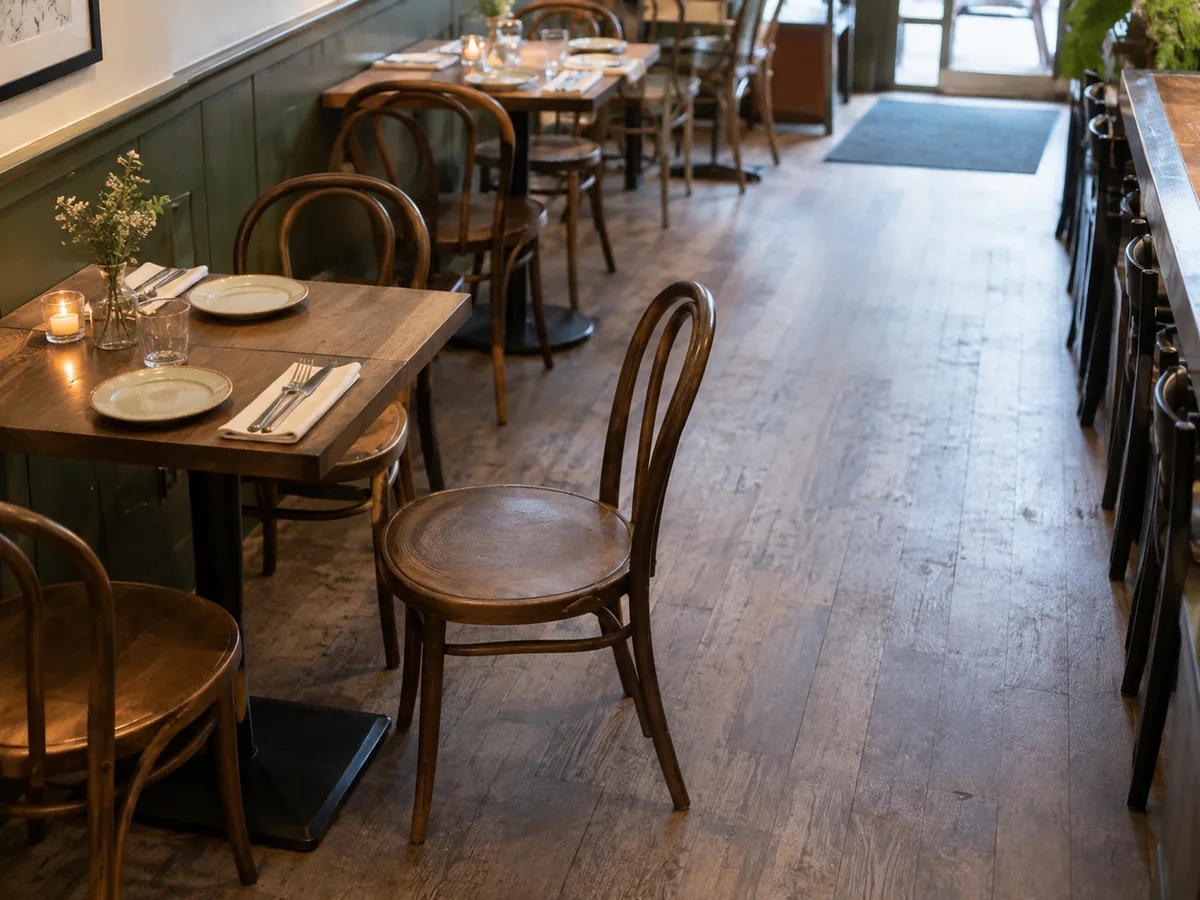
Imagine you walk into a new restaurant. Every table is full. No one feels crowded or hurried. The fastest way to determine and optimize restaurant seating capacity is to balance space, table arrangement, and traffic flow for both comfort and profit. I always check three main things before I decide anything:
| Factor | Description |
|---|---|
| Maximum Seating Capacity | Exits, aisle width, and guest space set your top limit. |
| Proper Arrangements | Smart table shapes and sizes help people wait less and feel happier. |
| Traffic Flow | Good flow keeps noise low and makes service easy. |
Picking a supplier like Yezhi Furniture helps a lot. They give expert help and flexible choices. Want to learn some real steps? Let’s get started! 🪑✨
2026 Quick Answer: How to Calculate and Optimize Restaurant Seating Capacity Fast
Two Ways to Calculate Capacity: Net Dining Area vs. Table-and-Clearance Method
The fastest way to estimate your restaurant seating capacity is to use either the Net Dining Area method or the Table-and-Clearance method. I like to start with these two ways. They give me a clear number fast.
- Net Dining Area Method:
I measure only the dining area, not the whole place. This is good for a quick guess. Most restaurants use about 60% of their space for dining. The rest is for the kitchen, storage, and staff. - Table-and-Clearance Method:
I put tables on a floor plan and check the space around them. This helps me see how different tables fit together. It stops crowding and keeps things moving well.
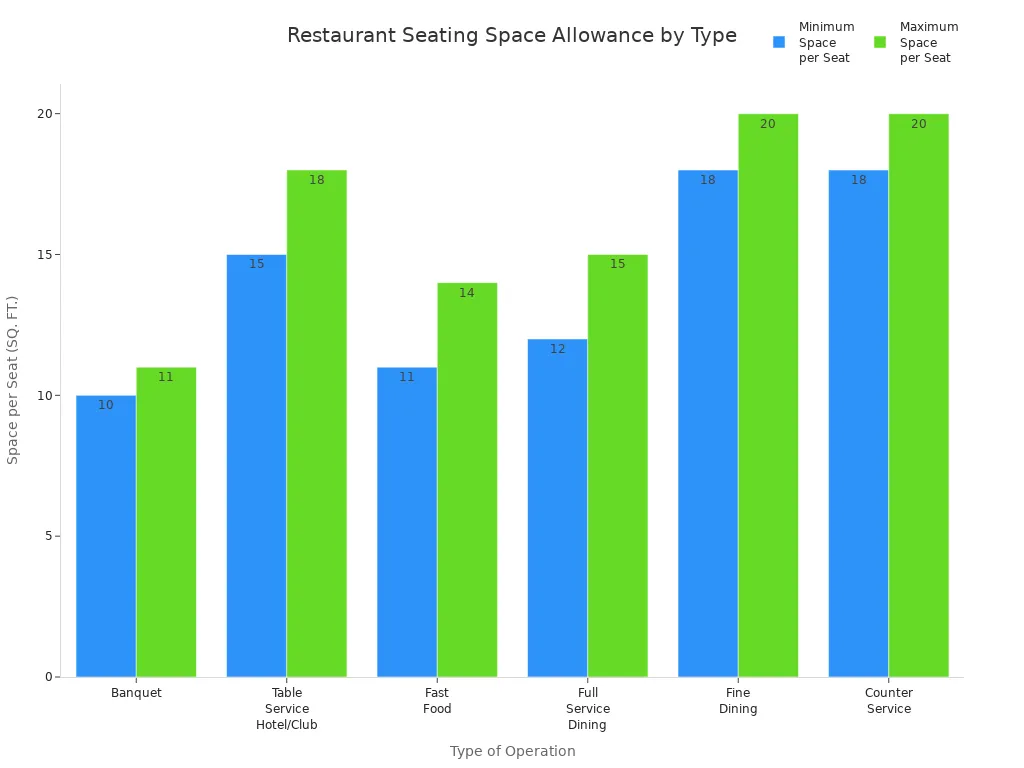
Here’s a table I use to pick the right space for each guest, based on the type of restaurant:
| Restaurant Type | Space Allocation (sq ft per guest) |
|---|---|
| Fine dining | 18 to 20 |
| Full-service dining | 12 to 15 |
| Counter service | 18 to 20 |
| Fast food dining | 11 to 14 |
Tip: For most full-service restaurants, I divide the net dining area by 15. This gives me a good guess for the most seats.
Copy-Paste Formulas for a Reliable Capacity Estimate
I use these simple formulas to get a reliable seating capacity estimate every time. You can copy and paste them into your notes or a spreadsheet.
- Net Dining Area Formula:
Maximum Seats = Net Dining Area (sq ft) ÷ Space Allocation per Guest (sq ft)Example: If my dining area is 900 sq ft and I want full-service dining (15 sq ft per guest):900 ÷ 15 = 60 seats - Daily Guest Capacity Formula:
Maximum Daily Guests = Tables × Seats per Table × Turnover Rate per Hour × Operating HoursExample: I have 10 tables, 4 seats each, open 6 hours, with 1-hour turnover:10 × 4 × 1 × 6 = 240 guests per day
Note: I always check my math if I switch between feet and meters. It is easy to mix up the units!
Real Example: Turning the Same Floor Plan Into +6 Seats Without Feeling Crowded
I can often add 6 or more seats to the same floor plan just by tweaking the seating arrangements and table mix. Here’s how I do it without making anyone feel cramped:
- I swap some big tables for smaller ones or add two-tops by the wall.
- I try different layouts with a sketch or a digital tool.
- I make sure there is enough space between tables for people to move. I usually leave at least 18 inches between chairs.
- I check that every seat has a clear path to the exit and restrooms.
I always try to use space well and test different seating plans. This helps me find the best mix of comfort and seats. I always keep enough space between tables for privacy and a relaxed feeling.
If you want help with custom layouts or need flexible furniture options, Yezhi Furniture can help your project with mix-model orders and expert advice. Their team knows how to make a small space feel comfortable and profitable. 🪑✨
A good seating capacity guide helps you avoid costly mistakes and keeps your guests happy. I always say to start with these methods before you buy any furniture or finish your seating plan.
Restaurant Layout Optimization
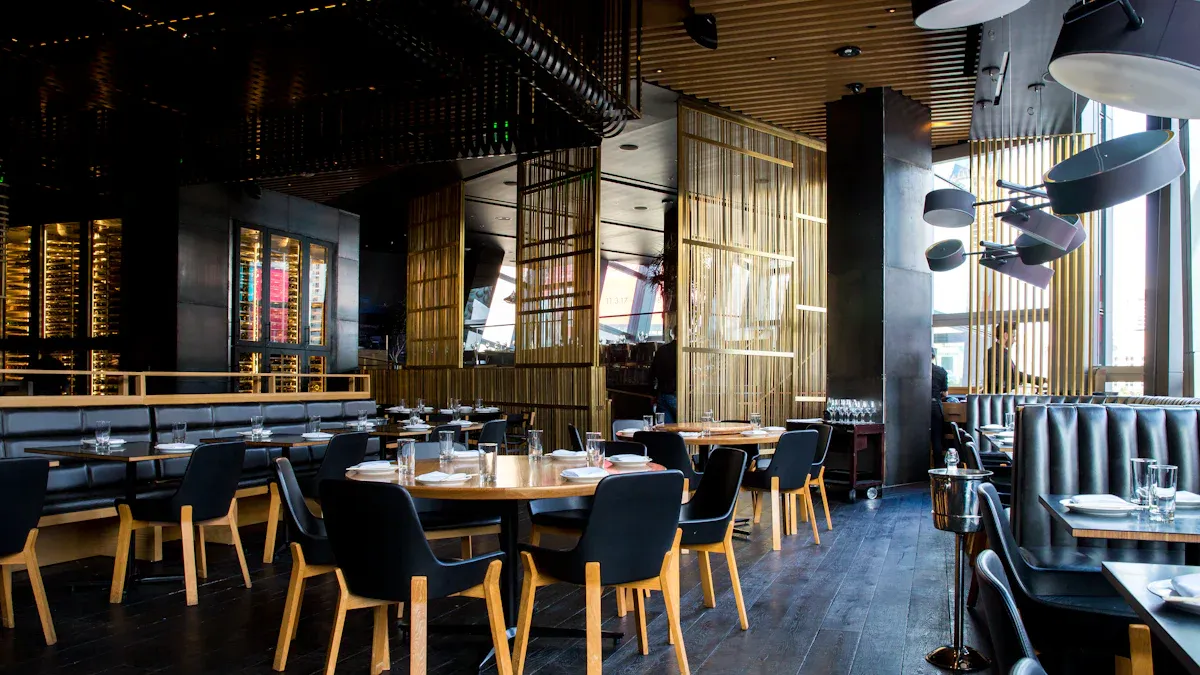
How do I create a comprehensive restaurant layout that feels comfortable and efficient? I always start with a clear plan for table arrangement and traffic flow. This helps me get the most out of my space and keeps guests happy.
Table Arrangement
Start With a Table Mix Strategy
I always use a table mix strategy to balance capacity and comfort. I divide the dining area into zones with different table sizes and types. This makes it easy to seat both small and large groups. I like to use a mix of two-tops, four-tops, and a few larger tables. This way, I can adjust quickly during busy times.
Table Shapes
Table shapes matter more than most people think. Round tables help guests interact and work well for groups. Square and rectangular tables fit neatly together and save space. I often use a mix of shapes to create flexible seating arrangements. This keeps the restaurant seating fresh and inviting.
Table Sizes
I always check the size of each table before I order. Small tables (24″ x 24″) work for two guests. Four-tops usually need 30″ x 48″. Larger tables can seat six or more. I make sure to leave enough space between tables for guests and staff to move easily. Yezhi Furniture offers many sizes and custom options, so I can match my seating layout to my exact needs.
Traffic Flow
Aisle Widths
Aisle width is key for smooth movement. I keep main aisles at least 48 inches wide. Side aisles can be 24 to 36 inches. This helps avoid bottlenecks and keeps everyone comfortable.
How to Measure Table Spacing Correctly
I measure from the edge of one chair to the next. I leave at least 18 inches between chairs at different tables. This gives guests enough room to pull out their chairs and move around. I always double-check this on my floor plan.
Service Routes
I plan clear paths for staff to move between the kitchen, dining area, and service stations. I place POS systems and drink stations where they won’t block the flow. This makes service faster and keeps the restaurant running smoothly.
Peak-Hour Stress Test: Simulate Trays, Carts, and Two-Way Passing
During busy times, I like to walk the space with a tray or cart. I check if two people can pass each other without bumping into tables. This simple test helps me spot trouble areas before opening day. 🚶♂️🍽️
Tip: Multi-functional furniture and vertical storage can help maximize space and keep the dining area clutter-free.
Here’s a quick table of practical layout strategies I use:
| Strategy | Description |
|---|---|
| Optimal Seating Arrangement | Divide dining area into zones for better flow and service. |
| Vertical Storage Solutions | Use wall space for storage to keep the kitchen organized and accessible. |
| Outdoor Seating | Add outdoor options to boost capacity and ambiance. |
| Multi-Functional Furniture | Choose pieces that adapt to different needs and traffic levels. |
A well-planned restaurant layout supports both comfort and efficiency. I always keep the guest experience in mind while making the most of every square foot. If you need help with flexible seating or custom solutions, Yezhi Furniture can support your project with mix-model orders and expert advice.
Seating Capacity Calculation
Measurement Standards
The best way to get accurate seating capacity is to follow clear measurement standards for every part of your restaurant layout. I always check the numbers for space per guest, table sizes, and spacing. This helps me avoid mistakes and keeps my dining room comfortable.
Unit Conversion Pitfalls (Inches vs. cm, sqft vs. m²) and How to Avoid Errors
Many people mix up inches and centimeters or square feet and square meters. This can mess up a restaurant floor plan. I always check my units before I start. I use a simple chart to help me remember:
| Unit Type | US Standard | Metric Equivalent |
|---|---|---|
| Inch | 1 in | 2.54 cm |
| Square Foot | 1 sq ft | 0.093 m² |
| Table Height | 30 in | 76 cm |
Tip: I always label my drawings with both units. This helps everyone on the team understand the plan. 📝
Space Per Guest
I use 14 square feet per person for most seating capacity calculations. This gives guests enough room to eat and move. For booths, I use 8 square feet per person, including aisle space. I check these numbers with my restaurant style. Fine dining needs more space. Busy restaurants can use less.
Table Dimensions
I pick table types and sizes based on my restaurant layout and guest needs. Here’s a quick table I use to help me:
| Table Type | Recommended Size/Space |
|---|---|
| Standard dining table | 12 sq ft per table |
| Banquet/institution table | 10 sq ft per table |
| Booth (per person) | 8 sq ft including aisle space |
| Space from table edge to chair back | 18 inches |
| Minimum space between square tables | 42 inches |
| Minimum space for round tables | 54 inches |
I match my table arrangement to my restaurant’s style. Yezhi Furniture has many table sizes and custom options. This helps me get the right fit for any restaurant layout.
Don’t Forget Chair Pull-Out Space and Base Footprint
I always measure the space needed for chairs. I leave at least 18 inches from the table edge to the chair back. I also check the base footprint of each chair. This keeps my table and chair spacing safe and comfortable. I use layout software to test different table arrangements before I order furniture.
Calculation Methods
I use both manual and digital methods to get the most accurate seating capacity for every restaurant project. Each method has its own strengths. I pick the right one for each planning stage.
Manual Calculation
I start with manual calculations when I need a quick guess. Here’s my step-by-step process:
- Measure the dining area.
- Subtract non-dining spaces like restrooms and kitchens.
- Divide the net area by the recommended space per guest (usually 14–15 sq ft).
- Adjust for table types and sizes.
- Count booth seats by length (one person per 24 inches).
I use a seating chart to plan table arrangement and check if my numbers match my restaurant style. For good restaurant design, I always think about comfort and flow, not just maximum seating capacity.
Digital Tools
I use digital tools for detailed planning. These tools let me test traffic flow and try different layouts. I can see how guests and staff move around the restaurant. Digital tools help me find problems before opening day. They also make it easy to share plans with my team.
Digital tools give me exact measurements and help me use every inch of my restaurant. They save time and help me avoid mistakes. 🖥️
Yezhi Furniture’s catalogs work with layout software. I can drag and drop their furniture models into my restaurant floor plan and see how everything fits.
Capacity Calculator vs. Floor Plan Tool: What to Use at Each Project Stage
I use a capacity calculator for early guesses. This tool helps me set goals for seating capacity and revenue. When I do detailed planning, I switch to a floor plan tool. This lets me test table arrangements, check spacing, and make sure my restaurant seating matches my plan.
Here’s how I choose which tool to use:
| Project Stage | Best Tool | Why Use It? |
|---|---|---|
| Early Planning | Capacity Calculator | Quick guesses, set targets |
| Layout Design | Floor Plan Tool | Test table and chair spacing, try flow |
| Final Review | Digital Floor Plan + Catalog | Check fit, order furniture |
I always use manual checks with digital tools for the best results. This helps me create a busy restaurant that feels comfortable and works well.
If you want help with custom layouts or need flexible furniture options, Yezhi Furniture can help your project with expert advice and mix-model orders. Their team knows how to turn a restaurant floor plan into a profitable, welcoming space.
I always say: Measure twice, plan smart, and use the right tools for every step. That’s how I get the best capacity and guest experience. 😊
From Floor Plan to Purchase List: How We Help Projects Execute Faster
When I start a restaurant project, I want things to go fast. The fastest way to get from your floor plan to a complete purchase list is to share clear project details and work with a supplier who knows commercial dining room needs inside and out. Here’s how I make everything easy and less stressful.
What You Send Us (Drawings, Table Mix, Target Seat Count)
I always send three things to my supplier. First, I send drawings that show the size of my space. Next, I tell them what table mix I want, like how many two-tops, four-tops, and booths. Last, I share my target seat count for the restaurant.
I also add notes about traffic paths and ADA seating. I include any fire code rules too. This helps the supplier know my goals and avoid mistakes. I measure my space and mark important areas. I think about booth shapes that match my style. I make sure there is enough room for walkways and accessible seats. If I want custom options, I plan for extra time.
Tip: Picking a supplier with real restaurant experience helps a lot. They know how to keep furniture strong, matching, and on-brand.
What You Get Back (Spec Sheet, Packing Info, Finish Options, Quote)
After I send my info, I get a package back. Here’s what I usually get:
| Deliverable | Description |
|---|---|
| Accurate Measurements | I see how each piece fits in my space. There are no surprises. |
| Furniture Descriptions | I get details for every item, like materials, colors, sizes, and features. |
| Adherence to Local Standards | The supplier checks that everything follows local codes and safety rules. |
| Brand Standards | My restaurant seating matches my brand’s look and guest experience. |
I also get packing info, finish choices, and a clear price. This makes it easy to compare and finish my order. Yezhi Furniture always sends a full spec sheet and helps me pick finishes that fit my space. 📝✨
Typical Lead Time and Delivery Plan (Production + Ocean Shipping)
I always ask about lead times before I order. Most projects take 8 to 14 weeks from start to finish. This includes making the furniture and shipping it by ocean. If I pick custom designs or big orders, I plan for more time. Shipping can change, so I add extra time to avoid delays.
- Standard production and shipping: 8–14 weeks
- Custom or big orders: Plan for more time
- Always add shipping time to your schedule
I keep my project on track by planning ahead and working with a supplier who gives updates. Yezhi Furniture’s team always tells me how things are going and helps me finish on time. 🚢
By following these steps, I turn my restaurant seating plan into a real, comfortable, and profitable dining space—fast.
Restaurant Seating Comfort & Accessibility
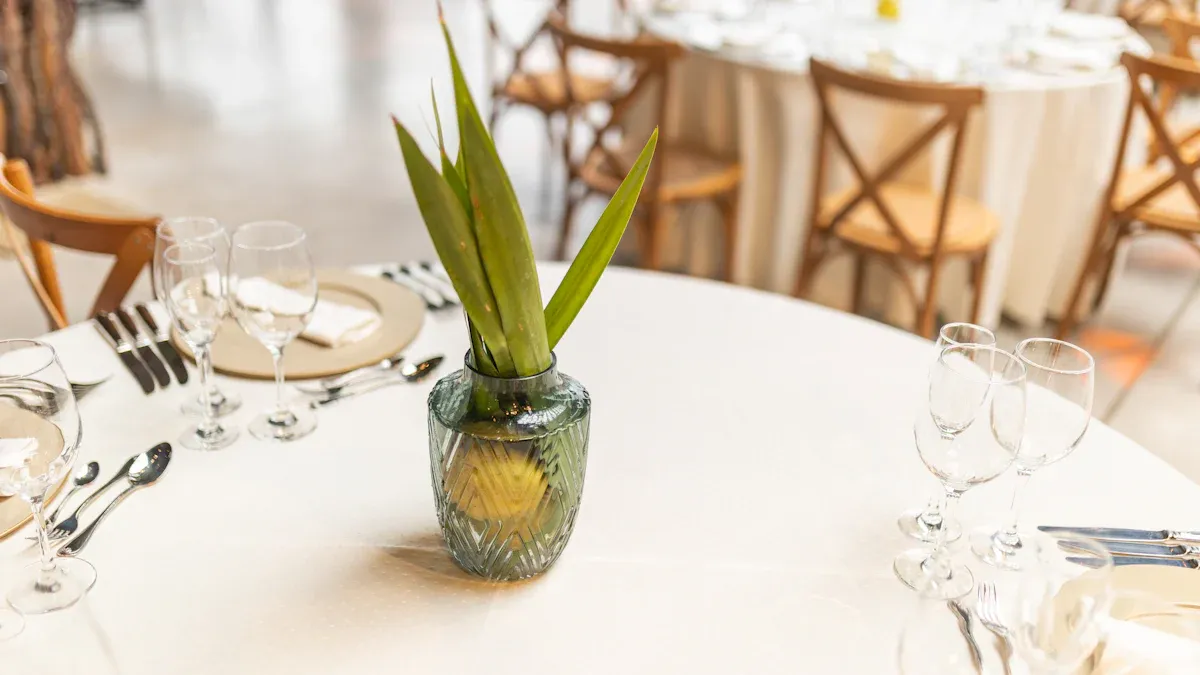
Guest Comfort
Avoiding Overcrowding
I always make guest comfort my top priority by preventing overcrowding. I plan the restaurant so guests have enough space. Tables and chairs are not too close together. Wide aisles help people walk easily. I do not put too many seats in one spot. This helps guests relax and enjoy their food. No one bumps elbows or feels rushed. Yezhi Furniture has flexible seating options. These choices help me change layouts and keep the space comfortable.
Three Comfort Metrics You Can Measure: Legroom, Pull-Out Space, and Noise Buffer
I measure three key comfort factors for every project: legroom, pull-out space, and noise buffer. I check each one to make sure guests feel good.
- Legroom: Guests need space to stretch their legs. Chairs and tables fit so feet rest flat.
- Pull-Out Space: I leave 18 inches behind each chair. This lets guests slide in and out easily.
- Noise Buffer: Soft materials and smart layouts help lower noise. Upholstered chairs and booths soak up sound. This makes talking easier.
I pick chairs with good back support and soft padding. These details help guests stay comfortable for long meals. I match chair and table heights. This lets elbows rest on the table. Small changes like this make a big difference. 😊
Enhancing Ambiance
I create a welcoming ambiance by blending comfort with style. I use lighting, color, and furniture design to set the mood. Soft lights and warm colors make guests feel at home. I choose furniture with simple shapes and strong materials. Yezhi Furniture has wood, metal, and upholstery choices. These options help me match any restaurant theme. Their ergonomic designs add comfort and style to every space.
Accessibility
ADA Compliance
I always follow ADA guidelines to make sure everyone can enjoy the restaurant. Here is a table with the main rules I check:
| Requirement | Details |
|---|---|
| Accessible Seating | At least 5% of seating must be accessible and spread throughout the dining area. |
| Clear Floor Space | Each accessible table needs at least 30″ x 48″ of clear space for a wheelchair. |
| Table Height and Knee Clearance | Table height: 28–34″; knee clearance: at least 27″ high, 30″ wide, 19″ deep. |
| Path of Travel | Accessible routes must be at least 36″ wide. |
| Seating Stability | Tables and chairs must be stable and easy to move for wheelchair users. |
Accessible Routes: The Minimum Path Rules Designers Miss Most Often
I always double-check that accessible routes are at least 36 inches wide. This rule is important for wheelchair users and staff with trays. I keep these paths clear of things that block the way. Paths connect all main areas, like restrooms and exits. 🚶♀️
Accessible Seating: Where to Place It
I spread accessible seating throughout the dining area, not just in one spot. This gives everyone a choice of where to sit. It makes the restaurant more welcoming. I do not put all accessible tables near the entrance or in busy spots. I mix them into different sections. This way, guests with disabilities enjoy the same atmosphere as others.
Wheelchair Access
I make sure every accessible table has enough space for a wheelchair to fit comfortably. I check table height and knee space. I pick chairs that are easy to move. This helps guests transfer in and out easily. Yezhi Furniture’s custom options let me order tables and chairs that meet these needs. This makes it easy to follow the rules for any project.
When I focus on comfort and accessibility, I make a restaurant where everyone feels welcome. That is how I build spaces guests want to visit again and again. 🏆
Furniture Selection for Restaurant Seating
Choosing the Right Pieces
Choose by Use-Case First (High-Turn Tables, Long-Stay Zones, Bar, Outdoor)
The fastest way to pick the right furniture is to match each piece to its use-case. I always think about where each item will go. I ask how guests will use it. High-turn tables need surfaces that clean up fast. Stackable chairs help save space and time. Long-stay zones need soft seats and bigger tables. Bars need strong stools with footrests. Outdoor areas need finishes that can handle weather. This way, every part of the restaurant feels right and stays comfy.
Dining Chairs
I pick dining chairs that match my restaurant’s style. They must be strong for busy days. I check the width so guests have elbow room. I choose materials that look good and work well. Upholstered seats feel soft and cozy. Non-upholstered chairs are easier to clean. Yezhi Furniture has many dining chair choices. I can find the best ones for any project.
Dining Chair Specs That Matter in Commercial Use (Load, Cleanability, Floor Protection)
I always check these specs before I order chairs for a restaurant:
| Criteria | Details |
|---|---|
| Weight Capacity | Chairs should support at least 300 lbs; 400–500 lbs is even better. |
| Material Quality | Commercial-grade hardwood or heavy gauge steel lasts longer. |
| Construction | Chairs must meet BIFMA standards for safety and performance. |
| Upholstery | High-density foam and stain-resistant fabrics work best. |
| Stackability | Stackable chairs make storage and cleaning easier. |
| Floor Protection | Non-marking feet protect floors from scratches. |
| Cleaning Needs | Choose seat types based on turnover and cleaning requirements. |
I always ask about warranties before I buy. This helps me feel safe and plan for later.
Bar Stools
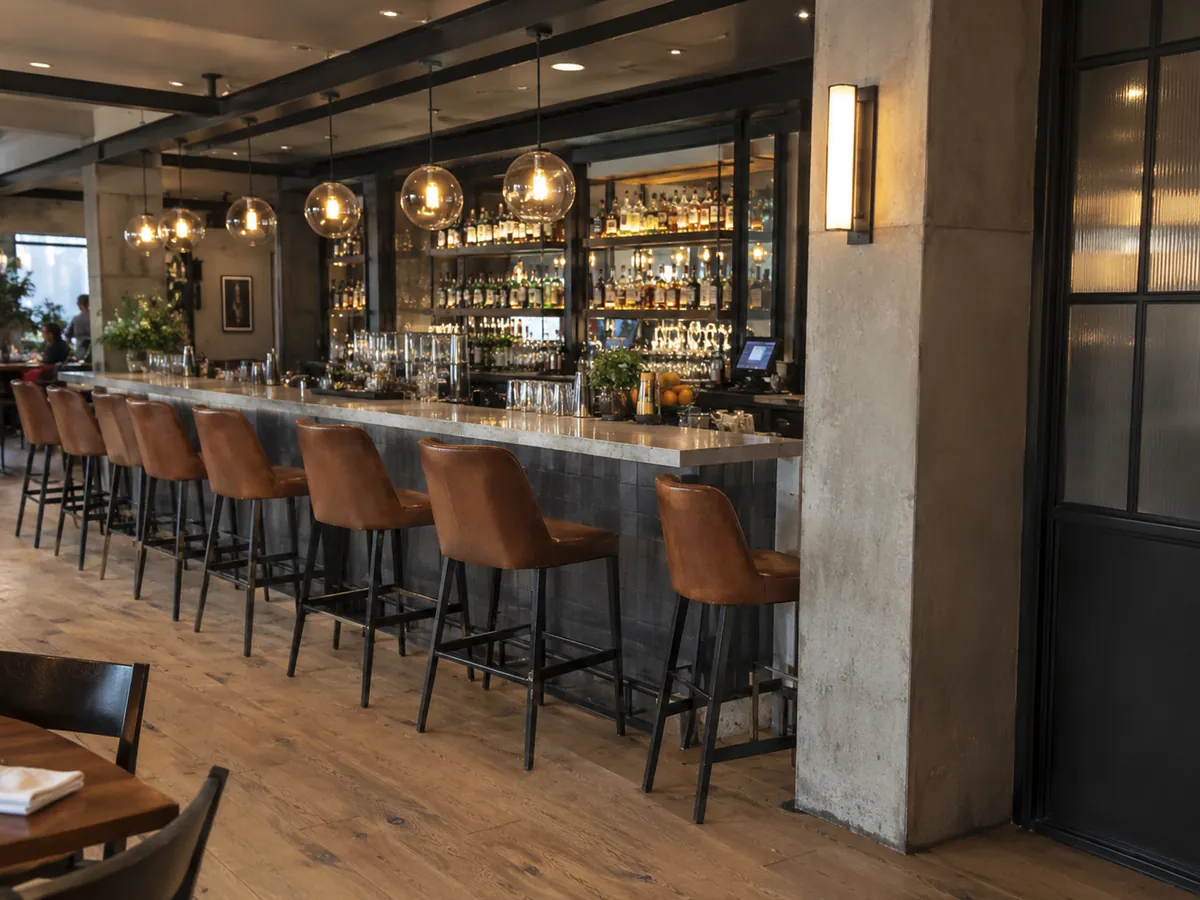
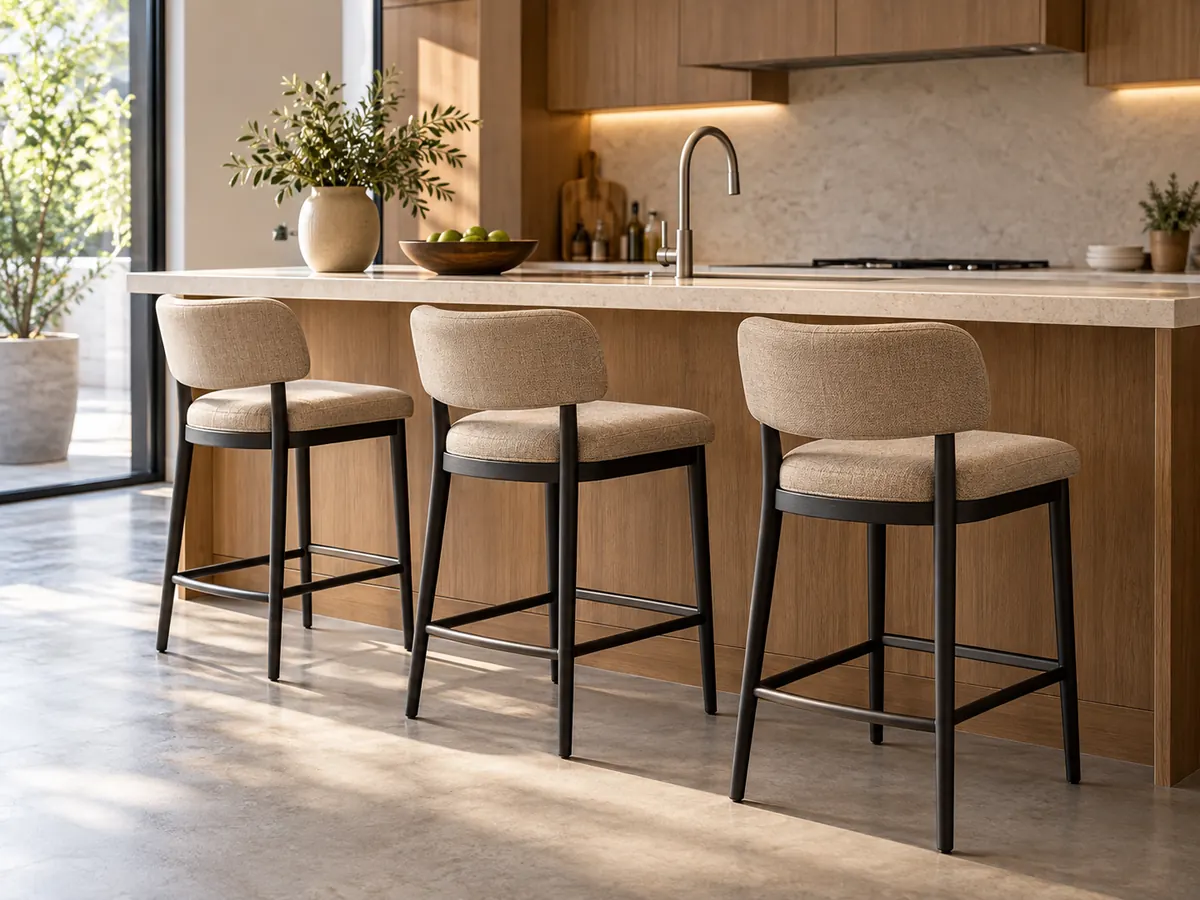
Bar stools need to be strong and comfy. I measure my bar and leave 6 inches between each stool. I pick stools made from tough materials. I choose styles that match my brand. Yezhi Furniture has many bar stool heights and finishes. Their MorningSun collection has cool industrial styles.
Bar Stool Height Guide (Counter vs. Bar vs. Extra-Tall) + Footrest Placement
I use this quick guide to pick the right stool height:
| Stool Type | Height (inches) | Best For | Footrest Placement |
|---|---|---|---|
| Counter Stool | 24–27 | Kitchen counters | 8–10 inches from seat |
| Bar Stool | 28–32 | Standard bars | 10–12 inches from seat |
| Extra-Tall | 33–36 | Tall bar tables | 12–14 inches from seat |
I always check that the footrest is easy to reach. This helps guests feel relaxed and happy. 🍹
Customization & Mix Options
Mixed-Model Ordering: How to Keep a Consistent Look Across Different SKUs
I keep my restaurant’s style consistent by mixing models with similar finishes and shapes. Yezhi Furniture lets me pick chairs and stools in matching colors. I can mix different seating types and still keep the look the same.
When OEM/Customization Makes Sense
I pick custom furniture for special sizes or colors. Custom pieces work well for unique layouts. Yezhi Furniture offers OEM services for projects that need something special.
Project Documentation Checklist
I always make a checklist before I order:
- Floor plan with measurements
- Table mix and seating zones
- Material and color preferences
- Delivery timeline
- Compliance requirements
This helps me stay organized and get what I want from my supplier.
Materials & Colors
I choose materials that match my brand and last long. Choices include leather, vinyl, polyester, laminate, glass, stone, concrete, and wood veneer. MorningSun’s industrial style uses European oak and North American walnut. They also have finishes like bronze and gunmetal. 🪑
OEM Services
Yezhi Furniture’s OEM services let me customize furniture for any project. I can pick sizes, finishes, and branding details. Their team helps me make my ideas real. This makes the process easy and smooth.
Table Management & Technology
The fastest way to keep your restaurant running smoothly in 2026 is to use smart technology for table management and layout adjustments. I always look for tools that help me seat guests faster, reduce wait times, and keep my staff organized. Let me show you how I do it.
Reservation Systems
Table Management Software
I use table management software to handle reservations and walk-ins. These systems help me see which tables are open, which are reserved, and how long each guest has been seated. Here are some of the most popular options I see in 2026:
- Toast: Cloud-based, works even if the internet goes down, and has inventory features. Starts at $69/month.
- Open Table: Lets guests book in real time and connects with other systems. Starts at $149/month.
- Eat App: Lets guests book from my website, Google, or social media.
These tools help me avoid double bookings and keep my dining room full but not crowded. I can update reservations from my phone or tablet. This makes my job much easier. 📱
Digital Floor Plans
I always use digital floor plans to see my restaurant layout in real time. I can move tables around with a few clicks. If a big group comes in, I can join tables together fast. Digital floor plans help me spot bottlenecks and fix them before they become a problem. I also use these tools to plan for busy nights or special events.
Yezhi Furniture supports project buyers like me by offering furniture models that work with digital planning tools. This makes it easy to see how new tables and chairs will fit before I order.
Operational Efficiency
Staff Workflow
I boost staff workflow by giving my team clear digital tools. When my staff can see table status and guest needs on a screen, they work faster and make fewer mistakes. I set up screens at the host stand and in the kitchen. This keeps everyone on the same page. My team can seat guests, take orders, and turn tables quickly.
Real-Time Adjustments
I make real-time adjustments during service to keep things running smoothly. If a table finishes early, I can seat the next group right away. If a guest needs extra time, I can update the system so my staff knows not to rush them. Technology helps me react fast and keep guests happy. 😊
Here’s a quick table showing how technology improves my restaurant’s efficiency:
| Benefit | Description |
|---|---|
| Reduced waiting times | Guests get seated faster and spend less time waiting. |
| Greater customer control | Guests can manage their own bookings and preferences. |
| Minimized human error | Automation cuts down on mistakes with orders and payments. |
| Faster table turnover | I can seat new guests as soon as a table opens up. |
I notice that customers love being able to book ahead and avoid waiting. I also like how I can manage my online reservations and waitlist in one place. This makes my restaurant more organized and reliable.
If you want a cohesive solution for your venue, Yezhi Furniture can help you match your furniture choices with your digital planning tools. Their team knows how to support project buyers who want a seamless setup from layout to delivery.
Tip: Start with a simple system and add features as your business grows. The right technology will save you time, money, and stress.
Regulations & Compliance
Following rules is important for my restaurant. It keeps everyone safe and happy. The fastest way to stay compliant is to follow ADA rules and local codes from the start. I always look at these rules before I finish my seating plan.
ADA & Accessibility Laws
Key Requirements
I focus on making my restaurant easy for everyone. ADA laws have clear rules for seating. Here are things I always check:
- Seats, tables, and counters must be easy for all guests to use.
- I make sure there is enough space under tables for wheelchairs.
- Movable tables help guests move around better.
- Accessible seating needs proper space for knees and toes.
I use this table to remember the main ADA rules:
| Requirement | Details |
|---|---|
| Accessible Tables | At least 5% of tables must be accessible (minimum one) |
| Table Height | Between 28–34 inches |
| Knee Clearance | 27 inches high × 30 inches wide × 19 inches deep |
| Clear Floor Space | 30 × 48 inches at each seat |
| Distribution | Accessible tables spread throughout the dining area |
| Chair Restrictions | Chairs with arms cannot block wheelchair access |
Tip: I put accessible tables in different places, not just near the door. This helps every guest feel welcome. 🦽
Common Mistakes
Some people make mistakes with ADA rules:
- Putting all accessible tables together in one area.
- Not leaving enough space for wheelchairs to move.
- Using chairs with arms that block wheelchair spots.
- Forgetting to check table height and space under tables.
I avoid these problems by checking my layout twice. I use furniture that follows ADA rules. Yezhi Furniture has custom choices that help me meet these rules and keep my style.
Local Codes
Occupancy Limits
Local codes tell me how many people can be inside. I calculate maximum occupancy by dividing my dining area’s square footage by 15 square feet per person. This keeps my restaurant safe and legal.
- I talk to the fire marshal or building inspector.
- I follow their advice to set my occupancy limit.
- I change my seating plan if the rules change.
Emergency Exits
Emergency exits are very important. I make sure every guest can get to an exit easily. I keep aisles wide and clear. I check that nothing blocks the exit doors.
Note: I always mark emergency exits on my floor plan and show it to my team. 🚪
I keep my restaurant following the rules by checking codes often. I work with suppliers who know these rules well. Yezhi Furniture helps me with quality checks and support after I buy. If I need to change my layout or get new furniture, their team helps me quickly.
Staying compliant protects my business and keeps guests safe. I always make regulations a top priority in every project.
Practical Tips & Common Mistakes
Maximizing Profitability
Table Mix Tweaks That Increase Seat Utilization Without Killing Comfort
I boost profitability by adjusting my table mix to fit more guests without making anyone feel cramped. I swap out some large tables for more two-tops and four-tops. This lets me seat couples and small groups quickly. I also use a few larger tables for families or parties. I always check that every guest has enough elbow room and space to move. When I use flexible tables, I can join them together for bigger groups. This keeps my restaurant busy and comfortable at the same time.
Flexible Seating for Groups: Joinable Tables and Seasonal Layout Swaps
Flexible seating helps me handle groups and busy times with ease. I pick tables that join together fast. I can move them to fit any group size. During holidays or special events, I swap layouts to add more seats or create cozy corners. Outdoor seating gives me extra space in good weather. I always plan for at least 5% of my seats to be ADA-compliant so everyone feels welcome. Yezhi Furniture offers joinable tables and mix-model options, which makes these changes simple for my team. 🪑
Dynamic Arrangements
I keep my layout dynamic to adapt to peak and slow hours. I use stackable chairs and lightweight tables. I can clear space for events or add more seats for rush hour. I pay attention to traffic flow so guests and staff move easily. I also use materials that absorb sound, like upholstered chairs, to keep noise down. This makes the dining room feel calm even when it’s full.
Seasonal Adjustments
Seasonal adjustments help me maximize every inch of my space. In summer, I open up outdoor seating. In winter, I bring in extra heaters and cozy décor. I review my layout every season to see what works best. I look for ways to use both indoor and outdoor areas to boost revenue.
Tip: I always check my furniture for wear and tear during these changes. This keeps my restaurant looking sharp and safe. 😎
Mistakes to Avoid
Chasing Maximum Seats and Losing Reviews (What Usually Goes Wrong)
Packing in too many seats can hurt my business more than it helps. Overcrowding makes guests uncomfortable. People bump into chairs and staff can’t move fast. This leads to bad reviews and fewer repeat customers. I focus on a seamless seating layout that balances comfort and capacity.
Ignoring Booth/Bar True Footprint (Why Remodels Get Expensive)
I never ignore the true footprint of booths and bars. Booths and bar areas take up more space than they seem. If I forget to measure the base and pull-out space, I end up with a crowded floor plan. Remodels get expensive when I have to fix these mistakes. I always double-check my measurements before I order.
Overcrowding
Overcrowding causes more problems than it solves. Guests feel squeezed. Staff can’t serve quickly. Bottlenecks form in aisles. I avoid this by leaving enough space between tables and planning clear paths for everyone.
Ignoring Feedback
Ignoring feedback from guests and staff is a big mistake. I listen to what people say about comfort, noise, and movement. I use their ideas to improve my layout. This helps me spot problems early and fix them fast.
Here’s a quick list of mistakes I watch out for:
- Overcrowding and tight aisles
- Ignoring traffic flow
- Poor kitchen-to-table coordination
- Not enough ventilation
Yezhi Furniture’s fast response and one-stop sourcing help me avoid these pitfalls. Their team supports my project from planning to delivery, so I can focus on creating a great guest experience.
A Simple 5-Day Plan to Finalize Capacity, Layout, and Purchasing
Day 1: Measure, Zone, and Define Your Service Style
I always start by measuring my space and zoning each area before I do anything else. This step is important for everything that comes next. I grab a tape measure and check every wall, window, and doorway. I write down the size of my dining area, kitchen, and storage. Good measurements help me avoid mistakes that cost money later.
Next, I split the space into zones. I pick spots for the main dining area, waiting area, and service stations. I think about how guests and staff will walk around. Good flow keeps people happy and safe. I also decide my service style. Is it fast-casual or fine dining? My service style helps me pick seating and table types.
Tip: I always show my restaurant concept in the design. This makes the space special and matches my brand. 🗺️
Days 2–3: Build Two Layout Options (Comfort-First vs. Capacity-First)
I always make two layout options: one for comfort and one for more seats. This helps me see which works best for my goals. I draw both layouts on paper or use a computer. Here’s what I do:
- Comfort-First Layout: I put tables farther apart, use more booths, and add cozy corners. I want guests to feel relaxed and have privacy.
- Capacity-First Layout: I arrange tables to fit as many seats as I can, but still follow safety rules. I use more two-tops and flexible seating.
I look at both layouts side by side. I count the seats and see how easy it is for people to move. Here’s a table I use to compare:
| Layout Type | Focus | Pros | Cons |
|---|---|---|---|
| Comfort-First | Guest comfort | Relaxed, private, spacious | Fewer seats, lower max |
| Capacity-First | Max seats | Higher revenue potential | Can feel crowded |
I always think about how customers and staff move to keep things running well. I plan where tables and booths go to get the most seats. Sometimes, I ask an architect for help to make sure the layout fits my idea.
Yezhi Furniture helps me try different table sizes and shapes. Their catalogs make it easy to test new ideas and see what works best.
Day 4: Validate with Tools + Run a Compliance Check
I always check my layout with digital tools and do a compliance check before I buy anything. I use layout software to double-check my measurements and seating plan. These tools help me find problems with traffic or tight spots.
I check my plan with fire safety codes and zoning rules. I make sure there is enough space for emergency exits and accessible paths. I also check that at least 5% of my tables are ADA-compliant and spread out in the dining area.
Here’s my quick checklist for Day 4:
- Use digital tools to check the floor plan
- Confirm maximum occupancy with fire code
- Check aisle widths and table spacing
- Make sure there is accessible seating and routes
- Mark emergency exits clearly
Note: Professional installers can help make a detailed floor plan that uses space well and keeps traffic moving. Yezhi Furniture gives expert advice and custom help if I need to change my plan. 🛠️
By the end of Day 4, I know my layout is safe, comfortable, and ready for the last step.
Day 5: Finalize Your Purchase List and Request Samples/Quotes
Today, I pull everything together and get ready to order. I want to make sure my purchase list matches my final layout and meets all my project goals. This step saves me time, money, and stress down the road.
How do I build a complete purchase list for my restaurant project?
I follow a simple checklist to make sure I don’t miss anything:
- Review my final floor plan and seating zones.
- Count every table, chair, stool, and booth I need.
- Double-check measurements and finishes for each item.
- List any custom or ADA-compliant pieces.
- Add extras like outdoor furniture or bar seating.
Tip: I always include 5–10% extra chairs and tables for replacements or last-minute changes. This helps me avoid delays if something gets damaged or if I need to swap out a piece. 🪑
Here’s a sample table I use to organize my order:
| Item Type | Quantity | Size/Spec | Finish/Color | Notes |
|---|---|---|---|---|
| Dining Chair | 60 | 18″ seat width | Walnut | Stackable, padded |
| Dining Table | 15 | 30″x48″ | Gunmetal | Mix of 2-top, 4-top |
| Bar Stool | 12 | 30″ seat height | Bronze | With footrest |
| Outdoor Table | 6 | 32″ round | Black | Weather-resistant |
| ADA Table | 3 | 36″x36″ | Oak | 28″ height, clear space |
Once my list is ready, I reach out to suppliers for samples and quotes. I send them my floor plan, item list, and any special requests. I ask for finish samples, upholstery swatches, and a detailed quote with lead times.
Note: I always compare at least two quotes, but I look for more than just price. I check for quality, warranty, and supplier support. Yezhi Furniture stands out because they offer mix-model orders, fast responses, and custom options for hospitality projects. Their team helps me match my brand style and stay on schedule. ✨
Here’s what I expect from a good supplier:
- Clear, itemized quote with all specs and finishes
- Sample materials or swatches for approval
- Production and shipping timeline
- Support for layout changes or last-minute tweaks
- After-sales service and warranty details
If I need help, I ask for a video call or a digital mockup. This helps me see how everything fits together before I place my order.
By the end of Day 5, I have a complete, accurate purchase list and supplier quotes in hand. I feel confident moving forward, knowing my restaurant will open on time and look exactly how I planned.
Ready to bring your vision to life? Start your order with a trusted supplier like Yezhi Furniture and watch your project come together—fast and stress-free! 🚀
The best way to optimize restaurant seating is to follow a clear, step-by-step plan. Here’s what I do:
- I measure my space and make zones first.
- I try layouts for comfort and for more seats.
- I use digital tools to check rules and how people move.
- I look at my plan each season to see what can be better.
I make sure every project feels good, works well, and makes money. I update my space often so it always feels new. If you want help from experts, Yezhi Furniture has custom solutions for hospitality places. Are you ready to make a space guests will love? 🪑✨
FAQ
How do I quickly estimate my restaurant’s seating capacity?
I use the Net Dining Area method for a fast estimate.
Just divide your dining area (in sq ft) by the recommended space per guest. For full-service, I use 15 sq ft per person. This gives me a reliable seat count. 🧮
What’s the best way to keep my layout ADA-compliant?
I always check aisle widths and table heights.
Accessible routes must be at least 36 inches wide. At least 5% of tables need to be ADA-compliant. I spread these tables throughout the dining area, not just near the entrance.
How can I maximize seating without making guests feel crowded?
I mix table sizes and shapes to fit more guests comfortably.
I use two-tops along walls and flexible tables for groups. I always leave at least 18 inches between chairs. Yezhi Furniture offers custom options that help me adjust layouts for any project. 🪑
What’s the typical lead time for commercial furniture orders?
Most projects take 8–14 weeks from order to delivery.
Standard production is about 30 days. Ocean shipping adds another 30 days. Custom or large orders may take longer. I always ask for updates from my supplier to stay on schedule.
How do I choose the right dining chair for my restaurant?
I look for chairs with strong frames, easy cleaning, and good comfort.
I check weight capacity (300–500 lbs), material quality, and floor protection. I pick styles that match my brand. Yezhi Furniture’s catalogs make it easy to compare options.
Can I mix different furniture models and still keep a consistent look?
Yes, I mix models with matching finishes and shapes.
I choose chairs and stools in similar colors or materials. Yezhi Furniture supports mix-model orders, so I can create a cohesive style across my venue. 🎨
What digital tools help with restaurant seating planning?
I use floor plan software and capacity calculators.
These tools let me test layouts, check spacing, and avoid mistakes. I can drag and drop Yezhi Furniture models into my plan to see how everything fits before I order.
How often should I review and update my seating layout?
I review my layout every season or after big events.
I listen to guest and staff feedback. I adjust for holidays, busy times, or new menu changes. Regular updates help me keep my restaurant comfortable and profitable. 🔄