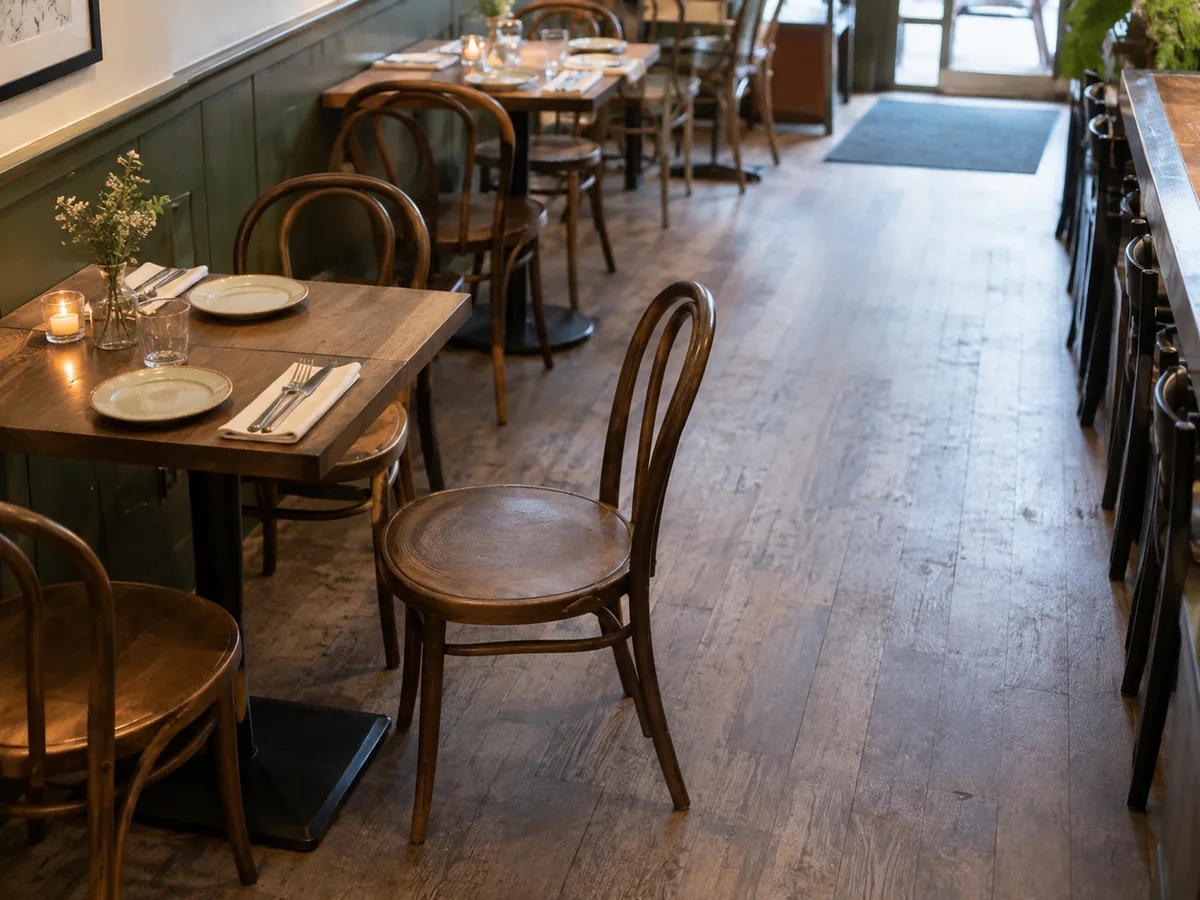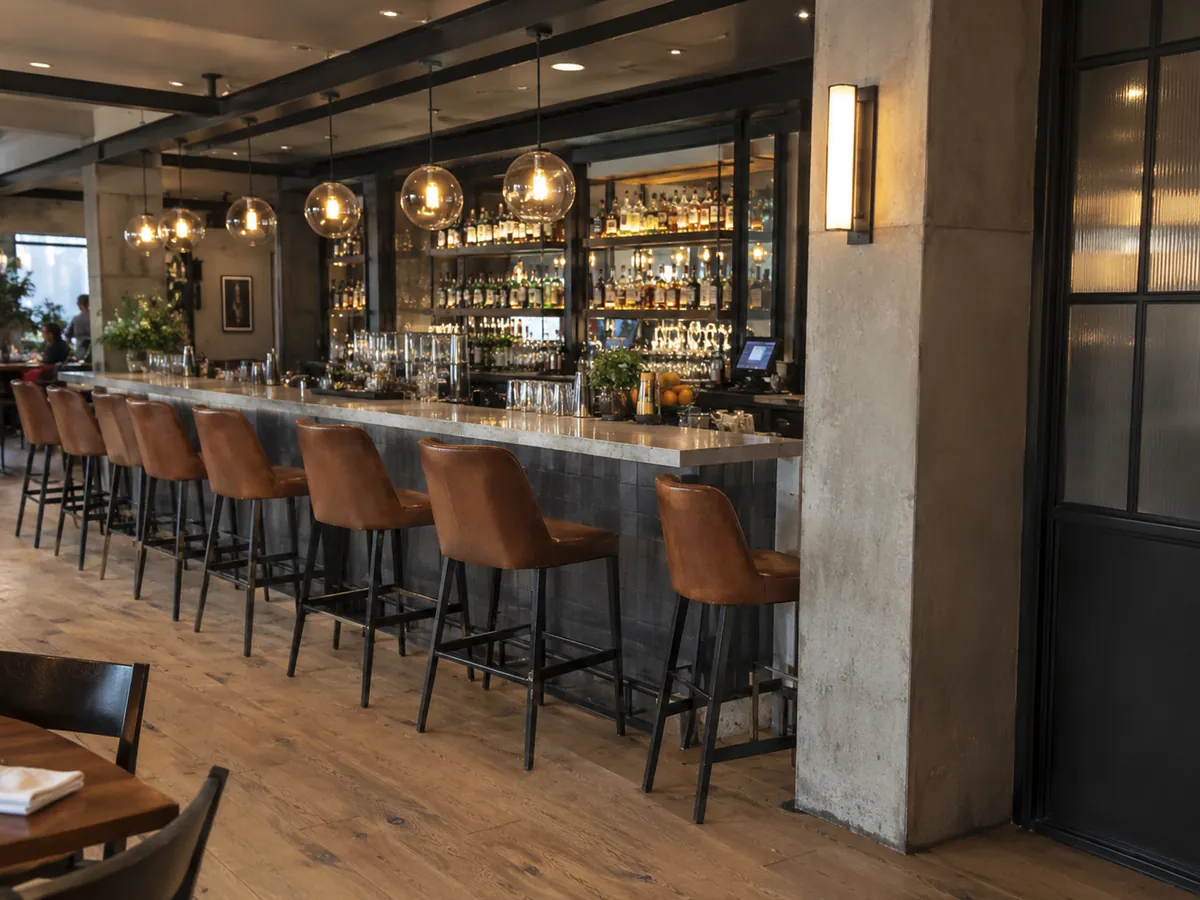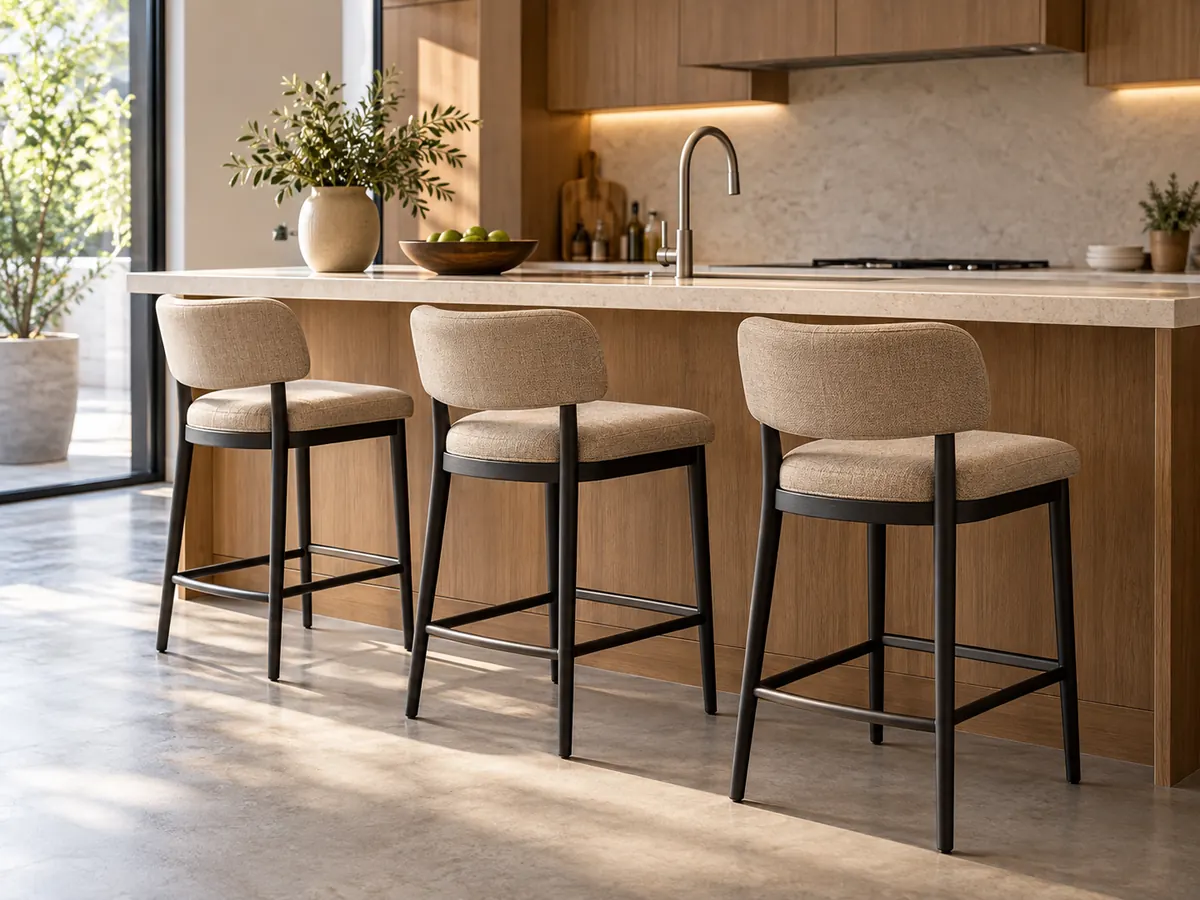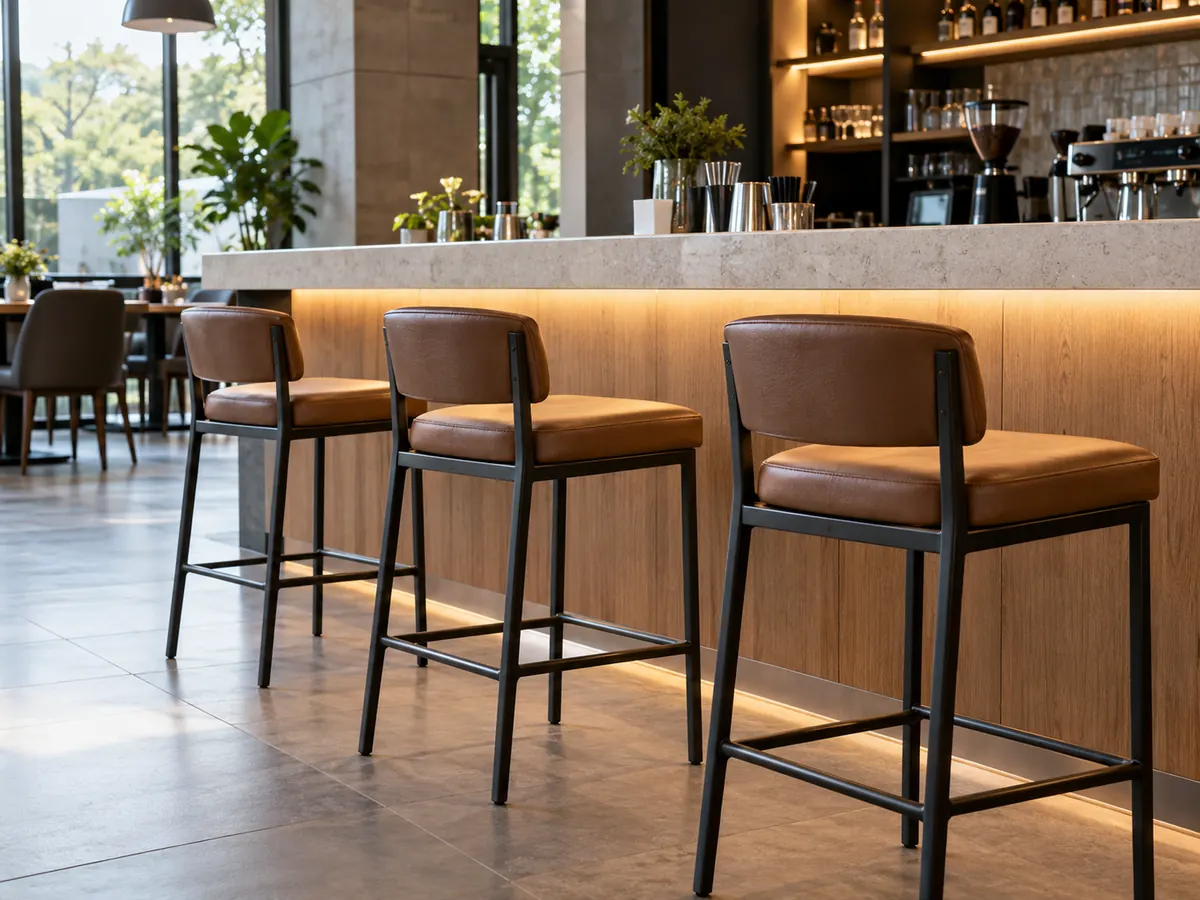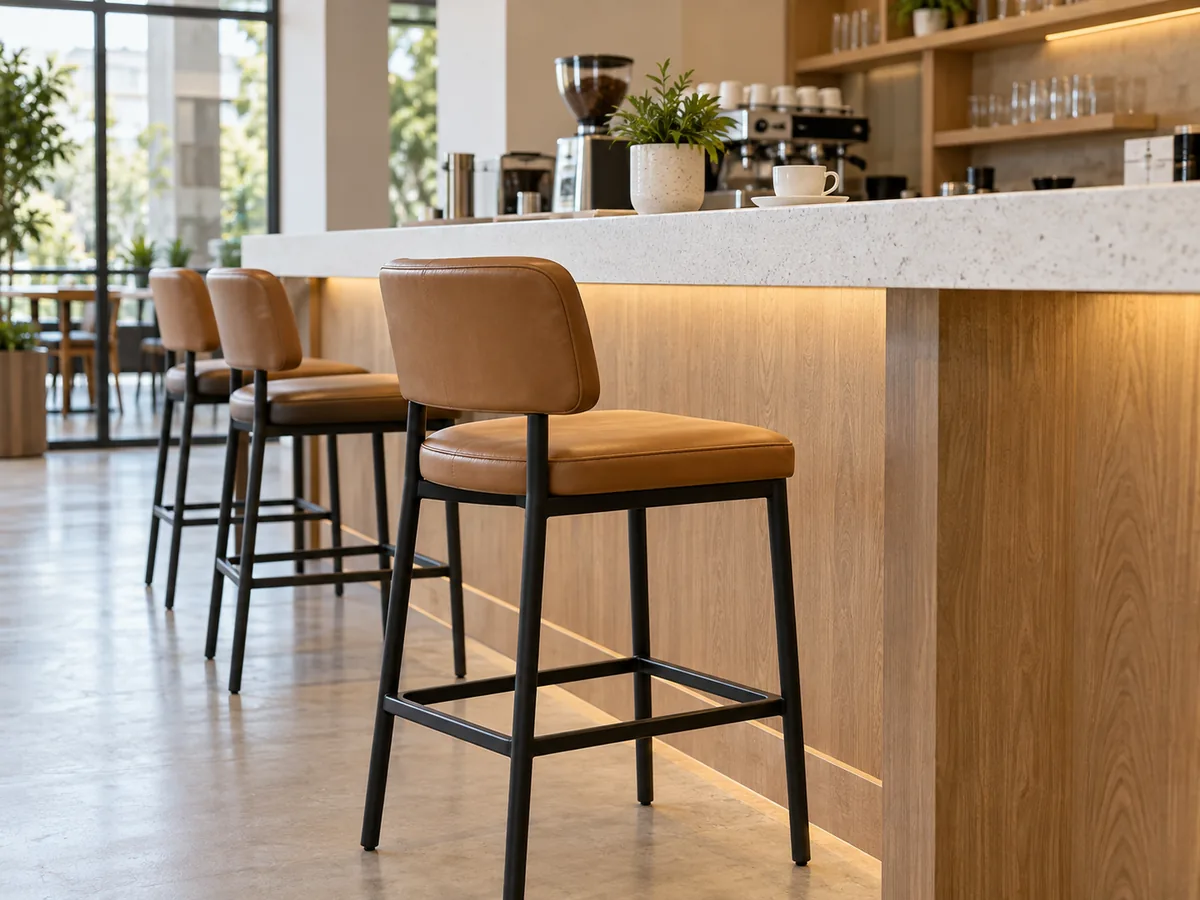
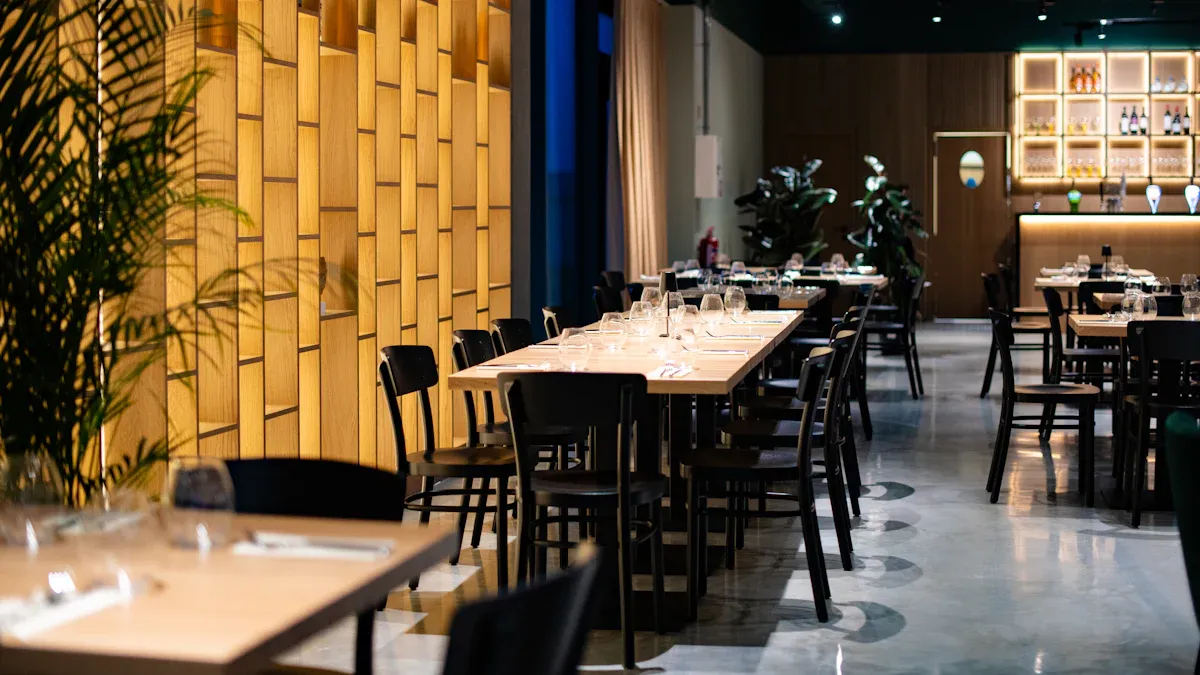
The ideal restaurant table dimension for 2026 gives each diner about 14 square feet of space. There should be 42 inches between square tables. There should be 54 inches between round tables. I see more people eating out in bigger groups now. So, seating plans must be flexible. Here is what I see in the industry:
- Groups with six or more people have gone up by 11% each year.
- 78% of Americans say eating out helps them feel close to others.
- Counter and bar seating are both becoming more popular.
| Seating Arrangement Type | Recommended Space per Person | Additional Notes |
|---|---|---|
| General Dining | 14 sq ft | Space for chairs, tables, aisles |
| Booths | 8 sq ft | Includes aisle space |
| Banquet Hall | 10 sq ft | Closed seating option |
If you want special solutions for your restaurant, I always say to work with a trusted supplier like Yezhi Furniture. 😊
Quick Table Size Cheat Sheet (2026)
Here’s my go-to table size guide for 2026: Pick the right table size for your concept, and you’ll make guests comfortable and keep your floor plan flexible.
Fast picks by concept
I always start with the basics. Every restaurant needs a table size guide that matches its vibe and customer flow. If you want a quick answer, check out this table. It shows the most popular table sizes for different concepts. I use these numbers when I help clients plan their seating.
| Table Size | Recommended Use | Seating Capacity |
|---|---|---|
| 24″ × 24″ | Café Two‑Top | Seats 2 |
| 30″ × 30″ | Flexible All‑Star | Seats 2-4 |
| 24″ × 30″ | Slim but Smart | N/A |
| 36″ × 36″ | Classic Four‑Top | N/A |
| 30″ × 48″ | Classic Four‑Top | N/A |
| 42″+ | Group Dining & Banquets | Seats 6 or more |
Tip: If you run a café or coffee shop, I recommend small tops like 24″ × 24″. These work great for drinks, snacks, and laptops. Fast casual spots do best with 30″ × 30″ tables. You can seat two to four guests without crowding anyone.
I see full-service restaurants using 36″ × 36″ or 30″ × 48″ tables. These sizes give enough space for large plates and multi-course meals. Bars and breweries often mix small cocktail tables with big communal tables (42″ or more). This setup helps people socialize and move around easily.
Here’s a quick checklist I use when I help owners pick their table size guide:
- What’s your main concept? (Café, fast casual, full-service, bar)
- How many guests do you want at each table?
- Do you need space for laptops, shared dishes, or big plates?
- Will you combine tables for larger groups?
If you want a custom table size guide for your project, Yezhi Furniture can help. I’ve worked with their team on several layouts, and they always deliver flexible solutions for unique spaces.
I always remind clients to match their table size guide to their seating goals. A good guide makes it easy to mix and match tables, boost capacity, and keep guests happy. 😊
Restaurant Table Dimension Standards (2026 Baselines)
Standard units & conversions (inch ↔ mm)
The easiest way to measure restaurant table dimension is in inches, but millimeters are common in international projects. Most people in the US use inches. If you work with people from other countries, you will see millimeters a lot. I like to keep a chart nearby to help me switch between the two.
Here’s a quick reference I use:
- 1 inch = 25.4 mm
- 24 inches = 610 mm
- 30 inches = 762 mm
- 36 inches = 914 mm
- 42 inches = 1067 mm
- 48 inches = 1219 mm
I always check my numbers before I order tables. If you work with Yezhi Furniture, they can help you match your measurements to any country’s standard.
Tip: If you work on a global project, check table sizes in both inches and millimeters. This helps you avoid mistakes and saves time.
Tabletop thickness & edge overhang (why capacity changes)
Tabletop thickness and edge overhang make a big difference in comfort and seating capacity. I once bought tables that looked nice but felt too tight. That’s when I learned how important these details are.
Here’s what matters most:
- A tabletop thickness of at least 1 ¾ inches makes tables strong and feel fancy.
- An edge overhang of 6 to 12 inches lets people put their knees under the table. This extra space helps guests relax and stay longer.
- If there is no overhang, people bump their knees and leave faster. This means fewer people can sit and you lose business.
I always ask about these sizes before I finish my design. Yezhi Furniture can make tables with special thickness and overhang if you need it.
Typical restaurant tabletop sizes that buyers expect
Most buyers expect standard table dimensions that fit common seating needs. I use these sizes when I help plan restaurants. The right table size keeps guests happy and uses space well.
Here’s a table I rely on for standard table top sizes and seating capacity:
| Table Shape | Size (inches) | Seating Capacity |
|---|---|---|
| Round | 42-48 | 4 adults |
| Round | 54 | 5 adults |
| Round | 60 | 6 adults |
| Round | 72 | 8 adults |
| Square | 24 x 24 | 2 adults |
| Square | 30 x 30 | 2-4 adults |
| Square | 36 x 36 | 4 adults |
| Rectangular | 24 x 30 | 2 adults |
| Rectangular | 30 x 48 | 4 adults |
| Rectangular | 30 x 72 | 6 adults |
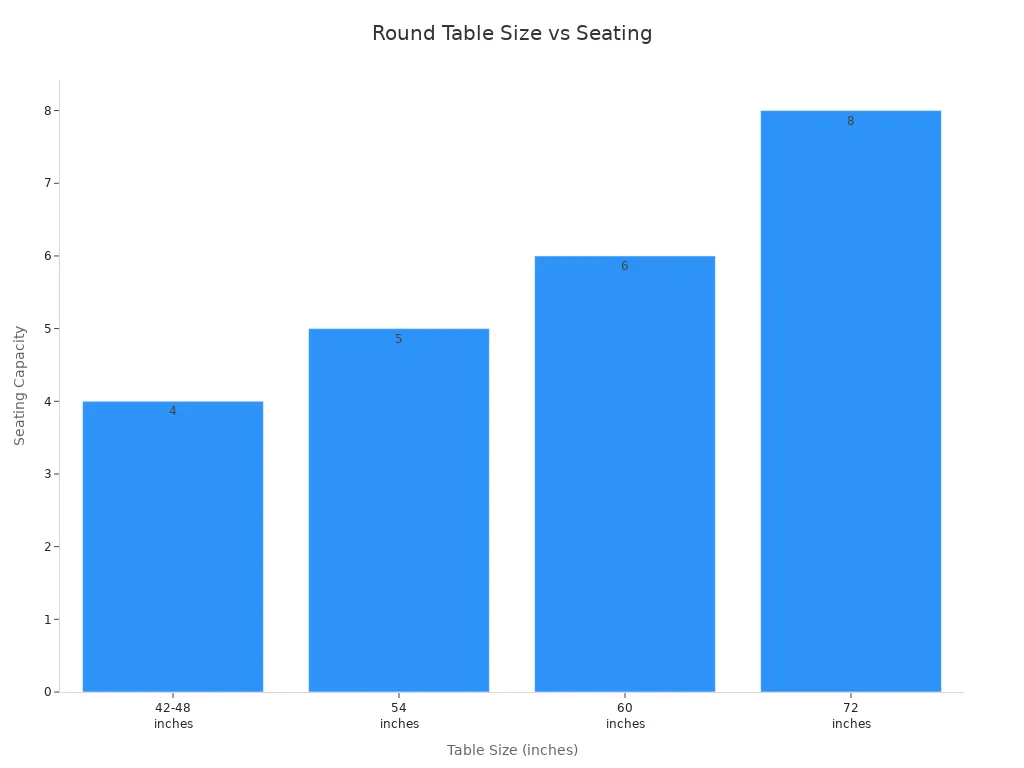
I tell people to start with these sizes. If you want more seats, custom tables can help. I have seen custom tables add 10–15% more seats. Yezhi Furniture can make special sizes for small spaces or cool ideas.
😊 Note: Custom tables can cost 15–25% more than regular ones, but they help you fit more people and make your place unique.
If you want to get the most out of your restaurant table dimension, remember these three things:
- Give each person at least 24 inches.
- Plan for 14 square feet per guest.
- Each person should get about 300 square inches of table space.
I always check these numbers before I finish a layout. Standard table dimensions make planning simple, but custom tables help you stand out.
Standard Table Heights
Dining vs counter vs bar height
Here’s the quick answer: Most restaurants use three main table heights—dining, counter, and bar. Each one fits a different vibe and guest need.
I always start with this simple table when I help clients pick the right height for their space:
| Table Type | Height Range |
|---|---|
| Standard Dining | 28 – 30 inches |
| Counter Height | 34 – 36 inches |
| Bar Height | 40 – 42 inches |
Standard dining tables (28–30 inches) work best for most restaurants. Guests can sit comfortably for long meals. Counter height tables (34–36 inches) feel more casual and modern. I see these in cafés and fast-casual spots. Bar height tables (40–42 inches) create a lively, social atmosphere. These are perfect for bars, breweries, and places where people like to stand or perch.
If you want to mix things up, you can use all three in one space. I’ve seen this work well in restaurants that want to offer different experiences in one room. Yezhi Furniture can help you customize table heights to match your concept and guest flow.
Tip: Use bar height tables near windows or walls to create a fun, energetic zone. Guests love to people-watch from these spots. 🍹
Seat height pairing guide
The best dining experience happens when the seat height matches the table height. This keeps guests comfortable and makes your restaurant accessible to everyone.
Here’s a quick pairing guide I use:
| Table Height Range (inches) | Chair Height (inches) | Legroom Clearance (inches) |
|---|---|---|
| 28 – 30 | 17 – 19 | 10 – 12 |
| 34 – 36 | 23 – 25 | 10 – 12 |
| 40 – 42 | 29 – 32 | 10 – 12 |
I always check these numbers before I order chairs. When the seat is 10–12 inches lower than the table, guests can rest their feet flat on the floor. This works for adults, kids, and people in wheelchairs. Everyone feels welcome.
- Guests can sit for hours without feeling cramped.
- Kids can climb in and out of seats easily.
- Wheelchair users can roll right up to the table.
Note: If you want a custom look or need special accessibility, Yezhi Furniture can adjust seat and table heights for your project. They make it easy to get the right fit for any space. 😊
I always remind clients: Get the table height and seat pairing right, and your guests will stay longer and come back more often.
Table Size Guide by Shape

How to pick the right shape (based on traffic + layout)
The best table shape for your restaurant depends on your space, guest flow, and seating goals. I always look at the floor plan first. If you want to keep traffic moving and make guests comfortable, you need to match table shape and size to your layout.
Here’s a quick table I use when I help owners decide:
| Table Shape | Advantages |
|---|---|
| Round Tables | Encourage conversation, fit tight corners, cozy for small groups. Not ideal for big parties. |
| Square Tables | Easy to combine, great for fast turnover, work in many settings. |
| Rectangular Tables | Seat more people, use space well, perfect for banquets or long rows. |
| Oval Tables | Mix intimacy and efficiency, good for mid-to-large dining rooms. |
If you want flexibility, square tables let you push tables together for bigger groups. Round tables make small spaces feel warm. Rectangular tables work best for large parties and banquet halls. I always ask, “How do guests move around? Where do servers walk?” This helps me pick the right table shape and size.
Yezhi Furniture can help you choose custom shapes for tricky layouts. Their team knows how to balance style and traffic flow.
Tip: Use round tables in corners and square tables near windows. Rectangular tables fit best along walls or in the center.
Rectangular Table Sizes
Rectangular tables are the most versatile choice for restaurants with mixed seating needs. I use them in banquet halls, family restaurants, and event spaces. They seat more guests and make the most of your floor area.
Here’s a table I rely on for recommended rectangular table size and seating capacity:
| Table Size (inches) | Seating Capacity | Best For |
|---|---|---|
| 24″ × 30″ | 2 guests | Cozy cafes, wine bars |
| 24″ × 42″ | 2–4 guests | Casual dining, sandwich shops |
| 24″ × 48″ | 4 guests | Diners, pizzerias |
| 30″ × 42″ | 4–6 guests | Brewpubs, coffee shops |
| 30″ × 48″ | 4–6 guests | Buffets, bistros |
| 30″ × 60″ | 6 guests | Banquet halls, event spaces |
| 30″ × 72″ | 6–8 guests | Weddings, hotel dining |
| 30″ × 84″ | 8–10 guests | Ballrooms, gala dinners |
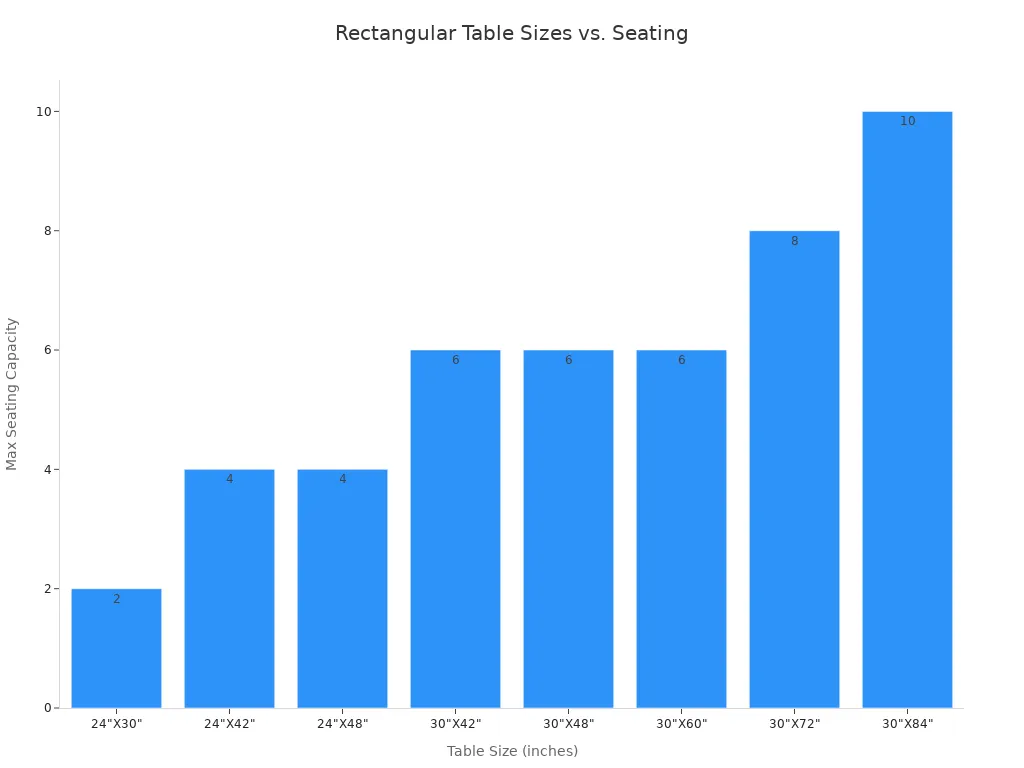
I always check the table size against the number of guests I want to seat. For example, a 30″ × 60″ table fits six people comfortably. If you need more seats, try a 30″ × 84″ table for up to ten guests. Yezhi Furniture offers custom rectangular tables if you have a unique space or want a special finish.
😊 Note: Rectangular tables make it easy to add more seats for big events or family-style dining.
Round Table Sizes
Round tables create a cozy, social atmosphere and work well in small or mid-sized dining areas. I use them in bistros, brunch spots, and banquet rooms. They help guests talk and share food easily.
Here’s a table I use for round table size and seating capacity:
| Table Size (inches) | Seating Capacity | Best For |
|---|---|---|
| 24 | 2 guests | Cafes, coffee shops |
| 30 | 2–4 guests | Ice cream parlors, small eateries |
| 36 | 3–4 guests | Family restaurants |
| 42 | 4–5 guests | Hotel dining, brunch |
| 48 | 5–6 guests | Buffets, diners |
| 51 | 6–7 guests | Banquet rooms |
| 60 | 6–8 guests | Weddings, event venues |
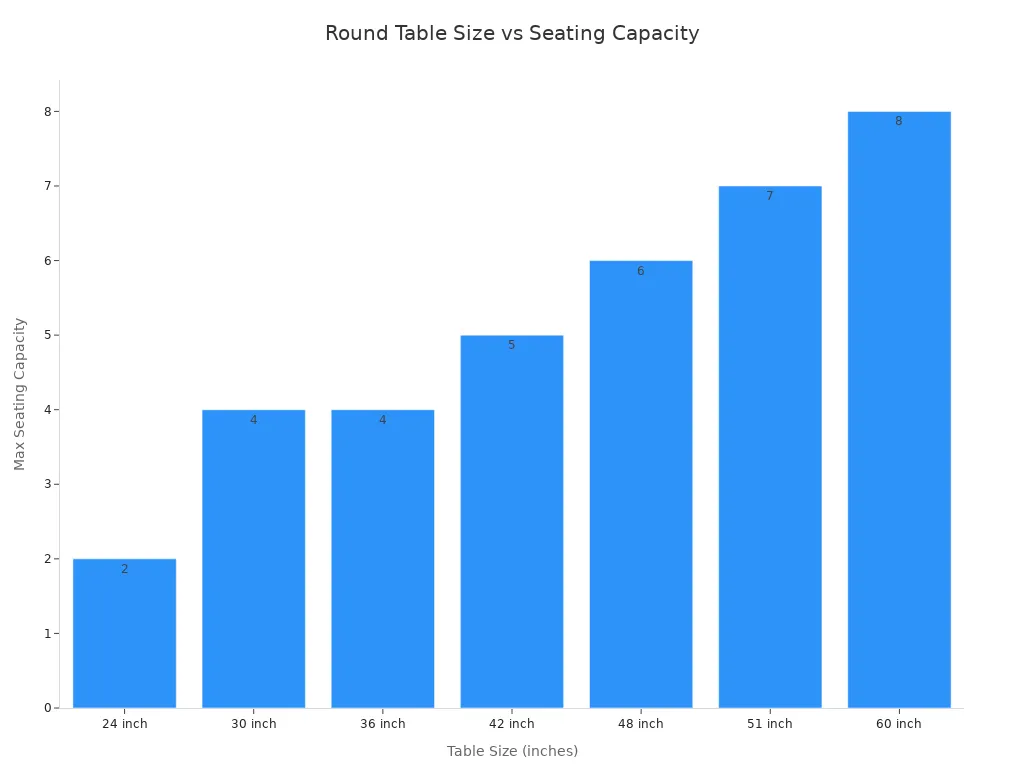
I always match the table size to the group size. A 42-inch round table fits four to five guests. For bigger parties, a 60-inch round table works best. If you want a custom round table for your restaurant, Yezhi Furniture can help you design one that fits your space and style.
Tip: Round tables make every seat feel equal. Guests love sharing dishes and talking face-to-face.
Square Table Sizes
The best square table size for your restaurant depends on your seating goals and available space. I always recommend square tables when you want flexibility and easy layout changes. Square tables fit well in small dining rooms, cafés, and fast-casual spots. They let you push tables together for bigger groups or keep them separate for couples.
Here’s a quick look at the most popular square table sizes and how many guests each one seats:
| Table Size | Seating Capacity |
|---|---|
| 24″ x 24″ | 2 guests |
| 30″ x 72″ | 6–8 guests |
| 30″ x 96″ | 8–10 guests |
I use 24″ x 24″ tables for cozy two-tops. These work great for coffee shops and small eateries. If you want to seat larger parties, 30″ x 72″ and 30″ x 96″ square tables give you plenty of room. These sizes make sense for banquet halls, event spaces, or restaurants that host big family gatherings.
Tip: Square tables are easy to combine. You can line them up for a long communal table or group them in clusters for flexible seating. This helps you adjust your floor plan for busy nights or special events.
I always check the room size before I pick a table. Square tables use space efficiently. They fit neatly against walls or in corners. I find that square tables make it simple to maximize seating without crowding guests. If you want to keep your restaurant layout flexible, square tables are a smart choice.
I’ve seen many owners use square tables to create a modern, clean look. The straight edges give a crisp vibe. Guests like the symmetry. Servers find it easy to move between tables. If you want to mix styles, you can pair square tables with round or rectangular ones. This adds visual interest and keeps your space dynamic.
Yezhi Furniture offers custom square tables in a range of sizes and finishes. Their team can help you match your tables to your brand style or fit tricky spaces. I’ve worked with them on several projects, and they always deliver sturdy, stylish tables that last.
- Square tables work well for:
- Cafés and bistros
- Fast-casual restaurants
- Banquet halls
- Private dining rooms
If you want to boost seating capacity, try mixing square tables with other shapes. This lets you handle different group sizes and keep your guests comfortable. 😊
Note: Always allow at least 24 inches per guest at a square table. This gives everyone enough elbow room and keeps the dining experience pleasant.
I recommend square tables for owners who want a flexible, efficient layout. They help you seat more guests, change your floor plan quickly, and create a welcoming atmosphere.
Tabletop Space Per Diner
Rule of thumb: inches per person
The rule of thumb for tabletop space per diner is 24 inches wide and 14 square feet per guest. This gives everyone enough room for plates, drinks, and elbows. I always check these numbers before I set up a floor plan. If you want a quick answer, use this table to see how much space each guest needs in different restaurant types:
| Type of Restaurant | Average Spacing per Customer (sq ft) |
|---|---|
| Banquet Service | 10–11 |
| Fast Food Restaurant | 11–14 |
| Industry Cafeteria | 12–15 |
| Family Restaurant | 15–18 |
| Fine-Dining Restaurant | 18–20 |
I like to use these numbers as a starting point. For example, a fast food spot can fit more guests in less space. A fine-dining restaurant needs more room for comfort and service. I always ask, “What kind of experience do you want to give your guests?” That answer helps me pick the right number.
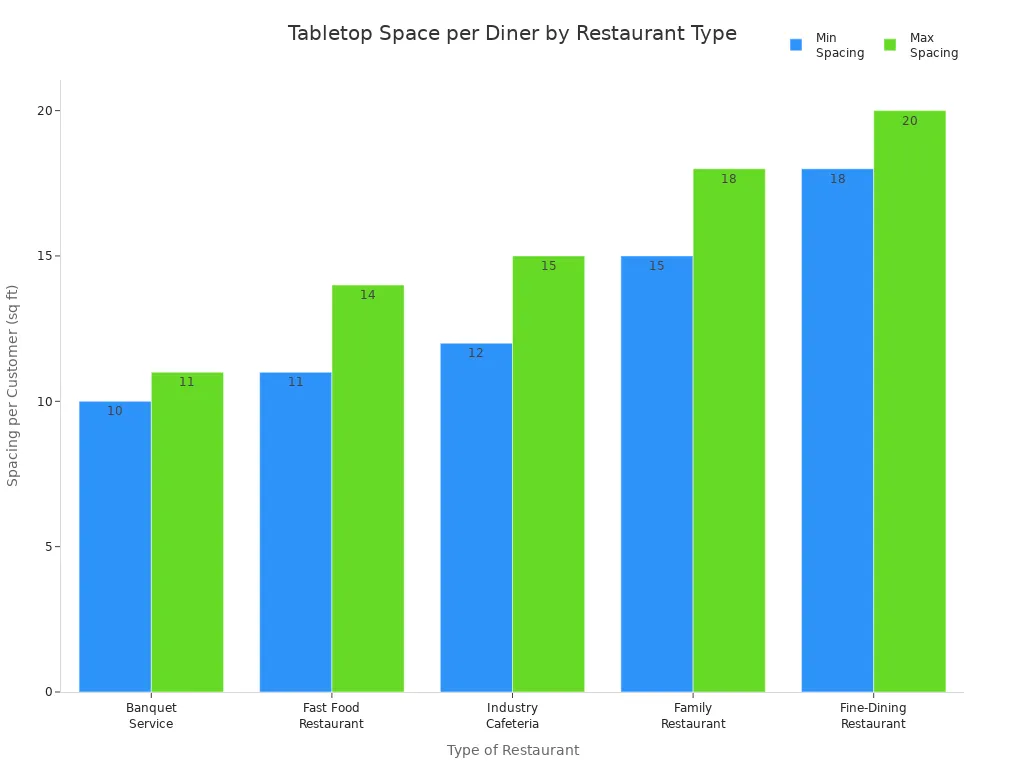
Tip: If you want to maximize seats without crowding, stick to the numbers in the table above. I use these as my baseline for every project.
What changes the number (plate size, laptop, shared dishes)
The tabletop space per diner can change based on what your guests bring and how they dine. I always look at the menu and guest habits before I finalize a layout. Here are the main things that change the space each person needs:
- Plate size: Big plates for steak or pasta need more room. Small plates for tapas or desserts need less.
- Laptops and devices: Many guests bring laptops, especially in cafés. I add extra space for these.
- Shared dishes: Family-style meals or hot pot require more tabletop area for serving platters and condiments.
- Drinks: Wine glasses, coffee mugs, and water bottles all take up space. I always plan for at least two drinks per guest.
- Decor and extras: Candles, flowers, or bread baskets can crowd the table. I leave extra room for these.
I always ask owners, “Do your guests linger with laptops? Do you serve large platters?” These questions help me adjust the table size. If you want a custom solution, Yezhi Furniture can design tables with extra width or built-in features for your concept.
😊 Note: The right tabletop space keeps guests comfortable and happy. It also makes service smoother and faster.
I find that when I give each diner enough space, they stay longer and order more. That’s good for business and for guest satisfaction.
Restaurant Table Size and Seating Capacity
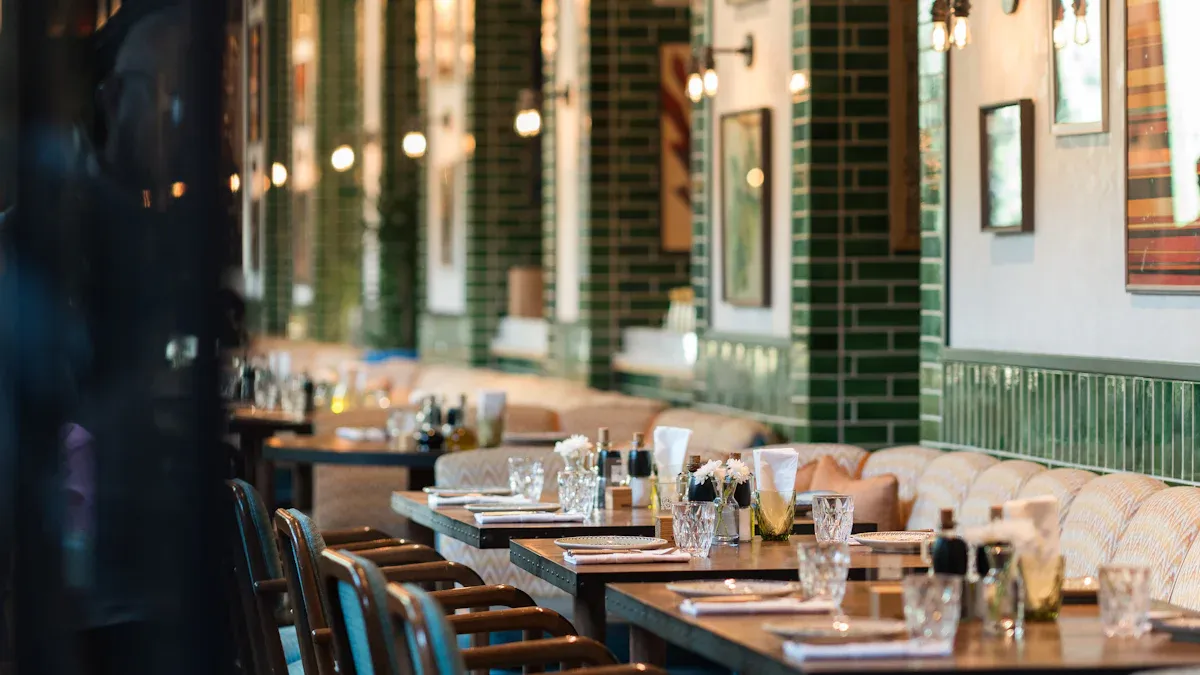
Seating Capacity by Table Size
The seating capacity for each table depends on its size, shape, and how you arrange it in your restaurant. I always look at the table size first. Then I think about how many seats I want to fit. Picking the right tables helps you get more seats in your space.
Here’s a table I use when planning seating:
| Table Size | Typical Seating Capacity |
|---|---|
| 24″ x 24″ | 2 |
| 30″ x 30″ | 2-4 |
| 36″ x 36″ | 4 |
| 42″ x 42″ | 4-6 |
| 48″ x 48″ | 8 |
| 30″ x 60″ | 6 |
| 30″ x 72″ | 6-8 |
| 60″ Round | 8-10 |
| 72″ Round | 10 |
I always check the table shape too. Round tables can seat more people in less space. Square and rectangular tables are easy to move around. When I plan a layout, I count how many tables fit and make sure there is room for chairs and walking. This helps me know how many seats I can have.
2-Seater Tables
A 2-seater table is perfect for couples and small groups. I use 24″ x 24″ or 24″ x 30″ tables for small cafés and cozy spots. These tables fit two people and work well in tight places. If you want more seats, put these tables by the wall or window.
- Best for: Cafés, coffee shops, small restaurants
- Space needed: About 14 sq ft per table
- Tip: Mix 2-seaters with bigger tables for more options
4-Seater Tables
A 4-seater table is the most popular choice for family dining and casual meals. I like 30″ x 30″, 36″ x 36″, or 30″ x 48″ tables for this. These sizes give enough space for food and drinks.
- Best for: Family restaurants, diners, bistros
- Space needed: 18–20 sq ft per table
- Tip: Use square or rectangular tables to join together easily
6-Seater Tables
A 6-seater table works great for group dining and events. I use 30″ x 60″ or 30″ x 72″ tables for these. These tables fit six people without feeling crowded.
- Best for: Banquet halls, event spaces, large parties
- Space needed: 25–30 sq ft per table
- Tip: Put these tables in the middle or along long walls
8-Seater and Larger Tables
Tables for eight or more guests are ideal for banquets and big gatherings. I use 48″ x 48″ square tables, 60″ or 72″ round tables, or long rectangular tables. These tables give the most seats for special events.
- Best for: Weddings, banquets, hotel dining rooms
- Space needed: 35–40 sq ft per table
- Tip: Round tables help people talk and save space
😊 If you need special sizes for your space, Yezhi Furniture can make tables that fit your needs and style.
Booth & banquette table sizing (common mistakes)
Booth and banquette seating can save space and create a cozy vibe, but sizing mistakes are common. I see owners forget to plan and end up with booths that are too small. Here are mistakes I watch for:
- Not planning the floor: Always measure and plan how people will walk before adding booths. Tight aisles make guests feel squished.
- Picking the wrong size: Big booths take up too much space. Small booths feel cramped. I measure the area and picture the layout before buying.
- Using home furniture: Home booths do not last in busy restaurants. I always pick commercial-grade booths because they are stronger.
- Forgetting about cleaning: Fancy booths look nice, but easy-to-clean ones save time and money.
I always say to draw a good floor plan and check your measurements twice. Booths should have enough space for guests to slide in and out. I leave at least 18 inches from the table edge to the back of the booth for comfort.
Tip: For banquettes, use tables that are 24″ wide for two guests, 30″ wide for three, and 42″ wide for four. This keeps seating comfy and makes good use of space.
If you want booths that match your brand and last a long time, Yezhi Furniture has strong options with custom sizes and finishes.
How to Calculate Seating Capacity Based on Table Size and Layout
I calculate seating capacity by looking at table size, shape, and how tables fit in the room. First, I pick the table size and number of seats I want. Then, I lay out the tables, making sure there’s enough space for chairs and movement. I multiply the number of tables by the seats per table to get the total seats.
- Different table shapes change how many people you can seat and how guests feel.
- Each table needs enough space for chairs and for people to move.
- Safety and accessibility rules are important in every plan.
I always check for clear paths and enough space for wheelchairs or strollers. Accessibility means everyone can enjoy your restaurant. I avoid stairs or add ramps if needed.
🍽️ Making your layout better helps you get more seats without losing comfort or accessibility.
Tips for Maximizing Seating Without Sacrificing Comfort or Accessibility
I use a few strategies to maximize seating and keep guests comfortable. Here’s what works best for me:
- Check and improve seating plans to use space well.
- Use different table sizes to fit all group sizes and add more seats.
- Make sure your layout is easy for everyone to use.
- Help tables turn over faster to make more money without rushing guests.
When I use space well, I can seat more people and keep them happy. Faster table turnover means more money during busy times. Good layouts help staff and guests move around easily.
If you want help with your layout or need custom tables, Yezhi Furniture can help you from start to finish.
Note: Always balance seating capacity with comfort. Happy guests stay longer and come back again.
Optimizing Restaurant Seating Capacity
Quick estimating method (from room size to seats)
The fastest way to estimate how many guests you can seat in your restaurant is to measure your dining area and divide by the space each guest needs. I always start with a tape measure and a notepad. Here’s how I do it:
- I measure the total size of the dining hall in square feet or meters.
- I mark off areas that won’t be used for dining, like walkways, service stations, or decorations.
- I subtract these non-dining spaces from the total to get the usable dining area.
- For each guest, I allocate between 13 and 20 square feet (or 1.2 to 1.8 m²). This covers their chair, table, and enough room to move.
Let’s say your dining area is 1,000 sq ft. After removing 200 sq ft for aisles and décor, you have 800 sq ft left. If you use 16 sq ft per guest, you can fit about 50 guests. I find this method works for most restaurant types, from cozy cafés to busy bistros.
Tip: Always round down a little to keep guests comfortable and avoid crowding. If you want a custom layout, Yezhi Furniture can help you design tables that fit your space perfectly.
Most common table mix that works
The best table mix combines two-tops, four-tops, and a few larger tables to handle different group sizes and keep your seating flexible. I’ve helped owners set up dining rooms for years, and this mix always works:
| Table Type | % of Total Tables | Best Use |
|---|---|---|
| 2-Seater | 40% | Couples, solo diners |
| 4-Seater | 40% | Small groups, families |
| 6+ Seater | 20% | Parties, big gatherings |
I usually place two-tops along windows or walls. Four-tops go in the center or near main walkways. Larger tables fit best in corners or private areas. This setup lets you push tables together for bigger groups or split them for busy lunch hours.
- Two-tops fill up fast during breakfast and coffee rushes.
- Four-tops work for most dinner service.
- Larger tables help with weekend parties or special events.
If you want to stand out, Yezhi Furniture offers custom tables in any size or shape. Their team can help you mix styles and finishes for a unique look. I’ve seen their tables hold up in busy restaurants and look great for years. 😊
Note: A balanced table mix keeps your dining room busy and your guests happy. You can adjust the ratio based on your concept or customer flow.
I always review the floor plan before ordering tables. A smart table mix helps you seat more guests, turn tables faster, and create a welcoming vibe.
Table Shape Comparison and Space Efficiency
Rectangular vs. Round vs. Square
Rectangular and square tables use space more efficiently than round tables in most restaurant layouts. I always compare table shapes before choosing one for a restaurant. Each shape has its own strengths and weaknesses.
| Table Shape | Space Efficiency | Advantages | Disadvantages |
|---|---|---|---|
| Round | Low | Good for talking, looks fancy | Uses more space |
| Square | High | Easy to move and join for bigger groups | Not great for large parties |
| Rectangular | High | Easy to join, fits big groups | Might not look as nice |
I like square tables because they are easy to move. I can put them together for big groups or separate them for couples. Rectangular tables are best for banquets and family meals. Round tables look nice and help people talk, but they take up more room. Using both square and rectangular tables helps me seat more guests and keep things running smoothly.
Tip: I suggest picking tables in sizes that fit together. This makes it easy to change the layout when the restaurant gets busy.
Best Table Shapes for Small Spaces
Square and rectangular tables maximize seating in small restaurants. I use these shapes to fit more guests without making the room crowded. Here are some pros and cons:
| Table Shape | Pros | Cons |
|---|---|---|
| Rectangular | Seats big groups well | Can use up more space |
| Square | Looks classic, keeps guests close | Not good for large groups |
| Round | Good for talking, can get bigger if needed | Not great for small spaces |
Square tables help keep everyone spaced out and make the room look tidy. Rectangular tables are good for seating big groups along walls or in the middle. Round tables are fun for talking, but I don’t use them much in tight rooms. Sometimes, I pick round tables with drop leaves to save space when not needed.
😊 Small spaces need careful planning. I always measure the room and pick table shapes that fit well. Yezhi Furniture can make custom tables for tricky spaces, so I can use every inch.
Flexible and Modular Table Options
Modular tables give me the power to reconfigure layouts for any event or group size. I use flexible tables to seat more people and keep everyone comfortable. Here’s why I like modular tables:
- I can move tables around for different events.
- Modular tables help me fit more guests without crowding.
- Strong materials mean the tables last a long time.
- I save money because I don’t need new tables often.
| Advantage | Description |
|---|---|
| Adaptability | I change tables for small or big groups. |
| Space Optimization | Moving tables helps me seat more guests. |
| Enhanced Aesthetics | Nice tables make the dining room look good. |
| Improved Customer Experience | Flexible tables help guests stay longer and come back. |
| Operational Efficiency | Staff can move tables fast for events. |
| Durability | Strong tables last through busy days. |
| Versatility | I can set up tables in many ways for guests. |
| Aesthetic Cohesion | Matching tables keep the style the same. |
| Comfort | Adjustable tables give guests enough space. |
| Cost-Effectiveness | Modular tables save money over time. |
I always pick tables that are simple to move and join together. This helps me handle busy nights and special events easily. Yezhi Furniture makes modular and custom tables, so I can get what my restaurant needs.
Modular tables help me keep my space flexible and my guests happy. I see more restaurants using these tables every year. 👍
Combine tables without wobble (base placement tips)
The fastest way to stop tables from wobbling when you combine them is to match the bases and align the legs. I learned this trick after watching servers struggle with shaky tables during busy dinner rushes. If you want a smooth dining experience, you need to plan your table base placement before you buy or rearrange tables.
Here’s what I do every time I set up a restaurant floor:
- Pick tables with matching heights and thickness. If the tops are different, you get uneven surfaces. I always measure both tables before combining.
- Use tables with pedestal bases or T-bases. These bases let you push tables together without the legs getting in the way. I see pedestal bases work best for round and square tables. T-bases are great for rectangular tables.
- Align the bases so the weight spreads evenly. If the bases are off-center, the tables tip when guests lean or put their elbows down.
- Add table clips or joining brackets. I use metal clips under the tabletop to lock tables together. This stops movement and keeps the surface flat.
- Check the floor for bumps or uneven spots. Sometimes, the problem is the floor, not the table. I use adjustable glides on the feet to fix this.
Tip: Always test the tables by pressing on each corner. If you feel a wobble, adjust the base or add a clip. Guests notice shaky tables right away.
Here’s a quick table showing the best base types for combining tables:
| Table Base Type | Best For Combining | Stability Rating (1-5) |
|---|---|---|
| Pedestal | Yes | 5 |
| T-Base | Yes | 4 |
| Four-Legged | No | 2 |
| Cantilever | Sometimes | 3 |
I always choose pedestal or T-base tables for flexible layouts. Four-legged tables look nice, but they block chairs and make combining hard. If you want to change your layout often, modular tables with pedestal bases save time and effort.
Yezhi Furniture offers tables with sturdy bases and custom joining hardware. Their team helps you pick the right base for your space, so you don’t have to worry about wobbly tables during busy service.
😊 Stable tables mean happy guests and fewer spills. I always double-check base placement before opening night.
If you want to combine tables for big parties or events, plan your base placement early. Use matching heights, strong bases, and joining clips. This keeps your dining room flexible and your guests comfortable.
Layout and Spacing Guidelines
Clearance Between Tables
You need at least 24 inches between tables in busy fast-casual spots. Fine-dining restaurants should have 54 inches or more for comfort and privacy. I always check the space before putting down tables. This makes it easy for guests to walk around. It also keeps the dining room safe for everyone. If you want to do things right, use this table:
| Restaurant Type | Recommended Clearance Distance |
|---|---|
| Fast-casual | 24 inches (at busiest) |
| Fast-casual (typical) | 30–42 inches |
| Fine-dining | 54 inches and more |
| Wheelchair Maneuvering | 30-inch by 48-inch clear space |
| Access Routes | 36-inch clearance |
| Aisles | 19-inch clearance from chair/table to aisle |
I always leave more space near aisles and doors. This makes it safer and helps staff serve food better. Yezhi Furniture can help you get tables that fit these spaces, even for special projects.
😊 Tip: More space between tables means fewer bumps and a better meal.
Chair Spacing and Comfort
Each guest needs 24 to 30 inches of space for comfortable seating. I check the space between tables and chairs before finishing any plan. This helps guests feel relaxed and enjoy their food. Here’s a table I use:
| Type of Restaurant | Recommended Space per Person | Leg Room Space | Armrest Clearance |
|---|---|---|---|
| Quick Serve/Fast Casual | 24 inches | 10-12 inches | 6 inches |
| Fine Dining | 30 inches | 10-12 inches | 6 inches |
| Standard Dining | 24-30 inches | 10-12 inches | 6 inches |
I always give at least 15 square feet for each guest. This stops people from bumping elbows and gives enough room for food and drinks. For more comfort, pick chairs with soft seats and strong backs. Yezhi Furniture has many chairs that fit these rules.
Note: Good chair spacing keeps guests happy and makes them want to stay longer.
ADA and Accessibility Standards
At least 5% of seating must be accessible, with clear floor space and wide paths for wheelchair users. I always look at ADA rules before setting up tables. This makes sure everyone can eat at your restaurant. Here’s what I follow:
| Requirement | Specification |
|---|---|
| Percentage of Accessible Seating | At least 5% of seating, spread throughout the area |
| Clear Floor Space | Minimum of 30 inches by 48 inches for wheelchairs |
| Table Height | 28–34 inches from the floor |
| Knee Clearance | 27 inches of clear space underneath |
| Path of Travel | Accessible route at least 36 inches wide |
| Seating Stability and Design | Tables and chairs must be stable and easy to move |
- Table heights should be between 28 and 34 inches from the floor.
- At least 60% of seats should meet these height rules for wheelchair users.
I always make sure tables and chairs are easy to move and do not wobble. This helps guests with wheelchairs feel welcome. Yezhi Furniture can make tables that meet ADA rules for any restaurant.
🦽 Tip: Wide walkways and sturdy tables help everyone feel included and safe.
Layout Tips for Different Restaurant Types
The best layout depends on your restaurant type and how guests use your space. I always look at the concept first. Different restaurants need different seating plans. Here’s how I break it down:
- Cafés: I use small tables and lots of two-tops. People come in for coffee, snacks, or to work on laptops. I keep tables close but leave enough room for bags and chairs.
- Fast-casual: I mix two-tops and four-tops. I want quick turnover and easy movement. I place tables near windows and walls for solo diners.
- Family restaurants: I use more four-tops and six-tops. Families need space for kids and strollers. I keep aisles wide and add booths for comfort.
- Fine dining: I space tables farther apart. Guests want privacy and a quiet meal. I use round tables for groups and square tables for couples.
- Banquet halls: I use long rectangular tables and big round tables. I plan for large groups and events. I leave extra space for servers and guests to move.
Tip: I always sketch the room before I order tables. This helps me see how the layout will work for each restaurant type.
If you want a custom seating plan, Yezhi Furniture can help you design tables that fit your concept and space.
Clearance behind chairs (the real bottleneck)
You need at least 18 inches of clearance behind each chair for guests to move comfortably. I learned this the hard way. When chairs are too close to walls or other tables, guests struggle to get in and out. Servers bump into chairs, and the dining room feels crowded.
Here’s what I do:
- I measure from the back of the chair to the nearest wall or table.
- I leave 18–24 inches for standard dining.
- For wheelchair access, I leave 36 inches or more.
- I check the space during busy hours to see if guests can move easily.
| Seating Type | Minimum Clearance Behind Chair |
|---|---|
| Standard Dining | 18–24 inches |
| ADA/Accessible | 36 inches |
| Banquette/Booth | 18 inches |
😊 Enough clearance behind chairs keeps guests happy and helps staff serve food quickly.
Yezhi Furniture offers chairs and tables in custom sizes, so you can adjust clearance for any project.
Aisle width rules (front-of-house flow)
Aisles should be at least 36 inches wide to keep traffic moving smoothly. I always check aisle width before finalizing a seating plan. Narrow aisles slow down service and make guests feel cramped.
Here’s my quick guide:
- Main aisles: 42–48 inches wide for busy restaurants.
- Secondary aisles: 36 inches wide for regular traffic.
- Emergency exits: 48 inches or more for safety.
| Aisle Type | Recommended Width |
|---|---|
| Main Aisle | 42–48 inches |
| Secondary Aisle | 36 inches |
| Emergency Exit | 48+ inches |
🚶 Wide aisles help staff carry trays and guests move around without bumping into each other.
I always use these numbers when I plan a new layout. If you need help with aisle spacing or want tables that fit your floor plan, Yezhi Furniture can support your project from start to finish.
Get a Project-Ready Table Plan (Layout + Spec Sheet)
What you’ll receive
You get a complete, ready-to-use table plan and spec sheet for your restaurant project. I always give a clear answer first. When you ask for a plan, I send a layout that shows every table, chair, and aisle. You can see how many seats fit, what table sizes work, and how much space is between tables. I add a spec sheet with all the details like dimensions, materials, finishes, and suggested models.
Here’s what comes in every project-ready package:
- Floor plan with table spots and traffic paths
- Table size and shape list
- Seating numbers by area and table type
- ADA notes for accessibility
- Table and chair spec sheet (dimensions, materials, finishes)
- Suggested table mix for your style
Tip: I use exact numbers. For example, I show 36″ x 36″ tables for four guests, 42″ round tables for five, and 30″ aisle clearance.
If you want special sizes or finishes, Yezhi Furniture can make tables that match your brand and layout. Their team helps with spec sheets and layout drawings for any restaurant project.
What we need from you (5-minute checklist)
I need a few key details from you to create your table plan fast. I keep things simple. You can get everything ready in five minutes. Here’s my checklist:
- Total dining area size (in square feet or meters)
- Restaurant concept (café, bar, fine dining, etc.)
- Target seating capacity
- Favorite table shapes and sizes
- Special needs (ADA, booths, banquettes, modular tables)
- Brand style or color choices
- Timeline for opening or renovation
| Item Needed | Example Value |
|---|---|
| Dining Area Size | 1,200 sq ft |
| Concept | Modern bistro |
| Seating Capacity | 60 guests |
| Table Shape | Square, round |
| Special Needs | ADA, booths |
| Brand Style | Industrial, oak |
| Timeline | 2 months |
😊 I always say, sharing more details helps your plan fit your space and goals better.
If you need help with measurements or style, Yezhi Furniture offers design support and sample catalogs. Their team can guide you through each step.
Example outputs
You receive clear, professional documents that make ordering and setup easy. I show you what to expect. Here are examples of what I deliver:
- Floor plan drawing: Shows table layout, aisle widths, and seating zones.
- Spec sheet: Lists each table and chair model, with dimensions and finishes.
- Seating summary table: Breaks down seats by table type and area.
Here’s a sample seating summary:
| Table Type | Quantity | Size (inches) | Seats per Table | Total Seats |
|---|---|---|---|---|
| Square 30×30 | 10 | 30×30 | 4 | 40 |
| Round 42 | 5 | 42 diameter | 5 | 25 |
| Booths | 4 | 48×30 | 4 | 16 |
Note: I always add ADA notes and arrows for traffic flow on the plan. This helps you follow rules and keep guests comfortable.
If you want a project-ready table plan with custom specs, Yezhi Furniture can deliver drawings, spec sheets, and samples for your restaurant. Their experience makes setup easy and stress-free.
Custom Table Solutions for Projects
Custom Sizes and Materials
Custom table sizes and materials let me create a dining space that matches my vision and meets every guest’s needs. When I design a restaurant, I want tables that fit the room just right. I also want tables that show off the brand’s style. Standard tables work for many places. Custom tables give me more choices and control.
Here’s a table showing why custom tables matter:
| Benefit Type | Description |
|---|---|
| Enhanced Dining Experience | Custom tables set the mood and make guests feel special. |
| Reflection of Brand Identity | Mixed materials help me show off the brand’s colors and vibe. |
| Improved Operational Efficiency | Modular tables let me change layouts fast for busy nights or private events. |
| Unique Aesthetic Appeal | Artistic tables become statement pieces that guests remember. |
I often use wood, metal, and upholstery to get the look I want. Sometimes, I pick eco-friendly materials to help the planet. Yezhi Furniture helps me choose finishes and sizes that match my idea. I can pick bold industrial styles or soft, cozy seating.
Tip: Custom tables can make your restaurant feel special and boost the atmosphere. 😊
Project-Based Table Selection
I select tables based on the project’s goals, space, and guest flow. Every restaurant project is different. I start by looking at the floor plan. I think about how guests will move around. I ask, “Do I need tables for big groups or small corners?” Modular tables work well for flexible layouts. Statement pieces help make the space unique.
Here’s how I decide:
- I measure the dining area and mark traffic paths.
- I pick table shapes that fit the space. Round tables help people talk. Rectangular tables work for banquets. Square tables are flexible.
- I choose materials that match the brand and last a long time.
- I plan for comfort and accessibility. Every guest should have enough room.
I like to mix table models and finishes for a nice design. Yezhi Furniture has many options, so I can match tables to any theme or color.
Note: Picking the right tables for each project helps me balance style, comfort, and efficiency.
Working with B2B Furniture Suppliers
Partnering with experienced B2B furniture suppliers gives me access to tailored solutions, fast production, and expert support. I work with suppliers who know hospitality projects and deliver custom tables on time. Yezhi Furniture stands out because they work with overseas designers and offer cool styles.
Here’s what I want from a supplier:
- Quick answers to questions and clear communication.
- Ability to mix models, colors, and materials in one order.
- Support for custom sizes and branding, like logos and color schemes.
- Use of advanced technology, like CNC machines, to make tables faster and better.
- Stable supply chain and reliable delivery schedules.
I see more restaurants buying custom furniture to build their brand and make guests happy. Modular designs and eco-friendly materials are popular now. Suppliers like Yezhi Furniture help me create spaces that look good and work well for every event.
😊 Working with the right supplier makes my job easier and helps me give guests a great dining experience.
What to prepare for a quote (project checklist)
You need a clear project checklist to get an accurate quote for custom restaurant tables. I always tell clients to gather the right details before talking to a supplier. This saves time and helps everyone know what the project needs from the start.
Here’s what I ask for every time:
- Dining area measurements: I need to know how long and wide your space is. This helps me figure out what table sizes and layout will work.
- Target seating capacity: I want to know how many guests you want to seat. This helps me plan the table mix and where to put them.
- Preferred table shapes and sizes: I ask if you like round, square, or rectangular tables. I also need to know your favorite table sizes.
- Material and finish preferences: I want to know if you like solid wood, metal, or upholstered tables. I also ask about your favorite colors and finishes.
- Brand style or mood board: I look for pictures, drawings, or color samples that show your style.
- Special requirements: I check if you need ADA accessibility, modular tables, or logo branding.
- Timeline and delivery location: I need to know when you want to open and where to send the tables.
Tip: I always say to make a simple spreadsheet or checklist. This keeps your project organized and helps suppliers like Yezhi Furniture answer fast.
Here’s a sample table I use for project quotes:
| Item | Example Value |
|---|---|
| Dining Area Size | 1,200 sq ft |
| Seating Capacity | 60 guests |
| Table Shape | Square, round |
| Material | Oak, gunmetal steel |
| Finish | Matte, bronze |
| Brand Style | Modern industrial |
| Special Needs | ADA, logo engraving |
| Timeline | 8 weeks |
| Delivery Location | New York, NY |
I find that when clients share these details early, the quoting process is much easier. Suppliers can suggest the best options and avoid delays. Yezhi Furniture likes a complete checklist—they can help you fill in missing details if you are not sure.
Prototype & sampling options
You can request prototypes and samples to test custom tables before placing a full order. I always suggest trying a sample table or finish before making a big order. This lets you see the quality, comfort, and style in real life.
Here’s how I handle prototypes and samples:
- Prototype tables: I ask for one table made to my needs. I check the size, material, and finish in my space.
- Finish samples: I ask for small wood or metal pieces. I compare colors and textures with my décor.
- Upholstery samples: I ask for fabric or leather pieces. I test how strong they are and if they resist stains.
- Hardware samples: I look at clips, bases, or edge details to make sure they fit my needs.
😊 I always test samples with my team and sometimes with guests. This helps me find any problems early.
Most suppliers, including Yezhi Furniture, offer prototype and sampling services for project buyers. I find this step saves money and stops surprises. If you want to mix models or finishes, samples help you see how everything looks together.
Here’s a quick table showing what you can sample:
| Sample Type | What You Get | Why It Matters |
|---|---|---|
| Table Prototype | Full-size table | Test comfort and style |
| Finish Swatch | Wood/metal sample | Match décor |
| Upholstery Sample | Fabric/leather piece | Check durability |
| Hardware Sample | Clips, bases | Ensure stability |
I always say to ask about sampling options early in the process. This gives you confidence in your choices and helps you build a restaurant that feels just right.
Impact on Guest Experience and Operations
Comfort and Ambiance
The right table dimensions and layout create a comfortable, inviting atmosphere for guests. When people have enough space, they relax and enjoy their time. If tables are too close, guests feel crowded and may leave early. I use 14 square feet for each person to keep everyone comfy. For fine dining, I give 18 to 20 square feet per guest. Soft chairs and warm lights help guests feel at home. I like using different table shapes to make the room look interesting. Round tables make it easy to talk. Square tables keep things neat and organized. When I work with Yezhi Furniture, I can pick custom finishes and fabrics to match the mood I want.
😊 Tip: Put plants or soft items near tables to make the space feel nice. Guests notice these touches and remember your restaurant.
Service Flow and Efficiency
A smart table layout improves service speed and keeps staff moving smoothly. I always make sure there are clear paths for servers to walk. I use 36-inch wide aisles for normal walking and 42 to 48 inches for busy spots. I set up tables so staff can reach every guest without bumping into chairs. Fast service makes guests happy and helps turn tables faster. I never block walkways with big tables or decorations. I check that every seat has a clear path to the kitchen or bar. When I need to change the layout, I use modular tables. Yezhi Furniture has tables with strong bases and easy-to-move designs, so staff can rearrange seats for events or busy nights.
| Area Type | Recommended Aisle Width |
|---|---|
| Main Aisle | 42–48 inches |
| Secondary Path | 36 inches |
| Emergency Exit | 48+ inches |
Note: Good service flow means fewer spills and faster food delivery. Staff like layouts that make their job easier.
Future-Proofing Your Layout
Flexible table arrangements help me adapt to changing guest needs and trends. I see more people coming in groups and asking for private spaces each year. I use a mix of two-tops, four-tops, and bigger tables to fit any group size. Modular tables let me change the room for events or busy weekends. I always leave space for new tech, like mobile order stations or charging spots. When I plan a layout, I think about how the restaurant might change in the future. Yezhi Furniture can make custom table sizes and modular tables, so I can keep my space ready for new trends.
🛠️ Tip: Try out your layout with different seating mixes before opening. This helps you find problems and fix them early.
Common layout mistakes (and quick fixes)
Most restaurant layout mistakes come from poor planning, tight spacing, and ignoring guest flow. I see these problems all the time when I visit new venues. Fixing them is easier than you think. Let me walk you through the most common issues and how I solve them fast.
1. Tables Too Close Together
I notice owners squeeze tables to fit more seats. This makes guests feel crowded. I always recommend at least 24 inches between tables in busy spots. Fine dining needs 54 inches for privacy. If you want to fix this, move tables apart and remove one if needed. You’ll see guests relax and stay longer.
2. Narrow Aisles
Servers need space to move. I see many places with aisles less than 36 inches wide. This slows down service and causes spills. I measure main aisles and make sure they are 42–48 inches wide. If your aisles are tight, rearrange tables or use smaller ones. Yezhi Furniture offers compact tables that help maximize space without losing comfort.
3. Poor Chair Clearance
Chairs pushed against walls or other tables block movement. I always leave 18–24 inches behind each chair. For wheelchair access, I use 36 inches. If you spot guests struggling to get up, adjust your layout and test the clearance during busy hours.
4. Ignoring ADA Accessibility
Some layouts forget about wheelchair users. I check for at least 5% accessible seating and 36-inch wide paths. Tables should have 28–34 inch heights and 27 inches of knee clearance. If you need help, Yezhi Furniture can customize tables to meet ADA standards.
5. Awkward Table Shapes
Odd-shaped tables can waste space and confuse guests. I stick to square, rectangular, or round tables. These shapes fit together well and make layouts flexible. If you have strange corners, use modular tables or banquettes.
6. Blocking Emergency Exits
Safety matters. I always keep 48-inch wide paths to exits clear. If tables block exits, move them right away. Staff and guests need to get out quickly in emergencies.
Tip: I sketch my layout before ordering tables. I use a simple grid to check spacing and flow. This saves time and money.
Quick Reference Table
| Mistake | Fix | Key Number |
|---|---|---|
| Tables too close | Space out tables | 24–54 inches |
| Narrow aisles | Widen main aisles | 42–48 inches |
| Poor chair clearance | Leave space behind chairs | 18–36 inches |
| ADA issues | Add accessible tables and paths | 5% seats, 36 in |
| Blocked exits | Clear emergency routes | 48 inches |
I always remind owners: Small changes make a big difference. When you fix these mistakes, guests feel welcome and staff work better. If you want expert help or custom solutions, Yezhi Furniture can support your project from start to finish. 😊
The right table size and layout make your restaurant comfortable and efficient in 2026. I always check my space, use standard dimensions, and add custom tables when needed. Here’s what works best:
- Give each guest 14 sq ft of space
- Mix table shapes for flexibility
- Use 24–54 inches between tables
If you want expert help, Yezhi Furniture can support your project. Try my table size guide and layout tips to boost your restaurant’s success! 😊
FAQ
What is the best table size for a small restaurant?
A 24″ x 24″ or 30″ x 30″ table works best.
I use these sizes for two guests. They fit tight spaces and keep the room open. If you want more options, Yezhi Furniture offers custom sizes for unique layouts.
How much space should I leave between tables?
Leave at least 24 inches between tables.
This gives guests and staff enough room to move. For fine dining, I use 54 inches for extra comfort and privacy.
How do I choose between round, square, and rectangular tables?
Pick based on your space and guest flow.
I use round tables for conversation, square tables for flexibility, and rectangular tables for big groups. Here’s a quick table:
| Shape | Best For |
|---|---|
| Round | Small groups |
| Square | Flexible layouts |
| Rectangular | Large parties |
What is the standard table height for restaurants?
Standard dining tables are 28–30 inches tall.
I pair these with chairs that are 17–19 inches high. This keeps guests comfortable and makes it easy to sit for long meals.
How do I calculate seating capacity for my dining area?
Divide your usable area by 14 square feet per guest.
I measure the dining space, subtract non-dining areas, then use this formula. For example, 700 sq ft ÷ 14 = 50 seats.
Can I mix different table shapes and sizes?
Yes, mixing tables adds flexibility and style.
I combine two-tops, four-tops, and larger tables to handle any group size. Yezhi Furniture helps me match finishes for a cohesive look. 😊
What makes a table ADA accessible?
ADA tables are 28–34 inches high with 27 inches of knee clearance.
I always leave a 30″ x 48″ clear space for wheelchairs. At least 5% of seats should be accessible.
How do I stop tables from wobbling when combined?
Use pedestal or T-bases and table clips.
I align bases and add clips under the tabletop. This keeps tables steady during busy service.