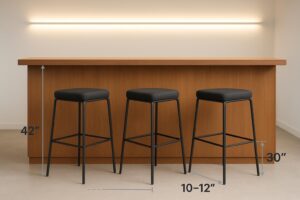
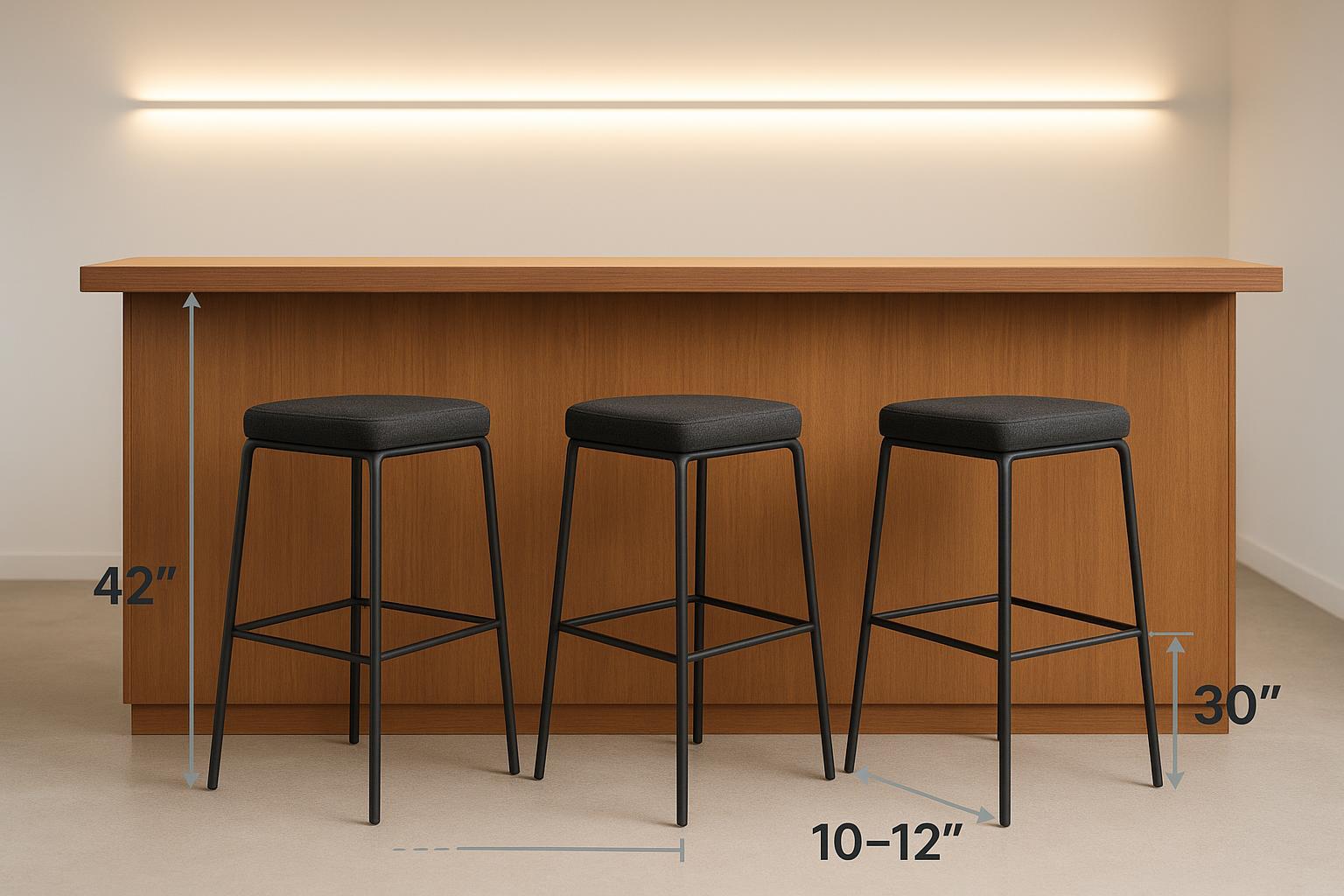
A bar height stool is seating designed for bar tops around 40–42 inches, distinct from counter-height surfaces at 34–36 inches and extra-tall communal tables at 45–48 inches. To choose the right stool, measure seat height from the floor to the top of the seat and aim for roughly 9–12 inches of clearance between the seat and the underside of the bar. Think of this clearance like comfortable legroom in a car: too tight and you’re cramped; too loose and you’re reaching awkwardly.
According to multiple industry references, standard kitchen counters are 36 inches and residential bars are commonly 42 inches, while hospitality bars may vary slightly. See guidance from Living Spaces in “How to Choose the Right Bar Stool Height” and Dimensions.com’s architectural references for typical bar heights and stool dimensions: Living Spaces height guidance and Dimensions.com bar details.
Counter vs Bar Height — Clear Definitions
Counter height: typically 34–36 inches. Bar height: most often 40–42 inches. Extra-tall communal: 45–48 inches. Why does this matter? Comfort depends on pairing the right seat height to the surface height. For a 40–42 inch bar top, bar height stools generally have seat heights around 28–30 inches. For a 36 inch counter, counter stools are usually 24–26 inches.
Quick Bar Stool Size Chart
Below is a practical, rule-of-thumb bar stool size chart. Always verify on site—countertop thickness, support brackets, and real-world comfort can shift the ideal numbers.
| Surface height | Recommended seat height | Seat-to-surface clearance | Footrest height (from floor) | Center-to-center spacing |
|---|---|---|---|---|
| 36 inch counter | 24–26 inches | 10–12 inches | ~7–9 inches | 26–30 inches (28 typical) |
| 40–42 inch bar | 28–30 inches | 9–12 inches | ~8–12 inches | 26–30 inches (28 typical) |
| 45–48 inch extra-tall | 33–36 inches | 9–12 inches | ~12–16 inches | 26–30+ inches (adjust for wide/arm stools) |
To determine seat height quickly, measure from the floor to the underside of the bar/counter and subtract 10–12 inches.
Buying & Specification Checklist
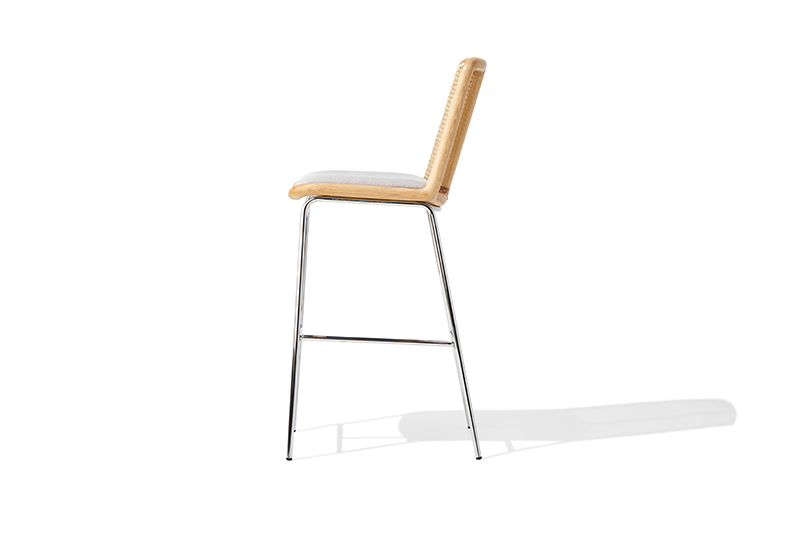
Use this checklist to streamline selection for hospitality venues, retail assortments, and residential projects.
- Measure the surface height precisely from floor to underside; target 9–12 inches of seat-to-surface clearance for comfort.
- Select the seat height:
- 24–26 inches for 36 inch counters.
- 28–30 inches for 40–42 inch bars.
- 33–36 inches for 45–48 inch extra-tall tops.
- Plan spacing: 26–30 inches center-to-center (28 inches is commonly recommended). Adjust upward if stools have arms, wide backs, or large swivel footprints. See spacing notes in Home Depot’s guide.
- Confirm footrest position: aim around 7–9 inches off the floor for many stools, and consider raising toward 8–12 inches for taller bar-height seats depending on user comfort.
- Materials and finishes:
- Frames: powder-coated or plated steel, aluminum, or solid hardwood.
- Seats/backs: hardwood, engineered wood with veneer, molded plastic, or upholstered (vinyl, PU, commercial textiles).
- Upholstery performance: for hospitality, specify textiles meeting ACT abrasion guidelines (e.g., ≈30,000 Wyzenbeek double rubs or ≈40,000 Martindale cycles for heavy-duty).
- Weight ratings and testing: request manufacturer-rated capacity and test documentation. Many contract-grade stools specify 300–500+ lbs; heavy-duty or outdoor variants can be higher.
- Samples and finish verification: order a sample to confirm comfort, match finishes under project lighting, and validate cleanability and abrasion performance.
Footrest, Overhang, and Spacing Explained
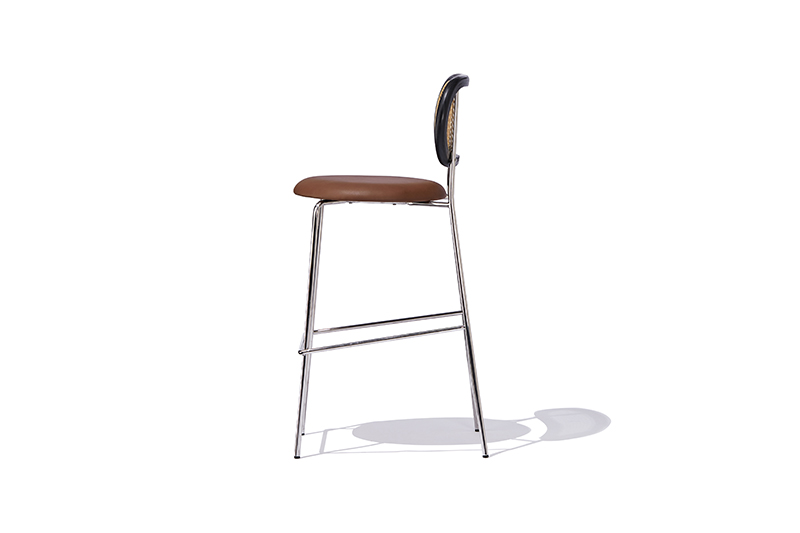
A good footrest prevents dangling—reducing lower-leg strain and improving posture. Typical bar designs place footrests around 7–9 inches from the floor and 6–9 inches deep; taller bar-height seats may benefit from footrests toward 8–12 inches. There isn’t a universal standard, so test with real users when you can.
Overhang depth is a frequent blind spot. As a rule of thumb, provide roughly 12–15 inches of overhang to give knees room under the top. Corbels, brackets, and countertop thickness can cut into usable space, so mock up on site before purchasing. For spacing, allocate 26–30 inches center-to-center per stool (28 inches typical). Public circulation behind seated patrons often ranges around 30–36 inches depending on layout.
Materials and Finishes for Commercial Use
Commercial seating lives hard. Choose finishes that stand up to abrasion, cleaning, and spills.
- Frames: Powder-coated steel offers durable, matte finishes with good chip resistance; plated metals (chrome, brass) provide sheen but may show wear faster in high-traffic settings. Solid hardwood frames add warmth but need maintenance.
- Seats and backs: Hardwood or engineered wood with veneer is easy to clean; molded plastic is highly cleanable and consistent; upholstered seats add comfort and style—specify performance textiles.
- Upholstery performance: For high-turn hospitality, target ≈30,000 Wyzenbeek double rubs or ≈40,000 Martindale cycles per ACT guidance, and confirm stain/cleaning recommendations.
Durability & Weight Ratings
Commercial environments often require higher capacity and proven durability. Baseline ratings around 300 lbs are common; many contract stools specify 350–500 lbs; specialty “big and tall” or outdoor models can exceed that. Remember, ANSI/BIFMA standards evaluate performance (fatigue, stability, etc.) but don’t dictate a single weight capacity across all stool types. Verify ratings on spec sheets, and where possible, request test documentation.
ADA & Accessibility Awareness for Public Spaces
Bar-height seating isn’t an accessible work-surface height under the ADA. Public venues must also provide accessible dining/work surfaces elsewhere.
- ADA Section 902: tops of dining and work surfaces must be 28–34 inches above the floor.
- ADA Section 306: knee and toe clearance requirements for forward approach.
For authoritative references, consult the U.S. Access Board and ADA 2010 Standards: Access Board Chapter 9 — Section 902 and the ADA 2010 Standards overview. Always confirm local code adoption and specific jurisdictional requirements.
Practical Examples
Residential 36 inch island
- Surface height: 36 inches; choose counter stools with 24–26 inch seats.
- Clearance: Target 10–12 inches; verify overhang around 12–15 inches.
- Spacing: Plan roughly 28 inches center-to-center; adjust for arms or larger seats.
- Materials: Wood or powder-coated steel; performance fabric optional for lighter-duty use.
Hospitality 42 inch bar (cocktail venue)
- Surface height: 42 inches; choose bar stools with 29–30 inch seats (common pairing).
- Clearance: Aim around 10 inches; in practice, adjust for countertop thickness and bracket intrusions.
- Footrest: Start around 8–10 inches off the floor; confirm with test seating.
- Spacing and circulation: 28 inches center-to-center; maintain ~30–36 inches behind seated patrons for staff and guests.
- Upholstery: Specify textiles at ≈30,000 Wyzenbeek or ≈40,000 Martindale; confirm cleanability.
- Ratings: Verify ≥300–500 lbs per stool; request performance test documentation.
A procurement team selecting stools for a 42 inch bar can specify 30 inch seat height, powder-coated steel frames, and vinyl upholstery for cleanability, with a rated capacity around 300 lbs based on project needs. This setup supports comfort (≈10 inch clearance), durability, and easy maintenance without prescribing a single model.
Designer Resources
- Create a quick site mockup before ordering: tape a seat height line at 30 inches, test legroom and footrest comfort.
- A printable “bar stool size chart” PDF and simple dimensioned drawings help teams align on specs and communicate with contractors. If you need a chart, many teams create their own based on the ranges above and include it in project documentation.
Pairing the right stool to the right surface height is a small decision with outsized comfort and durability consequences. Measure carefully, validate clearances, and verify specs with manufacturers. If you need specification sheets or samples, contact us now.