If you’re sourcing restaurant chairs for commercial use, “aluminum vs steel” sounds like a simple choice. (You’ll also see it phrased as steel vs aluminum chairs in search results.) In reality, the metal name alone tells you less than you think.
A steel chair can be light, an aluminum chair can be heavy, and either one can fail early if the construction, finish system, fasteners, and exposure conditions don’t match the job.
What matters most is the complete chair: frame design, tube geometry, weld quality, finish prep, hardware, glides, and how the chair will actually be used (moved, stacked).
When buyers search aluminum or steel chairs for restaurants, they’re usually trying to avoid two expensive mistakes: choosing a chair that’s hard to handle day-to-day, or choosing a chair that corrodes in its actual environment.
Det vigtigste at tage med: The better material depends on the chair’s full construction, exposure conditions, required mobility, wind risk, maintenance plan, and verified performance, not the word “steel” or “aluminum” on a label.
Quick comparison: aluminum vs steel for restaurant chairs
(UK/EU spelling note: you may also see aluminium vs steel restaurant chairs. The buying logic is the same.)
| Decision factor | Aluminum chairs (typical) | Steel chairs (typical) | What to verify on the spec sheet / sample |
|---|---|---|---|
| Daily handling and staff workload | Often easier to move and stack | Often heavier and more stable-feeling | Actual net weight per chair; stacking limits; trolley compatibility |
| Strength and durability | Can be commercial-grade, but depends heavily on design | Can be very durable, but also varies by design | Frame geometry, welds, bracing, and any chair-level testing for the exact model |
| Corrosion behavior | Doesn’t “rust,” but can corrode (oxidation, pitting) | Carbon steel rusts if exposed; stainless/galvanized behave differently | Alloy/type, finish system, and how joints/crevices are protected |
| Outdoor and coastal risk | Often preferred, but still needs correct finish + hardware choices | Works outdoors only if protected (coating system, galvanizing, or stainless grade) | Pretreatment, coating spec, sealing/drainage, fastener material + isolation |
| Windy patios / rooftops | Lightweight can be a downside without a plan | Weight helps, but design and anchoring matter more than metal | Center of gravity, footprint, “sail” surface, non-slip feet, storage protocol |
| Maintenance and touch-ups | Usually forgiving, but pitting/galvanic issues can show up in harsh exposure | Coating damage can lead to rust at exposed points | Touch-up plan, spare glides, and what happens after scratches |
Aluminum vs steel restaurant chairs: what to compare first
Aluminum is less dense than steel. That’s true.
But a restaurant buyer doesn’t purchase density. You purchase a finished chair with a certain net weight, stacking behavior, and day-to-day handling cost.
Why aluminum chairs aren’t always lighter:
- Some aluminum frames use larger tube diameters or thicker sections to hit stiffness targets.
- Cast components and reinforced parts can add weight.
- The seat/back materials (wood, upholstery, composite) often dominate the final net weight.
Why weight is not purely a “good” thing:
- Lighter chairs can reduce staff fatigue if you move and stack daily.
- Heavier chairs can feel more planted, but that doesn’t guarantee safety on a windy patio.
Practical procurement move:
- Ask for net weight per chair and, if stacking matters, net weight per stack (e.g., 6 chairs).
- Confirm the packaging weight if you are comparing logistics cost, because carton strength and protection can change landed cost.
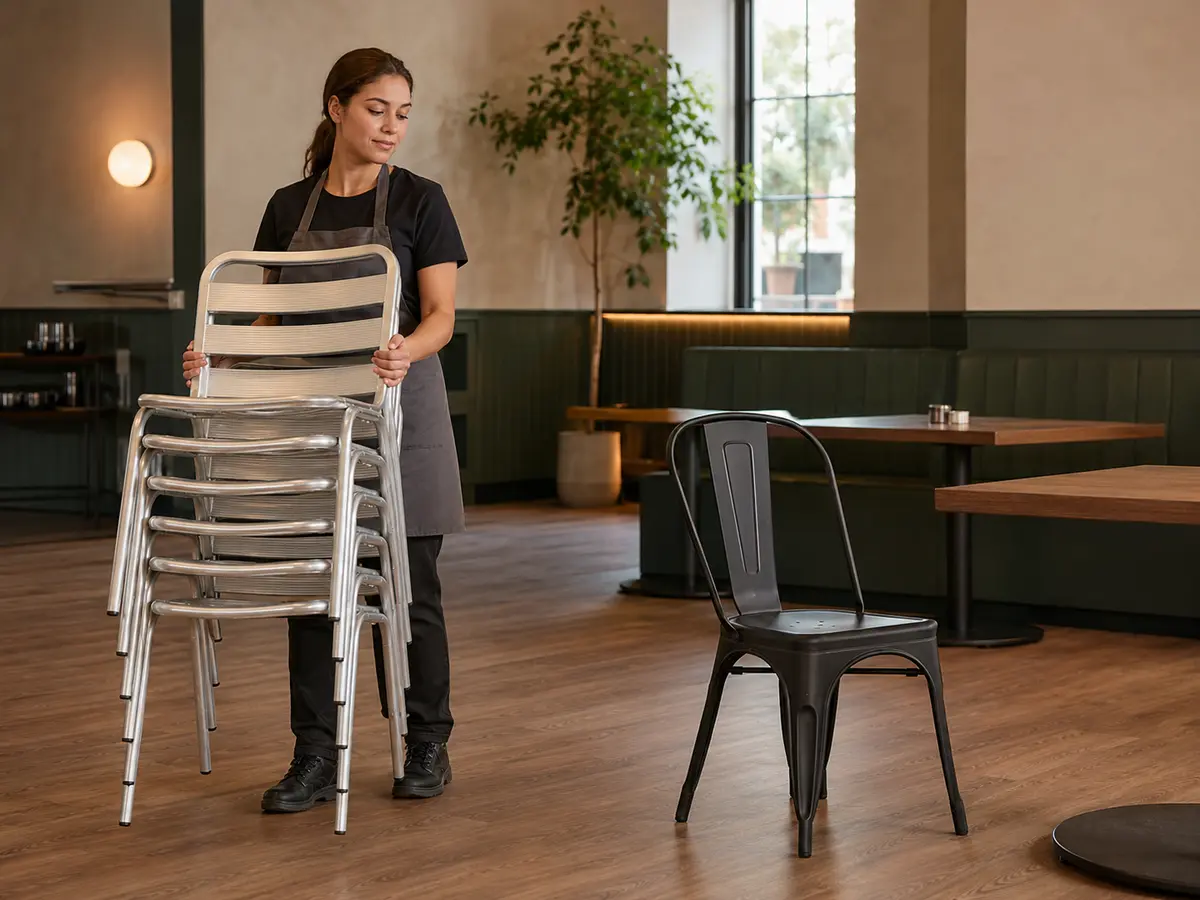
If you’re building a metal seating assortment, YeZhi’s guide on restaurant and café seating can help you align chair choices with layout and use patterns: Best chair solutions for restaurants and cafes.
For a quick overview of YeZhi’s manufacturing and project experience, see About YeZhi Furniture.
2) Strength and durability: “steel is stronger” isn’t a purchasing spec
It’s true that steel often has higher raw material strength than aluminum. But restaurant chair failures rarely happen because “the metal name was wrong.”
They happen because the chair’s design and build quality don’t match real commercial abuse:
- repeated dragging and side loading
- people tipping back
- footrest kicks (especially on stools)
- weld fatigue
- coating damage leading to corrosion at joints
What to compare instead of metal labels:
- Tube geometry and bracing: A well-braced frame usually beats an under-braced one, regardless of metal.
- Connection quality: Weld quality, joint design, and how loads transfer through the frame.
- Stability on the floor: Glides, leveling, and wobble control.
- Evidence: Ask whether the supplier can share chair-level testing for the exact model (and the conditions).
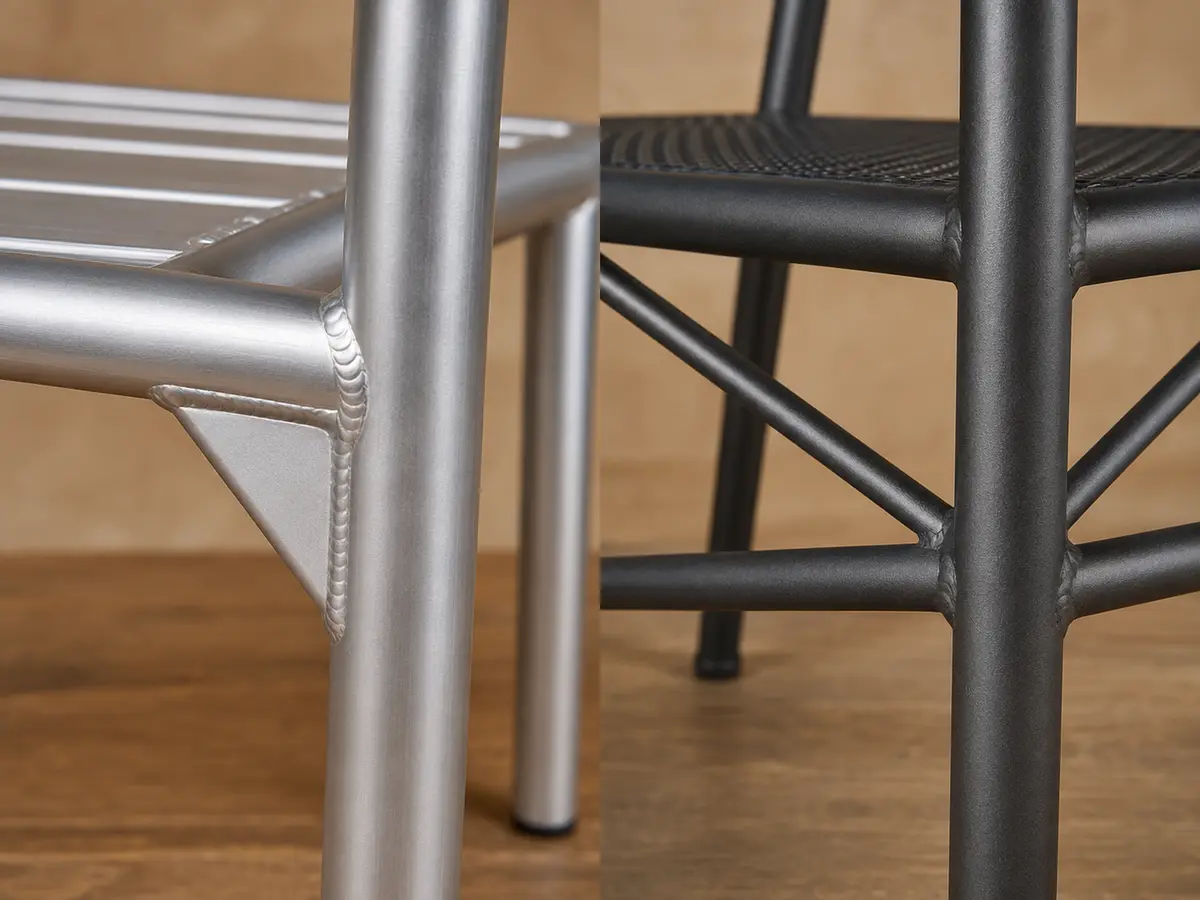
If you buy for distribution, this is the safest rule: compare SKU to SKU, not “steel” to “aluminum.”
3) Rust vs corrosion: what actually happens outdoors
Steel: rust is the default failure mode if steel is exposed
Most restaurant steel frames are carbon steel. Carbon steel rusts when moisture and oxygen reach bare metal.
If your chair relies on a coating system for protection, your long-term risk is simple:
- chips and scratches are inevitable
- once steel is exposed, rust can start at that point
This is why powder coating quality matters (more on that below).
Aluminum: it doesn’t “rust,” but it can still corrode
Aluminum forms an oxide layer that generally helps protect it, which is why aluminum is often described as rust-resistant. Sources that explain this distinction clearly include Kloeckner Metals’ overview of aluminum oxidation and corrosion resistance and Hydro’s explanation of why aluminum doesn’t rust like steel.
Two practical corrosion risks matter most for hospitality seating:
- Pitting corrosion in chloride exposure
- Chlorides (salt air, sea spray, some cleaning scenarios) can break down protective films and contribute to localized attack.
- Stainless Steel Industry of North America (SSINA) notes that pitting and crevice corrosion are associated with chloride salts and moisture accumulation in crevices, and can affect multiple metals including aluminum; see SSINA’s primer on pitting and crevice corrosion.
- Galvanic corrosion at joints and fasteners
- When aluminum is in electrical contact with a more noble metal (for example stainless or steel) in the presence of moisture, corrosion can accelerate on the aluminum side.
- Practical prevention guidance includes isolating dissimilar metals; Marsh Fasteners explains the risk and mitigation options in Can stainless steel and aluminum be used together?.
Bottom line: aluminum often reduces rust complaints, but coastal durability still depends on the alloy, finish system, hardware choices, and crevice control.
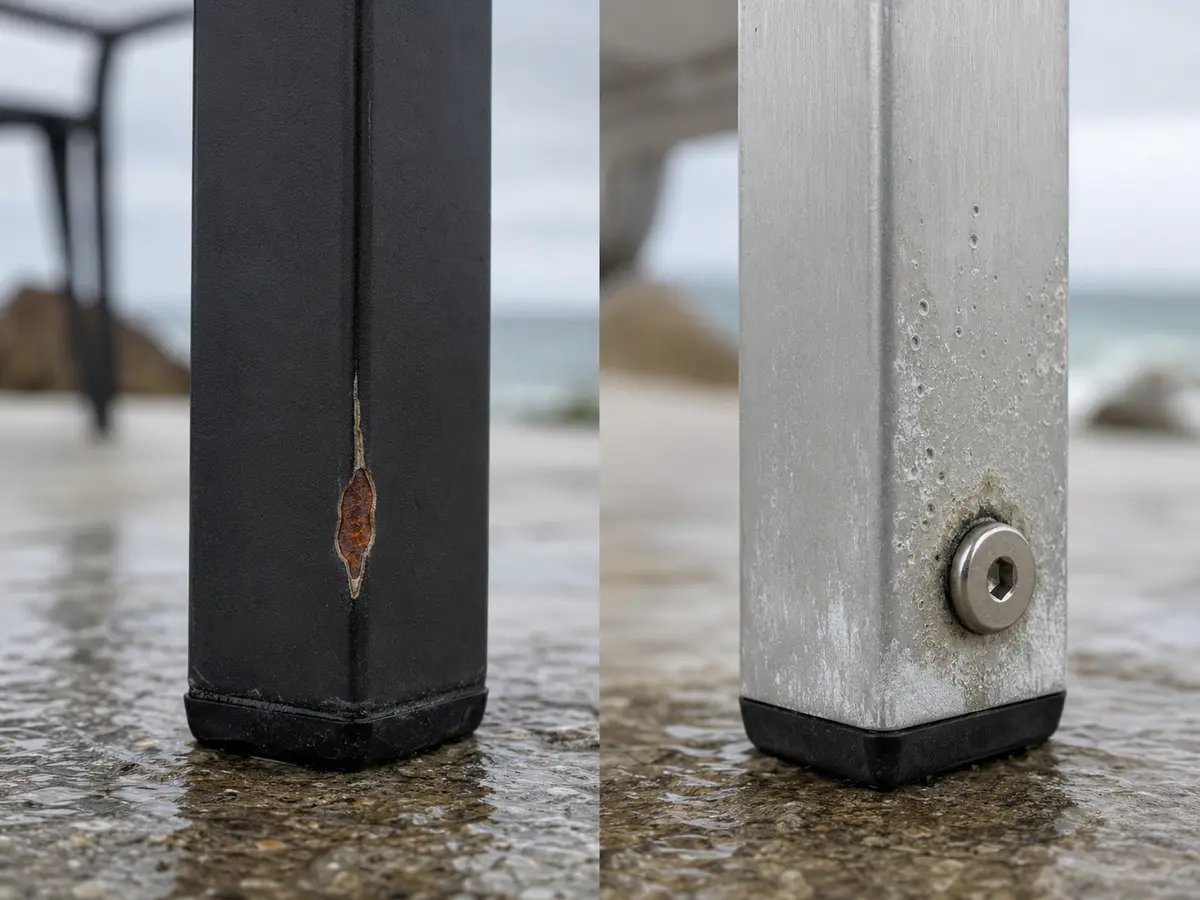
4) Powder-coated steel vs aluminum: what buyers should verify
“Powder-coated” is a marketing adjective unless you know what system was used.
The part that buyers miss is that powder coating performance depends on two things:
- the coating staying intact
- the substrate being properly prepared before coating
Teknos’ technical brochure Powder Coating as a Corrosion Protection Method (PDF) is a useful reference for thinking in systems, not buzzwords.
Also, powder coating is a barrier. If it’s damaged, exposed steel is still exposed steel. SendCutSend explains this limitation directly in its comparison of zinc plating vs powder coating for corrosion resistance.
Here’s the practical checklist to request in an RFQ for powder-coated steel restaurant chairs:
- Pretreatment: what cleaning and pretreatment steps are used before powder application?
- Coating system: single coat vs multi-layer system (especially for outdoor use)
- Edge/weld coverage: are welds and sharp edges treated to avoid thin film areas?
- Tube ends and water traps: are tube ends sealed, capped, or designed to drain?
- Touch-up guidance: what’s the approved field repair method after scratches?
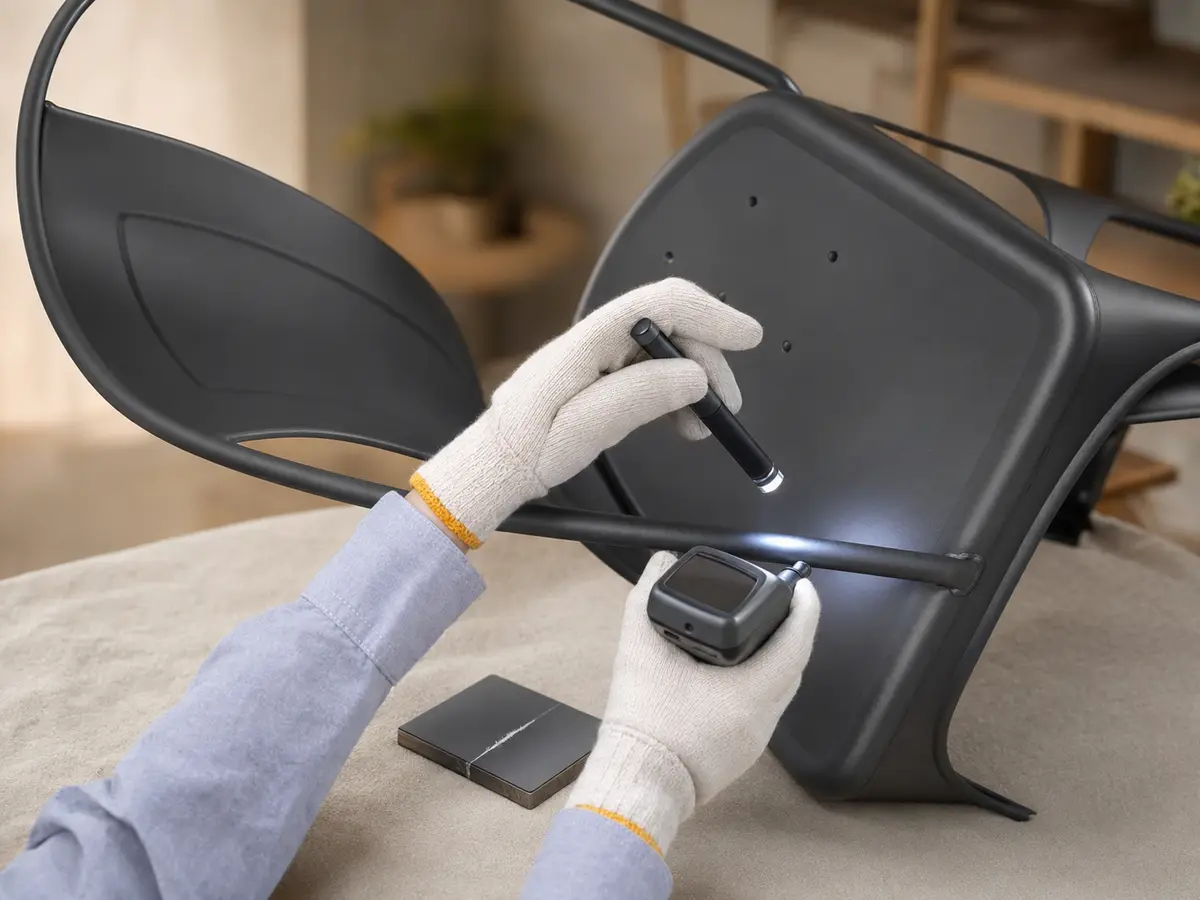
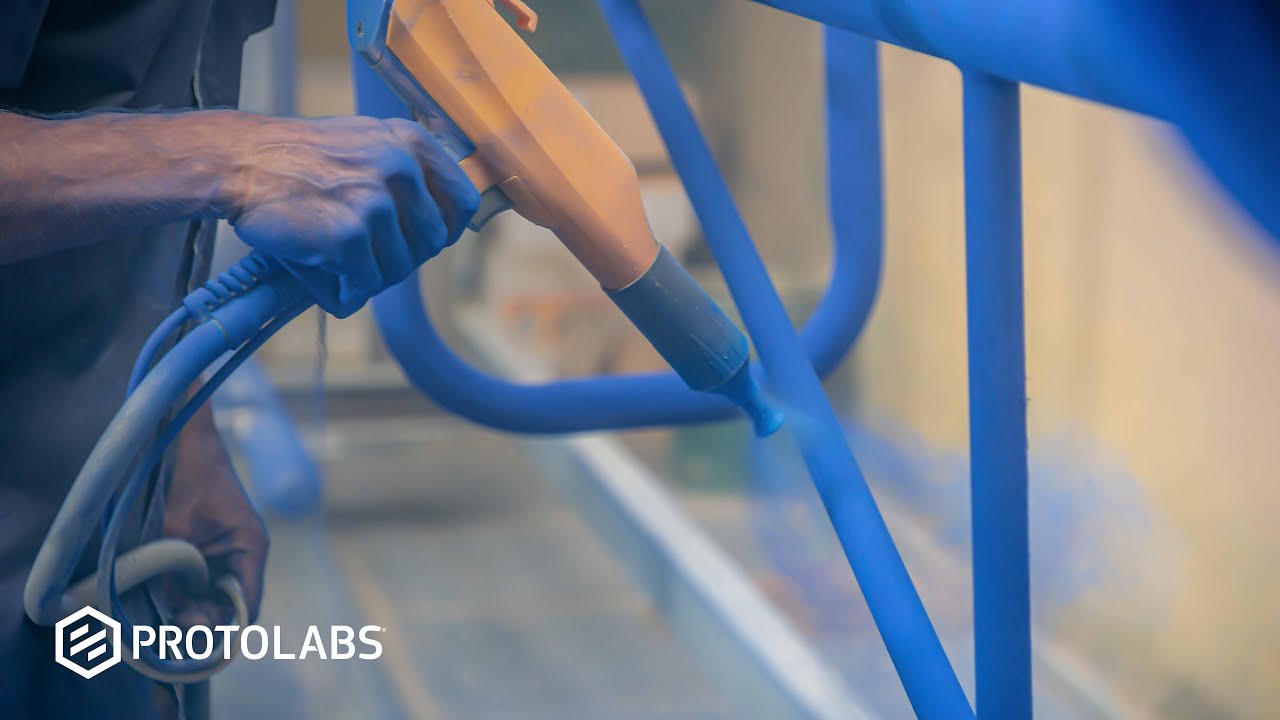
5) Best uses by scenario: a buyer’s decision matrix
Use this matrix to shortlist the right material by job conditions. It’s intentionally conditional because “always” is how buyers get burned.
| Scenarie | Usually a better fit | Hvorfor? | What to check before you commit |
|---|---|---|---|
| High-traffic indoor dining (chairs dragged all day) | Either | Corrosion risk is lower; durability is mostly design + build quality | Wobble control, glides, weld quality, finish wear points |
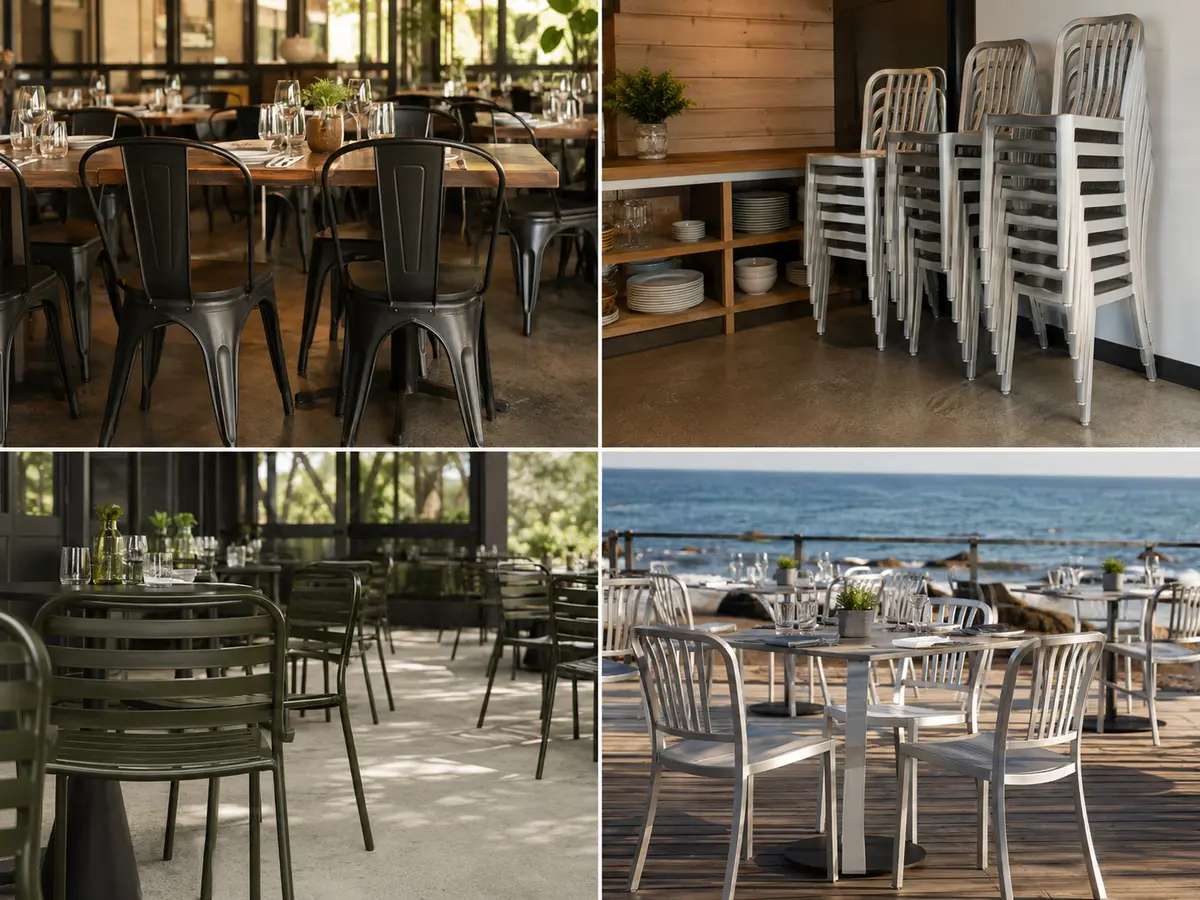
| Café with daily stacking and nightly storage | Aluminum often wins | Lower handling effort can matter more than theoretical strength | Stacking limit, stack stability, scratch-prone contact points |
| Standard outdoor patio (non-coastal, covered) | Either | Both can work if finish is right | For steel: coating system + water traps; for aluminum: finish and hardware |
| Coastal or high-humidity outdoor seating | Aluminum often wins, but not automatically | Lower rust complaints, but pitting/galvanic risk still exists | Hardware isolation, finish quality, crevice control, cleaning plan |
| Rooftop / windy patio | Det kommer an på | Wind is about shape, center of gravity, footprint, and operations | Open-back vs solid-back, non-slip feet, anchoring or storm storage protocol |
| Operators who want “set and forget” with minimal touch-ups | Aluminum often wins | Steel requires faster response to chips/scratches | Touch-up SOP; spare parts kit |
6) Windy patios and rooftops: don’t buy “wind resistance” by material
If you’ve ever watched a patio chair slide across decking during a gust, you already know: lightweight furniture can move.
But “choose steel” is not a complete answer.
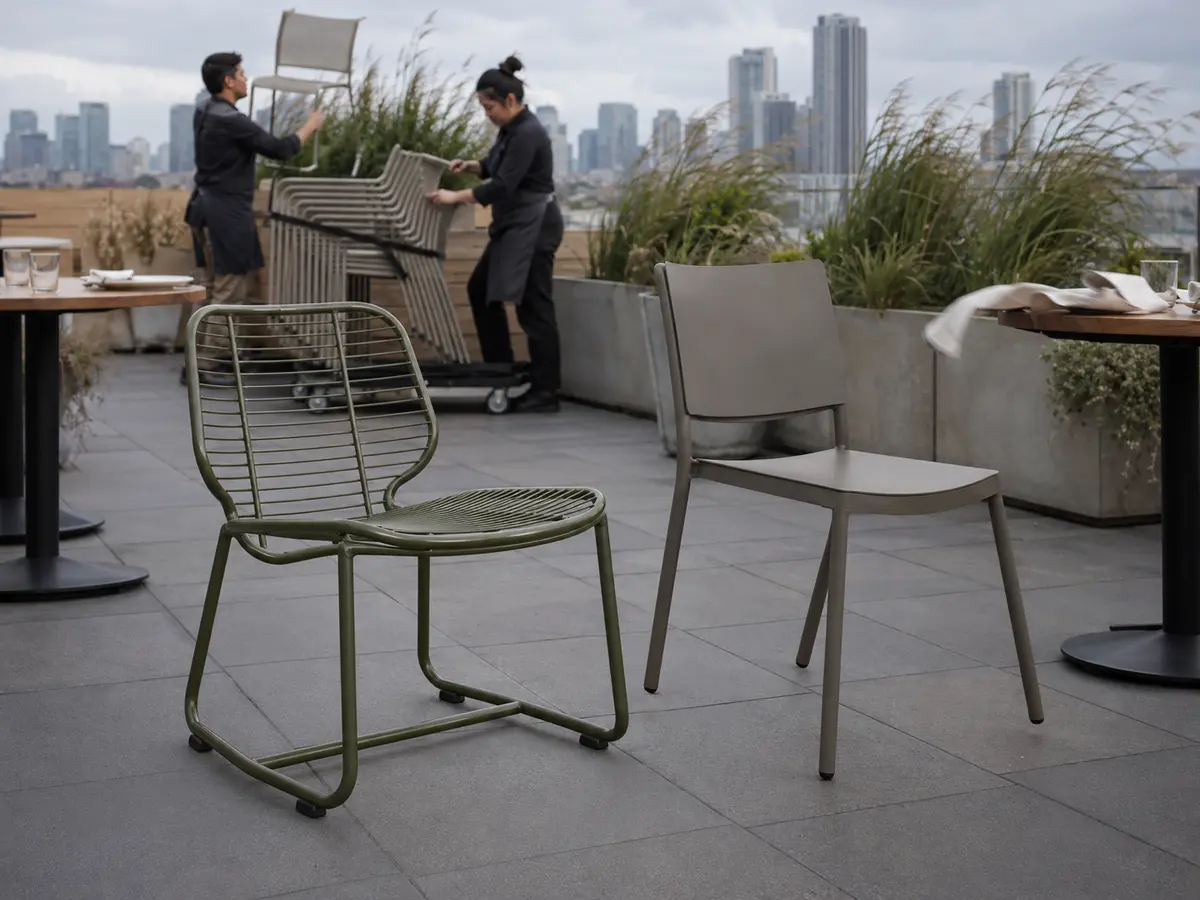
Wind stability is shaped by:
- Exposure (rooftops and corners accelerate wind)
- Sail area (solid backs catch wind more than open/slatted designs)
- Center of gravity (lower tends to be safer)
- Footprint (wider stance generally resists tipping)
- Feet and friction (glides matter)
- Operational plan (stacking, strapping, bringing furniture inside)
If you need a more engineering-oriented framing for risk assessment, CPP Wind Engineering Consultants notes that furniture performance depends on wind risk and design considerations, not a single factor; see their design development services overview.
For distributors, the practical play is to build a “wind kit” into the project spec:
- specify non-slip feet
- define storm storage protocol
- consider anchoring options for fixed layouts
7) Maintenance reality: where corrosion and complaints actually start
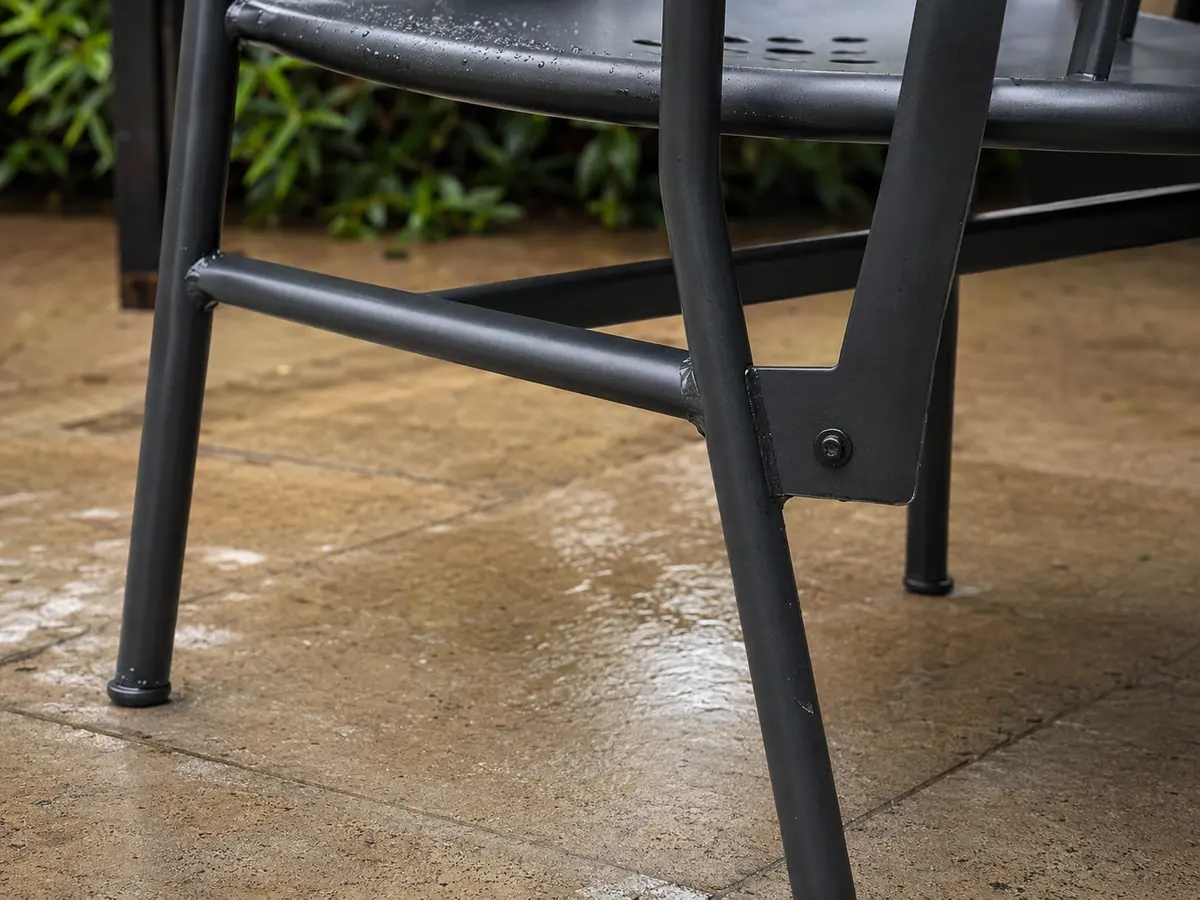
Most corrosion complaints don’t start in the open flat surfaces.
They start at:
- welds
- crevices where moisture sits
- tube ends and water traps
- fasteners where dissimilar metals meet
- scratches from stacking contact points
Maintenance guidance worth putting in a client handover sheet:
- rinse/wipe salt deposits periodically in coastal zones
- repair chips promptly on powder-coated steel
- inspect joints and fasteners during seasonal changeover
8) RFQ checklist: what to ask before ordering metal restaurant chairs
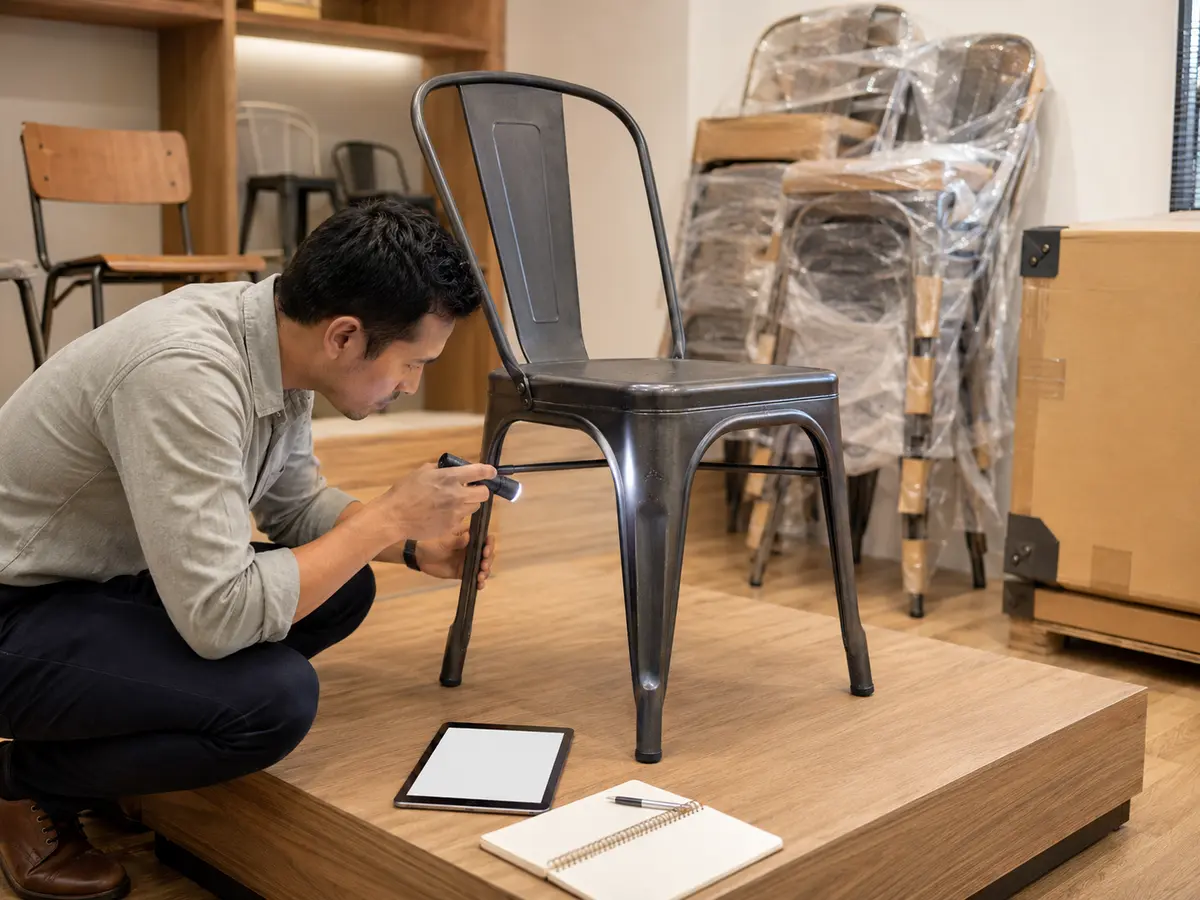
If you’re an importer or distributor, this checklist reduces “it looked fine on photos” risk.
Ask for each SKU:
- Net weight per chair and stacking limit (if stackable)
- Frame drawing or key dimensions (leg spacing, bracing, footrest design)
- Finish system details (especially for outdoor): pretreatment + coating steps
- Photos of welds and high-wear contact points
- Tube-end and drainage approach (caps, sealing, drain holes where appropriate)
- Fastener material and whether dissimilar metals are isolated
- Glide type and leveling method; request a wobble test video
- Packaging photos (edge/corner protection, metal-to-metal separation)
- Spare parts availability (glides, hardware)
- Any available test reports for the exact model, with scope and date
If bar seating is part of your project, YeZhi’s metal bar stool page is a useful reference for aligning metal type, finish choice, and stackable frames.
Next step: match material to your client’s environment, then compare SKUs
For projects where outdoor use and fast handling matter, aluminum can be a strong baseline choice. For indoor high-traffic rooms and stable, anchored layouts, steel can be a solid option when the coating system and water-trap details are correct.
If you want to spec faster (and reduce back-and-forth), YeZhi can help you shortlist aluminum and steel models by use case, and prepare RFQ-ready information like finish options, stacking limits, and export packaging approach.
If you want to evaluate outdoor metal seating, you can start from YeZhi’s metal range on engros barstole i metal and then review specific outdoor aluminum options such as patio aluminum bar stool chairs outdoor.
OFTE STILLEDE SPØRGSMÅL
Are aluminum or steel chairs better for restaurants?
It depends on the job conditions and the specific chair construction. Aluminum often reduces rust-related complaints and can be easier for staff to move, while steel can feel more planted and durable when the frame design and coating system are right. Compare the exact SKUs on net weight, frame design, finish prep, and any available testing, not the metal name alone.
Aluminum or steel chairs for restaurants: how do you decide fast?
Start with the environment (indoor, covered patio, coastal, rooftop), then compare the exact SKU’s net weight, frame design, finish system, and hardware. Don’t decide on metal alone.
What’s the best metal for restaurant chairs?
There isn’t one best metal. The “best” choice is the one that matches exposure, handling, stability, and maintenance for your operation, and that comes with verifiable specs for that exact model.
Are aluminum chairs strong enough for commercial use?
Yes, if the chair is designed for commercial loads and built well. Look for strong joints, stable geometry, and evidence of testing for that specific model. A well-designed aluminum chair can outperform a poorly designed steel chair.
Do aluminum restaurant chairs rust?
Aluminum doesn’t rust like steel because rust is iron oxide. Aluminum can still corrode, especially in chloride exposure or at mixed-metal joints, so finish quality and fastener choices still matter.
Do steel chairs rust outdoors?
Carbon steel can rust outdoors if moisture reaches bare metal. A good coating system helps, but chips and scratches must be repaired quickly. If the environment is harsh (coastal, wet cleaning routines), consider better protection strategies or different metal choices.
Can powder-coated steel chairs be used outdoors?
They can, but performance depends on pretreatment, coating system quality, and how quickly damage is repaired. Ask for the coating system details and avoid water traps at tube ends and joints.
Which chairs are better for coastal restaurants?
Often aluminum is easier to live with because it avoids red rust, but it isn’t maintenance-free. In salt air, verify finish quality, isolate dissimilar metal hardware, and clean salt deposits periodically. For steel, you generally need a stronger protection strategy and strict maintenance.
Which chairs are better for windy patios?
Don’t decide based on metal alone. Wind stability depends on exposure, chair shape (how much it catches wind), center of gravity, footprint, feet/friction, and whether you have a storm storage or anchoring plan.