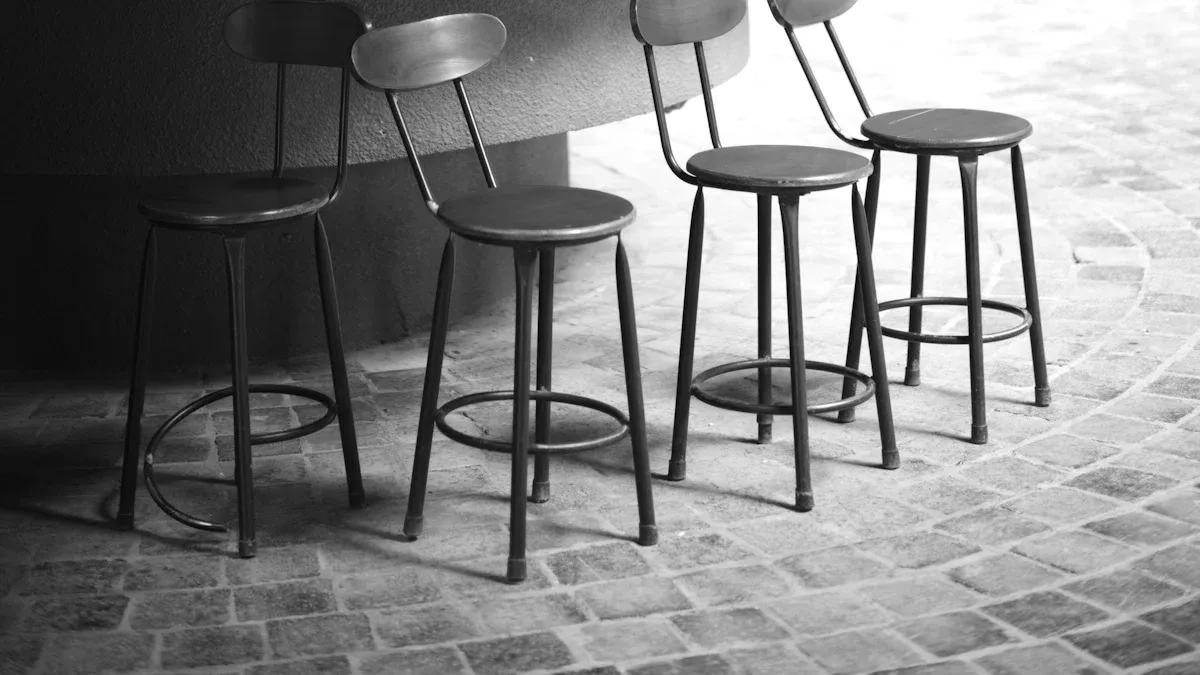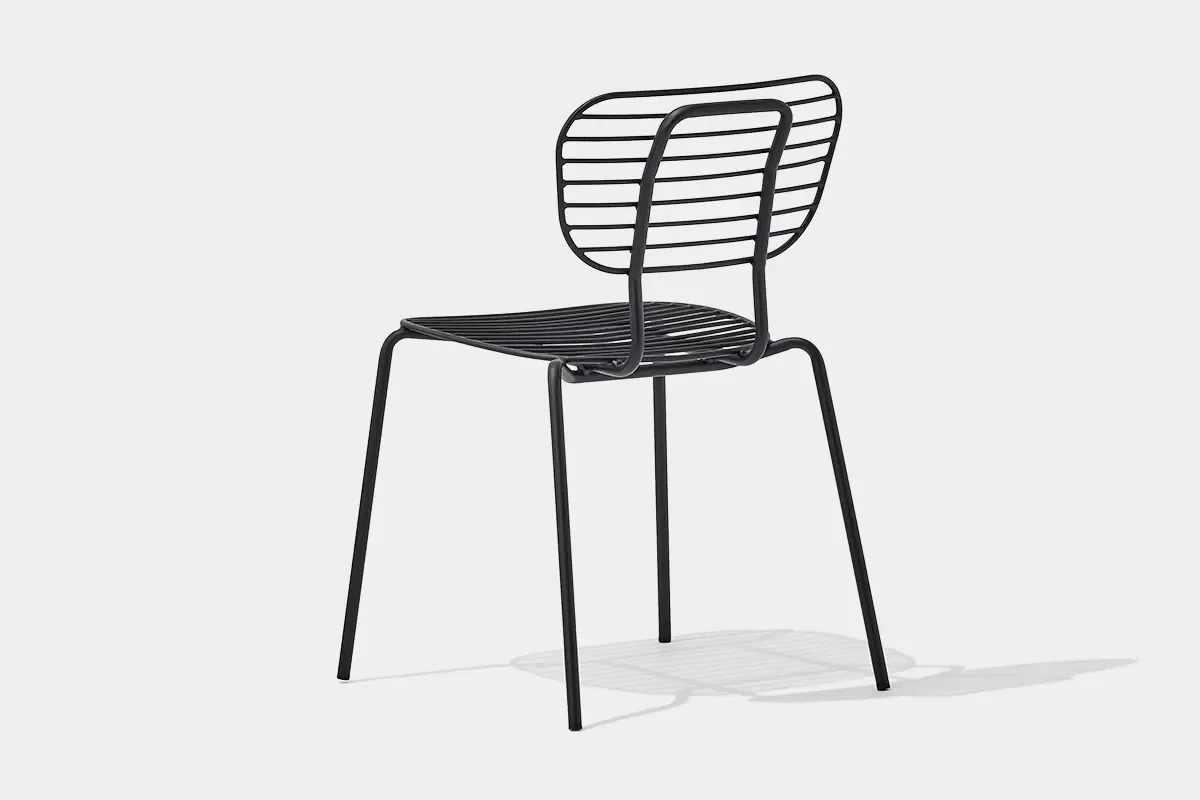
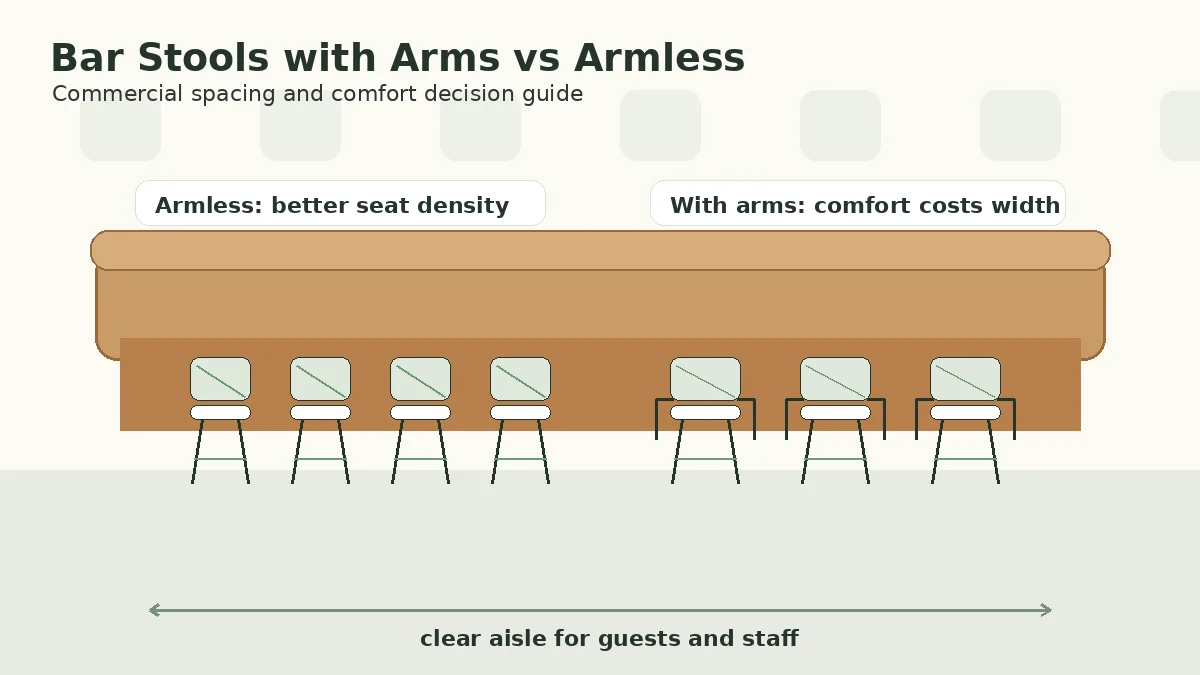
Useimmissa vilkkaissa baareissa, kahviloissa ja ravintoloiden tiskialueilla käsinojattomat baarituolit ovat turvallisempi valinta. Niihin mahtuu enemmän istumapaikkoja, niihin on helpompi astua sivulta ja ne aiheuttavat yleensä vähemmän tilanpuutetta.
Käsinojalliset baarituolit ovat parempi valinta, kun mukavuus on tärkeämpää kuin istumapaikkojen määrä. Ne sopivat hyvin hotellien aulatiloihin, VIP-baareihin, yksityisklubeihin ja hitaammin palveleviin tiloihin, joissa vieraat viipyvät pidempään ja joissa tilaa on riittävästi.
Me YeZhissä kiinnitämme huomiota ennen kaikkea asennettuun lopputulokseen, emme pelkästään kuvastoon. Tyyli ei ole etusijalla. Valokuva ei ole etusijalla. Kaupallisen tilauksen yhteydessä ensimmäinen kysymys on yksinkertainen: Kuinka monta hyvää istumapaikkaa tähän tiskille mahtuu ilman, että asiakkaat ja henkilökunta joutuvat taistelemaan tilasta?
Ensin päätös
Pikavastaus: Ovatko käsinojalliset baarituolit parempia kuin käsinojattomat?
Käsinojalliset baarituolit sopivat paremmin pitkäaikaiseen istumiseen, mutta käsinojattomat baarituolit ovat parempi valinta ahtaisiin liiketiloihin ja suurempaan istumapaikkatiheyteen.
| Liiketoimintatilanne | Parempi oletusarvo | Kaupallinen syy |
|---|---|---|
| Nopeakiertonen baaritisk | Armless | Enemmän istumapaikkoja ja nopeampi sisäänpääsy |
| Pieni kahvilan tiski | Armless | Vähemmän hukkaan menevää leveyttä |
| Hotellin aulabaari | Käsivarsilla | Mukavuus mahdollistaa pidemmän istumisen |
| VIP- tai yksityinen baarialue | Käsivarsilla | Laadukas tuntuma on tärkeämpää kuin tiheys |
| Kapea käytävä jakkaroiden takana | Armless | Vieraille ja henkilökunnalle helpompi liikkuminen |
| Kääntyvä jakkara ahtaassa tilassa | Yleensä ilman käsinojia | Kääntömekanismille ja käsinojille tarvitaan enemmän tilaa |
Jos tilassasi tarvitaan jokainen istumapaikka, suosittelemme yleensä aloittamaan ensin käsinojattomilla jakkaroilla. Jos tilassasi panostetaan mukavuuteen ja pidempään viipymiseen, käsinojat voivat osoittautua hyödyllisiksi.
Jos haluat vertailla muita baarituolityylejä käsinojallisten ja käsinojattomien lisäksi, aloita YeZhin oppaasta, jossa baarijakkaratyypit, joka kattaa selkänojattomat, matalalla selkänojalla varustetut, kääntyvät, verhoillut ja muut ammattikäyttöön tarkoitetut jakkaramallit.
Leveys on todelliset kustannukset
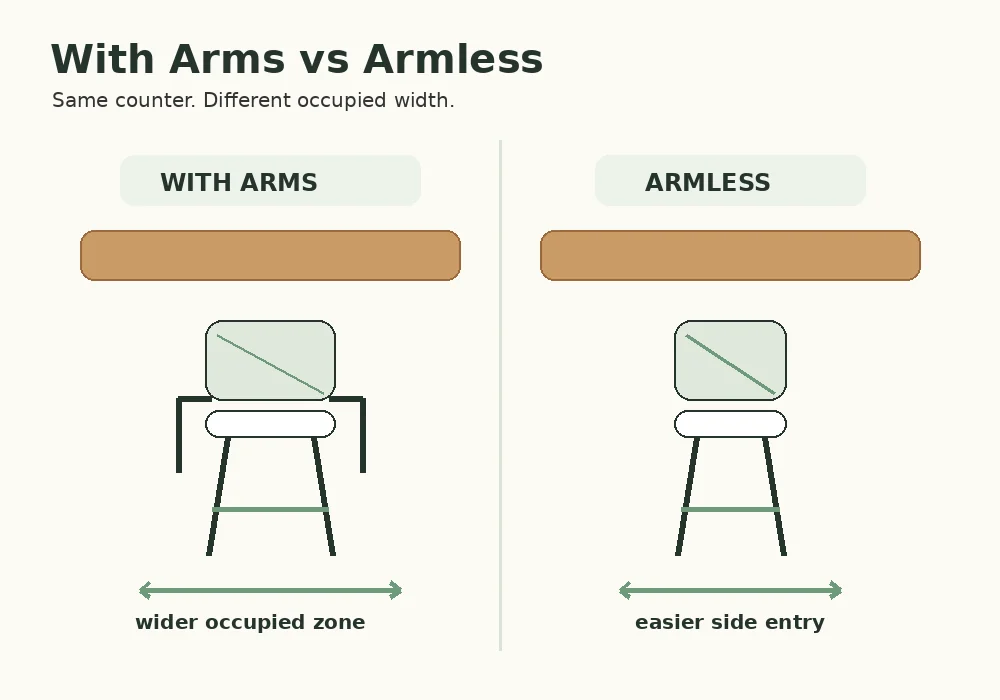
Todellinen ero ei ole käsinojassa, vaan siinä, kuinka paljon tilaa se vie.
Monet ostajat vertailevat aluksi käsinojallisia ja käsinojattomia baarituoleja etukuvasta käsin. YeZhi-projekteissa emme tyydy pelkästään siihen. Etukuva ei nimittäin paljasta todellista käytännön ongelmaa: leveys.
Käsinojallinen jakkara vaatii yleensä enemmän tilaa sivuilta kuin käsinojaton jakkara. Käsinojien välinen leveys voi olla suurempi kuin istuimen leveys. Vieraan on ehkä myös vedettävä jakkaraa kauemmas ulospäin istuakseen, varsinkin jos käsinojat eivät liu’u tiskin alle.
Mittaa jakkara
- Kokonaisleveys
- Käsien välinen leveys
- Istuimen sisäleveys
- Kokonaissyvyys
- Selkänojan korkeus
Mittaa rakennuspaikka
- Tiskipöydän alapuolinen vapaa tila
- Baaritiskin korkeus
- Käytävä jakkaroiden takana
- Reunavara
- Kääntymisvälys
YeZhi-projektitilauksessa etunäkymäkuva on vasta lähtökohta. Ennen tuotannon aloittamista on tarkistettava työtason korkeus, suunniteltu istumapaikkojen määrä, sivukuva, ylhäältä katsottu kuva sekä mittapiirros.
| Jakkara tyyppi | Suunnittelun laajuus | Käyttöohjeet |
|---|---|---|
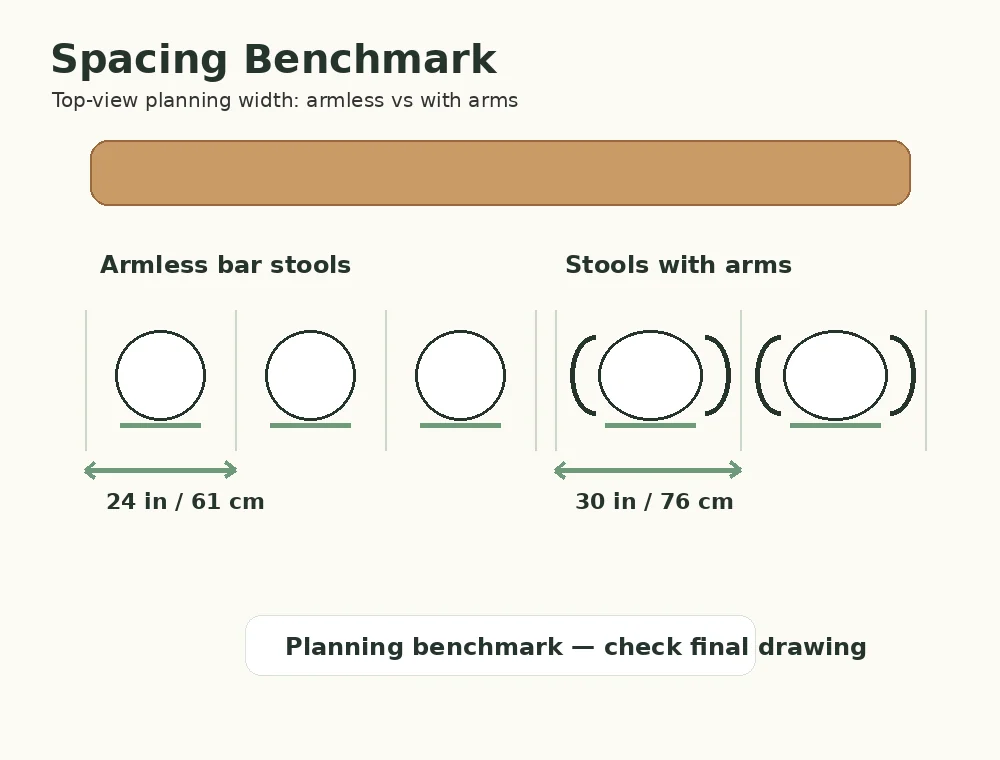
| Käsinojaton baarituoli | 24 tuumaa / 61 cm jakkaraa kohti | Hyvä lähtökohta pienikokoisille myyntitiskeille |
| Baarituoli, jossa on käsinojat | 30 tuumaa / 76 cm jakkaraa kohti | Parempi lähtökohta käsinojallisille jakkaroille tai leveämmille jakkaroille |
| Leveä liipaisin | Yleisleveys yli 22 tuumaa / 56 cm | Käsittele sitä laajempana asettelukohteena, vaikka istuin näyttäisikin kompaktilta |
Käytämme näitä kaupallisen suunnittelun vertailukohtina. Lopullinen sijoittelu on kuitenkin tarkistettava valitun jakkarapiirroksen ja tilasuunnitelman perusteella. Tiskipituuden ja jakkaroiden lukumäärän laskemiseksi katso YeZhin opas aiheesta kuinka monta baarituolia tarvitset tarjoaa kattavamman asettelumenetelmän.
Mukavuus on ansaittava
Mukavuuden vertailu: milloin käsivarret auttavat ja milloin ne ovat tiellä
Käsinojalliset baarituolit ovat yleensä mukavampia pitkäkestoisessa istumisessa, koska ne tukevat käsivarsia ja ylävartaloa. Se sopii erinomaisesti hotellien baareihin, klubien oleskelutiloihin, yksityishuoneisiin ja rentoihin vieraanvaraisuustiloihin.
Mutta mukavuus ei tarkoita pelkästään käsinojia. Mukavuus on istuinkorkeutta, jalkatuen asentoa, istuimen leveyttä, selkänojan tukea ja istumisaikaa. Käsinojat ovat vain yksi osa kokonaisuutta.
| Vierailun kesto | Parempi oletusarvo | Syy |
|---|---|---|
| Lyhyt istunto, alle 20 minuuttia | Armless | Nopea sisäänpääsy, nopea uloskäynti, suurempi tiheys |
| Rento ateria baaritiskillä | Käsinojaton tai matalalla selkänojalla varustettu käsinojaton | Mukavuus on tärkeää, mutta myös tilavuus on edelleen tärkeää |
| Lounge-tyylinen istuminen, kesto 45–60 minuuttia tai pidempään | Käsivarsilla | Lisätuki voi oikeuttaa leveyden |
| VIP- tai premium-paikat | Käsivarsilla | Mukavuus ja koettu arvo voivat oikeuttaa leveyden |
Jos vieraat istuvat vain hetken juomassa jotain ja lähtevät sitten, käsinojat vievät usein turhaan tilaa. Jos vieraat viipyvät pitkään nauttimassa cocktailia, oleskelupalvelua tai ensiluokkaista vieraanvaraisuutta, käsinojat voivat maksaa itsensä takaisin tarjoamalla mukavuutta.
Baari-, kahvila- ja hotellihankkeisiin YeZhin kaupalliset baarijakkarat Sivulla on lisää tuotteen käyttöohjeita.
Kapasiteettilaskenta
Leveys ja väli: Kuinka monta jakkaraa mahtuu todella?
Juuri tässä vaiheessa monet baarituoliprojektit epäonnistuvat. Tuoli voi näyttää vankalta, mukavalta ja laadukkaalta, mutta asennettu baaritiski saattaa mahtua vähemmän tuoleja kuin oli suunniteltu.
Käytämme ostajien kanssa seuraavaa kaavaa: käytettävissä oleva palkin pituus ÷ suunnitteluleveys = arvioitu jakkaramäärä. Sitten pyöristämme tuloksen alaspäin. Emme pyöristä ylöspäin.
- 24 tuumaa / 61 cm käsinojatonta jakkaraa kohti
- 30 tuumaa / 76 cm käsinojallista jakkaraa kohti
Esimerkki: baaritiskin pituus on 10 ft / 305 cm.
| Jakkara tyyppi | Suunnittelun laajuus | Arvioitu lukumäärä |
|---|---|---|
| Käsinojattomat baarituolit | 24 tuumaa / 61 cm | Tietoja 5 jakkaraa |
| Baarituolit, joissa on käsinojat | 30 tuumaa / 76 cm | Tietoja 4 jakkaraa |
Jos teet varauksen 6 tuumaa / 15 cm kummassakin päässä, lopullinen pituus voi lyhentyä yhdellä jakkaralla. Esimerkiksi 10 ft / 305 cm:n pituisella työtasolla on 108 in / 274 cm käyttökelpoista pituutta, kun siitä on varattu yhteensä 12 in / 30 cm. Tämä tarkoittaa noin 4 käsinojatonta jakkaraa kukin 24 tuumaa / 61 cm, eli noin 3 käsinojallista jakkaraa kukin 30 tuumaa / 76 cm.
Yli 20 ft / 610 cm:n pituisen työtason kohdalla käsivarsittomalla liu’ulla voi olla noin 10 jakkaraa, kun taas käsinojalliset jakkarat voivat olla noin 8 jakkaraa ennen reunavaraa. Se ei ole mikään pieni tyylillinen ero. Kyseessä on kapasiteettia koskeva päätös.
Jos haluat vertailla nykyisiä malleja, pintakäsittelyjä ja kehyksen suuntia, aloita YeZhin baarituolien tuotekategoria.

Vapautusriski
Baarituolin käsinojan korkeus: se, mitä ostajat unohtavat tarkistaa
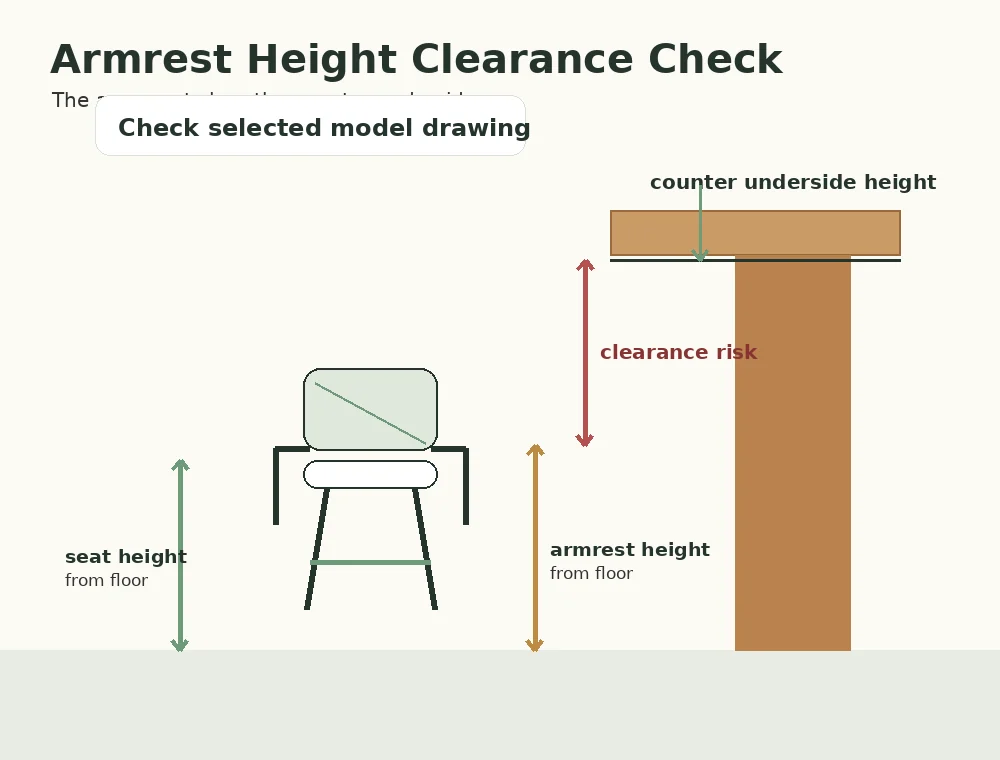
Käsinojien korkeus on yksi tämän valinnan vaarallisimmista seikoista. Käsinojallinen baarituoli voi näyttää valokuvassa täydelliseltä, mutta osoittautua epäkäytännölliseksi todellisessa baaritilanteessa, koska käsinojat osuvat baaritiskin reunaan tai tuolia ei voi työntää tiskin alle.
Baarituolin käsinojien korkeuden tarkastuksessa on tärkeintä varmistaa, että käsinojat eivät osu baaritason alapuolelle, kun tuoli työnnetään paikoilleen.
| Mittaus | Miksi sillä on merkitystä |
|---|---|
| Istuinkorkeus lattiasta mitattuna | Täytyy sopia baarin tai tiskin korkeuteen |
| Käsinojan korkeus lattiasta | Määrittää, voiko käsivarret viedä vartalon alle |
| Tiskin alapuolen korkeus | Sen on oltava korkeammalla kuin käsinoja, jos istujaa on tarkoitus vetää jalkojen alle |
| Tuolin kokonaispituus | Vaikuttaa vetotilaan |
| Selkänojan korkeus | Voi osua tiskipöytään tai seinään ahtaissa tiloissa |
| Kääntösäde | Kädet voivat osua lähellä oleviin jakkaroihin tai tiskipaneeleihin |
- Baarituolin istuinkorkeus: 29–32 tuumaa / 74–81 cm
- Baarituolin istuinkorkeus: 24–27 tuumaa / 61–69 cm
- Istuin–tiskiväli: 9–12 tuumaa / 23–30 cm
Käytämme näitä suunnittelun lähtökohtina. Lopullinen korkeus on tarkistettava suhteessa baaritiskien todelliseen korkeuteen, tiskin alapuolen korkeuteen, istuimen paksuuteen ja valittuun jakkaramalliin. Projektitilauksissa pyydämme lähettämään tiskin alapuolen korkeuden ja valitun jakkaramallin hyvissä ajoin, jotta käsinojien välys voidaan tarkistaa ennen tuotantoa.
Projektitilausten osalta nämä tiedot on vahvistettava ennen kuin malli katsotaan tuotantovalmiiksi.
Jos haluat tutustua kattavampaan pituudenmittausmenetelmään, katso YeZhin opas osoitteessa miten mitata baarijakkaran korkeus on hyödyllinen seuraava lukukohde.
Kohtauksen valinta
Paras valinta tapahtumapaikan tyypin mukaan
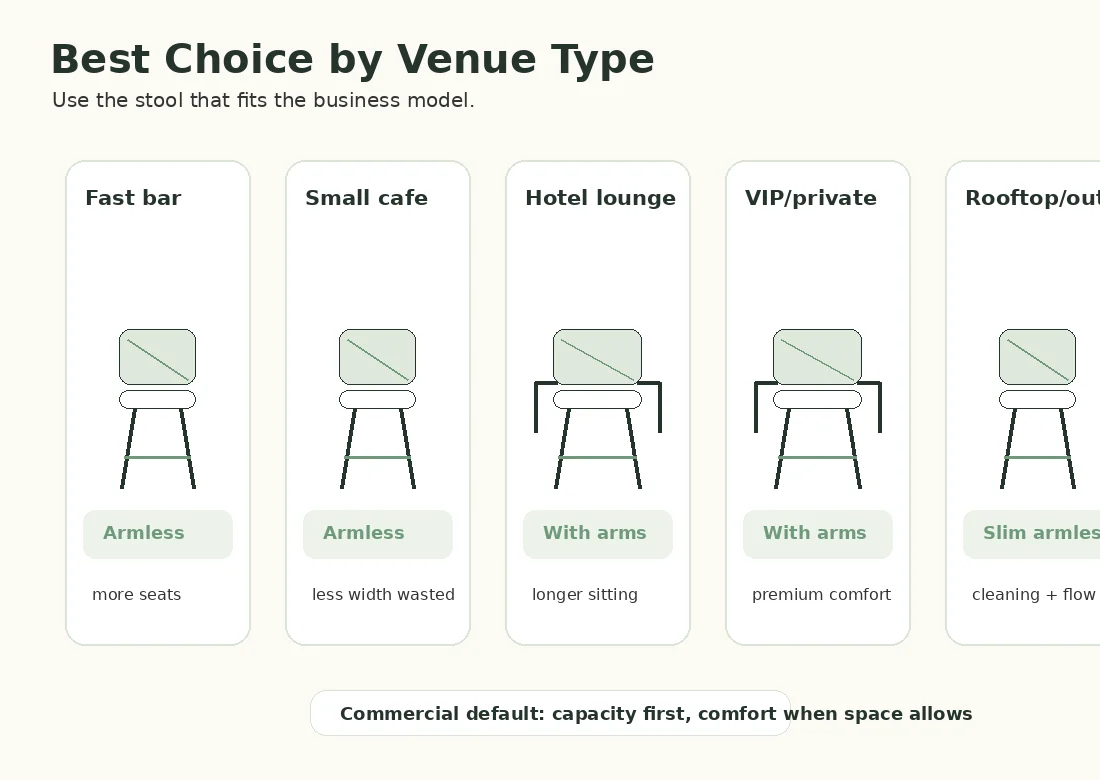
Kaupallisissa hankkeissa selkeä oletusvaihtoehto auttaa ostajaa etenemään nopeammin. Tässä on esimerkki siitä, miten YeZhi yleensä esittää valinnan.
| Tapahtumapaikan tyyppi | Parempi oletusarvo | Miksi |
|---|---|---|
| Nopeakiertonen baaritisk | Armless | Enemmän istumapaikkoja, helpompi sivuilta nousu ja nopeampi asiakaskierto |
| Pieni kahvilan tiski | Armless | Leveys on tärkeämpää kuin käsien mukavuus |
| Ravintolan baarin odotustila | Armless | Useimmat vieraat istuvat hetken paikallaan ennen kuin siirtyvät pöytään |
| Hotellin aulabaari | Käsivarsilla | Vieraat viipyvät pidempään, ja viihtyisyys vahvistaa paikan imagoa |
| VIP-/yksityinen baarialue | Käsivarsilla | Mukavuus ja koettu arvo ovat tärkeämpiä kuin istumapaikkojen määrä |
| Kapea käytävä jakkaroiden takana | Armless | Aseet vaikeuttavat liikkumista |
| Kääntyvät jakkarat ahtaassa tilassa | Yleensä ilman käsinojia | Kääntömekanismi ja käsinojat moninkertaistavat tilaongelmat |
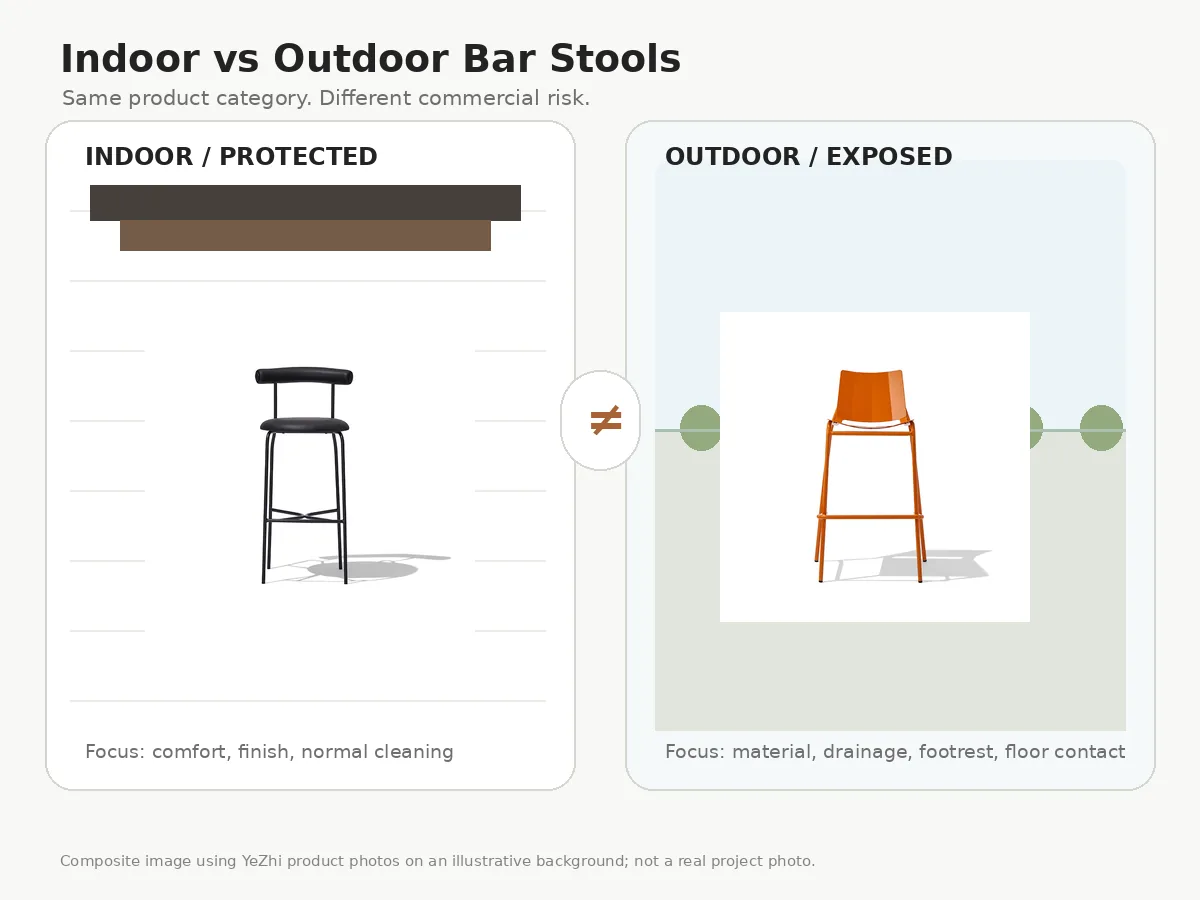
| Ulkobaari tai kattoterassibaari | Yleensä käsinojattomat tai ohutrunkoiset mallit | Helppompi siirtely, helpompi puhdistus ja vähemmän silmiinpistävää tilaa vievää ulkonäköä; ulkokäyttöön tarkoitetun materiaalin ja pintakäsittelyn on oltava vahvistettuja |
| Suuri avoin baari, jossa tarjotaan ensiluokkaista palvelua | Käsillä voi tehdä töitä | Tilaa on riittävästi, ja mukavuus saattaa oikeuttaa leveyden |
Älä tee tätä valintaa pelkästään tyylin perusteella. Tyylikäs käsinojatuoli voi väärässä tilasuunnitelmassa aiheuttaa käytännön ongelmia.
Ravintolahankkeisiin ja tukkutoimituksiin YeZhin tukku ravintola baarijakkarat Sivulla esitellään tuotteen käytännönläheinen käyttötarkoitus.
Hyödyt ja haitat
Käsinojallisten baarituolien edut ja haitat
Käsinojalliset baarituolit eivät ole huono valinta. Ne eivät vain ole ilmaisia. Hinta on leveys, liikkumatila ja vapaa korkeus.
| Tekijä | Baarituolit, joissa on käsinojat |
|---|---|
| Comfort | Vankempi, kun istutaan pidempään |
| Visuaalinen arvo | Näyttää usein laadukkaammalta |
| Vierastuki | Parempi kyynärpää- ja ylävartalon tuki |
| Leveys | Tarvitaan lisää tilaa |
| Istumapaikkojen määrä | Vähentää yleensä kapasiteettia |
| Saapuminen ja lähtö | Vaikeampaa ahtaissa tiloissa |
| Tiskitila | Käsinojan korkeus on tarkistettava |
| Kääntymisriski | Arvo on suurempi, jos jakka pyörii |
| Paras käyttötarkoitus | Hotellien baarit, oleskelutilat, VIP-alueet, hitaammin palvelevat tiskit |
Plussaa
Suurin etu on mukavuus pitkien istumisaikojen aikana. Käsinojalliset baarituolit auttavat vieraita tuntemaan olonsa kotoisammaksi hotellien aulabaareissa, jäsenklubeissa, yksityisissä baareissa ja korkeatasoisissa vieraanvaraisuustiloissa.
Miinukset
Suurin haittapuoli on tilan menetys. Käsinojat lisäävät kokonaisleveyttä, vaikeuttavat sivulta nousemista ja voivat estää jakkaran liukumisen tiskin alle.
Käytävää tukkiva jakkara ei ole premium-luokkaa. Se on palveluun liittyvä ongelma.
Hyödyt ja haitat
Käsinojattomien baarituolien edut ja haitat
Käsinojattomia jakkaroita pidetään usein yksinkertaisimpana vaihtoehtona. Liikehuonekalujen kohdalla yksinkertaisuus on toisinaan parempi vaihtoehto.
| Tekijä | Käsinojattomat baarituolit |
|---|---|
| Comfort | Voi olla mukava, kun istuin, selkänoja ja jalkatuki ovat oikein säädettyinä |
| Leveys | Tehokkaampi |
| Istumapaikkojen määrä | Mahtuu yleensä useampia jakkaroita |
| Saapuminen ja lähtö | Sivulta on helpompaa |
| Pääsy puhdistusta varten | Helppokäyttöisempi jakkararungon ympärillä |
| Liike | Sopii paremmin pieniin baareihin ja kahviloihin |
| Ensiluokkainen tuntuma | Riippuu materiaalista, pintakäsittelystä ja muotoilusta |
| Paras käyttötarkoitus | Nopean palvelun baarit, kahvilat, rennot ravintolat, kapeat tiskit |
Plussaa
Suurin etu on tilankäytön tehokkuus. Käsinojattomat jakkarat sopivat kapeampiin baaritiskeihin, helpottavat sivulta istumista ja helpottavat henkilökunnan liikkumista baarialueella.
Miinukset
Suurin haittapuoli on se, että ylävartalo saa vähemmän tukea pitkäkestoisen istumisen aikana. Hotellien auloissa tai VIP-baareissa jotkut vieraat saattavat pitää käsinojista.
Ennen talletusta
Mitä on syytä tarkistaa YeZhin kanssa ennen kuin käsinojalliset baarituolit siirretään sarjatuotantoon
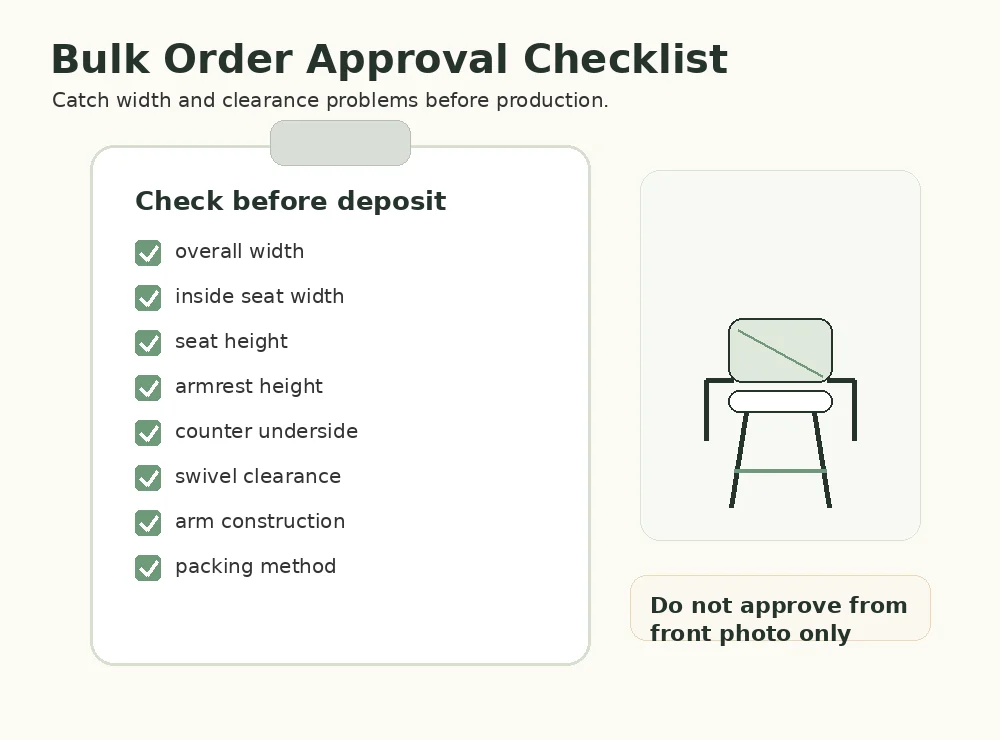
Suurtilauksissa pienet mittausvirheet tulevat kalliiksi. Pieniä muutoksia näytteeseen on helppo tehdä. Koko projektierä, jonka mitat ovat väärät, tulee kalliiksi. Koska suurin osa tukkutilauksista valmistetaan tilauksesta, leveys ja välys on sovittava ennen tuotantoa.
Ennen sarjatuotantoa YeZhi tarkistaa piirustuksen, ei pelkästään tuotekuvaa.
Mitatarkastus
- Kokonaisleveys
- Istuimen sisäleveys
- Istuimen korkeus
- Käsinojan korkeus lattiasta
- Kokonaissyvyys
- Selkänojan korkeus
Tuotantotarkastus
- Jalkatuen korkeus ja sijainti
- Mahtuvatko käsivarret tiskin alle
- Kääntymisvälys
- Varsirakenne
- Pakkauksen koko ja pakkaustapa
- Takuun laajuus on vahvistettu PI:ssä
Käsinojallisissa jakkaroissa rakenteella on merkitystä. Löysät käsinojien liitokset aiheuttavat valituksia vilkkaasti käytetyissä baareissa. Käsinojien rakenne voidaan tarkistaa ennen tilauksen vahvistamista: onko se hitsattu, pultattu vai integroitu istuimen tai selkänojan rakenteeseen.
Korkean riskin erikoistilauksissa tarkista 1–2 näytettä ennen suuren tilauserän valmistusta suunnittelun vertailukohteena.
YeZhi tekee yhteistyötä ravintoloiden, kahviloiden, baarien, hotellien ja projektikalusteiden kaupallisten ostajien kanssa. Tavallinen vähimmäistilausmäärä (MOQ) alkaa yleensä noin 15 kpl per tuotenumero, vaikka lopullinen vähimmäistilausmäärä riippuu mallista, viimeistelytavasta ja tarjouksesta. Täysimittainen OEM- tai räätälöity tuotanto alkaa yleensä noin 100 kpl kutakin mallia. Tuotannon läpimenoaika on noin 30 päivää tilausvahvistuksen jälkeen, ja merirahtisuunnittelun lähtöarvo on noin 30 päivää.
Tietoja tehtaan toimituksista, tuotannosta ja tilausten käsittelystä löytyy YeZhin baarijakkara tehdas sivu.

Ostovirheet
Yleisiä tilausvirheitä, joita YeZhi auttaa ostajia välttämään
1. Vain edestä otetut valokuvat
Etukuvasta ei näy ulosvedon syvyyttä, käsinojan korkeutta, kääntösädettä eikä työtason alapuolista vapaata tilaa.
2. Vain istuimen leveys
Istuimen leveys tarkoittaa vain istuinaluetta. Kokonaisleveys määrää, kuinka monta jakkaraa mahtuu.
3. Käsinojan korkeuden puuttuminen
Tarkistamme käsinojan korkeuden suhteessa tiskin alapuoleen, emme pelkästään baaritason yläpuoleen.
4. Kääntö- ja käsinojat
Ahtaissa liiketiloissa pidämme kääntövarret yleensä riskialttiina vaihtoehtona.
5. Käytävän huomiotta jättäminen
Käytä 36 tuumaa / 91 cm miehitettyjen jakkaroiden takana konservatiivisena suunnitteluperusteena.
6. Jokaisen käsinojatuolin kutsuminen huippulaatuiseksi
Vääränlainen käsinojatuoli ei ole huippulaatuinen. Se aiheuttaa asennuksen jälkeen vältettävissä olevia sijoitteluongelmia.
Tarjouspyyntö
YeZhin tarjouspyyntöjen tarkistuslista kaupallisiin baarituolihankkeisiin
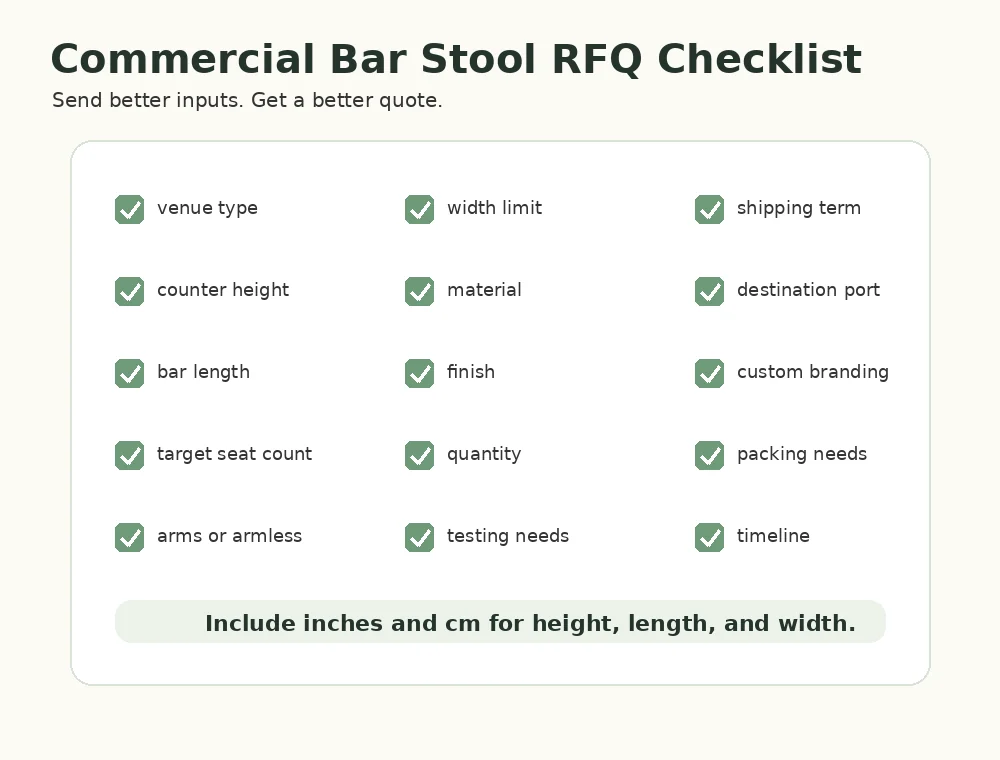
Hyödyllinen tarjouspyyntö YeZhiltä vaatii muutakin kuin pelkkää “lähettäkää minulle paras tarjouksenne”. Jos haluat, että YeZhi suosittelee sinulle tarkasti käsinojallisia tai käsinojattomia baarituoleja, lähetä seuraavat tiedot:
| Tarjouspyyntökohde | Mitä lähettää |
|---|---|
| Tapahtumapaikan tyyppi | Baari, kahvila, ravintola, hotelli, klubi, projekti |
| Tiskikorkeus/baarikorkeus | Tuumina ja senttimetreinä |
| Tiskin/baarin pituus | Tuumina ja senttimetreinä |
| Tavoiteltu paikkamäärä | Arvioitu jaksojen lukumäärä |
| Ulosteen koostumus | Käsinojilla, ilman käsinojia tai molemmilla vaihtoehdoilla |
| Leveysrajoitus | Tuolin suurin kokonaisleveys |
| Käyttötilanne | Sisätiloissa, ulkona, katetulla ulkoalueella |
| Materiaalivalinta | Metalli, massiivipuu, verhoilu, rottinki, tiikkipuu, kangas, keinonahka tai materiaalien yhdistelmä |
| Loppuunsaattamisvaatimus | Puun viimeistely, metallin väri, verhoilun väri |
| Määrä | Kappalemäärä tuotekoodia tai mallia kohti |
| Yksilölliset tarpeet | Brändäys, pakkaus, viimeistely, materiaalien yhteensopivuus |
| Testaus- ja vaatimustenmukaisuusvaatimukset | Vaadittu kantavuus, ANSI/BIFMA-tarkastus, EN 16139, paloturvallisuus, kulutuskestävyys- tai ulkokäyttöön soveltuvuustesti |
| Toimitusehdot | EXW, FOB tai CIF |
| Kohde | Maa ja määräsatama |
Jos hankkeisiin tarvitaan testaus- tai vaatimustenmukaisuusasiakirjoja, mainitse tämä vaatimus tarjouspyynnössä. YeZhi voi tarkistaa ennen tuotantoa kunkin mallin, materiaalin ja tilausvaatimusten mukaiset kuormitusluokitukset, ANSI/BIFMA-vaatimukset, EN 16139 -standardin mukaiset asiakirjat, paloturvallisuusominaisuudet, kulutuskestävyystiedot, ulkokäyttöön tarkoitetut pintakäsittelytestit sekä takuun laajuuden.
YeZhi tukee erilaisten mallien, värien ja materiaalien yhdistämistä samassa tilauksessa. YeZhi tukee myös OEM-/ODM-räätälöintiä, joka kattaa pintakäsittelyt, materiaalit, pakkaukset, brändäyksen, verhoiluvärit, puupinnat, metallirunkojen pintakäsittelyt sekä projektikohtaisen materiaalien sovittamisen.
Pääasiallinen kuljetustapa on merirahti, ja tukkutilauksille on tarjolla sekä LCL- että täyskonttivaihtoehtoja.
Lopullinen ostosuositus
Valitse käsinojattomat baarituolit, kun istumapaikkojen määrä, nopea asiakaskierto ja helppo siirrettävyys ovat tärkeimpiä tekijöitä.
Valitse käsinojalliset baarituolit, kun pidempi istuminen, mukavuus ja ensiluokkainen istuma-asento ovat tärkeämpiä kuin maksimaalinen istumapaikkakapasiteetti.
Ennen ennakkomaksun suorittamista ja tuotannon aloittamista on vahvistettava leveys, käsinojan korkeus, piirros, pintakäsittely, pakkaustapa, toimitusehdot sekä PI-takuun kattavuus.
Älä anna yhden hyvän tuotekuvan vähentää asennettujen istuimien määrää. Oikea baarituoli on sellainen, joka toimii edelleen, vaikka vieraat istuvat siinä, henkilökunta kulkee sen takaa ja baaritiskialue on täynnä.
Lähetä YeZhille baarituolien sijoittelukaavio ja tarjouspyyntösi tiedotPikavastaukset
FAQ
Ovatko käsinojalliset baarituolit mukavampia?
Kyllä, käsinojalliset baarituolit ovat yleensä mukavampia, kun istuu pidempään. Ne tukevat käsivarsia ja ylävartaloa, mikä voi olla hyödyllistä hotellien auloissa, VIP-baareissa ja hitaammin palvelevissa tiloissa. Nopeatempoisissa baareissa ja kahviloissa mukavuuden lisäys ei välttämättä oikeuta ylimääräistä leveyttä.
Vievätkö käsinojalliset baarituolit enemmän tilaa?
Kyllä. Käsinojallisilla baarituoleilla on yleensä oltava enemmän tilaa kuin käsinojattomilla tuoleilla. Käytä kaupallisen suunnittelun viitteenä 30 tuumaa / 76 cm:ä kutakin käsinojallista jakkaraa kohti. Lopullinen sijoitusväli on tarkistettava valitun jakkarapiirustuksen ja tilojen pohjapiirroksen perusteella.
Kuinka paljon tilaa minun pitäisi jättää käsinojattomille baarituoleille?
Varaa noin 24 tuumaa / 61 cm kutakin käsinojatonta baarituolia kohti alustavana vertailukohtana. Tämä ei korvaa lopullista piirustusta. Lopulliset etäisyydet on tarkistettava suhteessa jakkaran todelliseen leveyteen, tiskin pituuteen, reunavaraukseen ja käytävien sijoitteluun.
Kuinka paljon tilaa minun pitäisi jättää käsinojallisille baarituoleille?
Varaa noin 30 tuumaa / 76 cm kutakin käsinojallista baarituolia kohti lähtökohtana. Jos tuoli on leveä, kääntyvä tai siinä on paksu selkänoja, tarkista varsinainen piirros ennen istumapaikkojen lukumäärän vahvistamista.
Mikä on paras baarituolin käsinojan korkeus?
Yleistä, kaikille sopivaa turvallista baarituolin käsinojan korkeutta ei ole. Oikea tarkastusmenetelmä on se, että kun jakkara työnnetään paikalleen, käsinojan korkeus lattiasta mitattuna ei kosketa tiskin alapuolta. Sarjatuotannossa tämä tulisi tarkistaa valitun jakkaran piirustuksesta.
Ovatko käsinojattomat baarituolit sopivia ravintoloihin?
Kyllä, käsinojattomat baarituolit ovat usein ravintoloissa parempi oletusvalinta. Ne säästävät tilaa, helpottavat sivulta istumista ja sopivat yleensä paremmin nopeampaan asiakaskiertoon. Ravintolan oleskelutilassa tai yksityisessä ruokailubaarissa käsinojalliset baarituolit voivat kuitenkin olla sopiva vaihtoehto.
Ovatko käsinojalliset, kääntyvät baarituolit hyvä idea?
Kääntyvät baarituolit, joissa on käsinojat, ovat riskialttiita ahtaissa liiketiloissa. Niissä tarvitaan enemmän sivutilaa, ja ne voivat osua lähellä oleviin jakkaroihin, tiskipintoihin tai vieraisiin. Käytä niitä vain, jos tilassa on riittävästi tilaa.
Pitäisikö hotellien baareissa käyttää käsinojallisia baarituoleja?
Hotellibaarit voivat käyttää käsinojallisia baarituoleja, kun mukavuus ja korkealuokkainen imago ovat tärkeämpiä kuin istumapaikkojen enimmäismäärä. Aulabaarissa tai loungessa käsinojat voivat olla järkevä valinta. Kompaktissa aamiaisbaarissa tai pikapalvelutiskillä käsinojaton malli saattaa kuitenkin olla parempi vaihtoehto.
Mitä minun pitäisi mitata ennen kuin tilaan käsinojallisia baarituoleja?
Mittaa kokonaisleveys, istuimen sisäleveys, istuinkorkeus, käsinojan korkeus, tiskin alapuolen korkeus, jakkaran syvyys ja selkänojan korkeus. Jos tuoli kääntyy, tarkista myös kääntymisvälys.
Voiko YeZhi valmistaa mittatilaustyönä baarituoleja, joissa on käsinojat tai ilman niitä?
YeZhi tarjoaa OEM- ja ODM-räätälöintipalveluja kaupallisiin huonekaluprojekteihin. Tavallinen vähimmäistilausmäärä (MOQ) on yleensä noin 15 kpl tuotekoodia (SKU) kohden, kun taas täysimittainen OEM- tai räätälöity tuotanto alkaa yleensä noin 100 kpl:sta mallia kohden. Lähetä YeZhille baaritason korkeus, baaritiskin pituus, tavoiteltu istumapaikkojen määrä, toivottu jakkaratyyli, määrä ja määräpaikkasatama, jotta voimme tarkistaa projektin ennen tuotannon aloittamista.
Miten ostajien tulisi pyytää YeZhilta asiakirjoja, jotka koskevat kantavuutta, BIFMA-standardia, standardia EN 16139 tai paloturvallisuutta?
Ilmoita nämä vaatimukset tarjouspyynnössä ennen tarjouksen antamista. YeZhi tarkastaa kantavuuden, ANSI/BIFMA-vaatimukset, EN 16139 -standardin mukaisen dokumentaation, paloturvallisuusominaisuudet sekä muut testausasiakirjat mallin, materiaalin, tilauksen ja projektivaatimusten mukaan.