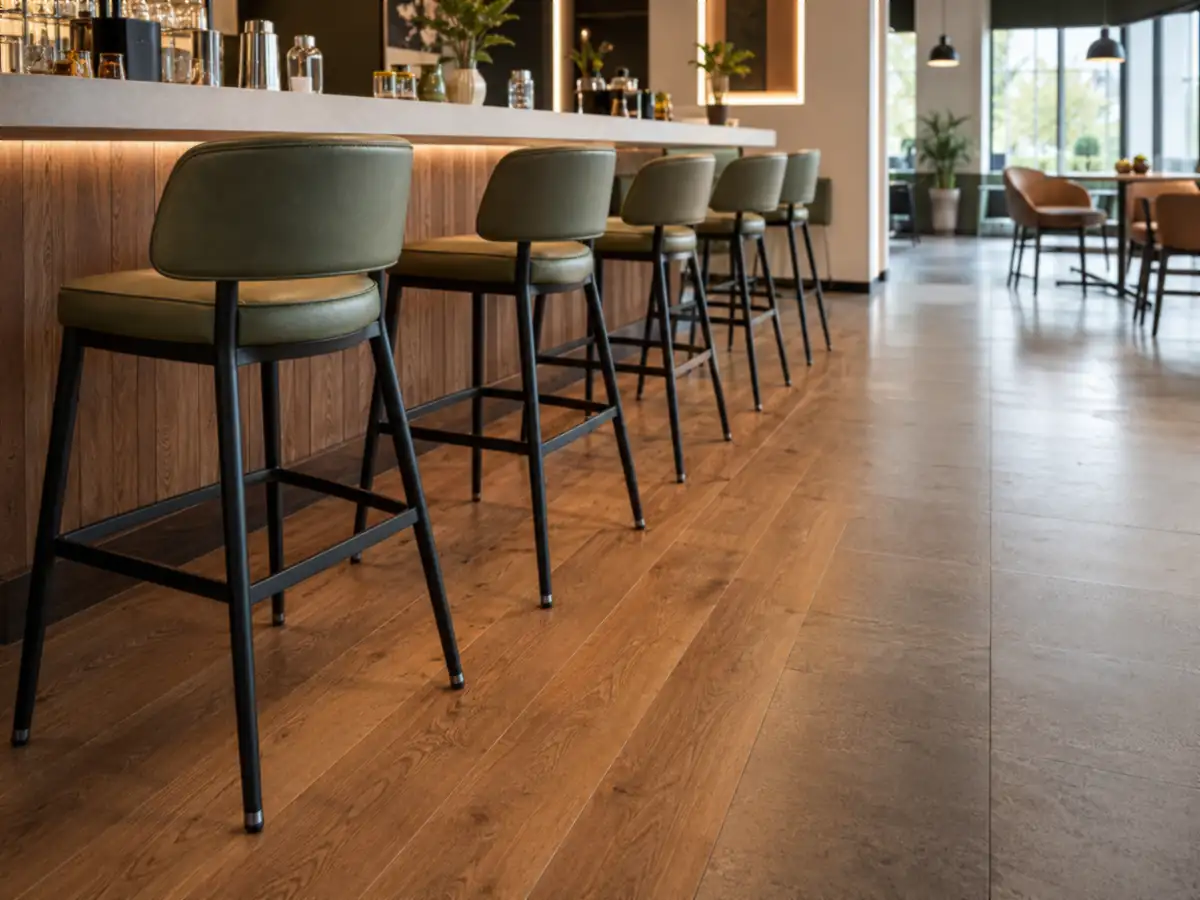
What Makes a Bar Stool Comfortable?
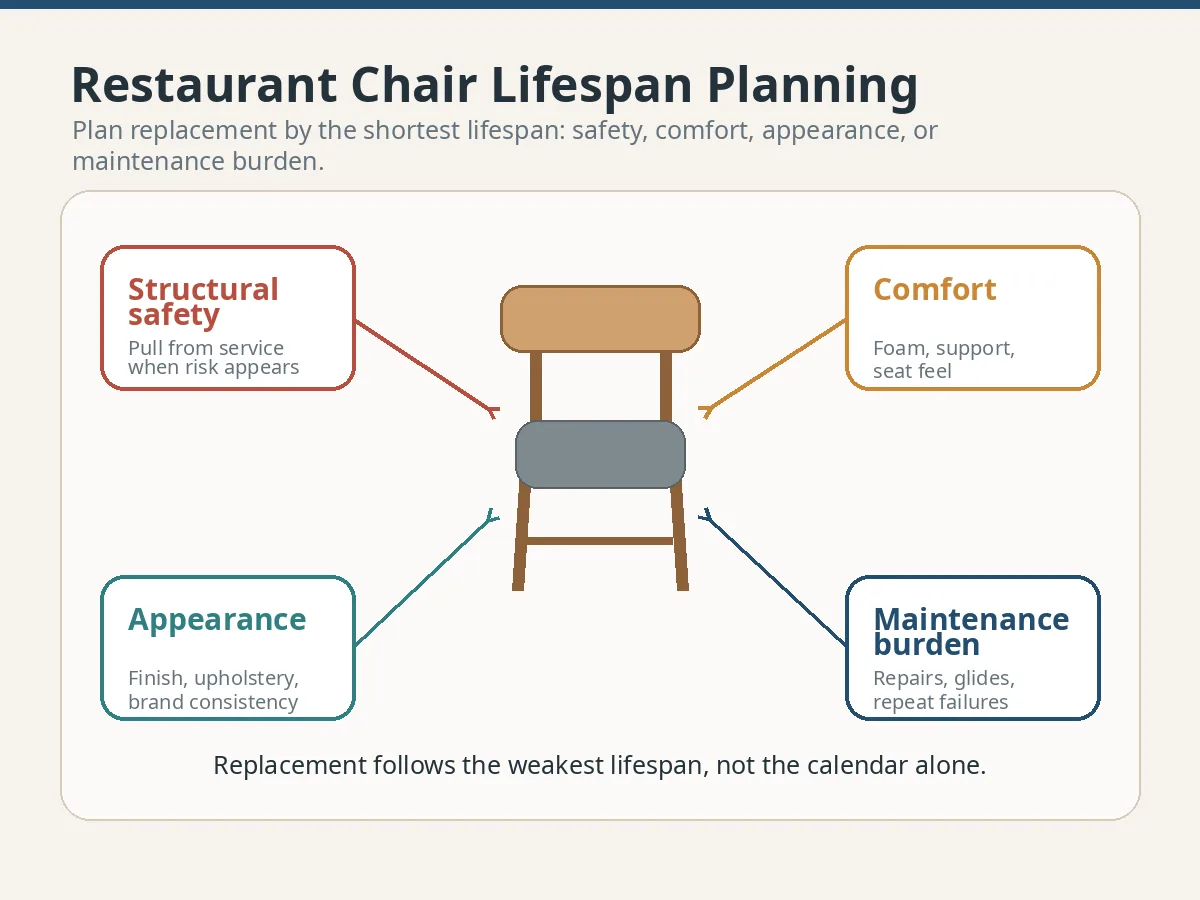
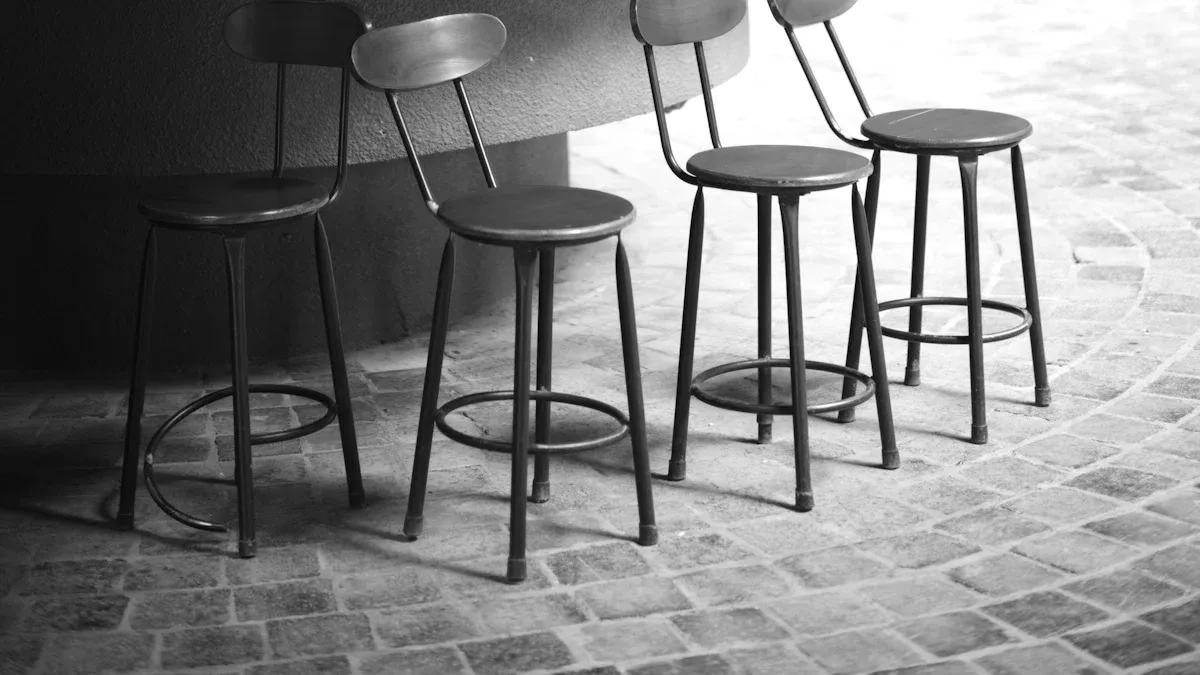
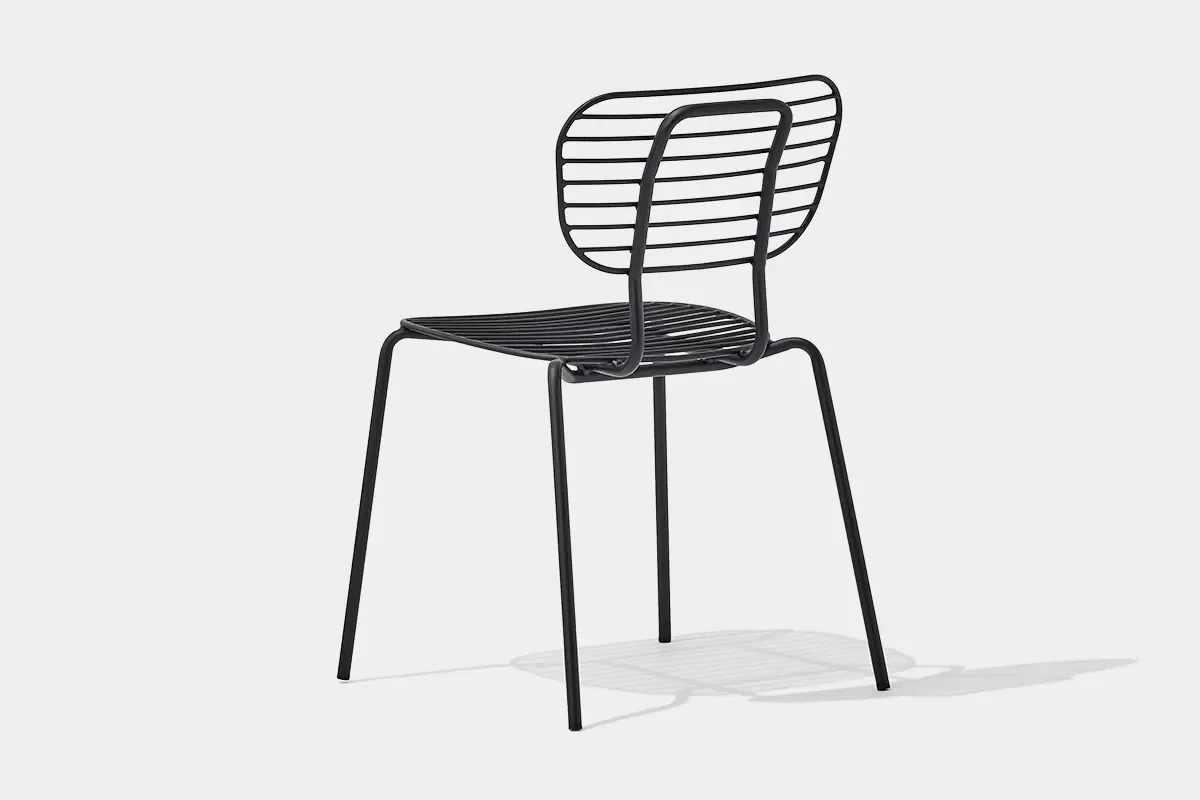
When we help buyers choose commercial bar stools, we do not judge comfort by cushion thickness alone. We check the full system: seat width, seat depth, footrest position, back support, height, spacing, frame stability, material choice, cleaning risk, and how long guests actually sit.
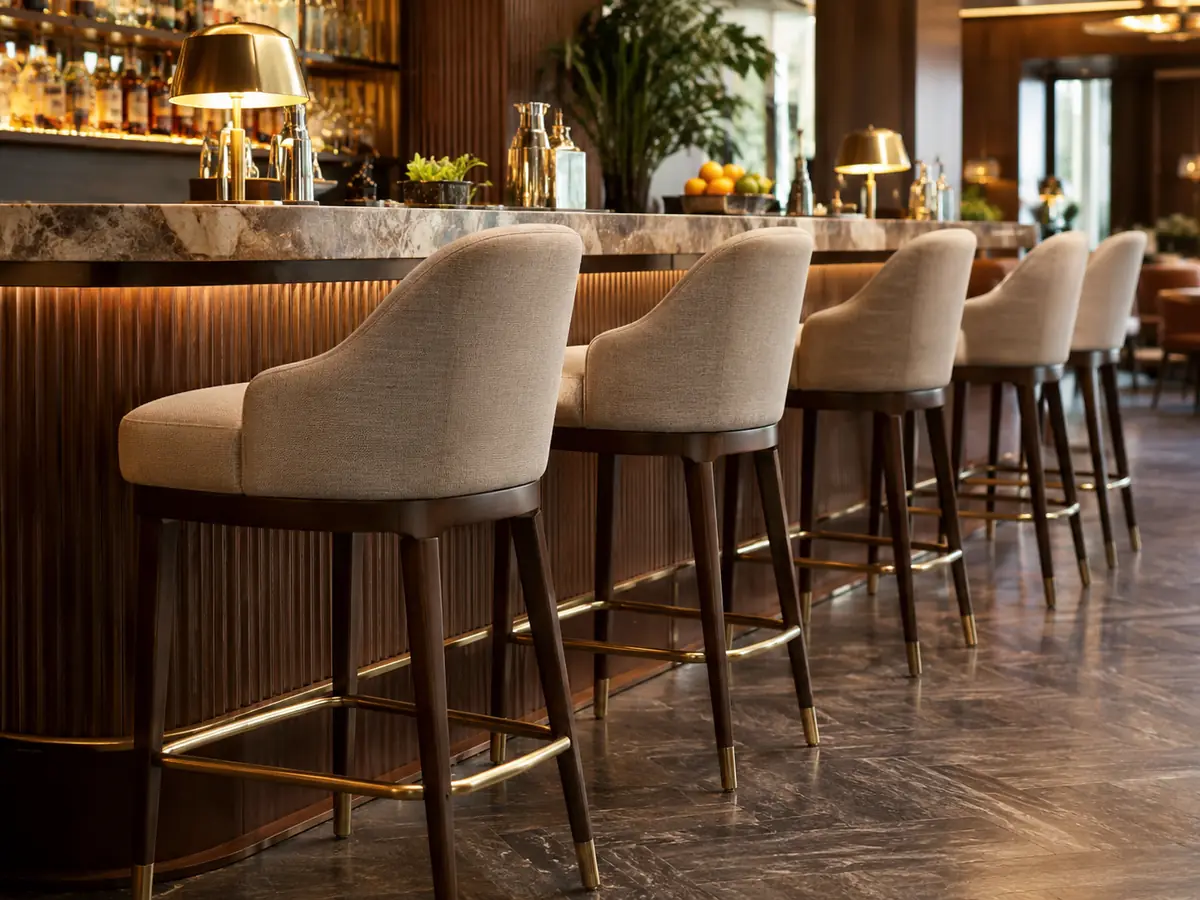
Need Bar Stools for a Commercial Project?
Send us your bar height, counter length, quantity, venue type, preferred back style, upholstery choice, and destination port. We can help check whether the stool design fits your restaurant, café, bar, hotel, or project before production.
Quick Answer: What Makes a Bar Stool Comfortable?
A comfortable bar stool has the right seat width, enough seat depth, a usable footrest, suitable back support, correct seat height, stable frame structure, and material that fits the venue’s cleaning conditions.
Do not judge comfort by cushion thickness only. A thick cushion cannot save a stool that is too narrow, too shallow, too deep, too high, unstable, or missing a proper footrest.
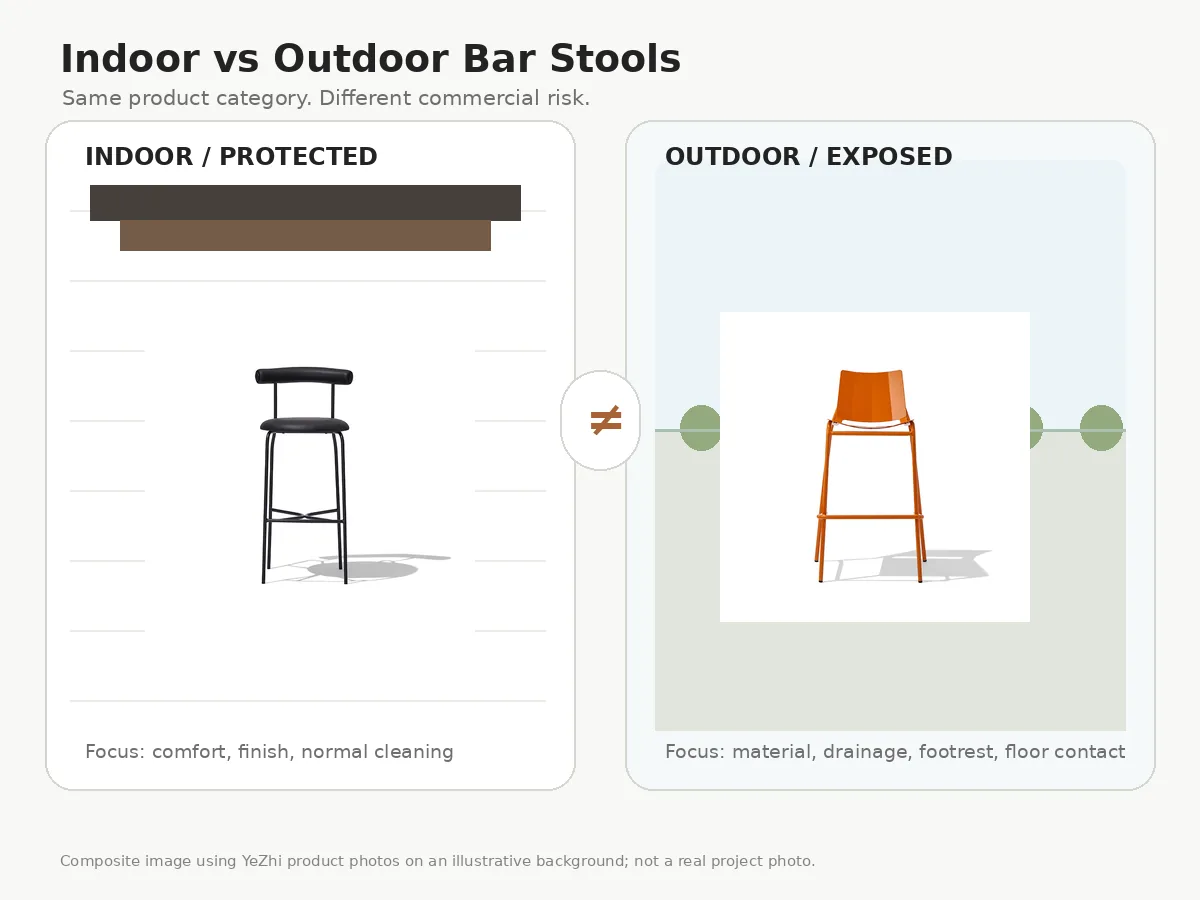
For commercial venues, comfort must also work with daily operation. When we recommend bar stools, we look at sitting time, cleaning pressure, available spacing, and how the furniture will be used every day. A hotel lounge can accept a larger upholstered stool. A fast-turnover café usually needs a compact, easy-clean stool. A high-spill bar should not choose delicate upholstery just because it feels soft on the first sit.
The real question is not “Which stool looks comfortable?” The better question is: will this stool still feel comfortable, clean easily, fit the layout, and survive daily commercial use after the first month?
To see options we can supply for restaurants, cafés, bars, and hotels, browse our kaupalliset baarijakkarat or visit our bar stool chair category.
Comfortable Bar Stool Dimensions: A Practical Starting Point
Use the following dimensions for shortlisting only. Final approval should come from the product drawing, sample, and project layout. To confirm the right height for your counter or bar top before inquiry, use our guide to bar stools and counter stools and our guide on miten mitata baarijakkaran korkeus.

| Comfort Point | Practical Starting Range | Liiketoiminnallinen harkinta |
|---|---|---|
| Compact seat width | 15–16 in / 38–41 cm | Works for short-stay cafés or tight counters, but not ideal for long sitting. |
| General commercial seat width | 17–18 in / 43–46 cm | Safer starting point for most adult commercial guests. |
| Lounge / long-stay seat width | 19–21 in / 48–53 cm | More comfortable, but reduces seating density. |
| Compact seat depth | 15–16 in / 38–41 cm | Better for short sitting and compact counters. |
| General commercial seat depth | 16–18 in / 41–46 cm | Good middle range for restaurant, café, and bar use. |
| Long-sitting seat depth | 18–19 in / 46–48 cm | Better thigh support, but check that shorter guests are not pushed too far from the counter. |
| Seat-to-counter clearance | 9–12 in / 23–30 cm | Main comfort check for legroom. |
| Counter stool seat height | Around 24–27 in / 61–69 cm | Usually works with 34–36 in / 86–91 cm counters. |
| Bar stool seat height | Around 28–32 in / 71–81 cm | Usually works with 40–42 in / 102–107 cm bar tops. |
| Stool spacing | 26–30 in / 66–76 cm center-to-center | Increase spacing for wide seats, arms, swivel bases, or bulky backs. |
Buyer note: These ranges help early selection. For your order, we confirm the final seat width, seat depth, height, footrest position, finish, and packing with the selected drawing and sample before production.
Do not approve a bulk order from a dimension table alone. Use the table to remove the wrong direction early, then confirm the selected stool by drawing and sample before production.
Bar Stool Seat Width: How Wide Should the Seat Be?
For most adult commercial seating, 17–18 in / 43–46 cm is a safer starting point than very narrow 15–16 in / 38–41 cm seats.
Seat width controls more than comfort. It controls guest movement, elbow space, stool count, aisle clearance, and the whole feel of the bar counter.

A narrow seat saves space. That can work in a coffee bar where guests sit for 10–20 minutes. But if adults are expected to sit through drinks, dinner, or a hotel breakfast, a narrow seat can create pressure at the hips and make guests shift constantly.
A wider seat usually feels more relaxed for longer sitting, but it must be checked against stool count and aisle clearance. A 19–21 in / 48–53 cm seat can be excellent for a lounge or premium cocktail bar, but it may reduce the number of stools that fit along the counter. For a small venue, that can hurt revenue.
| Seat Width Type | Paras käyttö | Avoid When |
|---|---|---|
| 15–16 in / 38–41 cm | Compact cafés, short visits, tight layouts | Guests sit longer than 20–30 minutes. |
| 17–18 in / 43–46 cm | General restaurants, bars, cafés, hotel breakfast areas | The layout is extremely tight. |
| 19–21 in / 48–53 cm | Hotel lounges, cocktail bars, long-stay venues | Seat count and aisle space are already limited. |
Do not chase maximum seat count if guests are expected to stay for dinner, cocktails, or long conversations. Cheap density can become expensive discomfort. To calculate seating quantity before ordering, use our guide on kuinka monta baarituolia tarvitset.
Bar Stool Seat Depth: Why Depth Changes Sitting Comfort
A comfortable bar stool seat depth is usually around 16–18 in / 41–46 cm for general adult commercial use.
Seat depth decides how much thigh support the guest gets. Too shallow, and guests feel like they are perching on the front edge. Too deep, and shorter guests may slide forward or sit too far from the counter.

A deep stool can feel good in a showroom because it gives more support. But in a real restaurant or bar, it can push guests away from the counter. Then they lean forward to eat, drink, or talk. That is not comfort. That is a bad commercial fit.
| Istuimen syvyys | Paras käyttö | Commercial Warning |
|---|---|---|
| 15–16 in / 38–41 cm | Short sitting, compact counters, quick-service cafés | May feel too shallow for adult guests during longer sitting. |
| 16–18 in / 41–46 cm | General restaurants, bars, cafés, and hospitality counters | Safest starting range for mixed guests. |
| 18–19 in / 46–48 cm | Lounges, pubs, cocktail bars, longer stays | Pause the order if shorter guests are pushed too far from the counter. |
The pass/fail test is simple: when sitting naturally, the guest should feel supported under the thighs without being forced away from the counter.
Bar Stool Footrest Height: The Comfort Feature Buyers Should Not Ignore
For bar-height seating, a usable footrest is not optional. If guests’ feet hang without support, the stool will feel tiring even when the cushion is soft.

A bar stool is higher than a dining chair. Most guests cannot rest their feet on the floor. Without foot support, the legs hang, the hips take more pressure, and the lower back gets tired faster.
Because floor-to-footrest height changes by stool design, the safer check is seated comfort: the footrest should be naturally reachable, with a practical reference of roughly 16–18 in / 41–46 cm below the seat surface.
| Footrest Check | Pass | Fail |
|---|---|---|
| Reach | Feet rest naturally without stretching. | Guest must hunt for the bar or cannot reach it. |
| Position | Knees feel relaxed. | Knees are pushed too high or legs still dangle. |
| Rakenne | Footrest feels stable in normal seated use. | Footrest feels thin, awkward, or poorly placed. |
| Wear risk | Finish and contact points match the venue use. | Footrest finish will quickly show shoe marks or wear. |
Do not treat the footrest as decoration. On a bar stool, it is part of the comfort system.
Back Support: Backless, Low-Back, Mid-Back, or Full-Back?
Bar stools with backs are usually more comfortable for longer sitting, but backless stools can still work for short-stay, high-turnover spaces.
Back support should follow sitting time, not only style. To compare backless, low-back, swivel, and other styles before sending an inquiry, read our guide to baarijakkaratyypit.

A backless stool is compact and easy to tuck under the bar. It can work well for a coffee counter, quick drink area, or narrow aisle. But it asks the guest to support their own posture.
A low-back stool gives some lower-back contact without making the stool too bulky. A mid-back stool is often the best balance for restaurant bar counters and pubs. A full-back stool is the most supportive for long stays, but it takes more visual and physical space.
| Back Type | Paras käyttö | Not Suitable For |
|---|---|---|
| Selkätön | Fast turnover, compact bars, stools that tuck under counters | Long sitting or guests expecting dining-chair comfort. |
| Low-back | Short to medium sitting, cleaner visual style | Long-stay lounges. |
| Mid-back | Restaurants, pubs, cocktail counters, hotel breakfast bars | Very tight aisles. |
| Full-back | Hotel lounges, premium bars, long sitting | High-density layouts where seat count matters most. |
| Aseet | Lounges, hotel bars, premium long sitting | Tight spacing, fast turnover, narrow counters. |
Do not automatically buy the highest back. More back support can improve comfort, but it can also increase the footprint, reduce aisle clearance, and make the counter feel crowded.
For 45+ minute sitting, back support becomes a real comfort feature, not decoration. For 10-minute coffee seating, it may be unnecessary bulk.
Cushion and Upholstery: Comfortable, But Not Always Practical
Upholstery can improve comfort for longer sitting, but it is not always the best choice for high-spill commercial venues.
A padded seat can reduce pressure and make the first sit feel better. Upholstery can also raise the perceived value of a bar, hotel lounge, or restaurant counter.
But commercial furniture is not judged on the first sit only. It is judged after spills, cleaning, dragging, shoe contact, edge wear, and repeated daily use.
| Seat Type | Comfort Value | Commercial Risk |
|---|---|---|
| Wood or metal seat | Often easier to wipe, strong visual style, lower daily maintenance | Can feel hard during longer sitting. |
| PU / vinyl-style upholstery | Softer feel and often easier to wipe than absorbent fabric | Final cleaning method must match the confirmed material, finish, seams, and care guidance. |
| Kangasverhoilu | Warmer, softer, premium feel | Higher stain, odor, and cleaning risk in bars and cafés. |
| Thick cushion | Better pressure relief | Cannot fix bad seat width, depth, height, or footrest position. |
Do not buy upholstered bar stools for a dirty, high-spill bar unless the cleaning plan is clear. Soft fabric in a high-spill bar is not a comfort upgrade if staff cannot keep it clean.
For YeZhi project orders, upholstery color, material direction, finish, and cleaning expectations should be confirmed before sample approval, not after bulk production starts. To understand how upholstery choices affect comfort, finish, and production, read our guide on how to upholster a bar stool.
Frame Stability and Base Design: The Hidden Part of Comfort
A stool that wobbles is not comfortable, even if the seat is well padded.

Frame stability affects how safe and relaxed the guest feels. In a busy restaurant or bar, stools are dragged, turned, kicked, leaned on, and moved during cleaning. Weak frame geometry or poor floor contact quickly becomes a daily complaint.
- Check whether the stool rocks on a flat floor.
- Check whether the footrest feels natural in normal seated use.
- Check whether the glides suit tile, concrete, wood, stone, or vinyl flooring.
- Check whether staff can move the stool for cleaning without damaging the finish.
- Check whether the frame finish suits the cleaning routine and humidity level.
A rocking stool becomes a complaint, not a design detail. Photos sell shape. Samples reveal comfort.
To see how we support bar stool production and project supply, visit our baarijakkara tehdas sivu.
Swivel, Fixed Base, and Arms: Comfort Features That Change the Layout
Swivel seats and armrests can improve comfort, but they need more clearance than simple armless fixed stools.

A swivel stool can make entry and exit easier, especially where guests turn toward a counter, bartender, or companion. But swivel stools need movement space. If the spacing is too tight, the swivel becomes a collision point.
A fixed stool usually feels visually cleaner and can be better for controlled layouts. Armrests add support and help some guests stand up, but they also make the stool wider. For commercial buyers, arms are not only a comfort feature. They are a seat-count decision.
| Ominaisuus | Comfort Benefit | Commercial Warning |
|---|---|---|
| Swivel seat | Easier entry, exit, and turning | Needs more spacing and stronger movement planning. |
| Fixed base | Cleaner layout, predictable footprint | Less movement flexibility. |
| Käsinojat | Better support for longer sitting | Reduces stool count and may hit the counter or neighboring stools. |
| Armless stool | Better for compact layouts and turnover | Less support for long sitting. |
If the buyer wants swivel seats or arms, check counter length, stool spacing, aisle clearance, and the distance behind seated guests before confirming the order.
Best Bar Stool Comfort Features by Venue Type
The most comfortable bar stool is the one that matches the venue’s sitting time, cleaning pressure, and layout.

| Tapahtumapaikan tyyppi | Istumisaika | Best Comfort Priority | Strong Buying Judgment |
|---|---|---|---|
| Coffee bar | 10–20 minutes | Compact width, correct height, usable footrest, easy cleaning | Do not overpay for full-back lounge stools if guests leave quickly. |
| Casual restaurant bar counter | 20–45 minutes | 17–18 in / 43–46 cm seat width, 16–18 in / 41–46 cm depth, low or mid back | Cushion alone is not enough. Get the proportions right first. |
| Pub / cocktail bar | 45+ minutes | Wider seat, strong footrest, mid-back or full-back support | Backless stools may look clean but can feel tiring for long stays. |
| Hotellin oleskelutila | Long sitting | Larger seat, deeper support, upholstery, full or mid back | Comfort can justify lower seating density. |
| High-spill bar | Muuttuja | Wipe-clean seat, stable frame, strong footrest | Avoid delicate upholstery unless cleaning and replacement planning are confirmed. |
| Small venue / narrow aisle | Short to medium | Compact footprint, low-back or backless, careful spacing | A very comfortable stool can still be wrong if it blocks movement. |
This is where many buyers make mistakes. They copy a stool from a hotel lounge and put it into a small café. Or they buy compact stools for a cocktail bar where guests sit for two hours. Both choices can fail.
For restaurant or pub sourcing, browse our tukku ravintola baarijakkarat ja pubin baarituolit sivua.
Comfort vs Seating Capacity: The Trade-Off Most Buyers Miss
A wider stool may feel better, but it can reduce the number of seats you can sell at the counter.
For commercial buyers, this is a business decision, not only a design decision.
If you choose 19–21 in / 48–53 cm wide lounge stools, guests may sit more comfortably. But you may fit fewer stools along the bar. If the venue depends on quick turnover and seat count, that can be a poor trade.
If you choose 15–16 in / 38–41 cm compact stools, you may fit more seats. But guests may not stay comfortably for long meals or cocktails.
Do not approve bulk production until the layout is checked. A stool can be comfortable by itself and still be wrong for the room.
Do Not Approve the Stool If These Checks Fail
A good commercial order is not only about choosing a good-looking stool. It is also about knowing when to pause before production.
- Pause the order if the seat is too narrow for adult guests.
- Pause the order if the seat depth pushes guests too far from the counter.
- Do not approve it if the footrest is awkward, weakly placed, or hard to reach.
- Do not approve it if the stool rocks on a flat floor.
- Pause the order if the backrest blocks aisle clearance.
- Pause the order if the arms reduce seat count too much.
- Pause the order if the swivel movement collides with nearby stools.
- Do not approve it if the upholstery cannot match the cleaning plan.
- Pause the order if the frame finish does not match the floor, humidity, or cleaning routine.
- Do not approve it if the supplier cannot confirm drawings, sample details, finish references, and packing before production.
This is not being difficult. This is how you prevent a beautiful stool from becoming a bad commercial purchase.
Common Mistakes When Buying Comfortable Bar Stools in Bulk
Mistake 1: Buying by photo only
A stool can look soft and still feel wrong. Photos do not show seat depth, footrest reach, wobble, back angle, floor contact, or real footprint.
For custom, new-model, or high-risk projects, checking 1–2 samples before bulk approval is the safer buying process. This is where comfort, finish, footrest position, and packing details become clear.
Mistake 2: Choosing cushion before dimensions
A thick cushion may feel good for five minutes. But if the seat is too narrow or the footrest is wrong, the stool will still feel tiring. Do not approve the stool if the width, depth, height, and footrest do not work.
Mistake 3: Ignoring footrest position
A footrest that is too low, too high, or hard to reach creates leg fatigue. It should feel natural when seated.
Mistake 4: Overbuying high backs
High backs support longer sitting, but they also add bulk. Do not use full-back stools in a narrow, fast-turnover bar unless the layout can afford the space.
Mistake 5: Choosing upholstery without a cleaning plan
Fabric or delicate upholstery can become a problem in high-spill venues. Confirm cleaning method, replacement risk, and staff routine before approving the material.
Mistake 6: Forgetting floor protection
A stool that works on one floor may be noisy or damaging on another. Confirm glides or foot caps for tile, wood, concrete, stone, or vinyl flooring.
Mistake 7: Forgetting the reorder
For distributors, importers, and multi-location projects, comfort must be repeatable. Confirm drawings, finish codes, upholstery references, carton labels, and sample approval records before mass production.
Sample Check Before Bulk Order
A sample should be checked like a commercial tool, not like a showroom decoration.

Use this checklist before approving mass production:
| Sample Check Item | What To Confirm |
|---|---|
| Istuimen leveys | Measure the usable sitting width, not only the outer frame. |
| Istuimen syvyys | Sit naturally and check thigh support and counter reach. |
| Istuimen korkeus | Match the actual bar or counter height. |
| Seat-to-counter clearance | Target 9–12 in / 23–30 cm where suitable. |
| Jalkatuki | Feet should rest naturally without stretching or hanging. |
| Back support | Check the back height, angle, and support duration. |
| Swivel or fixed base | Confirm movement space, stability, and guest entry/exit. |
| Arms or armless design | Check comfort gain against width and stool count loss. |
| Frame stability | Stool should not rock on a flat floor. |
| Yhteys lattiaan | Glides or feet should suit the flooring. |
| Upholstery / finish | Confirm color, texture, cleaning expectation, and finish consistency. |
| Pakkaus | Confirm carton protection, labels, and whether pallet or crate support is needed. |
For YeZhi wholesale and project orders, the safer process is: requirement → drawing → sample → approval → mass production. That keeps comfort, finish, and packing decisions clear before production starts.
Most wholesale orders are made to order, especially custom upholstery or finishes, so change-of-mind returns are not available for most made-to-order wholesale furniture. Confirm dimensions, materials, finish, and packing before production.
What To Send When Requesting a Quote for Comfortable Bar Stools
To quote the right stool, a product photo is not enough. Send the information that affects comfort, layout, material choice, packing, and shipping.
Send us your venue type, quantity, bar/counter height, preferred back style, material direction, finish requirement, and destination port.
We can help check seat width, seat depth, footrest position, back support, cleaning risk, packing, and shipping plan before production. Regular MOQ starts from about 15 pcs per SKU. Full OEM/custom production usually starts from about 100 pcs per design. Production lead time is about 30 days after order confirmation, and ocean freight planning normally needs about 30 days as a baseline.
Final warranty scope should be confirmed on the PI before production, especially for frames, joints, upholstery, and finish terms.
FAQ
Need a quick recommendation? Send us your bar height, layout, quantity, and preferred style. We can help narrow the stool direction before quotation.
Mikä tekee baarituolista mukavan?
Seat width, seat depth, footrest support, back support, correct height, stable frame structure, and suitable material make a bar stool comfortable. Cushion helps, but it cannot fix bad proportions.
Mikä on mukava baarituolin istuinleveys?
For general adult commercial use, 17–18 in / 43–46 cm is a safer starting point. Compact 15–16 in / 38–41 cm seats save space but are better for short sitting. Wider 19–21 in / 48–53 cm seats suit lounges and longer stays. For project orders, we confirm final size by drawing and sample.
Mikä on mukava baarituolin istuinsyvyys?
For most commercial venues, 16–18 in / 41–46 cm is a good middle range. Shallow 15–16 in / 38–41 cm seats suit compact spaces, while 18–19 in / 46–48 cm seats can support longer sitting. For project orders, we confirm final size by drawing and sample.
Minkä korkeudella baarituolin jalkatuen tulisi olla?
The footrest should be naturally reachable when seated and should stop the feet from dangling. Because frame styles vary, check seated comfort first. A practical reference is roughly 16–18 in / 41–46 cm below the seat surface. For project orders, we confirm final size by drawing and sample.
Ovatko selkänojalliset baarituolit mukavampia?
Yes, bar stools with backs are usually more comfortable for longer sitting. Backless stools can work for fast-turnover cafés and compact bars, but mid-back or full-back stools are safer for pubs, cocktail bars, restaurants, and hotel lounges.
Ovatko käsinojat hyödyllisiä baarituoleissa?
Armrests can improve comfort for longer sitting, but they also increase the stool footprint. Use arms for lounges, hotel bars, and premium long-stay counters. Avoid them when stool count, aisle clearance, and fast turnover matter more.
Ovatko kääntyvät baarituolit mukavampia?
Swivel bar stools can make entry, exit, and turning easier, but they need more clearance. For tight commercial counters, check the swivel footprint before approving bulk production.
Ovatko verhoillut baarituolit käytännöllisiä ravintoloissa ja baareissa?
Upholstered bar stools are practical when the venue wants longer sitting comfort and has a clear cleaning plan. For high-spill bars, wipe-clean surfaces may be smarter than delicate fabric. Final cleaning advice must match the confirmed upholstery material and finish.
What bar stool is best for long sitting?
For long sitting, choose a wider seat, enough seat depth, a usable footrest, and mid-back or full-back support. Upholstery can help, but only if cleaning and maintenance are realistic for the venue.
What should I check before ordering commercial bar stools in bulk?
Check seat width, seat depth, seat height, footrest position, back support, swivel or fixed base, arms, frame stability, finish, upholstery, packing, and sample approval records. Do not approve a large custom order from photos only.