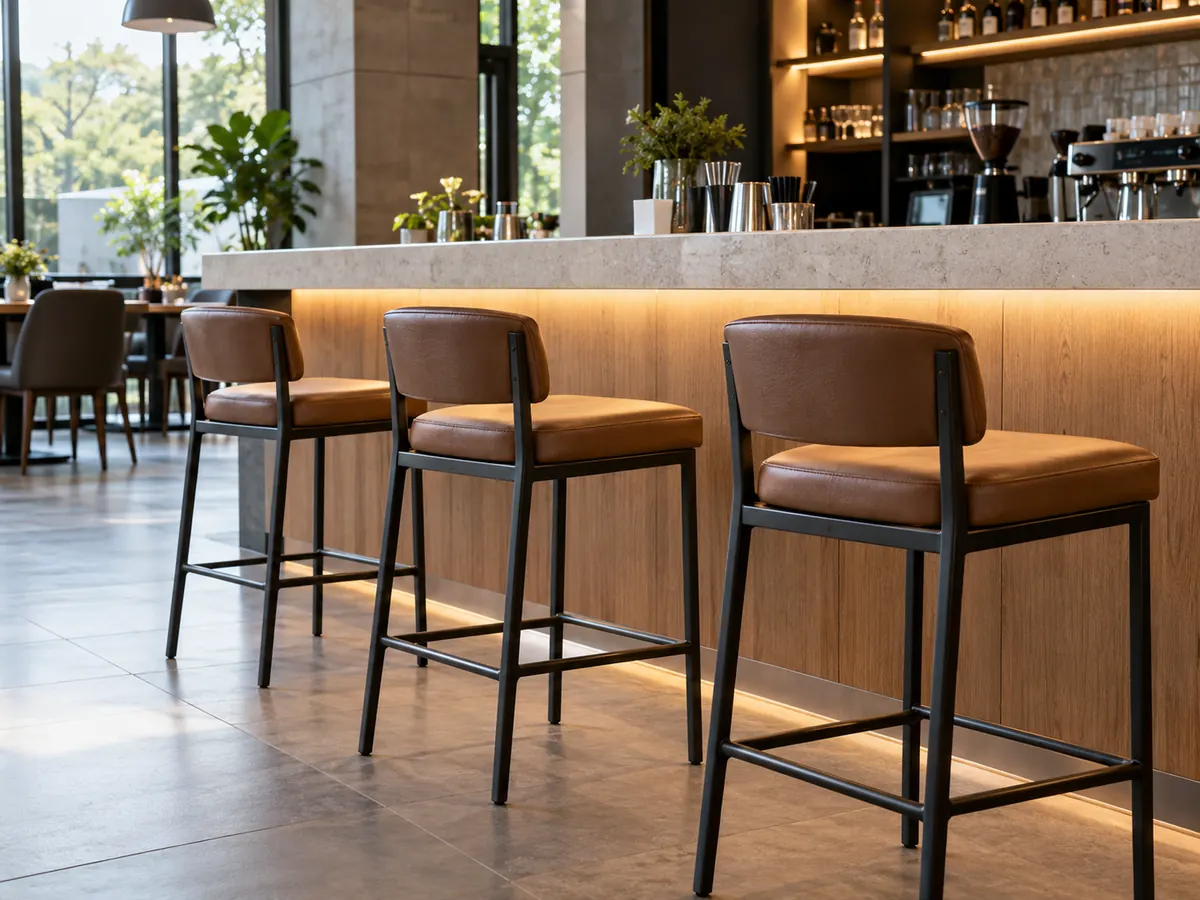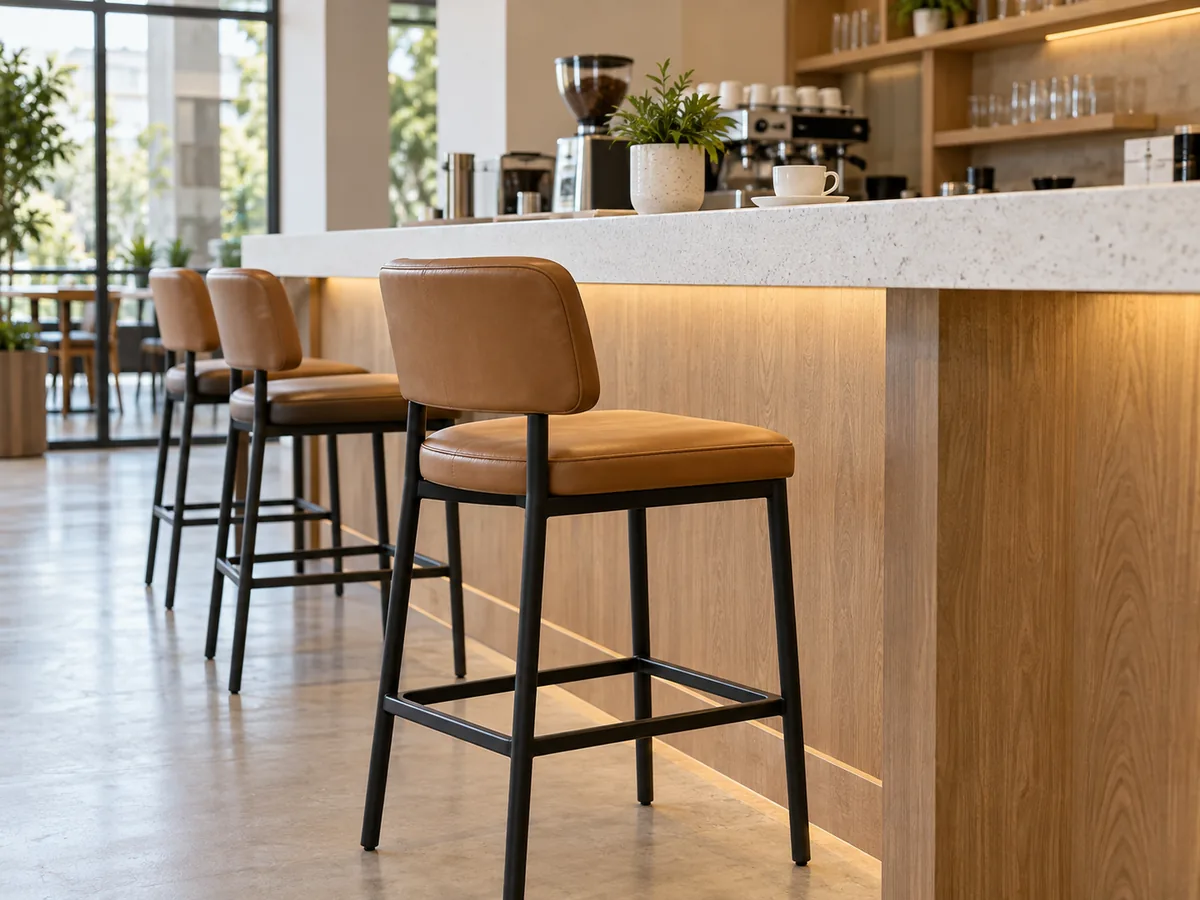
Le choix entre un tabouret de 45 cm, 65 cm ou 75 cm n'est pas avant tout une question de style. C'est avant tout une question d'ergonomie.
Les tabourets de 45 cm / environ 18 pouces conviennent aux tables à hauteur de salle à manger. Les tabourets de 65 cm / environ 26 pouces conviennent aux surfaces à hauteur de comptoir. Les tabourets de 75 cm / environ 30 pouces conviennent aux surfaces à hauteur de bar.
Pour un restaurant, un café, un bar, un hôtel ou une commande destinée à un projet, c’est l’une des premières mesures à confirmer. La couleur peut être modifiée. Le revêtement peut être modifié. Mais si la hauteur du tabouret est incorrecte, l’ensemble du lot devient difficile à utiliser.
Un tabouret peut être très esthétique sur une photo et ne pas convenir sur site. Avant de valider un échantillon ou de passer une commande en gros, mesurez d’abord la table, le comptoir ou le bar. Choisissez ensuite la hauteur d’assise.
Réponse rapide : tableau des hauteurs de tabouret de 45 cm, 65 cm et 75 cm
Utilisez ce tableau des hauteurs de tabourets en cm et en pouces comme point de départ.
| Hauteur d’assise du tabouret | Hauteur approximative en pouces | Meilleure utilisation | Hauteur de plateau correspondante | Avertissement à l’acheteur |
|---|---|---|---|---|
| 45 cm | environ 18 po | Table à manger / table de café | 74–76 cm / 29–30 po | Ne convient pas aux comptoirs ou aux bars de hauteur standard |
| 65 cm | environ 26 po | Sièges au comptoir | 90–95 cm / 35–37 po | Généralement trop bas pour les comptoirs de hauteur bar |
| 75 cm | environ 30 po | Assise de bar | 105–115 cm / 41–45 po | Généralement trop haut pour les comptoirs standard |
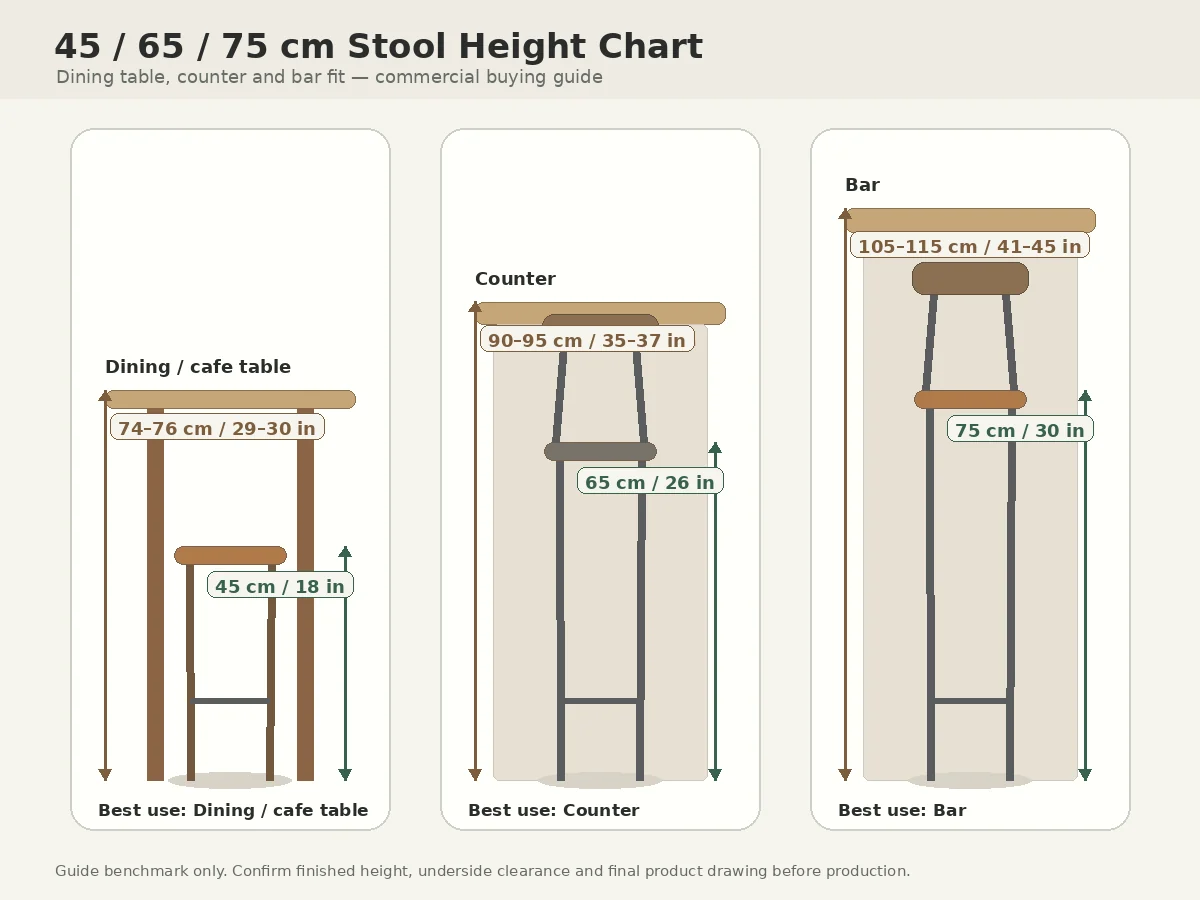
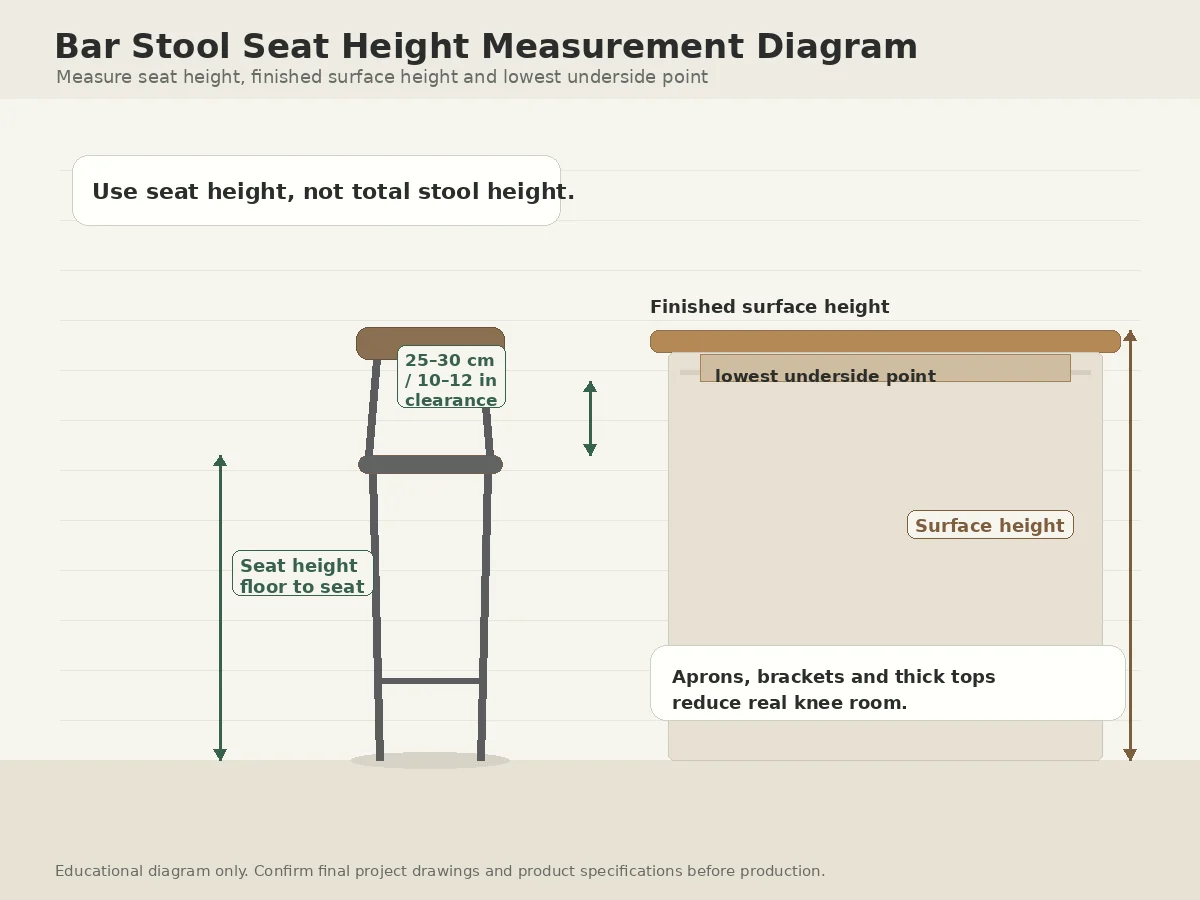
Laissez environ 25–30 cm / 10–12 po entre l’assise du tabouret et le dessous du plateau ou du plan de travail.
Pour une commande de projet YeZhi, une photo de catalogue n’est qu’un point de départ. Confirmez la hauteur d’assise sur le plan du tabouret sélectionné avant la production en série.
Quelle est la véritable différence entre les tabourets de 45 cm, 65 cm et 75 cm ?
La différence ne se limite pas à 10 cm ou 20 cm. Elle tient au type de surface auquel le tabouret est destiné.
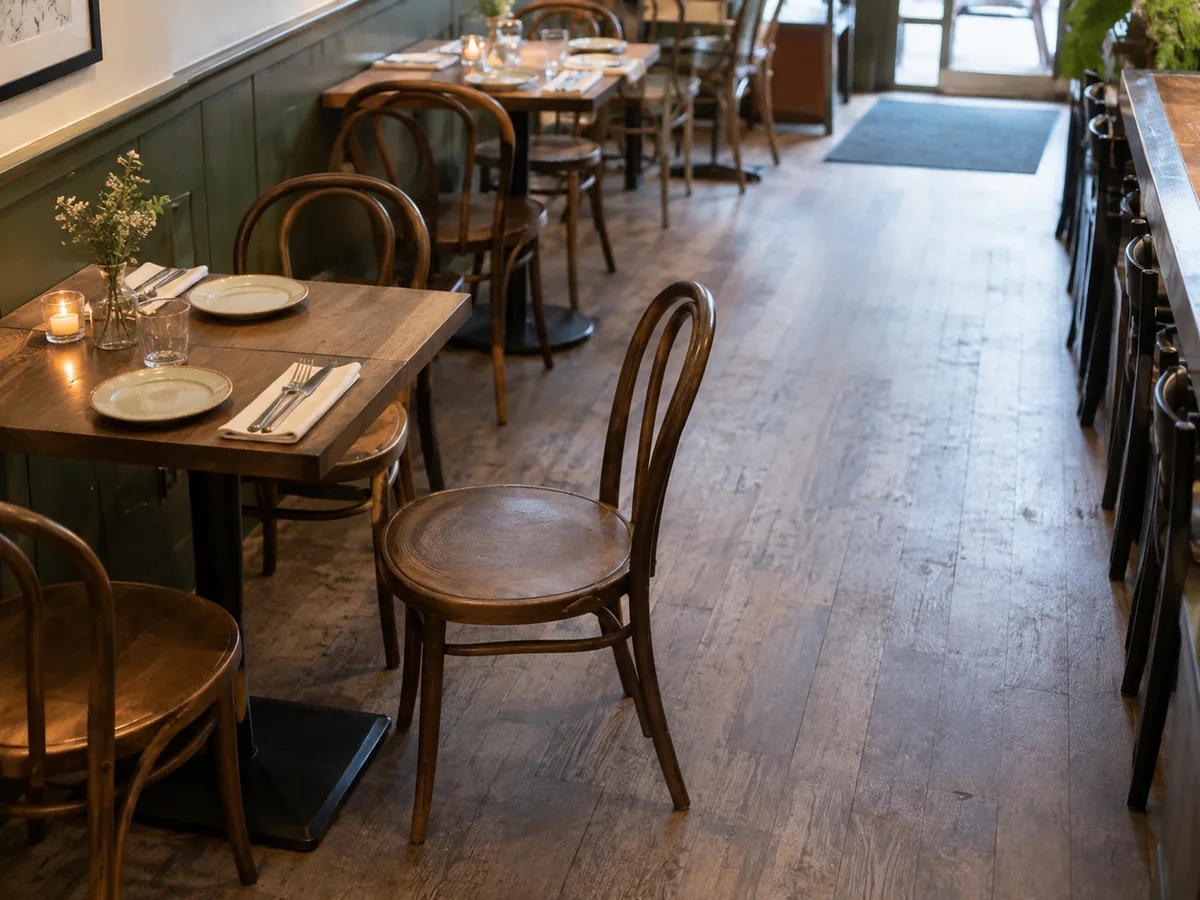
45 cm / 18 po correspond à une hauteur d’assise pour table à manger. Cette hauteur est proche de celle de l’assise d’une chaise de salle à manger standard et convient aux tables de café, aux tables de restaurant, aux espaces assis des boutiques de desserts, aux zones d’attente et aux espaces commerciaux dotés d’assises basses.
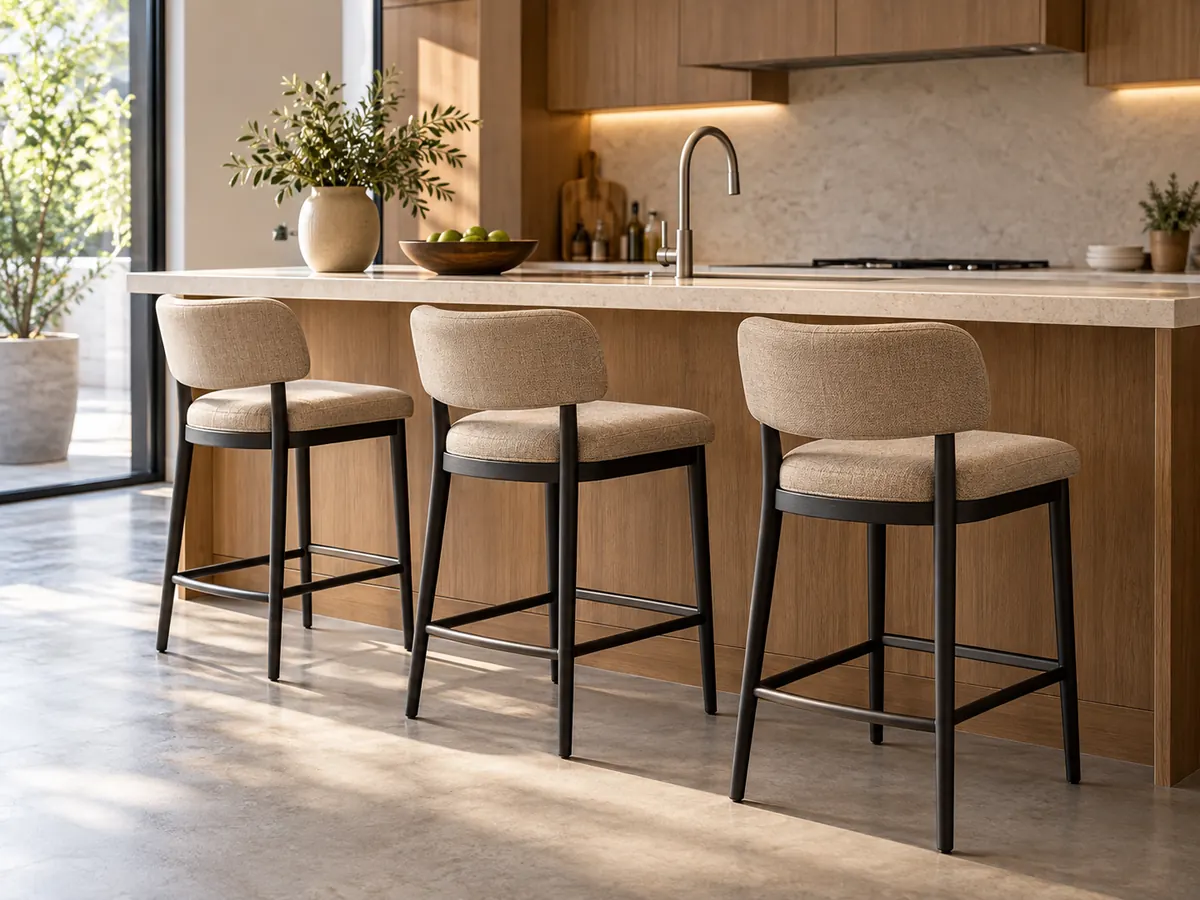
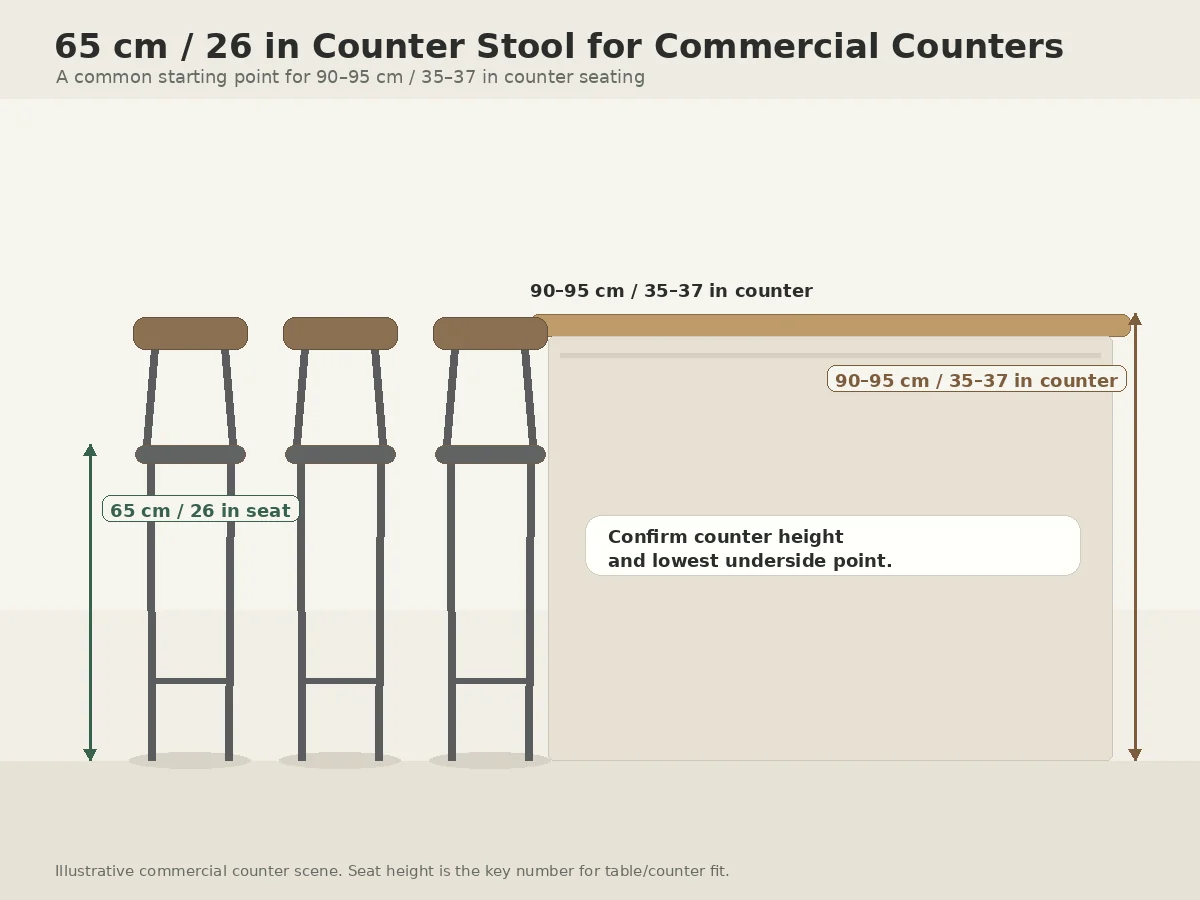
65 cm / 26 po correspond à une hauteur d’assise pour comptoir. C’est généralement le bon point de départ pour un comptoir de 90–95 cm / 35–37 po, un îlot de service, un comptoir de café ou un comptoir professionnel de type cuisine.
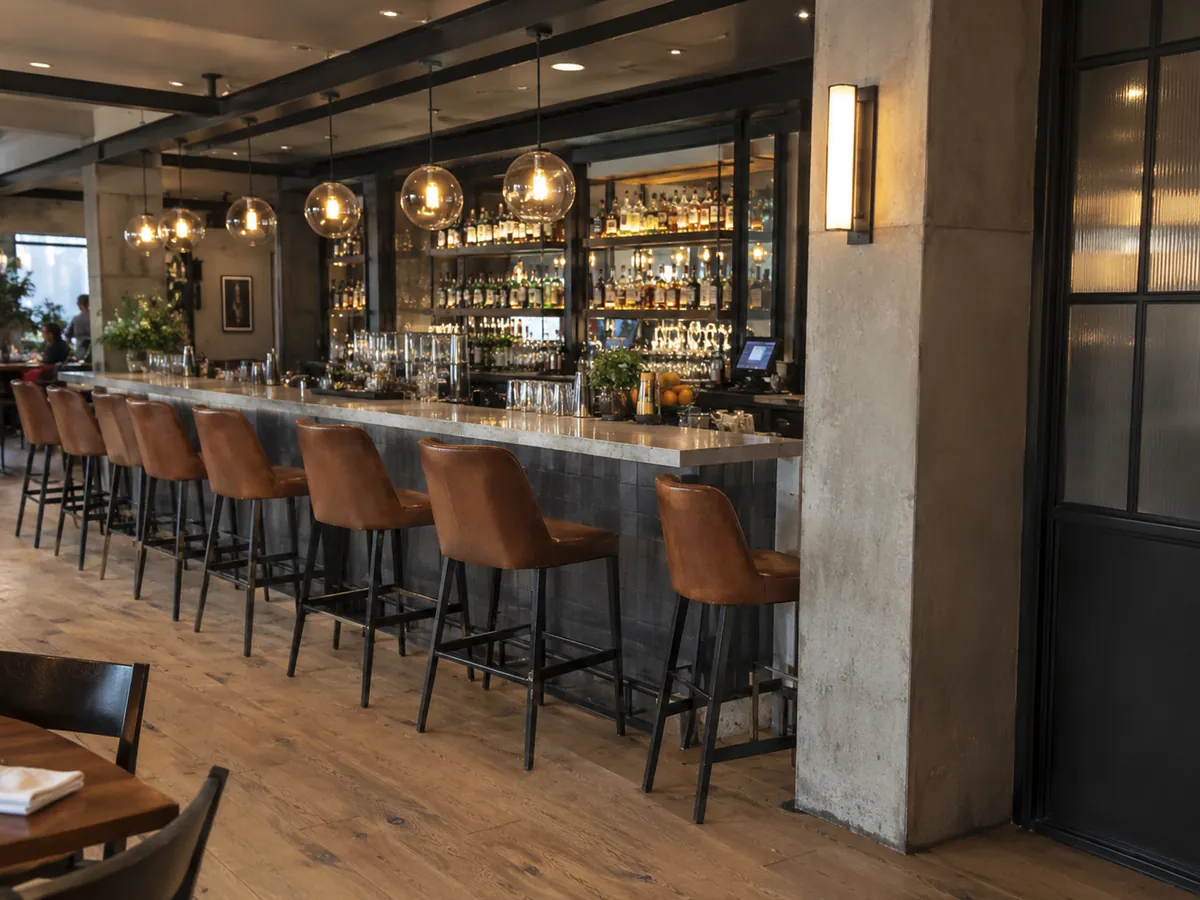
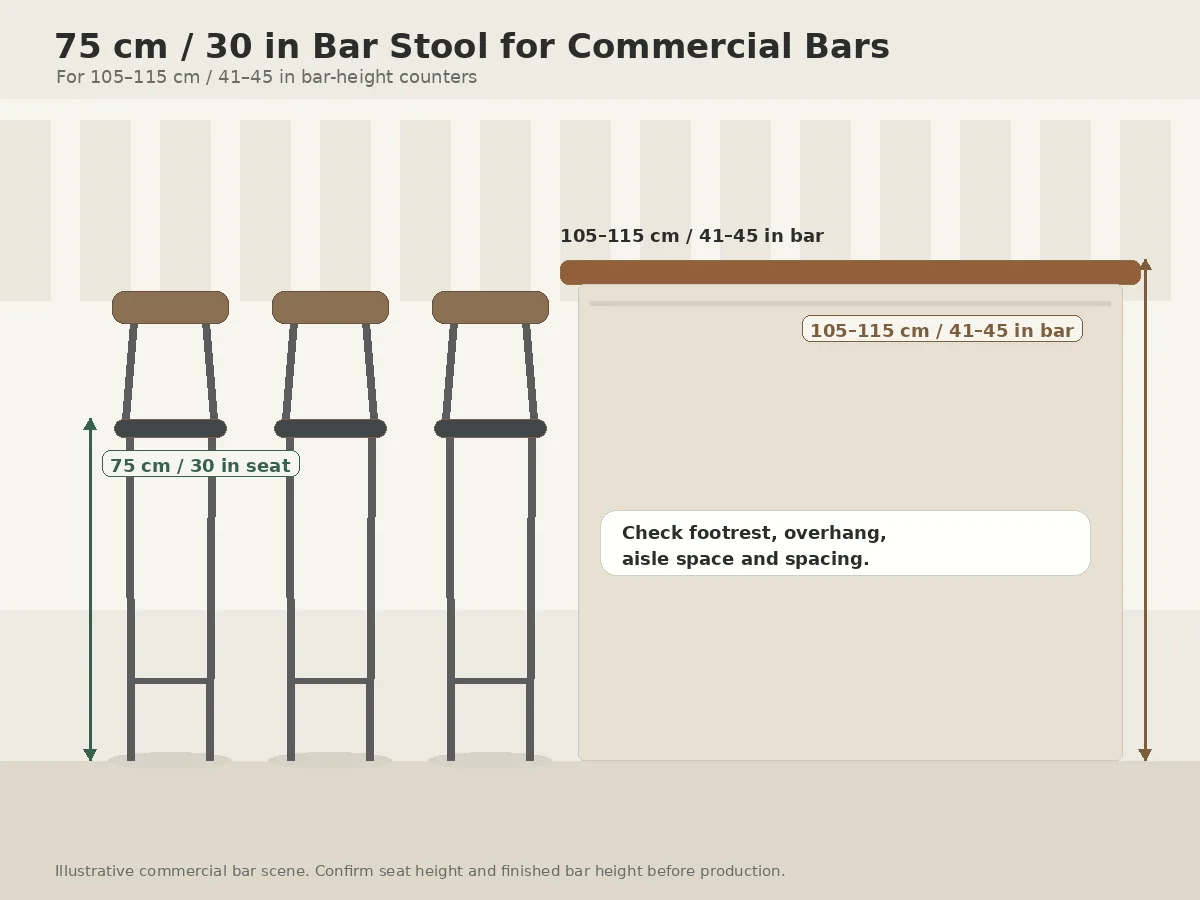
75 cm / 30 po correspond à une hauteur d’assise pour bar. C’est généralement le bon point de départ pour un comptoir de bar de 105–115 cm / 41–45 po, un comptoir de pub, un bar d’hôtel ou un comptoir haut pour boissons.
Ne considérez pas ces hauteurs comme interchangeables. Une fois le tabouret placé sous un comptoir ou un bar réel, la hauteur des coudes, l’espace pour les genoux et la position du repose-pieds changent tous.
Un tabouret de 65 cm peut sembler proche d’un modèle de 75 cm lorsqu’il est présenté seul. Mais une fois placé sous un comptoir de bar, la hauteur des coudes du client, l’espace pour les genoux et la position du repose-pieds changent tous. C’est là qu’apparaissent les problèmes de confort.
Quand choisir un tabouret de 45 cm / 18 po ?
Choisissez un tabouret de 45 cm / 18 po pour des tables à manger d’environ 74–76 cm / 29–30 po de hauteur.
Cette hauteur convient aux tables de restaurant, aux tables de café, aux assises de boulangerie ou de boutique de desserts, aux tables de petit déjeuner d’hôtel, aux petites tables professionnelles pour deux personnes, aux espaces d’attente et aux espaces de détente informels.
Pour découvrir les options disponibles à hauteur de table à manger, les acheteurs peuvent consulter la page des tabourets de 45 cm de YeZhi et vérifier le plan final indiquant la hauteur d’assise avant de commander.
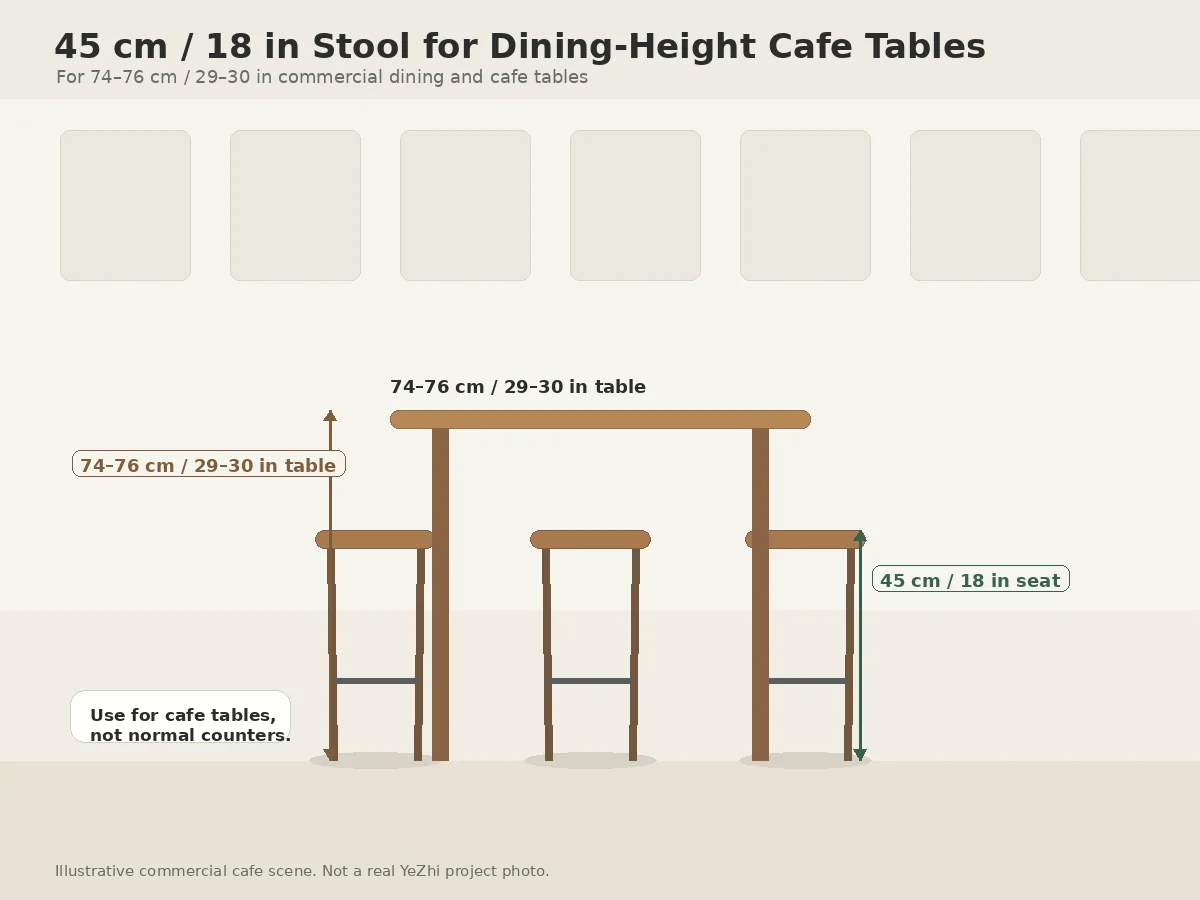
Hauteur de table idéale pour un tabouret de 45 cm
Pour la plupart des aménagements professionnels de restauration, utilisez cette plage de hauteur :
| Hauteur du siège | Hauteur de la table | Meilleure utilisation |
|---|---|---|
| 45 cm / 18 in | 74–76 cm / 29–30 po | Table à manger, table de café, petite table de restaurant |
Si la table possède une ceinture épaisse, une barre de renfort métallique ou un panneau inférieur décoratif, vérifiez le point le plus bas sous le plateau. La hauteur totale peut sembler correcte, mais les genoux des clients se trouvent sous la table, et non au-dessus.
Utilisations professionnelles des tabourets de 45 cm
Un tabouret de 45 cm / 18 in convient lorsque l’acheteur recherche une solution plus légère et plus flexible qu’une chaise de salle à manger. Il peut être utile dans les cafés, les boutiques de desserts, les petits restaurants et les espaces d’accueil informels où chaque mètre carré compte.
Si votre projet nécessite cette hauteur, commencez par consulter les tabourets de YeZhi à hauteur de table à manger de 45 cm, puis vérifiez le plan final indiquant la hauteur d’assise avant de commander.
Quand une hauteur de 45 cm ne convient pas
Ne choisissez pas un tabouret de 45 cm / 18 in pour un comptoir de 90 cm / 35 in ou un bar de 105 cm / 41 in.
Le client sera assis trop bas et devra lever les bras. Le tabouret peut convenir, mais l’association des hauteurs sera inadaptée.
Cette erreur vient du fait que de nombreux acheteurs utilisent le terme “ tabouret de bar ” pour désigner n’importe quel tabouret. En production et pour les achats liés à un projet, la hauteur d’assise compte davantage que le nom.
Quand choisir un tabouret de 65 cm / 26 pouces ?
Choisissez un tabouret de 65 cm / 26 pouces pour des surfaces de type comptoir d’environ 90–95 cm / 35–37 pouces de haut.
Il s’agit de la plage de hauteur recherchée par de nombreux acheteurs pour les comptoirs de café, les comptoirs de service, les îlots professionnels de type cuisine, les comptoirs de petit-déjeuner d’hôtel, les comptoirs de commande avec places assises dans les boulangeries et les places assises au comptoir dans les restaurants décontractés.
Pour en savoir plus sur les assises de comptoir, consultez le guide YeZhi des tabourets de comptoir. Un tabouret de 65 cm / 26 pouces se situe dans la plage de hauteur courante pour de nombreux comptoirs professionnels.
Sur les pages produits de YeZhi, plusieurs tabourets de comptoir sont proposés avec une hauteur d’assise comprise dans cette plage. Par exemple, le Café MCM tabouret de bar indique une hauteur d’assise de 65 cm / 25,6 pouces, et le Chaise de comptoir Rabbit indique une hauteur d’assise de 66 cm / 26,0 pouces.
Hauteur de comptoir idéale pour un tabouret de 65 cm
| Hauteur du siège | Hauteur de la surface | Meilleure utilisation |
|---|---|---|
| 65 cm / 26 pouces | 90–95 cm / 35–37 po | Assises de comptoir |
Pour un comptoir de 90 cm / 35 pouces, un tabouret de 65 cm / 26 pouces laisse environ 25 cm / 10 pouces de dégagement vertical. La position assise est alors plus ajustée et plus droite, mais cette configuration peut très bien convenir aux comptoirs de café et aux espaces de restauration rapide si le dessous du comptoir est dégagé.
Pour un comptoir de 95 cm / 37 pouces, le même tabouret de 65 cm / 26 pouces laisse environ 30 cm / 12 pouces, pour une position assise plus détendue.
Pourquoi les tabourets de 65 cm et de 75 cm ne sont pas interchangeables
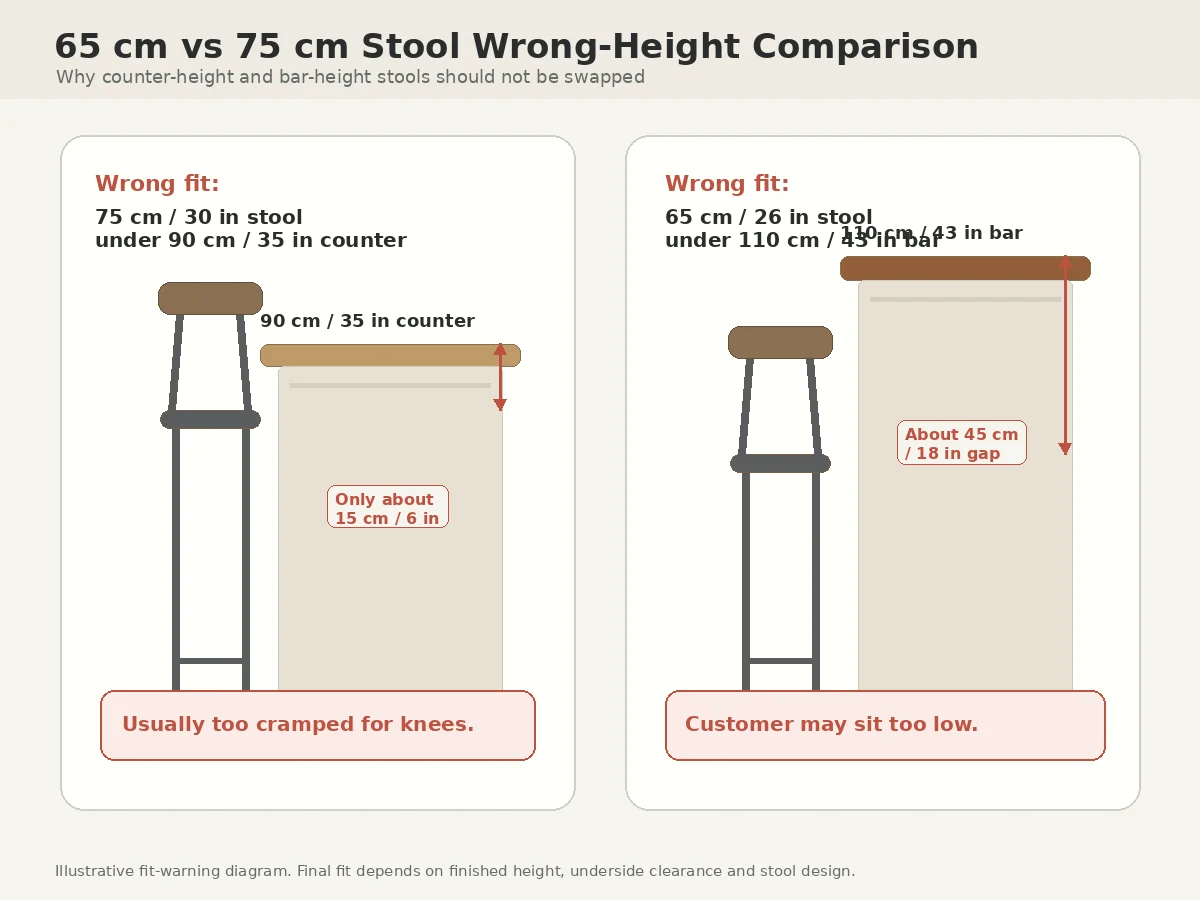
N’utilisez pas de tabourets de 75 cm / 30 pouces avec un comptoir de 90 cm / 35 pouces sans avoir soigneusement vérifié le dessous du comptoir et l’espace pour les jambes.
Un tabouret de 75 cm / 30 pouces placé sous un comptoir de 90 cm / 35 pouces ne laisse qu’environ 15 cm / 6 pouces, sans même tenir compte de l’épaisseur du comptoir. Cet espace est généralement insuffisant pour s’asseoir confortablement.
C’est l’une des erreurs les plus coûteuses lors de l’achat de tabourets. Le tabouret paraît haut et élégant, alors l’acheteur le valide. Puis l’équipe d’installation le place sous le comptoir et tout le monde découvre qu’il n’y a pas assez de place pour les genoux.
Points à vérifier avant de commander des tabourets de 65 cm
- Hauteur finale du comptoir.
- Point le plus bas sous le comptoir.
- Débord du comptoir.
- Présence éventuelle d’accoudoirs sur le tabouret.
- Épaisseur du coussin d’assise.
- Position du repose-pieds.
- Nombre de tabourets nécessaires.
- Espacement entre les tabourets.
Un tabouret de 65 cm / 26 po peut constituer un choix très pratique pour un usage professionnel. Mais il doit être adapté à la hauteur du comptoir, et non choisi d’après le seul nom du produit.
Quand choisir un tabouret de 75 cm / 30 po ?
Choisissez un tabouret de 75 cm / 30 po pour des surfaces de type bar d’environ 105 à 115 cm / 41 à 45 po de hauteur.
Il s’agit du choix habituel pour les comptoirs de bar, les comptoirs de pub, les bars d’hôtel, les mange-debout, les bars lounge professionnels et les espaces de restauration dotés d’assises plus hautes.
Pour plus de détails sur les assises de bar, consultez le guide YeZhi des tabourets hauteur bar. Un tabouret de 75 cm / 30 po convient à la hauteur de bar couramment utilisée dans de nombreux bars et pubs professionnels.
Les pages produits YeZhi présentent également plusieurs modèles hauteur bar de 75 à 76 cm / 29,5 à 29,9 po, notamment le Tabouret de bar d’intérieur en cuir véritable, Tabouret de bar Kingfish personnalisé, Tabouret de bar rétro, et Tabouret de bar Distinctly Home.
Hauteur de bar idéale pour un tabouret de 75 cm
| Hauteur du siège | Hauteur de la surface | Meilleure utilisation |
|---|---|---|
| 75 cm / 30 po | 105–115 cm / 41–45 po | Sièges de hauteur de bar |
Avec un bar de 105 cm / 41 po de hauteur, un tabouret de 75 cm / 30 po laisse un écart d’environ 30 cm / 12 po. Avec un bar de 110 cm / 43 po, cet écart est d’environ 35 cm / 14 po : l’acheteur doit donc vérifier si l’utilisateur ne sera pas assis trop bas ou si un tabouret légèrement plus haut est nécessaire.
C’est pourquoi la hauteur du plateau et l’espace libre sous celui-ci doivent être confirmés avant la production.
Pourquoi une hauteur de 75 cm peut sembler exiguë à un comptoir
Un tabouret de 75 cm / 30 po est généralement trop haut pour un comptoir de 90 cm / 35 po.
Le problème ne vient pas du tabouret, mais de l’association des deux. Un tabouret de bar haut placé sous un comptoir bas laisse trop peu d’espace pour les genoux et donne au client une sensation d’inconfort.
Si votre comptoir mesure environ 90–95 cm / 35–37 po de haut, commencez par une hauteur de 65 cm / 26 po. Si votre bar mesure environ 105–115 cm / 41–45 po de haut, commencez par 75 cm / 30 po.
Vérifications du repose-pieds, du débord du plateau et de l’espacement pour les tabourets hauts
Plus le tabouret est haut, plus le repose-pieds est important. Une personne assise sur un tabouret de 75 cm / 30 po ne peut pas poser les pieds au sol. Si le repose-pieds est trop bas, trop en retrait ou trop fragile pour un usage quotidien intensif, le confort d’assise s’en ressent.
- Hauteur et position du repose-pieds.
- Largeur du tabouret.
- Profondeur d’assise.
- Débord du comptoir.
- Espace de circulation derrière le tabouret.
- Présence éventuelle d’un dossier ou d’accoudoirs sur le tabouret.
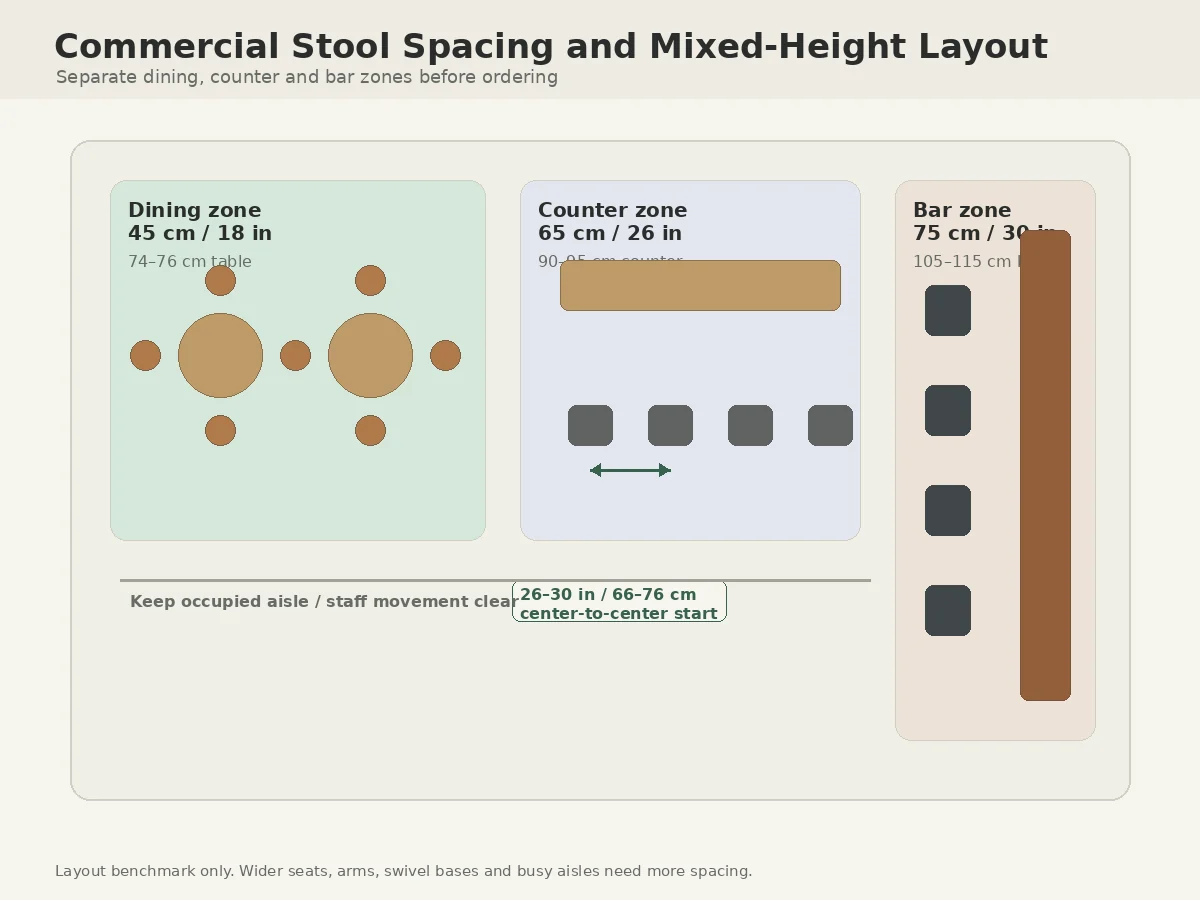
Une fois la hauteur correcte, vérifiez l’espacement. De nombreux agencements de comptoirs et de bars prévoient au départ environ 26–30 pouces / 66–76 cm d'axe à axe, mais nécessitent davantage d’espace en présence d’accoudoirs, de dossiers larges, de piètements pivotants ou d’allées très fréquentées.
Dans les bars et les pubs, ces détails comptent au quotidien.
Erreurs fréquentes dans les commandes en gros que YeZhi aide les acheteurs à éviter
Une hauteur de tabouret inadaptée n’est pas un détail dans une commande professionnelle. Se tromper sur un échantillon permet de tirer une leçon. Se tromper sur quatre-vingts tabourets compromet tout le projet.
Voici les erreurs à écarter dès le départ.
| Erreur | Problème | Choix recommandé |
|---|---|---|
| Considérer 45 cm / 18 in comme une hauteur de tabouret de comptoir | Le client est assis trop bas | Utiliser 45 cm / 18 in avec des tables à manger de hauteur standard |
| Utiliser 75 cm / 30 in avec un comptoir de 90 cm / 35 in | Le dégagement pour les genoux devient insuffisant | Utiliser 65 cm / 26 in pour la plupart des comptoirs de 90–95 cm / 35–94 cm |
| Utiliser 65 cm / 26 in avec un bar de 110 cm / 43 in | Le client est assis trop bas | Prendre 75 cm / 30 in comme point de départ |
| Mesurer uniquement la hauteur totale | La hauteur du dossier est confondue avec la hauteur d’assise | Vérifier la hauteur d’assise depuis le sol |
| Négliger le dégagement sous le plateau | La ceinture de table ou la traverse de soutien réduit l’espace pour les jambes | Mesurer au point le plus bas sous le plateau |
| Choisir uniquement à partir de photos | Le produit semble adapté, mais ne convient pas une fois installé | Utiliser un plan coté avant de lancer la production en série |
Erreur 1 : considérer un modèle de 45 cm comme un tabouret de comptoir
45 cm / 18 in ne correspond pas à la hauteur habituelle d’un tabouret de comptoir.
Cette hauteur convient aux tables à manger et aux tables de café. Ne l’utilisez pas avec des comptoirs de 90 cm / 35 in, sauf si le plateau est inhabituellement bas et que le dégagement a été vérifié.
Erreur 2 : associer des tabourets de 75 cm à un comptoir de 90 cm
Les tabourets de 75 cm / 30 in ne conviennent généralement pas aux comptoirs de 90 cm / 35 in.
Cette erreur est fréquente : les acheteurs voient la mention “ tabouret de bar ” et supposent qu’un modèle plus haut sera plus adapté. En pratique, le client doit disposer de suffisamment d’espace pour les jambes. C’est la hauteur du comptoir qui détermine la hauteur d’assise.
Erreur 3 : mesurer la hauteur totale au lieu de la hauteur d’assise
La hauteur totale d’un tabouret inclut le dossier. Elle n’indique pas à quelle hauteur le client est assis.
Vérifiez toujours la hauteur d’assise, mesurée du sol jusqu’au-dessus de l’assise.
Si le tabouret est rembourré, vérifiez que la mesure est prise jusqu’au sommet du coussin sans charge. Un coussin souple peut se comprimer à l’usage : la hauteur d’assise ressentie peut donc être légèrement inférieure.
Erreur 4 : négliger la ceinture de table et le dégagement sous le plateau
Un comptoir peut mesurer 90 cm / 35 in de haut au niveau du plateau, mais le dégagement en dessous peut être nettement plus faible en raison d’un épais plan en pierre, d’une ceinture de table mesurant bois, d’une traverse de renfort mesurant métal, d’un panneau décoratif, d’une tablette de rangement ou d’un support dissimulé.
Pour les commandes sur projet, mesurez à la fois la hauteur de la surface finie et celle du point utilisable le plus bas sous le plateau.
Comment prendre les mesures avant de choisir des tabourets de 45 cm, 65 cm ou 75 cm
Avant de confirmer la hauteur des tabourets, procédez dans cet ordre :
- Mesurez la hauteur finale de la table, du comptoir ou du bar.
- Mesurez la hauteur au point le plus bas sous le plateau.
- Soustrayez environ 25–30 cm / 10–30,5 cm.
- Vérifiez la hauteur d’assise du tabouret.
- Contrôlez les accoudoirs, l’épaisseur du coussin, le repose-pieds, l’espacement et la largeur de circulation lorsque les tabourets sont occupés.
- Choisissez ensuite le style, le matériau et la couleur.
En suivant cet ordre, vous éviterez la plupart des erreurs coûteuses. Pour une méthode plus détaillée, consultez le guide de YeZhi : comment mesurer la hauteur d’un tabouret de bar avant de commander.
Étape 1 : mesurez la hauteur finale de la surface
Ne vous fiez pas uniquement aux plans. Mesurez la hauteur réelle entre le sol et le dessus de la table, du comptoir ou du bar.
Pour les nouveaux projets, demandez à l’entrepreneur de confirmer la hauteur finale après la pose du revêtement de sol, l’installation du plan de travail et les travaux de finition.
Étape 2 : mesurez la hauteur jusqu’au point le plus bas sous le plateau
C’est à cette étape que de nombreux projets échouent.
Le client ne s’installe pas dans un plan : il s’assoit au comptoir réel, les genoux et les cuisses sous l’obstacle le plus bas.
Pour les projets professionnels, transmettez les deux cotes : du sol à la surface supérieure et du sol au point le plus bas sous le plateau.
Étape 3 : comparez la hauteur d’assise, et non la hauteur totale
La hauteur d’assise est la cote à retenir pour l’achat.
La fiche d’un produit peut indiquer W50 × D56.4 × H101 cm / 50 × 56,4 × 101,1 cm, SH65 cm / 65 cm. Les H101 cm / 101,1 cm correspondent à la hauteur totale. Les SH65 cm / 65 cm correspondent à la hauteur d’assise. Pour vérifier que le tabouret est adapté, la cote à retenir est SH65 cm / 65 cm.
Hauteur des tabourets selon le type d’établissement professionnel
Un même projet peut nécessiter différentes hauteurs de tabourets selon les espaces. N’imposez pas une hauteur unique à tout l’établissement, sauf si tous les plans sont à la même hauteur.
Restaurants et cafés
Pour les espaces de restauration classiques, privilégiez d’abord des tabourets de 45 cm / 18 in pour des tables de 74–76 cm / 29–76,2 cm.
Cette configuration convient aux cafés, bistrots, boulangeries, espaces de restauration décontractés et restaurants à l’agencement compact. Si vous savez déjà qu’il vous faut des tabourets de 45 cm / 18 in, consultez la page de YeZhi consacrée aux tabourets de 45 cm pour effectuer votre achat, puis vérifiez le plan avant de valider la commande.
Comptoirs et îlots de service
Pour des comptoirs d’environ 90–95 cm / 35–94 cm, privilégiez d’abord Tabourets de 65 cm / 26 in.
Cette hauteur est courante pour les comptoirs de café, les îlots de service, les espaces de restauration rapide, les comptoirs de petit-déjeuner des hôtels et les comptoirs de restauration informelle. Si la sous-face du plateau est épaisse ou si le tabouret comporte des accoudoirs, choisissez soigneusement parmi les hauteurs situées dans le bas de la plage adaptée.
Bars, pubs et salons d’hôtel
Pour des plans de bar d’environ 105–115 cm / 41–114,3 cm, commencez par des tabourets de 75 cm / 30 in.
C’est le choix le plus prudent pour les pubs, les bars d’hôtel, les comptoirs à cocktails et les assises hautes en hôtellerie-restauration. Pour une assise prolongée, le dossier, le repose-pieds, le rembourrage de l’assise et l’espacement entre les tabourets sont plus importants que pour un passage de courte durée au comptoir.
Aménagements à plusieurs hauteurs
Les hôtels, restaurants et cafés comportent souvent plusieurs zones d’assise.
- Tabourets avec une hauteur d’assise de 45 cm / 18 in pour tables à manger.
- Tabourets avec une hauteur d’assise de 65 cm / 26 in pour comptoirs de service.
- Tabourets avec une hauteur d’assise de 75 cm / 30 in pour comptoirs de bar.
Pour un projet combinant plusieurs hauteurs, YeZhi recommande de répartir la commande par hauteur d’assise, par modèle code et par marquage des cartons. L’équipe d’installation peut ainsi éviter de mélanger sur le chantier les tabourets de hauteur table, comptoir et bar.
YeZhi exemples de tabourets classés selon leur hauteur d’assise publiée
Vous trouverez ci-dessous YeZhi exemples de tabourets dont la hauteur d’assise est indiquée sur les pages produit. Utilisez-les comme références pour les différentes catégories de hauteur, puis confirmez la disponibilité finale, le plan, le matériau, la finition et la hauteur d’assise avant la mise en production.
| YeZhi : exemple de produit | Dimensions publiées | Hauteur d’assise indiquée | Catégorie de hauteur |
|---|---|---|---|
| Café MCM tabouret de bar | W50 × D56.4 × H101 cm \/ 50 × 56,4 × 101,1 cm | SH65 cm / 25.6 in | Hauteur plan de travail |
| Chaise de comptoir Rabbit | W46 × D51 × H93.5 cm / 46 × 51,1 × 93,5 cm | SH66 cm / 26.0 in | Hauteur plan de travail |
| Tabouret de bar d’intérieur en cuir véritable | W52.5 × D55 × H109 cm \/ 52,6 × 55,1 × 109 cm | SH75 cm / 29.5 in | Hauteur de bar |
| Tabouret de bar Kingfish personnalisé | W45 × D57.5 × H112.5 cm / 45 × 57,4 × 112,5 cm | SH76 cm / 29.9 in | Hauteur de bar |
| Tabouret de bar rétro | W49.8 × D54.2 × H110.5 cm / 49,8 × 54,1 × 110,5 cm | SH75 cm / 29.5 in | Hauteur de bar |
| Tabouret de bar Distinctly Home | W46.8 × D52.8 × H101.4 cm / 46,7 × 52,8 × 101,3 cm | SH76.1 cm / 30.0 in | Hauteur de bar |
Ces exemples ne signifient pas que chaque modèle is disponible dans toutes les hauteurs. Pour toute commande en gros ou sur mesure, confirmez avant la production le plan définitif du produit, la hauteur d’assise, le matériau, la finition et la quantité.
Pour les projets en extérieur ou en extérieur couvert, confirmez avant l’établissement du devis le matériau de la structure, son revêtement, le matériau de l’assise et le niveau d’exposition définitifs. L’utilisation en extérieur de certains modèles peut être envisagée, mais leur adéquation dépend du lieu du projet, de l’exposition aux intempéries, du protocole de nettoyage et de la finition requise.
Points à confirmer avec YeZhi avant une commande en gros ou sur mesure de tabourets
Une demande permettant d’établir un devis ne se résume pas à : “ Avez-vous des tabourets de bar ? ”
Une demande permettant d’établir un devis fournit à YeZhi suffisamment d’informations pour vérifier la hauteur, le type de produit recherché et la faisabilité de la production.
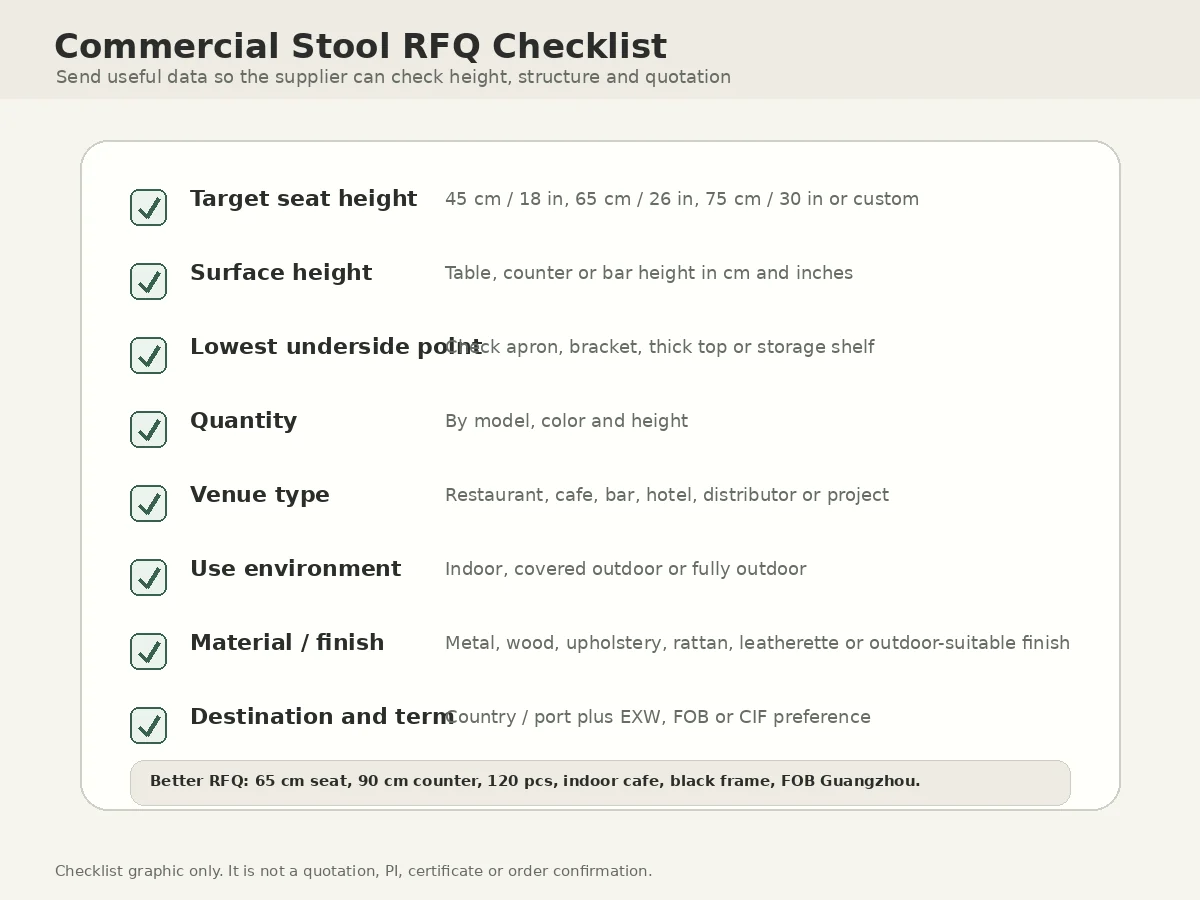
| Détails de l'appel d'offres | Que faut-il envoyer ? |
|---|---|
| Hauteur de tabouret recherchée | 45 cm / 18 in, 65 cm / 26 in, 75 cm / 30 in ou sur mesure |
| Hauteur de la surface | Hauteur de table, de comptoir ou de bar, en cm et en pouces |
| Point le plus bas sous le plateau | En particulier en présence d’une ceinture, d’une équerre ou d’un plateau épais |
| Quantité | Selon le modèle, la couleur et la hauteur |
| Type de lieu | Restaurant, café, bar, hôtel, distributeur, projet d’aménagement |
| Environnement d'utilisation | Usage requis en intérieur, en extérieur couvert ou en extérieur : à étudier |
| Choix du matériau | métal, bois, avec revêtement, rotin, similicuir, matériaux mixtes ou matériau adapté à l’extérieur |
| Type d’assise | Assise rigide, PU/vinyle, tissu, rembourrée, avec dossier, sans dossier |
| Sens de finition | Couleur de la structure, finition bois, couleur du revêtement |
| Destination | Pays, port ou marché de livraison |
| Terme commercial | Préférence pour les conditions EXW, FOB ou CIF |
La quantité minimale de commande standard débute à environ 15 pièces par référence. Pour une production OEM complète ou sur mesure, elle débute généralement à environ 100 pièces par modèle. Le délai de production est d’environ 30 jours après confirmation de la commande. Pour la planification du fret maritime, il faut souvent compter environ 30 jours comme délai de référence. YeZhi propose les conditions EXW, FOB et CIF pour les commandes en gros.
Quand demander une hauteur sur mesure
Demandez une hauteur sur mesure lorsque votre table, votre comptoir ou votre bar ne se situe pas dans la plage de hauteurs habituelle.
- Le comptoir est plus bas ou plus haut que la hauteur standard.
- Le dégagement sous le plateau est réduit.
- Le projet nécessite une même gamme esthétique déclinée en plusieurs hauteurs.
- L’acheteur souhaite un positionnement spécifique du repose-pieds.
- Le tabouret doit correspondre à un plan précis fourni par l’entreprise chargée des travaux.
Pour une fabrication OEM complète ou une production sur mesure, la quantité de départ habituelle est d’environ 100 pièces par modèle. Pour les produits standard, la quantité minimale de commande commence à environ 15 pièces par SKU.
Dans quels cas commander d’abord un échantillon
Commandez 1 à 2 échantillons avant de passer une commande sur mesure importante lorsque les risques liés au projet sont élevés.
- La hauteur du tabouret est personnalisée.
- L’assise est généreusement rembourrée.
- La couleur de finition doit s’accorder avec l’intérieur.
- Le projet comprend plusieurs zones de hauteurs différentes.
- Le client restera assis pendant de longues périodes.
- La quantité commandée est importante.
Un échantillon coûte moins cher qu’un conteneur rempli de tabourets à la mauvaise hauteur.
Décision finale de l’acheteur
- Choisissez un tabouret de 45 cm / 18 in pour une table à manger d’environ 74–76 cm / 29–76,2 cm.
- Choisissez un tabouret de 65 cm / 26 in pour un comptoir d’environ 90–95 cm / 35–94 cm.
- Choisissez un tabouret de 75 cm / 30 in pour un comptoir de bar d’environ 105–115 cm / 41–114,3 cm.
Mesurez ensuite la hauteur réelle du plateau, vérifiez le dessous, contrôlez le plan technique du produit, puis validez seulement la couleur, le matériau et la quantité.
Après avoir confirmé la hauteur, commencez par La collection de tabourets de bar professionnels de YeZhi pour comparer les modèles, les finitions et les options de structure actuellement disponibles. Communiquez à YeZhi la hauteur de votre surface, le dégagement disponible sous celle-ci, la quantité souhaitée et des photos du projet, afin que l’équipe puisse déterminer si 45 cm, 65 cm, 75 cm ou une hauteur sur mesure constitue l’option la plus sûre avant l’établissement du devis.
FAQ : hauteurs de tabouret de 45 cm, 65 cm et 75 cm
Un tabouret de 45 cm correspond-il à un tabouret de 18 pouces ?
Oui. Un tabouret de 45 cm mesure environ 45 cm ; on parle généralement d’une hauteur d’environ 45,7 cm. Il convient principalement aux tables de salle à manger et aux tables de café.
Une hauteur de tabouret de 45 cm est-elle adaptée pour une table à manger ?
Oui. Une hauteur d’assise de 45 cm / 18 in constitue un bon point de départ pour des tables à manger d’environ 74–76 cm / 29–76,2 cm. Vérifiez le dessous du plateau si la table comporte une ceinture épaisse ou un cadre de renfort.
Un tabouret de 45 cm est-il un tabouret de bar ?
Ne convient pas à une utilisation classique à hauteur de bar. De nombreux vendeurs peuvent le présenter comme un tabouret de bar, mais 45 cm / 18 in correspond à une hauteur d’assise pour table à manger ou table de café, et non pour bar haut.
Quelle est la hauteur idéale d'un tabouret pour un plan de travail de 90 cm / 35 pouces ?
Prenez comme point de départ un tabouret de 65 cm / 26 in. Vérifiez ensuite le point le plus bas sous la table, l’épaisseur du coussin et la présence éventuelle d’accoudoirs sur le tabouret.
Puis-je utiliser un tabouret de 75 cm devant un comptoir de 90 cm ?
En règle générale, non : un tabouret de 75 cm / 30 in est trop haut pour un comptoir de 90 cm / 35 in. L’espace pour les genoux risque d’être insuffisant.
Quelle est la hauteur idéale d'un tabouret pour un comptoir de 105 cm / 41 pouces ?
Commencez par un tabouret de 75 cm / 30 in. Cela laisse normalement environ 30 cm / 12 in de dégagement, avant de vérifier les éléments situés sous le plateau.
Les tabourets de 65 cm et 75 cm sont-ils interchangeables ?
Non. 65 cm / 26 in correspond principalement à une hauteur de plan de travail, tandis que 75 cm / 30 in correspond surtout à une hauteur de bar. Les intervertir peut donner une assise trop basse ou laisser trop peu d’espace.
Dois-je mesurer la hauteur de l'assise ou la hauteur totale du tabouret ?
Mesurez la hauteur d’assise. La hauteur totale du tabouret inclut le dossier. C’est la hauteur d’assise qui détermine la compatibilité avec une table, un plan de travail ou un bar.
YeZhi permet-il de personnaliser la hauteur des tabourets ?
Oui, YeZhi peut étudier une hauteur de tabouret sur mesure pour les commandes professionnelles et les projets. La faisabilité définitive dépend de la quantité, de la structure, du matériau, du plan et de la validation par la production.
La chaise Rabbit Counter peut-elle être utilisée pour des projets en extérieur ?
L’utilisation en extérieur doit être étudiée avant l’établissement du devis. L’adéquation finale dépend du matériau de la structure, de son revêtement, du matériau de l’assise, du lieu du projet, de l’exposition aux intempéries, du protocole de nettoyage et de la finition requise.
Que dois-je envoyer pour obtenir un devis ?
Indiquez la hauteur d’assise souhaitée, la hauteur de la table/du comptoir/du bar, l’espace libre sous le plateau, la quantité, le type d’établissement, l’orientation souhaitée pour les matériaux, la couleur de finition, la destination et le terme commercial souhaité. Une demande de devis claire aide YeZhi à vérifier le choix de tabouret adapté avant la production.