Guide d'entretien du mobilier professionnel
Guide pratique de nettoyage des chaises de restaurant destiné aux espaces professionnels, abordant le nettoyage adapté aux différents matériaux, les limites en matière de désinfection, les contrôles d'entretien et les informations relatives aux achats B2B.
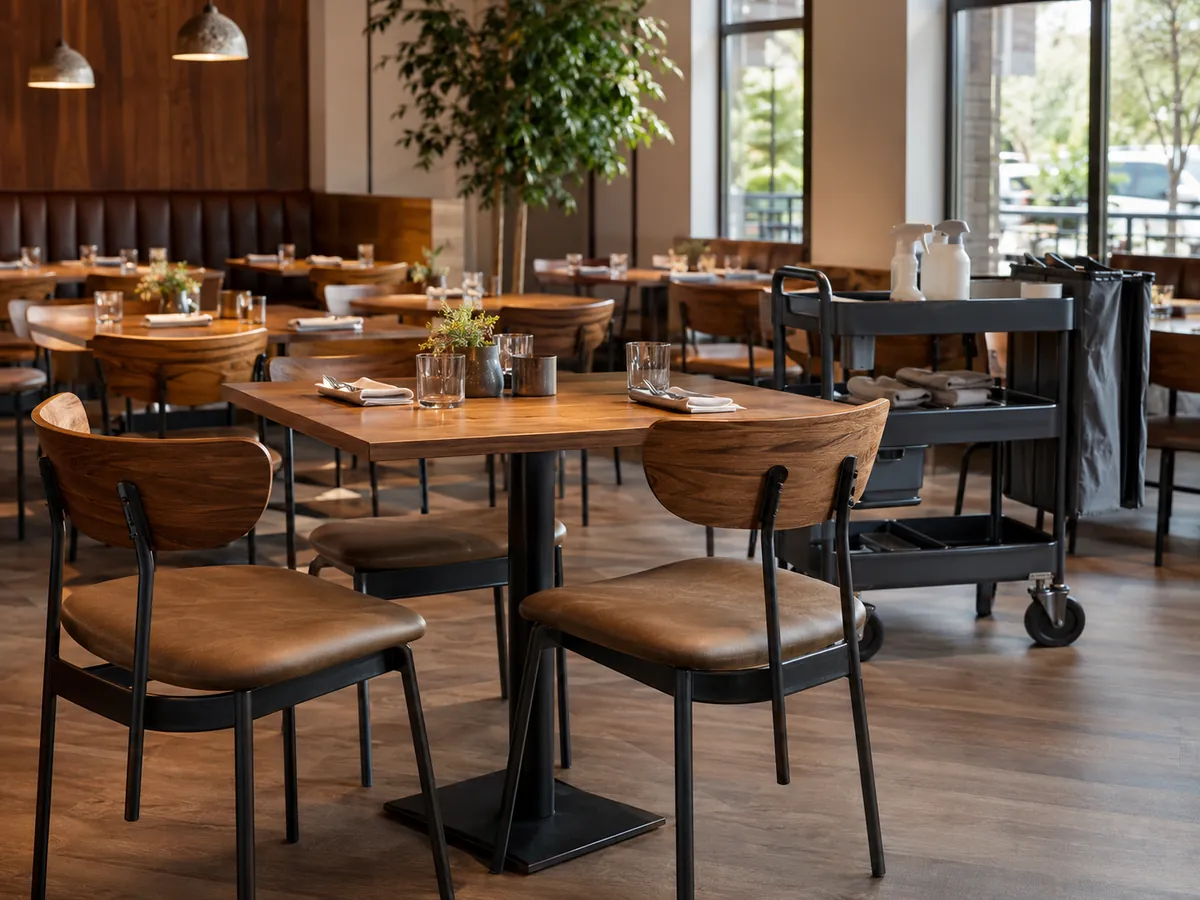
Les chaises de restaurant sont soumises à la pire combinaison d'agressions : graisse alimentaire, boissons renversées, désinfection fréquente, frottements constants et eau de nettoyage. Si votre routine de nettoyage n'est pas compatible avec le matériau et uniforme pour l'ensemble du personnel, vous n’avez pas seulement des taches : vous avez aussi des revêtements fissurés, des finitions ternes, des assemblages descellés, de la rouille au bas des pieds et des instabilités qui constituent un risque pour la sécurité et engagent votre responsabilité.
Si vous mettez en place un programme de nettoyage régulier des chaises de restaurant, l'objectif est simple : protéger la finition, protéger le cadre, réduire les risques sanitaires et garantir la sécurité d'utilisation de chaque chaise.
Ce guide est destiné à un usage professionnel : il distingue nettoyage, assainissement, désinfection et entretien, présente les chaises par type de matériau et vous propose une procédure opérationnelle standard (SOP) reproductible que vous pouvez enseigner à votre personnel. En ce qui concerne les désinfectants ou les produits chimiques plus puissants, le personnel doit toujours respecter les étiquette du produit, fiche de données de sécurité, consignes d'entretien fournies par le fournisseur et exigences locales en matière de santé publique.
Réponse rapide : comment nettoyer les chaises de restaurant professionnelles
Commencez par déterminer le matériau et la finition (type de finition du bois, revêtement par poudrage ou métal nu, code de nettoyage du revêtement, type de vinyle/PU).
Enlever les débris secs (miettes, grains de sable) avant d'utiliser un liquide — ce sont les grains de sable qui rayent les surfaces.
Utilisez un nettoyant doux et non abrasif qui est homologué pour ce matériau.
Ne désinfectez que lorsque cela est nécessaire, et maintenez la surface humide pendant la durée de contact indiquée sur l'étiquette (c'est ainsi que l'on désinfecte efficacement les chaises de restaurant, sans précipiter le processus chimique).
Sécher complètement, notamment au niveau des coutures, des raccords, du bas des pieds et des patins/pieds.
Conseil de pro: Définir un “ ensemble de produits d'entretien approuvés ” standard pour chaque type de matériau (bois / métal / vinyle / tissu) et former le personnel à tester tout nouveau produit sur une zone peu visible avant de l'utiliser sur l'ensemble d'un lot.
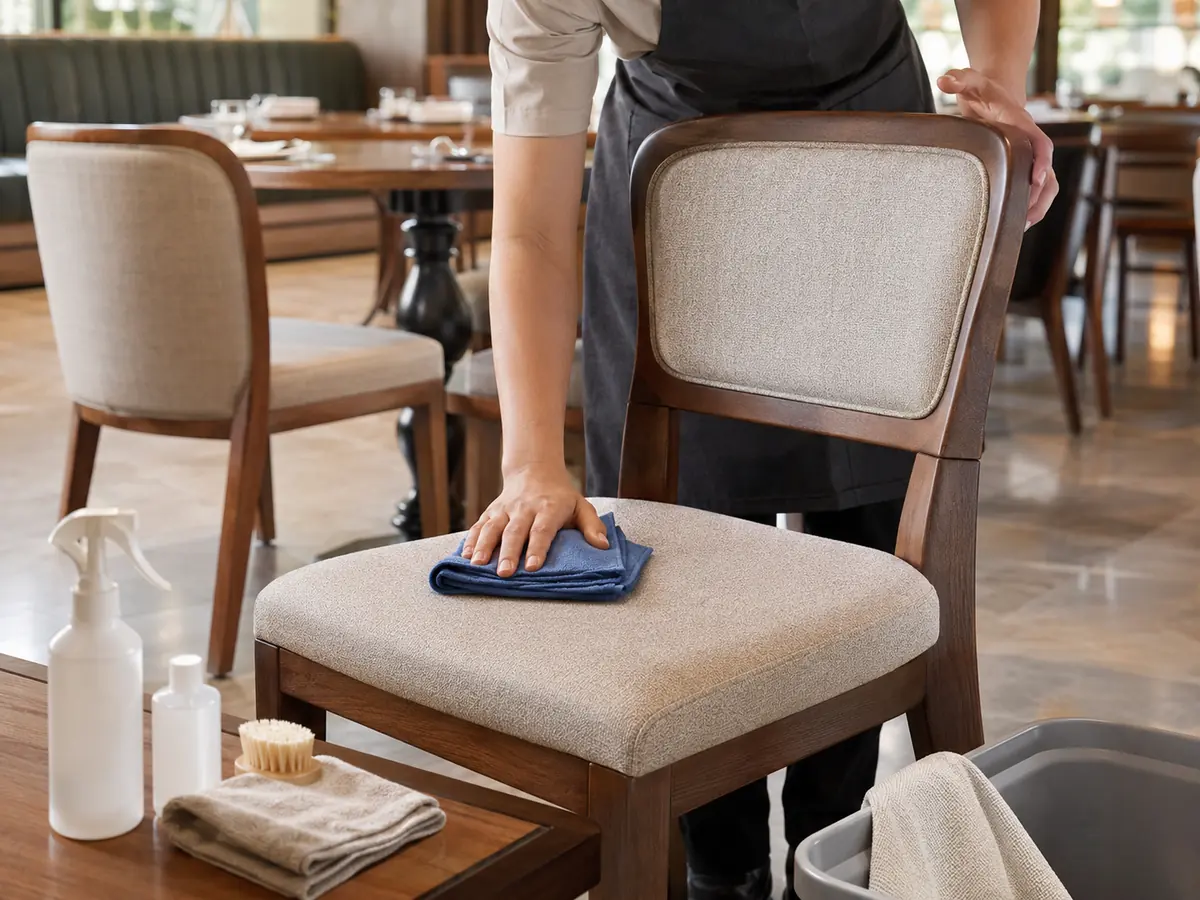
Nettoyage, assainissement, désinfection et entretien
Terme | Fonctionnalités | Ce qu'il ne fait pas | Ce que votre personnel doit garder à l'esprit |
|---|---|---|---|
Nettoyage | Élimine la saleté, les traces de graisse, les résidus alimentaires, les taches et certains germes présents sur les surfaces | Ne permet pas d'éliminer de manière fiable tous les agents pathogènes | Commencez par cela. La saleté peut réduire l'efficacité des produits assainissants ou désinfectants. |
Désinfection | Réduit la présence de germes à des niveaux jugés acceptables au regard des règles de santé publique en vigueur | Ce n'est pas la même chose qu'une désinfection complète | À utiliser uniquement lorsque cela est approprié et en respectant les instructions figurant sur l'étiquette du produit. |
Désinfection | Élimine certains germes lorsqu'il est utilisé conformément aux instructions figurant sur l'étiquette | Ne nettoie pas bien la graisse ni les résidus | Respectez les consignes relatives à l'aptitude de la surface, à la dilution, aux EPI et au temps de contact/d'action. |
Maintenance | Assure la sécurité et la stabilité des chaises au fil du temps | N'élimine pas les salissures visibles ni les agents pathogènes | Inspecter, resserrer, remplacer les pièces d'usure et consigner les constatations. |
En ce qui concerne les désinfectants, l'EPA américaine met l'accent sur trois règles visant à garantir la sécurité des consommateurs : vérifier que le Numéro d'enregistrement auprès de l'EPA, lire le Mode d'emploi, et veillez à ce que la surface restant visiblement humide pendant toute la durée de contact mentionnés sur l'étiquette. L'EPA précise également que la présence de ces produits sur la liste ne constitue pas une recommandation et que les utilisateurs doivent vérifier que le produit est bien homologué pour la surface et l'agent pathogène visés.
Avant de commencer : une liste de contrôle simple pour “ identifier les matériaux et les finitions ”
Si vous gérez plusieurs modèles de chaises (ou plusieurs sites), cette étape de 2 minutes vous évitera des dommages importants sur l'ensemble du lot.
Bois: finition laquée/peinte ou teintée + couche de vernis ; y a-t-il des fissures visibles ou des bords usés ?
Métal: revêtement par poudrage, peinture ou finition brute/chromée ; y a-t-il des éraflures allant jusqu'au métal ?
Vinyle/PU/simili cuir: surface lisse et lavable ou texturée ; y a-t-il des traces d'écaillage au niveau des coutures ?
Revêtement en tissu: repérez l'étiquette indiquant le code de nettoyage du revêtement (W, S, W/S, X), le cas échéant.
Pieds/patins: en bon état ? il manque des parties ? l'usure est-elle inégale ? y a-t-il des traces d'humidité au bas des jambes ?
Si vous comparez différents modèles de chaises pour des projets dans le secteur de l'hôtellerie, choisissez des fournisseurs qui proposent remarques d'entretien spécifiques à chaque modèle, informations sur le remplacement des glissières, codes de nettoyage des revêtements, restrictions relatives aux finitions et recommandations concernant les produits de nettoyage agréés. Considérez les pages des fournisseurs comme des conseils sur les produits, et non comme une autorité indépendante en matière de sécurité ; pour les désinfectants, référez-vous à l'étiquette du produit, aux informations d'enregistrement auprès de l'EPA et à la fiche de données de sécurité (FDS).
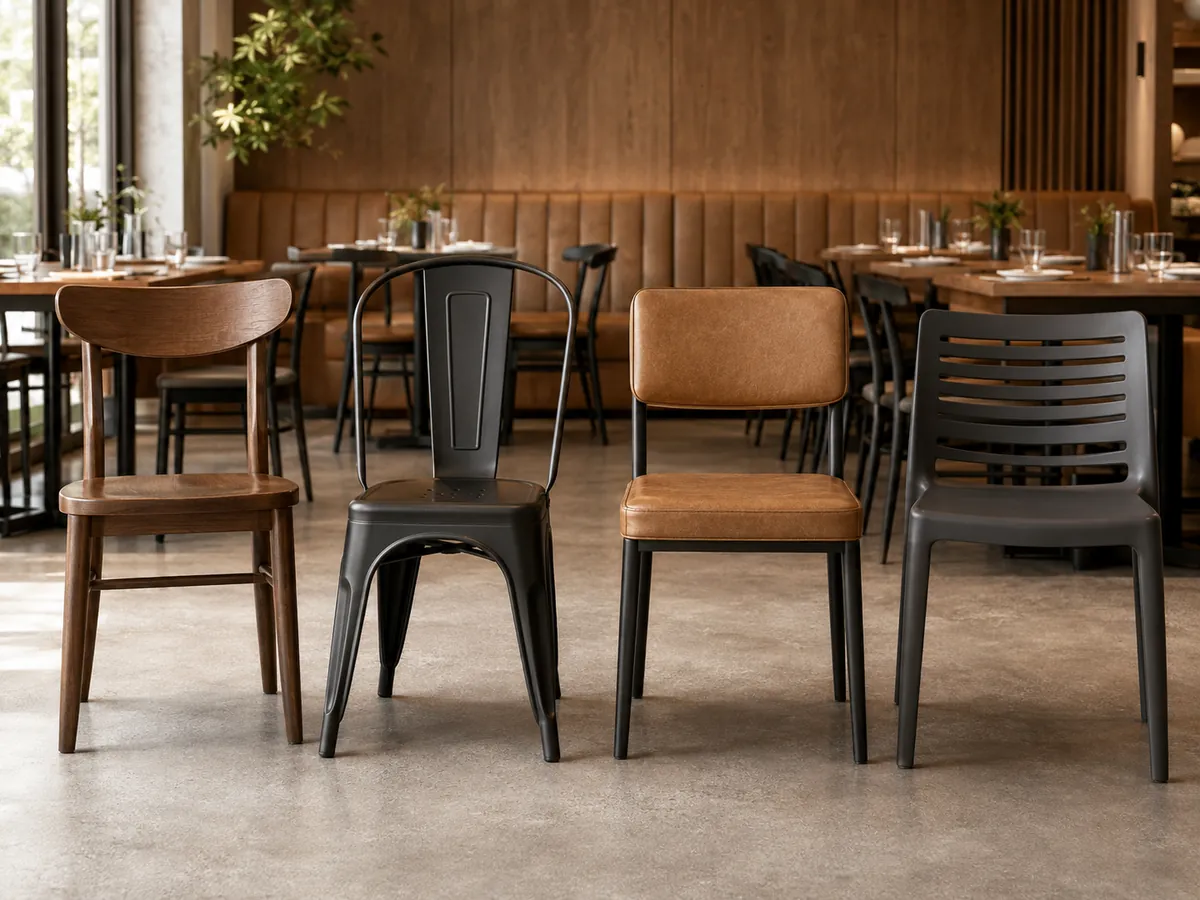
Comment nettoyer les différents matériaux des chaises de restaurant
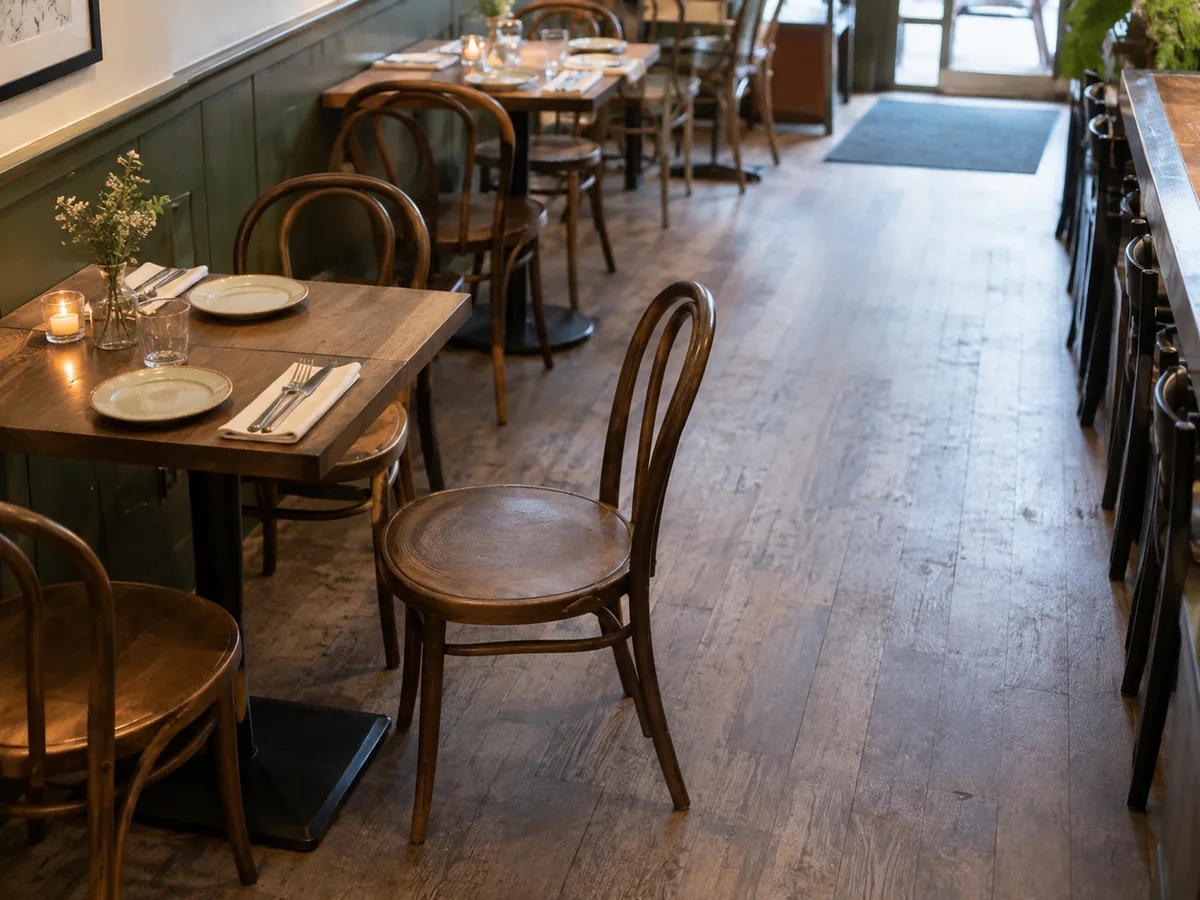
Chaises de restaurant en bois (bois vitrifié/traité)
Bonnes pratiques : “ Moins d’eau, plus d’essuyage. ” Les dégâts causés au bois dans les restaurants proviennent généralement de humidité au niveau du bas des jambes, les dégraissants agressifs et les tampons abrasifs.
Étapes de routine (quotidiennes / en fin de service) :
Essuyez les miettes à l'aide d'un chiffon en microfibre sec.
Utilisez un chiffon en microfibre légèrement humide avec un produit nettoyant doux et non abrasif.
Si le produit nettoyant laisse des résidus, essuyez à nouveau avec de l'eau claire à l'aide d'un chiffon différent.
Sécher immédiatement, notamment au niveau des articulations et du bas des jambes.
Ce qu'il faut éviter (en fonction des risques) :
Laisser des chaises tremper dans l'eau de nettoyage ou dans des flaques d'eau.
Les produits de nettoyage abrasifs qui ternissent les couches de finition transparentes.
Les acides ou alcalis forts, ainsi que les dégraissants puissants, sauf si la compatibilité avec le revêtement a été confirmée.
Contrôle d'entretien :
Vérifiez s'il y a des traces de noircissement ou de gonflement au niveau du bas des jambes.
Vérifiez que les articulations ne présentent pas de jeu précoce (un mouvement infime peut se transformer en jeu).
Chaises de restaurant en métal avec finition thermolaquée
Le revêtement en poudre est résistant, mais il n'est pas à l'abri des dommages. Dès que le revêtement est rayé, l'humidité peut provoquer une corrosion de surface au niveau des bords et des joints.
Étapes habituelles :
Commencez par éliminer les impuretés.
Nettoyez avec de l'eau et du savon doux à l'aide d'un chiffon doux.
Rincez et séchez.
Les conseils d'entretien de Room & Board pour l'acier thermolaqué recommandent d'utiliser de l'eau et du savon doux et d'éviter les produits abrasifs, tout en augmentant la fréquence de nettoyage dans les environnements plus agressifs (sel, chlore, pollution) dans Entretien de l'acier thermolaqué destiné à un usage extérieur.
Ce qu'il faut éviter (en fonction des risques) :
Les produits nettoyants abrasifs et le récurage agressif.
Le nettoyage au jet haute pression, sauf si vous vous êtes assuré qu'il ne présente aucun risque pour votre revêtement et vos ferrures spécifiques.
Laisser de l'eau stagner à l'intérieur des extrémités des tubes ou autour des soudures.
Contrôle d'entretien :
Vérifiez s'il y a des éclats sur les bords et autour des points de contact avec le pied.
Vérifiez les soudures et les fixations.
Si vous travaillez dans un environnement côtier ou salin, ou si vous utilisez des produits chimiques puissants pour le nettoyage des sols, augmentez la fréquence des inspections.
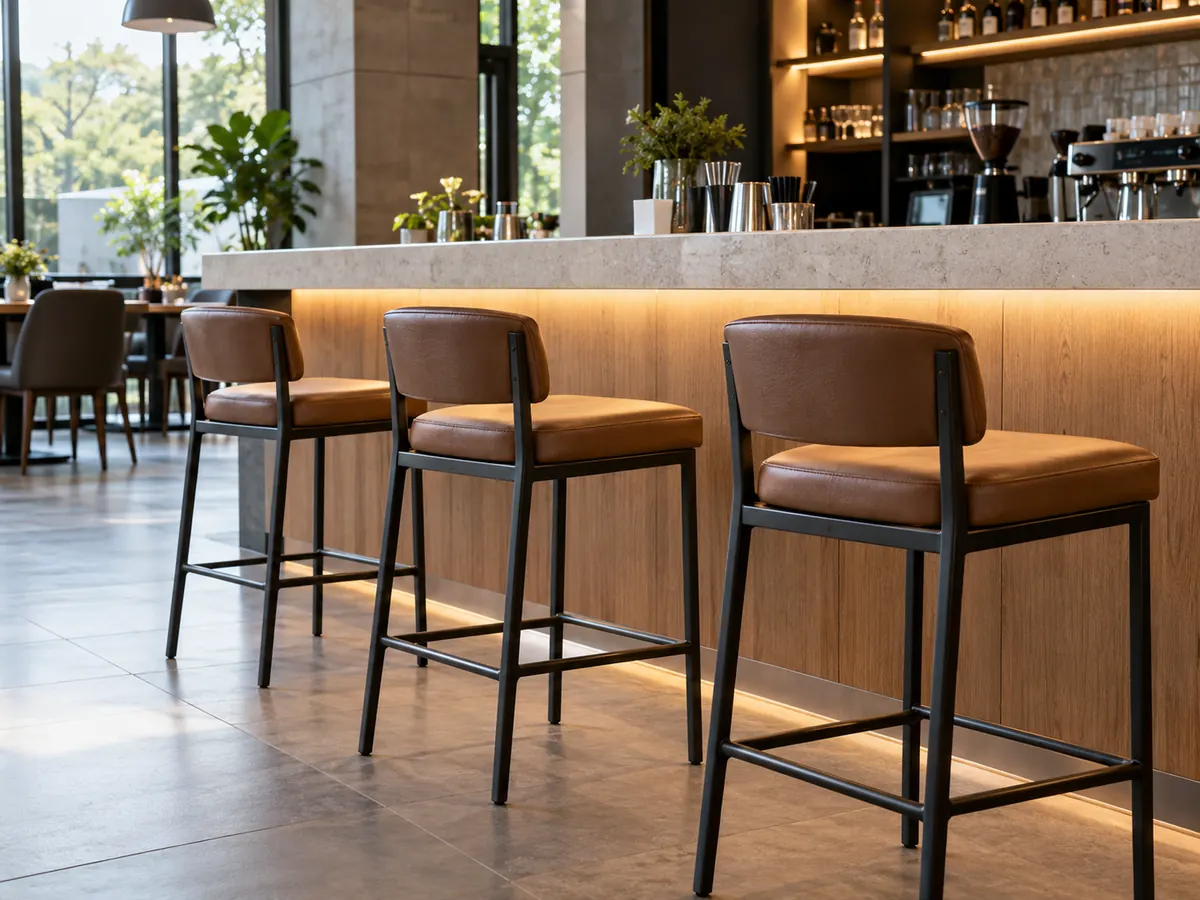
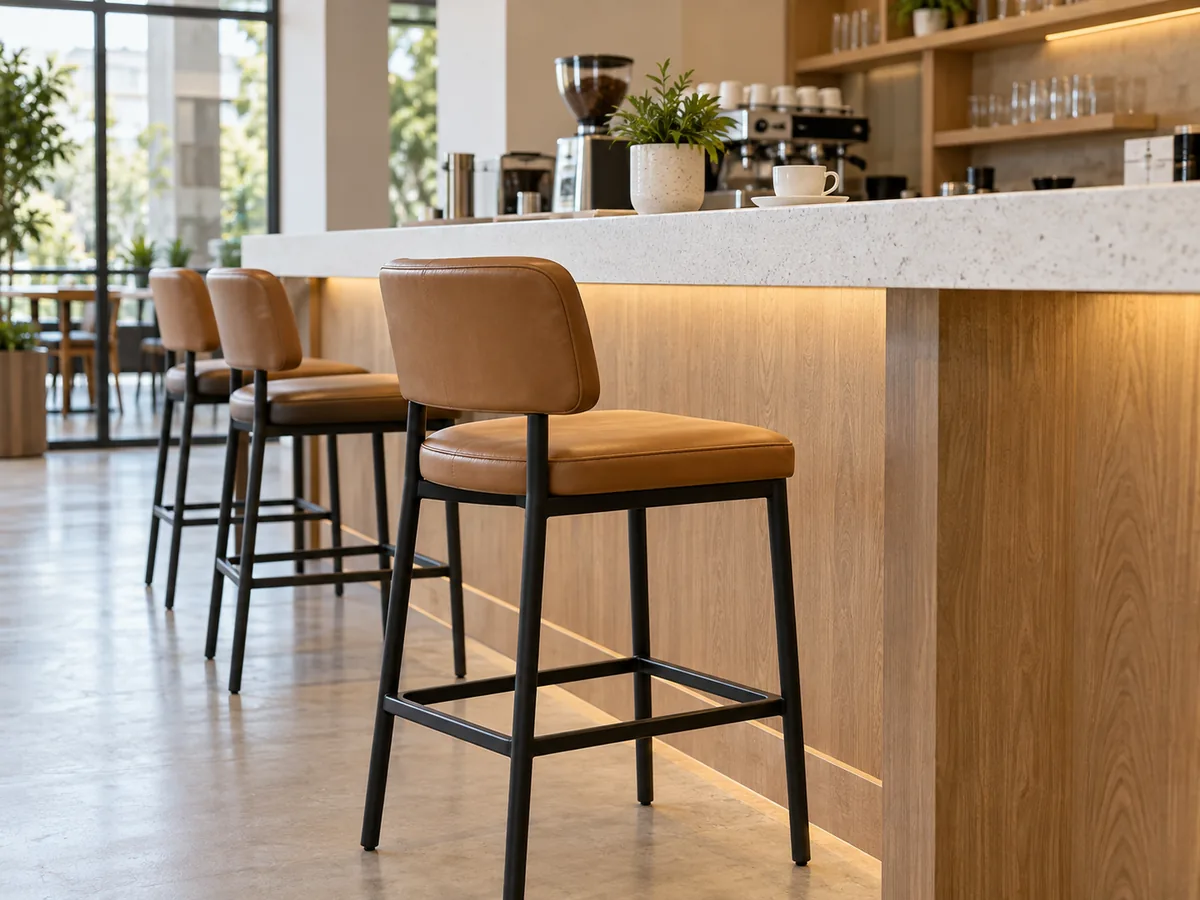
Chaises de restaurant en vinyle / PU / simili-cuir
Ces produits sont très prisés dans le secteur de l'hôtellerie car ils se nettoient facilement, mais ils peuvent aussi s'abîmer facilement si l'on utilise un solvant inadapté, des produits qui dessèchent trop le matériau ou si l'on procède à des désinfections agressives et répétées.
Étapes habituelles :
Épongez immédiatement les éclaboussures (sans frotter).
Nettoyez avec un chiffon humide et un produit nettoyant doux adapté à la surface.
En cas de désinfection, respectez le temps de contact indiqué sur l'étiquette, puis éliminez les résidus si le produit l'exige.
Ce qu'il faut éviter (en fonction des risques) :
Considérer l'alcool ou l'eau de Javel comme une solution universelle (la compatibilité varie selon les matériaux et les revêtements).
Laisser s'accumuler des résidus de désinfectant (ce qui peut accélérer l'apparition de raideurs ou de fissures au fil du temps).
Contrôle d'entretien :
Commencez par inspecter les coutures et les bords soumis à de forts frottements.
Si vous constatez un durcissement, des microfissures ou un écaillage, réduisez l'agressivité chimique et vérifiez auprès du fournisseur que les produits utilisés sont homologués.
Chaises de restaurant recouvertes de tissu (lisez d'abord les consignes d'entretien)
Pour les tissus, l'étape la plus importante n'est pas l'astuce pour éliminer les taches, mais bien d'utiliser la méthode adaptée au code de revêtement.
Codes courants pour le nettoyage des tissus d'ameublement :
W: nettoyage à base d'eau
S: nettoyage à base de solvant (sans eau)
W/S (ou WS): eau ou solvant
X: aspiration / brosse uniquement
Utilisez le code de nettoyage figurant sur le étiquette de la chaise, carte en tissu ou fiche d'entretien du fournisseur comme source principale. Les explications générales peuvent aider le personnel à comprendre les notations W, S, W/S et X, mais elles ne doivent pas prévaloir sur les instructions du fabricant concernant le revêtement en question.
Étapes habituelles :
Passez l'aspirateur à l'aide d'un embout pour tissus d'ameublement (ne négligez pas les coutures et les interstices).
Les taches s'éliminent rapidement.
Nettoyer localement conformément aux instructions, en utilisant un minimum d'humidité.
Laisser sécher complètement avant de remettre en service.
Ce qu'il faut éviter (en fonction des risques) :
Un arrosage excessif des coussins (traces d'humidité, odeurs, risque de moisissure).
Utilisation d'une chimie inadaptée au code.
Repasser à la vapeur sans vérifier la compatibilité entre le tissu et le renfort.
Chaises de restaurant en résine / plastique
Ces produits sont souvent considérés comme “ faciles à utiliser ”, mais avec le temps, des dommages apparaissent sous forme de voile, de rayures ou de fragilité.
Étapes habituelles :
Éliminer les impuretés.
Savon doux + chiffon doux.
Rincez et séchez.
Ce qu'il faut éviter (en fonction des risques) :
Des solvants agressifs susceptibles de ternir ou d'affaiblir les plastiques.
Des tampons abrasifs qui laissent des rayures indélébiles.
Quels produits d'entretien les restaurants doivent-ils éviter ? Il faut se baser sur des critères de risque, et non sur une liste universelle de produits interdits
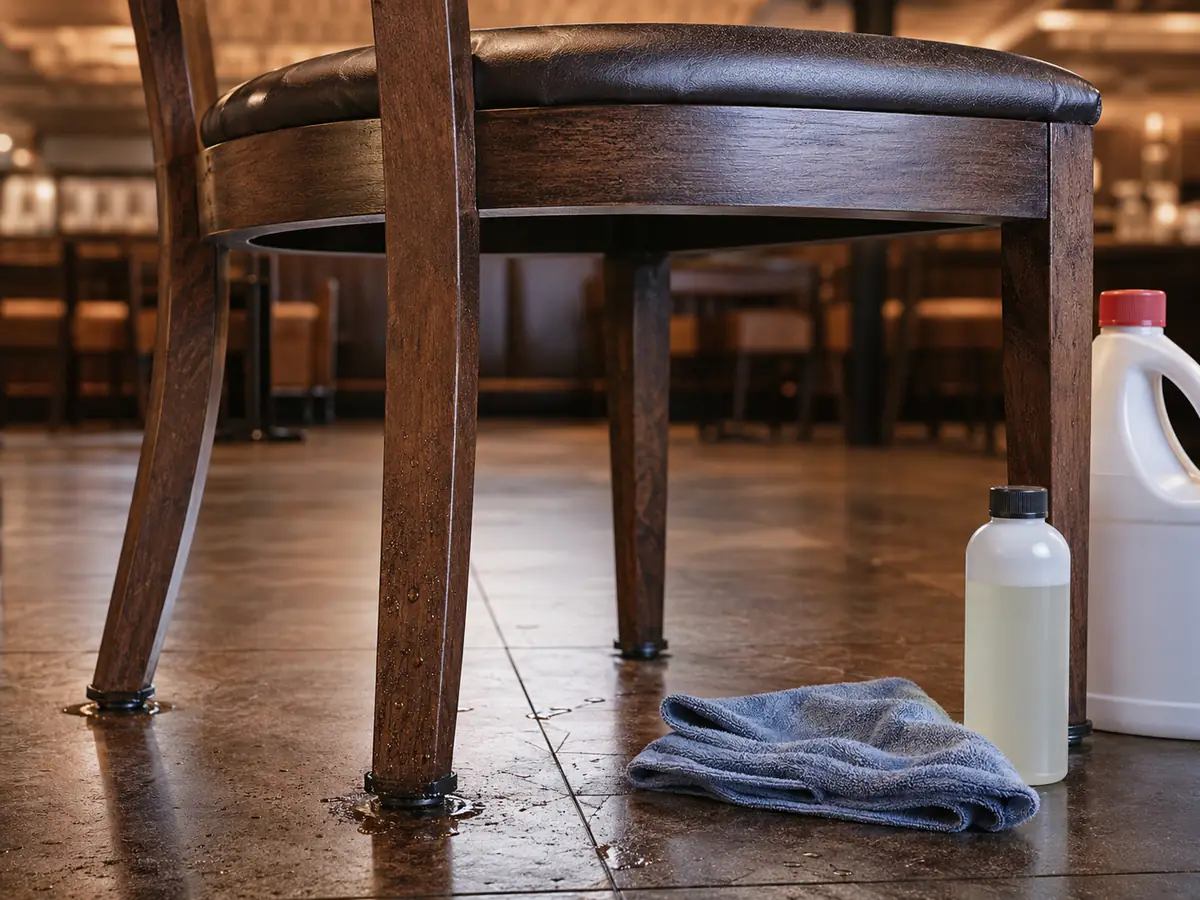
Au lieu de donner une consigne générale du type “ n’utilisez jamais X ”, formez le personnel à respecter les règles suivantes :
Si l'étiquette du produit exige le port d'un EPI de protection maximale ou met en garde contre la corrosion, on peut supposer que cela risque d'endommager les finitions à moins que vous n'ayez vérifié la compatibilité.
Évitez d'utiliser des produits abrasifs (tampons, poudres, laine d'acier) sur toute surface traitée.
Veillez à ce qu'aucun liquide ne s'accumule au bas des jambes, au niveau des articulations, des coutures ou des pièces métalliques.
Ne mélangez pas les produits chimiques. Il s'agit avant tout d'un problème de sécurité des travailleurs, et accessoirement d'un problème de détérioration de la finition. Le CDC met en garde contre les risques liés au mélange de produits, qui peut modifier leurs propriétés chimiques ; le personnel doit respecter les consignes figurant sur l'étiquette, la fiche de données de sécurité (FDS), les recommandations en matière de ventilation et porter l'EPI requis.
En cas de doute : test ponctuel dans une zone cachée, puis continuez.
⚠️ Point à vérifier: De nombreux désinfectants ne sont efficaces que si la surface reste humide pendant toute la durée de contact indiquée sur l'étiquette. Si vous essuyez la surface trop tôt, vous risquez de subir les inconvénients (sollicitation du matériau) sans bénéficier des avantages en matière d'hygiène.
Procédure opérationnelle standard (SOP) quotidienne / hebdomadaire / mensuelle : entretien des chaises de restaurant
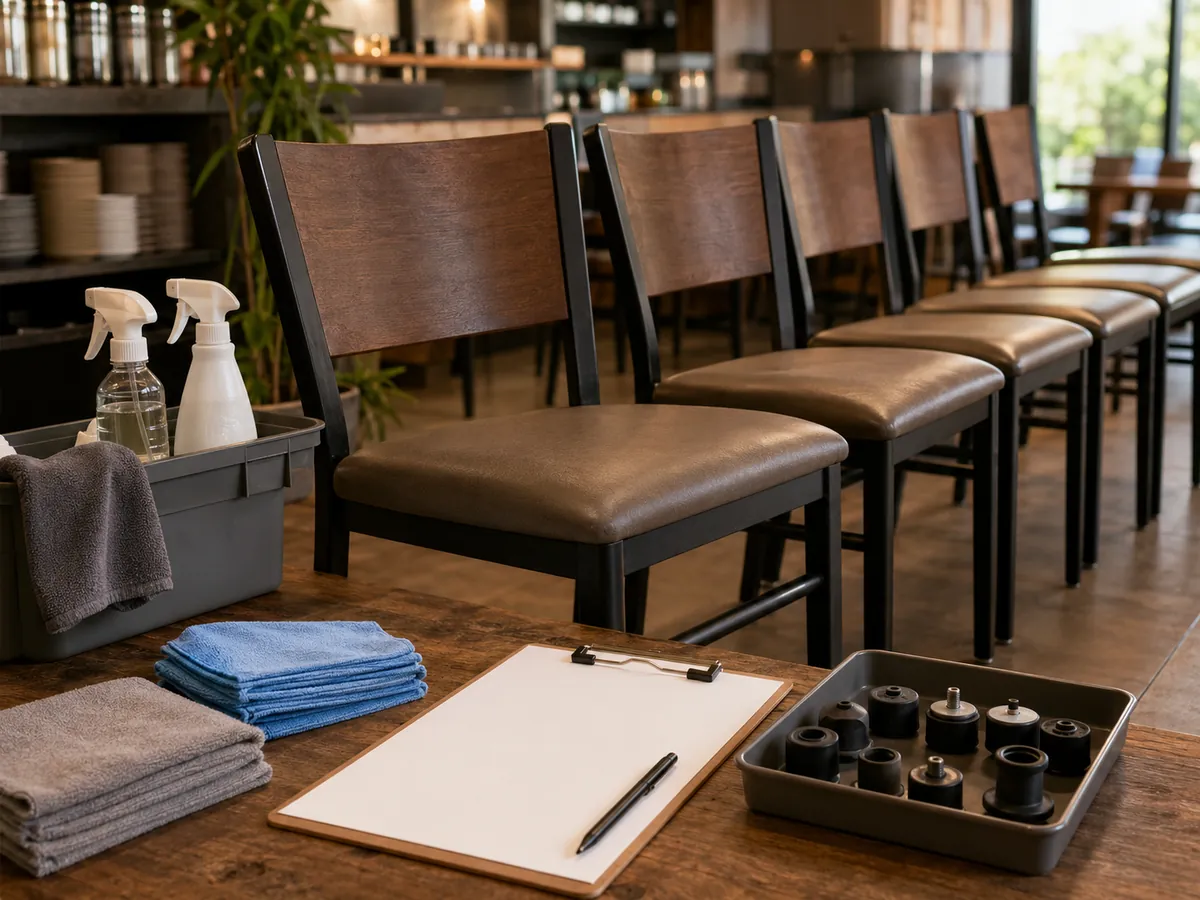
Utilisez cet horaire comme référence, puis adaptez-le en fonction de votre affluence, de votre carte (plats gras ou secs) et des matériaux des sièges. Cette section du manuel de procédures opérationnelles standard (SOP) constitue le cœur opérationnel de entretien des chaises de restaurant pour les salles de restaurant très fréquentées.
Fréquence | Tâche SOP | À qui appartient-il ? | “ C'est fini quand… ” |
|---|---|---|---|
Quotidiennement | Essuyez les zones fréquemment touchées (le haut du dossier, les bords des sièges), nettoyez les éclaboussures, séchez le bas des jambes | Personnel de fermeture | Aucun résidu visible ; la chaise est sèche au toucher |
Quotidiennement | Vérifiez, lors d'une inspection rapide, s'il manque des patins ou des pieds. | Responsable d'équipe | Aucune chaise n'a été rapportée au rez-de-chaussée avec des pieds manquants |
Hebdomadaire | Nettoyer en profondeur les coutures et les interstices, l’arrière et le dessous, ainsi que les anneaux de pied et les traverses | Équipe de nettoyage | Les impuretés ont été éliminées ; aucun résidu collant |
Hebdomadaire | Vérifier ponctuellement le vacillement, les glissières manquantes, les fixations desserrées, les joints fissurés, les structures tordues et les défauts de soudure sur un échantillon tournant de chaises | Responsable ou maintenance | Toute chaise instable ou visiblement endommagée est retirée de la circulation, étiquetée, enregistrée, puis réexaminée après réparation. |
Mensuel | Inspection complète : fixations, assemblages, soudures, bas des pieds, bords du rembourrage | Maintenance | Problèmes signalés ; réparations prévues |
Trimestriel | Analyser les types de dommages : où se produisent les défaillances et pourquoi ? Mettre à jour les procédures opérationnelles standard (SOP) et la formation | Opérations/Directeur général | Mise à jour de la liste de contrôle ; révision du kit de nettoyage |
Si vous recherchez un outil prêt à l'emploi pour comparer différentes options de chaises (y compris l'entretien et les pièces de rechange), la solution de YeZhi Chaises de salle à manger à usage professionnel ou résidentiel Le format de liste de contrôle constitue un modèle utile pour structurer les questions à poser aux fournisseurs.
Problèmes d'entretien que le personnel d'entretien néglige souvent
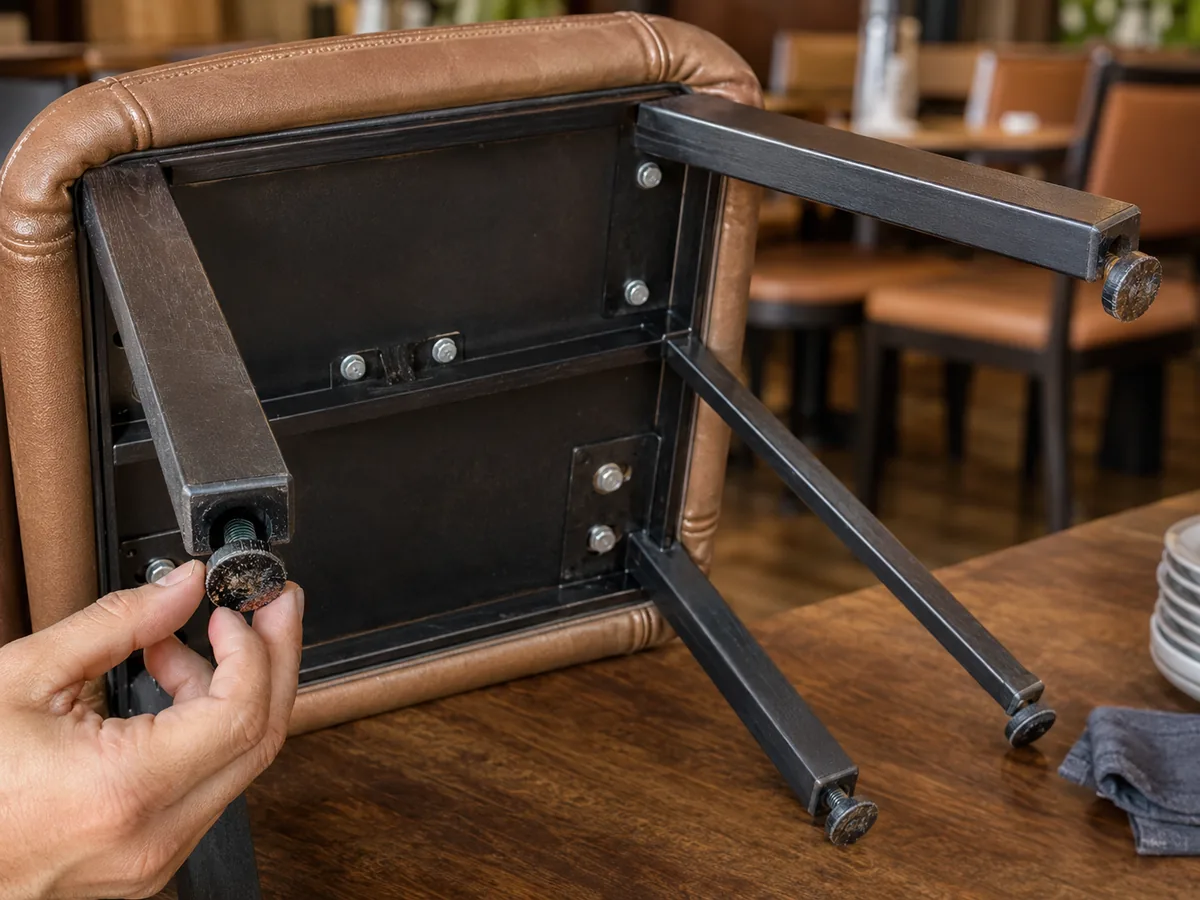
Ces problèmes sont fréquents dans les salles de restaurant où le roulement est élevé — et c’est ce qui fait la différence entre “ des chaises qui durent ” et “ des chaises qui tombent discrètement en panne ”.”
Pieds ou patins manquants ou usés (bruit, détérioration du sol, instabilité, usure des pieds)
Exposition à l'eau au niveau du bas des jambes après le nettoyage à la serpillière (gonflement du bois, corrosion du métal)
Vis/boulons desserrés qui se transforment en oscillations
Usure de la finition aux points de contact (le haut des dossiers de chaise, les bords des sièges)
Contrainte au niveau des coutures de revêtement au niveau des bords avant et des coins
Points de frottement lors de l'empilage ou du stockage (pour les modèles empilables)
Réparer, mettre hors service ou remplacer ? Un tableau de décision simple
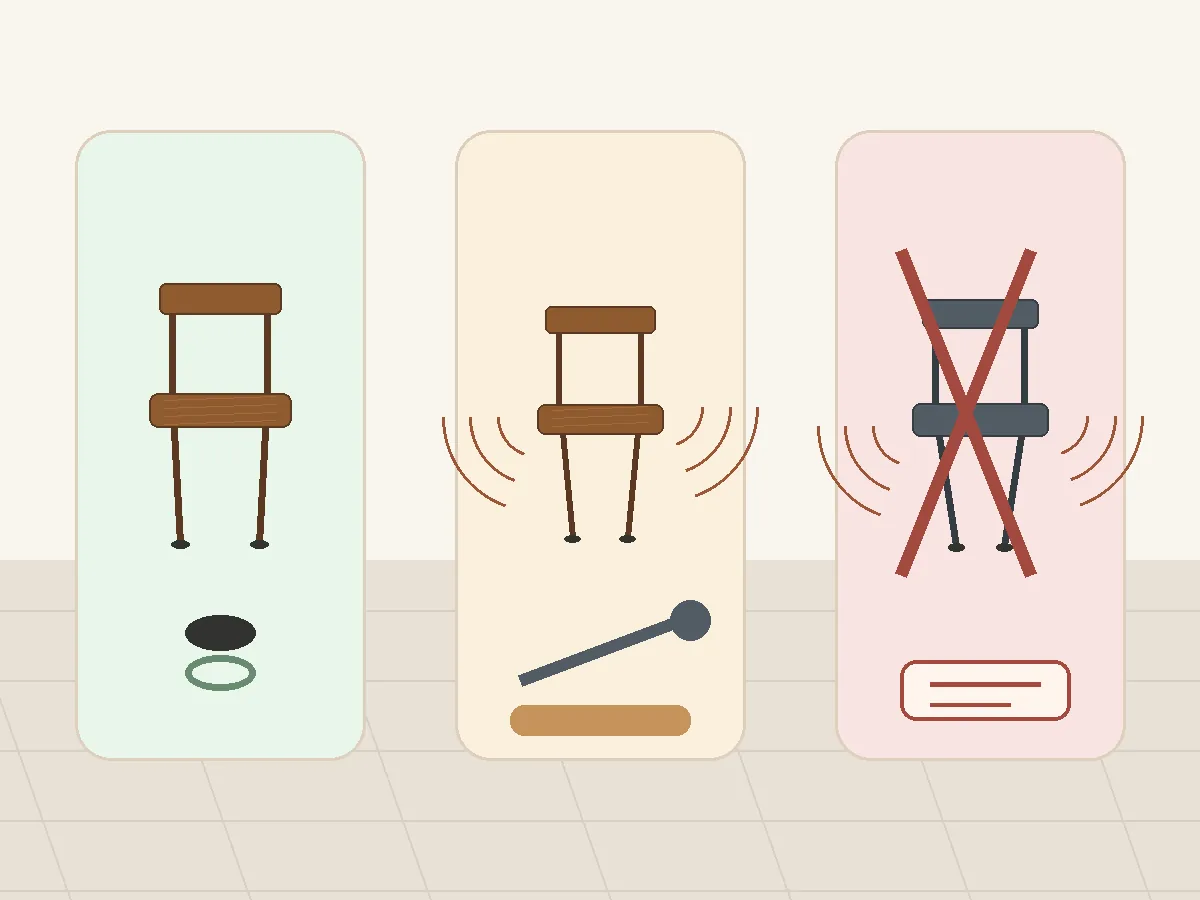
État | Mesure recommandée | Pourquoi |
|---|---|---|
Quelques légères taches, un patin manquant, une attache desserrée | Nettoyer + remplacer la glissière + resserrer + consigner | Faible risque ; permet d'éviter des dégâts plus importants |
Légère instabilité au début, petites ébréchures sur la finition, couture commençant à s'ouvrir | Retirer de la rotation à fort trafic, réparer, puis vérifier à nouveau | Prévient l'aggravation de la situation et les risques pour la sécurité |
Soudures fissurées, assemblages cassés, châssis tordus, vacillement persistant après le serrage, défaillance majeure de la sellerie | Le mettre hors service et le remplacer ou le faire examiner par un professionnel | Risque élevé en matière de sécurité et de responsabilité ; les réparations pourraient ne pas permettre de rétablir l'intégrité |
Comment choisir des chaises de restaurant professionnelles plus faciles à entretenir

Pour les acheteurs B2B, la notion de “ facile à nettoyer ” ne se limite pas à la surface de l'assise. Elle concerne également la façon dont la chaise résiste aux désinfections quotidiennes, aux opérations de nettoyage au balai à franges et aux déplacements répétés.
Utilisez ceci comme liste de contrôle pour vos achats :
Le fournisseur propose-t-il consignes d'entretien spécifiques au modèle pour les finitions et le rembourrage ?
Est-ce que patins/pieds remplaçables, et est-il possible de commander des pièces de rechange en gros ?
Le cadre est-il conçu pour limiter la formation de poches d'humidité au niveau du bas des jambes et des articulations ?
Les produits sont-ils choisis en fonction de votre routine de nettoyage réelle (désinfection quotidienne ou simple nettoyage à la lingette) ?
Est-il possible de passer une nouvelle commande pour le même modèle et la même finition ultérieurement, en garantissant la cohérence entre les lots ?
Si vous établissez une liste de présélection, celle de YeZhi Ressources Hub est un bon endroit pour demander des catalogues et des informations détaillées sur les modèles, ce qui vous permettra d'adapter la procédure opérationnelle standard (SOP) de nettoyage aux matériaux précis des fauteuils que vous achetez.
Sources et consignes de sécurité
EPA : Utilisez des désinfectants homologués par l'EPA conformément aux instructions figurant sur l'étiquette ; vérifiez le numéro d'homologation, les surfaces ou lieux d'utilisation autorisés, les agents pathogènes visés, le taux de dilution et le temps de contact.
CDC : Nettoyez les surfaces avant de les assainir ou de les désinfecter ; utilisez les désinfectants en toute sécurité en respectant les consignes figurant sur l'étiquette, en assurant une bonne ventilation, en consultant la fiche de données de sécurité (FDS), en portant un équipement de protection individuelle (EPI) et en évitant tout mélange de produits chimiques.
Fiches d'entretien des fournisseurs : Suivez les instructions du fabricant du siège ou du fournisseur du tissu concernant la compatibilité des matériaux, les codes de nettoyage, les produits d'entretien autorisés et les consignes de rinçage et de séchage.
Règles locales : Les restaurateurs doivent respecter les réglementations locales en vigueur en matière de santé, de travail et de sécurité. Ce guide est un Procédure opérationnelle standard relative à l'entretien et à la maintenance des chaises, qui ne remplace pas les procédures sanitaires réglementées.
FAQ
Comment désinfecter les chaises d'un restaurant sans les abîmer ?
N'utilisez que des produits adaptés au matériau et à la finition du fauteuil, maintenez la surface humide pendant la durée d'action indiquée sur l'étiquette et évitez l'accumulation de résidus en suivant les instructions figurant sur l'étiquette (y compris les consignes de rinçage). En d'autres termes, Comment désinfecter les chaises d'un restaurant La sécurité dépend du matériau et de l'étiquette du produit — il n'existe pas de spray universel.
Comment nettoyer les chaises de restaurant en bois ?
Utilisez un minimum d’eau, des produits nettoyants doux et séchez immédiatement, en particulier au niveau des coutures et du bas des jambes. C’est l’essentiel de Comment nettoyer les chaises de restaurant en bois dans une salle à manger professionnelle, sans ternir la finition ni faire gonfler les pieds.
Comment nettoyer des chaises de restaurant en vinyle ?
Nettoyez avec des produits d'entretien doux et adaptés au matériau ; ne partez pas du principe que l'alcool ou l'eau de Javel sont sans danger dans tous les cas ; surveillez les coutures et les bords pour détecter tout début de décollement. En pratique, Comment nettoyer les chaises de restaurant en vinyle Tout repose sur un nettoyage en douceur, une utilisation correcte des désinfectants et la prévention de l'accumulation de résidus chimiques.
Quel est un calendrier de nettoyage pratique pour les chaises de restaurant ?
Tous les jours pour le nettoyage minutieux et l'intervention en cas de déversement, chaque semaine pour les recoins et les dessous, chaque mois pour une inspection structurelle complète, et chaque trimestre pour analyser les tendances et former à nouveau le personnel.
Étape suivante (adaptée aux marchés publics) : Si vous le souhaitez, indiquez-nous les matériaux des chaises que vous utilisez (bois/métal/vinyle/tissu + les étiquettes indiquant les codes d'entretien, le cas échéant). Nous pourrons ainsi transformer la procédure opérationnelle standard ci-dessus en une fiche de formation d'une page et en une liste de contrôle d'inspection que vous pourrez utiliser pour l'ensemble d'un lot.
Vous cherchez des chaises de restaurant plus faciles à nettoyer et à entretenir ?
Avant d'envoyer une demande, veuillez préciser la quantité souhaitée, le matériau de votre choix, la finition, le style de chaise, le pays de livraison et les exigences en matière d'entretien.
Demander des catalogues de chaises et des informations sur leur entretien