
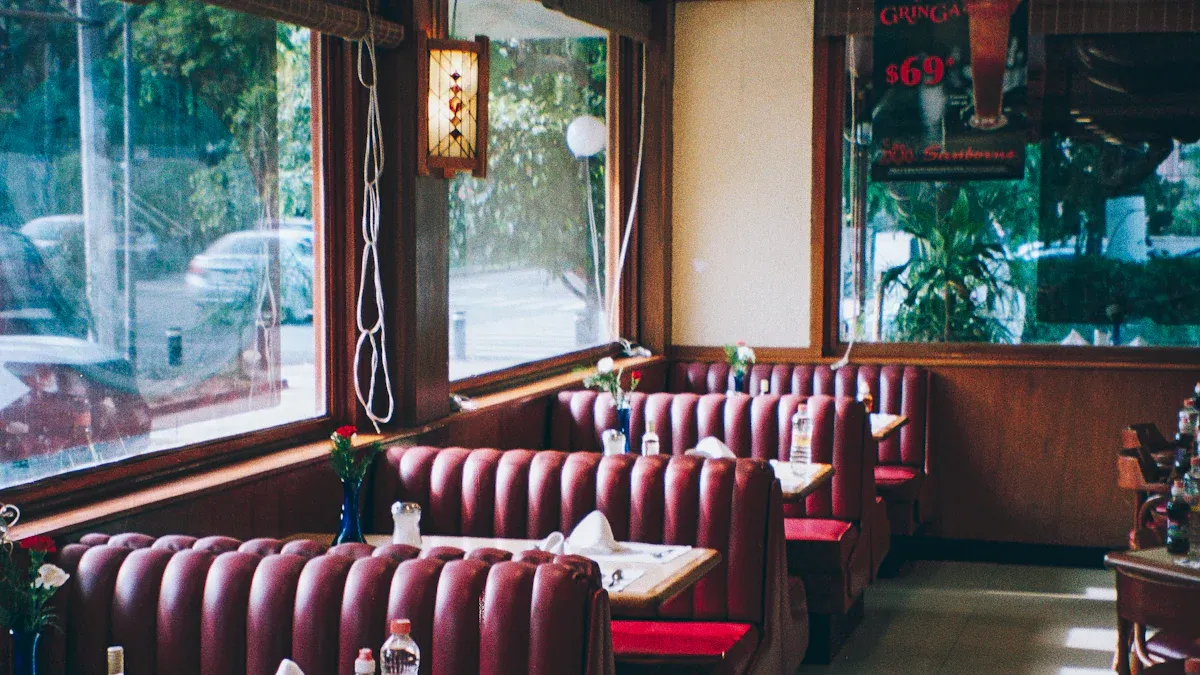
The right seating for your restaurant depends on your service style and space. I always think about what feeling I want guests to have. When you set up a new place or change your layout, you should look at different types of restaurant seating. This helps match your brand and how customers move around. Did you know 65 percent of diners say seating choices make them come back? I have seen how the right seating makes dining better. Here is a quick look at what affects how long customers stay:
| Factor | Impact on Dwell Time |
|---|---|
| Comfortable Seating | Makes people stay longer and order more food |
| Ergonomics | Good back support and seat height make people comfy |
| Style | Nice looks can make customers want to stay longer |
| Material | Strong and comfy seats make customers happy |
Yezhi Furniture helps buyers make spaces that feel good for every guest. 😊
Types of Restaurant Seating Overview
Standard Dining Chairs (2-top / 4-top tables)
Best for
Standard dining chairs work best for restaurants that want flexibility and comfort. These chairs are good for places where people eat full meals. Cafés, bistros, and family restaurants use them a lot. They fit with 2-top and 4-top tables. You can move tables together for bigger groups. Chairs match many seating styles, from casual to fancy. Some chairs work outside if they are made for the weather.
Trade-offs
Chairs are comfy and look nice, but they need more space than booths. They need to be cleaned often, especially in busy places. Some materials, like wood and fabric, need extra care. Chairs can get scratched or stained if you do not pick strong ones. I always check if chairs are tough before buying. Here is a table with important things to think about:
| Feature/Use Case | Description |
|---|---|
| Comfort | Chairs with backrests help guests relax. Soft seats are good for long meals. |
| Style | Chairs should fit the restaurant’s look and feel. Different styles work in different places. |
| Durability | Strong chairs do not scratch or stain easily. This is good for busy restaurants. |
| Materials | Wood, metal, plastic, and fabric each have their own good points. They also change how easy chairs are to clean. |
| Location | Indoor and outdoor chairs need different things. Outdoor chairs should handle rain and sun. |
| Common Types | Side chairs, armchairs, stacking chairs, and bar stools are all used in restaurants. |
Buyer tips
Test chairs to see if they are comfy and steady. Look for chairs with strong joints and surfaces that are easy to wipe. Yezhi Furniture can make custom chairs if you want something special. Pick chairs that fit your restaurant’s look and space. For outside, choose chairs that can handle weather. Stackable chairs save space when you are not using them.
Booth Seating (Single / Double / Banquette)
Best for
Booth seating is perfect for restaurants that want privacy and a cozy atmosphere. Booths are great for diners, family restaurants, and fancy places where people stay longer. Groups and families like booths because they feel private and comfy. Booths also help keep noise down, so eating is nicer.
Trade-offs
Booths have lots of good things, but there are some downsides. Booths cannot be moved around as easily as chairs. They cost more at first and need more care. Some people may find booths hard to use. Here is a table with the main points:
| Advantages | Disadvantages |
|---|---|
| Enhanced privacy | Limited flexibility |
| Superior comfort | Accessibility challenges |
| Space efficiency | Greater maintenance requirements |
| Acoustic benefits | Increased upfront costs |
| Aesthetic appeal | |
| Better for children |
Buyer tips
Measure your space before you put in booths. Pick booths with strong fabric and surfaces that are easy to clean. Yezhi Furniture can make booths in different sizes and looks. Mix booths and chairs for a good balance. For busy restaurants, use booths with fabric that does not stain. Booths work well along walls to save space.
Bar Stools (Bar-height seating)
Best for
Bar stools are ideal for restaurants and bars that want a lively, social vibe. Bar stools are used at counters, high tables, and bar areas. They fit in modern, industrial, and rustic places. Some bar stools are made for outside if they can handle the weather.
Trade-offs
Bar stools save space and make things feel casual, but they do not give as much back support as chairs or booths. Some people may not like sitting on them for a long time. Always check the height and if the stool is steady before picking one. Here is a table with popular styles and uses:
| Style/Theme | Application/Description |
|---|---|
| Modern/Industrial | Good for a cool look with metal and wood. |
| Vintage/Retro | Bright colors and fun shapes, great for casual places. |
| Rustic | Fits pubs and farm-style restaurants with old-looking finishes. |
| Mid-Century | Simple lines and shapes for a clean look. |
| Traditional | Dark wood and fancy fabric for a classic style. |
| Outdoor | Made to last outside in sun and rain. |
Buyer tips
Pick bar stools with footrests and strong frames. Make sure the seat height matches your counters. Yezhi Furniture has many bar stool styles, including ones for outside. Mix bar stools, booths, and chairs for a fun layout. For outside, pick stools that do not rust. Always check if they are easy to clean and built well. 😊
Counter Seating (Counter-height stools)
Best for
Counter seating works best for restaurants that want to maximize space and create a casual vibe. I like using counter-height stools in cafés, bakeries, and small restaurants. These stools fit perfectly along counters, window bars, or kitchen pass-throughs. Solo diners and guests who want a quick meal or coffee break love these spots. Counter seating also helps you serve more people during busy hours.
Adding bar seating is like unlocking hidden square footage you didn’t know you had. These create cozy spots for solo diners or quick coffee breaks without eating into your main dining area. Plus, bar stools take up less space than full tables and chairs, so you can seat more guests comfortably.
Trade-offs
Counter seating offers great space efficiency, but it does have some trade-offs. Guests may not stay as long as they would at booths or full tables. Some people find counter stools less comfortable for long meals. Counter seating can feel less private, especially in busy restaurants. I always check the height and stability of stools before choosing them. Counter stools need to match the counter height for a good dining experience.
| Feature | Benefit | Limitation |
|---|---|---|
| Space Efficiency | Seats more guests in less area | Less privacy |
| Casual Vibe | Great for quick meals | Not ideal for large groups |
| Flexibility | Easy to add or remove stools | Comfort varies by design |
Buyer tips
I recommend testing counter stools for comfort and sturdiness. Look for stools with footrests and easy-to-clean surfaces. Yezhi Furniture offers a wide range of counter-height stools, including options with custom finishes and upholstery. Choose stools that match your restaurant’s style and counter height. For busy venues, pick stools with durable materials that resist scratches and stains. 😊
High-Top Seating (High-top tables + stools)
Best for
High-top seating is perfect for restaurants and bars that want a lively, social atmosphere. I use high-top tables and stools to create zones for mingling and casual dining. These setups work well in bars, cafés, and hotel lounges. High-top seating encourages guests to stand, chat, or sit on tall stools. It visually breaks up the room and adds energy to the space.
- Creates a dynamic and social atmosphere
- Versatile for various settings (bars, cafes)
- Encourages standing and socializing or sitting on tall stools
- Visually breaks up a room and creates distinct zones
Trade-offs
High-top seating brings excitement, but it’s not for everyone. Some guests, especially older adults or families with kids, may prefer standard chairs or booths. Tall stools can be harder to get on and off. I always check the height and stability of both tables and stools. High-top seating works best in areas where guests want a quick drink or snack.
| Feature | Measurement |
|---|---|
| Standard Height | Approximately 42 inches |
| Clearance between stool and table | 10 to 12 inches |
Buyer tips
Pick high-top tables and stools that match your brand’s look. Test for comfort and stability. Yezhi Furniture can customize high-top seating to fit your space and style. For busy bars, choose stools with strong frames and easy-to-clean finishes. Mix high-top seating with booths and chairs for a flexible restaurant seating layout. 🍽️
Seat Height & Spacing Basics (Avoid the Most Common Layout Mistakes)
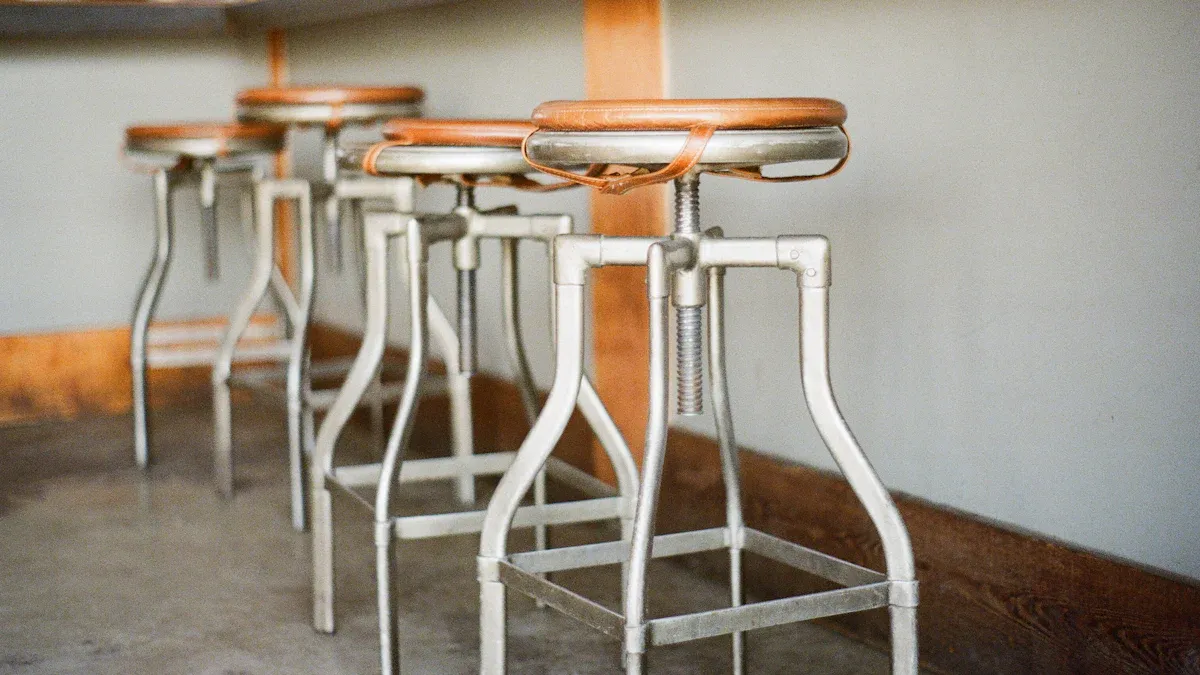
Counter Height vs Bar Height vs Dining Height (How to Match Tables & Stools)
The best restaurant seating layout starts with matching seat and table heights for comfort and style. I always check the height of every table and stool before I order. If the heights do not match, guests feel awkward and the dining experience suffers. Here’s a quick table I use when planning a seating layout:
| Seating Type | Recommended Seat Height | Table Height |
|---|---|---|
| Dining Chair | 17″–18″ | 28″–30″ |
| Counter Stool | 23″–24″ | 34″–36″ |
| Bar Stool | 29″–30″ | 40″–42″ |
I always make sure there’s about 10–12 inches between the seat and the tabletop. This gives guests enough legroom and makes eating comfortable. Yezhi Furniture offers custom sizing, so I can get the perfect fit for any restaurant.
Clearances That Affect Comfort (Legroom, Chair Pull-Out, Walkways)
Proper spacing keeps guests comfortable and helps staff move easily. I measure every walkway and space between tables before finalizing a restaurant seating layout. If the space is too tight, guests feel crowded and servers bump into chairs. Here’s what I use as a guide:
| Requirement | Minimum Clearance |
|---|---|
| Main walkways | 4–5 feet |
| Between tables | 18–24 inches |
I always leave enough room for chairs to pull out and for guests to stretch their legs. If you want a smooth dining experience, never skip this step. I like to use tape on the floor to test the spacing before ordering furniture. 🚶♂️
How Many Seats Fit Without Feeling Crowded (Capacity vs Comfort)
The right size for your restaurant seating layout balances guest comfort and capacity. I get this question a lot: “How many seats can I fit in my space?” For a 1,000 square foot restaurant, I usually plan for about 40 seats. This keeps the space open and lets guests enjoy their meal without bumping elbows. If you squeeze in more, the dining experience drops and guests may not come back.
Tip: Always count the size of your tables and chairs before finalizing your seating layout. Small tables and slim chairs help you fit more seats, but never sacrifice comfort.
I work with Yezhi Furniture to customize seating sizes for each project. This helps me maximize space without making guests feel crowded. 😊
Key Factors in Restaurant Seating Choice
Space Efficiency
The best way to maximize space efficiency in restaurant seating is to plan every inch with purpose. First, I look at how much space I have. Then, I decide how many guests I want to seat. I split the room into areas for couples, families, and people eating alone. This helps me make a layout that feels open but still fits enough guests.
- I use modular seating so tables and chairs can move easily.
- I leave enough space between tables and chairs for comfort.
- I add outdoor seating when I can to fit more people.
- I put service stations close to tables so staff can help quickly.
It is important to balance comfort and how many seats you have. If there are too many seats, guests feel crowded. This makes the dining experience worse. I always check if the atmosphere matches the seating plan. I want guests to feel relaxed and not rushed.
Yezhi Furniture helps me with custom layouts and modular seating. This lets me change the space for any project. 😊
Comfort
The most important factor for customer comfort is choosing seating with good ergonomics and support. I look for chairs and booths that fit the body well. I check the seat height, back support, and cushion softness. When guests are comfortable, they stay longer and enjoy their meal.
Here’s a quick table I use to compare comfort features:
| Ergonomic Feature | How It Helps Customer Comfort |
|---|---|
| Chair Height (18″) | Supports relaxed posture |
| Lumbar Support | Reduces fatigue, keeps spine aligned |
| Cushioned Seats | Adds comfort for long meals |
- I pick designs that work for different body shapes and sizes.
- I test every chair and booth for comfort before I buy.
- I choose materials that feel nice and last a long time.
Yezhi Furniture offers custom upholstery and ergonomic seating. This helps me match comfort to my restaurant’s style. 🪑
Durability
The best restaurant seating lasts for years and stands up to heavy use. I always check the materials before I buy seats. I want seating that looks good and stays strong, even in busy places.
Here’s a table comparing common materials for durability:
| Material | Durability | Maintenance | Best Use |
|---|---|---|---|
| Metal | High | Low | Modern, industrial |
| Wood | Moderate | Moderate | Warm, classic |
| Resin | High | Low | Outdoor, casual |
| Plastics | High | Low | Family-friendly, modern |
| Vinyl | High | Low | High-traffic indoor |
| Fabric | Moderate | High | Indoor, versatile |
| Leather | High | Moderate | Upscale, sophisticated |
- I use resin and plastics outside because they handle weather and are easy to clean.
- I pick vinyl for busy areas since it handles spills and lots of use.
- I choose leather for fancy places because it looks nice and lasts.
Yezhi Furniture gives me many strong materials to pick from. This helps me match seating to any space or brand style.
Maintenance & Cleaning
The easiest way to keep restaurant seating looking great is to follow a smart cleaning and maintenance routine. I always set up daily cleaning schedules and train my staff to spot problems early. Clean seats make guests feel welcome and help the furniture last longer.
Here are my top tips for keeping seating in top shape:
- Wipe down chairs, booths, and stools every day with the right cleaner for each material.
- Schedule deep cleaning sessions every month to tackle stains and hidden dirt.
- Pick seating made from strong materials like metal, vinyl, or treated wood. These stand up to heavy use and frequent cleaning.
- Store extra chairs and stools in a dry, safe spot when not in use. This prevents damage and keeps them ready for busy times.
- Fix scratches, loose screws, or torn upholstery as soon as you notice them. Quick repairs stop bigger problems.
- Teach staff the best cleaning methods for each type of seat. I always encourage them to report any issues right away.
Tip: Well-maintained seating not only looks good but also saves money on replacements. 😊
Yezhi Furniture offers seating options with easy-to-clean surfaces and durable finishes. This makes maintenance simple for any restaurant project.
Accessibility
The best restaurant seating layout includes accessible options for every guest. I always make sure my space meets ADA guidelines so everyone feels welcome. Accessible seating helps guests with wheelchairs or mobility challenges enjoy the dining experience without stress.
Here’s a quick table showing what I check for accessibility:
| Requirement | Description |
|---|---|
| Percentage of Accessible Seating | At least 5% of seating must be accessible and spread throughout the dining area. |
| Clear Floor Space | Each accessible seat needs a space of 30″ x 48″ for a wheelchair. |
| Height and Knee Clearance | Table height should be 28–34″, with at least 27″ of clear space underneath. |
| Path of Travel | Accessible routes must be at least 36″ wide to reach all seating areas. |
| Seating Stability and Design | Accessible seating must be stable, secure, and easy to move for wheelchair users. |
I always test the layout with tape on the floor to make sure wheelchairs can move easily. Yezhi Furniture supports custom sizing and stable designs, so I can create a space that works for everyone. 🦽
Brand Identity
The fastest way to show your restaurant’s brand is through thoughtful seating design. I pick chairs and booths that match the vibe I want guests to feel. Well-crafted seating acts as a visual focal point and helps guests remember the restaurant.
Thoughtful design does more than look good. It shapes the dining experience and builds brand loyalty. Here are some ways I match seating to my brand:
- I use natural wood chairs for restaurants with a farm-to-table focus. This connects the food and the space.
- I choose sleek, chrome-plated steel chairs for modern restaurants that want a cutting-edge look.
- I pick bold colors and unique shapes for venues that want to stand out and feel fun.
Your seating tells a story before guests even order. Make sure it matches your brand’s message. 🎨
Yezhi Furniture works with overseas designers to offer styles that fit any brand vision. Their customization options help me create a cohesive look for every project.
Cost
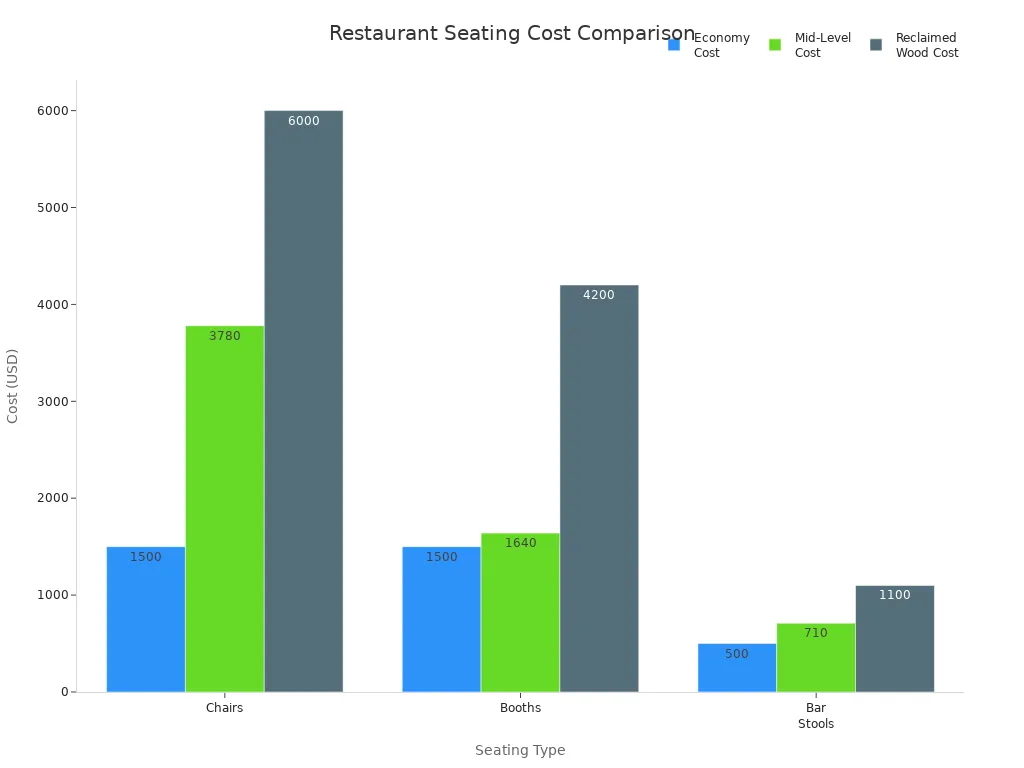
The cost of restaurant seating depends on your style, materials, and project size. I always make a budget before I start shopping. Prices can be very different, so I look at many types of seating to see what works for me. Here’s a table that shows how much chairs, booths, and bar stools usually cost at three price levels:
| Seating Type | Economy Cost | Mid-Level Cost | Reclaimed Wood Cost |
|---|---|---|---|
| Chairs | $1500 | $3780 | $6000 |
| Booths | $1500 | $1640 | $4200 |
| Bar Stools | $500 | $710 | $1100 |
I do not just look at the price. I also think about how long the seating will last and how much it costs to clean. Sometimes, paying more at first saves money later. I check if the seating matches my brand and the feeling I want in my restaurant.
Here are my best tips for saving money:
- Make a budget for each seating type.
- Compare materials and finishes to see which last longer.
- Ask if you can get a discount for buying a lot or mixing models.
- Think about custom options if you want something special.
Yezhi Furniture helps me save money and still get the style I want. They let me pick materials that fit my budget and look good. 💡
Lead Time & Project Planning
Lead time for restaurant seating can make or break your opening schedule. I always ask how long it takes to make and ship the furniture. Custom designs or big orders usually take more time. Planning ahead helps me avoid delays and keeps my project moving.
Here’s a table that shows what can change lead time:
| Factor | Impact on Lead Time |
|---|---|
| Design Complexity | Fancy designs need more time to plan and build. |
| Materials and Finishes | Some materials take longer, especially custom upholstery. |
| Customization Level | Special shapes and features can slow things down. |
| Quantity | Bigger orders may take more time to make. |
| Manufacturer’s Workload | If the factory is busy, it can take longer. |
| Collaboration and Approval | Waiting for design approval can add time. |
| Shipping and Installation | Shipping and setting up the furniture also takes time. |
| Seasonal Demand | Busy seasons can make lead times longer. |
Tip: I always add extra time for shipping and installation. This helps me avoid last-minute problems.
I work with Yezhi Furniture because they tell me how long everything will take. Their team helps me plan from start to finish. For custom seating, I plan for about 30 days to make it and 30 days for shipping by sea. If I need it faster, I ask about ready-made items or smaller orders. 🕒
Good planning helps me open my restaurant on time and give guests a great experience right away.
Best Seating in a Restaurant: Performance Comparison
Comfort & Guest Experience
The best seating in a restaurant delivers comfort and a memorable dining experience for every customer. I always think about how guests will feel when they sit down. Booths give people privacy and make the room quieter. They help the space feel warm and cozy. Banquettes look fancy and can fit groups of many sizes. Benches help people talk to each other, but they do not have much back support. Here is a table that shows how each type feels:
| Seating Type | Advantages | Disadvantages |
|---|---|---|
| Booths | Privacy, reduced noise, cozy experience | Space-consuming, limits seating capacity |
| Banquettes | Flexible, elegant, fits groups | Higher installation cost, needs good back support |
| Benches | Cost-effective, social interaction | Less privacy, no back support |
I see that guests are happier when they have enough space and feel relaxed. Booths are good for families or people who want a quiet meal. Banquettes add style and can be used in many ways. Benches are great for casual places where people like to chat. I always try out the seating to check if it is comfortable before I decide. Yezhi Furniture lets me pick booth sizes and fabrics to match the feeling I want. 😊
Durability & Maintenance
The best seating in a restaurant stands up to heavy use and stays looking great with easy maintenance. I look for strong materials that last a long time. For example, the Lola Wood Restaurant Chair in Walnut is simple and very strong. South American Walnut table tops do not wear out fast and look nice. Gold powder-coated round table bases made from stainless steel are steady and stylish. These choices help me keep guests happy because they notice when furniture is sturdy and clean.
- I pick seating with finishes that do not scratch or stain easily.
- I choose designs that are simple to wipe down every day.
- I check often for loose screws or worn-out fabric.
Yezhi Furniture has many strong materials and finishes to pick from. Their team checks quality and helps me after I buy. This makes it easy to keep my restaurant seating looking good. If I find a problem, I know they will help me fix it quickly.
Space Efficiency & Layout Flexibility
The best seating in a restaurant maximizes space and adapts to different group sizes for higher customer satisfaction. I use flexible layouts so I can seat more people without making the room crowded. When I move tables and mix different seats, I can serve more guests and make more money. Here is what I do to use my space well:
- I use modular seating to change the layout when it gets busy.
- I mix booths, chairs, and bar stools for couples, families, and people eating alone.
- I keep walkways open so staff can move fast and guests feel at ease.
Flexible seating helps me use space better and turn tables faster. I notice guests are happier when they can pick where to sit. Yezhi Furniture lets me order different types of seats in one project. This helps me make a dining room that matches my brand and keeps guests coming back. 🚀
Cleaning Speed (Daily Wipe-Down Reality)
The fastest way to keep your restaurant seating clean is to choose materials and designs that make daily wipe-downs quick and easy. I always pick seating with smooth surfaces and not many seams. When I walk through a busy dining room, I see staff spend a lot of time cleaning. If chairs or booths have lots of small spaces, crumbs and spills get stuck. This makes cleaning take longer.
Here’s what I look for to clean fast:
- Smooth, non-porous surfaces like metal or treated wood
- Upholstery that does not stain and wipes clean with a damp cloth
- Simple shapes without deep grooves or tufted buttons
I also like seats with open bases. This lets staff sweep under them without moving heavy furniture. For busy spots, I pick bar stools and chairs with powder-coated finishes. These can handle daily cleaning and still look nice.
Tip: I always ask Yezhi Furniture about their easy-clean options. Their MorningSun line has water-resistant fabrics and metal finishes that make cleaning simple. 🧽
Brand Fit
The best seating reinforces your restaurant’s brand by matching comfort, durability, and style to your concept. I notice customers judge a place before they even taste the food. If the seating looks wrong, guests might think the whole dining experience is not good.
Here’s a quick table I use to check brand fit:
| Aspect | Description |
|---|---|
| Comfort | Proper seating helps guests relax and enjoy their visit. |
| Durability | Strong furniture keeps your brand looking sharp, even after years of use. |
| Aesthetics | The design and color should match your restaurant’s vibe and atmosphere. |
| Efficiency | Smart layouts let you seat more people without sacrificing comfort or style. |
I always make sure the seating style matches the rest of the décor. For example, a modern café needs sleek metal chairs. A rustic bistro looks best with warm wood finishes. If the seating does not match, guests may feel confused and worry about the food.
- Seating shapes what customers expect.
- If chairs and booths do not match the vibe, guests may feel uneasy.
- Keeping the design the same builds trust and makes people want to return.
Yezhi Furniture works with overseas designers to create seating that fits any brand vision. Their custom options help me make a space that feels special and easy to remember. 🎨
Accessibility Considerations
The best restaurant seating layout includes accessible options for every customer, making sure everyone feels welcome. I always plan for families with toddlers, pregnant women, and older guests. Some people need highchairs that fit safely at the table. Others need open spaces for walkers or wheelchairs.
Here’s what I check for accessibility:
- At least 5% of seats are accessible
- Tables have a clear floor space of 30″ x 48″ for wheelchair users
- Aisles are at least 36″ wide for easy movement
- Tables have enough space under them for wheelchairs
- Adjustable tables for guests with special needs
I also make sure there are clear paths so everyone can move around easily. Booths can feel tight for some guests, so I mix in chairs and open tables. Yezhi Furniture supports custom sizing and stable designs, which helps me make a space that works for everyone. 🦽
Cost (Upfront vs Lifetime Cost)
The smartest way to manage costs in restaurant seating is to look beyond the price tag and focus on long-term value. When I open a new restaurant, I ask myself if these seats will last. Will I need to buy new ones next year? Cheap seats might look good at first, but they do not always last long.
High-quality furniture costs more at first, but it saves money later. Cheaper chairs and stools can break or wear out quickly. I have seen restaurants replace cheap seating every year. This costs more over time and hurts the budget. Strong materials like solid wood or metal keep their shape for years. Comfortable seating makes customers happy, so they stay longer and come back.
Here’s a table that shows how upfront and lifetime costs compare:
| Upfront Costs | Lifetime Costs | Notes |
|---|---|---|
| High-quality furniture | Lower replacement costs | Durable materials lead to long-term savings |
| Cheaper options | Higher replacement costs | May require more frequent maintenance |
I always tell people to buy strong, stylish seating. It helps make the restaurant feel welcoming. Customers want to return. Yezhi Furniture gives buyers many choices for durable, custom seating. Their team helps me pick materials that fit my budget and last.
To save money, I use these ideas:
- Buy lots of seats at once for better prices.
- Mix different seating types to balance style and cost.
- Look for second-hand seats for special pieces.
- Pick finishes that are easy to clean to save on care.
Comfort and style are just as important as price. When customers feel good in their seats, they order more and stay longer. This extra money helps pay for the seats. I always check the warranty and support before I buy. Yezhi Furniture promises good quality and a clear replacement plan. If I have a problem, they help me fast. 😊
Tip: Think about the total cost over five years, not just the price on day one. Good seating pays for itself with happy guests and fewer replacements.
Picking the right restaurant seating is a smart choice. It helps me make a space that looks nice, feels good, and stays on budget. I always plan for both upfront and lifetime costs to help my restaurant do well. 🪑
Mixing Restaurant Seating for Flexibility (The Best Layout Strategy)
Benefits of Mixed Seating
The best way to create a flexible and inviting dining space is to mix different types of seating. I see that guests pick seats based on how they feel, who they are with, and what kind of mood they want. When I use booths, chairs, and bar stools together, everyone can find a spot they like. Families often choose booths because they want privacy. People eating alone like counter seats for a fast meal. Friends sit at high-top tables to talk and have fun.
- Gives guests more choices so they are happier
- Helps turn tables faster when it gets busy
- Makes the restaurant feel fun and friendly
- Lets me change the setup for special events
Yezhi Furniture lets me order different styles and materials in one project. This helps me match my brand and make the restaurant look special. 😊
Winning Seating Combinations (Copy-and-Paste Templates)
The most effective seating combinations balance comfort, style, and space for every guest. I use simple plans to set up my dining room. Here are some I like:
| Combination | Best For | Description |
|---|---|---|
| Booths + 2-top/4-top Chairs | Families, couples | Booths by the walls, chairs in the middle for easy changes |
| Bar Stools + High-top Tables | Solo diners, groups, events | Bar stools at counters, high-tops for hanging out |
| Banquettes + Side Chairs | Large parties, upscale dining | Banquettes on one side, chairs on the other for easy access |
| Outdoor Stools + Café Tables | Patio, casual dining | Weather-proof stools with small tables for quick service |
I put booths along the outside walls first. Then, I fill the middle with chairs and tables that can move. Bar stools go near the bar or counter. This mix lets me seat more people and keeps the room open.
Yezhi Furniture lets me pick wood, metal, or fabric for each seat. This helps me make a design that looks good and fits together.
Layout Strategies
The smartest layout strategy maps traffic flow first, then balances capacity with comfort. I walk through the restaurant and mark where people will walk. I keep walkways at least 36 inches wide so no one gets stuck. I plan for 18 to 20 square feet for each guest. This keeps the restaurant comfy and helps me make more money.
- Put booths and banquettes by the walls to save space
- Use tables and chairs in the middle that can move around
- Make special areas for families, single diners, and events
- Watch how fast tables turn and train staff to handle 3 or 4 tables each
Tip: I use tape on the floor to test where things should go before I buy furniture. This helps me see how people will move.
Yezhi Furniture helps me plan layouts and offers seating that can change as needed. Their team helps me adjust the design if I need to. 🪑
Mixing restaurant seating lets me make a space that feels right for every guest.
Creating Zones
The best way to organize your restaurant seating is to create clear zones for different guest needs. I always start by thinking about what each area should feel like. Zones help me guide the flow of people and make every customer feel comfortable. When I set up zones, I can offer quiet spots for families, lively areas for groups, and quick seats for solo diners.
Here’s how I break down my zones:
- Family Zone: I put booths and banquettes along the walls. These seats give privacy and keep kids safe from busy walkways.
- Couples & Small Groups: I use 2-top and 4-top tables with dining chairs in the center. These tables move easily for bigger parties.
- Solo Diners & Quick Service: I add counter seating and bar stools near windows or the bar. These spots work well for guests who want a fast meal or coffee.
- Event or Group Zone: I set up high-top tables and flexible seating in one area. This lets me host parties or special events without changing the whole layout.
Tip: I use tape on the floor to test where each zone should go before I order furniture. This helps me see how people will move and where they will sit.
Yezhi Furniture supports mix-model and mix-material orders, so I can design each zone with the right vibe and style. Their team helps me match booth fabrics, chair finishes, and bar stool heights for a seamless look.
Here’s a simple table showing how I plan zones:
| Zone Type | Seating Used | Best Location |
|---|---|---|
| Family | Booths, banquettes | Along walls |
| Couples/Small | Dining chairs, tables | Center of room |
| Solo/Quick | Bar stools, counters | Near windows/bar |
| Events/Groups | High-tops, benches | Separate section |
😊 Zones make my restaurant feel organized and welcoming for every guest.
Cohesive Design Tips
The easiest way to keep your restaurant seating design cohesive is to use a consistent style, color palette, and material mix. I always pick a main theme before I choose any furniture. When every seat matches the overall look, the space feels professional and inviting.
Here are my top tips for a cohesive design:
- Stick to a Color Scheme: I choose two or three main colors for all seating. This keeps the room from looking messy.
- Mix Materials Carefully: I combine wood, metal, and fabric, but I make sure each material appears in more than one zone.
- Repeat Shapes and Lines: I use chairs and booths with similar curves or straight edges. This ties the whole room together.
- Balance Textures: I add soft upholstery in booths and smooth finishes on chairs and tables. This gives variety without clashing.
- Use Accent Pieces: I pick one or two bold items, like a colorful bar stool or a patterned banquette, to add interest.
Note: I always ask Yezhi Furniture for samples before I order. Their customization lets me match finishes and fabrics across all seating types.
A cohesive design helps customers feel relaxed and confident in the restaurant. When everything fits together, guests notice the care I put into the space. I see more repeat visits and better reviews when the seating looks and feels right.
🍽️ Good design is not just about looks. It shapes how people move, sit, and enjoy their meal.
How to Choose the Best Seating for Your Restaurant
Assess Needs
The best seating for your restaurant starts with understanding what your guests want and how your business operates. I always begin by asking myself a few simple questions. Who comes to my restaurant most often? Do I serve families, couples, or solo diners? What kind of food do I offer—quick bites or long, relaxed meals? These answers help me decide which seating types will work best.
I follow a step-by-step process to make sure I cover everything:
- I look at my current layout and see what works and what doesn’t.
- I think about comfort and how many people I want to seat.
- I make sure my seating plan includes options for everyone, including guests with disabilities.
- I check how people move through the dining area to avoid crowded spots.
- I space tables so guests have enough room to relax.
- I set aside areas for large groups to keep things flexible.
- I use a table management system to track reservations and seating.
- I let guests pick their tables when they book, if possible.
- I send reminders to guests to reduce no-shows.
- I watch how my staff handles seating and make changes if needed.
- I ask customers for feedback to improve my seating plan.
Tip: I always listen to what my guests say about comfort and privacy. Their feedback helps me make smart changes.
Yezhi Furniture helps me find seating solutions that match my needs, whether I want cozy booths or flexible chairs. Their team understands how different venues work and can suggest options that fit my service style. 😊
Evaluate Space
The smartest way to choose restaurant seating is to measure your space and plan every inch for comfort and efficiency. I grab a tape measure and walk through my dining room. I check the size of each area and write down the numbers. This helps me see how many seats I can fit without making guests feel crowded.
Here’s how I break down my space:
| Area | Measurement Needed | Why It Matters |
|---|---|---|
| Main dining floor | Total square footage | Sets the limit for seating |
| Walkways | At least 36″ wide | Keeps traffic moving smoothly |
| Table spacing | 18–24″ between tables | Balances comfort and capacity |
| Accessible routes | 36″ wide minimum | Ensures everyone can move easily |
I use tape on the floor to test different layouts before I order furniture. This lets me see how guests and staff will move. I also think about where to put booths, tables, and bar stools so every guest has a good experience.
Note: I always leave extra space near doors and service stations. This keeps things running smoothly during busy times.
Yezhi Furniture offers custom sizing, so I can get tables and chairs that fit my space perfectly. Their team helps me plan layouts that work for both small cafés and large restaurants.
Define Brand
The fastest way to make your restaurant stand out is to choose seating that matches your brand’s style and story. I ask myself what feeling I want guests to have when they walk in. Do I want a cozy, rustic vibe or a sleek, modern look? The right seating helps me tell my brand’s story before guests even order food.
I look at colors, shapes, and materials that fit my brand. For example, I pick warm wood chairs for a farm-to-table restaurant. I choose bold metal bar stools for an industrial-style bar. I use soft, upholstered booths for a luxury dining room.
Here’s a table that helps me match seating to my brand:
| Brand Style | Seating Choice | Why It Works |
|---|---|---|
| Rustic | Wood chairs, benches | Feels warm and welcoming |
| Modern | Metal chairs, sleek stools | Looks clean and stylish |
| Family-friendly | Booths, banquettes | Offers privacy and comfort |
| Upscale | Upholstered chairs, sofas | Adds elegance and luxury |
Tip: I always order samples to see how colors and materials look in my space. This helps me keep my design cohesive.
Yezhi Furniture works with overseas designers to create seating that fits any brand vision. Their customization options let me match finishes and fabrics across all seating types. This makes my restaurant feel unique and memorable. 🍽️
Set Budget
The smartest way to choose restaurant seating is to set a clear budget before you start shopping. I always decide how much I want to spend on each area of my restaurant. This helps me avoid surprises and keeps my project on track. I break down my budget into categories like chairs, booths, bar stools, and delivery costs.
Here’s how I set my budget:
- I write down the total amount I can spend on furniture.
- I list each seating type I need and estimate the number of pieces.
- I check prices for different materials and finishes.
- I add a little extra for shipping, taxes, and installation.
- I leave room for a few custom pieces or upgrades.
| Seating Type | Estimated Cost per Piece | Quantity | Subtotal |
|---|---|---|---|
| Chairs | $80–$200 | 40 | $3,200–$8,000 |
| Booths | $250–$600 | 10 | $2,500–$6,000 |
| Bar Stools | $90–$250 | 12 | $1,080–$3,000 |
Tip: I always ask suppliers if they offer discounts for larger orders or mixed models. Yezhi Furniture often helps me find the best value for my budget and offers flexible options for project buyers.
Test & Feedback
The best way to know if your seating works is to test it and listen to customer feedback. I never skip this step. I sit in every chair and booth myself. I ask my staff to do the same. We check for comfort, stability, and how easy it is to clean.
Here’s what I do to test seating:
- I invite friends or regulars to try out new seats.
- I ask them how the seats feel after 10–15 minutes.
- I watch how easy it is for people to get in and out.
- I look for any wobbly legs or rough edges.
After a few weeks, I ask customers what they think. I use a simple survey or just chat with them. Their opinions help me spot problems early. If I hear the same complaint more than once, I know it’s time to make a change.
Note: Yezhi Furniture supports sample orders and can adjust designs based on real feedback. This makes it easier for me to get seating that fits my restaurant perfectly. 😊
Mockup Test (Tape-on-the-Floor Method)
The easiest way to plan your seating layout is to use the tape-on-the-floor method before you buy anything. I grab a roll of painter’s tape and mark out where each table, chair, and booth will go. This lets me see the flow of the room and check if there’s enough space for everyone.
Here’s how I do a mockup test:
- I measure the size of each table and chair.
- I use tape to outline the shape and position on the floor.
- I walk through the space to see if walkways feel open.
- I move “chairs” in and out to test for comfort and access.
- I invite staff and friends to walk the layout and give feedback.
| Step | What to Check |
|---|---|
| Table space | Enough room for plates and drinks |
| Chair space | Easy to pull out and sit down |
| Walkways | At least 36″ wide for easy movement |
| Group areas | Flexible for large or small parties |
Tip: This method saves me money and time. I can fix layout problems before I order furniture. Yezhi Furniture helps me adjust sizes and shapes to fit my mockup, so I get the best result for my restaurant. 🪑
Decision Checklist
The easiest way to choose the best restaurant seating is to follow a clear checklist before you order. I always use a step-by-step list to make sure I do not miss anything important. This helps me stay organized and confident when I make big decisions for my restaurant.
Here is my decision checklist:
- Know your guest profile. I ask myself who visits most often—families, couples, solo diners, or groups.
- Measure your space. I walk through the dining area and write down the size of each section.
- Set your seating goals. I decide how many seats I want and where to place booths, chairs, and bar stools.
- Match seating to your brand. I pick styles and colors that fit the vibe I want for my restaurant.
- Check comfort and accessibility. I test every seat for comfort and make sure there is space for wheelchairs.
- Plan for cleaning and maintenance. I choose materials that are easy to wipe down and last a long time.
- Review your budget. I compare prices and make sure I can afford the seating I want.
- Test with a mockup. I use tape on the floor to see how the layout works before I order.
- Get feedback. I ask staff and customers what they think about the seating options.
- Consult with suppliers. I talk to experts like Yezhi Furniture for advice and custom solutions.
Tip: I always double-check my list before placing an order. This saves me time and money. 😊
| Step | Done? | Notes |
|---|---|---|
| Guest profile | [ ] | |
| Space measured | [ ] | |
| Seating goals set | [ ] | |
| Brand matched | [ ] | |
| Comfort checked | [ ] | |
| Maintenance planned | [ ] | |
| Budget reviewed | [ ] | |
| Mockup tested | [ ] | |
| Feedback gathered | [ ] | |
| Supplier consulted | [ ] |
I check off each box as I go. This keeps me on track and helps me create a space that makes every customer feel welcome. If I need help, I reach out to Yezhi Furniture for expert advice and project support. 🪑
Working With a Yezhi Furniture (What to Ask Before You Place an Order)
MOQ & Mixed Loading
You should always ask about minimum order quantities and mixed loading before placing your order. Every supplier has their own rules. Yezhi Furniture usually asks for at least 15 pieces for most seating models. This is good for small restaurants or people buying for the first time. If you want custom designs, you need to order at least 100 pieces. I like that Yezhi Furniture lets you mix different models, colors, and materials in one shipment. This means you can make your restaurant look special without buying too much of one style.
Tip: I always check if I can mix models and ask for a packing list. This helps me plan my space and know what will arrive.
Here’s a simple table to compare your choices:
| Order Type | MOQ | Mix-Model Support | Customization |
|---|---|---|---|
| Standard | 15 pcs | Yes | Limited |
| Custom/OEM | 100 pcs | Yes | Full |
😊 This makes it easy for me to match my restaurant seating to my brand.
Customization for Consistency
You should request customization to keep your restaurant seating consistent with your brand. I always ask about custom finishes, fabrics, and sizes. Yezhi Furniture has many choices, like solid wood, metal, and soft upholstery. Their team works with designers from other countries, so I get cool styles. I send them my color ideas and floor plan. They help me match booth fabrics, chair finishes, and bar stool heights for a smooth look.
- I ask for samples before I buy anything.
- I check if they can match my old furniture.
- I ask how long custom pieces will take.
Note: Customization helps me make my restaurant look special and professional. Yezhi Furniture’s project support makes everything easier.
Quality Assurance & Replacement Policy
You should always check the supplier’s quality assurance and replacement policy before you buy. I want to know how they fix problems. Yezhi Furniture checks every piece carefully before shipping. If there is a real quality problem, they promise to replace or give credit for all the bad items in my next order.
Here’s what I look for in a supplier’s policy:
- Clear warranty rules
- Fast answers when there is a problem
- Easy way to report issues
| Policy Feature | Yezhi Furniture Approach |
|---|---|
| Quality Control | Checks at many steps |
| Replacement Guarantee | 100% replacement or credit |
| Communication | Fast and friendly support |
👍 This makes me feel safe. I know my restaurant will always look nice for every customer.
Choosing the right restaurant seating shapes the perfect dining experience for every customer. I always focus on comfort, space, and brand style when I plan a restaurant. Here’s what I do to get it right:
- I follow a step-by-step guide to match my seating to my goals.
- I work with trusted suppliers like Yezhi Furniture for project support and custom options.
- I listen to feedback and adjust my layout for a welcoming space.
Great seating helps my business grow and keeps guests coming back! 🎉
FAQ
What is the best type of restaurant seating for small spaces?
Chairs and counter stools work best for small spaces.
I pick slim chairs and counter stools to fit more people. Booths placed by the wall also help save space. Yezhi Furniture can make seats in sizes that fit small rooms. 😊
How do I choose seating that matches my restaurant’s style?
Pick seating that fits your brand colors, materials, and vibe.
I look at my restaurant’s style and pick wood, metal, or fabric that matches. Yezhi Furniture lets me pick custom finishes and designs for a special look.
How many seats should I fit in my restaurant?
Plan for 18–20 square feet per guest.
I measure my dining area and use tables and chairs that give comfort. In a 1,000 sq ft restaurant, I can fit about 40 seats. I always test the layout before I buy anything.
What is the easiest seating to clean in a busy restaurant?
Metal and vinyl chairs are easiest to clean.
I wipe smooth surfaces fast. Bar stools with powder-coated finishes are also easy to clean. I ask Yezhi Furniture for water-resistant fabrics and simple shapes for quick cleaning. 🧽
Can I mix different seating types in one restaurant?
Yes, mixing seating types creates a flexible and inviting space.
I use booths, chairs, and bar stools together so guests have choices. Mixing styles helps me serve families, solo diners, and groups. Yezhi Furniture lets me order different models in one project.
How do I make my restaurant seating accessible?
Include at least 5% accessible seats and keep aisles 36″ wide.
I use tables with enough space under them and steady chairs. I test the layout with tape to make sure wheelchairs fit. Accessible seating makes every guest feel welcome. 😊
How long does it take to get custom seating from Yezhi Furniture?
Custom seating usually takes about 30 days to produce and 30 days to ship by sea.
I plan early and ask for updates on my order. Yezhi Furniture gives clear timelines and helps me finish my project on time.
What should I ask suppliers before ordering restaurant seating?
Ask about minimum order quantity, customization options, and replacement policies.
I check if I can mix models, ask for samples, and look at warranty details. Yezhi Furniture gives fast help and clear quality promises.