Als je op zoek bent naar restaurantstoelen voor commercieel gebruik, lijkt de keuze tussen “aluminium of staal” een eenvoudige keuze. (Je zult het ook wel eens als volgt geformuleerd zien: stoelen van staal versus stoelen van aluminium (in de zoekresultaten.) In werkelijkheid zegt de naam van het metaal op zich minder dan je zou denken.
Een stalen stoel kan licht zijn, een aluminium stoel kan zwaar zijn, en beide kunnen al snel defect raken als de constructie, de afwerking, de bevestigingsmiddelen en de omgevingsomstandigheden niet geschikt zijn voor het beoogde gebruik.
Het belangrijkste is de stoel als geheel: het ontwerp van het frame, de geometrie van de buizen, de kwaliteit van de lasnaden, de voorbereiding van de afwerking, de bevestigingsmaterialen, de glijders en de manier waarop de stoel daadwerkelijk zal worden gebruikt (verplaatst, gestapeld).
Wanneer kopers zoeken aluminium of stalen stoelen voor restaurants, proberen ze meestal twee dure fouten te vermijden: het kiezen van een stoel die in het dagelijks gebruik lastig te hanteren is, of het kiezen van een stoel die in de daadwerkelijke omgeving gaat roesten.
Belangrijkste afhaalmaaltijd: Welk materiaal het beste is, hangt af van de totale constructie van de stoel, de omgevingsomstandigheden, de vereiste mobiliteit, het windrisico, het onderhoudsplan en de bewezen prestaties, en niet van het woord “staal” of “aluminium” op een etiket.
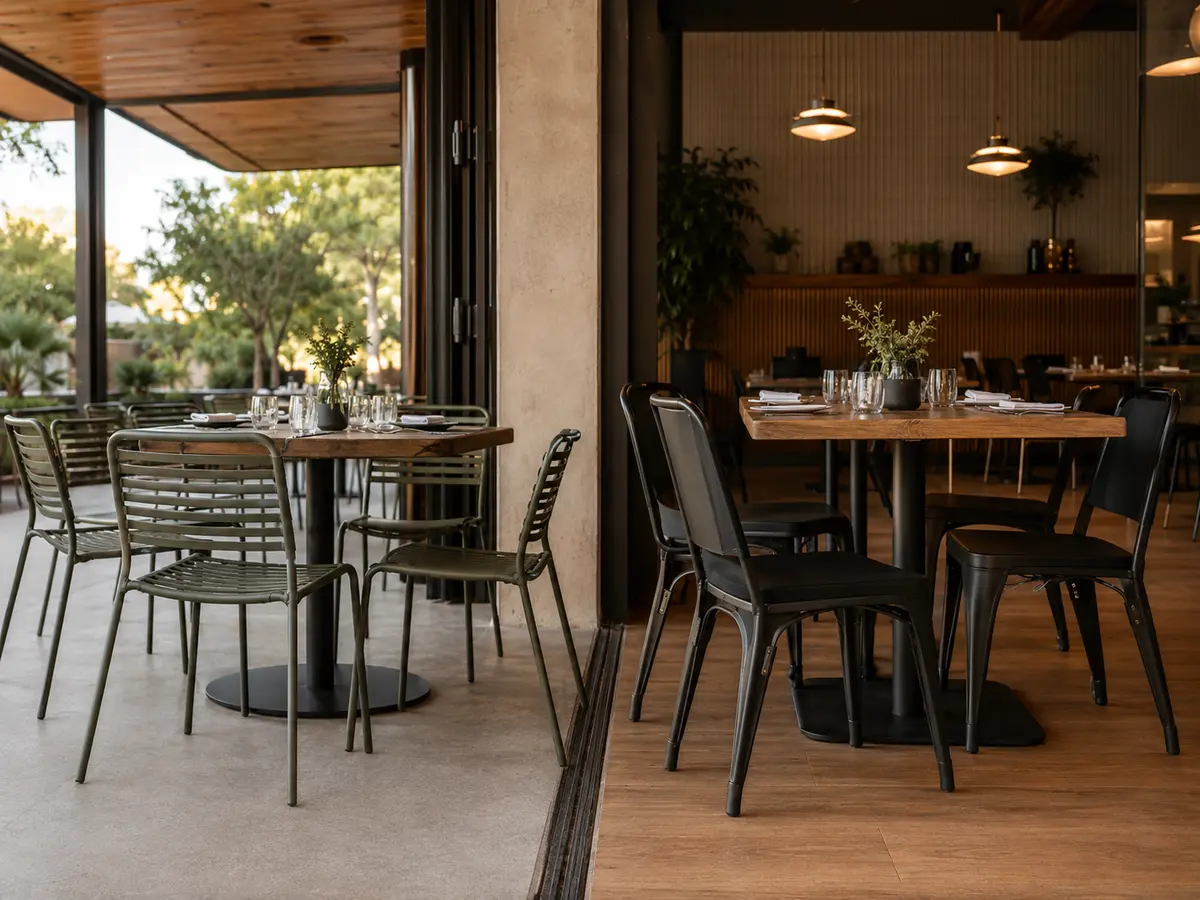
Korte vergelijking: aluminium versus staal voor restaurantstoelen
(Opmerking over de spelling in het VK en de EU: je kunt ook het volgende tegenkomen: restaurantstoelen van aluminium versus staal. De aankooplogica is dezelfde.)
| Beslissende factor | Aluminium stoelen (standaard) | Stalen stoelen (typisch) | Wat moet je controleren op het specificatieblad / het monster? |
|---|---|---|---|
| Dagelijkse werkzaamheden en werkdruk van het personeel | Vaak gemakkelijker te verplaatsen en te stapelen | Vaak zwaarder en stabieler aanvoelend | Werkelijk nettogewicht per stoel; stapelgrenzen; geschiktheid voor transport op een trolley |
| Sterkte en duurzaamheid | Kan van commerciële kwaliteit zijn, maar hangt sterk af van het ontwerp | Kan zeer duurzaam zijn, maar dit hangt ook af van het ontwerp | De geometrie van het frame, de lasnaden, de verstevigingen en eventuele tests op stoelniveau voor het exacte model |
| Corrosiegedrag | Het “roest” niet, maar kan wel corroderen (oxidatie, putcorrosie) | Koolstofstaal roest als het blootgesteld wordt; roestvrij staal en gegalvaniseerd staal gedragen zich anders | Legering/type, afwerkingssysteem en de manier waarop voegen/spleten worden beschermd |
| Risico’s in de buitenlucht en aan de kust | Wordt vaak geprefereerd, maar vereist nog wel de juiste afwerking en de juiste keuze van beslag | Werkt alleen buitenshuis als het beschermd is (coating, verzinking of roestvrij staal) | Voorbehandeling, specificaties voor de coating, afdichting/afwatering, materiaal van bevestigingsmiddelen + isolatie |
| Winderige terrassen / dakterrassen | Lichtgewicht kan een nadeel zijn als er geen plan is | Het gewicht helpt wel, maar het ontwerp en de verankering zijn belangrijker dan het metaal | Zwaartepunt, voetafdruk, “zeiloppervlak”, antislipvoetjes, opberginstructies |
| Onderhoud en bijwerken | Meestal is het systeem tolerant, maar bij blootstelling aan zware omstandigheden kunnen er putjesvorming of galvanische problemen optreden | Schade aan de coating kan op blootgestelde plekken tot roest leiden | Herstelplan, reserveglijstukken en wat er gebeurt als er krassen ontstaan |
Aluminium versus stalen restaurantstoelen: waar moet je als eerste op letten?
Aluminium heeft een lagere dichtheid dan staal. Dat klopt.
Maar een inkoper voor de horeca koopt geen dichtheid. Je koopt een kant-en-klare stoel met een bepaald nettogewicht, stapelbaarheid en dagelijkse gebruiks- en onderhoudskosten.
Waarom aluminium stoelen niet altijd lichter zijn:
- Bij sommige aluminium frames worden grotere buisdiameters of dikkere profielen gebruikt om de vereiste stijfheid te bereiken.
- Gegoten onderdelen en versterkte onderdelen kunnen het gewicht verhogen.
- De materialen van de zitting en de rugleuning (hout, bekleding, composiet) zijn vaak bepalend voor het uiteindelijke nettogewicht.
Waarom gewicht niet alleen maar “goed” is:
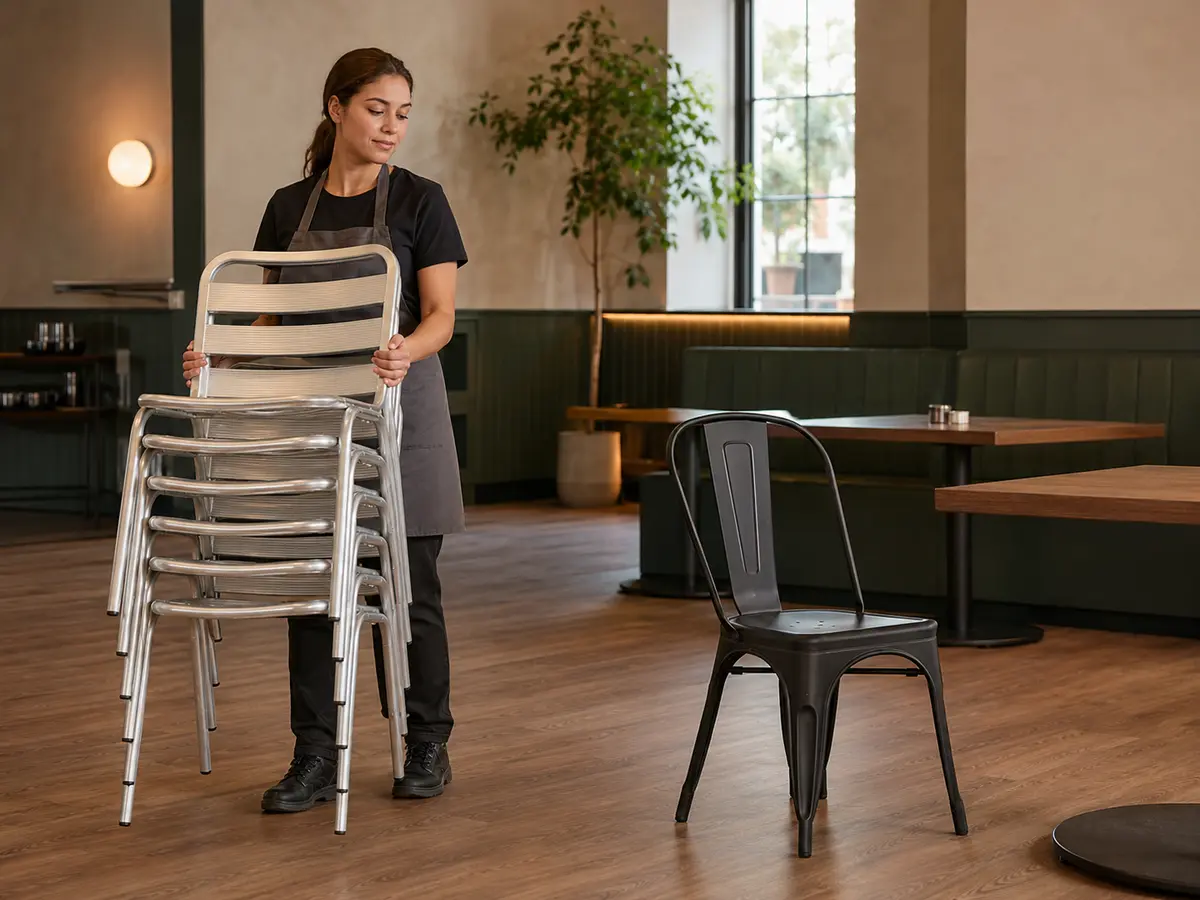
- Lichtere stoelen kunnen de vermoeidheid van het personeel verminderen als u ze dagelijks verplaatst en stapelt.
- Zwaardere stoelen staan misschien steviger, maar dat is geen garantie voor veiligheid op een terras waar het hard waait.
Praktische maatregel op het gebied van inkoop:
- Vraag om nettogewicht per stoel en, als stapelen van belang is, nettogewicht per stapel (bijvoorbeeld 6 stoelen).
- Controleer het gewicht van de verpakking als u logistieke kosten vergelijkt, want de stevigheid en bescherming van de doos kunnen de kosten bij levering beïnvloeden.
Als u een assortiment metalen stoelen samenstelt, kan de gids van YeZhi over stoelen voor restaurants en cafés u helpen bij het afstemmen van uw stoelkeuze op de indeling en het gebruiksgedrag: De beste stoeloplossingen voor restaurants en cafés.
Voor een kort overzicht van de productie- en projectervaring van YeZhi, zie Over YeZhi Furniture.
2) Sterkte en duurzaamheid: “staal is sterker” is geen aankoopcriterium
Het klopt dat staal vaak een hogere materiaalsterkte heeft dan aluminium. Maar defecten aan restaurantstoelen komen zelden voor omdat “de metaalsoort verkeerd was”.”
Dit komt doordat het ontwerp en de bouwkwaliteit van de stoel niet bestand zijn tegen intensief commercieel gebruik:
- herhaaldelijk slepen en zijdelings laden
- mensen die hun glas achterover kantelen
- schoppen tegen de voetsteun (vooral bij krukken)
- lasvermoeidheid
- beschadiging van de coating die leidt tot corrosie bij verbindingen
Wat je in plaats van metalen etiketten kunt gebruiken:
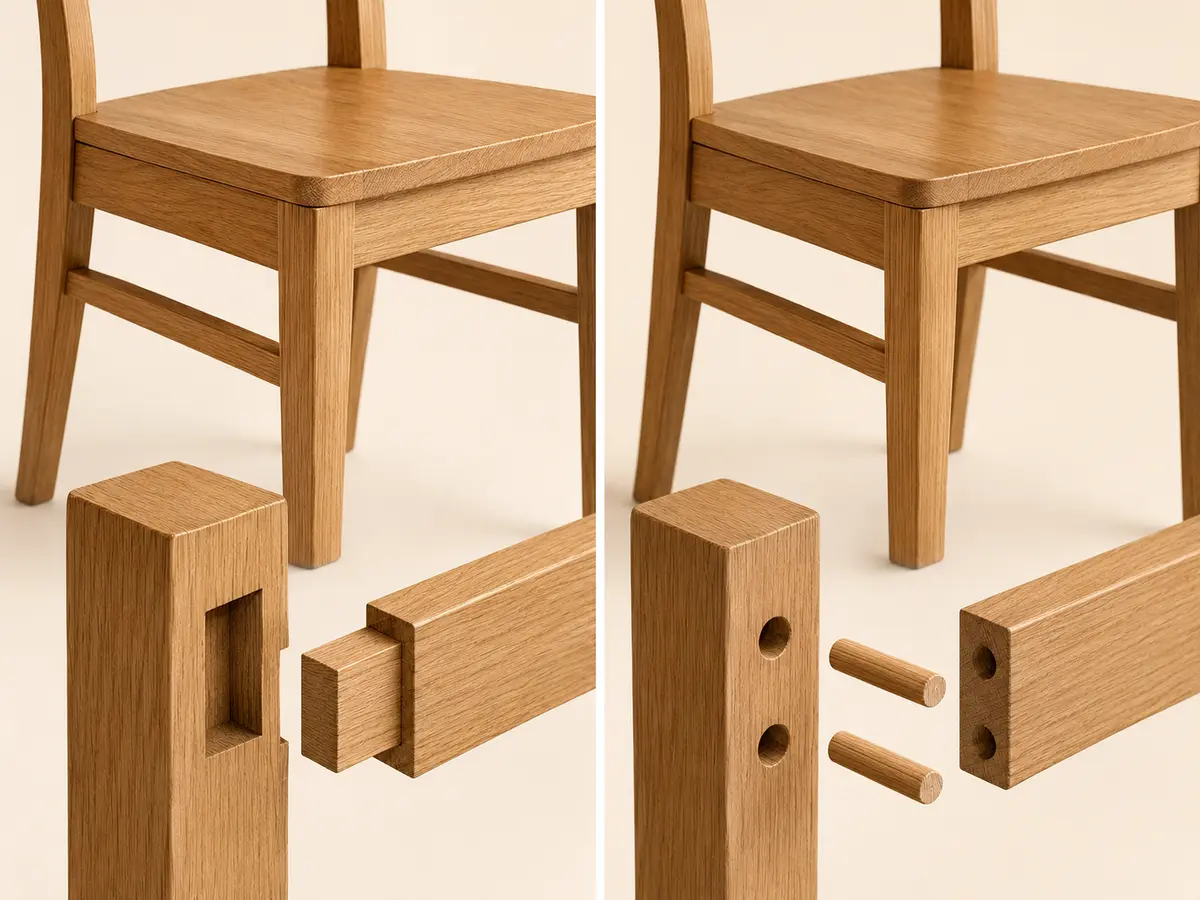
- Buisgeometrie en versteviging: Een goed verstevigd frame is meestal beter dan een onvoldoende verstevigd frame, ongeacht het metaal.
- Kwaliteit van de verbinding: Laskwaliteit, het ontwerp van de verbindingen en de manier waarop belastingen door het frame worden overgebracht.
- Stabiliteit op de vloer: Glij-eigenschappen, waterpasstelling en stabiliteitsregeling.
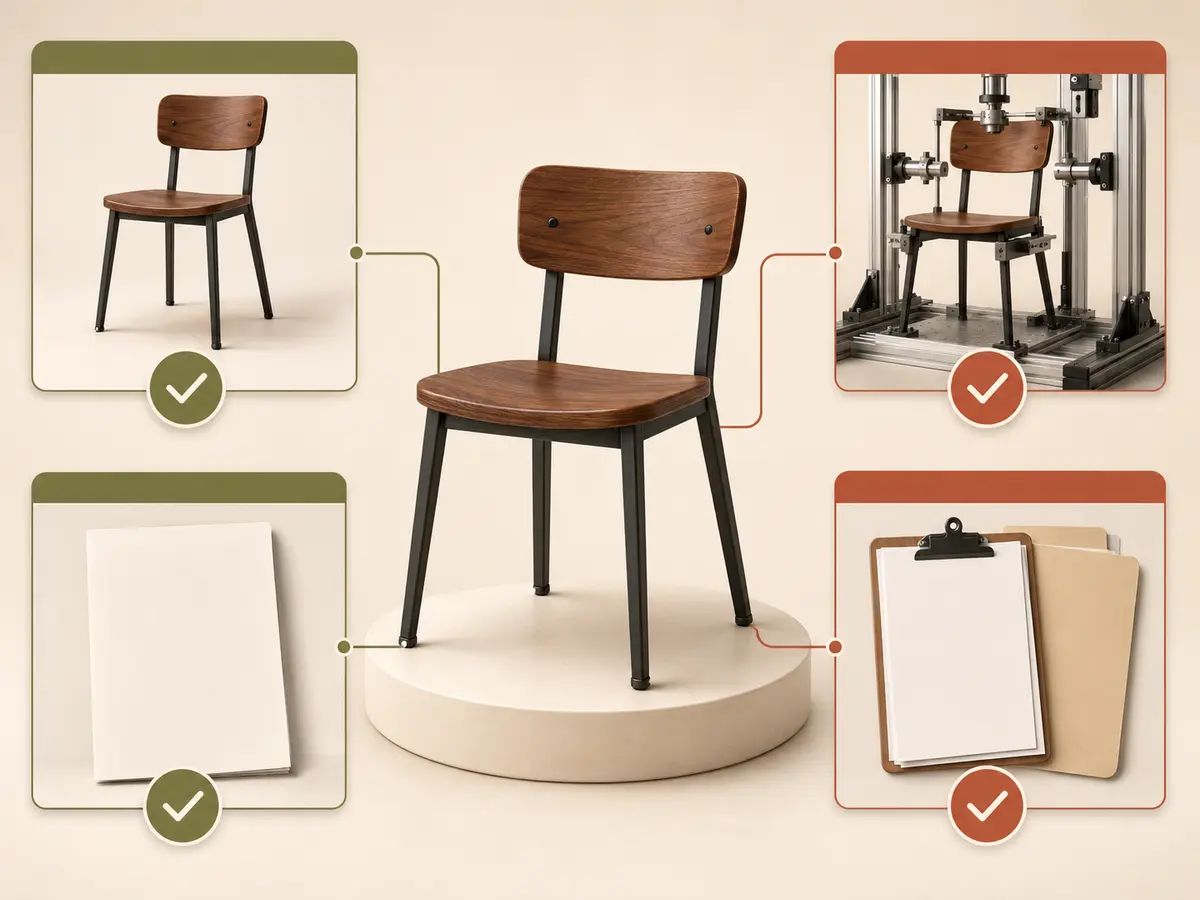
- Bewijs: Vraag of de leverancier de testresultaten op stoelniveau voor het exacte model (en onder de betreffende omstandigheden) kan verstrekken.
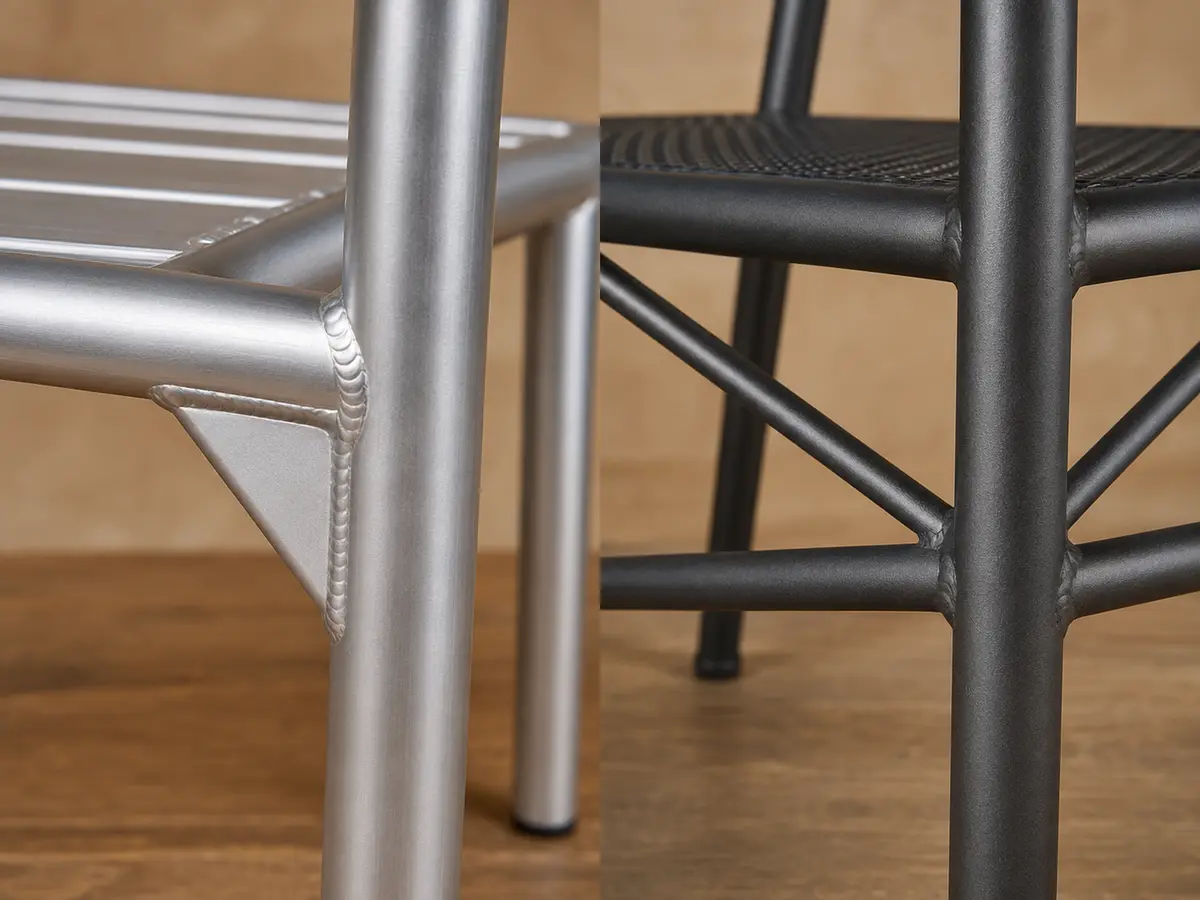
Als je inkopen doet voor de distributie, is dit de veiligste regel: vergelijk SKU naar SKU, niet van “staal” naar “aluminium”.”
3) Roest versus corrosie: wat gebeurt er eigenlijk buiten?
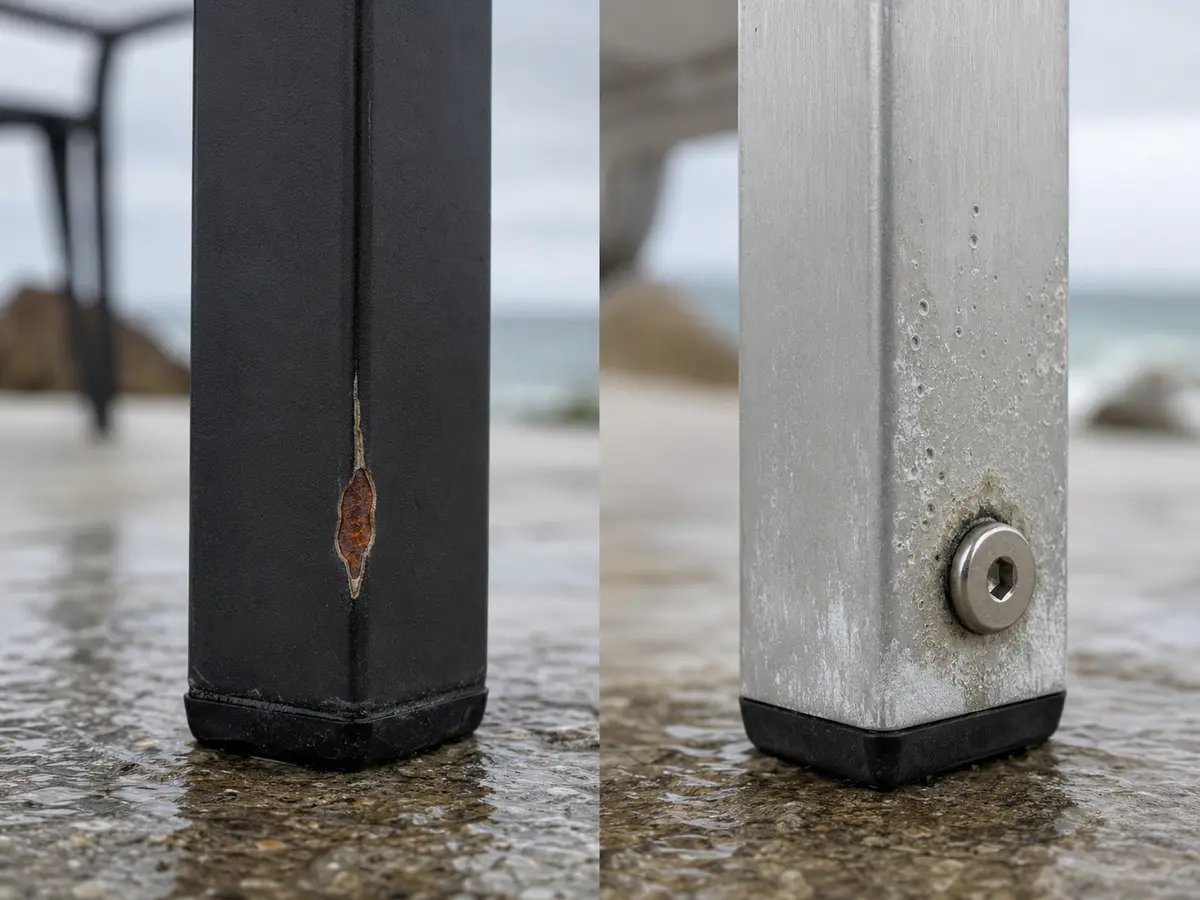
Staal: roest is de meest voorkomende oorzaak van defecten wanneer staal blootgesteld wordt
De meeste stalen frames in restaurants zijn van koolstofstaal. Koolstofstaal gaat roesten wanneer vocht en zuurstof in contact komen met het blanke metaal.
Als uw stoel voor bescherming afhankelijk is van een coating, is het risico op de lange termijn duidelijk:
- krassen en deukjes zijn onvermijdelijk
- zodra staal bloot komt te liggen, kan er op die plek roest ontstaan
Daarom is de kwaliteit van de poedercoating zo belangrijk (daarover later meer).
Aluminium: het “roest” niet, maar kan wel corroderen
Aluminium vormt een oxidelaag die het materiaal in het algemeen helpt beschermen; daarom wordt aluminium vaak omschreven als roestbestendig. Bronnen die dit onderscheid duidelijk toelichten, zijn onder meer het overzicht van Kloeckner Metals over oxidatie- en corrosiebestendigheid van aluminium en Hydro’s uitleg over waarom aluminium roest niet zoals staal.
Bij zitmeubilair voor de horeca zijn twee praktische corrosierisico’s het belangrijkst:
- Putcorrosie bij blootstelling aan chloride
- Chloriden (zoute lucht, zeewaternevel, bepaalde reinigingssituaties) kunnen beschermende lagen aantasten en bijdragen aan plaatselijke aantasting.
- De Stainless Steel Industry of North America (SSINA) wijst erop dat put- en spleetcorrosie verband houden met chloridezouten en vochtophoping in spleten, en dat deze corrosievormen verschillende metalen kunnen aantasten, waaronder aluminium; zie de inleidende brochure van de SSINA over pitting and crevice corrosion.
- Galvanic corrosion at joints and fasteners
- When aluminum is in electrical contact with a more noble metal (for example stainless or steel) in the presence of moisture, corrosion can accelerate on the aluminum side.
- Practical prevention guidance includes isolating dissimilar metals; Marsh Fasteners explains the risk and mitigation options in Can stainless steel and aluminum be used together?.
Bottom line: aluminum often reduces rust complaints, but coastal durability still depends on the alloy, finish system, hardware choices, and crevice control.
4) Powder-coated steel vs aluminum: what buyers should verify
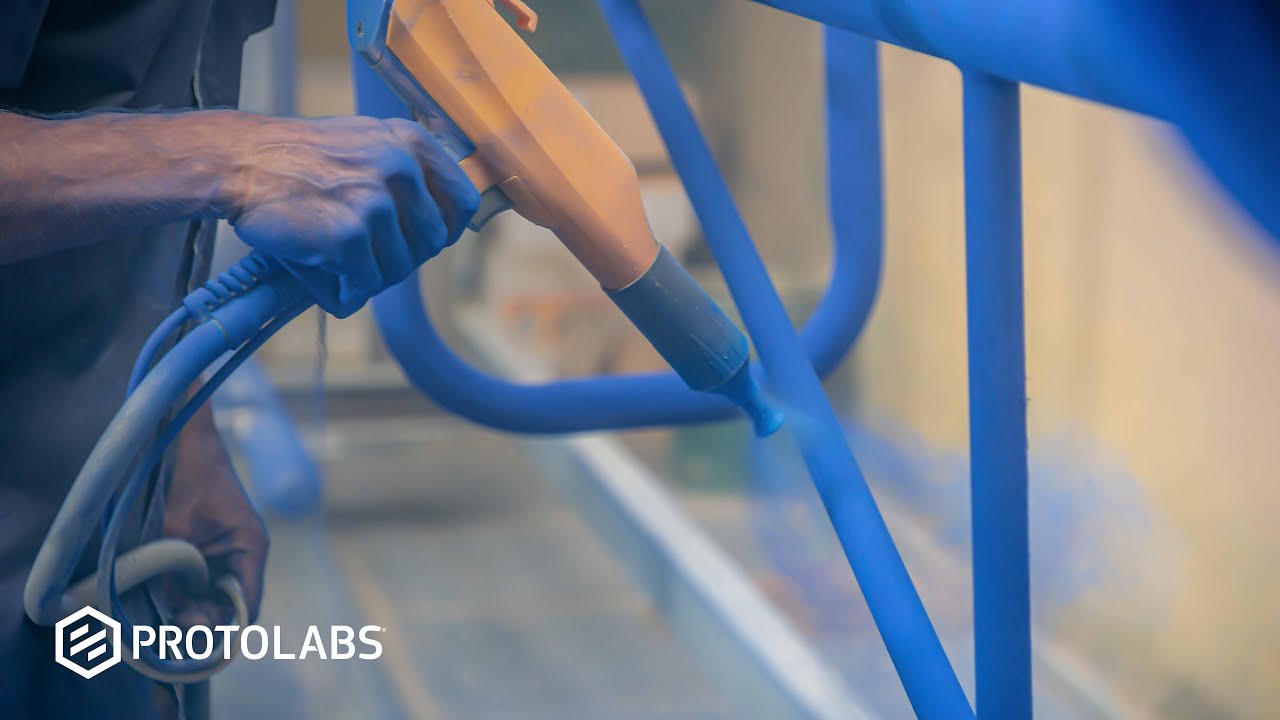
“Powder-coated” is a marketing adjective unless you know what system was used.
The part that buyers miss is that powder coating performance depends on two things:
- the coating staying intact
- the substrate being properly prepared before coating
Teknos’ technical brochure Powder Coating as a Corrosion Protection Method (PDF) is a useful reference for thinking in systems, not buzzwords.
Also, powder coating is a barrier. If it’s damaged, exposed steel is still exposed steel. SendCutSend explains this limitation directly in its comparison of zinc plating vs powder coating for corrosion resistance.
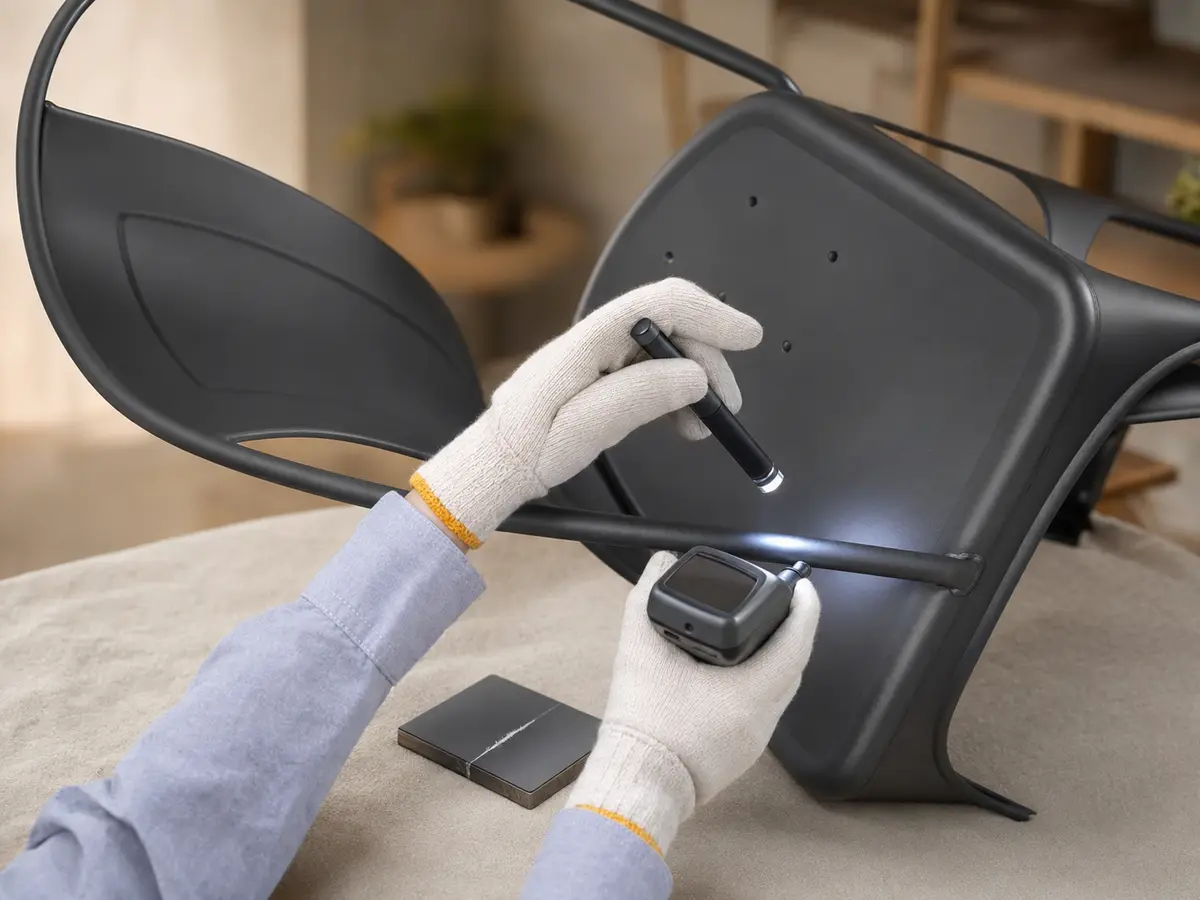
Here’s the practical checklist to request in an RFQ for powder-coated steel restaurant chairs:
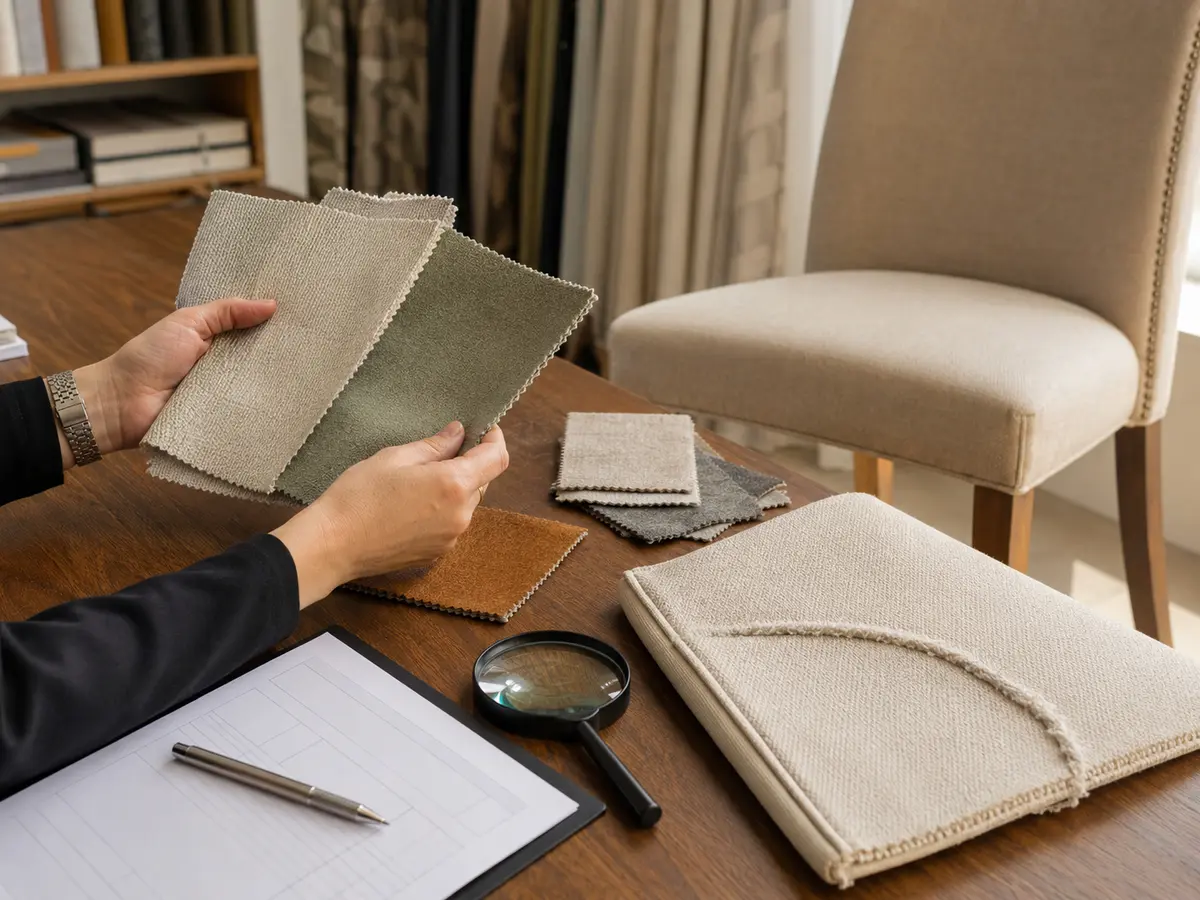
- Pretreatment: what cleaning and pretreatment steps are used before powder application?
- Coating system: single coat vs multi-layer system (especially for outdoor use)
- Edge/weld coverage: are welds and sharp edges treated to avoid thin film areas?
- Tube ends and water traps: are tube ends sealed, capped, or designed to drain?
- Touch-up guidance: what’s the approved field repair method after scratches?
5) Best uses by scenario: a buyer’s decision matrix
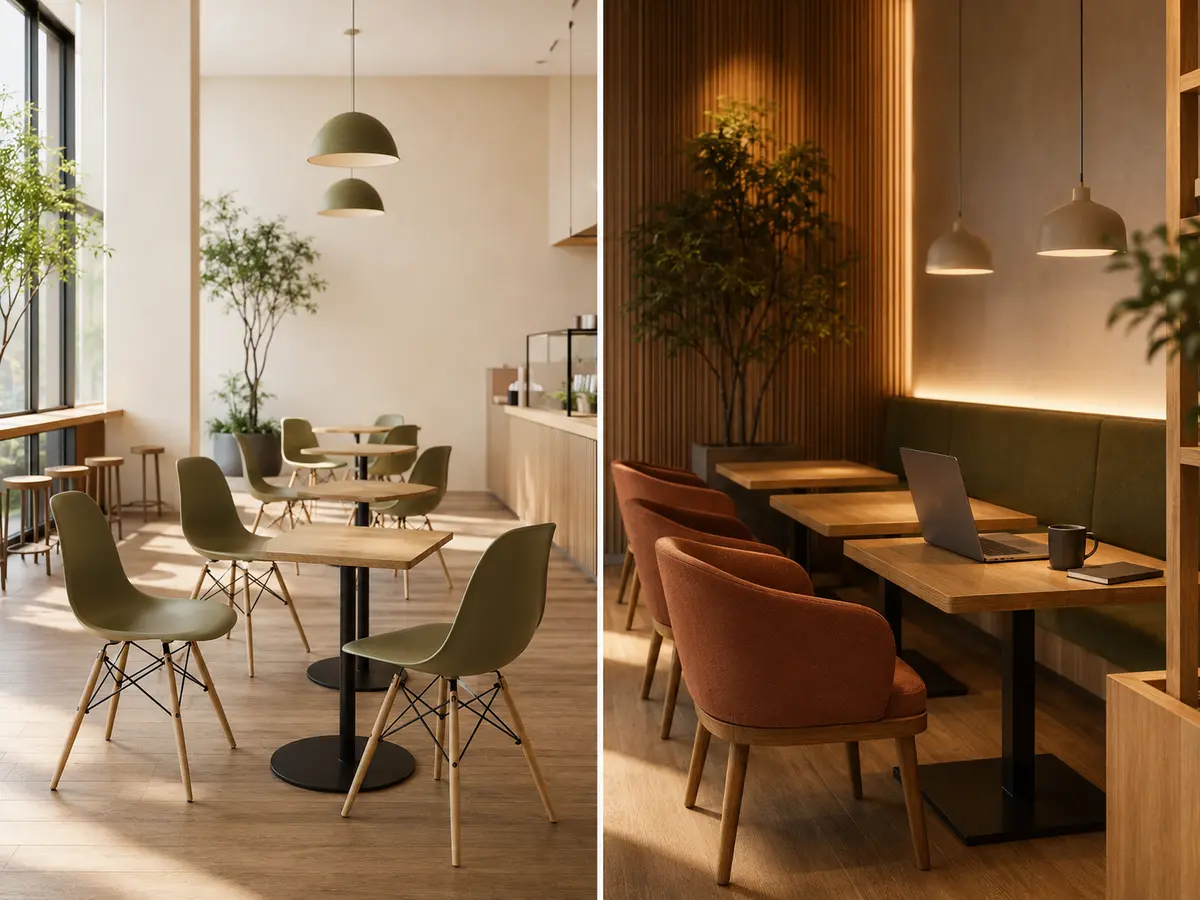
Use this matrix to shortlist the right material by job conditions. It’s intentionally conditional because “always” is how buyers get burned.
| Scenario | Usually a better fit | Waarom | What to check before you commit |
|---|---|---|---|
| High-traffic indoor dining (chairs dragged all day) | Either | Corrosion risk is lower; durability is mostly design + build quality | Wobble control, glides, weld quality, finish wear points |
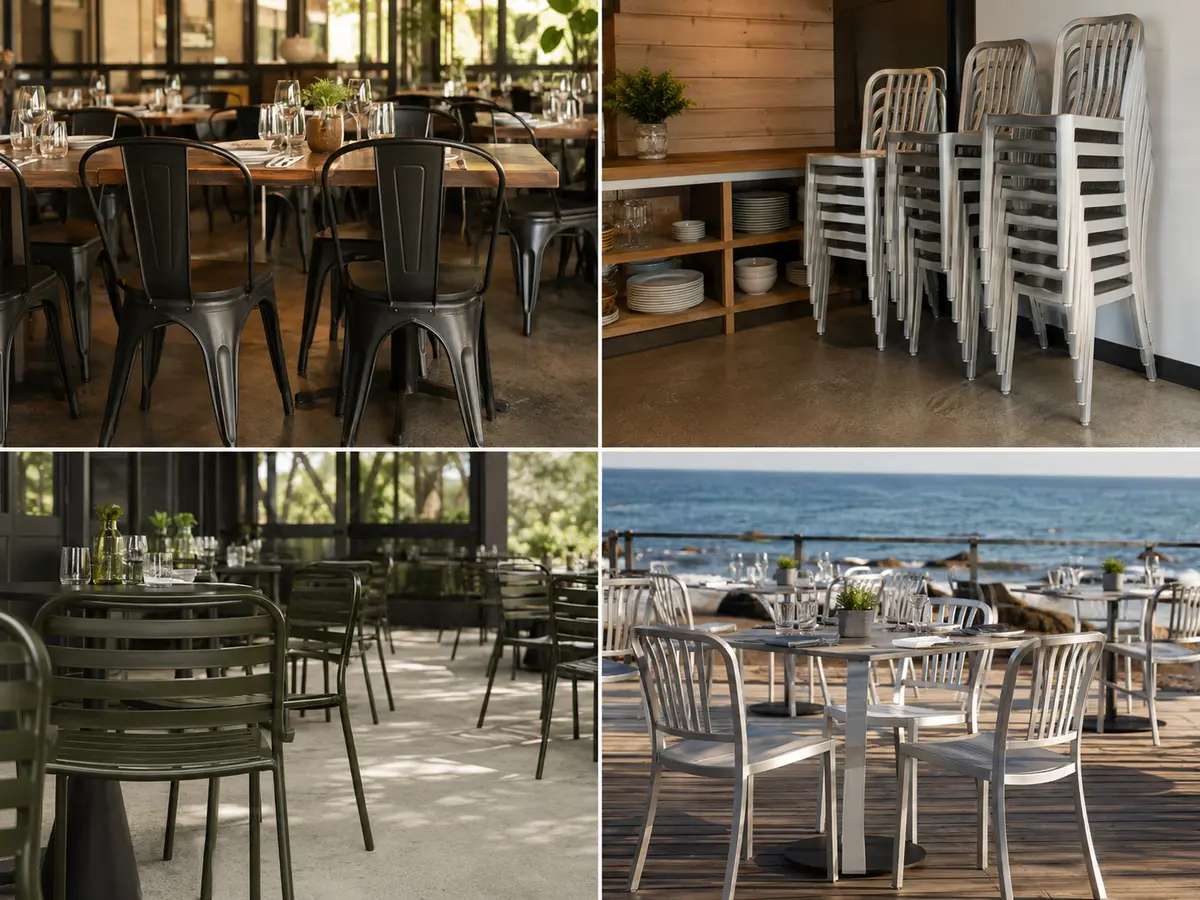
| Café with daily stacking and nightly storage | Aluminum often wins | Lower handling effort can matter more than theoretical strength | Stacking limit, stack stability, scratch-prone contact points |
| Standard outdoor patio (non-coastal, covered) | Either | Both can work if finish is right | For steel: coating system + water traps; for aluminum: finish and hardware |
| Coastal or high-humidity outdoor seating | Aluminum often wins, but not automatically | Lower rust complaints, but pitting/galvanic risk still exists | Hardware isolation, finish quality, crevice control, cleaning plan |
| Rooftop / windy patio | Dat hangt ervan af | Wind is about shape, center of gravity, footprint, and operations | Open-back vs solid-back, non-slip feet, anchoring or storm storage protocol |
| Operators who want “set and forget” with minimal touch-ups | Aluminum often wins | Steel requires faster response to chips/scratches | Touch-up SOP; spare parts kit |
6) Windy patios and rooftops: don’t buy “wind resistance” by material
If you’ve ever watched a patio chair slide across decking during a gust, you already know: lightweight furniture can move.
But “choose steel” is not a complete answer.
Wind stability is shaped by:
- Exposure (rooftops and corners accelerate wind)
- Sail area (solid backs catch wind more than open/slatted designs)
- Center of gravity (lower tends to be safer)
- Footprint (wider stance generally resists tipping)
- Feet and friction (glides matter)
- Operational plan (stacking, strapping, bringing furniture inside)
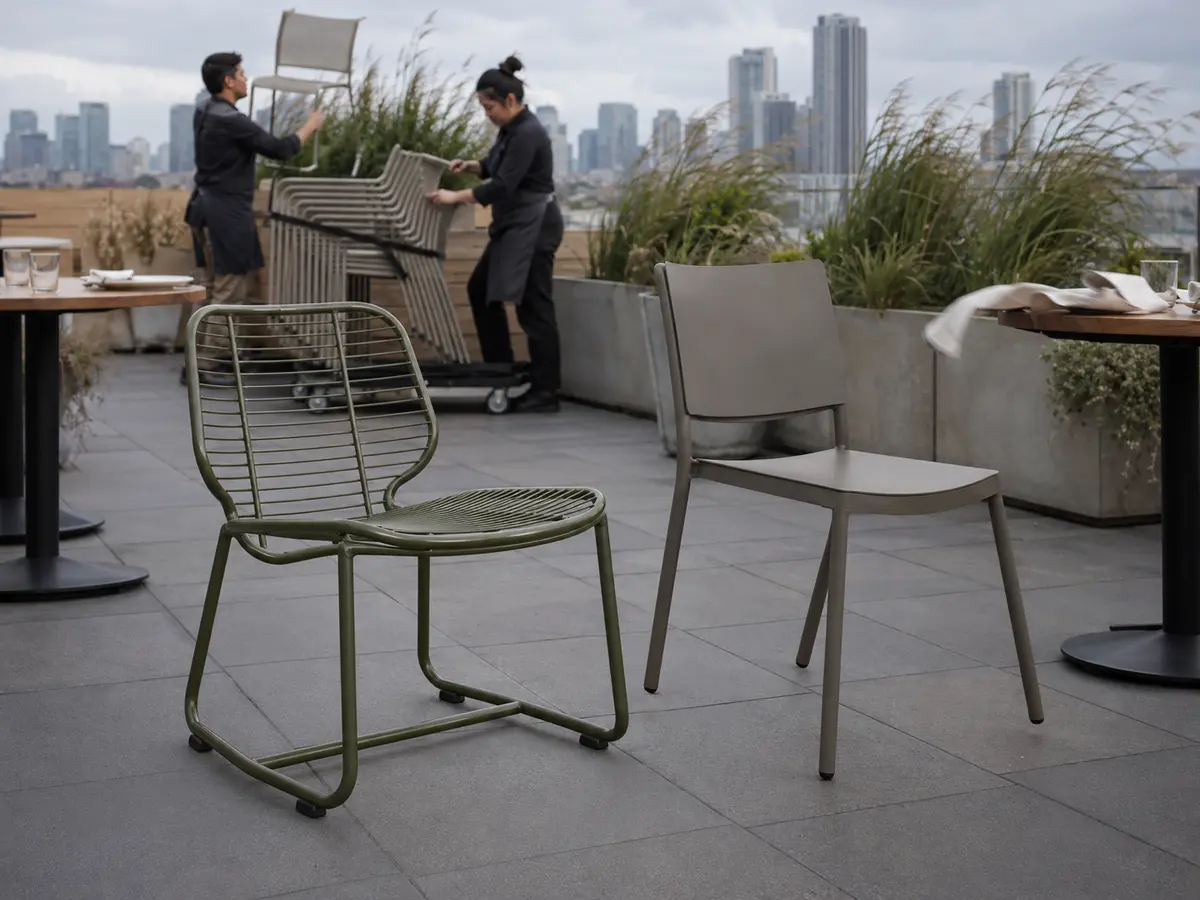
If you need a more engineering-oriented framing for risk assessment, CPP Wind Engineering Consultants notes that furniture performance depends on wind risk and design considerations, not a single factor; see their design development services overview.
For distributors, the practical play is to build a “wind kit” into the project spec:
- specify non-slip feet
- define storm storage protocol
- consider anchoring options for fixed layouts
7) Maintenance reality: where corrosion and complaints actually start
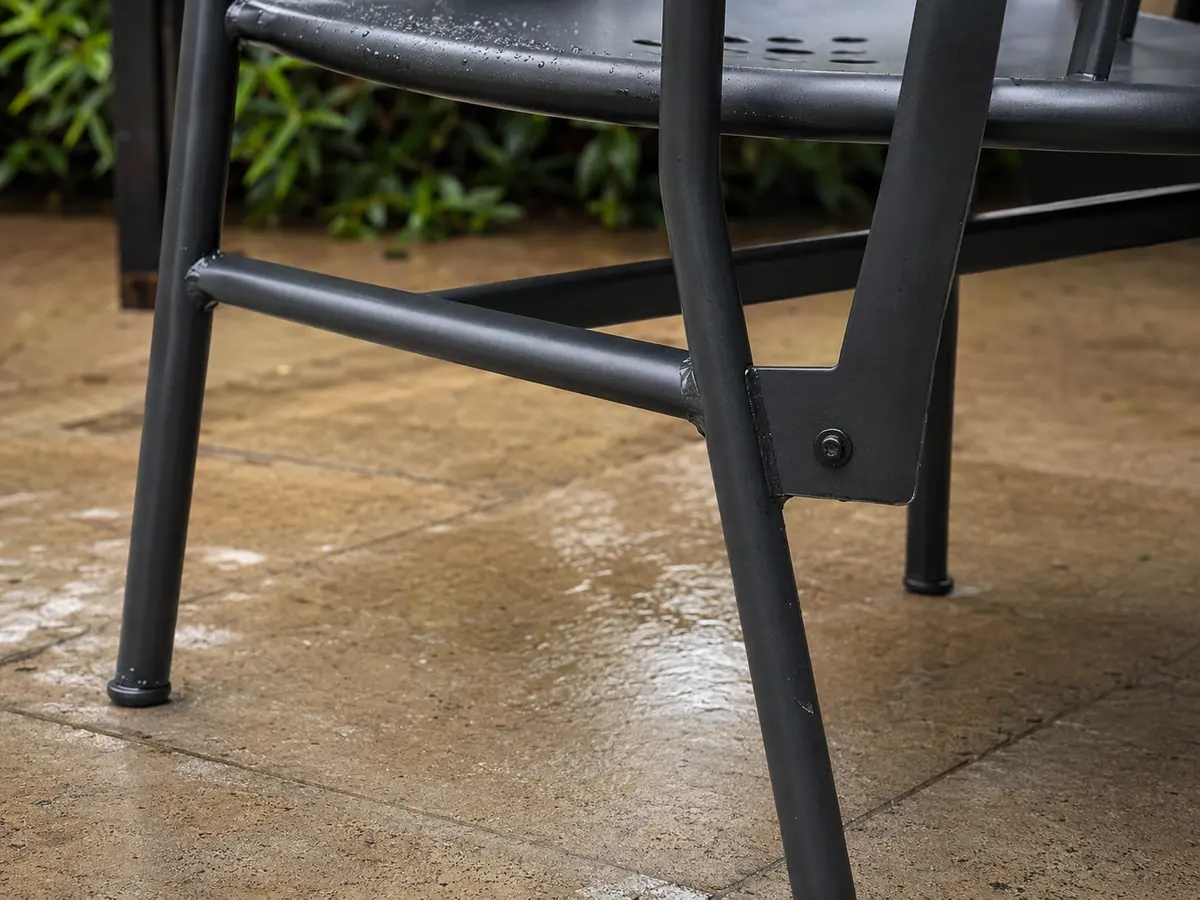
Most corrosion complaints don’t start in the open flat surfaces.
They start at:
- welds
- crevices where moisture sits
- tube ends and water traps
- fasteners where dissimilar metals meet
- scratches from stacking contact points
Maintenance guidance worth putting in a client handover sheet:
- rinse/wipe salt deposits periodically in coastal zones
- repair chips promptly on powder-coated steel
- inspect joints and fasteners during seasonal changeover
8) RFQ checklist: what to ask before ordering metal restaurant chairs
If you’re an importer or distributor, this checklist reduces “it looked fine on photos” risk.
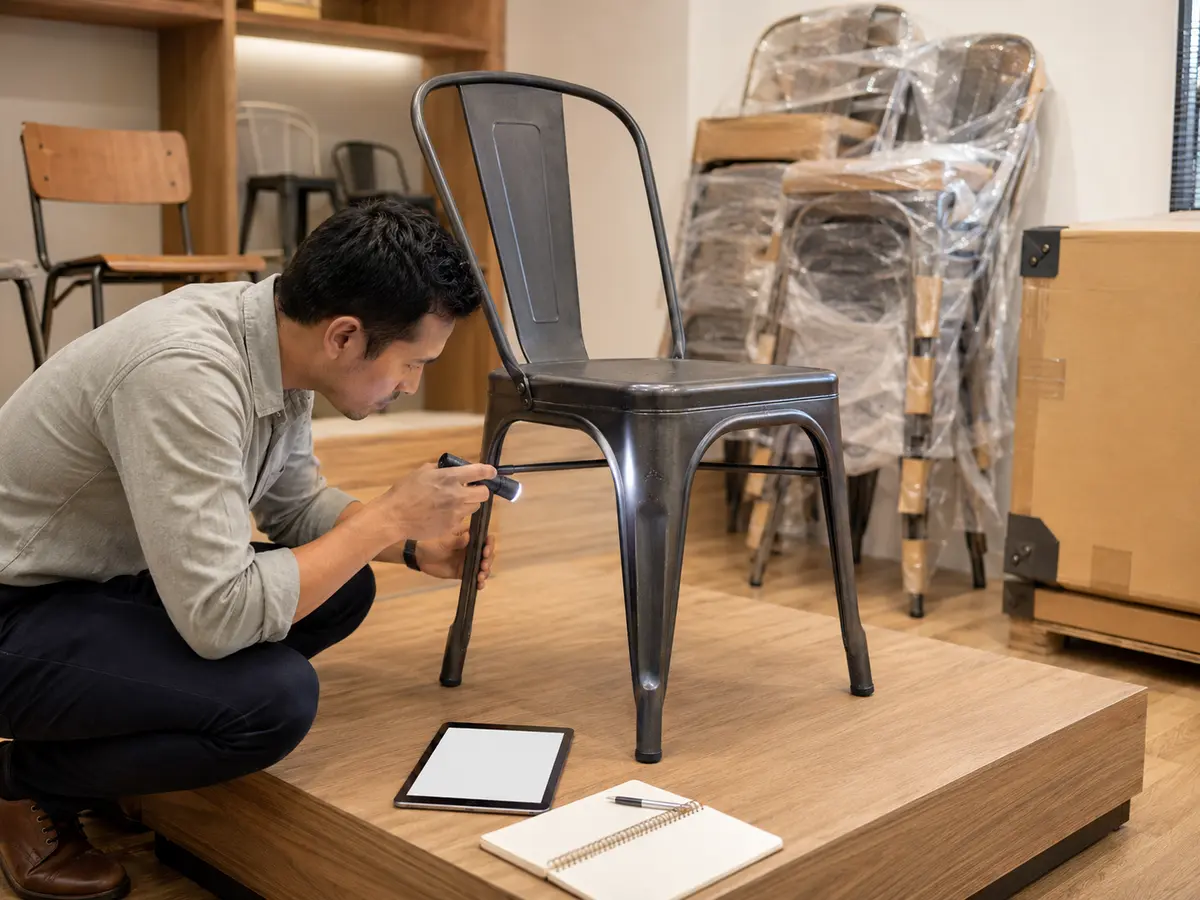
Ask for each SKU:
- Net weight per chair and stacking limit (if stackable)
- Frame drawing or key dimensions (leg spacing, bracing, footrest design)
- Finish system details (especially for outdoor): pretreatment + coating steps
- Photos of welds and high-wear contact points
- Tube-end and drainage approach (caps, sealing, drain holes where appropriate)
- Fastener material and whether dissimilar metals are isolated
- Glide type and leveling method; request a wobble test video
- Packaging photos (edge/corner protection, metal-to-metal separation)
- Spare parts availability (glides, hardware)
- Any available test reports for the exact model, with scope and date
If bar seating is part of your project, YeZhi’s metal bar stool page is a useful reference for aligning metal type, finish choice, and stackable frames.
Next step: match material to your client’s environment, then compare SKUs
For projects where outdoor use and fast handling matter, aluminum can be a strong baseline choice. For indoor high-traffic rooms and stable, anchored layouts, steel can be a solid option when the coating system and water-trap details are correct.
If you want to spec faster (and reduce back-and-forth), YeZhi can help you shortlist aluminum and steel models by use case, and prepare RFQ-ready information like finish options, stacking limits, and export packaging approach.
If you want to evaluate outdoor metal seating, you can start from YeZhi’s metal range on groothandel metalen barkrukken and then review specific outdoor aluminum options such as patio aluminum bar stool chairs outdoor.
FAQ
Are aluminum or steel chairs better for restaurants?
It depends on the job conditions and the specific chair construction. Aluminum often reduces rust-related complaints and can be easier for staff to move, while steel can feel more planted and durable when the frame design and coating system are right. Compare the exact SKUs on net weight, frame design, finish prep, and any available testing, not the metal name alone.
Aluminum or steel chairs for restaurants: how do you decide fast?
Start with the environment (indoor, covered patio, coastal, rooftop), then compare the exact SKU’s net weight, frame design, finish system, and hardware. Don’t decide on metal alone.
What’s the best metal for restaurant chairs?
There isn’t one best metal. The “best” choice is the one that matches exposure, handling, stability, and maintenance for your operation, and that comes with verifiable specs for that exact model.
Are aluminum chairs strong enough for commercial use?
Yes, if the chair is designed for commercial loads and built well. Look for strong joints, stable geometry, and evidence of testing for that specific model. A well-designed aluminum chair can outperform a poorly designed steel chair.
Do aluminum restaurant chairs rust?
Aluminum doesn’t rust like steel because rust is iron oxide. Aluminum can still corrode, especially in chloride exposure or at mixed-metal joints, so finish quality and fastener choices still matter.
Do steel chairs rust outdoors?
Carbon steel can rust outdoors if moisture reaches bare metal. A good coating system helps, but chips and scratches must be repaired quickly. If the environment is harsh (coastal, wet cleaning routines), consider better protection strategies or different metal choices.
Can powder-coated steel chairs be used outdoors?
They can, but performance depends on pretreatment, coating system quality, and how quickly damage is repaired. Ask for the coating system details and avoid water traps at tube ends and joints.
Which chairs are better for coastal restaurants?
Often aluminum is easier to live with because it avoids red rust, but it isn’t maintenance-free. In salt air, verify finish quality, isolate dissimilar metal hardware, and clean salt deposits periodically. For steel, you generally need a stronger protection strategy and strict maintenance.
Which chairs are better for windy patios?
Don’t decide based on metal alone. Wind stability depends on exposure, chair shape (how much it catches wind), center of gravity, footprint, feet/friction, and whether you have a storm storage or anchoring plan.