Guide till skötsel av kontorsmöbler
En praktisk guide till rengöring av restaurangstolar i kommersiella lokaler, som behandlar materialanpassad rengöring, gränser för desinfektion, underhållskontroller samt information om B2B-inköp.
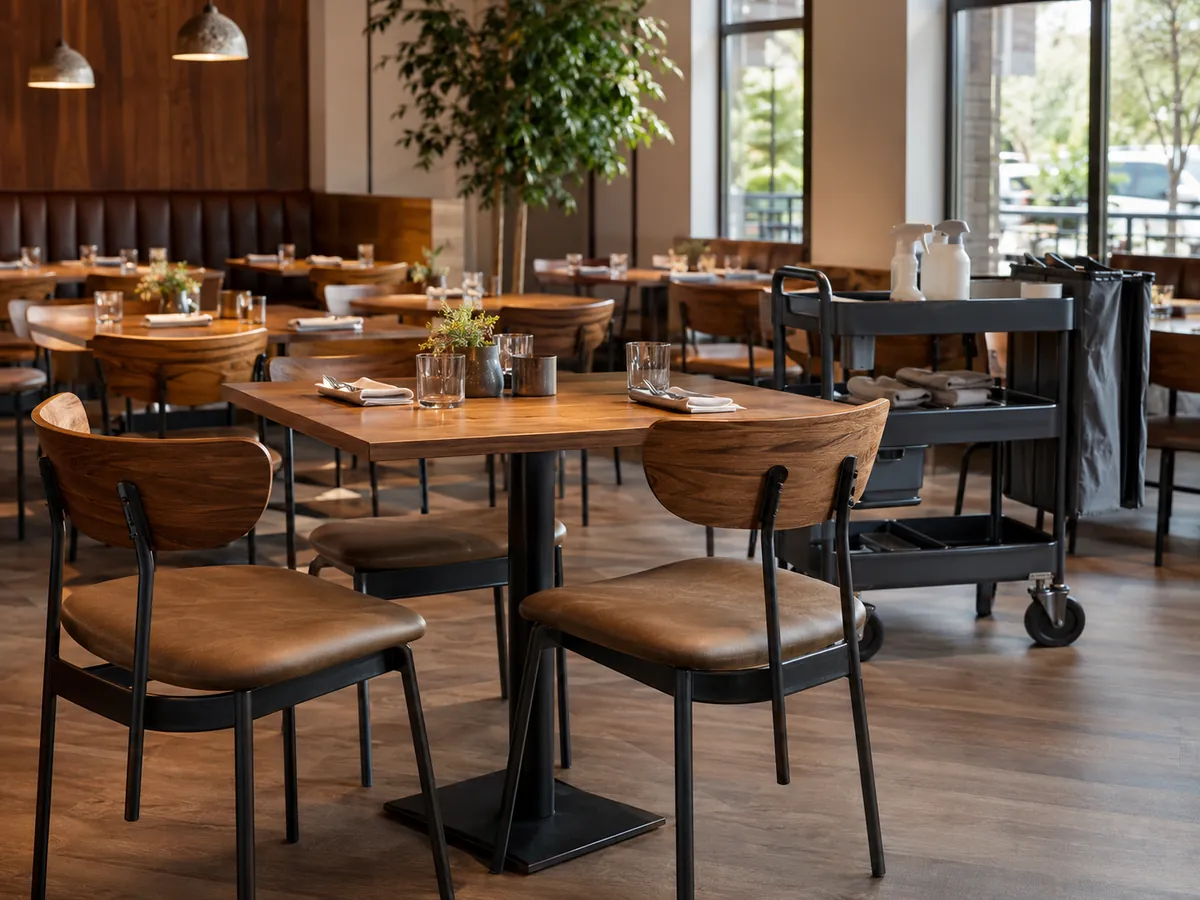
Restaurangstolar utsätts för den värsta kombinationen av slitage: matfett, spillda drycker, frekvent desinficering, ständigt släpande och vatten från golvmoppning. Om din städrutin inte är materialkompatibel och enhetligt bland personalen, då får man inte bara fläckar – man får även spruckna klädsel, matt yta, lösa fogar, rost vid benens undersidor och wobblande möbler som medför säkerhets- och ansvarsrisker.
Om du ska ta fram ett schemalagt städschema för restaurangstolar är målet enkelt: skydda ytbehandlingen, skydda ramen, minska hygienriskerna och se till att varje stol är säker att använda.
Denna guide är avsedd för kommersiellt bruk: den skiljer mellan rengöring, sanering, desinfektion och underhåll, beskriver stolar utifrån material och ger dig en standardrutin som går att upprepa och som du kan lära ut. När det gäller desinfektionsmedel eller starkare kemikalier bör personalen fortfarande följa produktetikett, säkerhetsdatablad, leverantörens skötselanvisningar och lokala hälso- och säkerhetskrav.
Kort svar: hur man rengör restaurangstolar för kommersiellt bruk
Bestäm först material och ytbehandling (typ av träfinish, pulverlackerad eller obehandlad metall, rengöringskod för klädsel, typ av vinyl/PU).
Ta bort torrt skräp (smulor, grus) innan du använder någon vätska – det är gruset som repar ytbehandlingen.
Använd en milt, icke-slipande rengöringsmedel som är godkänd för det materialet.
Desinficera endast vid behov, och se till att ytan förblir fuktig under den tid som etiketten anger (så här desinficerar man restaurangstolar effektivt – utan att förhasta den kemiska processen).
Låt torka helt, särskilt runt sömmar, skarvar, byxbenens nederkant och glidfötter.
Proffstips: Fastställ en “godkänd rengöringssats” per material (trä / metall / vinyl / tyg) och utbilda personalen i att testa nya produkter på ett dolt ställe innan de används på hela partiet.
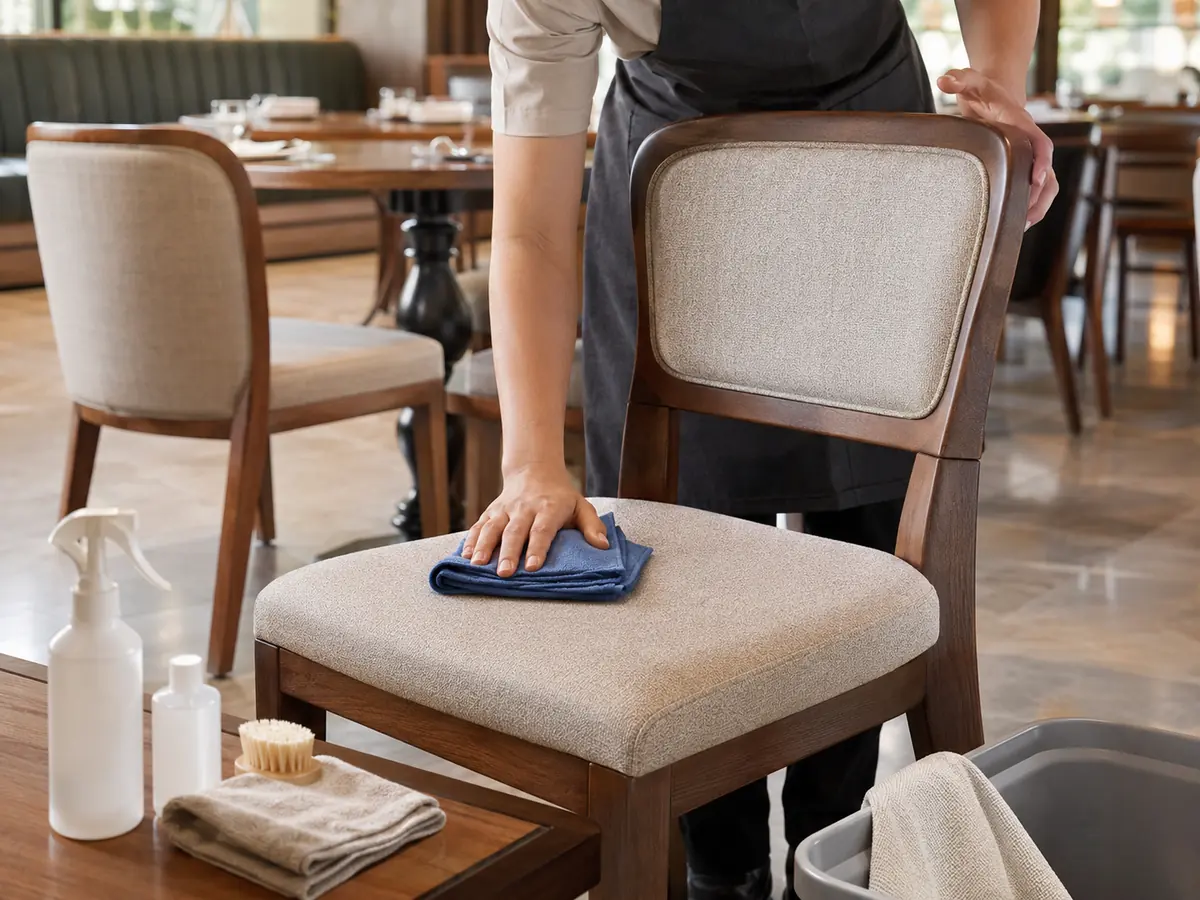
Rengöring, sanering, desinfektion och underhåll
Begrepp | Vad den gör | Vad den inte gör | Vad din personal bör tänka på |
|---|---|---|---|
Rengöring | Avlägsnar smuts, fett, matrester, spill och vissa bakterier från ytor | Dödar inte alla patogener på ett tillförlitligt sätt | Gör detta först. Jord kan minska desinfektionsmedlets verkan. |
Desinficering | Minskar mängden bakterier till nivåer som anses acceptabla enligt gällande folkhälsobestämmelser | Är inte detsamma som fullständig desinfektion | Använd endast där det är lämpligt och följ anvisningarna på produktetiketten. |
Desinficering | Dödar specifika bakterier när produkten används enligt anvisningarna på förpackningen | Rengör inte fett eller rester särskilt bra | Följ anvisningarna om ytgodkännande, utspädning, personlig skyddsutrustning samt kontakt- och verkanstid. |
Underhåll | Säkerställer att stolarna förblir säkra och stabila över tid | Tar inte bort synlig smuts eller patogener | Kontrollera, dra åt, byt ut slitdelar och dokumentera resultaten. |
När det gäller desinfektionsmedel betonar den amerikanska miljömyndigheten EPA tre regler för köparnas säkerhet: kontrollera att EPA-registreringsnummer, läs Användningsanvisning, och se till att ytan synligt våt under hela kontakttiden som anges på etiketten. EPA påpekar också att de listade produkterna inte utgör någon rekommendation och att användarna måste kontrollera att produkten är godkänd för den avsedda ytan och patogenen.
Innan du börjar: en enkel checklista för “material och ytbehandling”
Om du hanterar flera olika stolmodeller (eller flera olika platser) kan du med detta tvåminuterssteg förhindra kostsamma skador på hela partier.
Trä: lackerad/målad yta jämfört med betsad + klarlack; finns det några synliga sprickor eller slitna kanter?
Metall: pulverlackerad jämfört med målad jämfört med obehandlad/krom; finns det några repor som går ner till metallen?
Vinyl/PU/konstläder: slät, avtorkningsbar yta kontra strukturerad yta; finns det några flagnande delar vid sömmarna?
Tygklädsel: Leta reda på etiketten med rengöringskoden för klädseln (W, S, W/S, X), om sådan finns.
Fötter/glidskenor: intakt? saknas? ojämnt slitage? fuktskador längst ner på benen?
Om du jämför stolmodeller för projekt inom hotell- och restaurangbranschen bör du välja leverantörer som erbjuder modellspecifika skötselanvisningar, information om utbytesglidskenor, rengöringskoder för klädsel, begränsningar för ytbehandlingar samt riktlinjer för godkända rengöringsmedel. Betrakta leverantörernas sidor som produktinformation, inte som en självständig säkerhetsmyndighet; när det gäller desinfektionsmedel ska du förlita dig på produktetiketten, uppgifterna om EPA-registreringen och säkerhetsdatabladet (SDS).
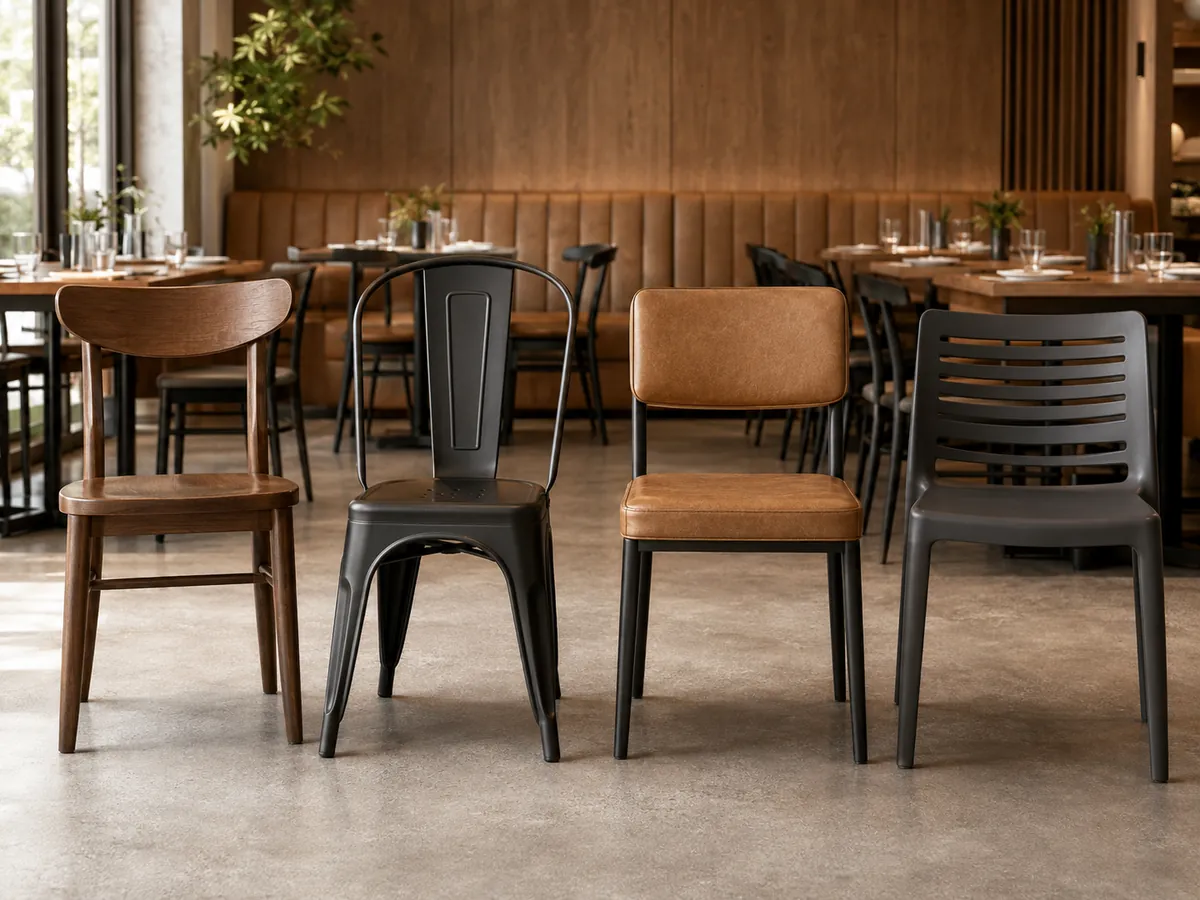
Så här rengör du olika material på restaurangstolar
Restaurangstolar i trä (behandlat/lackat trä)
Bästa praxis: “Mindre vatten, mer avtorkning.” Träskador i restauranger beror oftast på fukt vid benens nederkant, starka avfettningsmedel och slipande rengöringssvampar.
Rutinåtgärder (dagligen/vid skiftets slut):
Torka bort smulorna med en torr mikrofiberduk.
Använd en lätt fuktad mikrofiberduk tillsammans med ett milt, icke-slipande rengöringsmedel.
Torka av ytan igen med rent vatten och en separat trasa om rengöringsmedlet lämnar rester.
Torka omedelbart, särskilt runt lederna och på undersidan av benen.
Vad man bör undvika (riskbaserat):
Att låta stolar stå i moppvatten eller vattenpölar.
Slipande rengöringsmedel som ger en matt yta på klarlacken.
Starka syror/baser eller kraftiga avfettningsmedel, såvida inte ytbehandlingen har bekräftats vara kompatibel.
Underhållskontroll:
Leta efter svarta fläckar eller svullnad längst ner på benen.
Kontrollera fogarna för att upptäcka tidiga tecken på glapp (minsta rörelse leder till wobbling).
Restaurangstolar i pulverlackerad metall
Pulverlack är tåligt, men det är inte helt skadefritt. När lacken har repats igenom kan fukt börja orsaka ytkorrosion vid kanter och fogar.
Rutinmässiga steg:
Ta bort gruset först.
Rengör med milt tvålvatten och en mjuk trasa.
Skölj och torka.
I Room & Boards skötselråd för pulverlackerat stål rekommenderas mild tvål och vatten samt att man undviker slipande rengöringsmedel, med ökad rengöringsfrekvens i tuffare miljöer (salt/klor/föroreningar) i Skötsel av pulverlackerat stål för utomhusbruk.
Vad man bör undvika (riskbaserat):
Rengöringsmedel med slipverkan och kraftig skrubbning.
Högtryckstvätt, såvida du inte har försäkrat dig om att det är ofarligt för just din ytbehandling och dina beslag.
Att låta vatten samlas i rörändarna eller runt svetsfogarna.
Underhållskontroll:
Kontrollera kretskorten vid kanterna och runt fotarnas kontaktpunkter.
Kontrollera svetsfogar och fästelement.
Om du arbetar i en kustnära miljö eller i en miljö med saltluft, eller om du använder starka golvkemikalier, bör du öka inspektionsfrekvensen.
Restaurangstolar i vinyl, PU och konstläder
De här är populära inom hotell- och restaurangbranschen eftersom de går att torka av, men de kan också lätt skadas av felaktiga lösningsmedel, produkter som torkar ut ytan för mycket eller upprepad kraftig desinfektion.
Rutinmässiga steg:
Torka upp spill omedelbart (gnugga inte).
Torka av med en fuktig trasa och ett milt rengöringsmedel som är godkänt för ytan.
Vid desinfektion ska du följa den kontakttid som anges på etiketten och därefter ta bort eventuella rester om produkten kräver det.
Vad man bör undvika (riskbaserat):
Att betrakta alkohol/blekmedel som en universallösning (kompatibiliteten varierar beroende på material och ytbehandling).
Om man låter rester av desinfektionsmedel ansamlas (kan detta med tiden påskynda att materialet blir stelt eller spricker).
Underhållskontroll:
Kontrollera först sömmarna och kanterna där friktionen är hög.
Om du upptäcker att materialet stelnar, att det uppstår mikrosprickor eller att ytan flagnar, bör du minska kemikaliernas aggressivitet och kontrollera med leverantören vilka produkter som är godkända.
Restaurangstolar klädda med tyg (läs först rengöringsanvisningarna)
När det gäller tyg är det viktigaste steget inte själva fläckborttagningstricket – utan att använda rätt metod enligt klädselkoden.
Vanliga koder för möbelrengöring:
W: vattenbaserad rengöring
S: rengöring med lösningsmedel (utan vatten)
W/S (eller WS): vatten eller lösningsmedel
X: endast dammsugning/borstning
Använd rengöringskoden på själva stolsetiketten, tygkortet eller leverantörens skötselanvisning som primär källa. Allmänna förklaringar kan hjälpa personalen att förstå W, S, W/S och X, men de bör inte gå före tillverkarens anvisningar för just den aktuella klädseln.
Rutinmässiga steg:
Dammsug med ett möbelmunstycke (sömmar och springor är viktiga).
Torka upp spill snabbt.
Rengör fläckar enligt anvisningarna, med så lite fukt som möjligt.
Låt den torka helt innan den tas i bruk igen.
Vad man bör undvika (riskbaserat):
Överdriven fuktning av kuddar (vattenfläckar, lukt, risk för mögel).
Att använda fel kemiska uttryck i koden.
Ångbehandling utan att först kontrollera att tyget och underlaget är kompatibla.
Restaurangstolar av harts/plast
Dessa är ofta “enkla”, men med tiden uppstår skador i form av grumlighet, repor eller sprödhet.
Rutinmässiga steg:
Ta bort grus.
Mild tvål + mjuk trasa.
Skölj och torka.
Vad man bör undvika (riskbaserat):
Aggressiva lösningsmedel som kan göra plasten grumlig eller försvaga den.
Slipkuddar som lämnar bestående repor.
Vilka rengöringsmedel bör restauranger undvika? Använd riskbaserade riktlinjer, inte en generell förbudslista
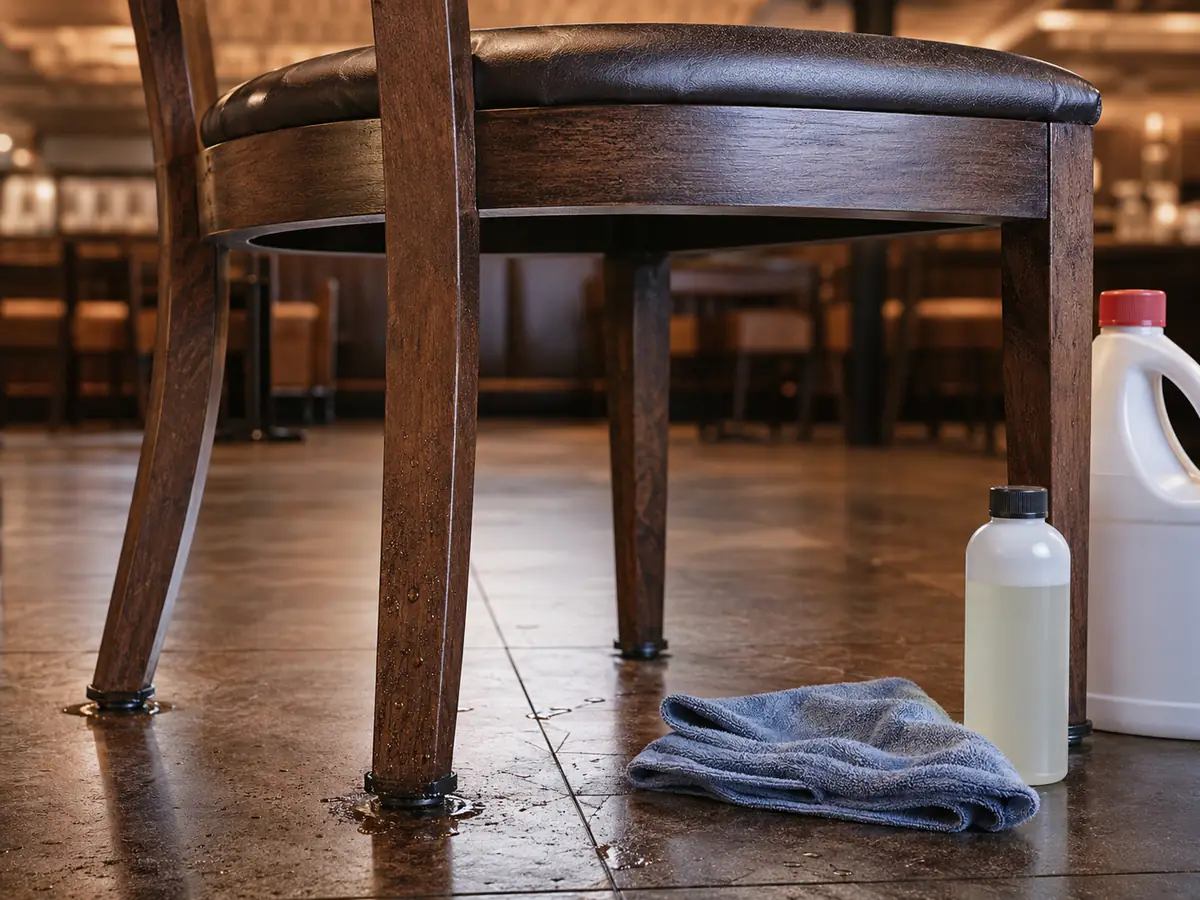
I stället för att skriva en generell regel som lyder “använd aldrig X” bör personalen utbildas i följande regler:
Om produktetiketten kräver särskild personlig skyddsutrustning eller innehåller en varning om korrosion, anta att det kan skada ytbehandlingen om du inte har kontrollerat att de är kompatibla.
Undvik slipmedel (skurdukar, pulver, stålull) på alla ytor med ytbehandling.
Låt inte vätska samlas vid benändarna, sömmarna, fogarna eller beslagen.
Blanda inte kemikalier. Detta är i första hand en fråga om arbetssäkerhet och i andra hand en fråga om skador på ytbehandlingen. CDC varnar för att blandning av produkter kan vara farligt och kan förändra de kemiska egenskaperna; personalen bör följa anvisningarna på etiketten, säkerhetsdatabladet (SDS), ventilationsanvisningarna samt kraven på personlig skyddsutrustning.
Om du är osäker: punktprov i ett dolt område, fortsätt sedan.
⚠️ Varning: Många desinfektionsmedel fungerar endast om ytan förblir fuktig under hela den kontakttid som anges på förpackningen. Om du torkar av ytan för tidigt riskerar du att drabbas av nackdelarna (materialpåfrestning) utan att få någon hygienisk nytta.
Dagliga/veckovisa/månatliga standardrutiner: underhåll av restaurangstolar
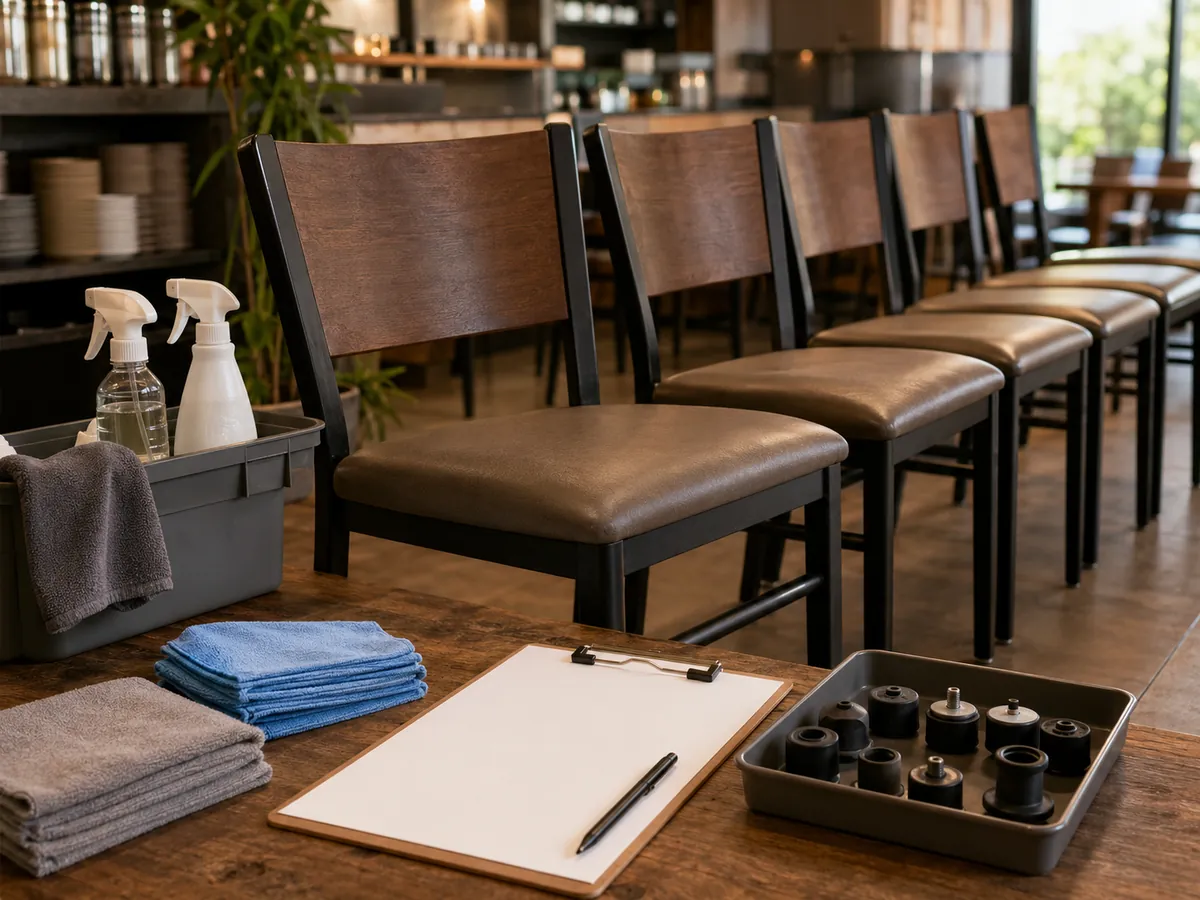
Använd detta schema som utgångspunkt och anpassa det sedan utifrån er besöksfrekvens, menyn (fetrika rätter kontra torra rätter) och stolarna. Detta avsnitt i standardrutinerna utgör den operativa kärnan i underhåll av restaurangstolar för livliga matsalar.
Frekvens | SOP-uppgift | Vem äger det? | “Klart när…” |
|---|---|---|---|
Dagligen | Torka av ytor som ofta vidrörs (ryggstödens ovansidor, sittkantens kanter), torka upp spill och torka av benens undersidor | Avslutande personal | Inga synliga rester; stolen känns torr vid beröring |
Dagligen | Kontrollera om det saknas glidfötter vid en snabb genomgång | Skiftledare | Ingen stol lämnades tillbaka till avdelningen med saknade ben |
Veckovis | Rengör sömmar och sprickor, baksidor och undersidor samt fotringar och tvärstag noggrant | Städteamet | Sandpartiklar har avlägsnats; inga klibbiga rester |
Veckovis | Gör stickprovskontroller av wobbling, saknade glidfötter, lösa fästelement, spruckna fogar, böjda stommar och svetsfel på ett roterande urval av stolar | Chef eller underhållsansvarig | Alla instabila eller synligt skadade stolar tas ur bruk, märks, registreras och kontrolleras på nytt efter reparation |
Månadsvis | Fullständig besiktning: fästelement, fogar, svetsar, benens undersidor, klädselkanter | Underhåll | Problem har registrerats; reparationer har planerats |
Kvartalsvis | Granska skademönster: var uppstår fel och varför? Uppdatera standardrutiner och utbildning | Driftchef/Verkställande direktör | Uppdaterad checklista; granskning av städutrustning |
Om du behöver ett upphandlingsklart sätt att jämföra olika stolsalternativ (inklusive underhåll och reservdelar), så erbjuder YeZhi:s Matstolar för kommersiellt bruk jämfört med matstolar för privat bruk En checklista är ett användbart verktyg för att strukturera vilka frågor man ska ställa till leverantörerna.
Underhållsproblem som städpersonalen ofta missar
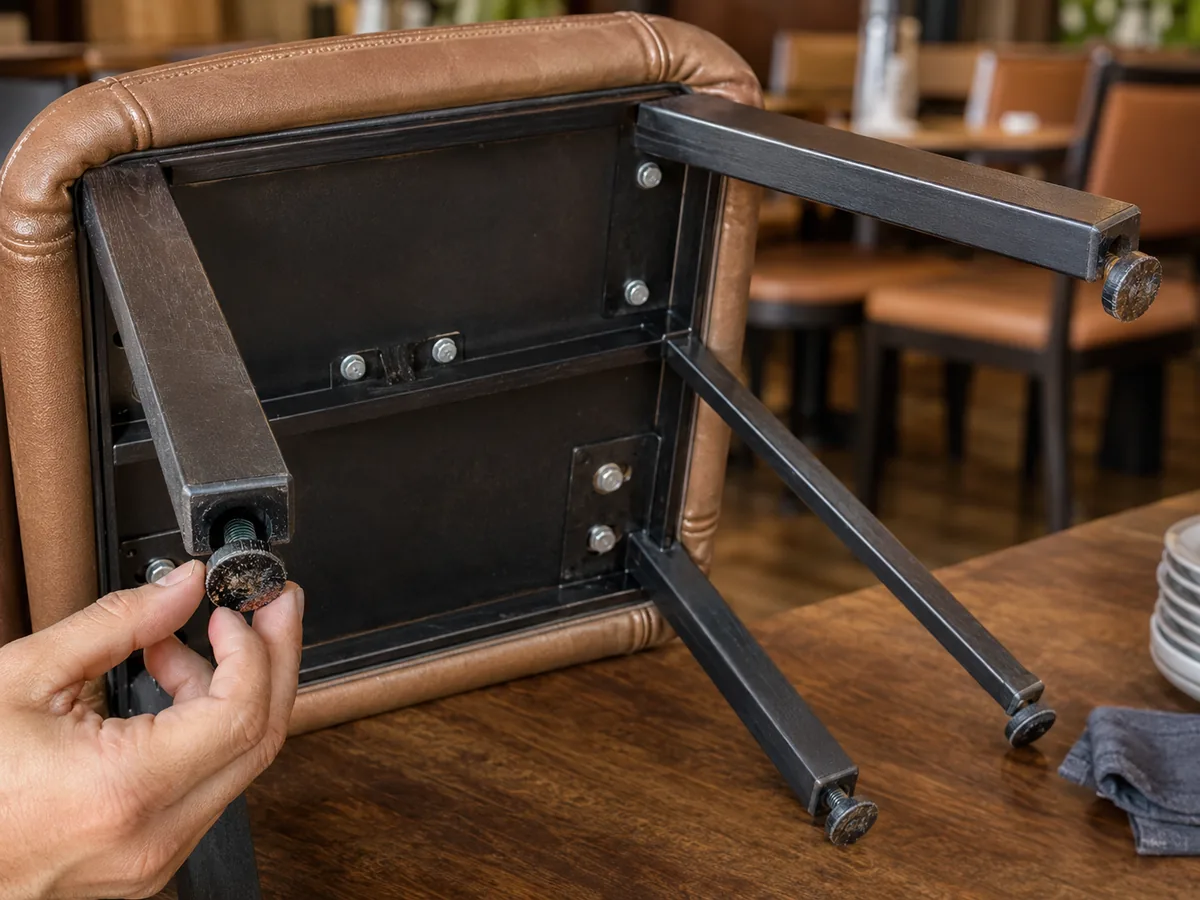
Dessa problem är vanliga i matsalar med hög omsättning – och det är just det som skiljer “stolar som håller” från “stolar som tyst går sönder”.”
Saknade eller slitna glidfötter (buller, skador på golvet, instabilitet, slitage på benens undersida)
Vatten tränger in vid benens nedre del efter golvtvätt (svällning av trä, korrosion av metall)
Lösa skruvar/bultar som leder till att det börjar vackla
Slitage vid beröringspunkter (stolsryggarnas överkant, sittytornas kanter)
Spänning i möbelsömmar vid framkanter och hörn
Slitagepunkter vid stapling eller lagring (för stapelbara modeller)
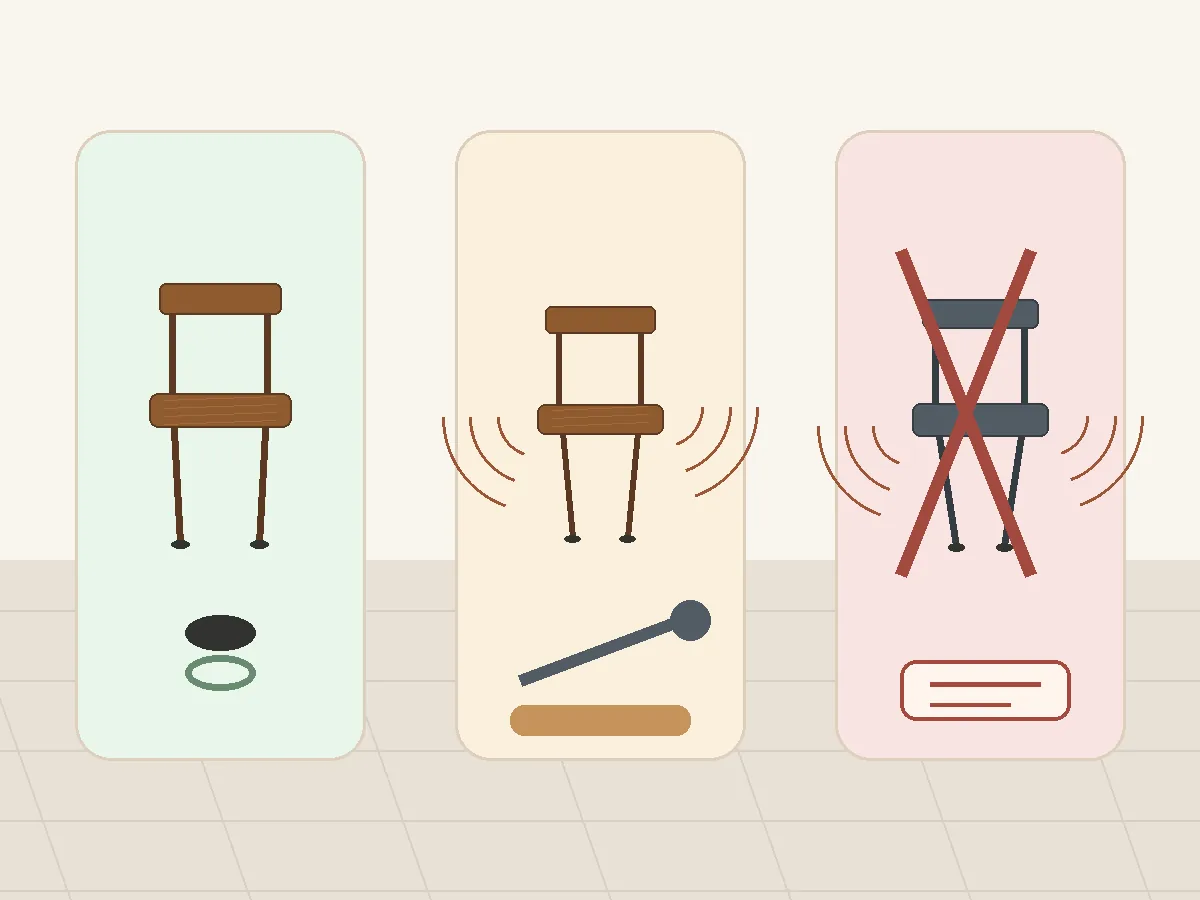
Reparera, ta ur drift eller byta ut? En enkel beslutstabell
Skick | Rekommenderad åtgärd | Varför |
|---|---|---|
Lätta fläckar, en saknad glidskena, ett löst fästelement | Rengör + byt ut glidskenan + dra åt + logga | Låg risk; förhindrar större skador |
En liten skavning i början, små flisor i ytbehandlingen, sömmen börjar gå isär | Ta bort från den högtrafikerade rotationen, reparera och kontrollera sedan på nytt | Förhindrar att situationen eskalerar + säkerhetsrisk |
Sprickor i svetsfogar, trasiga fogar, böjda ramar, ihållande wobbling efter åtdragning, allvarliga brister i klädseln | Ta ur drift och byt ut eller låt en fackman undersöka den | Hög säkerhets-/ansvarsrisk; reparationer kanske inte återställer integriteten |
Så här väljer du restaurangstolar för kommersiellt bruk som är lättare att underhålla
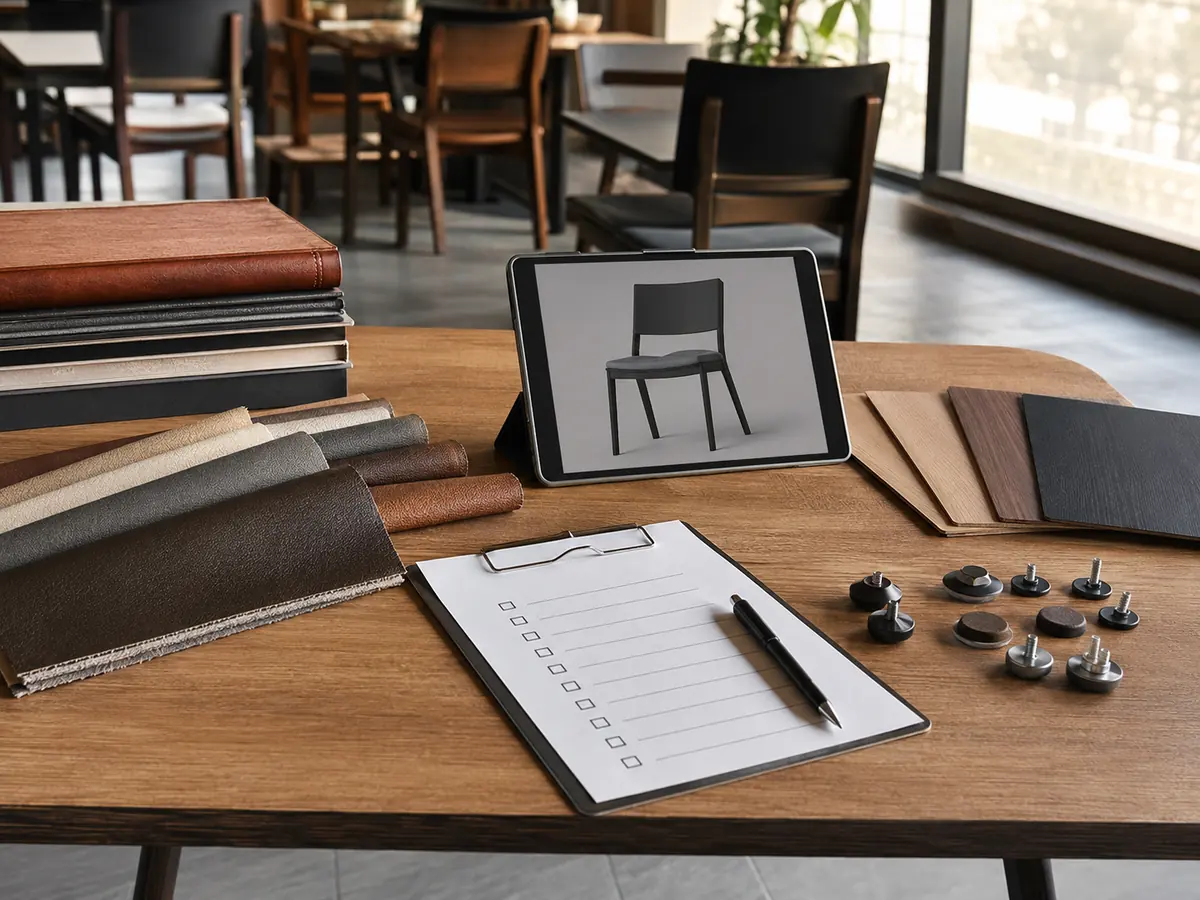
För B2B-inköpare handlar “lätt att rengöra” inte bara om sittytan. Det handlar om hur stolen klarar daglig desinfektion, städning och upprepade flyttningar.
Använd detta som en checklista för upphandling:
Tillhandahåller leverantören modellspecifika skötselanvisningar för ytbehandling och klädsel?
Är utbytbara glidfötter, och går det att beställa reservdelar i större partier?
Är ramen utformad för att minska fuktansamlingar vid benens nedre delar och fogarna?
Väljs rengöringsmedlen ut med hänsyn till din faktiska städrutin (daglig desinfektion eller lätt avtorkning)?
Går det att beställa samma modell och utförande vid ett senare tillfälle med samma produktionssats?
Om du ska sammanställa en kortlista, så är YeZhis Resurser hub är ett bra ställe att beställa kataloger och produktinformation från, så att du kan anpassa rengöringsrutinerna efter just de stolsmaterial du köper in.
Källor och säkerhetsanvisningar
EPA: Använd EPA-registrerade desinfektionsmedel enligt anvisningarna på etiketten; kontrollera registreringsnummer, godkända ytor/användningsområden, angivna patogener, utspädningsgrad och verkanstid.
CDC: Rengör ytorna innan du desinficerar dem; använd desinfektionsmedel på ett säkert sätt enligt anvisningarna på etiketten, med tillräcklig ventilation, enligt säkerhetsdatabladet (SDS) och med personlig skyddsutrustning (PPE), och undvik att blanda kemikalier.
Skötselanvisningar för leverantörer: Följ stoltillverkarens eller tygleverantörens anvisningar när det gäller materialkompatibilitet, rengöringskoder, godkända rengöringsmedel samt krav på sköljning och torkning.
Lokala regler: Restaurangägare bör följa gällande lokala krav inom hälsa, arbetsrätt och säkerhet. Denna guide är en Standardrutin för skötsel och underhåll av stolar, och ersätter inte föreskrivna hygienrutiner.
VANLIGA FRÅGOR
Hur desinficerar man restaurangstolar utan att skada dem?
Använd endast produkter som är godkända för stolens material/ytbehandling, håll ytan fuktig under den tid som anges på etiketten och undvik att rester ansamlas genom att följa anvisningarna på etiketten (inklusive eventuella sköljkrav). Med andra ord, Hur man desinficerar restaurangstolar Det beror på materialet och produktens etikett – det finns ingen universalspray.
Hur rengör man restaurangstolar av trä?
Använd så lite fukt som möjligt, milda rengöringsmedel och torka omedelbart – särskilt runt sömmar och i benens nederkant. Det är kärnan i Hur man rengör restaurangstolar i trä i en restaurangmiljö utan att ytbehandlingen mattas ner eller benen sväller.
Hur rengör man restaurangstolar i vinyl?
Torka av med milda rengöringsmedel som är godkända för materialet; utgå inte från att alkohol eller blekmedel alltid är ofarligt; håll ett öga på sömmar och kanter för att upptäcka tidiga tecken på avskalning. I praktiken, Hur man rengör restaurangstolar i vinyl Det handlar om skonsam rengöring, korrekt användning av desinfektionsmedel och att inte låta kemiska rester ansamlas.
Hur ser ett praktiskt schema för rengöring av restaurangstolar ut?
Dagligen för noggrann avtorkning och hantering av spill, veckovis för sprickor och undersidor, månadsvis för en fullständig strukturell inspektion samt kvartalsvis för att granska rutiner och vidareutbilda personalen.
Nästa steg (upphandlingsvänligt): Om du vill kan du dela med dig av information om vilka material stolarna är tillverkade av (trä/metall/vinyl/tyg + eventuella etiketter med rengöringsanvisningar). Vi kan omvandla ovanstående standardrutiner till ett utbildningsblad på en sida och en inspektionschecklista som du kan använda för en hel sats.
Behöver du restaurangstolar som är enklare att rengöra och underhålla?
Bestäm antal, materialval, ytbehandling, stolmodell, leveransland och rengöringskrav innan du skickar en förfrågan.
Beställ stolsbroschyrer och skötselanvisningar