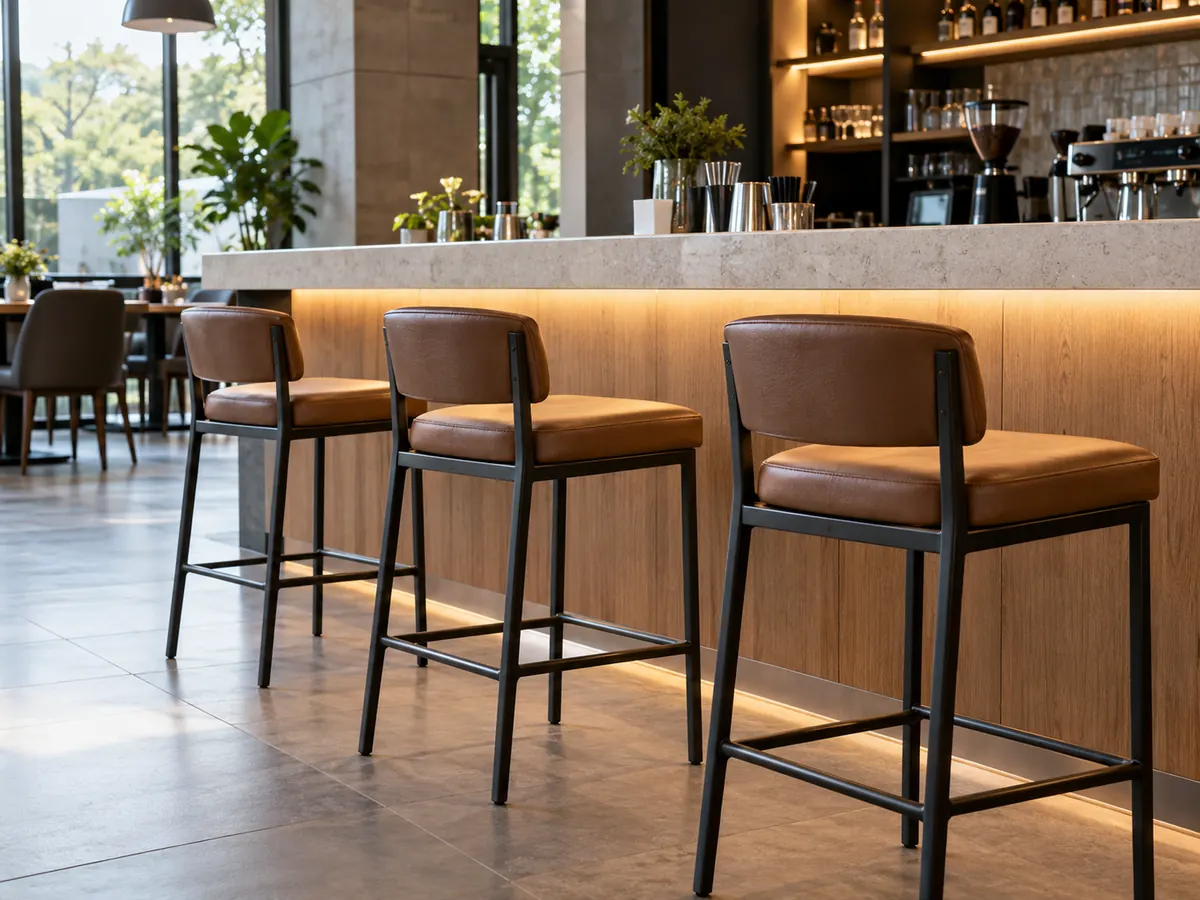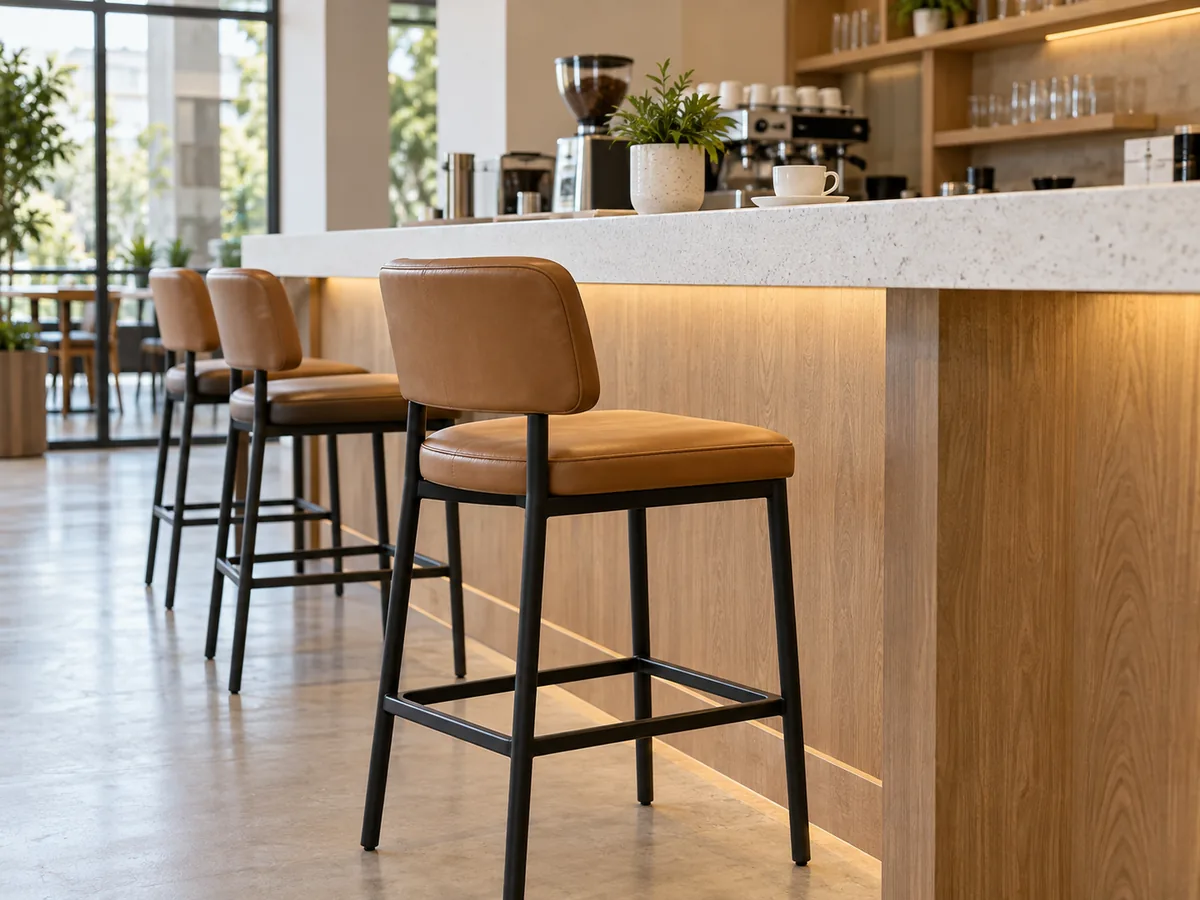
If you’ve ever shopped for chairs, you’ve probably had this moment: every listing sounds like a different type of chair, but half of them look… basically the same. Armchair, accent chair, side chair, task chair, counter stool—what’s the actual difference, and which one belongs in your space?
As a furniture supplier working with commercial seating projects, we often see buyers confuse chair names with chair functions. A dining chair, café chair, restaurant chair, and side chair may look similar online, but they are selected differently when daily use, space planning, stacking, upholstery, and maintenance are involved.
This guide explains the most common types of chairs in plain English, with practical tips for homes, restaurants, cafés, offices, hotels, outdoor spaces, and event seating. You’ll also learn how to choose the right chair by function, size, comfort, material, and daily use.
What Are the Main Types of Chairs?
The main types of chairs include living room chairs, dining chairs, office chairs, outdoor chairs, stools, lounge chairs, folding chairs, stackable chairs, and commercial chairs. Each type is usually defined by its function, structure, material, and the space where it is used.
Most chair types are defined by four things: function, structure, material, and use environment.
How Are Different Types of chairs classified?
Most chair names describe a mix of two things:
- Function: what the chair is mainly for (dining, working, relaxing, outdoor use, etc.)
- Structure or mechanism: how it’s built to do that job (arms or no arms, reclining, swivel, rolling, folding, stackable)
- Use environment also matters. A chair used at home does not face the same pressure as a chair used every day in a restaurant, café, hotel, school, or public space.
Once you understand these points, it becomes much easier to compare chair types and choose the right one.
Quick List: 40+ Common Types of Chairs
Here are some of the most common chair types you may see when comparing home furniture, commercial furniture, restaurant seating, café seating, office chairs, outdoor chairs, and event chairs.
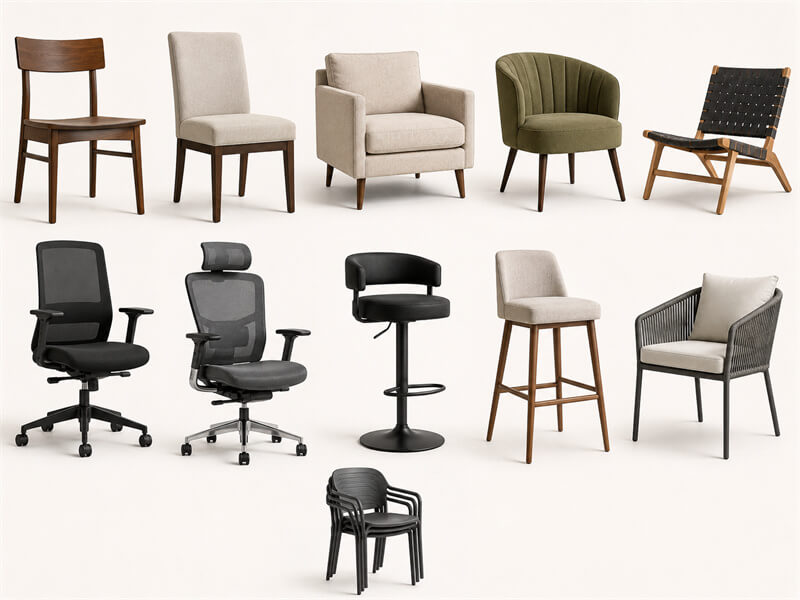
Living room chairs:
Armchair, accent chair, lounge chair, club chair, wingback chair, slipper chair, swivel chair, recliner, chaise lounge, rocking chair, barrel chair, tub chair, papasan chair, bean bag chair.
Dining and commercial chairs:
Side chair, dining arm chair, Parsons chair, Windsor chair, ladder-back chair, slat-back chair, crossback chair, restaurant chair, café chair, stackable dining chair, commercial dining chair, metal dining chair, upholstered dining chair.
Stools:
Counter stool, bar stool, swivel stool, backless stool.
Office chairs:
Task chair, ergonomic chair, executive chair, mesh office chair, conference chair, gaming chair, drafting chair.
Outdoor chairs:
Patio dining chair, Adirondack chair, outdoor lounge chair, bistro chair, stackable outdoor chair.
Occasional and event chairs:
Folding chair, stackable chair, banquet chair, Chiavari chair.
Here’s a quick overview:
| Category | What it’s for | Common “structure” features |
|---|---|---|
| Living room / lounge chairs | Relaxing, reading, conversation | Often upholstered; may recline, swivel, or have arms |
| Dining chairs | Meals, table seating | Upright posture; usually fixed; often armless (side chairs) |
| Office chairs | Desk work, long sitting | Adjustable height; usually swivel + rolling; lumbar support matters |
| Outdoor chairs | Patios, decks, weather exposure | Weather-resistant materials; stackable or lightweight is common |
| Occasional/event chairs | Extra guests, gatherings, flexible seating | Folding or stackable; lighter and easier to store |
| Commercial chairs | Restaurants, cafés, bars, hotels, schools, and project spaces | Durable frames, easy-clean materials, stackable options, and stable long-term supply |
Types of living room chairs
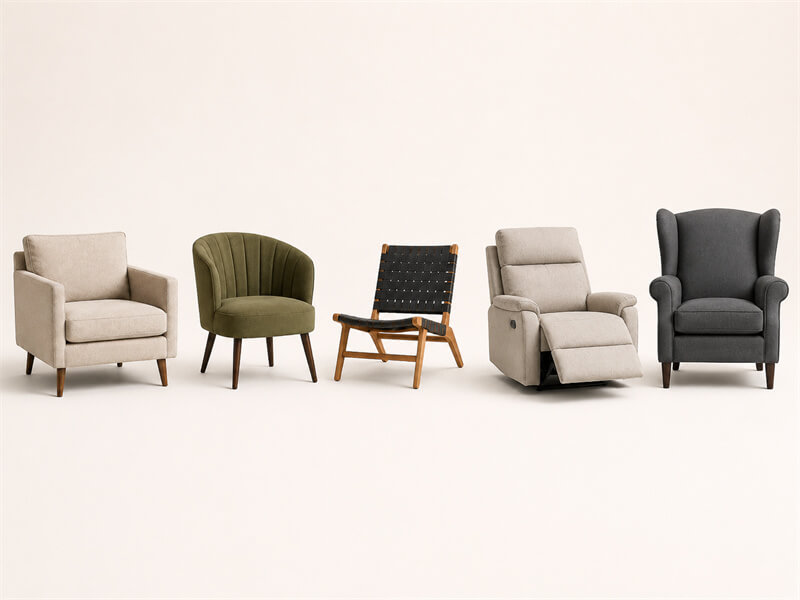
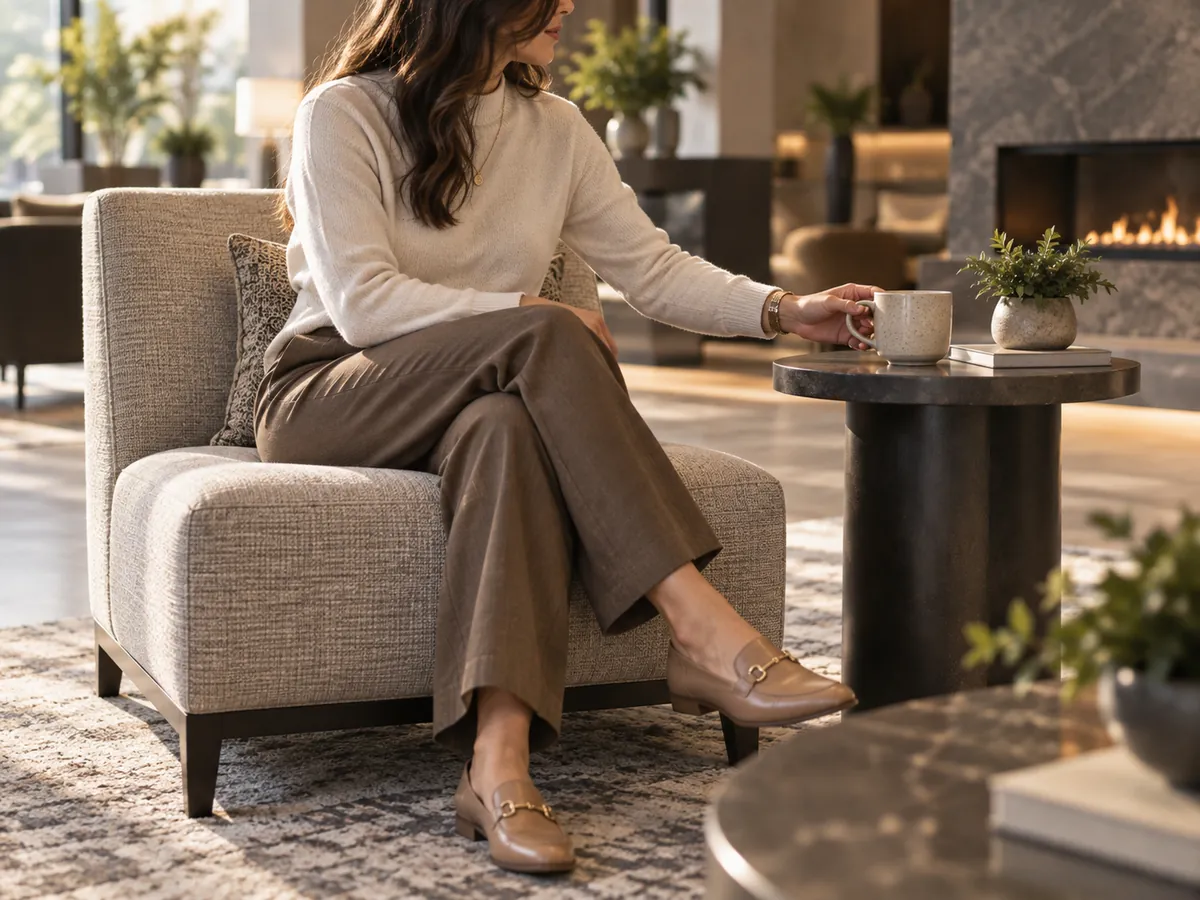
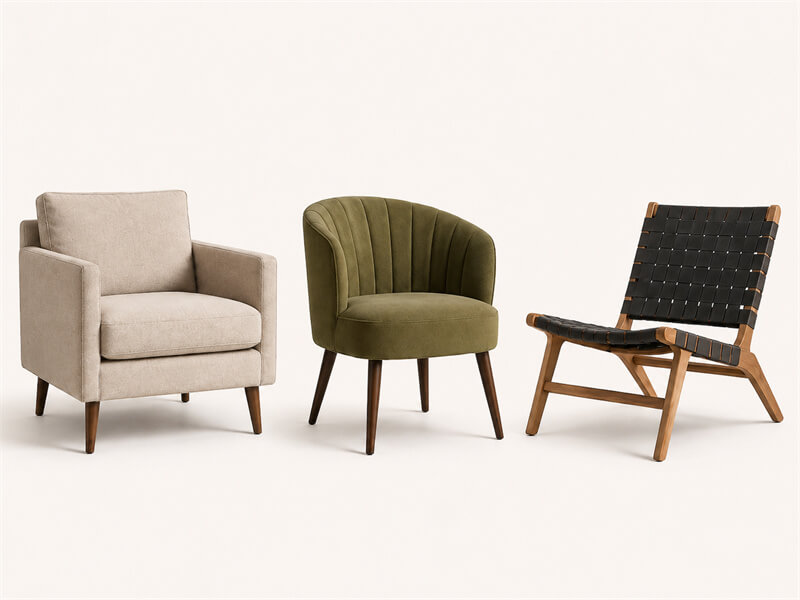
Living room chairs are usually comfort-first. They are built for longer sitting, such as reading, watching a movie, waiting in a hotel lobby, or talking with guests in a lounge area. Seat depth, cushioning, back angle, and arm support matter more here than compact table fit.
Armchair
A classic single-seat chair with armrests. The term is broad: an armchair can be sleek and modern, or plush and traditional.
Good for: everyday seating, conversation areas, reading corners.
Accent chair
An accent chair is less about mechanics and more about visual impact. It might have an interesting shape, color, or fabric that adds contrast to a room.
Good for: adding personality without committing to a full sofa.
Lounge chair
A lounge chair is designed for relaxed posture—often a slightly reclined back and a seat that feels roomy.
Good for: long sitting sessions, living rooms where comfort is the top priority.
Club chair
A deep, upholstered chair with a “substantial” feel. Traditionally these were leather, but today the shape shows up in many fabrics.
Good for: cozy corners, rooms where you want something that feels grounded and comfortable.
Wingback chair
A high-back chair with side “wings” that wrap around the upper back. Historically, the wings helped block drafts; now it’s mostly a style and comfort feature.
Good for: reading, traditional interiors, or spaces that need a strong statement piece.
Slipper chair
A low, armless upholstered chair with a compact footprint.
Good for: bedrooms, small living rooms, or anywhere you need extra seating without visual bulk.
Swivel chair
A chair that rotates. Swivel is a feature you’ll see in both lounge chairs and some accent chairs.
Good for: conversation areas, open floor plans, or rooms where you want to turn toward different zones.
Recliner
A recliner tilts back and often includes a footrest. Some are manual; others are powered.
Good for: media rooms, anyone who wants adjustable comfort.
Chaise lounge
A long chair designed for reclining with your legs supported.
Good for: stretching out to read, relaxing near a window, bedrooms and sunrooms.
Rocking chair
A rocking chair has curved legs or a rocking base that allows gentle back-and-forth movement.
Good for: nurseries, reading corners, porches, and relaxed home seating.
Barrel chair
A barrel chair has a rounded back that often wraps around the sitter like part of a circle. It is usually compact but still comfortable.
Good for: hotel rooms, lounges, bedrooms, and small conversation areas.
Tub chair
A tub chair is similar to a barrel chair, with a rounded back and arms that form one continuous shape.
Good for: reception areas, hotel lobbies, cafés, and modern lounge spaces.
Papasan chair
A papasan chair has a large round cushion set into a bowl-shaped frame. It is more casual and relaxed than most standard chairs.
Good for: casual living rooms, bedrooms, reading corners, and relaxed lounge spaces.
Bean bag chair
A bean bag chair is a soft, frameless chair filled with foam or beads. It is casual, lightweight, and easy to move.
Good for: kids’ rooms, game rooms, casual lounges, and flexible seating areas.
Pro Tip: Before choosing a living room or lounge chair, measure the full depth from front to back. In real projects, lounge chairs often look compact in photos but need more floor space once people sit down, stretch their legs, or walk around them.
Types of dining chairs
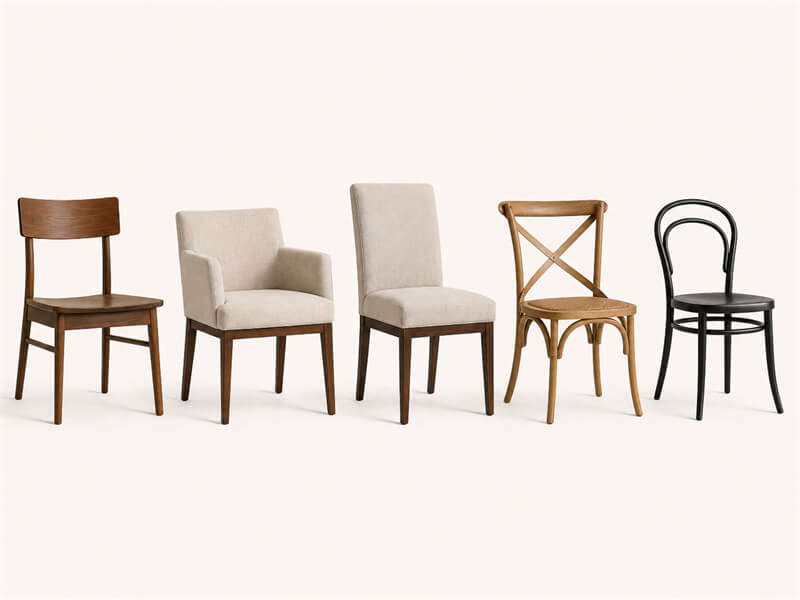
Dining chairs have one main job: helping people sit comfortably at a table while keeping the right posture for eating, talking, and moving in and out easily.
For homes, comfort and style matter most. For restaurants, cafés, hotels, and commercial projects, durability, cleaning, stacking, and reorder stability are just as important.
Side chair
A side chair is a dining chair without arms. It is one of the most common dining chair types because it saves space, fits easily around tables, and allows more seats in the same dining area.
Good for: homes, restaurants, cafés, banquet spaces, and rectangular dining tables.
Arm chair
A dining arm chair has armrests and is often placed at the head of a table. It adds comfort and gives the dining area a more finished, formal look.
Good for: end seats, hotel dining areas, private dining rooms, and higher-end restaurant settings.
Parsons chair
A clean-lined upholstered chair (often fully upholstered) that works in many styles—from traditional to modern.
Good for: longer meals, households that want a softer seat.
Windsor chair
A classic wooden chair style with spindles or slats in the back. It’s durable and timeless.
Good for: farmhouse, traditional, and casual dining spaces.
Ladder-back and slat-back chairs
These have horizontal slats across the back. You’ll see them in rustic and casual designs.
Good for: kitchens, breakfast nooks, relaxed dining.
Crossback chair
A recognizable “X” pattern on the back—often associated with rustic or French country spaces.
Good for: statement dining sets, café-inspired kitchens.
Restaurant chair
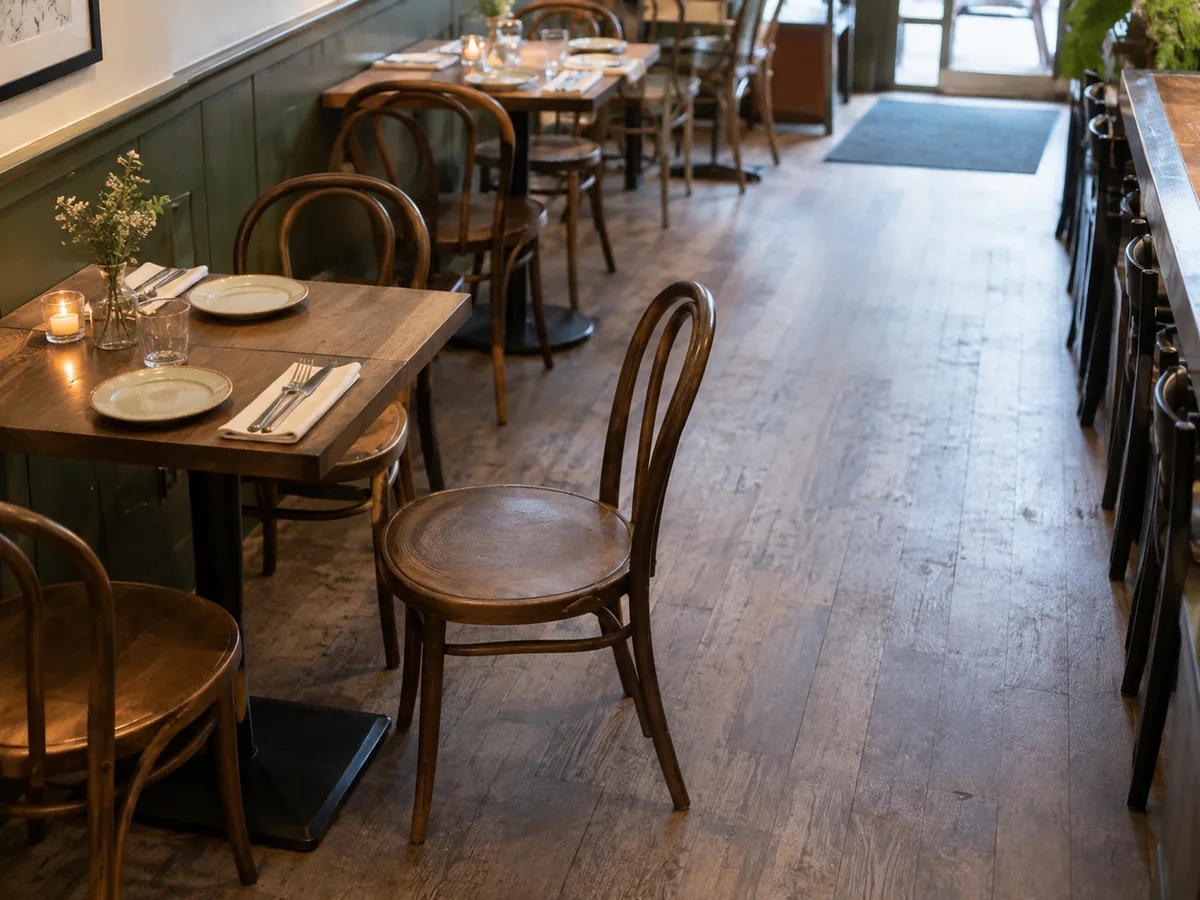
A restaurant chair is designed for frequent daily use in commercial dining spaces. It may look similar to a home dining chair, but buyers usually pay more attention to frame strength, easy cleaning, stable supply, and whether the design fits the restaurant concept.
Good for: restaurants, cafés, hotels, food courts, and commercial dining projects.
Café chair
A café chair is usually lighter, more flexible, and easier to move than a heavy dining chair. Many café chairs use metal, wood, rattan-style, or upholstered seats to match different interior styles.
Good for: coffee shops, bakeries, casual restaurants, bistros, and small dining spaces.
Metal dining chair
A metal dining chair uses a metal frame or full metal structure. It often feels modern, durable, and practical, especially when the finish is smooth and easy to clean.
Good for: restaurants, cafés, bars, industrial-style interiors, and high-traffic dining spaces.
Upholstered dining chair
An upholstered dining chair has a padded seat, back, or full fabric covering. It feels softer and more comfortable than a plain wood or metal chair, but it needs more attention to cleaning.
Good for: hotel dining rooms, private dining areas, restaurants, homes, and longer meals.
Stackable dining chair
A stackable dining chair can be stacked vertically to save storage space. This is useful for venues that need flexible seating arrangements.
Good for: restaurants, event spaces, training rooms, schools, and multipurpose dining areas.
Commercial dining chair
A commercial dining chair is selected for repeated use, not just appearance. Buyers often consider frame material, upholstery options, cleaning needs, floor protection, and whether the chair can be reordered later for future projects.
Good for: furniture wholesalers, restaurant projects, hotel projects, contractors, and design studios.
What Chair Types Work Best for Restaurants and Cafes?
Restaurants and cafes usually need chairs that balance comfort, durability, easy cleaning, and space efficiency. Unlike home dining chairs, commercial chairs are used many times every day, so buyers should think beyond appearance.
For most restaurants, common choices include restaurant dining chairs, café chairs, bar stools, counter stools, stackable chairs, outdoor patio chairs, and banquet chairs.
A small café may prefer lighter chairs that are easy to move. A busy restaurant may need stronger frames, easy-clean surfaces, and stable reorder options. A hotel or event space may care more about comfort, upholstery, and a polished look.
For wholesale buyers, distributors, and project contractors, the best chair is not only the one that looks good. It should also support daily use, match the space, reduce maintenance pressure, and remain available for future repeat orders.
Related:
How to Measure Bar Stool Height
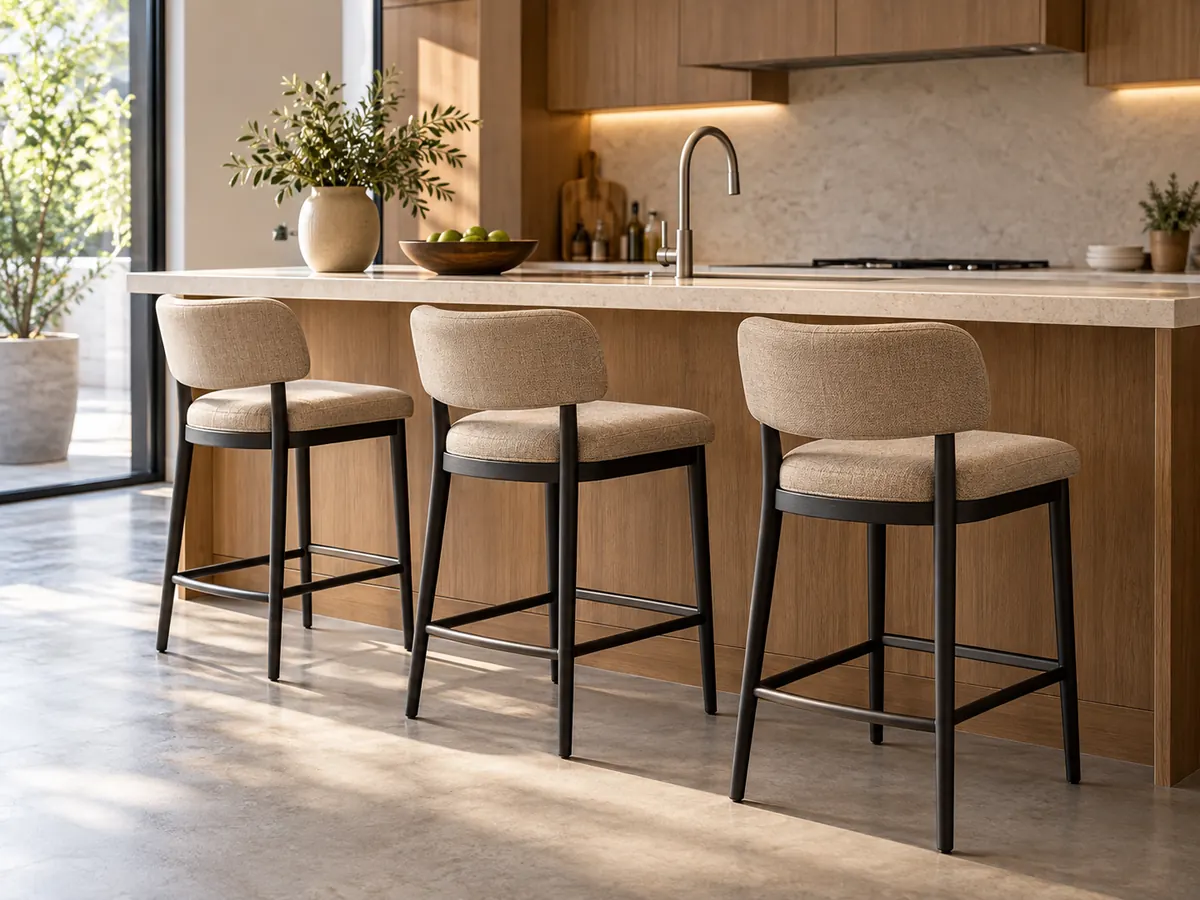
Counter stools vs bar stools
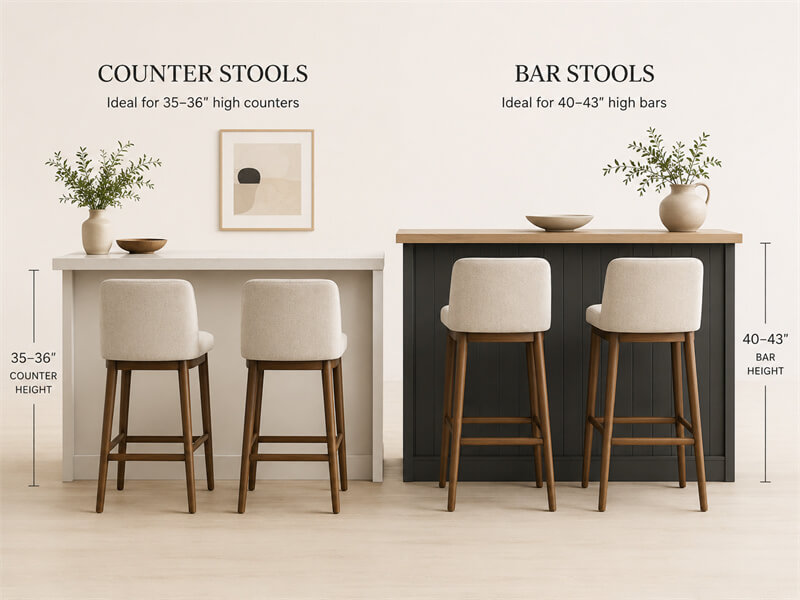
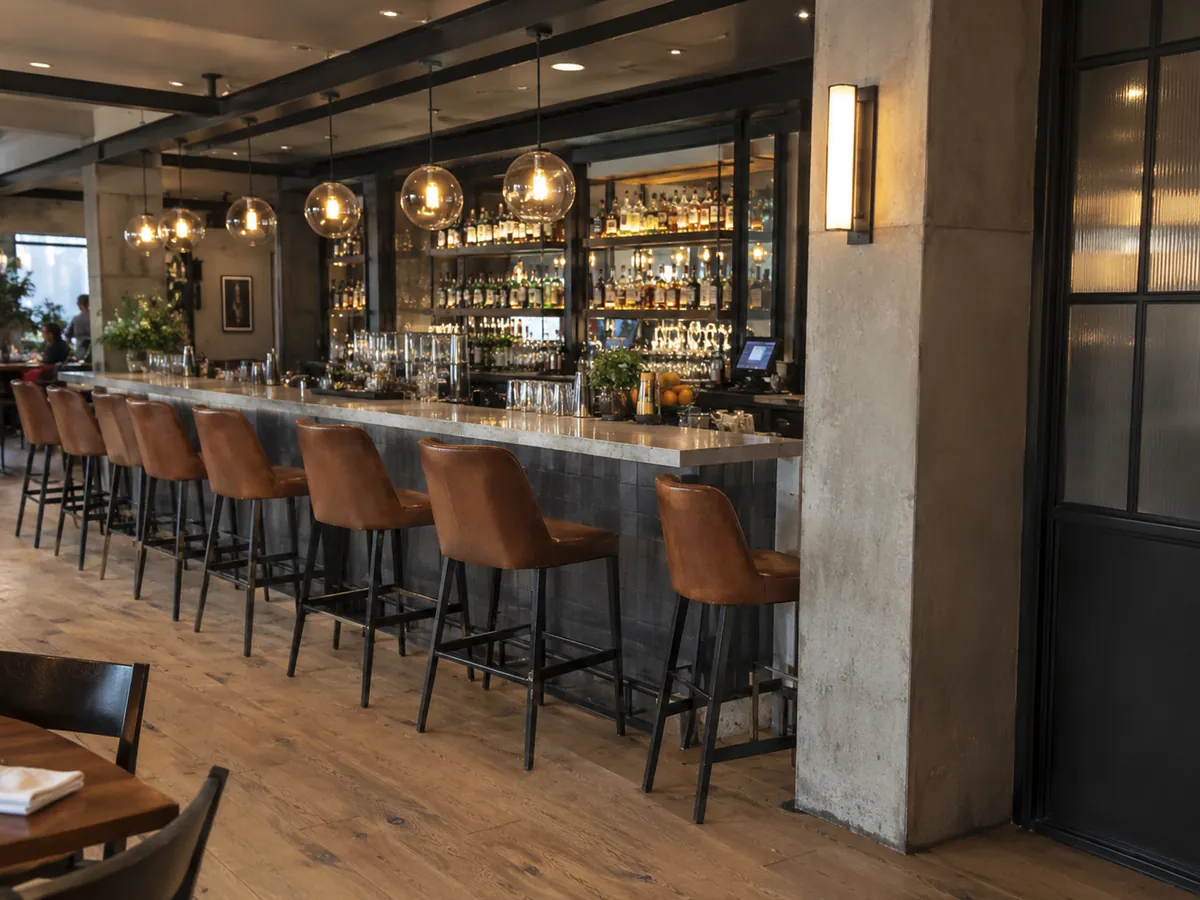
Stools are dining-adjacent seating used around kitchen islands, counters, bars, cafés, pubs, and restaurant bar areas. The most important difference is not the style, but the seat height.
- Counter-height stools are typically made for counter surfaces around 35–36 inches tall. They are common around kitchen islands, breakfast counters, and casual café counters.
- Bar-height stools are made for taller bar surfaces around 40–43 inches tall. They are often used in pubs, bars, restaurants, hotel lounges, and commercial bar areas.
Related: Counter Height vs Bar Height Which Is Best for Cafes
Swivel stool
A swivel stool has a seat that rotates, making it easier for people to turn without moving the whole stool.
Good for: bars, kitchen islands, café counters, hotel lounges, and casual dining spaces.
Backless stool
A backless stool has no backrest, so it is usually lighter and easier to tuck under a counter or bar.
Good for: small spaces, compact counters, casual bars, and areas where storage space matters.
A simple rule of thumb is to leave about 10–12 inches between the top of the seat and the counter/bar surface. For a practical chart and common ranges, see Lowe’s “counter height vs. bar height stools” guide.
⚠️ Warning: If stools will be used daily, especially in a café, bar, or restaurant, prioritize a stable base, strong footrest, comfortable seat height, and durable frame. A stool that looks good but feels unstable will quickly create a poor user experience.
Types of office chairs
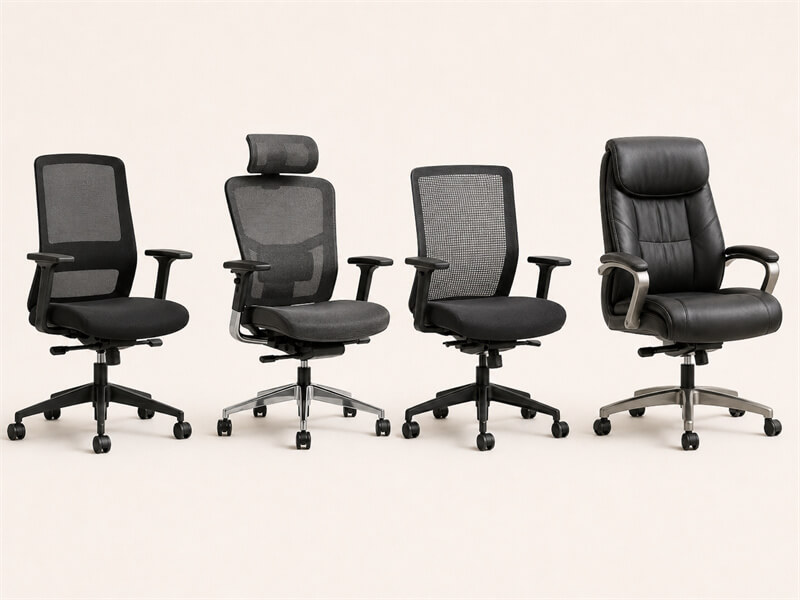
Office chairs are different because people do not just sit in them for a short time—they work in them for hours. For home offices and commercial workspaces, adjustability, back support, seat height, and long-term comfort usually matter more than style alone.
Task chair
A task chair is a general-purpose desk chair for everyday work. Many have adjustable seat height, some have armrest and back adjustments.
Good for: home offices, shared desks, student desks.
Ergonomic chair
“Ergonomic” usually means the chair has features designed to support a neutral, comfortable posture—often including adjustable lumbar support, armrests, and sometimes seat depth.
A common fit check is seat depth: UCLA’s ergonomics guidance suggests leaving about 1–2 inches of space between the front edge of the seat and the back of your knees (see UCLA Ergonomics: “Selecting a Chair” (2019)).
For a broader overview of what to look for in an ergonomic chair, CCOHS (the Canadian Centre for Occupational Health and Safety) shares practical criteria in its “Office Ergonomics – Ergonomic Chair” resource.
Executive chair
An executive chair is typically larger and more cushioned, often with a higher back. It can be comfortable, but the key question is still: does it fit your body and desk setup?
Good for: people who want a plush feel and a more formal look.
Mesh office chair
A chair with a breathable mesh back (and sometimes seat). Mesh can feel cooler and lighter than full upholstery.
Good for: warmer rooms, people who prefer a firmer back.
Conference chair
Meeting-room chairs tend to be simpler than task chairs. They may swivel, but often have fewer adjustments because the seating time is usually shorter.
Good for: dining-to-office crossover rooms, occasional desk work.
Gaming chair
A gaming chair usually has a high back, strong side support, adjustable armrests, and a more sporty appearance. Some people use it for work, but comfort depends heavily on body size and sitting habits.
Good for: gaming rooms, home offices, and users who prefer a high-back supportive style.
Drafting chair
A drafting chair is taller than a standard office chair and is usually used with high desks, counters, or workstations. Many have a foot ring for extra support.
Good for: studios, labs, design offices, reception counters, and standing-height workstations.
Pro Tip: If you already have a chair and want to improve comfort, you might not need a new one. Sometimes adjusting seat height, armrest height, and back tilt is enough. The U.S. General Services Administration includes practical setup checks in its Ergonomic Seating Adjustment Guide (PDF).
Types of outdoor chairs
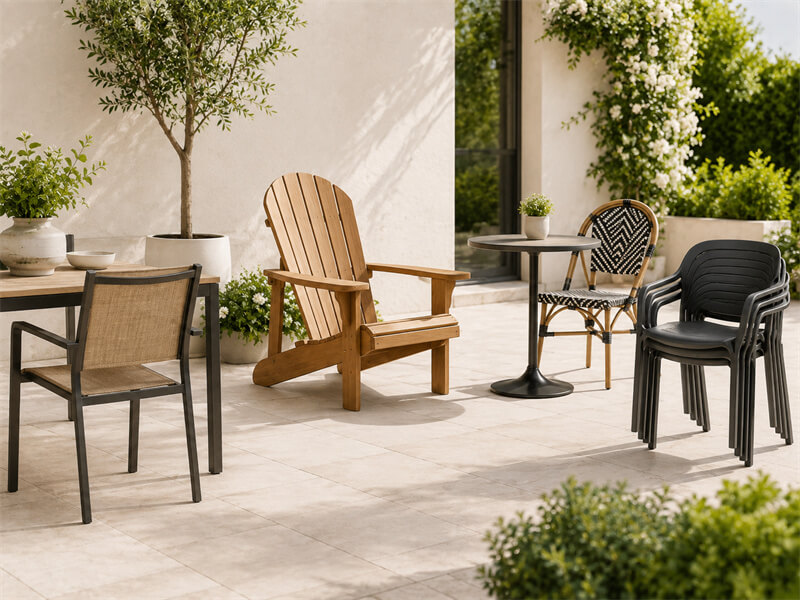
Outdoor chairs need to handle sun, temperature changes, moisture, dust, and frequent cleaning. For patios, cafés, hotel terraces, and restaurant outdoor seating, durability and maintenance matter as much as comfort and appearance.
Patio dining chair
Outdoor dining chairs are built for table seating outside. They are usually upright, easy to clean, and made with materials that can handle outdoor conditions better than indoor dining chairs.
Good for: patios, decks, restaurant terraces, hotel outdoor dining areas, and café sidewalks.
Adirondack chair
A classic outdoor chair with a slanted seat, tall back, and wide armrests.
Good for: relaxing, fire pits, porches, casual outdoor spaces.
Outdoor lounge chair
This can mean a cushioned deep-seating chair (like a living room chair, but outdoors) or a more reclined poolside-style chair. Check how the brand defines it.
Good for: outdoor conversation sets, pool areas, sunrooms.
Bistro chair
Compact, often lighter chairs designed for small outdoor tables.
Good for: balconies, small patios, café-style setups.
Stackable outdoor chair
Stackable outdoor chairs make storage, cleaning, and layout changes easier. For commercial spaces, they also help staff move seating quickly during busy hours or seasonal changes.
Good for: restaurants, cafés, hotels, event spaces, small patios, and seasonal outdoor seating.
Types of occasional and event chairs
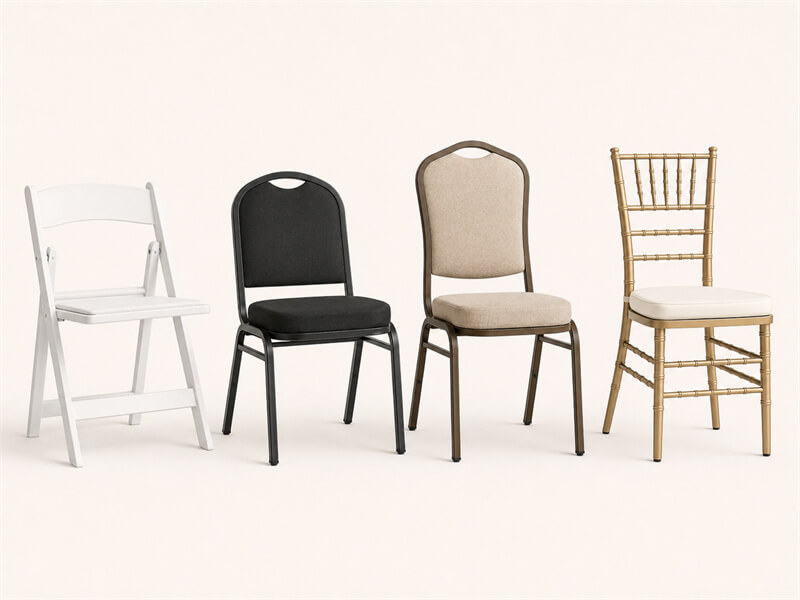
Occasional and event chairs are about flexibility. They are used when extra seating is needed, then stored, moved, stacked, or rearranged after use. For commercial buyers, storage efficiency and repeated handling are very important.
Folding chair
Folds flat for storage. Comfort varies widely.
Good for: extra guests, parties, temporary seating.
Stackable chair
A stackable chair stacks vertically and is often sturdier than a basic folding chair. It saves storage space while still offering better seating comfort and a more finished look.
Good for: restaurants, training rooms, schools, event venues, multipurpose rooms, and family gatherings.
Banquet chair
Typically padded, designed for event venues.
Good for: large gatherings, formal events.
Chiavari chair
A lightweight, elegant event chair often used for weddings.
Good for: special occasions and formal event aesthetics.
How to Choose the Right Chair for Your Space
If you want a simple decision framework, choose the chair in this order. This works for home buyers, restaurant owners, furniture wholesalers, contractors, and project buyers.
- Start with the chair’s job (dining, working, lounging, outdoor seating, commercial use, or occasional seating.)
- Confirm fit (check seat height, seat depth, chair width, table height, and walkway clearance.)
- Match comfort to sitting time: a short-use café chair does not need the same cushioning as a lounge chair.
- Choose materials based on cleaning, durability, and daily use.
- Make sure the chair fits the space visually, physically, and commercially.
- For business use, also consider MOQ, mixed colors, reorder stability, packaging, and whether the supplier can support long-term project needs.
Chair Measurements That Matter Most
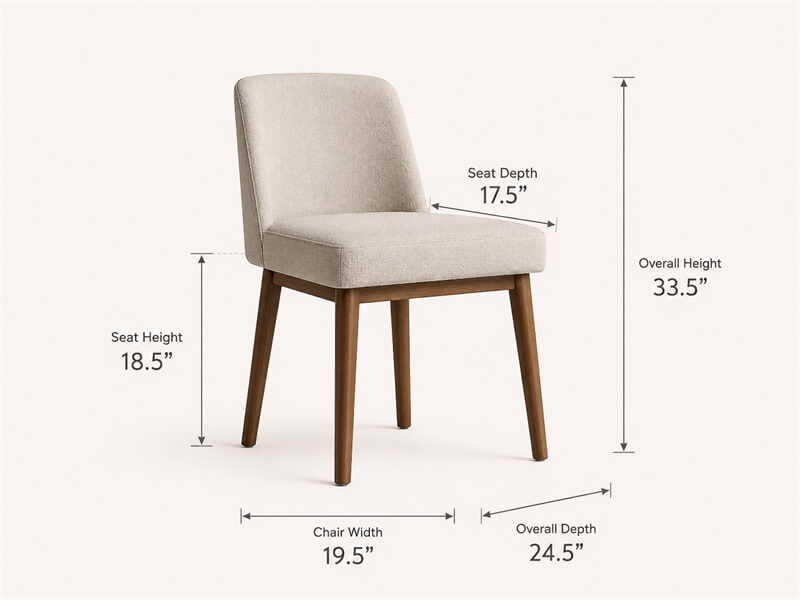
You do not need to memorize every standard chair size, but you do need to avoid chairs that fight the space, table height, or sitting posture. This is especially important when buying chairs in bulk for restaurants, cafés, hotels, schools, or project spaces.
- Seat height: Can you place your feet flat on the floor? For table seating, does it leave comfortable leg room?
- Seat depth: Do you have a little space behind your knees, or does the seat press into your legs? UCLA suggests about 1–2 inches of clearance for many office-chair setups.
- Chair width: Will it fit between table legs, allow enough elbow room, and still leave space for people to move comfortably?
- Overall depth: Will the chair block walkways once it is pulled out? This matters a lot in restaurants, cafés, bars, and small dining areas.
Comfort and support basics
Comfort isn’t only about softness.
- For lounging, look for supportive cushioning, a back angle that feels natural, and arm support if you like to read or relax.
- For work, prioritize adjustability so the chair can fit you: seat height, back support, armrest height, and (if available) seat depth.
- For dining, comfort matters—but easy movement and table fit matter more.
Chair Materials and Maintenance
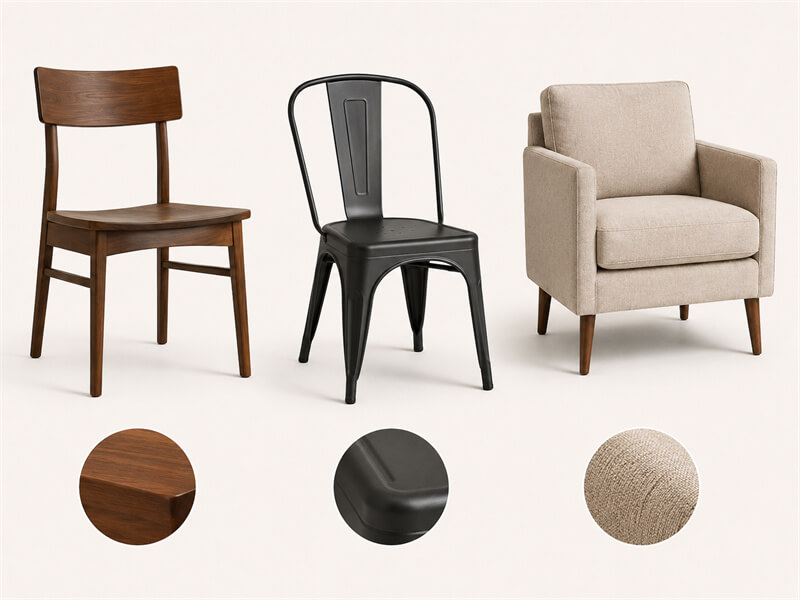
Ask yourself: “How often will this chair be used, and how much cleaning will it need?” Material choice affects comfort, maintenance, product lifespan, and long-term buying cost.
- Wood: warm, classic, and suitable for many dining styles. It can scratch in high-traffic spaces, so finish quality and edge details matter.
- Metal: strong, durable, and practical for commercial seating. Look for stable welding, smooth finishing, protective glides, and frame designs that can handle repeated use.
- Upholstery: softer and more comfortable, but it needs more cleaning. For restaurants, hotels, and cafés, choose practical upholstery options that balance comfort, stain resistance, and maintenance.
What Chair Materials Work Better for Commercial Use?
Metal frame chairs are a practical choice for restaurants, cafés, bars, and public spaces because they offer strong support and handle frequent use well.
Wood chairs create a warmer and more natural look, but buyers should pay attention to surface finish, scratches, and joint strength.
Upholstered chairs feel more comfortable and premium, especially for hotels, lounges, and higher-end dining areas. The main concern is cleaning, so fabric choice matters.
Outdoor chairs need materials that can handle sunlight, moisture, dust, and regular moving or stacking.
For commercial buyers, the best material is usually not the most decorative one. It is the material that balances design, comfort, cleaning, durability, and long-term supply.
Common Mistakes People Make When Buying Chairs
- Buying based on looks only. A chair may photograph well but feel uncomfortable after real use.
- Ignoring overall depth. Chairs often need more clearance than expected, especially around dining tables and walkways.
- Mixing counter stool and bar stool heights. Even a small height mismatch can feel awkward every day.
- Assuming “ergonomic” automatically means comfortable. Adjustability helps, but the chair still needs to fit the user.
- Choosing materials without thinking about cleaning. Light upholstery in a high-traffic restaurant or café can become a maintenance problem.
- Forgetting commercial durability. A chair used at home and a chair used daily in a restaurant do not face the same level of wear.
- Not checking reorder availability. For wholesalers, distributors, and project buyers, being able to reorder the same chair later can be just as important as the first purchase.
FAQs
Here are quick answers to common questions people ask when comparing different types of chairs.
What’s the difference between an accent chair and a lounge chair?
An accent chair is usually chosen for style, color, shape, or visual contrast. A lounge chair is chosen mainly for comfort and longer sitting. Some chairs can be both if they offer a strong design and a relaxed sitting experience.
What are the most common types of chairs?
The most common types of chairs include armchairs, accent chairs, lounge chairs, dining chairs, side chairs, office chairs, outdoor chairs, stools, folding chairs, stackable chairs, restaurant chairs, café chairs, and event chairs.
Are armchairs always more comfortable than armless chairs?
Not always. Armrests can improve comfort for longer sitting, but armless chairs can be easier to move, fit better in small spaces, and slide under tables.
What is the difference between a side chair and an armchair?
A side chair has no arms, so it saves space and fits easily around dining tables. An armchair has armrests, so it usually feels more comfortable but takes up more room.
What’s the easiest chair type to store?
Folding chairs are the easiest to store because they fold flat. Stackable chairs are also great if you have vertical storage space.
What type of chair is best for restaurants and cafés?
For restaurants and cafés, the best chair type is usually a durable dining chair, café chair, stackable chair, metal frame chair, upholstered dining chair, or bar stool. The right choice depends on the space, table height, traffic level, cleaning needs, and brand style.
What is the difference between a counter stool and a bar stool?
A counter stool is made for lower counter surfaces, usually around 35–36 inches high. A bar stool is made for taller bar surfaces, usually around 40–43 inches high. In most cases, leave about 10–12 inches between the seat and the counter or bar top.
What chair material is easiest to maintain?
Metal and many treated wood chairs are usually easier to maintain than heavily upholstered chairs. For commercial spaces, buyers often choose metal frames, practical upholstery, or easy-clean finishes because they need to handle frequent use and regular cleaning.
What chair type is best for long desk work?
Generally, an adjustable office chair (often marketed as ergonomic) is the best starting point because you can tune seat height, back support, and arm position. UCLA’s ergonomics page on chair fit explains simple checks like leaving a small gap behind your knees.
See Real Chair Examples for Different Spaces
If you want to understand chair types more clearly, browsing real product categories can help you connect names, shapes, materials, and use scenarios.
At Yezhi Furniture, we work with commercial furniture buyers, including importers, wholesalers, distributors, furniture stores, contractors, and design studios. Our seating range includes dining chairs, café chairs, restaurant chairs, bar stools, lounge chairs, and commercial seating for restaurants, cafés, hotels, offices, and project spaces.
You can browse our chair and bar stool collections to compare different styles, materials, and seating applications.
If you are planning a wholesale order or commercial furniture project, start by comparing chairs by real use case: restaurant dining, café seating, bar areas, hotel lounges, outdoor patios, or event spaces.
This makes it easier to choose products that fit your market, match project needs, reduce after-sales problems, and support future repeat orders.
Learn more about chair collection.
I’ve done a lot of collecting and organizing work. If you find anything else, please let me know via email.