If you’re comparing wooden commercial chairs, it’s tempting to treat the joint name as a shortcut for quality.
But “mortise-and-tenon” doesn’t automatically beat “dowels,” and “dowels” doesn’t automatically mean cheap.
A more accurate statement is:
A well-designed mortise-and-tenon joint often resists racking well, but it isn’t automatically stronger than every inserted dowel joint. Geometry, fit, wood species, adhesive process, moisture control, manufacturing consistency, and the complete chair design decide real-world performance.
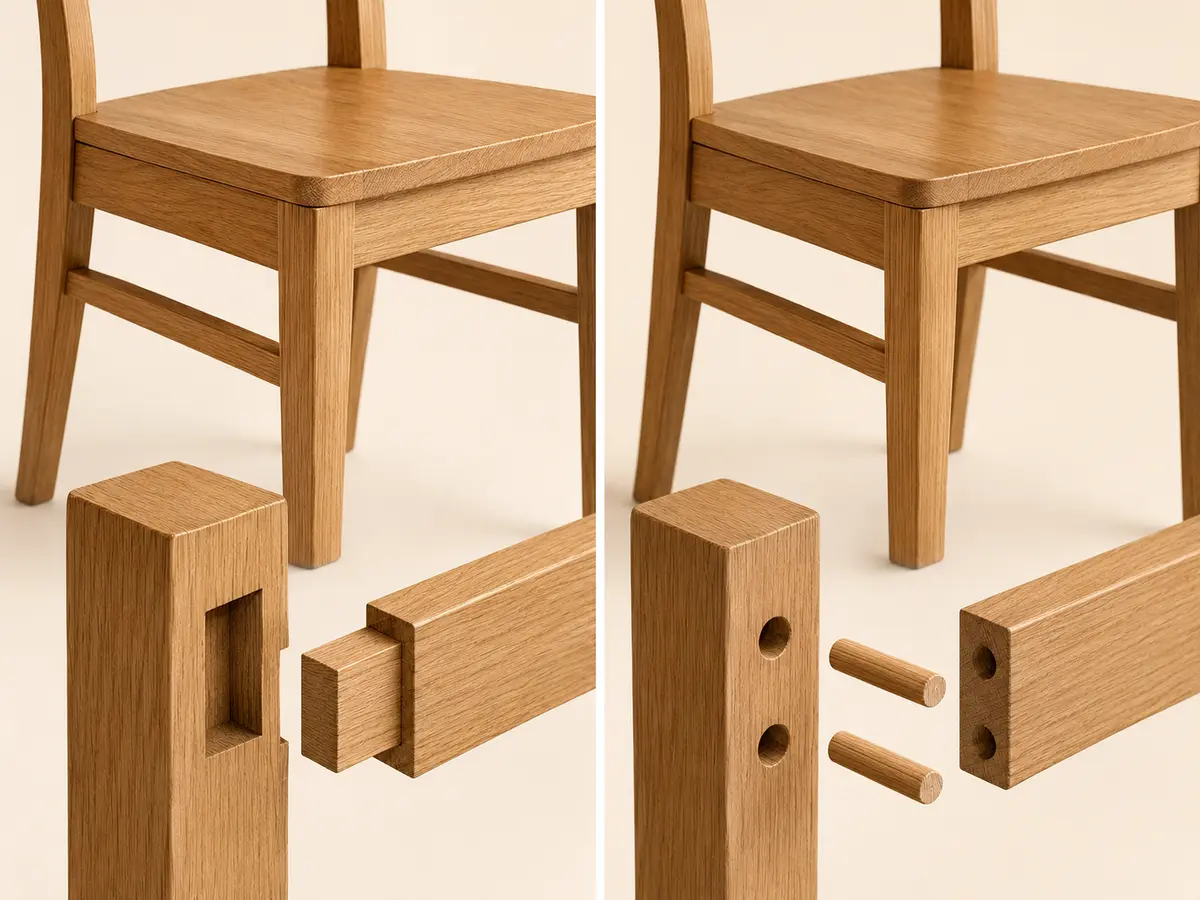
Mortise and tenon vs dowel chair joints: quick comparison
Use this table as a starting point—not a verdict.
Evaluation factor (for chairs) |
Mortise-and-tenon (M&T) |
Inserted dowel joints (separate dowels) |
|---|---|---|
Typical strength profile |
Strong when shoulders fit well and glue surfaces are clean; can be excellent against racking |
Can be very strong when dowel diameter/quantity/penetration are engineered and holes are clean/tight |
Sensitivity to fit & process |
High: loose fit or sloppy shoulders can lead to early wobble |
High: poor drilling alignment, insufficient glue coverage, or tear-out can weaken the joint |
Failure patterns you’ll see in real chairs |
Can loosen if shoulders compress or glue line fatigues; catastrophic failure depends on design |
Can loosen if holes ovalize or glue bond fails; multi-dowel designs distribute loads but require consistency |
Manufacturing consistency at scale |
Good if tooling and QC control mortise size/tenon thickness and assembly pressure |
Good if drilling is precise (CNC/fixtures) and glue application is controlled |
What buyers should verify |
Joint geometry, moisture control, glue process, and whole-chair durability testing |
Same—plus drilling accuracy, dowel material/fit, and glue coverage in holes |
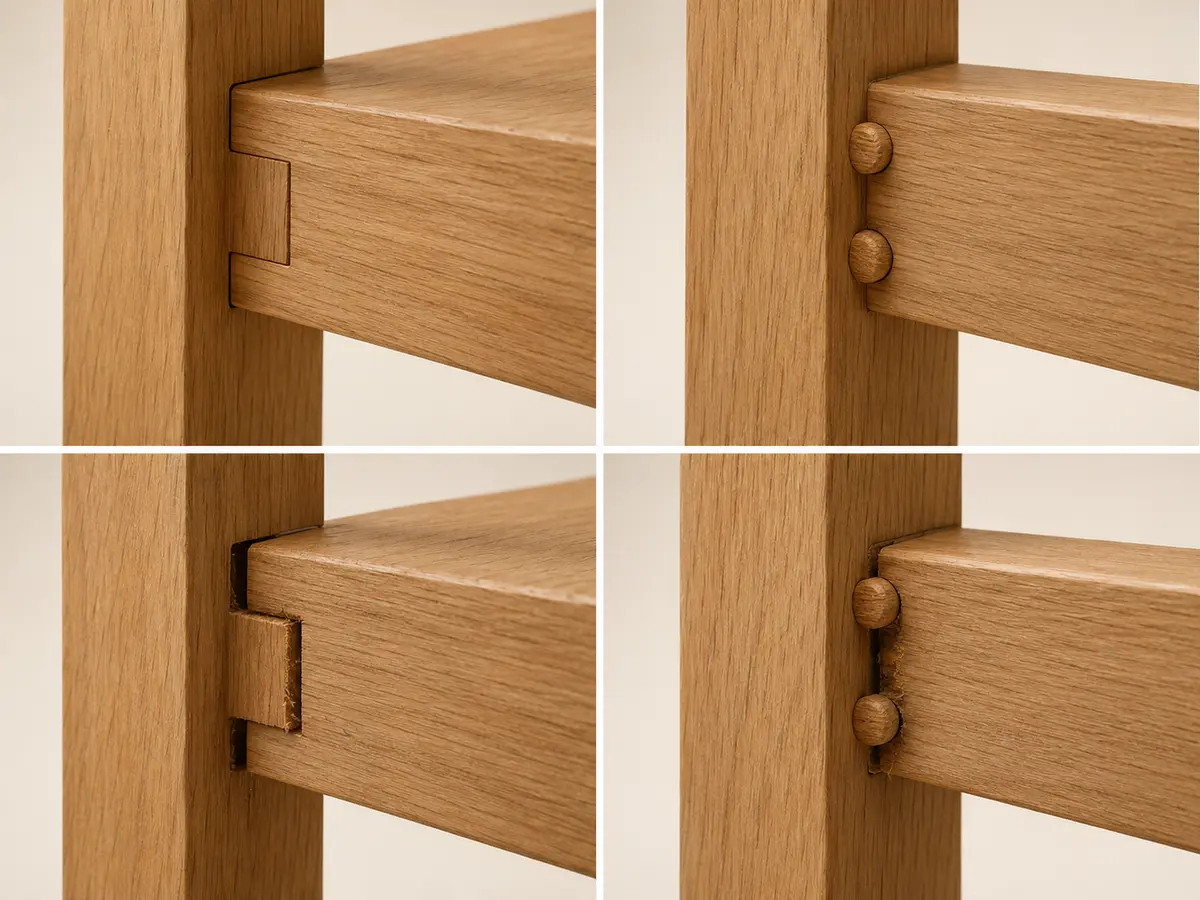
When people claim “one is always stronger,” they’re usually collapsing all of the real variables into a brand story.
First, avoid the terminology trap
A big reason online comparisons get messy: many different structures are casually called “dowels.”
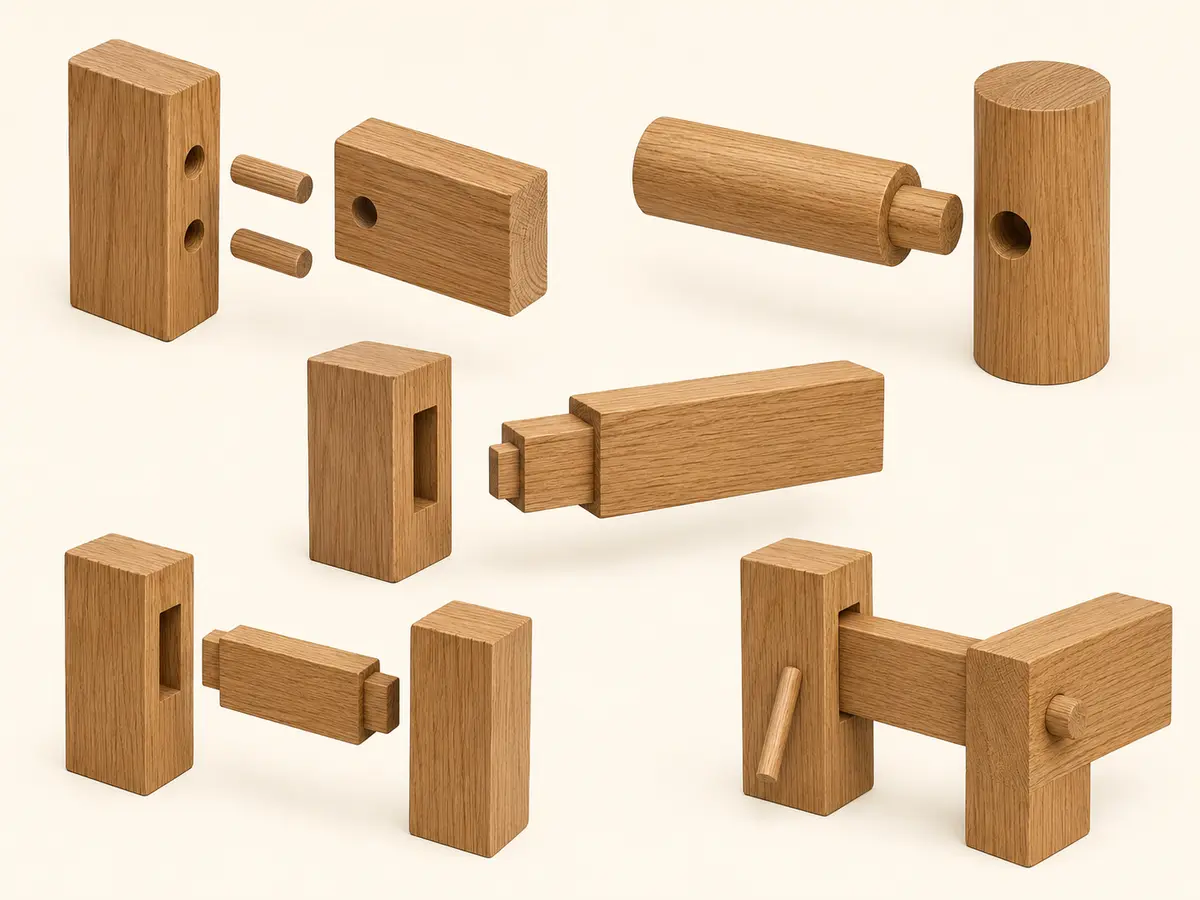
Here’s the terminology this article uses:
Term |
What it actually means |
|---|---|
Inserted dowel joint |
Two parts are drilled; separate round dowels are inserted and glued into the holes. |
Integral round tenon |
The rail itself is shaped into a round tenon at the end (not a separate dowel). |
Traditional mortise-and-tenon |
A tenon on one part fits into a mortise (slot/hole) in the other part. |
Loose tenon |
Both parts have mortises; a separate tenon (often rectangular) connects them. |
Drawbored mortise-and-tenon |
A peg/pin hole is intentionally offset so driving the peg pulls the joint tighter mechanically. This is a locking technique, not a different joint family. |
For a concise explanation of why these get confused, see Kreg Tool’s overview of the mortise-and-tenon joint (2024).
What “stronger” means for a chair (not a lab sample)
Most “joint strength” arguments quietly assume a single type of load.
Commercial chairs don’t live in that world. They see:
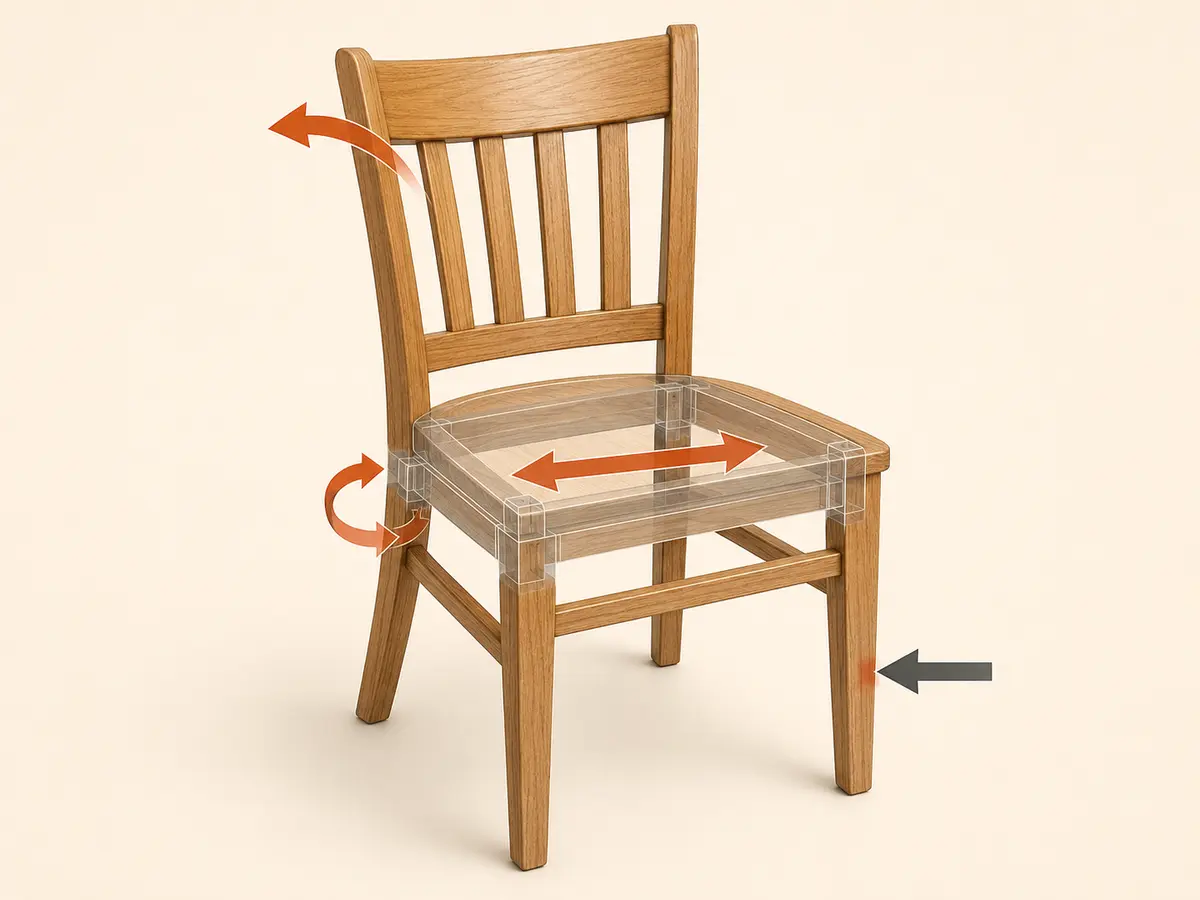
- Racking: side-to-side forces that try to turn the seat frame into a parallelogram (common in chair wobble).
- Backrest leverage: leaning back creates a large moment that stresses rear joints.
- Impact and drag loads: chairs get pulled, dropped, and scraped.
- Fatigue: repeated micro-movement that slowly breaks glue bonds.
That’s why a joint that wins a single static test may not be the one that stays tight after months of real service.
Key Takeaway: Treat the joint name as a clue. Treat the evidence (design + QC + test method) as the decision.
Why test results disagree (and why that’s not a problem)
You’ll find tests and articles that “prove” opposite outcomes.
For example, Woodgears shows how measuring initial cracking vs final separation can change which joint “wins,” and also notes how joint geometry and test setup influence results in its dowel vs mortise-and-tenon joint test discussion.
A separate test in a cabinet-style configuration found higher failure loads for a dowel joint than for a mortise-and-tenon joint—using a specific dowel count, diameter, and glue process (Canadian Woodworking’s dowel joint strength test (2010)).
Those aren’t contradictions so much as reminders:
- Joint comparisons are design comparisons, not name comparisons.
- A result from one geometry and test rig is not a universal law.
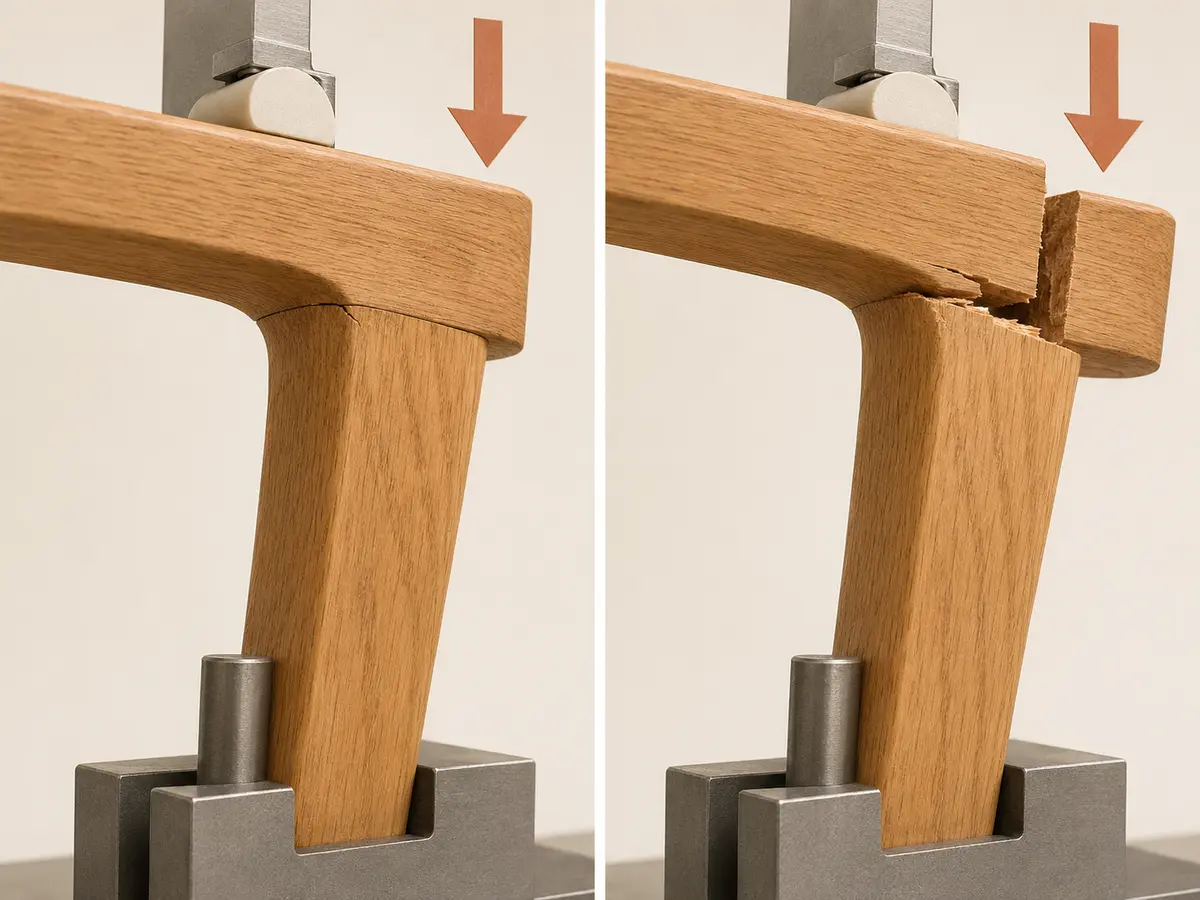
Dowel vs mortise and tenon joints: why the label can mislead
If you’re searching for “mortise and tenon vs dowel strength,” this is the section that explains why the answer depends.
A lot of posts treat the joint name like a ranking.
In reality, the label hides the design variables that matter most: geometry, fit, glue discipline, and how the chair frame routes racking forces.
1) Geometry: how much wood is left around the joint
Removing more wood can create a weaker “shell” around the joint, depending on the leg/rail thickness.
That’s one reason you can see higher initial cracking in one joint style and higher ultimate separation in another—depending on how the surrounding member fails.
2) “Anchors”: one connector vs multiple connectors
A mortise-and-tenon often behaves like one large anchor.
Multi-dowel joints act like multiple anchors sharing the load.
That can help racking resistance in some designs, but only if:
- dowel placement is accurate,
- holes are clean (no tear-out),
- glue coverage inside holes is consistent.
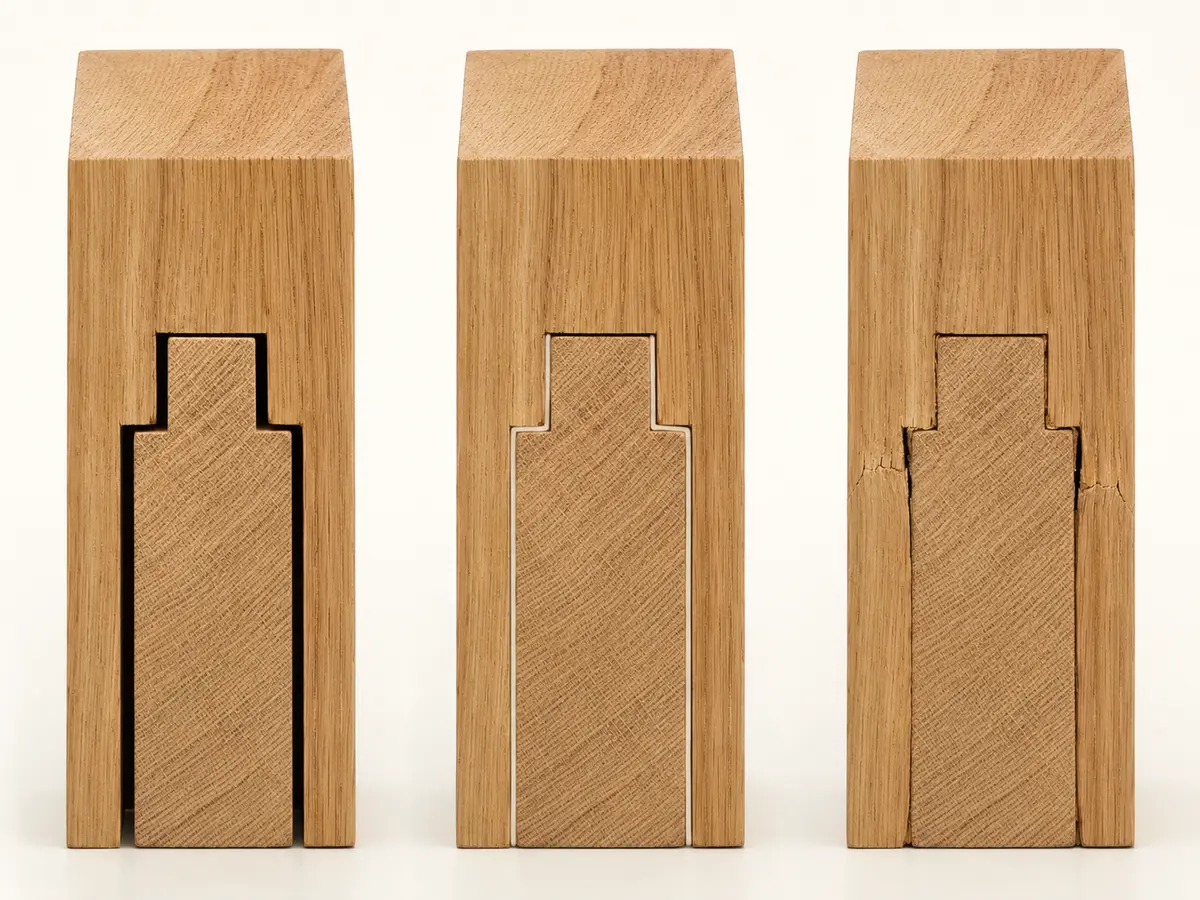
3) Fit and tolerance control
“Too loose” allows micro-movement that pumps the glue line until it fails.
“Too tight” can crush fibers, starve glue, or introduce assembly stress.
This is where mass production wins or loses: same joint name, very different repeatability.
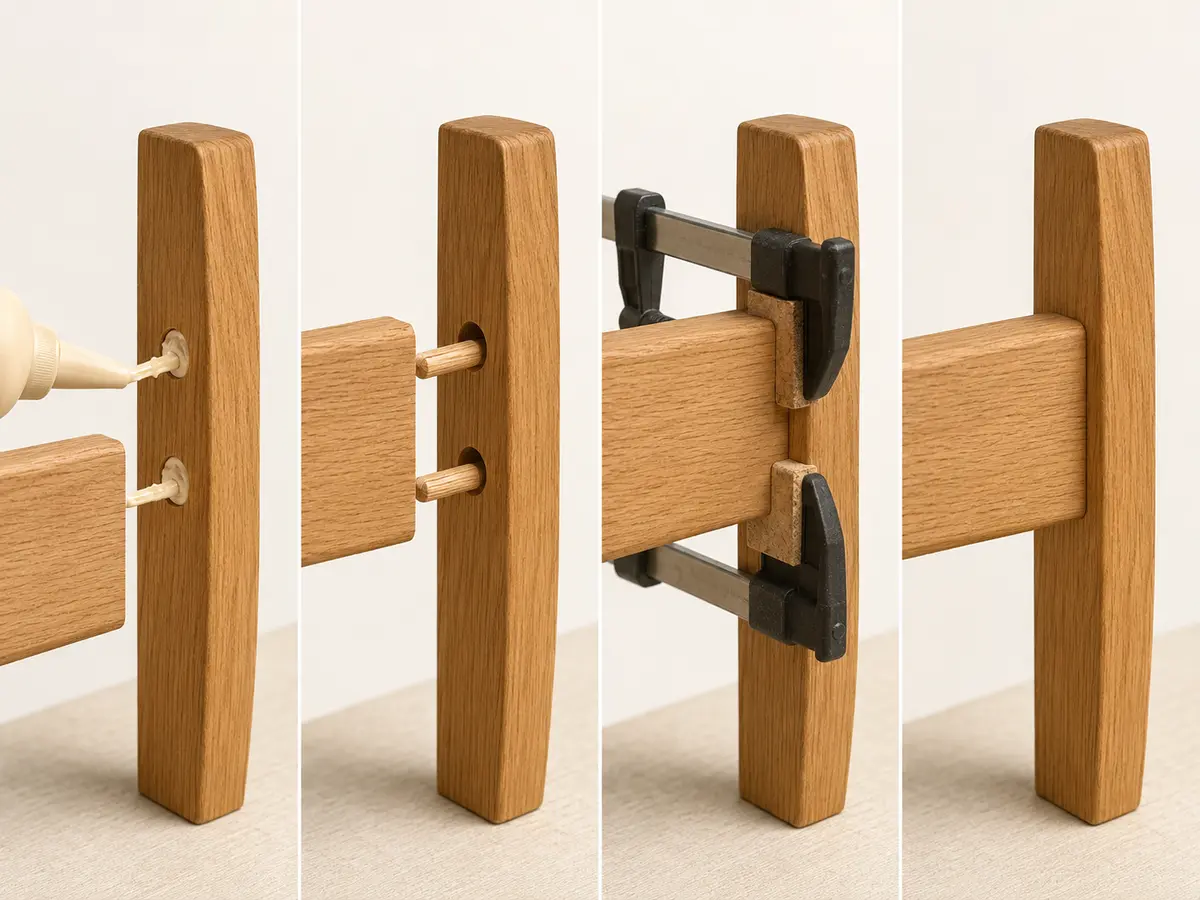
4) Adhesive + curing discipline
You don’t have to name the adhesive to evaluate the process.
For buyers, what matters is whether the supplier can describe:
- how glue is applied (especially inside dowel holes),
- clamp/press time,
- curing control,
- moisture management before assembly.
5) The chair design around the joint
Joint strength doesn’t exist in isolation.
Seat frame layout, stretcher placement, leg section size, and backrest geometry determine how loads reach the joint.
So… which joint is stronger for chairs?
Here’s the honest, useful answer in buyer language.
Mortise-and-tenon is often a strong choice when…
- The design needs strong resistance to racking and the shoulders can seat cleanly.
- The leg/rail dimensions allow a mortise without leaving the surrounding wood too thin.
- The factory can hold tight tolerances across batches.
Inserted dowel joints can be strong enough (even excellent) when…
- Dowel diameter, penetration depth, and quantity are engineered for the rail size.
- Drilling accuracy is controlled (fixtures/CNC), and glue application is consistent.
- The surrounding wood is kept intact enough to avoid early splitting.
This is why “are dowel joints strong enough for chairs?” is often a yes—if question.
The evidence hierarchy: coupon tests vs whole-chair durability
If you’re sourcing commercial seating, you’ll get better signal from tests that evaluate the whole chair.
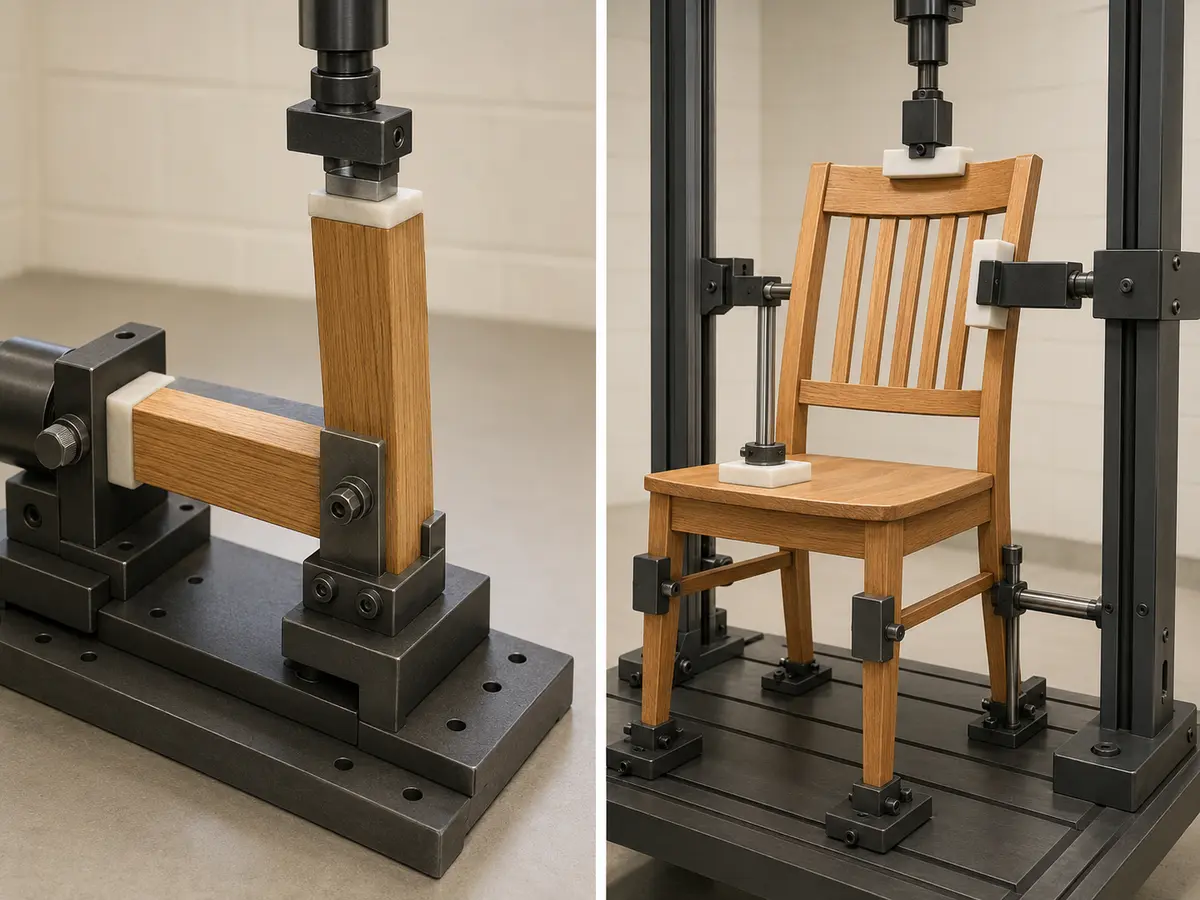
Depending on your market and application, relevant frameworks include:
- EN 16139 for non-domestic seating in Europe (overview mention: Hem’s strength & stability page referencing EN 16139)
- ISO 7173 for chair and stool strength/durability test methods (overview: ANSI’s overview of ISO 7173:2023)
- BIFMA standards used in the US market (high-level reference: BIFMA’s standards overview)
These don’t replace engineering judgment—but they keep “strong” tied to repeatable methods.
Pro Tip: When a supplier says “contract grade,” ask which test method they’re using for that claim and request the report tied to the exact model.
Buyer checklist: how to evaluate wooden chair joinery in an RFQ
You usually can’t see a hidden joint once the chair is upholstered or finished.
So your evaluation has to be evidence-driven.
Ask for joint clarity (so you’re not comparing apples to oranges)
- Joint type for each critical connection (seat frame corners, back-to-leg, stretchers): mortise-and-tenon or inserted dowels.
- A simple cross-section drawing or photo of the joint.
- Key geometry: tenon thickness/length or dowel diameter/quantity/penetration (even ranges are useful).
Ask for process controls (this is where wobble gets prevented)
- Wood moisture control approach (how they prevent movement before assembly).
- Assembly process description: glue application method, clamp/press time, curing handling.
- In-process QC: how they detect misalignment, poor fit, or gaps before finishing.
Ask for performance evidence (whole chair, not just the joint)
- Which standard/test method is used for strength/durability (if any) and whether the report is model-specific.
- Test report traceability (date, lab identity, model ID, configuration).
- What changes are controlled between sample and mass production.
Inspect the sample like a commercial buyer
- Rock test: does it develop wobble quickly under lateral force?
- Listen test: creaks can indicate micro-movement.
- Four-leg contact: uneven legs can “fake” weakness by forcing twist into joints.
If you’re building a shortlist for restaurant projects, start from YeZhi’s Restaurant Chair Supplier range, and use the checklist above to request drawings/specs early—before you lock finishes and quantities.
Where YeZhi fits (without over-claiming)
YeZhi uses both mortise-and-tenon and inserted dowel constructions depending on the model and frame design.
If your priority is procurement clarity (drawings, samples, batch consistency), you can start with YeZhi’s Wholesale Cafe Furniture offering and the overview of chair solutions for restaurants and cafes, then request the joint cross-section for your shortlisted SKUs.
FAQ
Are mortise-and-tenon joints stronger than dowel joints for chairs?
Often they can be—especially for racking resistance—but not automatically. Tests can disagree depending on joint geometry, wood removal, glue process, and how “failure” is defined (for example, initial cracking vs final separation), as discussed in Woodgears’ dowel vs mortise-and-tenon joint test write-up.
Can dowel joints be strong enough for chairs?
Yes—if the dowels are properly sized and placed, the holes are drilled accurately, and glue coverage is consistent. A dowel joint is easy to under-execute, but a well-made multi-dowel joint can be very strong (see the example setup in Canadian Woodworking, 2010).
What is the strongest joint for chairs?
There’s no single universal winner. The strongest joint is the one whose geometry, fit, wood, adhesive process, and surrounding chair design are engineered for the actual loads—then validated with whole-chair testing when the application demands it.
Which chair joint resists racking better?
Many mortise-and-tenon designs resist racking well because the shoulders can help lock the frame against twisting. But multi-dowel joints can also perform well because they distribute loads across multiple anchors. The deciding factor is the specific joint geometry and overall chair frame layout.
How can buyers inspect wooden chair joints if the joint is hidden?
Treat it as a documentation problem: request joint cross-sections, key dimensions, process controls, and model-specific test reports. Then stress-test a sample for early wobble and noise.
Next steps
If you want to reduce wobble risk and returns on wooden restaurant chairs, use the checklist above as an RFQ appendix—and ask for joint cross-sections and model-specific test evidence before finalizing finishes.
For product inspiration, you can also look at YeZhi’s Freedom Stackable Wooden Restaurant Chair and request drawings/specs for your project configuration.