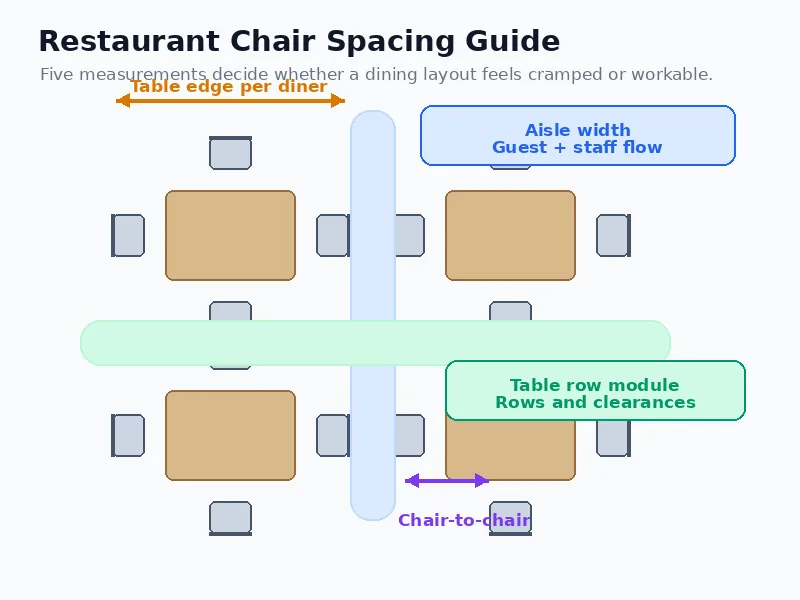
If you’re planning a restaurant, café, hotel breakfast area, or any commercial dining floor plan, the fastest way to avoid a “looks fine on CAD, feels cramped in real life” layout is to separate the problem into five measurements:
- Space per diner at the table edge (how many seats you can fit)
- Space between restaurant chairs (chair-to-chair clearance)
- Clearance behind chairs (can guests get up, can staff pass)
- Table-to-table spacing (rows and modules)
- Aisle width (guest flow, service flow, accessibility)
Below is a practical cheat sheet you can use to sanity-check a plan in minutes, then refine it based on venue type and chair style.
Important note before using the numbers: The spacing ranges below are planning guidelines for restaurant furniture layouts, not a substitute for local building, fire, accessibility, or health-code review. Use the table for early layout checks, then verify accessible routes, egress paths, occupancy limits, and local code requirements with your architect, code consultant, or local authority before final approval.
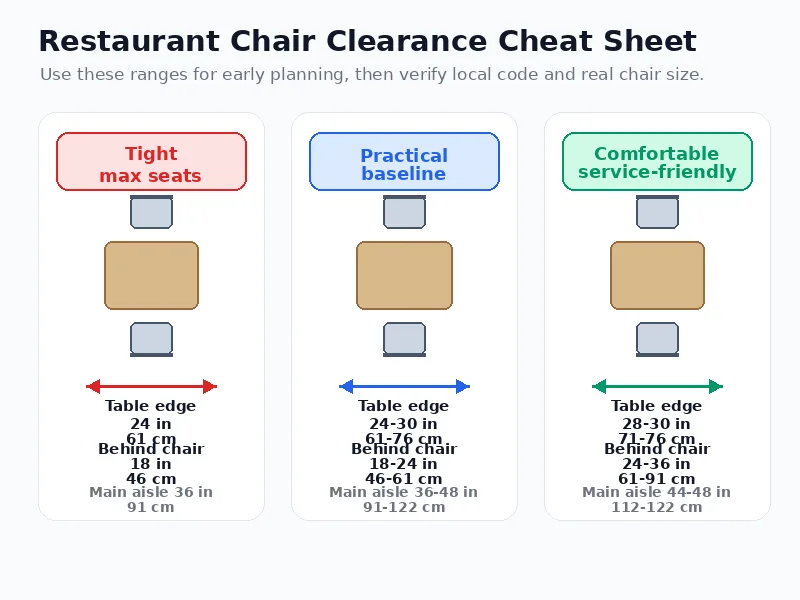
Quick answer: restaurant chair spacing and clearances (in + cm)
| What you’re sizing | Tight (max seats) | Practical baseline | Comfortable / service-friendly | Notes |
|---|---|---|---|---|
| Table edge per diner | 24 in (61 cm) | 24–30 in (61–76 cm) | 28–30 in (71–76 cm) | Many commercial guides use 24–30 in per diner; fine dining often leans wider.Dimensions.com’s “Restaurant Seating Arrangements” |
| Space between occupied chairs | 18 in (46 cm) | 18–24 in (46–61 cm) | 24+ in (61+ cm) | 18 in is a common minimum reference for occupied chairs.Dimensions.com’s “Restaurant Seating Arrangements” |
| Clearance behind an occupied chair | 18 in (46 cm) | 18–24 in (46–61 cm) | 24–36 in (61–91 cm) | One floor-plan sizing guide recommends 18–24 in behind occupied chairs; 24 in as a practical minimum for full service.RO N GROUP’s “Restaurant Table Sizing Guide” |
| Primary aisle width (guest + staff) | 36 in (91 cm) | 36–48 in (91–122 cm) | 44–48 in (112–122 cm) | 36 in is an ADA baseline for an accessible route (US). Many specs recommend wider for operations.Superior Seating’s “Design Specs Center” |
| Table row module (square tables) | 42 in (107 cm) | 60 in (152 cm) | 60+ in (152+ cm) | A common module is 42 in minimum between squared tables and 60 in recommended for full service.Superior Seating’s “Design Specs Center” |
Pro Tip: Always size from the chair’s maximum outside dimensions (overall width/depth), not just seat width. Arms, flared legs, and angled backs can add “invisible” inches that turn a workable drawing into a choke point.
Decision table: recommended clearance targets by venue type
These are planning targets—not laws. They help you choose a “spacing tier” intentionally based on dwell time, service style, and the chair types you plan to use.
| Venue type | Table edge per diner | Behind-chair clearance (baseline) | Primary aisle (baseline) | What you’re optimizing for |
|---|---|---|---|---|
| Quick service / fast food | ~24 in (61 cm) | ~18–24 in (46–61 cm) | ~36 in (91 cm) | Seat count + fast turnover |
| Café / fast casual | 24–28 in (61–71 cm) | 18–24 in (46–61 cm) | 36–44 in (91–112 cm) | Density, but keep flow easy |
| Full-service (casual) | 24–30 in (61–76 cm) | 24 in+ (61+ cm) | 36–48 in (91–122 cm) | Service pass-through + comfort |
| Fine dining | 28–30 in (71–76 cm) | 24–36 in (61–91 cm) | 44–48 in (112–122 cm) | Privacy, pacing, experience |
| Hotel breakfast | 24–28 in (61–71 cm) | 24 in+ (61+ cm) | 44 in+ (112+ cm) | Luggage/traffic + quick reset |
The numbers above align with the way common commercial references discuss seating density and spacing (e.g., 12–15 sq ft per seat for full service and 18–20 sq ft per seat for fine dining).Dimensions.com’s “Restaurant Seating Arrangements”
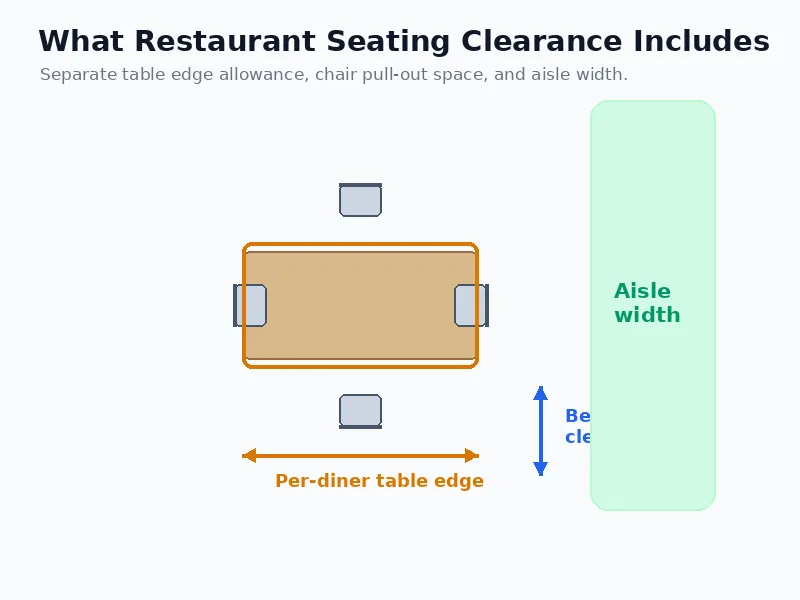
First, get the measurement right: what “restaurant seating clearance” actually includes
A lot of layout confusion comes from mixing these three measurements:
- Per-diner table edge allowance (linear inches per person)
- Behind-chair clearance (how far the chair moves + walking zone)
- Aisle width (a clear route through the dining room)
They stack together in real life. Example: you might have “enough table edge” to seat four people, but still fail because your chair depth + chair pull-out leaves no usable aisle.
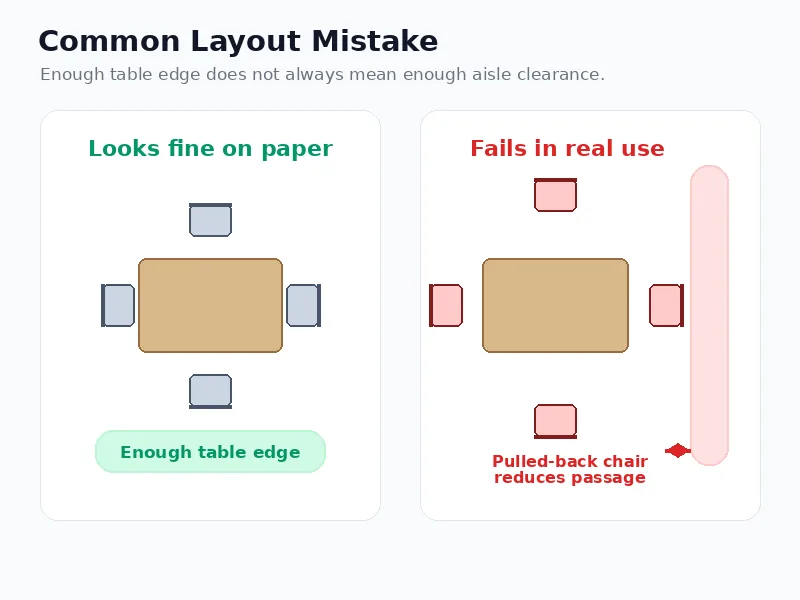
Clearance behind chairs: minimum vs comfortable vs staff pass-through
Instead of using one number, think in tiers:
Tier 1 — Minimum pull-back (guests can sit down and stand up)
- 18–24 in (46–61 cm) behind occupied chairs is a commonly cited working range.RO N GROUP’s “Restaurant Table Sizing Guide”
This is the “it works, but it’s tight” tier. It’s where you end up when you’re pushing seat count hard.
Tier 2 — Comfortable get-up (guests aren’t bumping into traffic)
- Aim for 24 in+ (61 cm+) behind occupied chairs.
This is the tier that reduces “sorry, can I squeeze by?” moments during service.
Tier 3 — Staff pass-through (servers can move behind seated guests)
If you expect servers to pass behind occupied chairs, plan around the layout module, not a single clearance number:
- A common commercial guideline is 42 in minimum between squared tables (chairs back-to-back), and 60 in recommended for full service access.Superior Seating’s “Design Specs Center”
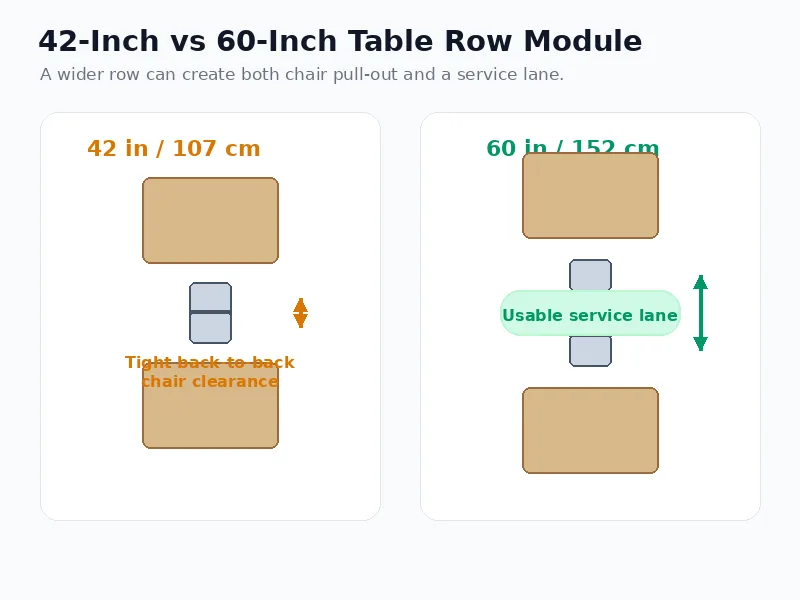
That “60-inch row” is a practical way to buy yourself both chair pull-out and a usable service lane.
⚠️ Warning: Your chair model can easily add 2–4 inches (5–10 cm) of “real depth” once you account for back rake and upholstery thickness. That’s often the difference between “passable” and “blocked” in a 42-inch module.
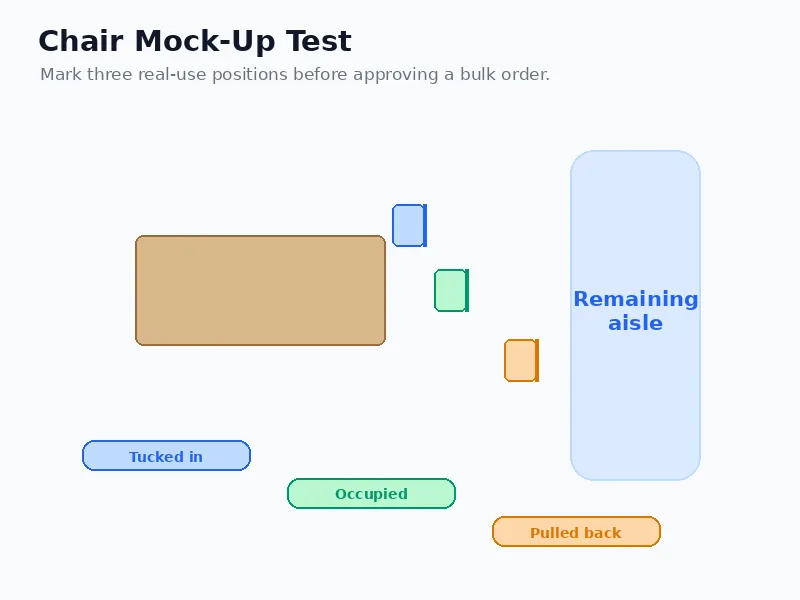
Practical mock-up example: Before approving a bulk chair order, place one sample chair at the table and mark three positions on the floor: fully tucked in, occupied, and pulled back for standing up. Then measure the remaining aisle at the narrowest point. If your drawing shows a 36 in (91 cm) aisle but the pulled-back chair reduces the real passage to 28–30 in (71–76 cm), the layout may work on paper but fail during service.
Aisle width in restaurants: main vs secondary vs service
Use three categories so your plan doesn’t treat every path the same.
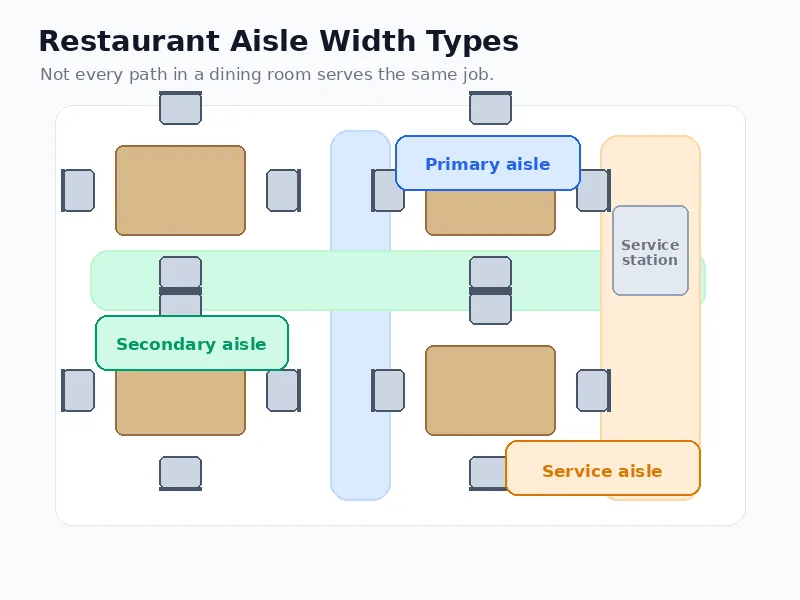
Secondary aisle (table access)
This is the narrow lane guests use to reach a table (not your main circulation spine).
One planning guide describes 30–36 in (76–91 cm) as a typical range for secondary aisles.RO N GROUP’s “Restaurant Table Sizing Guide”
Primary aisle (main circulation)
This is where guest traffic and staff traffic overlap.
Commercial layout specs often start at 36 in (91 cm) (also a common ADA baseline for accessible routes in the US), and recommend wider for smoother operations.Superior Seating’s “Design Specs Center”
Service aisle (high-frequency staff lane)
If you have a path where staff regularly carry trays, bus tables, or pass behind seated guests, treat it as its own constraint.
A practical reference is 36–48 in (91–122 cm) depending on volume and whether the path is two-way.RO N GROUP’s “Restaurant Table Sizing Guide”
Accessibility note (US-only): For ADA planning, do not treat a 36-inch aisle as just a comfort number. ADA accessible routes generally require a 36 in (915 mm) minimum clear width, and accessible dining/work surfaces also rely on a 30 × 48 in (760 × 1220 mm) clear floor space with proper approach and knee/toe clearance. This article is a furniture layout guide, not legal advice. Always verify the final dining-room plan against ADA, IBC/fire-code requirements, and local authority requirements before construction or purchasing.
Code-sensitive check: When seating is next to an aisle or aisle accessway, the usable clear width may be judged differently from a simple “wall-to-wall” measurement. In IBC-style egress review, seating at tables can affect how aisle accessway width is measured, and NFPA also warns that table-and-chair arrangements can reduce available egress paths. For tight restaurant layouts, check the aisle with chairs occupied and pulled back, not only with chairs pushed neatly under the table.
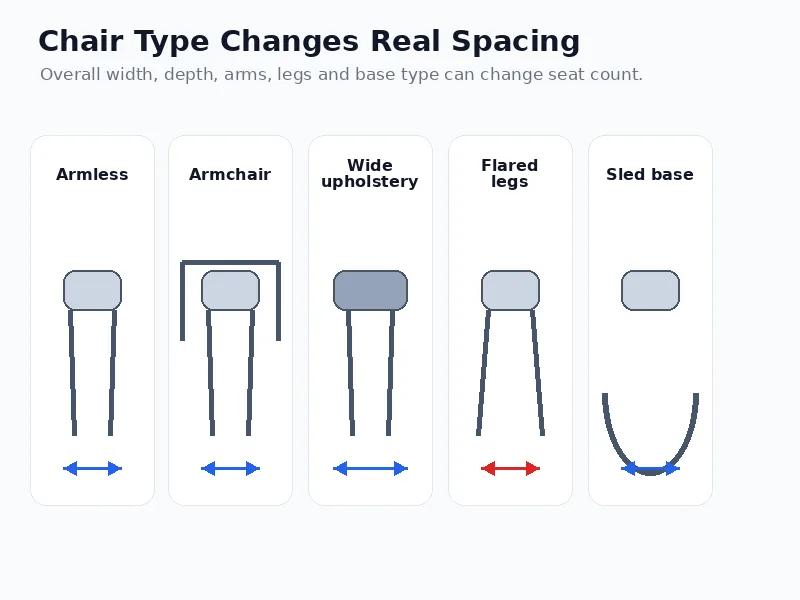
How chair type changes spacing (and why your seat count can swing)
This is where most “we lost 8 seats after the chairs arrived” surprises happen.
1) Armchairs vs armless chairs
Armchairs don’t just add width—they also change how people enter/exit the chair.
- If you’re using armchairs, bias toward the 28–30 in (71–76 cm) per diner side of the range.Dimensions.com’s “Restaurant Seating Arrangements”
- In tighter plans, consider using armchairs only at end positions (head of a table, corners, or feature seating) and keep side seating armless.
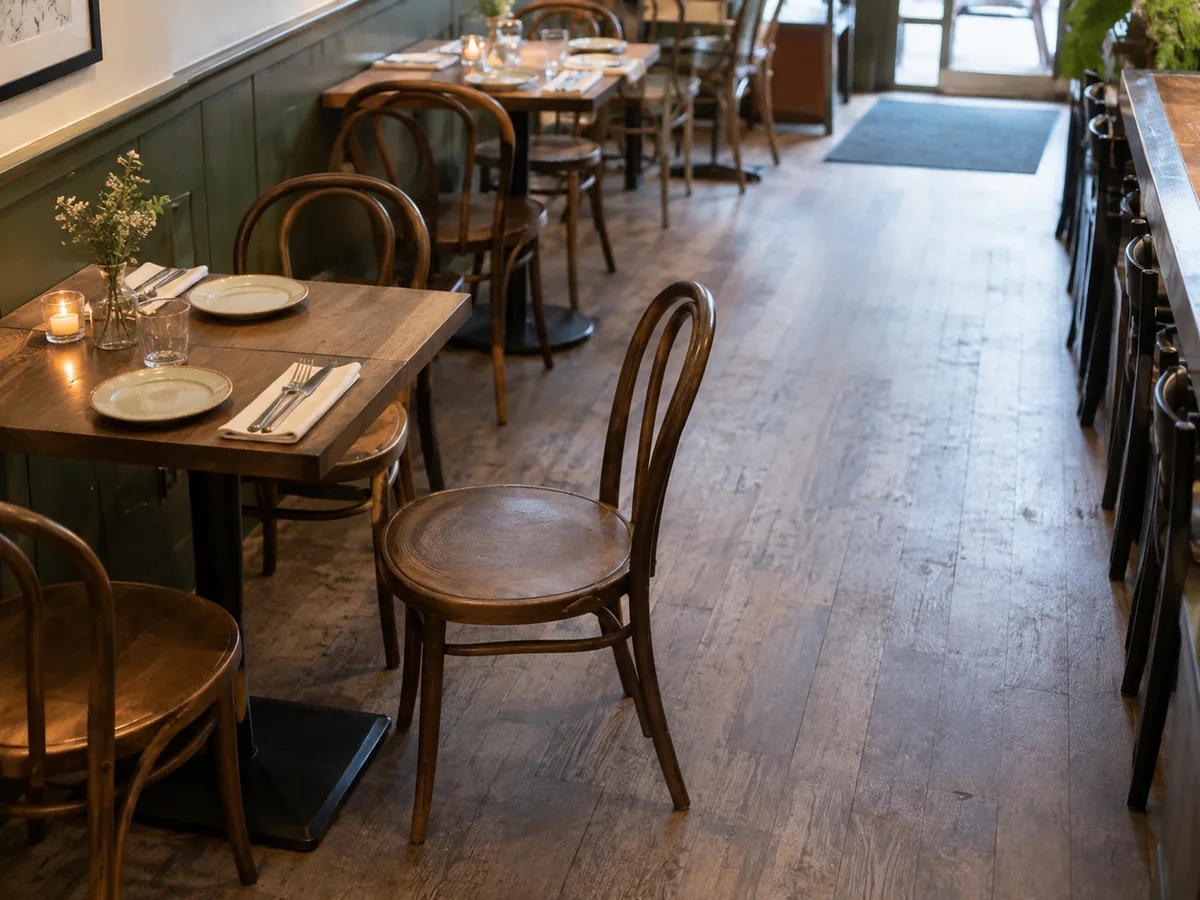
If you’re sourcing options, shortlist restaurant chairs only after confirming overall width, overall depth, arm height, and whether the chair will be used in a tight, baseline, or comfortable spacing tier. You can then compare suitable models in the Restaurant chairs category.
2) Wide upholstered seats (and “invisible inches”)
Upholstered chairs often have:
- thicker backs
- wider outside rails
- more recline
So the overall depth can be meaningfully larger than a slim wood chair—even when seat size looks similar.
3) Flared legs (leg splay) and trip risk
Chairs with legs that angle outward can steal aisle width at floor level. This matters most when:
- aisles already sit near your minimum
- staff are carrying trays
- guests have bags or kids
If you love the style, mitigate it by widening the main aisle, or moving those chairs away from pinch points.
4) Sled base vs four legs
Sled bases can be friendlier on floors and visually lighter, but they can also:
- need slightly different “push-back” behavior
- catch shoes/bags in tight rows
Treat them as a “mock-up first” chair when you’re designing to minimum clearances.
5) Stackable restaurant chairs (layout flexibility)
Stackable chairs don’t change clearance math much in use—but they change operational flexibility:
- easier resets
- easier event reconfiguration
- easier end-of-day cleaning
For stackable chair selection, do not judge only by whether the chair stacks. Ask for the overall width, overall depth, stack count, stacked height, frame contact points, floor-glide details, and whether the stacked chairs can be moved safely by staff. These details affect storage, cleaning, reset speed, and long-term floor protection.
Table bases matter more than many floor plans admit
A pedestal base can allow chairs to tuck in better, while a large table base footprint can:
- block chair legs from sliding under
- force chairs to sit farther out
- reduce usable aisle width
If a layout is borderline, confirm:
- table base diameter/footprint
- apron/knee space
- whether the chair arms clear the tabletop edge
B2B procurement checklist: what to verify before you place a bulk chair order
Use this checklist when you’re buying for a project—or when you’re comparing chair samples.
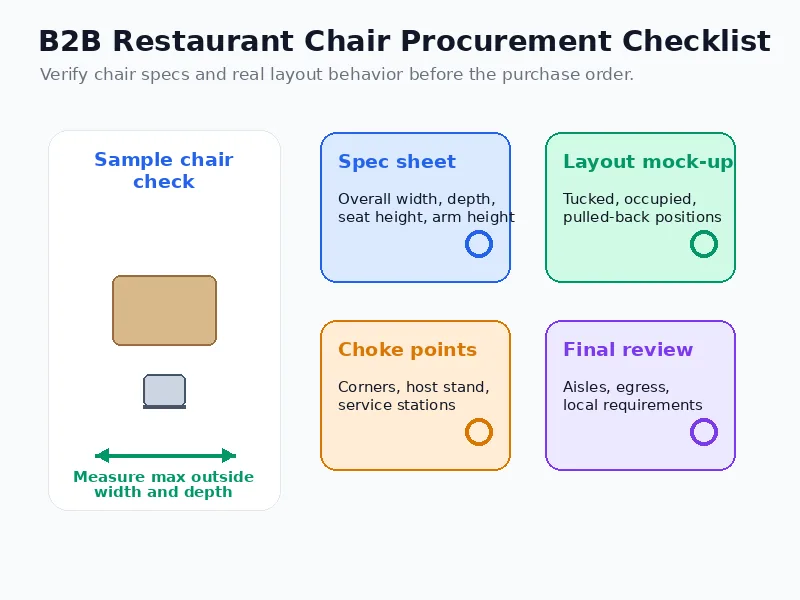
Chair spec sheet (request these fields)
- Overall width (max outside) — include arms/legs
- Overall depth (max outside) — include back rake
- Seat height (for table pairing)
- Arm height (if any)
- Frame type (4-leg / sled / cantilever)
- Stackability and stack count (if relevant)
Layout mock-up (do this before final sign-off)
- Drop chairs into the plan at maximum outside dimensions (not nominal seat size)
- Check choke points: end of banquettes, corners, near host stand, near service stations
- Test the two worst moments:
- guest pulling out the chair
- server passing behind an occupied chair
Documentation mindset (especially for EU/UK projects)
Your project may require additional compliance documentation, fire/egress review, accessibility checks, or furniture test reports depending on the country, venue type, and contract requirements. Do not treat “standard spacing” as proof that a restaurant layout is compliant. Use spacing guides for early planning, then verify the final plan and chair specifications against local code, project drawings, and buyer requirements.
FAQs
What is the standard space between restaurant chairs?
A common planning range is 24–30 inches (61–76 cm) per chair/person along a table edge, while some references cite 18 inches (46 cm) as a minimum between occupied chairs in tighter layouts.Dimensions.com’s “Restaurant Seating Arrangements”
How much clearance is needed behind restaurant chairs?
A commonly cited working range is 18–24 inches (46–61 cm) behind occupied chairs, with 24 inches often treated as a practical minimum for full-service dining areas.RO N GROUP’s “Restaurant Table Sizing Guide”
How much chair clearance behind a table do you need?
In practice, the “chair clearance behind table” question is the same behind-chair zone: plan 18–24 inches (46–61 cm) as a working minimum behind occupied chairs, and step up toward 24–36 inches (61–91 cm) when you expect frequent pass-through or bulkier chairs.RO N GROUP’s “Restaurant Table Sizing Guide”
What is the minimum aisle width in a restaurant?
Many commercial guides start at 36 inches (91 cm) as a baseline because it aligns with ADA accessible-route minimums in the US, but busier dining rooms often benefit from wider primary aisles (for example, 44–48 inches) to reduce traffic conflicts.Superior Seating’s “Design Specs Center”
What’s a practical restaurant aisle width for full-service dining?
For full-service operations, treat “restaurant aisle width” as an operations target, not just a code minimum: many layouts plan 36–48 inches (91–122 cm) for primary/server aisles depending on traffic volume and whether staff must pass behind seated guests.RO N GROUP’s “Restaurant Table Sizing Guide”
How much space between restaurant tables?
One common “module” is 42 inches minimum between squared tables (chairs back-to-back) and 60 inches recommended when you want full service access between table rows.Superior Seating’s “Design Specs Center”
Next steps: choose a spacing tier, then choose chairs that fit it
- Pick your venue type and spacing tier (tight vs baseline vs comfortable).
- Confirm chair overall width and depth (not just seat size).
- Validate your toughest aisle and row modules before you lock the purchase order.
If you’re building a chair shortlist for hospitality projects, start with the full range of commercial restaurant chairs from Yezhi Furniture, and use the chair type overview to align style with function: Types of Chairs.
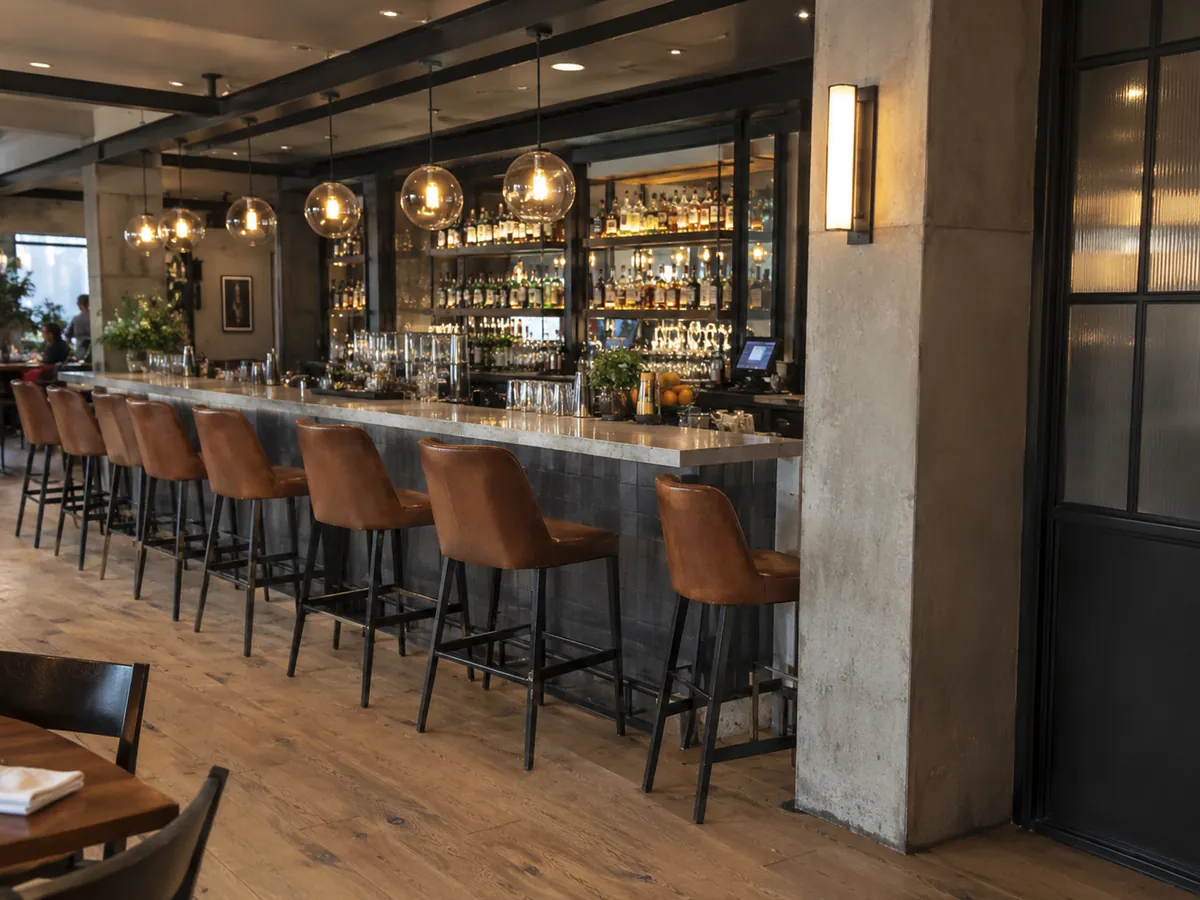
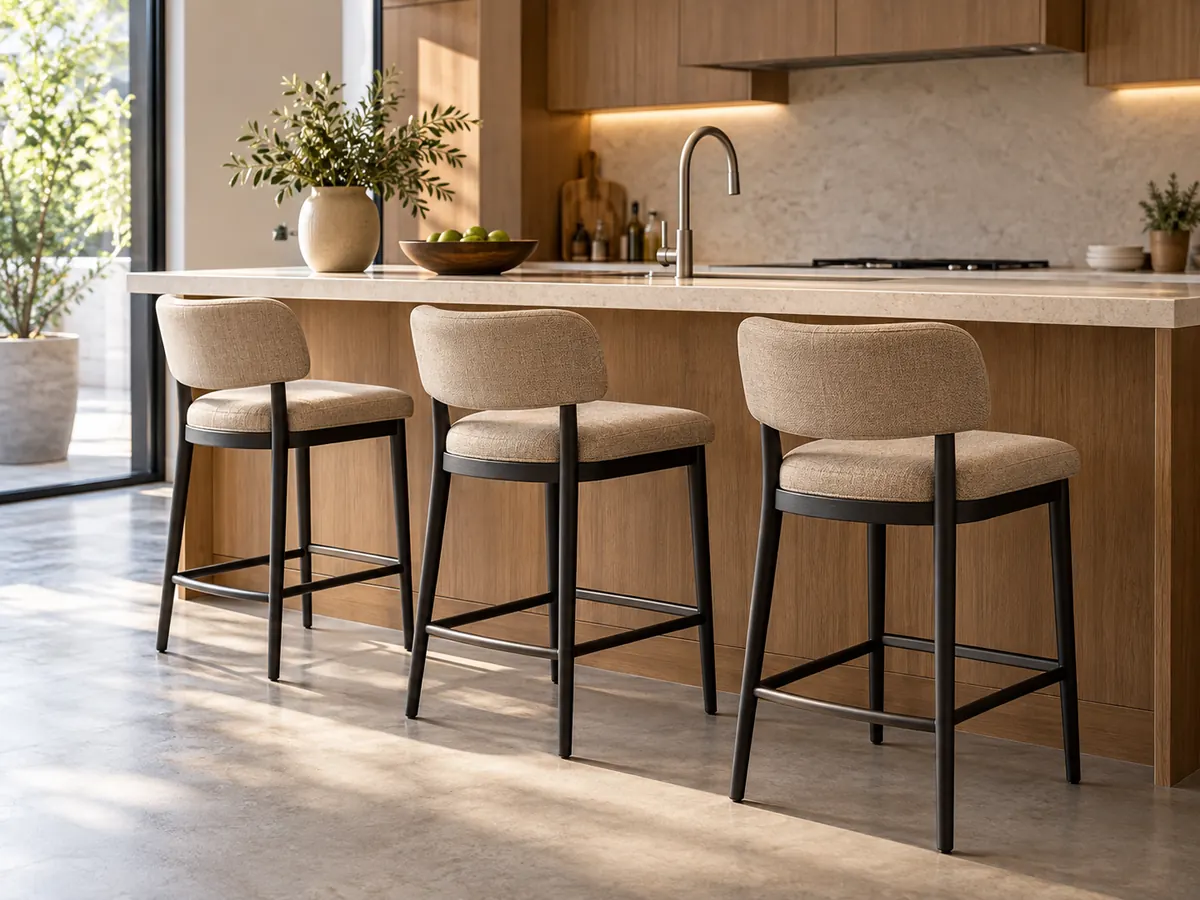
If your plan includes bar seating, keep spacing logic separate (stools have different center-to-center behavior and counter depth constraints). You can browse related options here: Commercial Bar Stools.