Most people search this because they’re stuck between two outcomes:
- “Can I fit 4 stools?”
- “Will 3 stools feel better?”
Here’s the rule that prevents 90% of bad layouts:
Key Takeaway: Fits ≠ comfortable. You can often physically squeeze in one more stool than you’ll actually enjoy using.
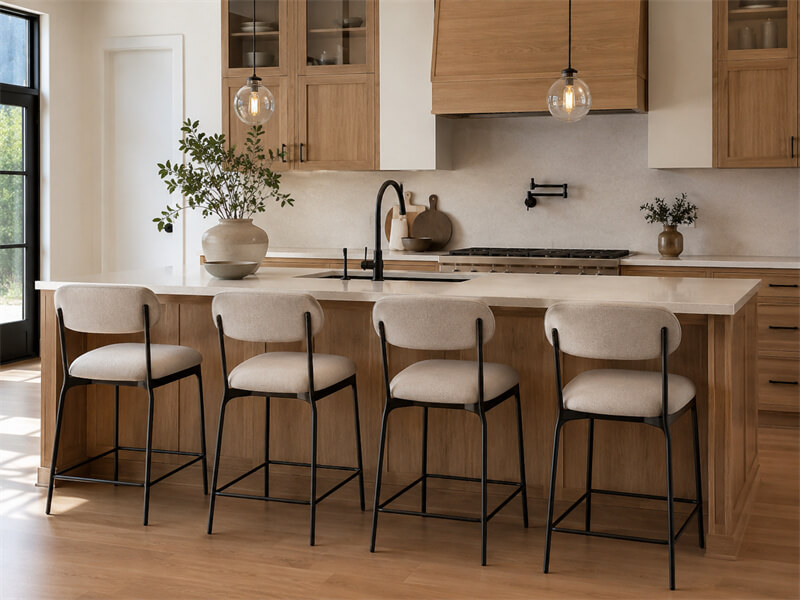
How many bar stools do I need? Start with this 2-step method
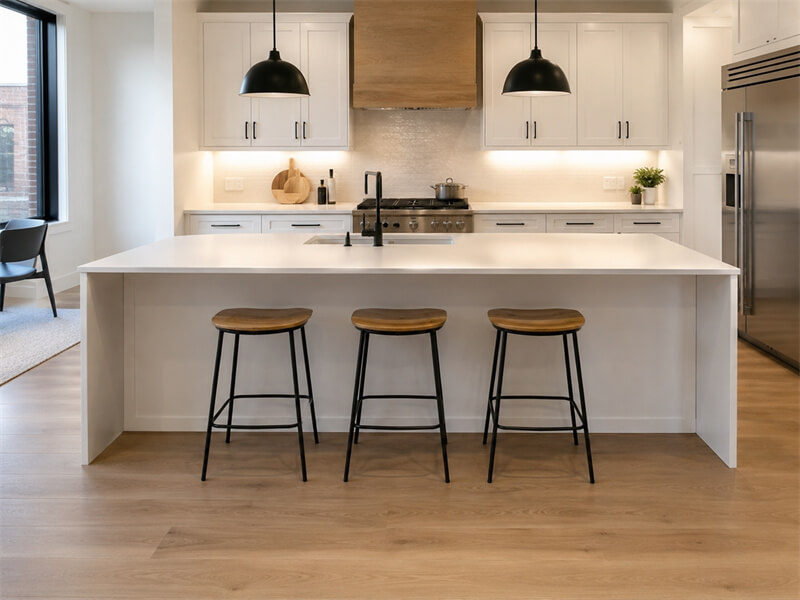
Step 1: Find your usable seating length (not the total length)
Usable seating length is the part of the counter where a person can actually sit without being jammed into an end panel, a wall return, a corner, or a sink run.
A simple baseline:
- Usable seating length = total seating run − 12 inches (leave ~6 inches of breathing room at each end)
If one end is blocked by a wall/return panel, reserve more than 6″.
Step 2: Convert usable length into a stool count (comfort vs maximum)
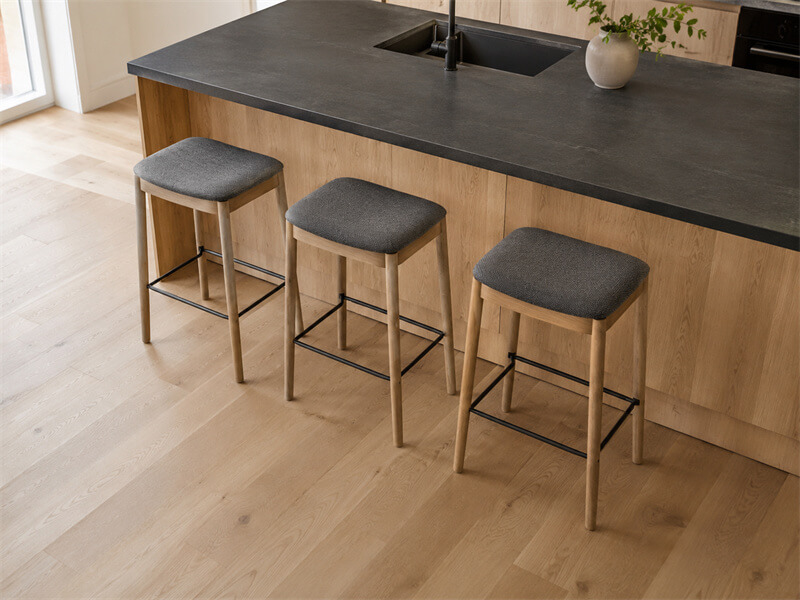
Use this more precise rule (the one you requested):
- Most comfortable count = (island total length − 12″) ÷ 30
- Comfortable minimum count = (island total length − 12″) ÷ 24
Round down to the nearest whole stool.
How to read it:
- 30″ per stool = “people can move, swivel, and get in/out without bumping.”
- 24″ per stool = “this can be okay, but it’s the first place comfort breaks.”
Bar stool quantity chart (usable seating length + comfortable vs maximum)
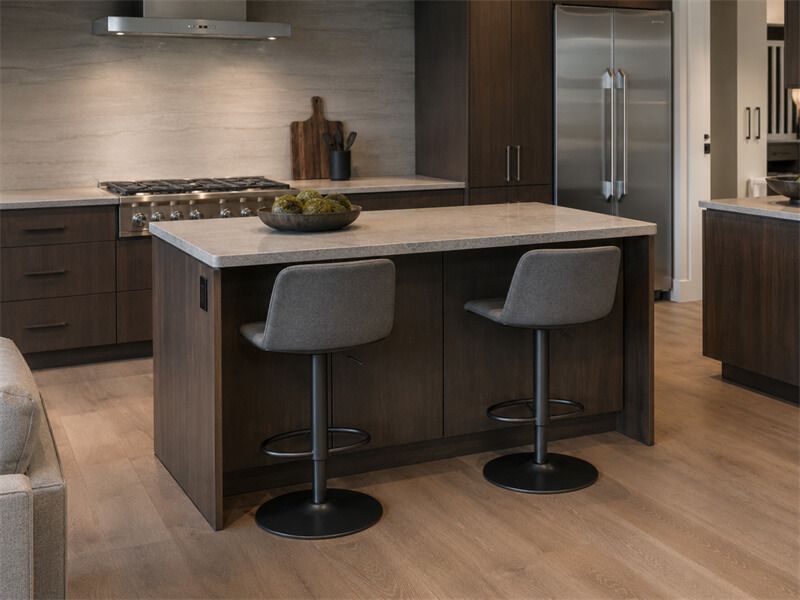
Below is a practical bar stool spacing chart you can use instantly.
Assumptions:
- Edge reserve: 12″ total (6″ each end)
- Comfortable minimum: 24″ per stool
- Most comfortable: 30″ per stool
| Total seating run | Usable seating length (minus 12″) | Most comfortable count (÷30) | Comfortable minimum (÷24) | Maximum count (only if you accept crowding) |
|---|---|---|---|---|
| 60″ (5 ft) | 48″ | 1 | 2 | 2 only with narrow, armless stools |
| 72″ (6 ft) | 60″ | 2 | 2 | 3 is usually “fits but annoying” |
| 84″ (7 ft) | 72″ | 2 | 3 | 3 with caution; 4 rarely comfortable |
| 96″ (8 ft) | 84″ | 2 | 3 | 4 is possible, but expect elbow wars |
| 108″ (9 ft) | 96″ | 3 | 4 | 4 if stools are compact and traffic behind is generous |
| 120″ (10 ft) | 108″ | 3 | 4 | 5 is possible but often cramped |
| 132″ (11 ft) | 120″ | 4 | 5 | 5 only if stools are small + armless |
| 144″ (12 ft) | 132″ | 4 | 5 | 6 can fit, but comfort depends on stool type |
Pro Tip: If you’re debating 3 vs 4 stools, plan for the count you’ll enjoy daily, not the count you can “hard fit” for holidays.
The “4 stools on a 6-foot island” question (why it fails)
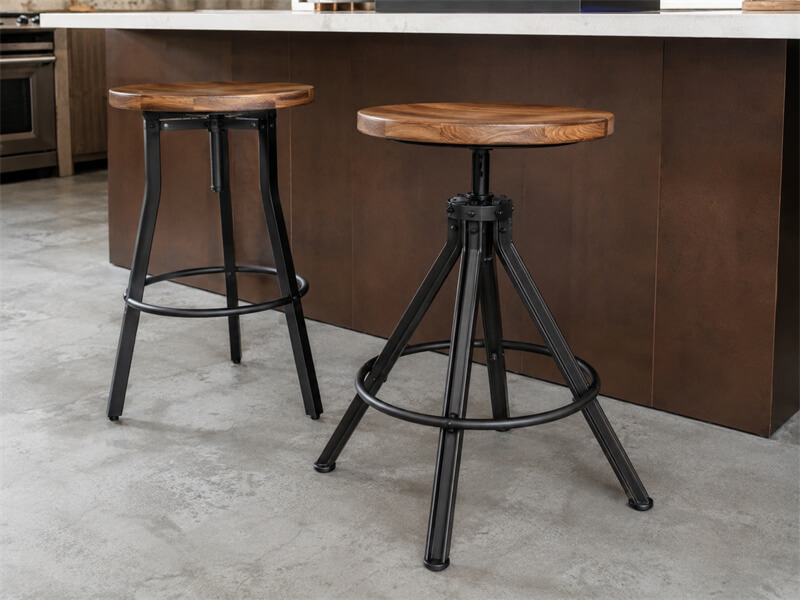
A 6-foot (72″) run sounds big—until you do the math.
- Usable length: 72″ − 12″ = 60″
- Comfortable minimum: 60″ ÷ 24″ = 2 stools
So why do people still try to place 3 (or even 4)?
Because they’re counting visual space, not human space:
- knees that angle outward
- elbows
- the “getting on/off” motion
- stools that swivel
- bases that splay wider than the seat
Which leads to the next key rule.
Measure the stool’s base/leg width, not only the seat width
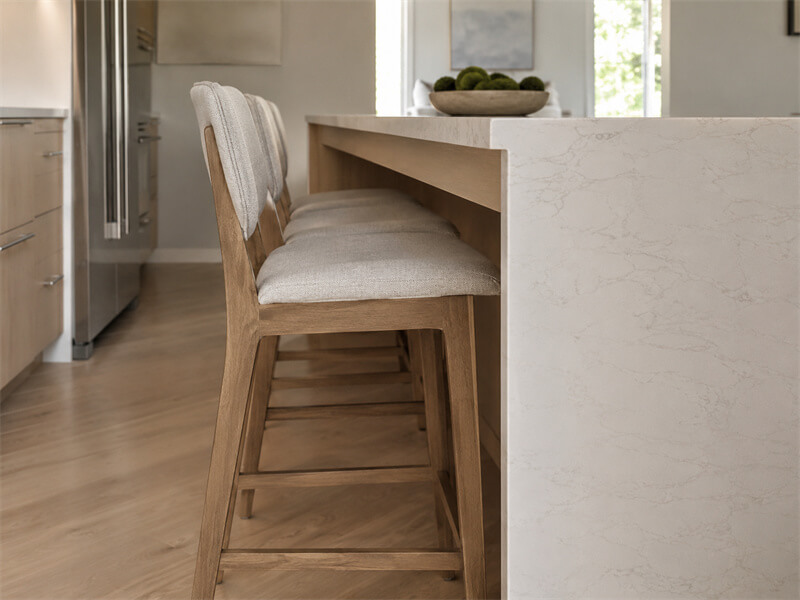
Many buyers only measure the seat width.
But the part that collides is often the base:
- sled legs that flare outward
- four-leg frames with wide stance
- swivel mechanisms with a large ring
Before you decide quantity, measure both:
- Seat width (what your body occupies)
- Base/leg width (what the floor and neighboring stool must accommodate)
Comfortable count vs maximum count (what changes in real life)
Comfortable count
Choose the comfortable count if any of these are true:
- People will sit there for 30+ minutes (breakfast, homework, laptop time)
- Your stools swivel
- Your stools have arms
- It’s a primary walkway area
Maximum count
Maximum count is only reasonable if:
- seating is brief (coffee, quick snack)
- stools are armless and backless
- there’s plenty of clearance behind the stools
- you’re okay with “we can seat everyone, but it’s tight”
⚠️ Warning: A layout that “works” empty can become miserable once three adults sit down and naturally spread out.
Stool type changes the number (a practical modifier table)
Use this as your sanity check.
| Stool type / feature | What happens | What to do |
|---|---|---|
| Armless, backless | Most space-efficient | You can lean closer to 24″ per stool (sometimes) |
| Backrest (no arms) | Takes more visual + physical space | Prefer 24–30″ per stool depending on width |
| Arms | Elbows collide; getting in/out needs space | Plan closer to 30″ per stool |
| Swivel | Rotation needs side clearance | Add a buffer; don’t “max pack” |
| Upholstered / bulky seats | Wider seat + wider base common | Measure base width and plan roomier spacing |
| Low-profile frame, narrow base | Fits better than it looks | Might allow one more seat without pain |
Don’t ignore height: counter height vs stool height (counter stool spacing starts here)
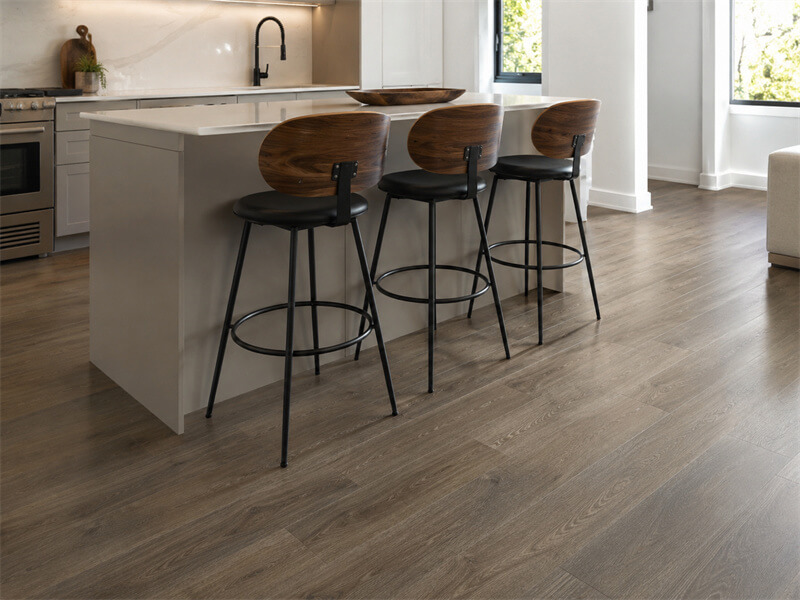
People don’t complain about “spacing” when the real issue is leg clearance.
A safe rule is to keep about 10–12 inches between the seat and the underside/top of the counter. Barstool Comforts explains it simply in their stool height rule (subtract 10–12 inches).
Myth-bust (this mistake shows up everywhere)
Some design blogs mistakenly suggest 40-inch stools for 42-inch counters. Do not do this—you will have no room for your legs. Always aim for 10–12 inches of clearance between the seat and the counter.
Counter overhang for seating + knee room table (this changes everything)
Even if your stool count is perfect, it won’t feel usable if there isn’t enough knee room for bar stools.
Dura Supreme’s seating guide gives a clear baseline in their countertop overhang recommendations for seating:
| Seating surface | Typical surface height | Recommended overhang / knee space depth |
|---|---|---|
| Counter height seating | ~36″ | 15″ |
| Bar height seating | ~41″–43″ | 12″ |
Two extra notes that matter in real installations:
- Countertop supports (brackets/corbels) can steal knee room.
- In commercial bars, structural supports/columns under the bar top can make your “math” irrelevant—your stool might fit but nobody can sit there comfortably.
Traffic clearance behind stools (so people can actually move)
If there’s a walkway behind seated stools, your stool count should be conservative.
Dura Supreme summarizes NKBA guidance in their kitchen seating clearance guidelines:
| Clearance behind seating (counter edge to wall/obstruction) | What it means | Practical takeaway |
|---|---|---|
| 32″ | No walkway behind seating | Works only if nobody needs to pass |
| 36″ | Walkway exists; someone edges past | Reduce stool count if this is your daily traffic |
| 44″ | Comfortable walk-behind clearance | You can prioritize comfort and movement |
Peninsula, L-shaped, and corner seating (how to calculate without guessing)
Corners are where “fits” most often becomes “uncomfortable.”
Peninsula seating (one straight run)
Treat it like an island:
- measure the seating run
- subtract 12″ for end breathing room
- divide by 24 or 30
L-shaped seating (two runs that meet at a corner)
Do not count the corner twice.
A practical method:
- Measure Run A and Run B.
- Reserve a corner buffer zone where knees and elbows would collide.
- Start with 18–24 inches of corner buffer (increase if stools have arms).
- Compute stools on each run using usable length:
- Usable A = Run A − end reserve − (corner buffer)
- Usable B = Run B − end reserve − (corner buffer)
- Divide each usable length by 24 or 30.
Corner seating rule of thumb
If you try to place a stool too close to the inside corner, the sitter’s body naturally rotates outward—and steals space from both runs.
A simple calculator you can copy/paste
- Measure total seating run in inches:
L - Decide edge reserve:
R(start with 12″) - Usable length:
U = L − R - Comfortable minimum stools:
N24 = floor(U ÷ 24) - Most comfortable stools:
N30 = floor(U ÷ 30)
Then validate with real stool dimensions:
stool_base_width(not only seat width)- arms/swivel modifier (if yes, favor 30″)
Home use vs commercial use (what changes)
Home and commercial seating look similar—but the constraints aren’t.
| Factor | Home kitchen island | Commercial bar/café/restaurant |
|---|---|---|
| Comfort target | Longer sitting sessions | Mix of comfort + turnover |
| Spacing approach | “Most comfortable” wins | Optimize for revenue per foot without causing complaints |
| Clearance behind stools | Family traffic + cooking work zones | Guest + staff circulation (busier) |
| Under-counter obstacles | Brackets/corbels | Equipment, supports, columns can block seats |
| Accessibility | Optional, but smart | Must plan for accessible positions |
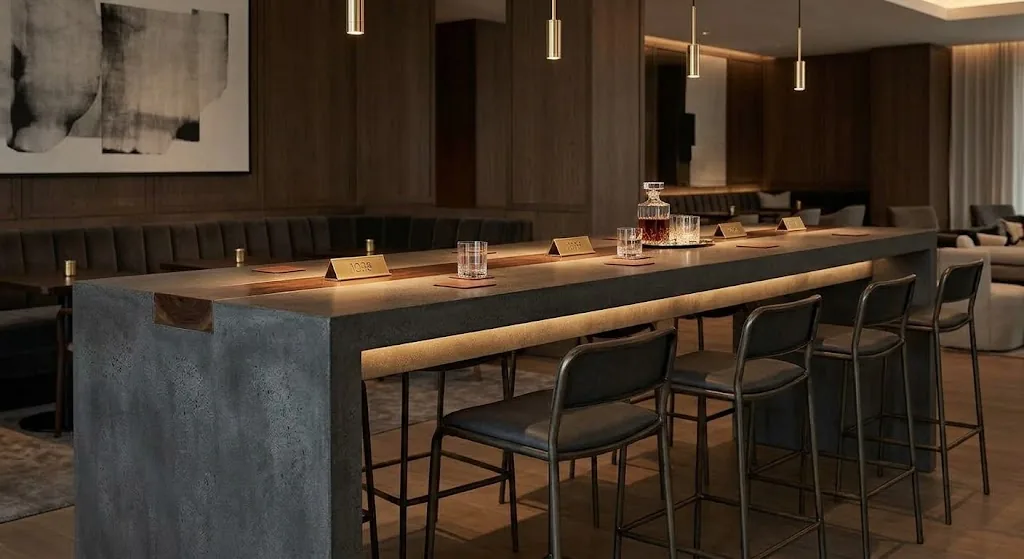
Commercial bar seating: turnover vs comfort (commercial bar stool spacing + accessible seat planning)
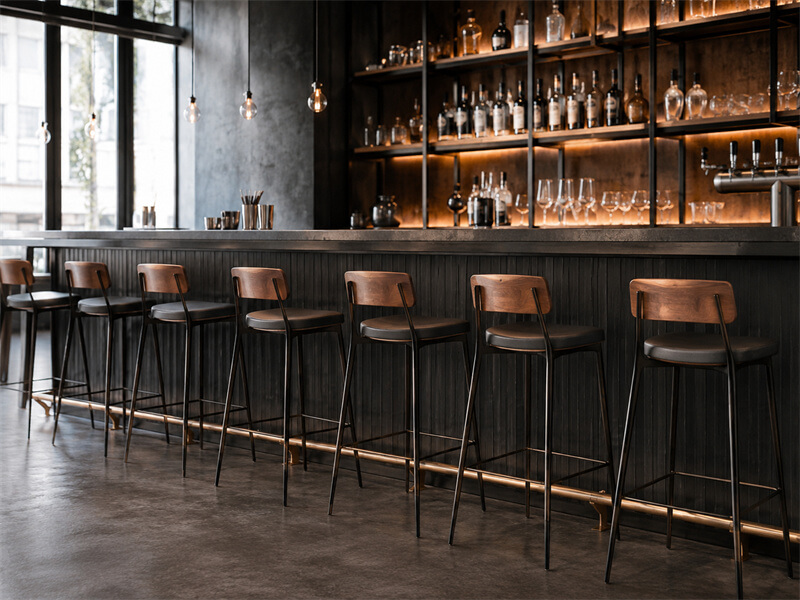
In a commercial space, every extra seat can look like revenue—until it creates problems:
- guests feel cramped and leave sooner
- staff can’t pass behind seated patrons
- stools get damaged faster from constant bumping
The pragmatic approach
- Use comfortable spacing for premium experience areas.
- Use denser spacing only where dwell time is naturally short.
Accessible bar seating planning (don’t retrofit this)
Use the primary ADA planning requirements as your baseline. The U.S. Access Board specifies:
- 30″ × 48″ clear floor space and
- 30″ minimum knee/toe clearance width in their guide on ADA clear floor space and knee/toe clearance.
In practice, many project planners reserve about 36″ of bar length for the accessible position to give breathing room for construction tolerances and real-life maneuvering.
Commercial warning: don’t place a stool where the structure blocks knees
Even if your bar top length suggests another stool, check the underside:
- support posts
- bar foot rails
- underbar equipment
- structural columns
If a guest’s knees can’t go under the bar, that “seat” is not a seat.
Choosing stools after the math (quick buying checklist)
Use this checklist to avoid the classic mistakes:
- I calculated using usable seating length, not total length
- I have both counts: most comfortable and maximum
- I measured seat width AND base/leg width
- I checked for arms and swivel and adjusted spacing accordingly
- I verified 10–12″ seat-to-counter clearance
- I verified overhang / knee room (15″ at counter height; 12″ at bar height)
- I measured traffic clearance behind stools (32/36/44″ guidance)
Where to shop (internal links you can use by stool type)
If you’re choosing stools after planning the layout, these collections can help you compare styles and footprints:
- Browse all styles in the Yezhi Furniture bar stool category
- If you’re furnishing hospitality spaces, start with commercial bar stools or wholesale restaurant bar stools
- For material-driven assortments: wholesale metal bar stools, wholesale leather bar stools, and wholesale wood bar stools
Next steps
If you want, share:
- Your usable seating length (in inches)
- the stool’s seat width and base width
- whether it swivels/has arms
And we’ll sanity-check whether you should choose the comfortable count or the maximum count for your space.