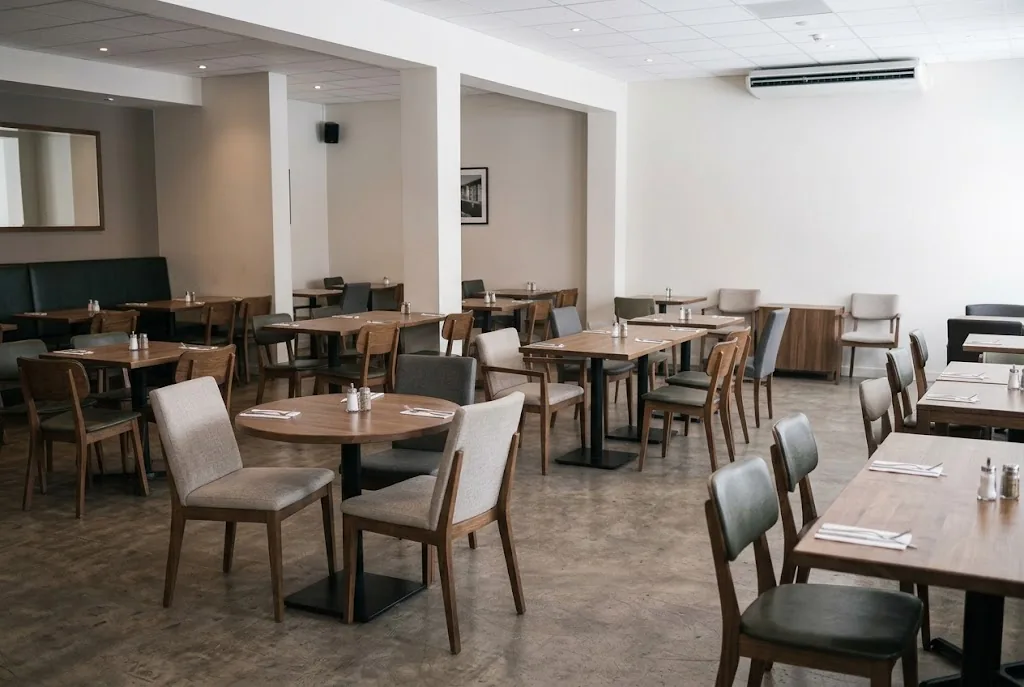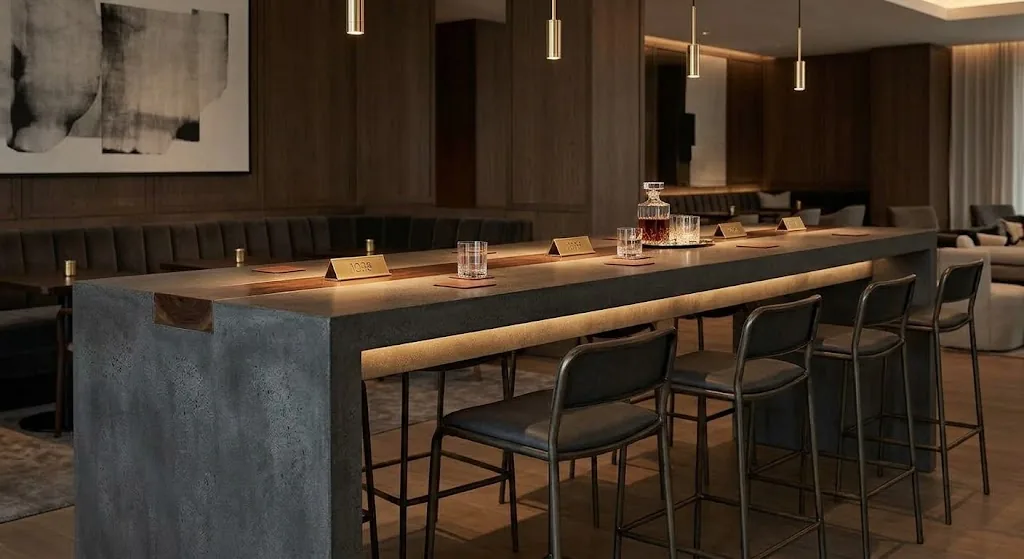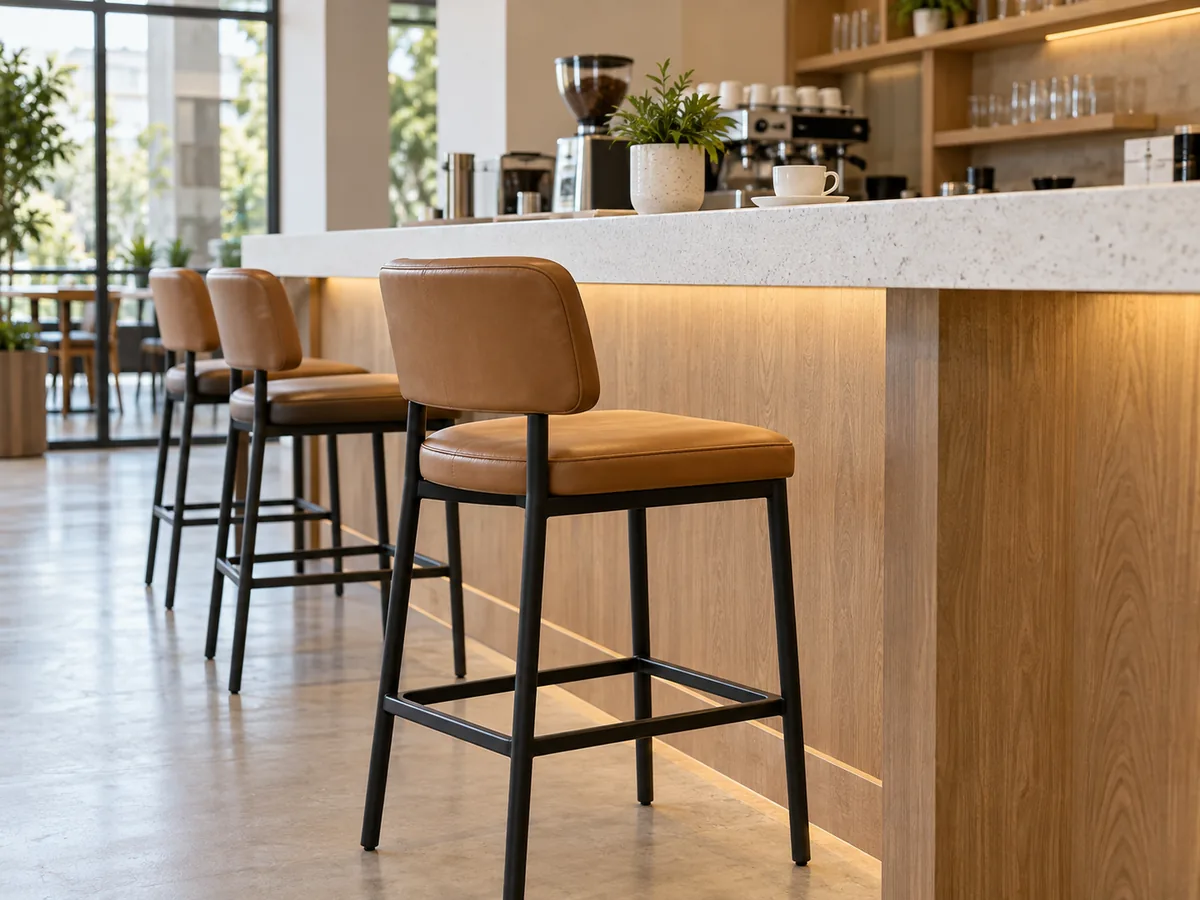
Indoor vs outdoor bar stools may look similar in a catalog photo, but they are not bought the same way for commercial projects. A stool for an indoor restaurant bar is protected from rain, strong sunlight, standing water and outdoor floor movement. A stool for a hotel terrace, rooftop bar, poolside counter or open cafe frontage has to deal with moisture, UV exposure, cleaning, dirty shoes, humidity and sometimes wind.
For a commercial project, the wrong stool is not a small styling mistake. It becomes a replacement, complaint and reorder problem.
Indoor bar stools should not be used outside for regular commercial service unless the selected model, material, finish, frame, upholstery and warranty scope are confirmed for that use. For fully exposed outdoor areas, choose outdoor-suitable bar stools from the beginning. It is cheaper to confirm the correct specification before production than to replace a batch after the stools start swelling, rusting, fading or holding odor.
This guide explains the real difference between indoor and outdoor bar stools from a commercial buyer’s point of view: material, construction, drainage, footrests, upholstery, sample approval, packing and quotation details.
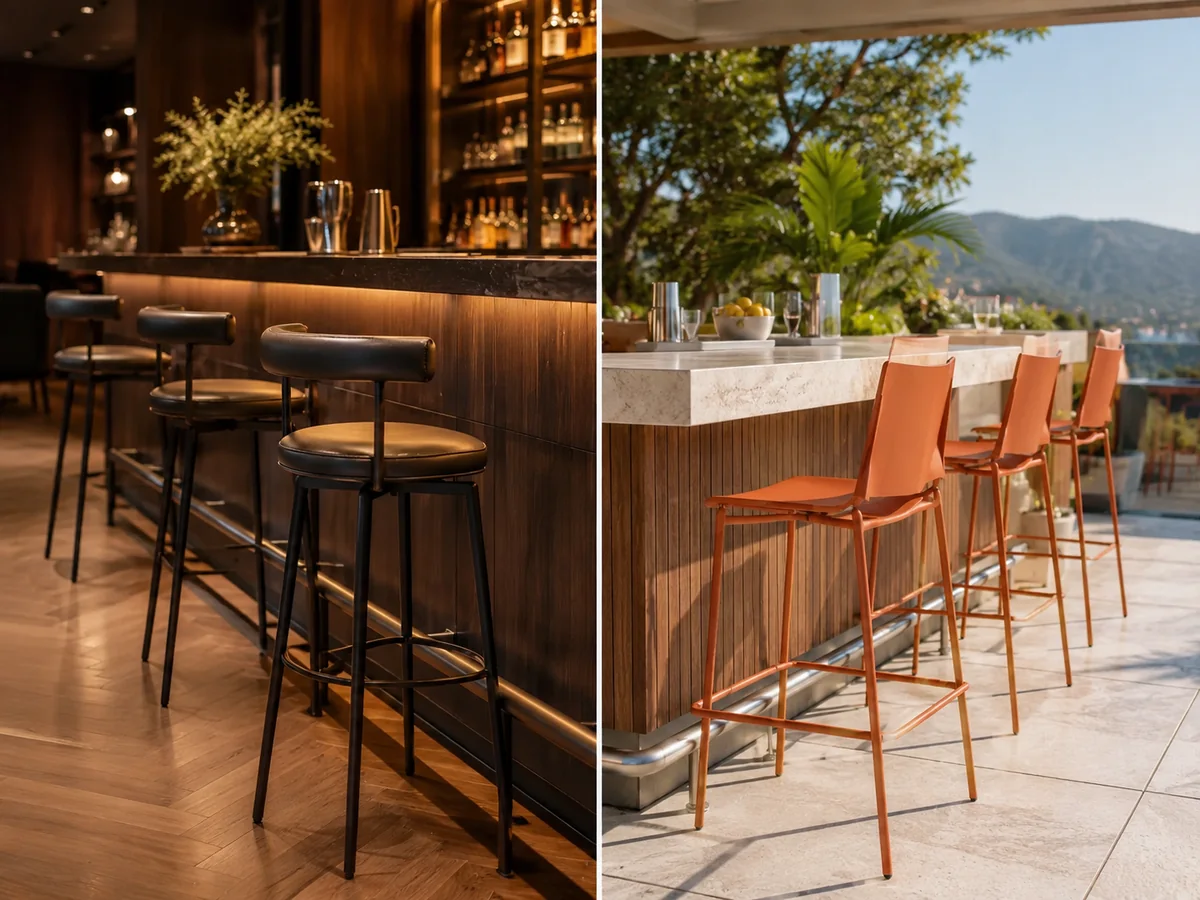
Quick Answer: Can Indoor Bar Stools Be Used Outside?
For normal commercial outdoor use, indoor bar stools should not be used outside. They may survive a few dry days under cover, but that is not the same as being suitable for daily outdoor service.
A simple rule works well: if water, strong sun or outdoor cleaning can reach the stool, quote it as an outdoor-use project, not an indoor project.
The risk is not only rain. Outdoor seating faces sunlight, humidity, temperature changes, dirty shoes, cleaning water, food oil, sunscreen, pool moisture and uneven flooring. Indoor materials and finishes are usually selected for protected spaces. Once they are moved outside, weak points show quickly.
A buyer should separate the use scene before choosing any stool:
| Use Scene | Buying Judgment |
|---|---|
| Indoor bar or restaurant counter | Indoor commercial bar stools can work if the frame, seat height, cleaning plan and traffic level are suitable. |
| Covered outdoor terrace | Do not treat it as fully indoor. Confirm humidity, rain splash, airflow and sunlight exposure. |
| Semi-outdoor cafe or open-front bar | Treat it as outdoor if rain, humidity, floor washing or strong sun can reach the stools. |
| Fully exposed patio, rooftop or poolside bar | Use outdoor-suitable material and construction only after model and specification confirmation. |

Indoor vs Outdoor Bar Stools: The Real Difference Is Not Just Style
Many buyers make the same mistake: they see a metal frame, wood seat or woven back and assume the stool can be used anywhere. That is dangerous for a bulk order.
The difference between indoor and outdoor bar stools is a system:
| Area | Indoor Bar Stools | Outdoor Bar Stools |
|---|---|---|
| Main environment | Protected indoor space | Rain, humidity, sunlight, temperature change and outdoor dirt |
| Material priority | Comfort, style, interior finish and daily cleaning | Outdoor-suitable frame, finish, drainage, stability and cleaning |
| Metal concern | Scratches and normal indoor wear | Rust risk around welds, screws, footrests, tube ends and floor contact |
| Wood concern | Finish consistency, comfort and indoor cleaning | Swelling, cracking, fading or movement if wood and finish are not suitable |
| Upholstery concern | Comfort, stain resistance and easy wiping | Water holding, drying time, odor, mildew risk, sunscreen and food oil |
| Construction concern | Stability, comfort and traffic | Drainage, frame protection, footrest wear and outdoor floor contact |
| Warranty discussion | Indoor commercial use | Outdoor use must be confirmed by selected model, material and PI terms |
Outdoor bar stools are not only indoor stools with a different color. The frame, finish, fasteners, seat surface, footrest, floor caps and upholstery plan all need to match the use scene.
For restaurants, cafes and hotels, this matters because a wrong stool is not one wrong piece. It can become 30, 80 or 200 wrong pieces. For project-grade options, the commercial bar stools page is a useful starting point after the use scene is clear.

Four Use Scenes Buyers Should Separate Before Choosing Materials
Before asking for a quote, do not start with “send me your best outdoor bar stool.” Start with the use scene. The same-looking stool may be acceptable in one project and wrong in another.
1. Indoor Bar Areas
Indoor bar stools are suitable for restaurant bars, hotel lounges, pub counters and cafe interiors where the furniture is protected from direct rain and strong outdoor sunlight.
Good indoor choices can include metal, wood, upholstered, leatherette, fabric, rattan or mixed-material bar stools. The main checks are seat height, comfort, cleaning, frame stability, footrest durability and floor protection.
Indoor commercial use does not need outdoor material by default, but it still needs commercial-grade construction.
2. Covered Outdoor Terraces
Covered outdoor areas are tricky. Some buyers call them “indoor-outdoor,” but the furniture may still face humidity, rain splash, strong sun from the side, dust and more frequent cleaning.
For covered terraces, confirm:
- Can rain splash reach the stool?
- Does sunlight hit the seat or back for several hours?
- Is the space humid or close to water?
- Will staff wash the floor while stools are nearby?
- Are stools stored indoors at night or left outside?
Covered outdoor is not automatically safe for indoor stools. If moisture, sunlight or outdoor cleaning reaches the stools, treat the order as semi-outdoor.
3. Semi-Outdoor Cafes and Open-Front Bars
Semi-outdoor areas include open-front cafes, bar counters near folding doors, partly covered terraces and spaces with changing airflow and humidity.
These projects need stricter judgment than indoor seating. A stool may be under a roof but still receive humidity, dust, floor washing and side rain.
For semi-outdoor projects, avoid materials that trap water or are difficult to dry unless the selected model, material, finish and cleaning plan are confirmed. For cafe layouts that mix indoor seating and terrace seating, the cafe furniture direction can help keep the project style consistent while the specifications stay separated.
4. Fully Exposed Outdoor Areas
Fully exposed spaces include patios, rooftops, poolside bars, garden cafes, beach-area restaurants and hotel terraces without full weather protection.
Do not use indoor bar stools in fully exposed outdoor areas. Choose outdoor-suitable materials and construction, then confirm the final specification before production.
For these spaces, the buyer should check frame material, coating, drainage, footrest wear, floor contact, fasteners, stacking points and upholstery risk before paying a deposit.
For poolside, coastal or high-humidity projects, be stricter. Do not rely on a general “outdoor style” label. Confirm the selected model, finish and maintenance expectation before ordering.
Outdoor Bar Stool Materials: What Works, What Fails and What Needs Confirmation
The best outdoor bar stool material is not one fixed answer for every project. A rooftop bar, poolside resort, covered cafe terrace and dry outdoor restaurant patio do not have the same risk.
For many commercial outdoor projects, outdoor-suitable metal or aluminum frames are practical options when the finish, fasteners, drainage and stability are confirmed. Wood, rattan and upholstery can also work in selected projects, but they need stricter use-scene control.
For outdoor orders, low unit price is not useful if the finish cannot survive the use scene.
Aluminum and Outdoor Metal Frames
Aluminum is often selected for outdoor seating because it is lighter than many steel frames and can be easier to move, stack or handle. For cafes, terraces and flexible layouts, that can be useful.
But lightweight does not mean automatically better. On rooftops, windy terraces or uneven floors, the buyer must also check stability, leg design, foot caps and frame balance.
Outdoor metal bar stools should be confirmed by:
- frame material,
- coating or finish,
- weld and joint protection,
- screw or fastener suitability,
- footrest finish,
- tube end design,
- drainage points,
- floor caps.
A metal frame alone is not proof of outdoor suitability. Poorly protected metal can still rust or wear quickly, especially around welds, screws, footrests and floor contact. For metal-specific sourcing, the metal bar stools page can help buyers compare frame directions after the use scene is defined.

Protected Steel or Iron Frames
Steel or iron frames can be strong and cost-effective for many commercial spaces, but outdoor use requires more caution. The issue is not only the main tube. The small parts often fail first.
Check the areas that receive shoes, water and impact:
- lower leg areas,
- footrest,
- welded joints,
- screw holes,
- tube openings,
- stacking contact points,
- floor caps.
For a project order, confirm the selected model, finish and outdoor-use scope before deposit. If these details are not clear, pause before production.

Wood, Teak Wood and Teak-Look Bar Stools
Wood gives warmth and a premium hospitality feeling. It is useful for cafes, bistros, resorts and natural-style restaurants. But indoor wood and outdoor wood are not the same buying decision.
Indoor wood bar stools can be excellent inside, but outside they may face swelling, cracking, fading or finish breakdown if the wood, finish and maintenance plan are wrong.
Wood, teak wood or teak-look bar stools can be considered for selected outdoor or covered outdoor projects, but the actual material, finish and maintenance requirement must be confirmed by model. The wood bar stools page is useful for wood-style comparison, but final outdoor suitability still belongs to the selected model and project environment.
Before quotation, confirm:
- whether the model is intended for indoor, covered outdoor or outdoor use;
- the actual material and finish;
- expected maintenance;
- whether the stool will be stored indoors or left outside;
- whether the seat can drain or dry;
- whether the final warranty scope covers the intended use.
Wood outside is a maintenance decision, not just a style decision.

Rattan, Cane and Woven Seats
Rattan and cane looks are popular for cafes, hotels and relaxed hospitality spaces. But buyers must separate indoor natural-style weaving from outdoor-suitable woven materials.
For indoor bar stools, rattan or cane-style details can create a warm and breathable look. For outdoor use, the buyer must confirm whether the material, frame and fixing method are suitable for moisture and sunlight.
A woven seat or back can also hold dust and water in small gaps. For outdoor projects, send the real use scene before quotation so the selected material and structure do not start from the wrong assumption.
Upholstery, Leatherette and Fabric
Upholstered bar stools are comfortable and look more premium indoors. In restaurants, hotels and lounges, upholstery can help guests stay longer and improve the seating experience.
Outside, upholstery becomes a risk if the material is not selected for that use. Rain, sweat, sunscreen, food oil and cleaning chemicals can create staining, odor and drying problems.
Fully exposed outdoor projects should not use standard indoor upholstery. If a project requires cushions or padded seats outside, confirm the material, drying plan, cleaning method and warranty scope before quotation. For controlled indoor bar projects, the leather bar stools page can support style and material discussion, but outdoor upholstery needs a separate specification check.
Construction Differences That Matter More Outdoors
A buyer should not stop at material. For outdoor bar stools, construction often decides whether the stool performs well after months of service. For factory and specification discussions, the bar stool factory page explains the manufacturing direction behind project orders.
| Part To Check | What To Confirm | Why It Matters Outdoors |
|---|---|---|
| Frame | Material, balance, leg angle, coating or finish | Outdoor stools face movement, cleaning and uneven floors |
| Welds and joints | Exposed seams, water contact, joint protection | Moisture often starts problems at weak points |
| Fasteners | Screw position, exposure, replacement access | Small parts often fail before the main frame |
| Footrest | Shoe contact, coating wear, water at joints | Footrests take daily impact in bars and cafes |
| Tube ends | Open holes, water traps, cap design | Water inside the frame can create hidden problems |
| Seat surface | Flat areas, drainage, drying time | Water should not sit on the seat after rain or cleaning |
| Floor caps | Stability, floor protection, wet-floor contact | Outdoor floors may be uneven, slippery or abrasive |
| Stacking points | Contact marks, finish wear, storage method | Stacking can damage finishes if contact points are weak |
Frame and Joint Design
Outdoor frames must handle movement, cleaning, floor contact and moisture. A weak joint that is acceptable in a low-traffic indoor space can become a complaint point in an outdoor restaurant or bar.
Check whether the frame has unnecessary water-holding pockets. Check whether joints are easy to inspect. Check whether the stool will wobble on outdoor flooring.
Footrests Are High-Wear Points
In commercial use, the footrest is one of the first parts to show wear. Guests step on it with dirty shoes, wet shoes or hard soles. Staff also move stools by pushing or dragging them around the floor.
For high-turnover bars, check the footrest before you fall in love with the seat design. A beautiful seat does not save a stool if the footrest coating fails early.
Before bulk ordering, confirm:
- Is the footrest protected for shoe contact?
- Is the surface easy to clean?
- Does the finish scratch easily?
- Will water sit at the footrest connection?
- Can the footrest be repaired or replaced if needed?
Drainage and Water-Holding Areas
Outdoor stools should avoid water traps. Water can sit on a flat seat, inside tube ends, under cushions, inside woven areas or around screw holes.
Drainage matters especially for perforated metal seats, woven seats, outdoor cushions, tube frames, stacked stools, poolside use and terrace use.
If water can sit in the stool, the buyer should confirm how it drains or dries.
Floor Contact and Stability
Outdoor floors are often less predictable than indoor floors. Decking, stone, tile, concrete and poolside surfaces may be uneven, slippery or exposed to water.
- leg angle,
- foot cap material,
- anti-scratch floor protection,
- wobble risk,
- weight balance,
- whether the stool is moved daily,
- whether the stool is used near wind or water.
For rooftop bars and poolside areas, stability is not a small detail. It is part of the buying decision.

Upholstery and Cushions: Comfortable Indoors, Risky Outdoors
Upholstery is not wrong. It is just often used in the wrong place.
For indoor hotel bars, lounges, fine dining counters and premium cafes, upholstered bar stools can be a strong choice. They improve comfort, soften the space and help customers sit longer.
For outdoor areas, the buyer must be much stricter. Upholstery outside faces:
- rain,
- sweat,
- sunscreen,
- food oil,
- drink spills,
- cleaning chemicals,
- dust,
- slow drying,
- odor risk.
Use upholstered bar stools outdoors only when the material, exposure level, cleaning method and drying plan are confirmed.
Reject standard indoor upholstery for outdoor use when:
- the stool will stay in rain;
- the cushion cannot dry quickly;
- the venue is poolside;
- guests use sunscreen or wet swimwear;
- staff clean floors with water every day;
- the selected model, upholstery scope and PI terms are not confirmed.
For many fully exposed projects, a non-upholstered outdoor-suitable seat is safer and easier to manage.
Height and Spacing Still Matter, But They Are Not the Main Difference
Indoor and outdoor bar stools usually follow the same seat-height logic. The difference is that outdoor floors and movement can make stability more important.
Use these planning benchmarks before quotation:
| Planning Item | Common Benchmark |
|---|---|
| Counter stool seat height | 24–27 in / 61–69 cm |
| Bar stool seat height | 29–32 in / 74–81 cm |
| Seat-to-counter clearance | 9–13 in / 23–33 cm |
| Commercial stool spacing | 24–30 in / 61–76 cm per stool position |
| Tight layout warning | Below 24 in / 61 cm per stool position is usually high-density, short-stay seating |
These are planning benchmarks, not confirmed product specifications. Confirm final dimensions by model before quotation or production.
If your main problem is height, measure the counter first. If your main problem is outdoor durability, define the use scene first. Do not mix the two decisions.
For deeper sizing checks, use these guides on how to measure bar stool height, compare counter height vs bar height, and calculate how many bar stools you need.
Common Buying Mistakes When Ordering Outdoor Bar Stools in Bulk
A single wrong stool is annoying. A wrong batch is expensive.
Here are the mistakes commercial buyers should avoid before paying a deposit. For restaurant and bar projects, the wholesale restaurant bar stools page can support model comparison after these risks are clear.
Mistake 1: Buying by Product Photo Only
A stool can look outdoor-friendly but still be wrong for rain, humidity, sunlight or daily cleaning.
Photo style is not proof of outdoor suitability. Confirm material, finish, frame, fasteners, drainage and warranty scope.
Mistake 2: Treating Covered Outdoor as Indoor
A covered terrace may still receive humidity, side rain, floor washing and strong sunlight.
If the stools stay outside overnight or face outdoor cleaning, treat the order as outdoor or semi-outdoor.
Mistake 3: Ignoring the Footrest
Bar stool footrests take daily shoe contact. In outdoor use, they also face moisture and dirt.
A weak footrest finish can make the whole stool look old quickly.
Mistake 4: Choosing Upholstery Without a Cleaning Plan
Upholstery is comfortable indoors. Outdoors, it can hold water, oil, sunscreen and odor.
If the project needs padded seating outside, confirm material and cleaning before quotation.
Mistake 5: Skipping Samples for Risky Custom Orders
For high-risk custom material, custom color, upholstery or outdoor-use uncertainty, plan 1–2 samples before bulk production.
Do not use a 100-piece custom order to discover a material problem. Find the problem at sample stage.
Mistake 6: Not Confirming Warranty Scope on the PI
Outdoor use changes the discussion. The buyer should confirm the final warranty scope on the PI before production, especially for frames, joints, upholstery and finishes.
Mistake 7: Ignoring Packing and Freight Protection
Outdoor and commercial stools often have metal frames, footrests, finishes, upholstery or woven parts that need proper export protection.
Final packing should be confirmed by product type, quantity, destination and shipping method before production.
Mistake 8: Mixing Indoor and Outdoor Models Without Clear Labels
For hotels, resorts and restaurant groups, indoor and outdoor stools may be ordered together. Keep them clearly separated by model, location and material specification.
The warehouse team, installer and venue manager should know which stools go where.
What To Send YeZhi Before Asking for a Quote
A good RFQ saves time. “Send me your catalog” is slower than sending YeZhi the real use scene.
A clear RFQ protects both sides: the buyer gets the right specification, and production does not start from the wrong assumption.
Before asking for indoor or outdoor bar stool recommendations, send:
- venue type: restaurant, cafe, bar, hotel, rooftop, poolside or terrace;
- use scene: indoor, covered outdoor, semi-outdoor or fully exposed outdoor;
- whether the stools stay outside overnight;
- quantity by SKU;
- counter height or bar height;
- target seat height;
- material preference: metal, wood, upholstery, rattan, teak wood, teak-look or mixed material;
- finish preference: wood finish, metal frame finish, upholstery color or woven look;
- whether stools need stacking;
- cleaning concern: rain, food oil, sunscreen, sweat, pool moisture or frequent wiping;
- destination country and port;
- preferred trade term: EXW, FOB or CIF;
- whether you need samples before bulk production.
YeZhi Furniture focuses on commercial furniture for restaurants, cafes, bars, hotels and project buyers, with more than 19 years in the furniture industry. We have design, development, manufacturing and sales teams, with wooden workshops, upholstered workshops, metal welding, sewing and painting workshops.
For regular wholesale orders, MOQ starts from about 15 pcs per SKU. Full OEM or custom production usually starts from about 100 pcs per design. Mixed models, colors and materials can be discussed in one order. Production lead time is about 30 days after order confirmation, and ocean freight planning baseline is about 30 days. YeZhi supports EXW, FOB and CIF, with ocean freight, LCL and full-container options for wholesale orders.
For export orders, also confirm packing requirements by product type, quantity, destination and shipping method. YeZhi uses export-grade packaging with reinforced cartons and protective inserts; pallets or crates can be used when needed. The final packing method should match the selected product and order details.

To compare current models, finishes and frame directions, start from YeZhi’s bar stool chair collection. If your project involves outdoor use, send the use scene first so the project team can match the right material and structure before sampling or bulk production.
Send YeZhi your venue type, indoor or outdoor use scene, quantity, target height, material preference, finish requirement, destination port and preferred EXW / FOB / CIF term.
Send YeZhi your project detailsFAQ About Indoor vs Outdoor Bar Stools
Can indoor bar stools be used outside?
Indoor bar stools should not be used outside for regular commercial service unless the selected model, material, finish, frame, upholstery and warranty scope are confirmed for outdoor use. For fully exposed patios, rooftops, poolside bars and hotel terraces, choose outdoor-suitable bar stools.
What is the difference between indoor and outdoor bar stools?
The main difference is use environment and construction. Outdoor bar stools need suitable material, finish, fasteners, drainage, footrest protection, floor contact and upholstery planning. Indoor stools focus more on interior style, comfort and normal indoor cleaning.
What are the best outdoor bar stool materials?
Outdoor-suitable aluminum or protected metal frames are often practical for commercial outdoor seating when the finish, stability, fasteners and drainage are confirmed. Wood, teak wood, teak-look finishes, rattan and upholstery can work in selected projects, but they need stricter confirmation.
Are metal bar stools weather resistant?
Metal bar stools are weather resistant only when the material, coating, welds, screws, tube ends, footrests and floor contact are suitable for outdoor use. A metal frame alone is not enough.
Can wooden bar stools be used outdoors?
Indoor wooden bar stools should not be used in regular outdoor service. Outdoor wood, teak wood or teak-look bar stools may work when the selected model, actual material, finish, maintenance plan and use scene are confirmed.
Can upholstered bar stools be used outside?
Standard indoor upholstered bar stools are risky outdoors. They can hold water, stain, dry slowly and develop odor. Use outdoor upholstery only when material, exposure, cleaning and warranty scope are confirmed.
What does weather-resistant bar stool mean?
A weather-resistant bar stool should be judged as a full system: material, finish, frame, fasteners, drainage, footrest, floor contact, upholstery and maintenance. Do not judge it by one material word or one product photo.
What should I confirm before ordering outdoor bar stools in bulk?
Confirm use scene, quantity, material, finish, sample plan, height, packing, trade term and final warranty scope on the PI before production. For custom material, color, upholstery or outdoor-use uncertainty, approve 1–2 samples before bulk order.
Conclusion
Indoor and outdoor bar stools are not interchangeable for commercial projects. Indoor stools are for protected spaces. Outdoor stools must be selected around moisture, sunlight, cleaning, floor contact, footrest wear, drainage, packing and material stability.
The safest buying process is simple: define the use scene first, then choose the material and construction. If the project is fully exposed outdoors, do not force an indoor stool into that job.
Send YeZhi your venue type, indoor or outdoor use scene, quantity, target height, material preference, finish requirement, destination port and trade term. YeZhi can help you compare suitable bar stool options before sampling and bulk production.