Stackable Restaurant Chairs: Benefits, Limits, and Buying Checklist
By
Ellen
Published
Last Updated · 2026-06-20
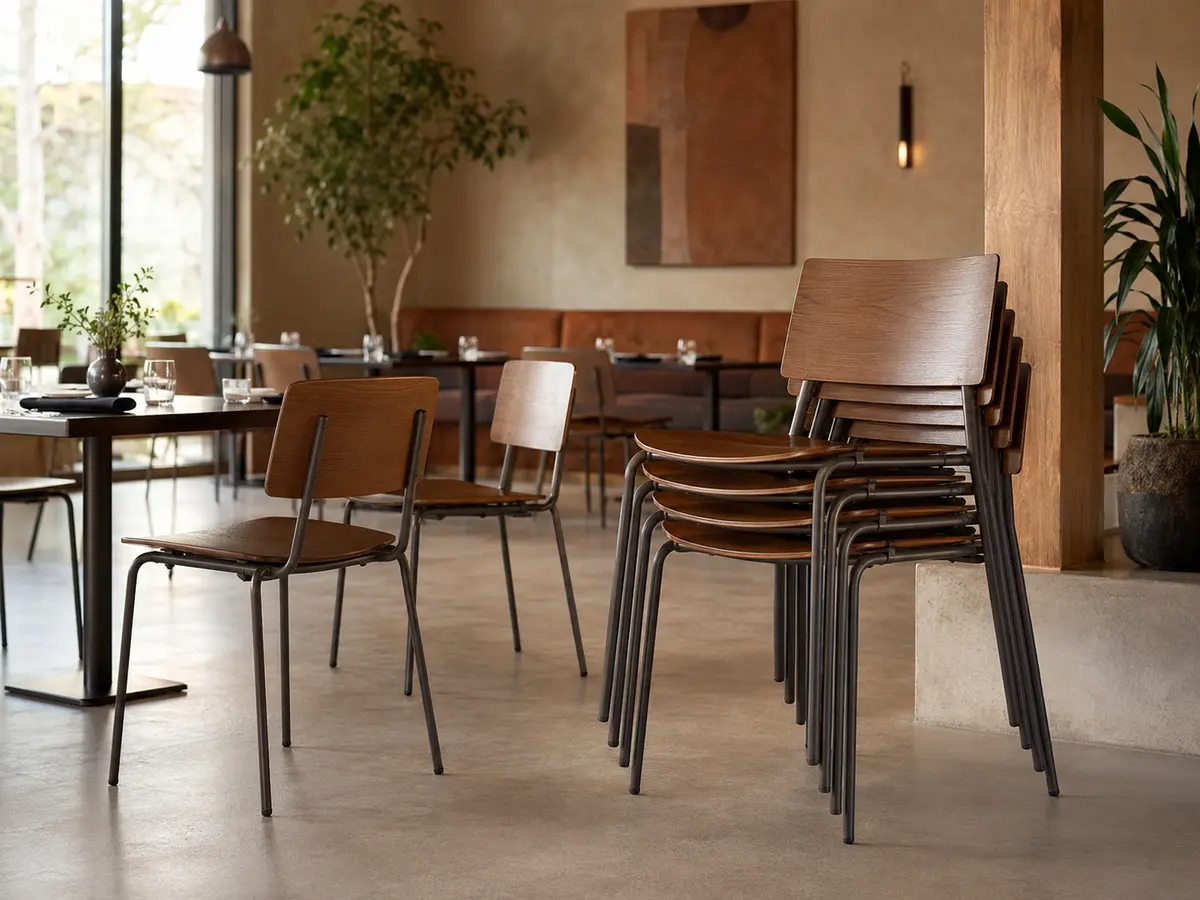
Stackable restaurant chairs can be a smart way to gain flexibility—especially for cafés, seasonal patios, banquet overflow, and multi-purpose spaces.
But “stackable” doesn’t automatically mean “low-risk.” In real hospitality operations, stacking can create predictable problems: scratched finishes, wobbly stacks, compressed upholstery, and higher handling wear.
This guide is built for commercial buyers who want a clean answer to one question:
Are stackable restaurant chairs the right choice for my venue or project—and what must I verify before ordering?
Quick decision: when stackable restaurant chairs are a good fit (and when they aren’t)
If you searched for stacking restaurant chairs or commercial stackable chairs, you’re usually balancing two things: day-to-day operational flexibility (reset, storage, overflow seating) and the long-term risks (finish wear, stability, comfort).
Great fit
Stackable chairs tend to work well when any of these are true (including many stackable cafe chairs use cases):
You need flexible seating (banquet overflow, events, peak-season capacity).
You reset the floor often (chairs move daily for cleaning, reconfiguring, or closing).
Storage space is limited and you need chairs to “disappear” efficiently.
You operate a café or fast-casual venue where frequent floor resets, compact storage or flexible seat counts matter.
You’re buying for multiple sites/projects and need a repeatable, easy-to-handle seating option.
Key Takeaway: Stackable chairs win when “storage + reset speed” matters as much as “comfort + aesthetics.”
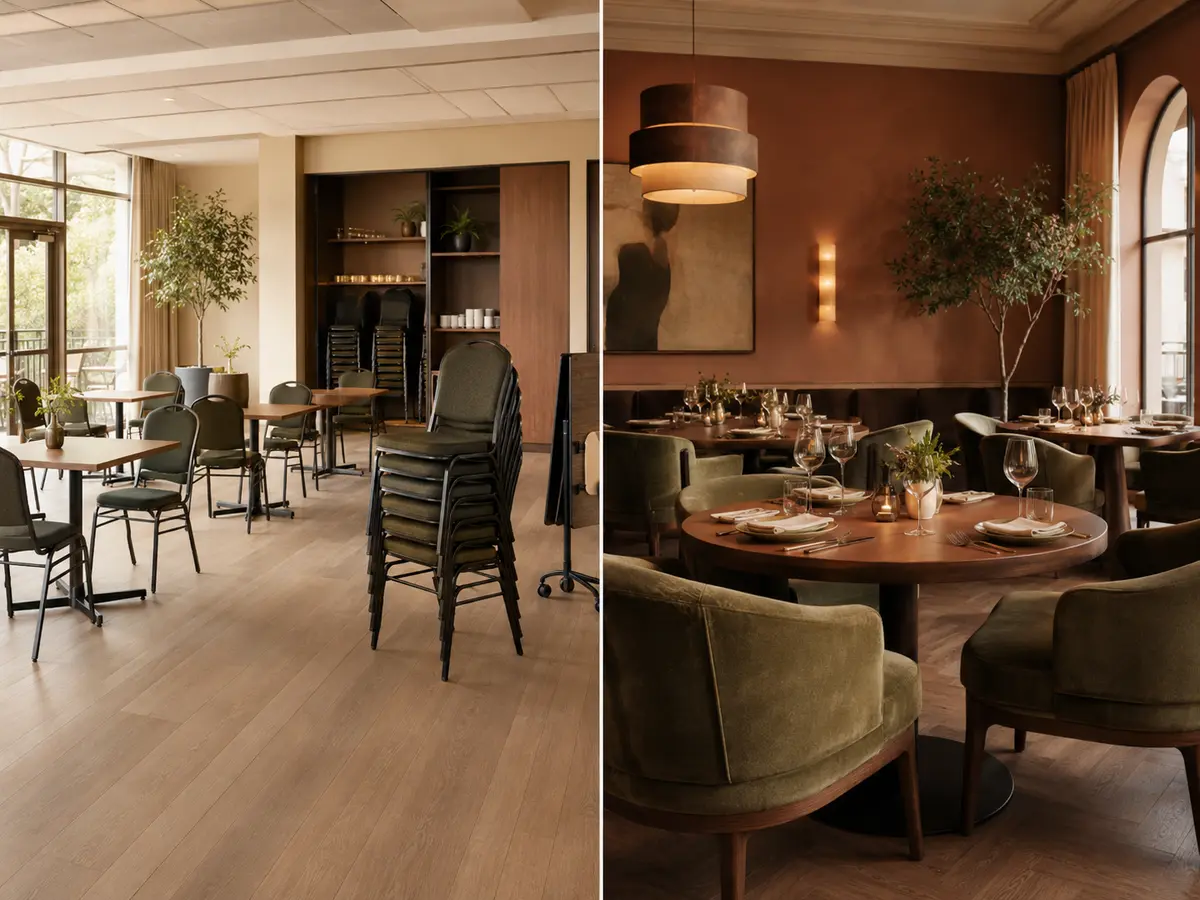
Stackable chairs suit frequent resets and compact storage better than wide, plush seating designed for longer stays.
Usually a compromise
You should be cautious (or choose another chair type) if your project is primarily:
Fine dining where the chair is part of the design statement and guests sit longer.
Heavily upholstered seating (thick foam, plush fabric) where stacking can compress materials.
Armchairs or wide sculptural designs—stacking tends to be lower, bulkier, and less stable.
Heavy solid wood chairs where staff handling and safe stacking are harder.
If you’re unsure, sanity-check your layout using your dining clearance rules and aisle widths. This internal guide on space between dining chairs is a good starting point.
Benefits that matter in real restaurant operations
1) Storage efficiency (not just “space saving”)
A stackable chair turns unused seating into a vertical footprint—helpful when you’re storing overflow chairs behind a partition, in a back room, or on a mezzanine.
What to verify:
How many chairs are allowed per stack for that exact model.
Whether the chair is intended for floor stacking or cart/dolly stacking.
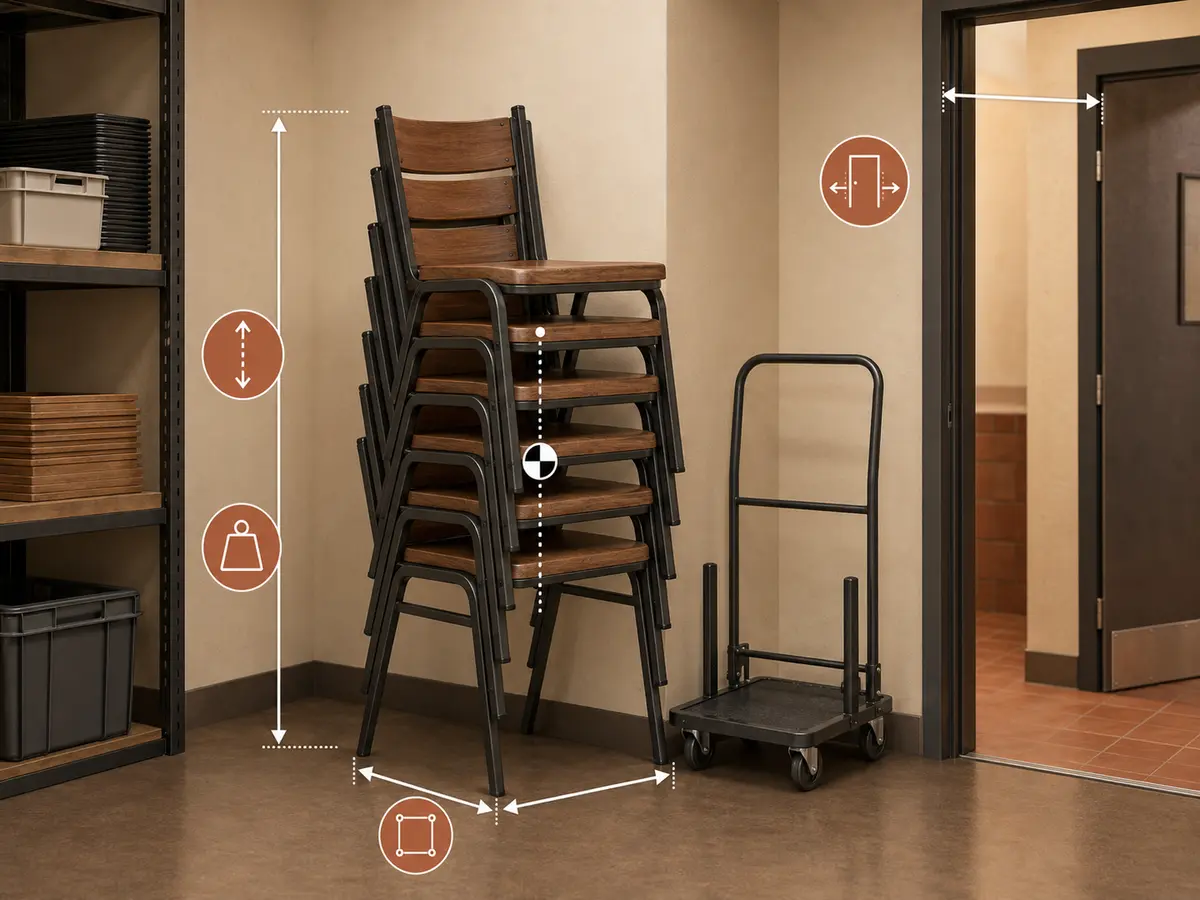
Also calculate the complete stack, not only the number of chairs:
total stacked height;
total chair weight;
base footprint and center of gravity;
trolley compatibility and rated capacity;
doorway, ramp, lift and storage-route clearance;
whether staff can load, move and unload the stack without uncontrolled lifting or tipping.
A manufacturer’s maximum stack count is a product limit, not automatic approval for every workplace or transport route. Complete a site-specific handling assessment before setting the operating limit.
Assess the complete stack—not only the chair count—including height, weight, footprint, trolley fit and route clearance.
2) Faster resets and easier cleaning routines
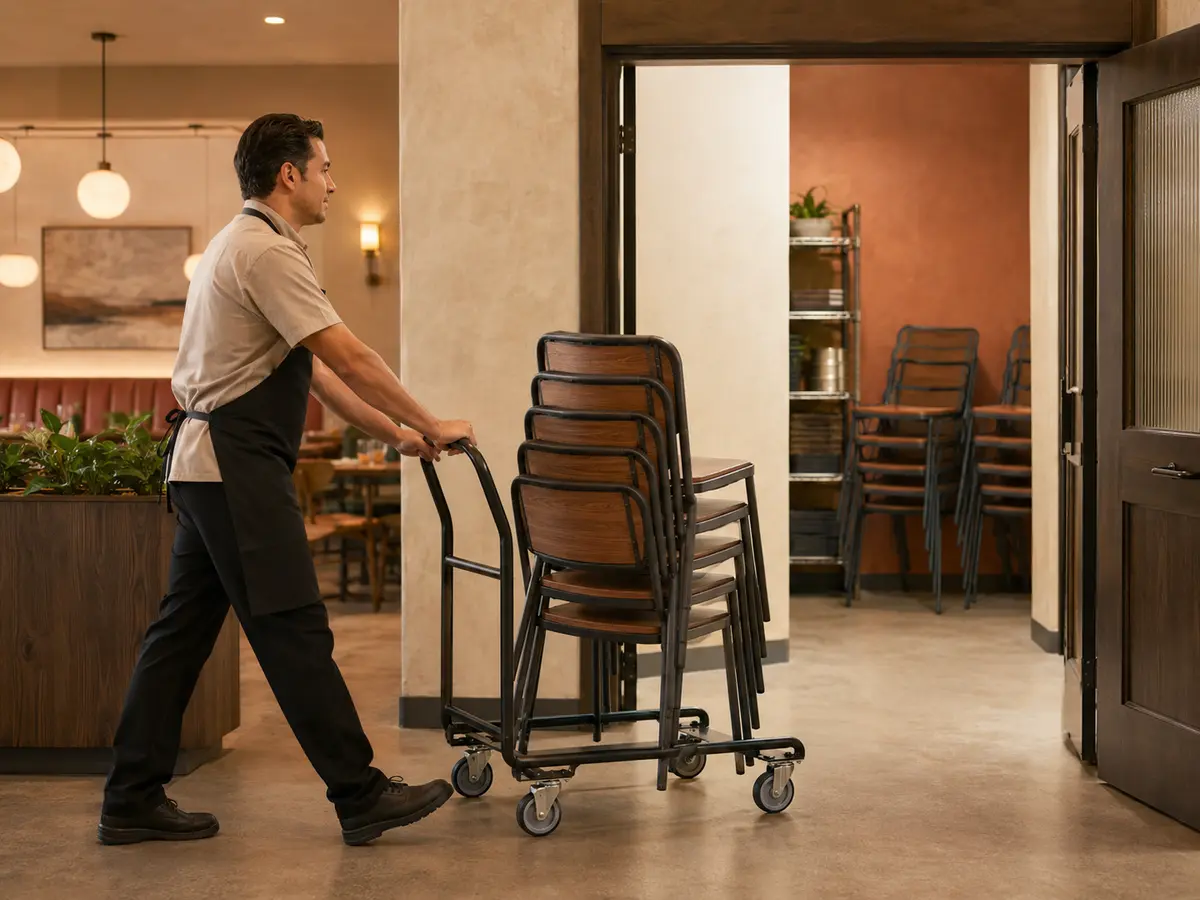
If chairs are moved frequently, stackability may reduce reset and cleaning time, provided the stack is easy to align, the trolley is available at the point of use and the storage route is practical. Verify the benefit with a sample handling trial rather than assuming every stackable model saves labor.
3) Easier transport—if you plan for it
The best stackable program isn’t “stack higher.” It’s stack safely and move efficiently.
Practical handling guidance consistently emphasizes three things:
don’t exceed the chair’s stacking limit
don’t mix different chair models in one stack
use proper transport methods to avoid damage and tip risk
Test the approved chair quantity, trolley and full storage route together before setting the venue’s operating limit.
For example, Burgess Furniture advises against stacking different chair types together and highlights the need for correct alignment and safe handling in its Ultimate Guide to Stacking Chairs.
Limits and hidden costs (what buyers regret later)
1) Scratches and finish wear from chair-to-chair contact
One of the most common reasons stackable chairs look “old” quickly is simple friction: chairs rub at contact points when stacked and moved.
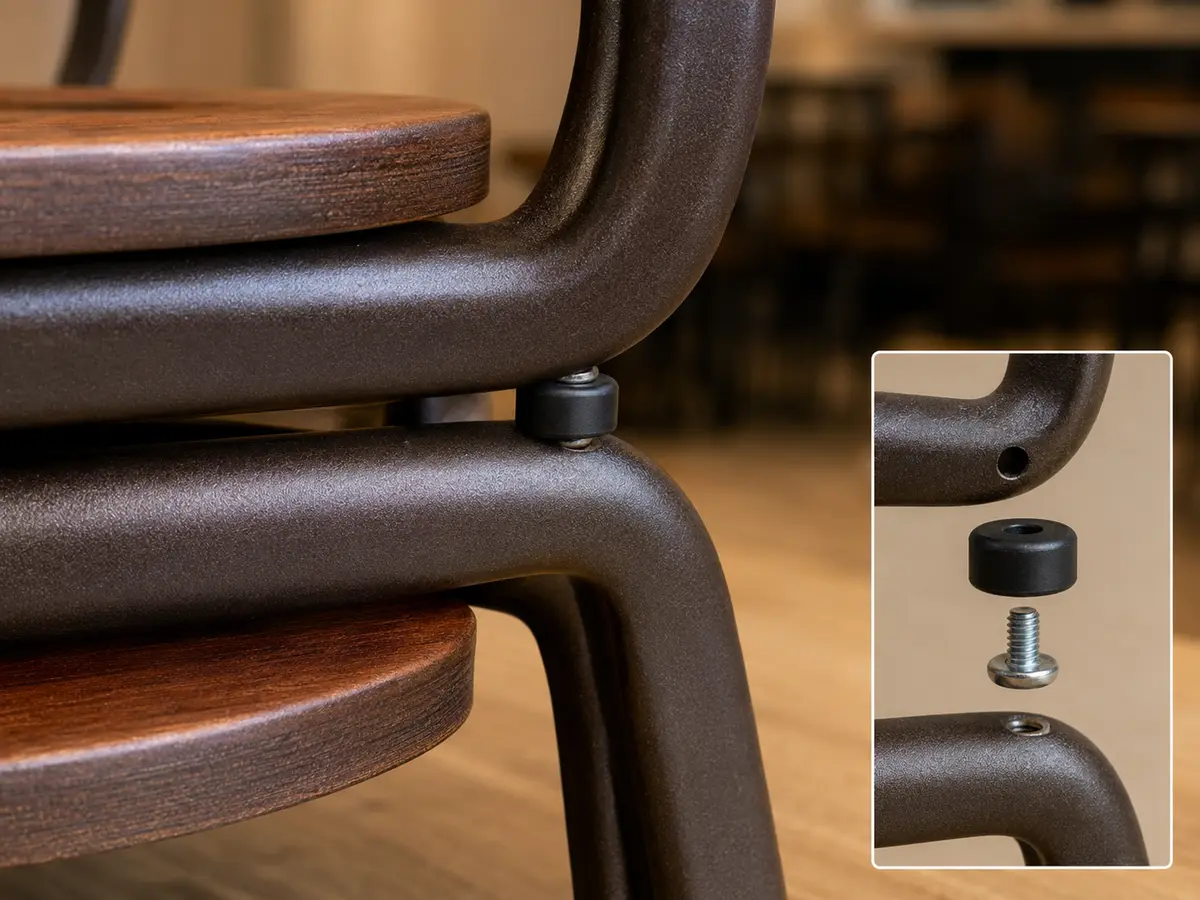
This is where stacking bumpers / spacers matter.
In plain terms, these are small components designed to keep stacked chairs from rubbing directly against each other.
What to check:
Are bumpers/spacers integrated and positioned at real contact points?
Do they protect the frame, the finish, or both?
Are they replaceable if they wear out?
Pro Tip: Ask for a “stacking contact-point photo.” A supplier should be able to show exactly where chair A touches chair B—and what separates them.
A properly positioned bumper creates separation at the real contact point and helps prevent frame-to-frame finish wear.
During sampling, perform a documented stack-and-move check:
Stack the manufacturer-approved quantity using the specified floor or trolley method.
Photograph every frame, glide, bumper and upholstery contact point.
Move the stack through the intended doorway and storage route.
Unstack it and inspect for scratches, compressed upholstery, displaced glides, loose parts and leaning.
Repeat the cycle only if the supplier confirms the procedure is permitted.
Publish results only after testing a real sample. Until then, present this as a proposed inspection method rather than company experience.
If you want a simple definition you can share with your team, All Glides describes stacking chair bumpers as leg components used to protect chairs from scratches when stacking.
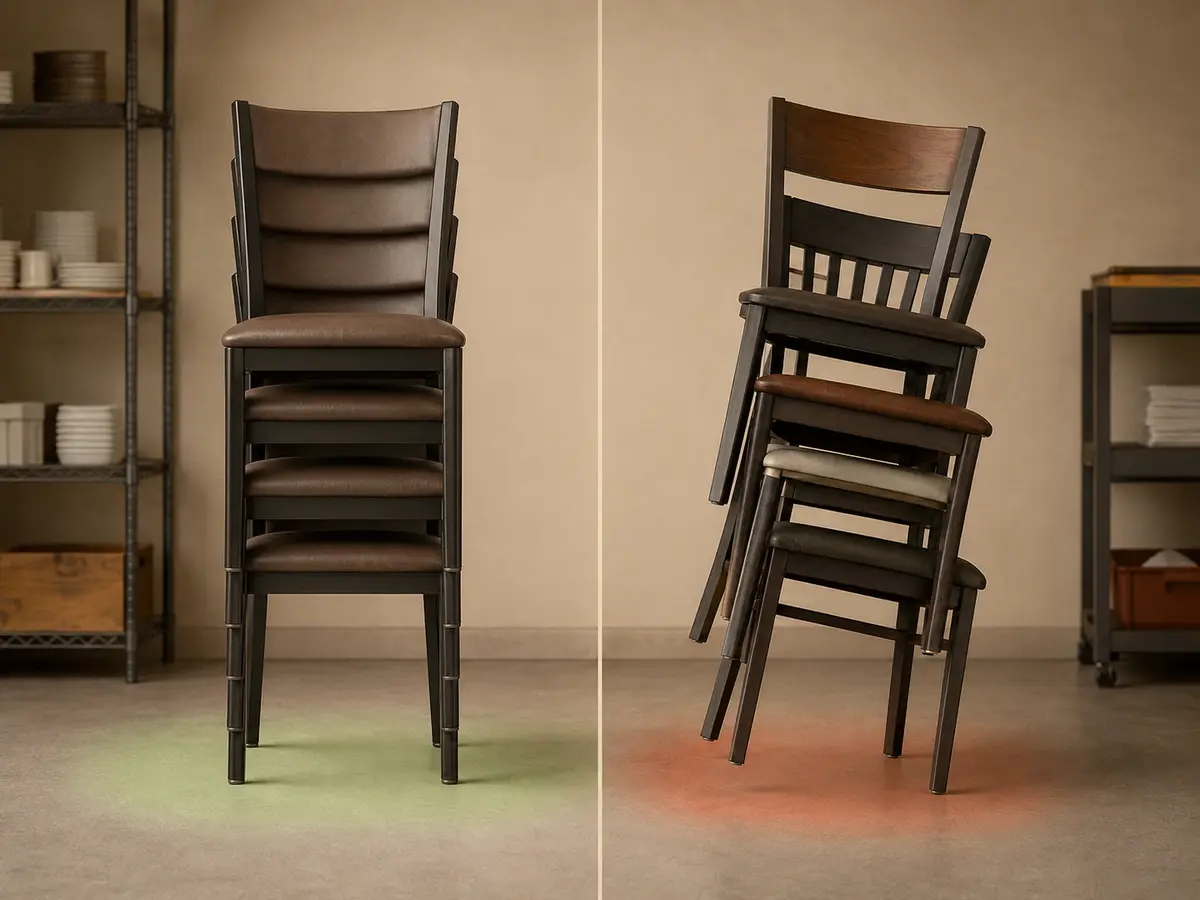
2) “Stackable” doesn’t mean “stable when stacked”
Stability depends on geometry and how the chair nests.
Common risk multipliers:
overstacking beyond the manufacturer limit
uneven floors
stacks that lean because the chairs weren’t fully seated/aligned
mixing chair models in the same stack
If your operation requires moving many chairs, treat the transport method as part of the purchase—not an afterthought.
Use identical chair models, seat each chair fully and keep the stack on a level floor within the manufacturer’s limit.
3) Comfort tradeoffs (especially for long dwell time)
Comfort isn’t binary, but there are known cues that help you judge quickly.
From a seating-ergonomics perspective, seat depth and back angle matter. Cornell’s ergonomics notes on sitting posture discuss seat depth guidance and backrest angle preferences (see Cornell’s ergonomics notes on sitting posture).
In procurement terms, translate that into what you can actually ask for:
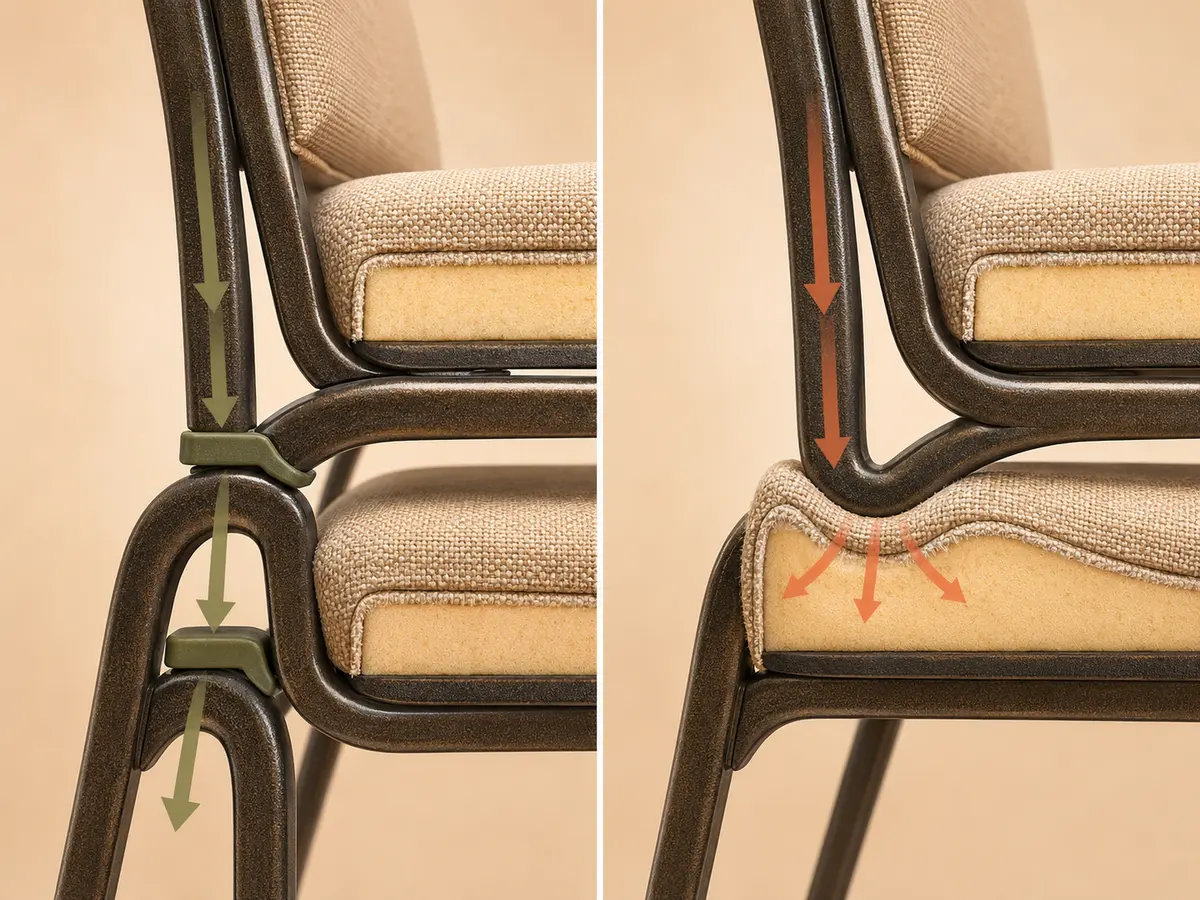
If you’re considering upholstered stackable chairs, stacking can apply pressure at edges and contact points.
What to ask:
Where does the stacking load transfer: through protected frame contact points, dedicated spacers, the seat shell or the upholstery? Ask the supplier to identify the intended load path and confirm that the approved stack does not create damaging pressure on finished or upholstered surfaces.
The approved stacking load should transfer through protected structural contact points rather than the upholstery.
Is there a recommended max stack height specifically for upholstered versions?
The buying checklist: what to verify before you order
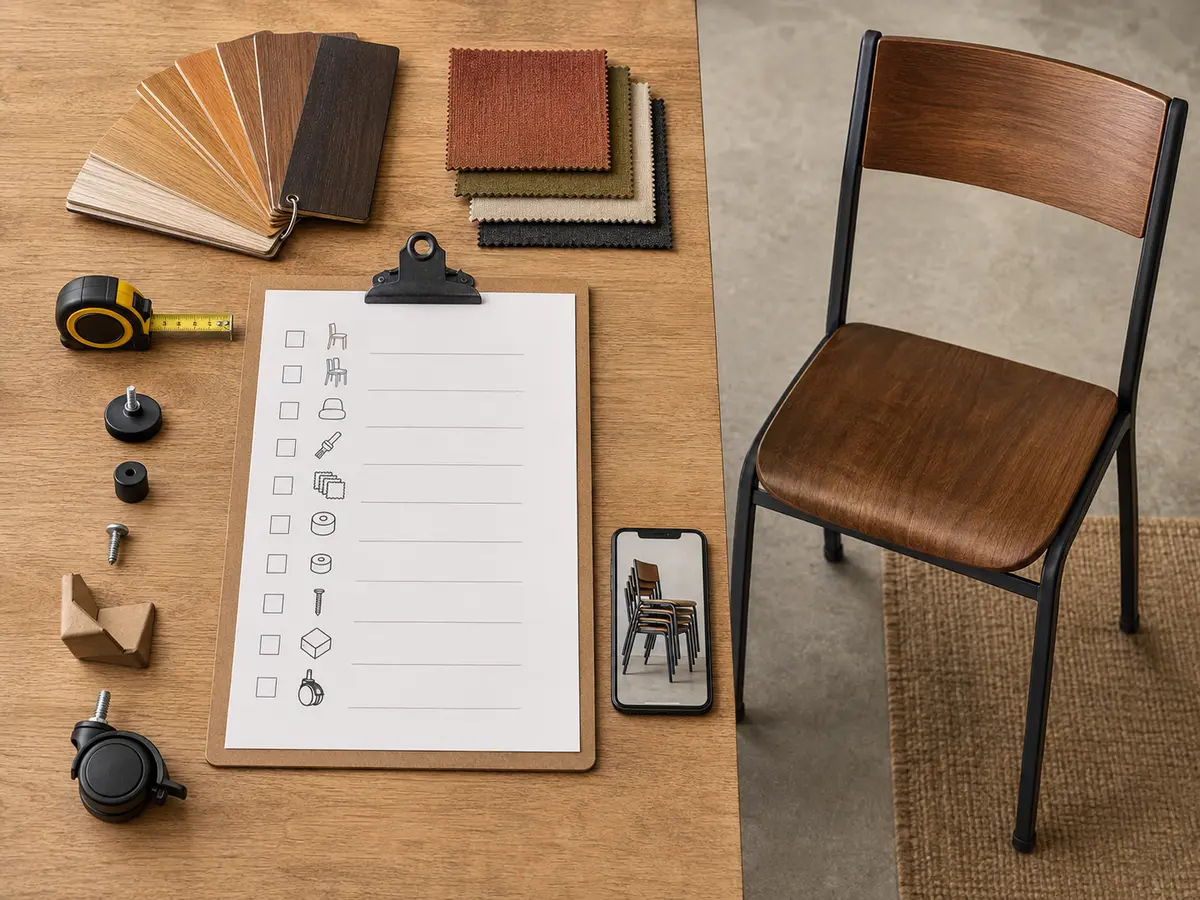
Use this as a practical pre-order checklist. Every item should have a clear Yes/No answer.
Verify stacking, construction, comfort, service parts and logistics on the exact sample and configuration you intend to buy.
A) Stacking & handling (the “will this work day-to-day?” checks)
The supplier provides an official maximum stack count for this exact model.
The supplier confirms whether the limit is for floor stacking, cart stacking, or both.
Chairs are designed not to rub: bumpers/spacers exist at contact points (not metal-on-metal).
The stack stands straight on a level floor (no leaning under normal alignment).
The supplier confirms you should not mix chair models when stacking.
B) Durability & serviceability
Frame construction details are clear (material, tube/rod structure, joinery approach).
Finish type is defined (and cleaning guidance is provided).
Glides/feet are replaceable (important for floors and long-term maintenance).
Spare parts policy is clear (glides, bumpers, fasteners).
C) Comfort & dining fit
You have full seat dimensions and a realistic comfort target for the venue type.
If upholstered: foam density/grade and fabric/vinyl grade are specified.
D) Logistics & procurement risk (especially for EU/UK distributors)
Packaging method is described (carton strength, corner protection, palletization option).
Reorder/batch consistency plan is clear (finish color, fabric lot, weld/fit tolerance).
Lead time and rolling reorder expectations are stated.
⚠️Warning: If a supplier cannot document the stack limit, stacking method, contact-point protection and packaging, treat the model as unverified for your operating scenario. Request the missing information or evaluate another product before placing a bulk order.
RFQ questions you can copy/paste to suppliers
Send this list with your inquiry. It reduces back-and-forth and forces spec clarity.
What is the maximum stack count for this model?
Is that limit for floor stacking, cart stacking, or both?
Please share a photo showing stacking contact points and any bumpers/spacers.
What’s the chair net weight and recommended handling method (single carry vs two-hand)?
What are the full dimensions (W × D × H, plus seat height and seat depth)?
What is the frame material and finishing process?
If upholstered: does stacking load rest on frame-on-frame design rather than compressing upholstery?
What packaging protection is used (corners, carton spec, palletization)?
What is your reorder policy for finish consistency and fabric lot matching?
What compliance/testing documentation can you provide if required?
For European and UK projects, standards may provide part of the product evidence:
EN 16139:2025 addresses safety, strength and durability requirements and test methods for non-domestic seating within its stated scope. Ask for the exact edition, test level, laboratory, tested configuration and model identification.
EN 1021-1:2014 and EN 1021-2:2014 assess the ignitability of specified upholstery material combinations using a smouldering cigarette and a match-flame equivalent.
EN 1021 results do not by themselves establish the fire performance of every finished chair or compliance with every national or project requirement. EN 16139 also does not establish the chair’s safe stacking quantity. Confirm applicable standards, fire rules and documentation with the project compliance team.
Example stackable chair pages (for spec reference)
These YeZhi product pages can be used to build an initial shortlist:
Freedom stackable wooden restaurant chair
Rabbit stackable cane back restaurant chair
Before presenting either model as a specification reference, add or request maximum floor and trolley stack counts, chair net weight, stacked dimensions, contact-point photos, handling instructions, warranty and available test documentation.
Are stackable restaurant chairs good for restaurants?
They can be—especially when you need flexible seating, frequent resets, and efficient storage. They’re less ideal when your concept depends on premium comfort for long sitting times or a signature design chair that won’t stack efficiently.
There’s no universal number. It depends on the chair model and whether you’re stacking on the floor or on a cart. Use the manufacturer’s stated maximum for the exact model, and avoid mixing different chair models in the same stack.
Can you stack different chair models together?
Usually, it’s not recommended. Different geometries can lean, damage finishes, or create unstable stacks. If you must mix, treat it as an exception and test carefully—but the better answer is to standardize models per venue.
Are stackable dining chairs the same as stackable restaurant chairs?
Not necessarily. “Stackable” describes a function, while “restaurant” or “commercial” describes an intended-use claim. Neither label proves durability by itself. Verify the exact model’s stack limit, construction, warranty, cleaning instructions, test documentation, spare parts and reorder support.
Next steps
If you’re evaluating stackable restaurant chairs for a project, start by defining:
your target storage footprint
how often chairs will be moved
whether you need floor stacking or cart stacking
Then request a spec sheet + a contact-point stacking photo from suppliers.
If you’re sourcing for hospitality projects, YeZhi Furniture can help you shortlist options and confirm practical details (stacking design, finishes, and packaging) before you commit—start with the product examples above and build your RFQ from the checklist.