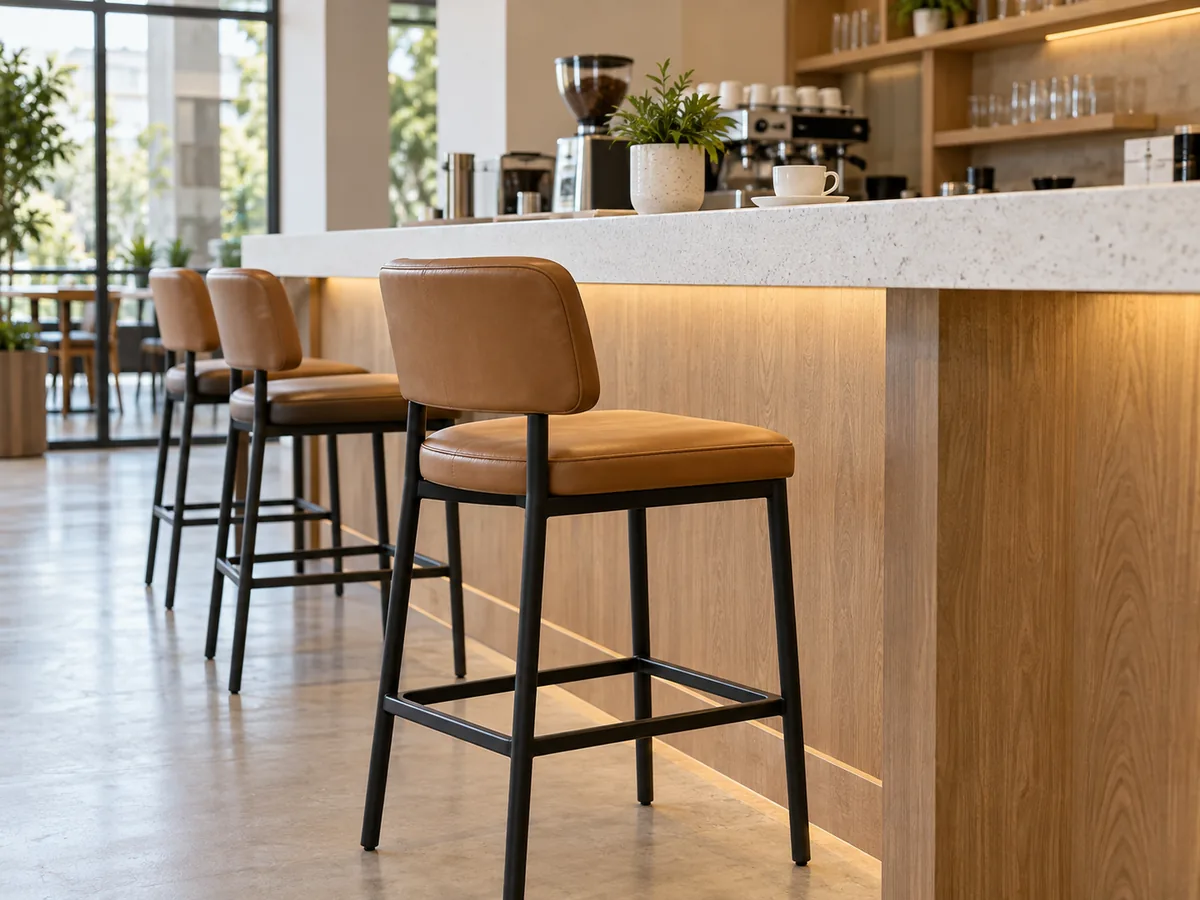
There is no single best material for restaurant chairs. The best choice is the build that controls your venue’s most costly failure mode. Metal or metal-frame chairs can suit frequent movement and cleaning when the welds, tubing, coating and glides are properly specified. Solid wood can suit cafés and design-led spaces when the joints and finish are verified. Upholstery can add cushioning and a premium feel, but it requires separate checks for abrasion, seams, foam, cleanability and replacement.
The mistake most buyers make is treating this as a three-way choice. In real commercial projects, the best results often come from hybrid builds: a metal frame with a wood seat, a wood frame with an upholstered seat, or a metal frame with a replaceable upholstered pad.
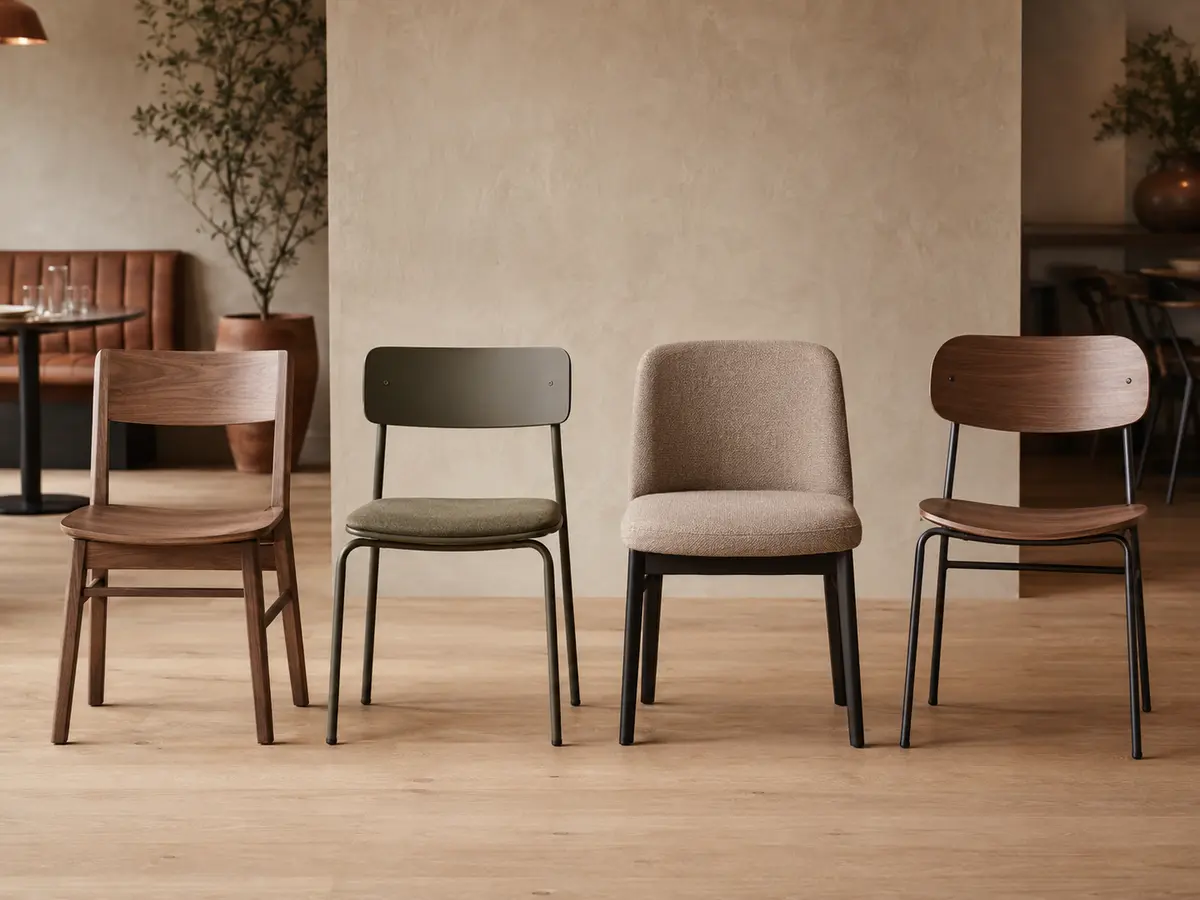
Restaurant chair materials compared (quick matrix)
Use this as a first filter, then refine using the framework in the next section.
Material (common build) | Best for | Watch-outs (real procurement risks) | Typical maintenance load |
|---|---|---|---|
Metal frame (steel/aluminum; welded or bolted) | High-traffic fast casual, bars, venues with frequent move/clean cycles | Coating wear at contact points, weld quality, floor glide wear; lighter tubing can flex/wobble over time | Low to medium |
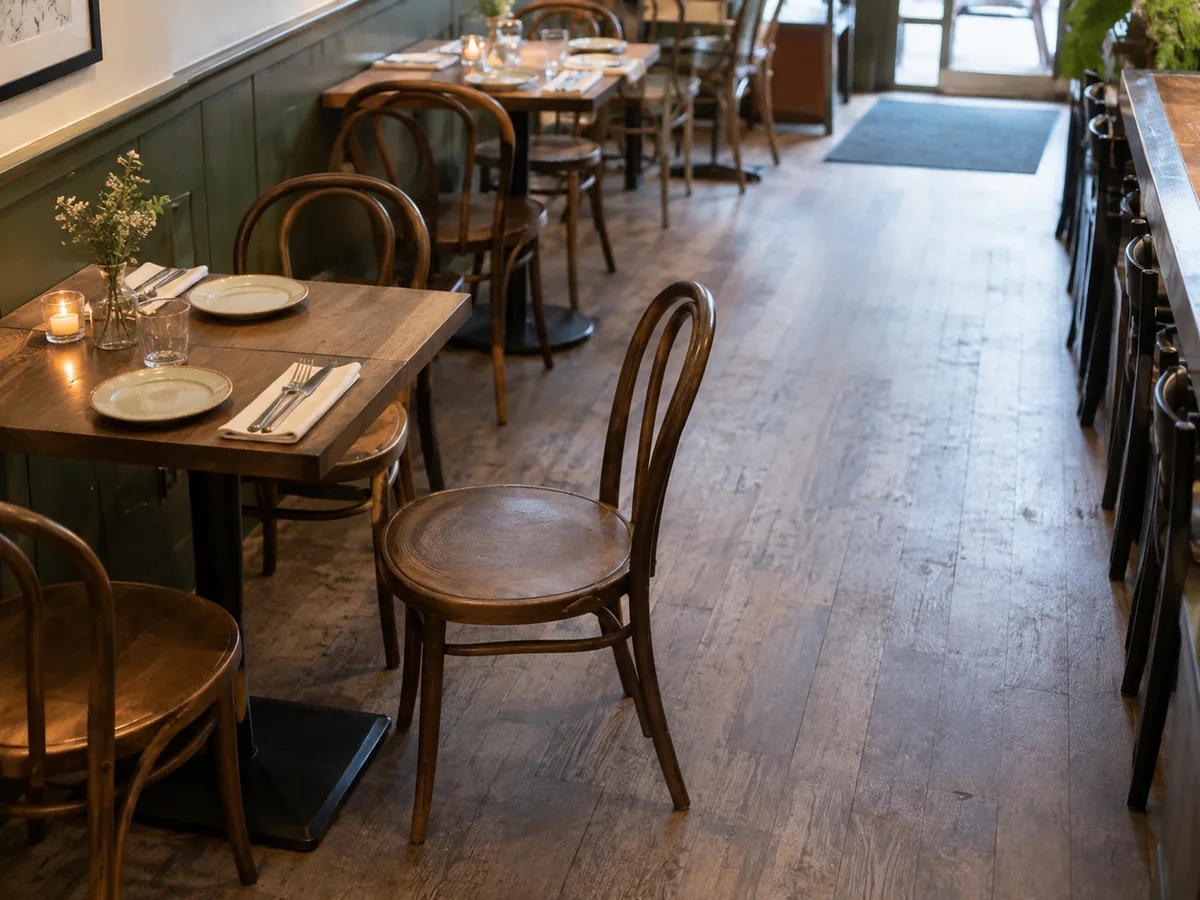
Solid wood frame (hardwood) | Cafés, bistros, warm casual dining, spaces where “natural” matters | Joint looseness (“wobble”), finish wear on edges/rails, moisture exposure; quality varies widely by joinery | Medium |
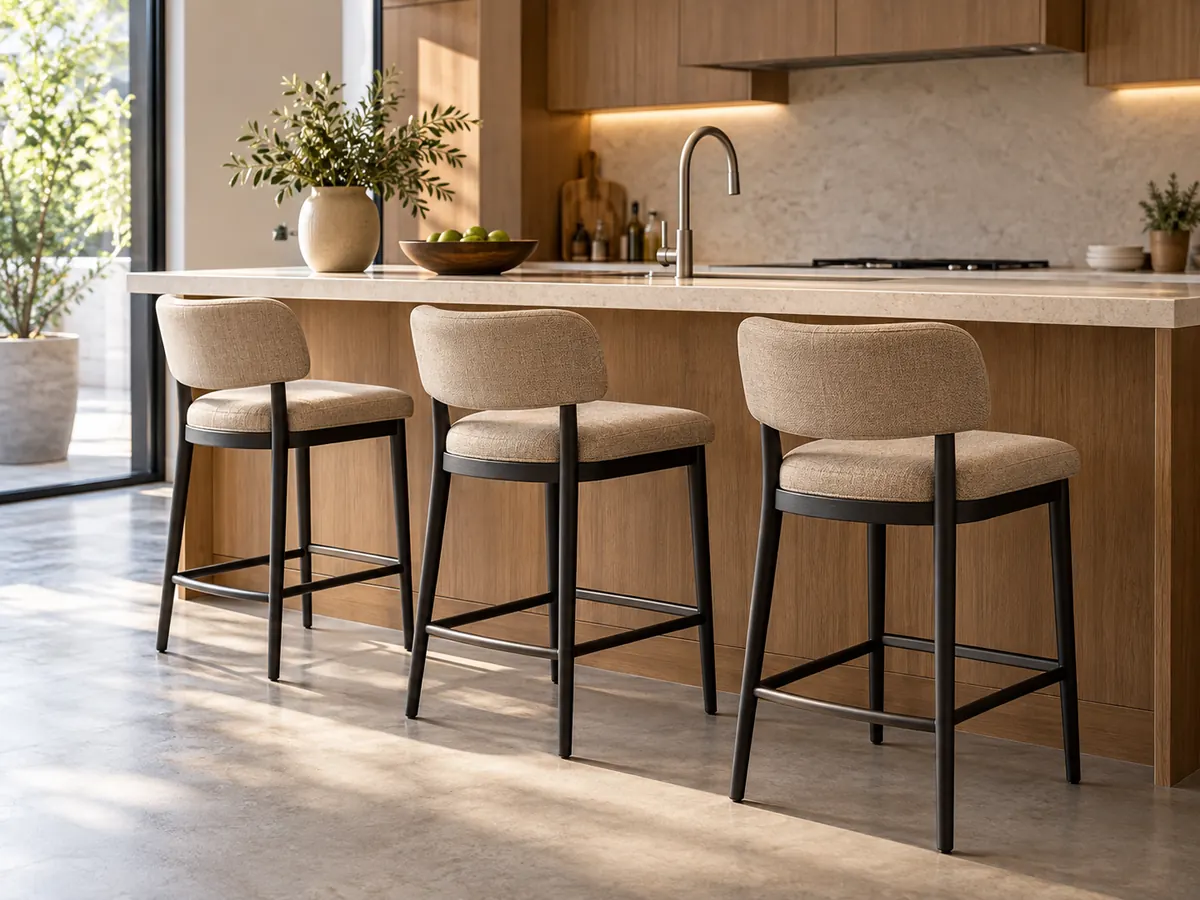
Upholstered (wood or metal frame + padded seat/back) | Fine dining, hotels, long-dwell seating, comfort-led concepts | Stains + cleaning labor, abrasion/tearing, foam flattening; replacement consistency across batches | Medium to high |
Hybrid (metal frame + wood seat/back; wood frame + upholstered seat; etc.) | Most commercial projects that need durability and design | Must spec frame + seat + finish separately; mixed materials can complicate replenishment unless documented | Medium |
Plastic/resin (poly/PP; often for indoor/outdoor) | Budget-driven, some quick-service, some outdoor (depends on product) | Scratch and scuff visibility; UV, temperature and moisture suitability vary by resin formulation; structural and fire-performance documentation may be required by the project | Low |
Best material for restaurant chairs (how to choose quickly)
Before you compare wood vs metal vs upholstered, separate the chair into the parts that behave differently in real use:
Frame (structure): what takes the load? (metal tube, solid hardwood, engineered components)
Contact surfaces (what gets abused): seat, back, front rail, arm caps, edge banding, footrest (for bar seating)
Finish (what gets cleaned and scratched): powder coat, stain + topcoat, lacquer, veneer, upholstery top layer
Environment: traffic intensity, cleaning frequency, moisture risk, indoor/outdoor, and whether guests drag chairs
Chairs do not follow one universal failure sequence. Depending on the design and use conditions, the first problem may be joint movement, frame deformation, finish wear, corrosion, upholstery damage, foam compression, glide loss or batch mismatch. Select materials and construction around the failure modes that carry the highest operational or safety cost for your venue.
Wood restaurant chairs (what works in commercial use)
Wood is not automatically “less durable” than metal. The real question is how the joints are built and how the finish handles your cleaning routine.
Where wood chairs win
Warmth and design flexibility: easier to match classic café, bistro, or boutique hotel aesthetics.
Comfort (especially on the touch points): wood surfaces don’t feel as cold as bare metal in many indoor climates.
Repairability: some components can be refinished or tightened (depending on construction).
Procurement risks to price into your decision
Joinery quality drives lifespan: A solid hardwood chair with strong joinery can run for years; a weakly joined chair can loosen quickly under commercial use.
Finish wear is operational, not cosmetic: finish loss on front rails and edges often precedes moisture ingress and deeper damage.
Batch consistency: stains and topcoats can vary by lot. If replenishment matters, document approved samples and color/finish codes.
What to inspect (buyer’s checkpoints)
Ask the supplier to document the joint type, dimensions, adhesive or fastener system, reinforcement and repair method. Do not approve or reject a wood chair from the label “mortise-and-tenon,” “dowel” or “screw-fixed” alone; execution and tested performance matter as much as the joint name.
Look for reinforcement at high-stress joints (front legs to seat rails; back frame connections).
Confirm floor glides are installed and replaceable (glides are cheap; replacing flooring is not).
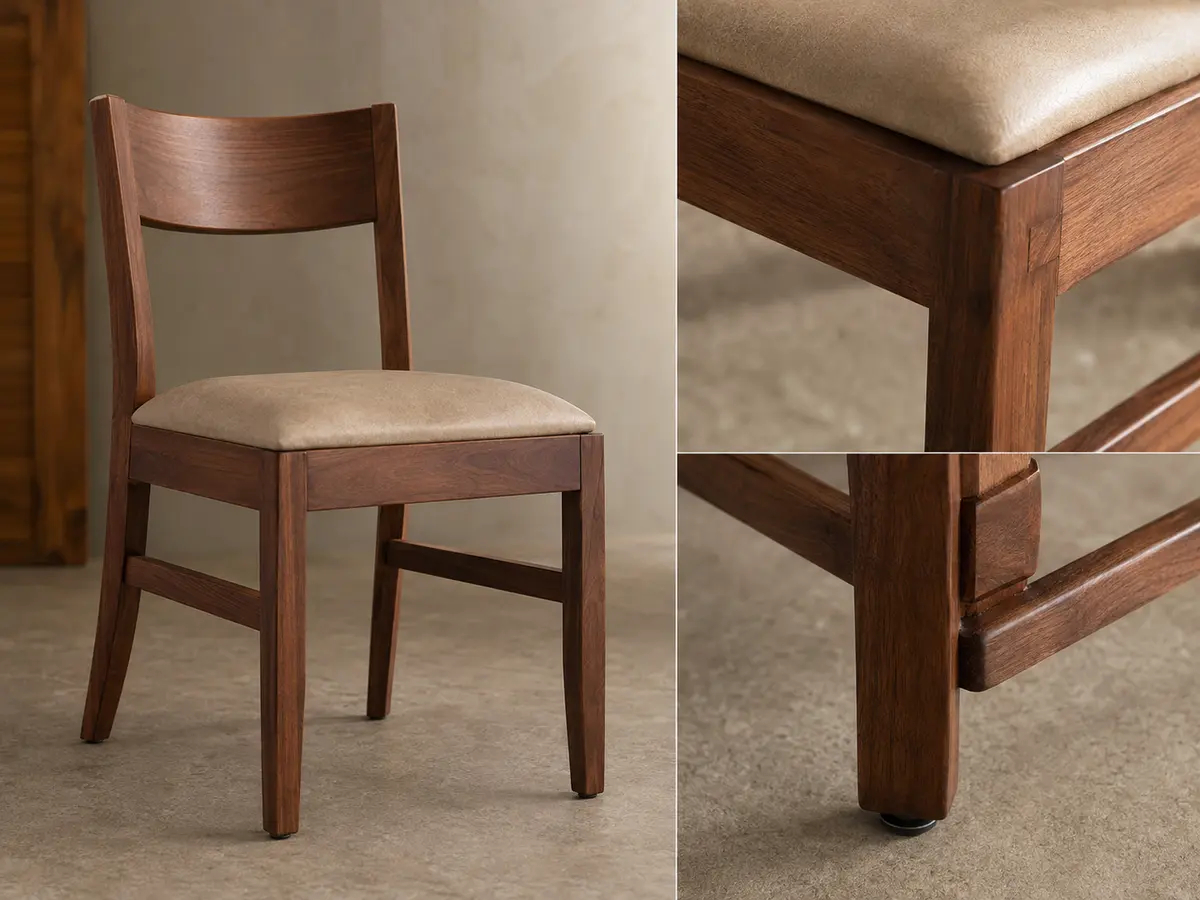
If you’re shortlisting wood seating, start with YeZhi’s restaurant chairs category and filter by the visual direction your end customers buy most often.
Metal restaurant chairs (steel or aluminum)
Metal chairs are a common high-traffic option, but “metal” is not one performance category. Steel and aluminum differ in weight, corrosion behavior and repair options, while tube geometry, wall thickness, weld execution, pretreatment and coating system all affect service performance.
Where metal chairs win
High-traffic durability (structure): welded metal frames can handle constant move/stack/clean cycles.
Maintenance simplicity: fewer worries about swelling/shrinking from moisture compared to wood.
Consistent production: powder coat colors can still vary, but metal frames often provide good repeatability when processes are stable.
Procurement risks to price into your decision
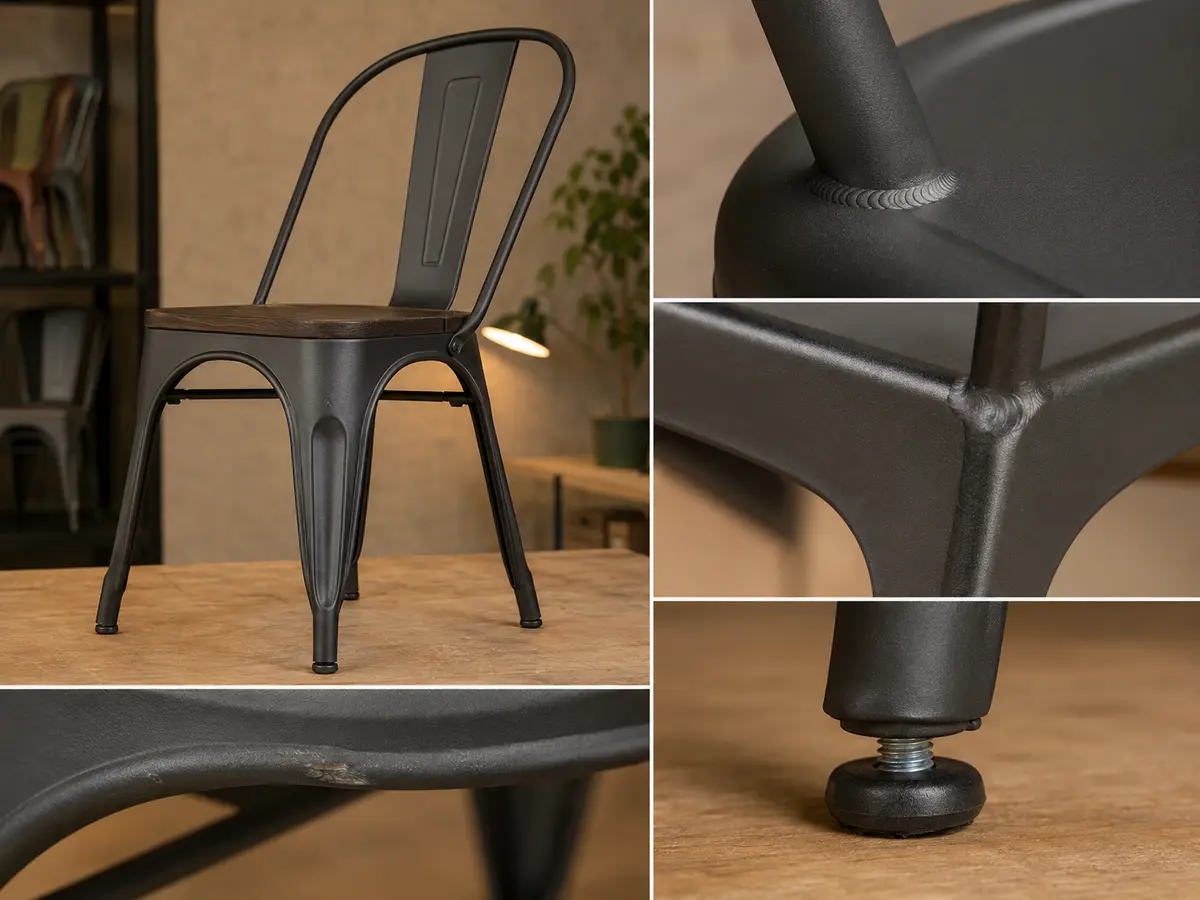
Welds and tubing thickness matter more than “metal”: thin tubing and poor weld execution can lead to flex and wobble.
Finish failure is the common weak point: coating wear at stack points, edges, and foot contacts can accelerate rust risk (depending on material and environment).
Noise and floor damage: poor glides show up fast in restaurants.
What to inspect (buyer’s checkpoints)
Ask whether the frame is fully welded or partially assembled (and how it’s reinforced).
Confirm there are glides and whether they’re threaded/replaceable.
Confirm the finish is appropriate for your cleaning approach; gentle, finish-compatible cleaning is usually safer than aggressive solvents and abrasives.
Upholstered restaurant chairs (practical, but only when specified)
Upholstered seating is practical in restaurants, but it’s not “set and forget.” In commercial operations, upholstery is a comfort upgrade that you pay for in cleaning labor, stain risk, and replacement complexity.
Where upholstered chairs win
Comfort and dwell time: better for long meals, tasting menus, and hotel F&B.
Premium perception: supports higher-end positioning when the upholstery details are right.
The hidden costs buyers underestimate
Cleaning time: the cost isn’t just the cleaning product—it’s staff minutes per chair, per shift.
Stain visibility and downtime: if a fabric shows marks, you lose “sellable seats” until it’s cleaned.
Re-order consistency: upholstery dye lots can vary. Distributors should plan for approved samples and batch control.
How to evaluate upholstery durability without overclaiming
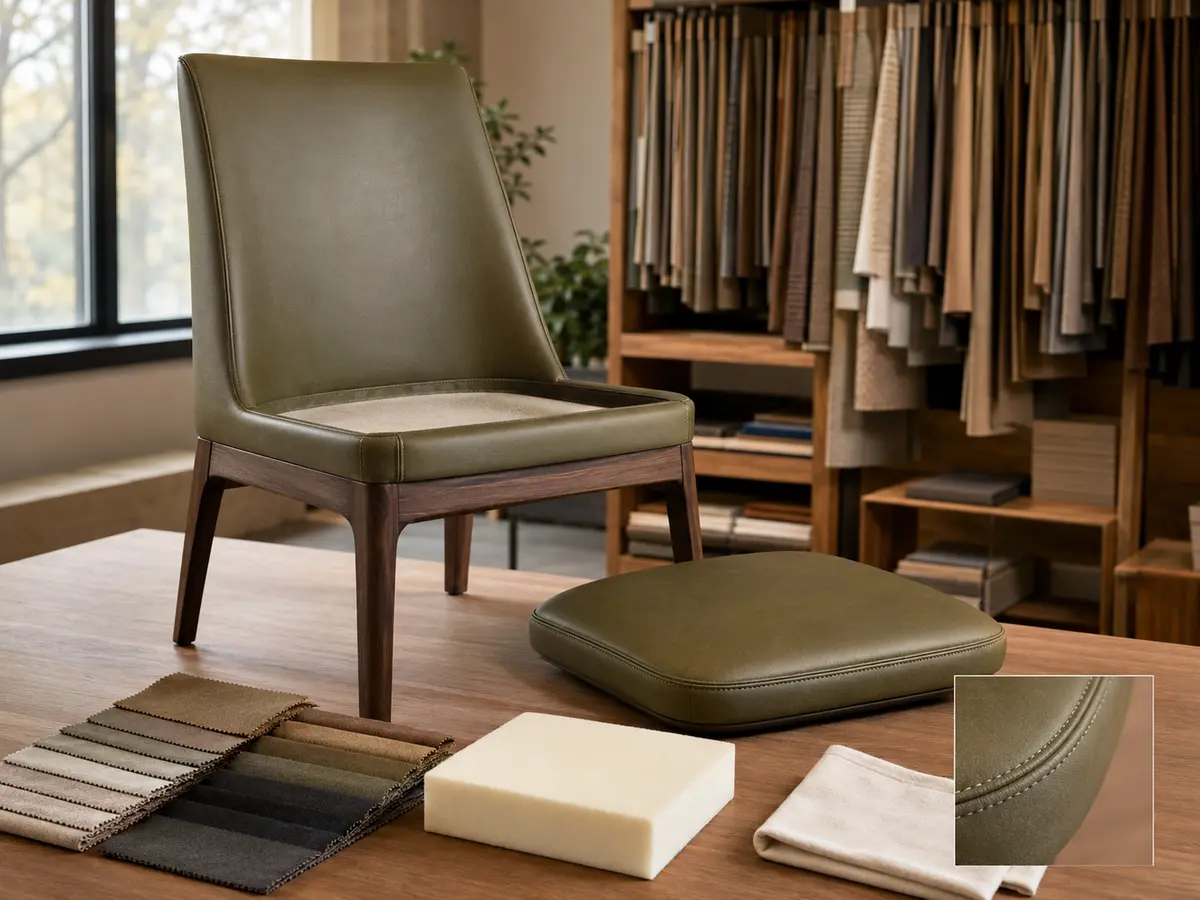
Ask for a spec sheet that includes abrasion testing information and interpret it carefully:
Wyzenbeek (double rubs) and Martindale (cycles) are common abrasion tests, but they aren’t interchangeable numbers.
ACT (Association for Contract Textiles) explicitly warns against treating abrasion results as the single predictor of durability in its abrasion disclaimer.
Do not convert Wyzenbeek double rubs into Martindale cycles or rank two fabrics by treating the figures as equivalent. ACT states that there is no correlation between the two methods and that results can vary significantly. Results above an applicable performance guideline also do not prove a longer service life.
Request the test method, specimen description, laboratory, report date and result for the exact upholstery. Then evaluate abrasion together with seam strength, pilling, colorfastness, stain response, cleaner compatibility, backing and actual maintenance conditions.
In practical terms, use abrasion results as a screening tool, then validate:
your cleaning routine (what chemicals, how often)
stain resistance/finish
seam construction and stitch quality
whether cushions/pads are replaceable
About flammability standards (mention safely)
If a market or project requires fire-performance evidence, identify the exact requirement before testing. EN 1021-1:2014 and EN 1021-2:2014 assess the ignitability of specified cover-and-filling combinations using a smouldering cigarette and a match-flame equivalent. The result applies to the tested material combination and does not by itself establish that every finished chair is “fireproof” or compliant with every national or project rule.
Hybrid builds: often the best commercial answer
If you only remember one thing from this article, make it this: structure and touch points can be different materials.
Examples of practical hybrid specs:
Metal frame + wood seat/back: durable structure with warmer touch points.
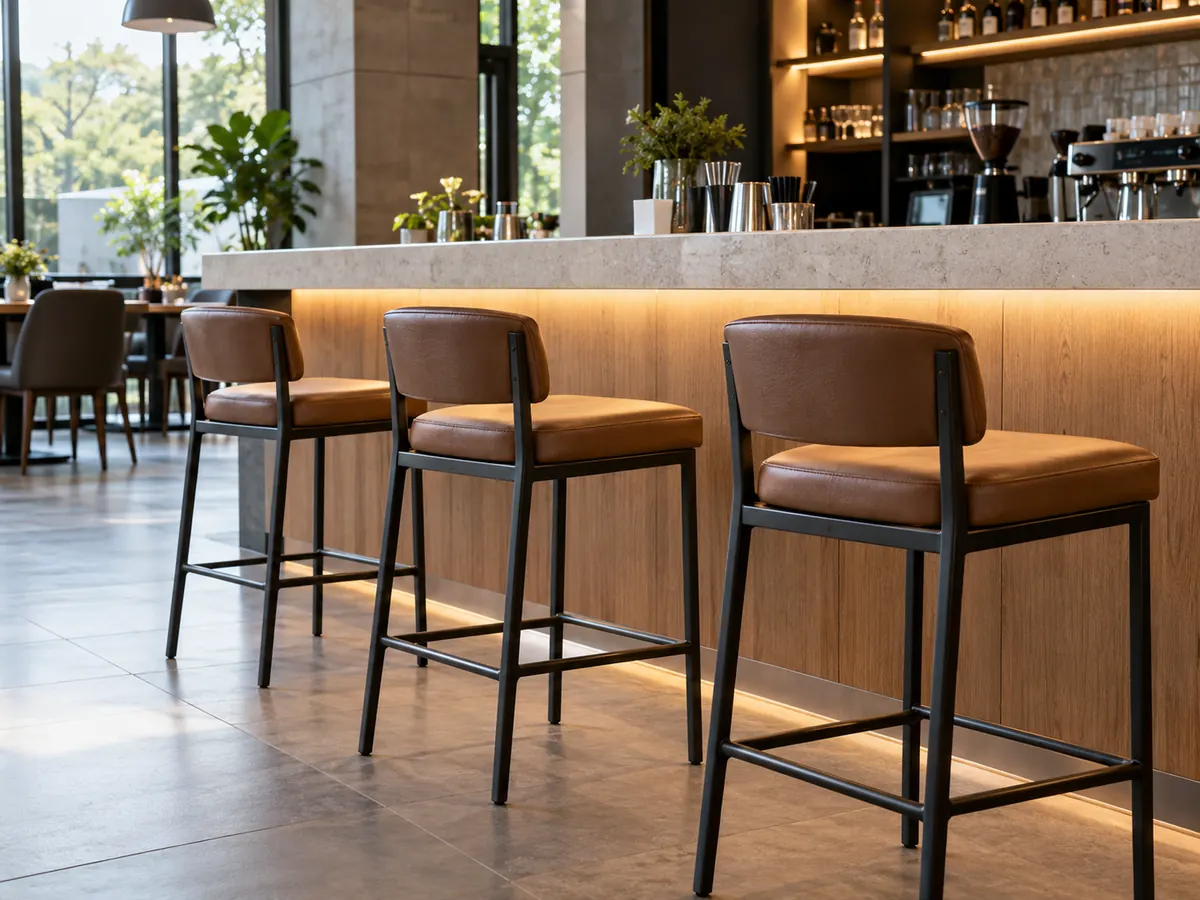
Metal frame + upholstered seat pad: easy-to-clean frame, replaceable comfort layer.
Wood frame + upholstered seat: warm look with comfort, but be strict about joinery and upholstery specs.
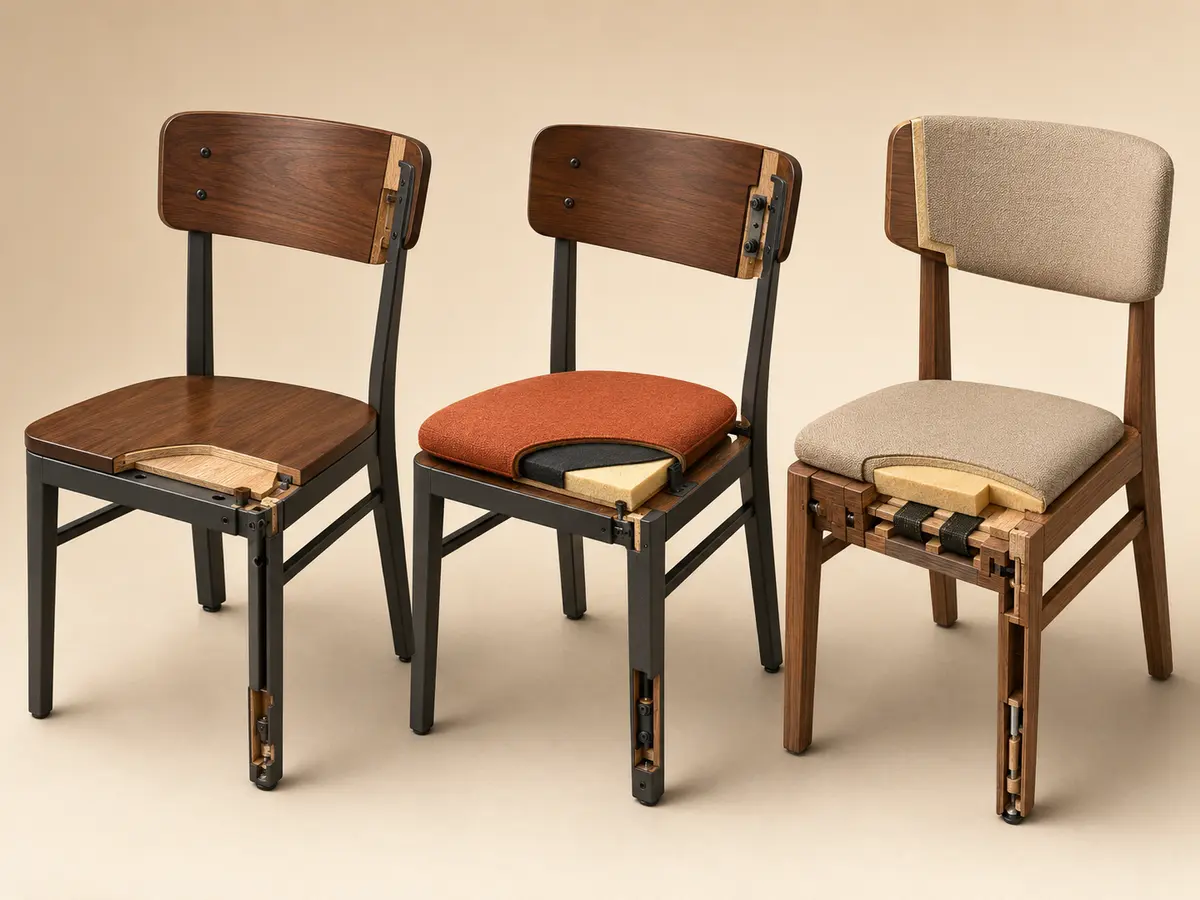
A good example of a hybrid approach is YeZhi’s Alpha armless stackable restaurant chair, which combines a slim metal frame with a curved wooden seat/back.
Wood vs metal vs upholstered: which material wins by buying criterion?
This table is designed for commercial buyers. It’s not about taste; it’s about what breaks first and what costs you time.
Criterion | Wood | Metal | Upholstered |
|---|---|---|---|
High-traffic durability | Medium to high (depends heavily on joinery) | High (depends on welds/tube) | Medium (frame may last; cover/foam may not) |
Ease of cleaning | Medium (finish-dependent) | High (finish-dependent) | Low to medium (material-dependent) |
Comfort for long dwell | Medium | Low to medium (unless padded) | High |
Appearance flexibility | High | High | High |
Risk of early wobble | Medium (joint loosening) | Medium (if flex/weld/fasteners) | Medium (still a frame issue) |
Replenishment consistency | Medium (stain/finish lots) | Medium to high (process-driven) | Medium (fabric lots, foam variance) |
Best use case | cafés, bistros, warm casual | fast casual, bars, high-traffic | fine dining, hotels, comfort-led |
Recommendations by restaurant type (commercial scenarios)
Use these as starting points, then adjust for your cleaning routine and replenishment needs.
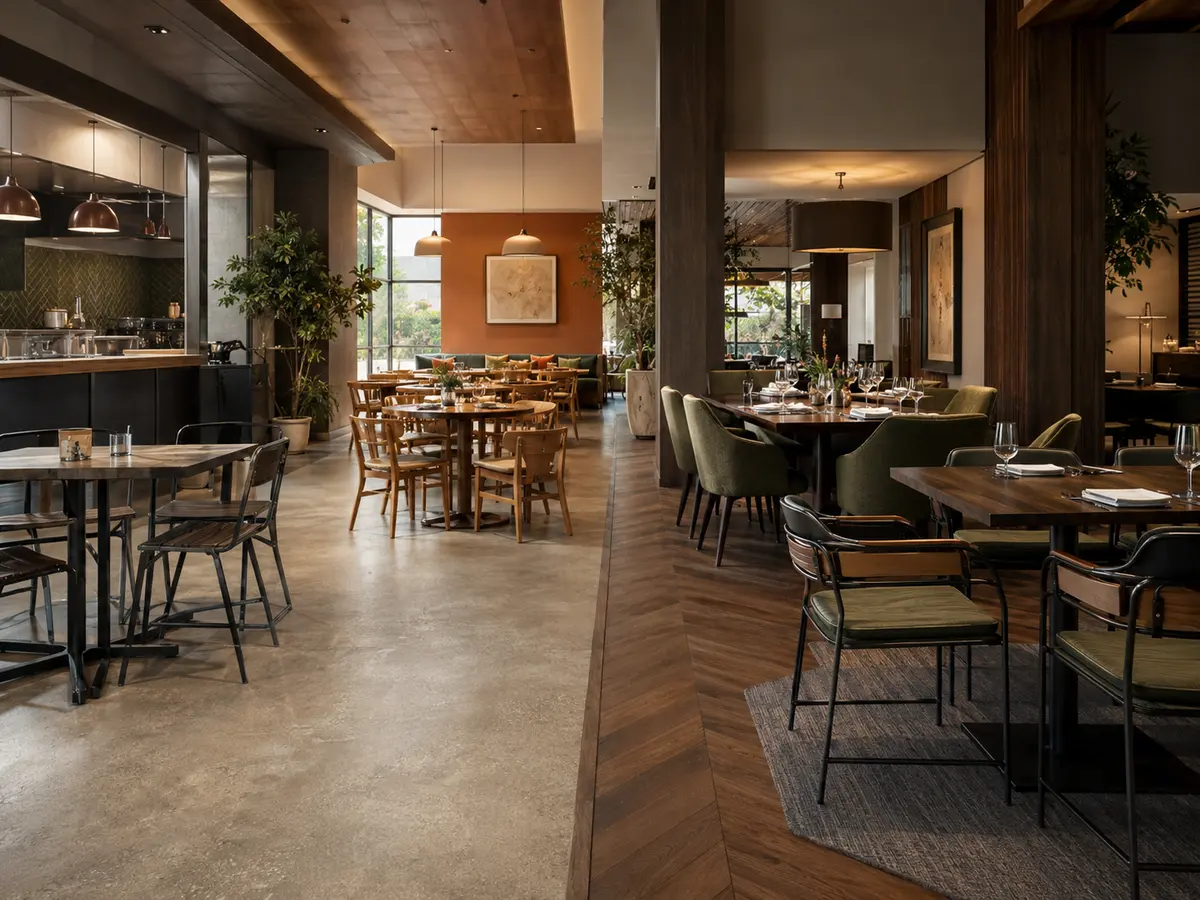
Fast casual and high-traffic dining
Start with metal frames or metal-frame hybrids.
Prioritize: easy cleaning, stable glides, and a finish that won’t look “tired” after repeated wipe-downs.
If comfort matters, use replaceable seat pads rather than fully upholstered chairs everywhere.
Cafés and warm casual spaces
Solid wood or wood-forward hybrids can fit well.
Prioritize: strong joinery and an easy-to-maintain finish.
If you’re planning tight layouts, cross-check spacing and circulation using a sizing reference like YeZhi’s restaurant chair spacing guide.
Bars and late-night venues
Favor metal frames and fewer surfaces that show scratches.
Prioritize: stability, easy cleaning, and glides that don’t get destroyed by frequent dragging.
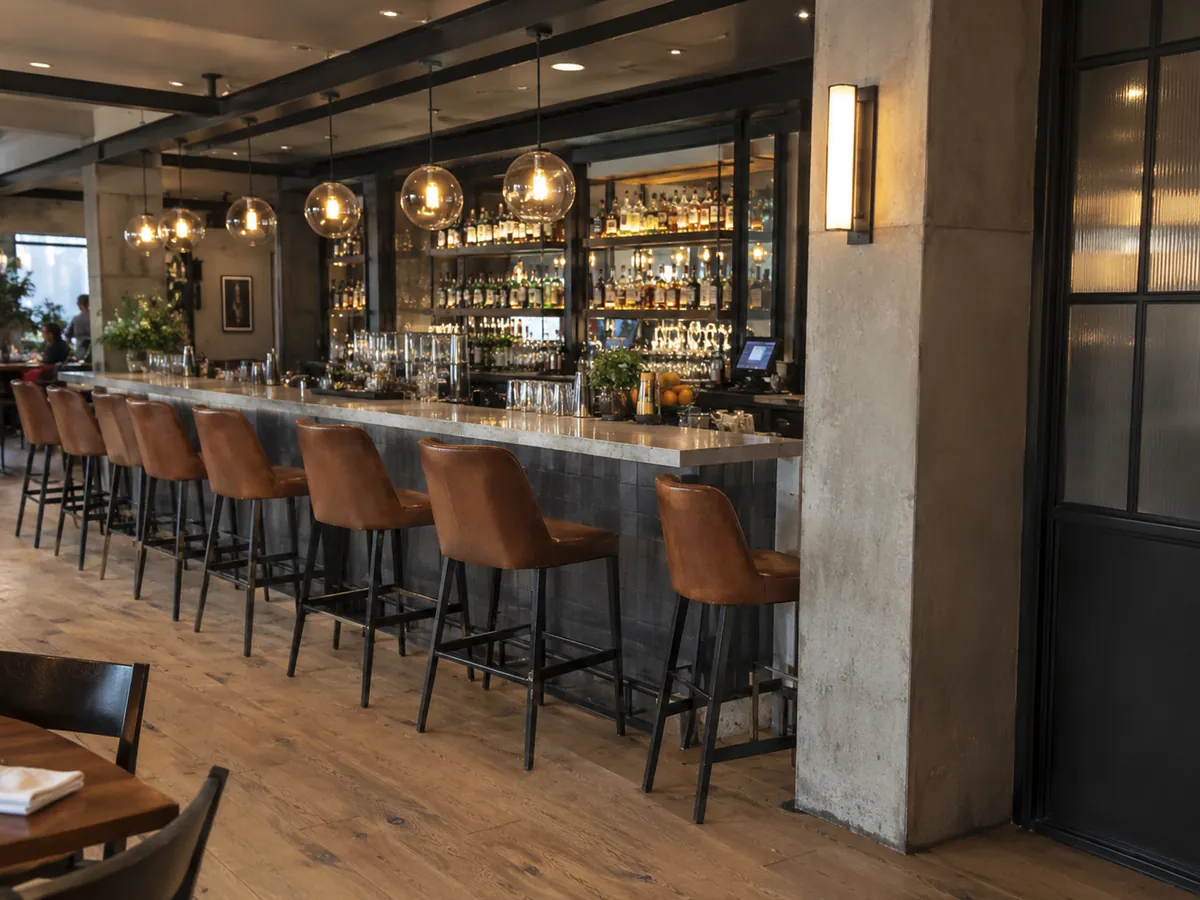
If you use upholstered bar stools, expect higher maintenance and confirm cleaning responsibility with operators.
Fine dining
Upholstered chairs are often worth it when comfort and perception are part of the business model.
Prioritize: upholstery spec (abrasion, cleanability), stitch quality, and a plan for spot-cleaning and replacements.
Consider partial upholstery (padded seat, non-upholstered back) to reduce stain exposure.
Hotel restaurants and all-day dining
Mix chair types by zone: upholstered seating in slower zones; metal/wood hybrids in high-turnover zones.
Prioritize: replacement consistency (hotel projects often need “match the original” replenishment).
Pro Tip: If you expect replenishment orders, lock an approved sample early and document the exact frame finish and upholstery material code. That reduces “looks close but not the same” disputes later.
Construction checkpoints that predict lifespan (regardless of material)
Service life depends on the complete system: materials, connections, finishes, upholstery, glides and maintenance conditions.
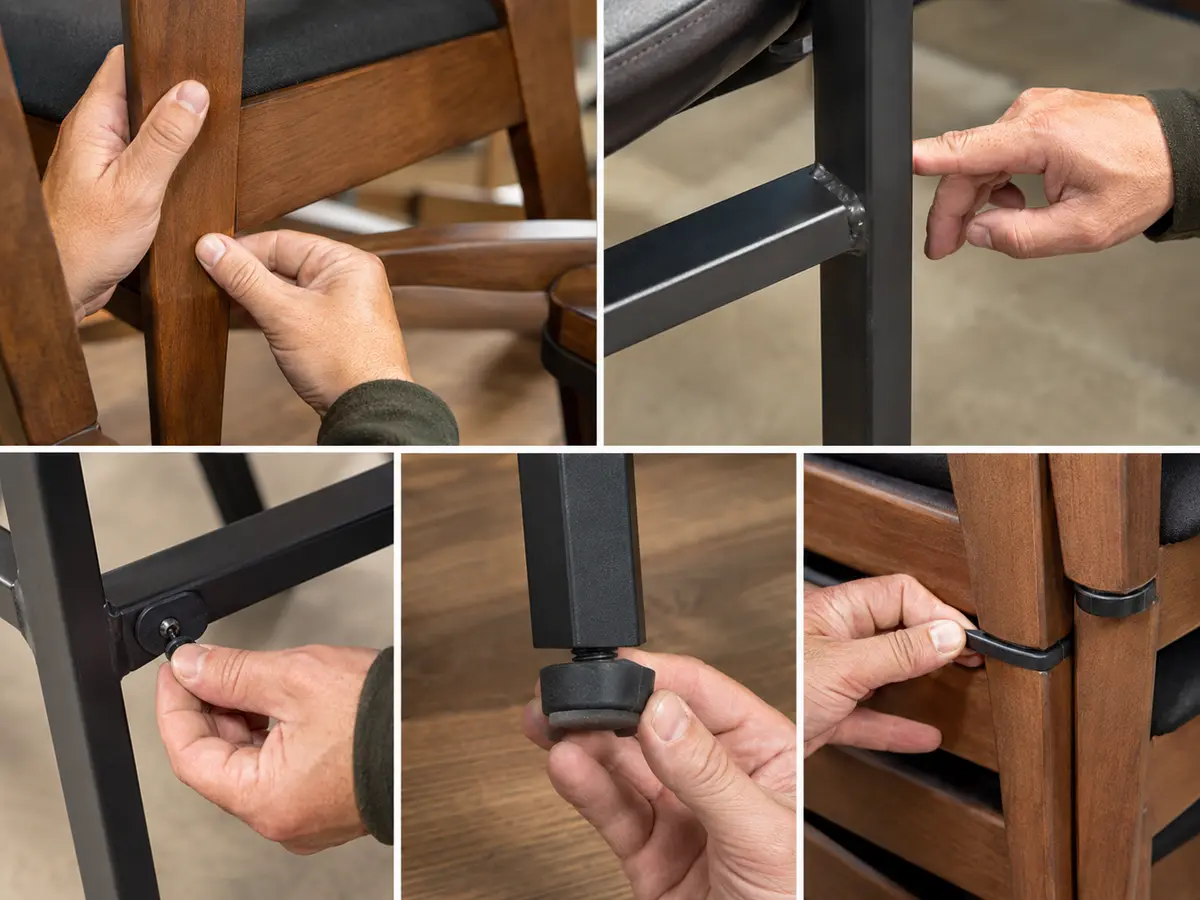
1) Joints and reinforcement
Wood: ask how joints are built and reinforced. If the supplier can’t answer, treat that as a red flag.
Metal: inspect weld quality and where reinforcement is used (high-stress corners, transitions).
2) Fasteners and serviceability
If parts are bolted: do they use locking hardware? Can you tighten without damaging the chair?
If parts are welded: are replacement components possible (seat pads, glides)?
3) Glides (floor contact)
Replaceable glides reduce noise and protect floors.
Specify glides for your floor type (tile, wood, polished concrete) rather than leaving it to chance.
4) Stacking and contact points
Material inspection should be paired with model-specific structural evidence. For European non-domestic seating projects, EN 16139:2025 may be relevant to safety, strength and durability within its stated scope. Request the standard edition, test level, tested configuration, laboratory, report date and exact model identification.
A structural test report does not replace separate evidence for finish durability, upholstery performance, cleanability, fire requirements or outdoor suitability.
Cleaning and maintenance: what to verify with operators
Most material disputes happen because the product spec assumes one cleaning regime and the operator does another.
Start with the manufacturer’s instructions for the exact frame finish, wood coating and upholstery combination:
obtain approved and prohibited cleaner lists;
record dilution, application method, contact time, rinsing and drying requirements;
confirm whether the planned cleaning frequency is covered;
obtain written approval before introducing a different cleaner or disinfectant;
use a sample test only as an additional check, not as a substitute for supplier guidance.
Generic advice such as “use mild cleaner” is not enough when multiple finishes and upholstery materials are combined in one chair.
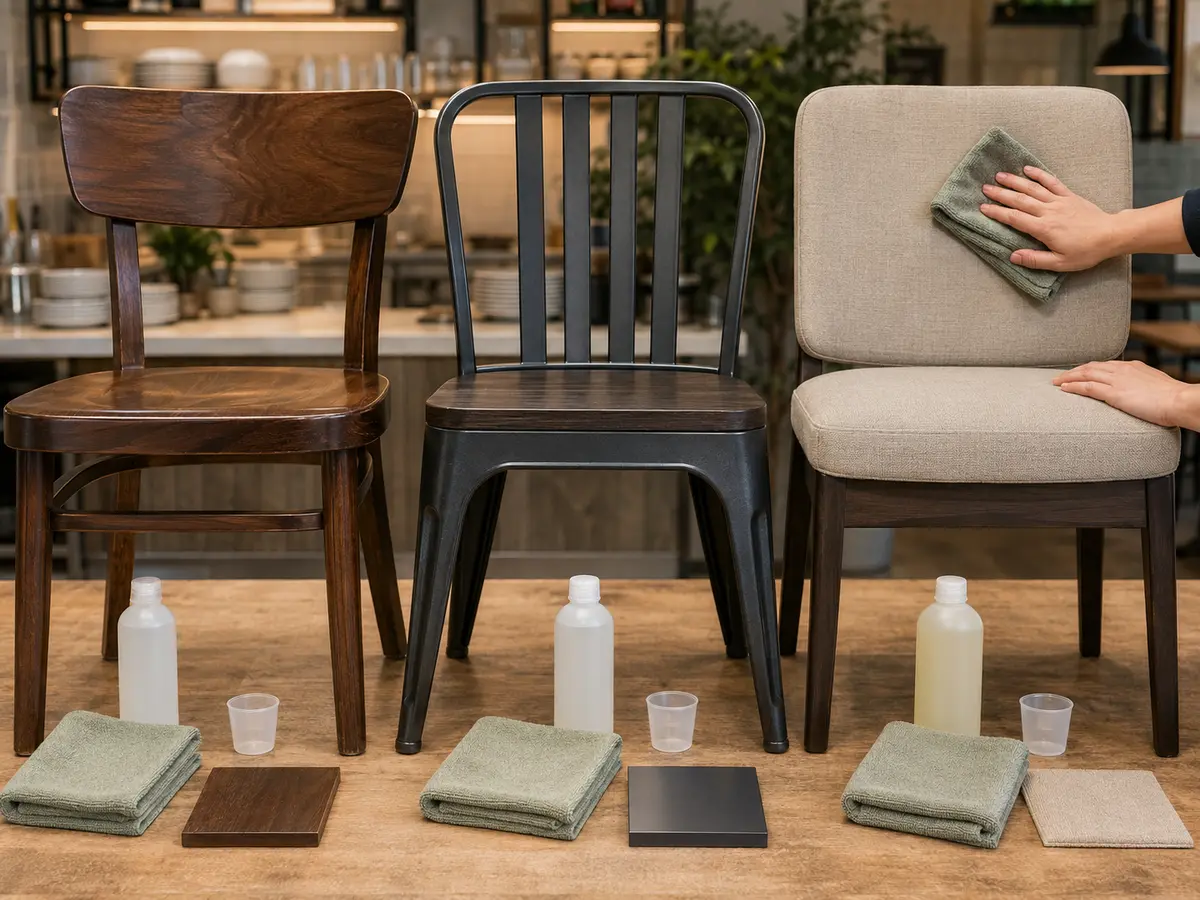
For powder-coated metal surfaces, general maintenance guidance warns against abrasives and harsh chemicals; see this overview on cleaning and caring for powder-coated surfaces.
⚠️ Warning: If you don’t control cleaning chemicals and contact time, you can shorten the life of any finish—wood, metal, or upholstery. Build “approved cleaners” into your operating checklist.
Batch consistency and replenishment (what distributors should lock down)
For EU/UK distributors and project buyers, the material decision is only half the risk. The other half is whether the next container matches the first.
Lock down these items before you scale the SKU:
Approved sample (frame + seat + finish + upholstery)
Finish codes (powder coat color, stain code, sheen level)
Upholstery details (material code, color, backing, stitch color)
Packaging spec (carton strength, corner protection, moisture protection)
Spare parts plan (glides, seat pads, hardware)
If you need a checklist for project planning capacity and chair counts, YeZhi’s restaurant seating capacity guide can help align chair count decisions with layout and turnover.
RFQ-ready checklist: what to tell a supplier (copy/paste)
Use this checklist to reduce back-and-forth and to make quotes comparable across suppliers.
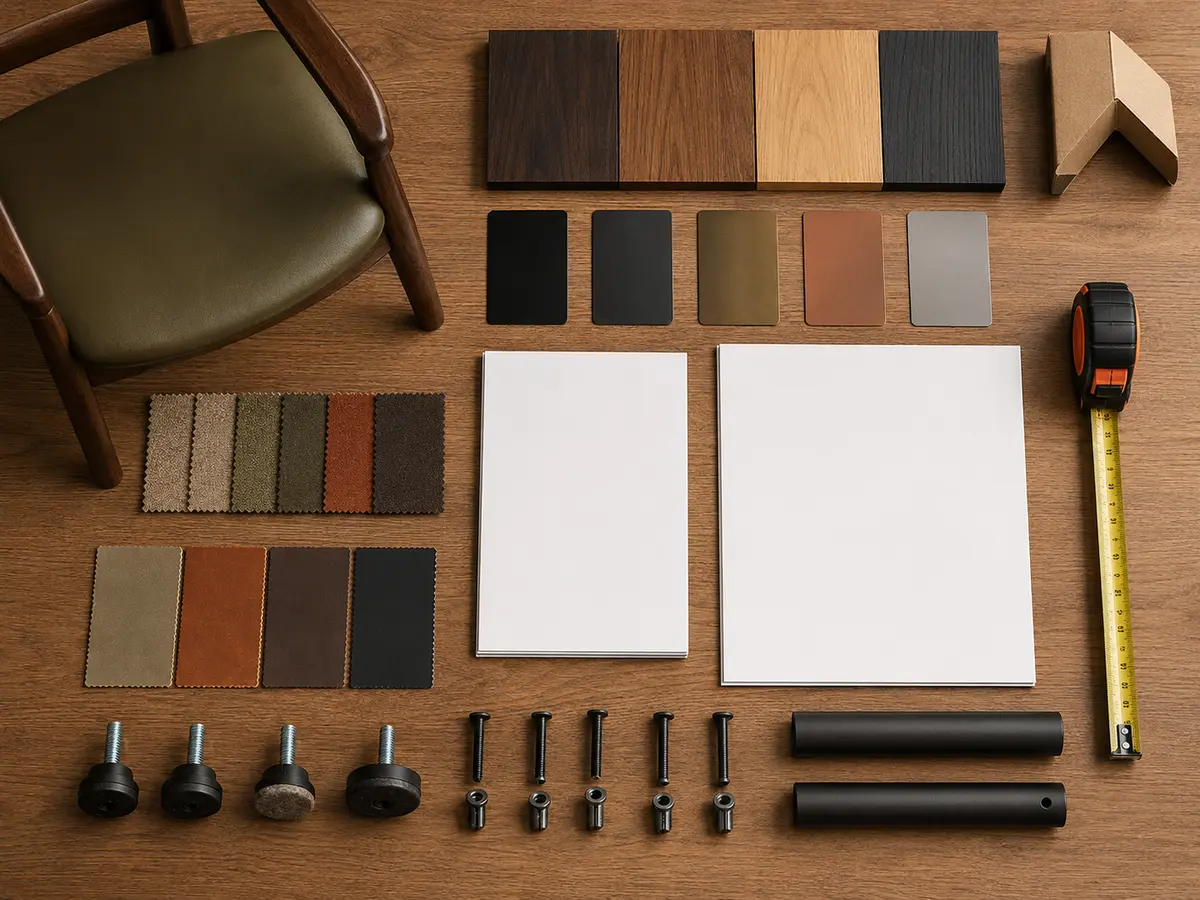
Project context
Venue type: cafe / fast casual / bar / fine dining / hotel
Indoor or outdoor: indoor (default) / covered outdoor / outdoor
Expected traffic: low / medium / high (describe peak hours)
Cleaning frequency: once daily / per shift / after each service (describe)
Floor type: tile / wood / concrete / carpet
Chair specification
Frame material: metal / wood / hybrid (describe frame)
Seat/back material: wood / upholstered / mixed
Finish requirement: powder coat / stain + topcoat / other (describe)
Stackable: yes/no; if yes, stacking quantity
Glides: required for floor type; replaceable preferred
Upholstery (if applicable)
Material: vinyl/PU / fabric / leather (or specify)
Color code(s): single / mixed colors
Cleaning requirement: spot clean / wipe clean / removable seat pad
Durability documentation requested: abrasion test info + cleaning guidance
Flammability documentation (market-specific): specify required standard(s) and request test reports if needed
Procurement and delivery
Quantity: total + per-SKU split
Required delivery window and incoterms
Packaging requirements: reinforced export cartons, moisture protection if needed
Sampling: pre-production sample required? yes/no
Batch consistency requirement: match approved sample; confirm process controls
After-sales: spare glides/pads; replacement policy
FAQ (AI Overviews-style questions)
What is the best material for restaurant chairs?
There isn’t one best material. For high-traffic operations, metal or metal-frame chairs are often easiest to maintain. Wood can work well when joinery is strong and the finish matches your cleaning routine. Upholstered chairs add comfort for fine dining and hotels, but you should verify fabric/foam specs and plan for cleaning and replacements.
Are wood or metal restaurant chairs better?
Metal often wins for high-traffic and frequent cleaning, while wood often wins for warmth and design. The deciding factor is construction quality: welds and tube thickness for metal, joinery and reinforcement for wood.
Are upholstered restaurant chairs practical?
Yes, especially for fine dining and hotel restaurants where comfort matters. They’re practical only when the upholstery material is specified for abrasion and cleanability, and when the operator can handle the cleaning and replacement plan.
What chair material is easiest to clean in restaurants?
In most indoor restaurant operations, smooth non-porous surfaces are easiest to wipe down. That often favors metal frames and certain wipe-clean upholstery materials, but the finish and cleaner choice still matter.
Which restaurant chair material lasts the longest?
It depends less on the label “wood” or “metal” and more on construction details: joint reinforcement, weld quality, fastener strategy, and how finishes hold up under your cleaning routine.
Next steps
Decide your preferred build type (wood, metal, upholstered, or hybrid) using the matrix above.
Use the RFQ checklist to request comparable quotes.
Shortlist styles and request samples from a supplier that can support batch consistency and documentation.
If you’re comparing multiple chair categories, start here: YeZhi’s restaurant chairs collection.