For most commercial outdoor furniture projects that specifically require real wood, we recommend starting with teak. It is the clearest premium starting point because it combines a familiar hospitality look with strong outdoor durability potential and a manageable maintenance path.
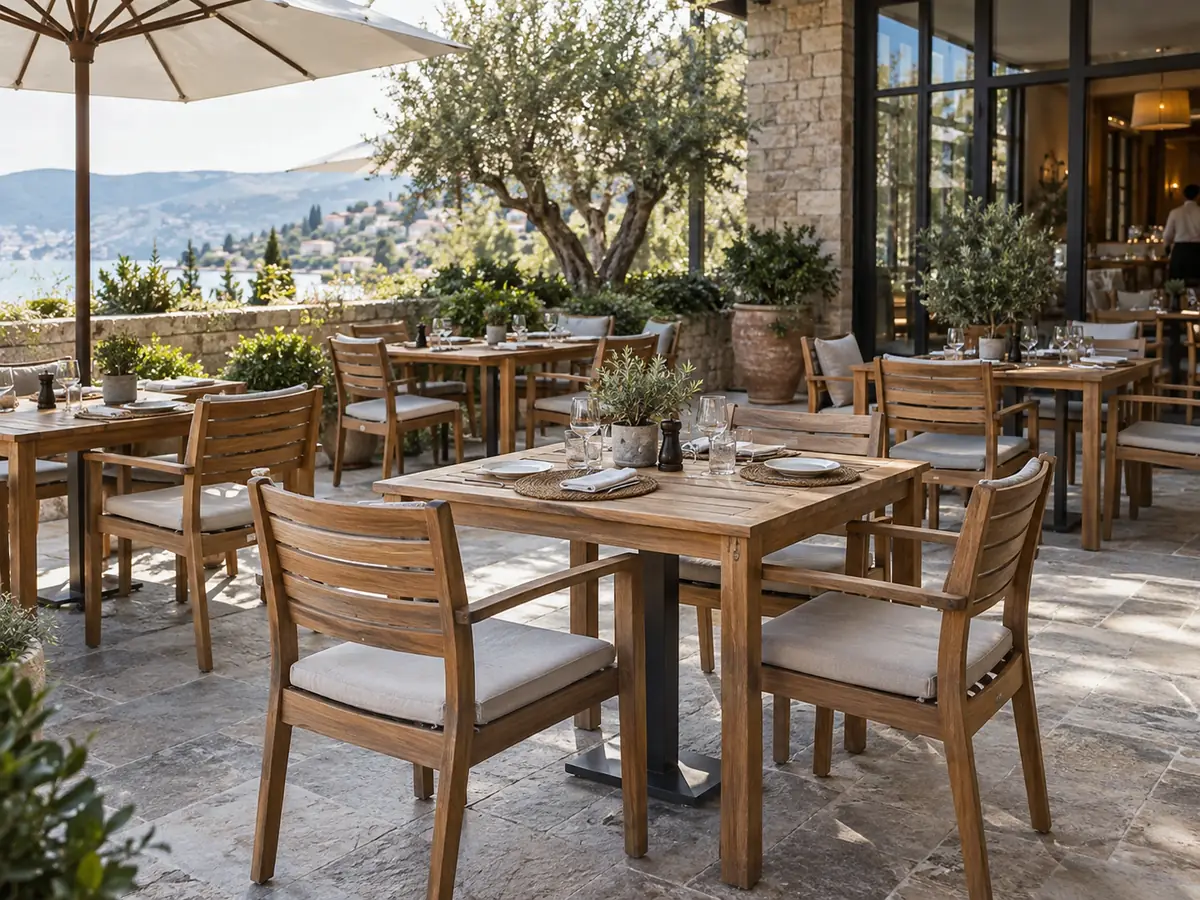
If budget matters more, acacia or eucalyptus may be better starting points for suitable exposure conditions. If you want a temperate hardwood, review white oak. For very demanding heavy-duty use, ipe may be worth reviewing when its weight, machining, and sourcing requirements are acceptable.
| Project priority | Start with | Why |
|---|---|---|
| Best overall premium starting point | Teak | Strong outdoor reputation, familiar hospitality appearance, and a practical maintenance route. |
| Better-value hardwood direction | Acacia | Useful when price matters and the project can control material quality, finish, and exposure. |
| Alternative value hardwood | Eucalyptus | Works best when the finish and care plan are defined before production. |
| Temperate hardwood option | White oak | A useful route when you want an oak look and can specify the exact species and exterior detailing. |
| Heavy-duty specialist option | Ipe | Very durable, but heavy and more demanding to machine and fasten. |
| Covered or lower-exposure use | More species can work | Protection from direct weather can widen the shortlist, but finish and maintenance still matter. |
The main risk is choosing from the wood name alone. A label such as “teak,” “acacia,” or “oak” does not tell you enough. You still need to know whether the wood was dried correctly, whether the joints can drain, how the finish will be maintained, and how much sun and rain the furniture will face.
Before production, we lock the wood together with the finish, construction, sample, and site exposure. Send us the furniture type, quantity, destination, exposure, preferred wood, target finish, and maintenance expectation so we can narrow the safest route before quotation.
Best wood for outdoor furniture: our commercial shortlist
If you need one simple answer, start with teak. If you are buying for a real restaurant, hotel, café, resort, or wholesale range, use the table below as a starting shortlist, not as a universal ranking.
| Wood | Commercial position | Maintenance tendency | Weight | Best fit | Main risk to check |
|---|---|---|---|---|---|
| Teak | Premium default | Low to medium when specified well | Medium | Restaurants, hotels, resorts, terraces, and premium outdoor ranges | Material identity, heartwood/grade expectation, drying, finish, and sourcing consistency |
| Ipe | Specialist premium | Low to medium | Very heavy | Heavy-duty designs where weight and machining difficulty are acceptable | Exact species, machining, fasteners, weight, and sourcing review |
| White oak | Temperate hardwood | Medium | Heavy | Projects wanting an oak appearance and a non-tropical hardwood route | Specify white oak, not generic “oak”; check heartwood, drying, end grain, and finish |
| Acacia | Value hardwood | Medium | Medium | Price-sensitive collections with controlled exposure and a realistic care plan | The trade name can cover different species and quality levels |
| Eucalyptus | Value hardwood | Medium | Medium | Covered or semi-covered hospitality use with a defined finish and care plan | Species, drying, finish, storage, and wet/dry exposure |
| Cedar / cypress / redwood | Lighter natural-wood route | Medium | Light | Garden, terrace, and casual designs where lower weight is useful | Softer surfaces can dent and show handling wear sooner in high-turnover use |
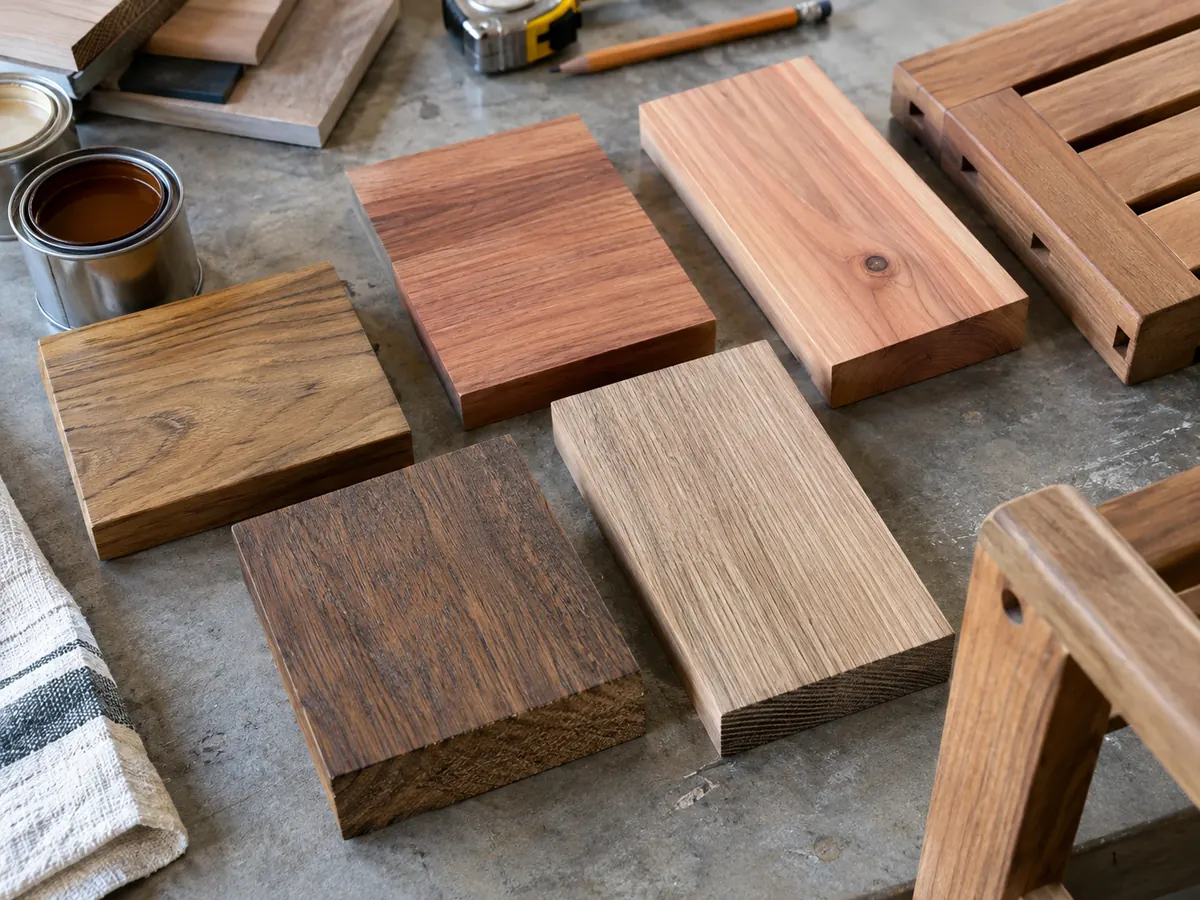
What this means for your project: choose the wood route first, then approve the actual material, finish, joints, drainage, and sample against the real site. A wood species name is not a complete outdoor specification.
What actually makes a wood suitable outdoors?
Outdoor performance is not one property. A wood can resist decay well and still perform badly if it is dried poorly, traps water at a joint, uses the wrong finish, or moves more than the furniture design can tolerate.
Is harder wood always better outdoors?
No. Hardness mainly tells you how well a wood resists dents and surface wear. Outdoor durability is a different question. It also depends on decay resistance, moisture movement, drying, joint design, drainage, finish, and maintenance. The USDA Wood Handbook treats mechanical properties, moisture, biodeterioration, drying, fastenings, and finishing as separate topics for this reason.
The practical lesson is simple: do not choose a species only because it is very hard. Choose a complete material-and-construction system that matches the real site.
1. Natural decay resistance matters, but heartwood matters too
The more decay-resistant part of many species is mainly the heartwood, the older inner wood of the tree. The younger outer layer is called sapwood, and it does not automatically have the same natural resistance. That is why a species name alone can be an incomplete specification.
2. Wood expands and shrinks as moisture changes
Wood gains and loses moisture as the surrounding air changes. That makes boards expand or shrink. The technical term is dimensional movement or dimensional stability. USDA Forest Products Laboratory guidance on wood moisture explains that moisture affects shrinkage, swelling, and other physical properties of wood.
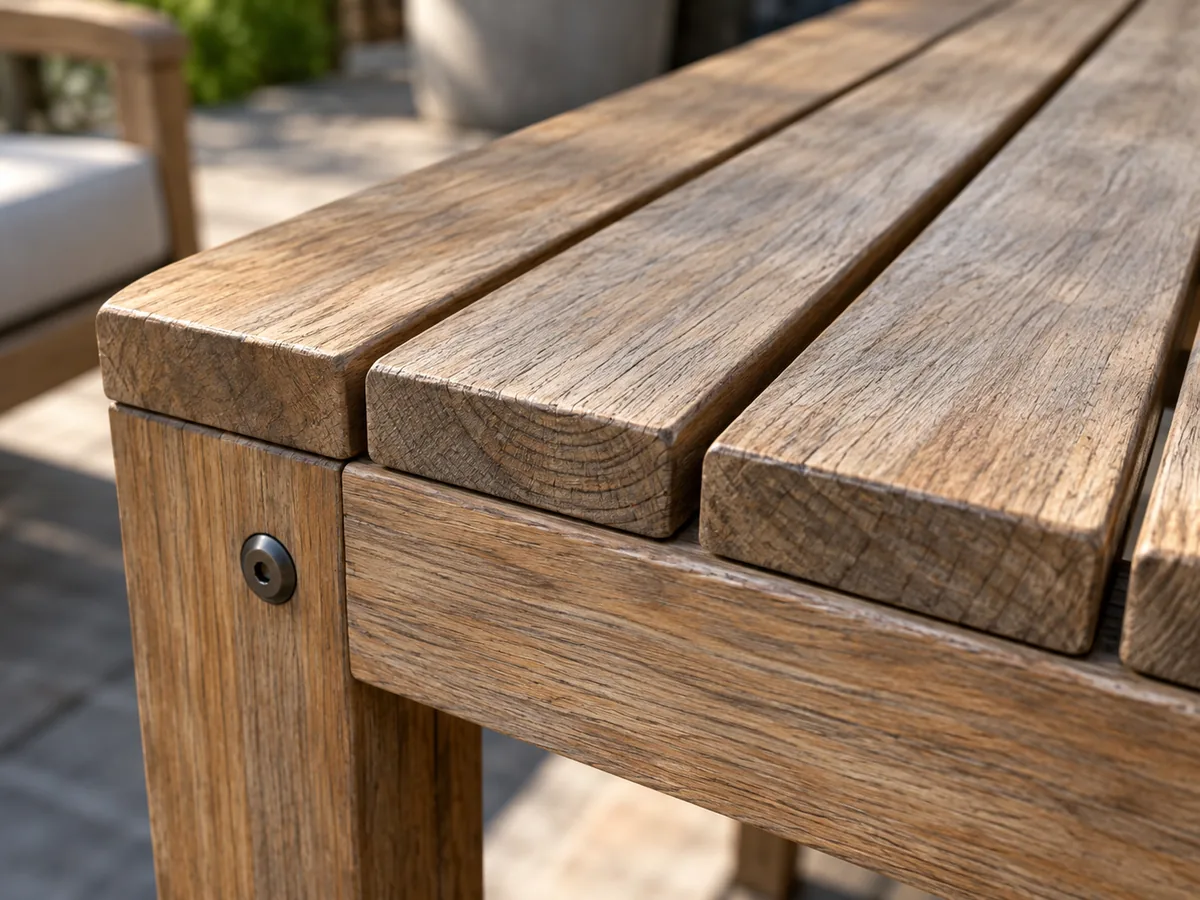
In furniture, you see this movement at slats, wide panels, joints, fastener holes, exposed end grain, and places where wood meets metal. The goal is not to stop wood from moving. The goal is to give that movement enough room so it does not become a loose joint, split part, trapped-water area, or unacceptable appearance change.
3. Drying speed matters after rain
One rain event is not always the biggest problem. The larger risk is a part that stays wet for a long time. The USDA Forest Products Laboratory guidance on biodeterioration explains why moisture conditions matter for biological degradation. In furniture, the practical point is that drainage and drying matter. A surface that gets wet and dries quickly is a different risk from a horizontal joint that stays damp day after day.
4. Finish helps, but it is not a magic shield
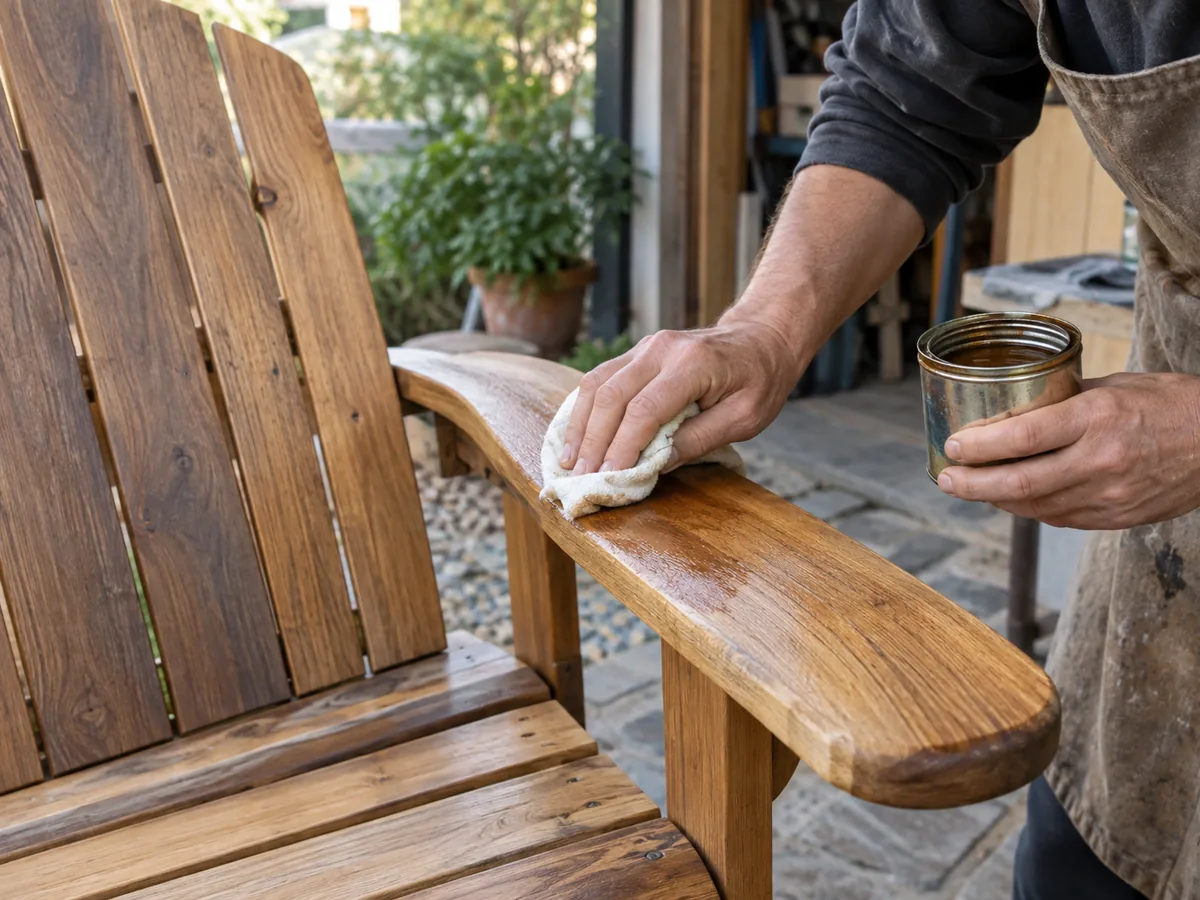
Oil or coating can slow moisture exchange, control appearance, and make cleaning easier. It cannot turn unsuitable construction into a good outdoor product. A finish also cannot fix standing water, poor joints, or badly prepared material. We therefore approve the wood, finish, and construction together.
Why white oak is different from red oak outdoors
White oak and red oak may look similar, but they do not behave the same around moisture. An USDA Forest Products Laboratory reference on oak notes that white-oak heartwood pores are usually plugged with structures called tyloses. These plugs reduce liquid movement through the wood. The same USDA material also rates white-oak heartwood as having good decay resistance, while red-oak heartwood is rated much lower.
So if an outdoor project says only “oak,” that is not specific enough. We would want the exact oak species and the rest of the exterior specification before approving it.
Teak is our default starting point, not a universal promise
When a restaurant, hotel, café, or distributor wants a premium natural-wood outdoor direction, teak is usually the first species we discuss. It gives the project a familiar premium look and a strong outdoor durability starting point.
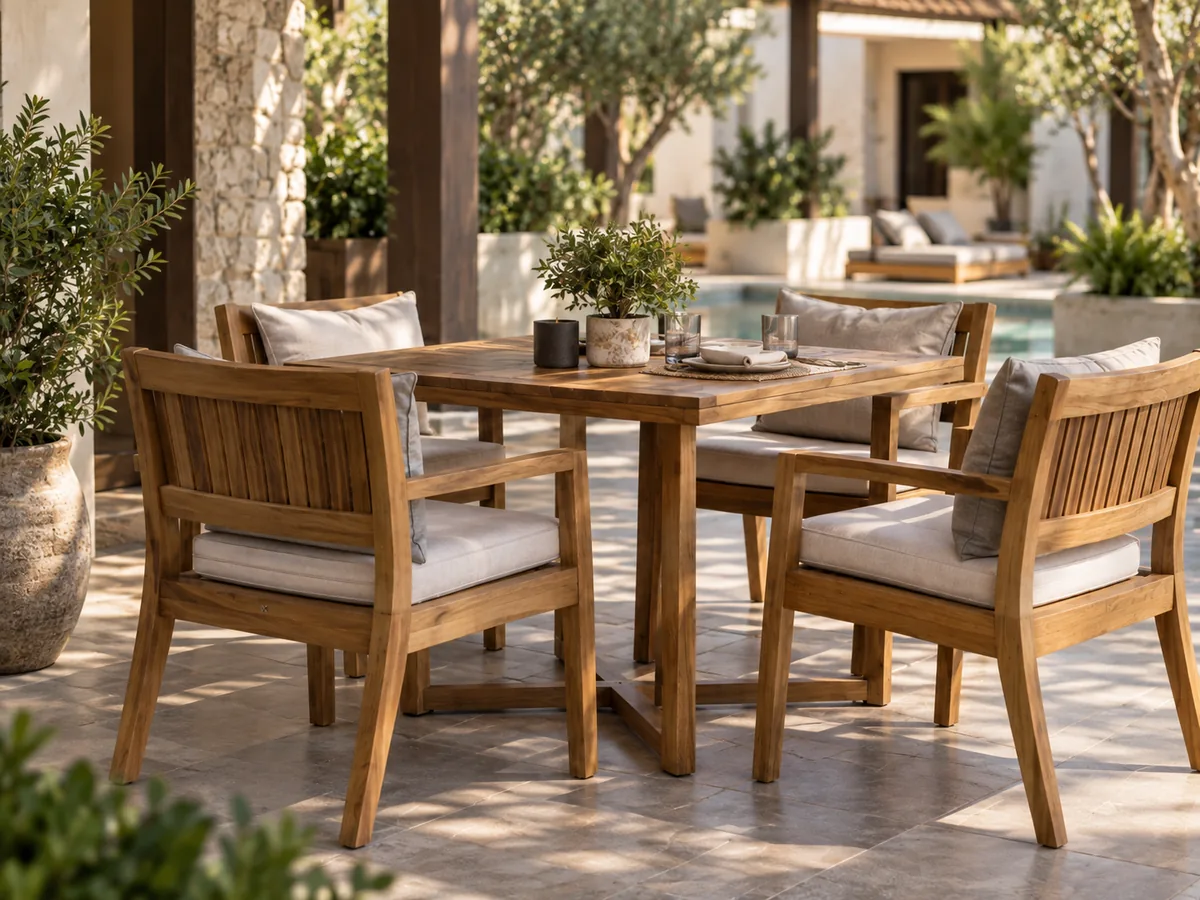
But the word “teak” is not enough. We still need to review the material source, grade, heartwood expectation, drying, component thickness, joint design, finish, and exposure. A covered hotel terrace and a permanently wet poolside edge should not receive the same approval simply because both products use teak.
We also separate normal appearance aging from failure. Natural wood can change color outdoors. That color change may be acceptable if the project expects it. Loose joints, repeated checking, decay, or finish breakdown are different issues.
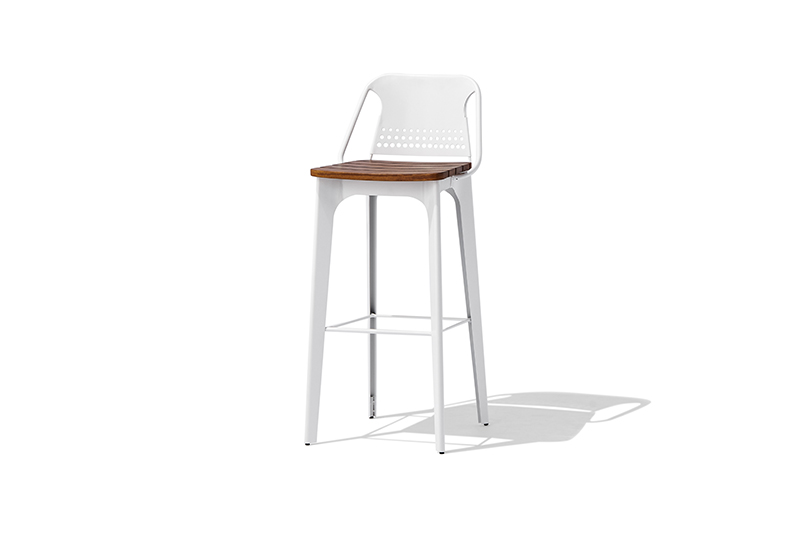
YeZhi has a current Parisian outdoor bar stool with a confirmed solid teak wood seat. That is a model-specific fact, not proof that one teak specification works in every outdoor environment.
When another wood can be a better choice
Teak is a strong default, but the best commercial decision changes when price, weight, local supply, visual style, or the exposure condition changes.
Choose white oak when
You want an oak look and a temperate hardwood route. Confirm the exact species and exterior detailing. Do not approve a material described only as “oak.”
Choose acacia when
You want a lower-cost hardwood direction and can control material identity, finish, maintenance, and exposure.
Choose eucalyptus when
You need another value-oriented hardwood route and can define the finish and care plan before production.
Choose cedar, cypress, or redwood when
Lower weight and a natural look matter more than maximum resistance to dents and handling marks.
Choose ipe when
Very high natural durability justifies the extra weight, machining difficulty, fastener planning, and sourcing review.
Choose another material family when
The site cannot support the maintenance, moisture movement, weight, sourcing, or natural appearance variation that comes with real wood.
If the wider decision is whether a commercial model should use wood or another material route, our indoor vs outdoor bar stool guide shows how exposure changes the specification.
What early outdoor-wood problems look like — and why they happen
Most costly problems are not caused by the species name alone. They appear when material, construction, finish, exposure, cleaning, and storage work badly together.
You see dark marks, swelling, or finish damage around a joint
Why it happens: water enters an area but cannot drain or dry quickly. Why it matters: one small wet zone can age much faster than the rest of the product. What we check: undersides, end grain, slat gaps, screw pockets, feet, and places where wood meets metal.
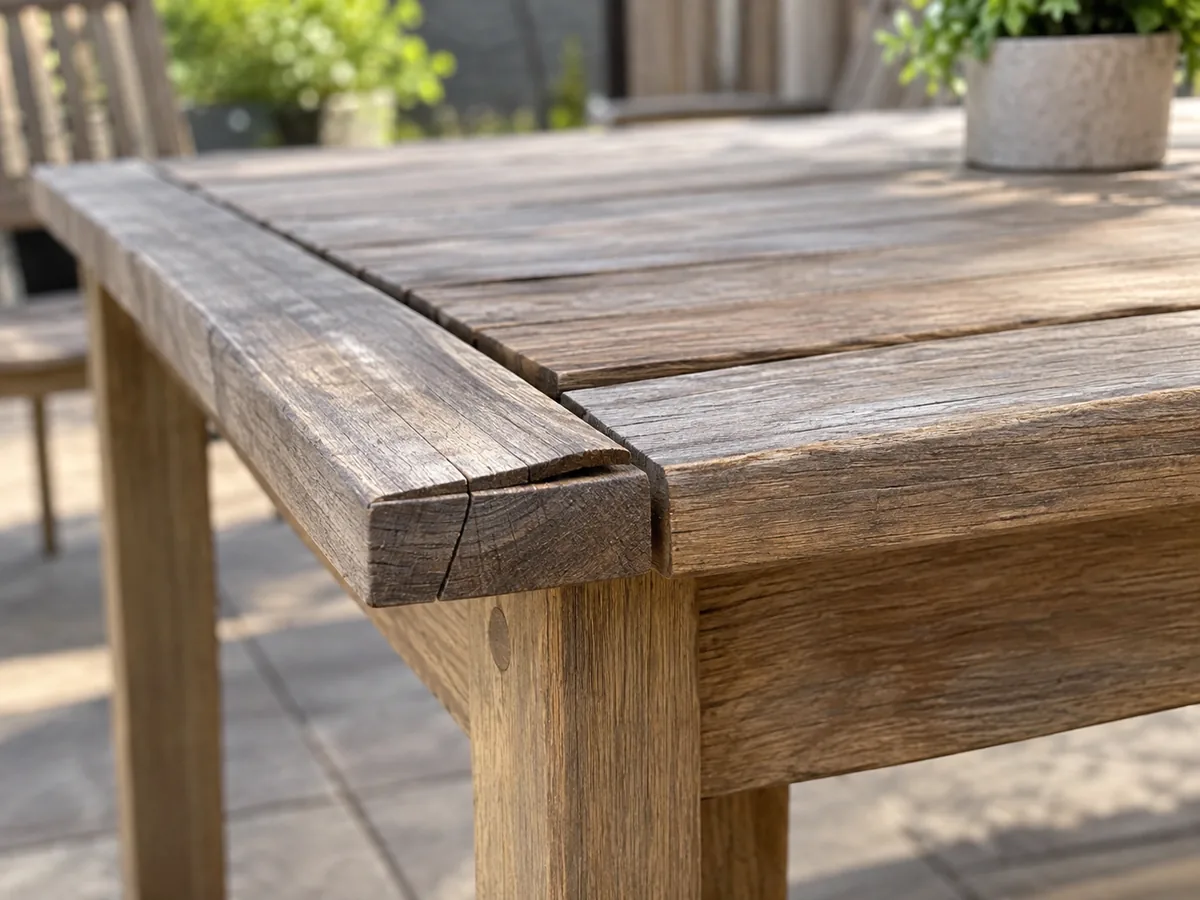
You see uneven gaps, small checks, or a joint becoming tight or loose
Why it happens: the wood reaches service conditions at a different moisture level from the one it had during machining or assembly. It then shrinks or swells. Why it matters: movement can affect appearance and joint stability. What we check: drying, storage, component layout, and how the approved sample behaves under conditions that are reasonably close to the real project.
You see peeling, uneven color, or repeated touch-up areas
Why it happens: the project expected the finish to do all the work, while scratches, exposed end grain, moving joints, or standing water bypassed that protection. What we check: the finish at edges, undersides, drilled areas, joints, and high-contact zones—not just the easiest visible surface.
The approval sample looked fine, but real-site furniture ages faster
Why it happens: the cleaning, covers, stacking, chemicals, or storage routine is harsher than the sample review. What we check: how staff will actually clean, cover, move, and store the furniture before the order is locked.
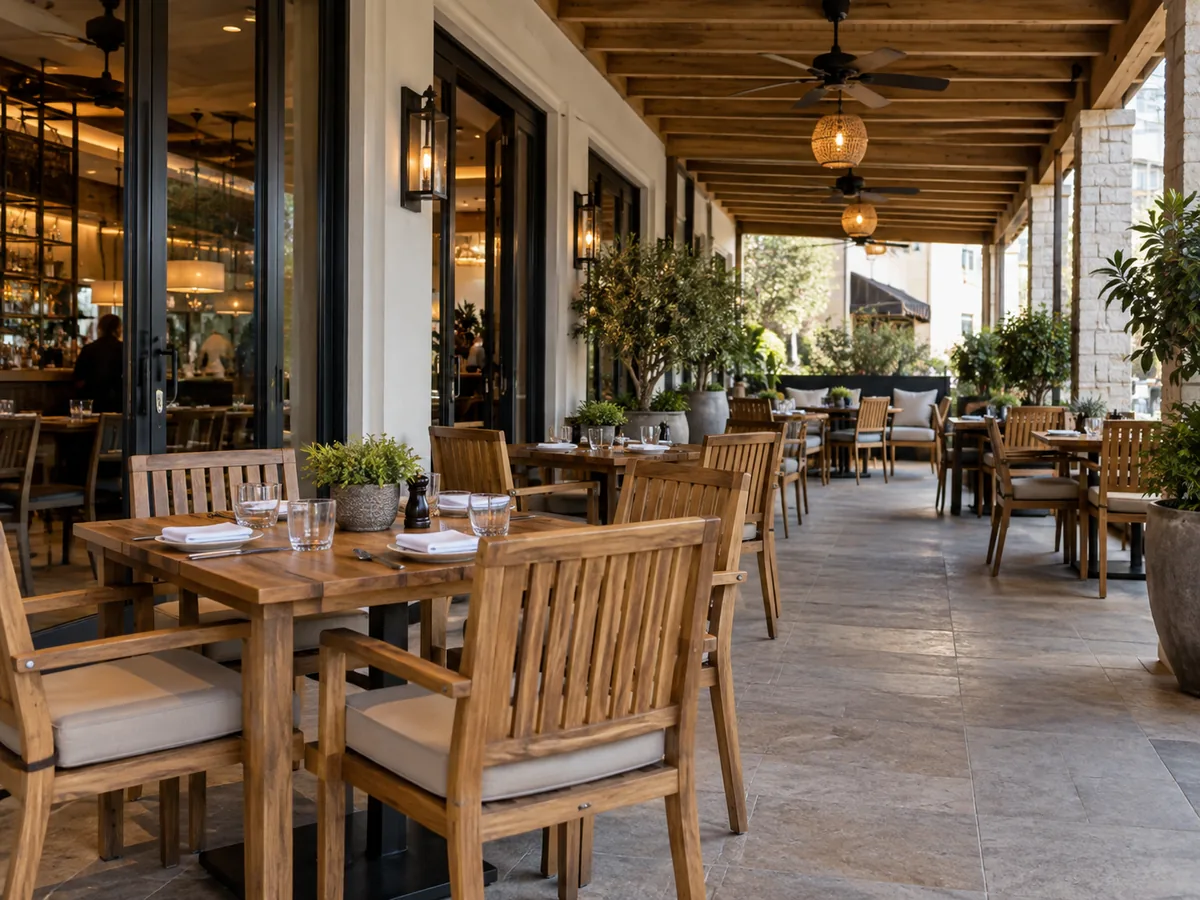
Choose the wood by exposure first
The same chair can face very different risks under a roof, in full rain, beside a pool, or near the coast. Start with the environment, then choose the material.
| Exposure | Good starting direction | Main risk | What we would confirm |
|---|---|---|---|
| Covered restaurant or café patio | Teak, acacia, eucalyptus, white oak, or a suitable durable softwood may be workable. | Wind-driven rain, nightly washing, floor moisture, and storage. | Finish, joints, drainage, cleaning, and sample condition. |
| Semi-covered hotel terrace | Teak is a strong default; other woods need a clear finish and maintenance plan. | Seasonal rain, sun direction, humidity, covers, and overnight storage. | One approved sample reviewed against realistic exposure and handling. |
| Fully exposed outdoor dining | Prioritize naturally durable wood plus construction that drains and dries. | Standing water, strong sun, freeze-thaw, and year-round exposure. | Material, finish, hardware, slat gaps, feet, and maintenance as one system. |
| Poolside | Do not approve the wood alone. | Splash, cleaning chemicals, wet surfaces, and mixed-material connections. | Wood, finish, fasteners, floor contacts, and cleaning chemistry together. |
| Coastal | Use a separate environment review. | Salt, humidity, wind-driven moisture, hardware corrosion, and finish wear. | The complete product, including metal, fasteners, wood, finish, and care plan. |
| Distributor outdoor collection | Use a small repeatable material/finish matrix. | Reorder inconsistency, regional climate differences, packing, and after-sales expectations. | Reference samples, acceptable natural variation, packing, and reorder controls. |
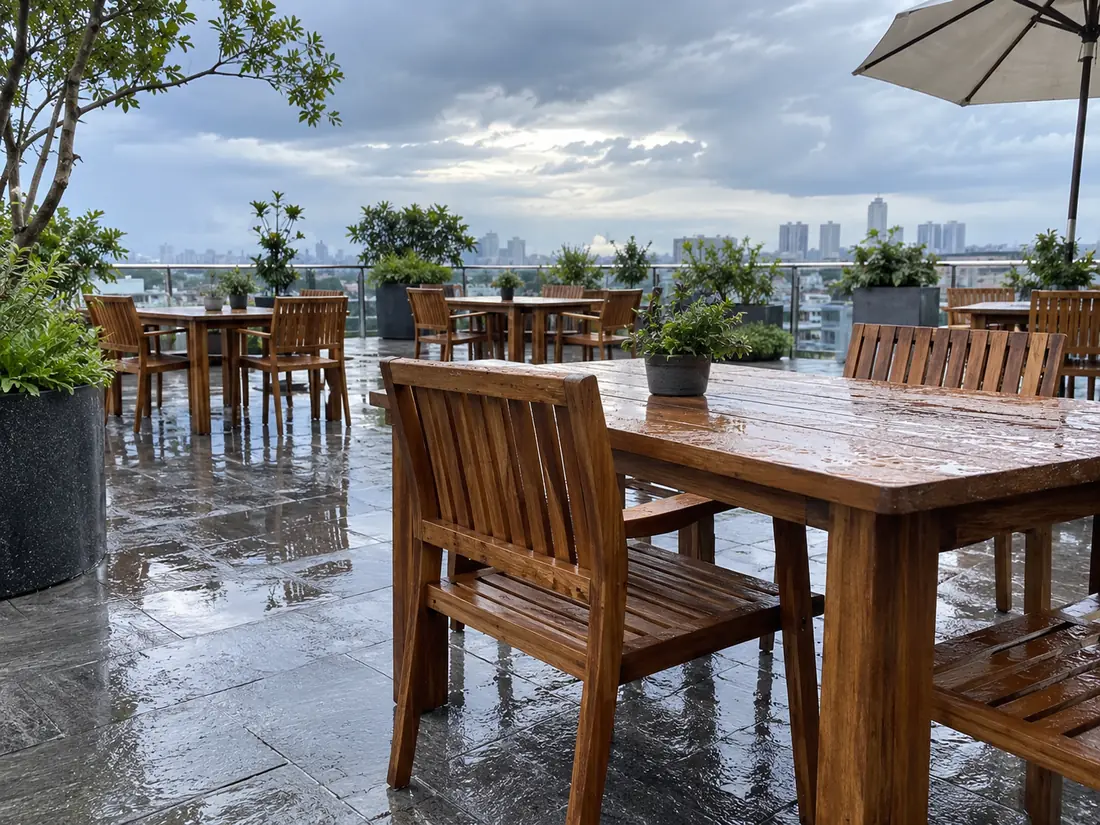
What this means: a wood that is workable under a covered patio may need a different finish, construction, hardware route, or even a different species when the same furniture moves into full rain, poolside splash, or coastal exposure.
Five things to confirm before you order — then lock the full request for quotation
If you want a fast first review, send these five items first: furniture type, quantity, site exposure, preferred wood, and target finish. That is enough for us to identify the main material risks before you build the full request for quotation (RFQ).
- Furniture and quantity: chair, bar stool, table, lounge chair, bench, or coordinated set, plus quantity per SKU.
- Exposure: covered, semi-covered, full rain/sun, coastal, poolside, rooftop, freeze-thaw, or seasonal storage.
- Wood: preferred species and whether an approved alternative is allowed.
- Finish and maintenance: target color/texture plus how the venue will clean, cover, or store the furniture.
- Destination: market, delivery target, required documents, and any sourcing requirement.
For sample approval and bulk production, lock the details below
- Exact material definition: species/grade or approved sample, heartwood expectation where relevant, and acceptable natural color/grain variation.
- Drying and storage: how the wood is conditioned before machining, assembly, packing, and shipment.
- Construction: slat gaps, exposed end grain, joints, drainage, fasteners, wood-to-metal connections, feet, and replaceable parts where applicable.
- Reference sample: approve appearance, dimensions, structure, finish, and packing before bulk production.
- Order documents: define the actual document or testing scope required for the destination market.
If FSC is part of the procurement requirement, treat it as a sourcing and traceability requirement, not as proof that the furniture is weatherproof. FSC explains that chain of custody tracks certified forest-based material through the supply chain. The exact claim and document scope still have to match the actual order.
Two real YeZhi models show why model-level checks matter
Parisian outdoor bar stool: confirmed solid teak seat
Our Parisian outdoor bar stool is a current YeZhi model with a steel frame and a solid teak wood seat. This is a useful real example of mixed-material outdoor furniture: the teak matters, but the steel frame, finish, joints, floor contacts, and final exposure still have to work together.
YZ-OBT01: “wooden outdoor” still has an exposure boundary
Our YZ-OBT01 round wooden outdoor bar table uses a wooden slatted tabletop and black metal pedestal base. The standard configuration is recommended for covered and semi-covered hospitality areas. Coastal, poolside, high-salt, frequent-rain, strong year-round sun, and similar harsher environments need a separate material and finish review.
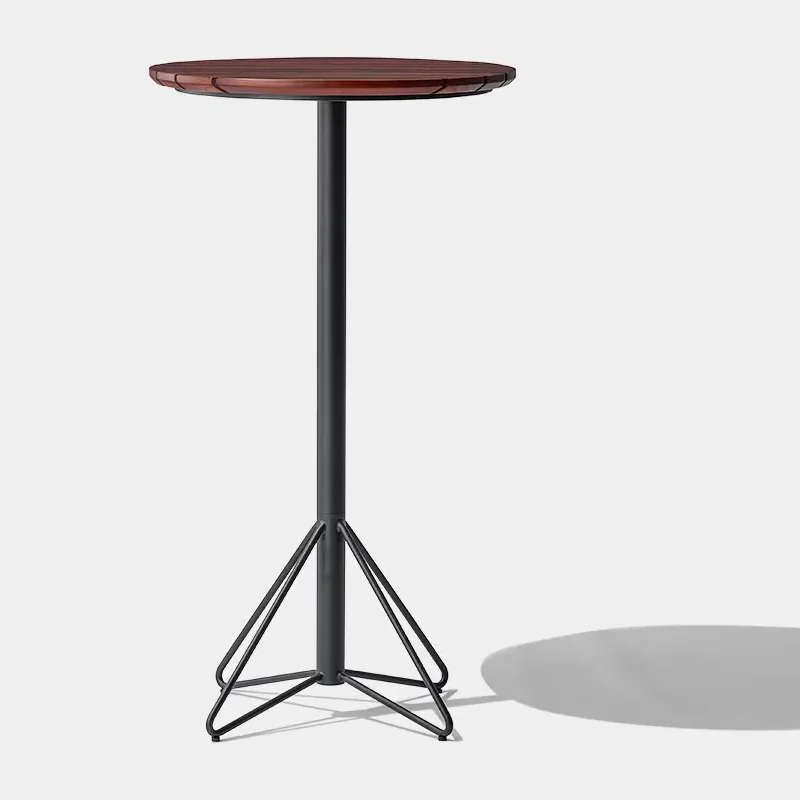
The current YZ-OBT01 page confirms a wooden slatted tabletop but does not identify a specific wood species. We therefore do not invent one here.
For broader wooden seating options, you can also review our wooden restaurant chair range or wholesale wood bar stools. Those categories should not be treated as outdoor-approved unless the exact model and specification support that use.
Commercial order planning after the wood route is chosen
Once the material direction is workable, we move to the order details. Our regular minimum order quantity (MOQ) starts from about 15 pieces per model/SKU, although some models have higher minimums. Full OEM or custom production usually starts from about 100 pieces per design or configuration.
Our standard production planning baseline is about 30 days after order confirmation. Complex or custom work may require about 35–45 days or another project-confirmed schedule. Sample timing is not one fixed company-wide promise because it changes with the model, material, structure, and customization.
Default payment is by T/T bank transfer: 30% deposit and 70% balance before shipment. We can quote common trade terms such as EXW, FOB, and CIF depending on how much of the shipping chain the project needs us to include. Ocean freight is the main route for wholesale orders, with LCL (less-than-container load) and full-container options.
The standard warranty period is 1 year. The exact scope, exclusions, and remedy terms should be stated on the proforma invoice (PI) before production.
What this means: the wood decision affects more than appearance. It can change sample approval, customization, packing, lead time, maintenance expectations, and the final quotation.
Frequently asked questions
What is the best wood for outdoor furniture?
For a commercial project that specifically wants real wood, we recommend starting with teak as the premium default. Change that choice when budget, weight, sourcing, design, maintenance, or the real exposure makes white oak, acacia, eucalyptus, cedar, cypress, redwood, ipe, or another confirmed wood a better fit.
Is the hardest wood always the best outdoor wood?
No. Hardness is mainly about resistance to dents and surface wear. Outdoor performance also depends on decay resistance, moisture movement, drying, construction, drainage, finish, and maintenance.
Why is white oak used outdoors more often than red oak?
White oak and red oak are not equivalent outdoors. White-oak heartwood commonly has pore structures called tyloses that reduce liquid movement through the wood, and USDA references rate its heartwood decay resistance higher than red oak. Specify the exact oak species rather than writing only “oak.”
Is teak always better than acacia for outdoor furniture?
No. Teak is our stronger default when premium positioning and a simpler maintenance route matter. A well-specified acacia product can be the better commercial fit when price matters and the site has controlled exposure plus a realistic care plan.
Does outdoor wood furniture need a finish?
It depends on the wood, desired appearance, exposure, and maintenance strategy. A finish can slow moisture exchange and help control appearance, but it cannot correct poor drainage, unsuitable joints, or the wrong material.
What should we check before ordering wooden outdoor furniture in bulk?
Start with five items: furniture type, quantity, exposure, preferred wood, and target finish. Before bulk production, also lock the material definition, drying, construction, drainage, fasteners, cleaning routine, acceptable natural variation, approved sample, packing, destination requirements, and document scope.
Can YeZhi customize outdoor wooden furniture?
YeZhi supports OEM/ODM customization for finishes, materials, packaging, branding, wood finishes, metal-frame finishes, and project-based material matching. Send the target furniture type, quantity, wood direction, exposure, dimensions or layout needs, finish reference, destination, and document requirements so we can confirm a workable route before quotation.
Send the outdoor conditions before you lock the wood
For a useful first review, send us five things: the furniture type, quantity per SKU, site exposure, preferred wood, and target finish. Add the destination market and delivery target if you already know them.
We will use that information to narrow the material route, identify what must be checked on the sample, and confirm which details need to be locked before quotation or bulk production.
- Furniture type and quantity per SKU
- Covered, semi-covered, fully exposed, coastal, poolside, rooftop, or seasonal-use site
- Preferred wood and acceptable alternatives
- Target finish, color, and maintenance expectation
- Destination market, required documents, and target delivery window