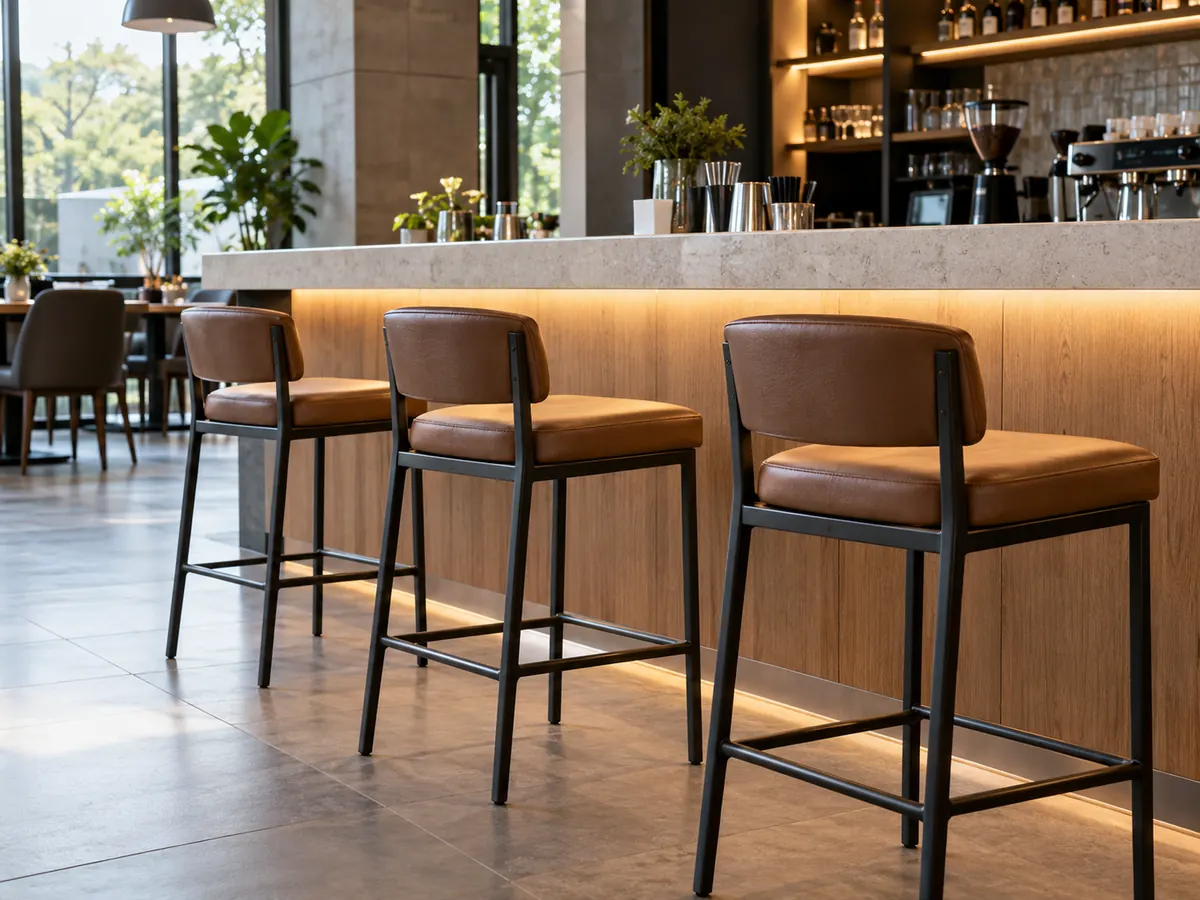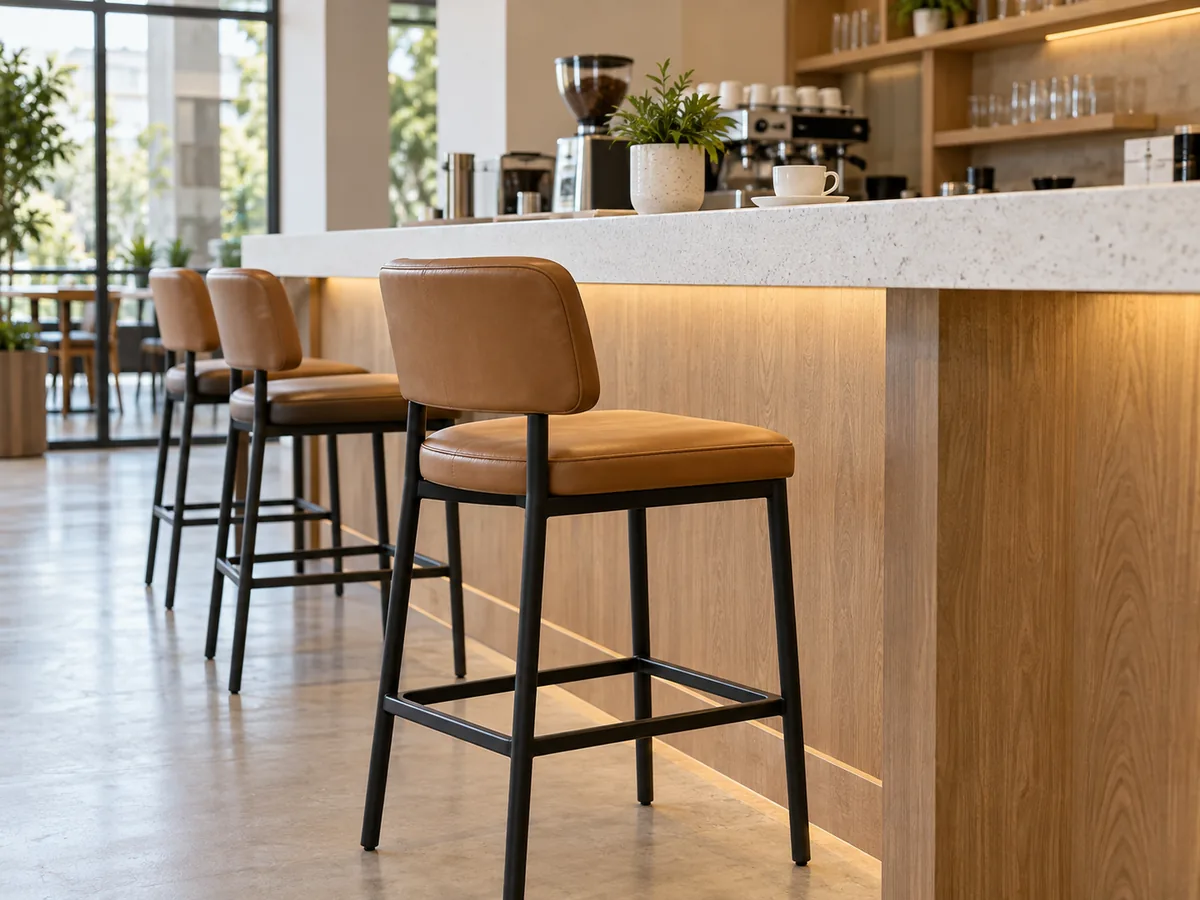
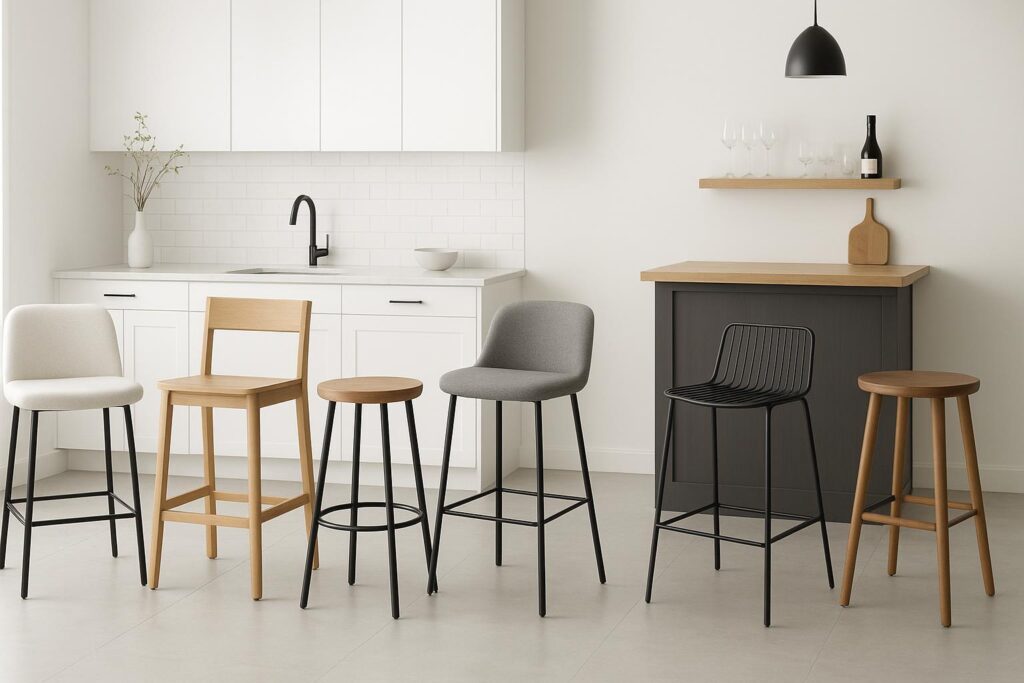
Bar stools look simple—until you try to buy them. Bar stools come in many types, but most of them can be grouped by height, back support, movement, material, style, and use environment.
What Are the Main Types of Bar Stools?
The main types of bar stools include counter height stools, bar height stools, extra-tall stools, adjustable stools, backless stools, low-back stools, high-back stools, stools with arms, armless stools, swivel stools, stationary stools, metal stools, wood stools, upholstered stools, leather or faux-leather stools, rattan stools, outdoor stools, and commercial-grade restaurant bar stools.
The easiest way to compare bar stools is by height, back support, movement, material, style, and use environment. For most buyers, height comes first because even a beautiful stool will feel wrong if it does not fit the counter or bar.
3 Common Bar Stool Mistakes to Avoid First
Most “bad bar stool” experiences come from the same three misfires:
- Wrong seat height (your knees hit, or you’re perched too high).
- Not enough space per seat (everyone eats shoulder-to-shoulder).
- The wrong support level (backless looks great… until you sit for 30 minutes).
This guide breaks down the most common types of bar stools (by height, support, function, and material), with a clear “best for” use case for each.
Two fast rules that prevent most mistakes:
- Height rule: Aim for about 10–12 inches of clearance between the top of the seat and the underside of the counter/bar. Lowe’s covers this “subtract 10–12 inches” method in its counter height vs. bar height stool guide, and IKEA repeats the same comfort guideline on its bar stools and chairs category page.
- Spacing rule: Plan roughly 24–30 inches of counter length per stool for comfort. Life On Virginia Street explains the “divide your island length” approach in how many stools fit at a kitchen island (2023). If you prefer a layout-style guideline, Wayfair’s bar stool dimensions guide and Home Depot’s how to measure bar stools guide describe about 26–30 inches from stool center to stool center.
If you want a step-by-step measuring walkthrough (including seat thickness, overhang, and usable knee space), Yezhi Furniture has a practical internal guide on how to measure bar stool height.
Here’s a quick “common heights” cheat sheet to sanity-check your measurements:
| Your surface height | Typical stool category | Typical seat height range |
|---|---|---|
| 34–36 in (most kitchen counters) | Counter height | ~24–27 in |
| 40–42 in (many home/commercial bars) | Bar height | ~28–33 in |
| 44 in+ (custom/high-top setups) | Extra tall | ~33–36 in |
(These ranges are general guidance; use the clearance rule for best results—especially with thick seats or limited knee space.)
Use this chart as a starting point, then check the clearance rule. In most cases, you want about 10–12 inches between the top of the seat and the underside of the counter or bar.
Quick List: Common Types of Bar Stools
Here are the main bar stool types you will see when comparing home, restaurant, café, bar, outdoor, and commercial seating.
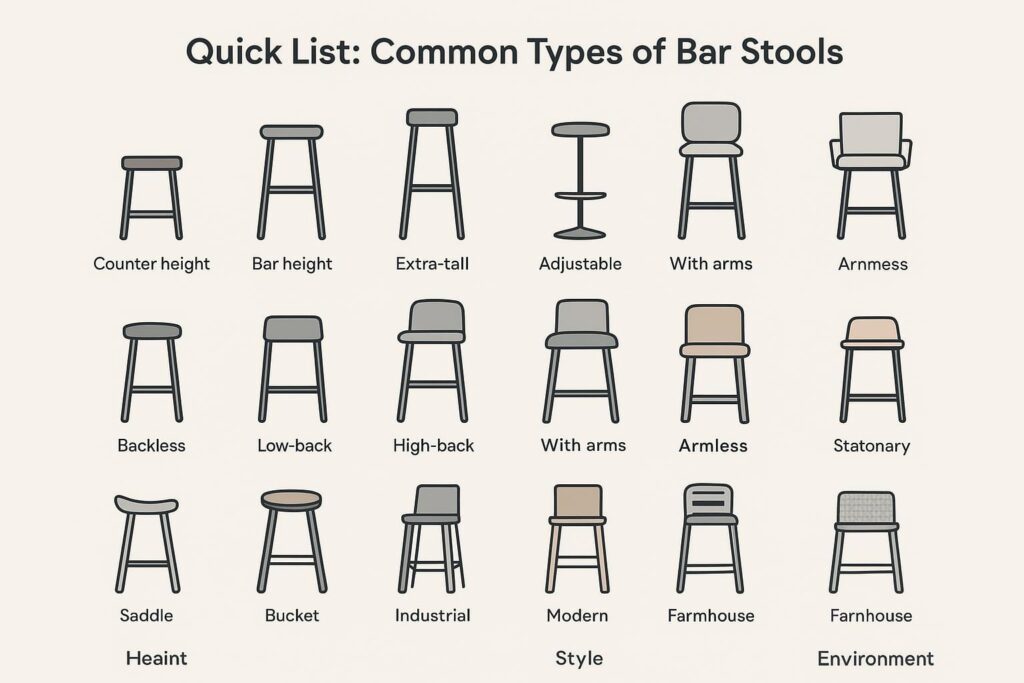
By height: counter height stools, bar height stools, extra-tall stools, adjustable-height stools.
By back and arm support: backless stools, low-back stools, full-back stools, high-back stools, stools with arms, armless stools.
By movement: swivel bar stools, stationary bar stools.
By material: metal bar stools, wood bar stools, upholstered bar stools, leather or faux-leather stools, rattan or wicker stools.
By style: saddle bar stools, bucket bar stools, industrial bar stools, modern bar stools, farmhouse bar stools.
By use: outdoor bar stools, stackable bar stools, commercial-grade restaurant bar stools.
Types of Bar Stools by Height
Height is the first thing to check when choosing bar stools. If the seat is too high or too low, the stool will feel uncomfortable even if the design looks perfect.
1) Counter height stools
What they are: Stools sized for standard kitchen counters and islands.
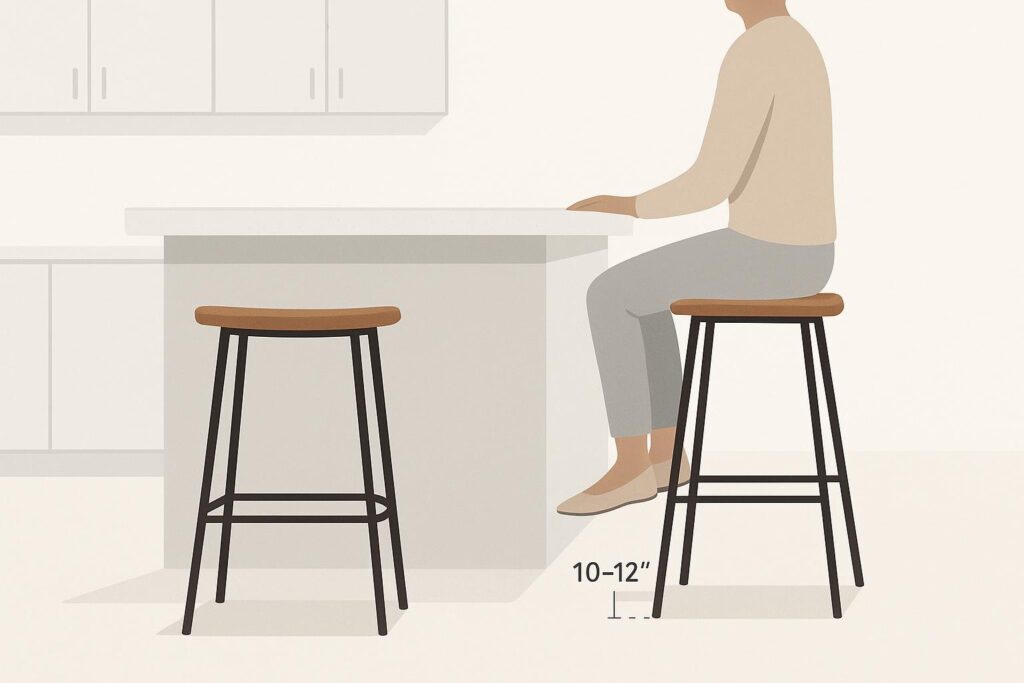
Best for: Daily kitchen use—breakfast, quick meals, working at the island.
What to look for:
- A seat height that lands you in the comfort zone for standard counters. Whirlpool summarizes common expectations in its counter height vs. bar height overview (2024).
- A usable footrest. If your feet dangle, you’ll feel it in your lower back.
Common mistake: Buying based on label only. If your island has limited overhang, you may need a slightly lower seat height even if the counter is “standard.”
2) Bar height stools
What they are: Taller stools meant for bar-height surfaces.
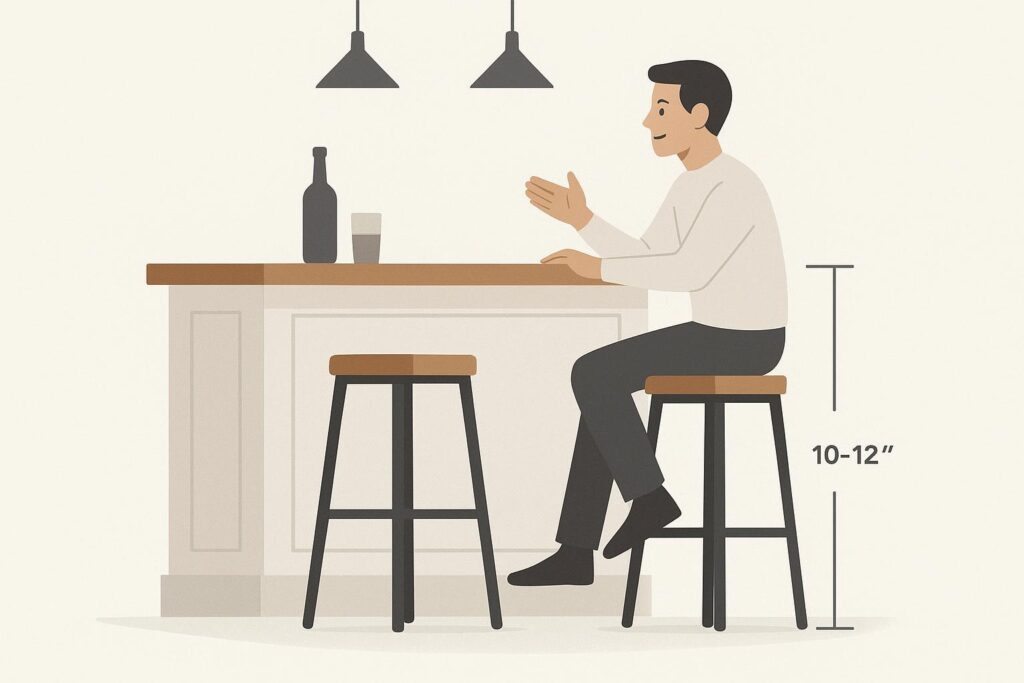
Best for: Home bars, pub tables, basement wet bars.
Why they work: Bar-height seating looks proportionally “right” at taller surfaces and can feel more like a true bar experience.
Common mistake: Using bar height stools at a standard kitchen counter. Even if you can technically sit there, the leg clearance feels wrong and the footrest position often becomes awkward.
3) Extra-tall / spectator-height stools
What they are: Stools designed for very tall counters, high-top tables, or custom installations.
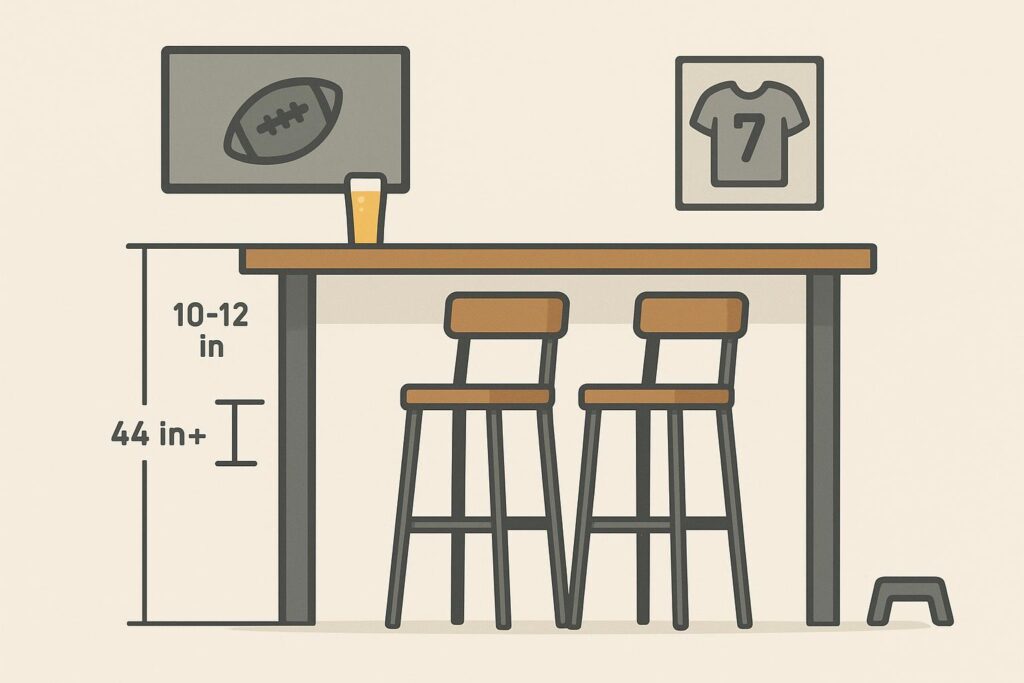
Best for: Game rooms, sports-bar setups, extra-tall custom counters.
Why people buy them: They solve a real fit problem when standard bar stools come up short.
Common mistake: Treating extra-tall as a style choice rather than a measurement choice. The taller you go, the more “step height” matters for comfort and accessibility.
If you’re exploring extra-tall options, this internal reference on extra-tall 34-inch bar stools is a useful baseline for what “extra tall” often means in the market.
4) Adjustable-height stools
What they are: Stools with a height-adjusting mechanism (often pneumatic/gas-lift or screw-style).
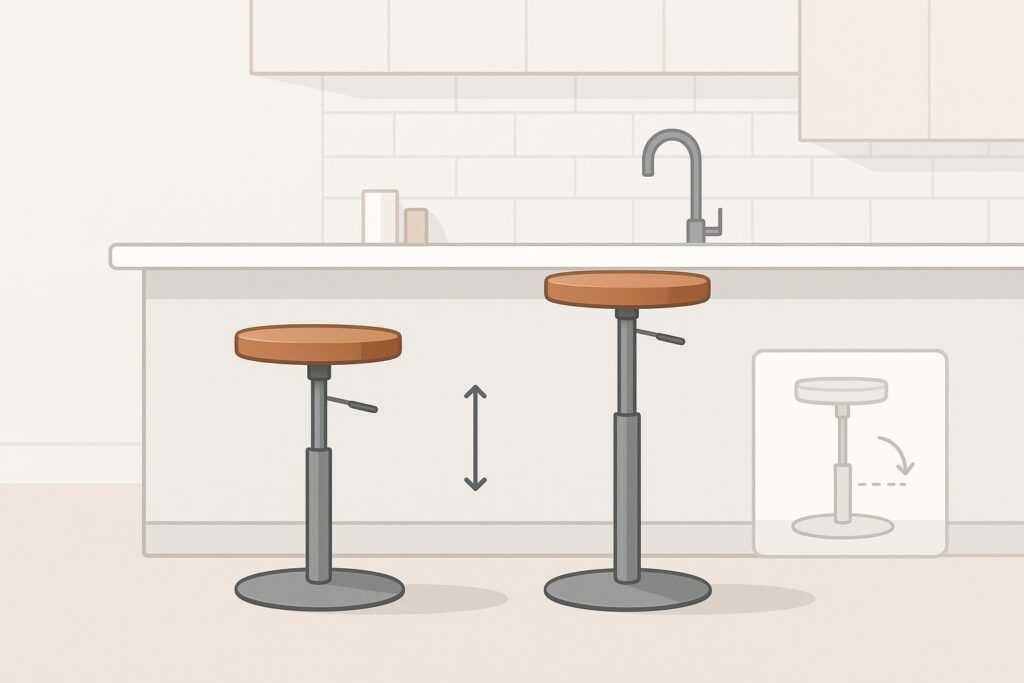
Best for:
- Non-standard counter heights
- Multi-use spaces (kitchen island by day, entertaining area by night)
- Households where people strongly prefer different seat heights
Tradeoffs:
- Pro: Flexibility—you’re not locked into one height.
- Con: The base can be bulkier, and long-term reliability varies by mechanism quality.
Common mistake: Forgetting that adjustable stools usually need more clearance behind them because people tend to rotate and reposition more.
Types of Bar Stools by Back and Arm Support
Back support affects both comfort and visual weight. A backless stool keeps a space open, while a high-back stool feels closer to a dining chair.
1) Backless bar stools
What they are: Stools without back support.
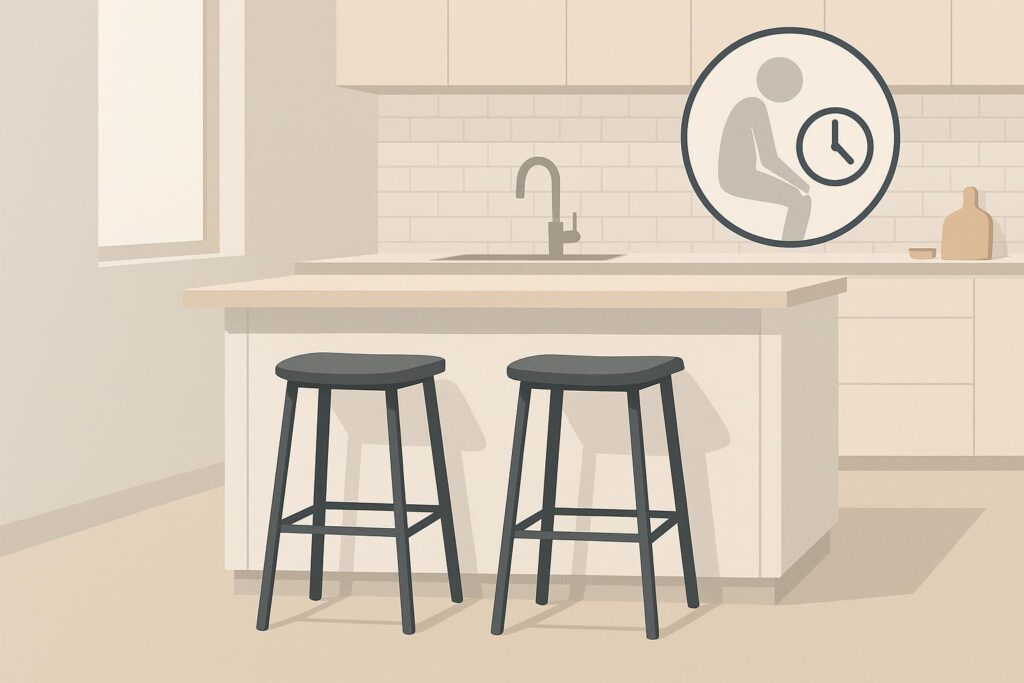
Best for: Small kitchens, tight islands, and spaces where you want stools to tuck fully under the counter.
Why they’re popular:
- Minimal footprint
- Clean sightlines (your kitchen looks less “blocked”)
- Easy to slide in and out
When they’re a bad idea: If your island is your primary dining table.
⚠️ Warning: Backless stools are where buyer’s remorse happens most often. They look great—but comfort shows up on day three.
Common mistake: Choosing a narrow, hard seat because it looks sleek. If you’ll sit longer than 10–15 minutes, seat shape and edges matter.
2) Low-back stools
What they are: Stools with a short backrest (sometimes just a “lip back”).
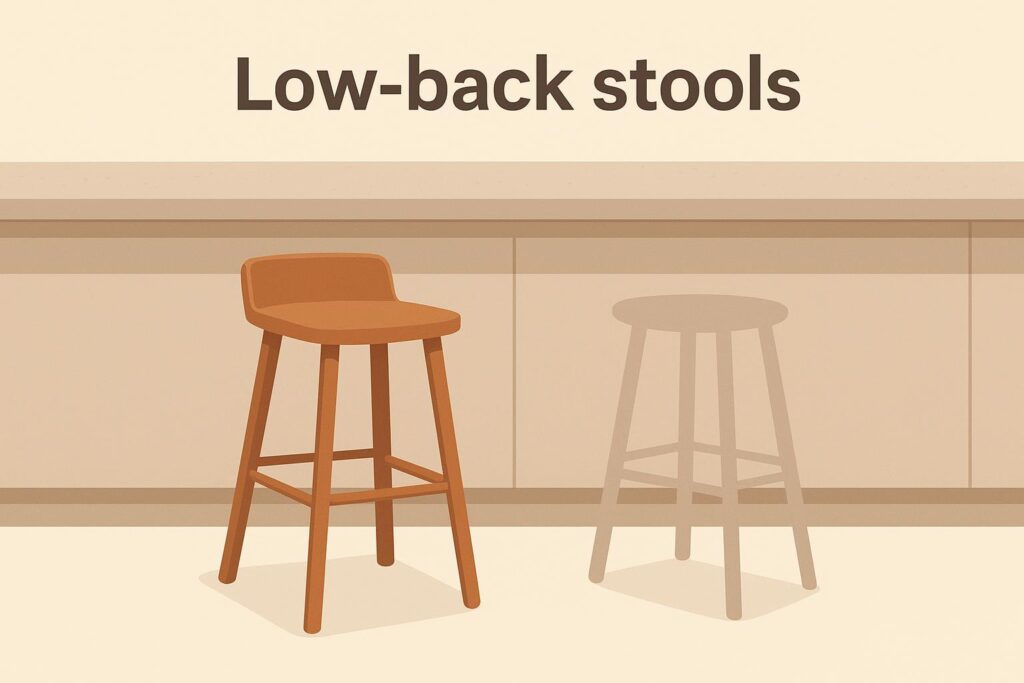
Best for: A balanced choice when you want some support without a heavy visual profile.
Why they work: They usually give enough back contact to reduce “perching fatigue,” while still sliding under many counters.
Common mistake: Assuming any back is “comfortable.” The comfort comes from the back angle and where it hits your body—not just the presence of a backrest.
3) Full-back / high-back stools
What they are: Stools with a taller backrest.
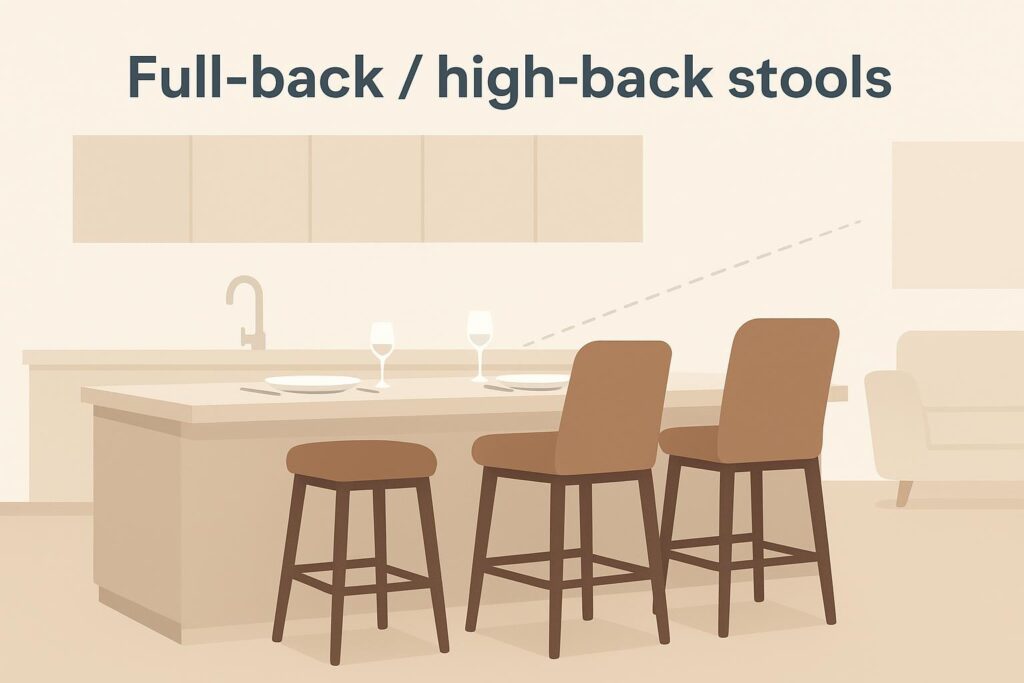
Best for: Long meals, entertaining, islands that double as a dining area.
Why people like them: They feel closer to a dining chair—especially for guests who linger.
Common mistake: Not accounting for visual weight. In an open kitchen, several high-back stools can block sightlines and make the room feel tighter.
4) Stools with arms
What they are: Stools with armrests (often paired with higher backs).
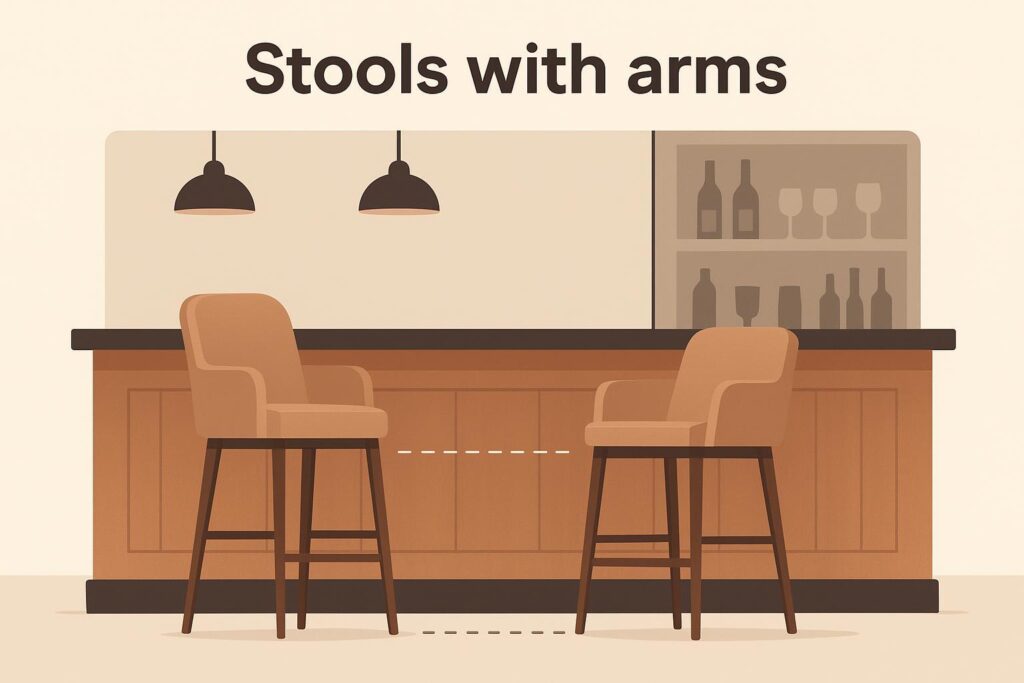
Best for: Comfort-first seating and lounge-style bar areas.
Why people choose them: Arms reduce upper-body tension during longer sitting sessions.
Common mistake: Forgetting arms add width and can reduce how many stools fit. If you’re planning seating density, use the upper end of spacing guidelines.
5) Armless stools
What they are: Stools without arms.
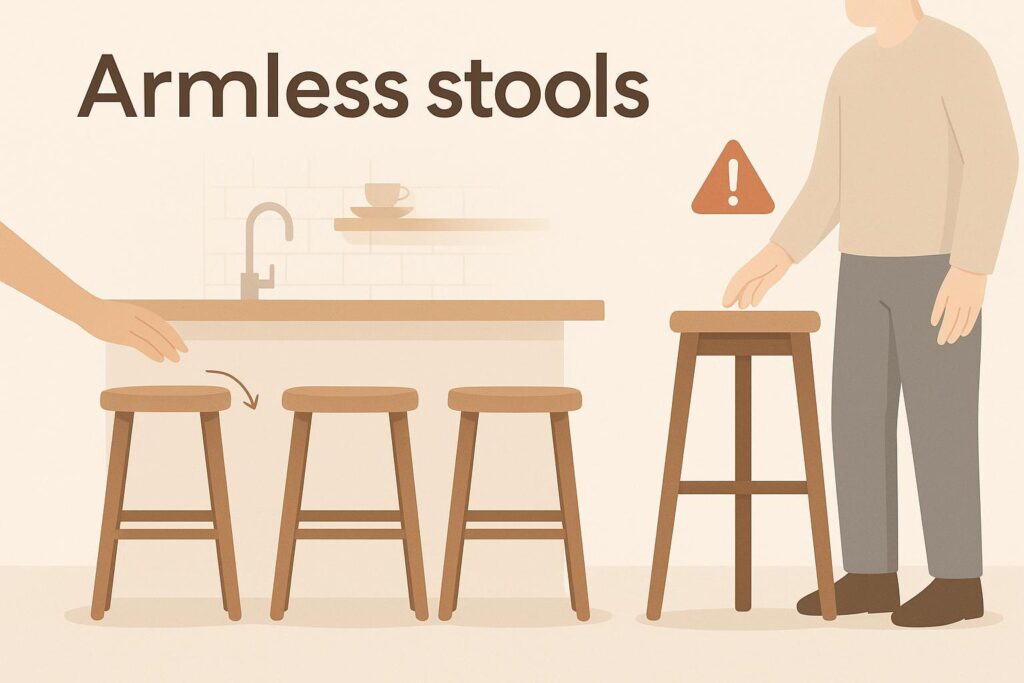
Best for: Most kitchens and islands where you want more seats with less bulk.
Why they’re the default: Armless stools are usually easier to tuck in, easier to move, and easier to fit side-by-side.
Common mistake: Trying to “make up for comfort” with a taller stool instead of adding support (a back or cushioning). Height and comfort are different problems.
Types of Bar Stools by Movement
Movement matters when people need to turn, talk, or get in and out without dragging the stool.
1) Swivel bar stools
What they are: Stools with a rotating seat.
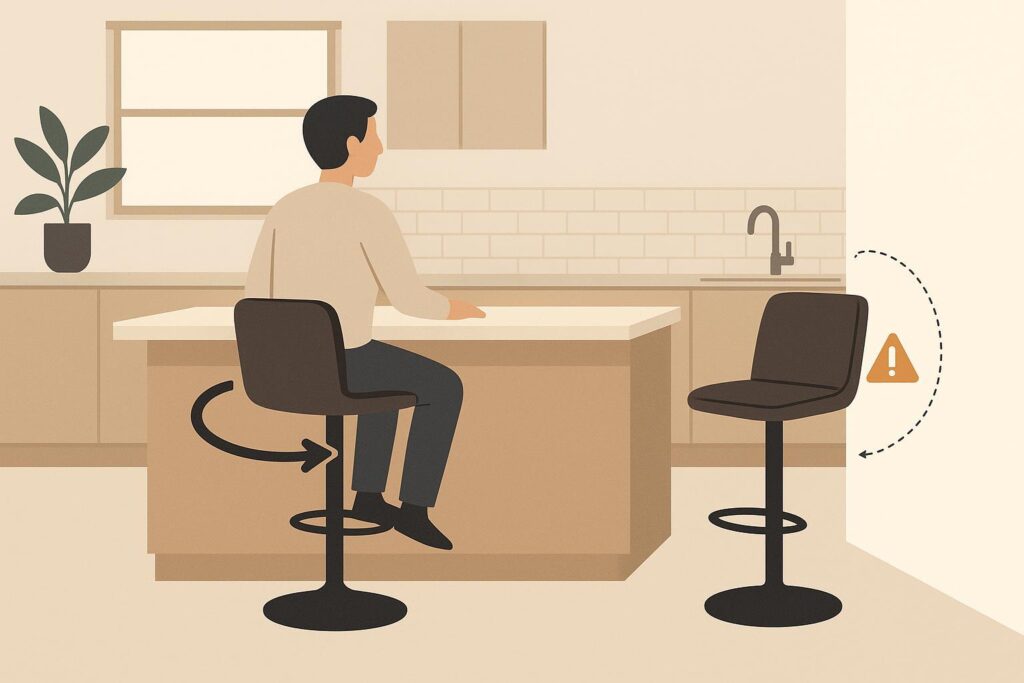
Best for: Social seating (home bars, open kitchens) and tight spaces where you don’t want to scoot the stool to get in and out.
Why they’re great:
- Easier entry/exit
- Easier conversation (turn toward the room)
- Less dragging across floors
Common mistake: Not budgeting clearance. Swivel plus a backrest can swing into counters, walls, or adjacent stools.
2) Stationary (non-swivel) stools
What they are: Fixed stools without rotation.
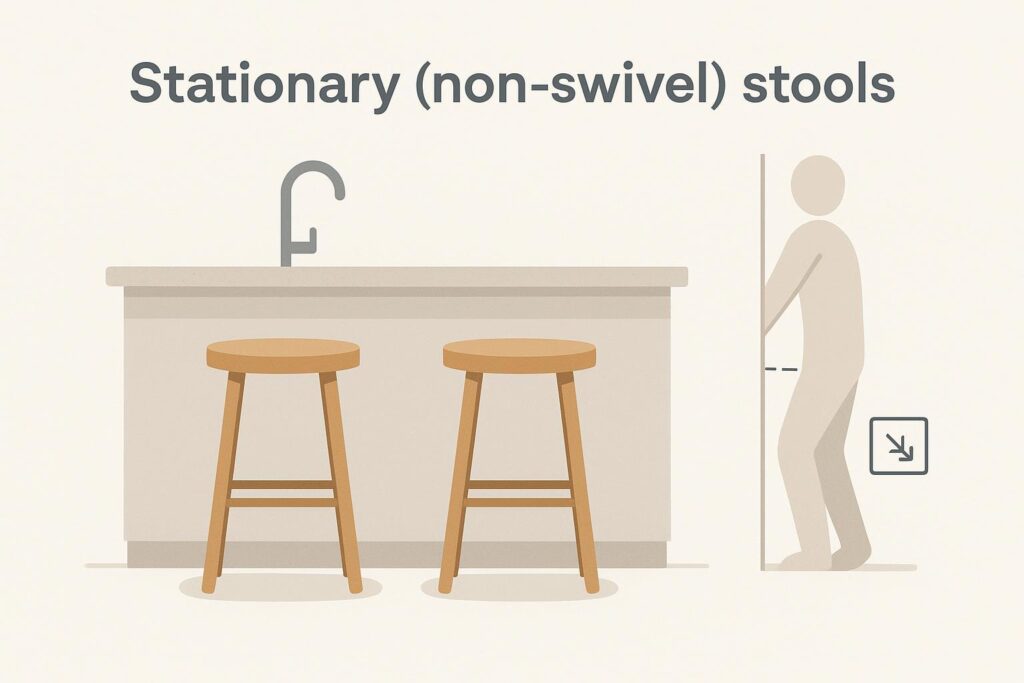
Best for: Minimalist spaces, straight-line islands, households that prefer fewer moving parts.
Why they work: They tend to feel stable and simple, and they often stay “neater” visually.
Common mistake: Using stationary stools where space is tight behind the stool. If people have to scoot and squeeze, you’ll hear about it.
Types of Bar Stools by Material
Material affects comfort, cleaning, weight, durability, and how the stool fits the room. For commercial spaces, material choice also affects maintenance cost, replacement frequency, and long-term supply.
1) Metal bar stools
What they are: Stools built primarily from metal (often steel or aluminum).
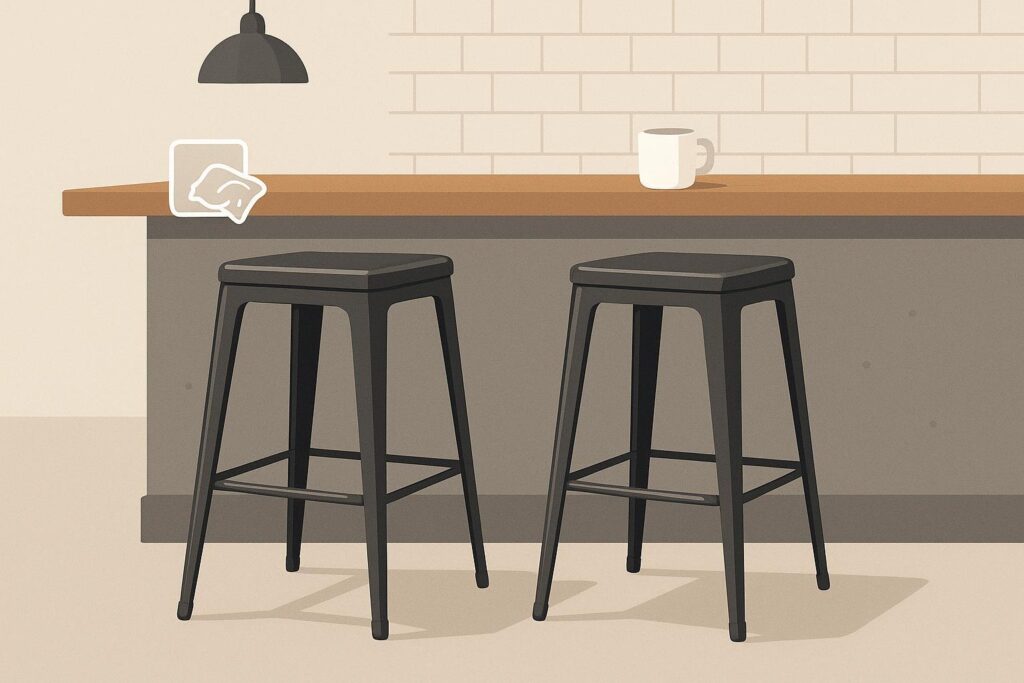
Best for: Modern/industrial looks, easy-clean kitchens, cafés and restaurants.
Why they’re practical:
- Durable frames
- Wipeable surfaces
- Often slimmer profiles (helpful in small spaces)
Common mistake: Ignoring comfort details. A footrest at the wrong height or a flat seat edge can make a metal stool feel harsher than it needs to.
2) Wood bar stools
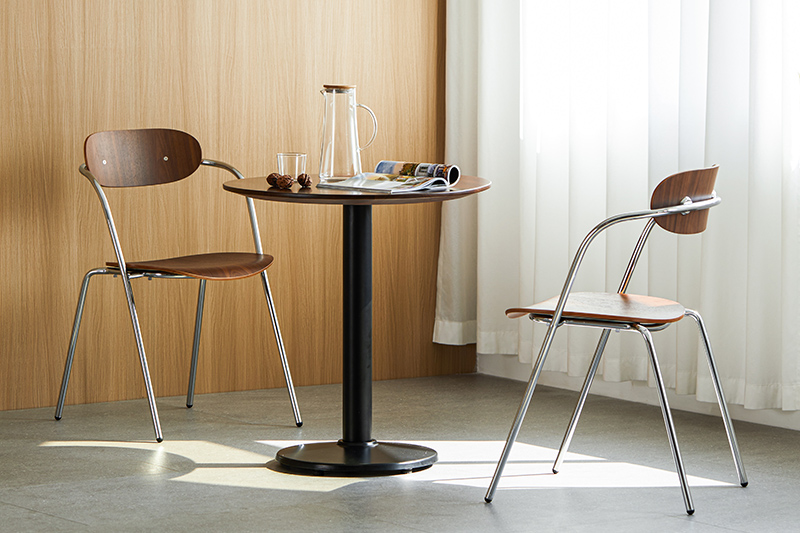
What they are: Stools with wood frames (solid wood or engineered wood).
Best for: Warm, classic kitchens and transitional interiors.
Why they work: Wood visually connects to cabinetry and floors, so stools feel like part of the room rather than an add-on.
Common mistake: Choosing purely for color match. Pay attention to the seat contour and the footrest—those are what you’ll feel every day.
3) Upholstered bar stools
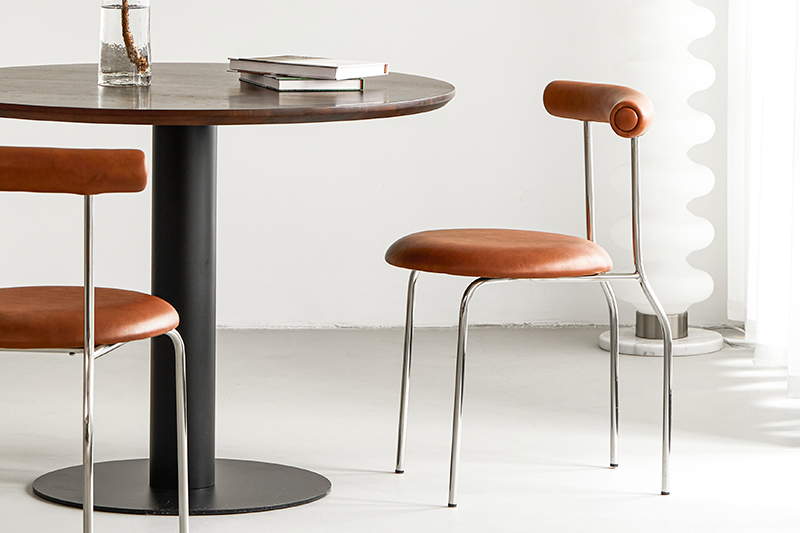
What they are: Stools with padded seats (and sometimes padded backs) covered in fabric, vinyl, PU, or leather.
Best for: Comfort-first seating, long dinners, lounge-style entertaining.
Why they’re worth it: Upholstery changes the stool from “perch” to “chair-like,” especially with a supportive back.
Common mistake: Picking delicate fabrics in high-splash zones. If spills are frequent, choose wipeable upholstery or darker, textured fabrics that hide wear.
4) Leather or faux-leather stools
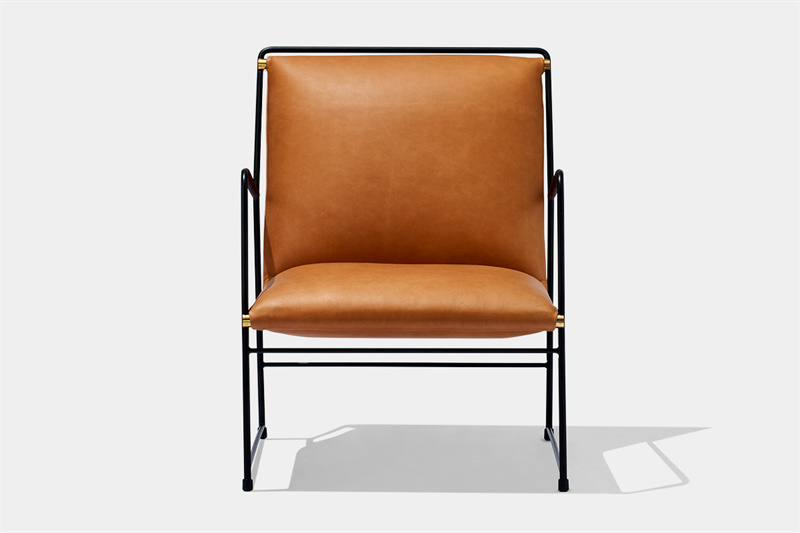
What they are: Upholstered stools designed for easier wipe-down.
Best for: Kitchens, rental properties, and commercial spaces where easy cleaning matters.
Why they work: You get cushioning without committing to high-maintenance fabrics.
Common mistake: Assuming all faux leather performs the same. Quality varies; cheaper materials can crack or peel with heavy use.
5) Rattan/wicker stools
What they are: Stools that use woven materials (often over a frame).
Best for: Coastal, casual, and airy interiors.
Why they’re popular: They visually soften hard surfaces like stone counters and metal fixtures.
Common mistake: Using woven seats in messy, crumb-heavy eating zones without realizing they’ll require more frequent cleaning.
Types of Bar Stools by Style
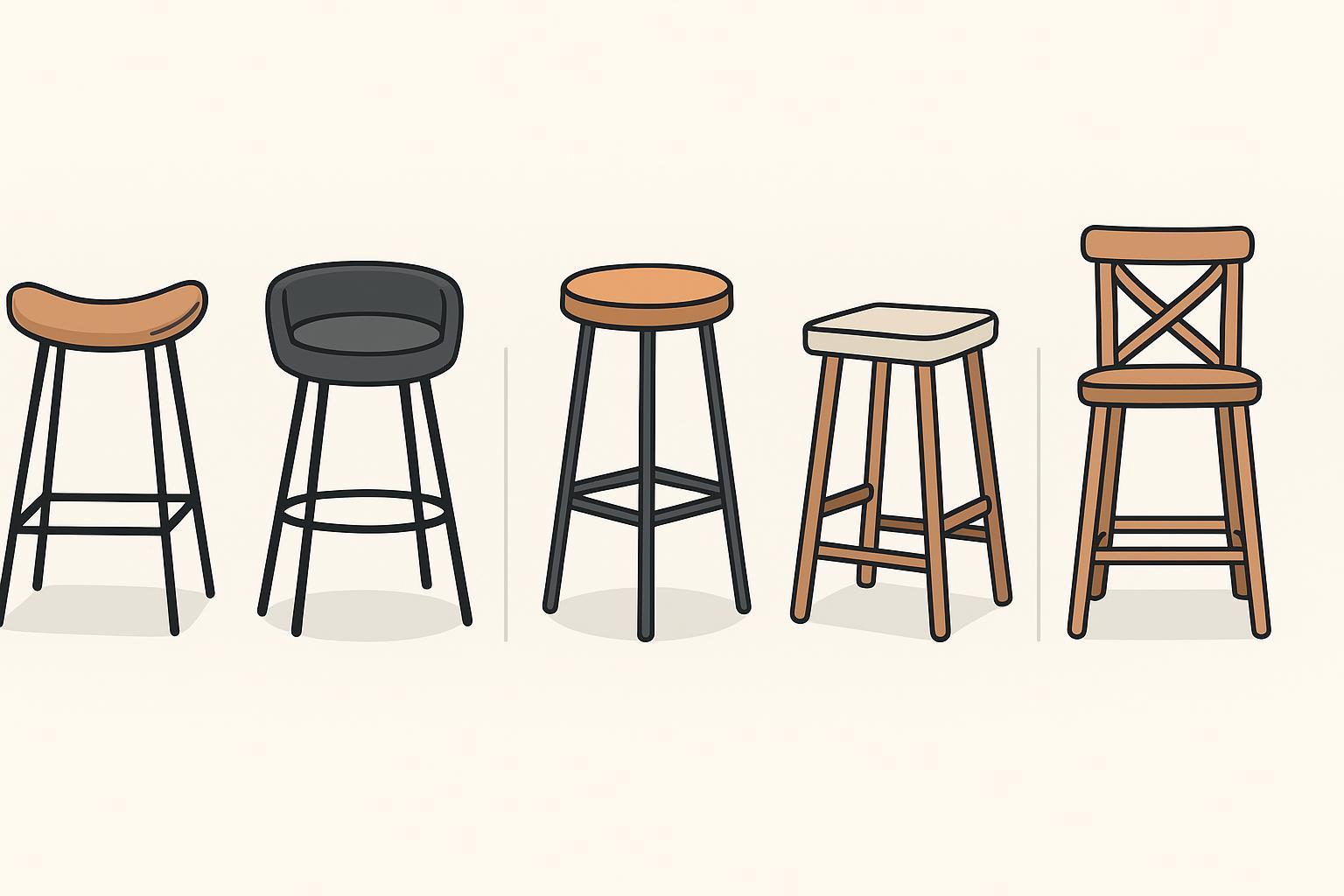
1) Saddle bar stools
What they are: Stools with a saddle-shaped seat that curves slightly like a horse saddle.
Best for: Kitchen islands, casual counters, and compact spaces.
Why they work: The shaped seat feels more supportive than a flat seat, while the design still looks simple.
Common mistake: Assuming every saddle seat is comfortable. Seat width and edge shape still matter.
2) Bucket bar stools
What they are: Stools with a rounded, bucket-like seat that wraps slightly around the body.
Best for: Bars, lounges, restaurants, hotel spaces, and comfort-first seating.
Why they work: The curved seat gives a more supported feeling and often looks more premium.
Common mistake: Forgetting that bucket seats can take up more width than simple armless stools.
3) Industrial bar stools
What they are: Stools with a stronger industrial look, often using metal frames, darker finishes, exposed structure, or simple hard seats.
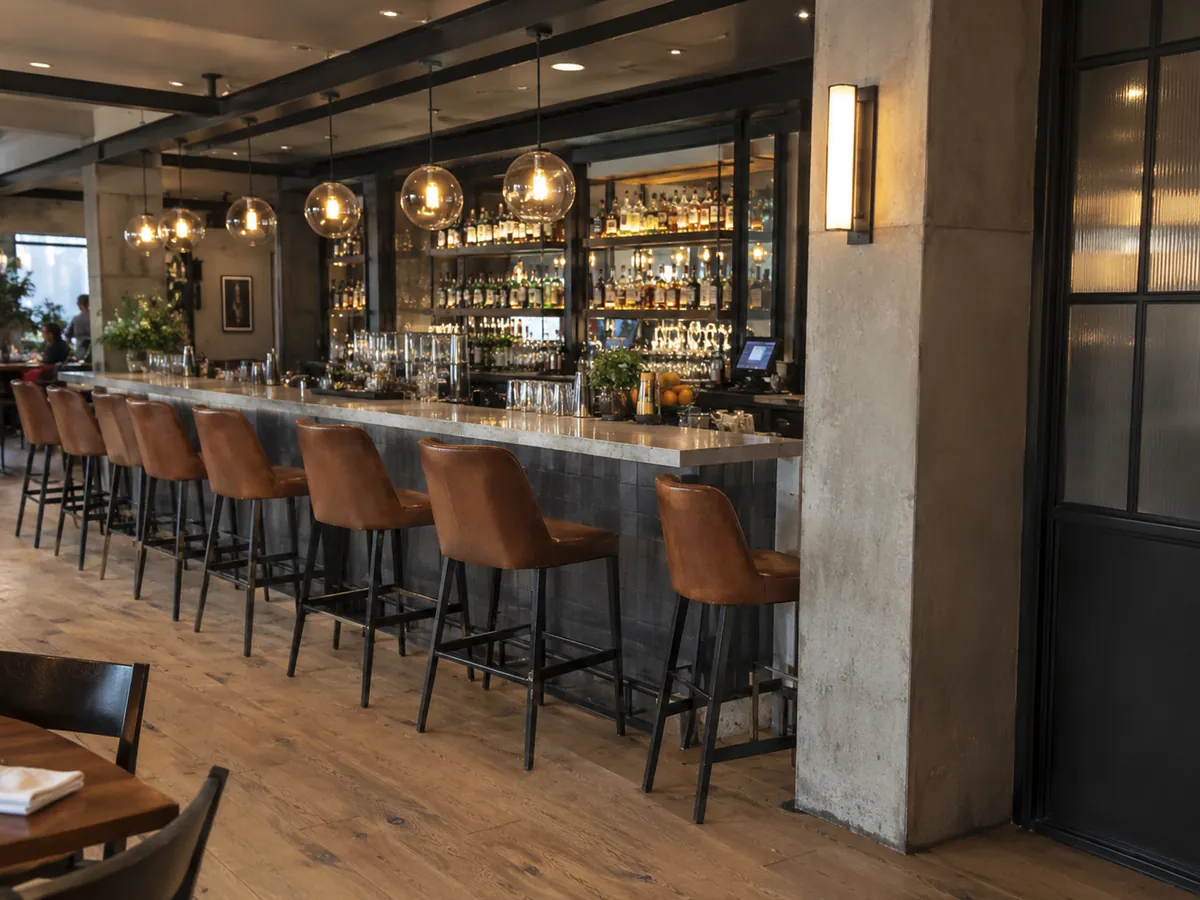
Best for: Bars, cafés, restaurants, loft-style interiors, and commercial spaces.
Why they work: They are visually strong, easy to match with wood or metal interiors, and often practical for high-traffic use.
Common mistake: Choosing only for the look. Check the seat edge, footrest, and frame stability before using them for long sitting.
4) Modern bar stools
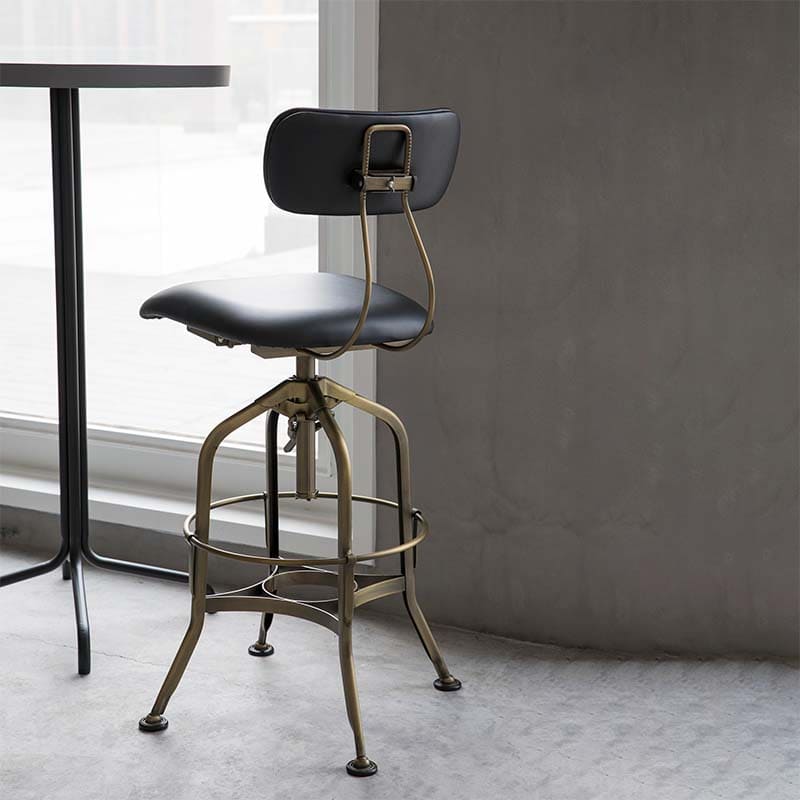
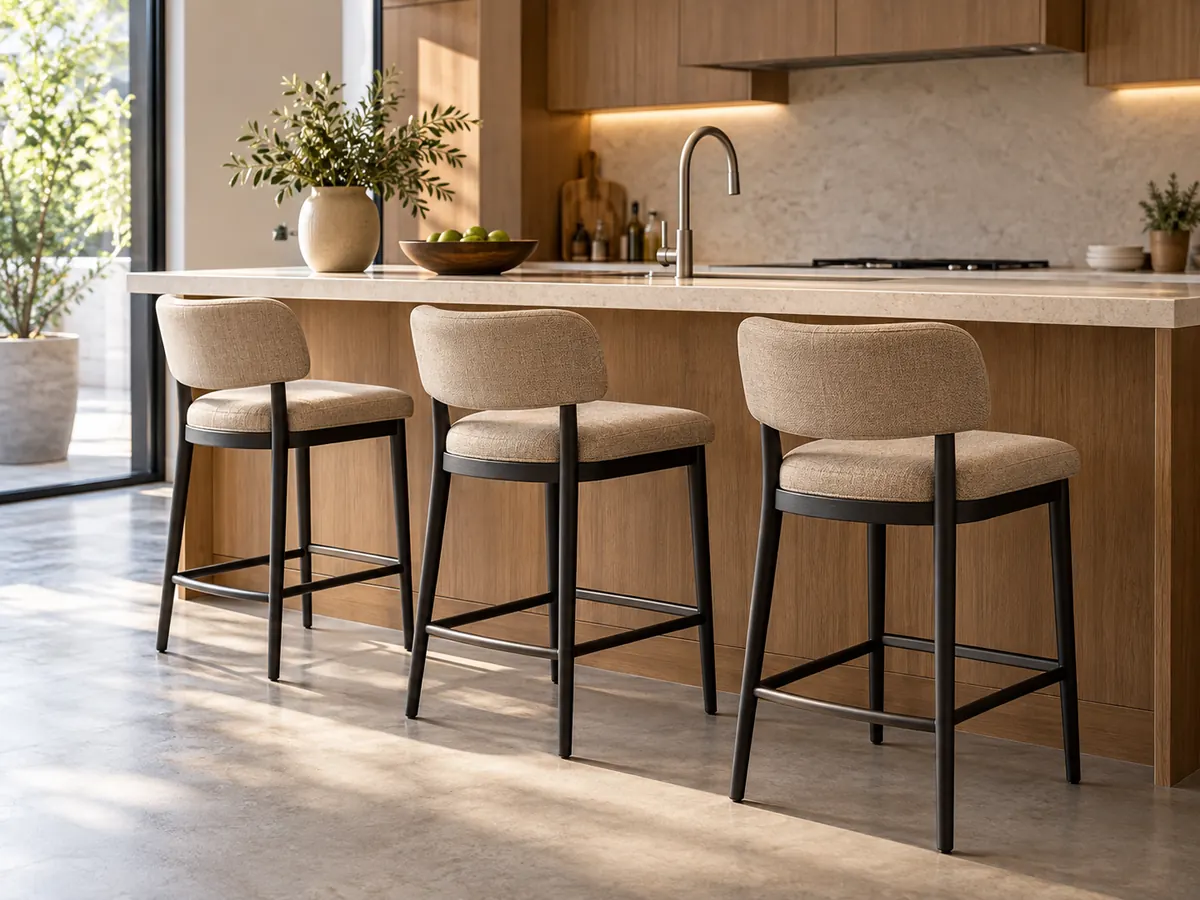
What they are: Stools with clean lines, simple shapes, and materials such as metal, upholstery, molded seats, or mixed finishes.
Best for: Modern kitchens, cafés, hotel bars, and contemporary restaurant projects.
Why they work: They create a clean and updated look without making the space feel too heavy.
Common mistake: Choosing a very slim design that looks good but feels too hard for daily use.
5) Farmhouse bar stools
What they are: Stools with a warmer, more traditional look, often using wood, crossback details, woven seats, or soft neutral finishes.
Best for: farmhouse kitchens, casual restaurants, cafés, and rustic-style interiors.
Why they work: They make a space feel warm, relaxed, and easy to approach.
Common mistake: Matching only the wood color instead of checking seat height, comfort, and cleaning needs.
Types of Bar Stools by Use Environment
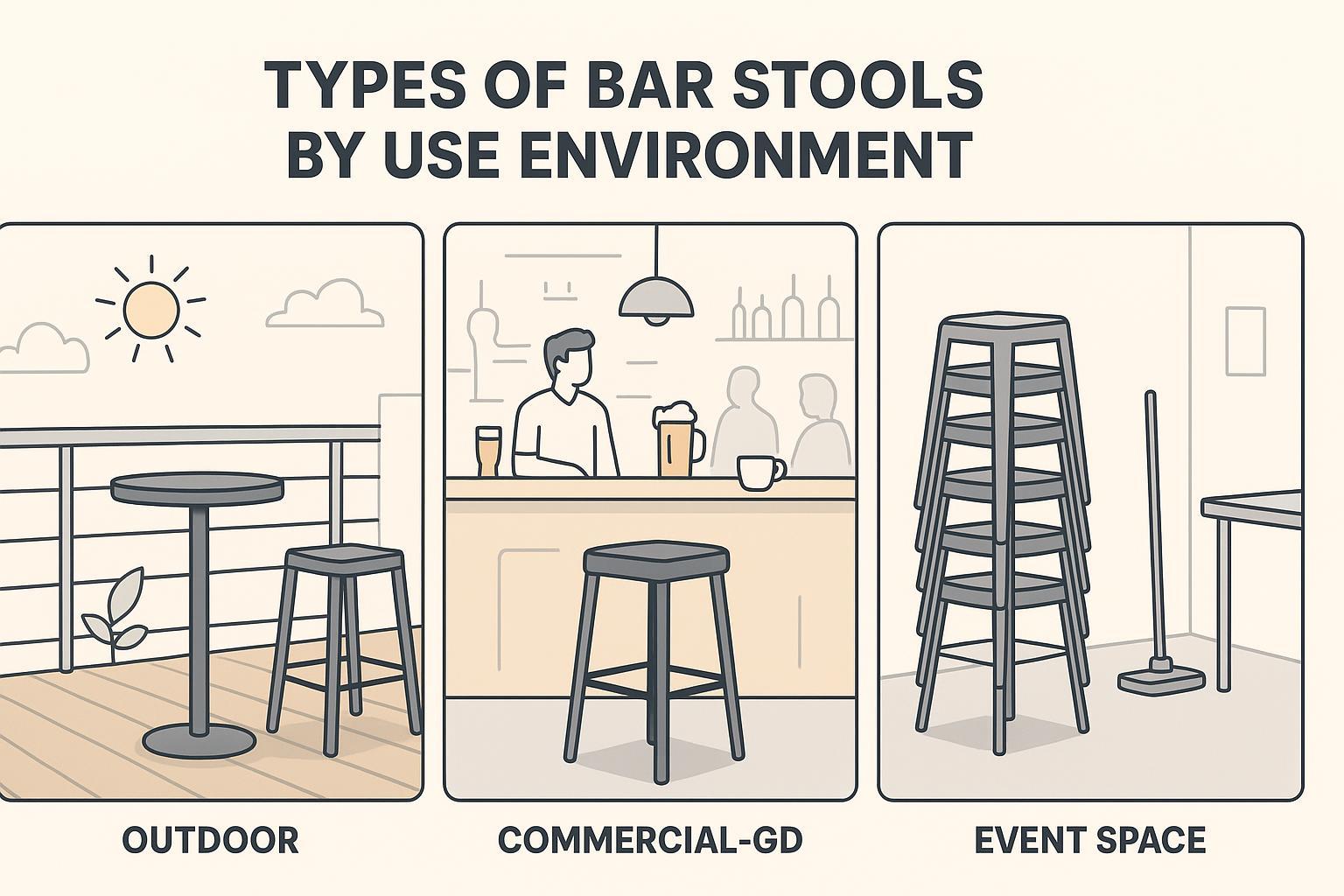
1) Outdoor bar stools
What they are: Stools built for weather exposure (materials and finishes designed to resist rust and moisture).
Best for: Patios, pool bars, rooftop decks.
What to look for:
- Corrosion-resistant materials and finishes
- A stable base (wind and uneven outdoor surfaces matter)
- Quick-dry seats
Common mistake: Using indoor stools outside “just for the season.” Sun and moisture can age finishes faster than you expect.
2) Commercial-grade restaurant bar stools
What they are: Stools designed for high-traffic environments (restaurants, cafés, bars).
Best for: Any space where durability, easy cleaning, and repairability matter.
What to prioritize:
- Easy-clean materials (especially for quick-turn seating)
- Stable construction (wobble becomes a constant complaint)
- Replaceable floor glides and footrest protection
Common mistake: Optimizing only for style. In venues, seat comfort and durability directly affect dwell time, guest reviews, and replacement costs.
If you’re outfitting a venue—or you want a plain-English overview of what “commercial-grade” typically includes—Yezhi Furniture’s page on commercial restaurant bar stools is a useful reference.
3) Stackable bar stools
What they are: Bar stools designed to stack vertically when not in use.
Best for: Restaurants, cafés, event spaces, schools, training areas, and seasonal seating.
Why they work: They save storage space and make it easier to clean floors, change layouts, or prepare for busy periods.
Common mistake: Only checking whether the stool stacks. Also check how stable the stack is and whether the frame or finish scratches easily during storage.
Home Bar Stools vs Commercial Bar Stools
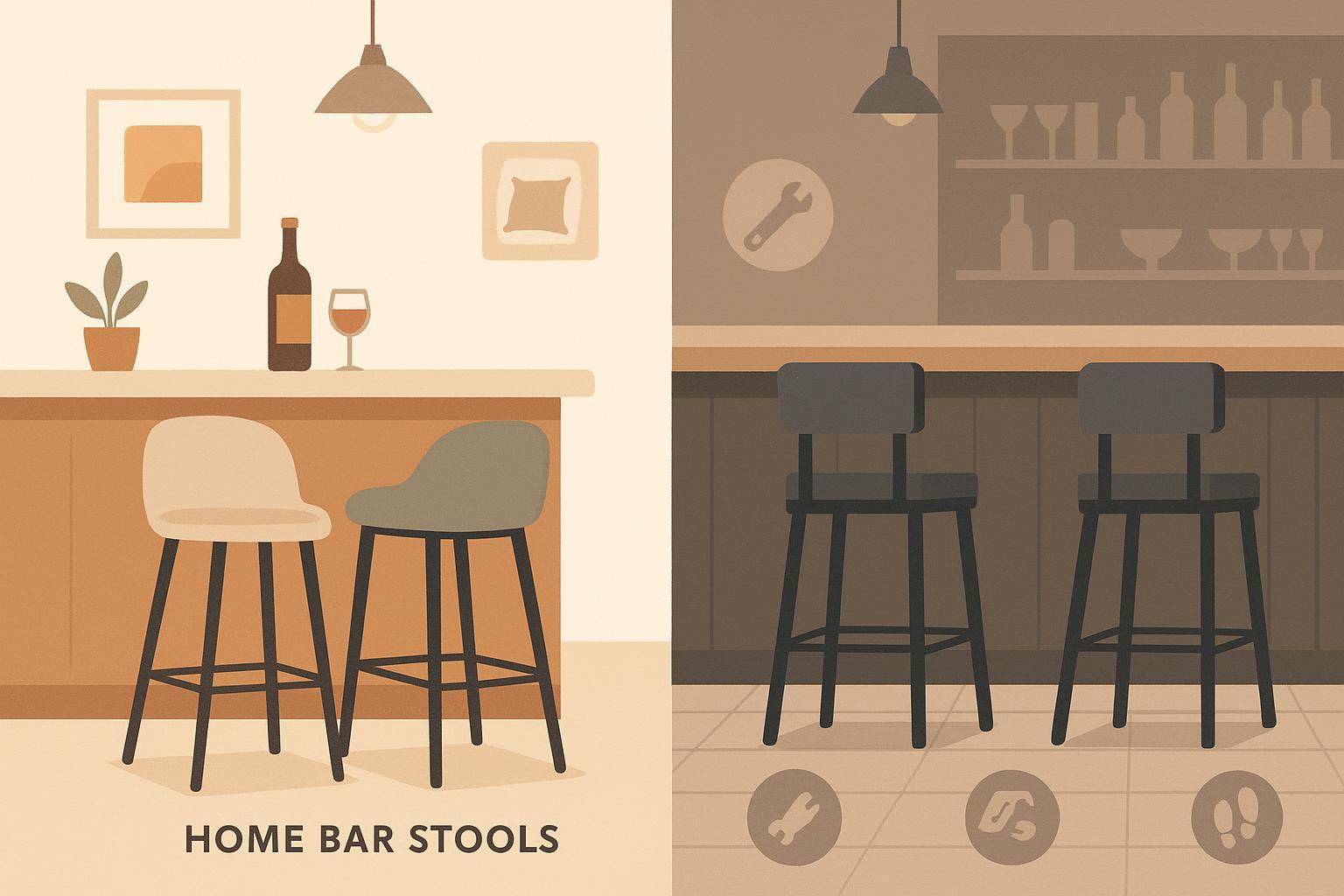
Home bar stools are usually chosen for style, comfort, and how well they match the kitchen or home bar. They may only be used a few times a day.
Commercial bar stools are different. In restaurants, cafés, bars, and hotels, stools may be moved, cleaned, and used many times every day. Buyers need to think about frame strength, footrest wear, floor glides, easy-clean surfaces, and whether the same model can be reordered later.
For home use, the best stool may be the one that fits your space and feels comfortable. For commercial use, the best stool should also reduce maintenance problems and support long-term use.
What Usually Fails First in Bar Stools?
In daily use, bar stool problems often start in a few common areas:
- Loose screws or weak joints
- Worn footrests
- Damaged floor glides
- Wobbly frames
- Peeling faux leather
- Dirty or stained upholstery
- Unstable swivel mechanisms
- Scratched finishes from stacking or moving
For commercial buyers, these small details matter because they affect guest comfort, cleaning time, replacement cost, and repeat purchasing.
How Should Buyers Compare Bar Stools for Bulk Orders?
For bulk orders, do not compare bar stools only by style and unit price. A better comparison should include seat height, frame material, upholstery options, footrest protection, floor glides, packaging, MOQ, mixed color options, and reorder availability.
For wholesalers, distributors, contractors, and design studios, the goal is to choose stools that are easier to sell, easier to install, easier to maintain, and easier to reorder for future projects.
Which Bar Stool Should You Choose?
| Your Need | Better Choice |
|---|---|
| Standard kitchen island | Counter height stool |
| Taller home bar or pub table | Bar height stool |
| Small kitchen | Backless or armless stool |
| Long meals | Low-back or full-back upholstered stool |
| Easy entry and conversation | Swivel bar stool |
| Minimal movement and cleaner look | Stationary stool |
| Easy cleaning | Metal, wood, or faux-leather stool |
| Outdoor patio or rooftop bar | Outdoor-rated bar stool |
| Restaurant, café, or bar | Commercial-grade restaurant bar stool |
| Flexible event or seasonal seating | Stackable bar stool |
How to Choose the Right Bar Stool
If you are not sure which bar stool type to choose, use this simple order: height first, comfort second, material and use environment third.
A simple 3-step decision framework
- Match the height first.
- Measure your counter/bar height.
- Subtract ~10–12″ for leg clearance.
- Choose the stool category whose seat height lands in that range.
- Decide how long people will sit.
- 10–15 minutes at a time → backless can work.
- Daily meals or long hangs → low-back or full-back usually feels better.
- Comfort-first entertaining → full-back + upholstered is the safe bet.
- Choose function and material based on your real life.
- Tight clearance → swivel can help entry/exit.
- Spills and kids → wipeable upholstery or hard seats.
- Outdoor exposure → outdoor-rated materials.
Common Mistakes When Buying Bar Stools
- Choosing by style before checking seat height
- Using bar height stools at a standard kitchen counter
- Ignoring footrest height and comfort
- Choosing backless stools for long daily meals
- Forgetting that swivel stools need extra clearance
- Choosing delicate upholstery in messy or high-splash areas
- Using indoor stools outdoors
- Buying commercial stools without checking floor glides, footrest protection, and reorder availability
FAQs About Types of Bar Stools
What are the main types of bar stools?
The main types of bar stools include counter height stools, bar height stools, adjustable stools, backless stools, low-back stools, high-back stools, swivel stools, metal stools, wood stools, upholstered stools, outdoor stools, and commercial-grade restaurant bar stools.
What is the difference between counter height and bar height stools?
Counter height stools are made for lower counters, usually around 34–36 inches high. Bar height stools are made for taller bar surfaces, often around 40–42 inches high.
How tall should a bar stool be?
A simple rule is to leave about 10–12 inches between the top of the stool seat and the underside of the counter or bar. This gives most people enough leg room.
What is the most comfortable type of bar stool?
For longer sitting, a low-back or full-back upholstered stool is usually more comfortable than a hard backless stool. Footrest position also makes a big difference.
Are backless bar stools comfortable?
Backless bar stools can work well for short sitting and small spaces. They are less ideal for long meals or daily dining because they do not support the back.
Are swivel bar stools a good idea?
Swivel bar stools are useful when people need to turn, talk, or get in and out easily. The main thing is to leave enough clearance so the stool does not hit the counter, wall, or nearby stools.
What type of bar stool is best for small spaces?
Backless stools, armless stools, and slimmer metal stools are often better for small spaces because they take up less visual and physical room.
What type of bar stool is best for restaurants?
For restaurants, cafés, and bars, commercial-grade bar stools are usually the better choice. Buyers should look for stable frames, easy-clean materials, strong footrests, replaceable floor glides, and reorder availability.
What material is best for bar stools?
Metal is practical and durable, wood feels warm and classic, and upholstery is more comfortable for longer sitting. For commercial use, the best material is the one that balances comfort, cleaning, durability, and long-term supply.
See Real Bar Stool Examples for Different Spaces
If you want to compare real bar stool styles, browse the Yezhi Furniture bar stool collection by height, material, back style, and commercial use.
For restaurants, cafés, bars, hotels, and project spaces, the best stool is not only the one that looks good. It should also match the counter height, feel stable during daily use, be easy to clean, and support repeat orders when your project or market needs more stock.
Yezhi Furniture works with importers, wholesalers, distributors, contractors, furniture stores, and design studios. If you are choosing bar stools for wholesale or commercial projects, comparing stools by real use case can help you choose products that are easier to sell and easier to use long term.