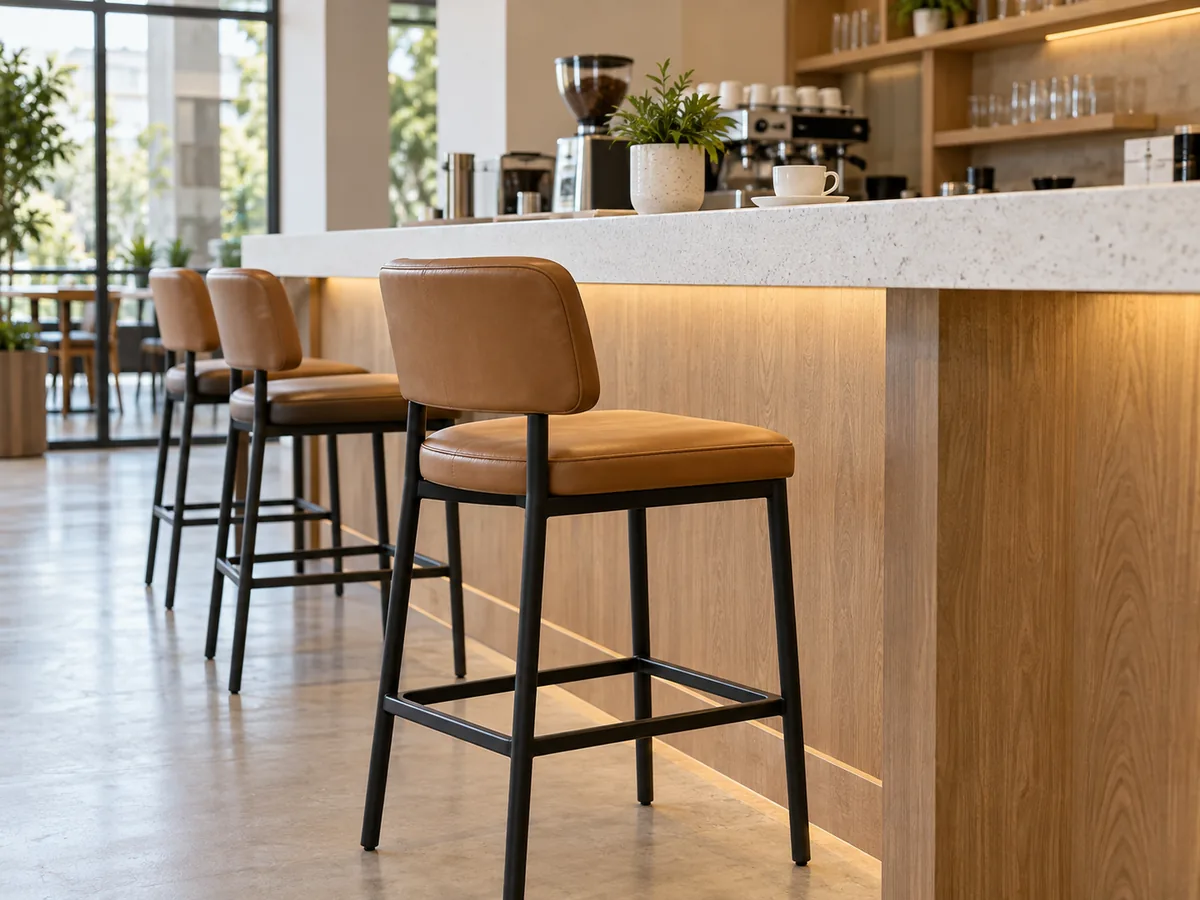
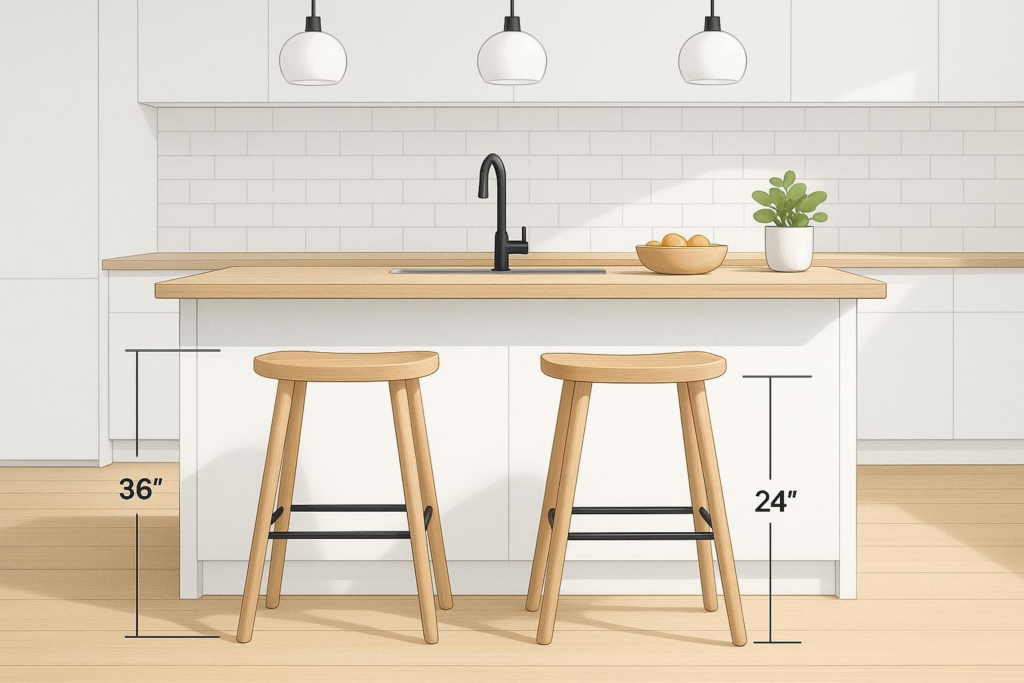
If you’re shopping for stools, focus on seat height—the distance from the floor to the top of the seat—not the stool’s overall height.
Direct answer: Most counter-height stools have a seat height of 24–27 inches (61–69 cm). For a standard 36-inch (91 cm) counter, a 24–26-inch (61–66 cm) seat is the most common starting range. First estimate the seat height by subtracting 10–12 inches (25–30 cm) from the counter height. Then check the distance between the seat and the lowest point underneath the counter, because a thick edge, apron, support rail, or bracket can reduce usable legroom.
Quick chart: counter stool height and bar stool seat height (35, 36, 42, 43)
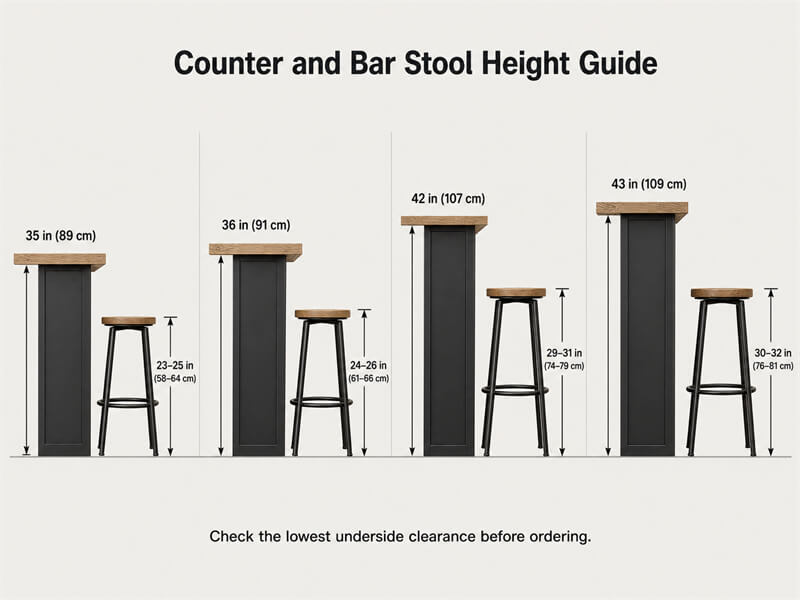
Use this table as a fast starting point—then follow the 2-step measurement method below to confirm.
| Your surface height (top) | Typical surface type | Recommended stool seat height | Notes that change the choice |
|---|---|---|---|
| 35 in (89 cm) | Low counter / some islands | 23–25 in (58–64 cm) | Start at 24 in if you’re unsure; size down if a thick top/apron reduces knee clearance. |
| 36 in (91 cm) | Standard kitchen counter | 24–26 in (61–66 cm) | The most common “counter stool” zone. |
| 42 in (107 cm) | Bar height | 29–31 in (74–79 cm) | 30 in (76 cm) is the common pick for 42-inch bars. |
| 43 in (109 cm) | High bar height edge case | 30–32 in (76–81 cm) | Must verify underside clearance; 43 in often needs the taller end. |
Pro Tip: If different sites give you different ranges (24–26 vs 24–27 vs 22–26), it’s usually because they’re measuring different reference points—or they’re being “one-size-fits-most.” You can resolve the conflict with one underside measurement.
First, make sure you’re measuring the right thing: seat height vs overall height
This is the #1 reason people buy the wrong size.
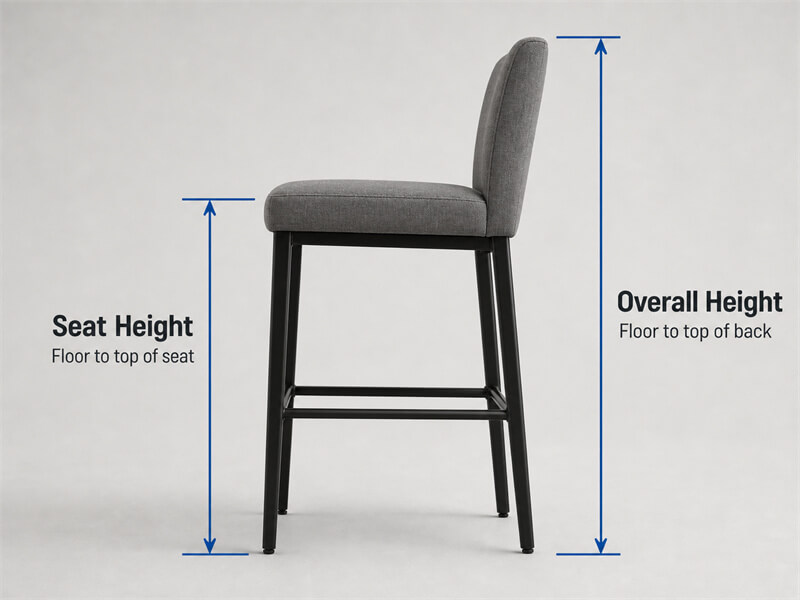
- Seat height = floor → top of the seat. This determines fit.
- Overall height = floor → top of the back (or highest point). This is mostly about how the stool looks.
Retailer guides and spec sheets typically use seat height as the key sizing measurement, because it determines whether the stool fits under a counter or bar and leaves proper legroom.
For more background on the common ranges, see Lowe’s counter height vs. bar height stools buying guide and the surface-height breakdown in KitchenAid’s “Counter Height vs. Bar Height” article (2024).
The 2-step method that prevents knee-banging (and explains why ranges conflict)
A lot of guides tell you to subtract 10–12 inches from the counter height. That’s a good start—but it can still fail if your counter has an apron, a thick top, or support brackets.
Here’s the method that holds up in real kitchens.
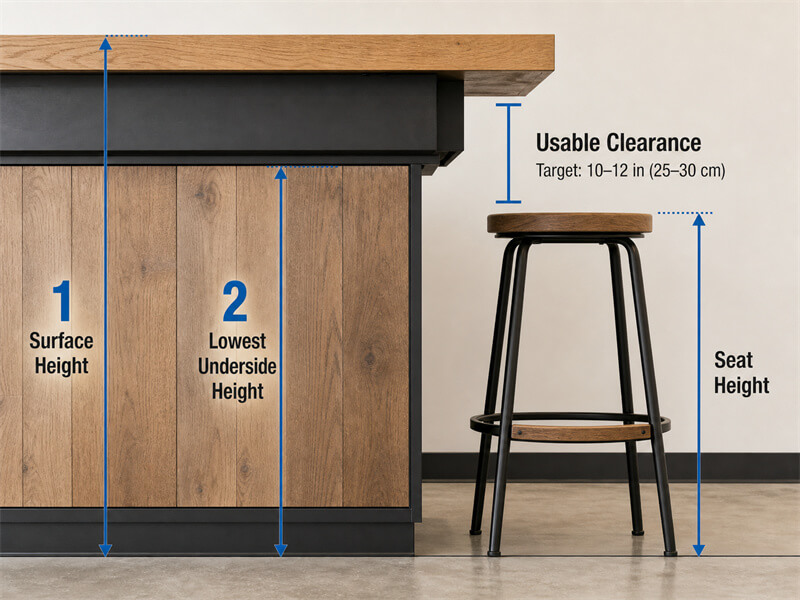
Step 1: Do the quick estimate from the top height
Measure from the floor to the top of your counter/island.
Then estimate:
- Ideal seat height ≈ surface height − 10 to 12 inches (this “how much space between stool and counter” gap is the comfort target)
That “10–12 inches” comfort gap is a widely used rule of thumb; for a simple explainer, see Froy’s dining/counter/bar height guide (2025).
Step 2: Verify the Lowest Underside Clearance
Measure from the floor to the lowest fixed point underneath the counter. This may be:
- A table skirt or apron.
- A support rail.
- A corbel or bracket.
- A thick countertop edge.
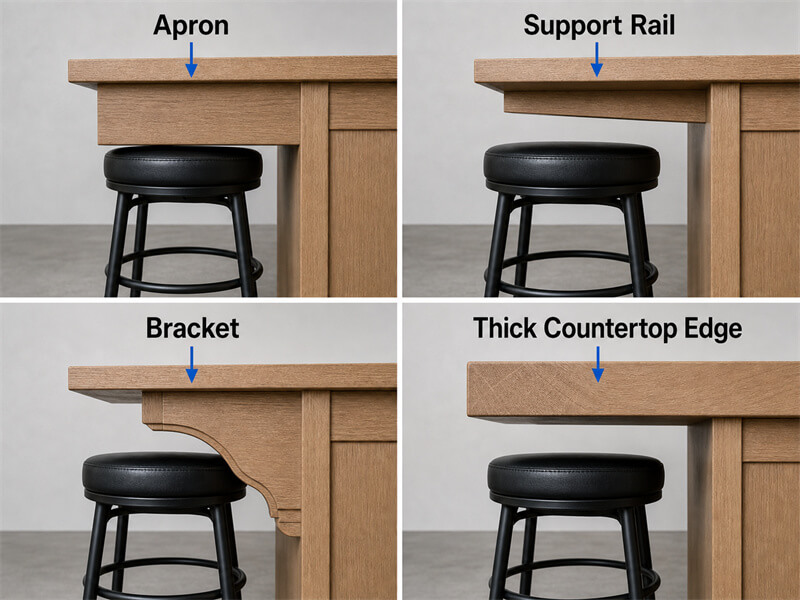
Next, subtract the stool’s seat height from this underside measurement:
Usable vertical clearance = lowest underside height − seat height
Aim for approximately 10–12 inches (25–30 cm) of clearance where possible. If an apron or support reduces the available space, choose a seat height at the lower end of the recommended range.
If the stool has arms, also compare its floor-to-armrest height with the lowest underside point. A suitable seat height does not guarantee that the armrests will slide underneath.
⚠️ Warning: Warning: Measuring only the top of the counter can hide structural details that reduce actual knee and thigh clearance.
Why does one website say 24 inches, another says 26 (or even 27)?
Because “counter height stool” isn’t one exact product—it’s a category. The right pick depends on your clearance, your stool design, and how you like to sit.
Here are the real reasons recommendations vary:
- Top height vs underside heightSome guides subtract from the top of the counter.Others emphasize the underside because that’s where your knees live.
- Counter thickness and apronsA 36-inch counter with a thick top might have an underside closer to 33–34 inches.
- Cushion compression (upholstery “squish”)Product specifications normally measure seat height to the top of the unloaded seat. A soft cushion may compress when occupied, making the seated position slightly lower. However, cushion thickness alone does not mean you automatically need a shorter stool.
- Armrests Require a Separate MeasurementEven when the seat height is correct, the armrests may hit the counter edge or apron. Always compare the stool’s floor-to-armrest height with the lowest point underneath the counter.
- Personal Comfort Preferences VaryA 10-inch (25 cm) clearance creates a closer, more upright seating position. A 12-inch (30 cm) clearance provides more vertical room. Body height alone should not decide the fit; leg length, thigh clearance, footrest position, cushion compression, and sitting posture also matter.
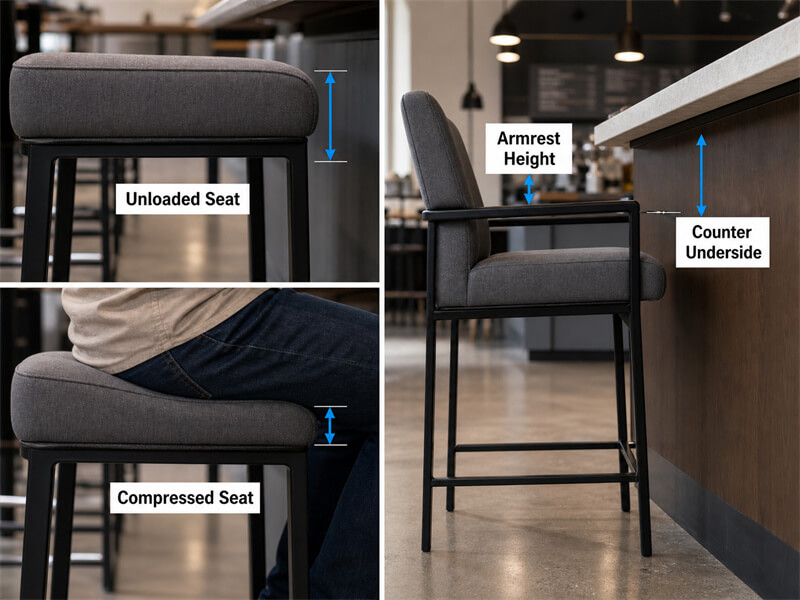
In practice, you’ll see many retailers list 24–26 inches as the “safe center,” with 24–27 inches as the wider shopping range—especially when they don’t know your underside clearance.
Worked Examples Using Published Sizing Ranges
These examples use the stool and counter-height ranges published by Home Depot, KitchenAid, and Wayfair:
- A 36-inch (91 cm) counter with a 24-inch (61 cm) seat creates a 12-inch (30 cm) top-to-seat difference.
- A 36-inch (91 cm) counter with a 26-inch (66 cm) seat creates a tighter 10-inch (25 cm) difference.
- A 42-inch (107 cm) bar with a 30-inch (76 cm) seat creates a 12-inch (30 cm) difference.
- A 43-inch (109 cm) bar with a 32-inch (81 cm) seat creates an 11-inch (28 cm) difference.
These calculations are starting points rather than fit guarantees. Countertop thickness, aprons, brackets, armrests, and cushion compression can reduce the usable clearance, so always check the lowest underside point before ordering.
What height stool for a 36-inch counter?
For a standard 36-inch kitchen counter, choose a stool with a 24–26 inch seat height (61–66 cm). That’s the common counter-stool pairing found across retailer sizing guides.
If you’re stuck between sizes:
- Pick 24 inches if you have a thick top, apron/rail, arms, or you want more knee room.
- Pick 26 inches if your underside is open and you prefer a slightly taller sit.
What height stool for a 35-inch counter?
A 35-inch surface is slightly lower than standard. Most people land best in 23–25 inches of seat height (58–64 cm), and 24 inches is the most reliable starting point.
Choose 24 inches if:
- there’s any apron/rail/support under the counter
- the seat is thick or upholstered
- you’re buying stools with arms
Consider a 25-inch (64 cm) seat if:
- The underside is fully open.
- There is no apron or support rail.
- You prefer a slightly higher seating position.
A 26-inch (66 cm) seat leaves only 9 inches (23 cm) between the seat and a 35-inch surface before countertop thickness is considered. It should therefore be selected only after checking the actual underside clearance and, ideally, testing the seating position.
What height stool for a 42-inch bar?
A 42-inch bar is classic bar height. The common choice is about 30 inches (76 cm) in seat height, often shown as 29–31 or 29–32 inches depending on the guide.
If the bar has a deep apron or thick edge, verify underside clearance and lean toward the lower end.
What height stool for a 43-inch bar?
A 43-inch surface sits on the high end of “standard bar height.” In most cases, you’ll want 30–32 inches (76–81 cm) of seat height.
The key is underside clearance:
- If an apron, bracket, or thick edge reduces the usable clearance, a 30-inch (76 cm) seat is usually the more forgiving choice.
- If the underside is fully open, a 31–32-inch (79–81 cm) seat brings the user closer to the surface and reduces downward reach. However, a higher seat also reduces vertical legroom, so verify the actual underside clearance before ordering.
Counter stool vs bar stool: what’s the difference?
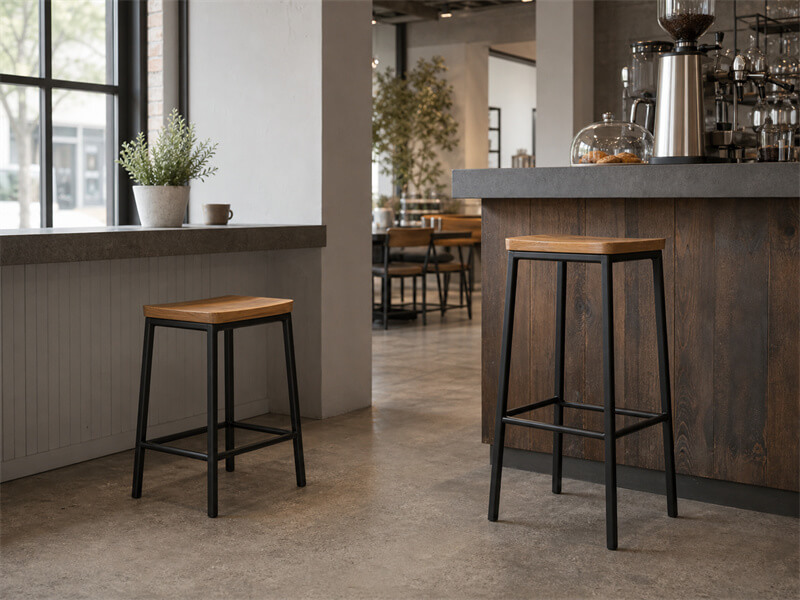
Most confusion comes from people using “bar stool” as a catch-all term.
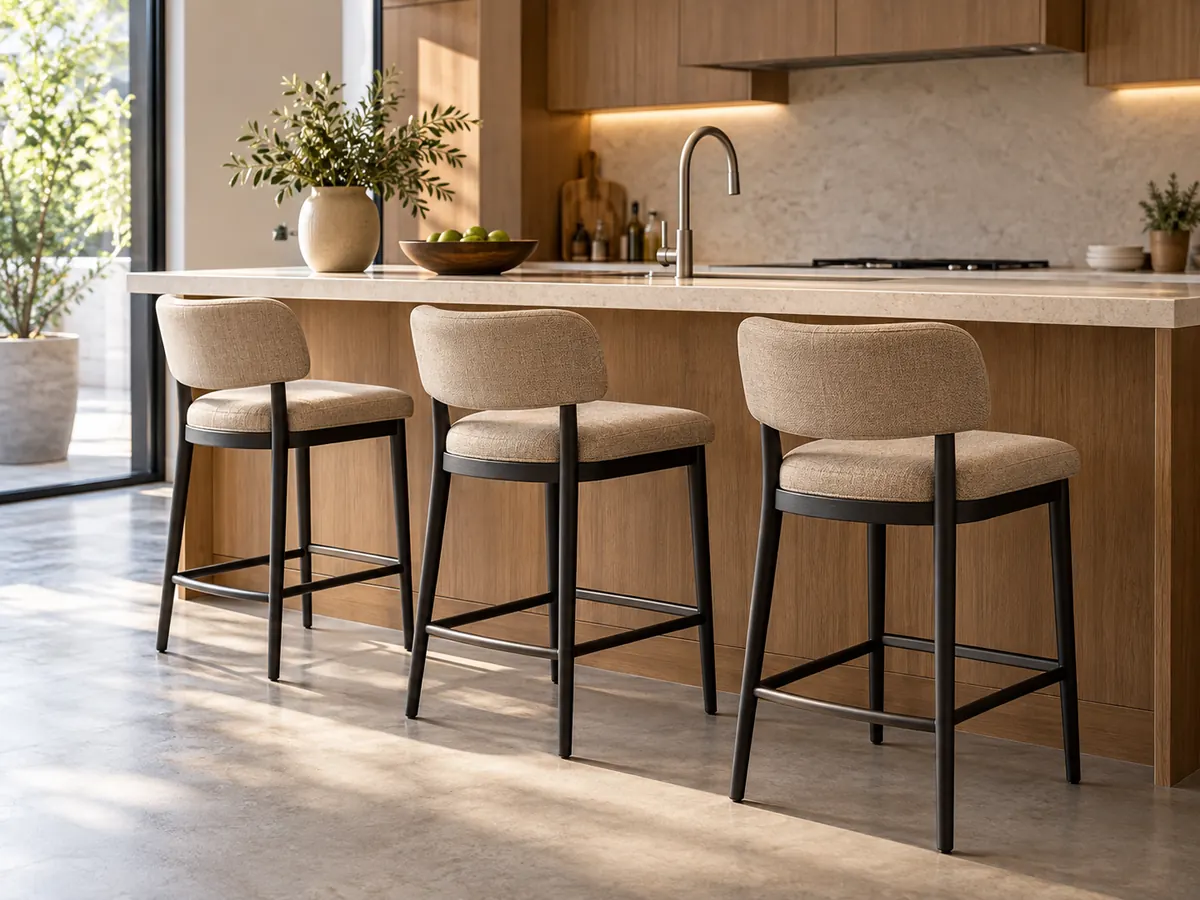
- Counter stools are made for 34–36 inch surfaces, typically 24–27 inch seat height.
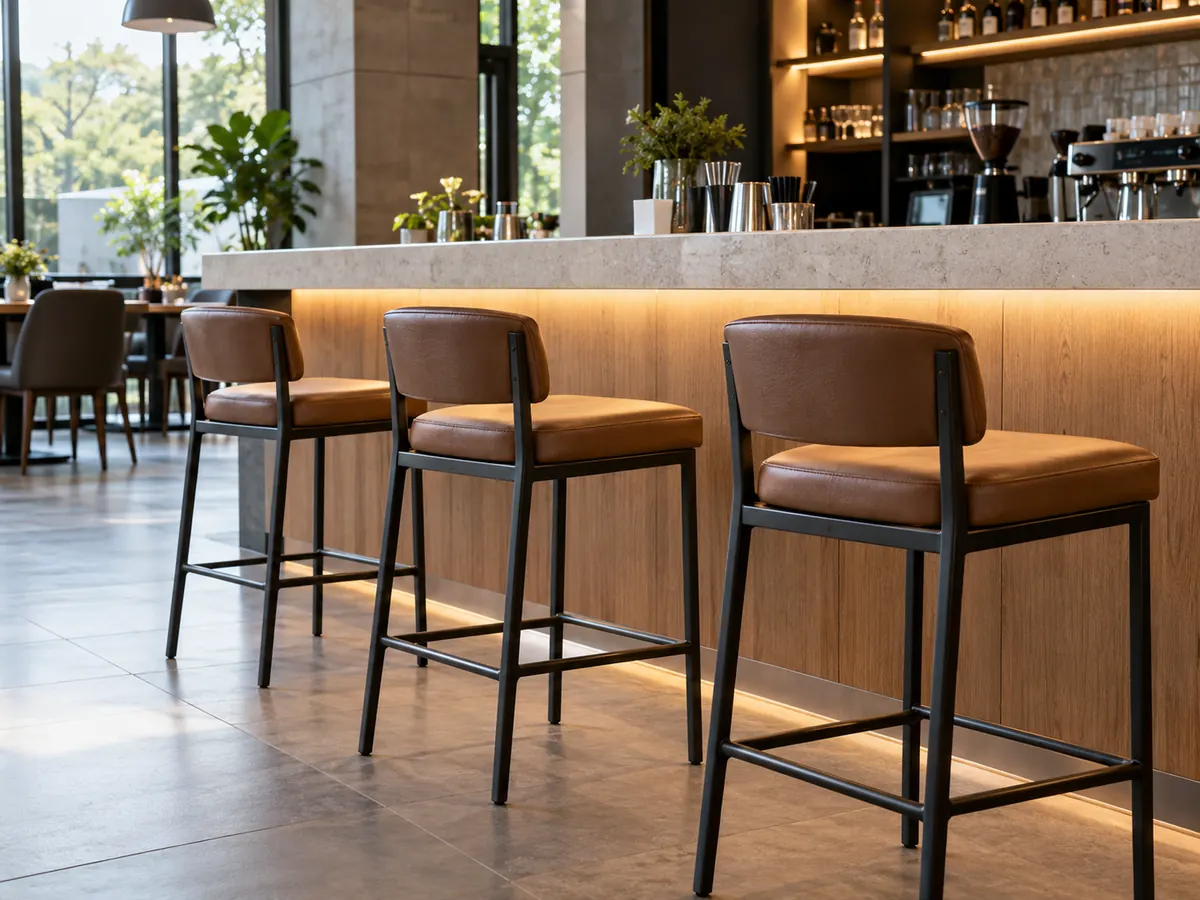
- Bar stools are made for 40–42 inch surfaces, typically 28–33 inch seat height.
If you want a quick breakdown of the different stool categories (counter, bar, extra-tall, adjustable), see YeZhi’s overview of Types of Bar Stools.
Decision table: should you choose a 24 vs 26 inch counter stool?
Both can work at a 36-inch counter. The right choice depends on fit conditions, not vibes.
| If this is true… | Choose this seat height | Why |
|---|---|---|
| You’re unsure and want the safest fit | 24 in | More knee room; more forgiving with aprons and thick tops |
| Counter has an apron/rail/brackets underneath | 24 in | Underside clearance is the limiting factor |
| You’re choosing stools with arms | 24 in | Arms often reduce real clearance under the counter |
| You have an open underside and prefer a taller perch | 26 in | Keeps you closer to the counter without feeling cramped |
| Cushion is thick/soft | 24 in (usually) | Thick seats can eat into clearance even if the seat height spec is correct |
Decision table: should you choose a 30-inch or 32-inch bar stool?
This shows up most often when your surface is 42–43 inches.
| If this is true… | Choose this seat height | Why |
|---|---|---|
| Surface is 42 inches and underside is open | 30 in | The standard bar-height pairing |
| Surface is 43 inches (and you want the normal 10–12 in gap) | 31–32 in | Keeps the gap from feeling too large |
| Underside has an apron or you feel cramped easily | 30 in | Protects knee room |
| You want extra back support / arms | 30–31 in | Higher seats with arms can collide with the counter edge |
Don’t forget the “non-height” specs that affect comfort
One quick reminder before we get into the details: when people ask how is bar stool height measured, the answer is simple—use seat height (floor to the top of the seat), not the overall height to the top of the back.
Seat height gets you in the right zone—but comfort comes from a few other details that listings sometimes hide.
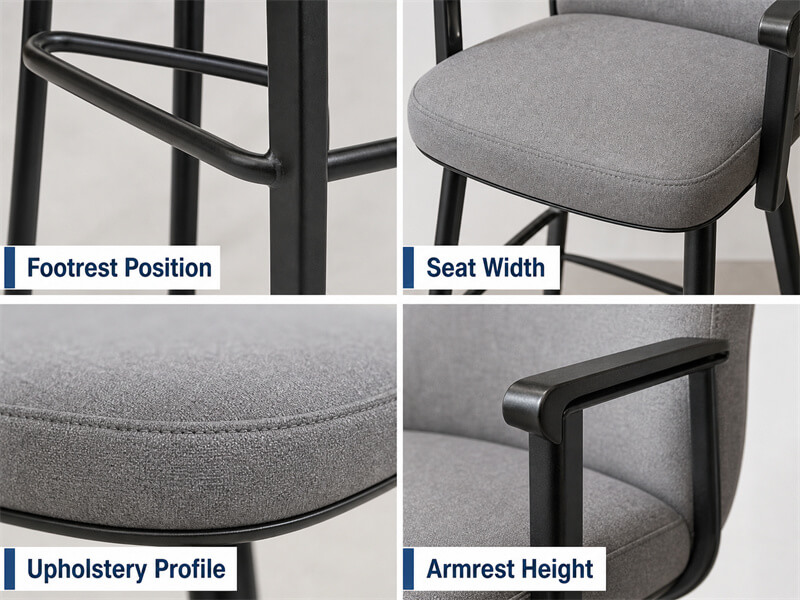
Footrest height and placement
A well-positioned footrest is strongly recommended for bar-height stools and is also important on many counter-height models. It provides stable foot support and can improve comfort during longer periods of sitting.
Seat width, swivel, and spacing
If you’re planning multiple stools in a row, spacing matters as much as height.
For a practical calculator using usable length (not total counter length), see YeZhi’s guide: How Many Bar Stools Do I Need?
Watch: How to Measure Counter and Stool Height Before Ordering
Quick buying checklist (printable in your head)
Before you click “buy,” verify:
- Your surface top height (35/36/42/43 are common—but measure anyway).
- Your underside height (lowest obstruction).
- The stool’s seat height (ignore overall height for fit).
- Whether arms/back shape will collide with the counter.
- Footrest comfort and seat width for your space.
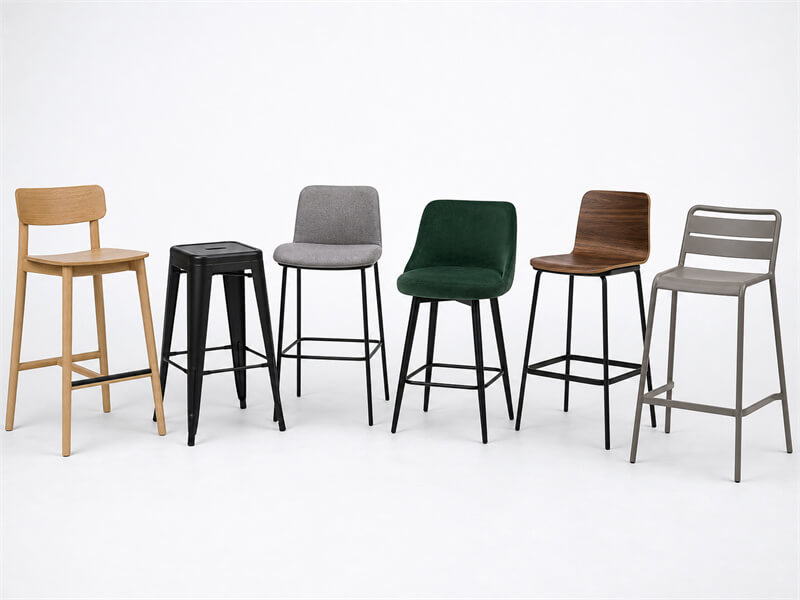
If you are selecting stools for a restaurant, café, bar, hotel, furniture collection, or commercial project, compare these measurements with the dimensions shown on each product page. Explore YeZhi’s wholesale bar stool collection to compare metal, wood, upholstered, and custom options for bulk and project orders.
FAQ
How tall are counter height stools in centimeters?
Most counter-height stools are about 61–66 cm tall in seat height (24–26 inches). Some retailers list a broader range (61–69 cm / 24–27 inches), but the best fit depends on your counter’s underside clearance.
How much space between stool and counter is comfortable?
A comfortable target is usually 10–12 inches (25–30 cm) between the seat and the underside of the counter or bar. Less can feel cramped; more can feel like you’re reaching up to eat.
Can I use counter stools at a 42-inch bar?
Usually, no. A 42-inch bar generally needs a ~30-inch seat height stool. A counter stool (24–26 inches) will sit too low and can feel awkward.
Are “counter height bar stools” a real thing?
Yes—the phrase is common. Many shoppers say “bar stool” to mean any stool. The important part is the seat height and the surface you’re pairing it with.
Next steps
If you do one thing from this article, do this: measure the underside and choose your seat height from there. It’s the fastest way to avoid the most common buying mistake.
Research and Sources
This guide was fact-checked against sizing information published by Lowe’s, KitchenAid, Home Depot, and Wayfair. Recommendations are general starting ranges rather than universal fit guarantees.
- Lowe’s, Counter Height vs. Bar Height Stools: What’s the Difference? Updated June 14, 2024.
- KitchenAid, Standard Counter Height vs. Bar Height.
- Home Depot, How to Measure Bar Stools. Updated March 12, 2025.
- Wayfair, Bar Stool Dimensions: How to Choose the Right Size for Your Space.
Last updated: June 10, 2026.