If you’ve ever compared upholstery spec sheets for a restaurant or hotel project, you’ve probably seen a line like “Wyzenbeek: 30,000 double rubs” or “Martindale: 40,000 cycles.” The problem is that people often treat those numbers like a simple “durability score.”
Here’s the reality:
Double rub count is a laboratory abrasion result under a specific test method. It does not directly predict years of service or prove a fabric is suitable for every commercial chair application.
This article explains what double rubs really measure, how to interpret “good” numbers for commercial seating, and what to check besides abrasion—so your procurement decisions don’t hinge on one misleading spec.
What does “double rub count” mean?
A double rub count is an abrasion-test result most commonly associated with the Wyzenbeek oscillatory-cylinder method, ASTM D4157. One double rub is one complete back-and-forth movement of the abradant over the specimen.
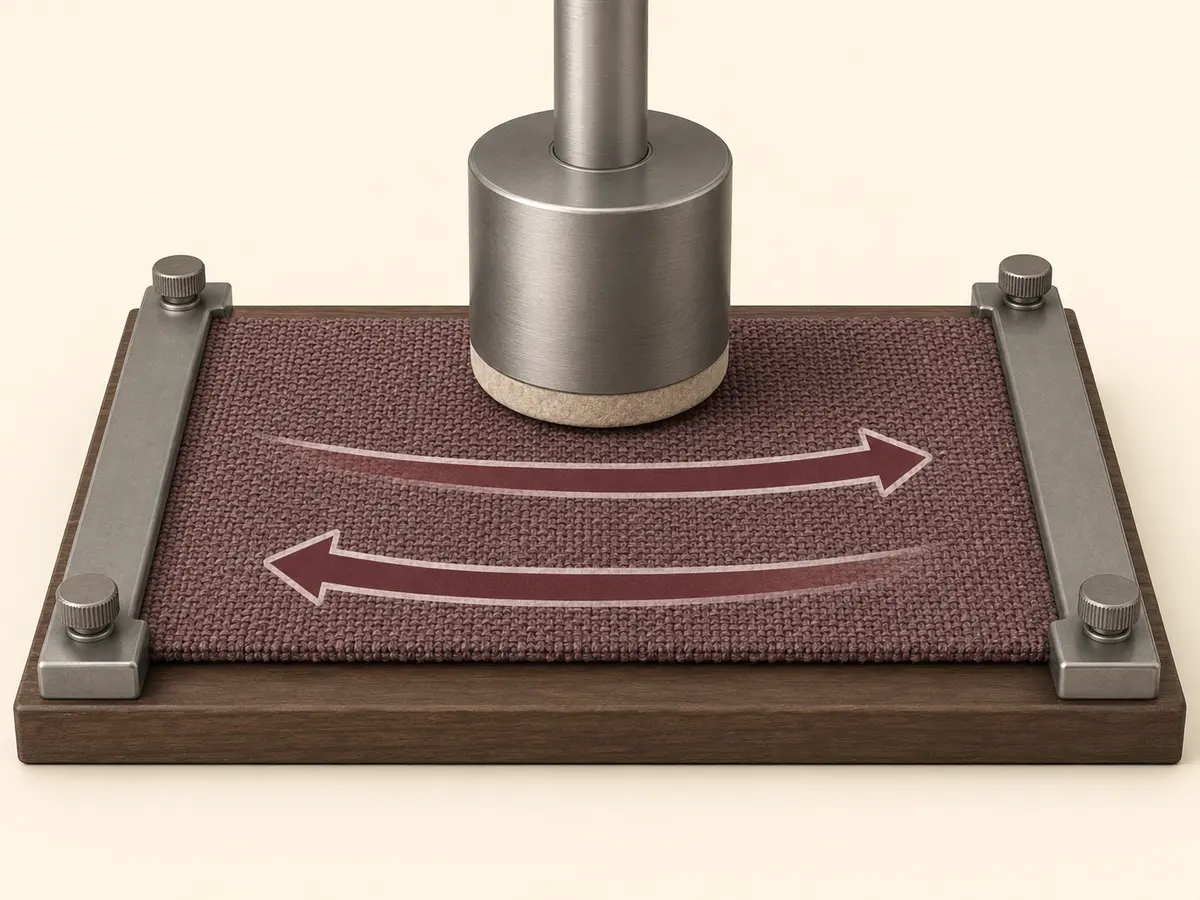
The result allows buyers to compare flat abrasion resistance only when the fabrics were tested using the same method, abradant, pressure, endpoint, and reporting conditions. It is not a general durability score or a prediction of service life.
For a plain-language definition of the test and the term “double rub,” see Schumacher’s explainer on fabric abrasion and the Wyzenbeek “double rub”.
How the Wyzenbeek test works (and what gets reported)
Under ASTM D4157, specimens are held under controlled tension and rubbed back and forth against a specified abradant. ACT’s woven-fabric procedure uses specimens cut in the warp and weft directions and normally uses ACT-approved No. 10 cotton duck as the abradant. The reported count ends at the stated failure or appearance endpoint.
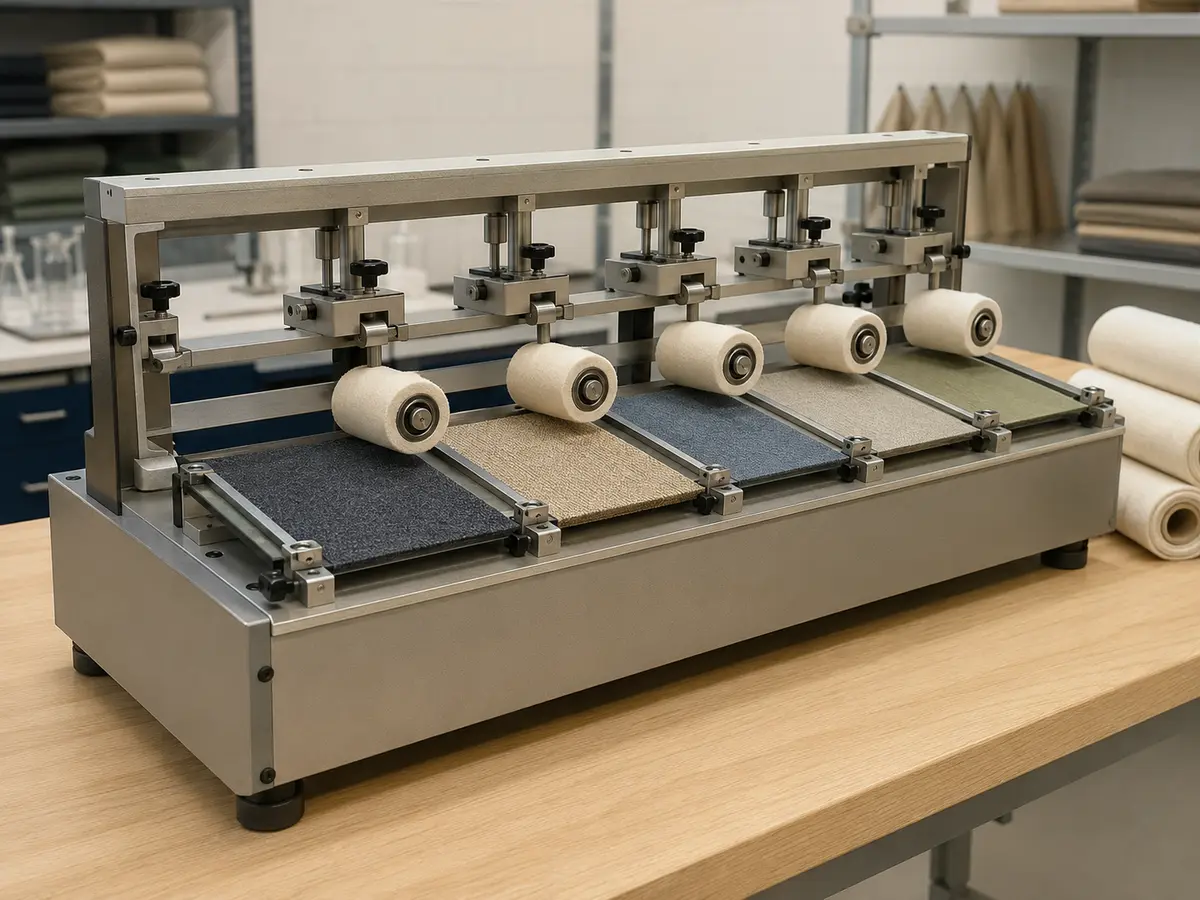
The number therefore has meaning only when the report identifies the standard version, specimen direction, abradant, endpoint, and whether testing ended because of failure or at a preset stop count.
What the lab report details mean
When you request an abrasion report from a fabric supplier, look for these items (not just the headline rub count):
- Test method (e.g., Wyzenbeek vs. Martindale)
- Abradant (what material was used to rub the fabric)
- Direction (warp/weft direction for woven textiles)
- Endpoint / failure criteria (what counts as failure: yarn breaks, noticeable wear, etc.)
- Result wording (did it fail at a number—or did the test stop at a preset count?)
- Lab + report date (helps procurement verify the document is current and traceable)
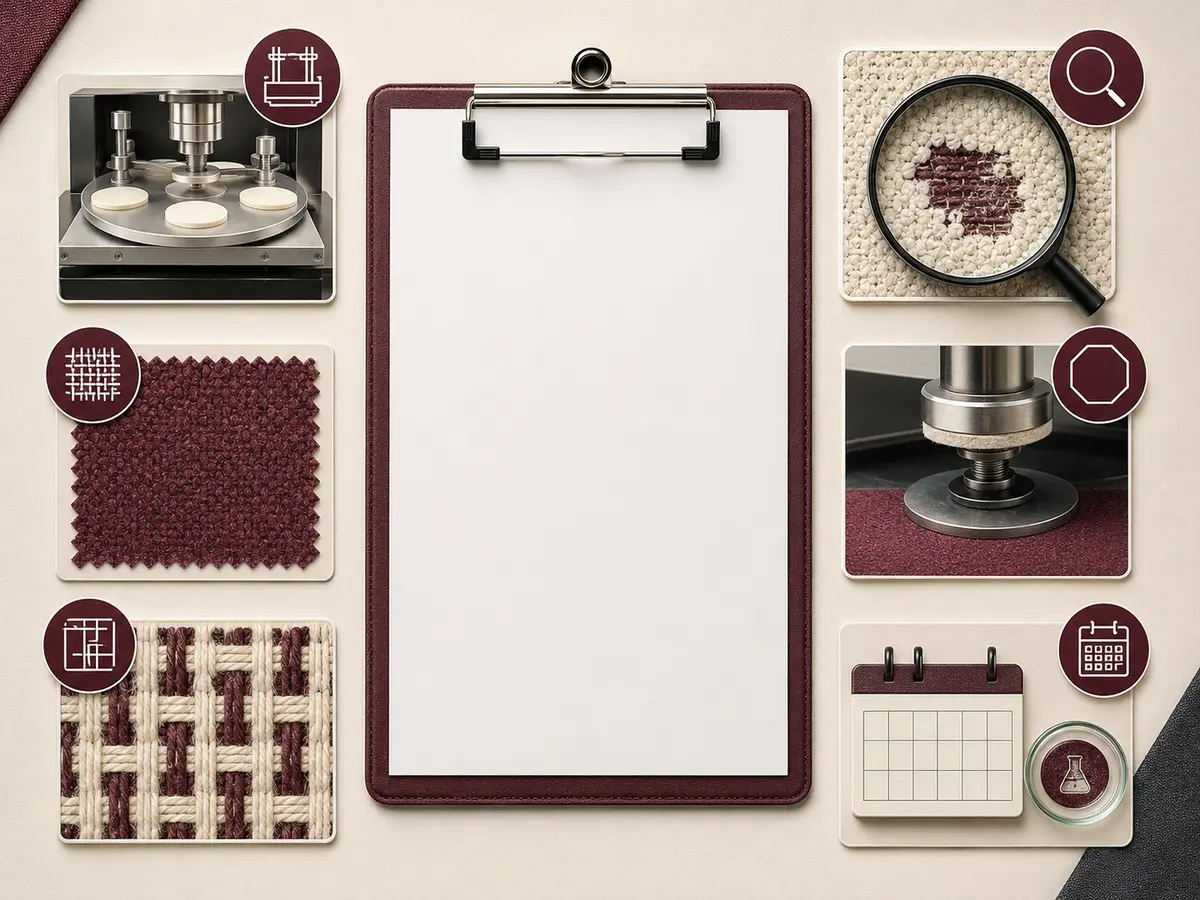
Pro Tip: If you see a result like “100,000 double rubs,” ask whether that’s a failure point or simply a stopped test (for example, the test ran to 100,000 and was ended without failure). Those are not the same thing.
What is a good double rub count for commercial upholstery?
A “good” commercial upholstery rub count depends on (1) the test method and (2) the material type.
For woven upholstery (common for hospitality seating)
The Association for Contract Textiles (ACT) publishes voluntary performance guidelines and an important warning: abrasion testing is a lab indicator, not a guarantee of real-world lifespan.
For indoor woven upholstery, ACT’s voluntary guidelines use 30,000 double rubs under ASTM D4157 or 40,000 cycles under ASTM D4966 for high-traffic/public-space applications.
Treat these figures as screening thresholds, not universal targets. ACT notes that constant-demand environments, including some fast-food restaurants and 24-hour public spaces, may justify a higher abrasion requirement. However, results above the guideline have not been shown to predict proportionally longer service life.
You can reference ACT’s official cautions in their Abrasion Disclaimer.
For the guideline tables and use-case examples, see ACT’s Performance Guidelines pages (on contracttextiles.org).
For coated fabrics (vinyl/PU and similar)
Don’t apply woven-fabric thresholds to coated upholstery. ACT’s voluntary high-traffic/public-space guideline for coated upholstery is 50,000 Wyzenbeek double rubs under ASTM D4157, using an approved cotton-duck or wire-screen abradant as applicable.
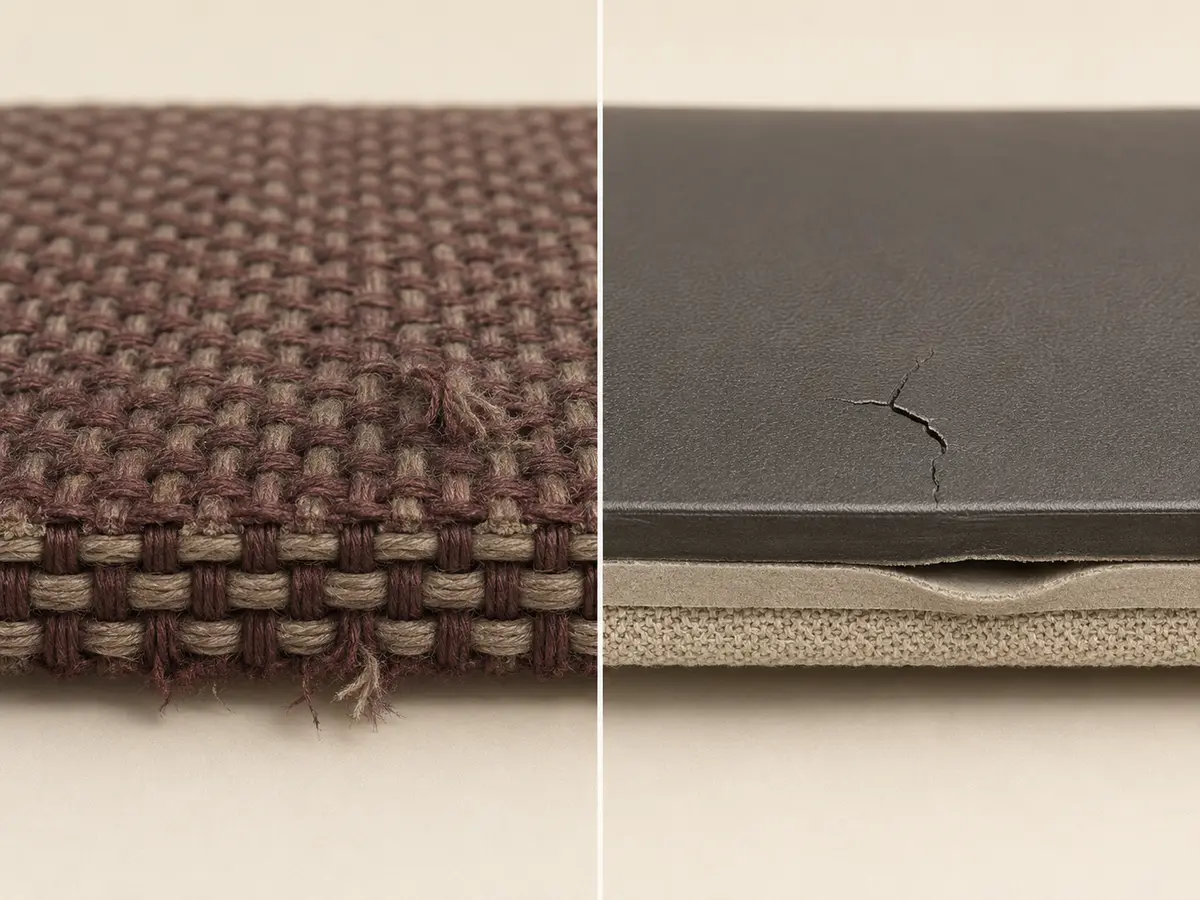
Even at that level, abrasion is only one part of the specification. Buyers should also request relevant data for coating adhesion, hydrolysis resistance where applicable, tear strength, cleaner compatibility, and print retention. Vinyl, polyurethane, silicone, and other coated materials can fail through cracking, delamination, chemical damage, or coating breakdown that a flat abrasion count does not predict.
A quick “double rub count chart” you can actually use
This chart is intentionally conservative and procurement-friendly.
| If your report says… | It can tell you | It cannot tell you |
|---|---|---|
| Wyzenbeek “double rubs” | Flat abrasion resistance under that method | How many years it will last in a restaurant |
| Martindale “cycles” | Flat abrasion resistance under a different motion pattern | A number you can reliably convert to Wyzenbeek |
| A higher number | The fabric resisted abrasion longer in that lab setup | That it will resist edge wear, seam issues, or harsh cleaning |
| “100,000+” | The test ran a long time (maybe to a stop count) | That it’s “24/7 commercial grade” by default |
Is 30,000 double rubs “commercial grade”?
For woven upholstery, 30,000 Wyzenbeek double rubs is commonly used as a high-traffic guideline, and it may be appropriate for many hospitality applications.
For more context on how abrasion results should (and shouldn’t) be interpreted, ACT’s abrasion disclaimer is worth reading before you lock a specification.
But commercial grade is never just one number. The upholstery still has to survive:
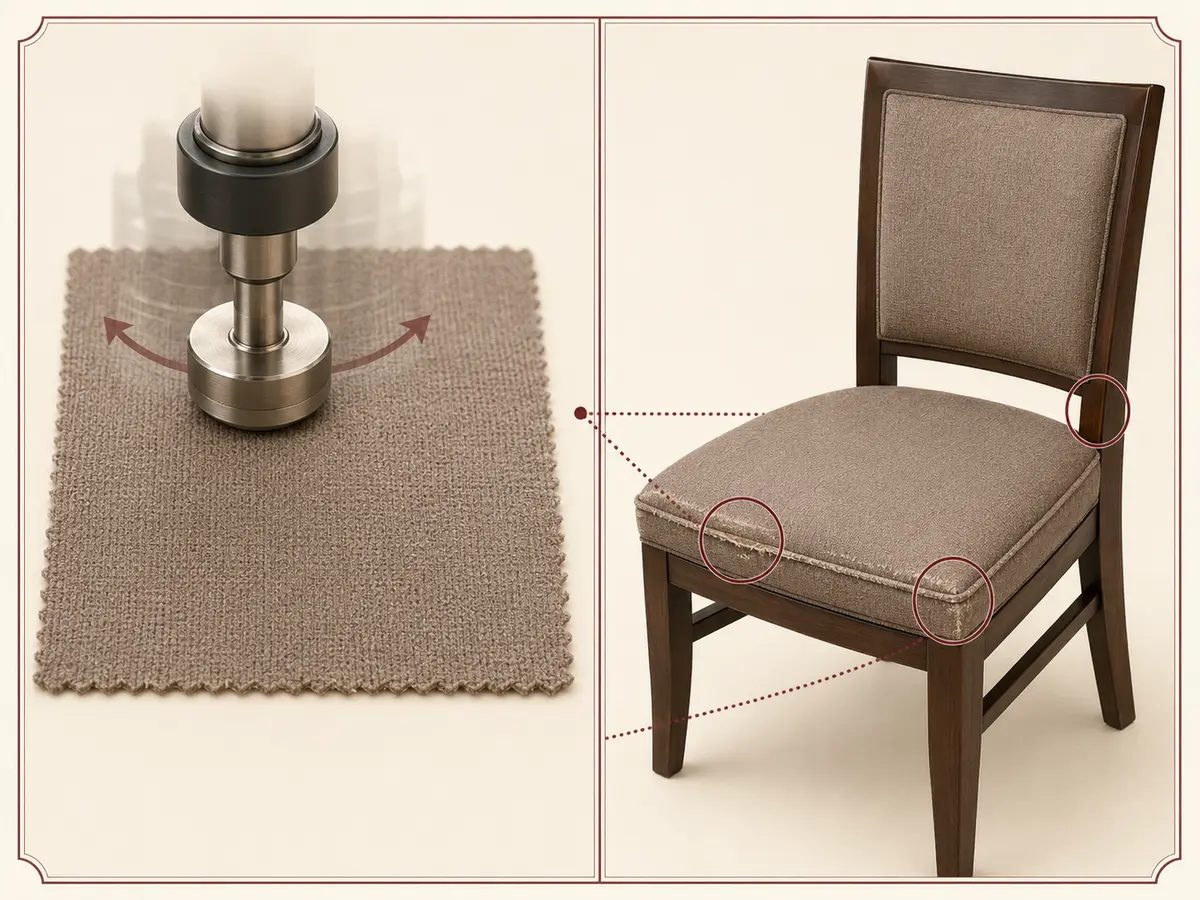
- seat-front edge abrasion and corner wear
- seam stress and seam slippage
- pilling and fuzzing
- staining and repeated cleaning
- chemical exposure (sanitizers/disinfectants)
Is a higher double rub count always better?
No.
ACT points out two practical reasons:
- Abrasion tests measure flat abrasion only, not real chair failure modes like edges, seams, or chemical wear.
- Results can vary substantially, and doubling the number doesn’t mean doubling the service life.
ACT’s abrasion disclaimer is worth reading if you’re building specs for commercial seating.
⚠️ Warning: If a supplier’s sales pitch is “Our fabric is 100,000 double rubs, so it will last twice as long as 50,000,” treat that as marketing—not engineering.
Why restaurant chairs fail even when rub counts look great
Abrasion testing is performed on a flat sample. A commercial chair is not a flat sample.
In hospitality seating, the most common weak points aren’t always the center of the seat:
- Seat-front edge wear where guests slide in and out
- Corners and piping where stress concentrates
- Seams that can creep, open, or distort
- Pilling on textured weaves
- Color change from repeated wiping and UV exposure
- Surface breakdown from disinfectants and aggressive cleaners
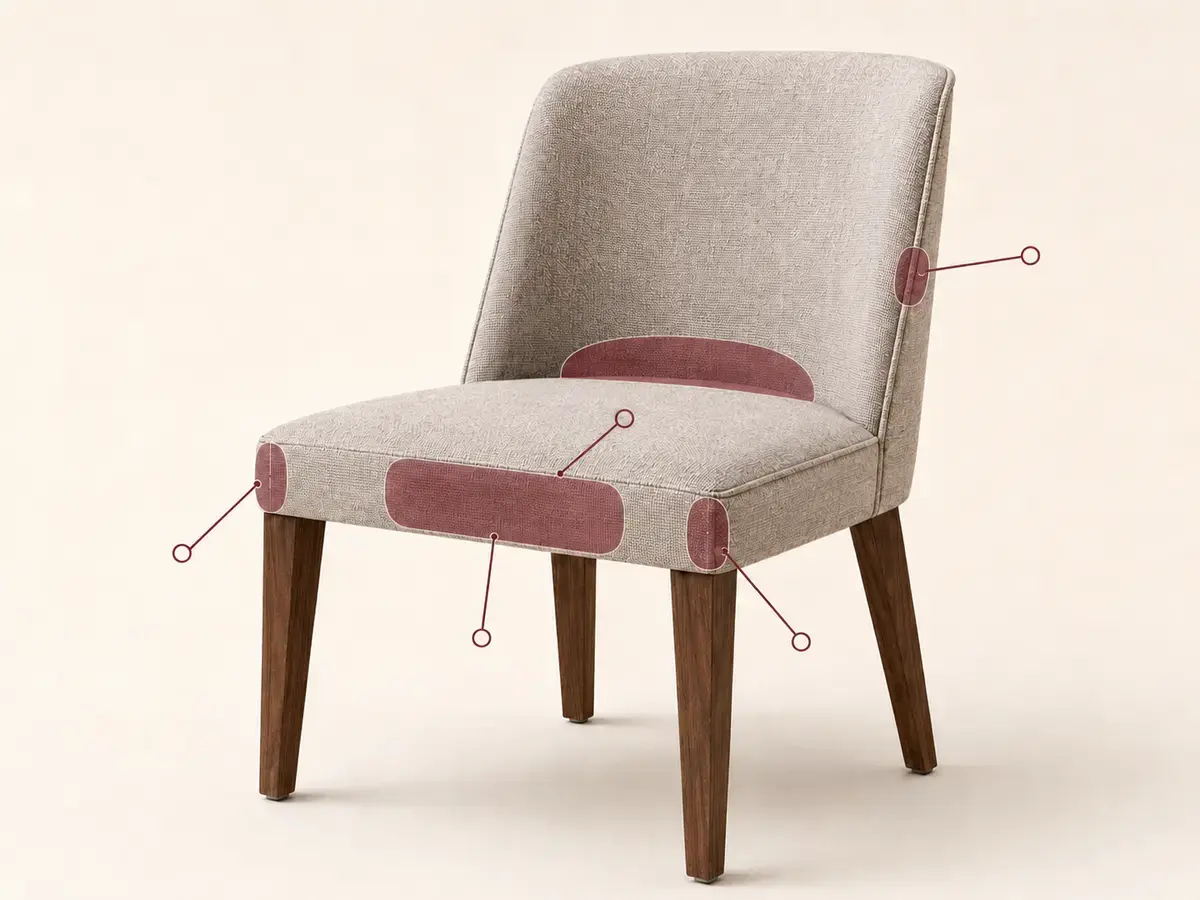
That’s why reading the test method matters—but so does understanding the application.
How to read an abrasion report like a procurement manager
Use this as an RFQ-ready checklist when you request upholstery documentation.
Step 1: Confirm the method and whether you’re comparing like-for-like
- Is it Wyzenbeek or Martindale?
- Are you comparing fabrics tested under the same method?
If not, don’t “convert.” Even industry explainers emphasize the methods differ in motion and evaluation, so one score does not imply the other.
Step 2: Confirm what the reported number represents
Ask the supplier to clarify in writing:
- Did the fabric fail at that number?
- Or did the lab stop at that number without failure?
A stopped test may still be useful—but it’s not the same as a failure point.
Step 3: Verify it matches the exact fabric you’re buying
For contract projects, it’s not enough to see a generic brochure claim:
- confirm the fabric SKU and colorway
- confirm the batch/lot if available
- confirm the report date and lab
What else should you check besides rub count?
If you’re sourcing upholstered restaurant, café, or hotel chairs, treat rub count as one line item in a bigger durability package:
- Cleanability (and the cleaning code, if provided)
- Cleaner / disinfectant compatibility (request the approved list)
- Stain resistance (especially for dining)
- Pilling resistance
- Seam slippage (critical for tight upholstery)
- Colorfastness (rubbing and cleaning)
- Lightfastness (sunlight, especially near windows)
- Applicable flammability requirements for your market/project (requirements vary)
- Batch consistency + re-orderability (important for distributors and roll programs)
- Chair construction at high-wear points (seat edge, corners, seam design)
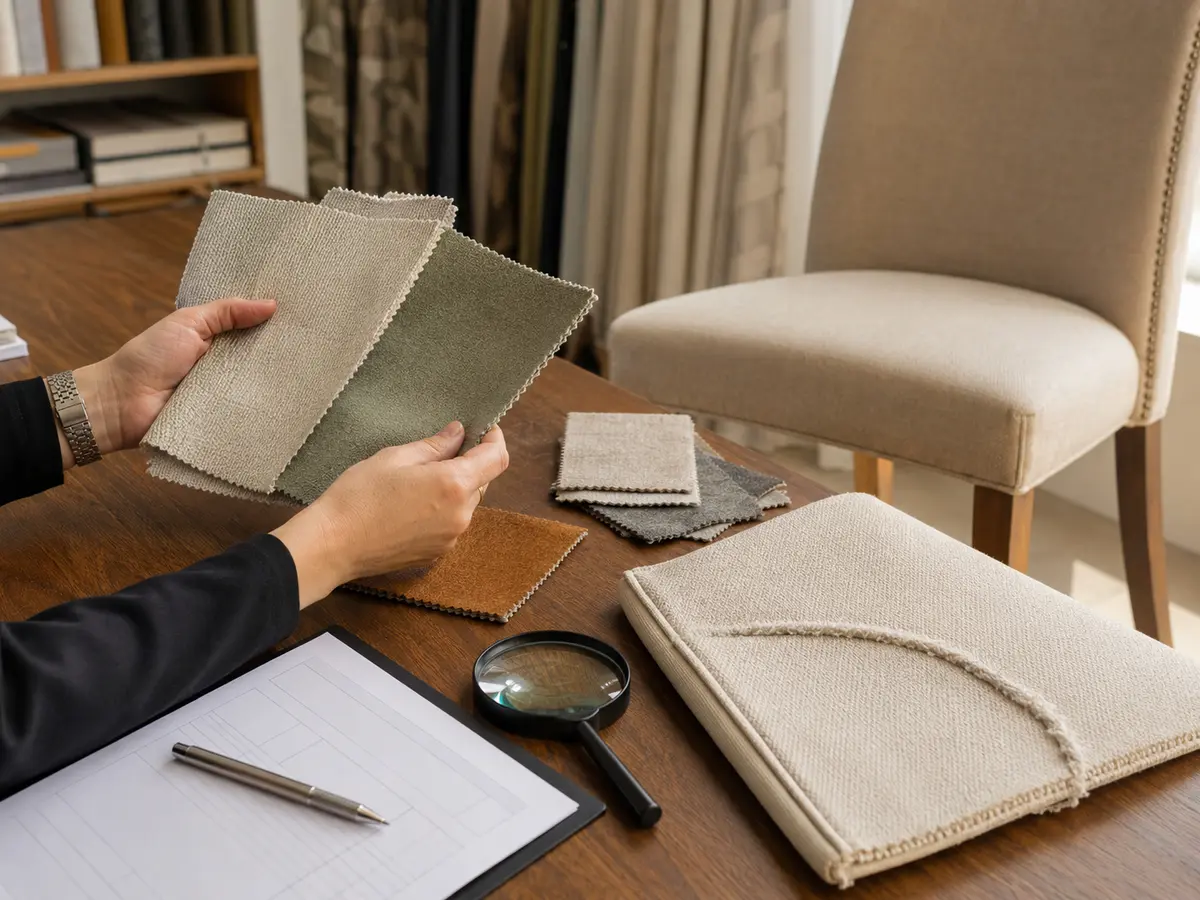
If you’re also selecting the chair model itself (not just the fabric), a broader material comparison can help. YeZhi’s overview of restaurant chair materials is a useful starting point.
Wyzenbeek vs Martindale (quick answer)
- Wyzenbeek typically reports double rubs (one back-and-forth motion).
- Martindale reports cycles using a different motion pattern.
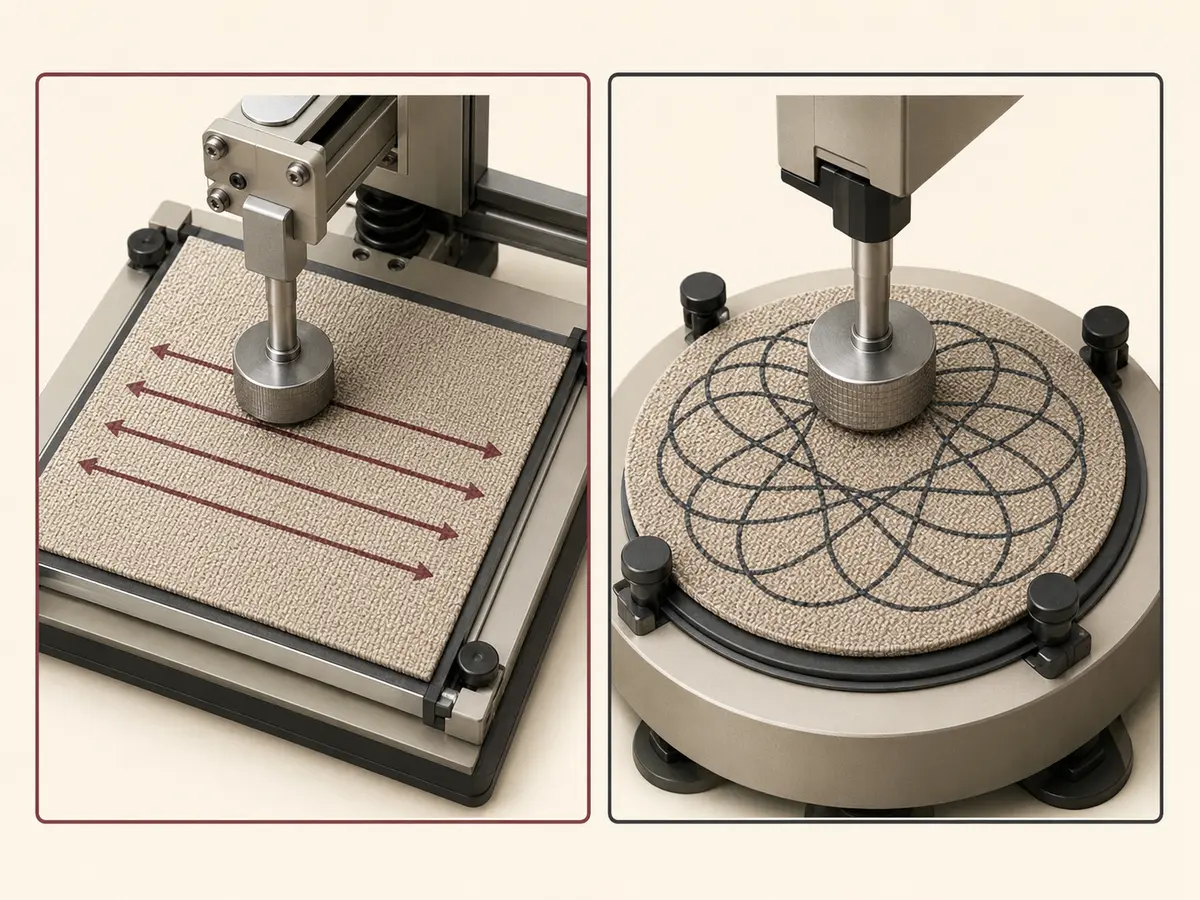
Because the motions, abradants, and endpoints differ, you should not convert one to the other for procurement decisions. For a simple overview of how the two methods differ, see Trivantage’s explanation of Wyzenbeek vs. Martindale durability ratings.
FAQ
What does double rub count mean for upholstery?
It’s the number of back-and-forth abrasion cycles a fabric withstands in a standardized lab test (often Wyzenbeek) before reaching a defined wear endpoint. It helps compare flat abrasion resistance under that method, but it doesn’t predict real-world lifespan.
How many double rubs are good for commercial upholstery?
Start by confirming the test method and whether the material is woven or coated. For woven upholstery, ACT’s voluntary guidelines are commonly used as a reference point, but they also caution that higher numbers don’t guarantee longer service life.
What does 30,000 double rubs mean?
It means the fabric reached 30,000 back-and-forth cycles under the stated test conditions. For woven fabrics, 30,000 Wyzenbeek is often referenced as a high-traffic guideline, but you still need to evaluate seams, cleaning compatibility, and the chair’s high-wear areas.
What does 100,000 double rubs mean?
It means the fabric was tested to a very high abrasion count under a stated method. It does not automatically mean the fabric will last a certain number of years, and it may reflect a stopped test rather than a failure point.
Can Wyzenbeek and Martindale be converted?
Not reliably. They use different motions, abradants, and endpoints, so treat them as different tests rather than interchangeable units.
Next steps for commercial chair upholstery selection
If you’re specifying upholstered chairs for hospitality projects, the fastest way to reduce risk is to request the full documentation package upfront:
- abrasion test report (method + endpoint)
- seam and pilling data (if available)
- approved cleaner/disinfectant list
- a physical upholstery sample for inspection
If you’re sourcing chair frames and upholstery together, YeZhi Furniture’s team can support upholstery options as part of contract production. Start with our commercial bar stool manufacturer overview or learn about YeZhi Furniture and typical project support.