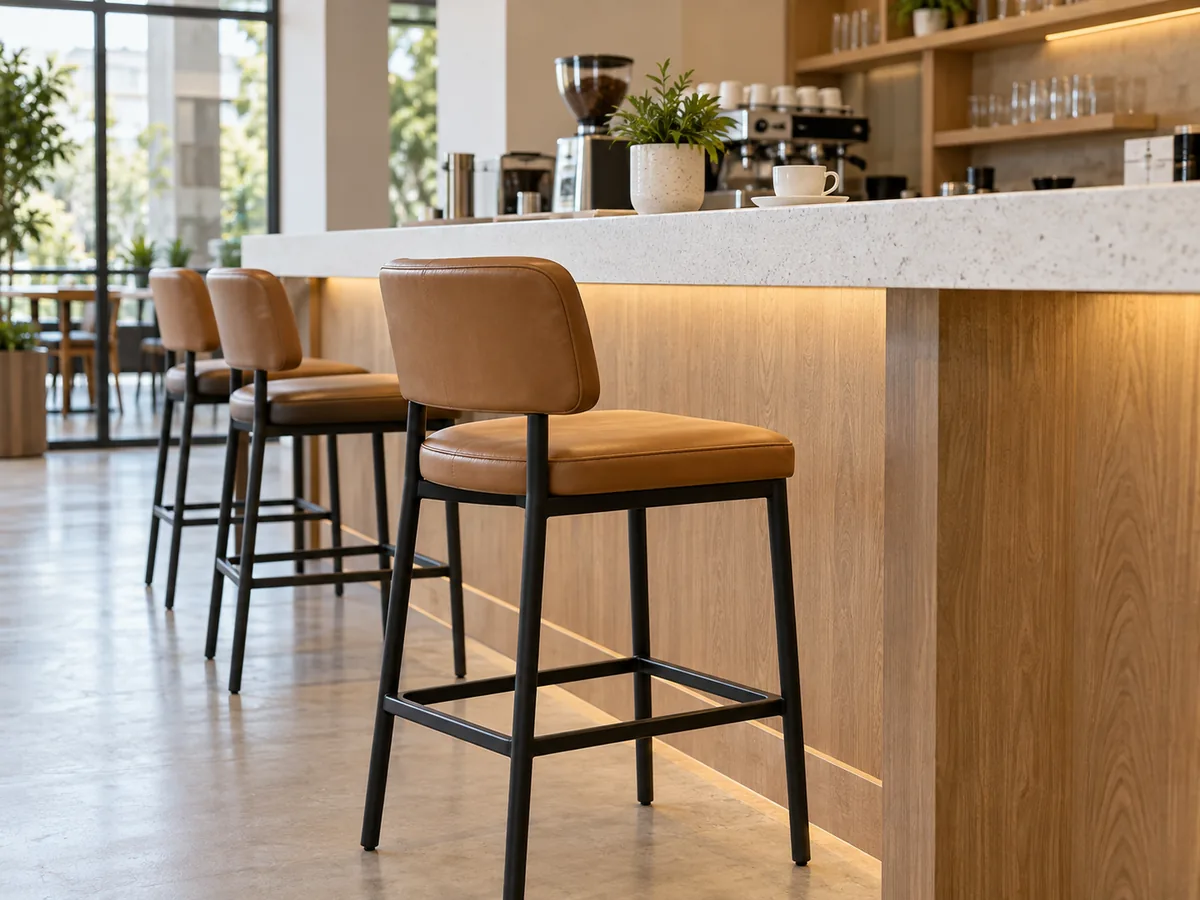
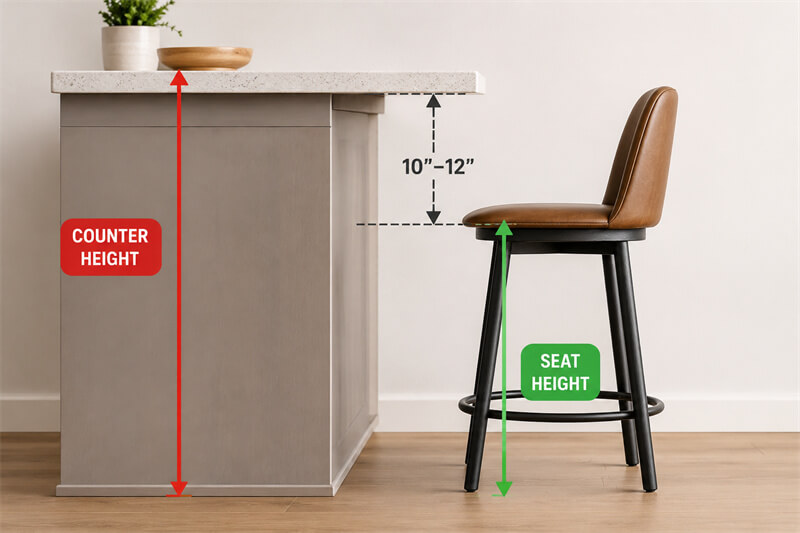
To measure bar stool height, measure from the floor to the top of your counter or bar, then subtract 10 to 12 inches. This gives you the ideal seat height. For a 36-inch counter, choose a 24- to 26-inch stool. For a 40- to 42-inch bar, choose a 28- to 32-inch stool.
| Counter / Bar Height | Best Stool Seat Height | Common Use |
|---|---|---|
| 34 inches | 22–24 inches | Low counter / small island |
| 36 inches | 24–26 inches | Kitchen island / counter |
| 40 inches | 28–30 inches | Bar counter |
| 42 inches | 29–32 inches | Home bar / commercial bar |
| 44 inches | 32–34 inches | Extra-tall bar |
| 46–48 inches | 34–36 inches | Spectator / extra-tall seating |
Quick Expert Rule: Seat Height Matters More Than Stool Name
The most important number is the seat height, not whether the product is called a counter stool, bar stool, pub stool, or island stool. Different sellers may use these names differently, but the seated position is decided by the distance from the floor to the top of the seat.
As a practical rule, always confirm three measurements before buying: the counter or bar height, the actual seat height, and the usable space under the counter. These three numbers prevent most sizing mistakes.
Step 1: Measure the Counter or Bar Height
Place a tape measure on the floor beside the surface and measure straight up to the top.
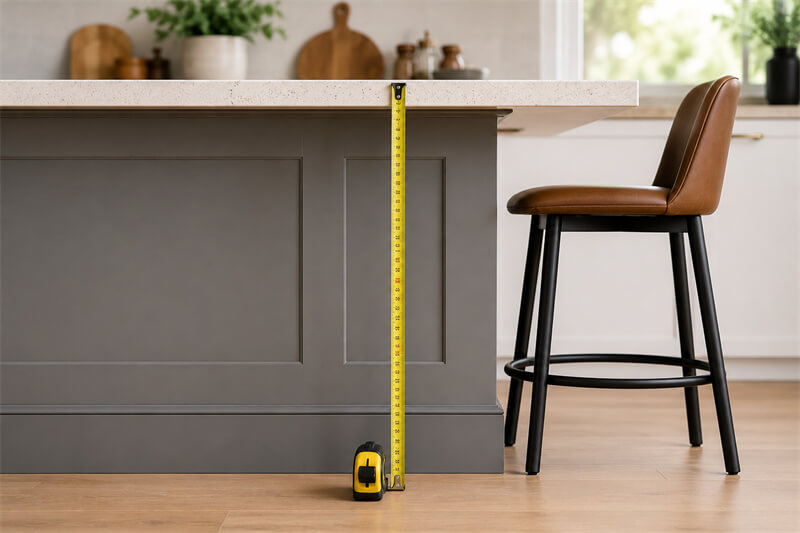
Most home setups fall into these ranges:
| Surface Type | Typical Height |
|---|---|
| Kitchen counter or island | 34-36 inches |
| Breakfast bar | 34-36 inches |
| Home bar | 40-42 inches |
| Extra-tall bar | 44 inches or more |
A kitchen island is usually around 36 inches high. A home bar is usually closer to 42 inches.
Measure More Than One Spot
For built-in counters, restaurant bars, and custom kitchen islands, do not measure only one spot. Measure the left side, center, and right side of the counter. Small differences in flooring, countertop thickness, or custom installation can change the sitting comfort.
This matters more in commercial spaces because several stools may sit along the same bar. If one section is slightly lower or higher, the stools may look uneven or feel inconsistent to customers.
Step 2: Check the Usable Legroom
Top height is not the whole story.
A thick countertop edge, apron, support rail, or shallow overhang can reduce knee room and make a stool feel too tall. When the underside limits space, measure from the floor to the lowest point underneath the counter.
That measurement often matters more than the decorative top edge.
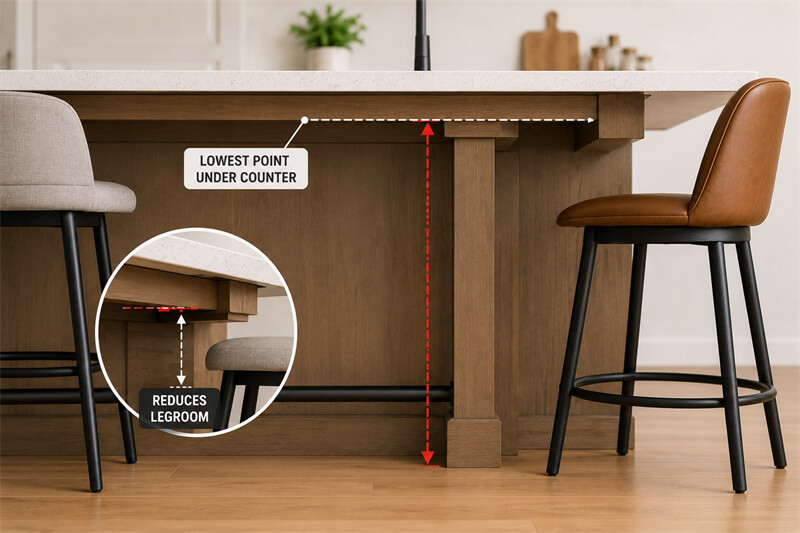
Check the Lowest Point Under the Counter
In real projects, the lowest point under the counter often decides whether a stool feels comfortable. A thick apron, metal support beam, storage shelf, or decorative panel can reduce knee room even when the top height looks correct.
If the underside is tight, choose a slightly lower seat height within the recommended range. For example, if a 36-inch counter has limited clearance underneath, a 24-inch seat may feel better than a 26-inch seat.
Step 3: Subtract 10 to 12 Inches
Once you know the surface height, subtract 10 to 12 inches to get the right seat height.
Formula:
Counter or bar height – 10 to 12 inches = ideal stool seat height
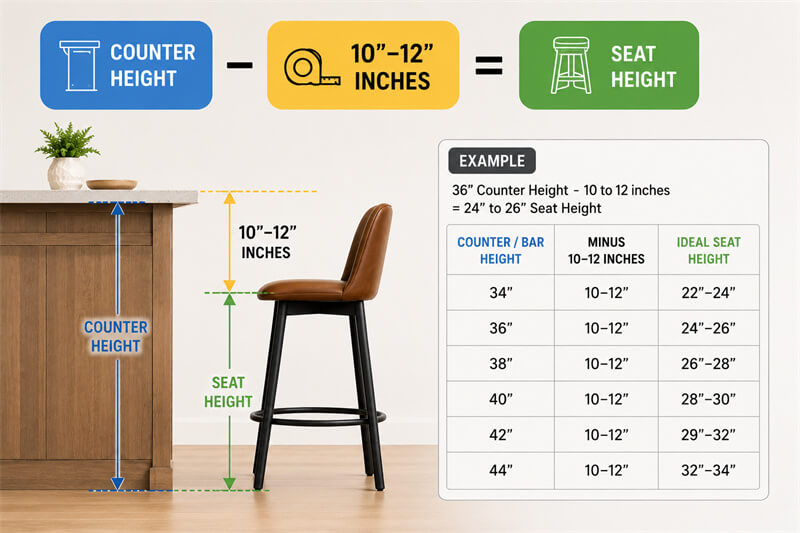
Here are the most common pairings:
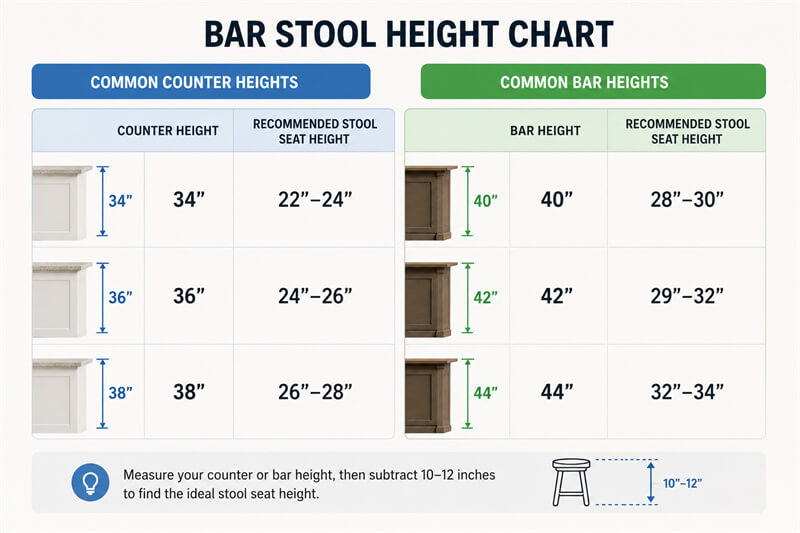
| Surface Height | Recommended Seat Height |
|---|---|
| 34 inches | 22-24 inches |
| 36 inches | 24-26 inches |
| 38 inches | 26-28 inches |
| 40 inches | 28-30 inches |
| 42 inches | 29-32 inches |
| 44 inches | 32-34 inches |
A 10-inch gap feels slightly tighter and more upright.
A 12-inch gap feels more relaxed and usually works better with thicker seats or longer sitting sessions.
For most homes, anywhere in that range works well.
When Should You Choose the Lower or Higher End?
Choose the lower end of the range when the seat is thick, the counter has limited knee clearance, or the stool has arms. This gives the sitter more room and makes the stool easier to slide in and out.
Choose the higher end of the range when the seat is thin, the counter is open underneath, or the user prefers a more upright sitting position. In commercial bars and cafes, the middle of the range is usually the safest choice because it works for more body types.
Counter Stools vs. Bar Stools
These two categories are close in appearance and different in use.
Counter Stools
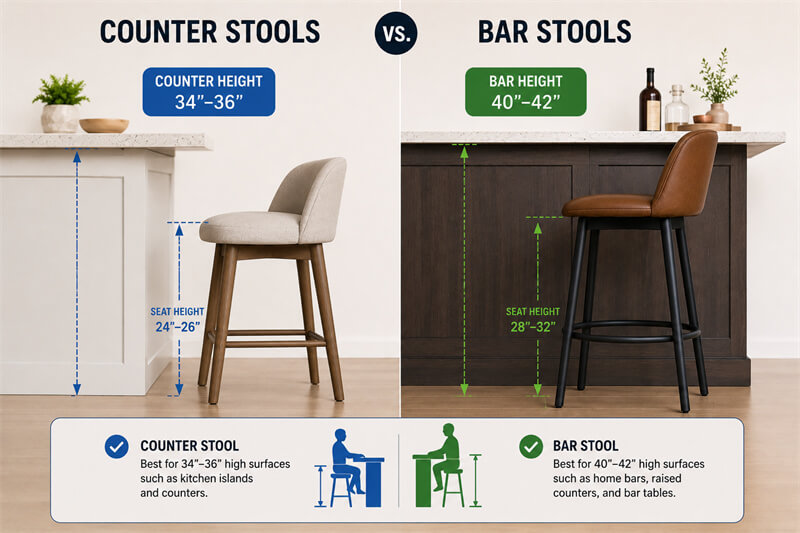
Counter stools are made for surfaces around 34 to 36 inches high. Their seat height is usually 24 to 26 inches.
They are the standard choice for:
- kitchen islands
- kitchen counters
- breakfast bars
- casual dining spaces
Bar Stools
Bar stools are made for surfaces around 40 to 42 inches high. Their seat height is usually 28 to 32 inches.
They are the standard choice for:
- home bars
- raised counters
- basement bars
- entertainment areas
A counter stool will sit too low at a bar-height surface. A bar stool will usually sit too high at a kitchen island. Even a small mismatch is obvious once you sit down.
Do Not Mix Counter Stools and Bar Stools in One Project
For home use, one wrong stool may only be inconvenient. For restaurants, cafes, hotels, and bar projects, mixing counter-height and bar-height stools can create a visible layout problem and a poor customer experience.
Before placing a bulk order, confirm whether each area is counter height, bar height, or extra-tall height. Many commercial spaces use more than one counter level, especially when they include a bar counter, dining counter, service counter, and waiting area.
Bar Stool Height Chart
Common Counter Heights
| Counter Height | Recommended Stool Seat Height |
|---|---|
| 34 inches | 22-24 inches |
| 36 inches | 24-26 inches |
| 38 inches | 26-28 inches |
Common Bar Heights
| Bar Height | Recommended Stool Seat Height |
|---|---|
| 40 inches | 28-30 inches |
| 42 inches | 29-32 inches |
| 44 inches | 32-34 inches |
How to Measure a Bar Stool Properly
Many product listings lead with the wrong number.
When a stool is listed as 39 or 40 inches high, that often means overall height, including the backrest. That number does not tell you whether the stool fits your counter.
Use seat height only.
To measure it, place a tape measure on the floor and measure to the top of the seat. Ignore the backrest and any decorative frame above the seat.
If the product page does not list seat height clearly, the sizing information is incomplete.
Buyer Tip: Ask for Seat Height, Overall Height, and Drawing Details
For wholesale or project orders, do not rely only on the product title or catalog photo. Ask the supplier for the seat height, overall height, seat width, seat depth, footrest height, and technical drawing if available.
This is especially important for upholstered bar stools, stools with curved seats, and stools with thick cushions. The listed height may not always reflect the real sitting position after the cushion compresses under body weight.
Other Details That Affect Fit
The formula gets you close. These details determine comfort:
Cushion Thickness
A thick cushion raises the real sitting height.
Footrest Position
A stool can be the right height and still feel awkward if the footrest sits too high or too low.
Seat Depth
A deep seat can push the sitter forward under a shallow overhang.
Overhang Depth
Limited overhang reduces knee room even when the stool height is correct.
The right fit should feel natural right away. It should not need adjustment every time someone sits down.
Commercial Comfort Depends on More Than Height
In commercial seating, height is only the first step. A bar stool also needs stable foot support, enough seat depth, strong frame construction, and a finish that matches the use environment.
For restaurants and cafes, customers may sit for longer than expected. A stool with the correct height but poor footrest position can still feel uncomfortable. A stool with the right look but weak frame construction may also create long-term maintenance problems.
For project buyers, the best choice is usually not the tallest or most stylish stool. It is the stool that fits the counter height, supports the customer comfortably, and can handle repeated daily use.
Best Stool Height by Setting
Kitchen Island
Most kitchen islands are about 36 inches high, so 24- to 26-inch counter stools are usually right.
Breakfast Bar
Most breakfast bars also fit 24- to 26-inch stools, as long as the underside is open enough for comfortable legroom.
Home Bar
Most home bars are around 40 to 42 inches high, so 28- to 32-inch stools are the standard choice.
For taller bars, measure first. Extra-tall bars often need extra-tall stools.
Fixed vs. Adjustable Stools
For most homes, fixed-height stools are the better choice. They look cleaner, feel steadier, and have fewer moving parts.
Adjustable stools make sense when flexibility matters more than simplicity, especially when the stools may move between different surfaces.
When the counter height is fixed, fixed stools usually make more sense too.
Spacing Tips for Comfortable Seating
Height matters first. Spacing matters next.
Space Between Stools
For most home layouts, leave about 24 inches center to center between stools. For a more comfortable layout, go closer to 26 inches center to center.
A good working rule is 6 to 10 inches between stools, depending on stool width. Swivel stools usually need more space.
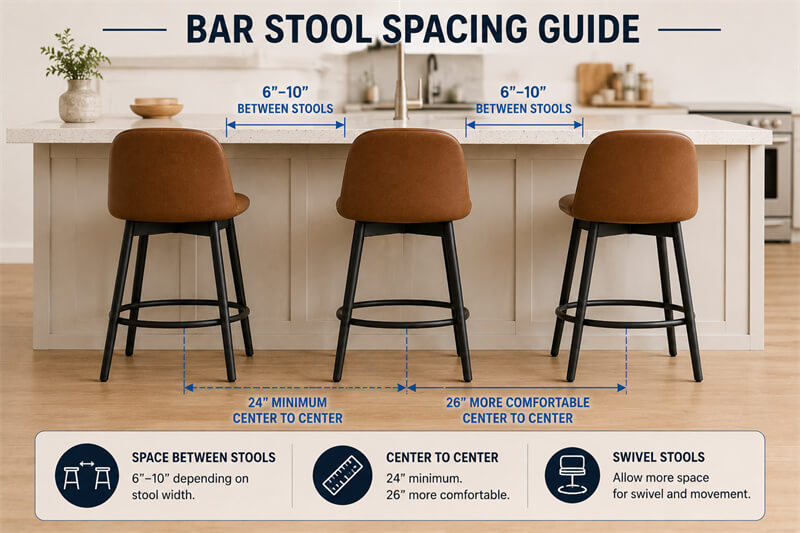
| Spacing Type | Recommended Measurement |
|---|---|
| Between stools | 6-10 inches |
| Center to center | 24 inches minimum |
| More comfortable center to center | 26 inches |
How Many Stools Fit on a Kitchen Island
| Island Length | Typical Stool Capacity |
|---|---|
| 4 feet | 2 stools |
| 5 feet | 2-3 stools |
| 6 feet | 3 stools |
| 7 feet | 3-4 stools |
| 8 feet | 4 stools |
If the stools have arms, wider seats, or swivel bases, reduce the count slightly. One fewer stool usually creates a better everyday layout.
For Commercial Layouts, Fewer Stools Can Be Better
In restaurants, bars, and cafes, putting too many stools along one counter can reduce comfort and make the space feel crowded. This can also make it harder for customers to sit down, turn, leave the seat, or move bags and coats.
For commercial projects, we usually recommend planning for comfort first and capacity second. One fewer stool often creates a cleaner layout, better customer movement, and a more premium seating experience.
Common Bar Stool Sizing Mistakes
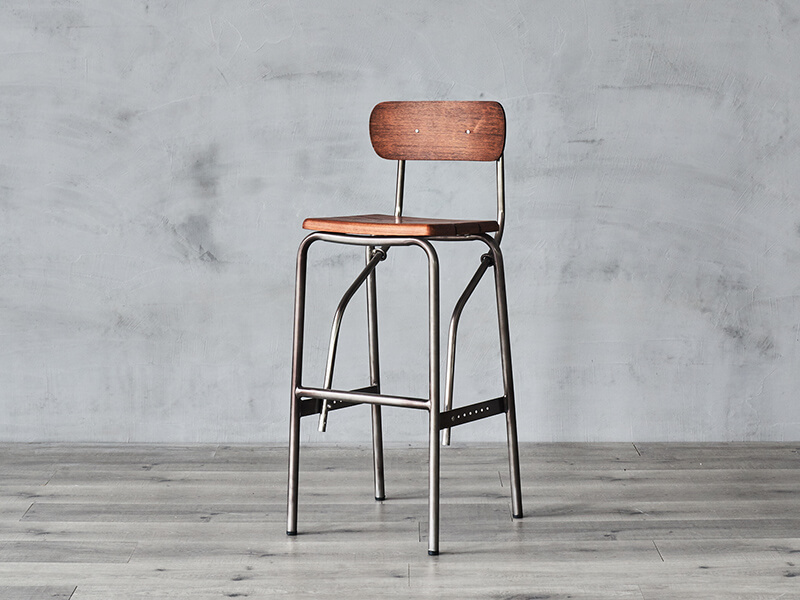
Choosing by Overall Height
Backrest height does not determine fit. Seat height does.
Ignoring the Underside
A thick apron or support rail can take away knee room and change the fit completely.
Mixing Up Counter and Bar Stools
They look similar online. They do not feel similar in use.
Forgetting Cushion Thickness
A padded seat changes the real sitting height.
Buying for Style Before Fit
The right order is:
- Measure the surface
- Check the underside clearance
- Subtract 10 to 12 inches
- Confirm the seat height
- Check spacing
- Choose the style
That order prevents most expensive mistakes.
A Simple Pre-Order Checklist for Bar Stool Buyers
- Measure the finished counter or bar height, not just the design drawing.
- Check the lowest underside point for knee clearance.
- Confirm the actual seat height, not only the overall stool height.
- Consider cushion thickness and seat compression.
- Check footrest height and position.
- Confirm spacing based on stool width, arms, and swivel function.
- For bulk orders, request product drawings or detailed specifications before production.
For Wholesale and Project Orders, Confirm the Fit Before Production
For single home purchases, a small height mistake may be easy to replace. For wholesale orders, restaurant projects, hotel bars, and cafe furniture projects, the same mistake can affect the full layout.
Before confirming a bulk order, buyers should check the counter height, seat height, underside clearance, spacing, and final application. If the project uses custom counters or mixed seating areas, it is better to confirm each area separately.
As a commercial furniture supplier, we always suggest treating bar stool height as part of the whole seating plan, not as a single product measurement. This helps buyers reduce order risk and choose stools that work better in real spaces.
Final Takeaway
The process is straightforward:
Measure the surface height, check the usable legroom underneath, and subtract 10 to 12 inches to find the right seat height.
For most homes, that means 24- to 26-inch stools for 36-inch counters and 28- to 32-inch stools for 40- to 42-inch bars.
Get those numbers right first. Style comes after fit. If you would like to see more information about us, please visit the page “bar stool factory“.
FAQ
How do I measure bar stool seat height?
Measure from the floor to the top of the seat, not the backrest.
What is the difference between counter stools and bar stools?
Counter stools are shorter and fit 34- to 36-inch surfaces. Bar stools are taller and fit 40- to 42-inch surfaces.
How much space should I leave between bar stools?
Usually 6 to 10 inches between stools, or 24 inches center to center at minimum.
Do seat cushions affect stool height?
Yes. Thick cushions raise the effective sitting height.
Are fixed or adjustable stools better?
For most homes, fixed stools are the better choice. Adjustable stools are useful when flexibility matters more.
Should I choose a 24-inch or 26-inch stool for a 36-inch counter?
Both can work, but a 24-inch stool is usually better when the counter has limited knee clearance or a thick cushion. A 26-inch stool may work better with a thin seat and an open counter design.
Is a 30-inch bar stool good for a 42-inch bar?
Yes. A 30-inch seat height is one of the most common choices for a 42-inch bar. It usually leaves about 12 inches of sitting clearance, which feels comfortable for most users.
How do I choose bar stool height for a restaurant or cafe?
Measure the counter height, check the underside clearance, and confirm the actual seat height before ordering. For commercial spaces, also check spacing, footrest position, frame strength, and how long customers may sit.
Should commercial bar stools be slightly lower?
Not always, but when the counter has limited knee room, thick upholstery, or stools with arms, choosing the lower end of the recommended range can make the seating feel more comfortable.
What bar stool measurements should I ask a supplier for?
Ask for seat height, overall height, seat width, seat depth, footrest height, frame material, cushion thickness, and packing details. For bulk orders, a product drawing or specification sheet is also helpful.