Quick Answer
What are the best coffee tables for commercial spaces?
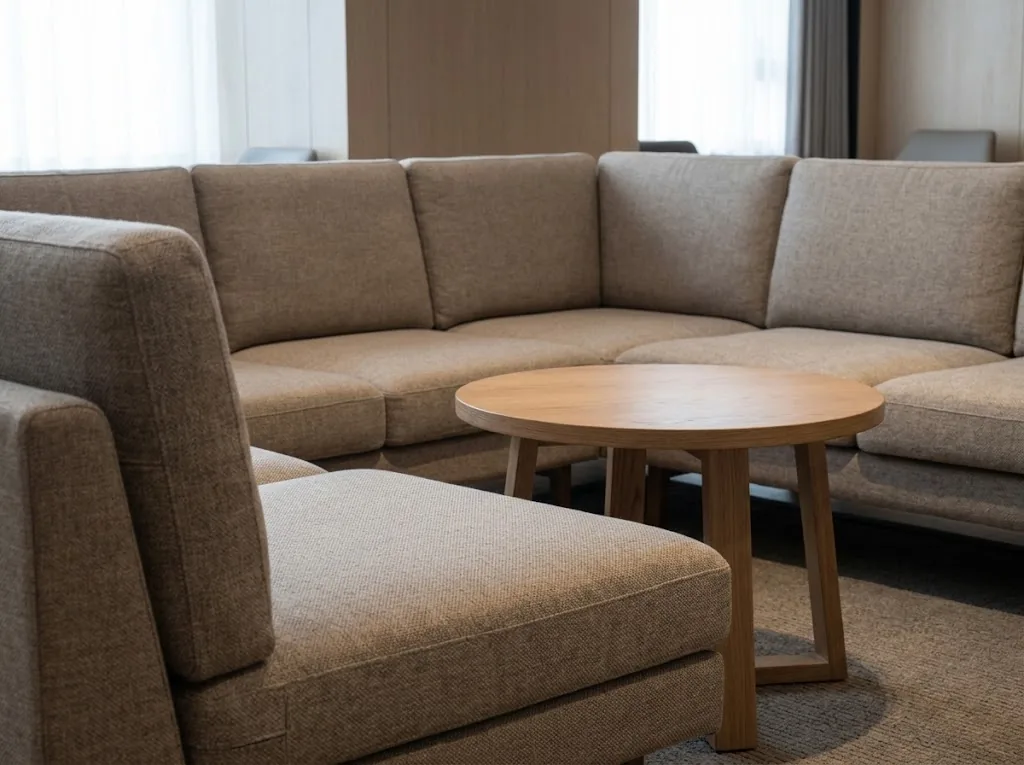
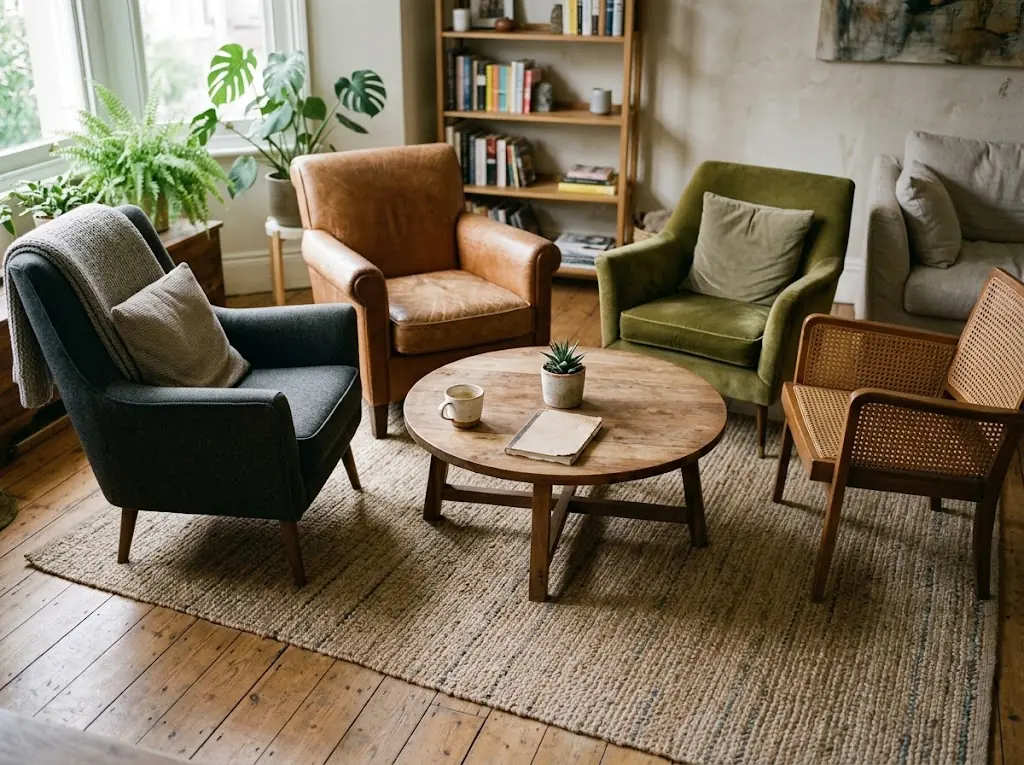
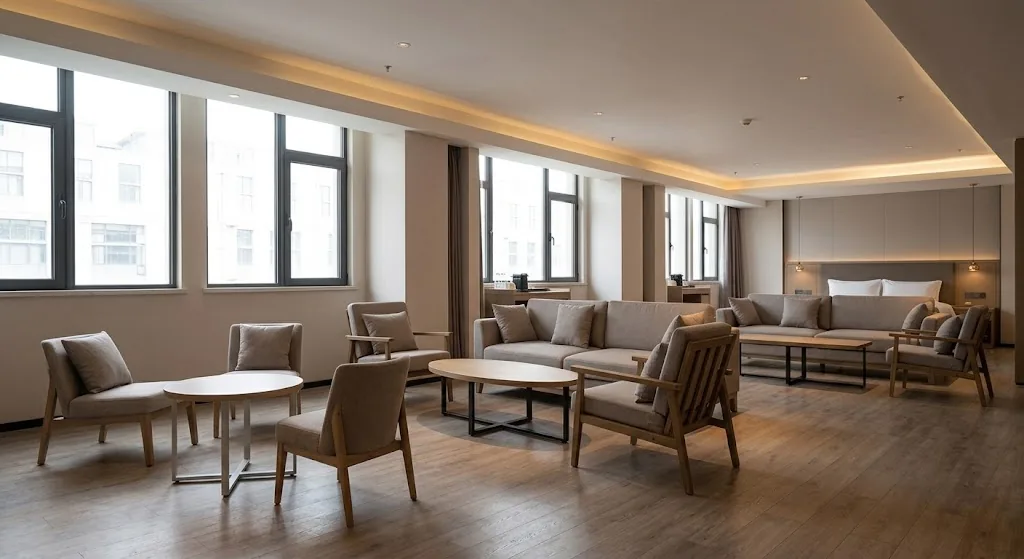
For most hotel lounges, reception areas and café lounge zones, we recommend starting with a low-profile oval or softly rounded coffee table with a stable base and a surface that matches the project’s cleaning routine. It gives a strong balance of usable surface, softer circulation geometry and broad compatibility with lounge seating.
Required check: review the actual sofa or lounge-chair dimensions, room plan, use environment, surface specification, base footprint, quantity and packing route before final approval. If you already have a furniture schedule, you can also browse our commercial coffee tables and lounge chair range together.
Decision Guide
Best coffee tables by commercial use case
This is not a consumer affiliate ranking and it is not a claim that one coffee table is universally “best.” We rank the options by commercial-project fit: layout, daily use, maintenance, stability, repeatability, packing and sourcing risk. The best choice changes when the operating condition changes.
| Project situation | Our default choice | Why it usually works | What can change the choice | Main risk to check |
|---|---|---|---|---|
| Mixed hotel lobby or reception lounge | Oval or soft-rounded table | Works with several seating directions and avoids projecting rectangular corners | A very long sofa run or highly formal symmetry | Top becoming too large for the circulation zone |
| Small café lounge or compact waiting area | Round or compact oval table | Simple footprint for small conversation groups | Very narrow room or a wall-aligned bench | Pedestal or base footprint taking more floor area than expected |
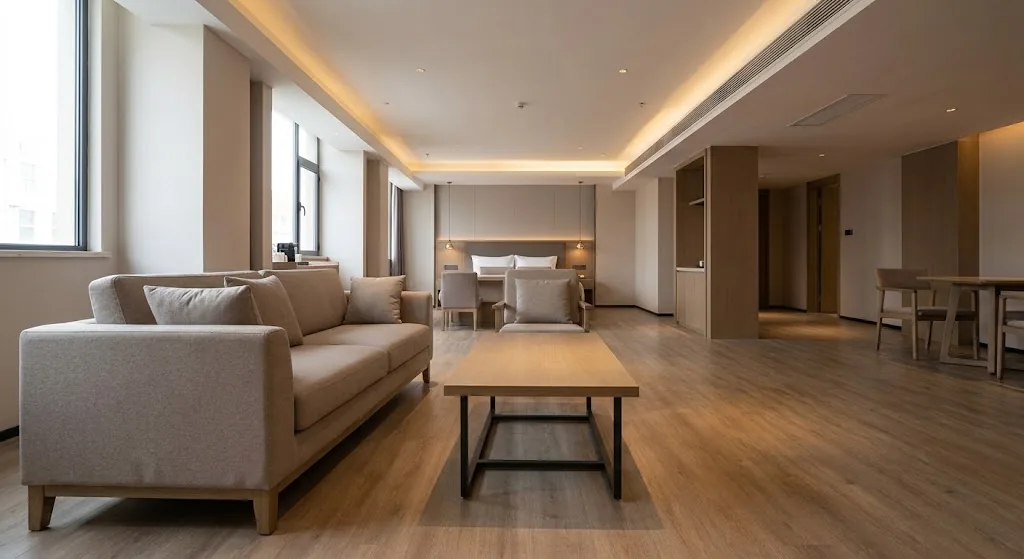
| Long sofa run | Rectangular low-profile table | Matches linear seating and provides useful surface length | Traffic approaching from the table ends | End corners and approach paths becoming crowded |
| Flexible coworking, event or multi-use lounge | Nesting or modular tables | Can be separated, regrouped and stored according to the layout | Staff need each unit to function independently | Units that look incomplete or become unstable when separated |
| Premium fixed-location lobby | Statement table with controlled weight and edges | Can support a stronger material or brand expression | Frequent moving, difficult access or tight freight limits | Damage, handling weight and inconsistent visual finish |
| Serviced apartment or extended-stay program | Simple functional table; storage only when needed | Prioritizes usable surface and operational practicality | A real storage or multi-use requirement | Adding mechanisms that create cleaning and maintenance work without enough value |
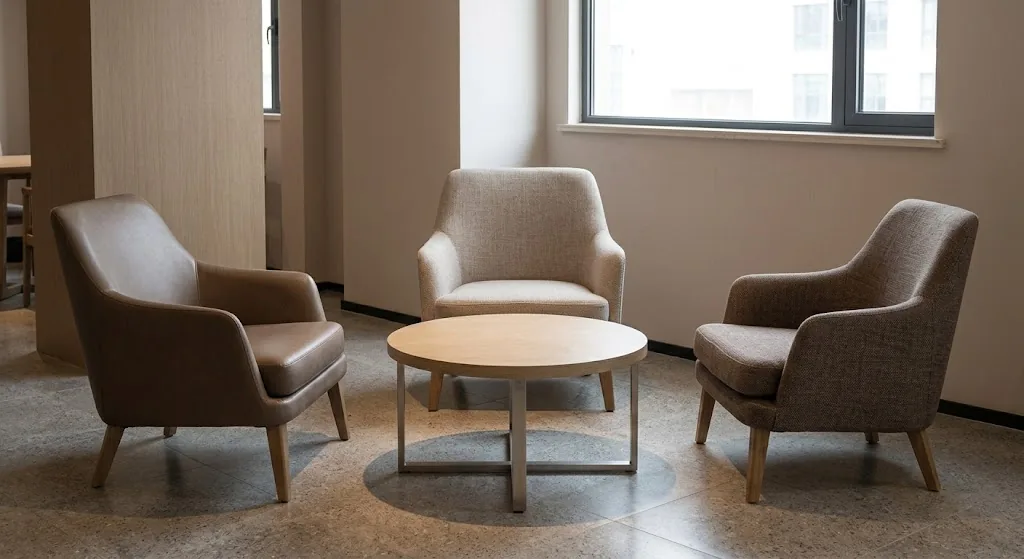
How We Rank
What “best” should mean to a hotel, café or project buyer
A residential shopping list often ranks coffee tables by style, price or popularity. Commercial procurement needs a different filter. We recommend evaluating every candidate in this order:
- Application fit: what people do around the table, how often the space changes, and whether food, drinks, documents or guest belongings regularly contact the top.
- Space and circulation: how the top shape and base footprint interact with sofas, lounge chairs, doors, service routes and required access.
- Surface and edge maintenance: what the housekeeping or operations team can realistically clean and maintain.
- Stability and structure: whether the table is stable on the intended floor and whether joints, supports, feet and contact points suit repeated commercial use.
- Repeatability: whether color, geometry, finish and visible details can be reproduced across the required quantity and later replenishment if needed.
- Packing and handling: whether the size, weight, edge condition and component structure can survive the planned export and installation route.
- Commercial route: whether an existing model, normal customization or full OEM is the most efficient way to reach the specification.
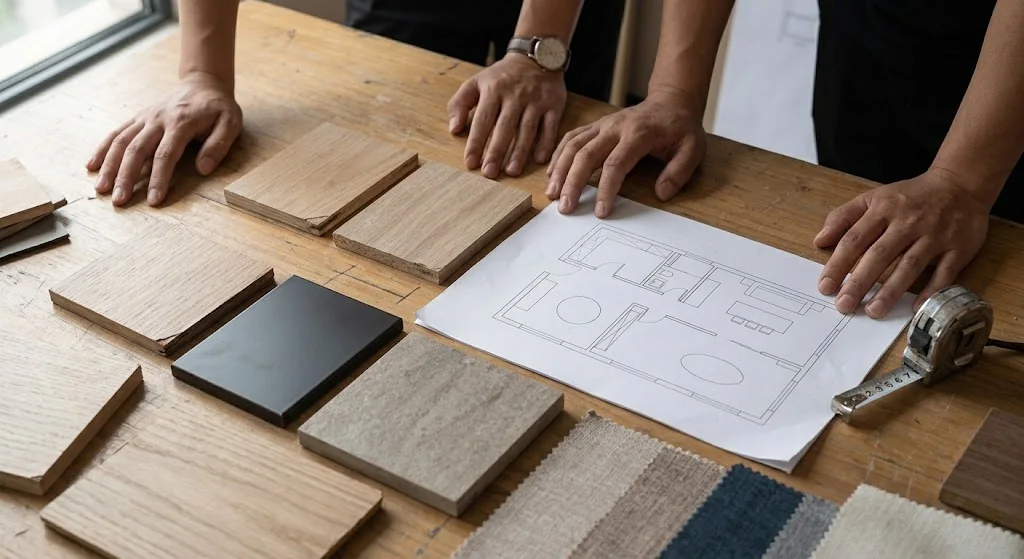
This sequence is why the most visually dramatic table is not always our first recommendation. For a multi-site program, a simpler repeatable table can be a better decision than a difficult statement piece. For a flagship lobby, the opposite can be true when the project has budget and handling control for deeper development.
1. Best overall: soft-edge oval coffee tables for mixed hospitality lounges
We use an oval or softly rounded plan as the default starting point when a seating group has sofas and lounge chairs approaching the table from more than one direction. The shape provides a useful central surface without projecting four sharp rectangular corners into the room.
Best for: hotel lobbies, reception areas, café lounge zones, waiting areas and mixed lounge groups.
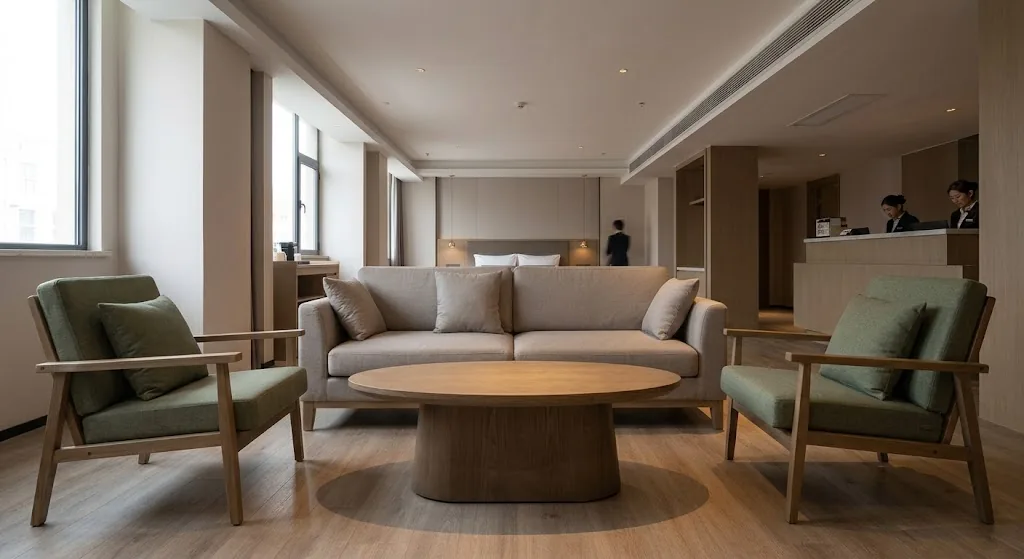
Why we recommend it: it is easy to pair with both linear sofas and angled lounge chairs, and it can feel visually lighter than a large block-style table. A slim but adequately stable base is especially useful when the room already has heavy upholstered seating.
Project check: do not approve the outline alone. Confirm top size, base width, floor contact, edge detail, final surface, total handling weight and the relationship to the actual seating plan.
2. Best for compact groups: round and compact oval coffee tables
A round table is a strong option when two to four seats form a compact conversation group and people can approach from several directions. It avoids “dead” rectangular corners and can create a clear visual center without forcing the furniture into a rigid axis.
The top diameter is only one part of the decision. A large drum base or wide pedestal can consume more usable floor area than the top suggests, while a narrow-looking base can still be wrong if the whole table is not stable. We therefore check the base footprint and stability together with the visible top.
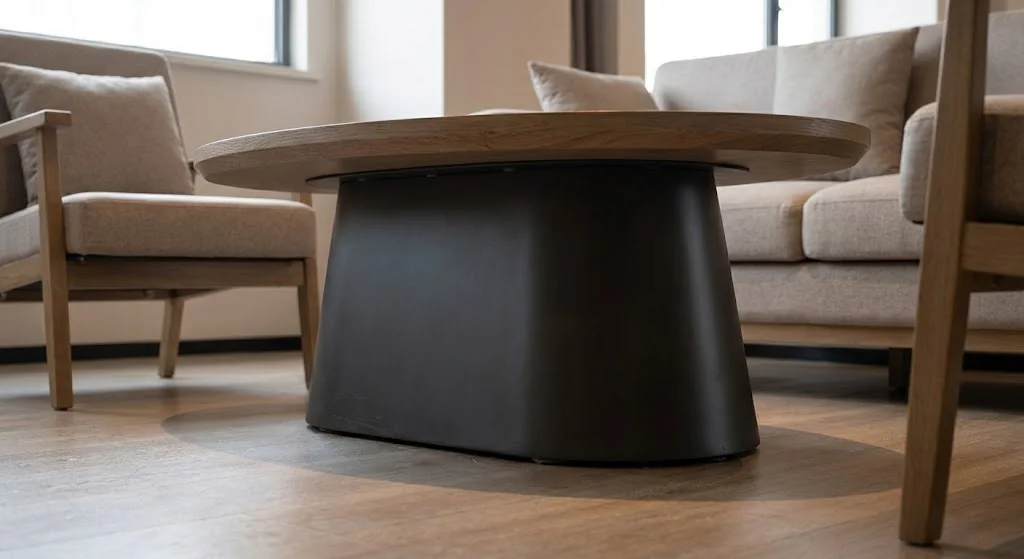
Best for: boutique reception corners, compact hotel lounge groups, small café soft-seating zones and short-stay waiting areas.
Main rejection condition: reject the round option when the room is narrow and elongated or when the seating is primarily a long wall bench. In those layouts, a rectangular or narrow oval table may align better with the available space.
3. Best for long sofa runs: rectangular low-profile coffee tables
Rectangular coffee tables work best when the seating composition itself is linear. They can provide more usable length in front of a long sofa and make the furniture group feel deliberately aligned.
The risk is at the ends. A table that looks correctly scaled from the front can still obstruct approach paths or create tight corners where guests and staff move across the room. We recommend checking the plan from all approach directions, not only from the sofa elevation.
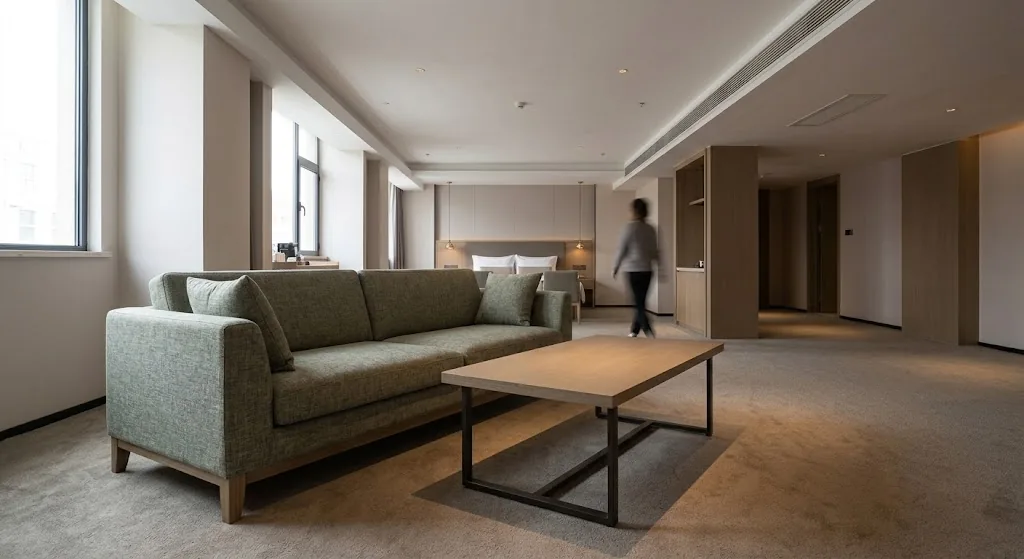
Best for: linear hotel waiting areas, long sofa arrangements, corridor-adjacent lounges where the layout has enough end clearance, and hospitality interiors with a strong architectural axis.
Before production: lock the actual length, width, height, corner treatment, top overhang and base position in the drawing. Do not treat a generic “standard coffee table size” as the final model specification.
4. Best for changing layouts: nesting and modular coffee tables
Nesting and modular tables are useful when the room changes more often than the furniture specification. Staff can separate units for small groups, combine them for events, or move them to create extra open floor area.
However, “modular” should not mean that each piece only looks correct as part of a fixed display. We prefer every unit to remain visually complete and stable when used independently. Contact points also need attention so repeated nesting does not unnecessarily damage visible finishes.
Best for: coworking lounges, hotel event pre-function areas, flexible reception spaces, club lounges and venues that reconfigure seating frequently.
Main risk: too many small units can create more housekeeping moves, more pieces to track and more opportunities for finish damage. Use modularity only when the operation benefits from it.
5. Best for a premium fixed lobby: statement tables with controlled logistics
Natural-looking mineral surfaces, stone-look tops, sculptural forms and visually heavy bases can create a strong focal point in a premium lobby. We recommend them when the table is meant to be part of the interior identity rather than simply a neutral supporting surface.
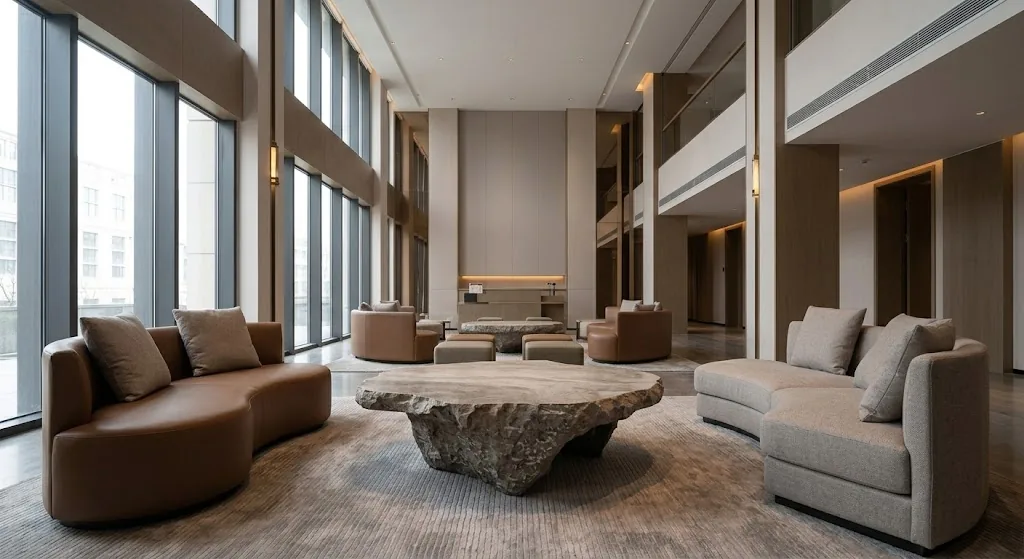
The commercial decision is not only aesthetic. Higher weight, brittle edges, unusual geometry and mixed materials can affect carton design, protective packing, freight density, doorway access, lifting method and on-site installation. Those variables should be considered before the design is frozen.
Best for: flagship hotel lobbies, premium reception areas and brand-led public spaces where the table will remain in a controlled location.
6. Best for guestrooms and extended stay: simple function first
For guestrooms, serviced apartments and extended-stay programs, the best coffee table is often the one that solves the most common daily task with the least unnecessary complexity. A useful surface, appropriate footprint and easy maintenance usually matter more than adding mechanisms.
Storage, lift-top or tray functions can be valuable when the brief clearly requires them, but every additional moving component introduces more items to specify, inspect, clean and maintain. We therefore add functions only when they solve a defined operating need.
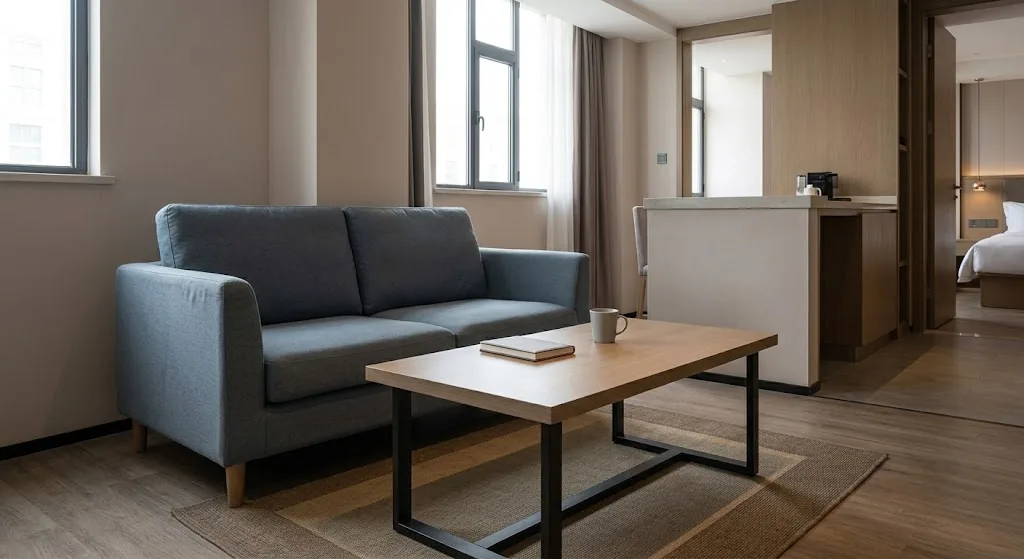
Best for: serviced apartments, apartment projects, guest suites and compact multi-use living areas.
Required check: define the function first. If the buyer cannot explain who uses the mechanism, how often and why, we would normally keep the table simpler.
Material Selection
Choose the surface by maintenance and specification, not by appearance alone
The same coffee-table shape can behave very differently depending on the top, edge, coating, substrate and base specification. Instead of labeling one material “best,” match it to the cleaning routine, traffic level, visual brief and destination requirements.
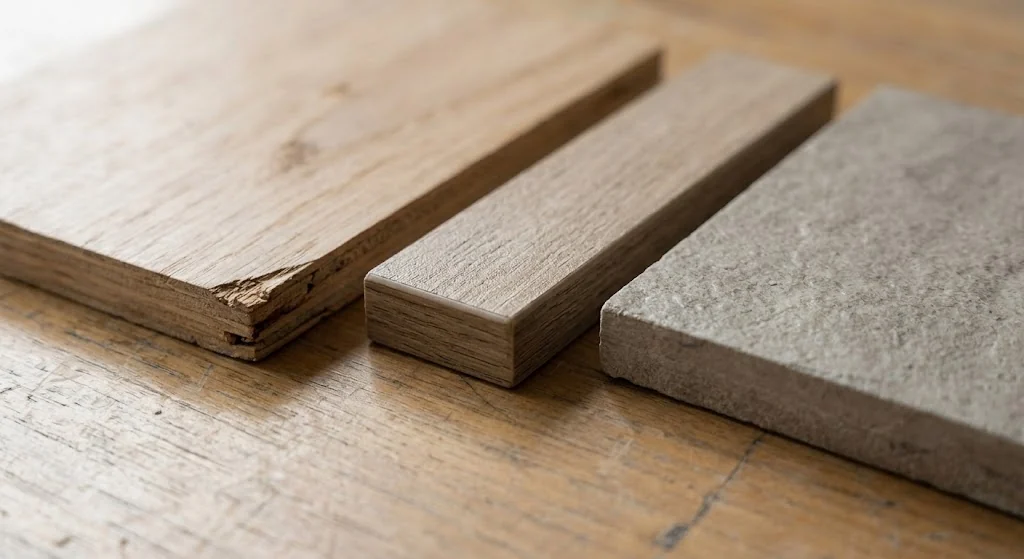
| Material direction | Good reason to use it | What to verify | Typical procurement risk |
|---|---|---|---|
| Wood or wood-look surface | Warm hospitality appearance and broad pairing with upholstered seating | Actual substrate, veneer/finish direction, edge construction, coating and maintenance method | Approving a sample color without controlling the final finish range |
| Laminate or engineered surface | Useful when the project prioritizes repeatable appearance and practical cleaning | Exact surface specification, edge detail, substrate and destination compliance requirements | Treating the material name alone as proof of performance |
| Glass | Can keep a room visually open and suit modern interiors | Glass type and thickness, edge treatment, support method, applicable safety requirements and cleaning expectations | Fingerprints, edge vulnerability or an unsupported “tempered” claim without model documentation |
| Stone, engineered stone or mineral-look direction | Strong visual weight for premium interiors | Real material, thickness, edge, weight, support structure, packing and installation route | Underestimating weight or fragile-edge handling |
| Metal base or frame | Can support slim visual proportions and mixed-material designs | Structure, joint/weld detail where relevant, finish system, feet/levelers and floor contact | Focusing on finish color while ignoring stability and floor interface |
For U.S. projects using regulated composite wood products, the material review may also need to address EPA TSCA Title VI requirements. The U.S. EPA states that hardwood plywood, medium-density fiberboard, particleboard and finished goods containing those products fall within its composite-wood rule scope. Review the official EPA composite wood requirements for the exact project and product scope. This reference does not mean every YeZhi model uses a regulated composite-wood component or that a particular model is automatically compliant; model-specific documentation must be confirmed when required.
Space Planning
There is no single best coffee-table dimension
The best dimensions depend on the selected seating and room plan. We treat the final coffee-table size as a project-locked value, not as a number copied from a generic guide.
- Measure the actual sofa and lounge-chair seat heights and footprints.
- Mark the proposed table outline and base footprint on the plan.
- Check guest reach, staff cleaning access, doors, service routes and circulation around the full seating group.
- Confirm any applicable accessibility, egress or local code requirements separately.
- Lock the final dimensions in the model drawing or approved project specification before bulk production.
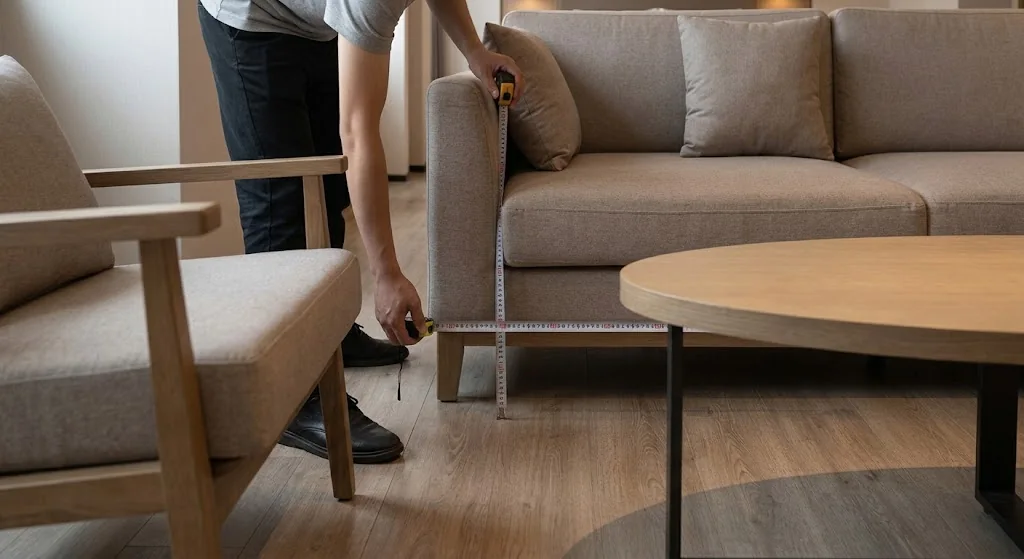
For U.S. projects, furniture spacing must not reduce a required accessible route below the applicable requirement. The 2010 ADA Standards for Accessible Design state in Section 403.5.1 that walking surfaces that are part of an accessible route generally require a minimum clear width of 36 in / 915 mm, subject to the standard’s stated exceptions. That is an accessibility-route requirement, not a universal sofa-to-coffee-table spacing rule.
Durability & Verification
“Commercial grade” is not enough proof by itself
A label such as “commercial grade” does not tell a buyer which test method, load, cycle, material or acceptance criterion was used. If a project requires a performance standard, define the required standard and ask for documentation that applies to the exact product or configuration being purchased.
BIFMA’s statistical category definitions place coffee tables within “Occasional Tables” used in work, lounge, dining, public and related settings. BIFMA also publishes standards descriptions for desk and table products. Use the official BIFMA category definitions and BIFMA standards descriptions to identify relevant scope, then confirm what your project actually requires.
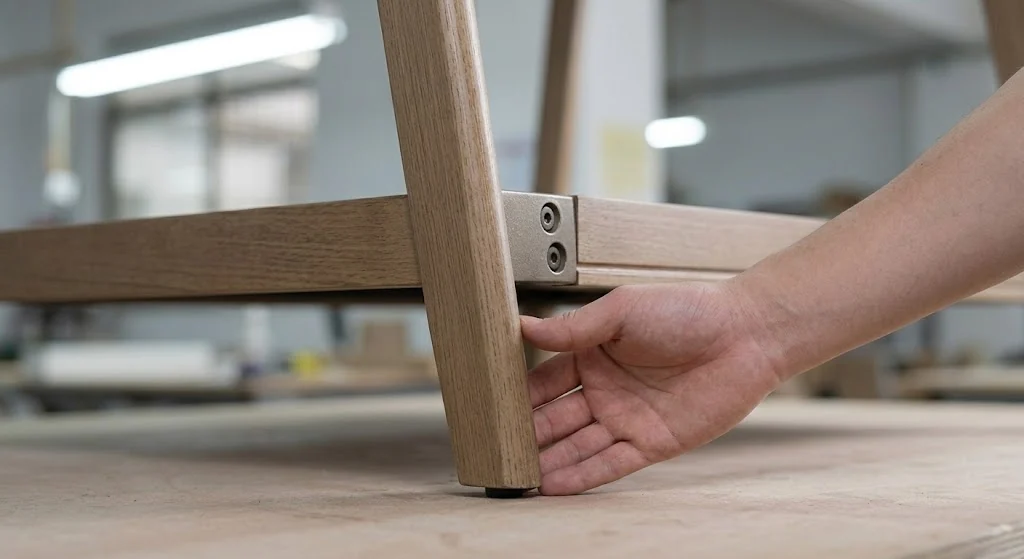
Before approval, we recommend checking the tabletop specification, edge detail, base stability, joints/fasteners, feet or levelers, floor compatibility, handling weight, packing protection and any model-specific test or compliance documentation required by the destination or project.
Failure Intelligence
Seven coffee-table mistakes that create project problems later
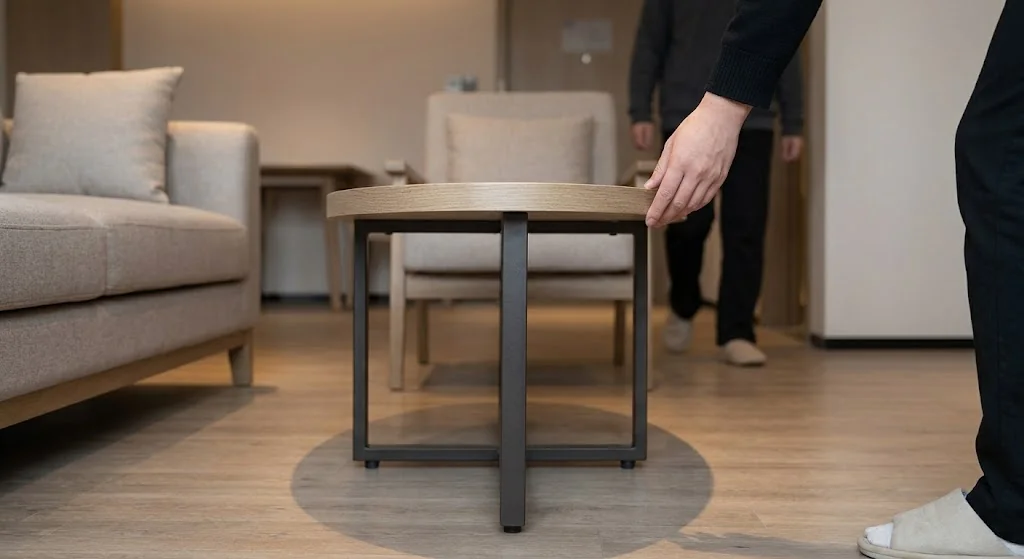
| Root cause | What fails | What you may observe | Commercial consequence | How to prevent it |
|---|---|---|---|---|
| Size approved before the seating plan | Layout fit | Tight paths or awkward reach | Rework, replacement or compromised room layout | Approve table dimensions against the actual furniture plan |
| Base chosen for appearance only | Stability or leg clearance | Rocking, difficult positioning or an oversized footprint | Guest complaints and site adjustments | Check base geometry, floor condition and stability before production |
| Surface specified by material name only | Cleaning/finish expectation | Unexpected marks, finish variation or care difficulty | Maintenance burden and inconsistent appearance | Lock substrate, surface, edge and finish specification |
| Heavy or brittle top without logistics planning | Packing and handling | Edge damage or difficult installation | Replacement cost and schedule delay | Design packing and site handling route before design freeze |
| Nested pieces depend on each other | Independent usability | One unit looks incomplete or is unstable alone | Less layout flexibility than expected | Review every module independently and as a set |
| Mechanism added without a defined need | Operational simplicity | More parts to clean, inspect or maintain | Higher lifecycle effort without clear guest value | Require a use case for every moving feature |
| “Commercial” claim accepted without scope | Documentation confidence | No model-specific report or unclear standard | Specification or compliance dispute | Define required documentation and verify model/report scope |
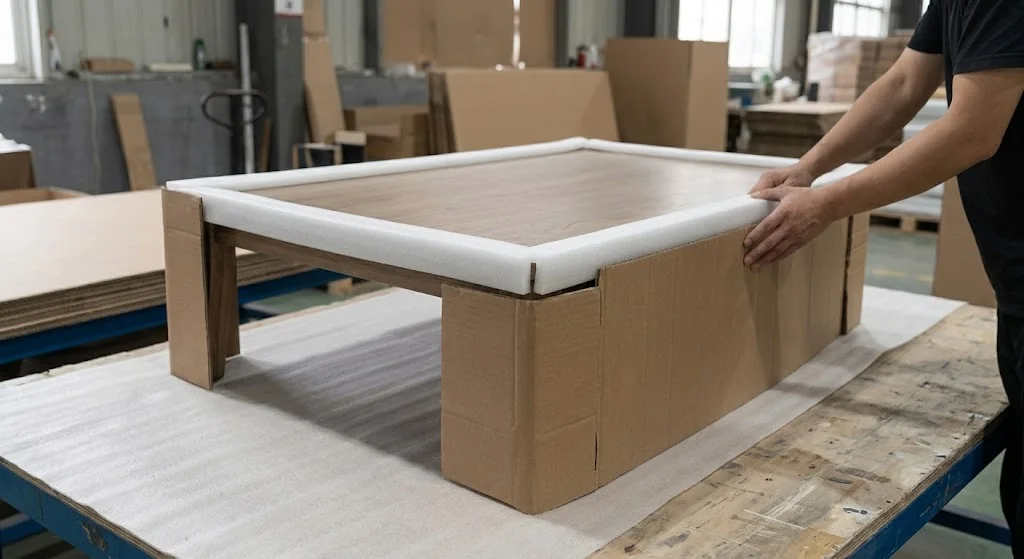
Verified Product Example
Current YeZhi example: Gyro Oval Coffee Table
For buyers who want a current product reference rather than a conceptual recommendation, our Gyro Oval Coffee Table for hotel lounge and reception areas is a verified live YeZhi model.
| Current model fact | Verified information |
|---|---|
| Approx. size | 43.3 × 23.6 × 15.8 in / 110 × 60 × 40.2 cm, based on the supplied dimension drawing |
| Material direction shown | Wood top, slim metal frame and wood foot details; final material specification is confirmed by quotation requirement |
| Applications listed | Hotel lounge, lobby seating, reception area, apartment, living room, café lounge and commercial interiors |
| Default model MOQ | 20 pcs |
| Lead time listed | About 30 days, subject to final quantity, finish and order confirmation |
| Custom review | Color, size, material, logo, packing and structure can be reviewed for the project |
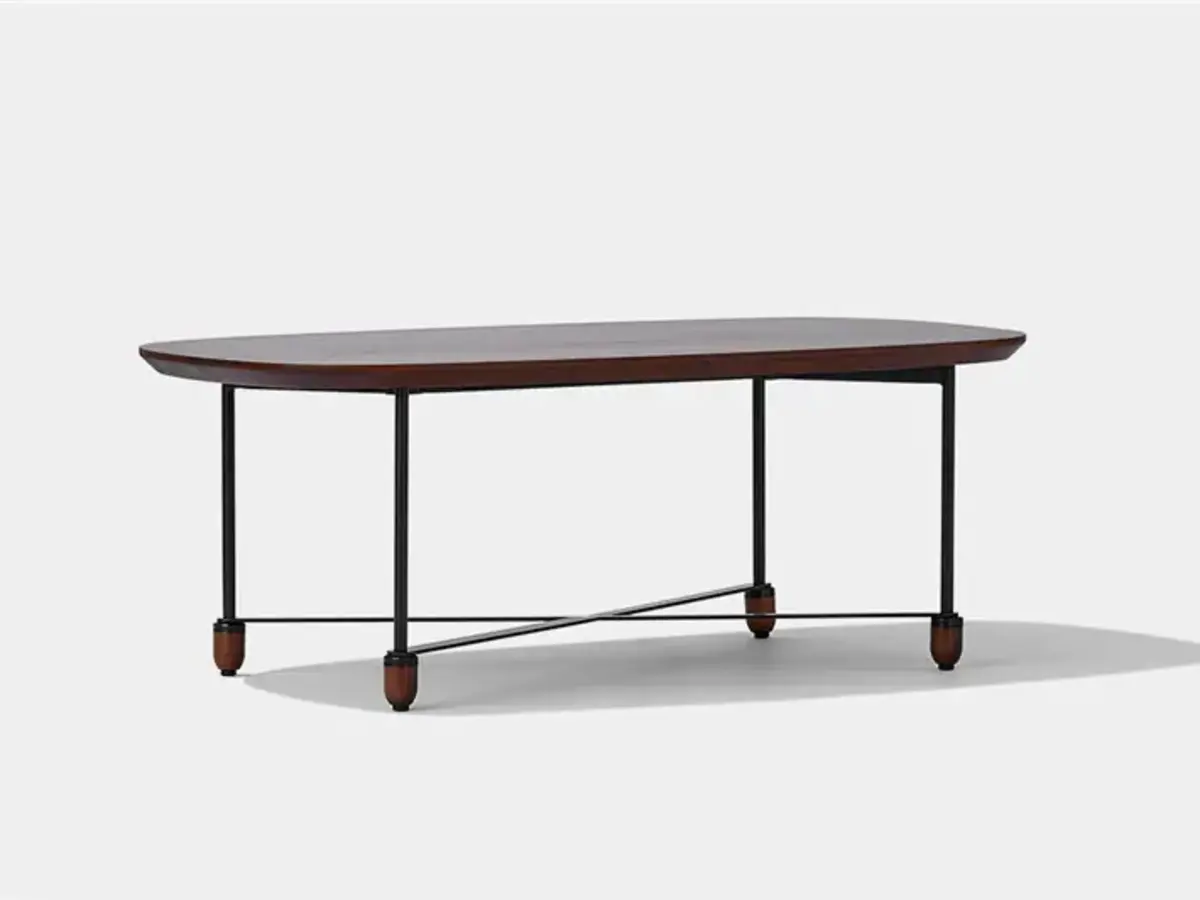
We use this model as an example of the oval direction, not as proof that an oval table is correct for every project. Send the seating dimensions and layout first if you want us to check whether the model proportion fits your space.
Commercial Planning
When should you use a standard model, customization or full OEM?
Use an existing model when the structure and scale already solve the layout and only normal finish or material coordination is needed. This is usually the lowest-development-risk route.
Use standard customization when the basic platform works but you need changes such as finish, upholstery coordination, logo, packing direction, material selection or a controlled size adjustment that the model can safely support.
Use full OEM/custom development when the project requires a fundamentally different structure, geometry, mixed-material system or brand-specific configuration. Full OEM usually needs more drawing, sample and tolerance control before bulk production.
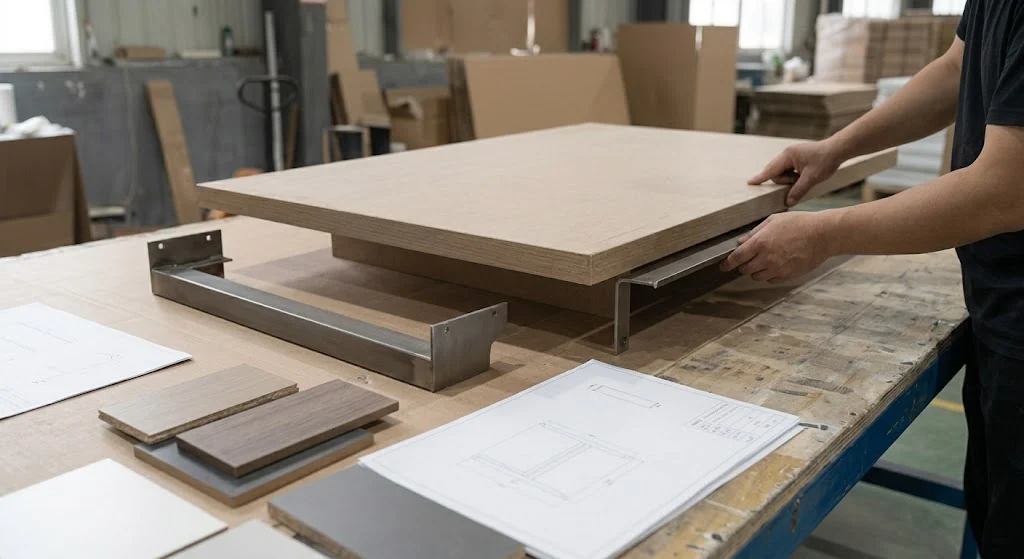
YeZhi supports EXW, FOB and CIF quotations according to the order and destination, with ocean freight commonly planned by LCL or FCL. Standard payment is T/T 30% deposit and 70% balance before shipment. Our standard warranty period is 1 year; final coverage, exclusions and remedy terms should be stated on the PI before production.
Project Check
What we need before recommending a coffee table for your project
A useful RFQ is not only a product photo. Send enough information for us to evaluate the decision conditions behind the table:
- Project type and country/destination
- Room plan or relevant seating-zone dimensions
- Sofa and lounge-chair dimensions, especially seat height and overall footprint
- Target quantity by model/SKU
- Preferred top material/finish and base finish
- Indoor, covered outdoor, high-humidity or other special use environment
- Any required standard, test, certification or material-compliance documentation
- Packing, access or installation constraints
- Target delivery window and preferred trade term
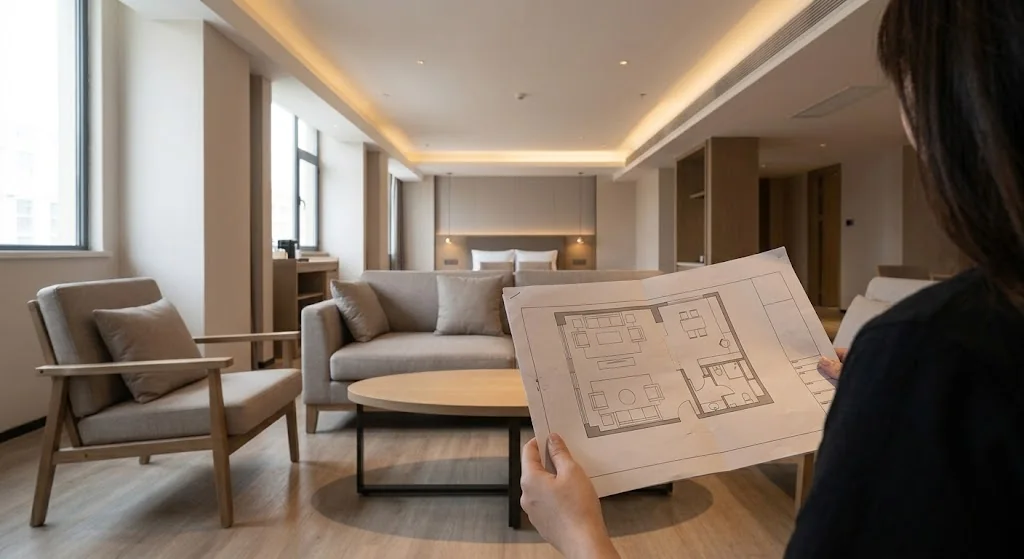
If you are planning a café rather than a standalone lounge zone, our café furniture solution page and commercial café furniture checklist can help you coordinate coffee tables with the rest of the furniture schedule.
FAQ
Best coffee tables: commercial buyer questions
What type of coffee table is best for most hotel lobbies?
Our default starting point is an oval or softly rounded low-profile table with a stable base and a surface matched to the cleaning routine. Change to rectangular for a long sofa run, round for compact groups, or modular when the space changes frequently.
Are round coffee tables better for small commercial spaces?
They often work well for compact conversation groups, but the answer depends on the base footprint and the room shape. A wide drum base can occupy more floor area than expected, and a narrow rectangular room may suit a compact oval or rectangular table better.
What material is best for a commercial coffee table?
There is no single best material. Choose according to the actual cleaning routine, visual brief, edge requirements, destination compliance, weight and packing route. The specification should identify the real surface, substrate, edge and finish rather than relying on a broad material label.
Does “commercial grade” mean a coffee table is BIFMA tested?
No. “Commercial grade” is not a test report. If a project requires a BIFMA, ISO or another performance standard, confirm the applicable standard and request documentation for the exact model or configuration. Do not infer test status from a general marketing description.
What is YeZhi’s minimum order quantity for coffee tables?
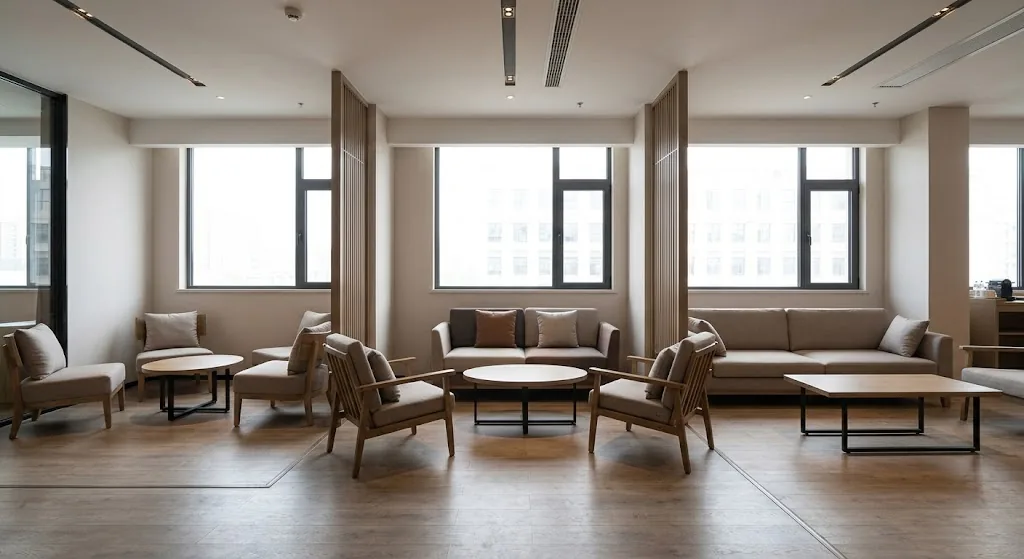
Regular YeZhi MOQ starts from about 15 pcs per model/SKU, but some models are higher. The current Gyro Oval Coffee Table page, for example, lists a default MOQ of 20 pcs. Full OEM/custom development usually starts from about 100 pcs per design or configuration.
Can YeZhi customize coffee-table size, finish or packing?
Yes. We can review size, finish, material, logo, structure and packing requirements according to the model and project. We recommend sending the room/seating plan and quantity before changing dimensions so the customization solves a real layout requirement rather than creating new stability or packing risk.
Next Action
Send the layout before you lock the table
Tell us where the coffee table will be used, the seating dimensions, target quantity, preferred material/finish, destination and any packing or compliance requirement. We can compare the existing-model, customization and full-OEM routes and identify the checks that should be locked before quotation and production.
For a faster review, include the furniture plan or a marked seating-zone drawing rather than only a reference image.
Send Coffee Table Project Requirements