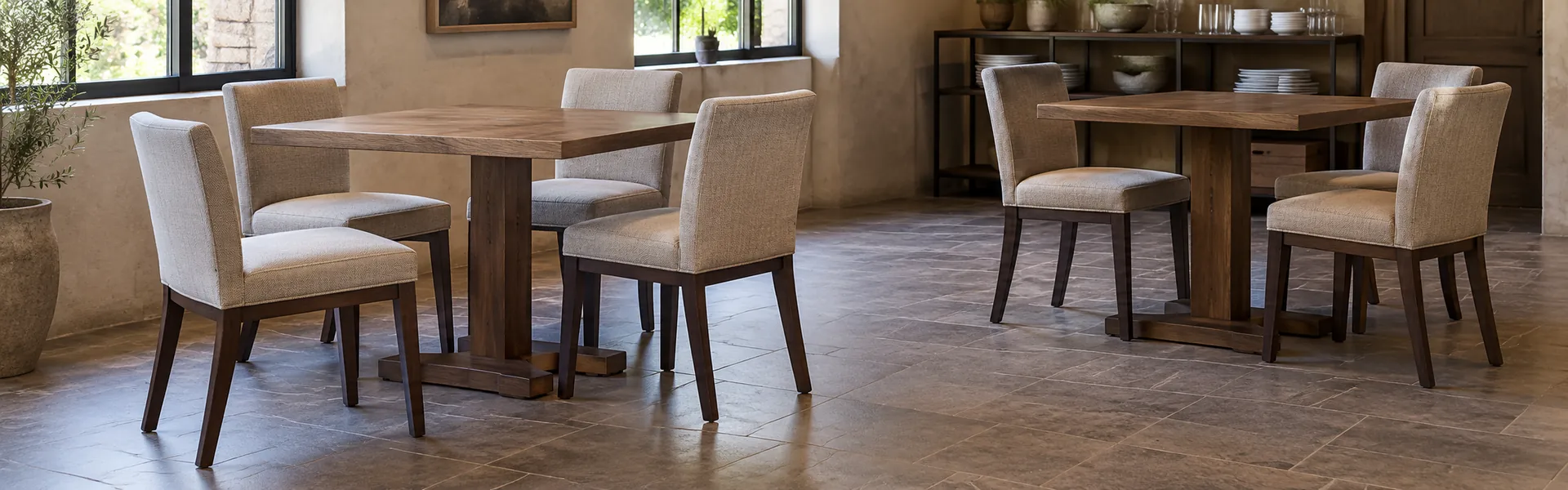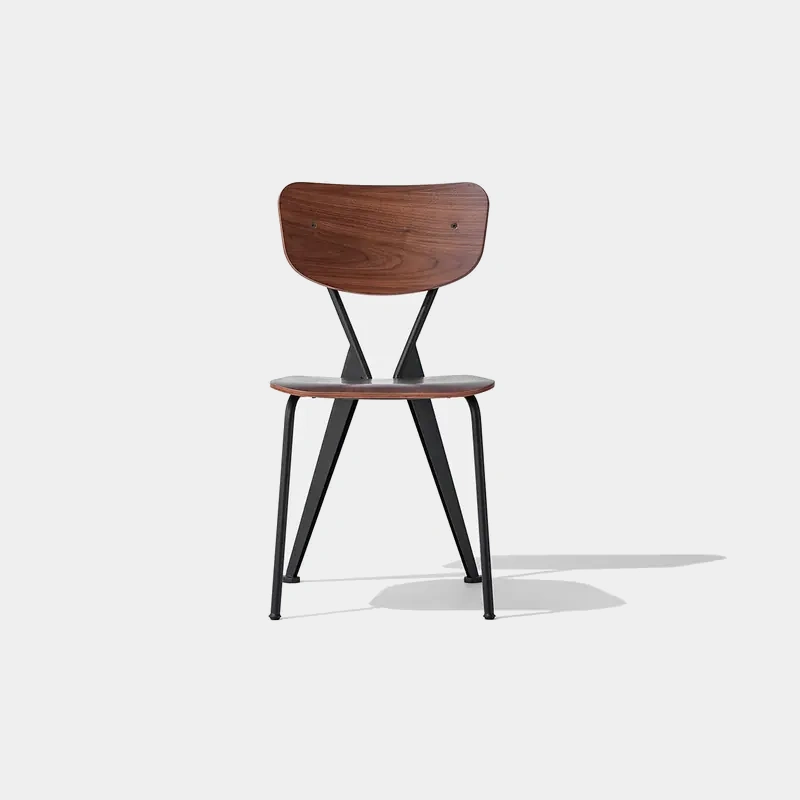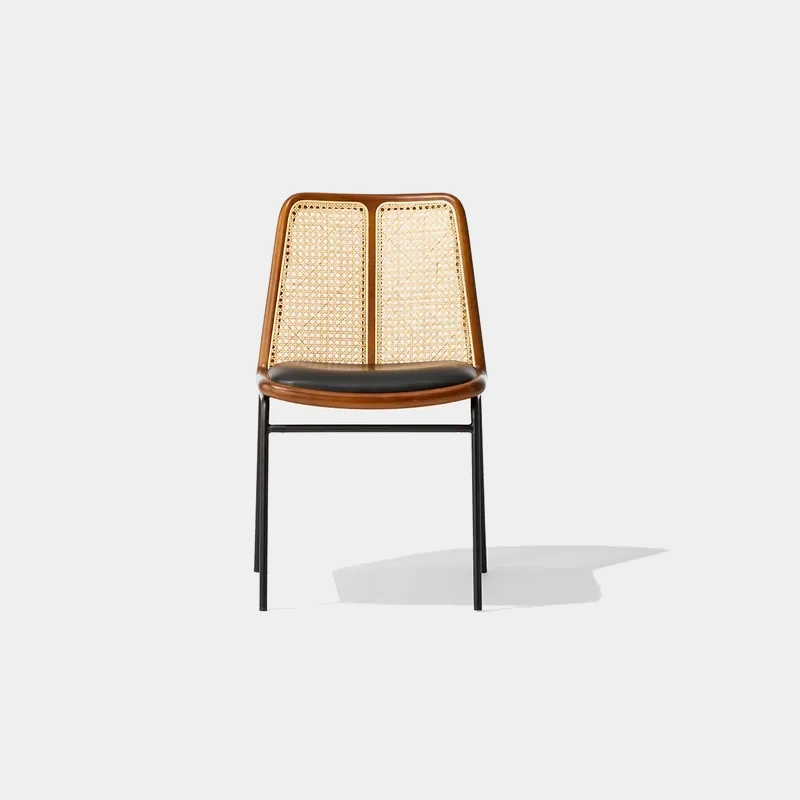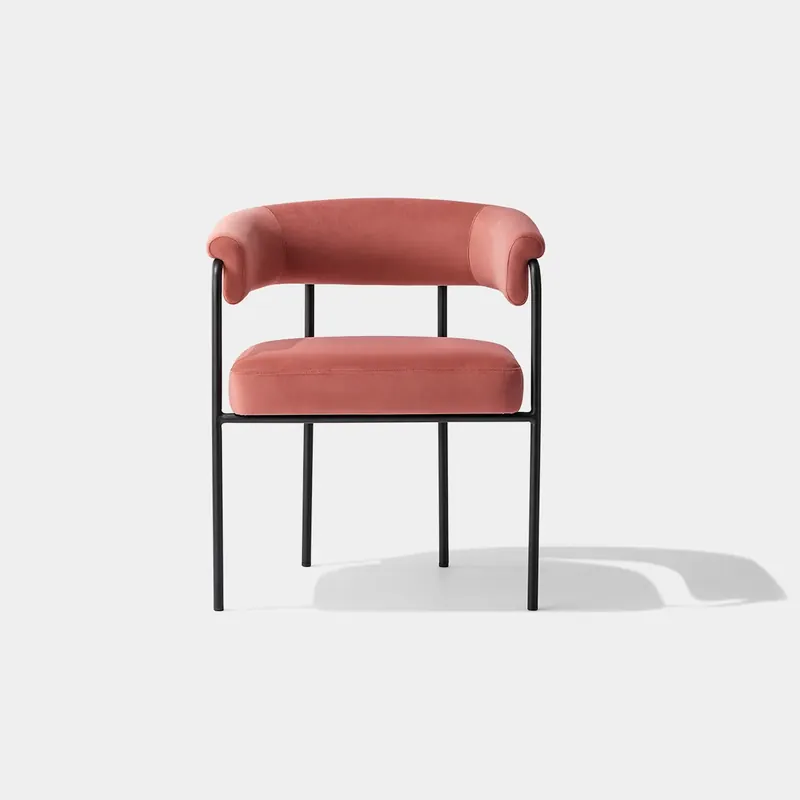
For a coordinated cafe, start with furniture manufacturers that can supply or coordinate the chairs, complete tables and finish options you need. Compare local stock suppliers first if you need a small order quickly. For repeated orders or a custom interior, shortlist manufacturers with the right product range and a clear sample approval process.
The useful question is not simply who makes the nicest chair. It is who can deliver a table-and-seating combination that fits your room, works during service and can be ordered again. The following comparison helps you narrow cafe furniture manufacturers by those practical needs.
Which type of cafe furniture supplier fits your project?
Choose a supplier with confirmed stock for a small, urgent opening; choose a manufacturer with coordinated product options for a planned bulk order. If booths or fixed seating shape the room, include a specialist who can work from the layout.
| Your project | Start with | What makes the choice work |
|---|---|---|
| A few tables and chairs needed quickly | A local commercial furniture supplier with confirmed stock | The actual quantities, finishes and delivery appointment fit your opening plan. |
| A full cafe with a shared wood tone, metal finish or upholstery palette | A manufacturer offering both commercial seating and tables | You can review the pieces together and approve one set of finish references. |
| Several locations or a repeat wholesale assortment | A manufacturer able to discuss repeat production | The order uses stable product codes, approved specifications and a workable replenishment plan. |
| A layout built around banquettes or fixed seats | A booth or fixed-seating specialist | The furniture dimensions, installation work and table positions are resolved together. |
A manufacturer makes furniture; a supplier sells or provides it. A business can do both, and a manufacturer may source some categories from other factories. Ask which items it produces and which it buys in. That tells you where separate samples, lead times or replacement arrangements may be needed.
For a small mixed order, well-organized coffee shop furniture suppliers can be a better fit than a direct factory. A brand directory is useful for finding designs, but you still need to identify the business that will quote, deliver and handle the order.
Cafe furniture manufacturers to compare
Start with businesses whose published ranges match your project. These five offer different starting points for coordinating seating and tables. Use the final column to decide what to discuss first.
| Manufacturer | Relevant published range | When to shortlist | First point to resolve |
|---|---|---|---|
| YeZhi Furniture | Commercial chairs, stools, lounge seating and tables; wood, metal and upholstery production | Wholesale or project orders needing coordinated material and finish options | Which chair and table models suit your quantities, space and finish plan? |
| Oak Street Manufacturing | Table tops, table bases, chairs, stools and booths; manufacturing and distribution | Projects comparing tabletop, base and seating options individually | Does the quote include the complete table and a suitable base for the selected top? |
| Shelby Williams | Hospitality chairs, stools, tables, booths, fabrics and finishes | Interiors combining loose seating with upholstered booths or banquettes | Which collection, finish and production arrangements apply to each chosen item? |
| Plymold | Restaurant chairs, stools, tables, booths and fixed-seating options | Cafes or food-service projects where fixed seating and daily cleaning shape the layout | What layout, anchoring and installation work belongs in the order? |
| Modern Line Furniture | Restaurant packages combining booths, tables and coordinating chairs | Projects that suit a package or booth-led arrangement | What exact quantities, dimensions and components are included in the selected package? |
At YeZhi, our woodworking, metal fabrication and upholstery capabilities let us discuss seating and tables within one project. Start with our range when those material combinations fit your concept. If your main requirement is a fixed booth installation, compare the specialist scope alongside the loose furniture.
For the other starting points, see the published ranges from Oak Street Manufacturing, Shelby Williams, Plymold and Modern Line Furniture. A business with the right range belongs on your shortlist; the sample set and complete quotation determine whether it fits your order.
Check chairs and tables as one working set
Coordinated furniture must work together physically as well as visually. A shared color name will not fix a chair that catches the table apron, or a table base that blocks a guest’s feet.
Measure the underside and the occupied footprint
Measure table height from the floor to the top surface. Then measure the floor-to-underside height at the lowest obstruction, including an apron or support rail. Compare that with the seat height and, for an armchair, the top of the arms.
For example, suppose a table is 750 mm high, its apron is 650 mm above the floor, and the chair seat is 460 mm high. The seat-to-top difference is 750 − 460 = 290 mm, but the space above the seat to the apron is only 650 − 460 = 190 mm. Using the top height alone hides 100 mm of obstruction.
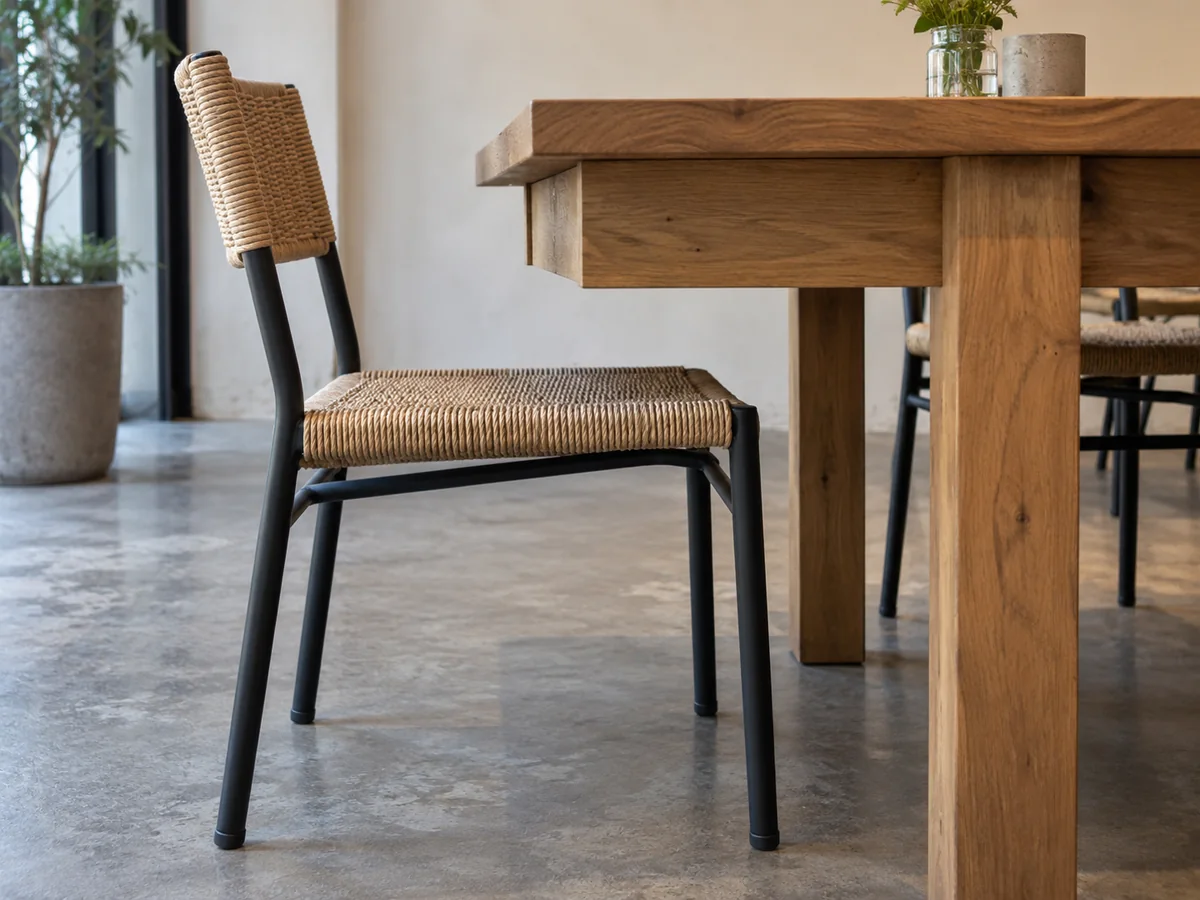
Use that result to select the pair for a physical sitting check. Sit down, move your knees, pull the chair in and stand up. Include the actual seat cushion and its compression. If the apron obstructs the seated position, try a table with a clearer underside or a different chair, then repeat the check.
Also place two chairs at the proposed table. Check the overall chair width, table-leg positions and pedestal footprint. Pull the chairs out as guests would, then walk the service route. Keep this occupied arrangement on the layout rather than counting only chairs pushed neatly under tables.
Approve finish references across every material
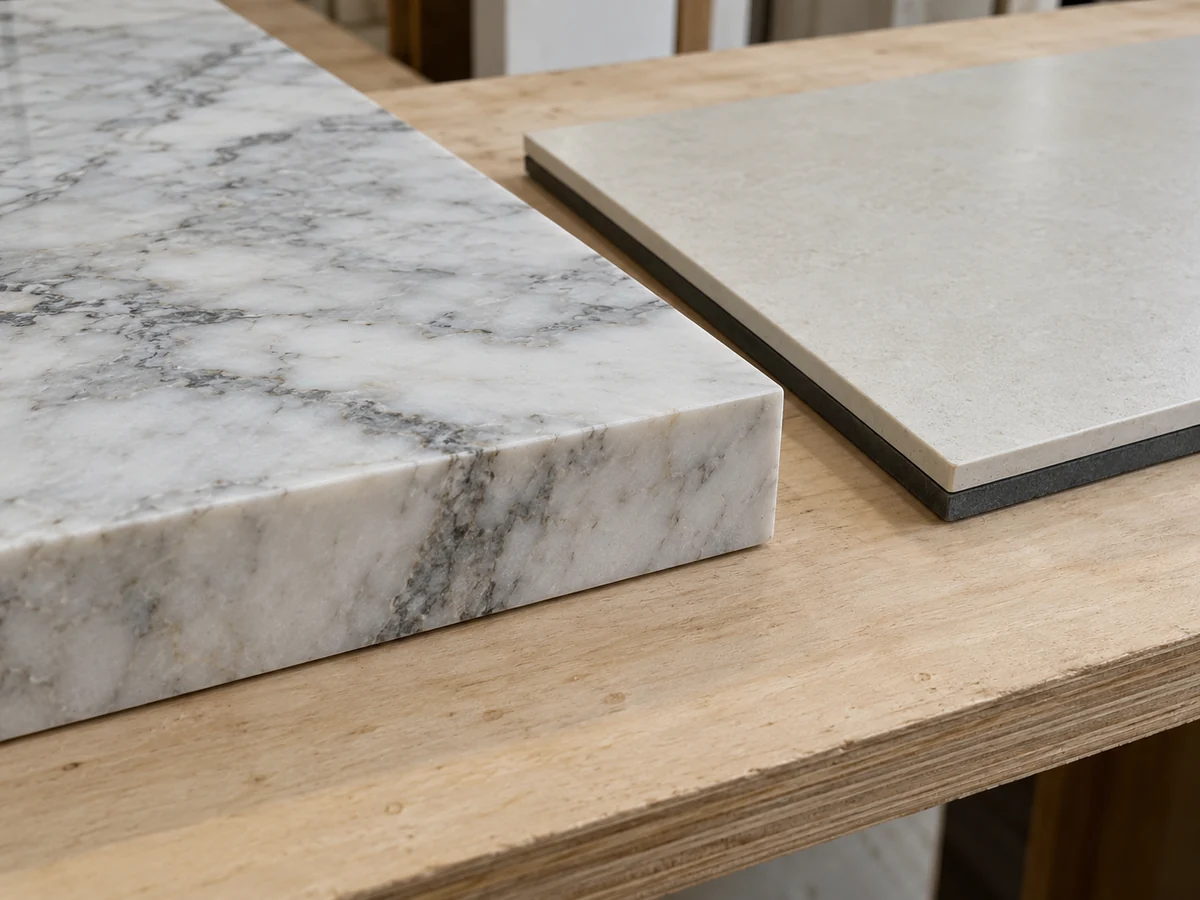
Choose a main wood tone and metal finish, then review actual samples together. A stain can look different on two wood species, while a veneer top and a solid timber chair can show different grain and color. The same paint color can also look different at another sheen.
Approve the combined appearance, not just separate samples called “walnut” or “black.” Put the chair finish, tabletop edge, metal sample and upholstery swatch beside one another under the cafe’s planned lighting.
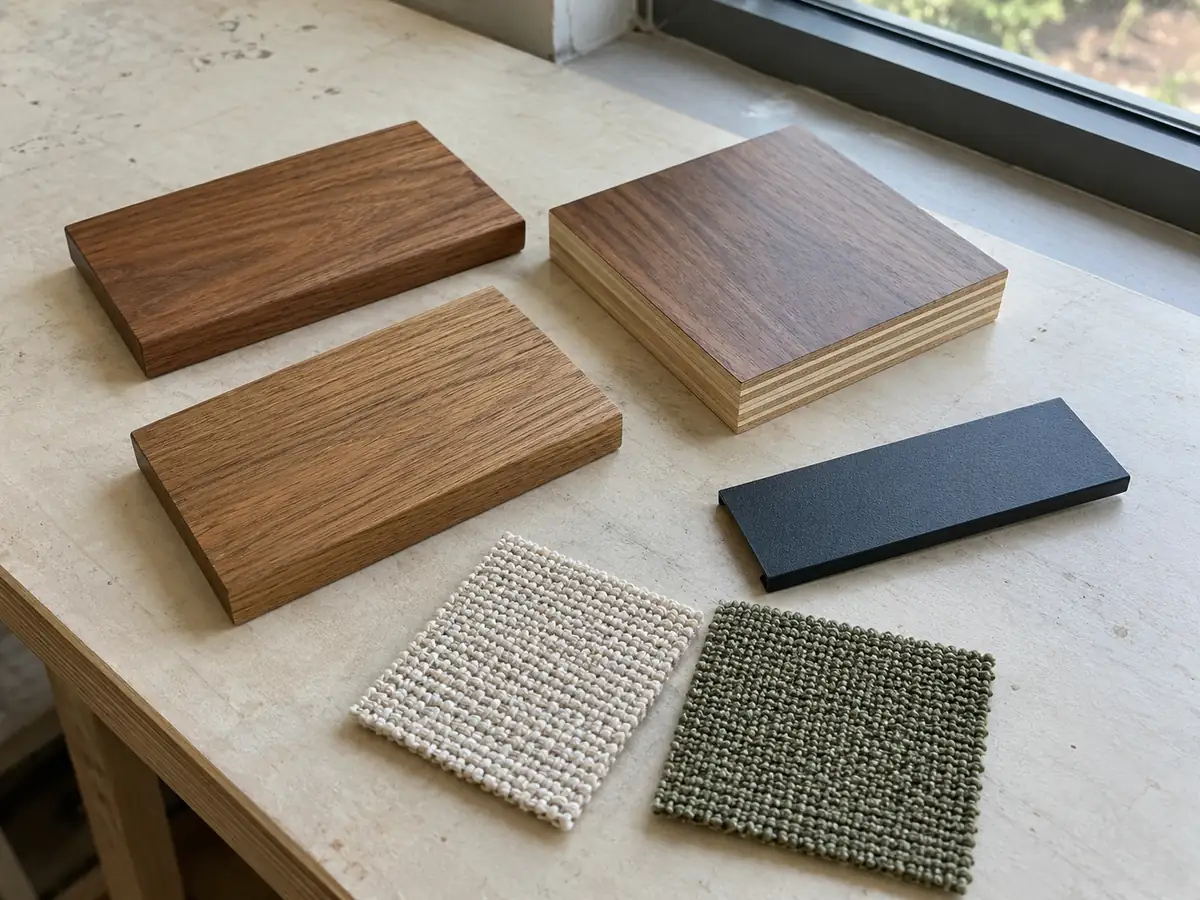
If a close wood match is difficult, use a deliberate contrast—for example, light tabletops with dark chairs—and repeat it across the room. This is easier to control than an almost-matching mix. Our guide to matching restaurant chairs and tables explains the visual choices in more detail.
Compare the complete order cost and delivery date
Compare cafe furniture suppliers on the same complete order delivered to the same named location. A lower chair price can disappear when the table bases, hardware, freight or assembly are added.
Give each candidate the same quantities and specify:
- Complete tables, including tops, bases, mounting plates and required fixing hardware.
- Chair models, finishes, upholstery and floor glides.
- Packing method, carton quantities and packed dimensions.
- Freight destination, unloading, assembly and installation responsibilities.
- Spare parts, damaged-item handling and the terms for replacement orders.
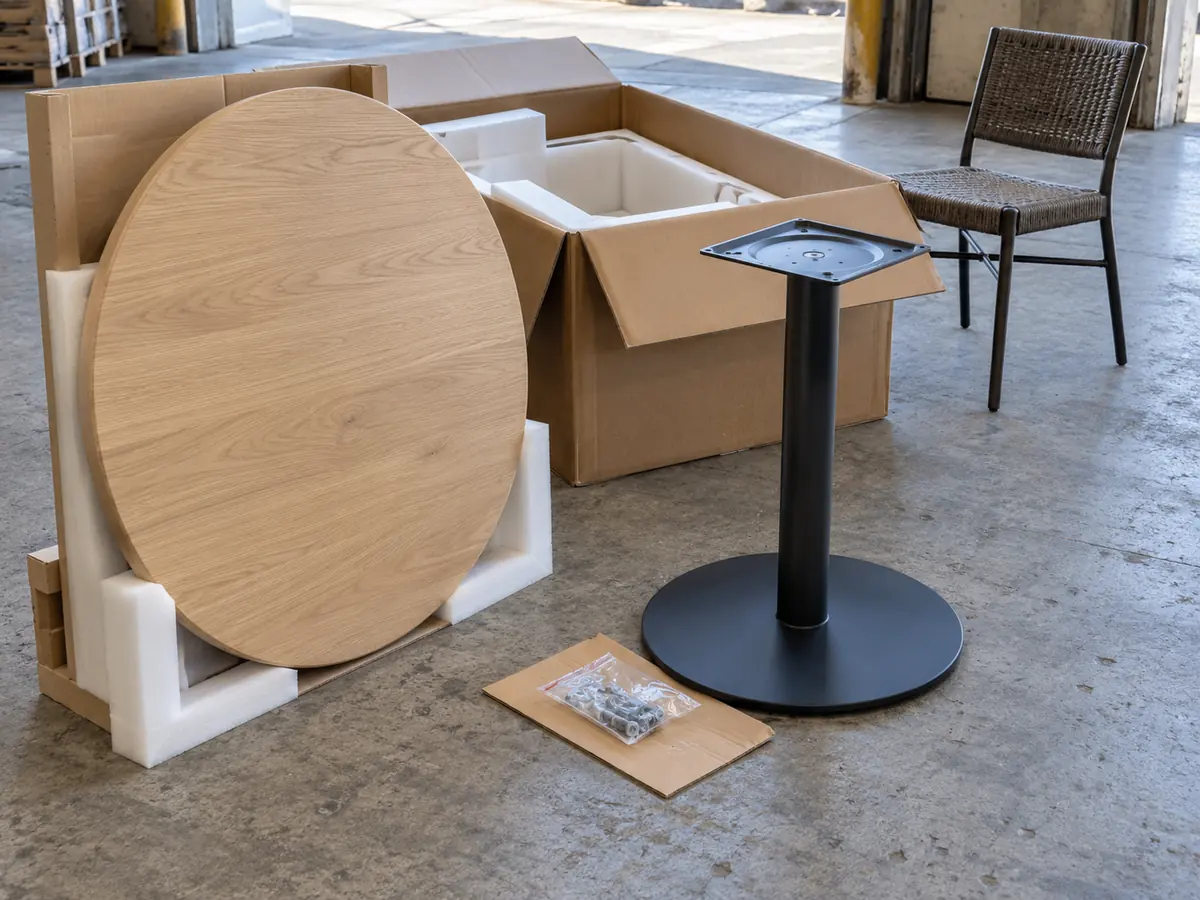
Suppose you are comparing 40 chairs and 10 complete tables, with the same specifications and delivery scope. The following figures are example USD quotations; taxes are excluded from both and must be added on the same basis for the destination.
| Cost for the full order | Quotation A | Quotation B |
|---|---|---|
| Furniture | $5,800 | $6,100 |
| Freight to the agreed location | $1,200 | $650 |
| Assembly | $300 | $500 |
| Total before taxes | $7,300 | $7,250 |
B has the higher furniture price but costs $50 less for the same delivered and assembled order. That small difference makes fit, finish, timing and replacement terms more useful deciding factors than the furniture subtotal alone.
If one offer is factory collection and the other includes delivery, add the missing transport and handling before choosing. For imports, obtain the destination charges and applicable duties for the actual shipment; a general percentage cannot price your order accurately.
Work backward from the date the furniture must be usable. Allow for sample approval, production, transport, any customs clearance, local delivery and assembly. A production completion date is earlier than an installed-and-ready date. For an urgent opening, confirmed stock in an acceptable finish can be more useful than custom furniture that misses the schedule.
What commercial test documents should you request?
Request documents tied to the selected chair and table configurations, then check that the test scope matches their intended use. A chair report and a table report answer different questions.
For projects using European standards, EN 16139:2025 addresses the safety, strength and durability of non-domestic seating intended for adults weighing no more than 110 kg. For seating intended for heavier users, request evidence for that use. Its published scope excludes outdoor seating and does not cover upholstery material durability or flammability. Ask separately about the selected upholstery, cleaning method and any fire requirements specified for the project.
BS EN 15372:2023 concerns non-domestic tables. Match the documented construction to the table being quoted, including its top and understructure. A different top size or base can change the assembly you need to assess.
Read the model identification, tested configuration, standard edition and result together. If your project specifies another standard or edition, compare the submitted report with that requirement. For exposed patio furniture, select documented outdoor materials and construction rather than extending an indoor furniture claim to rain and sun.
Approve a sample set before releasing the order
Approve one representative table with the chairs intended for it before releasing the bulk order. Add the proposed stool or booth section when a separate zone uses different heights or construction.
- Assemble the actual combination. Use the quoted top, base, mounting hardware and chairs. A substitute showroom table can conceal the interference you need to find.
- Try a normal visit. Set out cups, plates and menus. Sit, pull in, stand and carry a tray past the occupied seats. Check that the table surface and surrounding space suit the menu and service style.
- Try the cleaning routine. Follow the finish and upholstery care instructions with your intended cleaning products. Look for access around seams, under the top and between the base and chair legs.
- Record the approved version. Keep the product codes, dimensions, finish references, upholstery code and photos of the assembled set. Agree on any changes in writing before production.
- Confirm how it will arrive. Review the packing list, assembly instructions, fixing hardware and carton labels. Assign who will unload, assemble and check the delivery.
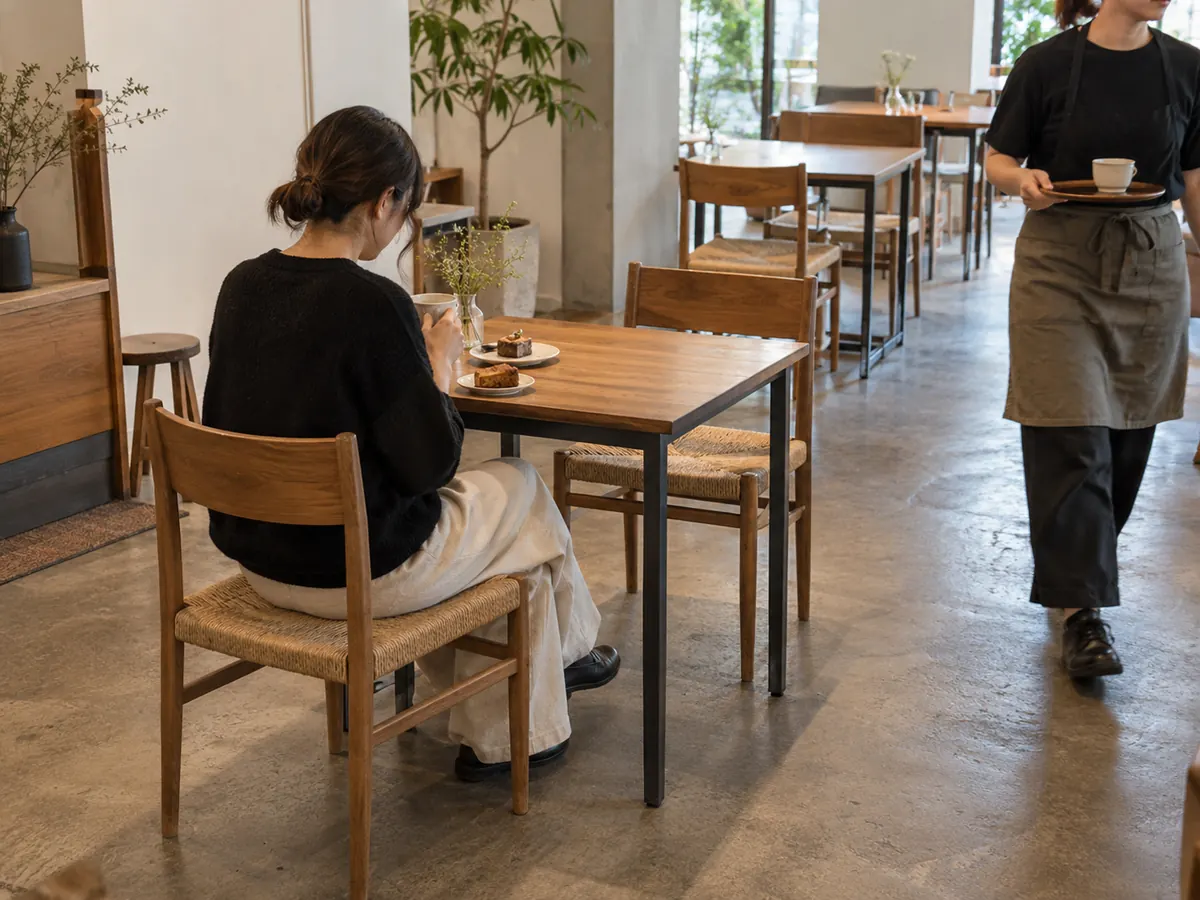
If the sample fails, change the specific cause. A different base may solve foot interference while keeping the top and chairs. If a larger chair blocks the aisle, try a smaller chair or revise the layout. Recheck the changed combination before approving it.
This gives you a usable reference for the bulk delivery. It also keeps a later material or hardware change from quietly becoming part of the order.
Build your YeZhi table and seating shortlist
Start with our dining tables and shortlist the sizes that suit your seating zones. For a compact round option, our round wood top cafe table is listed at 600 mm diameter and 750 mm high, with a plywood top and metal base. Pair it with the actual proposed chair before approving the combination.
Send us your table and chair quantities, floor plan or available dimensions, preferred finishes, delivery location and required usable date. Email drawings or reference photos to info06@hkmsdesign.com; you can also send a project summary through our contact page. We can discuss suitable YeZhi models and material options from that starting point.
When comparing cafe furniture manufacturers, choose the business that fits your supply task: confirmed local stock for a small urgent order, coordinated production for a planned repeatable range, or a specialist for fixed seating. Then approve the full chair-and-table combination and compare the complete order. That is how the shortlist becomes a workable furnishing plan.
Cafe furniture sourcing FAQs
Can I keep my existing chairs and order only new tables?
Yes—keep serviceable chairs if the new tables work with their dimensions and use. Measure the chairs’ seat height, overall width and arm height, then use an actual chair with the table sample. Check knee room, base interference and the occupied layout before ordering. You can coordinate the new finish with the existing chairs or choose a deliberate contrast.
Can cafe chair manufacturers and cafe table manufacturers be different companies?
Yes, provided one person takes responsibility for approving the complete combination. Share the chair dimensions and actual finish samples with the table supplier, and the table drawing with the chair supplier. Assemble and approve the pair before both bulk orders proceed. Separate suppliers make sense when a specialist supplies a feature you need; they also add sample and delivery coordination work.
Can chairs and tables arrive in separate shipments?
Yes, but approve the complete set before either shipment is released. Keep the approved product and finish versions on both orders, and check that the later delivery still leaves time for assembly before opening. If the tables need separate bases or mounting hardware, track those as essential components of the usable table.
How do I keep replacement furniture consistent with the first order?
Keep an approved physical finish reference and the exact product and material specifications. Include wood or veneer type, coating, sheen and upholstery code. Ask whether any specification has changed before placing a repeat order, and compare a new sample with the retained reference. If a close match is unavailable, replace a complete zone or use a planned contrast rather than scattering visibly different replacements throughout the cafe.