Best Custom Coffee Tables for 2025–2026: Our Default Recommendation
For most hotel lounges, reception areas, café lounge zones, serviced apartments, and commercial waiting spaces, we start with a low-profile oval or softly rounded coffee table with an easy-maintenance top and a stable, visually light base. It gives the strongest overall balance of circulation, usable surface, visual softness, repeatability, and export handling.
Change the shape when the seating plan gives you a clear reason. Use a rectangular table for a long sofa run, round for a compact conversation group, nested or modular tables for frequently changing layouts, and heavier mineral-look or sculptural forms only when packing, handling, installation, and repeatability are controlled from the beginning.
Main project risk
Do not approve a coffee table from a mood board before checking sofa height, sofa-to-table distance, walk paths, material maintenance, packing weight, and order quantity. A form can look right in a rendering and still be the wrong production or operating decision.
Next action: send us your layout or BOQ, related seating dimensions, target quantity, preferred material and finish direction, destination market, and sample requirement. We will review the configuration and turn the design direction into a quotation-ready specification.
Choose the Coffee Table by Project Type First
If you want a fast starting point, use the operating environment before the trend. We can then adjust size, finish, material, structure, logo, and packing around the selected route.
| Your project | Our starting recommendation | Why we start there | What can change the choice |
|---|---|---|---|
| Hotel lobby or reception | Soft-edge oval | Balanced circulation, shared surface, softer visual profile | Very long sofa runs or a signature design brief |
| Small café lounge | Round or compact oval | Easy to place around compact seating groups | Wall alignment, banquette layout, or limited floor depth |
| Long lounge sofa | Rectangular low-profile | More continuous usable surface along the sofa frontage | Narrow end circulation or sharp-corner concern |
| Flexible lobby / coworking | Nested or modular set | Furniture can be regrouped without replacing the whole table setup | Staff handling, independent stability, storage space |
| Premium hospitality interior | Controlled mineral/stone-look direction | Stronger visual weight and material coordination | Shipping weight, edge protection, installation and repeat-order risk |
| Boutique / flagship project | Sculptural OEM | Lets the table contribute to the brand identity | Prototype cost, tolerance, repeatability and quantity |
Jump to the Decision You Need
7 Custom Coffee Table Configurations We Recommend for 2025–2026 Commercial Projects
For 2025–2026 projects, these are the configurations we would put at the top of the shortlist based on layout fit, maintenance, repeatability, customization value, packing/freight risk, and visual longevity.
| Configuration | We recommend it for | Custom direction | Main procurement risk |
|---|---|---|---|
| 1. Soft-edge oval, wood + metal | Hotel lobby, reception, café lounge | Size, top finish, frame finish, logo, packing | Oversizing the top and reducing circulation |
| 2. Round pedestal or drum | Compact conversation groups | Diameter, height, surface direction, base proportion | Base footprint becoming too wide or heavy |
| 3. Rectangular low-profile | Long sofa runs and linear interiors | Length, width, top/frame relationship, finish | Narrow approach paths and crowded table ends |
| 4. Nested or modular set | Flexible lobby, event and coworking zones | Matched sizes, finishes, nesting relationship | Units that only work when grouped together |
| 5. Mineral/stone-look + metal | Premium hospitality interiors | Surface, edge, frame and packing direction | Weight, fragile edges and installation handling |
| 6. Sculptural statement form | Boutique hotels and brand-led spaces | Geometry, finish, structure, OEM development | Tolerance and repeatability across volume |
| 7. Storage/function-led table | Guestroom and extended-stay programs | Storage, tray or functional detail when justified | Moving parts adding maintenance without enough value |
1. Soft-Edge Oval Wood + Metal — Our Best Overall Starting Point
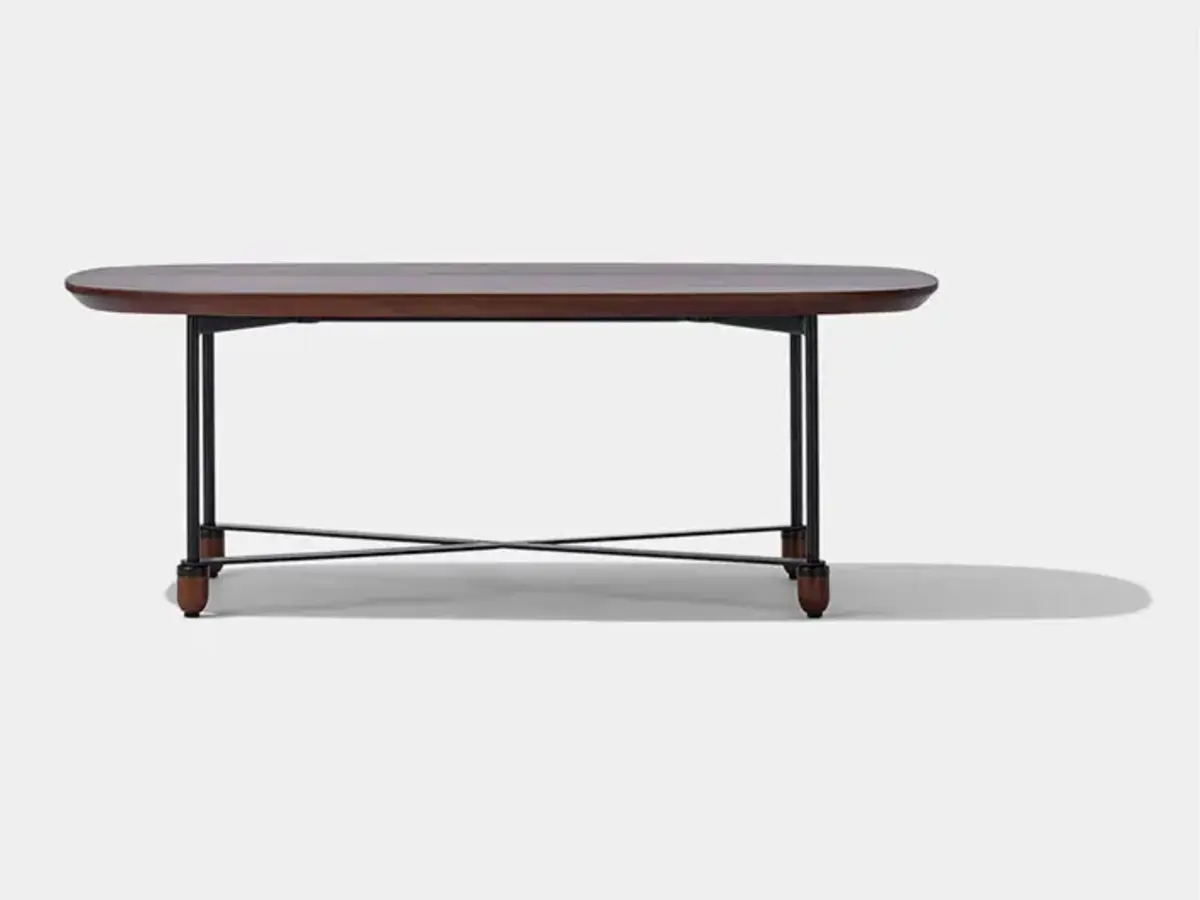
We use this as the default starting direction for many lounge projects. The oval plan removes projecting corners around the seating group, while a wood top with a slim metal frame can keep the table visually lighter than a block-style base. It also gives us a practical platform for finish, size, logo, and packing adjustments without automatically turning the project into a completely new structure.
2. Round Pedestal or Drum — Best for Compact Conversation Groups
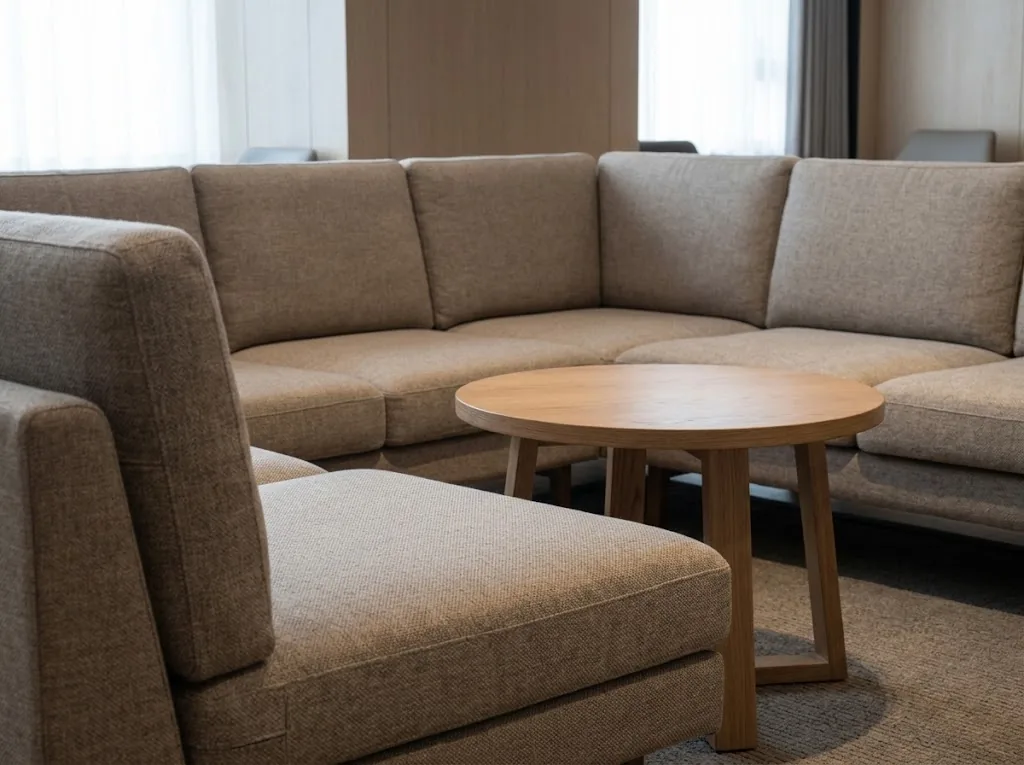
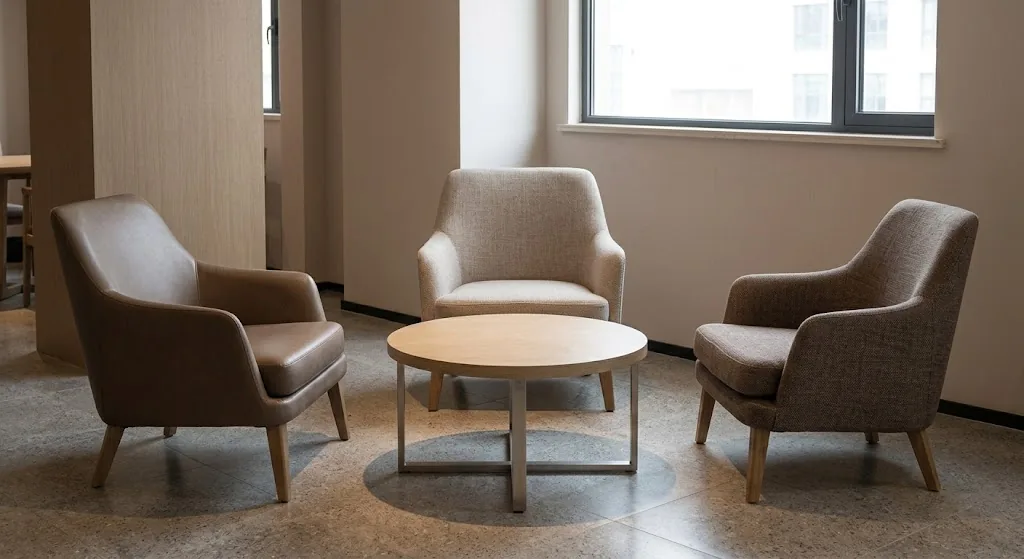
A round top works well when seating wraps around several sides or when the room is circulation-sensitive. Before we approve a pedestal or drum concept, we check the base footprint against the seating plan and target top diameter. A clean-looking base can still become too wide, heavy, or awkward around feet if the proportions are wrong.
3. Rectangular Low-Profile — Best for Long Sofa Runs
Use rectangular when a long sofa needs more continuous tabletop or the interior is strongly linear. We size the table from the sofa frontage and the real path around the group, not from the room size alone. Long tables are easy to oversize, especially at the ends.
4. Nested or Modular Set — Best for Flexible Layouts
For lobbies, coworking spaces, event lounges, and multipurpose rooms, two or more coordinated tables can give the operator more flexibility than one oversized piece. We still require every unit to be stable and useful on its own, with sensible handling weight and protected contact points where tables nest or overlap.
5. Mineral or Stone-Look Top + Metal — Best for Premium Visual Weight
This direction can work well when the table needs to coordinate with premium flooring, reception finishes, or a stronger material palette. We only recommend it after the packing and handling route is clear. Heavy or brittle surfaces affect edge protection, carton construction, freight density, installation, and sometimes the preferred base structure.
6. Sculptural Statement Form — Best for Boutique Identity
A signature table can carry the visual identity of a boutique hotel or flagship lounge. This route usually needs deeper development because unusual curves, asymmetry, special joints, and mixed finishes create more tolerance risk. For volume production, we prefer to resolve the geometry in the drawing and sample stage instead of trying to correct it after bulk production starts.
7. Storage or Function-Led Table — Best When the Function Is Specific
Storage, lift, tray, or integrated-function concepts can make sense in guestrooms, serviced apartments, and compact multi-use spaces. We do not add mechanisms by default. The extra function should solve a clear operating need and justify the additional cleaning, maintenance, replacement, and packing complexity.
Start from a Real YeZhi Platform: Gyro Oval Coffee Table
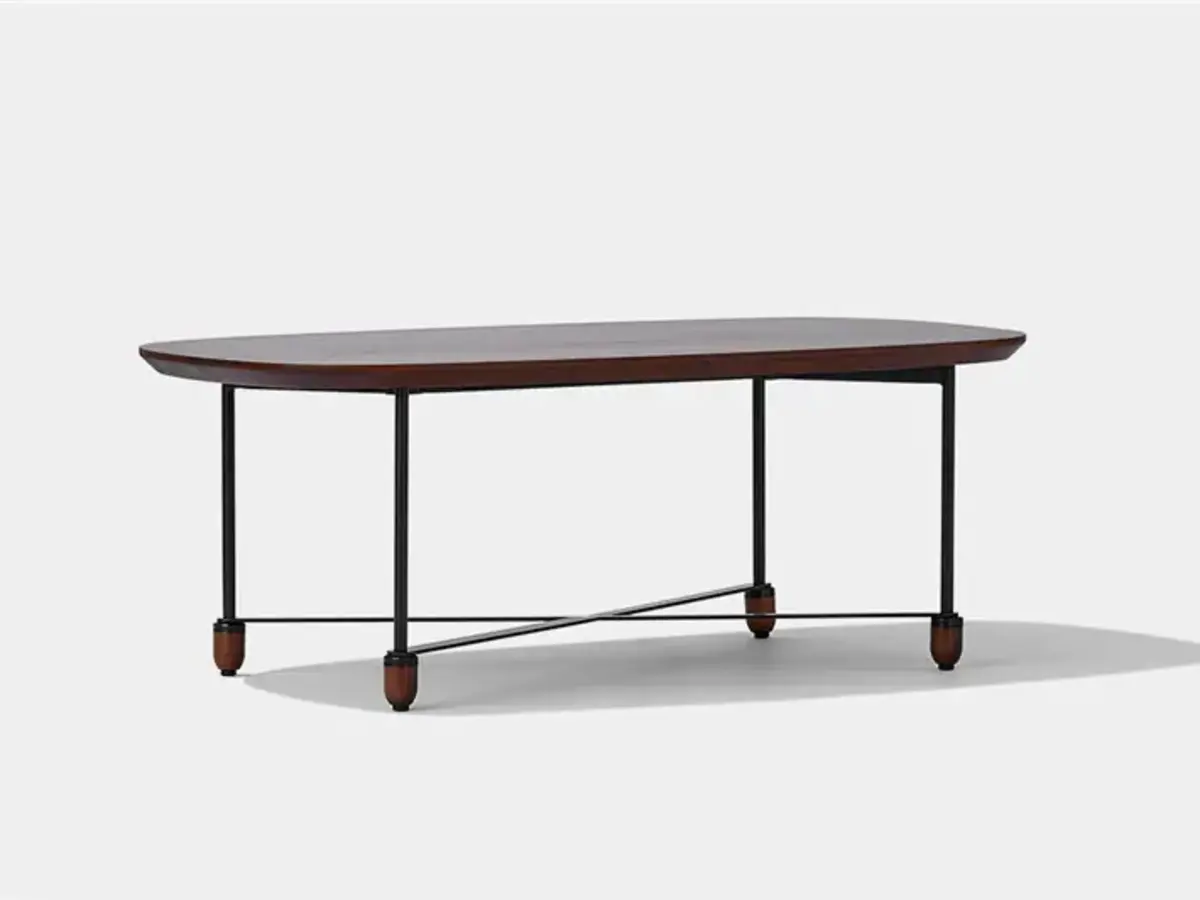
Our Gyro Oval Coffee Table is a current published example of the #1 configuration above. It uses an oval wood top, slim metal frame, and wood foot details for hotel lounges, reception seating, café lounge areas, apartments, and other commercial interiors.
The published size is 43.3 × 23.6 × 15.8 in / 110 × 60 × 40.2 cm. The current model MOQ is 20 pcs, with standard production at about 30 days, subject to final quantity, finish, and order confirmation.
Use the current model when the structure already fits the project. We can review color, size, material direction, logo, packing, and structure requirements. If the request becomes a genuinely new structure or geometry, we move it into the full custom/OEM route instead of forcing the existing model beyond a sensible modification.
How We Translate 2025–2026 Coffee Table Trends into Production
For us, a trend is useful only when it can become a repeatable, cleanable, shippable commercial specification. The 2025–2026 direction is not simply “more decorative”; it is a stronger mix of soft geometry, warmer materials, flexible layouts, and project-specific identity.
| Design direction | How we turn it into a commercial specification | What we control |
|---|---|---|
| Rounded / organic forms | Use the softer outline to improve circulation and reduce projecting corners | Overall dimensions, edge profile, base stability |
| Warm mixed materials | Coordinate wood, metal and target surface direction without creating unnecessary joints | Finish consistency, cleaning points, material transitions |
| Flexible layouts | Use nesting or modularity only when the operating plan genuinely changes | Independent stability, handling weight, contact protection |
| Bespoke identity | Convert brand references into controlled geometry, finish, logo and packing requirements | Drawing, sample scope, repeatability |
| Lifecycle focus | Judge appearance together with maintenance, packing and repeat-order practicality | Surface choice, replaceable parts, export handling |
Custom Coffee Table Size: Start with the Seating Plan
These are planning guides, not final product specifications or universal code dimensions. We confirm the final table size against the selected seating, project drawing, and access requirements.
Height
Start with the top around the sofa seat height or up to about 2 in / 5 cm lower. We then adjust against the actual seat height and intended use.
Sofa-to-table gap
A common first planning range is about 14–18 in / 36–46 cm between the sofa edge and coffee table.
Length
About two-thirds of the main facing sofa run is a useful first layout test, not a fixed rule for every seating group.
Walk path
Where the table borders a main walking route, about 30 in / 76 cm of clear circulation is a practical planning target when the room allows it. Confirm local access and egress requirements separately.
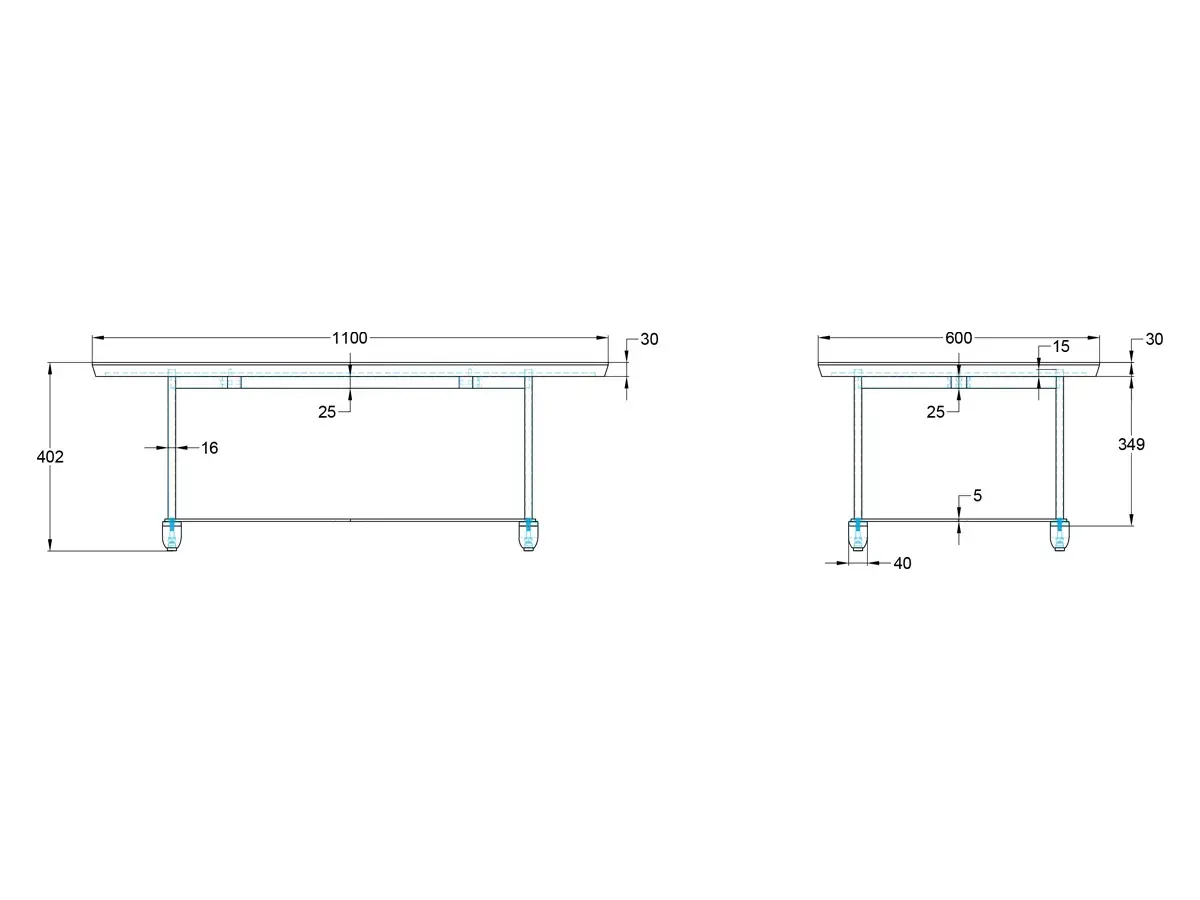
What to send us before we lock the size
Send the sofa or lounge-chair dimensions, the intended table position, and the room layout. We adjust the table around the seating composition instead of forcing a standard size into the plan. If you are coordinating the whole lounge group, you can also review our commercial lounge chairs.
Choose the Coffee Table Material by Project Requirement
Material should support the operating environment, not only the mood board. We confirm the final top and base specification against the selected model, quantity, finish target, cleaning requirement, packing route, and use environment.
| Project requirement | Starting material direction | What we confirm before production |
|---|---|---|
| Warm hotel or café interior | Wood / wood-look top with a controlled metal or wood base | Color, edge profile, substrate/material specification, frame finish |
| Easy daily cleaning | Simple sealed surface with fewer dirt-trapping transitions | Finish, edge detail and cleaning expectation |
| Premium visual weight | Mineral/stone-look or another project-specified heavy surface | Weight, edge protection, support structure and packing |
| Light visual appearance | Slim metal frame with a visually lighter top | Stability, top-to-frame connection and floor contact |
| Brand-specific finish | Existing platform with custom color/finish direction where feasible | Reference sample, finish tolerance, quantity and repeatability |
If the table is part of a café or hospitality package, you can also review our café furniture supply options so the table finish and seating direction are coordinated instead of sourced as unrelated pieces.
Standard Customization vs Full Custom: Set the Right Route Early
Many projects do not need a completely new table structure. If a current model already fits the layout, we prefer a controlled customization route because it is normally easier to quote, sample, repeat, pack, and reorder.
| Route | Typical change | Commercial starting point | What we do next |
|---|---|---|---|
| Regular / standard customization | Feasible finish, color, material direction, size adjustment, logo or packing change on an existing structure | Regular MOQ starts from about 15 pcs per model/SKU; some models are higher | Confirm model, change scope, price, drawing/specification and production plan |
| Full custom / OEM | New structure, major dimension change, brand-specific geometry, unusual base/top relationship or deeper product development | Normally around 100 pcs per design/configuration | Define structure, drawing, finish, sample route where required, packing and production controls |
We do not push a project into full custom when an existing platform can solve it. We also do not force a standard model to imitate a fundamentally different structure. The right route is the one that preserves the design intent without creating unnecessary development risk.
How We Develop a Custom Coffee Table
Once we know the project direction, we move from visual reference to production control in a clear sequence.
Why We Review the Table as a Manufacturer, Not Only as a Design
YeZhi Furniture works with in-house product development, woodworking, metal fabrication, welding, surface finishing, assembly, quality control, and packaging for commercial furniture. That matters on custom coffee tables because a visual decision can affect several production steps at once.
Structure
We check whether the top, frame and floor contact make sense together before volume production.
Finish consistency
We define the finish direction before production so the order is not managed as a series of one-off pieces.
Export handling
We treat carton design, edge protection, removable components and handling weight as part of the product route.
For more information about our manufacturing scope, see About YeZhi Furniture.
What Changes the Price of a Custom Coffee Table?
There is no useful single price for “a custom coffee table” without the configuration. We would rather quote the real project than give you a generic unit price that changes as soon as the specification is confirmed.
Size and structure
Larger tops, deeper frames, unusual geometry and new structures can change material use, tooling and packing.
Top and base material
Material direction affects cost, weight, finishing process, support structure and export handling.
Finish and customization depth
Standard finish adjustments are different from new colors, special surface treatments, logos or brand-specific development.
Quantity
Regular orders and full OEM programs use different commercial thresholds and development routes.
Sample requirement
Sample scope depends on what needs to be approved and how far the project moves away from an existing model.
Packing and trade term
Heavy tops, fragile edges, special cartons, pallets, removable parts and EXW/FOB/CIF requirements affect the final quotation.
Send us the size, material direction, finish, quantity, destination, and reference image or drawing. We can then quote the correct route instead of making you compare misleading headline prices.
Commercial Terms to Plan Before Final Approval
- Regular MOQ: starts from about 15 pcs per model/SKU; individual models can be higher.
- Full custom/OEM: normally around 100 pcs per design or configuration.
- Standard production: about 30 days after order confirmation for regular routes.
- Complex/custom production: normally about 35–45 days, depending on structure and finish.
- Sample timing: confirmed by model and complexity.
- Payment: T/T 30% deposit + 70% balance before shipment.
- Trade terms: EXW, FOB, or CIF can be quoted.
- Ocean shipment: LCL or FCL depending on the order and destination.
- Standard warranty: 1 year, with the applicable scope and remedy confirmed in the order terms.
For heavy, fragile, or irregular custom tops, packing is part of the product decision. We prefer to resolve edge protection, carton construction, removable components, handling weight, and container efficiency before final approval.
5 Coffee Table Choices We Would Reject or Rework
- A table that blocks circulation. If the only way to fit it is to squeeze the sofa gap or main path, we reduce the size or change the shape.
- A premium top without a handling plan. Heavy or brittle surfaces need suitable edge protection, packaging and installation planning.
- A sculptural base that is difficult to repeat. If the geometry creates unstable tolerances or inconsistent floor contact, we simplify it before volume.
- A mixed-material detail that traps dirt or moisture. Decorative joints should not create avoidable cleaning problems in a commercial interior.
- A “custom” request with no quantity or drawing context. Shape, finish, structure, sample route, packing and price all change with order scale.
What to Send Us for a Coffee Table RFQ
The fastest way to receive a useful quotation is to send enough information for us to understand both the table and the project.
- Project type: hotel, café, restaurant lounge, reception, apartment, guestroom, coworking or another commercial setting.
- Layout or BOQ: room plan, quantity schedule or marked-up seating plan.
- Related seating dimensions: especially sofa seat height, sofa width and the intended table position.
- Preferred shape: oval, round, rectangular, nested/modular, sculptural or a reference image.
- Target size: dimensions or the space available around the seating group.
- Top material and finish direction: color, texture, edge preference and any required reference.
- Base/frame direction: metal, wood, pedestal/drum concept, finish and visual weight.
- Quantity by model/design.
- Destination market and preferred trade term.
- Branding and packing requirements.
- Sample requirement: tell us what must be approved before bulk production.
We confirm the feasible configuration before production. This is especially important when the request changes the structure, introduces a heavier surface, or combines several materials in one table.
Custom Coffee Table FAQ
What is the best custom coffee table shape for a hotel lounge?
For most mixed lounge groups, we start with an oval or softly rounded low-profile table because it balances circulation, usable surface and visual softness. We switch to rectangular when the main sofa run is long and continuous tabletop is more important.
What coffee table height works with commercial lounge seating?
As a planning start, keep the table top around the sofa seat height or up to about 2 in / 5 cm lower. We confirm the final height against the selected seating and project drawing.
How far should a coffee table be from a sofa?
A useful first planning range is about 14–18 in / 36–46 cm from the sofa edge. The final gap should reflect seat depth, reach, circulation and the room plan.
Can YeZhi Furniture make a coffee table from our drawing or reference image?
Yes. Send us the drawing, reference image, target size, quantity, material/finish direction and destination. We will review whether the project fits an existing platform, standard customization, or full OEM before quotation.
Can we order a sample before bulk production?
Samples can be arranged depending on the selected model and customization scope. Sample lead time is confirmed by model and complexity; we do not use one fixed company-wide sample promise.
What should be approved before mass production?
We recommend locking the dimensions, structure, visible material/finish direction, color reference, key details, logo requirement, packing method and any sample acceptance points before bulk production.
What affects the price of a custom coffee table?
Size, top and base material, structure, finish, customization depth, quantity, sample scope, packing and trade term all affect the quotation. Send the project inputs and we will quote the correct configuration.
What is the MOQ for custom coffee tables?
Our regular company baseline starts from about 15 pcs per model/SKU, although individual models can be higher. The current Gyro Oval Coffee Table starts at 20 pcs. Full custom/OEM normally starts around 100 pcs per design/configuration.
How long does custom coffee table production take?
Regular production is about 30 days after order confirmation. More complex or deeper custom routes are normally planned around 35–45 days.
How do you handle export packing for heavy or fragile coffee table tops?
We review the top weight, edge risk, carton construction, protective materials, removable components and handling method against the selected configuration. The packing route is confirmed before production for projects where transport risk materially affects the table design.
Send Us the Project — We Will Turn It into a Quotation-Ready Coffee Table Specification
Send us your layout, quantity, seating dimensions, target size, finish direction, destination, and reference images or drawing. We will review the configuration, confirm the applicable customization route and MOQ, identify the specification points that still need to be locked, and prepare the quotation route for your project.