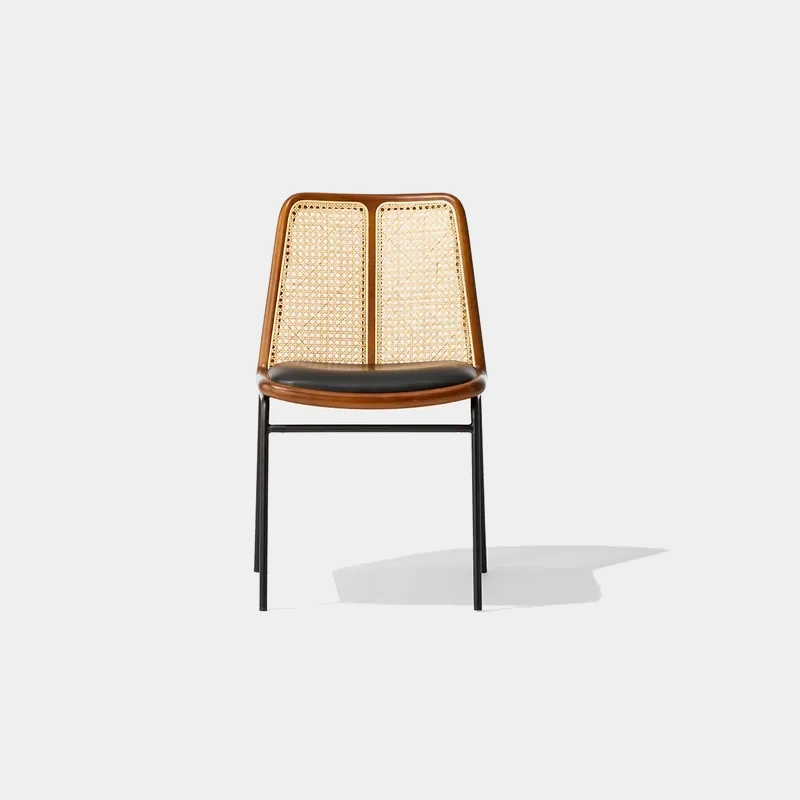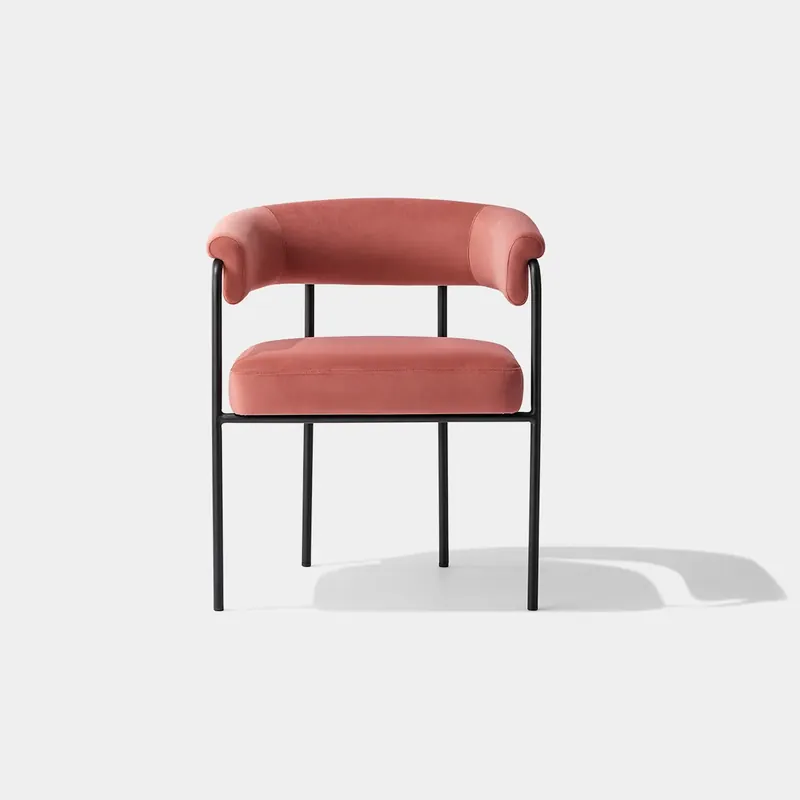
To import dining chairs from China, define the chair and destination first, verify the supplier, approve a production sample, calculate the delivered cost, then release the order through inspection, shipping and customs to warehouse receiving. Get packaging details and market requirements before paying a production deposit: both can change the chair you order and what it costs to sell.
For a first order, start with a manageable selection of repeatable models. Add new frames, fabrics or finishes only when the sample, minimum quantities and delivery plan still work. Here is how to move from a chair photograph to a usable shipment.
Decide whether direct importing fits your order
Direct importing makes the most sense when you have enough repeat demand or a specific design need to justify samples, inspections and international delivery. A furniture store building a repeat line has a different starting point from a restaurant needing a few replacement chairs next week.
For a small urgent order, compare local stock first. For a planned wholesale order, compare equivalent chairs delivered to your warehouse, including assembly and likely replacement work. A lower factory price is useful only if the chairs meet your specification and arrive when you can use or sell them.
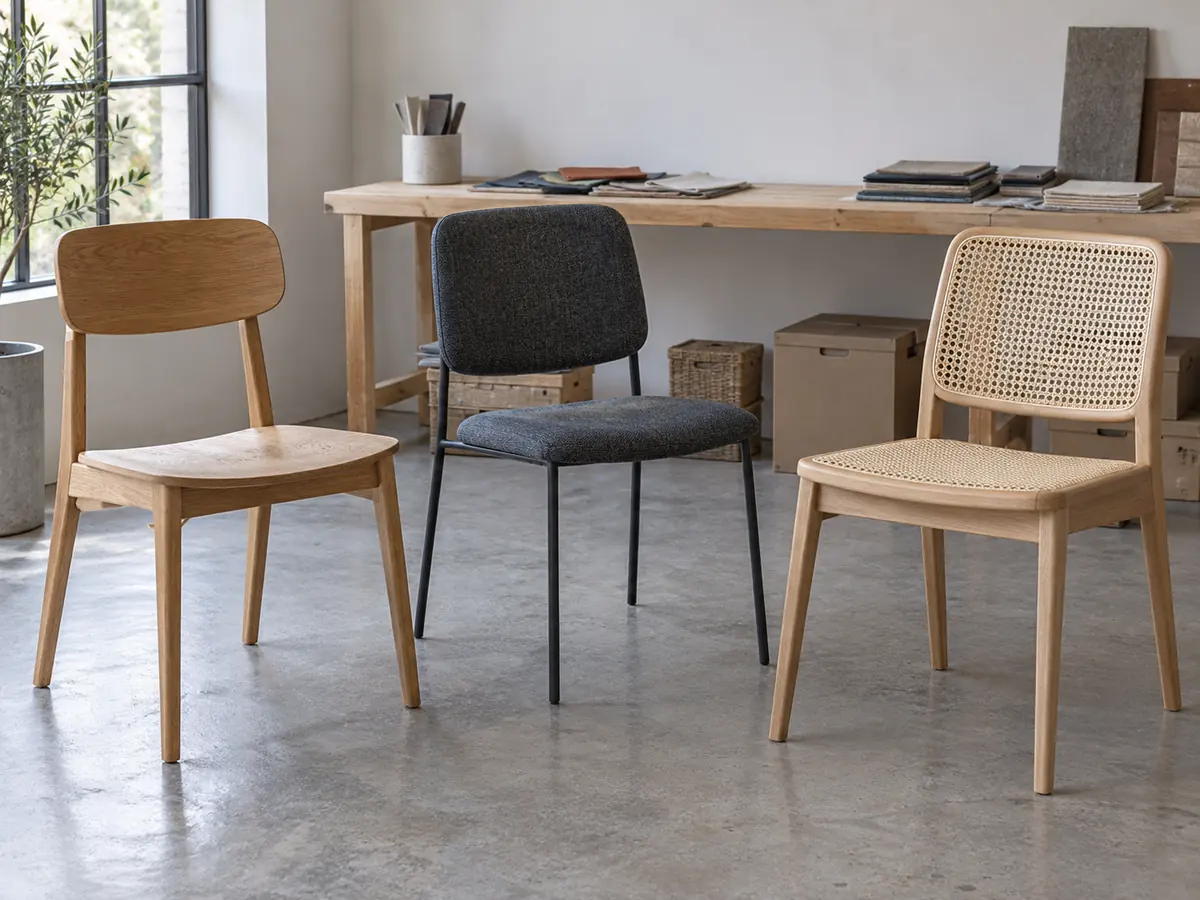
Before you contact Chinese chair suppliers, write down your destination country, quantity by model, intended use and required usable date. Separate that date from the vessel’s arrival date. Clearance, delivery, unpacking and assembly still need time after the ship arrives.
Write one dining chair brief for every supplier
Send the same brief to each supplier so the quotations describe the same chair. A picture shows the style; it rarely tells the factory enough about the construction, material or packing you need.
| Detail | What to put in the brief |
|---|---|
| Model and quantity | Product link or reference image; pieces for each model, colour and upholstery option |
| Dimensions | Overall width, depth and height; seat height; arm height if the chair must fit under a table |
| Frame | Wood species or metal specification, connection details and finish reference |
| Seat and back | Upholstery material code, colour, padding and cleaning needs |
| Intended use | Home retail, restaurant, café or another commercial setting; indoor or outdoor conditions |
| Packing and delivery | Assembled or knock-down; carton requirements; destination postcode or port; usable date |
Use the table height and the lowest underside obstruction when checking fit. Overall chair height cannot tell you whether an armrest clears the table apron. For resale, keep the same dimension definitions in your product listing and supplier specification.
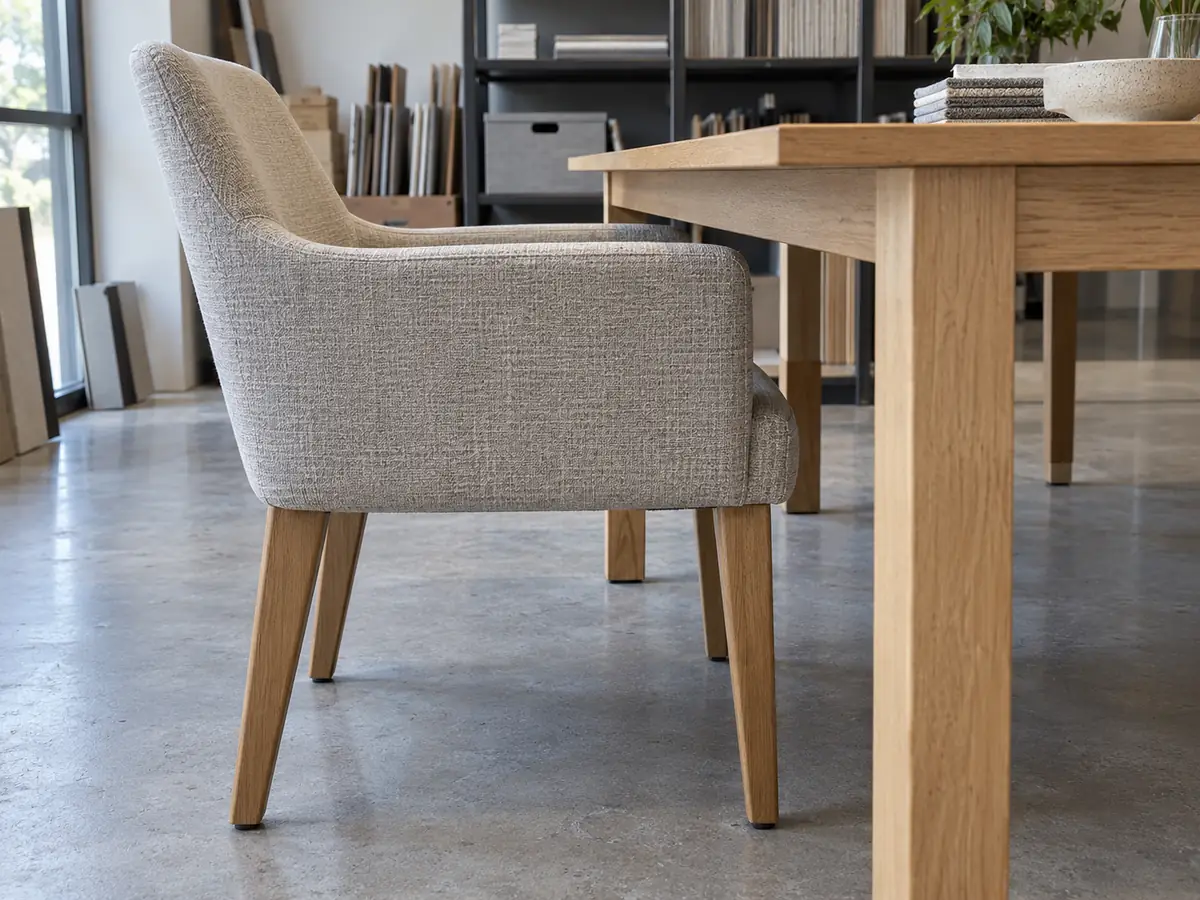
Ask where the minimum order quantity, or MOQ, applies: the complete order, each model, each frame finish or each fabric. Combining several colours does not automatically satisfy a minimum for a special material.
Our dining chair collection is a useful starting point for identifying a style. Send the product reference with your quantity and material direction; sample and customisation options depend on the selected model and order.
Verify who will make, sell and export the chairs
Choose a supplier that can show who is responsible for your exact order, from production through export. Start a shortlist through manufacturer websites, trade platforms, furniture exhibitions or an agent. Then move beyond the catalogue.
Ask for the legal seller’s business details, production address, export arrangement and payment beneficiary. Compare these with the quotation and contract. If the seller, factory and bank recipient differ, get the relationship and responsibilities explained in writing before paying.
A manufacturer can suit a repeat order built around one chair range. A trading company or sourcing partner can suit a mixed order from several factories. In the second case, establish who checks each factory, consolidates cartons and fixes a problem. The business type alone does not decide reliability.
For a new supplier, request a live walkthrough or an independent visit focused on the relevant work: frame making, upholstery, finishing, packing and order identification. Ask which stages are subcontracted. A platform badge or company registration is a starting check; your sample and production arrangements still need their own approval.
If bank details change later, verify the change through an established contact channel before transferring money.
Approve the sample and destination requirements together
Approve the chair’s physical specification and the requirements for its destination before bulk production. Changing the fabric, panel material or frame after approval can change both the product and the documents needed for it.
Check the chair you will actually receive
Order a representative sample made with the proposed frame, upholstery, padding and finish. Sit on it, place it at the intended table, and check the seat and arm heights. Check floor contact on a flat surface, joints, underside edges, glides, stitching and the surfaces customers will touch.
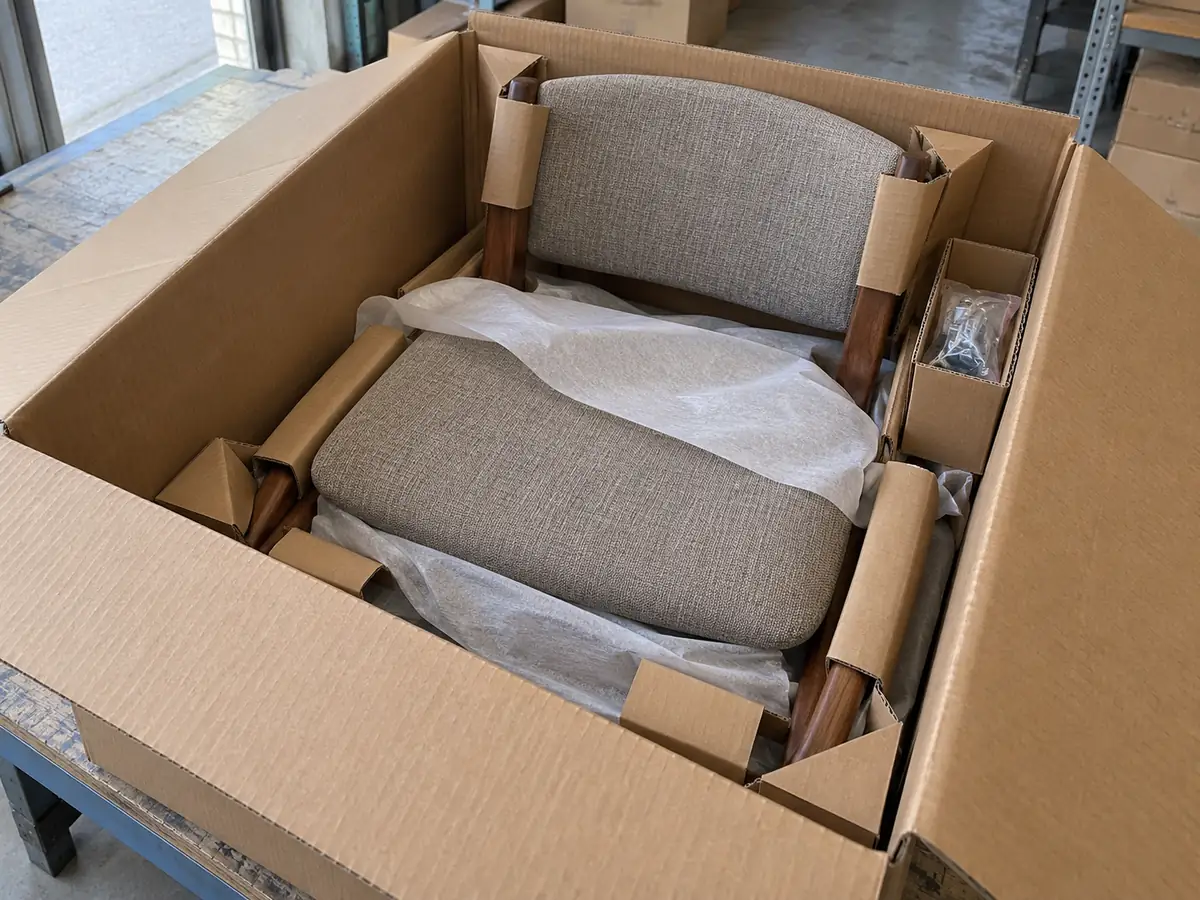
For knock-down chairs, assemble the sample using the supplied hardware and instructions. Check that the parts line up and the chair sits correctly after assembly. Open a sample carton too: loose hardware can damage upholstery, while unprotected legs or backs can rub through the finish during transport.
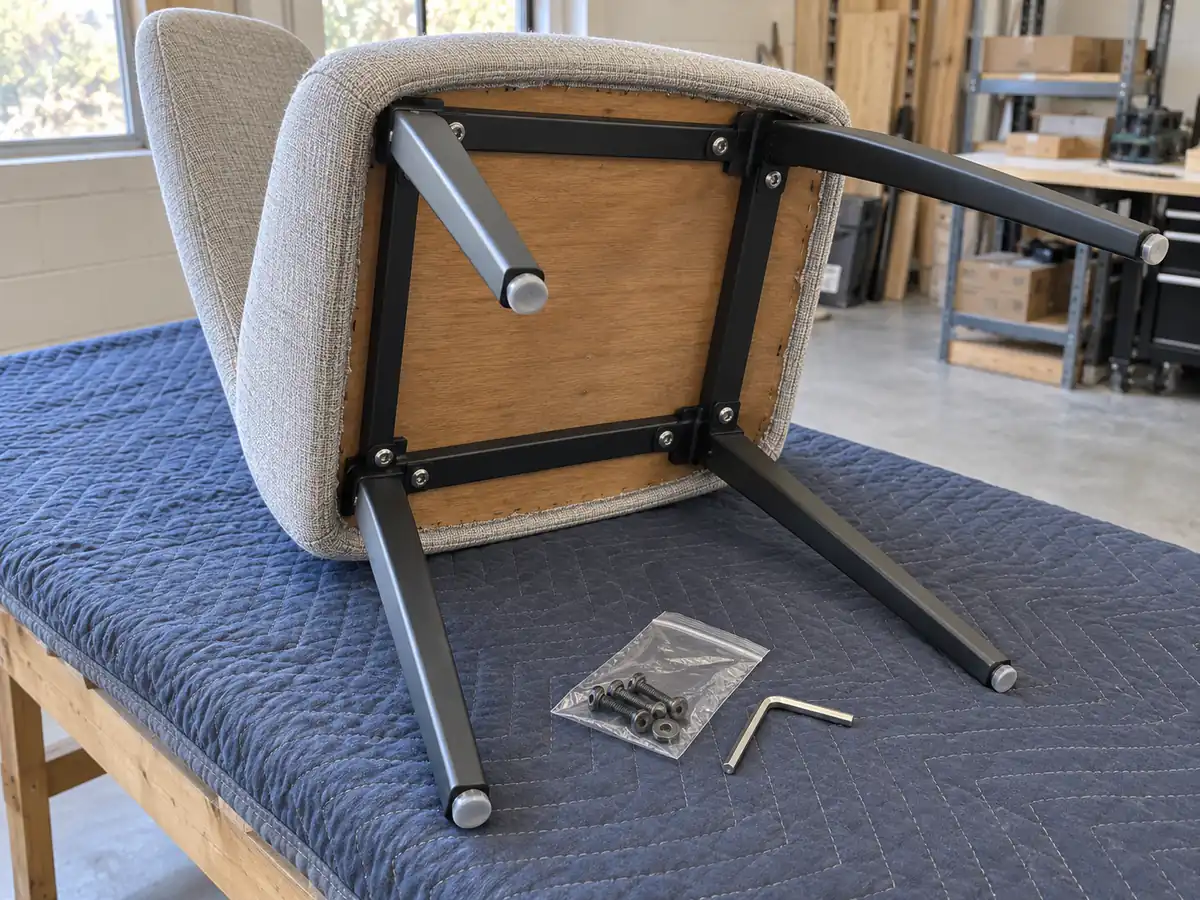
Record the approved sample reference, drawing revision, material codes, finish sample and agreed dimensional tolerances. Keep photographs and a retained reference. Write down what must happen if production differs: rework, replacement or another agreed remedy. Do not leave “same as sample” as the only description of the order.
Match the documents to your destination
Send your customs broker or destination adviser the chair description, frame and panel materials, upholstery, intended use, country of origin and planned import date. Use that information to establish classification, duties, labels and product requirements before choosing the final materials.
Examples that can change the order include:
- United States, upholstered indoor chairs: CPSC’s 16 CFR part 1640 guidance covers applicable upholstered seating and permanent flammability labelling. Plan the material evidence and label with the final configuration.
- United States, regulated composite wood: EPA’s TSCA Title VI rules cover specified composite wood products and finished goods containing them. Identify covered plywood, MDF or particleboard parts rather than treating every wooden chair alike.
- Australia, wooden chairs: use the Department of Agriculture’s BICON import conditions for the actual wooden article. Required manufacturing or treatment evidence depends on the product.
- European Union: use Access2Markets with the product, origin and destination to identify duties, procedures and relevant product requirements.
For commercial seating, also name the required strength, stability, durability or fire-performance tests in the order. Match any report to the chair configuration and intended use. A fabric report and a complete-chair durability report answer different questions.
Compare shipping terms and landed cost before paying
Compare quotations at the same delivery point, then add only the costs still outside that price. “Factory price,” “shipping included” and “door to door” leave too much room for different assumptions.
Choose a clear handover point
Write the trade term, exact named place or port, and rule version in the order. For containerised chairs, FCA is a useful starting point when you appoint the forwarder: the seller handles export clearance and hands over at the agreed place. ICC Academy’s FCA/FOB guidance explains why that fits container and multimodal transport.
| Term | Main handover and responsibility | When to consider it |
|---|---|---|
| FCA | Seller delivers to your nominated carrier at the named place and clears export | You want control of freight through your own forwarder |
| FOB | Seller delivers on board the vessel at the named shipment port | The agreed sea shipment actually uses an on-board handover |
| EXW | Seller makes goods available at the named place; buyer arranges loading and export | You already have a workable collection and export arrangement |
| DDP | Seller delivers import-cleared at the named destination, ready for unloading | The seller can legally complete import clearance and the price states duties, taxes and delivery scope |
Under FCA, loading responsibilities depend on whether delivery is at the seller’s premises or another named place. Under DDP, unloading remains the buyer’s task unless separately arranged; ask whether the quoted transport already includes its cost. DDP does not automatically include assembly or placement inside your store.
Agree quality, payment milestones, ownership and remedies separately. The trade term does not settle those parts of the purchase contract.
Calculate the cost per saleable chair
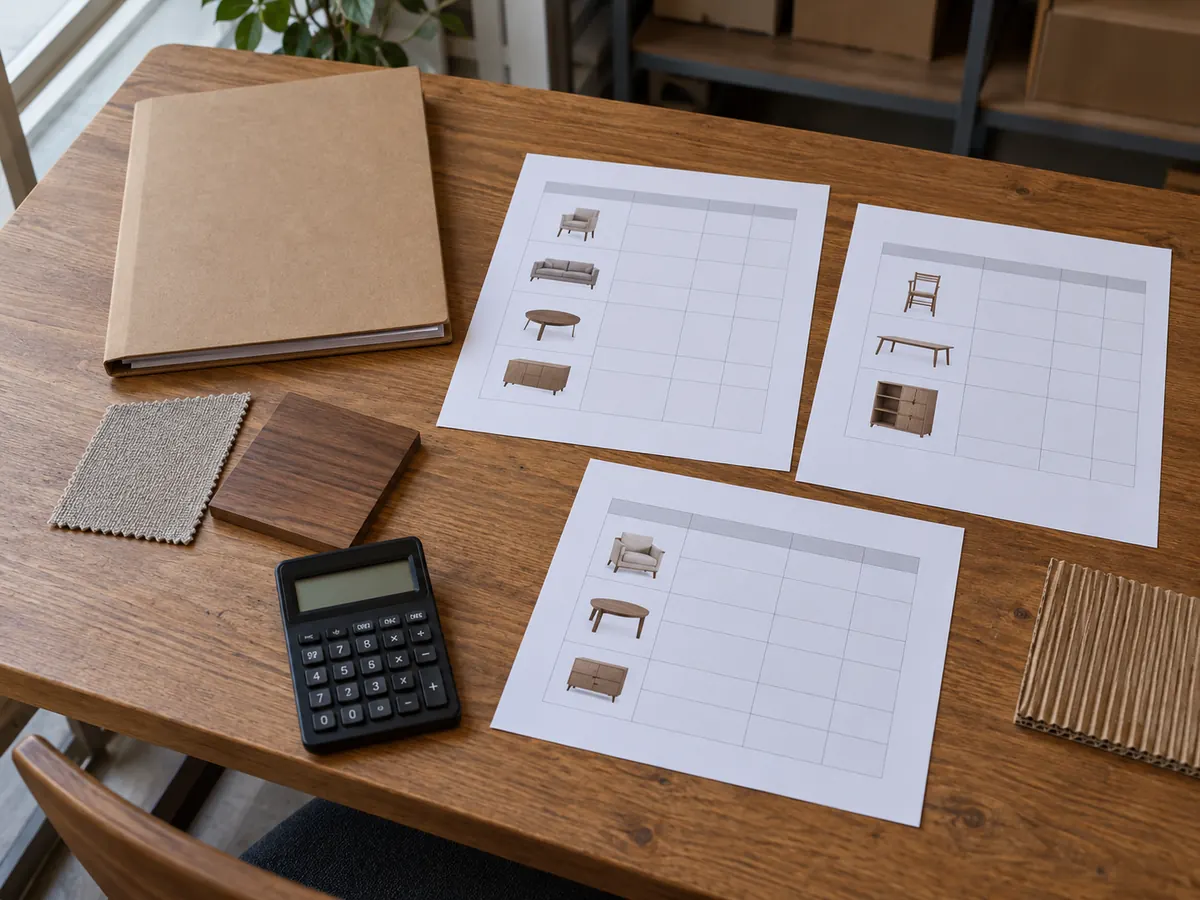
Build the budget in one currency using the product quote, packing, sample and inspection costs, freight, insurance, destination handling, brokerage, duties, non-recoverable taxes, local delivery and assembly. Keep a separate contingency. Mark each amount as included, extra or still unknown so you do not count it twice.
For example, suppose you import 200 chairs with these budget amounts:
| Cost | USD |
|---|---|
| Chairs | 10,000 |
| Additional export packing | 400 |
| Samples and inspection | 500 |
| Origin handling, freight and insurance | 2,800 |
| Duties and non-recoverable import charges | 1,100 |
| Delivery and assembly | 800 |
| Total | 15,600 |
$15,600 ÷ 200 = $78 per chair. If only 190 chairs are initially saleable and the same costs remain, the cost becomes $15,600 ÷ 190 = $82.11 before any later recovery or repair cost. This is why packing and defect handling belong in the buying decision.
Track recoverable import VAT or GST separately: it can increase the cash needed at entry without becoming a permanent product cost. Get the actual duty and tax treatment for the classification, origin and entry date. A blank duty field is an unfinished budget, not a zero rate.
Use packed dimensions to choose packaging and freight
Price freight from the outer cartons, pieces per carton and gross weights. The chair’s finished width, depth and height do not tell you its packed volume or container loading count.
Assembled or knock-down chairs
Choose assembled chairs when avoiding local assembly is worth the larger shipment. Knock-down chairs can reduce packing volume, but include assembly labour, hardware control and checks after assembly in the comparison. A retailer shipping individual cartons to customers also needs packaging suited to that delivery chain.
For either format, protect the legs and backrest, separate surfaces that can rub, secure loose components, and place hardware in an identified bag. Agree the carton strength, stacking arrangement and moisture protection for the route. Ask to review a packed sample before approving a smaller carton that removes useful protection.
Calculate shipment volume from cartons
For one carton size:
Shipment volume in m³ = outer length × outer width × outer height in metres × carton count.
Suppose 200 chairs pack two per carton, giving 100 cartons. With cartons of 0.60 × 0.55 × 0.55 m, the total is:
0.60 × 0.55 × 0.55 × 100 = 18.15 m³.
If another packing format for the same quantity measures 0.65 × 0.60 × 0.90 m per two-chair carton, the total becomes 35.10 m³: an extra 16.95 m³. Ask for freight quotes on both packing proposals before deciding which chair has the better delivered cost.
For mixed cartons, calculate each size separately and add the totals. Include pallets, crates and other handling units where used. The final load still depends on stack limits, carton orientation, available container dimensions and weight constraints.
Compare LCL, or shared-container freight, with FCL, or a dedicated container, using the same receiving address and service scope. LCL can suit smaller orders; FCL can become attractive as volume grows or fewer handling stages matter. Request origin, consolidation, destination warehouse and final-delivery charges. There is no single CBM point that makes FCL cheaper on every route.
For US-bound shipments using regulated solid-wood pallets, crates or dunnage, APHIS requires compliant ISPM 15 treatment and marks. This requirement applies to the regulated wood packaging. Identify the actual packaging material before ordering treatment or paperwork.
Tie production, inspection and payment to written approvals
Work backwards from the day the chairs must be ready to sell or use. Put sample approval, material purchasing, production, inspection, possible rework, departure, transit, clearance, delivery and assembly on one schedule. Assign an owner to each step.
Ask what starts the quoted production period: deposit receipt, final drawing approval, material approval or all three. A fabric change after approval may affect both purchasing and the shipping date. Obtain the revised dates before accepting the change.
Before production, agree the inspection scope and acceptance criteria against the approved specification. Include the quantity and identity of each SKU, dimensions, finish, upholstery, assembly, floor contact, labels, hardware and packaging. For a mixed order, include the relevant model and colour groups in the inspection plan. Agree sampling and defect categories with the inspector rather than copying an unexplained AQL number into the contract.
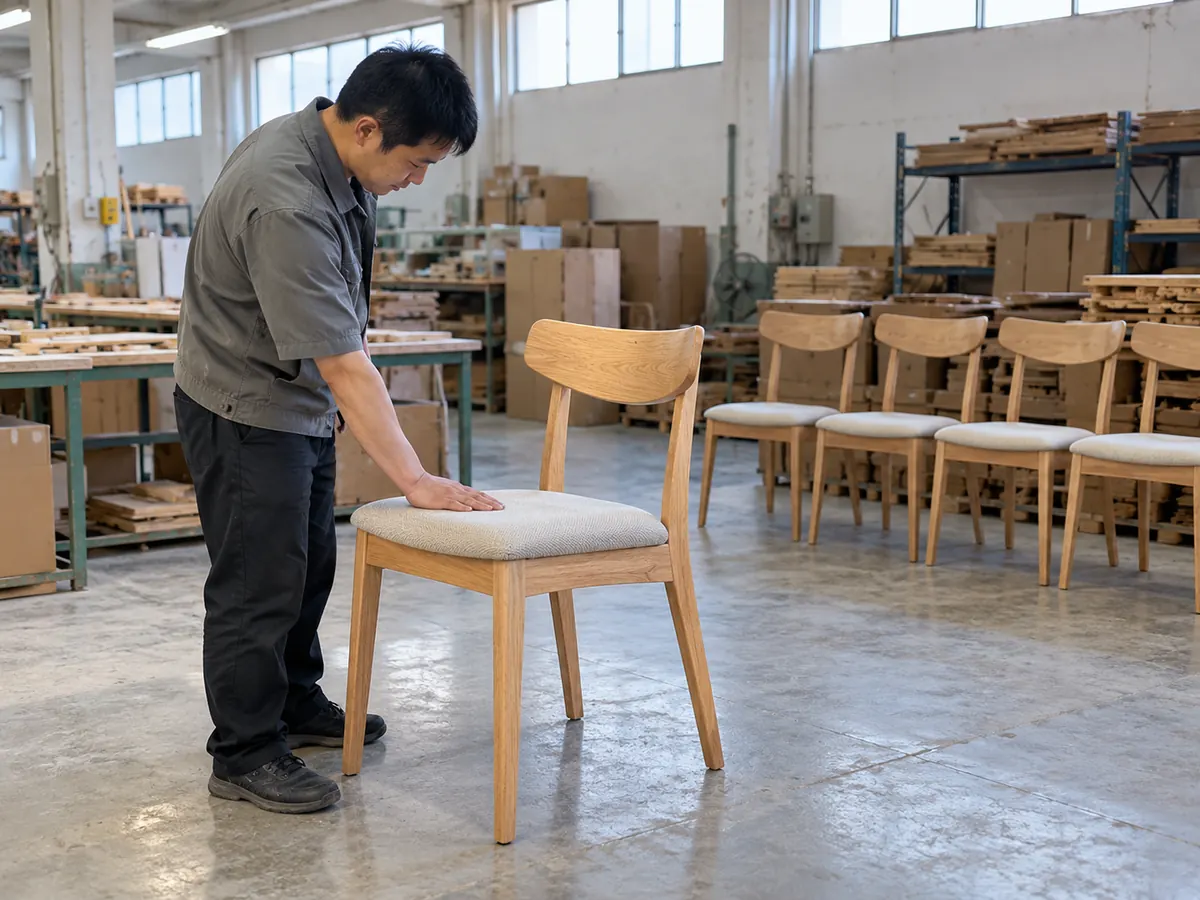
For a first bulk order, arrange an independent pre-shipment inspection. Where materials or construction are difficult to check once finished, plan an earlier inspection too. Repair a failed batch and recheck the affected items before shipment release. Photos of a corrected example alone do not show that the remaining affected stock was fixed.
Negotiate payment milestones around the approvals and inspection release. State what is due, what evidence supports payment, and who authorises cargo and document release. Deposit percentages vary by agreement; a familiar percentage does not replace clear conditions.
Check the documents and prepare warehouse receiving
Have the broker and forwarder review the draft documents before departure, while mistakes are easier to correct. Keep product codes consistent from the order to the cartons and warehouse records.
| Document | What to check |
|---|---|
| Commercial invoice | Seller and buyer, chair descriptions, quantities, values, currency, origin and agreed terms |
| Packing list | SKU and carton references, pieces per carton, package count, net/gross weight and dimensions |
| Bill of lading or other transport document | Shipper, consignee, routing, shipment identity and release instructions |
| Additional required records | Applicable origin, product, timber or treatment documents and destination filings |
The packing list describes the packages; it does not replace the commercial invoice. Ask which additional documents, advance filings and importer registrations apply to your shipment. Keep their deadlines in the shipping schedule.
Before delivery, check the largest carton against doorways and lifts. Arrange unloading equipment, people, a dry storage area and assembly space. Confirm delivery appointments and the free-time limits that affect port storage or container return charges.
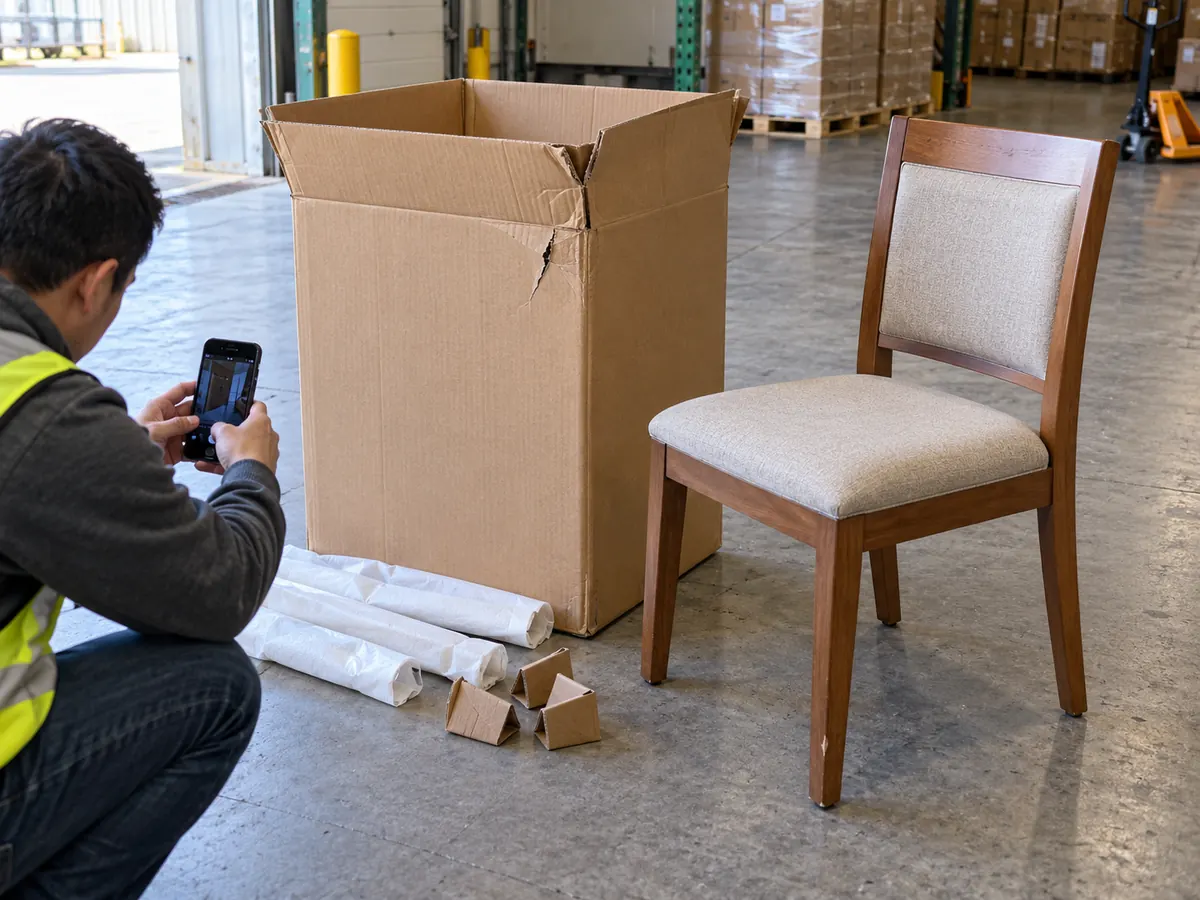
On receipt:
- Count packages and record damaged or missing cartons on the delivery record.
- Photograph the packaging, carton identifiers and affected chairs. Keep the packaging for investigation.
- Separate damaged or unstable chairs from saleable stock. For an assembly issue, check the supplied hardware and instructions before replacing parts or tightening further.
- Notify the supplier, carrier, forwarder or insurer as relevant, within the applicable claim deadlines. Keep their responses with the order record.
Before ordering, agree how missing hardware, replacement glides, upholstery differences and structural faults will be handled. List spare parts by the correct model and finish. A promise to send “some spare parts” is difficult to use when several chair models share one container.
Start with a repeatable order
The practical way to import dining chairs is to lock the specification, sample, delivered cost and responsibilities before releasing bulk production. Then keep the same references through inspection, packing, documents and receiving. Expand the range when that process works for your business.
For dining chair sourcing with YeZhi Furniture, start with our dining chair collection. Send the model references, quantity for each configuration, intended use, destination country and postcode, and required usable date. Include table dimensions or upholstery requirements where they affect the choice. We can discuss the relevant models, sample options and suitable customisation with you.
Questions about importing dining chairs
Can I import dining chairs without filling a container?
Yes. LCL shipping or consolidation with other compatible orders can suit smaller quantities. Compare the complete collection-to-warehouse charge, extra handling and packing needs with a dedicated-container option. If you need only a few chairs quickly, include local stock in the comparison.
Does one MOQ cover every colour and fabric?
Not necessarily: a minimum can apply separately to a model, finish or upholstery material. Ask for the minimum for each proposed configuration. Existing fabrics and finishes can have different order conditions from newly sourced materials, even when the chair frame stays the same.
Is sitting on the sample enough to approve commercial use?
No. Sitting on the sample helps you assess comfort and fit; commercial performance also needs the appropriate strength, stability and durability evidence. Give the supplier the intended setting and required tests before sample production. Match the evidence to the final chair and materials.
Who pays if imported chairs arrive damaged?
Responsibility depends on the cause, contract, delivery term and insurance coverage. A manufacturing defect and damage during unloading can fall to different parties. Keep carton numbers, delivery notes, photographs and packaging, then notify the relevant parties promptly under the agreed claim procedure.
Can I reorder the same chair with a new fabric later?
Yes, if the new material is available and suitable for that chair, but approve the change as a new specification revision. Recheck the material sample, relevant compliance evidence, minimum quantity, price and schedule. Keep the original frame and finish references so an upholstery change does not become an unplanned redesign.