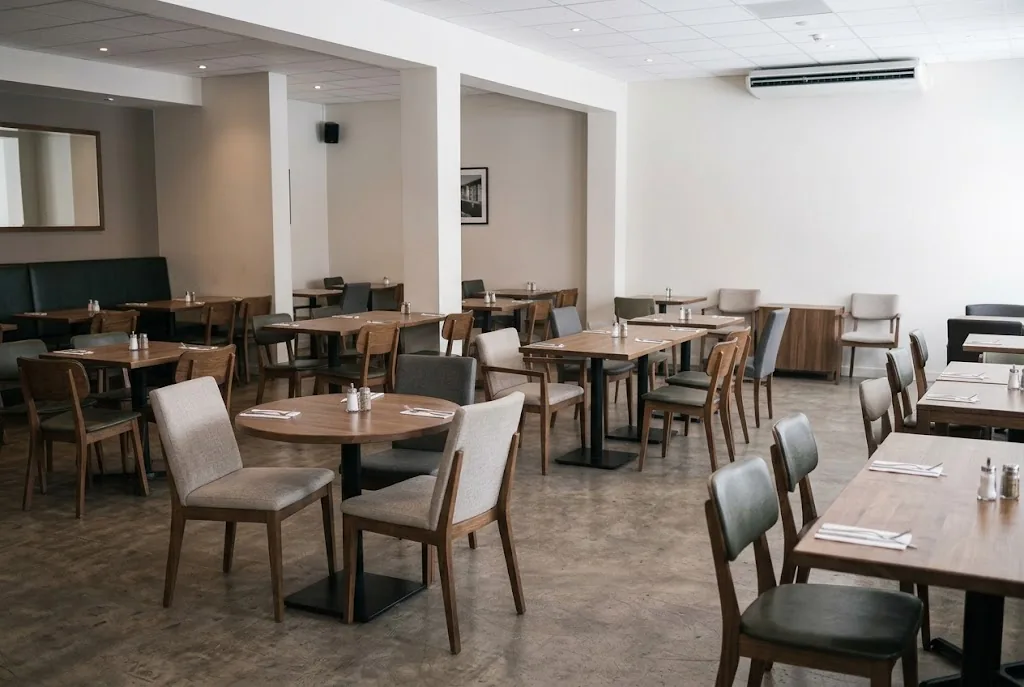
What Are the Main Types of Restaurant Chairs?
The main types of restaurant chairs include armless side chairs, armchairs, stackable chairs, metal chairs, wood or wood-metal chairs, upholstered chairs, cane or woven chairs, and chairs specified for outdoor use. Back designs such as ladder-back, cross-back, slat-back, bentwood, curved-back and bucket-style shapes create another layer of choice.
For most commercial dining layouts, we start with an armless dining chair because it is easier to position around different tables and usually gives the layout more flexibility. We change that direction when the project has a stronger requirement for arm support, stacking, upholstered comfort, a specific material language or outdoor exposure.
Start with an armless side chair and then choose the material and finish.
Move to a verified stackable model with a storage plan.
Consider upholstery, a more enveloping back, or an armchair if the layout allows it.
Use only a model and finish we have reviewed for the intended exposure.
Main risk: choosing by appearance before checking the table, chair footprint, aisle, storage, cleaning routine and environment. Send us those project inputs early and we can narrow the chair direction before quotation.
Types of Restaurant Chairs at a Glance
Restaurant chair names often describe different things. Some describe the chair form, some the material, some the handling method, and some the back design. The table below gives a fast shortlist before we move into the more useful three-layer system.
| Type | What it solves | Best starting fit | Watch for |
|---|---|---|---|
| Armless side chair | Compact table seating | Cafés, restaurants, flexible dining rooms | Seat comfort, actual width/depth, table-base interference |
| Restaurant armchair | More support and a premium feel | Hotel dining, private rooms, longer meals | Arm clearance and larger floor footprint |
| Stackable chair | Storage and frequent layout resets | Multi-use rooms, event-driven spaces | Stacking contact points, storage footprint, finish wear |
| Metal chair | Slim structure and modern/industrial direction | High-use indoor dining, cafés, bistros | Frame specification, finish system, floor-contact details |
| Wood / wood-metal chair | Warmer visual language | Bistros, cafés, full-service dining | Actual wood construction, finish sample, repeat-order color control |
| Upholstered chair | Softer sitting and premium atmosphere | Hotel dining, full-service, longer dwell time | Cleaning method, upholstery code, seam and replacement plan |
| Cane / woven chair | Natural texture and decorative back detail | Cafés, bistros, design-led dining | Actual material and indoor/outdoor specification |
| Bucket / wraparound chair | More enveloping support | Premium restaurants and hospitality spaces | Overall width, table clearance and aisle impact |
| Outdoor-specific chair | Dining in exposed or semi-exposed areas | Patios and outdoor hospitality zones | Exposure conditions, frame, finish, hardware and soft materials |
How We Classify Restaurant Chairs for Commercial Projects
We use three layers: form and handling, material and surface, then back or style design. This keeps the specification clear and prevents unlike categories from being compared as if they were direct alternatives.
1. Form & handling
Armless side chair, armchair, stackable chair, bucket or wraparound chair. This layer decides how the chair fits the table, aisle, storage and service pattern.
2. Material & surface
Metal, wood, wood-metal, upholstered, cane or woven. This layer changes cleaning, finish approval, visual warmth and maintenance.
3. Back & style design
Ladder-back, cross-back, slat-back, bentwood, curved-back, cane-back, bucket, solid or upholstered back. This is where the visual language is refined.
A useful specification rule
One chair can belong to all three layers. For example, a chair can be armless and stackable, use a metal frame with wood seat/back, and have a curved-back silhouette. That complete combination is more useful for purchasing than a single label such as “wood chair.”
Main Restaurant Chair Types and When We Recommend Them
Armless side chairs
Our default for most dining layouts. The missing arms reduce interference with neighboring chairs and table edges, so the chair is easier to place in compact or changing floor plans.
We move away from this default when the project needs more side support, a more enveloping premium feel, or a deliberately larger hospitality silhouette.
Restaurant armchairs
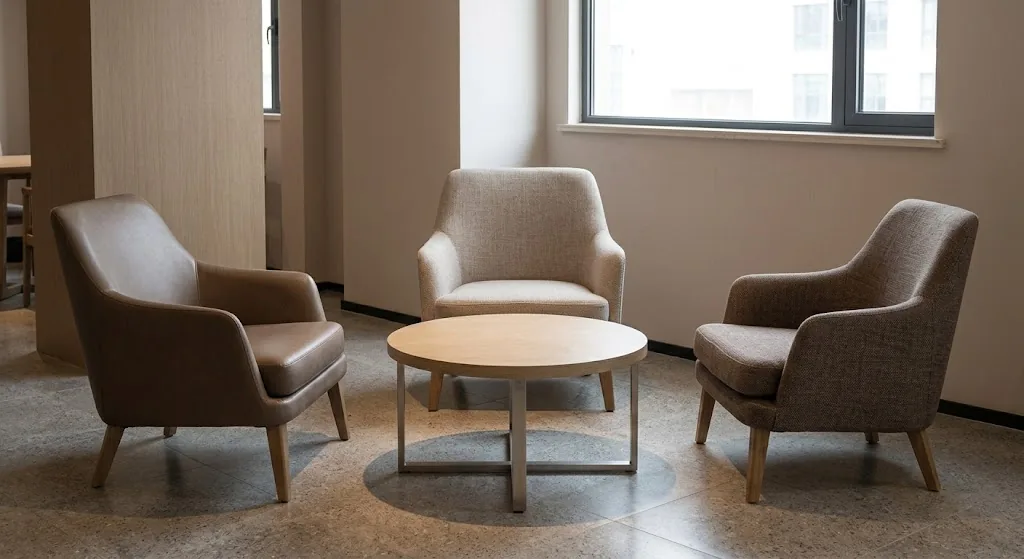
Armchairs work well in hotel dining, private dining and premium zones where comfort and a more substantial visual presence matter more than maximum seating density.
Before we shortlist an armchair, we check whether the arm height and overall width work with the table edge, apron and aisle.
Stackable restaurant chairs
We recommend stackable chairs when the room is reconfigured often, chairs are cleared for cleaning or events, or seasonal storage is part of the operating plan.
Stackability is a model-level function. We confirm the selected model’s stacking arrangement and storage needs rather than assuming every chair with a similar frame stacks the same way.
Bucket and wraparound chairs
These chairs use a more enveloping back or integrated arm shape. They can create a softer, more premium dining experience, but they usually occupy more width and can reduce usable table positions.
They fit best where longer sitting and design identity justify the extra footprint.
Types by material and surface
| Material direction | Why we use it | Best fit | What we lock before production |
|---|---|---|---|
| Metal | Slim structure, modern/industrial visual direction, straightforward hard-surface care | High-use indoor dining, cafés, bistros | Frame specification, finish color/process, visible joints and floor-contact parts |
| Wood or wood-metal | Warmer appearance with options for natural, walnut, black and project-based finishes | Bistros, cafés, full-service and hospitality interiors | Which parts are wood/metal, finish tone, sheen and approved sample |
| Upholstered | Softer sitting surface and a more premium or welcoming look | Hotel restaurants, full-service, longer-dwell dining | Fabric/leatherette code, color, texture, cleaning requirement and position on the chair |
| Cane or woven | Natural visual texture with a lighter decorative back | Cafés, bistros and design-led dining rooms | Actual woven material, frame relationship, finish and intended environment |
Outdoor use is not a visual style. For an outdoor project, we review the exact frame, finish, hardware, upholstery or woven components and exposure conditions before we position a model for that environment.
Popular Restaurant Chair Back and Style Designs
These style names are useful when you are refining the interior concept, but we keep them after the form and material decisions so design does not override layout or maintenance requirements.
Ladder-back
Horizontal rails across the back. Common in casual, rustic and traditional dining directions.
Cross-back
An X-shaped back profile. Often used for bistro, rustic, event and European-inspired interiors.
Slat-back
Vertical or horizontal slats that keep the back visually open while giving the chair a more structured look.
Bentwood / curved-back
Curved wood or curved upholstered forms create a softer silhouette and can improve the visual flow of repeated chairs around a dining room.
Cane-back
Woven panels add texture and a lighter visual feel. We specify the actual material and environment rather than relying on appearance alone.
Solid or upholstered back
A fuller back can create more visual weight and comfort. The final choice depends on cleaning, upholstery and the overall chair footprint.
Real YeZhi Restaurant Chair Examples
Our current restaurant chair range shows how the same model can carry several labels at once. These examples use model-specific information from the corresponding YeZhi product pages.
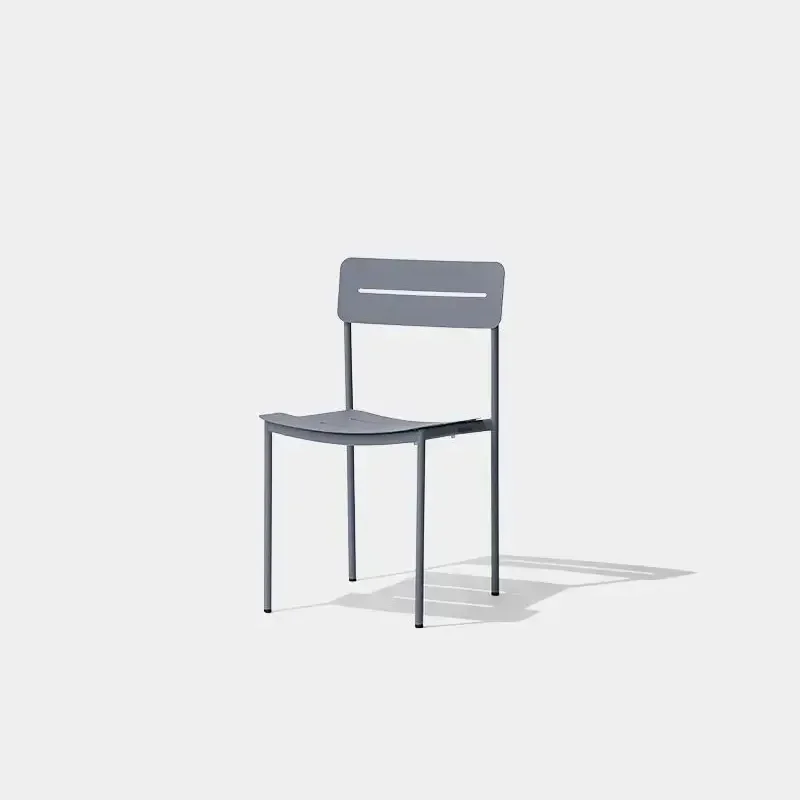
MD308 Gray Metal Dining Chair
Type: armless + metal + non-upholstered.
Overall size: 17.7 × 18.9 × 32.3 in / 45 × 48 × 82 cm. Seat height: 18.5 in / 47 cm. We use it as a compact indoor dining reference when a firm, non-upholstered surface is preferred.
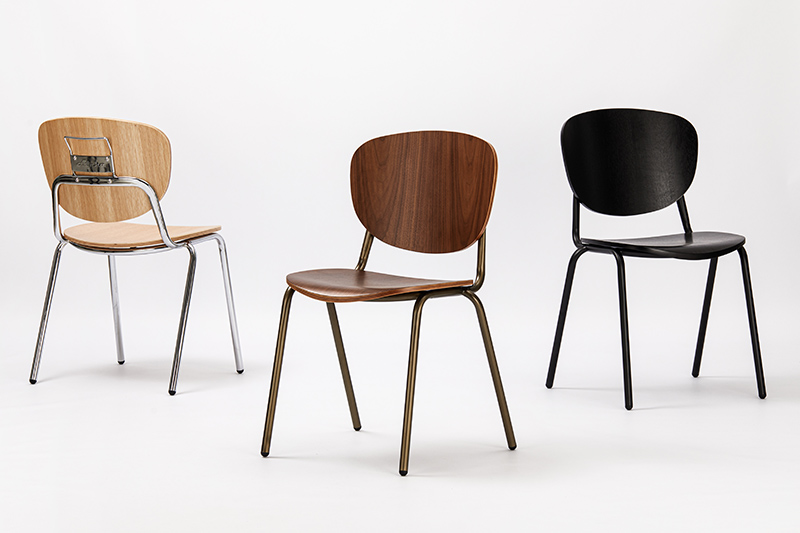
Alpha Armless Stackable Wooden Restaurant Chair
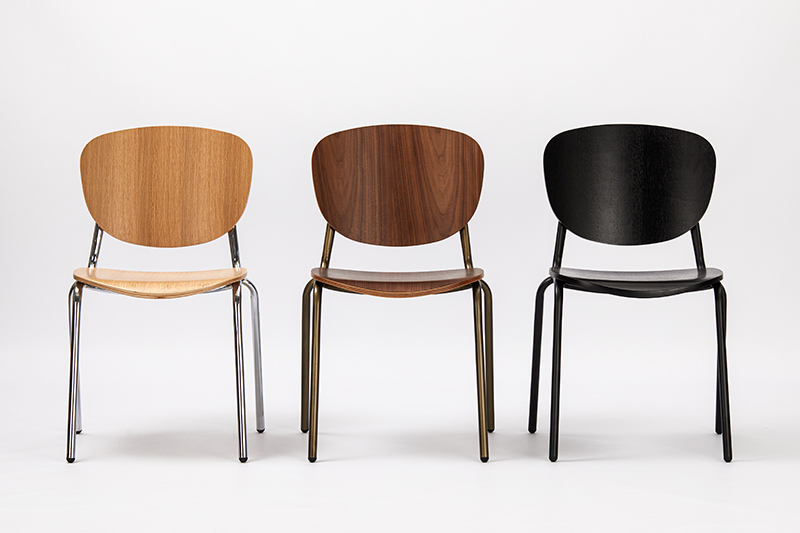
Type: armless + stackable + wood/metal + curved-back.
Alpha combines a curved wooden seat and rounded wooden backrest with a slim metal frame. We use it when the project needs a warmer wood look without moving to a visually heavy chair.
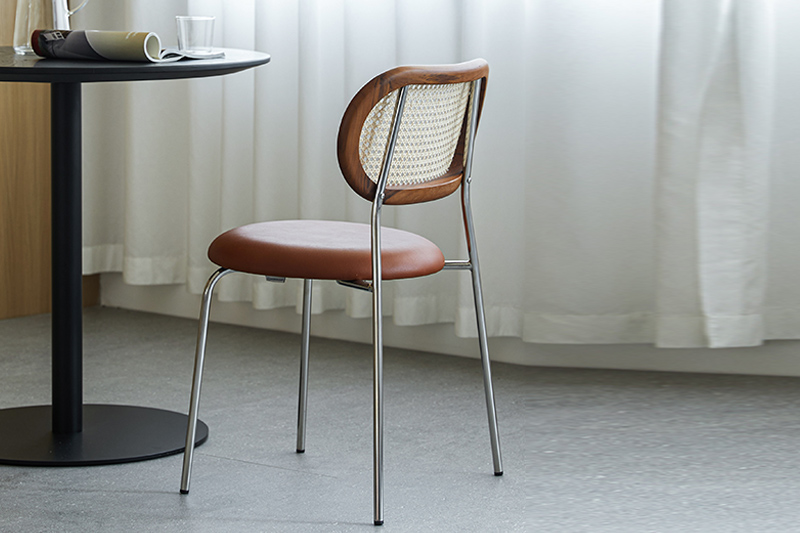
Rabbit Stackable Cane Back Restaurant Chair
Type: stackable + cane-back + upholstered seat + mixed-material.
Rabbit adds woven texture and a padded seat while retaining a slim frame and stackable structure. We specify the current model for indoor commercial seating.
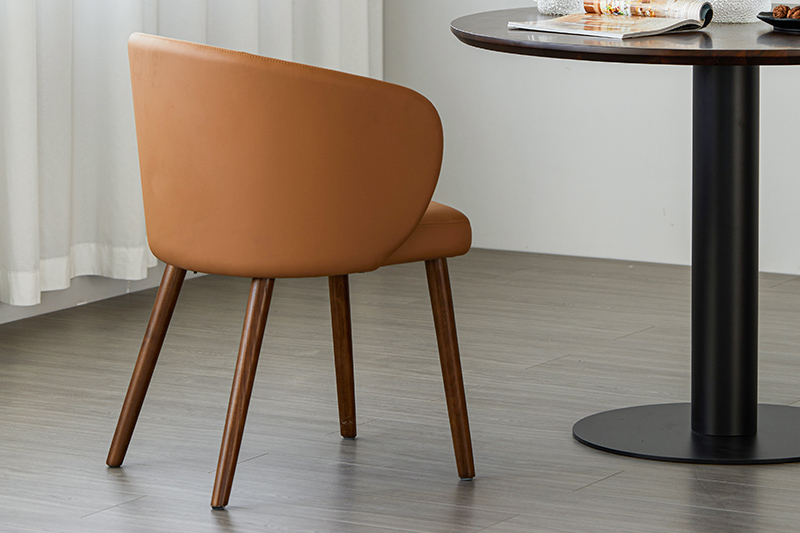
Tianboy Upholstered Restaurant Armchair
Type: armchair + upholstered shell + wooden legs.
We use Tianboy when the dining zone needs a softer, more welcoming chair with curved arms and a more premium hospitality feel.
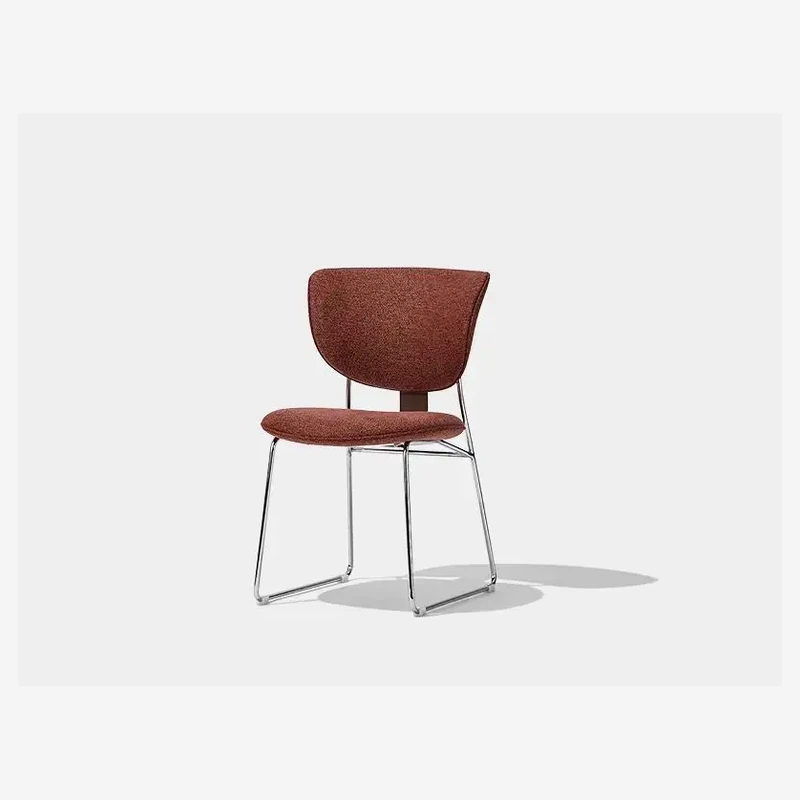
CB190 Curved Back Dining Chair
Type: armless + upholstered + curved-back + steel sled-style frame.
Overall size: 18.7 × 22.2 × 30.9 in / 47.6 × 56.5 × 78.5 cm. We use CB190 when the project wants upholstered comfort without the visual mass of a full shell armchair.
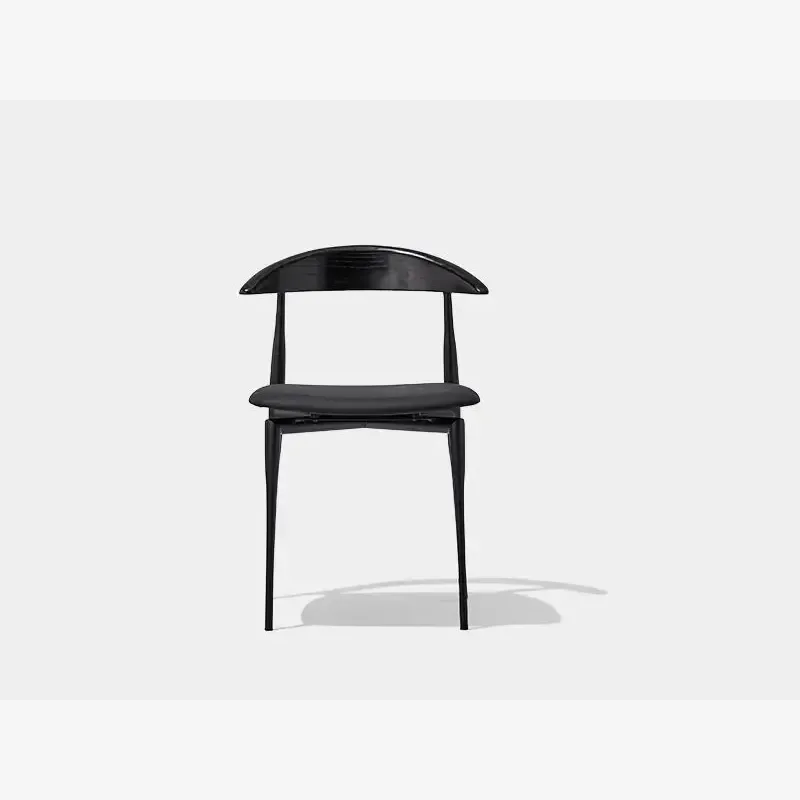
WB316 Black Wood Back Dining Chair
Type: armless + curved wood back + upholstered seat + metal frame.
Overall size: 19.8 × 19.1 × 28.3 in / 50.3 × 48.5 × 72 cm. Seat height: 17.7 in / 45 cm. This is a useful compact mixed-material reference for indoor restaurant and café projects.
How We Select Restaurant Chairs for a Commercial Project
We do not start with color. We start with the way the chair must work in the room, then narrow the model and finish.
1. Table and floor plan
Send us the table height, tabletop size, apron or under-table clearance, base/leg position, planned chairs per table and any tight aisle limits. We compare the chair footprint with the complete table structure, not just the tabletop width.
2. Service pattern and dwell time
Fast-turnover cafés often benefit from compact armless and easy-care chairs. Longer-sit hotel or full-service dining can justify more upholstery, a wider back or an armchair.
3. Cleaning and maintenance
Hard, non-upholstered surfaces simplify routine wiping. Upholstered chairs add comfort but require a clear material code and cleaning plan. If cleaning is a major constraint, review our commercial restaurant chair cleaning guide.
4. Storage and floor resets
When stacking matters, we shortlist a stackable model from the start. This is more reliable than choosing a chair for appearance and trying to solve storage after approval.
5. Indoor or outdoor environment
For outdoor projects, send us the exposure conditions. We review the selected frame, surface treatment, hardware, woven components and upholstery direction before we quote the model for that use.
6. Repeat orders and finish control
For phased openings and distributor programs, we record the approved model, dimensions, finish, upholstery code and customization so later replenishment can follow the same specification.
What to send us first
Venue + table dimensions + quantity by model + indoor/outdoor use + preferred material/finish + destination + target schedule. These inputs are enough for us to build the first practical shortlist.
Best Restaurant Chair Direction by Dining Concept
| Dining concept | Our starting direction | Change it when | Avoid when |
|---|---|---|---|
| Compact café / bakery | Armless, easy-care chair; stackable if the floor resets often | Guest dwell time is long or the concept needs upholstered comfort | A wide armchair would reduce table positions or aisle clearance |
| Fast-casual / high-turnover dining | Armless metal or wood-metal, usually non-upholstered | Brand or acoustic requirements justify upholstery | Cleaning complexity is unacceptable for the operation |
| Full-service restaurant | Armless chair with the required comfort level | Private rooms or premium zones justify arms or deeper upholstery | One oversized chair type would make the whole floor inefficient |
| Hotel / premium dining | Upholstered chair or armchair where space permits | Banqueting flexibility or intensive cleaning matters more than plush comfort | Arm height conflicts with the table or tight spacing |
| Multi-use / event room | Verified stackable chair with storage planned before ordering | The room is permanently set and stacking is rarely used | Stacking marks or storage access would create more problems than it solves |
| Patio / exposed dining | Outdoor-specific configuration reviewed for the actual exposure | Area is fully protected and the project specification allows another route | An indoor chair is being chosen only because it looks suitable outside |
Choosing Restaurant Chairs for Wholesale, Hotel and Multi-Site Programs
The best restaurant chair for one dining room is not always the best purchasing program. For repeat or distribution orders, we also look at how easy the specification is to reproduce, replenish and manage across colors or locations.
| Buying program | What we prioritize with you | Useful output |
|---|---|---|
| Distributor / importer | Model range, MOQ by SKU, finish options, mixed-order planning, packaging and reorder consistency | A repeatable sellable range rather than one isolated project chair |
| Restaurant chain | Approved model, finish consistency, table fit, replacement/replenishment route and phased production timing | A controlled chair specification that can be repeated across sites |
| Hotel project | Dining zone, comfort level, finish/material approval, samples and project schedule | A chair shortlist aligned to room type and opening program |
| Interior designer / contractor | Silhouette, material language, dimensions, finish samples, upholstery and project constraints | A design-led option that remains orderable and measurable |
| Multi-site rollout | SKU control, color/material split, phased quantities and repeat production references | Fewer surprises when later locations reorder the same chair |
Commercial Buying Snapshot
These are our normal company-level starting points for commercial furniture projects. A specific model can have different order or production requirements, so the quotation controls the final order terms.
Sample timing is confirmed by model and customization complexity rather than promised as one company-wide fixed number.
5 Restaurant Chair Buying Mistakes We Help Avoid
- Choosing the chair before checking the table. Send us the table height, apron clearance and base/leg layout so we can review chair fit before the quantity is locked.
- Comparing unlike categories. We separate form, material and style so “metal,” “stackable” and “armchair” are not treated as mutually exclusive choices.
- Assuming indoor and outdoor chairs are interchangeable. We review the actual material and finish route for the intended exposure before we position a chair for outdoor use.
- Leaving finish and upholstery open too late. We lock wood tone, frame color, upholstery code and other visible finishes against an approved reference before bulk production.
- Sending only a total chair count. Quantity by model/SKU and color is much more useful for MOQ, production and quotation planning.
Restaurant Chair Types FAQ
What are the main types of restaurant chairs?
The main restaurant chair types include armless side chairs, armchairs, stackable chairs, metal chairs, wood or wood-metal chairs, upholstered chairs, cane or woven chairs, bucket or wraparound chairs, and chairs specified for outdoor use. Ladder-back, cross-back, slat-back, bentwood, curved-back and cane-back designs create additional style variations.
What is the most practical type of restaurant chair?
For a standard dining floor, we usually start with an armless commercial dining chair. It gives more flexibility around tables and tends to use less lateral space than a wide armchair. We change that direction when stacking, longer-sit comfort, a premium armchair feel or outdoor exposure is a stronger requirement.
Are metal restaurant chairs better than wooden restaurant chairs?
No single material wins every project. We first choose the chair form that fits the room, then compare the exact metal, wood or wood-metal construction, finish, cleaning routine and design direction. If the shortlist is specifically steel versus aluminum, see our aluminum vs steel restaurant chairs guide.
Should every restaurant use stackable chairs?
No. We recommend stackability when chairs are regularly moved or stored. If the dining room remains fixed, a non-stackable chair may provide a better design or comfort fit. When stacking is essential, we shortlist a model designed for that requirement rather than assuming a chair will stack.
Do booths and bar stools count as restaurant chair types?
They are restaurant seating formats, but they are not dining-chair types in this guide. Booths and bar stools create different layout, installation and seat-height decisions, so we keep them as separate seating families.
What should I send YeZhi Furniture for a restaurant chair quotation?
Send us the venue type, quantity by model/SKU, table dimensions or layout constraints, indoor/outdoor use, preferred material and finish, upholstery requirements, stacking needs, destination and target schedule. We can then narrow the models and confirm the details that apply to your project.
Shortlist the Right Restaurant Chair Type with YeZhi Furniture
We manufacture commercial seating for restaurants, cafés, hotels, distributors and project furniture programs. Send us your table dimensions, quantity, preferred chair direction, finish and destination. We will narrow the chair form first, then confirm the model, dimensions, finish, MOQ and production route for quotation.