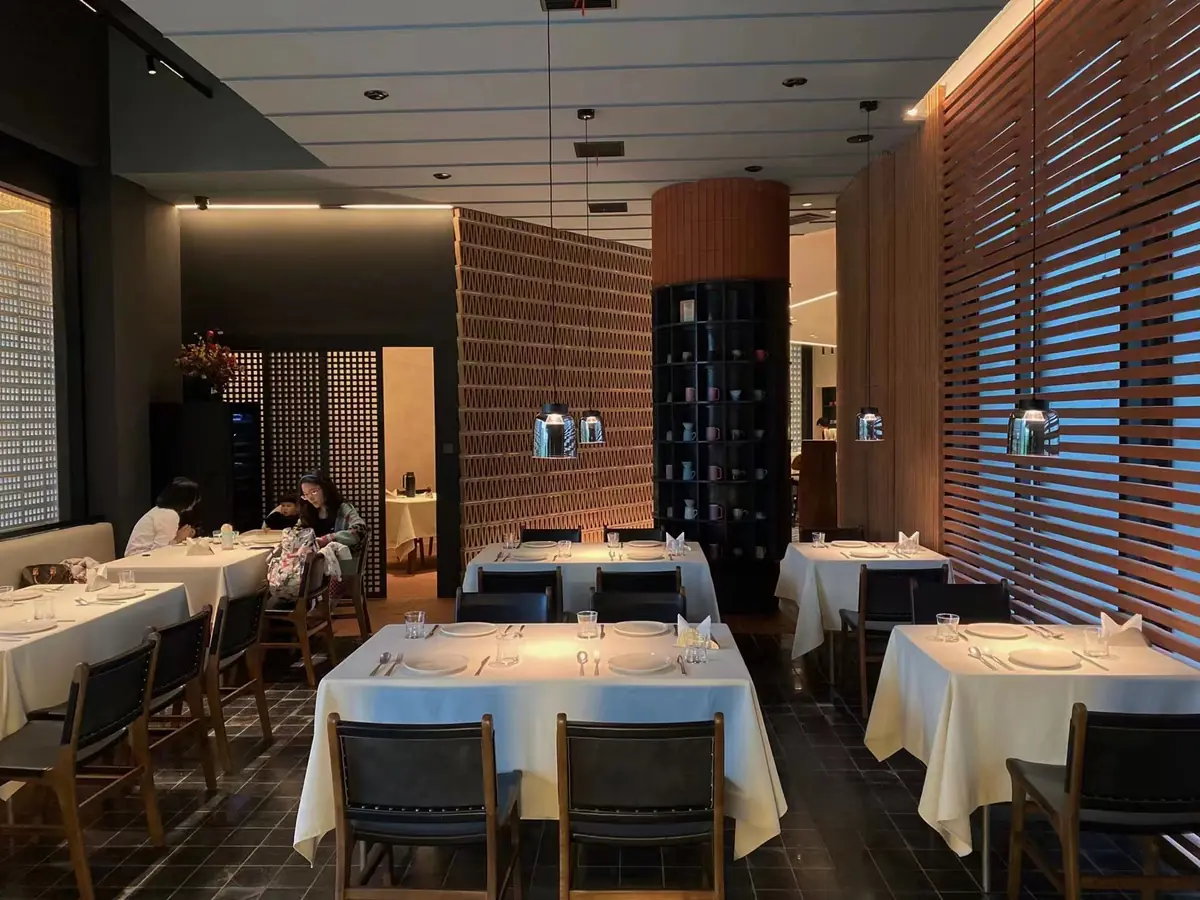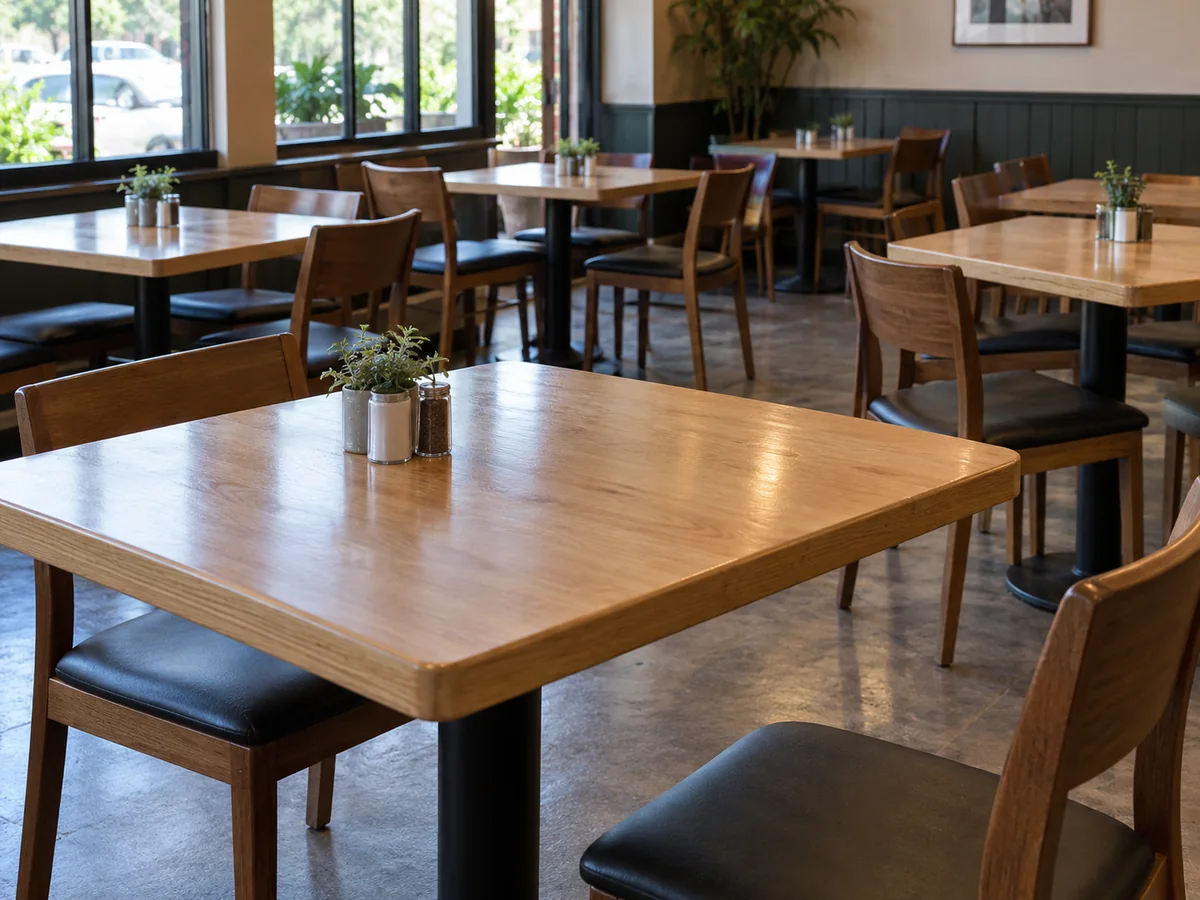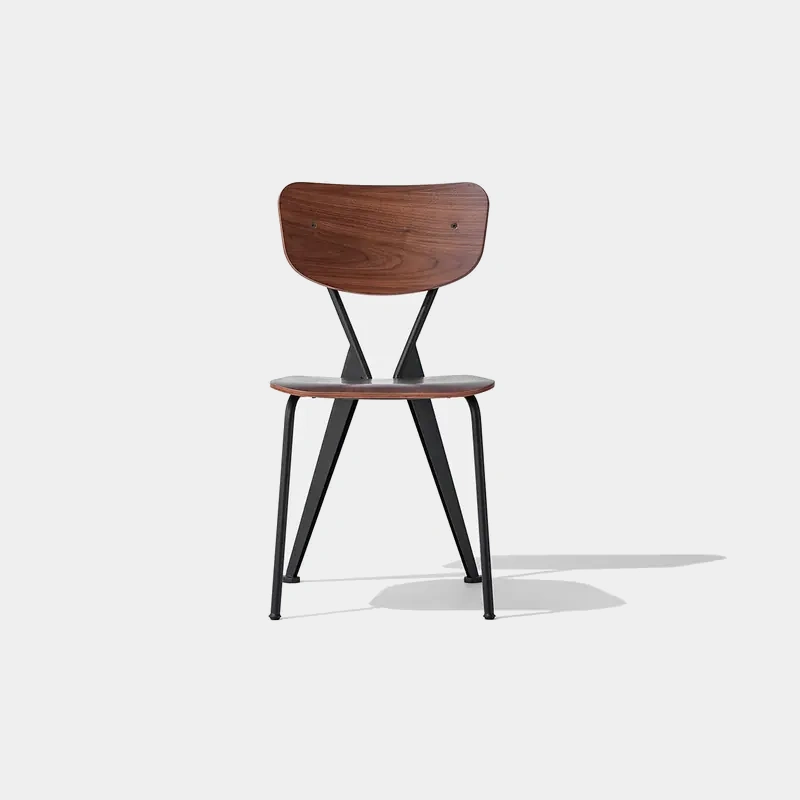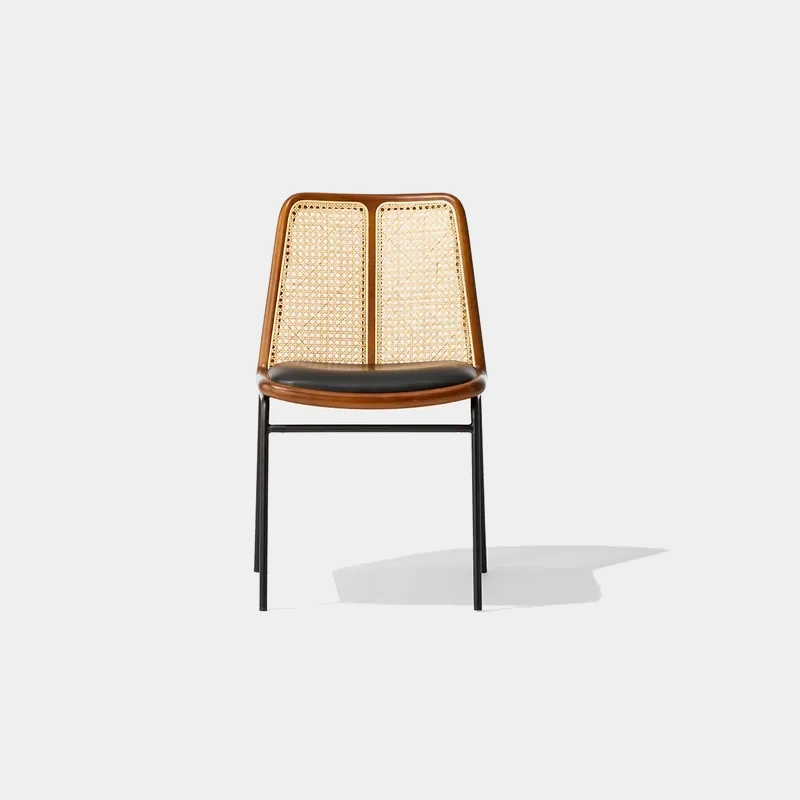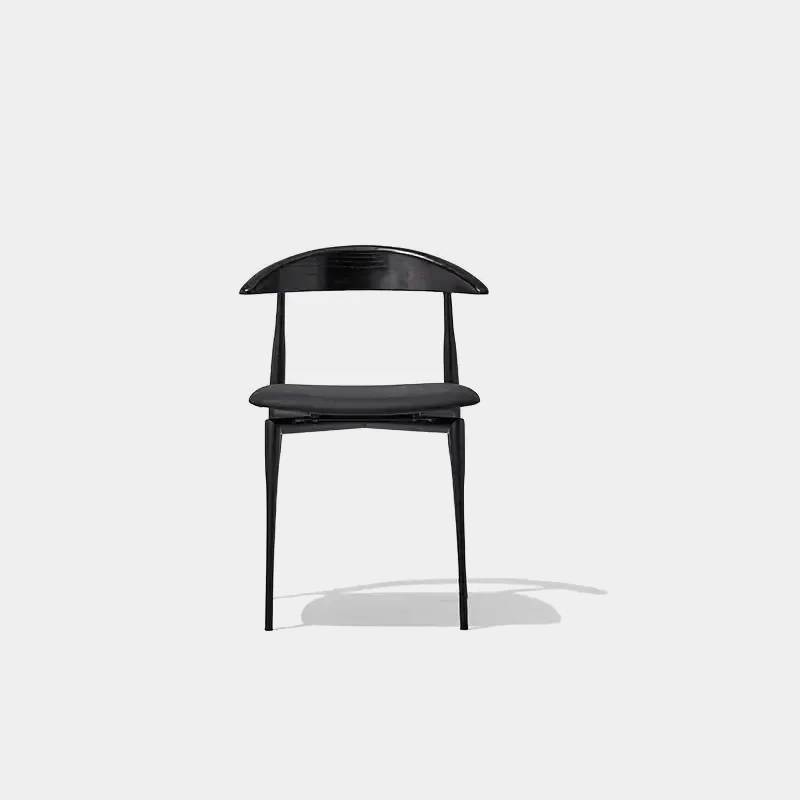
For restaurant and hotel orders, start by comparing YeZhi Furniture, Shelby Williams and Richardson Seating. For design-led home dining projects, add Marge Carson and Coley Home. Their useful differences are the type of customization, manufacturing and supply arrangements, upholstery choices, and support for your order size.
The right upholstered dining chair manufacturers are the ones that can deliver your chosen chair, fabric and finish for its intended use. A factory developing a new frame and a brand offering fabric choices on an existing chair solve different problems. Compare that scope before comparing prices.
Which manufacturers fit your upholstered dining chair order?
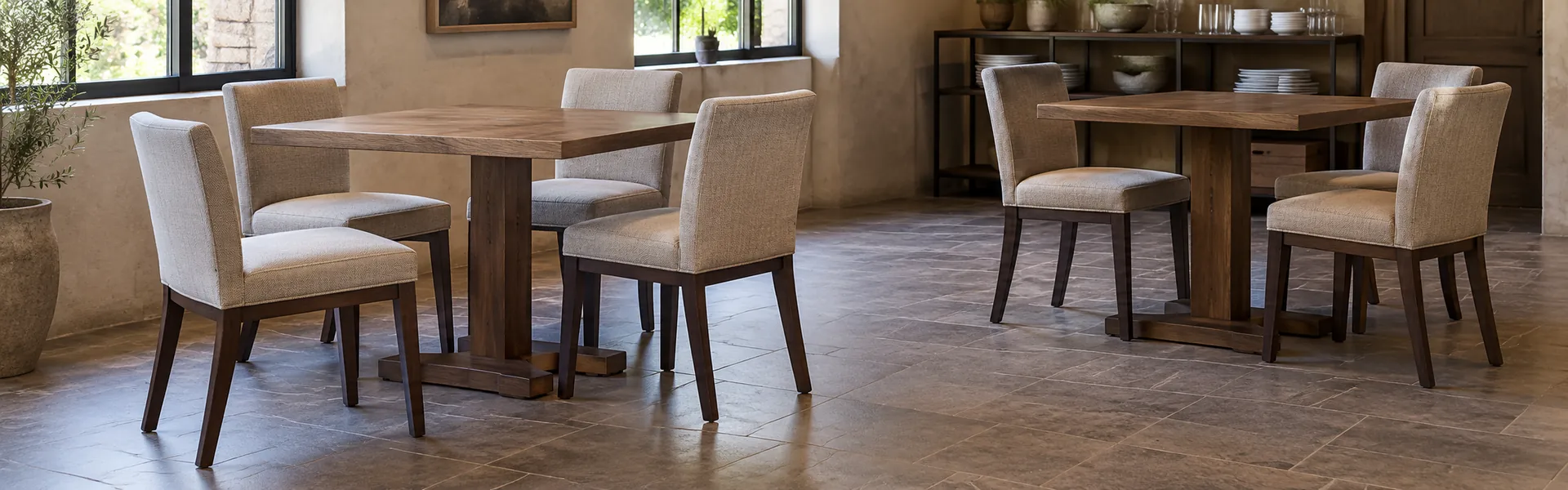
Shortlist by the work your order needs: commercial furniture coordination, changes to chair construction, local upholstery production, or a specific decorative style. The table gives practical starting points based on each company’s published range and services.
| Company | Published supply focus | A useful starting point for | Resolve in the quotation |
|---|---|---|---|
| YeZhi Furniture | Commercial seating and tables; model-based material, finish and branding options | Wholesale collections and restaurant or hotel furniture packages | The available chair configuration, quantity per finish, sample and delivery plan |
| Shelby Williams | Hospitality furniture, modified standard designs and custom development | Projects needing changes to chair proportions or coordinated chairs, tables and booths | Which construction changes are included, production origin and approval steps |
| Richardson Seating | Chicago-made commercial seating, with upholstery and detail options by model | Restaurant orders needing a US production contact and customer-supplied upholstery | Material approval, model options and the production start date |
| Marge Carson | Luxury dining chairs made to order, with specification and showroom support | Decorative dining rooms where a particular silhouette and fabric treatment lead the choice | The exact size, upholstery specification and suitability for the proposed setting |
| Coley Home | Custom furniture made in North Carolina; upholstered and slipcovered dining styles | Home dining and design projects wanting tailored covers and coordinated seating | Cover construction, care instructions and terms for any commercial use |
If your opening date is close and an existing design already works, also compare an in-stock commercial supplier. Moda Seating and Restaurant Furniture.net publish upholstered restaurant chair ranges. That can be a better fit than starting a new custom design. Ask who handles the warranty, replacement parts and final order specification.
How the five companies differ
The main split is between commercial project supply and design-led custom interiors. Both can offer attractive upholstery. The difference becomes clearer when you need a revised frame, several furniture categories, replacement seats, or documented suitability for daily public use.
YeZhi Furniture: wholesale seating and coordinated furniture
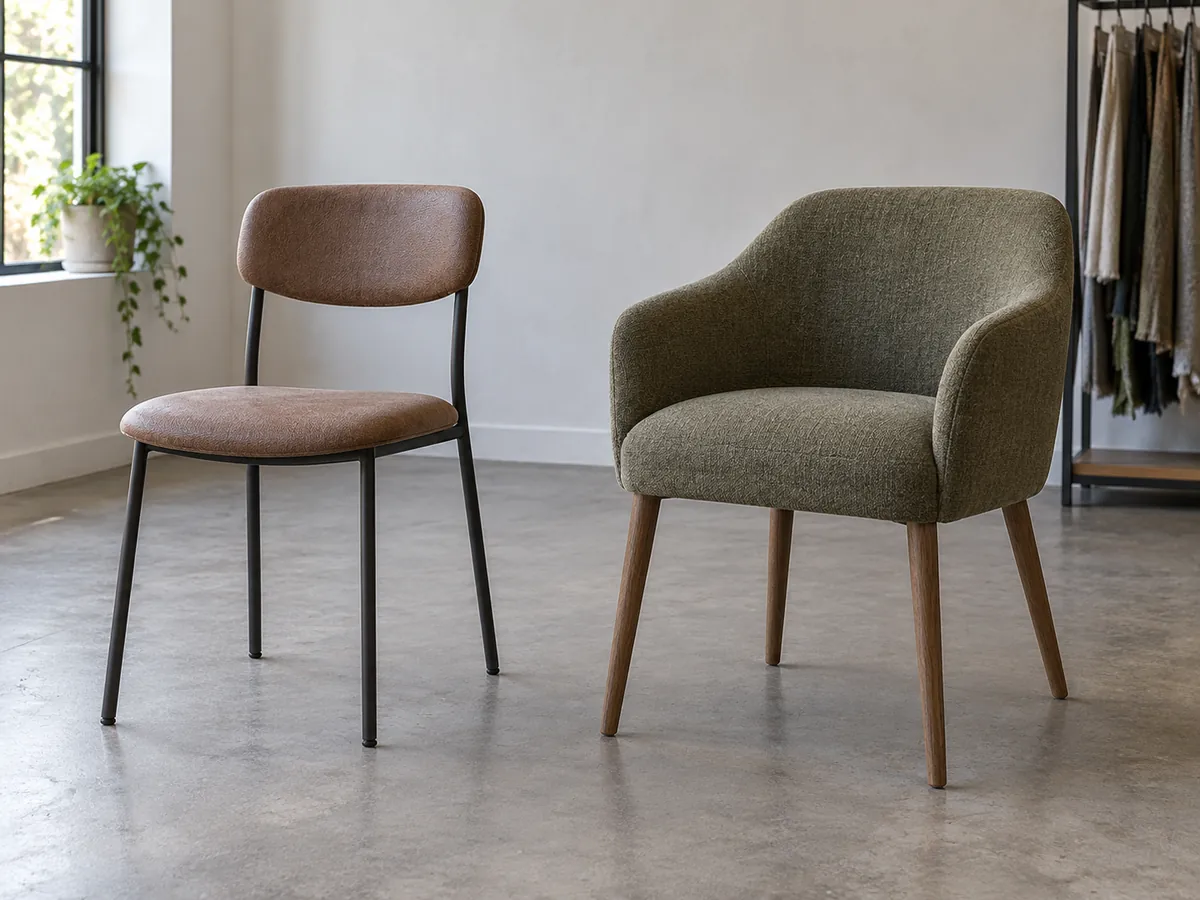
At YeZhi Furniture, we supply dining chairs alongside stools, lounge seating and tables for commercial interiors. Start with our existing models when you want to coordinate a restaurant, café or hotel order. We can review material, finish, branding and other customization requests against the selected model and quantity.
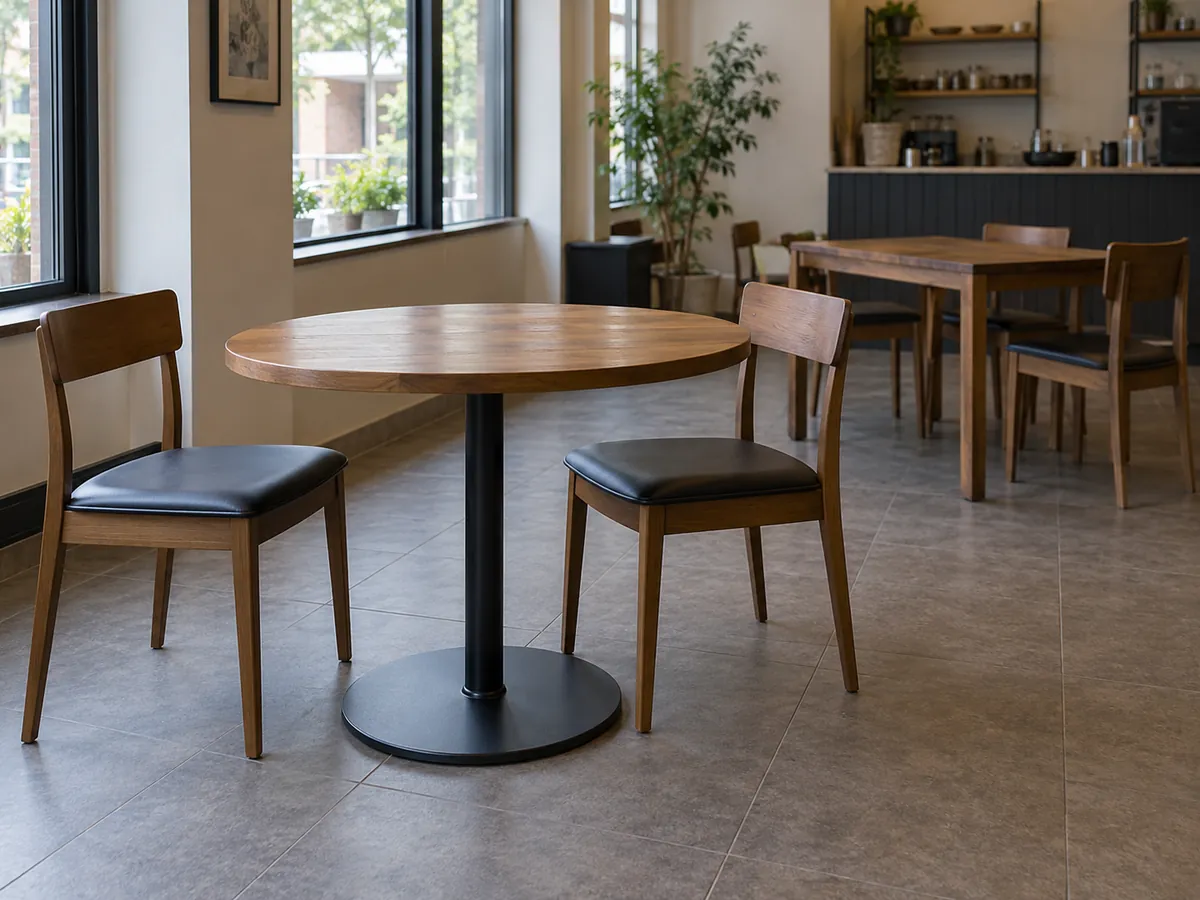
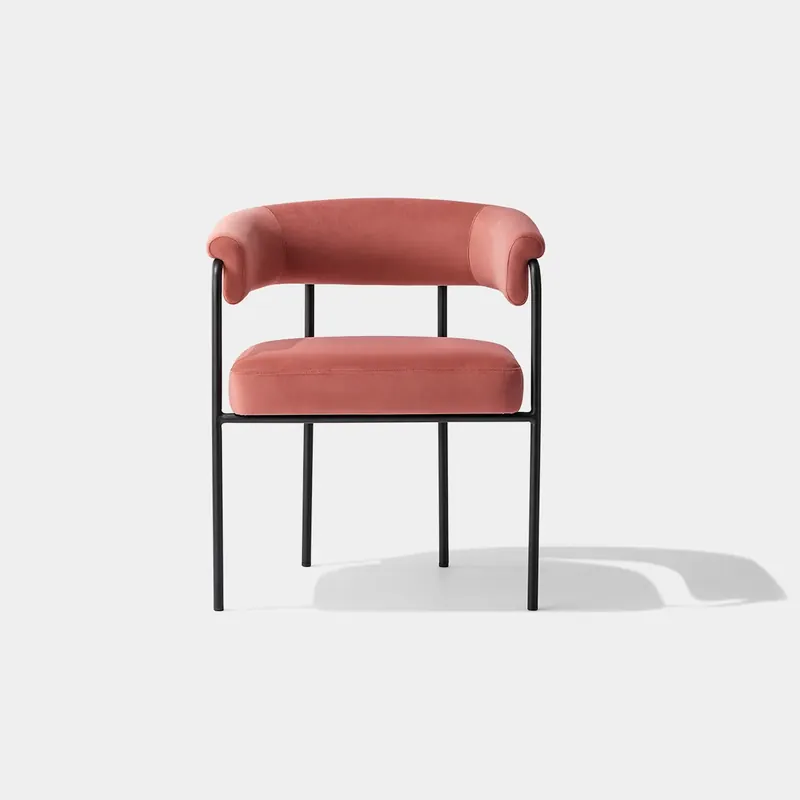
Our dining chair collection is a useful starting point for comparing chair shapes. Separate padded seats and backs give a different footprint and cleaning access from a wraparound upholstered armchair. Choose the shape around the table layout first; then settle the covering and finish.
For an urgent small order, compare the availability of an existing configuration before starting deeper changes. A new frame or revised dimensions needs a different development discussion from changing upholstery color.
Shelby Williams: hospitality projects with construction changes
Shelby Williams’ custom furniture program describes modifications such as changing dimensions, adding stretchers or upholstered arm caps, and adjusting chair pitch. It also discusses developing an original design. That makes it a relevant candidate when fabric and finish choices alone will not achieve the required chair.
Choose this discussion when a hospitality scheme needs furniture to fit a particular space or coordinate across chairs, tables and booths. Its published operation includes manufacturing and sourcing in several countries. Specify the required production origin in the quotation if that affects your project.
Richardson Seating: Chicago production and custom upholstery
Richardson Seating’s commercial seating information describes metalwork, woodwork, sewing, upholstery and assembly in Chicago. Many upholstered models accept fabric or leather supplied by the customer. Model options can include contrasting coverings, piping, tufting, logos and finishes.
It is worth comparing for restaurant orders where US production and direct discussion of upholstery details matter. Identify the actual chair model before choosing decorative options. Its ordering guidance also makes a useful scheduling point: customer-supplied material must arrive and be approved before the relevant production period begins.
Marge Carson: luxury dining designs and tailored finishes
Marge Carson’s upholstered dining chair collection centers on luxury interiors. Its made-to-order inquiry process includes discussion of specification, custom dimensions and customer-supplied fabric.
Start here when the priority is a distinctive host chair or a decorative dining room with closely matched materials. For a restaurant, take the next step with a named model, expected daily use and cleaning plan. A decorative style can be right for the room while the chosen upholstery or order terms still need adjustment for commercial service.
Coley Home: tailored dining chairs and cover options
Coley Home’s dining collection includes upholstered, dressmaker and slipcovered styles, along with banquettes and stools. Its manufacturing overview describes in-house production in Claremont, North Carolina.
Compare it when a home dining room or design project needs a tailored fabric appearance and coordinated pieces. Look at the specific cover construction, rather than assuming every skirted chair has a removable cover. If the order is for a café, establish the selected model’s commercial-use terms and cleaning method before using the home styling as your deciding factor.
How much customization do you need?
Use an existing chair with a new fabric or finish when its size and comfort already work. Move to structural customization when the frame, seat height, arm position or back angle must change. This keeps development effort tied to a problem you actually need to solve.
| Your requirement | What to ask for | What needs approval |
|---|---|---|
| An existing chair in your colors | The model’s available upholstery and frame finishes | Fabric code, finish sample and a completed chair sample |
| A lower arm or a different seat height | A revised drawing and a sample of the changed chair | Table clearance, sitting position, stability and the relevant test scope |
| An original chair for your brand | Development work, prototype costs, design rights and a production specification | Construction, comfort, materials, packing and repeat-order details |
When comparing upholstered chair manufacturers, ask what “custom” changes on the actual product. A color menu gives appearance choices. It does not automatically include a new seat shape, different foam or a redesigned frame.
Using your own upholstery fabric
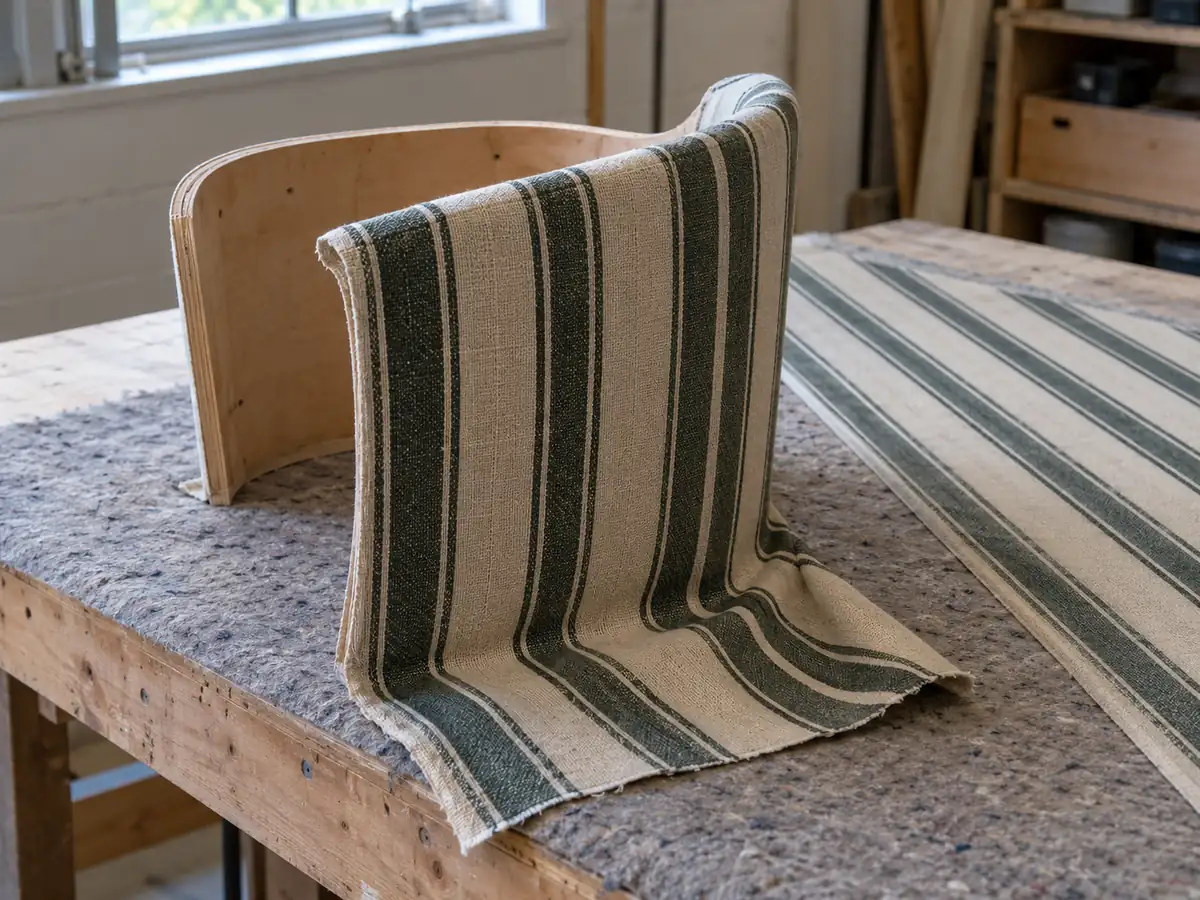
Fabric supplied by the buyer is commonly called customer’s own material, or COM. Before buying or sending it, provide the textile maker, pattern and color, usable width, pattern repeat, direction and technical care information. Ask for written approval and the required quantity for the chosen chair.
A large repeat or directional stripe changes how panels can be cut. A fabric that works on a flat seat may be difficult to shape around a tight curved back. Have the upholstered sample approved before releasing the full run. For leather, ask about the separate customer-supplied leather process and usable hide yield.
Compare upholstery for cleaning and daily use
For a busy dining room, choose a covering that works with your cleaning routine and chair construction before chasing the highest abrasion number. Ask fabric dining chair suppliers for the exact material code, test method and cleaning instructions, rather than a broad label such as “performance fabric.”
A woven covering can provide texture and a tailored appearance. A suitable coated covering can make surface spills easier to remove. Compare the actual samples: surface texture, seams and piping all affect where food collects and how easily staff can clean the chair.
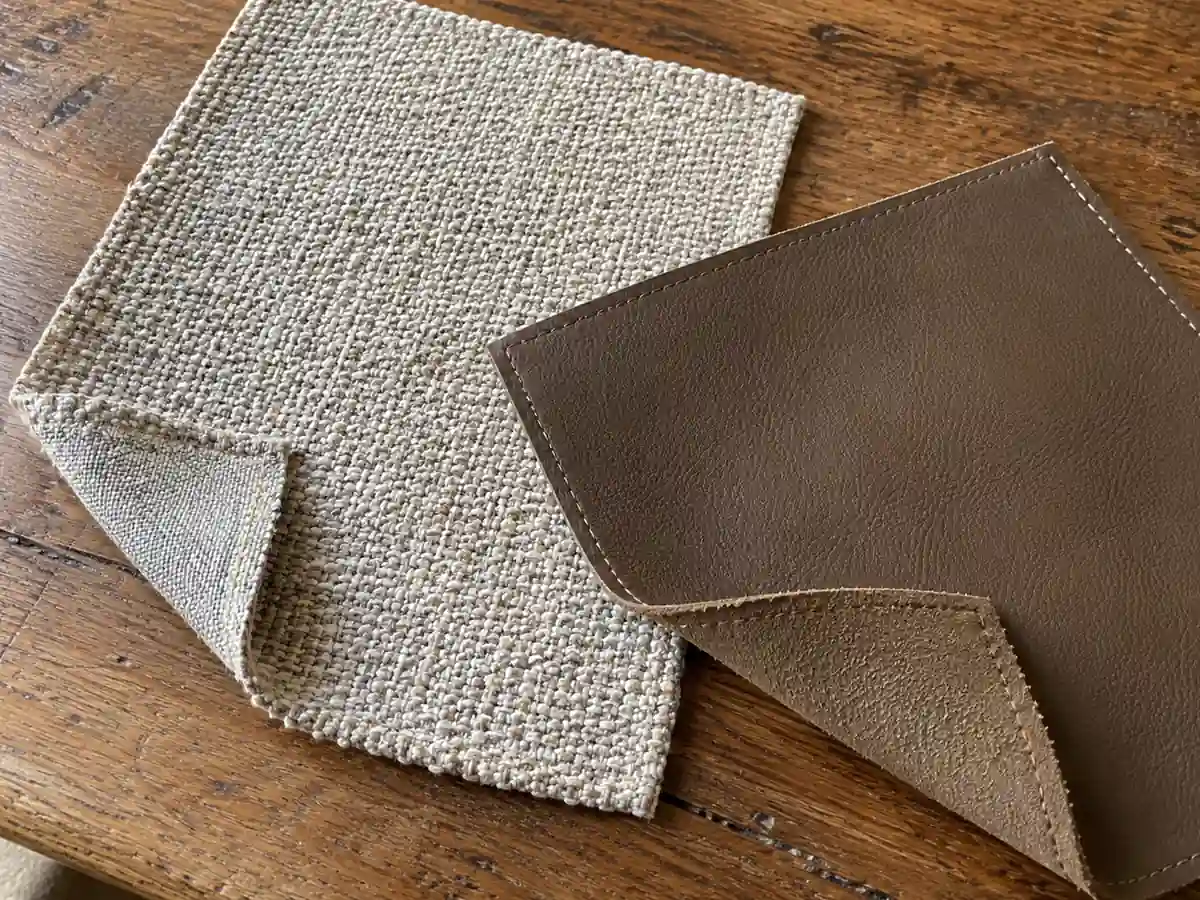
The Association for Contract Textiles explains how to use abrasion results. Its high-traffic guidance for woven and knit upholstery is 30,000 double rubs using Wyzenbeek or 40,000 cycles using Martindale. Its coated-fabric guidance uses 50,000 Wyzenbeek double rubs. These are different material categories and methods; do not convert one method’s result into the other.
Twice the abrasion count does not mean twice the service life. ACT also identifies cleaning, maintenance and application as important factors. Once a fabric meets the relevant abrasion requirement, compare cleaning compatibility, seam behavior, color transfer and appearance on the finished chair.
Try the approved cleaning method on a spare swatch or approved sample. Use the same cleaner, dilution and wiping process that staff will use. Check it after drying for color change, marks, stiffening or surface damage. If it changes, resolve the covering or cleaning method before placing the bulk order.
What should you check on a sample chair?
Place the sample at your actual table, sit in it, pull it out and check how it will be cleaned and maintained. A loose fabric swatch and a front-view photograph cannot settle those questions.
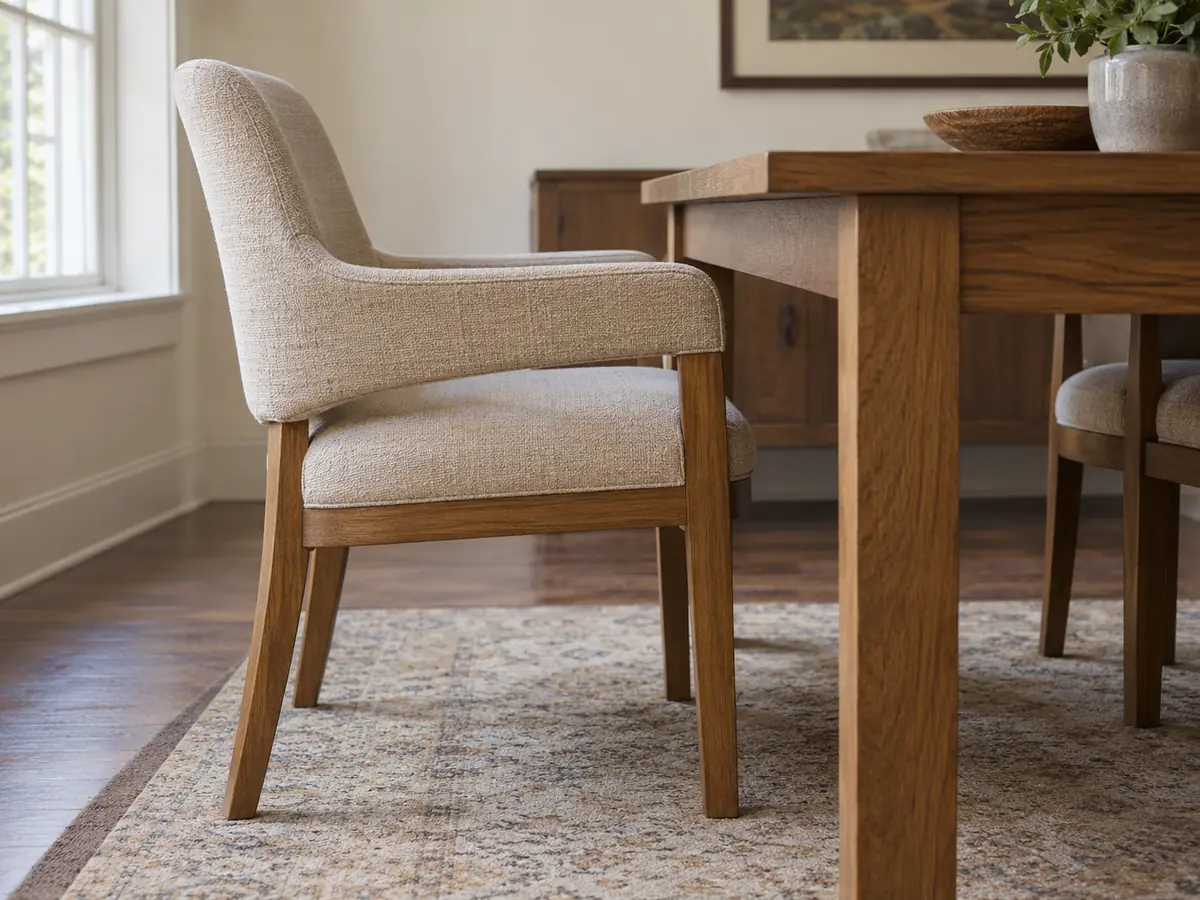
- Measure the whole chair. Record overall width and depth, seat height and arm height. Measure the widest point, including the arms or back. Use that footprint in the layout, rather than substituting the seat width.
- Check the table relationship. Move the chair into its normal dining position. Look at knee space, the table apron and arm clearance. Then pull it out and walk behind it. Keep the access and service space your layout requires.
- Compare the sit. Use the same table and sitting position for each candidate. Notice whether the front edge presses behind the knees, the back supports the diner, and the cushion feels supported after sitting. Compare firmness and recovery, not foam thickness alone.
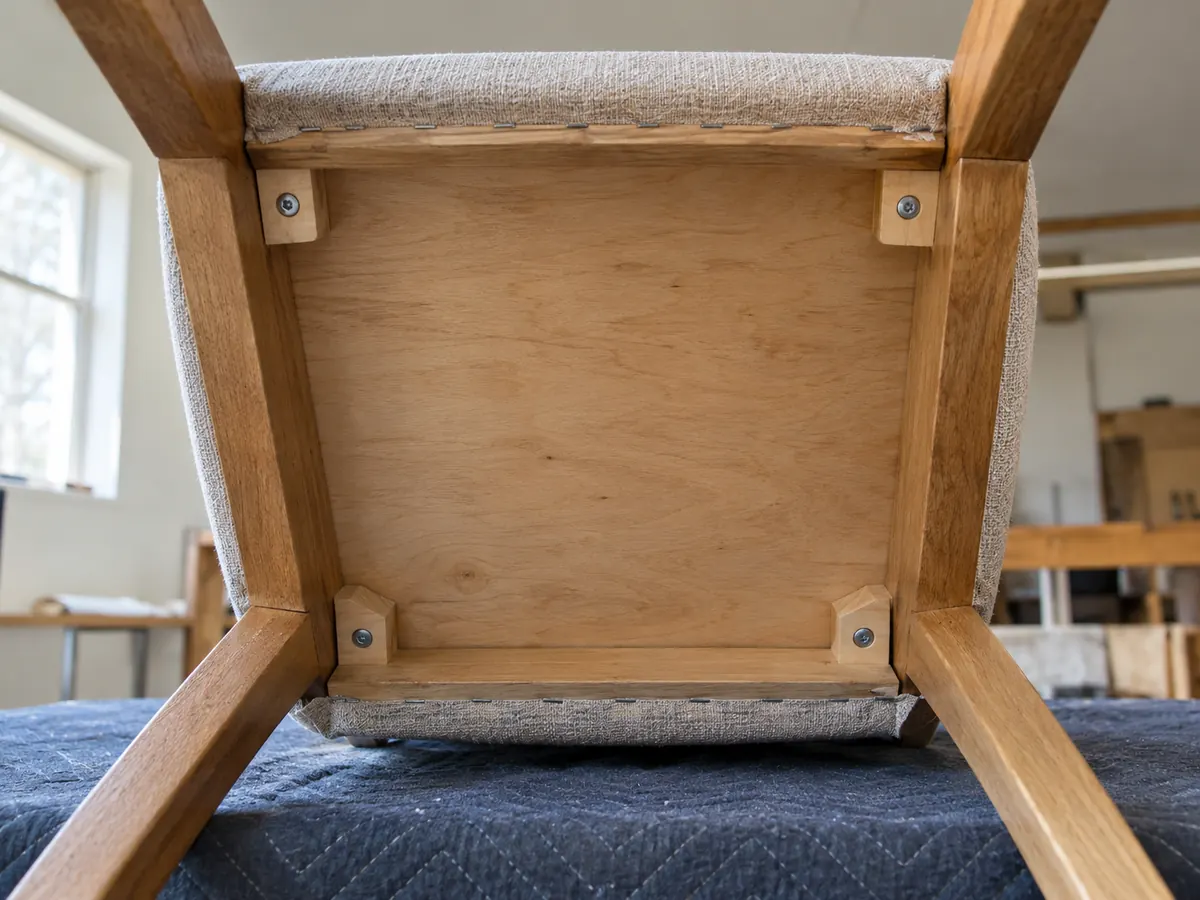
- Inspect the working details. Check seams around curves, exposed staples or sharp edges, attachment points and floor glides. Ask how a damaged seat or covering is removed and which replacement components can be supplied.
- Match the paperwork to the chair. For commercial use, request the report and intended-use information for the selected model and construction. Read the model, configuration, method and result. A fabric abrasion report and a frame durability report answer different questions.
If a sample rocks, first move it to a known level surface and inspect the glides and assembly. If the problem remains, return it for correction and inspect the replacement. Do not make floor padding the permanent answer to an unresolved chair defect.
Keep an approved chair sample with its drawing revision, fabric code, finish reference and agreed inspection points. Compare production pieces with that same specification. When a detail changes, approve the change before treating the earlier sample as the production reference.
Compare the full delivered cost and schedule
Compare the same quantity, upholstery, packing and delivery destination. Then choose the offer that meets both the required specification and the arrival date. A lower factory price can disappear once shipping and other order costs are included.
For example, suppose you need 120 chairs and have two hypothetical offers in US dollars. Both meet the same approved specification. The following allowances cover the same destination and include the same shipping and import-cost items.
| Cost per chair | Offer A | Offer B |
|---|---|---|
| Chair | $85 | $95 |
| Packing | $5 | $5 |
| Shipping and import-cost allowance | $20 | $8 |
| Delivered total per chair | $110 | $108 |
| Total for 120 chairs | $13,200 | $12,960 |
Choose B on these cost assumptions if both arrive on time: it saves $240 for the order, even though its chair price is $10 higher. If either quotation already includes packing or shipping, remove the duplicate allowance before comparing it. Add any different sample, development, local delivery or assembly charges separately.
For scheduling, work backward from the date the chairs must be ready for use. Include sample approval, material availability, production, transport and receiving. Ask exactly what starts the production clock. It may be the final drawing approval, deposit or arrival of approved COM—not the date you first asked for a price.
If custom production cannot meet the opening date, choose an available configuration that meets the job, or agree a workable staged delivery. Starting a new custom frame with an unresolved fabric choice is a poor way to recover lost time.
Build your shortlist and request matching quotations
Compare commercial project suppliers first for restaurants and hotels; compare design-led custom ranges first for a home dining room. Within that group, choose upholstered dining chair manufacturers by the chair changes, upholstery process, delivery location and support your order needs.
Send the same brief to each candidate. Include:
- The selected model or reference design, and the number required in each fabric and finish.
- Overall size, seat height, arm clearance and the dining-table dimensions.
- The setting, expected daily use and cleaning method.
- Fabric requirements or COM details, destination market and any required test documentation.
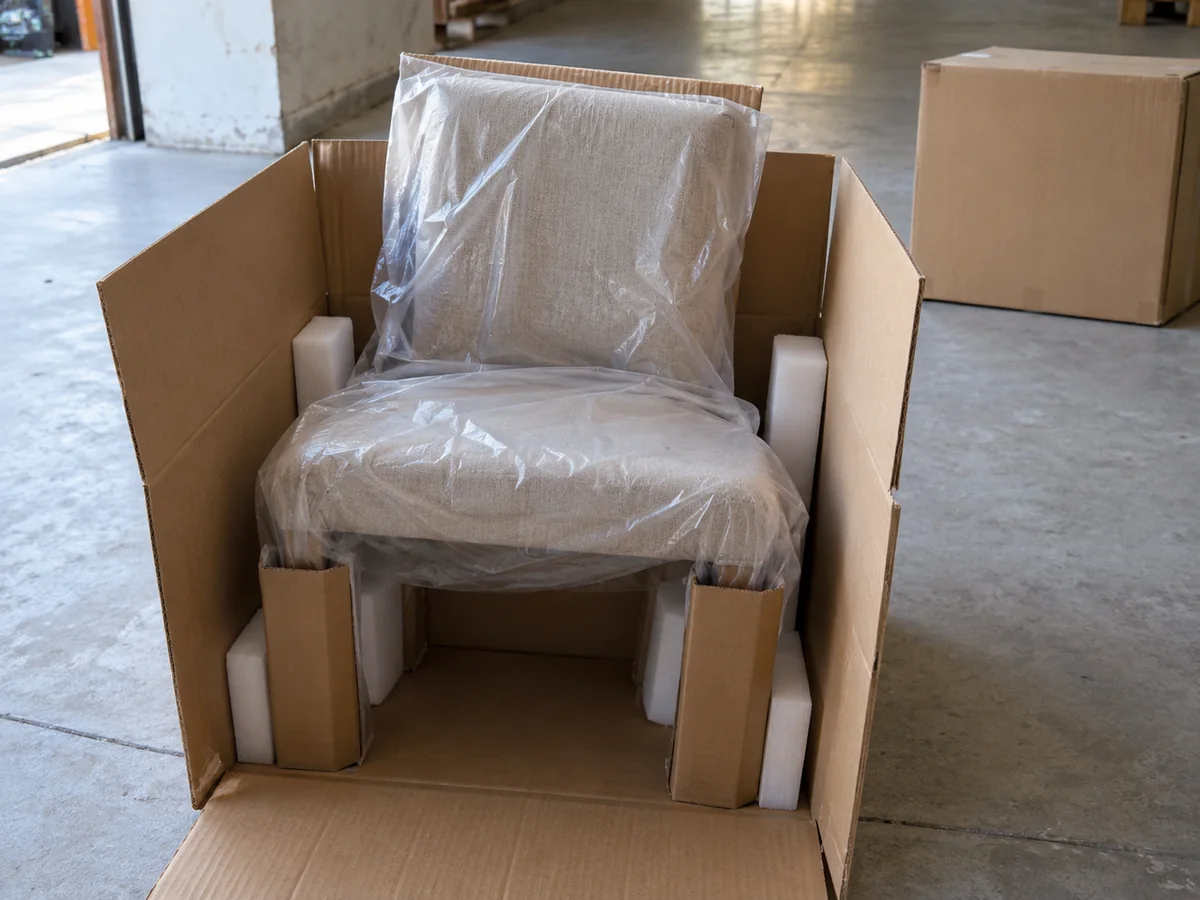
- Delivery address or postal code, required arrival date, and packing or assembly needs.
For a YeZhi order, start with our commercial dining chairs and tell us which shape fits your space. Use our contact form for the brief, or email drawings and material references to info06@hkmsdesign.com. We can review the selected models and customization request before preparing the order details.
Frequently asked questions
Can I split one order across different upholstery colors?
Yes, if the manufacturer accepts the quantity in each configuration. List chairs by model, fabric and frame finish, rather than giving only the total order size. A mixed order can create separate material purchases and production setups. Ask for the minimum and any surcharge for each combination before approving the split.
How can I make replacement chairs match a later order?
Keep the original model revision, fabric code, finish sample and order reference, then compare a new swatch before reordering. Fabric dye lots, finishes and available components can change. If a close match is essential, discuss spare coverings or a reserve quantity from the original material batch when placing the first order.
Can a custom home dining chair be used in a café?
Use it only when the selected model and upholstery are supported for your commercial setting. Obtain the intended-use statement, relevant test information, approved cleaning method and warranty terms for café use. If those do not cover the job, choose a suitable commercial model with a similar appearance.
What if I have already bought the fabric?
Send its technical details and a sample for approval before shipping the full quantity to the chair maker. Confirm usable width, pattern direction, repeat, condition and the required amount. If it is accepted as COM, get the delivery instructions and production start condition in writing. Leave time for material inspection and any replacement fabric needed.