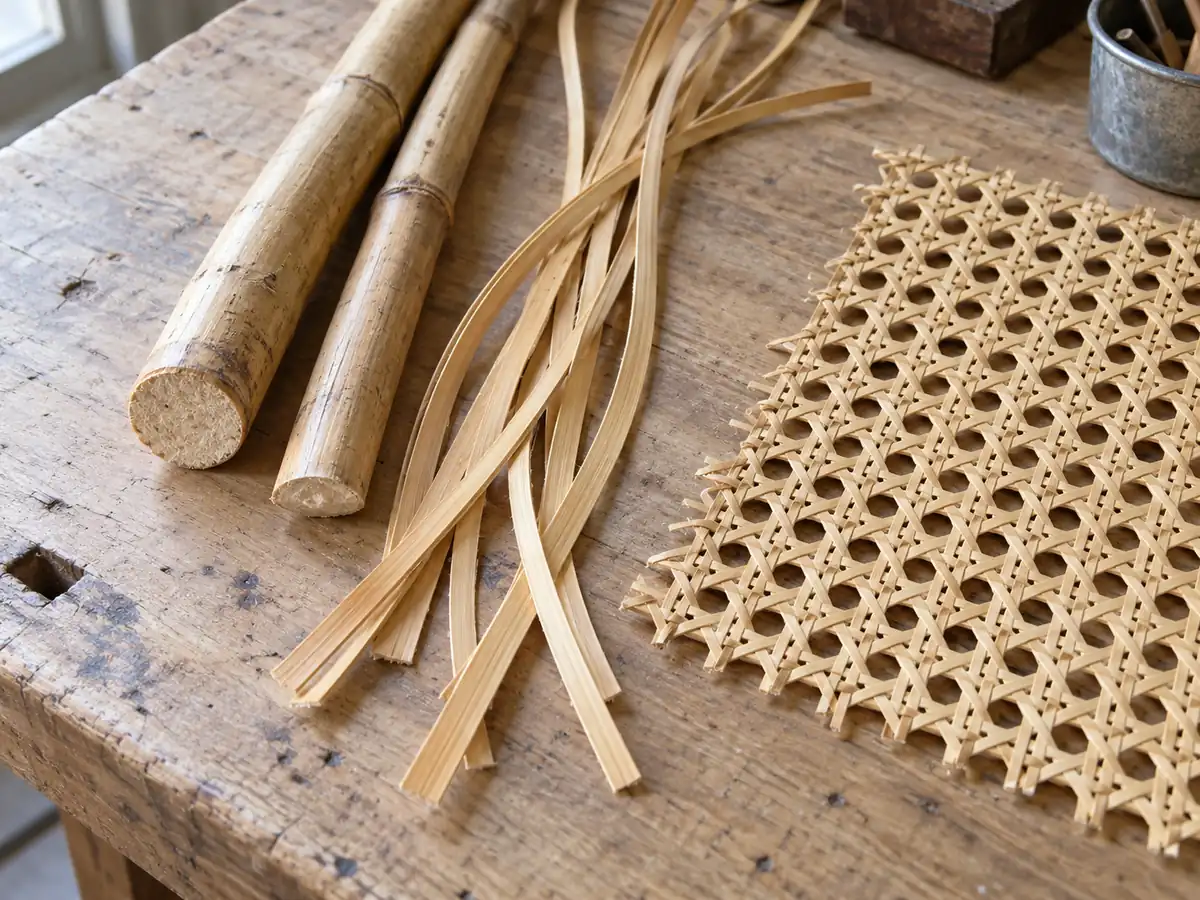
The key difference in wicker vs rattan is that wicker describes a way of weaving, while rattan is a natural plant material. Chair cane usually means thin strips from the rattan’s outer layer, often woven into seats or backs. A chair can therefore be rattan, cane and wicker at the same time.
For commercial furniture, choose the construction around the location. Natural rattan and cane can suit indoor restaurants and hotels. For an exposed patio, start with synthetic wicker made for outdoor use, then check the frame, fittings and cushions as well as the weave.
Wicker, Rattan and Cane: What Do the Names Mean?
Wicker is the weaving method, rattan is the plant material, and chair cane is fine rattan material used for woven panels. First identify the material, then the part of the chair and how it is made.
| Name | What it describes | What it tells you about a chair |
|---|---|---|
| Rattan | A natural material from rattan palms | The chair may use whole poles, split material or both |
| Chair cane | Fine rattan strips, commonly from the outer skin | Often used for woven seat or back panels and bindings |
| Wicker | A woven construction or weaving technique | The weave may use natural material or synthetic strands |
Rattan: the plant material
Rattan comes from palms, many of which grow as climbers. Furniture makers can bend thicker poles into frames and use narrower strips for weaving or binding. A rattan chair with a pole frame and a solid seat does not need a woven surface.
That is why a listing for “rattan restaurant chairs” still needs more detail. It may describe a pole-frame chair, a wooden chair with a rattan panel, or a synthetic product with a rattan look.
Cane: a furniture component
In chair making, cane often means the thin outer strips used to create an open woven panel. Prewoven cane webbing is supplied as a sheet; other panels are woven strand by strand.
The term also has a broader trade meaning. The FAO rattan glossary distinguishes whole rattan canes, chair cane, core and peel. When comparing cane vs rattan, ask which part and form the seller means. A cane back does not tell you whether the legs are wood, metal or rattan.
Wicker: the woven construction
Wicker can use rattan, willow, other suitable plant materials or synthetic strands. It describes the woven result rather than one raw material.
For wicker vs cane, the useful distinction is therefore broad construction versus a more specific material or panel. “Cane wicker” can be a reasonable description. “Wicker is always plastic” is incorrect.
Natural Rattan vs Synthetic Wicker: What Changes?
Natural rattan is plant material; synthetic wicker uses manufactured strands that imitate a woven natural surface. The distinction matters most when the chair faces rain, sun, cleaning chemicals or frequent wetting.
Synthetic wicker furniture is often sold as resin wicker, PE rattan or all-weather wicker. PE means polyethylene; HDPE means high-density polyethylene. These are material names, not complete chair specifications.
For example, REHAU’s RAUCORD core material is an HDPE weaving material made with UV stabilizers. That identifies a particular formulation. A different chair labelled “HDPE” still needs its own material and outdoor-use information.
Look for a clear answer to three questions:
- What is the strand made from? Natural rattan peel, rattan core, PE, HDPE or another named material?
- Where is that material used? A back panel, a load-bearing seat, arm wrapping or decorative trim?
- What sits underneath it? A wood, metal or rattan frame, with which finish and fittings?
Ask for a loose material sample alongside the finished chair. Natural fibres may show grain, small variations and cut ends; synthetic strands may have a more regular section or an embossed surface. These are clues. Gloss, colour and a woven pattern alone do not reliably identify the material or its quality. A written material description is more useful than guessing from a photograph.
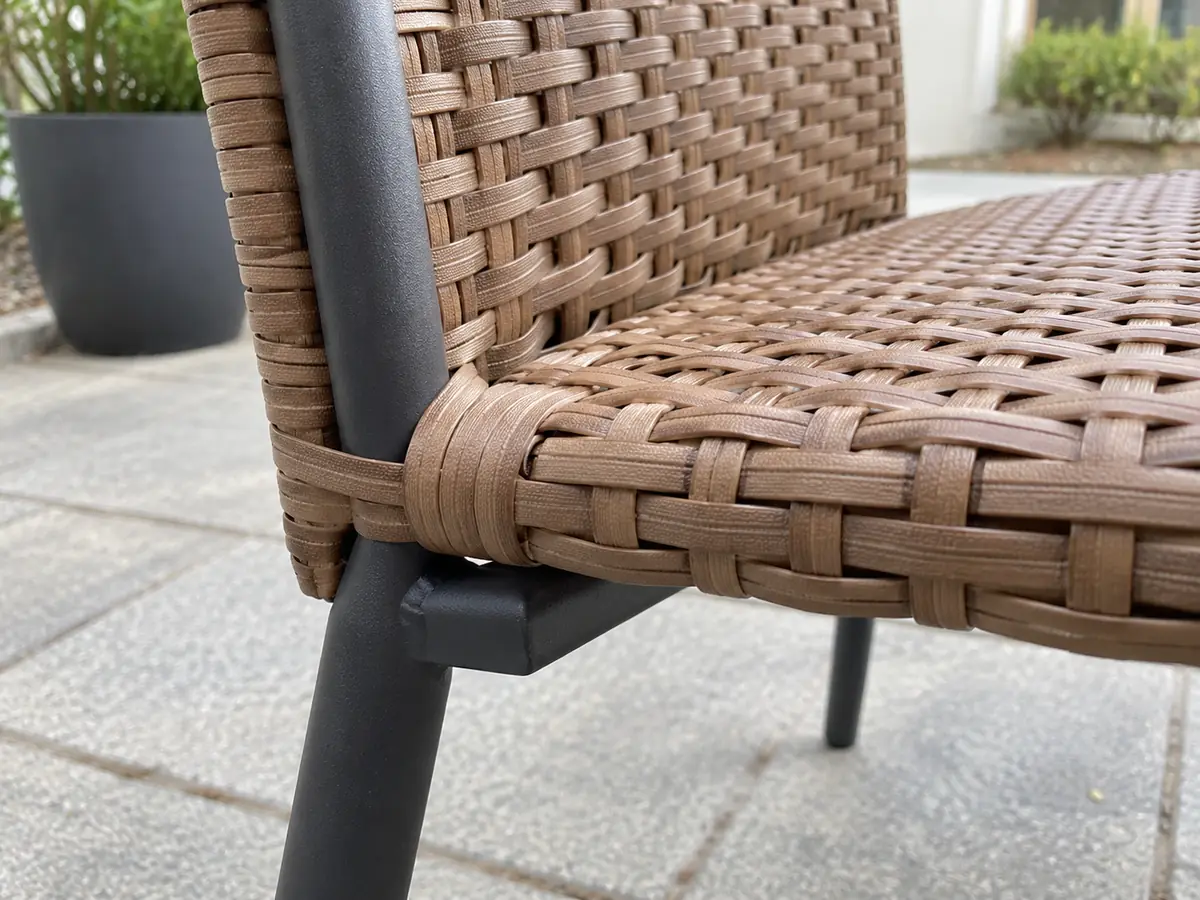
Also separate the weave from the rest of the chair. Outdoor strands do not make an indoor wooden frame, an unsuitable fastener or a water-retaining cushion ready for a wet terrace.
Which Option Fits Your Restaurant or Hotel?
Use natural rattan or cane where the setting stays dry and the natural texture matters. Choose an outdoor-designed synthetic weave for seats that must remain in rain and sun. A roof changes the exposure, but it does not remove wind-driven rain or humid air.
| Setting | Good starting choice | What changes the choice |
|---|---|---|
| Indoor café, restaurant or hotel dining room | Natural cane back or rattan chair built for the intended use | Cleaning demands, rough handling and the need for replaceable parts |
| Covered terrace in a warm, dry setting | Natural material only where the exact chair is approved for that setting | Rain reaching the chairs, damp storage or frequent wetting |
| Open patio or poolside dining | Outdoor synthetic wicker on a suitable outdoor frame | Salt exposure, cushion drying, storage and frame maintenance |
| Dining area that moves between inside and outside | An outdoor-designed chair that also fits the interior | Staff cannot reliably keep indoor-only chairs away from weather |
Indoor dining rooms
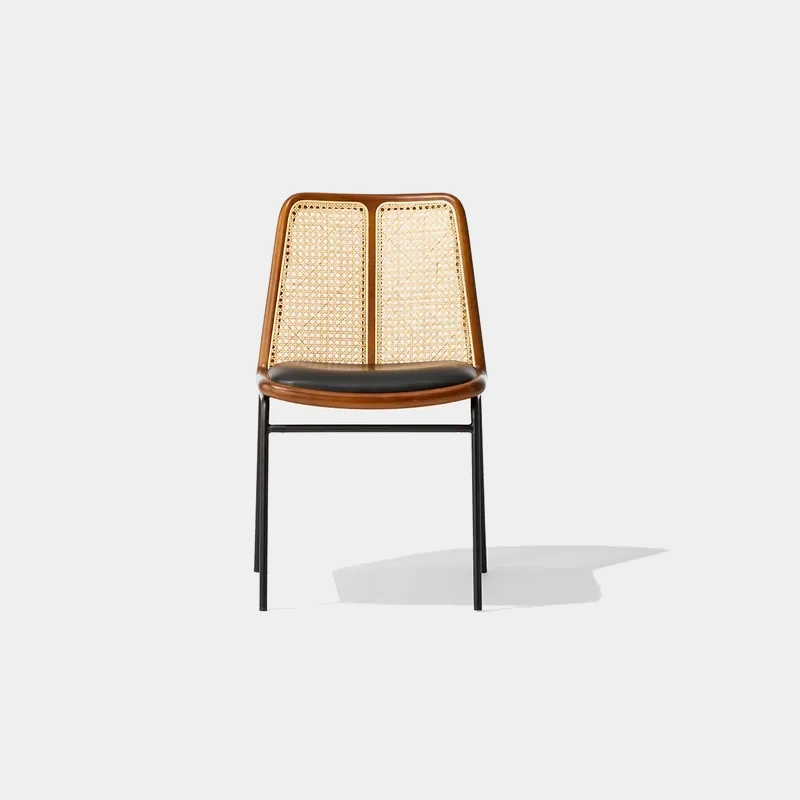
For a warm indoor dining room, a cane back with a separate upholstered or solid seat is a useful starting point. It puts the woven texture on the back while letting you choose the sitting surface for comfort and cleaning.
Our Rabbit Stackable Cane Back Restaurant Chair combines a woven back, padded seat and slim metal frame. We specify Rabbit for indoor commercial seating, with a natural cane back option available. Select the actual back material and finishes for the order; the model name alone does not fix every option.
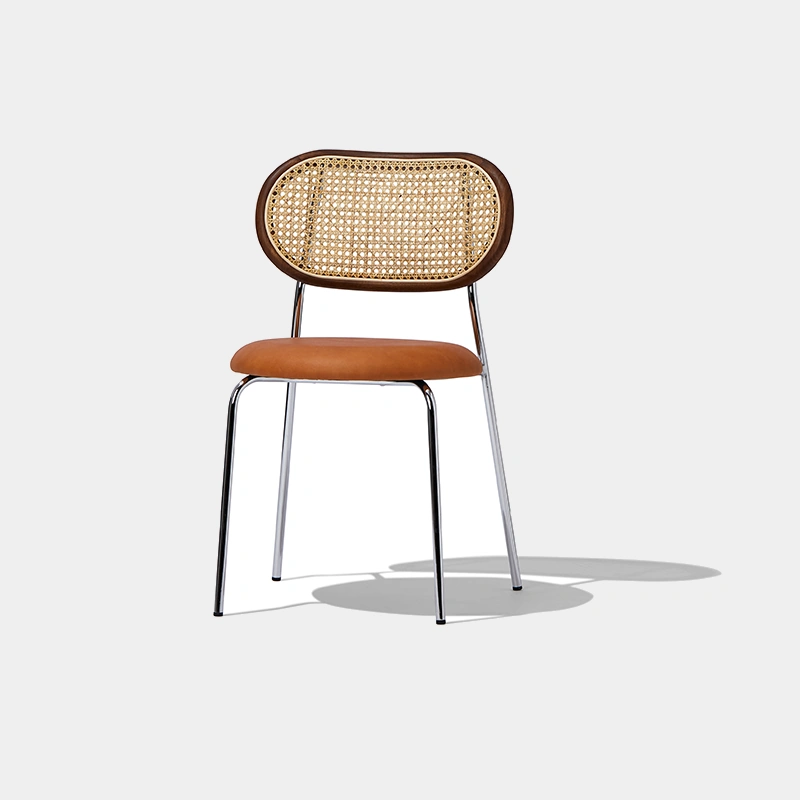
You can compare this mixed-material approach with other designs in our restaurant chairs range. Keep the same table height, usable seat space and cleaning needs when comparing them.
Covered terraces and open patios
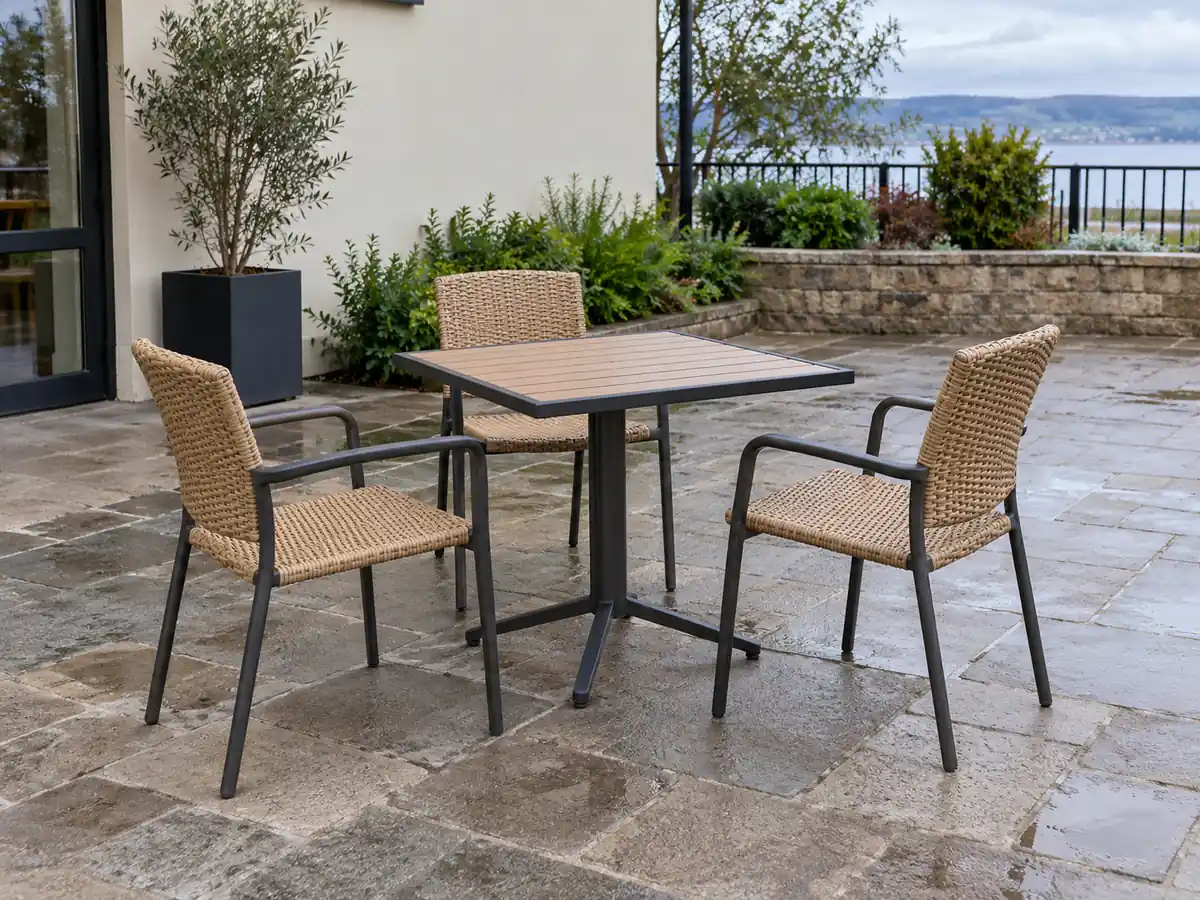
For an open patio, we would start with outdoor synthetic wicker. For a covered terrace, first stand where the chairs will sit during bad weather. Can rain blow under the roof? Does the floor stay damp? Are chairs stored in a humid enclosure?
If the answers point to regular moisture exposure, use the outdoor construction. Reserve natural rattan for a dry, sheltered setting where the chair’s stated use allows it. Adding varnish to an indoor chair is not a reliable way to turn the complete chair into outdoor furniture.
What Makes a Woven Chair Suitable for Daily Commercial Use?
A sound frame, secure panel attachments and a seat designed for its load make the construction suitable for its intended use. The word “rattan,” a dense weave or a heavy frame cannot establish that on its own.
Start with the seat. A woven seat carries a guest’s weight across the panel and its fixings. A woven back supports a different load and may use a different panel size or attachment. You cannot transfer a back-panel specification to a seat simply because the pattern matches.
On a sample chair, work through the parts in this order:
- Seat and back: sit normally and check comfort, support and any edges pressing against your legs or back. Look for broken strands, sharp ends and uneven or visibly loose areas.
- Panel attachment: inspect where the weave enters the frame. Check for loose bindings, lifting edges, cracks around the opening or a separating retaining strip.
- Frame and joints: place the chair on a known level surface and check for rocking or movement at the joints. Investigate a loose frame separately from a loose woven panel.
- Daily handling: carry and move it as staff would. If stacking is part of the plan, use the specified stacking method and check which surfaces touch.
- Table fit: try the complete chair at the intended table. Check arm clearance, knee room and the space needed to pull the chair out.
These checks help you choose between samples and identify issues to resolve before ordering. For a project that requires strength or durability documentation, match the report to the exact chair configuration and intended use. Do not infer a load capacity from the weave name or a photograph.
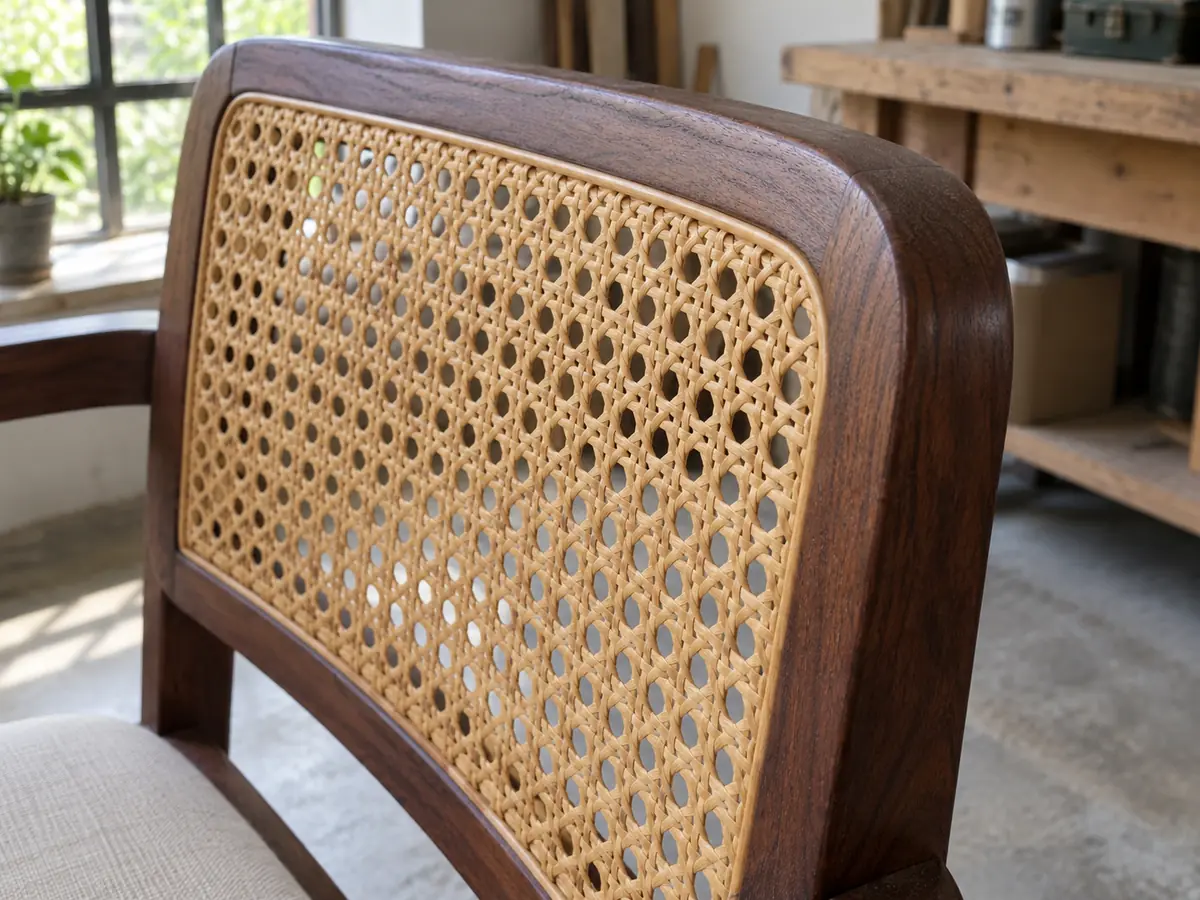
A natural cane seat can be a valid design choice when it is made and supported for that task. For busy dining areas where spills and seat repairs drive maintenance, we would also compare a cane back with a separate seat. This keeps the texture while giving you another way to manage the sitting surface.
How Should You Clean and Maintain the Weave?
Remove loose dirt first, then use a cleaning method that suits both the weave and the frame. Treat natural and synthetic surfaces differently.
Natural rattan and cane
Use a soft brush or a vacuum with a soft brush attachment to remove crumbs and dust from the openings. Work gently so the tool does not catch loose fibres. Wipe marks with a well-wrung cloth where the finish permits it, then let the surface dry with good airflow.
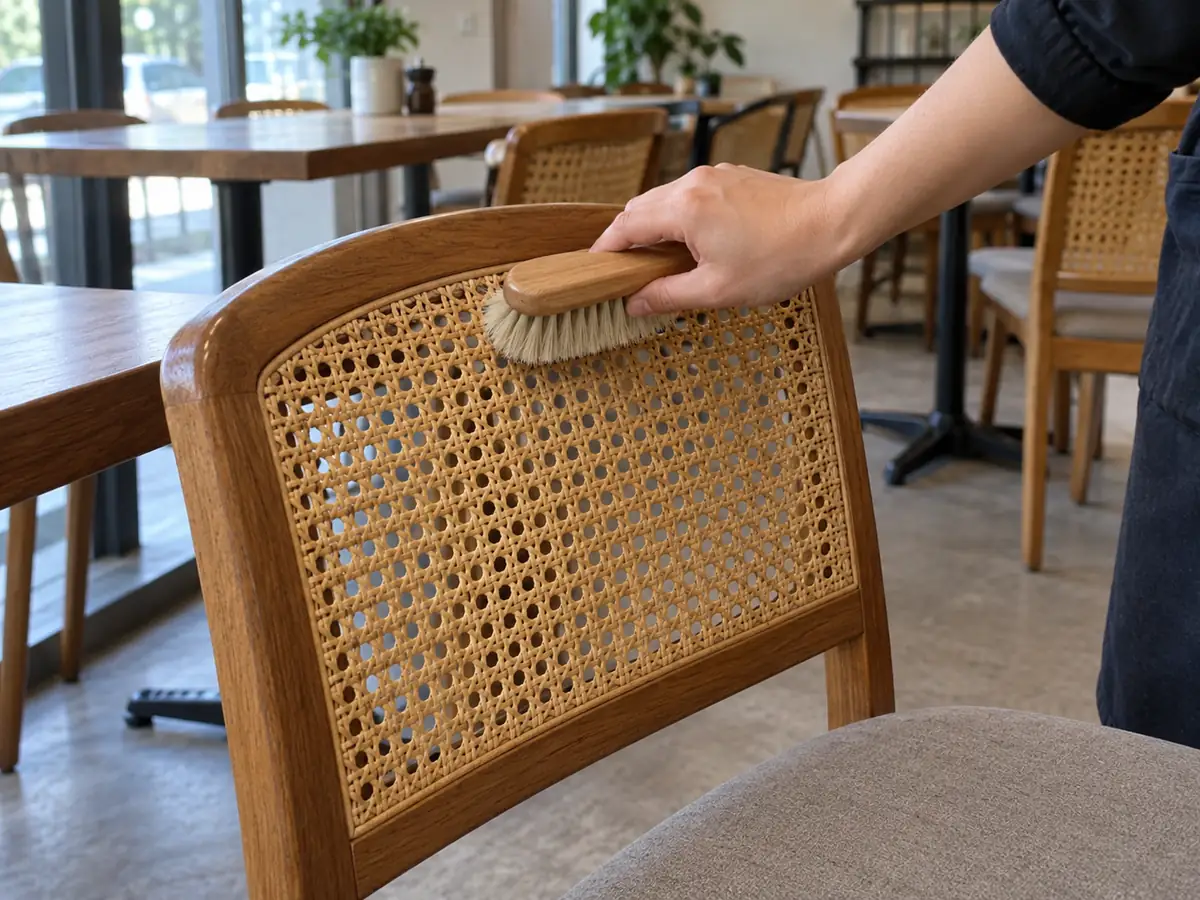
Avoid soaking the panel or hosing down the chair. The Canadian Conservation Institute’s guidance on plant basketry explains why excessive wetting can cause uneven expansion and shrinkage. For daily chair care, remove the dirt with as little moisture as the job needs and allow the weave to dry.
Synthetic wicker
For a chair whose care instructions permit it, remove debris with a soft brush, clean with mild soapy water and rinse or wipe as directed. Keep water away from any component that is not intended to get wet, including some seat pads and wooden parts.
Test your venue’s cleaner on the approved sample before choosing it for routine use. Check the weave, finish and upholstery after drying. If a specific disinfectant is required, obtain a compatible material and cleaning procedure before ordering.
Take a chair out of service if its seat weave breaks, pulls free or loses support. Covering the damage with a cushion does not repair it. Record the location of the fault and arrange the correct panel or structural repair before returning the chair to use.
How to Compare Specifications and Replacement Costs
Compare complete chair specifications, rather than asking whether wicker or rattan is cheaper. A simple cane-back chair and a fully woven outdoor armchair have different structures and amounts of work.
For example, these two descriptions make the intended difference clear:
- Indoor dining: wooden back surround with natural cane webbing; separate upholstered seat; metal legs; indoor finish.
- Exposed patio: specified outdoor synthetic weave; outdoor metal frame and fittings; suitable seat and cushion materials; documented cleaning and storage instructions.
These are specification examples, not product codes. When requesting comparable quotes, keep the overall size, arm design, seat construction, quantity, packing and delivery terms aligned. Then compare what changes when the woven material changes.
Ask how a damaged panel is replaced. Prewoven webbing held in a groove uses a different repair method from individually woven strands or a complete removable back insert. Save the panel opening size, attachment detail, weave pattern and approved colour with the order. This gives the repairer useful information later.
Also compare cleaning access. A weave that traps crumbs in hard-to-reach areas may add work to every shift. Try cleaning the sample with your normal tools, and include the time, replacement parts and expected repair arrangements in the comparison. Plan replacements around observed wear and parts availability rather than one lifespan assigned to every woven chair.
For a YeZhi project enquiry, tell us the indoor or outdoor location, chair quantities, target dimensions and preferred material through our contact page. Email reference photos to info06@hkmsdesign.com. We can discuss suitable models and material options against those requirements.
Choosing Between Wicker, Rattan and Cane
Wicker vs rattan is a comparison of a weaving method with a material; cane adds a more specific component description. For indoor dining, natural cane or rattan can provide the texture you want. For exposed outdoor seating, choose a suitable synthetic weave and outdoor construction. In both cases, decide the frame, seat, back and care method together.
Wicker, Rattan and Cane FAQ
Can a cane chair stay outside under a roof?
Only when the exact chair is suitable for that sheltered setting. Warm, dry covered areas differ from terraces reached by wind-driven rain or pool humidity. For regular damp exposure, choose an outdoor-designed chair and bring indoor-only cane seating inside.
Does a cushion make a cane seat stronger?
A cushion adds comfort; it does not repair or establish the strength of a cane seat. Keep the underlying panel sound and correctly attached. Remove the chair from use if strands break or the panel pulls away from its frame.
Can damaged cane be repaired without replacing the chair?
Sometimes, if the frame remains sound and the panel design allows repair or replacement. Identify whether the chair uses prewoven webbing, individual strands or a removable insert. Use that construction and the original dimensions to arrange a repair, rather than hiding damage with glue or a seat pad.
Is natural rattan always the more sustainable choice?
The material name alone does not settle the comparison. Check where the material comes from, its finish, repair options and likely use conditions. For synthetic wicker, check whether components can be separated and whether the local collection system accepts them; a recyclable resin does not mean the whole chair will be recycled.
Can I mix natural and synthetic woven chairs in one project?
Yes—choose each for its own location, then match their appearance with physical samples. Compare colour, strand size, weave pattern and chair proportions. You can carry a similar look from indoor dining to a patio while keeping indoor-only chairs out of the weather.