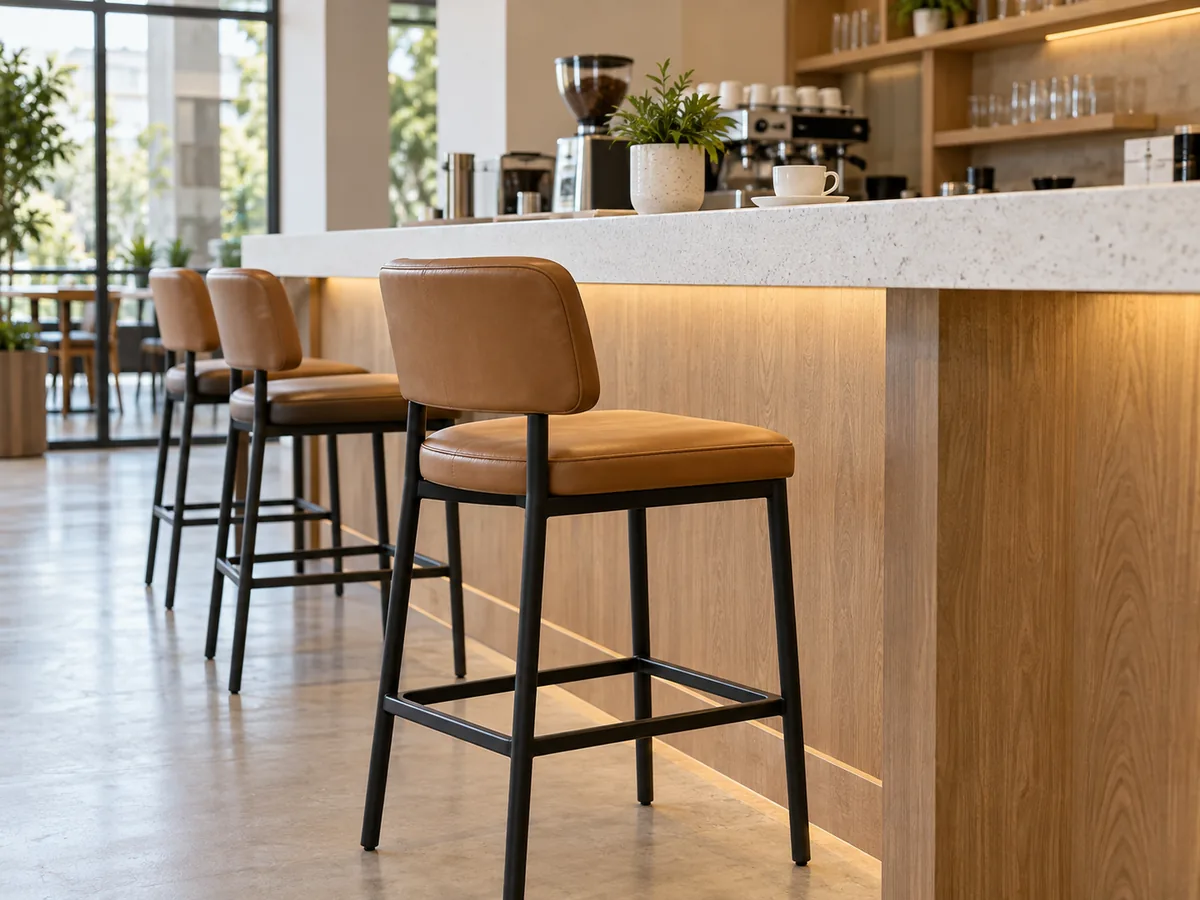
The best cafe chairs aren’t defined by a style label. They’re defined by what you need each seat to do :
-
How long should guests stay in this area?
-
How fast do you need tables to turn at peak?
-
How often does staff clean and reset the floor?
-
How tight is your layout—and how often do you reconfigure it?
If different parts of your café serve different stay patterns, a mixed seating plan may work better than one chair throughout the shop . Use different chair types only when the operational benefit—such as faster resets, longer-stay comfort or event flexibility—justifies the additional SKUs, spare parts and replacement complexity.
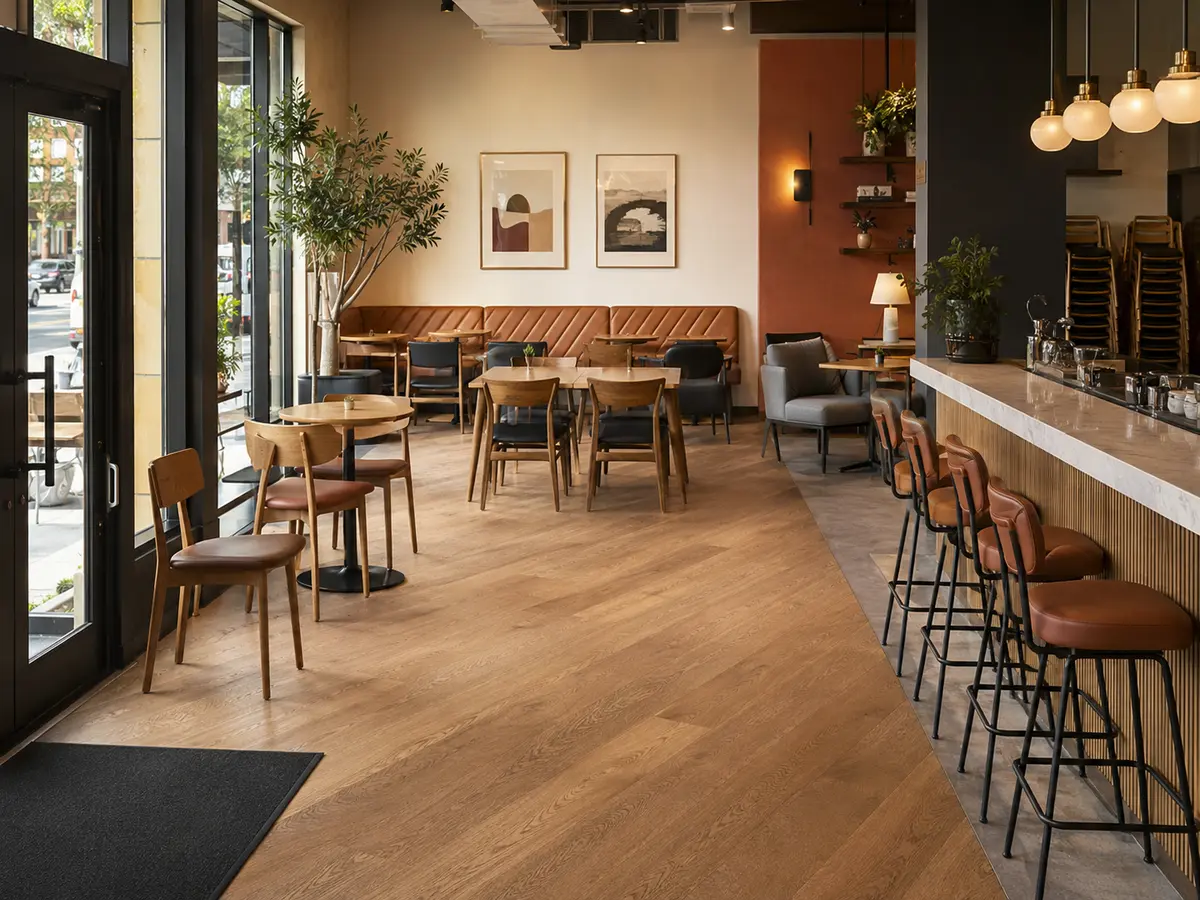
A simple seating-by-zone guide (use this first)
|
Cafe area |
Best chair type (typical) |
Why it works |
What to avoid |
|---|---|---|---|
|
Quick-turn tables (near entrance / grab-and-go) |
Armless, upright dining chairs; molded shell; slim metal or sealed wood |
Faster resets, less lingering, easier wipe-down |
Deep upholstery, heavy armchairs, ornate spindles that trap crumbs |
|
Main dining floor |
Mid-comfort chairs (supportive back, moderate seat contour); mixed materials |
Balanced comfort + throughput |
Chairs that “feel like a lounge” if you rely on volume |
|
Laptop / linger zone |
Cushioned seat, better back support; optional armchairs in limited spots |
Encourages longer stays where you want them |
Putting high-comfort seats everywhere (turnover drops) |
|
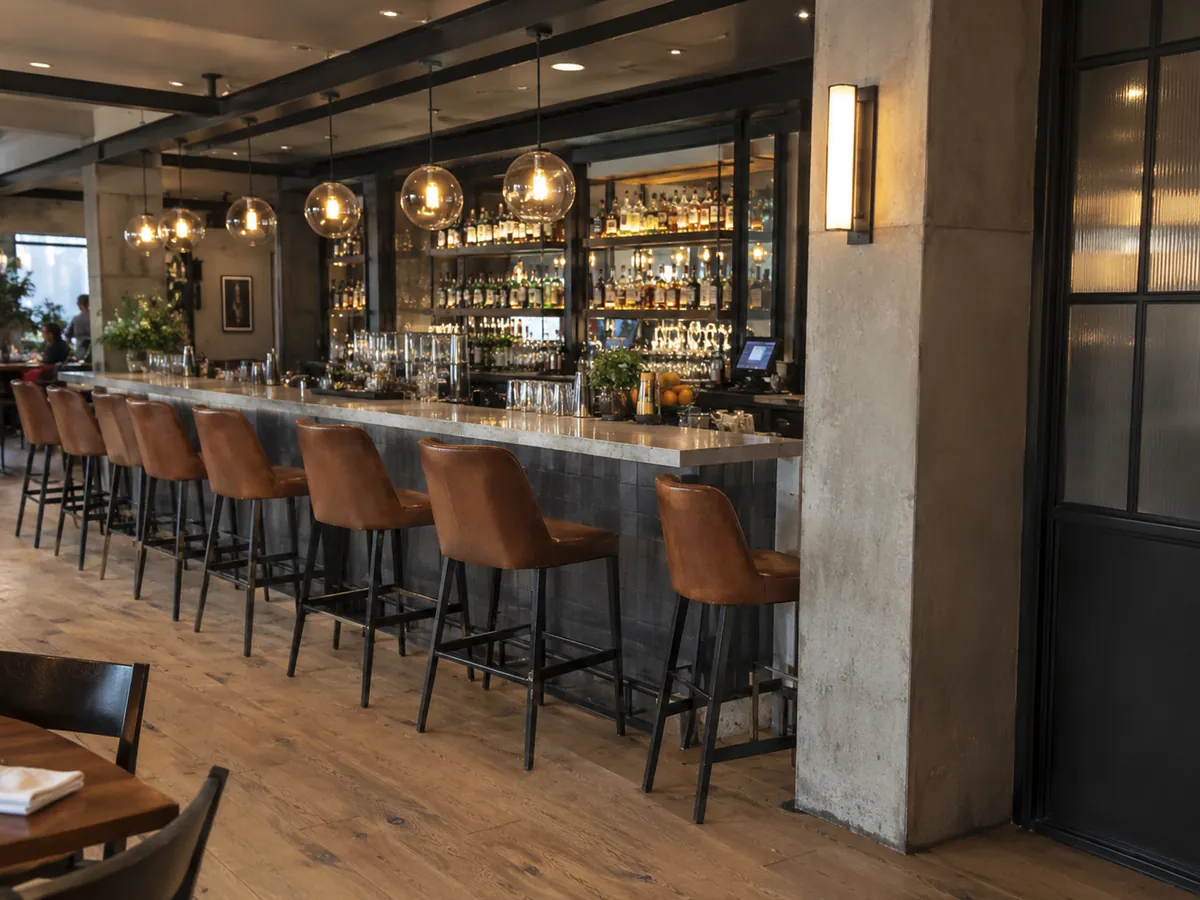
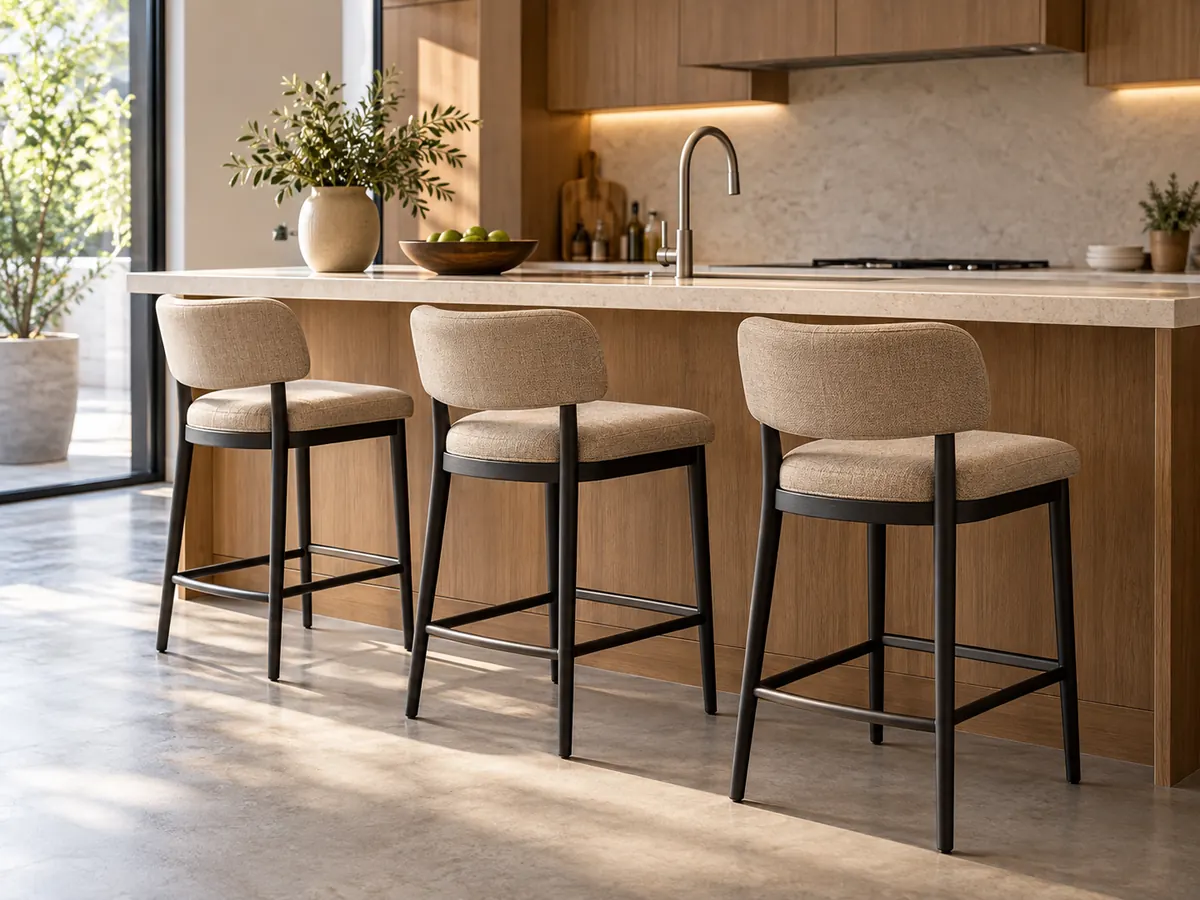
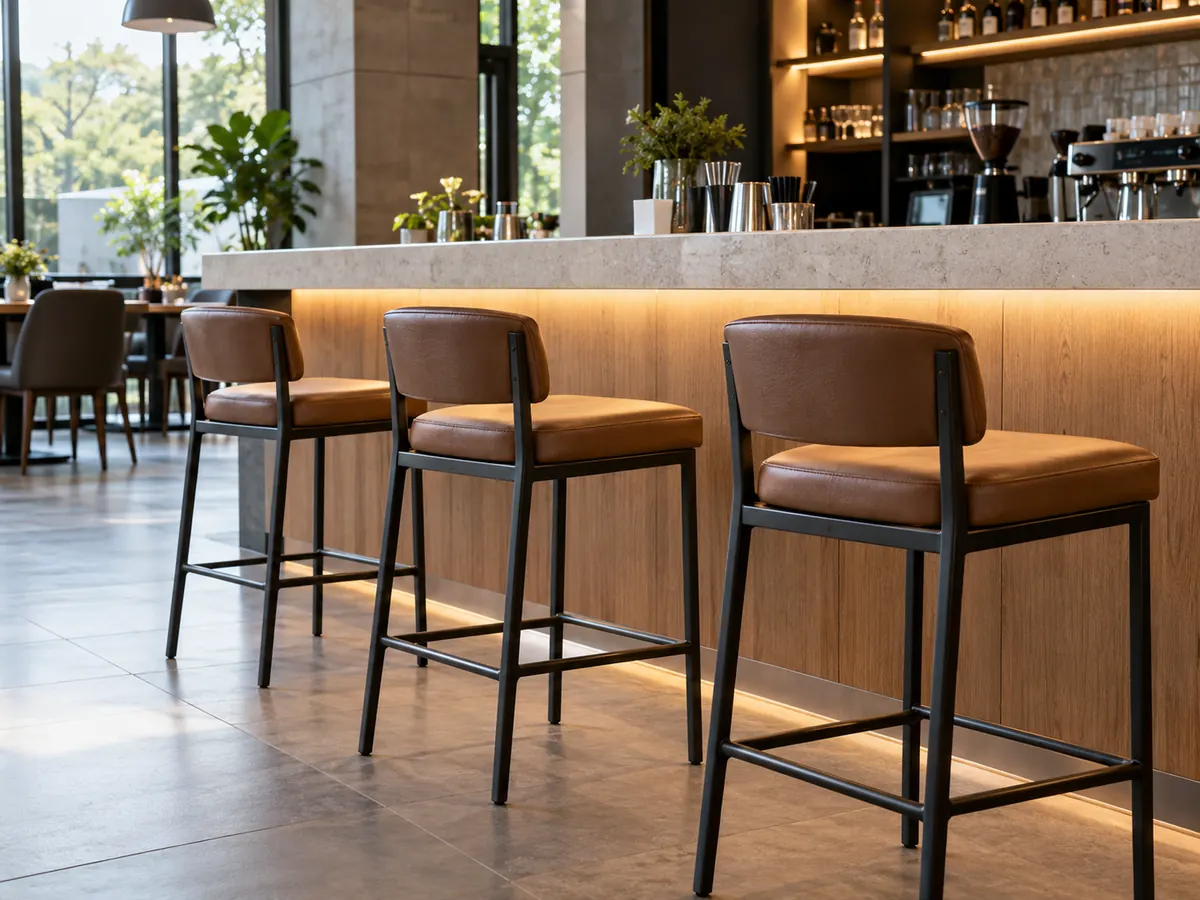
Counter seating |
Stools or counter-height chairs with foot support |
Efficient for solo guests and short visits |
No footrest (fatigue) and unstable bases |
|
Overflow / event-flex seating |
Stackable cafe chairs with durable contact points |
Clears floors fast; stores compactly |
“Stackable” that scratches badly or wobbles when stacked |
|
Outdoor / semi-outdoor |
Weather-ready metal or UV-stable resin, easy-drain surfaces |
Handles moisture; wipes clean |
Indoor upholstery and finishes that can’t handle sun/rain |
Key Takeaway : Start by zoning your café by behavior (quick-turn vs linger), then choose chairs that reinforce that behavior.
Step 1: How to choose cafe chairs by stay time vs turnover
Most cafés run multiple business models under one roof:
-
Morning rush needs speed and reset efficiency .
-
Afternoon needs comfort for longer stays (and repeat orders).
A practical way to make decisions is to treat comfort as a dial. Design firms and furniture guides often frame seating choices as part of matching furniture to your concept and service pace—fast-casual typically favors more upright seating, while longer-stay concepts lean into more supportive, plush seating (see Freeform Spaces’ restaurant furniture guide ).
Quick-turn zone targets
Choose chairs that:
-
Reset fast (easy to lift, wipe, and slide back)
-
Don’t “invite” a 2-hour stay
-
Hold up to constant movement
Linger / work zone targets
Choose chairs that:
-
Support longer sitting without discomfort
-
Feel aligned with your brand (cozy, premium, creative)
-
Still clean reasonably fast (because spills happen everywhere)
Step 2: Don’t treat comfort as “more is better”
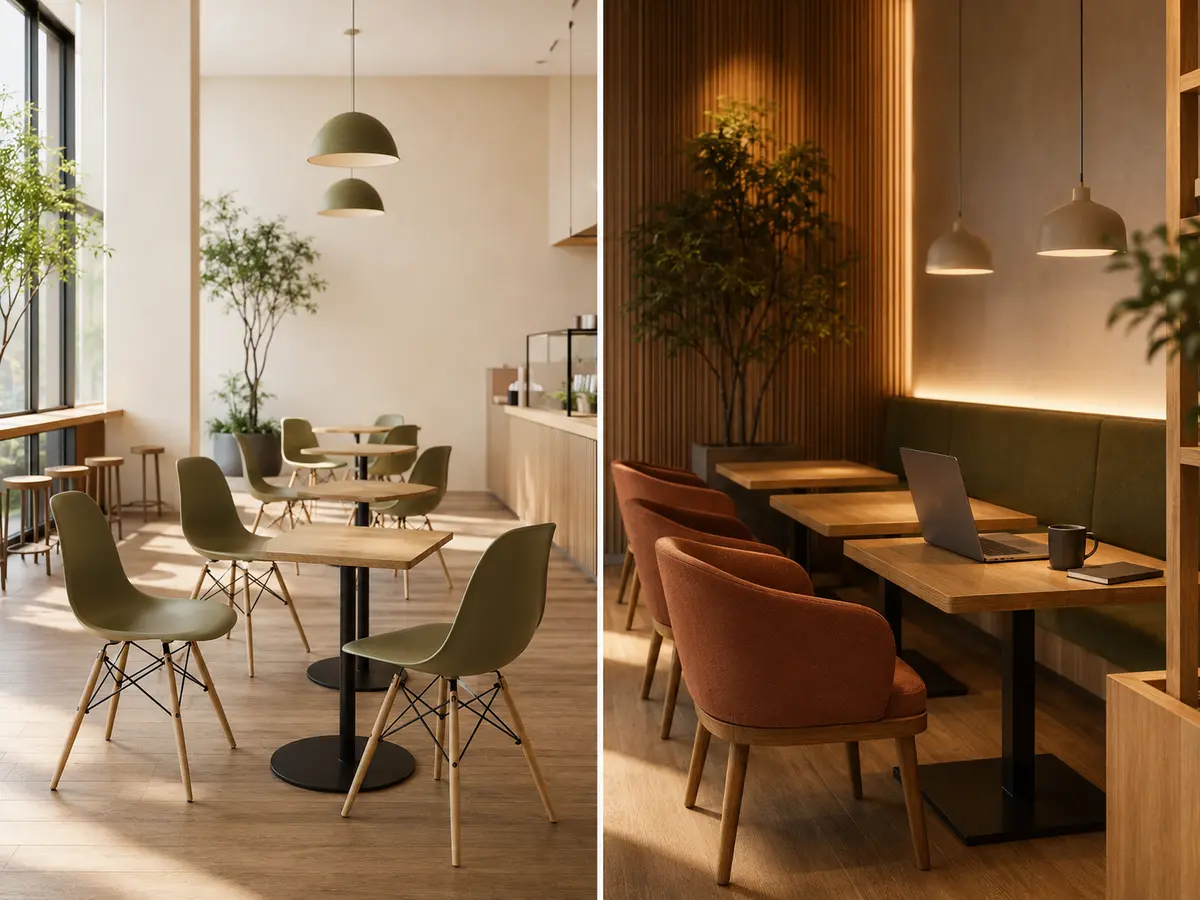
Comfort affects how guests perceive the seating experience, but chair design alone does not determine dwell time or table turnover . Service speed, menu format, outlet availability, Wi-Fi policy, acoustics, party size and demand also influence how long guests stay.
Use comfort as one planning variable:
-
Insufficient seat or back support may reduce comfort, particularly during longer visits.
-
Deep or lounge-style seating may support a longer-stay concept, but its actual effect on occupancy time should be verified using your café’s operating data.
Do not intentionally make seating uncomfortable to force turnover. Choose an upright, space-efficient chair for quick-service zones because it supports the service model and reset process, not because it guarantees that guests will leave sooner.
So your “best chairs for cafe” choice depends on the zone you’re furnishing.
Step 3: Make “easy to clean cafe chairs” a design inspection
Many articles stop at “choose easy-clean materials.” That’s necessary, but not sufficient.
In real operations, cleaning time is often driven by geometry :
-
seams and piping
-
tight corners and crevices
-
how the seat meets the frame
-
whether staff can lift and stack chairs quickly
-
what happens under the seat when crumbs fall
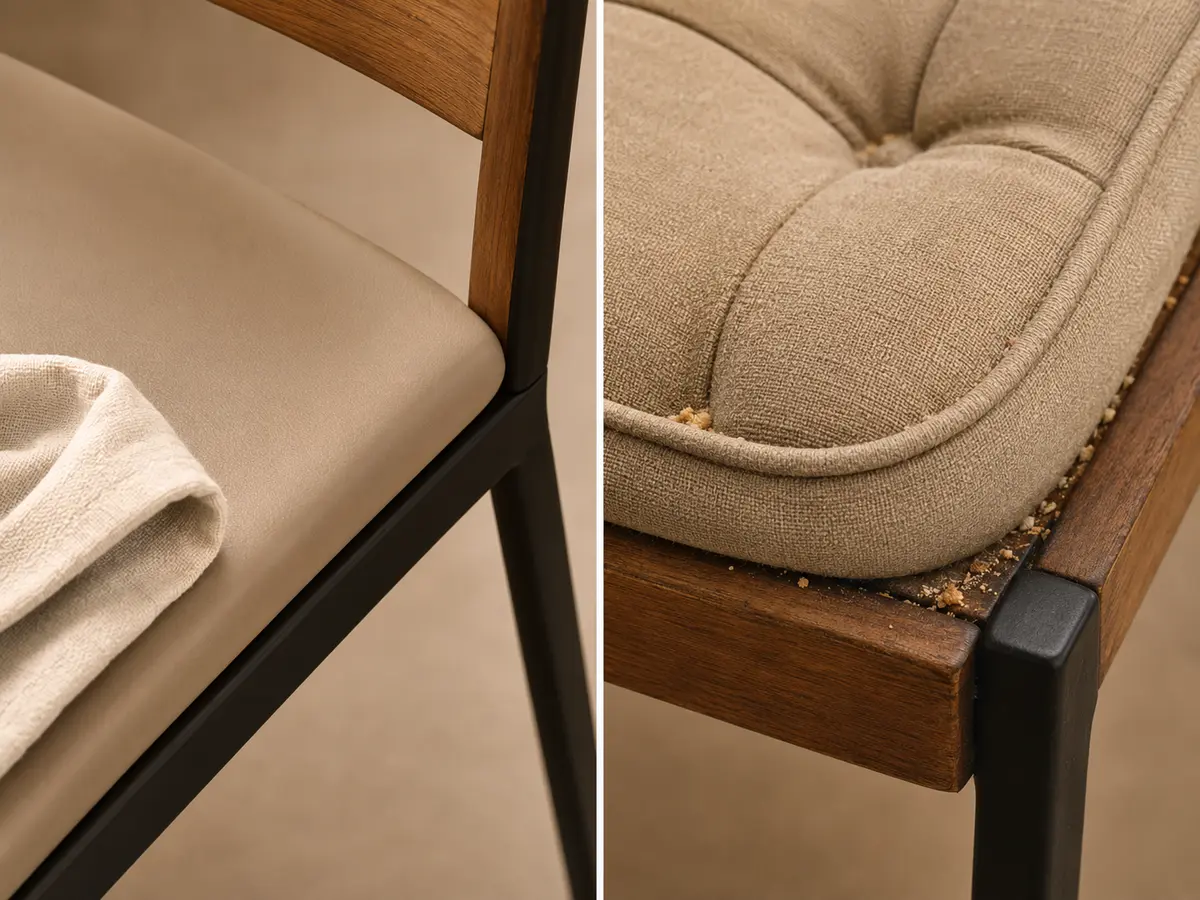
Guides to commercial seating routinely emphasize maintenance and durability as purchase criteria (see The Restaurant Warehouse’s commercial seating overview ). Use the checklist below to turn that into a practical evaluation.
Easy-clean design checklist (chair-by-chair)
1) Surfaces: wipeable is good; smooth + sealed is better
Look for:
-
sealed wood or durable coated metal
-
molded shells with minimal texture
-
finishes that can handle routine wipe-downs
-
“Routine wipe-down” should be defined before ordering. Ask the supplier for model- and material-specific care instructions covering:
-
approved cleaning products and prohibited chemicals;
-
dilution, application method and required rinse or drying steps;
-
maximum recommended cleaning frequency;
-
compatibility with the café’s actual cleaner or disinfectant;
-
whether repeated cleaning affects gloss, color, coating adhesion or upholstery backing.
A finish or fabric should not be described as “easy to clean” only because it feels smooth or has a high abrasion rating. Abrasion resistance, stain release, disinfectant compatibility and long-term appearance are different performance questions.
-
Be cautious with:
-
deep grain/texture that holds grime
-
decorative grooves that collect residue
2) Upholstery: treat it as a “maintenance decision,” not a style choice
Upholstery can work in a café—especially in linger zones—but it’s usually higher effort to keep clean.
Be cautious with:
-
buttons, tufting, deep stitching
-
seams at the seat-back junction
-
fabric edges where liquids wick in
If you use upholstery, keep it limited to the zones where comfort is part of the business model.
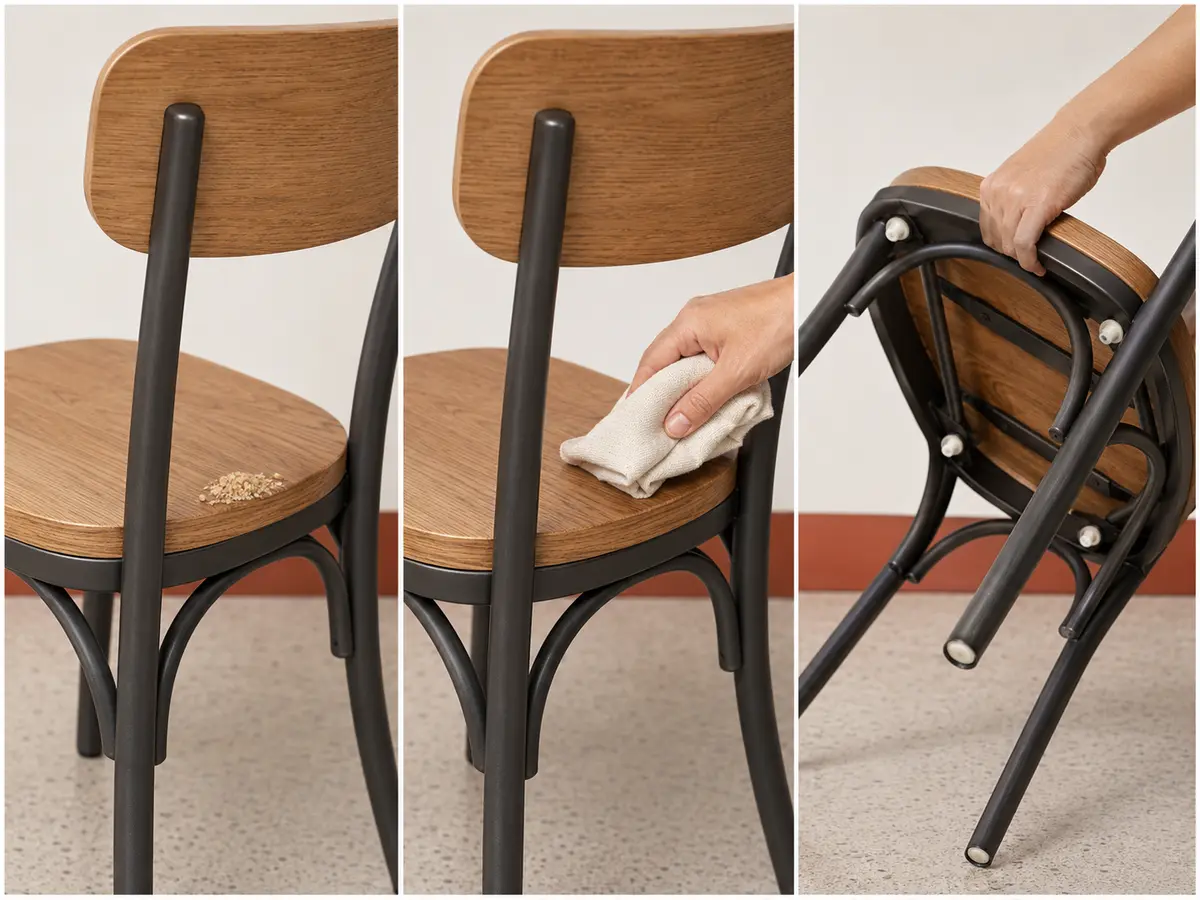
3) The “clean-out gap” idea (cleaning dead zones)
A common cleaning failure point is the area where:
-
the seat meets the back, or
-
the seat meets the frame
If crumbs and liquids fall into a tight seam and you can’t access it quickly, it becomes a daily maintenance penalty.
When you evaluate commercial cafe chairs , ask:
-
Can staff reach the high-crumb areas with a cloth (without tools)?
-
Are there hidden cavities under the seat where debris accumulates?
-
If there is a gap, is it wide enough to wipe through , or is it a narrow slot that traps debris?
Pro Tip : Photograph the underside and the seat-to-frame junction during sampling. If you can’t show the “cleaning path” in a photo, it will probably be painful in real life.
During sampling, run a documented cleaning-access check rather than relying on appearance alone:
Place a measured amount of dry crumbs at the seat-to-back and seat-to-frame junctions.
Clean the chair using the proposed daily tools and approved cleaner.
Record the time required, areas that remain inaccessible and whether the chair must be lifted or turned over.
Repeat the check after stacking or moving the chair to inspect contact-point damage.
Present this as a proposed evaluation method until real test results are available.
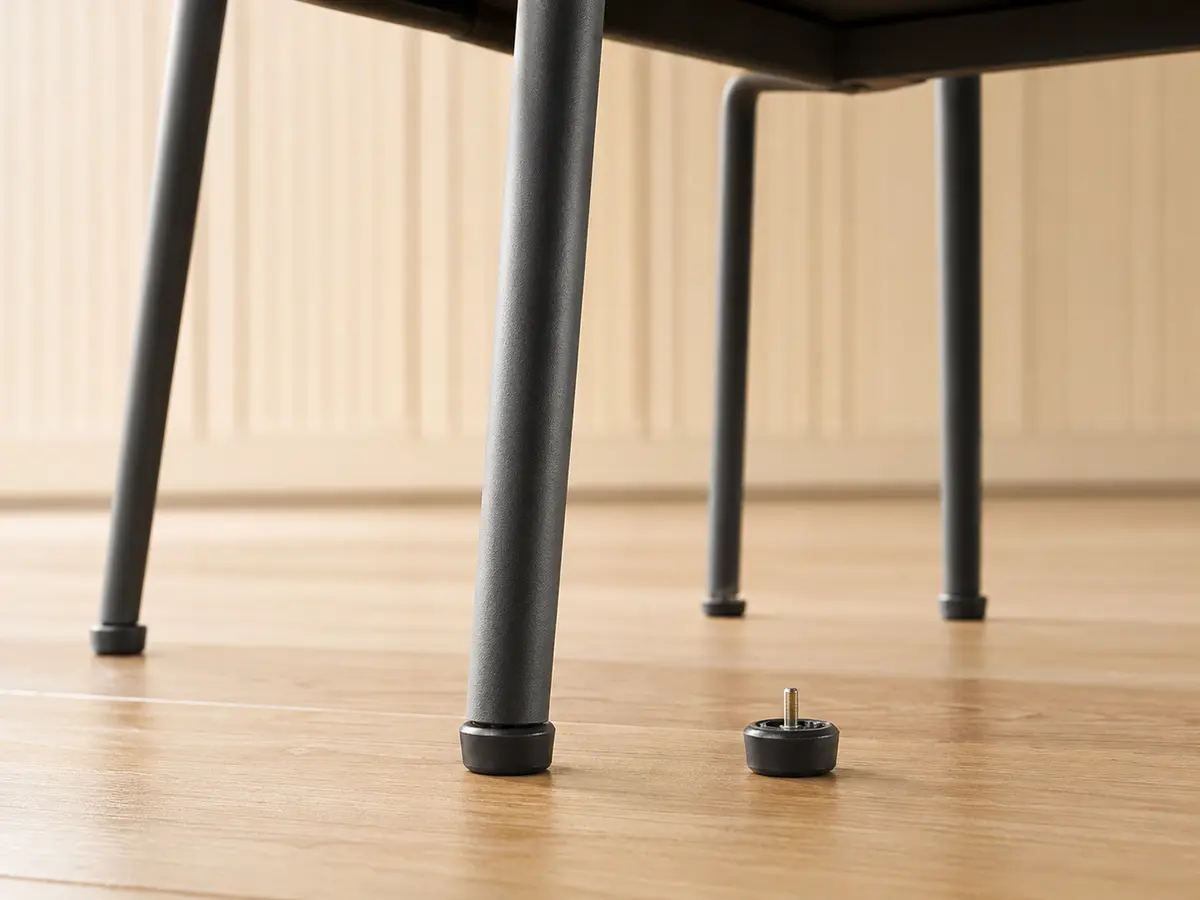
4) Floor glides and leg tips: small part, big operational impact
Glides affect:
-
daily chair movement
-
floor protection
-
noise (scraping)
-
long-term wobble
Ask whether glides are replaceable and whether you can buy spares in bulk.
5) Handling: can staff move 20 chairs without struggling?
Even a perfectly wipeable surface becomes “not easy to clean” if staff avoid moving the chairs.
A good rule is to confirm with your team:
-
Can one person lift and stack it safely?
-
Can the chair be carried without awkward pinch points?
Step 4: Space efficiency isn’t only about chair size
Small cafés typically need chairs that are:
-
armless (or used selectively)
-
slim-profile
-
easy to pull out and push back in
-
compatible with your aisle plan and table spacing
If you’re unsure about clearances, use an established spacing reference and test it in your layout. For a quick sizing sanity check, YeZhi’s guide on space between dining chairs is a useful starting point.
When stackable chairs are worth it
Stackable café chairs are worth considering when you:
-
clear floors frequently;
-
reconfigure for events;
-
store overflow seating;
-
have enough storage height and floor area for the stated stack.
Before ordering, verify the maximum stack quantity, total stacked height, safe handling method and protected contact points . Stackability does not automatically reduce costs, and it does not necessarily require sacrificing comfort; compare the specific chair’s ergonomics, weight and storage benefit.
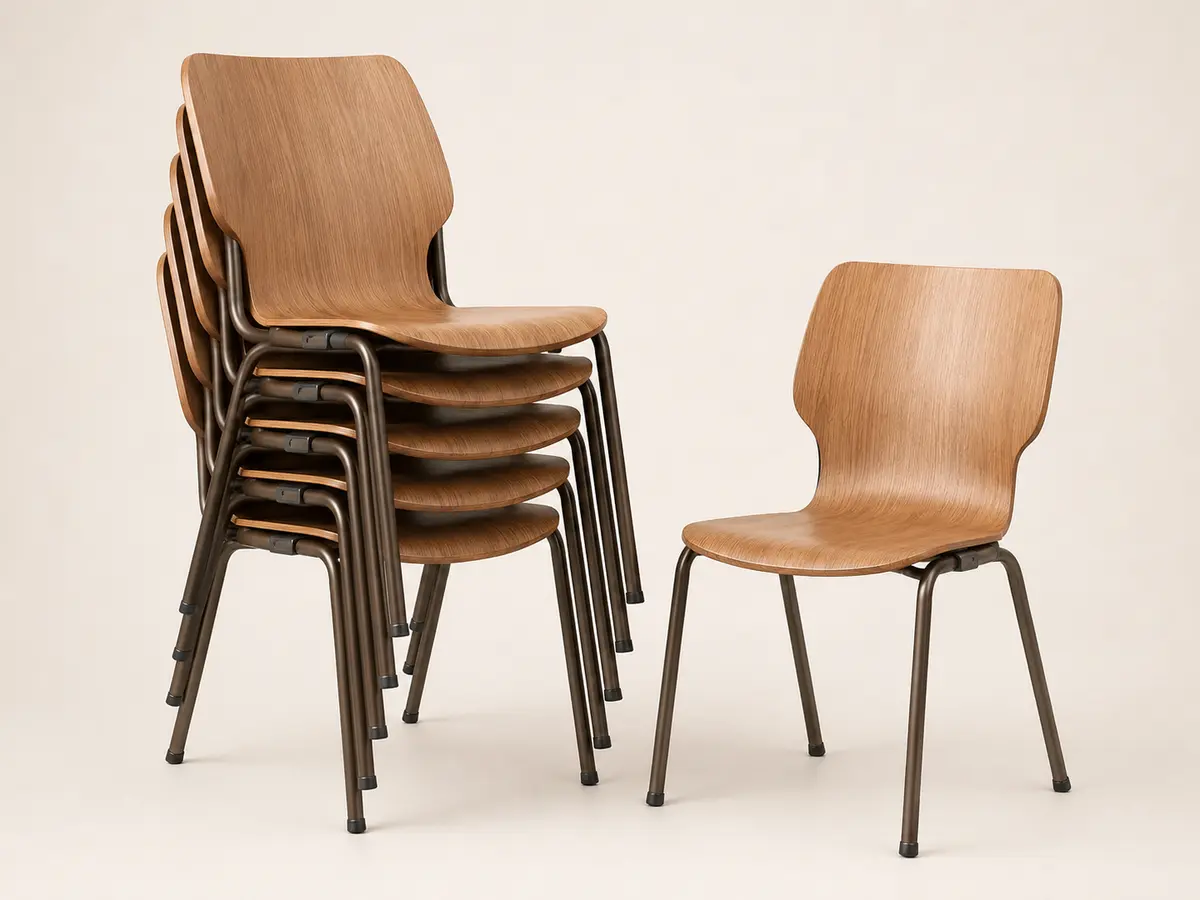
If you need a product example to show what a stackable commercial chair program can look like, YeZhi’s Freedom stackable wooden restaurant chair is one reference point.
Step 5: Commercial durability checks (what to verify before you buy)
For coffee shop chairs and commercial café chairs, durability means resisting repeated seating loads, lateral movement, impacts and the specified cleaning routine throughout the intended service period.
Before placing a bulk order, confirm:
-
Construction : reinforced joints (quality welding on metal; solid joinery on wood)
-
Finish durability : resistance to scuffs and routine cleaning
-
Serviceability : replaceable glides, spare parts availability
-
Consistency : ability to replenish later without noticeable variation
-
Also verify what “commercial” means for the exact model:
-
intended-use statement and commercial warranty;
-
applicable structural test standard and edition;
-
test report tied to the quoted model or SKU;
-
tested configuration, severity level and laboratory;
-
separate evidence for upholstery, finish and fire performance where required.
For European non-domestic seating, EN 16139:2025 may be relevant to structural safety, strength and durability. It does not by itself establish upholstery durability, cleanability, resistance to ageing or fire performance. Requirements vary by market and project, so confirm the applicable documentation before ordering.
-
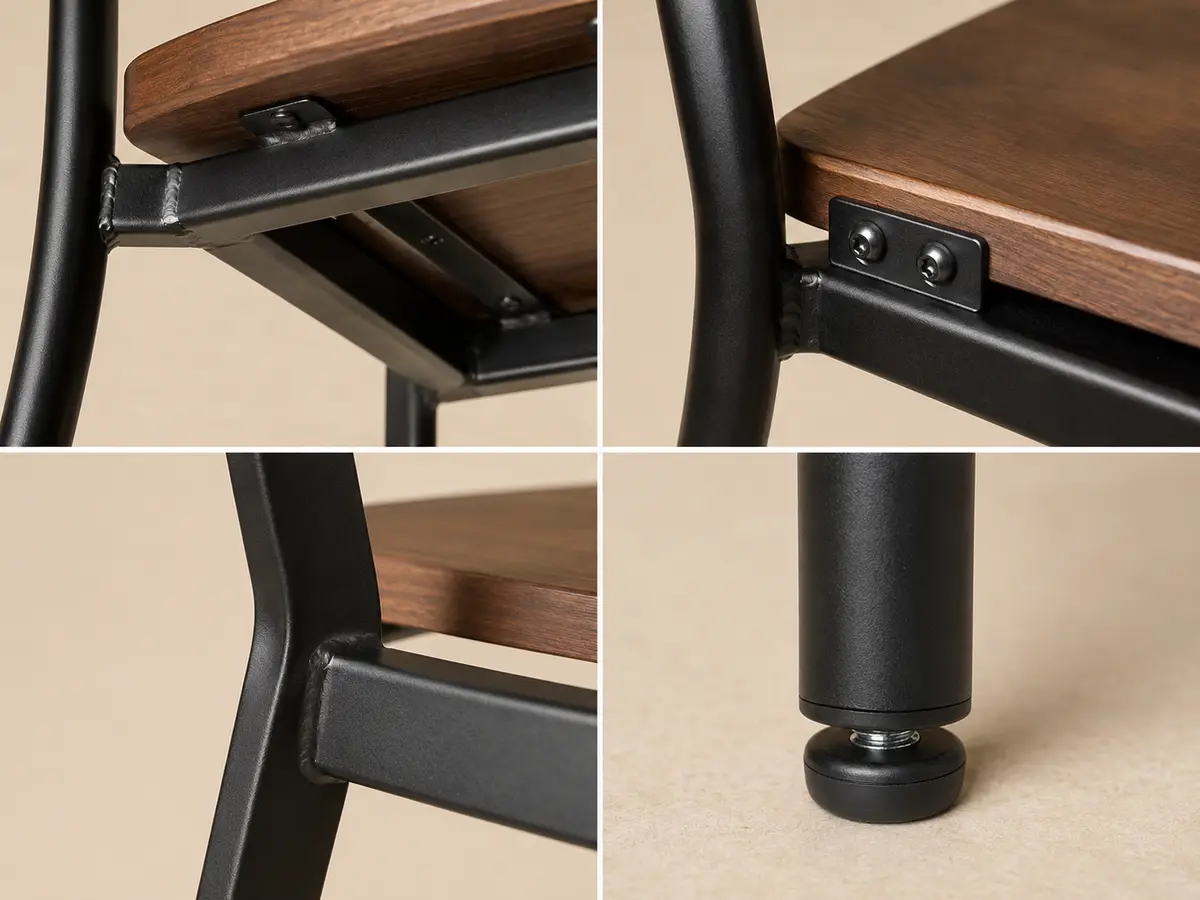
If you’re comparing heights and table fit across chair models, YeZhi’s dining chair height guide helps you align chair dimensions with common table heights.
Step 6: Mixed seating strategy + procurement that won’t bite you later
A mixed seating plan works best when it’s also a mixed procurement plan .
Build the mix from operational demand rather than a universal percentage:
-
Core chairs: enough for the normal main-floor layout.
-
Longer-stay chairs: based on the number of tables intentionally assigned to work, lounge or slower-service use.
-
Stackable overflow chairs: based on documented peak demand, event layouts and available storage.
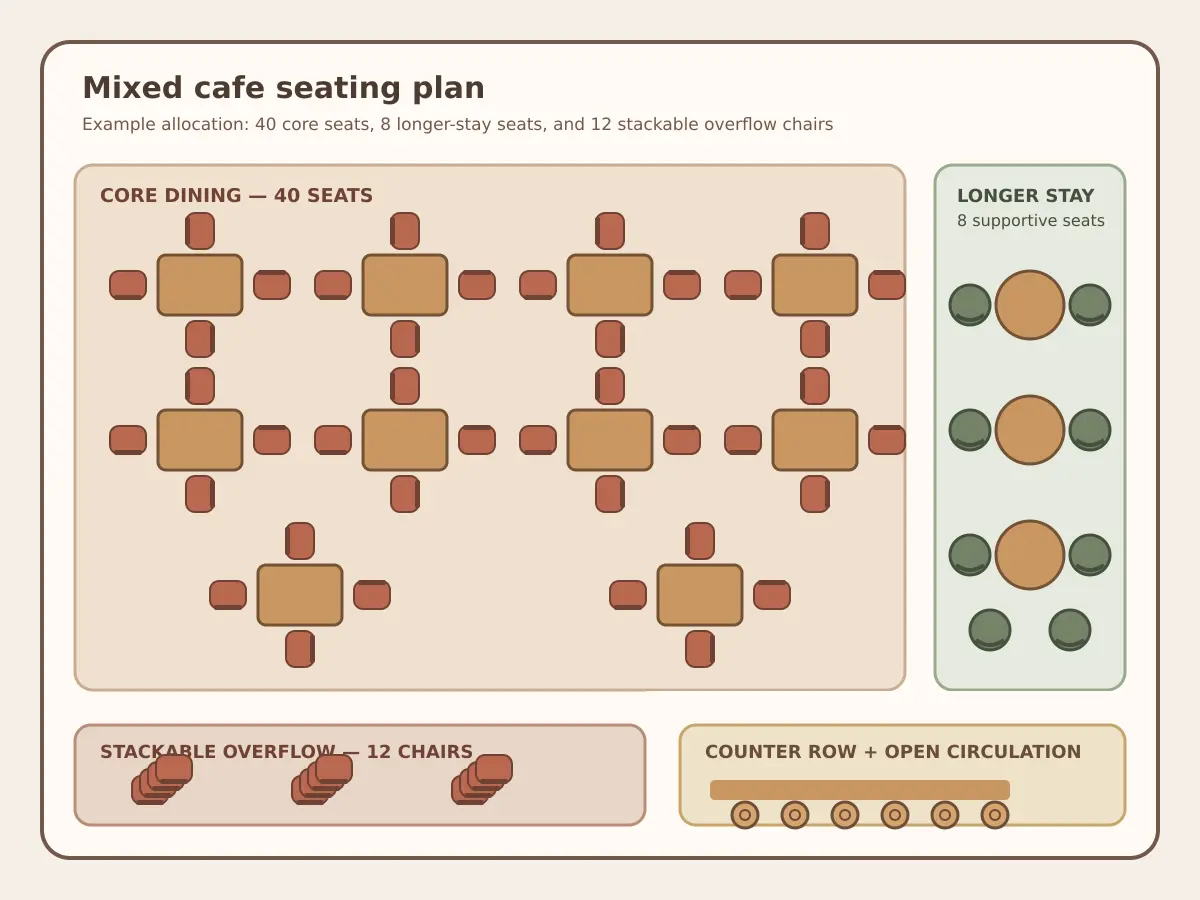
Example calculation: if the normal layout uses 40 core seats, the café designates 8 seats for longer stays, and its largest event requires 12 additional seats, source those quantities plus an approved replacement buffer. The final ratio should come from the floor plan and operating data, not a generic 50/20/20 formula.
What to confirm with your supplier
If you plan to mix colors and materials, confirm:
-
which finishes can ship together
-
whether mixed orders can be consolidated to reduce freight complexity
-
how batch consistency is controlled across replenishment orders
YeZhi’s café furniture category can be used to build an initial product shortlist. For each linked product, verify dimensions, cleaning instructions, stackability, replacement parts, warranty and available test documentation before comparing price or appearance.
RFQ-ready checklist for commercial cafe chairs
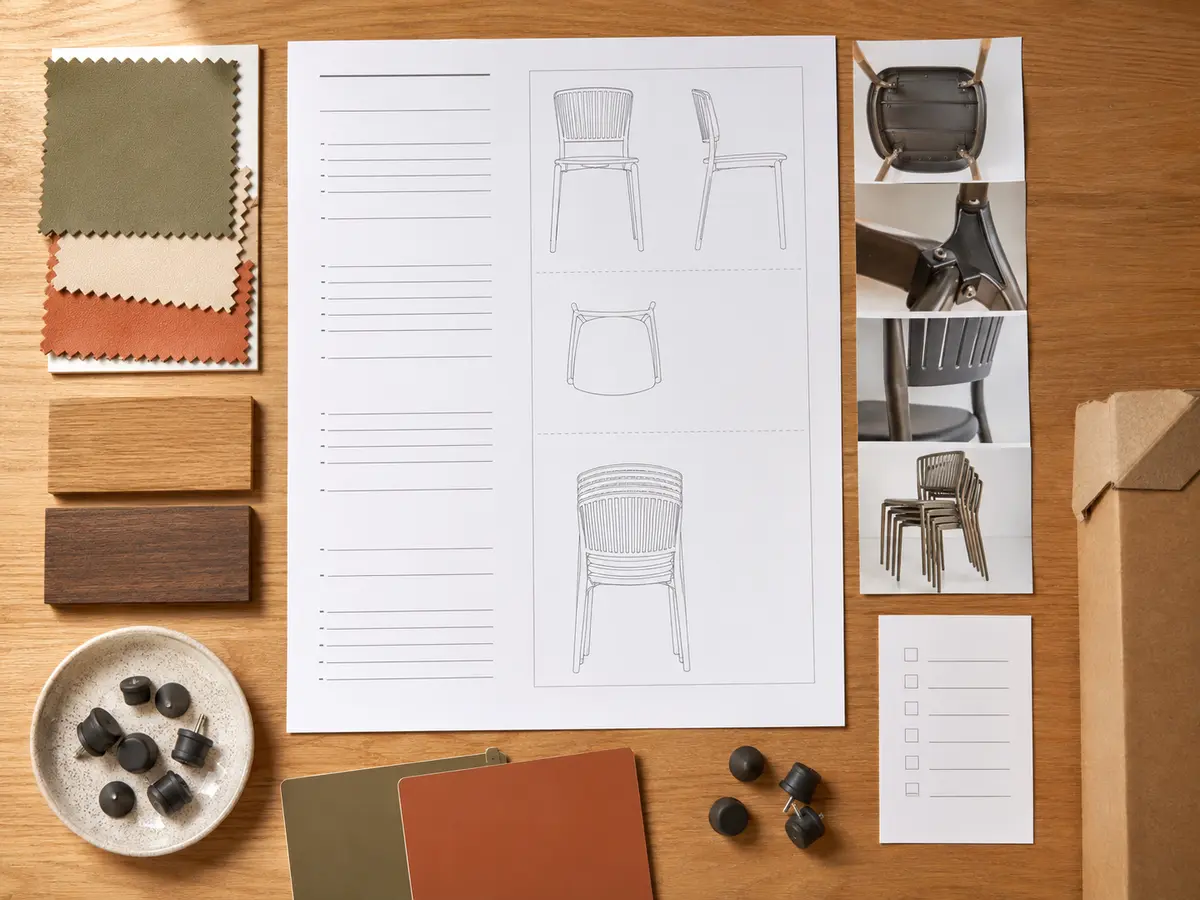
Use this as the information pack you send to suppliers.
|
Category |
What to specify / ask for |
Why it matters |
|---|---|---|
|
Zone plan |
Seat count by zone (quick-turn vs linger vs counter vs outdoor) |
Prevents buying one chair that fails in half the shop |
|
Dimensions |
Seat height, chair width, depth, armrest constraints |
Avoid layout surprises and clearance problems |
|
Materials & finishes |
Frame material; finish type; seat/back surface |
Drives cleaning speed, scuff resistance, look |
|
Cleanability |
Photos of underside + seat-to-frame junction; where crumbs go |
Predicts daily cleaning time |
|
Stackability |
How many chairs stack; contact-point protection |
Storage and floor-reset efficiency |
|
Floor protection |
Glide type; spare glides availability |
Noise, floor damage, long-term stability |
|
Durability proof |
What testing info is available; warranty terms |
Reduces commercial risk |
|
Packaging |
Carton strength, corner protection, palletization |
Cuts damage rate in transit |
|
Replenishment |
Lead time for repeat orders; color/finish consistency plan |
Keeps your program stable over time |
|
Spares |
Recommend ordering spare glides and a small chair buffer |
Minimizes downtime and emergency buys |
FAQ
What are the best chairs for a busy cafe?
For high-traffic cafés, prioritize chairs that are easy to wipe , simple in shape , and easy for staff to move —then add comfort seating only in the zones where longer stays are profitable.
Should cafe chairs be comfortable or easy to clean?
Both—but not in the same proportion everywhere. Use easier-clean, more upright chairs in quick-turn zones, and more comfortable chairs in linger zones. Your layout should make the trade-off intentional.
Are upholstered chairs good for cafes?
They can be, especially in lounge or work areas. Just treat upholstery as a maintenance decision: avoid designs with deep seams and details that trap crumbs, and plan for more frequent cleaning.
Are stackable chairs worth it for cafes?
Yes if you clear floors often, store overflow seating, or reconfigure layouts. Make sure the chair is designed to stack securely and won’t get destroyed at contact points.
Next steps
If you want to shorten buying cycles (and reduce risk), request (1) a spec sheet , (2) finish samples , and (3) real photos or a short video showing stacking and cleaning access points before you confirm a bulk order.
For a deeper overview of commercial seating selection, see YeZhi’s guide on best chair solutions for restaurants and cafes .