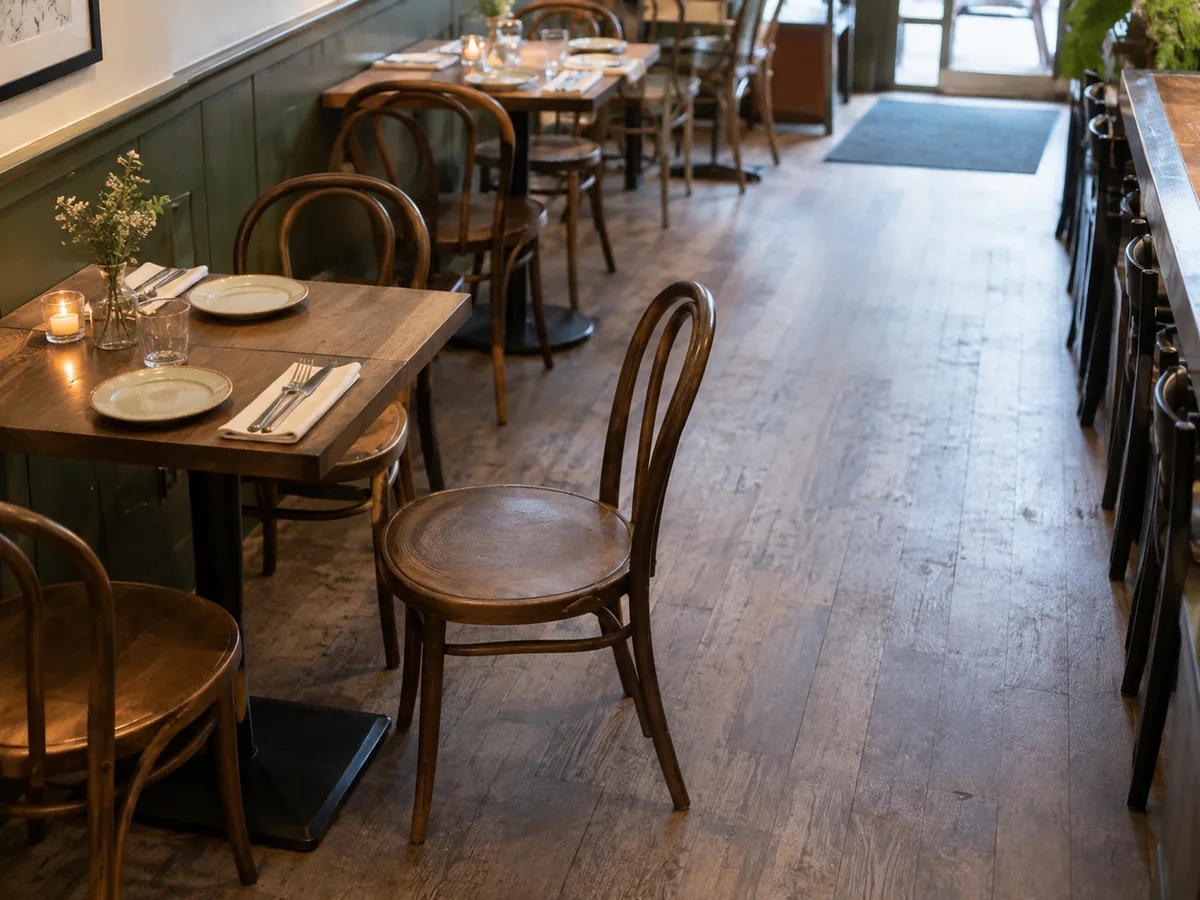
Restaurant chair wobble usually starts with floor contact, glides, hardware, joints, or frame damage. The real decision is not just how to fix it, but whether the chair is safe to keep in service.
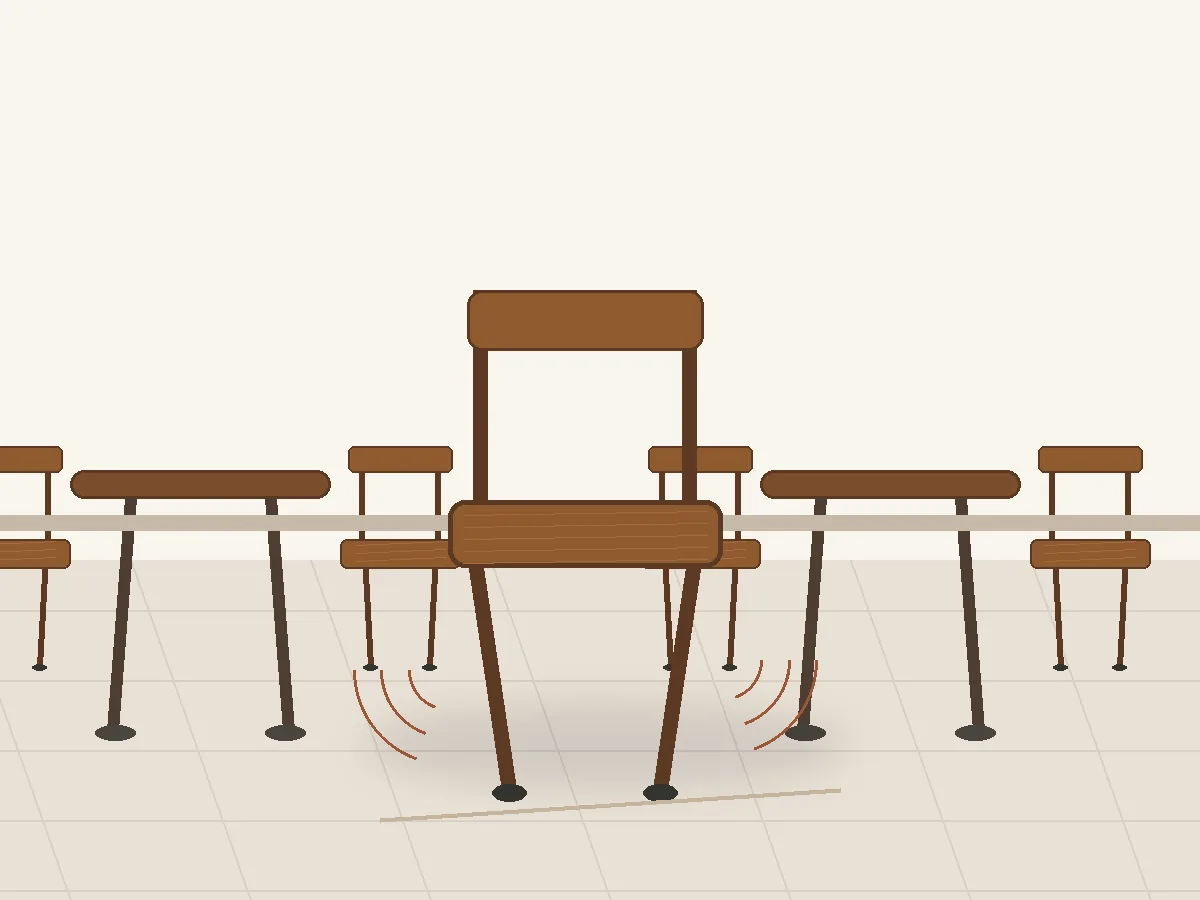
Restaurant chairs wobble for a few predictable reasons: uneven floors, worn or missing glides, loose hardware, loosened joints, or structural damage such as cracked wood, bent frames, or failed welds.
In a restaurant, wobble is not just annoying. Treat it as a guest-safety issue until you know whether the problem is at the feet, in the hardware, or inside the frame. Minor floor or glide problems may be easy to correct, but recurring wobble, cracked components, failed welds, or fasteners that no longer hold tension should trigger remove-from-service review, not another quick patch.
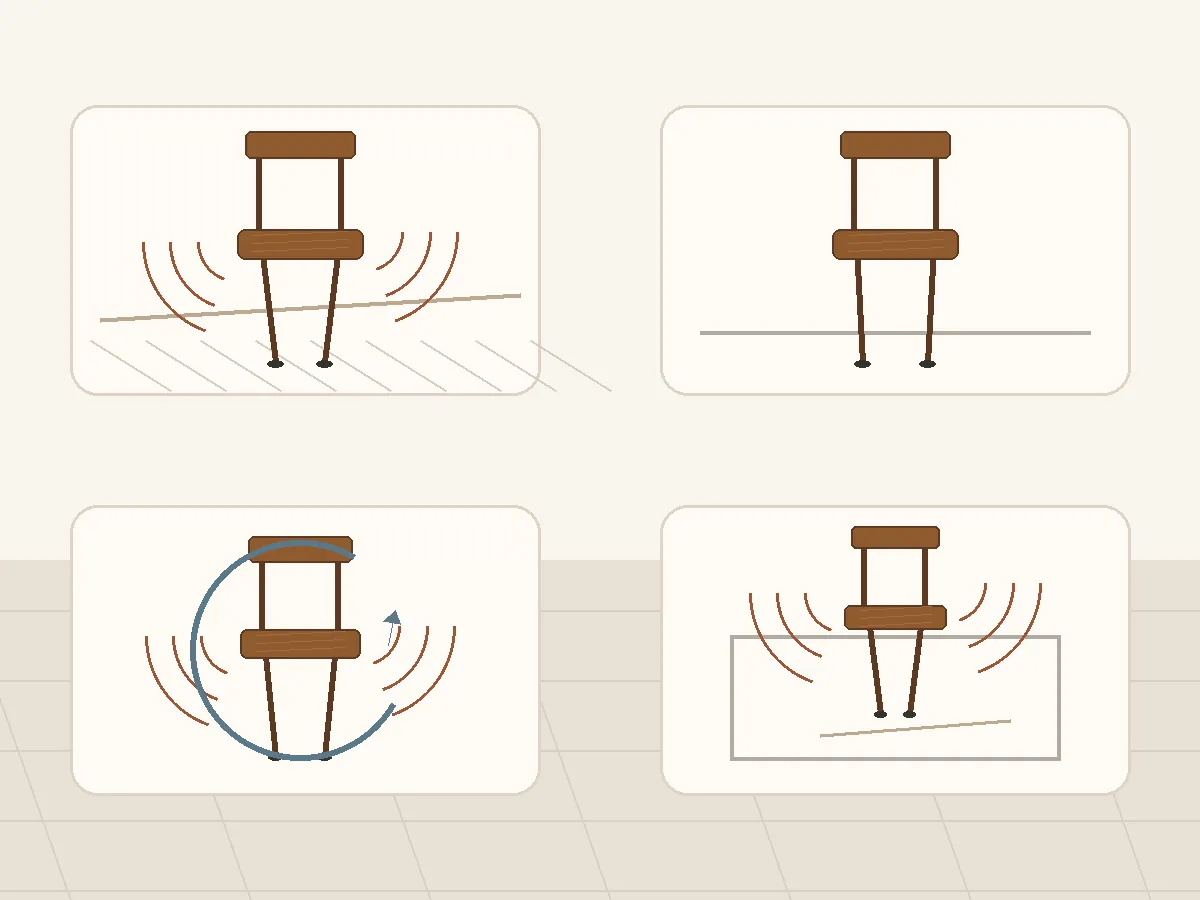
Start here: is it the floor or the chair?
If you’re here because you searched “why do restaurant chairs wobble,” this section is the fastest way to get to the real cause.
Before you tighten a single screw, separate “floor wobble” from “chair wobble.” This saves time and prevents you from masking a real structural problem.
1) Move + rotate test: quick screening only
Move the chair to a flatter reference spot, then rotate it 90° and 180°.
If the wobble changes direction or disappears, the floor or contact points are probably involved. If the wobble follows the chair in every location, the chair itself needs inspection.
Do not use this as a loaded stress test. If you see cracking, weld separation, bent legs, sharp edges, or joint movement, stop testing and remove the chair from guest use.
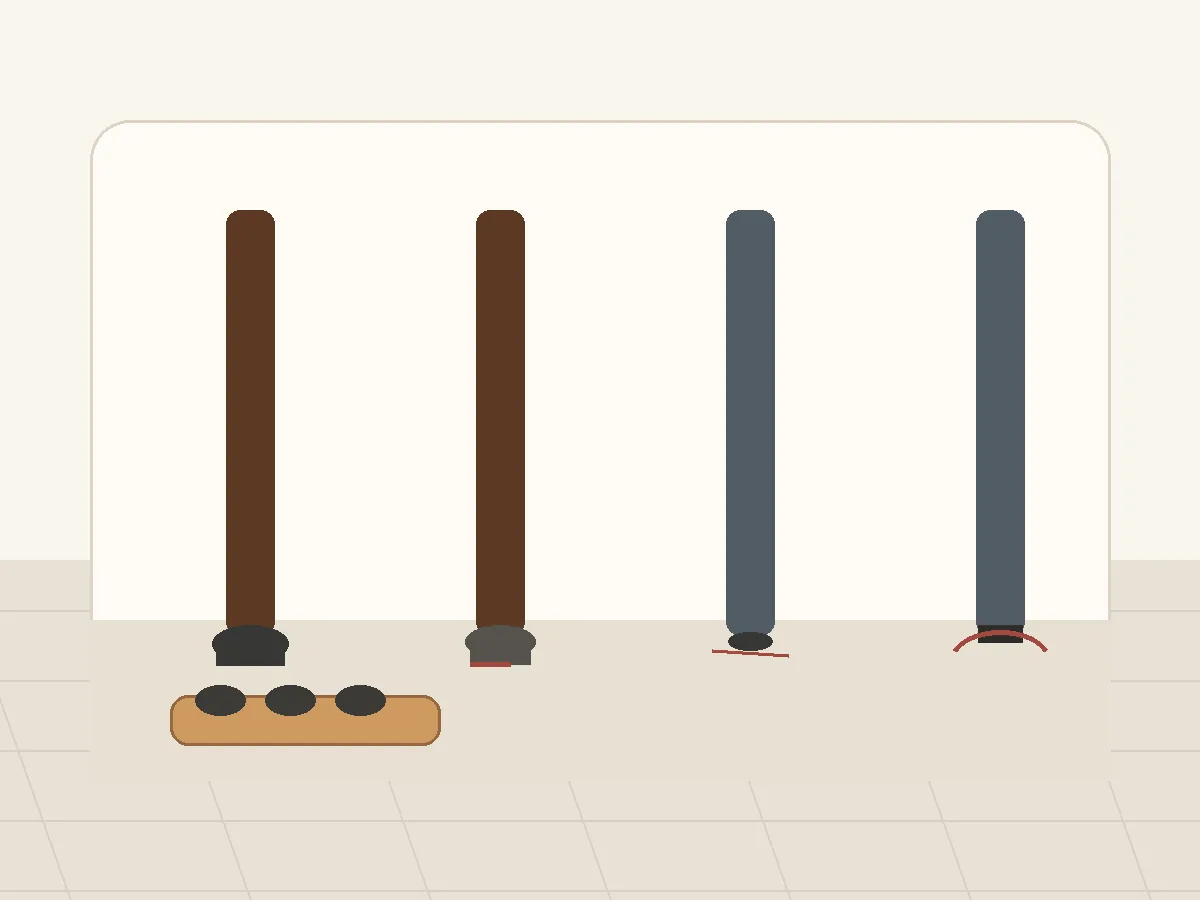
2) Check the four contact points
In restaurants, the most common “easy fix” is at the feet.
Are any glides missing?
Are the glides unevenly worn (one leg has more wear than the others)?
Is one glide half-seated or loose?
BFM Seating notes that for restaurant seating, imbalance is often traced to missing, worn, or damaged glides, and recommends keeping replacement glides on hand in busy venues (BFM Seating, “Does Your Restaurant Have Wobbly Table Syndrome”).
Pro Tip: If your floor is tile or stone, grout “lippage” can create wobble that looks like a chair defect. Don’t assume the chair is bad until you test it in a different spot.
3) Don’t “pad your way out” of a structural problem
Felt pads and slip-on feet can reduce noise and protect floors. But they also make it easy to keep using a chair that’s actually failing.
A simple rule: only use pads to correct minor floor variation after the chair structure is solid.
Why new restaurant chairs wobble (even right after assembly)
A “wobbly restaurant chair” complaint sometimes starts on day one. Common reasons:
Uneven tightening during assembly (one side gets fully tightened before the chair settles on the floor)
Hardware not fully seated after shipping vibration
Floor variation revealed only after the chair is placed in-service
Tolerance stack-up (small manufacturing variation across multiple parts)
What to do without turning this into DIY repair:
Re-check fasteners with the correct tool.
If the chair is new and still wobbles after basic checks, treat it as a potential manufacturing/assembly issue and escalate through the supplier warranty path.
Why chairs start wobbling after months of service
Restaurants put chairs through stress patterns that most home “dining chair” content ignores:
Dragging chairs to reset tables (repeated side-load)
Leaning back and shifting weight (racking force)
Stacking impacts (contact-point wear)
Daily cleaning moves (frequent repositioning)
That side-load is what loosens joints and opens tiny gaps. Over time, tiny movement becomes bigger movement.
Why do restaurant chairs wobble? The main causes
A) Floor + feet problems
This is often the lowest-risk category to investigate first, because floor variation and worn glides can create wobble without structural failure. Still, confirm the frame is solid before returning the chair to service.
Uneven tile/grout lines or sloped floors
One leg landing on a grout ridge
Chair leg glides worn out or missing
Mixed glide types (different thicknesses)
What it looks like:
Chair feels stable when someone sits, but rocks when empty.
Wobble changes when moved to another spot.
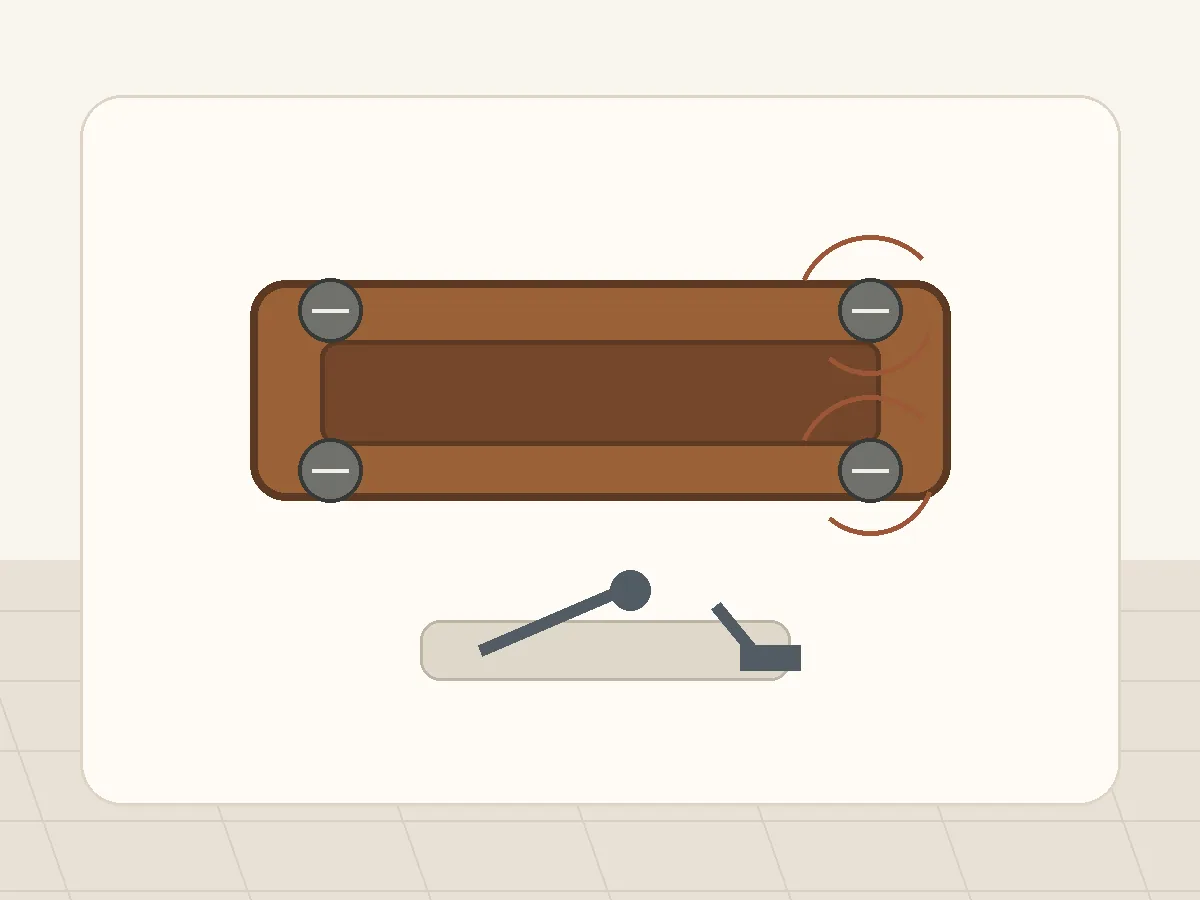
B) Hardware loosening (bolts, screws, inserts)
Hardware can loosen through repeated movement, vibration during shipping, uneven assembly, thread damage, missing washers, worn inserts, or frame movement around the fastener.
What it looks like:
You can feel movement at the connection points when you grip the seat frame and twist gently.
Fasteners turn easily or never “snug up.”
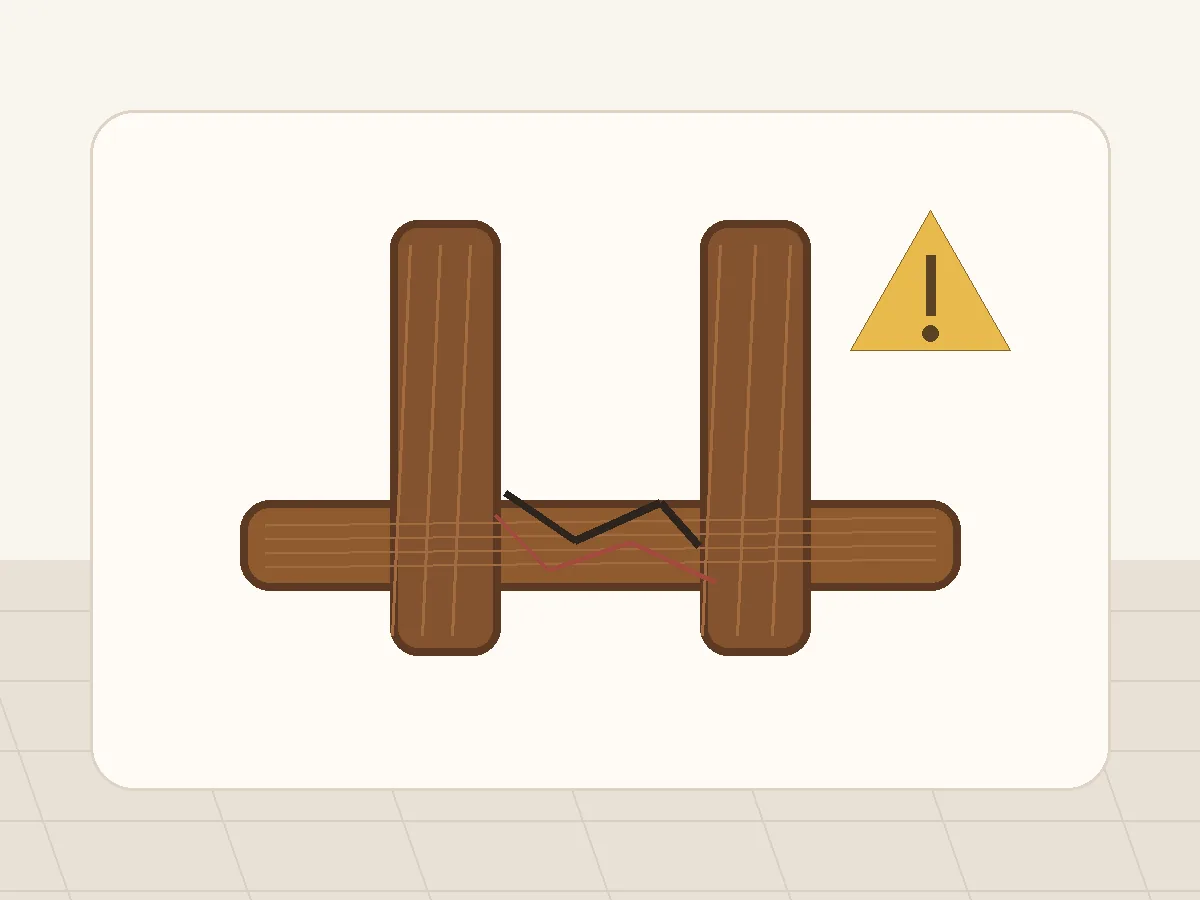
C) Loose chair joints (wood construction)
If a wooden chair starts wobbling, pay attention. Wobble is often an early symptom that the joinery is losing integrity.
In commercial seating, recurring wobble at a wood joint should be treated as a possible loss of joint integrity, especially if the movement returns after tightening or if a visible gap appears at the joint. Do not keep a guest chair in service simply because the problem looks minor from the outside.
What it looks like:
Creaking when weight shifts
Visible gap at a joint
Wobble that returns quickly after tightening hardware
Why it happens:
Repeated racking loads + wood movement can loosen joints over time, especially when the fit degrades and glue can’t hold the joint tight (Woodworker’s Journal, “How Do I Fix Broken Chair Joints?”).
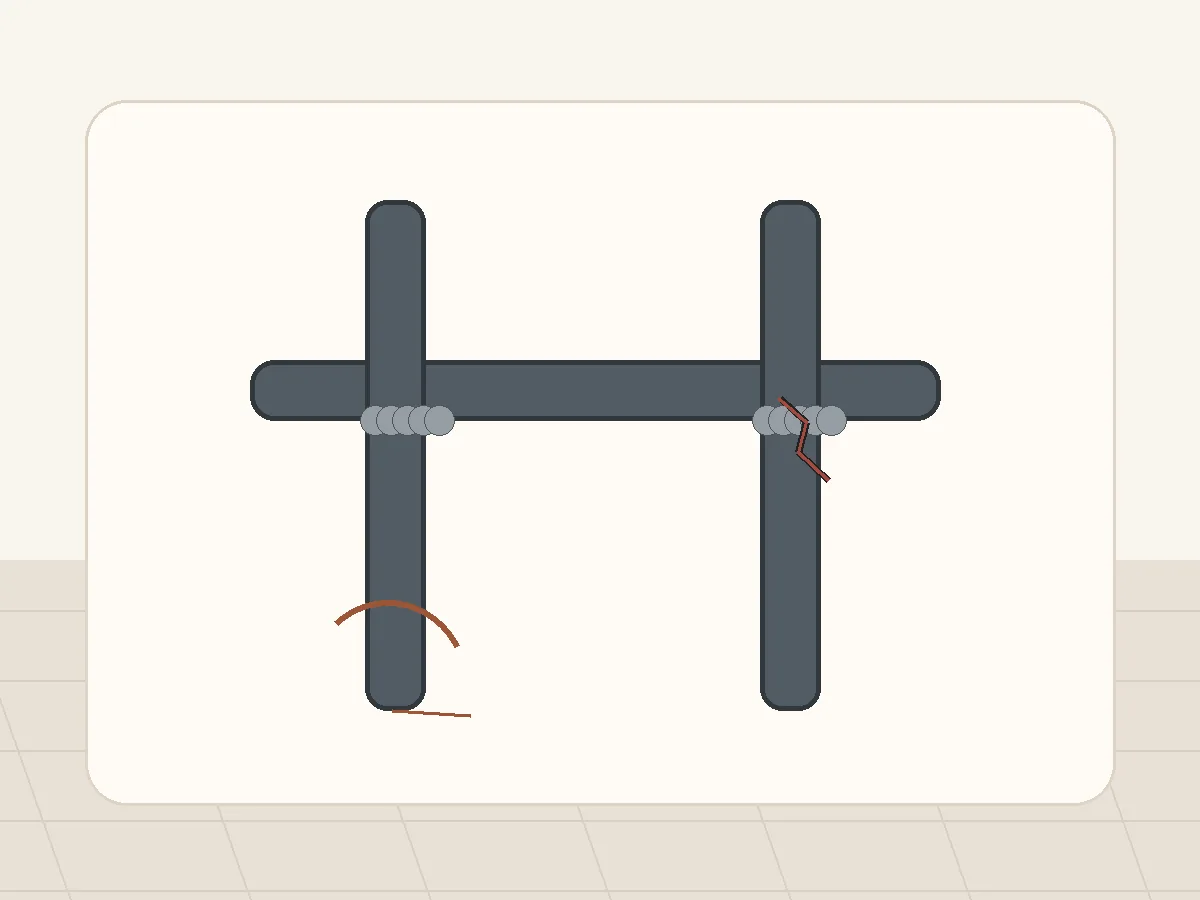
D) Metal frame issues (cracked welds, bent frame)
With metal chairs, wobble is often either:
a fastener loosening, or
a structural defect (weld crack or frame deformation).
What it looks like:
Hairline cracks near weld points
A leg that no longer lands flat even on a truly flat surface
“Springy” feel in the frame
⚠️ Warning: A cracked weld is a stop-using signal in a public seating environment. Don’t try to “pad” or “tighten” around it.
E) Upholstered restaurant chairs (hidden frame problems)
Upholstered chairs can hide the problem.
Common causes:
Loose internal brackets
Wood seat frame loosening under upholstery
Mixed-material frames where different components loosen at different rates
What it looks like:
The seat feels like it shifts slightly relative to the base.
F) Stackable chairs (contact-point wear)
Stacking saves space, but stacking also creates repeated impacts at contact points.
Common wobble causes:
glides wearing faster due to stacking drag
contact-point deformation over time
legs slightly splayed from repeated impacts
If you buy stackables for hospitality projects, it’s worth reading a dedicated buying checklist like stackable restaurant chairs: benefits, limits, and buying checklist.
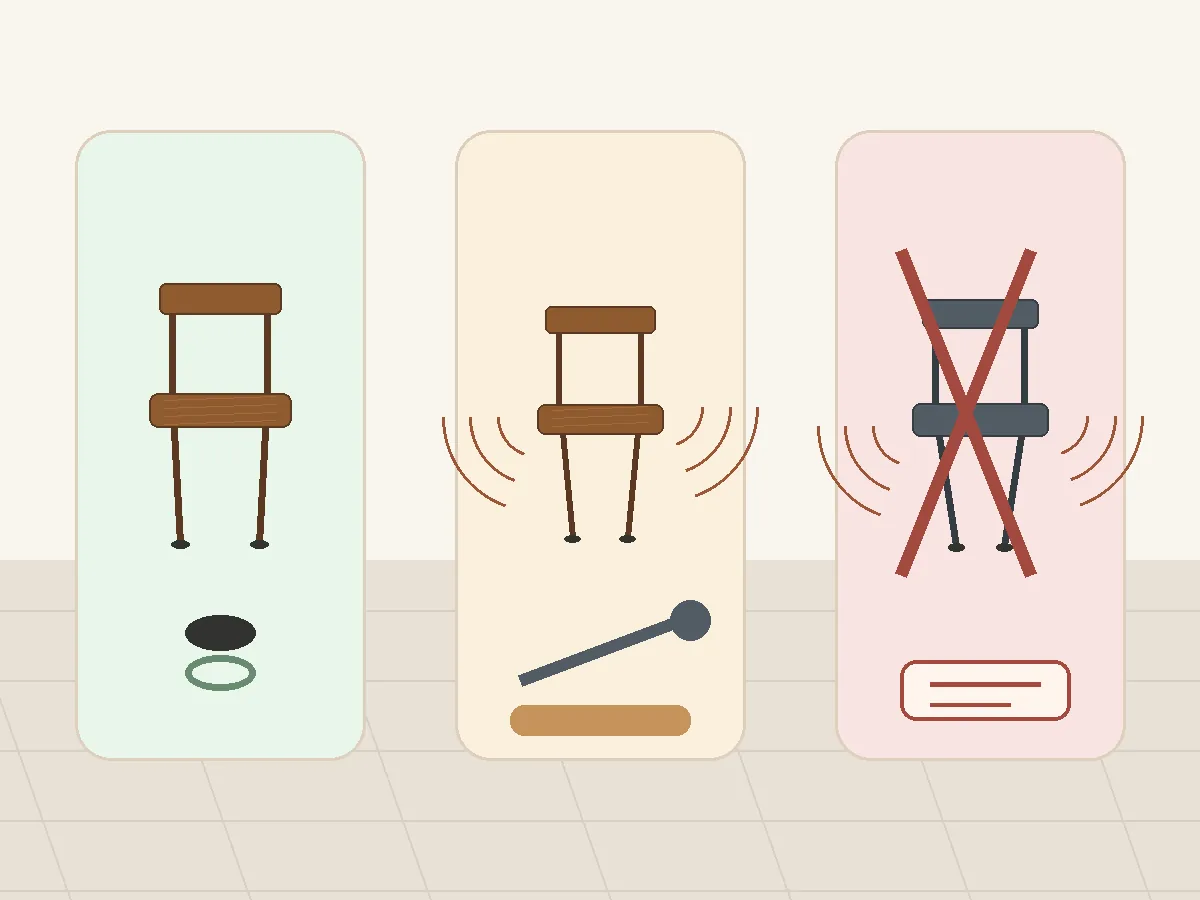
Repair or replace? Use this restaurant chair repair or replace decision table
This is the section most DIY articles skip. In a commercial setting, the question isn’t “can I fix it?” It’s “is it safe to keep in service?”
Decision | Typical signs | What to do next |
|---|---|---|
Keep in service (after quick fix) | Wobble disappears after glide replacement or moving locations; no joint movement; no cracking | Replace glides, re-check levelers, document the fix, and spot-check again after a few shifts |
Repair / maintenance (keep out until verified) | Loose hardware that tightens and holds; minor noise with no visible cracks, split joints, frame deformation, or weld damage; wobble improves after glide or fastener correction | Remove from the floor first, inspect properly, repair only if the cause is confirmed, then re-test on a flat reference surface before returning to service |
Remove from service (repair by qualified shop or replace) | Cracked wood, split joints, bent frame, cracked weld, fasteners that won’t hold tension, wobble persists after basic checks | Tag and remove immediately, then decide: professional repair vs replacement plan |
“Remove from service” protocol (simple and enforceable)
If you operate a restaurant, use a procedure staff can follow during service:
Tag it clearly: “Damaged – Do Not Use.”
Remove it from the floor so it cannot be grabbed during a rush.
Record the chair ID or location, the failure type, and the date.
Photograph the failure point before repair or disposal.
Assign the next decision: replace glides, repair by a qualified shop, claim warranty, or replace the chair.
Do not return the chair to guest use until the cause of the wobble is confirmed and the fix holds during re-check.
How to prevent wobble in your next chair order (procurement checklist)
Wobble problems often show up as “quality inconsistency” months later. Prevention starts before you place the PO.
Sample checks (quick but revealing)
Flat-floor check: test on a truly flat surface before blaming the chair.
Non-destructive twist check: on a sample or removed-from-service chair, apply light diagonal pressure at opposite seat corners to feel obvious joint movement. Do not force the frame, bounce on the chair, or treat this as a formal load test.
Glide serviceability: ask if glides are replaceable and if spares can be stocked.
Repeatability: confirm the supplier can reproduce the same construction in later replenishment batches.
For commercial projects, also ask what model-specific structural evidence is available. For European non-domestic seating, EN 16139:2025 may be relevant because it covers safety, strength and durability requirements for non-domestic adult seating within its stated scope. Ask for the exact edition, test level, tested configuration, laboratory, report date, and model identification.
A test report is a procurement evidence signal, not permission to keep a visibly damaged or wobbly chair in service.
For a broader buyer framework on what “commercial grade” means (including resisting loosening/racking over time), see commercial vs. residential dining chairs.
Construction questions that reduce wobble complaints
Where are the reinforcement points (especially where legs meet the seat frame)?
For metal frames: how is weld quality controlled and inspected?
For wood chairs: what joinery approach is used, and how is it reinforced?
For mixed-material chairs: how are connection points designed to prevent loosening?
Material choice affects how wobble shows up and how it’s repaired. A practical comparison is in best material for restaurant chairs: wood vs metal vs upholstered.
Build maintenance into your buying decision
If you’re sourcing for high-traffic hospitality, check whether the chair can be maintained without guesswork:
replacement glides are clearly identified by model;
staff have the correct tool for approved fasteners;
fasteners, inserts, glides, and foot caps can be reordered;
the supplier can provide assembly and warranty guidance;
the chair can tolerate the planned movement and cleaning routine.
Keep a simple maintenance log for repeated wobble complaints by chair ID, zone, cause, fix, and whether the issue returned. A chair that keeps wobbling after the same fix is no longer a maintenance issue; it is a replacement or professional repair decision.
FAQ
Is a wobbly restaurant chair dangerous?
It can be. If the wobble is purely floor/glide-related, it’s usually low risk once corrected. If the wobble is caused by loosened joints, a bent frame, or a cracked weld, it’s a safety issue. When you can’t confirm the cause quickly, treat the chair as “remove from service” until inspected.
Can felt pads fix a wobbly chair?
Felt pads can help with minor unevenness and reduce scraping noise, especially on tile and wood floors. They should not be used to mask structural wobble. If the chair has joint movement or frame damage, pads won’t make it safe.
How do you tell if a wobbly chair can be repaired?
If the wobble is resolved by replacing glides or tightening hardware and there are no signs of cracks, splits, or weld failure, repair is usually reasonable. If the chair won’t hold tension, shows visible cracking, or keeps wobbling after basic fixes, plan for professional repair or replacement.
Why do some chairs wobble only when no one is sitting in them?
Light wobble can show up when the chair is empty because the seat load hasn’t “settled” the legs into contact. Tile grout lines also exaggerate this effect. Still, if wobble grows over time, it can signal joint loosening.
Next steps (low-commitment)
If you’re evaluating seating for a restaurant, café, hotel, or hospitality project, use YeZhi’s buyer checklist as a starting point, then request model-specific glide details, connection-point photos, reinforcement information, warranty terms, and any available structural test documentation before confirming a bulk order.
Planning a commercial chair order?
Before confirming a bulk order, prepare your space type, quantity, material preference, floor condition, chair style, destination country, and any model-specific durability documentation you want to review.
Contact YeZhi Furniture