Coffee Table Ideas That Work in Commercial Spaces
For most hotel lounges, reception areas, café lounge zones, coworking spaces, and serviced-apartment projects, we recommend starting with a soft-edge oval or round coffee table with a stable base and an easy-to-manage surface. Use a rectangular table when the seating is long and straight. Use nesting tables when staff need to move the layout often. Choose a heavier or more sculptural statement table only after cleaning, handling, packing, and consistency across the full order have been checked.
The main risk is choosing a table because it looks good in a reference image but does not fit the seating plan, walking space, maintenance routine, or order size. Before production, we check the room layout, related seating, target quantity, material and finish direction, and whether the requested shape needs a simple adjustment or a new custom structure.
Popular Coffee Table Ideas at a Glance
If you are collecting coffee table ideas, start with the look you want, then check whether that idea fits the actual seating plan. For commercial spaces, the strongest design is not only attractive; it also needs to work with walking space, cleaning, handling, and the way the room is used.
| Coffee table idea | Best for | Why it works | Main thing to check |
|---|---|---|---|
| Soft-edge oval | Hotel lounges, reception areas | Gives a shared surface without strong projecting corners | Relationship to sofa length and walking space |
| Round pedestal or drum | Small lounges, café seating groups | Works when people approach the table from several directions | Base footprint and stability |
| Low rectangular | Long sofas, linear interiors | Provides a longer usable surface | Space at both ends of the table |
| Nesting tables | Coworking, multipurpose lounges | Can be moved or separated when the layout changes | Each table should remain stable on its own |
| Warm wood + slim metal | Contemporary cafés and lounges | Adds warmth without making the base feel heavy | Finish, joints, and how the top connects to the frame |
| Stone-look or mineral-look | Premium hospitality interiors | Creates stronger visual weight and a focal point | Weight, edge protection, handling, and packing |
| Sculptural statement table | Boutique hotels, branded reception areas | Can make the table part of the interior identity | Sample approval and consistency across the full order |
| Storage or function-led table | Serviced apartments, task-oriented lounges | Adds useful storage or an extra function | Cleaning, moving parts, and whether the function is really needed |
Start with the space, not the style name
“Modern,” “luxury,” “Japandi,” “industrial,” or “mid-century” can help describe the look you want, but those labels do not tell us whether the table will work in the room. We first look at how the seating is arranged and how people move around it.
If you are still early in the project, browse our commercial coffee tables and compare the table shape with the actual sofa or lounge-chair layout rather than selecting from a product image alone.
12 Coffee Table Ideas for Hotels, Cafés, Reception Areas, and Lounges
These are design directions, not a ranking. The best idea is the one that gives the project the right visual character without creating problems with layout, cleaning, packing, or keeping the full order consistent.
1. Soft-Edge Oval Coffee Table — Best for Calm Hotel Lounges
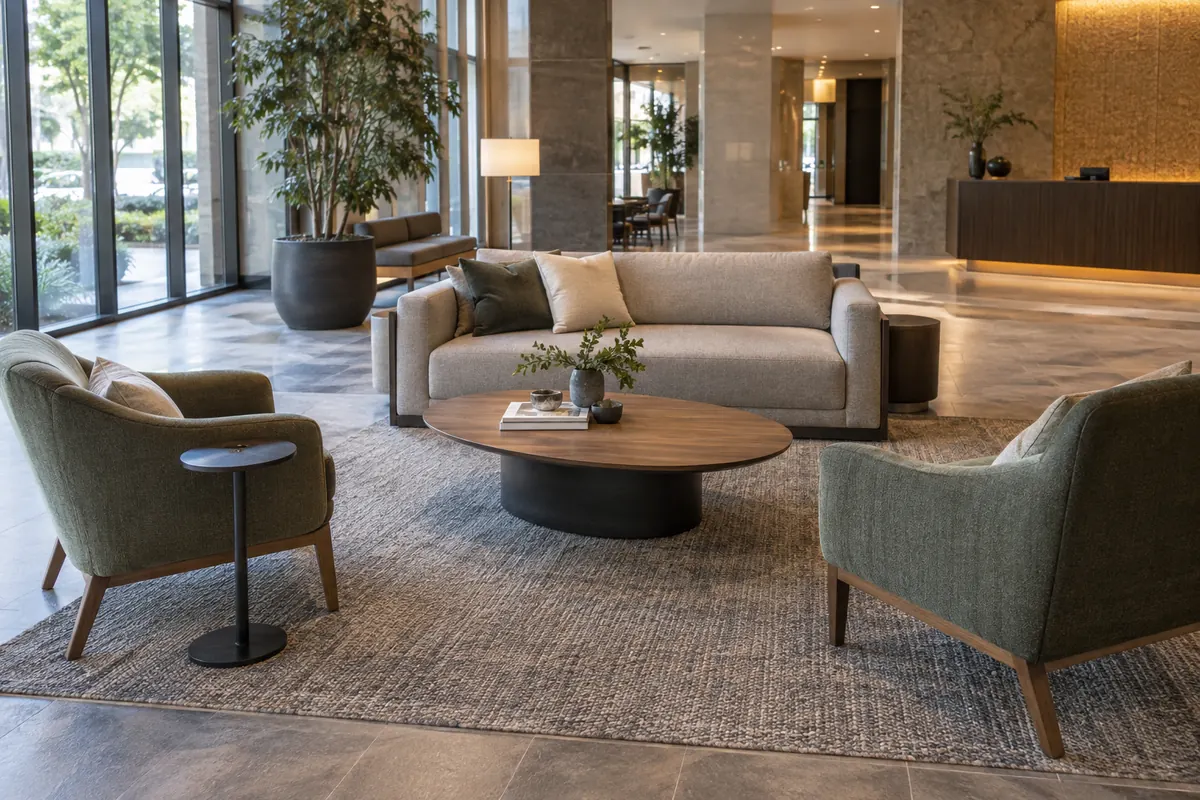
An oval table is our strongest all-round starting point for many lounge settings. It has enough length to serve a sofa group, while the curved ends reduce the visual and physical projection of sharp corners into the space. We like this direction for hotel reception areas, café lounges, waiting zones, and apartment-style hospitality interiors.
Use it when: the seating group needs a shared central surface but the room should still feel open. Change it when: the main sofa is very long and the project needs more continuous surface along the full frontage. Check before approval: the real sofa dimensions, table position, base footprint, and finished surface.
2. Round Pedestal or Drum Table — Best for Compact Conversation Areas
A round table works well in compact conversation groups where seating approaches the table from several directions. A pedestal or drum-style base can make the form feel visually clear, but the base should not be allowed to become wider or heavier than the room needs.
Use it when: lounge chairs or small sofas wrap around the table. Main risk: a clean-looking central base can still interfere with feet, cleaning, or handling if its footprint is not checked. Before production: confirm the top size, base proportion, stability, and floor-contact detail as one system.
3. Low Rectangular Coffee Table — Best for Long Sofas
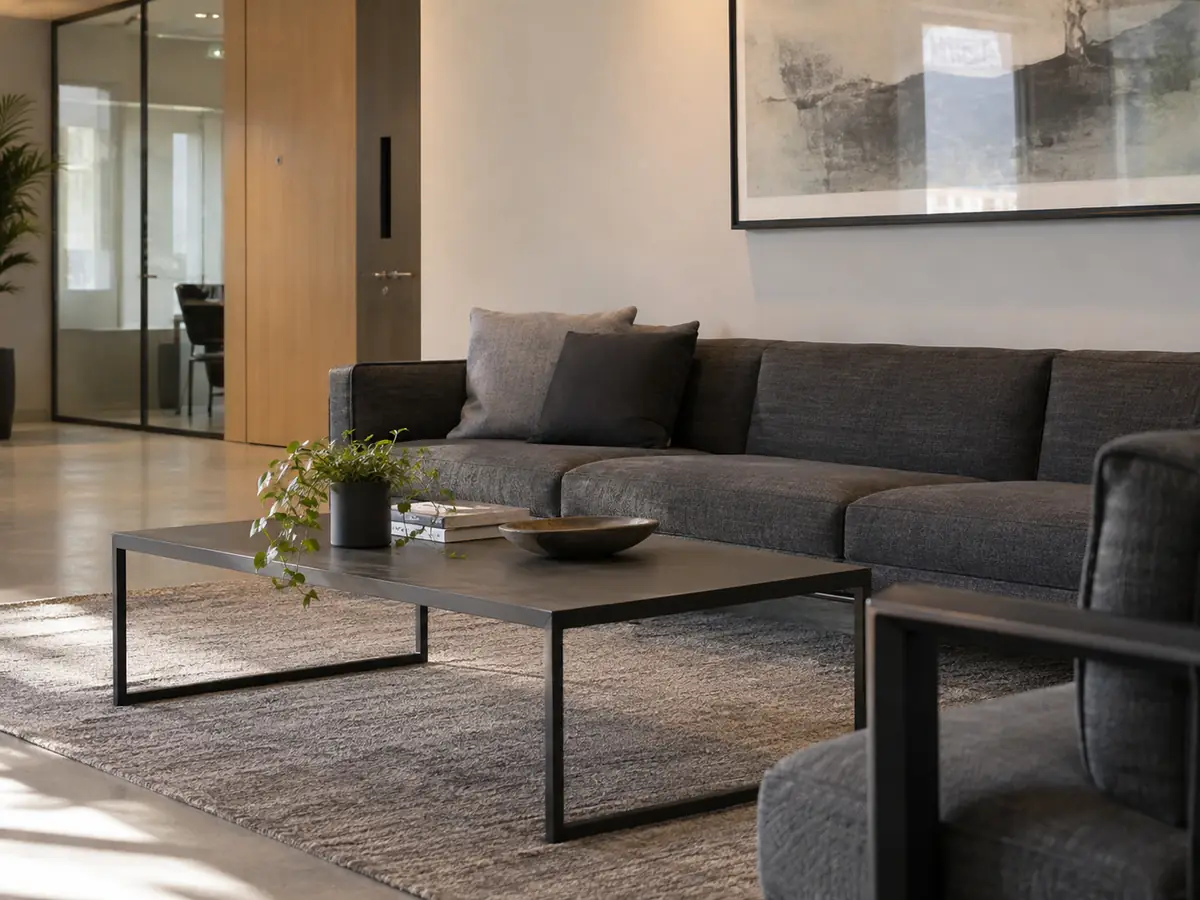
Rectangular coffee tables still make sense when the architecture and seating are strongly linear. They work especially well in front of a long sofa or in a lounge where guests need more continuous usable surface.
Use it when: the room has a long sofa run, straight circulation lines, or a more architectural interior language. Change it when: the table ends begin to crowd the route around the seating. Main risk: increasing length to “match the sofa” can make the table dominate the group and reduce practical movement at the ends.
4. Nesting Coffee Tables — Best for Flexible Layouts
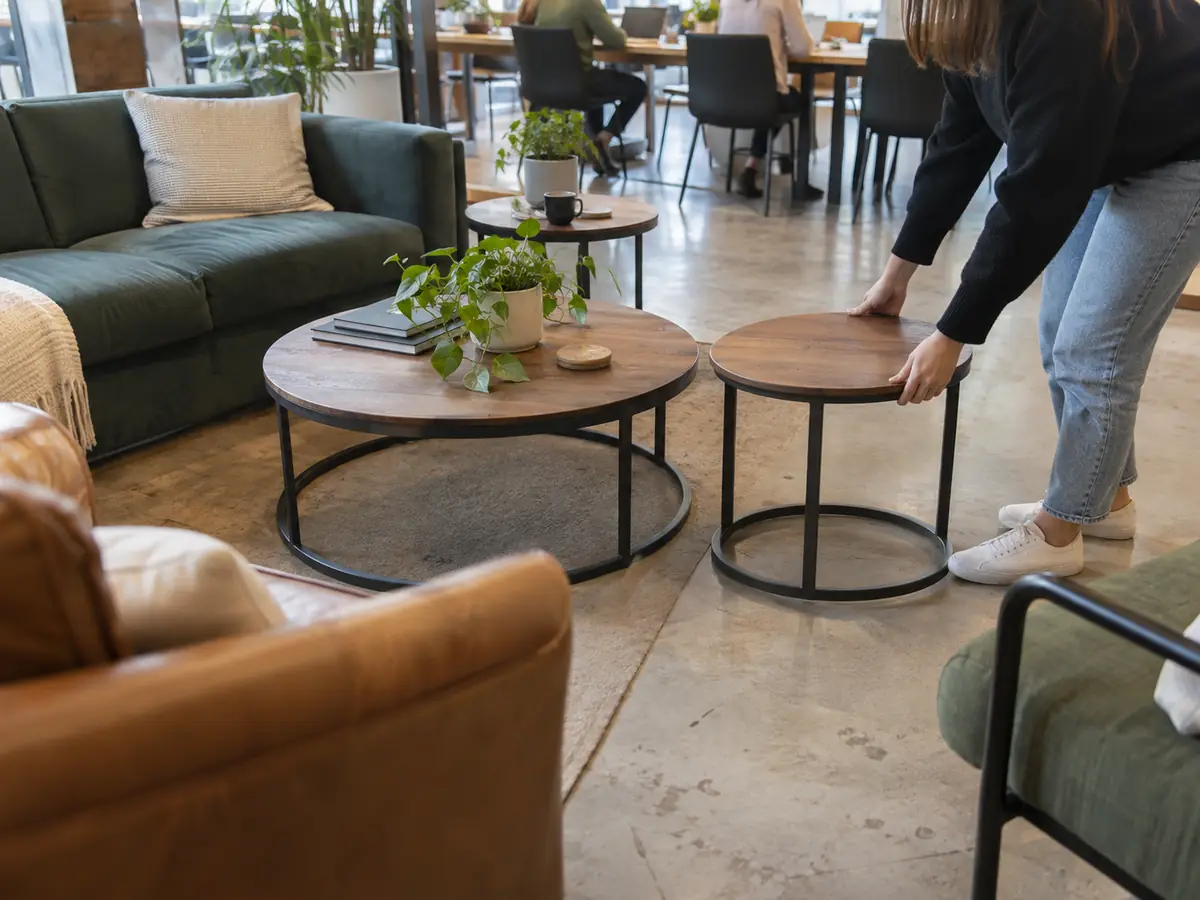
Nesting tables are useful when the same area changes during the day. One compact group can become two or three usable surfaces when guests need them, then return to a smaller footprint later. This can work in coworking lounges, event areas, flexible hotel lobbies, and compact hospitality spaces.
Use them when: layout flexibility is a real way the table will actually be used. Do not approve them only for the visual effect. Each table should remain stable and useful on its own, and the places where the tables touch should not cause avoidable finish damage when the units overlap or move.
5. Mixed-Height Coffee Table Cluster — Best for Larger Lounges
A mixed-height cluster can create a more layered seating center than one oversized table. It is useful in a large lobby where one object would either look undersized or become too heavy to move and handle. The idea works best when the individual tables share a clear relationship in shape, finish, or construction.
Use it when: the lounge is large enough to benefit from several surfaces. Main risk: too many unrelated tables can make the area look improvised and complicate cleaning. Keep the group visually coordinated and make sure the lower table does not disappear under the larger one in normal use.
6. Warm Wood + Slim Metal Frame — Best for Contemporary Cafés
This combination is useful when the project needs warmth without a visually heavy base. A wood-direction top can connect with upholstered seating and natural interior finishes, while a slim metal frame keeps the table open underneath.
Use it when: the space needs a balanced contemporary or industrial-soft look. Check before approval: the exact top specification, frame finish, connection between top and frame, floor contact, and finish reference. Do not assume that a material shown in a reference image is the final production material.
7. All-Wood Soft-Form Table — Best for Warm, Quiet Interiors
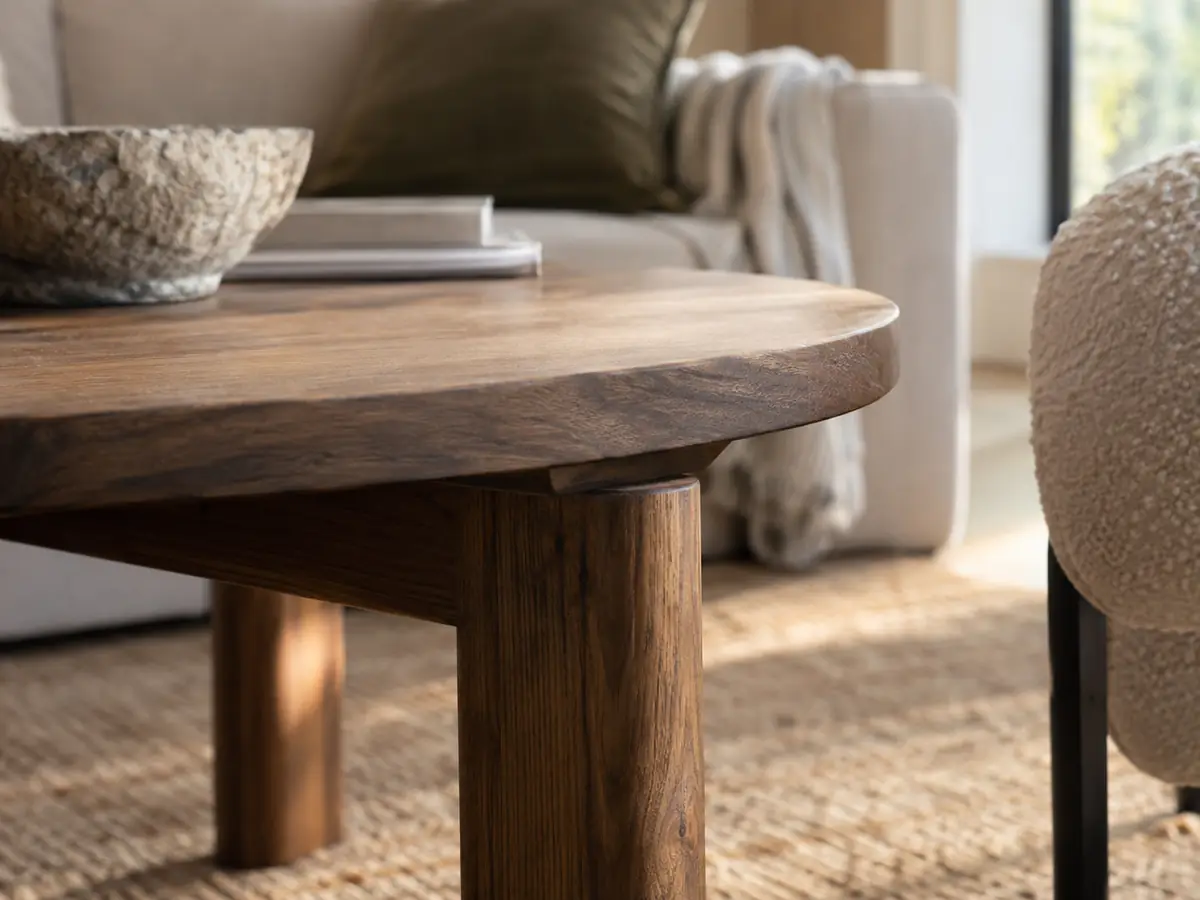
An all-wood or wood-forward coffee table can work well in warm, quiet hospitality interiors where the table should feel more furniture-like and less engineered. Rounded edges and a simple base can suit organic, Scandinavian-influenced, or calm contemporary interiors without relying on decorative hardware.
Use it when: the interior already has warm timber, neutral upholstery, or a softer material palette. Main risk: a thick block form can become visually and physically heavy. We recommend checking the side profile and base volume, not just the top view.
8. Glass or Visually Light Coffee Table — Best for Visually Busy Rooms
Glass or another visually light surface can reduce the apparent mass of a table in a compact or detailed interior. It can be useful when the rug, floor, or surrounding furniture already carries strong visual information and the center table should stay quieter.
Use it when: visual openness is more important than a strong material statement. Change it when: the operating team wants a lower-maintenance surface or the project has special safety or material requirements. The final glass type, edge treatment, support, and applicable project requirements must be confirmed for the actual specification.
9. Stone-Look Statement Table — Best for Premium Hospitality Interiors
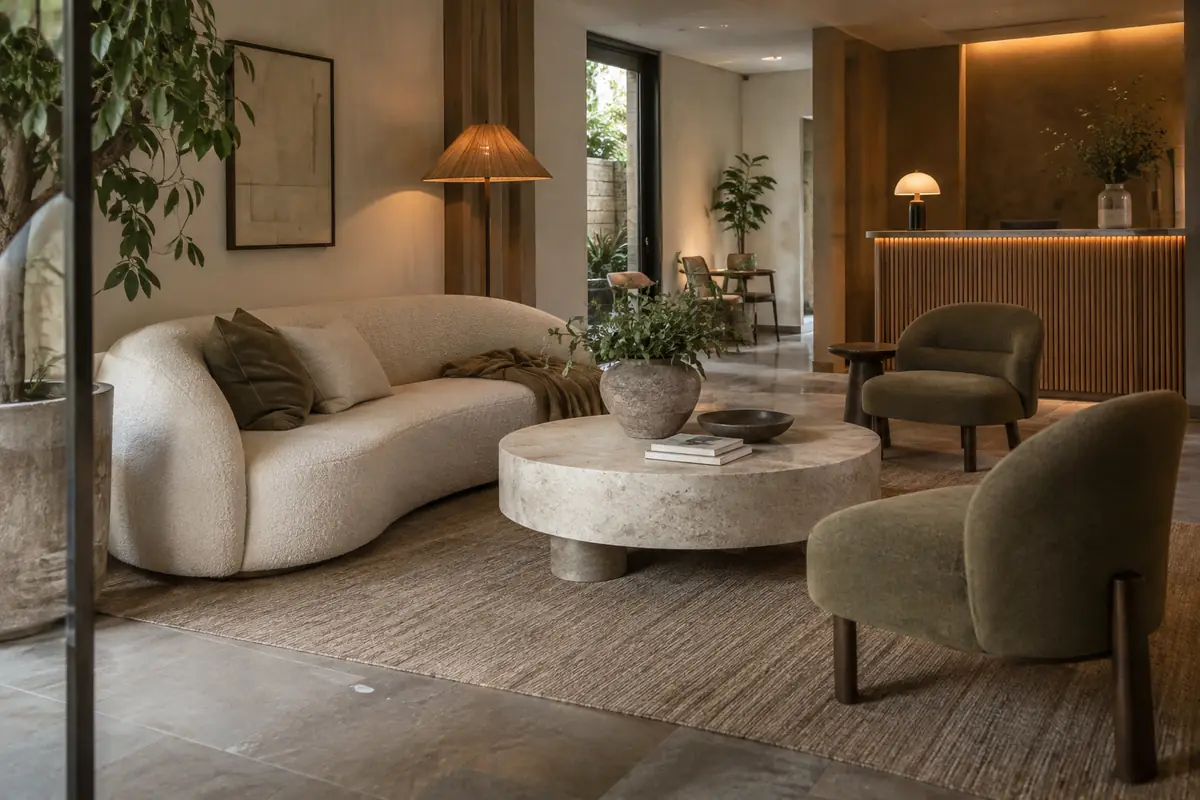
A heavier mineral or stone-look direction can give a lobby or premium lounge more visual authority. It works best when the interior can support that material weight and when the table is meant to act as a focal point rather than disappear into the seating group.
Use it when: the project needs a stronger premium material expression. Main risk: approving the top before the support structure, edge protection, handling method, and packing route are defined. Heavy or brittle-looking surfaces change more than the appearance; they can also change the practical production and shipment plan.
10. Sculptural Coffee Table — Best for Boutique and Branded Spaces
A sculptural form is useful when the table needs to contribute directly to the identity of a boutique hotel, flagship reception, or branded lounge. Asymmetry, unusual curves, offset bases, and special joints where different materials meet can all create character.
Use it when: the table is meant to be a signature object. Do not lock it from a rendering alone. Unusual shapes are harder to reproduce consistently across a full order. Before production, we check the drawing, sample, how the base meets the floor, and whether the finish can be repeated reliably.
11. Storage or Function-Led Coffee Table — Best When the Function Is Truly Useful
Storage, trays, shelves, or other functional features can be useful in serviced apartments, guestrooms, staff-supported lounges, or spaces where the table has a defined operational job. We do not add mechanisms simply because multifunction furniture sounds more valuable.
Use it when: the function solves a real space or service problem. Main risk: moving parts, deep shelves, and extra joints can add cleaning and maintenance work without improving the guest experience. Keep the function only when the operating benefit is clear.
12. Brand-Specific Custom Coffee Table — Best for Signature Projects
For a hotel group, restaurant concept, furniture brand, or distributor collection, a coffee table can carry a controlled brand signature through shape, finish, color, logo, or material combination. The strongest route is usually to decide first whether an existing table platform can be adapted or whether the project genuinely needs a new structure.
Use full custom development when: the shape, structure, or base-to-top relationship is materially different from an existing model. Use controlled customization when: the main structure already works and the project mainly needs finish, color, logo, packing, or a feasible dimensional adjustment.
Coffee Table Ideas by Shape
If you already know the seating layout, shape is usually the fastest way to narrow the options.
| Shape | Good starting use | What it changes |
|---|---|---|
| Round | Compact conversation areas and chair groups | Easy access from several directions; check the center base and usable surface area |
| Oval | Hotel lounges, reception areas, sofa groups | Combines useful length with softer ends |
| Rectangular | Long sofas and linear interiors | Gives more continuous surface; check space at both ends |
| Square | Balanced four-sided seating groups | Works best when the surrounding seats are arranged evenly |
| Nesting / clustered | Flexible or larger lounge areas | Adds movable surfaces; each unit still needs to work safely on its own |
Coffee Table Style Ideas by Interior Direction
If your design team starts with a style word, use it as a visual filter and then translate it into a production decision. We recommend keeping the style language simple enough that it can become a repeatable specification.
| Interior direction | Coffee table idea | Keep under control |
|---|---|---|
| Organic / Japandi-influenced | Soft oval or round form, warm wood direction, quiet base | Do not make the form so bulky that the room loses openness |
| Contemporary minimal | Thin frame, simple top, restrained shape | Stability, connection details, and finish consistency |
| Mid-century influenced | Warm wood, low profile, visually light legs or frame | Proportion with the selected lounge seating |
| Industrial café | Wood + darker metal frame | Surface maintenance and exposed connection details |
| Modern luxury | Mineral-look, stone-forward, or sculptural form | Weight, edge risk, packing, handling, and consistency across the full order |
| Boutique / branded | Custom shape or a controlled finish/color signature | Drawing, sample scope, acceptable size or fit variation, quantity, and whether future orders can match |
One Large Table, a Nesting Pair, or a Cluster?
Choose one main coffee table when the seating group is fixed and the center needs one clear anchor. Choose a nesting pair when the room changes often but the pieces still need to store compactly. Choose a cluster when a large lounge needs several usable surfaces and one oversized table would be difficult to handle or visually too heavy.
The deciding factor is how the space will be used. If staff regularly reconfigure the area, a movable-table setup can be more useful than one large piece. If the layout rarely changes, the same modularity can become unnecessary movement, extra floor-contact points, and more items to reset.
Coffee Table Ideas by Material
Material changes more than appearance. It affects cleaning, weight, structure, handling, packing, and sometimes whether an existing model can still be used. We recommend deciding how the table will actually be used before the final finish is locked.
| Material direction | Why teams choose it | What we check before production |
|---|---|---|
| Wood / wood-direction top | Warm, adaptable, easy to coordinate with lounge seating | Exact material specification, finish reference, edge detail, and acceptable color variation |
| Metal frame | Can create a visually lighter or more architectural base | Frame proportion, finish, weld/joint appearance, floor contact, top connection |
| Glass direction | Keeps the center visually open | Glass specification, edge treatment, support, cleaning expectations, project requirements |
| Mineral / stone-look direction | Creates stronger visual weight and premium character | Top weight, support, fragile edges, handling, carton/packing route |
| Mixed materials | Adds contrast and brand character | Joints between different materials, cleaning points, finish compatibility, and consistency across the full order |
For café projects, the coffee table should also coordinate with the wider seating plan. Our café furniture page can help you review the lounge table together with the surrounding commercial furniture rather than as an isolated object.
A Real YeZhi Starting Point: Gyro Oval Coffee Table
Our Gyro Oval Coffee Table is a current example of the soft-edge oval direction. The published drawing-based size is 43.3 × 23.6 × 15.8 in / 110 × 60 × 40.2 cm. The current product page lists a 20-piece default MOQ and a production lead time of about 30 days, subject to final quantity, finish, and order confirmation. These are Gyro model facts, not universal coffee-table specifications.
We use the existing model when its basic structure fits the project. Size, color, finish, material direction, logo, packing, and structure requirements can be reviewed before quotation. If the requested concept needs a fundamentally different shape or structure, we treat it as a deeper custom/OEM project instead of forcing an existing model to become a different product.
If you are coordinating the whole seating group, compare the table with our commercial lounge chairs so the table and seating are reviewed as one layout.
Turn a Coffee Table Idea Into a Production-Ready Brief
A reference image is useful for communicating direction, but it is not enough for a bulk order. Before we lock a coffee table for production, we recommend sending the information that actually controls the result.
- Project type: hotel, café, restaurant lounge, reception, serviced apartment, coworking, retail lounge, or another commercial setting.
- Layout: room plan, seating arrangement, or marked-up area showing where the table will sit.
- Related seating: sofa or lounge-chair dimensions and the intended relationship to the table.
- Preferred idea: oval, round, rectangular, nesting, cluster, sculptural, storage-led, or another clear direction.
- Target dimensions: final values if already fixed, or the available space if they still need review.
- Material and finish direction: top, base/frame, color, texture, and any approved physical reference.
- Quantity: by model or design, because quantity can change the sensible customization route.
- Destination and packing requirement: especially when the top is heavy, fragile, irregular, or difficult to handle.
- Sample requirement: tell us what must be approved before bulk production.
Regular YeZhi orders start from about 15 pieces per model/SKU, although individual models can be higher. Full OEM or custom production usually starts from about 100 pieces per design or configuration. Sample timing is confirmed by model and complexity rather than one universal company-wide promise.
Coffee Table Ideas We Would Rework Before Production
A beautiful table that blocks the seating group
If the table only fits by squeezing the space around the sofa, we change the size or shape. The visual idea is not worth preserving if the finished layout feels crowded.
A heavy statement top with no handling plan
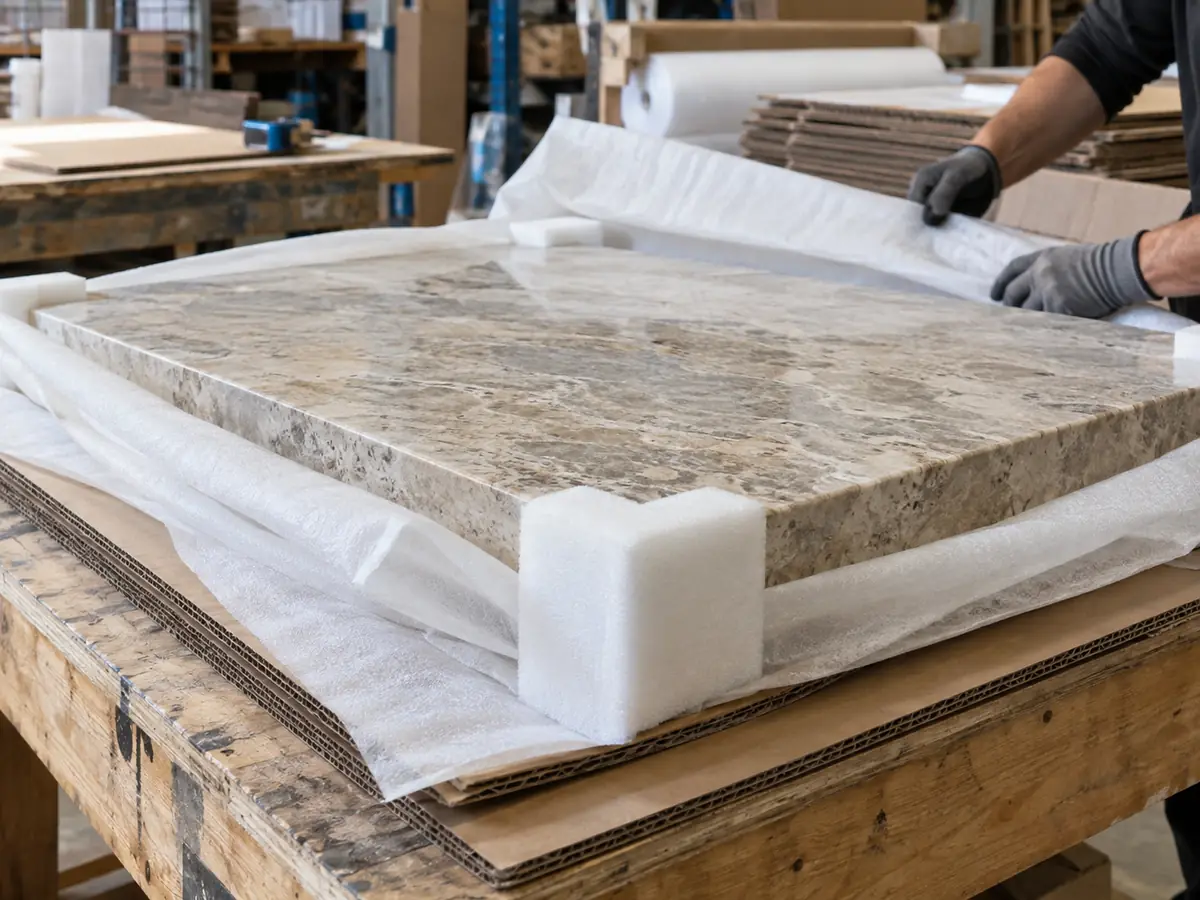
We do not treat packing as an afterthought for a heavy or edge-sensitive top. Support, protective materials, carton construction, removable parts, and handling method need to be reviewed with the product.
A sculptural base that cannot repeat consistently
One prototype can look impressive while the shape is still difficult to reproduce across a bulk order. We simplify or control the construction when the shape creates avoidable acceptable size or fit variation, stability, or floor-contact risk.
A mixed-material detail that looks good but cleans badly
Deep joints, narrow gaps, unnecessary ledges, and difficult transitions can turn a decorative detail into a maintenance problem. In commercial spaces, the detail should justify the extra cleaning work.
A custom request with no quantity or layout context
Quantity, dimensions, material, structure, packing, and sample scope affect the product-development route. We can review a visual reference early, but final approval needs enough project information to turn the idea into a controlled specification.
Coffee Table Ideas FAQ
What coffee table shape is best for a small lounge?
Round and compact oval tables are usually the easiest starting points because they fit small conversation groups without long corners projecting into the room. The final choice still depends on the sofa or chair layout and the walking space around the table.
Are round or rectangular coffee tables better for commercial spaces?
Neither shape is always better. Round tables work well when seats approach from several directions. Rectangular tables work better in front of long sofas or in strongly linear interiors. We recommend choosing the shape from the seating plan rather than from style alone.
How do you choose a coffee table for a hotel lobby?
Start with the seating group, available walking space, and how guests will use the table. Then compare shape, surface material, weight, cleaning needs, and whether the table will stay fixed or be moved. Before production, we also check quantity, finish, packing, and any custom changes.
Can we use different coffee table styles in the same hotel or commercial project?
Yes. They do not need to be identical, but we recommend giving them a shared relationship through finish, material direction, shape, or visual weight. Too many unrelated tables can make a project feel assembled from separate purchases rather than intentionally coordinated.
Should every coffee table in one lobby match?
No. A large lobby may benefit from several related table types for different seating groups. The more important check is whether the tables belong to the same interior language and whether each one fits its own seating layout.
Can YeZhi work from a reference image?
Yes. A reference image can help communicate shape, proportion, material direction, and finish intent. We still need to review the actual project dimensions, quantity, structure, material, packing, and how much the original product needs to change before quotation or production approval.
When is a nesting set better than one large coffee table?
Use nesting tables when the room is regularly reconfigured or when several temporary surfaces are more useful than one fixed large surface. If the layout is permanent, one well-sized table can be simpler to clean, reset, and manage.
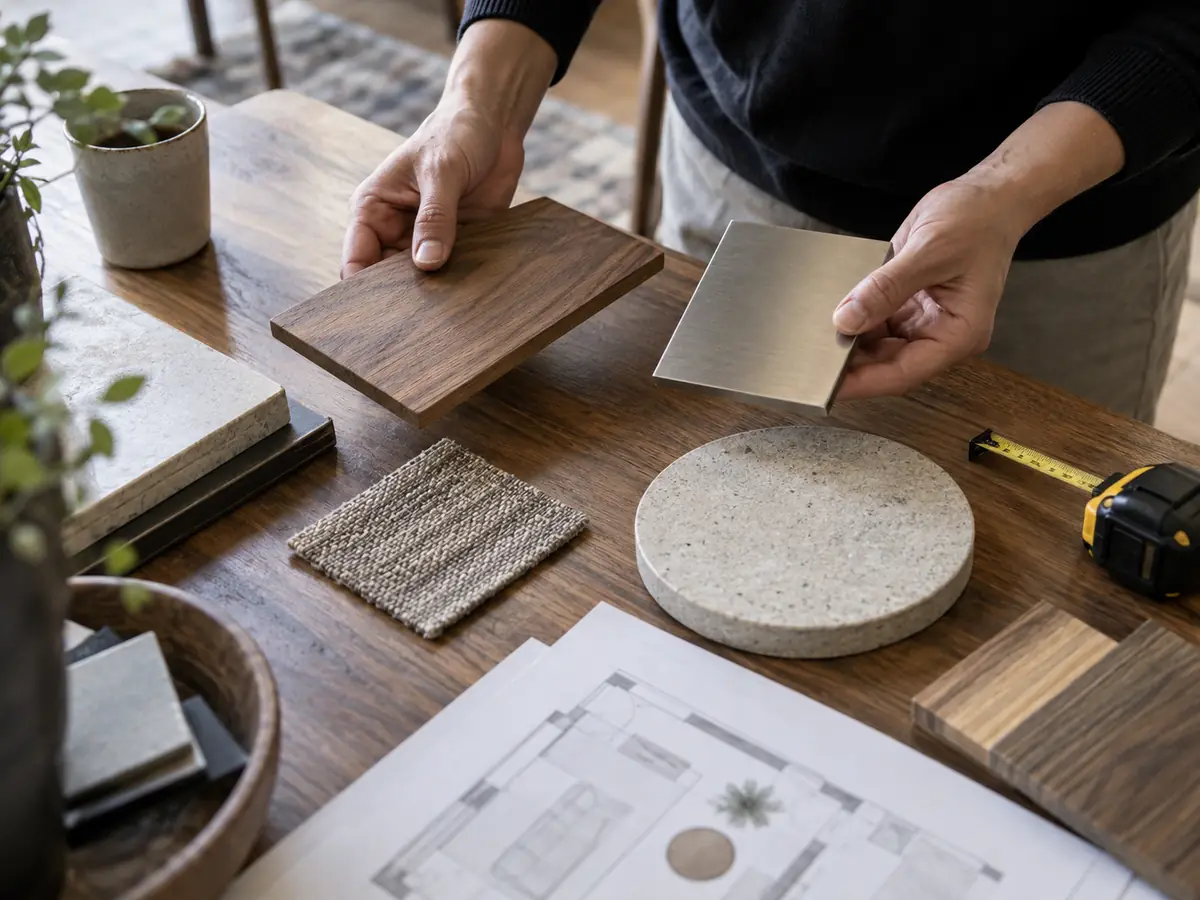
Send Us the Coffee Table Direction You Want to Develop
If you are planning a hotel, café, reception area, furniture collection, or commercial lounge, send us the layout, related seating dimensions, preferred coffee table idea, target quantity, material and finish direction, destination, and sample requirement.
We will review whether an existing model can be used, whether a controlled size or finish change is enough, or whether the project needs deeper OEM development. Then we identify what must be confirmed before quotation and production.
Send Project Requirements Browse Coffee Tables