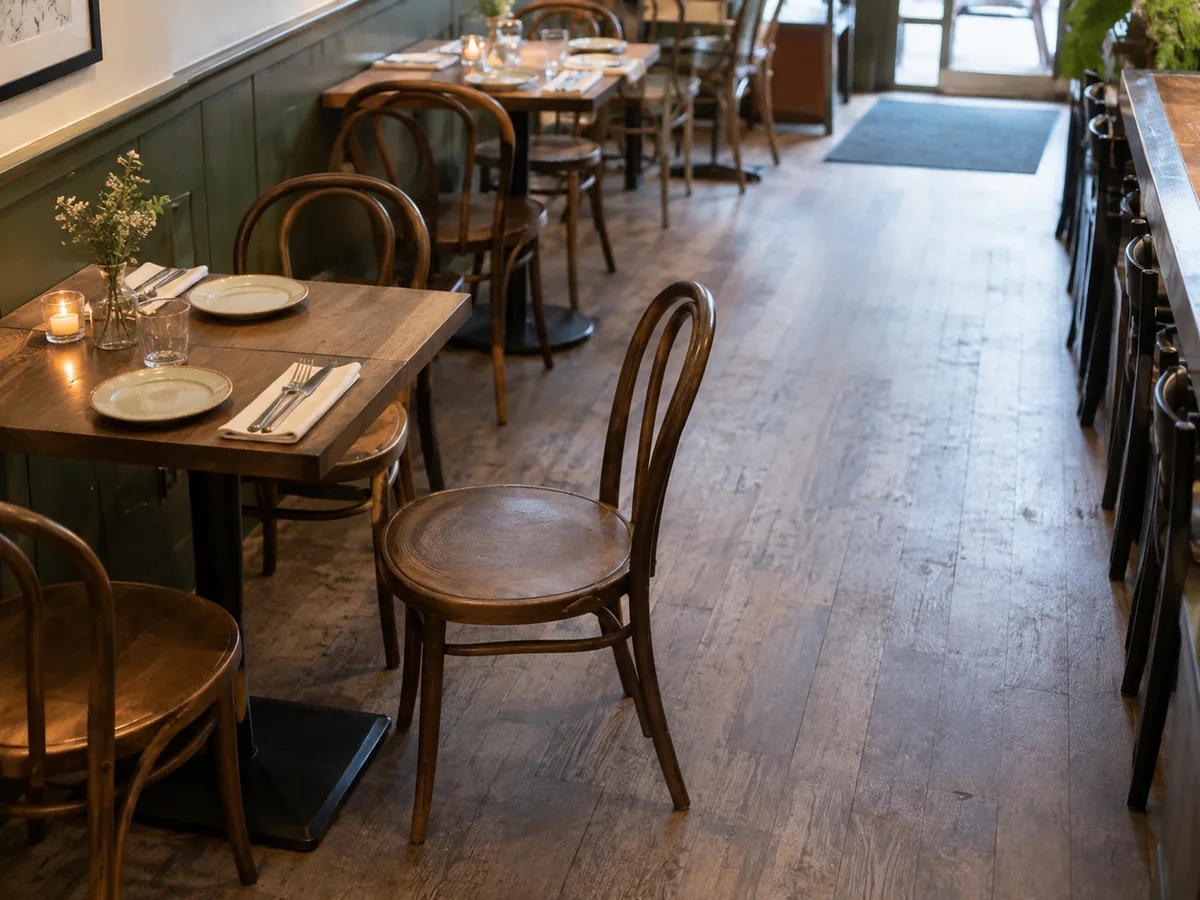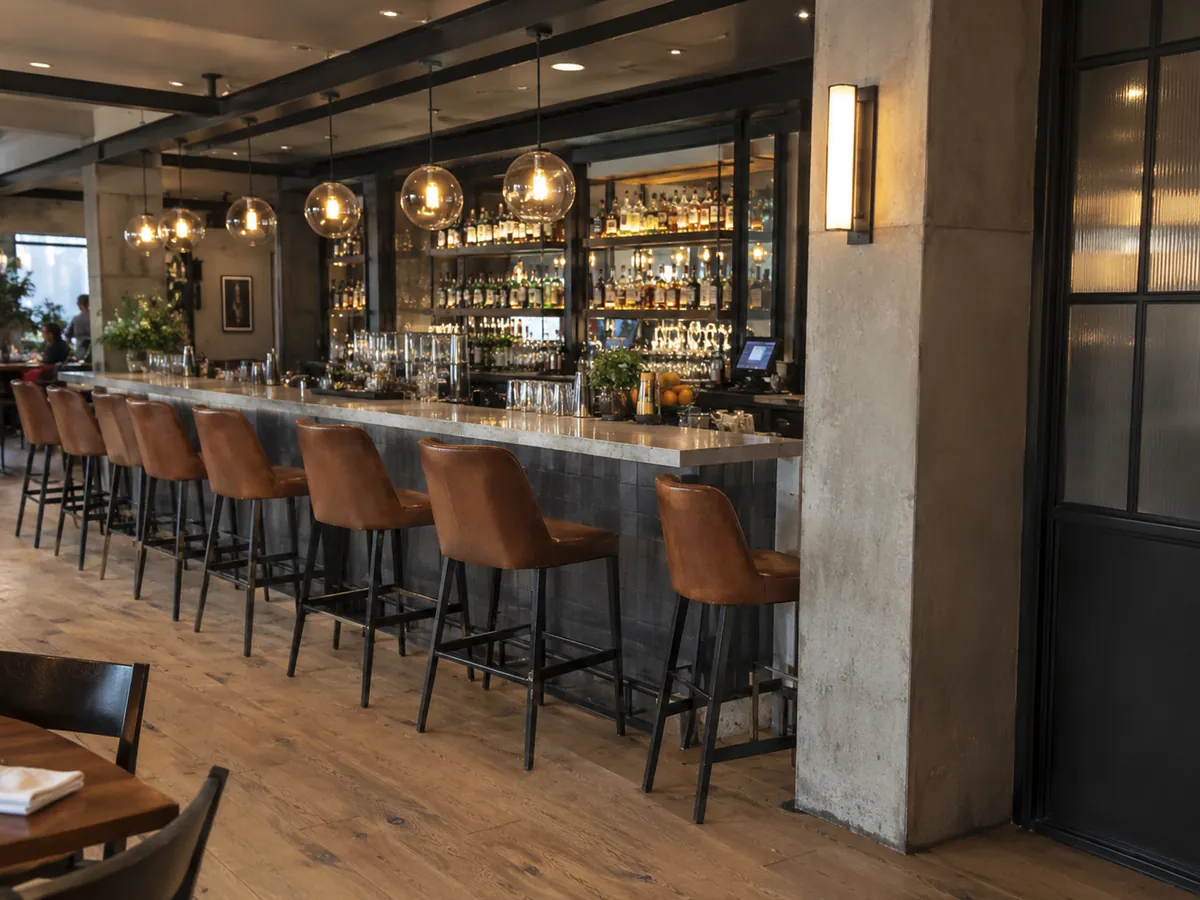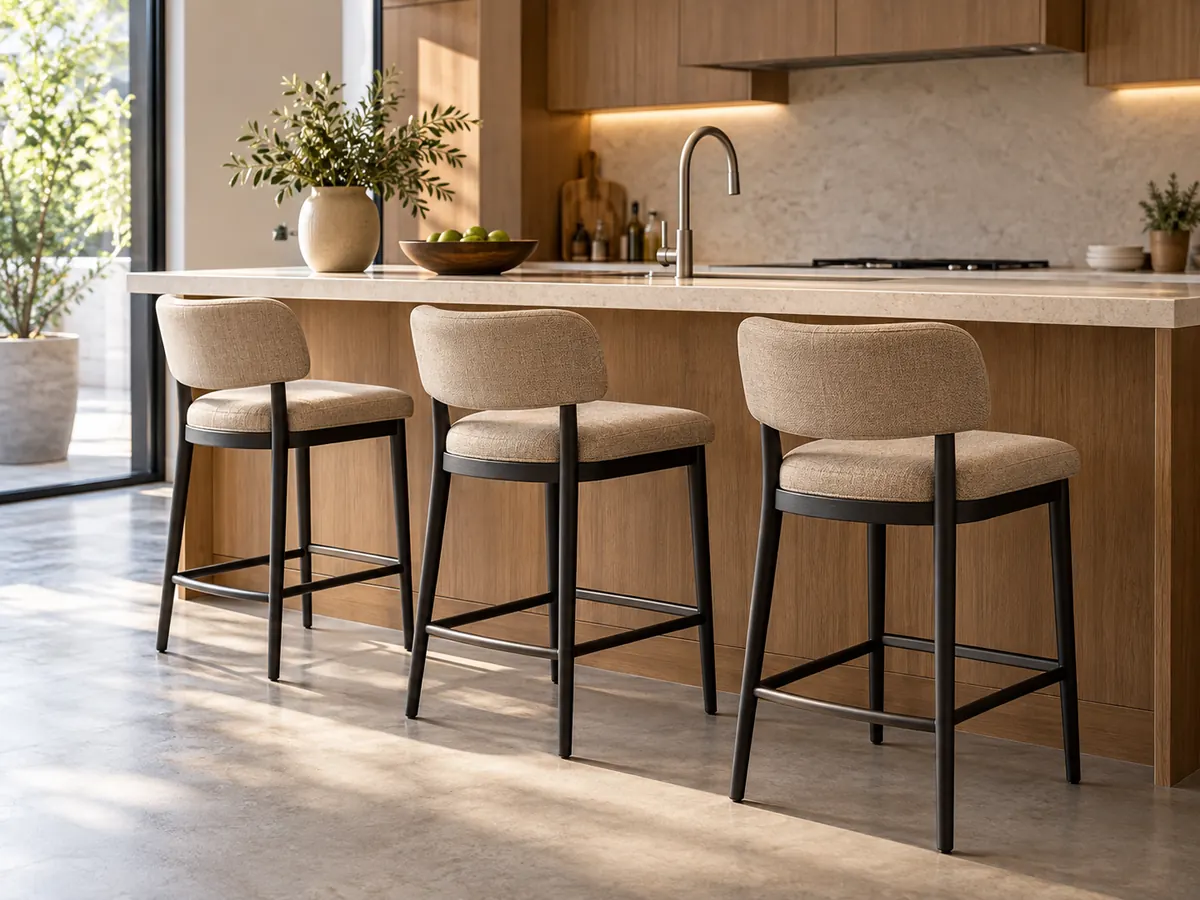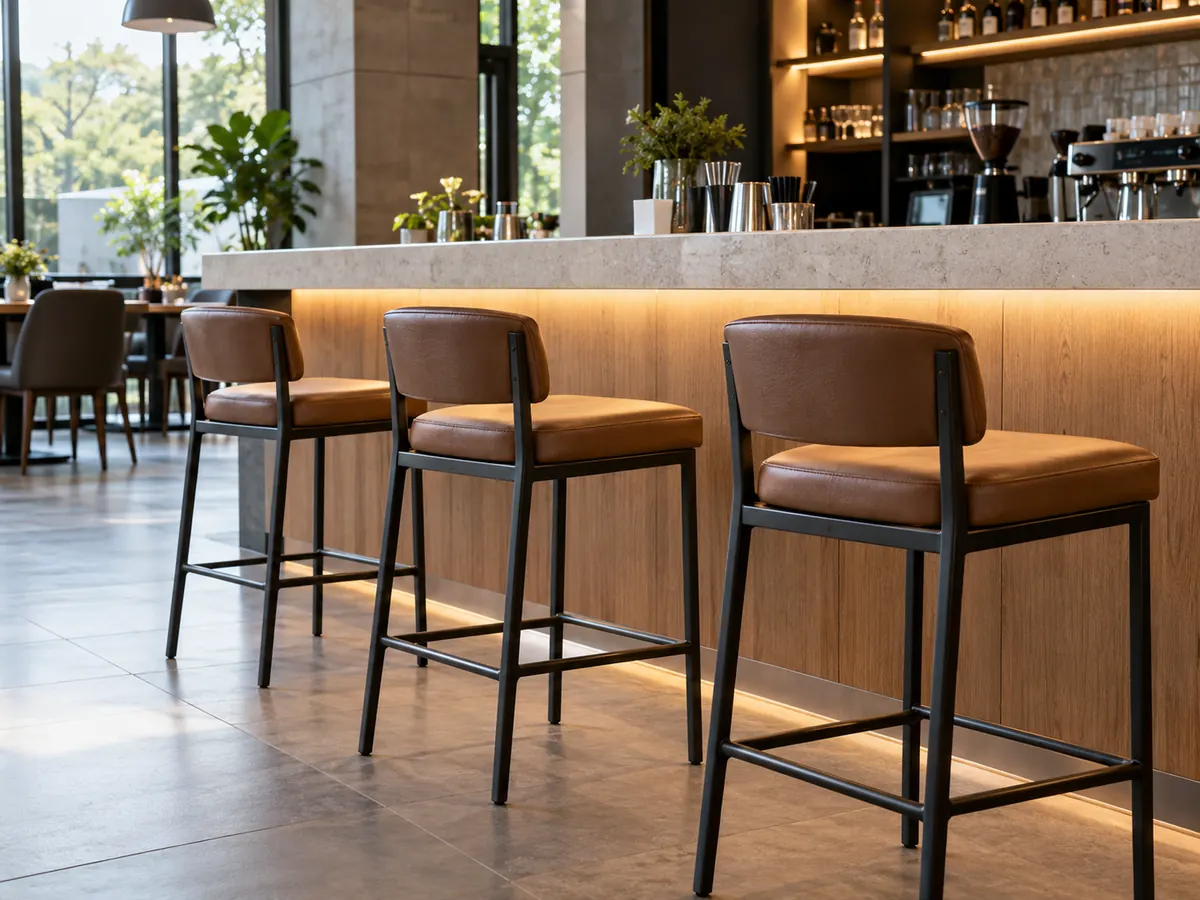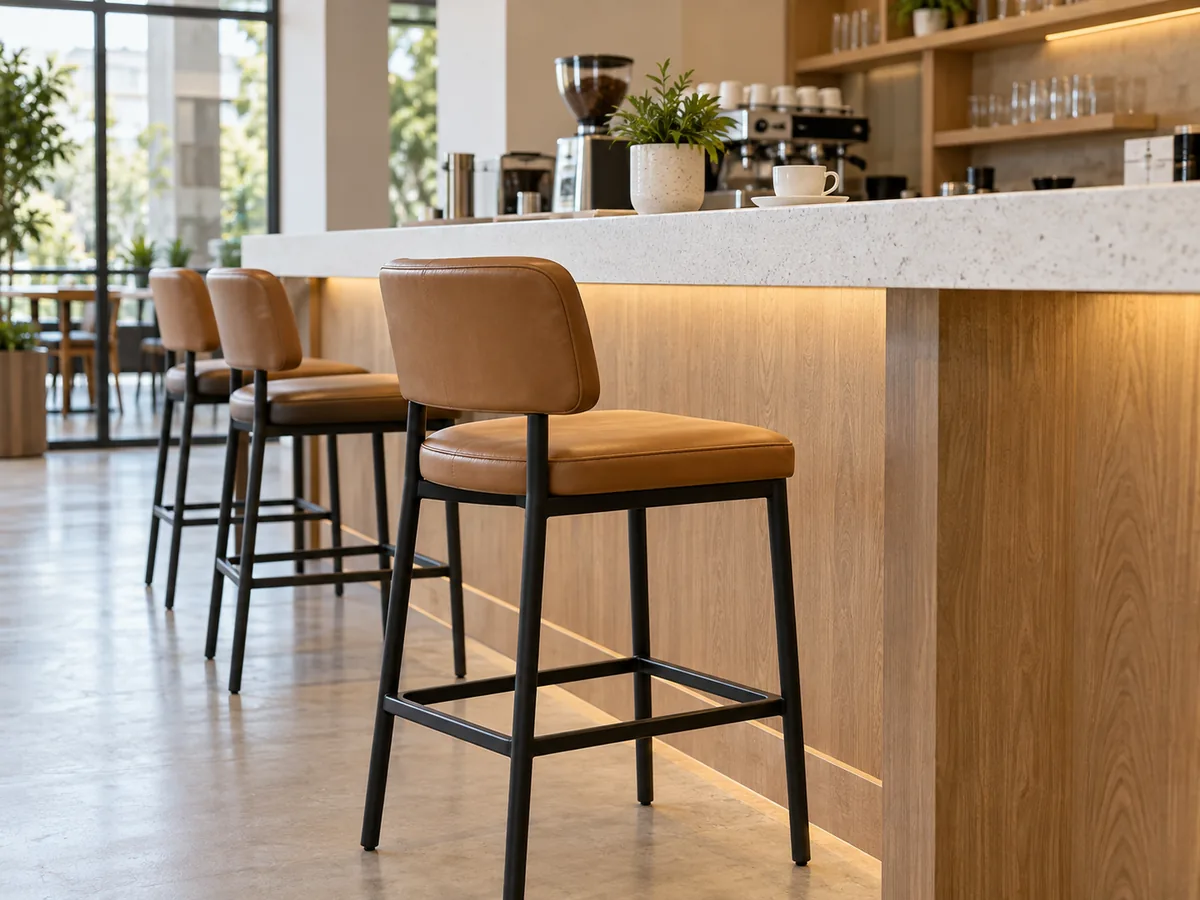
For a standard dining table, we recommend starting with a dining-chair seat height of about 18–19 in / 46–48 cm. A broader practical selection range is about 17–20 in / 43–51 cm, but the chair is not approved by seat height alone.
What changes this recommendation: the actual tabletop height, the lowest apron or frame under the table, cushion compression, seat slope, arm height, and the users or venue.
Main risk: a chair can match a “standard” number and still leave too little thigh clearance or fail to slide under the table.
Required check: measure the table from the floor to both the tabletop and the lowest obstruction. Then compare those numbers with the actual chair seat and arm heights before a bulk order is locked.
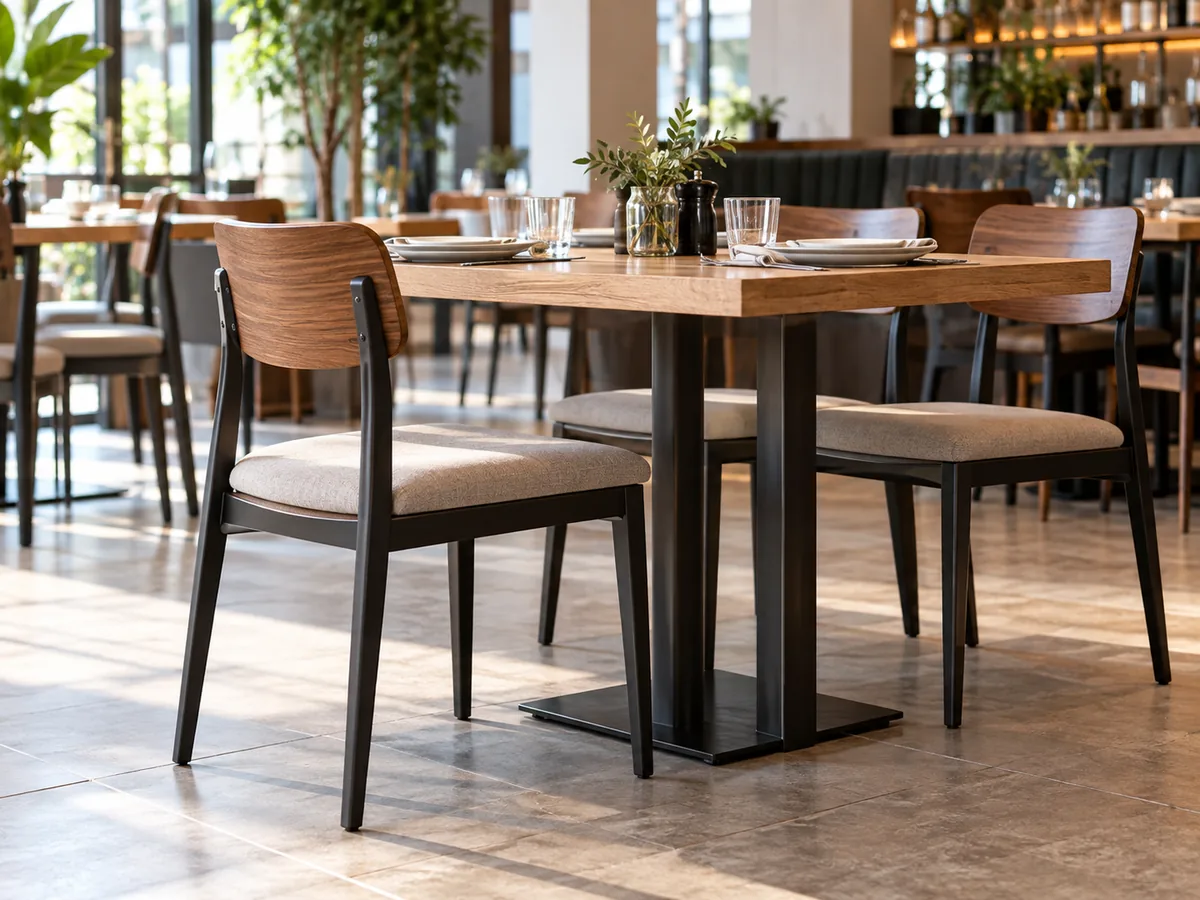
What Is the Standard Dining Chair Height?
When buyers ask for the standard dining chair height, the measurement that usually matters is seat height: the vertical distance from the finished floor to the top of the seat where the user sits. Overall backrest height is a different dimension and should not be used to match a chair to a dining table.
For most conventional dining-height tables, 18–19 in / 46–48 cm is the strongest default starting band. Treat 17–20 in / 43–51 cm as a wider selection range, not a universal standard. The correct result is the combination that provides usable table clearance with the actual chair construction.
| Dining table height | Starting seat-height range | What can make it fail |
|---|---|---|
| 28 in / 71 cm | 17–18 in / 43–46 cm | A low apron can remove usable thigh clearance. |
| 29 in / 74 cm | 18–19 in / 46–48 cm | Upholstery, seat slope and the underside frame still need checking. |
| 30 in / 76 cm | 18–20 in / 46–51 cm | A deep apron, thick top or high arm can make the upper end too tight. |
Selection rule: use the table-height row only as a filter. Do not release a purchase order until the lowest under-table obstruction has also been checked.
Use Two Height Checks, Not One
The most common mistake is to subtract chair seat height from the tabletop height and stop there. That checks visual proportion, but it does not tell you whether the user’s thighs, knees or chair arms will clear the actual table structure.
Check 1: Seat to tabletop
Formula: tabletop height − seat height.
As a planning value, start around 10–12 in / 25–30 cm. This is a selection range, not a code requirement.
Check 2: Seat to lowest obstruction
Formula: lowest apron, rail or underside height − seat height.
For screening, about 7 in / 18 cm or more is a useful practical check. Then verify the actual chair-and-table fit, especially with upholstery or arms.
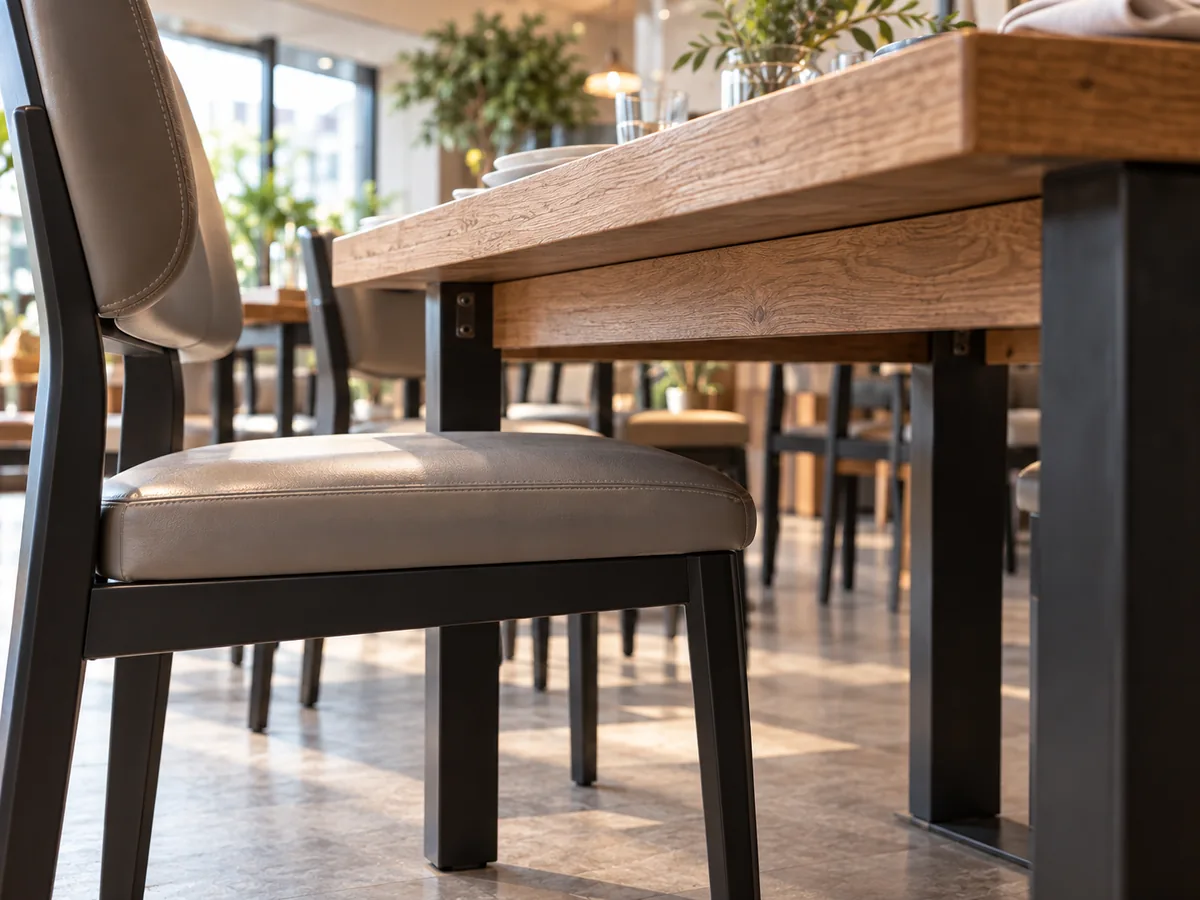
Reject or hold the selection when the table underside is unknown, the chair has arms but arm height is missing, or a thick upholstered seat makes the effective sitting height materially uncertain. Those are drawing or sample checks, not problems to solve with a generic “standard” number.
How to Measure the Height of a Standard Dining Chair
Flat or hard seat
Place the chair on a hard, level floor and measure vertically from the floor to the top of the usable seat surface. Keep the tape vertical; measuring along a sloped leg gives the wrong result.
Upholstered seat
Record the listed or physical height to the top of the cushion as supplied, then confirm the effective fit by sitting in the chair or using the approved sample. Foam compression can change the real relationship between the user and the table.
Curved or sloped seat
Do not record only the front edge. We recommend noting the front seat height and the main sitting-zone height so purchasing, design and QC teams are comparing the same measurement points.
Worked Example: Why the Apron Check Matters
Suppose a project uses a table with a 30 in / 76 cm top, a 26 in / 66 cm apron bottom and an 18.5 in / 47 cm chair seat.
- Tabletop difference: 30 − 18.5 = 11.5 in / about 29 cm.
- Apron clearance: 26 − 18.5 = 7.5 in / about 19 cm.
Both figures fall inside common planning ranges, so the combination is a reasonable candidate. It still needs a final fit check for cushion behavior, user comfort, arm height and the real table structure.
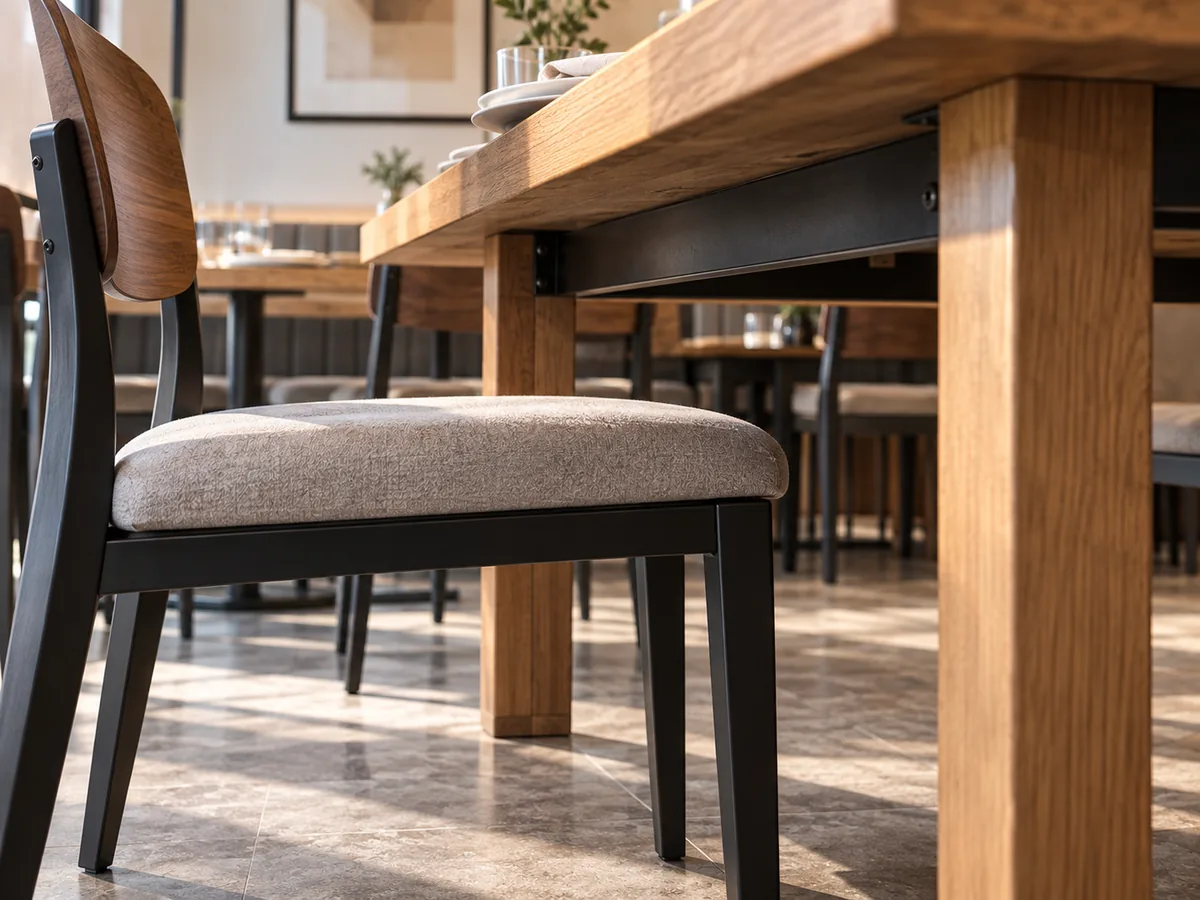
18-Inch vs 19-Inch Dining Chair Height: Which Should You Choose?
Start with 18 in / 46 cm when the table has a lower apron, a thicker top or uncertain under-table clearance. Move toward 19 in / 48 cm when the underside is generous and the project prefers a slightly higher sitting position.
The one-inch difference is not a quality ranking. It changes the vertical relationship between the seat, user and table. The table drawing should decide whether that extra inch is useful or creates interference.
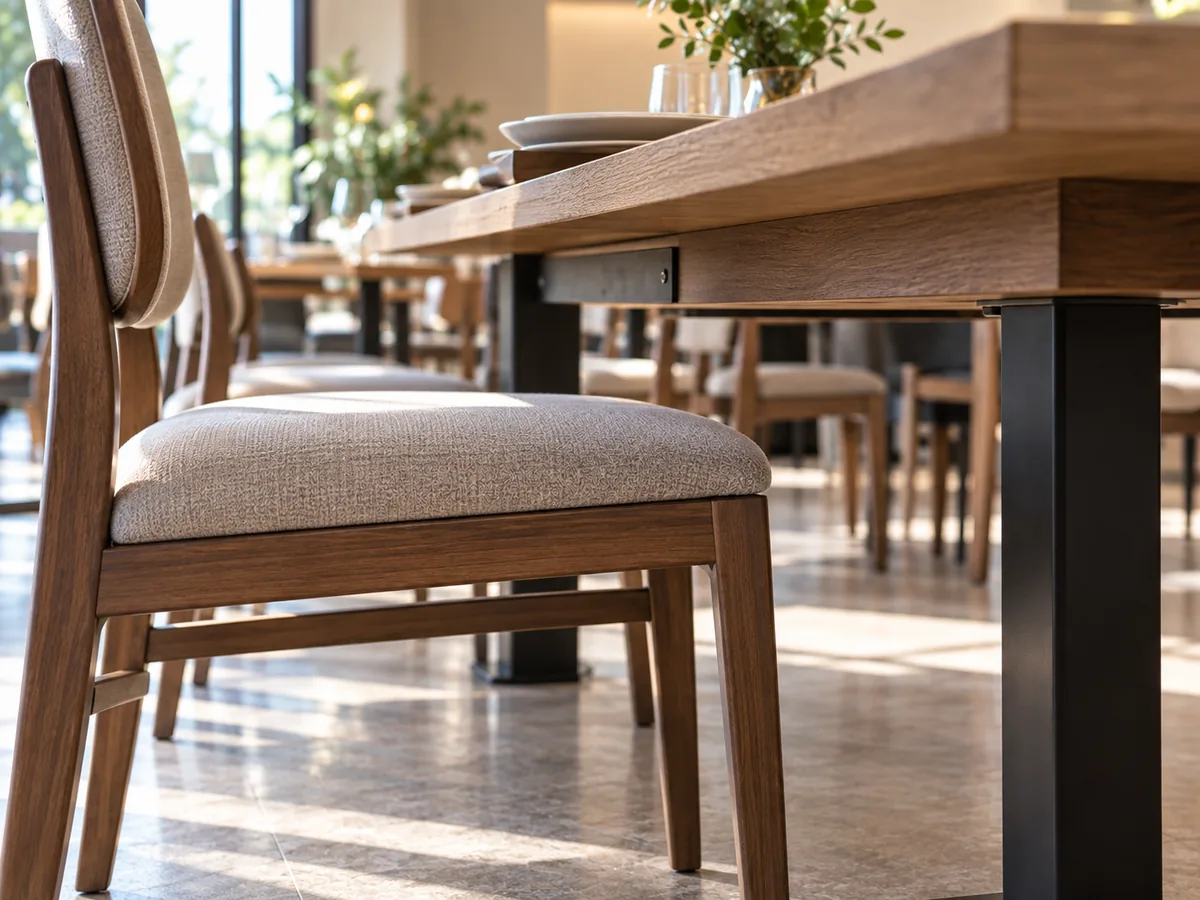
Why “Standard Height” Math Can Still Fail
Three table details commonly reduce usable clearance even when the nominal seat and tabletop heights look correct:
- Thick tabletop: the underside sits lower than the top-height calculation suggests.
- Deep apron or metal frame rail: the first collision point moves closer to the user’s thighs.
- Low stretcher or structural member: knee and foot movement can be restricted even when the apron looks acceptable.
Failure chain: low obstruction → reduced usable vertical clearance → thigh, knee or arm interference → chair cannot tuck in or feels cramped → layout and guest-comfort problems appear after furniture arrives.
Prevention: compare dimensioned chair and table drawings before approval and use a physical sample with the actual table when the order value or fit risk justifies it.
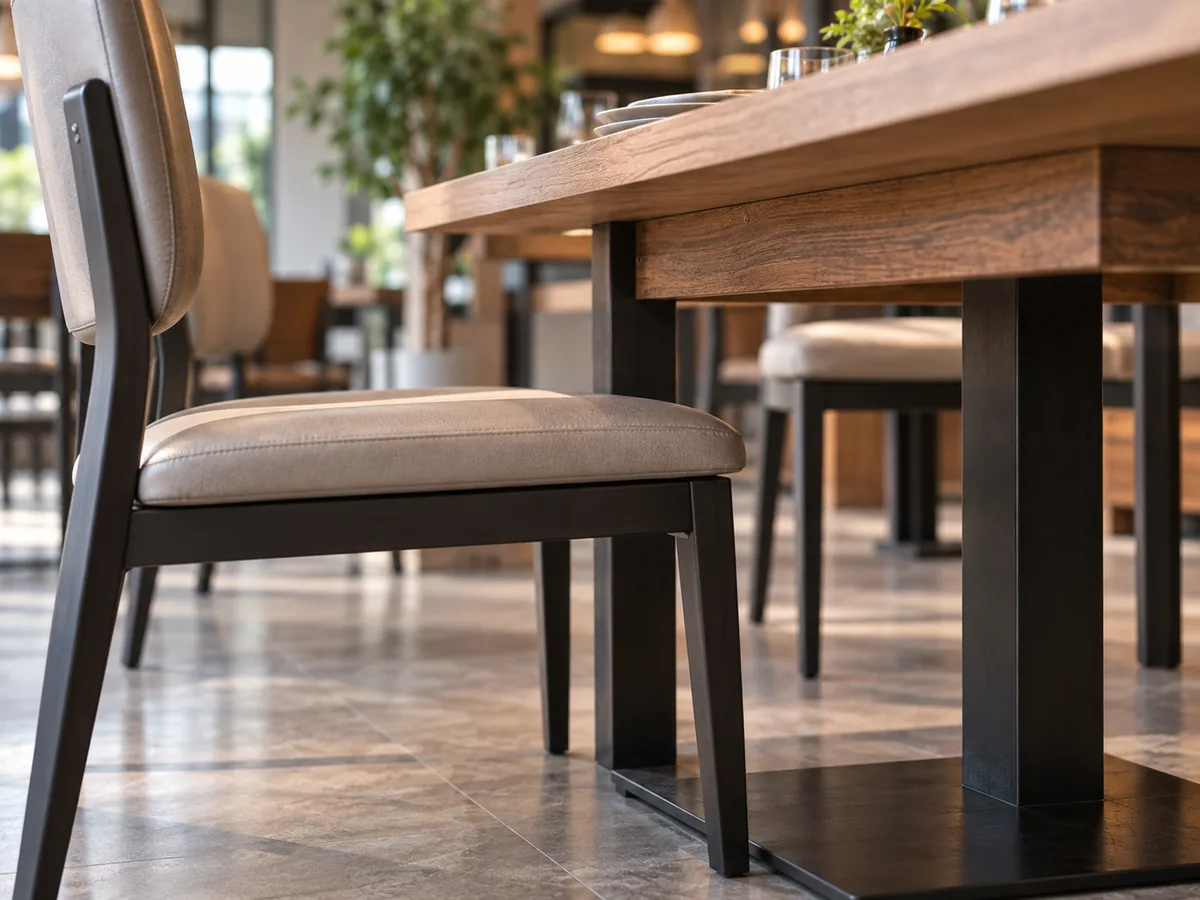
Dining Armchairs Need a Separate Arm-Height Check
A standard dining chair seat height does not guarantee that an armchair will slide under the table. Measure the arm height from the floor to the highest point of the arm, then compare it with the lowest table obstruction.
Do not assume an armchair fits because an armless chair with the same seat height fits. If the arm is higher than the apron bottom, the chair may remain partly outside the table footprint and reduce aisle or circulation space.
Real Dining Chair Seat Heights in the 18–19 Inch Center Range
These live YeZhi product pages show how actual model specifications sit inside the practical center band. They are examples, not universal project-fit recommendations; table geometry still controls final approval.
| Current model | Verified seat height | What the example shows | Project check |
|---|---|---|---|
| NERO21 Black Plywood Metal Dining Chair | 47.5 cm / about 18.7 in | An armless plywood-and-metal dining chair near the center of the standard dining-height band. | Confirm the actual table underside and final project finish/specification. |
| FD312 Brown Upholstered Dining Chair | 46.2 cm / about 18.2 in | An upholstered model near the lower side of the 18–19 in band. | Check effective seated height and table underside clearance. |
| DC-F42 Upholstered Dining Armchair | 47 cm / about 18.5 in | A dining-height armchair where seat height alone cannot prove table fit. | Arm height is not confirmed on the current page, so verify arm-to-apron clearance before approval. |
For more current models, browse YeZhi Furniture’s commercial dining chair collection. If your task is broader than height and includes width, depth or overall chair dimensions, use our standard dining chair dimensions guide rather than trying to turn one height rule into a complete specification.
Commercial Project Approval Checklist
For restaurants, cafés, hotels, distributors and furniture programs, a one-inch mismatch is multiplied across the full quantity. We recommend locking the vertical relationship before bulk production.
- Record the table top height and the height of the lowest apron, rail or obstruction.
- Confirm the chair’s seat-height measurement point, especially on sloped or upholstered seats.
- Confirm arm height for any dining armchair.
- Review the dimensioned drawing rather than relying on a lifestyle photo or one headline dimension.
- Use a sample fit check when project risk is high, particularly when tables and chairs come from different suppliers.
- Lock the approved specification for repeat orders so the seat-height target and measurement method do not drift between batches.
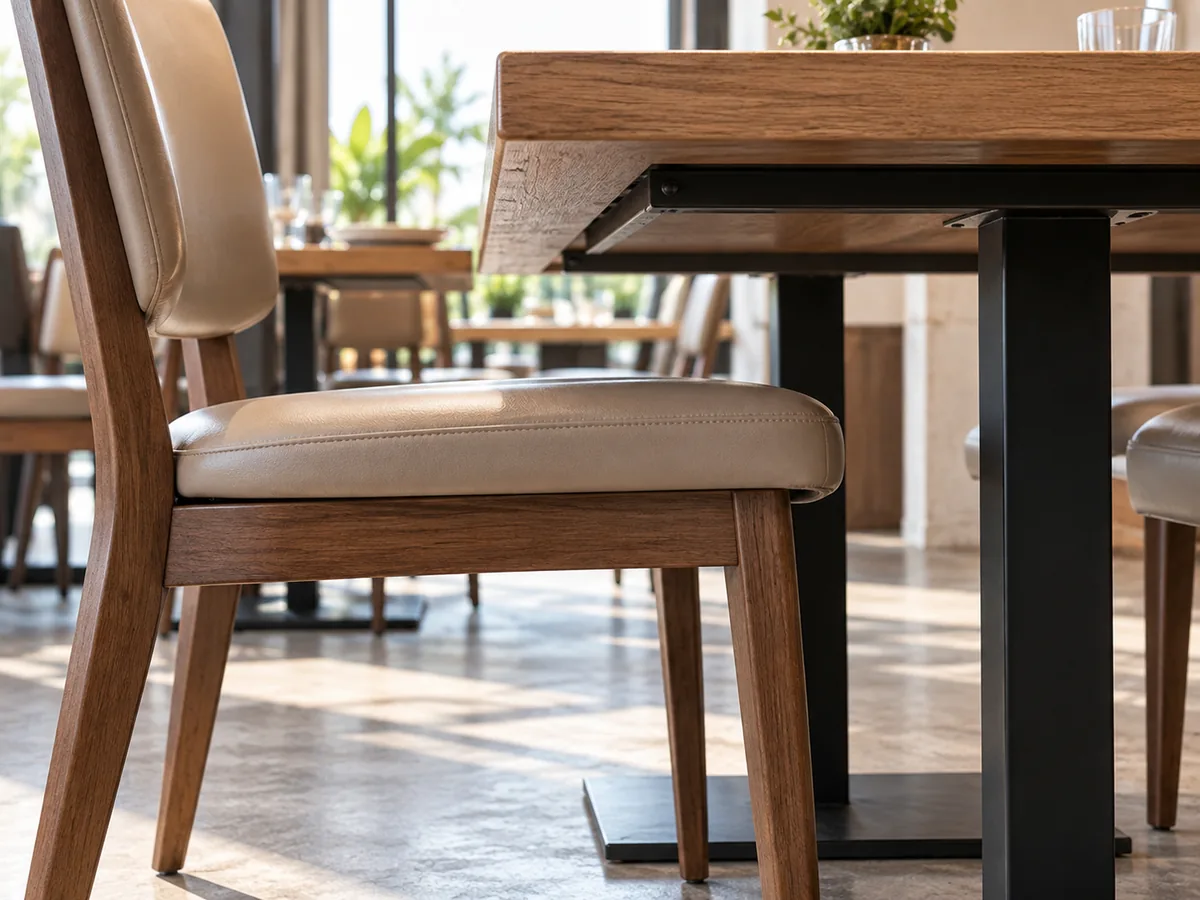
What to send YeZhi: table drawing or actual tabletop and underside heights, target chair quantity per model/SKU, whether arms are required, preferred material/upholstery direction, destination and any project-specific dimension limits.
Does the ADA Set a Standard Dining Chair Height?
No. The U.S. ADA Standards do not establish one universal seat height for movable dining chairs. Where the ADA Standards apply, the accessibility rules focus on dining surfaces, clear floor space, and knee and toe clearance rather than defining a general-purpose dining-chair seat height.
The U.S. Access Board ADA Standards state that dining surfaces covered by Section 902 have surface-height and clearance requirements. The Access Board’s Chapter 2 guide also summarizes the scoping requirement for accessible seating and standing spaces at dining surfaces.
For a U.S. restaurant or hospitality project, treat accessibility as a separate design and compliance check. Do not use the 18–19 in dining-chair recommendation as a substitute for applicable federal, state or local accessibility requirements.
Frequently Asked Questions
What is the standard height of a dining chair?
For most standard dining-table applications, start around 18–19 in / 46–48 cm seat height. A broader practical range is about 17–20 in / 43–51 cm. Always check the actual table underside before final approval.
What height dining chair works with a 30-inch table?
For a 30 in / 76 cm table, an 18–20 in / 46–51 cm seat is a reasonable starting range. Move toward the lower end when the table has a deep apron or thick top.
Is an 18-inch or 19-inch dining chair better?
Neither is automatically better. We usually favor 18 in / 46 cm when under-table clearance is limited, and 19 in / 48 cm when the table underside is generous and a slightly higher sitting position is preferred.
How should upholstered dining chair height be measured?
Measure from the hard, level floor to the top of the cushion as supplied, then verify the real seated fit because cushion compression can lower the effective sitting position.
Does overall chair height matter for table fit?
Overall backrest height affects appearance and support, but it does not determine whether the chair fits the table. Seat height, arm height and the table’s lowest obstruction are the critical vertical measurements.
What should a commercial buyer confirm before ordering dining chairs in bulk?
Confirm the dimensioned chair drawing, seat-height measurement point, table top and underside heights, arm height where relevant, and the approved project specification. Use a physical sample with the real table when the fit risk justifies it.
Send Us Your Table Drawing Before You Lock the Chair Height
If you are sourcing dining chairs for a restaurant, café, hotel, distributor program or multi-site project, send YeZhi Furniture the table drawing or underside height, target seat height, chair quantity per model, arm requirement, material/finish direction and destination.
We can use those inputs to compare current dining-chair options and identify which specifications still need confirmation before quotation or production approval.
Send Project Details