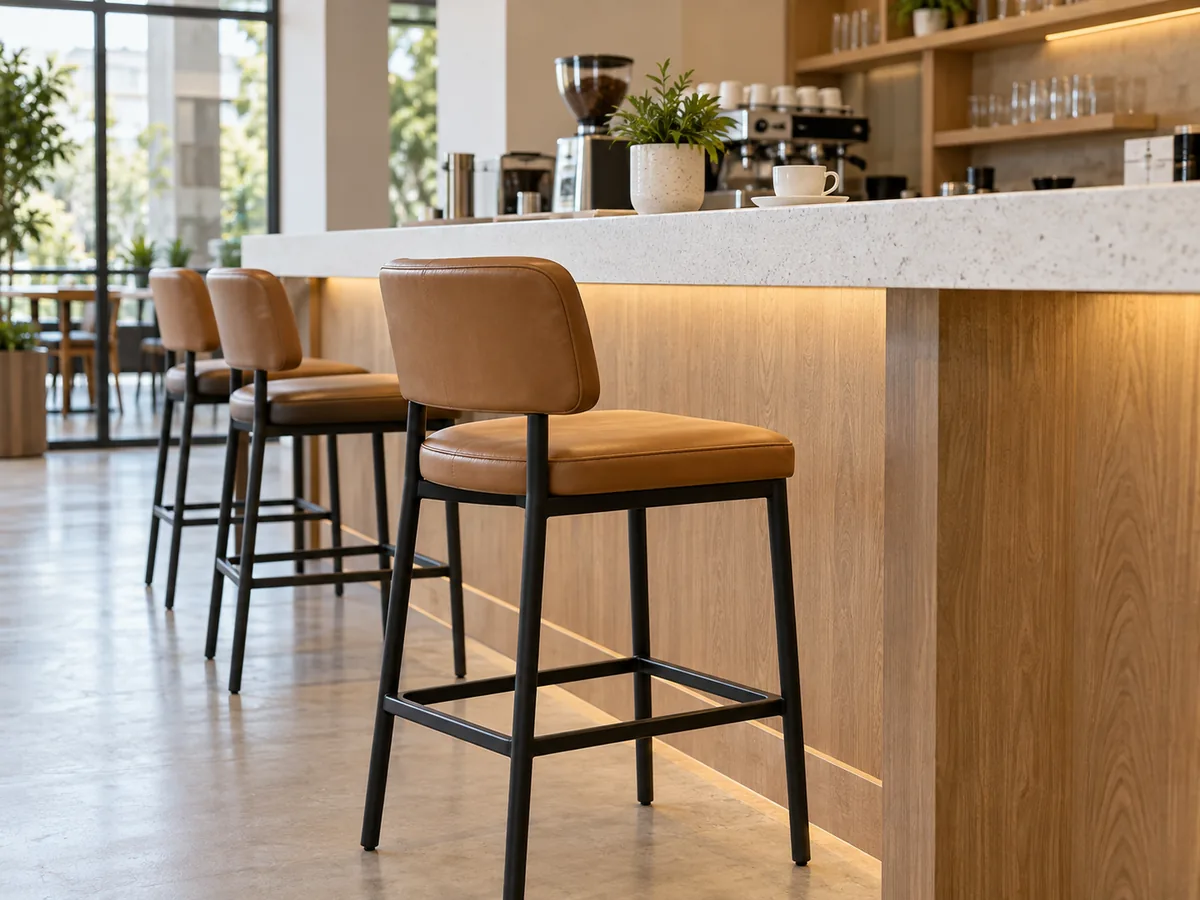
Wood vs Metal Bar Stools: Which Is Better for Commercial Spaces?
When you choose wood vs metal bar stools for a restaurant, café, bar, pub, hotel, or project order, you are not only choosing a look. You are choosing how the stool will handle traffic, cleaning, guest comfort, maintenance, and replacement over time.
Busy bars, pubs, and high-turnover restaurants: metal or mixed-material bar stools are usually the safer commercial choice.
Cafés, boutique restaurants, and hotel lounges: wood or upholstered mixed-material stools can give a warmer, more comfortable guest feeling.
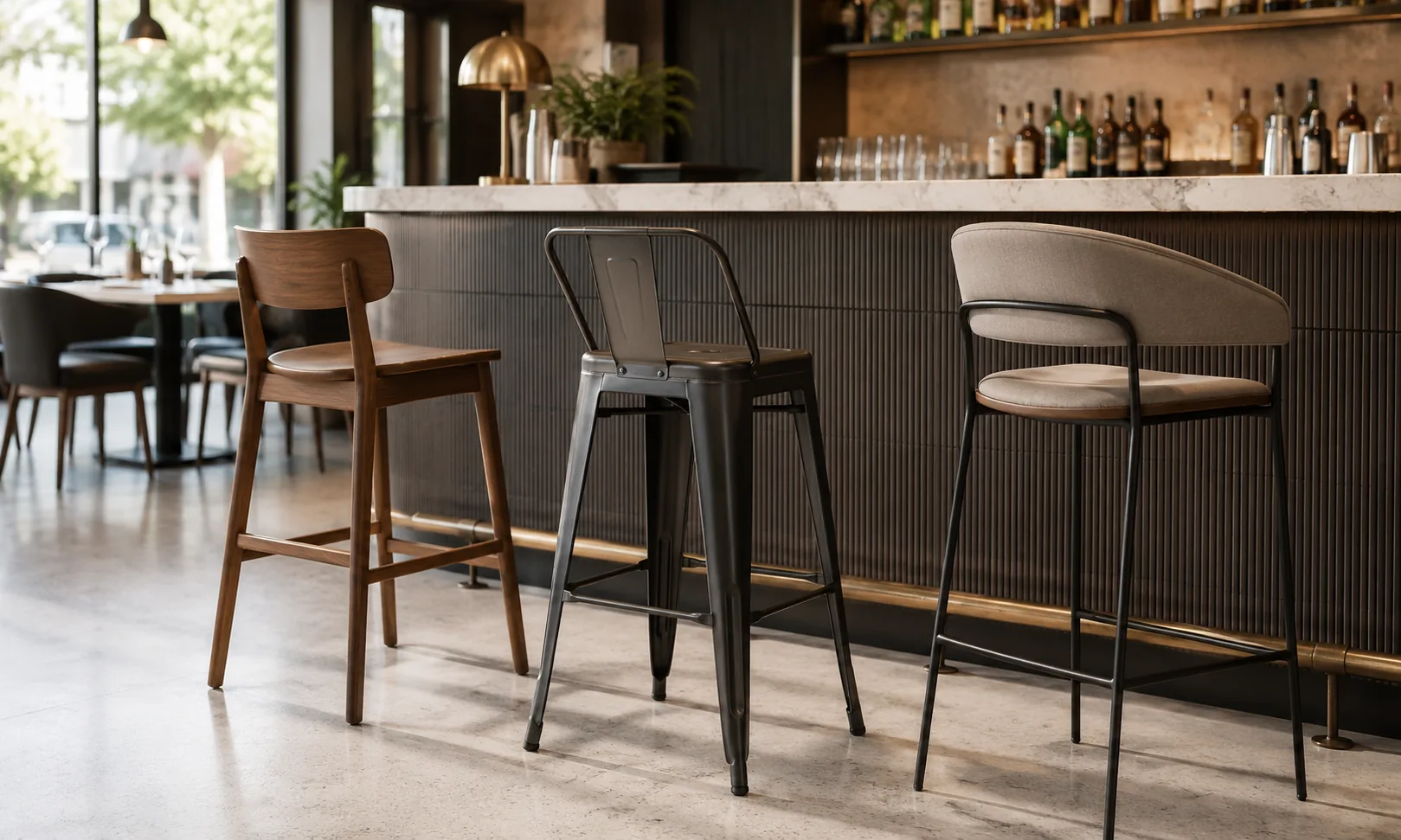
From our experience, the wrong order usually starts when a project is selected from photos only. A beautiful wood stool can be wrong for a rough bar. A strong-looking metal stool can feel too cold for a premium café. We always start from the use scene first, then confirm the material.
YeZhi Furniture supplies commercial furniture for restaurants, cafés, bars, hotels, and project spaces. With more than 19 years in the furniture industry, we make and supply metal, solid wood, upholstery, rattan, teak wood, fabric, leatherette, and mixed-material structures for B2B buyers.
Wood vs Metal Bar Stools: Main Differences We Check for Commercial Orders
Wood and metal behave differently in a commercial space. One is not automatically better than the other. Before we recommend a wood, metal, or mixed-material stool, we look at how your venue will use, clean, move, repair, and reorder the stools.
| Factor | Wood Bar Stools | Metal Bar Stools | Mixed-Material Bar Stools |
|---|---|---|---|
| Best commercial fit | Cafés, boutique restaurants, hotel lounges, warm interiors | Bars, pubs, fast-turnover restaurants, industrial interiors | Restaurants, cafés, bars, and hotels needing both strength and warmth |
| Visual effect | Warm, natural, classic, softer | Modern, industrial, clean, stronger visual line | Balanced; can soften metal or strengthen wood designs |
| Cleaning | Needs finish care; scratches and dents may show | Usually easier to wipe if finish is suitable | Depends on seat, frame, upholstery, and finish |
| Durability risk | Loose joints, dents, scratches, moisture damage if misused | Finish chips, noise, cold touch, corrosion risk if wrong finish is used | Connection points between materials must be checked |
| Comfort | Warmer touch; comfort depends on seat shape and back support | Can feel colder or harder unless shaped or upholstered | Often the best comfort/performance balance |
| Bulk-order concern | Finish matching and wood variation | Finish consistency, coating quality, and testing requirements | More parts to confirm before production |
The best bar stool material is the one that matches the venue’s daily abuse, not the one that looks best in a catalog photo.

If you are choosing bar stools for a commercial project, you can browse our commercial bar stools, wholesale metal bar stools, and wholesale wood bar stools pages.
Which Material Should We Recommend for Your Venue?
When you send us a café project and a pub project, we will not recommend bar stools by the same rule. The guest behavior is different. The cleaning workload is different. The damage risk is different.
| Venue Type | Better Material Choice | Reason |
|---|---|---|
| Fast-casual restaurant | Metal or metal + wood seat | Handles frequent movement, cleaning, and rougher turnover better |
| Café or bakery | Wood or metal + wood seat | Creates warmth without losing too much practicality |
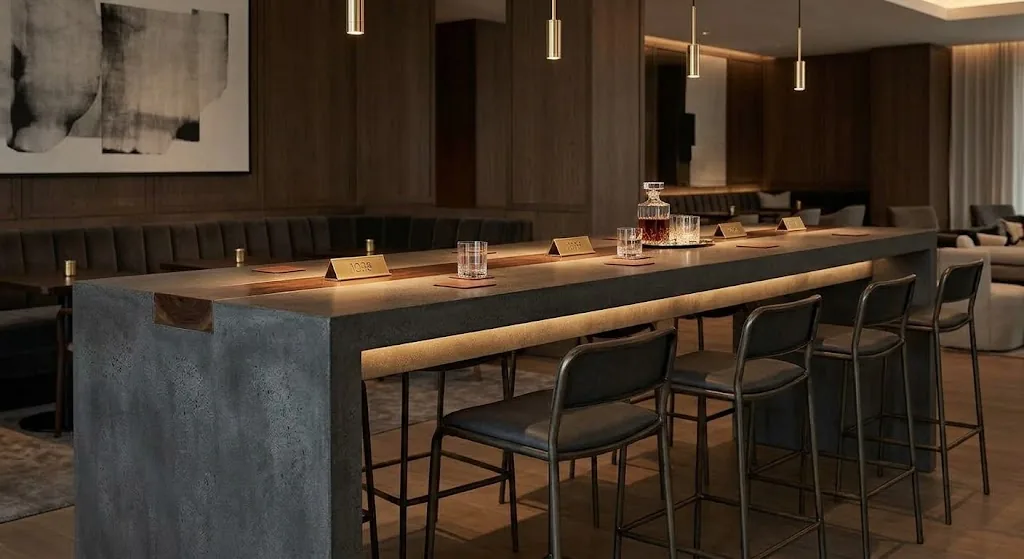
| Bar or pub | Metal frame or mixed-material stool | Better for spills, foot traffic, guest movement, and impact risk |
| Boutique restaurant | Wood, upholstered wood, or mixed-material | Warmer atmosphere and better guest perception |
| Hotel lounge | Wood, upholstered wood, or mixed-material | Guests sit longer and expect comfort, not only toughness |
| Outdoor patio | Only outdoor-confirmed material and finish | Indoor wood or ordinary indoor metal should not be assumed suitable |
| Tight bar layout | Slim metal frame or backless metal stool | Easier movement and less visual bulk |
| Premium dining concept | Wood or upholstered mixed-material | Better for warmth, detail, and brand image |

For high-turnover venues, start with metal or mixed-material. For warm, slower-sitting venues, start with wood or upholstered mixed-material.
That rule will prevent many wrong purchases. If you are planning a restaurant project, browse our wholesale restaurant bar stools. If your project is for a pub or bar, you can also view our pub bar stools for more suitable options.
Durability Is Not Just Wood vs Metal
Customers often ask us, “Which is stronger, wood or metal?” For a commercial project, that is not the first question we ask.
A commercial bar stool usually fails first at the joint, weld, footrest, finish, or floor contact point. The material matters, but construction matters more.
Check the Frame
For metal stools, look at frame design, tube thickness, weld areas, footrest support, and coating quality. A metal stool with weak welds or poor finish is not a good commercial stool.
For wood stools, check how the legs, stretchers, seat, and back are joined. Loose joints are a common problem when a chair is dragged, rocked, or used by guests every day.
Check the Footrest
The footrest is not a decoration. Guests push on it every time they sit down and stand up.
Reject a commercial bar stool if the footrest looks weak, badly attached, or easy to bend. In a bar or pub, the footrest takes daily pressure.

Check the Finish
Wood finish and metal coating both need confirmation. A warm wood stool becomes a problem if the finish stains too easily. A metal stool becomes a problem if the coating chips quickly in a high-impact space.
Do not ask only, “Is it wood or metal?” Ask:
- What finish is used?
- Is the stool for indoor or outdoor use?
- Is the footrest reinforced?
- Are floor glides included?
- Can the finish be repeated for future orders?
- Can load capacity targets or testing requirements be confirmed before sampling?
- Can a real sample be checked before a large custom order?
We have wooden workshops, upholstered workshops, metal welding, sewing, and painting workshops. That matters because commercial stool quality is not one material decision. It is frame, finish, upholstery, packing, and production control working together.
When we prepare a serious project quotation, we should be able to discuss the frame structure, finish, footrest detail, packing method, and testing path if your project needs them.
Cleaning and Maintenance: Which One Is Easier to Keep Looking Good?
Metal bar stools are usually easier to clean in fast-turnover commercial spaces, if the finish is suitable for the venue. This is why metal or mixed-material stools are common in bars, pubs, quick-service restaurants, and busy counters.
Wood bar stools can still work very well, but they need more care. Scratches, dents, water marks, and worn finish may show differently from metal. In some restaurants, that aged look may be acceptable. In a clean modern café, it may look like poor maintenance.

Metal Stool Cleaning
Metal stools are often easier for staff to wipe down, especially around frames and footrests. They suit venues with frequent spills and daily cleaning.
But do not assume every metal stool is the same. We should confirm the finish, coating, and indoor/outdoor use before you order.
Wood Stool Cleaning
Wood brings warmth, but it needs finish discipline. If the venue has sauce, grease, alcohol, wet floors, or rough cleaning, choose wood carefully.
Wood bar stools are better for controlled indoor spaces than wet, rough, high-impact environments.
Upholstered or Mixed-Material Cleaning
Upholstery improves comfort, but it also adds cleaning responsibility. In a bar with heavy spills, an upholstered seat can become a maintenance problem unless the material and cleaning plan are suitable.
For heavy food and drink spill zones, we recommend wipe-clean surfaces and confirmed finishes.
Comfort: Does Wood or Metal Feel Better?
Wood may feel warmer to the touch. Metal may feel cooler and harder. But material alone does not decide comfort.
Seat shape, seat size, back support, footrest position, and upholstery affect comfort more than wood or metal alone.
For short sitting at a bar counter, a simple backless stool can work. For longer sitting in a restaurant, hotel lounge, or wine bar, you should consider a shaped seat, backrest, or upholstered seat.

Before ordering, check:
- Is the seat flat or shaped?
- Is there a backrest?
- Is the footrest comfortable and strong?
- Will guests sit for 10 minutes or 90 minutes?
- Is the stool easy to move without feeling unstable?
- Does the seat material match the cleaning workload?
For longer sitting, we recommend a shaped seat, back support, or upholstery instead of relying on wood or metal alone.
If you want to compare different bar stool structures before choosing a material, read our types of bar stools guide.
Indoor vs Outdoor Use: Do Not Assume the Material Is Suitable
Outdoor use is where we see many expensive ordering mistakes.
Do not assume all metal bar stools are outdoor-safe. Do not assume all wood bar stools can handle moisture, sunlight, or temperature changes.
For outdoor or semi-outdoor areas, confirm these details before ordering:
- Indoor, covered patio, or exposed outdoor use
- Humidity and rain exposure
- Sunlight exposure
- Storage plan
- Frame material
- Finish or coating
- Seat material
- Maintenance plan
- Salt-spray or corrosion-resistance requirement if the project is coastal, humid, or exposed

We do not recommend placing indoor wood stools in exposed outdoor areas unless the product is made and confirmed for that use. We also do not recommend treating ordinary indoor metal stools as outdoor furniture without confirmation.
For exposed outdoor patios, we recommend only outdoor-confirmed materials and finishes.
We can review outdoor-suitable material and finish options by project. Depending on the selected model and use environment, options may include aluminum, treated metal, teak wood, rattan-style structures, rope, plastic, or other weather-suitable materials. Outdoor use should be confirmed by model, finish, and order specification before production.
Lifecycle Cost: The Cheapest Stool Is Not Always the Cheapest Order
A low unit price is not always a low-cost purchase. For a real project, we recommend calculating the cost of use, not only the unit price.
The real cost includes:
- Replacement frequency
- Cleaning labor
- Repair effort
- Finish touch-up
- Shipping cost for replacement pieces
- Floor damage
- Mismatched reorders
- Damaged cartons during export shipping
- Lost time when a project opening is delayed
- Test or compliance cost if the project requires documents
The cheapest stool is not cheap if it needs faster replacement or cannot be matched in the next order.
For wholesale and project orders, tell us whether you need future repeat orders. Then we can check whether the model, finish, upholstery color, and frame color can be repeated later. This matters for hotels, restaurant chains, and distributors.
We use export-grade packaging with reinforced cartons and protective inserts. Pallets or crates can be used when needed, depending on product type, quantity, destination, and shipping method.
For high-risk custom finishes or large project orders, we recommend checking 1–2 samples before bulk production.
These are general planning ranges. For a real project, we recommend checking the counter height, floor plan, and final stool model before ordering.
When Mixed-Material Bar Stools Are the Better Choice
Many customers first compare only wood or metal stools. In real commercial projects, the better answer is often mixed material.
Mixed-material bar stools are often the best choice when your venue needs metal structure but still wants visual warmth or better sitting comfort.
Metal Frame with Wood Seat or Back
This is a strong option if your restaurant, café, or bar wants a warmer look without giving up the practical advantage of a metal frame.
Metal Frame with Upholstered Seat
This works when you want a stronger frame and better comfort. It is useful for hotel lounges, restaurants, and premium bar areas, but upholstery cleaning must be planned.
Wood Frame with Upholstered Seat
This is better if your project is a boutique restaurant, hotel lounge, or warmer interior concept. It is not the first choice for rough, wet, high-turnover bar areas.
If you want a metal frame with a warmer wood look, our Metal Wood Bar Stool is a practical starting point.
Common Buying Mistakes When Choosing Wood or Metal Bar Stools
Mistake 1: Choosing by Style Photos Only
A stool can look perfect in a rendering and still fail in daily operation.
Do not choose by photos only. Choose by venue use, cleaning, footrest strength, finish, and replacement plan.
Mistake 2: Ignoring Seat Height
A material decision cannot fix the wrong height.
| Stool Type | Seat Height |
|---|---|
| Counter stool | 24–27 in / 61–69 cm |
| Bar stool | 29–32 in / 74–81 cm |
If you need to confirm stool height before ordering, use our bar stool height measurement guide or our bar stool and counter stool guide.
Mistake 3: Ignoring Spacing
Stools need room. If you pack too many stools along a counter, guests feel crowded and the stools get damaged faster.
| Layout Item | Recommended Planning Range |
|---|---|
| Space per stool position | 24–30 in / 61–76 cm |
| Minimum walkway behind occupied seating | 36 in / 91 cm |

The height and spacing ranges above are general planning ranges. For a real project, we recommend checking the counter height, floor plan, and final stool model before ordering.
If you are calculating project quantity, read our guide on how many bar stools you need.
Mistake 4: Treating All Metal Stools as Outdoor Stools
Metal is not automatically outdoor furniture. We should confirm the frame material, coating, screws, glides, seat material, and application before production.
If the area is exposed to rain, strong sun, humidity, or coastal air, ask for outdoor-confirmed material, finish, and salt-spray or corrosion-resistance requirements before ordering.
Mistake 5: Ignoring Floor Protection
Floor glides are small parts, but they protect floors and reduce noise. In busy venues, missing or poor glides can create scratches, noise, and customer complaints.
Mistake 6: Ordering Custom Colors from Screen Photos Only
Screen color is not production color. Wood finish, metal coating, and upholstery color should be checked with a physical sample or approved reference.
For custom finishes, approve a real sample before large production.
Mistake 7: Asking for Certification After Production Starts
If the project needs a load capacity target, BIFMA X5.4 discussion, fire-rating document, salt-spray requirement, or finish-performance data, say it before quotation and sampling.
Testing and compliance requirements belong at the start of the order, not after the goods are finished.
What to Send Us Before Ordering Wood or Metal Bar Stools in Bulk
A clear RFQ helps us quote faster and recommend the right stool more accurately. A vague inquiry usually creates a vague quote.

Before asking us for price, send these details:
| RFQ Item | What to Send |
|---|---|
| Venue type | Restaurant, café, bar, pub, hotel, outdoor patio, project space |
| Use location | Indoor, covered outdoor, or exposed outdoor |
| Quantity | Quantity per SKU, not just total quantity |
| Preferred material | Wood, metal, upholstery, rattan, teak wood, leatherette, or mixed-material |
| Seat height | Counter height or bar height |
| Finish | Wood finish, metal frame finish, upholstery color |
| Cleaning concern | Food, grease, alcohol, wet floor, outdoor exposure |
| Custom need | OEM/ODM, branding, packing, color, material matching |
| Testing or compliance requirement | Load capacity target, ANSI/BIFMA or BIFMA X5.4 review need, fire-rating document request, salt-spray or corrosion-resistance requirement, coating-performance request, or destination-market documentation need |
| Shipping term | EXW, FOB, or CIF |
| Destination | Country and destination port if available |
| Sample need | Whether sample approval is required before bulk order |
If your project requires a load capacity target, ANSI/BIFMA-related review, BIFMA X5.4 testing discussion, fire-rating document, salt-spray requirement, or finish-performance data, include it in the RFQ. We can review these requirements by model, frame structure, material, sample, and final order specification before production. Send these requirements early so we can quote, sample, and arrange production correctly.
Our regular MOQ starts from about 15 pcs per SKU. Mixed models, colors, and materials can be accepted in one order.
For full OEM or custom production, the starting quantity usually begins from about 100 pcs per design.
Production lead time is about 30 days after order confirmation. Ocean freight planning baseline is about 30 days. We support EXW, FOB, and CIF, with ocean freight as the main shipping method for wholesale orders, including LCL and full-container options.
Final warranty scope should be confirmed on the PI before production. For confirmed quality issues, YeZhi can provide replacement or credit deducted from the next batch after confirmation. Most wholesale orders are made to order, so change-of-mind returns are not available.
Final Recommendation
Choose metal or mixed-material bar stools for busy bars, pubs, and high-turnover restaurants. Choose wood or upholstered mixed-material bar stools for cafés, boutique restaurants, and hotel lounges where warmth and guest comfort are more important. Use only outdoor-confirmed materials and finishes for outdoor spaces.
That is the clean decision.
Wood is not weak by default. Metal is not perfect by default. The wrong stool is the one chosen without checking the venue, footrest, finish, cleaning routine, height, spacing, packing, testing requirements, and reorder plan.
For your commercial project, send us your venue type, quantity, preferred material, indoor/outdoor use, finish direction, testing or compliance requirement, and shipping country. We can match wood, metal, or mixed-material bar stools for restaurants, cafés, bars, hotels, and project furniture orders.
FAQ
Are wood or metal bar stools better for restaurants?
For busy restaurants, metal or mixed-material bar stools are usually safer. For boutique restaurants with a warmer interior, wood or upholstered mixed-material stools can work better if the finish and cleaning plan are suitable.
Are metal bar stools better for bars and pubs?
Yes, metal or mixed-material stools are usually better for bars and pubs. These venues have more spills, movement, footrest pressure, and impact risk.
Are wood bar stools strong enough for commercial use?
Wood bar stools can be suitable for commercial use when the frame, joints, finish, and footrest are built for the venue. Do not judge by material alone.
Are metal bar stools suitable for outdoor use?
Only outdoor-confirmed metal bar stools should be used outdoors. Ordinary indoor metal stools should not be assumed suitable for rain, sun, humidity, coastal air, or long outdoor exposure.
Which bar stool material is easiest to clean?
Metal is usually easier to clean in high-turnover spaces if the finish is suitable. Wood and upholstery can work well, but they need clearer cleaning and maintenance planning.
Are mixed-material bar stools a good choice?
Mixed-material bar stools are often a very good commercial choice. A metal frame with a wood or upholstered seat can balance durability, comfort, and visual warmth.
What load capacity information should I send for commercial bar stools?
Send your load capacity target before quotation. For some metal bar stool projects, we can review targets such as 300 lbs / 136 kg, but the final capacity depends on frame design, tube size, steel gauge, seat structure, and project requirements. We can discuss sample or third-party testing when required.
Do commercial bar stools need BIFMA X5.4 testing?
If your project or market requires BIFMA X5.4 review, include that requirement before quotation. We can review the testing path for commercial seating projects and discuss structural integrity, stability, backrest strength, footrest durability, and third-party testing support before production.
What should I send before buying bar stools in bulk?
Send us your venue use, quantity, seat height, finish direction, indoor/outdoor use, packing request, sample approval need, and any testing requirements. Do not buy by photo only.
What is your usual MOQ for bar stool orders?
YeZhi’s regular MOQ starts from about 15 pcs per SKU. Full OEM or custom production usually starts from about 100 pcs per design.